Skip to content
  • Home
  • Subscribe / donate
  • Events calendar
  • News
    • Local
    • National
    • Israel
    • World
    • עניין בחדשות
      A roundup of news in Canada and further afield, in Hebrew.
  • Opinion
    • From the JI
    • Op-Ed
  • Arts & Culture
    • Performing Arts
    • Music
    • Books
    • Visual Arts
    • TV & Film
  • Life
    • Celebrating the Holidays
    • Travel
    • The Daily Snooze
      Cartoons by Jacob Samuel
    • Mystery Photo
      Help the JI and JMABC fill in the gaps in our archives.
  • Community Links
    • Organizations, Etc.
    • Other News Sources & Blogs
    • Business Directory
  • FAQ
  • JI Chai Celebration
  • JI@88! video

Recent Posts

  • Sharing her testimony
  • Fall fight takes leap forward
  • The balancing of rights
  • Multiple Tony n’ Tina roles
  • Stories of trauma, resilience
  • Celebrate our culture
  • A responsibility to help
  • What wellness means at JCC
  • Together in mourning
  • Downhill after Trump?
  • Birth control even easier now
  • Eco-Sisters mentorship
  • Unexpected discoveries
  • Study’s results hopeful
  • Bad behaviour affects us all
  • Thankful for the police
  • UBC needs a wake-up call
  • Recalling a shining star
  • Sleep well …
  • BGU fosters startup culture
  • Photography and glass
  • Is it the end of an era?
  • Taking life a step at a time
  • Nakba exhibit biased
  • Film festival starts next week
  • Musical with heart and soul
  • Rabbi marks 13 years
  • Keeper of VTT’s history
  • Gala fêtes Infeld’s 20th
  • Building JWest together
  • Challah Mom comes to Vancouver
  • What to do about media bias
  • Education offers hope
  • Remembrance – a moral act
  • What makes us human
  • המלחמות של נתניהו וטראמפ

Archives

Follow @JewishIndie
image - The CJN - Visit Us Banner - 300x600 - 101625

Tag: JCC Jewish Book Festival

Poetic auto/biography superb

Poetic auto/biography superb

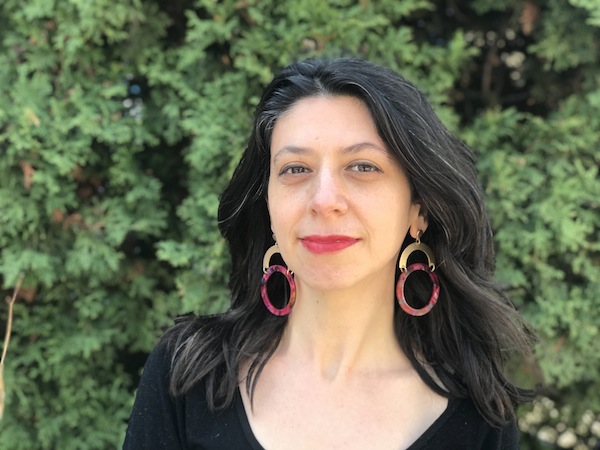
Lisa Richter, author of Nautilus and Bone, joins the Jewish Book Festival Feb. 7 (photo from Lisa Richter)

Nautilus and Bone: An Auto/biography in Poems by Toronto poet Lisa Richter – who takes part in the Cherie Smith JCC Jewish Book Festival on Feb. 7 – will send readers down many proverbial rabbit holes. They will want to know more about the writings and life of Yiddish poet and journalist Anna Margolin – not only to better understand Margolin, but to appreciate more fully Richter’s poetic biography of Margolin and her conversations with Margolin’s works.

Margolin is the pen name of Rosa Lebensboym, who was born in Brisk (now Brest, Belarus) in 1887. She immigrated to New York City in 1906, “spent time in London, Paris, Warsaw, Odessa and Palestine before eventually settling permanently in New York in 1913, where she died, in 1952.”

Says Richter: “I was enticed by this Russian-Jewish-American woman writing a hundred years ago about myth-making, roots, identity, alienation, gender fluidity, Eros and desire (at times unmistakably queer, arguably pansexual). Her poetry felt bold and subversive, even by modern standards: H.D. meets Patti Smith.”

Richter does not speak Yiddish, so has relied on Shirley Kumove’s Drunk from the Bitter Truth: The Poems of Anna Margolin, a translation of Margolin’s volume of poems, Lider (Poems), with a “thorough and comprehensive introduction to Margolin’s life and work.” Richter also accessed Margolin’s files at YIVO and read Reuben Iceland’s (Ayzland’s) memoir, From Our Springtime: Literary Memoirs and Portraits of Yiddish New York, as well as other source material.

Richter discusses her many reasons for feeling connected to Margolin, including that, as Lebensboym adopted the name Margolin upon arrival in New York, Richter’s maternal great-grandfather, born Samuel Margolin, “changed his surname to the more Russian-sounding Lapitsky to avoid antisemitism when he immigrated to Montreal as a young man in 1903.”

Richter writes, “I like to imagine him meeting Miss Rosa Lebensboym. In my imagination, he passes his old birth name to her, much in the way one would pass along a string of heirloom pearls to one’s daughter (though they would have been roughly the same age, both born in the 1880s).” Richter notes that the name Margolin and its variations come from the Hebrew margoliyot, meaning pearls.

The emotional and spiritual connections come through in Nautilus and Bone. Richter does not claim to explore every facet of Margolin’s life and work. She explains, “The persona I have enacted in these poems hovers on the periphery of my imagination, filtered through my own dreams, preoccupations, (dis)pleasures, experience. I try my best to give a lyric voice to the most essential, enduring aspects of the poet’s life and work as I see her, and to engage in conversation with those parts of myself that are most closely, most symbiotically intertwined with her story.”

And she does so in a wide variety of poetic forms, all of which she wields with great skill. Among the recognition the book has garnered are the Canadian Jewish Literary Award for Poetry and the National Jewish Book Award for Poetry (United States) – “the first time a Canadian poet has ever received this honour,” Richter shared with the Independent.

In Nautilus and Bone, most readers will encounter forms of poetry they’ve never encountered before. “A City at the Sea’s Mouth” is a homolinguistic translation (in this case, English to English). “Primeval Murderess Night Talks Back to Anna Margolin” is a Golden Shovel poem – the “end-words of each line make up the first two lines of Anna Margolin’s poem ‘Primeval Murderess Night,’” notes Richter, crediting the creation of the form to Terrance Hayes. And, as the name suggests, “Anna Margolin Cento” is a cento, in which a poem is composed of lines from other poets’ poems.

“A poem’s form and content are inextricably linked, in the same way that a particular dish can only be made or served in certain kinds of containers,” Richter told the Independent in an email interview. “The same raw dough can be shaped into dinner rolls, pretzels or challah bread – the way you present and shape the material will affect the way it’s consumed and experienced.

“In some cases,” she said, “the form came to me later (the prose poem form of ‘So Uncommonly Smart for a Girl,’ for example) after a traditional, lineated form didn’t seem to be working. In other cases, the form came first, and the poems later. For instance, the long sequence of sonnets at the end of the book became the vehicle for telling the love story of Anna Margolin and her final life-partner, the poet Reuben Ayzland, as the sonnet has a long and distinguished history of wrestling with matters of the heart.

“The process of homolinguistic translation, or ‘re-translating’ a poem from the same language, is a means of engaging/wrestling/ conversing with a source text, and keeping it alive by breathing new life into it, using fresh grammar, syntax and language. I see it as an act of homage and tribute.”
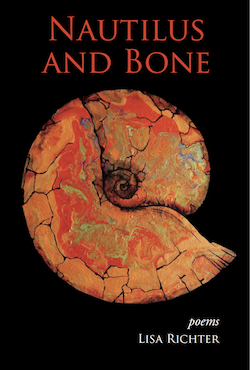
image - Nautilus and Bone book coverSome of the poems were written as early as 2017, said Richter, shortly after her first book – Closer to Where We Began – was published, but “the bulk of the poems were written over the course of a year-and-a-half, from 2019 to spring 2020,” she said. “The original manuscript was much more autobiographical, but once I started researching and writing the Margolin poems, it became clear that the book was to become ‘an auto/biography in poems,’ as the book is subtitled, and was much more about Anna Margolin than it was about me. I have to credit my editor at Frontenac House, Micheline Maylor, for her vision and encouragement for this project. Both she and George Elliott Clarke, my mentor at the Sage Hill Spring Poetry Colloquium, were extremely supportive.”

While Richter’s conversations with Lebensboym/Margolin left her with more questions than answers, Richter said, “I think that’s a good state of mind for a poet to live in. As Rilke famously put it in Letters to a Young Poet, ‘Do not now seek the answers, which cannot be given you because you would not be able to live them. And the point is, to live everything. Live the questions now.’ I don’t think I’ll ever be entirely ‘done’ with Anna/Rosa, but it’s not entirely up to me. For all I know, she’ll be with me for some time…. I would love to learn to read Yiddish someday so I could read and appreciate her work in its original form.”

As for what she hopes readers take away from the conversations, Richter said, “Mystery, uncertainty, history, complexity, ambiguity, ancestral lineage, eros/sensuality, mythmaking. But if a reader just finds one poem in the book that speaks to them, I’m happy.”

Richter will be joined Feb. 7, 6 p.m., by local translator Rachel Mines (Jonah Rosenfeld: The Rivals and Other Stories; see jewishindependent.ca/stories-that-explore-the-mind) in a discussion with moderator Faith Jones. Visit jccgv.com/jewish-book-festival.
Format ImagePosted on January 28, 2022January 27, 2022Author Cynthia RamsayCategories BooksTags Anna Margolin, JCC Jewish Book Festival, Lisa Richter, Nautilus and Bone, poetry, Rosa Lebensboym, Yiddish

Novels about love, art

Inspired by real people, Jai Chakrabarti and Michaela Carter have written novels that explore the Holocaust and its impacts. Their books also happen to share common themes. Notably, the power of art to change the world, and the power of love to change a person.

Chakrabarti (A Play for the End of the World) joins Gary Barwin (Nothing the Same, Everything Haunted: The Ballad of Motl the Cowboy) on Feb. 6 in a Cherie Smith JCC Jewish Book Festival event, moderated by Helen Pinsky, called Mythical Quests. Carter (Leonora in the Morning Light) and Meg Waite Clayton (The Postmistress of Paris) take part in the event Art and War on Feb. 9, moderated by Hope Forstenzer.

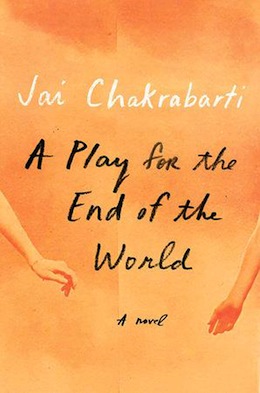
In Chakrabarti’s A Play for the End of the World, the quest is that of child survivor Jaryk Smith, who travels from New York to India in 1972 to collect the ashes of his best friend and fellow Holocaust survivor, Misha, who died of a heart attack. Misha had ventured to India to help a village mount a production of Rabindranath Tagore’s Dak Ghar (translated as “The Post Office”), which Jaryk and Misha had performed when they were under the care of Janusz Korczak (aka Pan Doktor by the children) in Warsaw in 1942.

image - A Play for the End of the World book coverWhile Jaryk, Misha and all the other characters are fictional, Korczak and Dak Ghar were very real. “The play is about a dying child living through his imagination while quarantined,” writes Chakrabarti in the author’s note. “Pan Doktor chose to stage the play to help his orphans reimagine ghetto life and to prepare them for what was to come.”

The Indian villagers are also being prepared for what is to come – they are under threat of expulsion, or worse, from the government; already, protesters have been imprisoned, even killed. The Indian professor promoting the play wants to bring international attention to their plight.

Tangled up in all this is Lucy, who Jaryk loves but abandons in New York when he hears about Misha’s death. One of the many choices Jaryk faces is whether he can accept the happiness that Lucy and life in general can offer him.

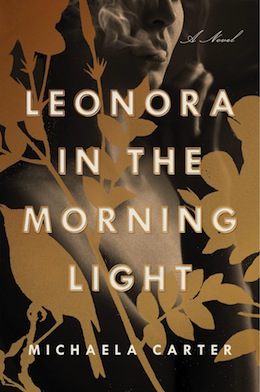
Happiness is a rare and difficult-to-achieve state in Carter’s novel, as well. The Leonora of the book’s title is artist Leonora Carrington, who was born in England in 1917 and died in Mexico in 2011. An unofficial part of the Surrealist movement (because women weren’t allowed), Carrington was an acclaimed painter and writer. Of her relationships, the most famed would be with fellow Surrealist Max Ernst, who was twice her age at their time of meeting.

“I was drawn to Leonora Carrington before I even knew who she was,” writes Carter in the author’s note. “Long intrigued by the Surrealist artists, by their playful take on creativity and their celebration of surprise and strangeness, I had set out, in 2013, to write a fictional story placed among them, set between the wars and with a young woman at its centre.”

image - Leonora in the Morning Light book coverIt was only later that Carter, at the Tate Gallery, came across a piece by Carrington, as well as the book Leonora Carrington: Surrealism, Alchemy and Art by Susan L. Aberth. For months, Carter says, she resisted the idea of writing a novel, but “read everything about Leonora I could get my hands on, as well as everything available about Max and Peggy Guggenheim, who was, I realized, an integral part of their story.”

Ernst had many lovers, including Guggenheim, who helped him get to the United States, but Carter’s novel posits that Carrington was his true soulmate, and that he was Carrington’s. Their affair is interrupted by the Second World War, however, and, after we get to meet the couple in 1937, the novel mainly alternates between Carrington’s story from that point and Ernst’s from 1940, as he is trying to escape from France. While the two met in London, they moved to Paris – Ernst first (Carrington’s father apparently had a hand in Ernst’s work being declared “the product of an immoral mind,” which was an arrestable offence at the time in London), then Carrington.

Leonora in the Morning Light – which is named after a painting Ernst made of Carrington – takes readers to 1943, by which time Ernst is in Arizona and Carrington is in Mexico; both married to other people.

“During her 94 years on this earth, she created thousands of magical, mystical works of art – drawings, paintings, statues, masks, plays, short stories and her masterful novel, The Hearing Trumpet,” writes Carter of Carrington. “She was also an eco-feminist who fervently believed in the innate rights of all individuals – of humans, animals, plants and the earth itself.”

Visit jccgv.com/jewish-book-festival for the full festival lineup and tickets.

Posted on January 28, 2022January 27, 2022Author Cynthia RamsayCategories BooksTags fiction, historical fiction, Jai Chakrabarti, Janusz Korczak, JCC Jewish Book Festival, Leonora Carrington, Max Ernst, Michaela Carter, painting, Rabindranath Tagore, Surrealism, theatre
Memoir, tribute, history

Memoir, tribute, history

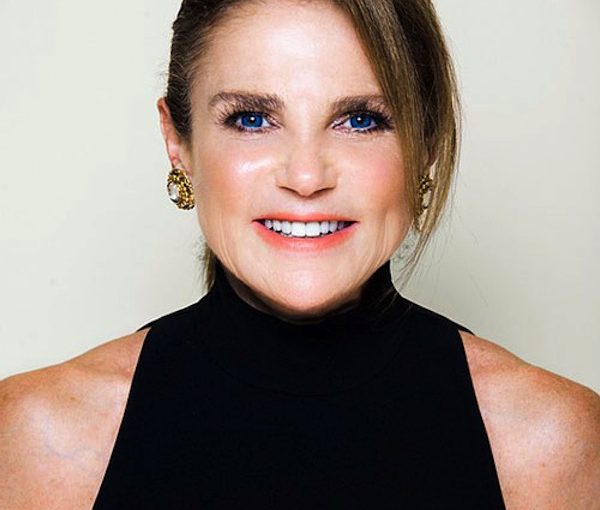
Actor Tovah Feldshuh talks about her new book, Lilyville, on April 15, in an event held in partnership with the JCC Jewish Book Festival. (PR photo)

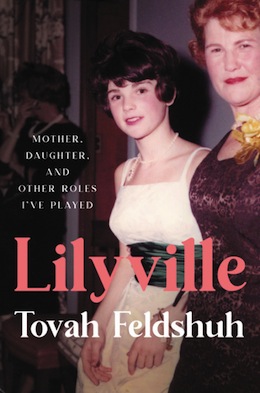
The long-awaited Cherie Smith JCC Jewish Book Festival closing night event – Tovah Feldshuh talking about her new book, Lilyville: Mother, Daughter, and Other Roles I’ve Played – finally takes place on April 15.

The event was postponed to piggyback on the Book Festival of the Marcus JCC of Atlanta and JCC National Literary Consortium In Your Living Room Live series. It will feature Feldshuh in conversation with CNN correspondent Holly Firfer, and promises to be an entertaining evening with many laughs and lots of good advice, if Lilyville is any indication.

Feldshuh’s first book is a unique memoir in that it is framed in terms of her relationship with her mother – the longest and most important of Feldshuh’s roles having been the one she didn’t audition for, being the daughter of Lillian (Lily) Kaplan Feldshuh. The memoir is structured as a theatre piece, starting with the Program Note and ending with Exit Music, with three acts, many scenes and more in between.

Strong women characters, from the fictional Yentl (from the mind of Sholem Aleichem) to the very real U.S. Supreme Court Justice Ruth Bader Ginsburg, dominate Feldshuh’s career. She has performed in theatre, film and television, winning numerous awards and nominations for the excellence of her work. She also has been recognized for her charity work. And, it seems, through it all, family has been a priority.

image - Lilyville book cover

In Lilyville, Feldshuh writes about her upbringing, how and why she became an actor, some of the people and incidents that have influenced her, her marriage (to a lawyer, like her beloved father was, and which she considered becoming at one point) and being a mother herself. Given her successes, readers may be surprised at the professional challenges she has overcome along the way, including being told outright by a director that she’d never make a good actress, she should become an accountant. But the biggest obstacle for her was coming to understand that her mother, who seemed cold and shy throughout Feldshuh’s (and her older brother’s) upbringing, loved them. While hypercritical and emotionally closed throughout their growing-up years, their mother was always there for them. It was only after their father died that their mother – who had been raised to be what was considered a good woman back then, ie. a woman who dedicated herself to her husband and kids, her own aspirations be damned – blossomed.

In an interview with the Detroit Jewish Book Fair, Feldshuh said about writing Lilyville that she “felt compelled to tell her [mother’s] story and mine and how the two of us had a lifelong journey toward each other. In essence, I dig down into the primal relationship between parent and child, with the specifics between mother and daughter.”

Luckily for the women, they had the time to repair and build their relationship, as Feldshuh’s mother lived to 103. Through that century-plus, Lily Kaplan Feldshuh, who was born before women were given the vote in the United States, witnessed countless social, cultural and technological changes, and Lilyville is partly a history of women’s rights in that country.

General admission to Feldshuh’s book talk is free. Admittance to the pre-event meet-and-greet portion of the event comes when, in addition to registering, you purchase the book; the $36US includes shipping and you will receive a copy with a signed bookplate. Visit jccgv.com/jewish-book-festival.
Format ImagePosted on April 2, 2021March 31, 2021Author Cynthia RamsayCategories BooksTags acting, JCC Jewish Book Festival, Lilyville, memoir, Tovah Feldshuh
Novel journeys shared

Novel journeys shared

Ilana Masad participates in the Cherie Smith JCC Jewish Book Festival on Feb. 23. (photo from the JBF)

Women are at the forefront of two new books. Specifically, how we perceive their (our) roles. Especially, with regard to motherhood.

photo - Myriam Steinberg participates in the Cherie Smith JCC Jewish Book Festival on Feb. 24
Myriam Steinberg participates in the Cherie Smith JCC Jewish Book Festival on Feb. 24. (photo from the JBF)

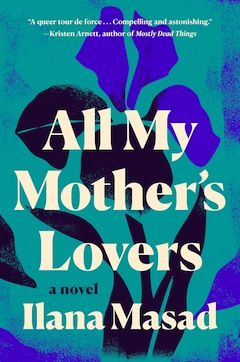
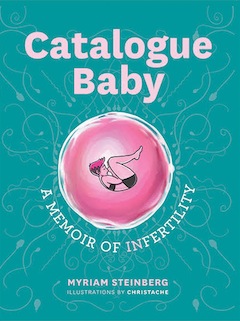
Ilana Masad’s debut novel, All My Mother’s Lovers, is told from the perspectives of a daughter and her mother, and highlights how much we cannot know about the people close to us, while Myriam Steinberg’s graphic novel, Catalogue Baby: A Memoir of Infertility, is a no holds barred sharing of her challenge to become a mom. Both Masad and Steinberg are participating in this year’s Cherie Smith JCC Jewish Book Festival, which takes place online Feb. 20-25.

While the premise is a stretch to my worldview, All My Mother’s Lovers is an extremely relatable read on many levels. Twenty-something Maggie’s mother, Iris, dies in a car crash and Maggie must return home for the funeral and shiva. But, along with her will, Iris has left behind six letters – all addressed to men Maggie hasn’t heard of – and Maggie quickly flees the communal mourning to deliver these missives.

Leaving behind her grief-addled father, who has been the emotional-support parent for her, and her younger brother, with whom she has an older-sister-bossy relationship, Maggie attempts to track down the unknown men. The space from her family and from her current partner, with whom there might actually be a substantial, meaningful relationship brewing, allows Maggie to deal with her long-held insecurities and naïve perceptions of what it means to be married, what it means to be a parent; basically, what it means to be a loving and reliable person. We get to know Iris through the letters and, though Maggie doesn’t get to benefit from these personal musings, she does learn more about her mom, which allows her to connect more deeply with her father, as well as to others in her life.

image - All My Mother’s Lovers book coverMasad’s writing is crisp, intelligent, wry and sensitive. The novel starts with a bang – Maggie answering her brother’s call (telling her about their mother’s death) while having sex with her girlfriend. The pace emphasizes Maggie’s confusion as she tries to understand her mother, and herself. Iris’s letters offer slower moments of reflection, but also were a way for Iris to try and better understand her own missteps and successes.

Steinberg’s Catalogue Baby also took me into a world I’ve never personally experienced, though I do know people who have so wanted to have a child but either could not conceive or had great difficulty conceiving. Steinberg’s refreshing openness on a topic that is often spoken about in whispers, if at all, is most welcome. And her voice is amplified by the colour-bursting, energetic and imaginative illustrations by Christache Ross, which take readers right close up into the physical and emotional upheaval and turmoil that Steinberg has lived.

image - Catalogue Baby book coverCatalogue Baby takes readers from Year One (starting January 2014), and Steinberg’s admission that her dedication to work, organizing the In the House Festival for 11 years, only occasionally gave her the time to put her “loneliness and unrequited motherhood” front of mind. Almost 40 years old at this point, she “didn’t have time to waste with someone who didn’t eventually want a family.” But, people being who we are, Steinberg nonetheless tries to make an unsatisfying relationship work, all while her biological clock (which follows her throughout the novel’s journey) ticked away. From when she finally decides to go it alone to when she gives birth to twins in late 2018, she goes through much. The list includes 123 blood draws, 31 ultrasounds, multiple fertility treatments, five pregnancies, thousands of supplements, about $100,000, help from dozens of family and friends, etc., etc. – and “25 litres of tears.”

To hear more about and from Steinberg, Masad and many other fabulous writers, check out this year’s Jewish Book Festival: jccgv.com/jewish-book-festival.
Format ImagePosted on February 12, 2021February 11, 2021Author Cynthia RamsayCategories BooksTags autobiography, fiction, Ilana Masad, infertility, JCC Jewish Book Festival, LGBTQ+, memoir, motherhood, Myriam Steinberg, women
Community milestones … Lubavitch seders, JCC Jewish Book Award nominees

Community milestones … Lubavitch seders, JCC Jewish Book Award nominees

Ezra Shanken, executive director of Jewish Federation of Greater Vancouver, and Rabbi Chalom Loeub, chaplain of Chabad Jewish Student Centre, Vancouver, help with the delivery of seder meals. (photo from Lubavitch BC)

Lubavitch BC had its largest communal seder ever, with more than 1,000 participants. Families in Vancouver, Richmond, Surrey, Langley, Coquitlam, Burnaby, the North Shore and other areas of the province, enjoyed a complete seder with all the trimmings. And now is the time to say thank you to everyone who made this happen.

Firstly, Rabbi Yitzchak and Henia Wineberg, Rabbi Schneur and Shainy Wineberg, Rabbi Dovid and Chaya Rosenfeld thank Chabad of Richmond and the Community Kollel for partnering with Lubavitch BC to ensure that this project reached the largest number of people; Maple Grill, FortyOne Catering, Miriam Sklar and Lizzy Vaknin for their help with the organization and logistics; Sklar and Meir Jerbi for their help with packing and distribution; David and Diana Benjamin, Ezra Shanken, Glenn Berlow and numerous others for their help with the deliveries; and Rabbi Falik and Rebbetzin Simie Schtroks for coordinating the Langley and Surrey pickups and deliveries.

This project was not easy to accomplish in a short time. Extra amounts of matzah, wine, Haggadot, seder plates and Kiddush cups had to be sourced; ingredients and merchandise had to be purchased; and 1,000 meals had to be cooked and packed under the strict protocols of health and safety during COVID-19. Dozens of heartfelt notes of appreciation were received from members of the community, who shared how the project allowed them to have a wonderful Pesach under these difficult circumstances.

* * *

A program of the JCC Jewish Book Festival, the Western Canada Jewish Book Awards celebrate excellence in writing on Jewish themes and the achievements of authors from Western Canada. The shortlist for the 2020 honours was recently released. The winners were to be announced at a ceremony April 23, but that celebration has been postponed till later in the fall. The nominees are as follows.

  • The Nancy Richler Memorial Prize for Fiction: Daniel Goodwin (The Art of Being Lewis), Alex Leslie (We All Need to Eat) and Rhea Tregebov (Rue des Rosiers).
  • The Pinsky Givon Family Prize for Non-Fiction: Allan Levine (Seeking the Fabled City), Naomi K. Lewis (Tiny Lights for Travellers) and Heidi J.S. Tworek (News from Germany).
  • The Diamond Foundation Prize for Children/Youth: Jackie Mills (Little Synagogue on the Prairie), Ellen Schwartz (The Princess Dolls) and Harriet Zaidman (City on Strike).
  • The Lohn Foundation Prize for Poetry: Alex Leslie (Vancouver for Beginners), Dave Margoshes (Calendar of Reckoning) and Tom Wayman (Helpless Angels).
  • The Kahn Family Foundation Prize for writing on the Holocaust: Olga Campbell (A Whisper Across Time), Susan Garfield (Too Many Goodbyes) and Martha Salcudean (In Search of Light).
Format ImagePosted on April 24, 2020April 24, 2020Author Community members/organizationsCategories LocalTags books, JCC Jewish Book Festival, Jewish Community Centre, Lubavitch BC, Passover, tikkun olam, Western Canada Jewish Book Awards

Posts pagination

Previous page Page 1 Page 2 Page 3
Proudly powered by WordPress