Skip to content
  • Home
  • Subscribe / donate
  • Events calendar
  • Business Directory
  • FAQ
  • News
    • Local
    • National
    • Israel
    • World
    • עניין בחדשות
      A roundup of news in Canada and further afield, in Hebrew.
  • Opinion
    • From the JI
    • Op-Ed
  • Arts & Culture
    • Performing Arts
    • Music
    • Books
    • Visual Arts
    • TV & Film
  • Life
    • Celebrating the Holidays
    • Travel
    • The Daily Snooze
      Cartoons by Jacob Samuel
    • Mystery Photo
      Help the JI and JMABC fill in the gaps in our archives.
  • Community Links
    • Organizations, Etc.
    • Other News Sources & Blogs
  • JI Chai Celebration
  • JI@88! video

Recent Posts

  • Or Shalom reopens its doors
  • JFS from past to future
  • Need holistic approach
  • Sharing stories, advice
  • Journalist shares fears
  • Skills to live together
  • Road to independence
  • Cutting grass with scissors
  • Zionism as a solution
  • Deceit, desire & the divine
  • Reclaiming sacredness
  • Creative project ideas
  • Summer squares and cobbler
  • Thou shalt … summer commandments
  • Legal help for students
  • Revisiting myth of Lilith
  • Wrong person rebuked
  • Canada’s mixed messages
  • Questions for museum
  • Symposium on antizionism
  • Making soccer political
  • CJPAC lauds Pulver’s impact
  • City recognizes Vrba’s legacy  
  • Organ donation saves lives
  • Theodore’s March premiere
  • A healing Shabbaton
  • Supplying healthy food
  • A chime of metal tags
  • Yellowknife seder a first
  • Ishai energizes, unifies
  • A Lag b’Omer to remember
  • Expanding the healing
  • Hannah Senesh – a unique hero
  • Community milestones … May 2026
  • Sharing her testimony
  • Fall fight takes leap forward

Archives

Follow @JewishIndie
image - The CJN - Visit Us Banner - 300x600 - 101625

Tag: health

Dementia panel covers range

Dementia panel covers range

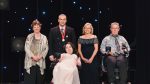
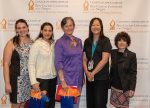
Left to right: Laura Feldman, Dr. Deborah Toiber, Joanne Haramia, Dr. Janet Kushner Kow and Dr. Gloria Gutman. (photo from CABGU)

Alzheimer’s, Dementia and You, an event presented by Canadian Associates of Ben-Gurion University of the Negev on June 5 at the Rothstein Theatre, featured a panel of experts whose presentations and discussion provided insights to both those seeking information and those seeking support.

Keynote speaker Dr. Deborah Toiber of Ben-Gurion University’s department of life sciences, described her approach to neurodegenerative aging as the key factor in understanding diseases like Alzheimer’s. (See jewishindependent.ca/bgu-finds-key-protein.)

Moderated by Simon Fraser University professor emerita Dr. Gloria Gutman, the panel represented a wealth of experience. Dr. Janet Kushner Kow, a geriatrician associated with Providence Health Care and the University of British Columbia, answered questions from the medical perspective. Laura Feldman, with 10 years of grassroots experience at the Alzheimer Society of British Columbia, spoke about the need to seek knowledge and support. Joanne Haramia recounted how families she has cared for through Jewish Family Services have found it easier to cope when they have support from the community. People stayed after the event to mingle and talk to the panelists and ask more questions.

Prior to the event, there was a reception, catered by Nava Creative Kosher Cuisine, for sponsors and partners. Sponsors were InstaFund and Annie Du and Aeron Evans of National Bank Financial, Wealth Management; co-sponsors were the Jewish Community Centre of Greater Vancouver, Jewish Family Services, Louis Brier Home and Hospital, and Jewish Seniors Alliance, with community partners being the Alzheimer Society of B.C., SFU Gerontology Research Centre and the Jewish Independent as media partner.

– Courtesy of Canadian Associates of Ben-Gurion University of the Negev

Format ImagePosted on June 22, 2018June 19, 2018Author Canadian Associates of BGUCategories LocalTags Alzheimer's, Ben-Gurion University, CABGU, dementia, health, science
Record-breaking Courage

Record-breaking Courage

The 2018 Courage to Come Back Award recipients, left to right: Suzanne Venuta (mental health), Josh Dahling (addiction), Ingrid Bates (medical), Jim Ryan (physical rehabilitation) and, in front, Alisa Gil Silvestre (youth). (photo by Norman Tam)

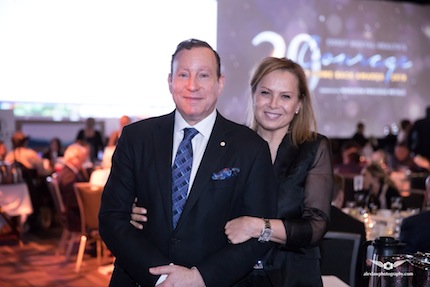
photo - The event was chaired by Lorne Segal, pictured here with his wife, Mélita
The event was chaired by Lorne Segal, pictured here with his wife, Mélita. (photo by Alex Law)

A record $3.1 million was raised at the 20th anniversary Courage to Come Back Awards on May 10 at the Vancouver Convention Centre. The event was chaired by Lorne Segal, president of Kingswood Properties Ltd., and more than 1,800 people gathered to celebrate the extraordinary stories of triumph over adversity of the five awards recipients. Funds raised will go directly to Coast Mental Health to support those living with mental illness.

This year’s recipients were Josh Dahling (addiction), Ingrid Bates (medical), Suzanne Venuta (mental health), Jim Ryan (physical rehabilitation) and Alisa Gil Silvestre (youth). Venuta captured the essence of the evening: “If there’s only one thing you remember from my speech tonight, may it be this: that connections save lives. It did mine. Connections are what hold hope together and hope allows us to dream.” For more inspirational stories, visit couragetocomeback.ca/2018-recipients.

Each year, Coast Mental Health (coastmentalhealth.com) provides services to more than 4,000 people living with mental illness so they can find a meaningful place in their communities – a place to live, a place to connect and a place to work.

Format ImagePosted on June 8, 2018June 6, 2018Author Coast Mental HealthCategories LocalTags Coast Mental Health, Courage to Come Back, fundraising, health, Lorne Segal, mental health, philanthropy
Digital impact on our lives

Digital impact on our lives

(photo from publicdomainpictures.net)

Dr. Simon Trepel, child analyst and psychiatrist at the Manitoba Adolescent Treatment Centre, is seeing an increasing number of children and teenagers using phones – even during sessions.

“I was hearing more and more from parents about some difficulties they were having around technology and screen time,” said Trepel. “I was noticing, even in my own family, how pervasive screens are becoming … as a preferred source of entertainment, as well.

“When this stuff marinates in you for awhile, it makes you curious about deeper questions about what’s going on. It ultimately behooves anybody who is working in mental health to start wondering about all the ingredients that might be contributing to someone’s mental health…. I became more curious about how these devices and screen time might be affecting, not just kids and teens, but, really, all of us.”

According to Trepel, using technology in daily life is no longer a choice. It is a fundamental part of how we all get by. Most of us check our phones several times a day, and conduct business and communication on our phones or tablets almost exclusively.

He said there are about four billion people using the internet right now worldwide, and a third of those people are children and teens. There are about five billion people using mobile phones and a little over three billion people on social media at any given time, he said. And, these are all increases of anywhere from five to 15% in comparison to the previous year.

“These trends are changing how we communicate,” said Trepel. “They are changing how much face-to-face communication we have and the nature of the communication itself. The previous generation would use words and texts. Now, videos, pictures and memos are the preferred way to communicate. It’s changing the very ingredients we use to communicate with one another.”

There are implications to this change, especially in children, whose not yet fully developed brains are particularly susceptible to getting into trouble online. But, Trepel said, there is something that can be done – and it starts with adults getting off their phones and other screens, especially when around young people. We also need to start talking about these issues, as kids who come from homes that discuss such topics tend to be less at risk.

“When there’s a more negotiated amount of technology use and supervision and things like that, that is a good thing,” said Trepel. “But, there are many, many kids who have a combination of not a lot of supervision combined with having an immature brain, and these kids are the ones we are most worried about getting into trouble online.

“We worry that screens are displacing a lot of other activities that might be healthier than being on technology – things like getting adequate sleep or being outside. The amount of hours spent outside is now at about half of what it used to be. It’s gone from about 18 hours a week to about seven hours a week in one single generation.”

Getting a handle on this will not be easy, but it starts with parents making the time to fully understand the tech diet of their kids. Just like we monitor their food intake, we need to monitor their tech intake.

“Sit down with them and let them take you through a typical day,” advised Trepel. “What types of sites are they using and for how long? What types of interactions are they are having on this site? The timing of this is important. Is it the first thing they do in the day, getting on their device? Is it the last thing they do before bed? Do they themselves detect any problems with their screen use? Are they running into any cyber-bullying or being taken advantage of? Do they feel better or worse after using their phones? Do they notice phones cutting into their sleep, or do they notice themselves having a difficult time stopping themselves from checking? This is the beginning of getting data about how your kids and teens are using their phones. But, it’s also starting to ask the question of whether or not this is becoming a problem for your kid or teen.”

Trepel suggested that, when you monitor your kids, you want to make sure it is active monitoring – that you are co-viewing and discussing the sites that they are on. It is also important to avoid spy-type programs, he said, as kids will find ways to work around them.

Aim to be playing together, following each other on social media. Use any opportunity for educational guidance – not so much making it a single conversation, but, instead, an ongoing dialogue about the device. You can ask for their help learning about social media, for example. “I think that’s a very elegant way to cover a lot of bases,” said Trepel. “It allows the parent to learn a lot about what the kid is using, in terms of technology use. But, it also updates the parents as to what these social media sites are all about – how they are navigated, how they are used.

“It may also be a great way for kids and parents to spend more time together, interacting with each other, teaching each other. While they might teach you about Twitter, you might be able to point out various ways they are using the technology that might be helpful or harmful. You might, if the child teaches you Twitter, find out if the child has a public account and is being followed by hundreds of people the child has never met before.

“It’s not only a way to have a child feel good about helping a parent, but, once the parent knows more about the technology, the parent can start to look for red flags.”

Studies have shown that parental behaviour is one of the most powerful influences on a child’s behaviour. So, Trepel suggests taking an honest look at yourself as a parent, about how embedded these devices are in your own life. And then, start to change that for yourself, while also becoming a good role model for your kids.

“You want to be proactive with your kids,” said Trepel. “You don’t want to wait until there’s a problem. You want to educate them to the possibility of problems.

“You also want to be proactive about texting and driving. This really might be the drinking and driving of our generation. I remember, when I was in high school, there was MADD, Mother’s Against Drunk Driving. I think we need some sort of revival of that, looking at parents being concerned about texting and driving. The stats from Manitoba are striking that, just five or 10 years ago, we were seeing maybe 3,000 collisions per year. And, in the span of just a few years, it’s now up to 11,000 collisions involving distracted driving per year – a four- or fivefold increase, about 30 distracted driving collisions a day.”

Trepel said it is best to avoid taking technology away without offering an alternative. Make it easy for kids to see their friends in real life, he said. Let them go over to their friends’ houses, take them places they want to go, and do things they want to do – provide them with in-person opportunities. Play a board game, do arts-and-crafts, encourage them to learn to play an instrument or participate in a sport. Off-screen activities, he said, have a greater likelihood of making your kids feel happy as compared to on-screen activities.

Trepel suggested having your kids turn off their phone notifications at important times of the day, like sleep time, family time, meal time, school time, and so on. And make sure that you do the same.

“Every time we get a signal from our phone, it could be someone liking our photo or giving us a compliment, or something we anticipate might be good,” said Trepel. “And that reward system in our brain kicks into gear and compels us to want to check what the notifications are. Once our screen is on and in our hands, we might end up surfing or doing something else we weren’t even intending to do – at the expense of whatever original activity we were doing before the notification occurred. So, we have to make sure that we turn off all those attention stealers.”

Trepel recommended that parents turn off the wifi after 9 p.m., or even earlier, if they think there will be a significant battle to have their kids turn off their screens in the evening or if it is affecting their ability to do homework.

Or, he added, you can get your kids a phone with no internet capabilities. Some executives, he said, have even switched back to such phones, as they were wasting too much of their time when they had a phone with more tech capabilities.

For starters, Trepel said, begin the conversation. Ask your kids for ways to keep things under control. Dialogue, go back and forth, and find ways that work for your family.

Rebeca Kuropatwa is a Winnipeg freelance writer.

Format ImagePosted on June 8, 2018June 6, 2018Author Rebeca KuropatwaCategories NationalTags cellphones, children, family, health, Simon Trepel, technology, teenagers
Brier biannual campaign

Brier biannual campaign

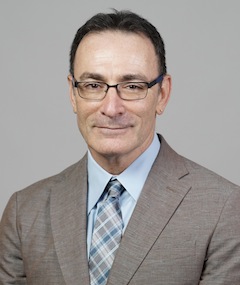
“Louis Brier is in a pivotal point in planning for the future through its redevelopment activities,” said David Keselman, chief executive officer of the home and hospital. (photo from Louis Brier)

The Louis Brier Home and Hospital was started in 1945 by what was then the Hebrew Men’s Cultural Club. The club dreamed of creating a home for Jewish seniors in Vancouver and, in 1946, opened its doors to accommodate 13 residents. Since that time, the facility has grown, changed locations and expanded its services. The Louis Brier is now home to 215 residents, is in contract with Vancouver Coastal Health and is part of a continuum of care known as the Snider Campus, which includes the Weinberg Residence next door.

“Louis Brier is in a pivotal point in planning for the future through its redevelopment activities,” said David Keselman, chief executive officer of the home and hospital. “We are forging relationships with major funders, politicians and academic organizations to facilitate research and best practices.”

Keselman, a registered nurse by training, has been working in the healthcare industry for almost 30 years. He has held a range of progressively more complex and complicated roles, and has worked across the entire spectrum of care – from academia, to acute care, home and community care, public health, and long-term care.

Over the last couple of years, Keselman has been leading the Louis Brier’s efforts to become a leading force in elder care in British Columbia. To help achieve this goal, the Louis Brier Jewish Aged Foundation runs a biannual campaign to raise funds to support the Louis Brier’s work and activities.

“Louis Brier offers a range of services across a continuum of care and provides assisted living services as part of the Weinberg Residence,” explained Keselman. “With the exceptional and generous help of the foundation and with the auspice of a resident- and family-centred care philosophy, Louis Brier Home and Hospital offers a range of unique and significant culturally relevant programming … as well as recreational and rehabilitation activities that are available in very few, if any, other long-term care facilities, custom-tailored to the needs of the residents, their health goals and wishes.”

Regarding this year’s campaign, which started April 16 and runs to June 4, Keselman said, “Of course, we’d like to raise as much as possible. However, as this is a biannual campaign, the goal is to raise at least $1 million.”

He said that, “with the support of the Louis Brier board and the foundation board,” the home has been able to launch “unique and essential programs aimed at supporting the delivery of high-quality care, ensuring that we follow best practices and evidence-informed practice for the best outcomes. Examples of these programs are the quality and risk and resident experience portfolio, and the infection prevention and control practitioner…. We established both of these, signalling a significant change in focusing on the delivery of quality care.”

photo - David Keselman, Louis Brier Home and Hospital CEO
David Keselman, Louis Brier Home and Hospital CEO. (photo from Louis Brier)

The Louis Brier has also continued to develop their recreational, rehabilitation and chaplaincy services. It has purchased a range of equipment to ensure its residents are safe, including wander guard alarms, and it has improved the library and updated the furniture in its lobby and lounge.

“We continue looking for opportunities to enhance the resident experience at the Louis Brier, and are planning to renovate the clinical space, with specialty services provided, such as, dental, ophthalmology and podiatry,” said Keselman.

“There was also a significant investment in staff education and resident programming to ensure we deliver the best care possible and expose our residents to the best available resources, programs and activities,” he added.

Although the Louis Brier does not currently have any vacancies, it also does not have a waiting list.

Access to the home’s publicly funded beds is managed by Vancouver Coastal Health and, although Jewish residents do have priority for cultural and religious reasons, the beds are open to all elderly individuals who require the services and environment of a long-term care facility within Vancouver Coastal Health’s catchment area.

The Louis Brier “is an organization that lives its vision and mission daily and without any hesitations,” said Keselman. “And, despite limited resources, the Louis Brier can proudly say that its services, resources and activities are second to none while, through its foundation, board of directors, physicians, staff and leadership, it continues to search for ways to constantly improve and be a leader in elder care. I’m extremely proud of being the CEO and part of this organization.”

For more information, visit louisbrier.com and, if you go to the bottom right-hand corner of the screen, you can submit a request for a tour.

Rebeca Kuropatwa is a Winnipeg freelance writer.

Format ImagePosted on April 27, 2018May 2, 2018Author Rebeca KuropatwaCategories LocalTags fundraising, health, Keselman, Louis Brier, seniors
My chat with Ed Asner

My chat with Ed Asner

Ed Asner stars in A Man and His Prostate, which is at the Anvil Centre Theatre for two nights only: April 27-28. (photo from ACT)

I did my homework. I had read and watched interviews. I had my questions ready. I was prepared. But Ed Asner is a force of nature – a funny, caring and curious one, but a force of nature nonetheless. And nature is more powerful than the proverbial man. I learned that in high school English class – man has a chance against another man or his own internal demons, but not so much against nature.

I was calling Asner about his upcoming performances in New Westminster at the Anvil Centre Theatre April 27-28. He stars in A Man and His Prostate, written by his longtime friend Ed Weinberger, a multiple-award-winning scribe (including a Writers Guild of America Lifetime Achievement Award), who has written for countless TV series – for soooo many comedies. Both Weinberger and Asner know funny, so this show promises to be hilarious. But its purpose is also to make a point: “that point being,” Asner told me succinctly, “get examined.” Hear that, guys?

I’ve interviewed famous people before so that wasn’t the reason I got somewhat flustered in speaking with Asner. Admittedly, I loved and watched every episode of The Mary Tyler Moore Show and its spinoff drama Lou Grant. I have enjoyed Asner in various other roles over the years, including on Murdoch Mysteries (as Santa Claus, of all things) and, of course, as the voice of Carl Fredricksen, the grumpy protagonist in Up, who made me cry. Hearing such a well-known voice respond to your questions is very cool, and a little unnerving, but there was more to it.

I called Asner at the number I was given by the publicist for the local show. The woman who answered the phone simply said he’d had to leave and that I should try his cell, so I did, thinking nothing of it. The connection wasn’t great, but I reached Asner – he was in an L.A. hospital waiting to get a CT scan. When I wished him well and said we could reschedule the interview, he said, “Let’s try to talk now. It’ll help me pass the time.”

As I started asking him questions, he stopped me: “Are you uncomfortable doing this?”

“No,” I said, “I’m happy to keep your mind off things if that’s going to help.” I got as far as finding out that Weinberger had approached Asner about a year and a half ago to take on this role, but the line really was bad and we weren’t hearing each other – he said he’d call me back. But it was Asner’s righthand man (Nick, I think) who phoned, telling me that Asner had gone in for his CT, and they would call again once it was complete.

Next call: “Are you OK?” I asked.

“I’m fine. Well, maybe a little dizzy,” said Asner. Or, at least that’s what I think he said. After a spike of feedback came through the phone, I admitted, “I can barely hear you.”

In a louder voice, enunciating carefully and speaking slowly, he responded, “I said, maybe a little bit of syphilis.”

I might have taken a beat before saying, “Oh my. Really?! Is that the headline I can put?”

While it may not be apparent on first meeting, I can be bawdy with the best of them, and I enjoy such banter when all involved are of age and it’s in good fun. And this would turn out to be one of the most fun interviews I’ve conducted.

Laughing, I said, “So it all went well, the CT scan?”

It had indeed. He’d had a fall but was OK. I thanked him for calling me back, and he let me know, “Well, I’m reversing the charges.”

“You should!” I said. “You’re paying for this now. Oh my gosh. I was hoping to get my parents to pay for it.” (I was in Ottawa, and was calling him from my parents’ house.)

“Ah, no, no, no,” he assured me. “Anyway, you’ve got a lovely voice.”

“As do you, of course. But a little more famous than mine.”

“Well, I’ve been working at it longer.”

We eventually returned to where we had left off. “Were you involved in any of the writing process, or is there improv involved?” I asked about the show.

“Not on this,” said Asner. “I worked with him [Weinberger] on our book together, called The Grouchy Historian, which came out in October. We worked together on that, but he wrote A Man and His Prostate all by himself.”

“And you obviously liked what he wrote.”

“I love it.”

Asner said his first performance of A Man and His Prostate was in the fall of 2016, but then he stopped the interview again, leaving the phone with Nick – the two were still at the hospital, about to grab a very late lunch. Getting into a rhythm for this interview was proving impossible. Case in point, when Asner returned to the line, he started interviewing me. Why was I calling from Ottawa? I explained I was at home for Passover and asked if he had attended a seder. “No, we were on the road,” he said, going on to ask me about the weather in Ottawa, how many were in my family, whether I had grown up in Vancouver. When I let him know that I had grown up in Winnipeg, he said, “Oh, God.” And, while I fumbled to regain my role as interviewer, he continued his train of thought, “Froze your ass off didn’t you?”

“I did,” I admitted. “And that’s why I live in Vancouver now.”

After some PG-rated politically incorrect exchanges, I managed to get back to my questions.

The first shows of A Man and His Prostate were in California, he said, then they did a few in New York.

“Do you do what the show preaches? Do you get regular prostate exams?” I asked.

“Well, I’m due for one, I must tell you,” he said.

Asner called A Man and His Prostate “wonderfully funny,” and said “it stresses a very important point – that point being, get examined.”

He said the show is “very rewarding to do because the laughter is prevalent.”

At 88, he has no plans to retire. As for his beginnings in the profession, he said his desire to be an actor “didn’t achieve consciousness until I did the lead in the play at university.” He said, “I had done radio in high school, and loved it, but full-fledged stage-acting, I hadn’t thought of that.”

That doesn’t mean he didn’t like the spotlight as a kid. “I loved to get up and sing Adon Olam louder than anyone else,” he said, adding, “My bar mitzvah was a failure.”

He explained, “I spoke too fast, and angered my father. I put my hands behind my back, hovering over my ass, that angered him, as well. I was a prize student … but that bar mitzvah was not of prime quality.”

Asner grew up in an Orthodox home and, he said, “I’d say I pursued acting, probably, as part of my atonement” for his bar mitzvah. He said acting was at least a partial atonement in that it involved “pleasing the crowd, reciting or reading the script correctly and empathetically … all kinds of things.”

While no longer religious, Asner attributed his activism to “the intensity of my raising, the love of my parents, the constant identification as a Jew, [being] born in the time of Hitler.”

The actor has seven grandchildren. When I asked about whether he actively tries to engage them in the world around them, he joked, “Nope. I don’t like ’em.”

“You only hang out with them when you have to?” I asked.

“Uh huh. They don’t like me. It’s a perfect fit.”

I told him how much I enjoyed the Funny or Die video Old People Don’t Care About Climate Change, in which he took part. I mentioned it because one of his lines in it is, “My grandkids are spoiled anyway. They could use a little hardship.” The video’s message, of course, is that younger people must take action to protect the environment.

“I worship the earth,” Asner told me. “I don’t necessarily worship any god.”

Returning to the reason for the interview, I asked him whether he had anything else to say about A Man and His Prostate. “You’ll be there, and you’ll see how right I was to urge you to come,” he said.

The show is about Weinberger’s “journey to discover his inner self both literally and figuratively,” reads the press material. “This near tragedy is masterfully transformed into a poignant monologue perfectly portrayed by Asner as he visits the hospital in preparation for a surgery he needs but doesn’t want.”

“There’s mostly jokes all the way, or building up to a joke,” Asner said. “But then we get to that little section where I talk about the celebrities who have died – it’s a long list of celebrities – and I make the serious point that, every 16 minutes, a man dies of prostate cancer in the United States.”

As we wound up, he said, “You’re a wonderful interviewer, I don’t care what they say about you.”

“You should only believe half the rumours,” I returned.

A charmer to the end, he said, “I can’t wait to meet you.”

After I told him I didn’t think that was an option for me, he asked, “Why not?”

“Because you’re you!”

He told me to tell the publicist, “Well, say that I asked for you.”

“OK,” I said. “And I’ve now got it on tape, so I can actually prove that I’m not just making that up.”

“That’s right,” he agreed. “That’s absolutely right.”

He said, I “could even bring Momma” – my mother had answered the phone when he called back.

“Momma might even fly to Vancouver for that,” I responded before handing the phone over to my mom so she could say goodbye.

For tickets ($75) to A Man and His Prostate at the Anvil Centre Theatre April 27-28, 7:30 p.m., visit ticketsnw.ca or call 604-521-5050.

Format ImagePosted on April 20, 2018April 18, 2018Author Cynthia RamsayCategories Performing ArtsTags Anvil Centre, Ed Asner, Ed Weinberger, health, Judaism, prostate cancer, theatre
S Word changes perceptions

S Word changes perceptions

Craig Miller in a shot from the documentary The S Word, which screened for the first time in Western Canada on March 22 in Winnipeg. (photo from MadPix, Inc.)

Jewish Child and Family Service of Winnipeg (JCFS) partnered with the Suicide Prevention Network and the Jewish Federation of Winnipeg’s Young Adult Division to show the documentary The S Word for the first time in Western Canada. The screening took place March 22 at the JCC Berney Theatre, and the event’s aim was to help put a stop to the silence surrounding the subject of suicide.

“Suicide is widespread and affects all age groups and communities,” said Carli Rossall, JCFS addictions and mental health caseworker. “There are many ‘S words’ that reinforce the behaviour around suicide, such as silence, stigma, shame and struggle. The hope is to turn this around into S words such as support, survival, sharing and solutions.”

Rossall has taken the lead in organizing this project, along with Cheryl Hirsh Katz, JCFS manager of adult services, and Shana Menkis, JCFS director of operations.

JCFS is a member of the Suicide Prevention Network, which is a group of agencies and individuals committed to enhancing the mental wellness and quality of life of people in Winnipeg, preventing suicides and supporting those bereaved by suicide.

“I think our goal with this [event] was to begin to create a safe space within the community where topics like suicide can be freely and openly discussed,” said Rossall. “Staying silent doesn’t make an issue cease to exist. Suicide is a reality in our community as it is in all communities. Healing requires openness, acceptance and dialogue. The more we talk about these things, the more fluency we develop when it comes to hard conversations, [and] the better equipped we all are to support one another.”

“Bringing this film to our city and specifically to this community,” Hirsh Katz added, “will hopefully give a voice to this problem and put a face to the solution.”

The S Word aims to open the conversation surrounding suicide. Its director, Lisa Klein, is a survivor of both her father’s and her brother’s suicides. In the film, she wanted to show the voices of those who survived suicide attempts, as well as others, to provide an honest portrayal of the thoughts and feelings surrounding suicide. She further wanted to provide positive messaging.

“It’s an outstanding collection of stories that, unlike other films on the same subject, shines a light on hope,” said Klein. “It talks about language, relationships, relapses in mental health, and about how recovery is rarely a straight trajectory. It’s very real and raw. I consider it to be one of the best mental health documentaries I’ve ever seen … unique in its approach to an otherwise familiar topic.

“We hear about suicide epidemics, about over- and under-medicating, about the bereaved when it comes to suicide in the community, but, rarely do we hear from survivors. Frankly, I don’t know if ‘survivor of suicide’ is a concept most people even know exists.”

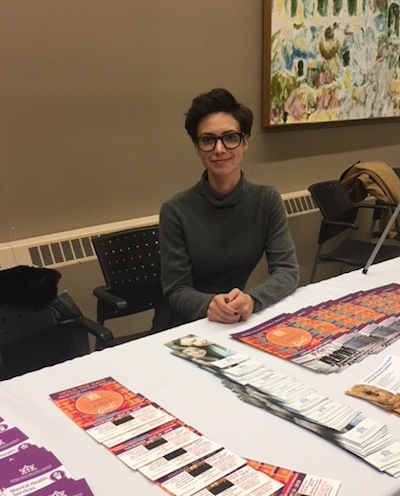
photo - Carli Rossall, Jewish Child and Family Service of Winnipeg addictions and mental health caseworker, at the information table on March 22
Carli Rossall, Jewish Child and Family Service of Winnipeg addictions and mental health caseworker, at the information table on March 22. (photo from JCFS)

“Loss is never easy to talk about,” said Rossall. “But, when loss gets tied together with morality, as suicide often does, an added layer of stigma exists. Anything that challenges our definition of ‘right,’ ‘moral’ or ‘normal’ tends to make us uncomfortable – and it often makes people look to blame.

“Generally,” she said, “people who have thoughts of suicide suffer from intense psychological pain, where there is a feeling of hopelessness, isolation, and no alternative. The reasons for this can vary, from those experiencing mental health challenges or physical illness, to those who have experienced trauma, are struggling financially or have addictions. The rise in suicide rates may be due to life’s increasing pressures and complex circumstances.”

It was in her late teens that Klein lost her father and then, three months later, her brother, to suicide.

“It’s something that obviously is a huge part of my life, my existence, and it wasn’t something that right away I knew what I’d do with,” said Klein. “It affected me greatly. I really didn’t know who to talk to. That was a big part of why I did this film, because it’s so difficult to talk to people when you’ve lost people. They don’t know what to say to you.

“When I came out to L.A. and went to graduate school, I did a film prior to this one…. We started to do documentaries. We did one on bipolar personalities and, when we did that one, we had someone who was in the film who had lost their daughter to suicide. I thought, OK, I’ve dealt with this. And then, almost immediately, I realized that I actually hadn’t. I thought it was time to do something, because people weren’t, and aren’t, talking about it enough, not talking about it responsibly.”

As Klein began researching the topic, she found a large community of people dealing with suicide – so great a number that they were holding conventions in the United States about it. Klein found this resource helpful when it came to finding specific stories to include in her film.

While The S Word is not yet widely available, Klein has worked to get the message across through teachers, mental health professionals and survivors. And she created a toolkit that is on the movie’s website that anyone can access to find ways to bring the message to their communities.

“We’ve signed with an educational distributor and eventually it will be available – probably in the late fall…. We want to help open the conversation, for sure,” said Klein. “We want people to feel less alone, like they’re not the only ones going through this. And we want people to know that they can be there for somebody else, too. Also, to know that, if you, yourself, are struggling, there are people to talk to.

“A lot of times, what can really kill people, what can drive people to this is the silence or the hopeless feeling of being alone – feeling that they have nobody to talk to, and the stigma and shame keep people from talking about it.

“We see this also in the rape culture and the whole #MeToo movement,” she added. “People who were so afraid to talk are now coming forward. And it’s so important to be able to do this. We want to be part of that conversation.”

Klein invited everyone to visit the film’s website – theswordmovie.com – for more information and to watch the many interviews conducted with suicide survivors that did not make it into the film (click on the “#SWordStories” link). She further encouraged people to send in written stories about their own experiences to the website.

In Winnipeg, JCFS is ready to help anyone in need, via their active mental health services program for the Jewish community and counseling services that are open to the general public. In Vancouver, Jewish Family Services is also ready to help.

“Through these supports, there are opportunities for individuals and families to address their concerns, feelings related to suicide, and other issues on a proactive basis,” said JCFS’s Hirsh Katz. “There are also several other community-based agencies in Winnipeg that provide both crisis and non-crisis work with suicide. The Canadian Association for Suicide Prevention is a nationwide organization dedicated to offering support. Livingworks Education Inc. is a leading provider of suicide intervention training through various workshops – the training is focused on identifying, speaking and intervening with people who have thoughts of suicide, and it is invaluable for individuals ages 15 and over who want to help people be safer from suicide.”

Rebeca Kuropatwa is a Winnipeg freelance writer.

Format ImagePosted on April 20, 2018April 18, 2018Author Rebeca KuropatwaCategories TV & FilmTags #SWordStories, Carli Rossall, health, JCFS, Lisa Klein, suicide, survivors, Winnipeg

Rituals can help us with loss

My nephew L’s public elementary school principal just died unexpectedly. She wasn’t old, and it was very sudden. The school closed for an afternoon so everyone could go to a memorial service. He’s upset … as any 9-year-old kid would be. His family lives near my parents, in Virginia, so, when my brother called for grandparent backup, they went right over. They needed to help my nephew start learning and talking about death.

This is so hard, but, in some ways, we are lucky. Judaism has rituals, information and thousands of years of coping with this topic. We can joke about it, sure, but nobody comes out of this thing called life alive. Better to have some things in place ahead of time, so you’re ready for it.

There are those who try to protect kids from sad or upsetting events, and keep them home and shelter them from funerals. This is a disservice to kids, who need to learn how these things work. I experienced several deaths and attended funerals as a little kid, as close family and friends died. Watching my family members mourn, going through shivah and attending services with them to say Kaddish helped me get a grip on the losses of people I loved, even though I wasn’t old enough to do much of this myself.

By comparison, my husband didn’t lose close family members until he was a young adult in his twenties. He didn’t have a deep understanding of traditional Jewish practices, about what would happen and how. In a short span of time, he lost all his grandparents and his mother. Going through the rituals, attending services to say Kaddish and to mourn his mother, was very hard. It was a long year, and we were in grad school, far away from family. However, we used those rituals as a crutch, and it helped us get through it together.

Although my mom is retired, she worked as a Jewish educator and administrator for many years. She still helps manage arrangements for the sale of Jewish burial plots for her Virginia congregation. My mom often helps people as they deal with a sudden death, a long illness or another difficult situation. She was recently invited to talk to the Grade 6 religious school class as they studied Jewish mourning and death.

It turned out that L’s older brother, age 12, was in that class. Although he recognized many of the pictures in my mom’s presentation, he said he learned some new things, too. He recognized the 140-year-old cemetery in Alexandria, where he visits and helps out sometimes. My mom covered basic traditions, but she also talked about how we can comfort friends who lose grandparents – the real details that help us cope with loss. Most poignant for me, though, was the new story my mother told me that she’d mentioned in the class. It was a way to help kids learn to support friends with their losses.

When my mom was 12, there was a phone call in the middle of the night. She heard her dad crying, which she’d never heard before. His father, her grandfather “Poppa,” had died. Her friends at school came up to her. They were sorry to hear about his death. Poppa used to carry around big packets of Juicy Fruit gum in his pockets. He’d hand out sticks of gum to all the kids at the end of High Holiday services. Those friends helped her remember her grandfather in a loving, wonderful way.

In Leviticus, which we read each week at synagogue at this time of year, there are long lists of “shoulds” and “should nots” and instructions for how we should do things. Some of these rules seem rigid. Many aren’t really applicable in a world without ritual sacrifices in the Temple in Jerusalem. However, we have both rabbinic teachings and the Tanakh sacrifice experience. We’re offered tools for how to mourn and how to manage through hard times. That history can propel us forward.

My family and community “practised” with kids so they were ready. True, it may be bending someone’s rules to recite Kaddish in the backyard over a beloved pet who has died. It may not be exactly correct to light a yahrzeit candle and recite Kaddish over a beloved (non-Jewish) elementary school principal who has died, but this “practising” doesn’t matter to most. The Jewish rituals and traditions that exist around death aren’t really about the person who died. It’s about how the rest of us will move forward.

Death is a part of life. It’s dang hard. However, hard things don’t go away because we decide not to talk about them or face them. Instead, brave people conquer difficult challenges through facing them head on. My nephew L is one of those brave people. He uses a wheelchair, signs and uses an iPad communication device to talk – and shows such compassion. He told my mother, “Now I know how you felt when your mom died.”

This week, my nephew heard that we are about to adopt a new dog. He hadn’t realized that one of our dogs died last fall, right before Yom Kippur. He was reassured that our dog Harry was old, and very sick … and that is how most of us die. However, it’s through talking about this that we can move on towards celebrating a new “family member,” too.

Talking about death isn’t easy, but we need to do it – in calm, peaceful ways – long before something sudden happens to us or our families. Talking about death in a Jewish context and acknowledging the value of the rituals that help us cope with it may be one of the deepest ways we can celebrate life.

Joanne Seiff writes regularly for CBC Manitoba and various Jewish publications. She is the author of three books, including From the Outside In: Jewish Post Columns 2015-2016, a collection of essays available for digital download or as a paperback from Amazon. See more about her at joanneseiff.blogspot.com.

Posted on April 20, 2018April 18, 2018Author Joanne SeiffCategories Op-EdTags children, death, health, Judaism
High-tech medicine

High-tech medicine

A 1-year-old boy being treated with a novel gene therapy drug. “Usually, this type of injury with a hemophiliac patient would involve hours in the emergency room, with repeated doses of intravenous coagulation factors,” said Prof. Gili Kenet, director of the National Hemophilia Centre at Sheba Medical Centre. (photo from IMP)

From wearables that allow cardiac specialists at a hospital in Ramat Gan to monitor a patient’s cardiac performance thousands of miles away from home, to giving gravely ill patients a new lease on life with groundbreaking new therapies, Israeli medical innovators are almost literally thumbing their noses at the Angel of Death and changing the way we live.

According to start-up “ecosystem” sources, there are at least 6,000 active start-up companies operating in Israel. Within the realm of digital health, the number of active start-up companies engaged in this field has grown from 65 companies in 2005 to more than 400 in 2018. A significant number of these start-ups are being financially supported by global corporations such as Philips, GE Healthcare, Merck and IBM. Some of these companies have opened up offices close to start-up hubs in Haifa (near the Technion) and Metro Tel Aviv, the recognized “capital” of Israeli business and high-tech.

photo - This digital watch developed by the Sheba medical team and Datos Health is equipped with an app that contains a care path specially designed for each patient
This digital watch developed by the Sheba medical team and Datos Health is equipped with an app that contains a care path specially designed for each patient. (photo from IMP)

“Israel serves as a global incubator of innovative ideas for a variety of reasons,” said Dr. Eyal Zimlichman, deputy director general, chief medical officer and chief innovation officer at Sheba Medical Centre, which is located in Ramat Gan and is the largest facility of its kind in the Middle East. “First of all, it’s in our genes. Secondly, there is the military aspect, where we are taught to improvise when necessary in the field. These things allow us to be naturally innovative. This has trickled down into the medical field, where we are offering the highest level of medical care. I also believe unique innovations in medicine, that will impact the world for the next 100 years, will be developed in Israel.”

Prime examples of Sheba Medical Centre’s innovative efforts revolve around combating potentially fatal diseases such as cancer with immunotherapy, oncology’s new medical “magic bullet”; targeting hemophilia with a novel gene therapy drug; and creating an app for a wearable device used by people with serious heart and diabetes issues.

Immunotherapy is a treatment that uses our body’s own immune system to invade and destroy cancer. CAR-T (chimeric antigen receptor) and TIL (tumour-infiltrating lymphocytes) are not universal cancer cures at this stage. However, there are ongoing clinical trials being conducted for major pharmaceutical companies and America’s National Institutes of Health at Sheba Medical Centre’s oncology unit, where end-stage cancer patients are being treated with CAR-T, which specifically targets leukemia and lymphoma, and TIL, which zeroes in on melanoma and ovarian cancer patients.

Seventeen people with cancer were treated at Sheba during an initial CAR-T trial, after all of these patients had displayed zero improvement in the wake of traditional chemotherapy treatments and bone marrow transplants. Of the 17, 75% had a complete response to the CAR-T. One of those patients, an 8-year-old girl from Bnei Brak, was the first child to achieve complete remission from childhood leukemia. A Sheba centre oncologist said, “When we came to give her the CAR-T cells, she was very, very sick. She couldn’t even get out of bed. When we came back to visit her three weeks later, she was going back and forth on her rollerblades.”

A few weeks ago, a 1-year-old boy became the youngest patient in the world suffering from both severe hemophilia A and an unusual allergy to be treated with a gene therapy drug that only recently was approved for use in the United States. The new drug, developed by an American biopharmaceutical company, contained a “bispecific antibody” that was injected into the child at Sheba Medical Centre. According to clinical trial results published in The New England Journal of Medicine, the drug has shown a 90% reduction in bleeding in children and a 70% reduction in adults.

photo - Prof. Gili Kenet
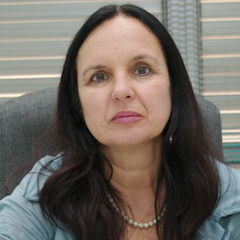
Prof. Gili Kenet (photo from IMP)

“This is a new, exciting era with many novel options for improved care and even complete cure of patients with hemophilia,” said Prof. Gili Kenet, director of the National Hemophilia Centre at Sheba. “The child’s mother is so happy with the new treatment. The child had experienced a head trauma, but required no further therapy at all. Usually, this type of injury with a hemophiliac patient would involve hours in the emergency room, with repeated doses of intravenous coagulation factors. However, there were no complications, as his hemostasis (blood factors) was completely normal.”

Within the realm of what is known as IoT (internet of things), Prof. Robert Klempfner is blazing a trail of what he has dubbed IoMT (internet of medical things), where heart patients are able to engage in cardiac care and rehabilitation using wearables (for example, a high-tech watch), without having to return to the hospital for treatment.

“Today, the challenge for both heart doctors and cardiac care patients is what happens after a coronary event (heart attack), intervention or heart surgery,” said Klempfner. “What kind of regimen can be created for someone who might have had surgery at Sheba but lives and works in faraway places such as the United States or other countries? Within the new world of telemedicine and digital health, we have the technology to create rehab programs that are a win-win experience for both the hospital and the patient.

“We give cardiac care patients a watch,” he explained, “that is equipped with an app developed by the Sheba medical team and Datos Health [an Israeli start-up company]. The app contains a care path specially designed for each patient, containing rehab regimens, education material and secure communication with our patients. The medical centre receives data from wherever he/she is located when they are walking, exercising, doing other physical activities. Our technicians then analyze the info and provide ongoing feedback, assisted by smart algorithms provided by the innovative system.

“The program is also primed,” he said, “for patients who suffer from hypertension and diabetes that are now able to transmit all their measurements automatically to our system. This not only saves the patient time, by not having him/her return to the hospital, it saves the hospital time and bed space, so we are able to treat more patients. This ushers in a new era in digital healthcare.”

For more information on Sheba Medical Centre’s oncology unit, visit shebaonline.org.

Format ImagePosted on April 20, 2018September 30, 2019Author Steve K. Walz IMP MEDIA LTD.Categories IsraelTags cancer, children, health, IoMT, IoT, science, Sheba Medical Centre, technology
Meron tops UBC Triathlon

Meron tops UBC Triathlon

Daniel Meron (photo courtesy)

In his first Olympic-distance triathlon, Daniel Meron placed first in the men’s 30-34-year age category. He topped his category in the University of British Columbia Triathlon March 10.

Olympic triathlons see participants swim one-and-a-half kilometres, cycle 40 kilometres and run 10 kilometres. In a sprint triathlon, which also took place the same day, participants swim, cycle and run half those distances. Meron competed in his first sprint triathlon last August.

“I did my first triathlon on a whim,” he said. “I take part in a local boot camp called November Project [a free fitness movement that began in Boston and has spread to other cities]. They exercise at Queen Elizabeth Park every Wednesday morning. I started going over the summer and just began to get to know some truly phenomenal people, people who regularly win or place in ultramarathons, which are 100-kilometre runs that take place over two or three days. I thought I would like to try some sort of event.”

Meron regularly cycles about 16 kilometres to work and has been a lifeguard and swimming teacher for the City of Burnaby since 2004.

UBC Triathlon participants were equipped with timing sensors that measured when they began and finished each segment of the competition. Results were not released on the day of the event, and Meron was pleasantly shocked when he checked his results online.

“It came as a bit of a surprise,” he said. “It was obviously a huge accomplishment just doing an Olympic distance for the first time and so, honestly, winning my age category was just gravy.”

Meron, a UBC alumnus, is a former Hillelnik and served as vice-president of the UBC chapter of the traditionally Jewish fraternity Alpha Epsilon Pi. He is also an actor and acting teacher.

He is slated to do three or four more triathlons in the coming months.

Format ImagePosted on March 30, 2018March 29, 2018Author Pat JohnsonCategories LocalTags British Columbia, Daniel Meron, health, triathlon, UBC
Juvenile arthritis awareness

Juvenile arthritis awareness

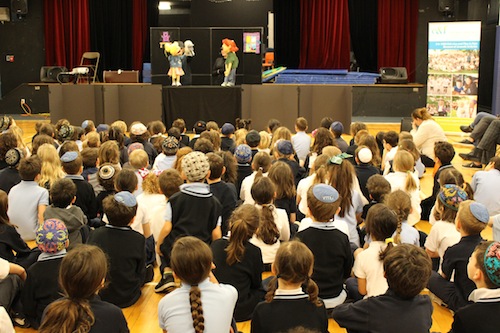
Kids on the Block uses a puppet show to teach kids about juvenile arthritis. (photo from Cassie and Friends)

Juvenile arthritis (JA) affects three in 1,000 kids in Canada, making it one of the most common chronic conditions affecting children today. Yet, JA is still relatively unknown and often misunderstood.

According to Jennifer Wilson, executive director of Cassie and Friends Society for Children with Juvenile Arthritis and other Rheumatic Diseases, “Arthritis has been mislabeled as ‘an old person’s disease,’ leaving kids who suffer from JA misunderstood for their differences and the disease’s complications.”

In 2006, David Porte and Debbie Setton discovered that their then-20-month-old daughter Cassie had JA.

“When Cassie was not quite 2 years old, she woke up one morning and couldn’t walk,” recalled her mom, Debbie. “I took her to the children’s hospital and, after X-rays, blood work and several visits by specialists over the next few weeks, we received the diagnosis of JA, a painful, lifelong autoimmune condition.

“Despite being a physician, I remember feeling very scared and alone, especially as Cassie’s disease progressed to involve more and more joints. Both David and I struggled to find information and support to cope with Cassie’s condition.

“About six months after Cassie was diagnosed,” she said, “David entered the Scotiabank Charity Challenge Run. We were overwhelmed with the support we received from family and friends, raising over $18,000 in a few weeks. We decided to do something long-lasting and create a charity that would help other kids and families like us.”

Debbie and David named the Vancouver-based charity Cassie and Friends, and it has been working to transform the lives of kids and families affected by JA and other rheumatic diseases locally and across Canada.

“Cassie’s disease has followed a pretty typical course of flares and remissions,” said Debbie. “At her worst, she had 16 joints affected (knee, ankles, toes, wrists, fingers). During the flares, she was unable to do the things she loves, like dance. In fact, at times, she found it hard just to walk or hold a pen. Thankfully, she is in a remission phase right now, on two different injectable medications to control the inflammation.”

According to Debbie, Cassie sometimes gets sad or frustrated because of her arthritis or its treatment. But, for the most part, Cassie is exceptionally positive and does not let her arthritis stop her. Further, Cassie’s condition has had an impact on her older brother, Ben, making him a more empathetic person after observing his sister’s struggles, said his mom.

“In the beginning, it was difficult for David and me, not knowing anyone else with a child with JA,” said Debbie. “But, now we feel like we have a whole community around us to share in the ups and downs of Cassie’s disease.”

To help kids learn about JA and other rheumatic diseases, David and Debbie created Kids on the Block (KOB) in 2009. And the KOB puppet show has been traveling, mainly around Metro Vancouver, to raise awareness about childhood arthritis, and to educate students and teachers about the issues these children face.

“The life-sized puppets – decked out in Cassie’s toddler clothes – act like real children,” said Debbie. “They help students understand what it’s like to live with JA and their skits illustrate some of the challenges a classmate with JA (or really any disease or challenge) might be facing: pain, isolation, depression and mobility challenges. Students have the chance to ask the puppets questions at the end of the performance. The puppets also help children feel positive about themselves, accepting individual differences and learning valuable personal skills.”

photo - Kids on the Block was at Vancouver Talmud Torah on Jan. 24
Kids on the Block was at Vancouver Talmud Torah on Jan. 24. (photo from Cassie and Friends)

The first-ever performance of KOB was at Vancouver Talmud Torah, when Cassie was in kindergarten. With Cassie about to graduate from the school, the show was brought back for another performance earlier this year. Cassie suggested it would be more special and have a greater impact if she were to introduce the program with her own story. At the show, there were two other children in the audience with either JA or another rheumatic condition.

“It was my suggestion to bring Kids on the Block back to VTT on Jan. 24, 2018, for the younger kids, including my Grade 1 buddy,” said Cassie. “It was fun to introduce the puppet show to the kids. They all know me and I could explain it to them in an easier way, because I am a kid and they are, too.

“I also really enjoyed watching the show again, because I didn’t remember it from kindergarten. After I had done the introduction, I also got many compliments on it because it was in the weekly email.” (Cassie’s presentation can be seen on YouTube.)

“Arthritis in kids is much more than aches and pains,” said Wilson. “JA is a chronic autoimmune disease characterized by uncontrolled inflammation and pain that can occur in any and often several parts of a child’s body. Children with JA will spend countless hours treating their condition and are often confined to the sidelines in sports, school and even life – especially during painful flares.

“For many children,” she said, “JA will also involve complex medical interventions, such as joint replacements, surgeries and aggressive, immune-suppressing medications, like chemotherapy and biologics. There is no cure and there are few treatments that are safe and specific for a growing child. Sadly, that can lead to feelings of embarrassment, social exclusion and even bullying … for a child who is already dealing with a painful, chronic and sometimes invisible disease.”

KOB is 100% free to schools and is intended for students in kindergarten through Grade 4. The show travels to 40 to 50 schools in British Columbia every year. It is supported in part by the sponsorship of Mardon Insurance and Gore Mutual Insurance Foundation.

According to Wilson, Cassie and Friends is the only charity completely dedicated to kids and families affected by juvenile arthritis and other rheumatic diseases. For more information, visit cassieandfriends.ca or email [email protected].

Rebeca Kuropatwa is a Winnipeg freelance writer.

Format ImagePosted on March 23, 2018March 22, 2018Author Rebeca KuropatwaCategories LocalTags Cassie and Friends, charity, education, health, juvenile arthritis, Kids on the Block, performing arts, Vancouver Talmud Torah, VTT, youth

Posts pagination

Previous page Page 1 … Page 17 Page 18 Page 19 … Page 24 Next page
Proudly powered by WordPress