Skip to content
  • Home
  • Subscribe / donate
  • Events calendar
  • News
    • Local
    • National
    • Israel
    • World
    • עניין בחדשות
      A roundup of news in Canada and further afield, in Hebrew.
  • Opinion
    • From the JI
    • Op-Ed
  • Arts & Culture
    • Performing Arts
    • Music
    • Books
    • Visual Arts
    • TV & Film
  • Life
    • Celebrating the Holidays
    • Travel
    • The Daily Snooze
      Cartoons by Jacob Samuel
    • Mystery Photo
      Help the JI and JMABC fill in the gaps in our archives.
  • Community Links
    • Organizations, Etc.
    • Other News Sources & Blogs
    • Business Directory
  • FAQ
  • JI Chai Celebration
  • JI@88! video

Recent Posts

  • Sharing her testimony
  • Fall fight takes leap forward
  • The balancing of rights
  • Multiple Tony n’ Tina roles
  • Stories of trauma, resilience
  • Celebrate our culture
  • A responsibility to help
  • What wellness means at JCC
  • Together in mourning
  • Downhill after Trump?
  • Birth control even easier now
  • Eco-Sisters mentorship
  • Unexpected discoveries
  • Study’s results hopeful
  • Bad behaviour affects us all
  • Thankful for the police
  • UBC needs a wake-up call
  • Recalling a shining star
  • Sleep well …
  • BGU fosters startup culture
  • Photography and glass
  • Is it the end of an era?
  • Taking life a step at a time
  • Nakba exhibit biased
  • Film festival starts next week
  • Musical with heart and soul
  • Rabbi marks 13 years
  • Keeper of VTT’s history
  • Gala fêtes Infeld’s 20th
  • Building JWest together
  • Challah Mom comes to Vancouver
  • What to do about media bias
  • Education offers hope
  • Remembrance – a moral act
  • What makes us human
  • המלחמות של נתניהו וטראמפ

Archives

Follow @JewishIndie
image - The CJN - Visit Us Banner - 300x600 - 101625

Tag: art

A mind-blowing exhibit

A mind-blowing exhibit

“Sunflowers” by Jocelyne Hallé.

The new show at Zack Gallery, #SeasonsAtZack features Instagram artists. A fundraiser for the gallery, the exhibit is extremely eclectic.

“The theme of the show is based on the theme of Festival Ha’Rikud, ‘Seasons of Israel,’” said Daniel Wajsman, marketing coordinator at the Jewish Community Centre of Greater Vancouver. “Every year, the gallery has a group show to coincide with the festival and the artists submit their paintings to the gallery. This year, we thought: why don’t we do social media instead? These days, everyone has a camera…. We all take pictures with our phones and share them with friends and family. This is one step further. Why can’t we share our photos with everyone? That’s what Instagram does – it is a site where we share our images with the world. That’s what we aimed for in this show at the Zack. We wanted to change the concept of what art is.”

The gallery started with the idea that only artists who have an Instagram account would be featured in the exhibit, but later opened the submission process to everyone, said Wajsman. All of the images from the show will be on the JCC’s Instagram page and prints will be available for purchase in different sizes and formats.

About a third of the photos in the exhibit come from a select group of people: staff members of several Jewish organizations, who went to Israel in April for a professional seminar. The organizations participating in the seminar were the JCC, Jewish Federation of Greater Vancouver, Jewish Family Services, Louis Brier Home and Hospital, Vancouver Holocaust Education Centre and Nava Creative Kosher Cuisine.

“We work closely together, but we don’t all know each other,” said Wajsman. “Some of us are Jewish, and some are not. The seminar had a double goal: to teach us about Israel and Jewish history and to connect us with each other.”

Regular visitors to the Zack Gallery will be familiar with many of the photographers in the exhibit. Some of the photos are by artists who have exhibited previously at the gallery – like Lauren Morris, Michael Abelman and others – and submitted photographs of their paintings for the show.

Another set of participants includes local masters of photography, such as Jocelyne Hallé, Judy Angel and Ivor Levin. Each one has more than one of their images on display.

Halle’s “Sunflowers” photo was taken recently. The bright sunny heads of the large flowers contrast sharply with the heavy stormy clouds overhead, and the juxtaposition evokes strong emotions. “It wasn’t Photoshopped at all,” said Hallé. “It’s just the way I took it.”

In contrast, Angel’s airy images glow and shimmer with transparent sunlight. They are so light, they seem translucent, able to fly off the wall like magical butterflies.
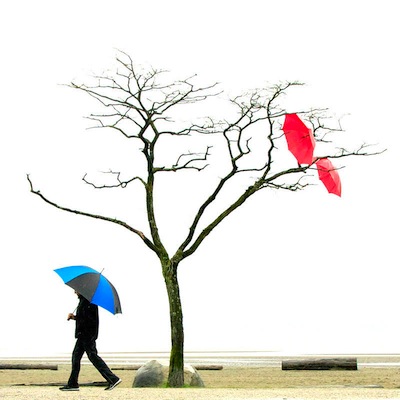
photo - “Umbrellas” by Ivor Levin
“Umbrellas” by Ivor Levin.

Beside them, Levin’s photos look like drawings, their colour schemes and compositions inspired by the rains and umbrellas of the autumn season in Vancouver.

New artists also have a strong presence in this show. For them, having their names under their art on the gallery walls is a fascinating experience. One of this crowd is Linda Lando, the Zack Gallery director. “I’m not an artist,” she said. “I’ve never displayed anything before.”

One of her photos, the colourful “Ein Gedi Night,” was taken on her trip to Israel, as a member of the seminar. “We visited Kibbutz Ein Gedi late at night,” she said. “It is a beautiful floral oasis in the desert. They have amazing flowers, and this blooming tree was near the entrance.”

Robert Johnson, also part of the seminar and a longtime JCC employee, has a couple of his photos in the show. One of them is particularly memorable: a photo of a camel with a sad expression, lying under a tree. The title of the photograph is “This is Not a Camel.”

“He talked to me,” Johnson said with a smile. “People were riding him all day, and he didn’t want to be a riding camel anymore.”

The variety of the images in the show is mind-blowing: from Israeli landscapes to mud bathers on the shore of the Dead Sea to abstract composition. #SeasonsAtZack continues until June 9.

Olga Livshin is a Vancouver freelance writer. She can be reached at [email protected].

Format ImagePosted on May 17, 2019May 16, 2019Author Olga LivshinCategories Visual ArtsTags #SeasonsAtZack, art, Festival Ha’Rikud, Instagram, Israel, photography, Zack Gallery
Responding to the landscape

Responding to the landscape

“ReView 2” by Ian Penn.

Ian Penn is not a new name for regular visitors to the Zack Gallery, which has exhibited his work before. “I like this gallery,” Penn told the Independent. “It’s like a public marketplace. It’s transparent and open. Children come in. Older people. People on the way from their lunch or the gym. The gallery is accessible, the way art should be. I could show at a traditional gallery, but I don’t want to.”

Penn makes one exception to this statement – for his homeland, Australia. “I have a gallery in Australia that represents me, and I exhibit there frequently, once or twice a year,” he said. “Last year, I was an artist-in-residence at that gallery. I gave artistic workshops to high school children. It was fun.”

His current exhibition at the Zack, From the Deck: View and ReView, is dedicated to landscapes, specifically the scenery he sees from the deck of his house: trees and mountains, water and clouds. Penn has painted these landmarks in different lights and different seasons. “I tried to capture different moods,” he said. “Some are grand, panoramic. Others are smaller, more intimate.”

He explained his idea behind the show. “View and re-view are two parts of the process. I look at the view from my house deck, have been looking at it for years. I enjoy the landscape from a single view. I take photographs. I sketch it multiple times. It’s my immediate response to the landscape. I’m part of it. I’m mapping it. This is ‘View,’ but it is not the territory, just a map. It is my understanding of the place.”

Penn’s View paintings are more abstract, sometimes just splashes of colour. What is important to the artist is that every element appears in the right size and shape in relation to the other elements. “I measure all the distances at this stage and mark the proportions. How far is this treetop from that ship passing through? How large are these bushes compared to that shoreline? I make lots of drawings.”

The second part of the process, the review, is done in the studio, later. “This is the second part of my response,” he explained. “I’d think: what is important in that idea? A ‘ReView’ is my emotional and physical answer to the ‘View’ and the landscape. It’s all about the place itself, the place and the painting. At this stage, I’m recreating the territory.”

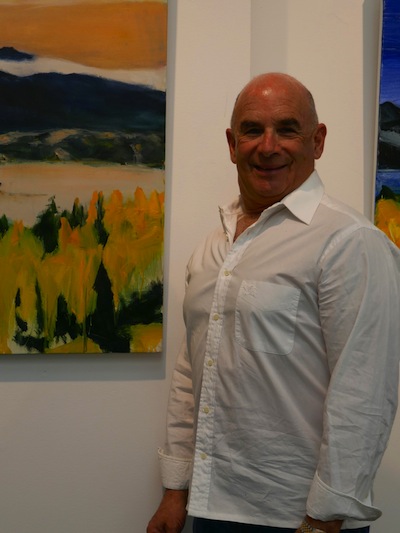
photo - Ian Penn at the opening of his latest solo exhibition at the Zack Gallery, which runs until April 28
Ian Penn at the opening of his latest solo exhibition at the Zack Gallery, which runs until April 28. (photo by Olga Livshin)

Unlike the bold brush strokes of his Views, most of his ReViews are more detailed, while still exploring the same landscape. And the ratio of abstract versus figurative slants towards the figurative. “I’m interested where representation and abstraction interact,” he admitted.

In his ReViews, a tree becomes a more detailed tree, not just a blob of yellow, even while maintaining its impressionistic abstract profile. A ship becomes more identifiable as a ship, not simply a dark squiggle. And a cloud can’t be mistaken for anything else.

In fact, clouds play a huge role in most of the paintings on display: light and fluffy in one image, heavy and menacing in another. “Clouds change constantly; that’s why they interest me. I’m fascinated by change, by periods of transition,” said Penn. “That’s why most of these paintings are done in spring or autumn. Those are the seasons of change. In summer, the landscape is full and the sky is clear, but, with autumn, comes change. The colours of the leaves change. When the leaves fall, the shapes of the trees change. The bones of the landscapes are transformed. The weather changes. Same in spring. By exploring those changes, I’m addressing the changes in our lives.”

By the juxtaposition of constant change within the same view – from one location – Penn follows in the footsteps of one of his favourite artists, Paul Cezanne. “I studied Cezanne. He painted Mont Sainte-Victoire countless times, all different,” Penn said. “He changed the landscape genre forever, took it apart and re-created it.”

Penn’s investigation of the landscape as an art form goes further. “A traditional landscape is horizontal, with certain set dimensions,” he explained. “I’m challenging those dimensions, trying landscapes of different formats. A portrait shape. A diptych, which is much wider than a traditional landscape. I’m playing with different geometry. What if the two parts of a diptych are of different widths: one square, another a wider rectangle? What if both parts are off-squares?”

Penn’s experiments with the shapes of his paintings, with the changing of weather and seasons, makes the show diverse. The exhibition demonstrates the richness of landscape as an art form.

“Landscape as we know it is relatively new in the modern Western art,” he said. “Before the Renaissance, landscape was mostly a background for figures in the composition. It only became a separate art form in the 16th and 17th centuries, after the paint tubes became small enough that artists could take them out of the studios, to paint on locations. That was what the Group of Seven did. That is what I do.”

Penn’s show runs until April 28 at the Zack. For more information about his work, visit ianpenn.com.

 Olga Livshin is a Vancouver freelance writer. She can be reached at [email protected].
Format ImagePosted on April 19, 2019April 17, 2019Author Olga LivshinCategories Visual ArtsTags art, Ian Penn, landscape, painting, Vancouver
Tapestry up for raffle

Tapestry up for raffle

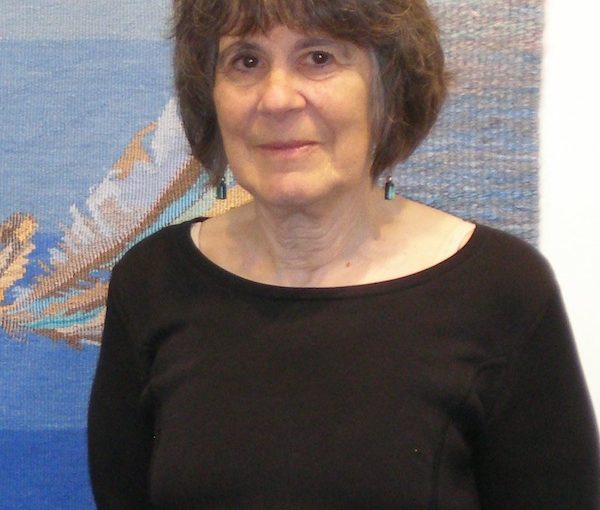
Barbara Heller (photo by Olga Livshin)

Temple Sholom’s Dreamers and Builders gala is not only a time to celebrate, but to raise funds for the synagogue. In addition to honouring Jack Lutsky and Susan Mendelson, this year’s sold-out event on May 5 will include a silent art auction at the dinner and a raffle, the bidding for which has already started.

“We have art donations for the silent auction from members of the synagogue, Ian Penn and Ivan Gasoi, as well as from Dina Goldstein and Gordon Smith, and a tapestry by Barbara Heller for the raffle,” said Karen Gelmon, gala co-chair, in an interview with the Independent. “Barbara is a member of Temple Sholom and an internationally known tapestry artist. Her works are very valuable, unique and truly remarkable.”

Gelmon noted that the synagogue has several tapestries by Heller on its walls. “There are two magnificent pieces that are on either side of the ark at the front of the sanctuary,” she said. “They are wonderful and loved by the congregation. She has donated two other works that are in another room and are also very appreciated. All these pieces have been there for more than 20 years and are fixtures at the synagogue.”

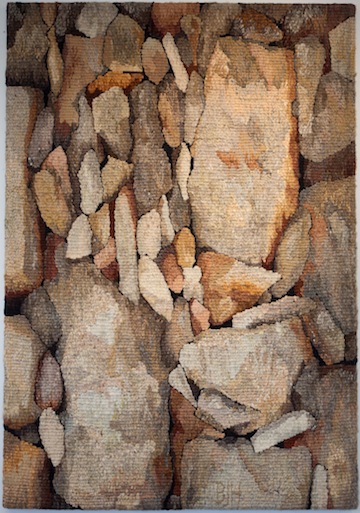
The raffle features the tapestry “Stones 22 – Stonefall,” the 22nd in Heller’s Stonefall series.

“I have been weaving these tapestries of stone walls and stones on the ground every few years for decades, between more difficult pieces,” Heller told the Independent. “I love these stone walls, built by man without mortar or cutting the stones to fit. If these walls fell down, the stones would return to the earth and no one would be the wiser. Yet, I see the spirits of the people who built the walls. Their energy remains in the stones.”

Heller also likes that the tapestries are abstract. “I get to immerse myself in the act of weaving as I transform them from stone into wool,” she explained. “I play with the handspun and hand-dyed yarns, the textures and the colours, without worrying about the underlying message.”

photo - Fabric artist Barbara Heller has donated her work “Stones 22 – Stonefall” to Temple Sholom’s Dreamers and Builders fundraiser
Fabric artist Barbara Heller has donated her work “Stones 22 – Stonefall” to Temple Sholom’s Dreamers and Builders fundraiser.

“Stones 22” was woven in 2013. “It was based on the photos I took in Caesarea on the Mediterranean in Israel,” said Heller. “The site has been home to invader after invader for millennia. It has been an archeological dig since a farmer plowing the meagre soil first uncovered a large stone block and called the scientists. Here, there are definitely ghosts of the people who came before.”

About why she chose to offer one of her artworks for the raffle, she said, “When I was asked to donate a tapestry by Susan [Mendelson] and the organizing committee for Dreamers and Builders, I was happy to say yes. Susan and Jack have supported my art and own a few tapestries. Temple Sholom is my synagogue and has also supported me. It has several of my tapestries, some as donations and two on loan. The bimah is flanked by two of my tapestries that were commissioned at the time of my son’s bar mitzvah, and the library has a tapestry that my mother willed to the Temple on her death. Now, it was my turn to support them.”

The decision of which tapestry to donate was a practical one. “I felt it had to be mid-size, large enough to have a presence but not so large that it would not find a new home in a modern condo,” she said. “And the reference to Israel was also important to me.”

As an artist who makes a living by her art, Heller has given much thought over the years to the concept of donating work.

“It has been awhile since I donated artwork,” she shared. “There was a time a few years ago when art auctions were all the rage for fundraising, to the detriment of the artists. The fundraisers always stressed that the auctions would be good publicity for the artists, but I don’t think so. People always wanted a bargain when they bid at auctions, and I don’t think that the fundraisers were aware of the lost income for the artists.”

An artist must look at a donation as just that, said Heller, as a donation to raise funds for a charity they believe in. “I now do it only on occasion. I am reminded of what my friend, a pianist, does. When approached to play for free, she says, ‘You pay me what my normal fee would be, and then I will decide how much to give back to you as my donation.’ This makes the fundraisers aware of what they are actually asking.”

Gelmon and the organizing committee were well aware of what they were asking. “I think different artists may have different motivations to donate their art,” said Gelmon. “For Barbara, I think she saw this as a worthy cause. It is raising money for her synagogue, where she and her family have been members for years, and it probably gives her great pleasure to contribute.”

To take part in the raffle, visit templesholom.ca/dreamers-builders-2019-raffle.

Olga Livshin is a Vancouver freelance writer. She can be reached at [email protected].
Format ImagePosted on April 19, 2019April 17, 2019Author Olga LivshinCategories Visual ArtsTags art, Barbara Heller, fundraiser, Israel, philanthropy, tapestry, Temple Sholom
Connecting beyond art

Connecting beyond art

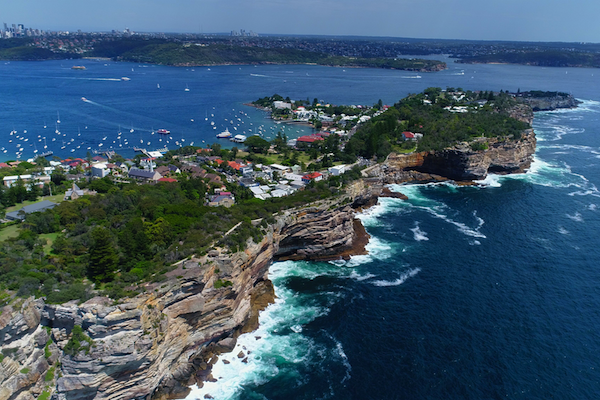
“Sydney Beach Cliff” (Australia) by Talin Wayrynen.

Art Vancouver’s dictum is “Connect. Inspire. Educate.” This year’s fair brings together almost 100 exhibitors from around the world to Vancouver Convention Centre East April 25-28, and features art classes, guided tours, speakers, panel discussions and a café art crawl. Both veteran and emerging artists participate, and the Jewish Independent spoke with a few artists in the Jewish community who are newcomers to the exhibition world: Matthew Weinstein, Talin Wayrynen and Tara Lupovici.

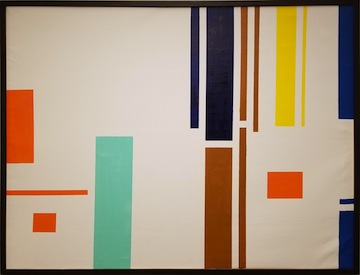
photo - Untitled #29 (2019) by Matthew Weinstein
Untitled #29 (2019) by Matthew Weinstein.

“I had a chance to volunteer at last year’s show,” Weinstein told the Independent. “Seeing the great professionalism demonstrated by the Wayrynen family inspired me to submit a formal application to this year’s exhibition.”

Art Vancouver was launched in 2015 by Lisa Wolfin Wayrynen. It has become somewhat of a family affair, with this year’s exhibitors including her daughters, Taisha Teal Wayrynen and Skyla Wayrynen; her son, Talin Wayrynen; and her sister, LeeAnn Wolfin.

“We just exhibited in Korea last November, and were invited to participate in another show in Seoul in June, and another show in Taiwan in December,” said Lisa Wolfin Wayrynen, referring to her and her children. “The family act is on the move!”

The 2019 Art Vancouver will be Talin Wayrynen’s second time exhibiting at the fair. An aerial photographer, among other things, he will be exhibiting photos from Australia and New Zealand, and possibly Indonesia. Last year, he said, he displayed photos of British Columbia and Mexico.

Weinstein said he will be bringing a select number of pieces to the show. Describing his art as “abstract and minimal in nature,” he said, “The purpose is to bring peace and tranquility to contemporary rooms…. My passion is to make large multi-coloured pieces that are not just pleasant to look at, but also provoke questioning and inspiration.”

About his creative process, Weinstein said, “The numbers and letters may appear as if they are there to provide meaning when in fact they are just as nonrepresentational as the rest of the shapes. One might ask, ‘Why did you add the number 7 at the bottom right corner of this piece?’ My answer would be, ‘There is no concrete reason behind that decision. It is as random as the rest of shapes, colours and signs you’re seeing. If you’re asking this question then I’ve accomplished my goal to generate interest and promote inspiration.’”

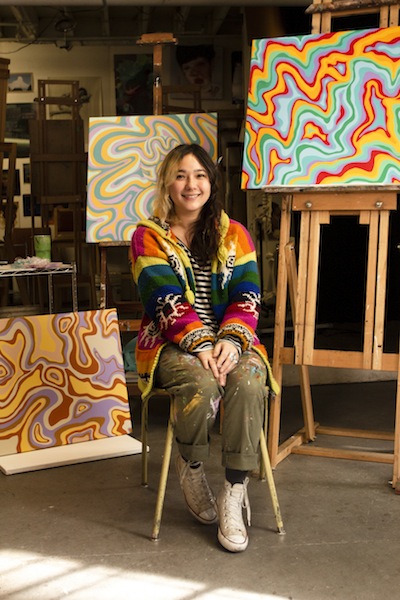
Lupovici, whose artist signature is LUPO, said, “My art is a psychedelic, abstract combination of organic and fluid lines with colour combinations that are inspired by the colours I feel.”

This year’s fair will be Lupovici’s first Art Vancouver, but she has a previous connection to the Wayrynen family. “I went to camp with Taisha and Skyla, Lisa’s daughters,” she said.

A graduate of Kwantlen Polytechnic University’s fashion marketing program, Lupovici said fashion was her main focus, and she has worked in various places, including with her father (Irwin Lupovici), at Bong Wear. “Then, one day,” she said, “I was making dinner and cut a red cabbage in half and boom! My passion for painting was back in my life.”

photo - Tara Lupovici with some of her work
Tara Lupovici with some of her work. (photo by Adrianna Hankins)

She has dedicated the last year or so to painting. “Eventually,” she said, “I will mesh my art and fashion design together and have my LUPO label.”

Half-Jewish and half-Chinese – she also speaks Cantonese – Lupovici said, “I definitely would not be the person I am without all the Jewish culture and community that I have been surrounded by. Jewish summer camp was one of the most memorable, loveliest times of my childhood and I am, to this day, close with many of the people I went to camp with. I would not say it has influenced me in design and art, but I do feel being Jewish and meeting other people in the community is inspiring in itself.”

Weinstein also said his being Jewish has had little influence on his work. However, he said, “Having grown up in a suburb of Tel Aviv, I feel connected to my Jewish identity…. The last time I visited Israel was in 2011 and I am very excited to visit again in May…. My upcoming trip is something I look forward to, as it provides a rare chance to explore my roots and reinforces my personal connection to Judaism.”

More travel is also in Wayrynen’s plans, having recently been to Korea, Taiwan, Indonesia, Australia and New Zealand.

“I started using drones just for fun in 2016 and then, in 2017, started using them for film and photography,” he said.

While he couldn’t describe the exact elements of a “perfect” shot, he said, “I like to have stuff that’s unique and can’t really be replicated – like a wave crashing, shots of wild animals or something along those lines.”

As an example, last summer, in Horseshoe Bay, he filmed a group of killer whales, which was later featured by CBC.

Not just anyone is allowed to use drones, of course, and Wayrynen said permission currently depends “on where and for what reason you fly, but it’s soon to be just a licence no matter what.”

In British Columbia, he said, “[I]t’s unlikely to get a permit to fly anywhere remotely populated and even some parks have issues with it. The states are pretty similar and, as for Mexico, I was working on a TV show that did all the paperwork for it, all I provided was the licence and insurance. We were able to film basically anywhere there during the few weeks our permits lasted.”

Weinstein summed up well the importance of venues like Art Vancouver. “If you’re reading this,” he said, “please feel free to come by my booth at the upcoming show and let me know what you think of my art. I enjoy listening to all criticism (both good and bad) and, if you have other suggestions, I’ll be happy to discuss in person.”

For more information on and tickets to Art Vancouver, visit artvancouver.net.

Format ImagePosted on April 12, 2019April 10, 2019Author Cynthia RamsayCategories Visual ArtsTags art, Matthew Weinstein, painting, photography, Talin Wayrynen, Tara Lupovici
A story told in art and poetry

A story told in art and poetry

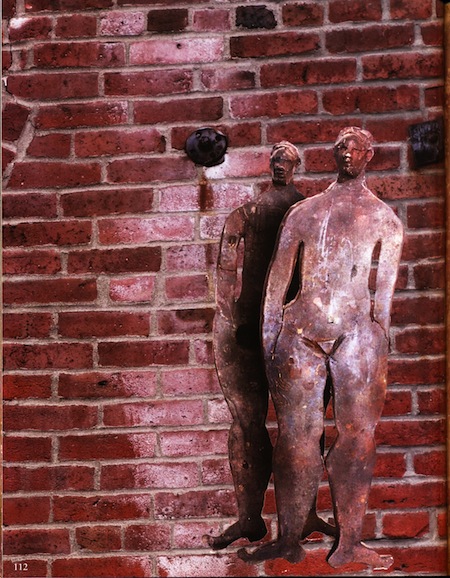
Olga Campbell’s acrylic painting “Remembering,” above, and bronze sculpture “Twins II” are just two of many artworks she includes in A Whisper Across Time.

Grief is many-faceted. Sometimes, we’re not even aware for what we’re grieving. One of the most beautiful passages in Olga Campbell’s A Whisper Across Time: My Family’s Story of the Holocaust Told Through Art and Poetry (Jujabi Press, 2018) is the following poem:

“I was born with a very deep sadness / a sadness and an anger / as a child I didn’t question this / it was the way it was / when I got older my mother had cancer / she died when I was twenty-two / I thought that my sadness was caused by her death / I had no idea that it was caused by her life.”

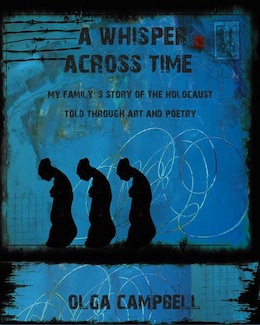
book cover - A Whisper Across Time“A Whisper Across Time is a heart-warming, emotional journey that reminds us of the suffering and pain that war, intolerance and persecutions create, not only for those who had to endure atrocities but also for the children of the survivors,” notes Dr. David Lee Sheng Tin, author of two books on spiritual health and growth, in the foreword.

In A Whisper Across Time, Campbell gives clear voice to the whispers in her ear, “whispers across time.”

“This is the story of one family out of millions of families who went through the Holocaust,” writes the artist, whose mother lost all of her family during the Second World War. It is “the story of survival and death,” “of how trauma of such magnitude is passed from one generation to another to another….” It is also an ardent call for readers to remember Rwanda, Rohingya, Bosnia, Syria, Afghanistan, Sudan, Iraq, Cambodia…. “[O]ne of every 113 people on the planet is a refugee,” writes Campbell, noting, “by the end of 2016, there were 65.6 million refugees, asylum seekers and internally displaced people in the world” and that “racism, antisemitism and ultra-nationalism are on the rise.” She pleads, “eighty years ago, the world looked away / we must not look away now.”

In an interview with the Jewish Independent last November about the exhibit of the same name that helped launch the book, Campbell updated that statistic. “Our world is a chaotic place right now, somewhat reminiscent of the period before the war,” she told writer Olga Livshin. “There are over 68 million people around the world that are refugees or displaced. My book is not only about my family. It is a cautionary tale. It is about intergenerational trauma and its repercussions across time.” (See jewishindependent.ca/whisper-across-time.)

In 2005, Campbell mounted the exhibit Whispers Across Time. “This art show dealt with memories and losses,” she writes in the book. “Many of the pieces in the show were fragmented, partial in appearance, reflecting both a presence and an absence.”

image - “Twins II” by Olga Campbell
“Twins II” by Olga Campbell.

The exhibit featured masks, rusted metal figures, ceramic sculptures, photographs, mixed media and texts that, explains Campbell, “echoed the same theme of loss and regeneration – a life spirit which emerged from the devastation of the past.” Even reduced in size to fit on the pages of a book and taken out of a gallery setting, this artwork is powerful.

In A Whisper Across Time, Campbell shares some of what she has discovered about her mother, Tania, and father, Klimek Dekler, as well as about her maternal grandmother, Ola Akselrod, and her mother’s identical twin sister, Mania, and brother-in-law, who was also an identical twin, but Campbell hasn’t been able to determine which brother – Manasze or Efraim Seidenbeutel – her aunt married. Campbell recounts how her parents met, the atmosphere leading up to the war, and how her parents survived. Her father’s family also survived. There are no records, says Campbell, of what happened to her grandparents or her aunt during the Holocaust; the Seidenbeutel brothers were murdered at Stutthof concentration camp, a few days before it was liberated.

“My mother must have been completely traumatized by her experiences and her losses,” writes Campbell. “She lived and worked and loved, she still danced … sometimes. But the joy in her heart was not so big. The light inside was dim. And, at night, when she was alone in her room, she cried.”

In A Whisper Across Time, Campbell also talks about preparing for the 2005 exhibition, and some of the strange happenings that occurred, such as how multiple attempts to photograph the art failed – a broken camera, saved images that wouldn’t open on the computer. Her use of language, both in poetry and prose, is emotive without being overly sentimental. And her artwork evokes an emotional reaction, often involving some sadness and always demanding contemplation.

For more on Campbell and to purchase A Whisper Across Time, visit olgacampbell.com.

Format ImagePosted on April 12, 2019April 10, 2019Author Cynthia RamsayCategories Books, Visual ArtsTags art, Holocaust, memoir, Olga Campbell
About the cover art – Passover 2019

About the cover art – Passover 2019

Moses and Aaron lead the Israelites to the Red Sea in this still from Nina Paley’s feature-length animated film Seder-Masochism, which screened at the Vancouver International Film Festival last year and is available to view for free online at archive.org/details/sedermasochism. Being in the public domain means that all of Paley’s animation and images are free for anyone to use. Nonetheless, the Jewish Independent requested and received her blessing to run the images from the film that grace the cover of this issue and its Passover section.

According to sedermasochism.com, the film “loosely follows the Passover seder story, with events from the Book of Exodus retold by Moses, Aharon, the Angel of Death, Jesus and the director’s father. The film puts a twist on the traditional biblical story by including a female deity perspective – the Goddess – in a tragic struggle against the forces of patriarchy.”

The feature was “in the works since 2012, when Paley first animated a scene called This Land Is Mine, a parody about never-ending conflict in the Levant, which has been viewed over 10 million times on various online channels.” Paley has written and designed a companion book, The Seder-Masochism: A Haggadah and Anti-Haggadah, which can be purchased through Amazon.

Paley is also the creator of the animated musical feature film Sita Sings the Blues, which, her bio at palegraylabs.com notes, “has screened in over 150 film festivals and won over 35 international awards.” It continues: “Her adventures in our broken copyright system led her to join questioncopyright.org as artist-in-residence in 2008. Prior to becoming an animator, Nina was a syndicated cartoonist. A 2006 Guggenheim Fellow, she also produced a series of animated shorts about intellectual freedom called Minute Memes. Nina began quilting in 2011 as a way to do something real with her hands after years of pushing pixels.”

Readers can find out more about Paley at blog.ninapaley.com.

Format ImagePosted on April 12, 2019April 12, 2019Author The Editorial BoardCategories Celebrating the HolidaysTags art, film, Nina Paley, Passover, Seder-Masochism
Milestones … Shapira, Or Shalom, Baumel Joseph, Respitz & Krug

Milestones … Shapira, Or Shalom, Baumel Joseph, Respitz & Krug

Adi Shapira brought home a silver medal for British Columbia in the 2019 Canada Winter Games. (photo by Peter Fuzessery Moonlight Canada)

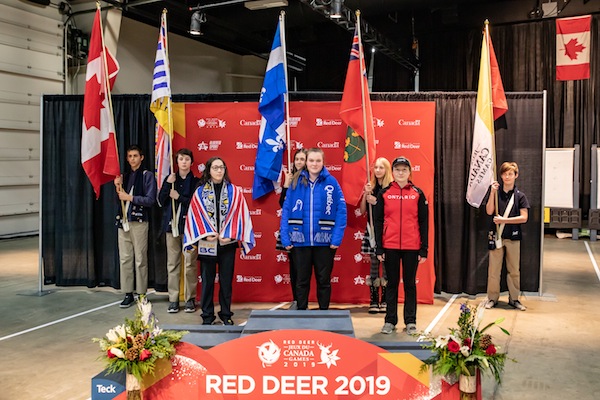
From Feb. 15 to March 3, Red Deer and central Alberta hosted the 2019 Canada Winter Games. Among those taking home a medal was Adi Shapira.

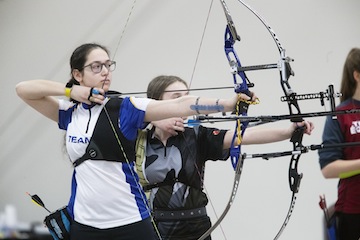
Winning the silver in the archery recurve, individual female event, Shapira said in a Team BC article, “It is an amazing reward for all the training I have been doing and it is just an amazing accomplishment.”

photo - Adi Shapira prepares for a shot
Adi Shapira prepares for a shot. (photo from Team BC)

According to the Canada Winter Games website, Shapira, “who had taken up archery following a school retreat in grades 8 and 9, fought hard in the gold medal match, but Marie-Ève Gélinas, came back to win the gold for Quebec.”

Shapira, 16, is part of the SPARTS program at Magee Secondary School, which is open to students competing in high-performance athletics at the provincial, national or international level, as well as students in the arts who are performing at a high level of excellence. Last November, she won the qualifying tournaments against other female archers ages 15 to 20 to represent the province of British Columbia in the February national games.

* * *

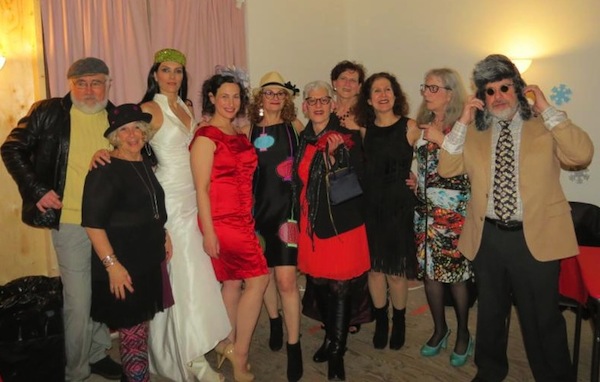
photo - The 2019 Stylin’ Or Shalom fashion models
The 2019 Stylin’ Or Shalom fashion models. (photo from Or Shalom)

Stylin’ Or Shalom on Feb. 20 was not just a beautiful evening: the event raised $1,600 for Battered Women’s Support Services so that they can continue their important work.

Models for the fashion-show fundraiser were Ross Andelman, Avi Dolgin, Val Dolgin, Carol Ann Fried, Michal Fox, Dalia Margalit-Faircloth, Helen Mintz, Ana Peralta, Avril Orloff and Leora Zalik. About 50 people attended and, between cash donations and purchases from the My Sister’s Closet eco-thrift store, this year’s show raised about $600 more than did the inaugural Stylin’ Or Shalom event held in 2017. In addition, many people brought clothing donations, which will be sold at the store, generating further funds for the organization.

* * *

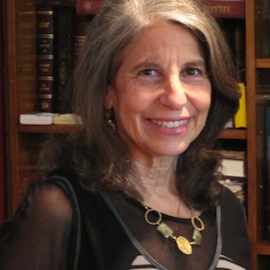
The Association for Canadian Jewish Studies has announced that Dr. Norma Baumel Joseph is the 2019 recipient of the Louis Rosenberg Canadian Jewish Studies Distinguished Service Award. Joseph brings together the highest standards of scholarship, creative and effective dissemination of research, and activism in a manner without rival in the field of Canadian Jewish studies, as well as being a respected voice in Jewish feminist studies more broadly.

photo - Dr. Norma Baumel Joseph
Dr. Norma Baumel Joseph

Joseph’s scholarship is remarkable for her mastery of both traditional rabbinic sources and anthropological methods. Her work on the responsa of Rabbi Moses Feinstein, including an award-winning article published in American Jewish History 83,2 (1995), is based on a close reading of some of the most technical and difficult halachic texts. Her mastery of these sources is also apparent in articles on women and prayer, the mechitzah, and the bat mitzvah. She has used her knowledge of halachah in her academic work on Jewish divorce in Canada, including an article in Studies in Religion (2011) and is a collaborator in a recently awarded grant project, Troubling Orthopraxies: A Study of Jewish Divorce in Canada.

As a trained anthropologist and as a feminist, she realizes that food is also a text and she has made important contributions to both the history of Iraqi Jews in Canada and to our understanding of the history of food in the Jewish community. Her Social Sciences and Humanities Research Council of Canada (SSHRC)-funded research has resulted in recent essays such as “From Baghdad to Montreal: Food, Gender and Identity.” Her ongoing reflections on Jewish women in Canada, first appearing as early as 1981 in the volume Canadian Jewish Mosaic, are foundational texts in the study of Jewish women in Canada.

Joseph has chosen to disseminate her research and wisdom in a variety of ways. Her undergraduate and graduate students at Concordia praise her innovative student-centred teaching. Recently, she instituted a for-credit internship at the Alex Dworkin Canadian Jewish archives, which has been beneficial to both the student and the archive. She is in demand as a lecturer in both professional and lay settings. Her work in film has reached a wide audience. In Half the Kingdom, a 1989 NFB documentary on Jewish women and Judaism, she explores with sensitivity the challenges – and rewards – of being both a feminist and an Orthodox Jew. She served as consultant to the film, and was a co-author of the accompanying guidebook.

Since 2002, Joseph has also committed herself to public education by taking on the task of writing a regular column on Jewish life for the Canadian Jewish News. Her views are based on a deep understanding of Judaism and contemporary Jewish life and are worthy of anthologizing.

Joseph is a founding member of the Canadian Coalition of Jewish Women for the Get and worked for the creation of a Canadian law to aid and protect agunot. As part of her Women for the Get work, she participated in the educational film Untying the Bonds: Jewish Divorce, produced by the Coalition of Jewish Women for the Get in 1997. She has also worked on the issue of agunot, as well as advocated for the creation of a prayer space for women at the Western Wall among international Jewish organizations.

Joseph helped in the founding of the Institute for Canadian Jewish Studies at Concordia, and convened the institute from 1994 to 1997, when a chair was hired. She was also a founder and co-director of Concordia University’s Azrieli Institute for Israel Studies. In 1998, she was appointed chair of the Canadian Jewish Congress National Archives Committee, and has remained in the position since then, under the new designation of chair of the advisory committee for the Alex Dworkin Canadian Jewish Archives (CJA). In this capacity, Joseph has been a forceful and effective advocate for protecting and promoting the preservation of Canadian Jewish archival material and for appreciating the professionalism of the staff. She has lent her time and experience to multiple meetings and interventions at various crucial junctures in the recent history of the CJA, during which she has balanced and countered arguments that would have led to the dissolution or extreme diminishing of the archives as we know it. Her work on behalf of the archives has drawn her into diverse committees and consultations. Notably, she contributed her expertise to the chairing of a sub-committee convened by Parks Canada when their Commemorative Places section was in search of Canadian Jewish women-related content. Her suggestions made during the 2005 meetings have resulted in several site designations over the course of the past 12 years.

Joseph has had a unique role in Canadian Jewish studies and Canadian Jewish life, and is richly deserving of the Louis Rosenberg Award.

* * *

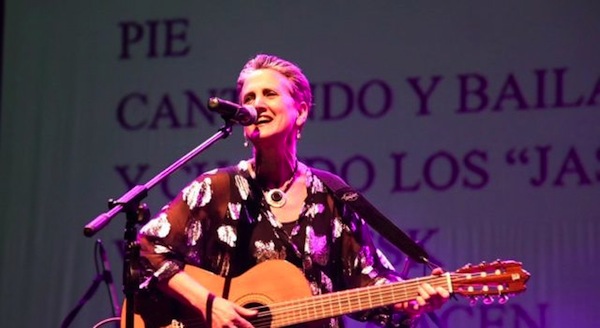
photo - Janie Respitz of Montreal won the prize for best interpretation of an existing Yiddish song at the final Der Idisher Idol contest in Mexico CityIn February, Janie Respitz of Montreal won the prize for best interpretation of an existing Yiddish song at the final Der Idisher Idol contest in Mexico City. She performed “Kotsk,” a song about a small town in Poland, which was the seat of the Kotsker rebbe, the founder of a Chassidic dynasty in the 18th century. The win included $500 US.

Respitz holds a master’s degree in Yiddish language and literature and, for the past 25 years, has performed concerts around the world. She has lectured and taught the subject, including at Queen’s University and McGill University, and is on the faculty of KlezKanada, the annual retreat in the Laurentians.

Respitz was among nine finalists, both local and foreign, who were invited to perform at Mexico City’s 600-seat Teatro del Parque Interlomas before a panel of judges and a live audience.

The competition is in its fourth edition, but Respitz only heard about it last year. She submitted a video of her performing “Kotsk” in September and received word in December that she was in the running.

A Yiddish song contest in Mexico City may seem odd, but the city has a large Jewish community, many with roots in eastern Europe, much like Montreal. The winner for best original song was Louisa Lyne of Malmo, Sweden, who’s also a well-established performer of Yiddish works.

– Excerpted from CJN; for the full article, visit cjnews.com

* * *

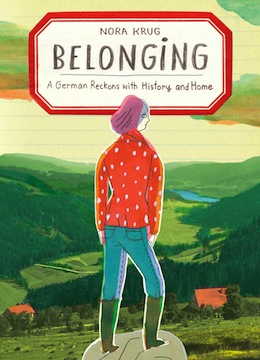
On March 14, at the New School in New York, the National Book Critics Circle (NBCC) announced the recipients of its book awards for publishing year 2018. The winners include Nora Krug, who was given the prize in autobiography for Belonging: A German Reckons With History and Home (Scribner). “Krug creates a stunningly effective, often moving portrait of Krug’s memories and her exploration of the people who came before her,” said NBCC president Kate Tuttle.

image - Belonging book coverKrug’s drawings and visual narratives have appeared in the New York Times, Guardian and Le Monde diplomatique. Her short-form graphic biography Kamikaze, about a surviving Japanese Second World War pilot, was included in the 2012 editions of Best American Comics and Best American Nonrequired Reading. She is the recipient of fellowships from the Maurice Sendak Foundation, Fulbright, the John Simon Guggenheim Memorial Foundation, the Pollock-Krasner Foundation, and of medals from the Society of Illustrators and the New York Art Directors Club. She is an associate professor at Parsons School of Design in New York and lives in Brooklyn with her family.

The National Book Critics Circle was founded in 1974 at New York’s legendary Algonquin Hotel by a group of the most influential critics of the day. It currently comprises 750 working critics and book-review editors throughout the United States. For more information about the awards and NBCC, visit bookcritics.org.

Format ImagePosted on March 29, 2019March 27, 2019Author Community members/organizationsCategories Local, WorldTags ACJS, Adi Shapira, archery, art, Association for Canadian Jewish Studies, books, Canada Winter Games, Janie Respitz, music, National Book Critics Circle, NBCC, Nora Krug, Norma Baumel Joseph, Or Shalom, sports, tikkun olam, women, Yiddish
The dangers of drones

The dangers of drones

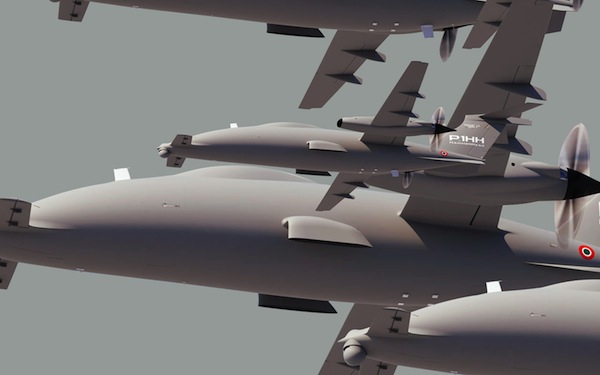
An image of drones filling the sky from Reva Stone’s Falling. (photo from Reva Stone)

Multi-awarding-winning Winnipeg artist Reva Stone researched drones for three years and then began creating art to share some of what she had learned about how the technology affects our lives. The exhibit erasure, which comes from that research, features three works – Falling, Atomic Bomb and Erase. It is on display at the University of Manitoba’s School of Art Gallery until April 26.

“I’m very much an observer of what’s going on with new technologies, so when I saw the impact that UAVs [unmanned aerial vehicles] were starting to have – especially with war and changing the nature of war – I applied for and got a Canada Council [for the Arts] grant to do a lot of research and reading about what actually is happening,” Stone told the Independent.

She went so far as to get two quadcopters, to understand what they really sounded like, and hoping to use them in her art, which she has.

“I was working on this, and then I started thinking about our skies filling up with these commercial and militarized drones and how they were basically machines … that could fall out of the sky … that could crash into each other, that could bring down an aircraft. We were filling up our skies,” she said. “And then, about two years ago, I was reading and realized that we were now targeting not other countries, but targeting humans.”

photo - Artist Reva Stone’s exhibit erasure warns about the use of drones in our society
Artist Reva Stone’s exhibit erasure warns about the use of drones in our society. (photo from Reva Stone)

Stone ended up making five or six individual pieces that deal with different aspects of the use of drones, but relate to one another. Depending on the exhibition venue, she decides which ones will work best together in a particular space.

Originally, drones were developed for spying purposes for the military. Later versions were outfitted with weapons for protection and assault. More recently, commercial drones have been developed. Now, anyone can buy a drone for as little as $20. This easy accessibility is challenging our society, contends Stone, causing hazards to planes in airports, affecting people at parks and disrupting the peace.

“Drones are becoming these things that fly in the air that have no human controllers … that are almost autonomous,” she said.

Stone often uses computers, movies, motors and speakers to help fully immerse visitors in her art pieces.

The work Falling, she said, “is an animated video that I made that has to do with what I see as a very new future, wherein UAVs are ubiquitous, because of civilian, military, commercial and private use.

“It’s almost slow motion or balletic on a massive screen,” she said. “There’s constant falling out of the skies, sometimes flipping as they fall. Sometimes, there’s a drone that has exploded in the sky … sometimes, small and far away and, sometimes, they’re so big when they fall through the sky that they look almost life-size and you’ll have to back away from the screen … that will be the feeling you get. Then, sometimes, there are these little windows that open up and you look through, into another world, and that world is more about what we’re fighting about – the fact that we are actually using these to make war. Other than that, some of them are commercial, some are cute, some are scary looking … and it’s like a continuous rain coming down.”

Atomic Bomb is also a film.

“I started with an early atomic bomb explosion,” said Stone. “It was a 30-second film and I made it into an almost 20-minute video. I really slowed it down and altered the time to give the impression that the person in the exhibition space is looking at a still image caught in time. I show this video together with texts that I found speak to the history of the use of radio-controlled airplanes and UAVs, and to longheld ideas about collateral damage – the relationship between … the use of atomic bombs and the use of drones and collateral damage, which, to me, is a huge issue with the use of drones as military.”

photo - A single frame from Reva Stone’s Atomic Bomb video piece
A single frame from Reva Stone’s Atomic Bomb video piece. (photo from Reva Stone)

The first text is from Harry Truman, the American president who made the decision in the Second World War to use the bomb, and it reads: “The world will note that the first atomic bomb was dropped on Hiroshima, a military base. That was because we wished, in this first attack, to avoid, insofar as possible, the killing of civilians.”

The next one is from John Brennan, Central Intelligence Agency director from 2013 to 2017: “There hasn’t been a single collateral death because of the exceptional proficiency, precision of the capabilities we’ve been able to develop.”

According to Stone, “This is just bullshit. But this is part of the cleaning up of the media presentation of all these ideas and all these things I’ve been researching, that I’ve been noticing going on over time. And, it has actually made me change the name of the work. I was going to call all three of them a totally different name. Recently, maybe a month ago, I changed it to erasure because of the erasure of people, the erasure of a lot of critical dialogue that’s been happening since I started researching in 2015 … how we are mediated, what we are presented with as a culture. The info is so mediated by how it’s reported, and if it’s reported.”

Stone wants “her audience to consider how the capabilities of such technology may be turned against citizens and how governments might, and do, get away with employing them in the name of patriotism in ways that ultimately test the ethical and moral values of its citizenry,” notes the exhibit description. “With news cycles moving so rapidly, the reports of deadly events quickly fall from memory, seemingly erased from public consciousness.”

The third piece, Erase, is interactive. Stone said it is based on what, in her view, the Obama administration practised – the targeting of individuals based on algorithms, mostly guilt by association.

“With this one, I’m actually replicating the procedure,” she said. “I have my two quadcopters that are doing the surveillance and capturing people in the exhibition space, unbeknownst to them. Then, they get captured and saved.

“Then, it’s a process that goes on, that they get played back. And you begin to realize that you’re under surveillance, the people in the space. And, every so often, a target comes up over one of them, one of the captured images. It’s really intense and an explosion occurs, and that person actually comes out of my captured list. That person will never show again. They’ve been erased.”

The exhibit erasure opened Feb. 7. For more information about Stone and her work, visit revastone.ca.

Rebeca Kuropatwa is a Winnipeg freelance writer.

Format ImagePosted on March 15, 2019March 14, 2019Author Rebeca KuropatwaCategories Visual ArtsTags art, atomic bomb, cultural commentary, democracy, drones, military, privacy, Reva Stone, technology, war
Mixing abstract, nature

Mixing abstract, nature

Sidi Schaffer’s current exhibit, In Partnership with Nature, is at the Zack Gallery until March 3. (photo by Olga Livshin)

Sidi Schaffer’s art has gone through several different incarnations. At the beginning of her career, in postwar Romania, she adhered to a realistic approach. “For several years, the central images of my work were people,” she said in an interview with the Independent.

After her family immigrated to Israel, she continued her studies and received her art education degree. “At that time, I fell in love with the Impressionists, especially Cezanne, and started painting more landscape and still life,” she said. “I tried to catch the essence, the light and beauty of my surroundings. Even my palette changed.”

The next stage in her artistic development came after she immigrated to Canada in 1975. It was as if every country triggered a twist in her artistic road. “I needed to establish new roots and master new challenges,” she recalled. “In 1980, I went back to school to study printmaking at the University of Alberta. They told me: ‘Paint abstract, throw away realism.’ I followed my teachers’ good advice … and totally immersed myself in abstraction. I simplified my work; my focus became my inner world, my feelings and my emotions. The art-making process became a sacred ritual.”

But pure abstraction didn’t hold her interest for long. Her abstract compositions acquired random elements of realism. “I tried to make my works integrated, bring together abstract and figurative,” she said. “I tried to express the concept of unity between the internal and the external, between the spiritual and the physical.”

Her current show, In Partnership with Nature, which opened at the Zack Gallery on Jan. 31, combines her inclination towards abstraction, her love of nature and her ability to bridge the realistic and the spiritual in her paintings. It also highlights her innate optimism. The show is airy, uplifting and charming, the works prompting a quiet gladness in viewers.

It’s about flowers, but in an oblique, complex way. “I love flowers,” said Schaffer. “Nature is my biggest inspiration. When it surrounds me, I feel alive, free, and in awe of all its beauty and miracles.”

For years, she has been drying flowers between pages of books. “I have piles of those books in my house,” she said. “I always wanted to preserve the flowers’ beauty, even after the original bloom. I have been doing it since I was a young girl…. In autumn, I also dry leaves with their amazing colours and abstract designs. Nothing is more beautiful. Sometimes, I pick a flower just to remind me of a place and time.”

A few years ago, Schaffer decided to try and incorporate those dried flowers and leaves into her art. “I wanted to make them the subject matter,” she said. “Every picture in this show, except one, has one or more dry flowers or leaves in them.”

photo - “Grace into Focus 1” by Sidi Schaffer is part 1 of a triptych
“Grace into Focus 1” by Sidi Schaffer is part 1 of a triptych. (photo from Sidi Schaffer)

All of the images in the exhibit are mixed media. She experimented with acrylic and oil paint, with old prints and new drawings, with collage. The dried leaves or flowers form the heart of the compositions.

“I wanted to give them importance,” she explained. “Some of the landscapes in this show look fantastic, because dry leaves play the part of trees. Some abstract collages were like memory boxes for me, with layers. There are dry petals there, and lettering and musical notes.”

Schaffer’s collaboration with the elements of nature tends towards whimsical. Flower petals float on the visual breeze. Mundane dandelions turn into exotic palm trees. Waves of musical notation sparkle with rainbow colours.

“I played with the images,” said the artist. “I didn’t take myself seriously when I prepared this show.”

Schaffer said every image in the exhibit started with an idea. “But I never knew how it would come out,” she said. “It’s a process, a discussion between me and the flowers. Sometimes, it is a struggle. I look at the flowers and they supply more ideas. This one flower I had, I put it on the painting and the petals came off. I left them off, incorporated into the image.… From a flash of excitement to the end result, each image reflects my emotional journey. By the time I finish a painting, it seldom resembles my original starting point. What is important for me is the visual poetry, the relationship of form, space, colour and light.”

Schaffer’s exploration into creative possibilities is nourished by her rich inner life. Before her retirement, she taught art and painted commissions, but never, for example, something made specifically to harmonize with anyone’s living room décor.

“I paint what is inside of me,” she said. “I don’t paint for anyone’s sofa. I enjoy the hours I spend in front of my canvas. It is an intense emotional outlet and, when I’m finished, I feel happy, but, at the same time, drained and vulnerable.”

In Partnership with Nature is at the Zack until March 3.

Olga Livshin is a Vancouver freelance writer. She can be reached at [email protected].
Format ImagePosted on February 15, 2019February 13, 2019Author Olga LivshinCategories Visual ArtsTags art, environment, multimedia, nature, Sidi Schaffer, Zack Gallery
Events around town this month – Sisterhood Choir, community artists & Netta

Events around town this month – Sisterhood Choir, community artists & Netta

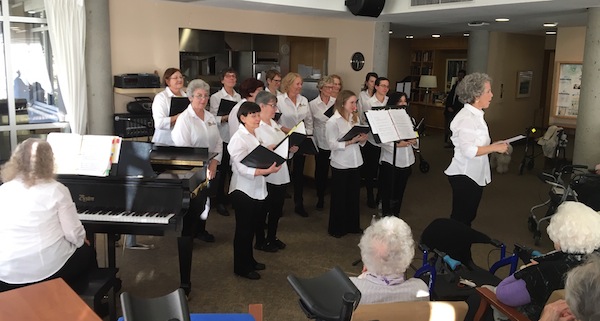
photo - Temple Sholom Sisterhood Choir under the direction of Joyce Cherry with pianist Kathy Bjorseth
(photo from Gordon Cherry)

Temple Sholom Sisterhood Choir under the direction of Joyce Cherry with pianist Kathy Bjorseth performed an afternoon concert of Jewish music at the Weinberg Residence on Jan. 13. Featured were three works by Joan Beckow, a resident of the Louis Brier Hospital and a Temple Sholom member. Beckow was an active composer and music director in Los Angeles and, for a time, was Carol Burnett’s music director. The 23-voice Sisterhood Choir has sung for the annual Sisterhood Service for a number of years, but the recent concert at the Weinberg was a first for them outside of Temple Sholom.

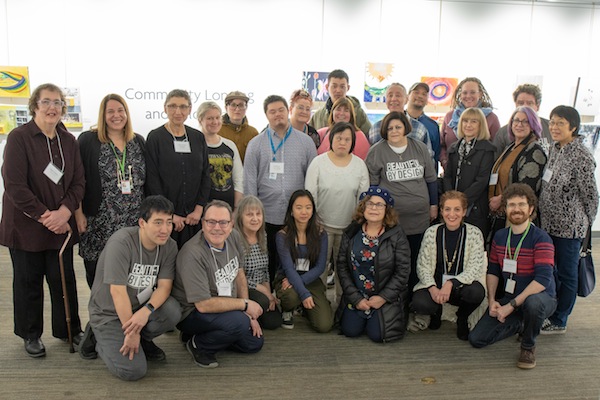
photo - Some of the artists on opening night of the group show Community Longing and Belonging, Jan. 15 at the Zack Gallery
(photo by Jocelyne Hallé)

Some of the artists on opening night of the group show Community Longing and Belonging, Jan. 15 at the Zack Gallery. The exhibit marked Jewish Disability Awareness and Inclusion Month and ran until Jan. 27.

photo - Eurovision 2018 winner Netta Barzilai, right, with Carmel Tanaka, emcee of the night with IQ 2000 Trivia
(photo by Corin Neuman)

Eurovision 2018 winner Netta Barzilai, right, performed at the Jewish Community Centre of Greater Vancouver on Jan. 26 to help celebrate the 18th anniversary of Birthright Israel. Here, she is pictured with Carmel Tanaka, emcee of the night with IQ 2000 Trivia. The dance party was presented by the Jewish Federation of Greater Vancouver in partnership with Axis Vancouver, Hillel BC and the JCCGV.

Format ImagePosted on February 1, 2019January 29, 2019Author Community members/organizationsCategories LocalTags art, Carmel Tanaka, disabilities, JDAIM, Joyce Cherry, Netta, Sisterhood Choir, Taglit Birthright, Temple Sholom, Weinberg Residence, Zack Gallery

Posts pagination

Previous page Page 1 … Page 12 Page 13 Page 14 … Page 18 Next page
Proudly powered by WordPress