Skip to content
  • Home
  • Subscribe / donate
  • Events calendar
  • News
    • Local
    • National
    • Israel
    • World
    • עניין בחדשות
      A roundup of news in Canada and further afield, in Hebrew.
  • Opinion
    • From the JI
    • Op-Ed
  • Arts & Culture
    • Performing Arts
    • Music
    • Books
    • Visual Arts
    • TV & Film
  • Life
    • Celebrating the Holidays
    • Travel
    • The Daily Snooze
      Cartoons by Jacob Samuel
    • Mystery Photo
      Help the JI and JMABC fill in the gaps in our archives.
  • Community Links
    • Organizations, Etc.
    • Other News Sources & Blogs
    • Business Directory
  • FAQ
  • JI Chai Celebration
  • JI@88! video

Recent Posts

  • On war and antisemitism
  • Jews shine in Canucks colours
  • Moment of opportunity
  • Shooting response
  • BC budget fails seniors
  • Ritual is what makes life holy
  • Dogs help war veterans live again
  • Remain vital and outspoken
  • An urgent play to see
  • Pop-up exhibit popular
  • An invite to join JWest
  • Successful campaign
  • Next-gen orthotic wins
  • Tapping into their creativity
  • The holidays à la JACS
  • Garden City of Tel Aviv
  • Sanctuary garden benefits
  • Gardening in Eden …
  • האנטישמיות גואה ביוון
  • Hateful messages intensify
  • Creating entrepreneurs
  • Wrong choice to host Piker
  • Attack on Jewish kids
  • Multiple benefits of a break
  • Dialing up the perfect thriller
  • Empowerment & more
  • Songs in war of peace
  • Successful trip to Cuba 
  • Tackling antizionism head on
  • Thinking of leaving Canada?
  • Kindness as a matter of fact
  • Personal stories, vital lessons
  • Connecting generations
  • Vancouver to Vienna
  • Recipes a form of resistance
  • Community milestones … February 2026

Archives

Follow @JewishIndie
image - The CJN - Visit Us Banner - 300x600 - 101625

Tag: aging

Ageism in medicine

“Studies show that one-third of Canadians admit to having been treated differently due to their age,” said Dr. Samir Sinha, director of geriatrics at Mount Sinai and the University Health Network Hospitals in Toronto.

Sinha, who is also a professor of medicine at the University of Toronto and the director of health policy research at the National Institute on Ageing, spoke on ageism in medicine and strategies for patients to combat this form of discrimination in a webinar presented by the National Council of Jewish Women of Canada (NCJWC) on June 6. He noted that the date of the webinar coincided with the start of Seniors Month in Canada, and shared that he was drawn to collaborate with NCJWC because Mount Sinai Hospital was founded 100 years ago “by a dedicated group of Jewish women.”

Sinha defined ageism, also known as age discrimination, as the act of imposing stereotypes, prejudice and discrimination on others or oneself based on age. He said the term was coined relatively recently, in the 1960s, even though it had existed in Canadian society long before then. He emphasized that “51% of Canadians agree that ageism is the most tolerated social prejudice, and 80% of Canadians agree that older adults (age 65+) are seen as less important than younger generations.”

This sense of diminished importance is commonly manifested in three forms: feeling ignored or invisible, being treated as devoid of value or contribution, and facing assumptions that seniors are always incompetent. Such experiences can have adverse psychological and emotional impacts, including social isolation, diminished trust in healthcare providers and negative self-perception. Sinha highlighted that although ageism may present itself universally, its impacts differ, and it “does not affect all older adults equally,” he said. Intersectionality, defined as the interconnected nature of social categories such as race, gender, age and more, can enhance the degree of ageism that a person faces, he said. In Canada, certain segments of the population are especially vulnerable, including immigrants or those born outside the country.

Narrowing in on Canada’s healthcare system, Sinha shared that healthcare professionals often hold ageist attitudes, perpetuating stereotypes that seniors lack agency and are frail, depressed or irritable. “This can ultimately manifest in undertreatment or overtreatment,” he said.

Undertreatment involves withholding resources or treatment options that would not be withheld from younger patients, while overtreatment refers to an exaggerated approach to patient care. Sinha said these issues were amplified during the COVID-19 pandemic, citing examples where older adults were denied access to ventilators due to assumptions about their life expectancies. This demonstrated the arbitrary use of age to determine life expectancy, he said, while other important health factors should also be considered.

Undertreatment is a key issue among patients with dementia – “many people in society consider dementia a normal part of ageing, but it is not,” said Sinha. He described the stigmatization faced by individuals living with dementia, which often leads to ageism in healthcare settings and subsequent undertreatment due to their condition. In cases like these, “labels can kill,” he said.

Referring to himself and his fellow geriatricians as a “rare and endangered species of physician,” as described by the New York Times, Sinha stressed the scarcity of geriatricians in Canada – only a few hundred among the country’s approximately 100,000 doctors. Nevertheless, he affirmed that “the few hundred of us have long advocated for older persons to be properly cared for in a health system that often does not adequately address their needs.” Further, he emphasized that “everyone has a role to play” in combatting ageism. This sentiment was echoed by Rochelle Garfinkel, manager of donor relations at NCJWC, who reminded the audience that “the tree planted today provides shade for future generations.”

“Eighty-five percent of the boomer generation wants their ageing experience to be different than their parent or grandparents,” added Sinha. He suggested strategies such as more comprehensive training for healthcare professionals and acknowledging the disproportionate impacts faced by marginalized groups.

In her introduction to the webinar, Linda Steinberg, NCJWC president, noted that defining the impacts of ageism will be central to NCJWC in the coming years. NCJWC is the oldest Jewish women’s organization in Canada, she said, and is currently comprised of five sections across the country’s major cities, including Vancouver.

Alisa Bressler is a fourth-year student at Queen’s University in Kingston, Ont. She is an avid reader and writer, and the online director of the arts and culture publication MUSE Magazine. Bressler is a member of the Vancouver Jewish community, and the inaugural Baila Lazarus Jewish Journalism Intern.
Posted on June 23, 2023June 22, 2023Author Alisa BresslerCategories LocalTags ageism, aging, discrimination, health care, medicine, NCJWC, Samir Sinha

Beauty in indrawn breath

An indrawn breath. What are the things that cause your eyes to widen, that are such a surprise, good or bad, that they literally take your breath away? There may not be many things that do that to you, but they do leave an impression. I have found it important to mark them.

Myself, I prefer the happy surprises. When that person you have been dreaming about every night pops the question, that can take your breath away. Perhaps even better, someone you never dreamed of appears before your eyes, sweeps you off your feet and whisks you to a place that never existed before. Your feet rise from the ground and, amazingly, you are bodiless, and it can go on and on, even for a lifetime! Eventually, you have to breathe again, but now you are in a new world, and things have changed forever. Am I raising your expectations too high? Why not ask for the moon? It happened to me.

How about when a new life is born. Then, suddenly, there is an indrawn breath, and a cry – the world has changed forever for all those concerned. And there will be many ups and downs. Try to enjoy the ups as much as you can!

I remember coming upon an iris in a garden, the colour was blue-black. It took my breath away. The beautiful delicacy of an orchid, its shape, colours – that does it for me every time. A piece of music can pierce me to the very core and set me weeping, so that I find it almost impossible to breathe. A summer day in a vineyard, the clouds advancing to attenuate the summer heat, the blush of air on my skin from a gentle breeze as I hide in the shade of a massive tree – I hold my breath and hug myself. When I stand with my fingers brushing the weathered stone of the ancient Wall in Jerusalem, I can feel the thrum of the centuries rumbling under my skin and my body shakes uncontrollably in resonance with the events I am heir to; I feel myself gasping for air, I am transported.

Let me take you into my confidence. I am intoxicated with life, totally drunk and out of my skull. The tsunami of sensory input coursing through the coruscations of my cortex from my eyes, ears, skin, not to mention my taste buds and my gut, have me in a constant state of arousal. And I haven’t even mentioned sex. I kid you not.

The tiny tiptoeing of an insect on my skin brings me to full alert. I wonder where it thinks it is going, what it sees, feels. Will it bite, just feed on my exfoliations, or is it exploring to find a friend? As it crawls across my arm, I contemplate the feel of my muscles when they propel me down the street. I sometimes am impelled to break into a run just to experience the pump of my heart and the puff of my lungs. What a rush to be alive!

Talk about taste and what it does to my senses: the sweet and bitter of wine, the acridity of a cigar, the shock of a shot of single malt, and that’s just the stuff designed to kill brain cells. What about salt and vinegar, spiced meats and garlic, onions and, a favourite, caraway seeds?

There is no bland for me. How about a rib steak, medium rare, seared so the exterior is caramelized, adding salad with a sharp vinaigrette? How about battered cod, with French fries and lots of ketchup? Does this sound like a sensible low-cal diet for an old fogey like me? Let’s not mention desserts, enjoyed in moderation even though I am diabetic. The sight of one in a French restaurant is sometimes enough to excite me to breathlessness. I haven’t mentioned that I love a tart apple pie.

I have experienced Yellowknife at 40-below, with a wind, and the desolate airport tarmac, in scenic Mauritania, at 45˚C, the juicy humidity (with body melting like ice cream) of the Congolese jungle and the aridity (feeling like a dried-up leaf) of Darfur. I know when I am fortunate in passing my time in a temperate climate. Just being in a pleasant place is something I can never take for granted.

And, for a bit of something else, I know what it is to try to survive in the hurley-burley of a chaotic business environment. I have learned to appreciate the joys of single-tasking after being in situations where I have felt like a 10-armed paperhanger, working against time. And more? Believe me, you would not necessarily enjoy seeing your name on the front page of a newspaper or your face on the TV news. Talk again about the indrawn breath.

But it is our human relationships that top it all for me. There is nothing like the right one, or the wrong one, to get us breathing like a steam engine, testing the resistant capacities of our vascular systems. It surely takes the cake for the height of experience. When your moment arrives, and you feel that sense of communion with another person, just smiling at each other across a small space, you feel the need to pinch yourself to prove that the instant is really real. I don’t know about you, but I have to take a really big breath to try and keep calm. I feel I could burst with the ecstasy of the experience, because I can remember the misery of those other so-lonely times. Oh, yes, I can.

Welcome to Life.

Max Roytenberg is a Vancouver-based poet, writer and blogger. His book Hero in My Own Eyes: Tripping a Life Fantastic is available from Amazon and other online booksellers.

Posted on June 9, 2023June 8, 2023Author Max RoytenbergCategories Op-EdTags aging, lifestyle

Positives of being older

While some seniors see growing old as a negative, it really is an adventure, said clinical psychologist Miguel Mendez, a facilitator for the Jewish Seniors Alliance of Greater Vancouver’s Peer Support Services program.

Mendez was the featured speaker at the March 28 JSA-Snider Foundation Empowerment Series lecture, which took place over Zoom. His theme? The “Positive Adventures of Being an Older Adult.”

The program was cosponsored by JSA, Jewish Family Services and the Peretz Centre for Secular Jewish Culture. It was opened by Gyda Chud, coordinator of the JSA’s program committee, and concluded with a Q&A facilitated by Tamar Stein, coordinator of the seniors group at JFS.

Mendez shared how he was close to his grandmother and how well she had organized the last 10 years of her life: she volunteered at a stationery shop, loved to dance with her grandchildren and to travel and visit family; she was passionate about talking with people.

How should we feel about growing older? he asked. Should we be afraid, uncertain, reluctant or should we interpret the changes in a positive way? To get to the answers of these questions, he asked another: What is the difference between an emotion and a feeling? The difference is in the interpretation, he said.

The cultural value placed on beauty and youth contrasts with the wisdom and guidance that comes with aging, Mendez argued. All of us will die eventually and ageism ignores this fact, he said. In his view, we need to regard aging as a gift and an opportunity to age with vitality. Seniors definitely experience loss of energy and of physical abilities, he admitted, but they can maintain vitality with friends and family.

Purpose is the most important part of aging (and life overall), said Mendez. If we lose purpose, we can lose our sense of well-being. Currently, there is an epidemic of loneliness among seniors that can lead to physical and cognitive decline. To try and avoid this decline, Mendez suggested “the three Gs”: grow friendships, good relationships and get along well. We should continue making new friends and developing worthwhile relationships, he said. We need to laugh, have fun and enjoy life – take risks. These efforts will give purpose to life, he said, and attitude follows purpose in making life enjoyable.

In the Q&A, Grace Hann, JSA senior peer support services trainer and supervisor, asked about combating ageism. Mendez said that ageism is learned behaviour and that we should listen to our own values and not societal ones.

Tammi Belfer, JSA board president, asked about strategies to keep a person engaged and participating. While Mendez suggested that people should make an effort to participate in activities, because it is, generally, good for them, people should also make sure to give themselves breaks from taking part, ie. take some days off.

Larry Shapiro, an immediate past president of JSA, stressed that there should be purpose in people’s activities and that people shouldn’t do things just to keep busy. We need to feel fulfilment, he said.

Stein wrapped up the event, thanking the speaker and the 60 participants. She noted that the talk had been recorded and would be on JSA’s website in May.

Shanie Levin is a Jewish Seniors Alliance Life Governor. She is also on the editorial committee of Senior Line magazine.

Posted on April 28, 2023April 26, 2023Author Shanie LevinCategories LocalTags aging, education, health, Miguel Mendez, peer support, seniors
Research in community living

Research in community living

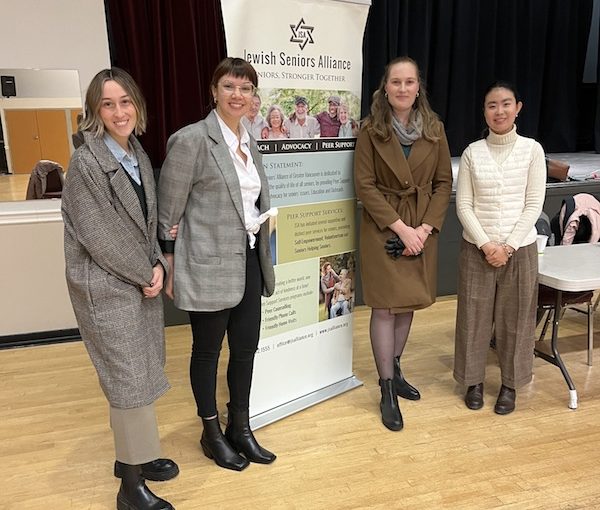
Left to right: Rachelle Patille, Cari Randa, Eireann O’Dea (Jewish Seniors Alliance board member and event moderator) and Boah Kim. (Courtesy JSA)

On Dec. 4, Jewish Seniors Alliance presented their fall symposium: Aging in Place: Gerontology Research in Community Living. The speakers – Rachelle Patille, Cari Randa and Boah Kim – and the moderator, Eireann O’Dea, are all graduate students in gerontology from Simon Fraser University and they shared their research on intergenerational connections, dementia-friendly communities and the role of informal caregivers for older adults.

The event took place at the Peretz Centre but was also available by Zoom. Aside from the JSA annual general meeting, this gathering was the first event presented in a dual format since the outbreak of COVID. Fifty participants joined online and about 20 were present in person.

Tammi Belfer, president of JSA, explained that the JSA’s fall symposium focuses on an educational theme and offers a more serious discussion than other programs. She said JSA wishes to provide outreach, advocacy and education services for all seniors, with the goal being “Seniors Stronger Together.” She then introduced the speakers and turned over the mic to O’Dea, who is a PhD candidate in gerontology at SFU. O’Dea’s interests are in social participation among older adults, particularly in volunteering and intergenerational activities; experiences among ethnocultural minority groups; and generativity. She has been a board member of JSA for three years.

The first speaker, Patille, conducts research focused on “intergenerational opportunities in bridging the gap between generations in Metro Vancouver.” She said she grew up having a lot of contact with her grandmother, and she believes that this fact led to her interest is this field. She defined intergenerational contact as a social benefit that facilitates mutual interaction and exchange between generations, and she discussed factors in society that have impeded such contact; for example, age segregation and geographic divisions among generations that lead to ageism.

Older adults living alone is the number one risk factor for isolation and loneliness, she said. These factors underline the need for connections through programming that will bring older adults into contact with other people, including other older adults. This can be accomplished through such things as home sharing, community programs, tutoring and art projects. These projects allow older adults to be part of the community through participation and mentoring, increasing the person’s feeling of self-worth. For some young people, this may be their first contact with older adults and can lead to reciprocity of social networks.

Patille spoke about generativity, which is the passing down and transfer of knowledge and information 

between generations. She will also be looking at “voluntary kin”; that is, having younger members of society replace missing family for older adults.

The next speaker, Kim, focuses her research interests on integrated care, formal and informal caregiving, continuity of care and healthy aging. One of the difficulties for older adults is navigating complex community and healthcare systems. Two-thirds of older adults have health limitations and thus need a close connection with the healthcare system, she said. A geriatric care manager could be helpful in bridging gaps in services and helping to predict difficulties, she added. Many factors such as age, background or health issues, cannot be changed, but a care manager and caregivers could help with these situations.

The third speaker, Randa, is the project manager of the Public Health Agency of Canada-funded research project titled Dementia-Inclusive Streets and Community Access, Participation and Engagement (DEMSCAPE). The focus is on inclusion of those living with dementia in the 

general community, as 70% live in their own homes. Planned inclusion in neighbourhood design is paramount in creating areas of accessibility, especially outdoor spaces, she said. Randa will be interviewing participants mostly in an outdoor setting to learn their feelings about public spaces with regard to safety and comfort. She is planning a documentary about these issues and the tools available to help, and DEMSCAPE is developing a design and planning guide to aid dementia patients in the community.

In the discussion that followed the presentations, someone noted that many countries are further ahead of Canada in a number of these areas raised. One of these is the availability of affordable home care, which would further facilitate aging in place. Jackie Weiler, a member of the JSA board and also a member of the Senior Advisory Committee for the City of Vancouver, mentioned the idea of a senior planner to promote accessibility. 

Gyda Chud, chair of the program committee, brought the afternoon to a close with a quote from her 99-year-old mother, Gallia, expressing a hope for world peace, diversity, inclusion and social justice for all.

Shanie Levin is a Jewish Seniors Alliance Life Governor. She is also on the editorial committee of Senior Line magazine.

Format ImagePosted on December 23, 2022December 22, 2022Author Shanie LevinCategories LocalTags aging, Boah Kim, Cari Randa, community living, Eireann O’Dea, gerontology, Jewish Seniors Alliance, JSA, Rachelle Patille, science, seniors

Being vs. feeling old

Being old! That is so different from feeling old. Being old is what I think of other people, or what others may think of me. Feeling old is so much more personal. Feeling old is something that has crept up on me so much more recently.

I have noticed being old for a long time, as the ranks of my contemporaries has been thinning out. But now, I am noticing how the distances I want to cover, have to cover, seem so much further away. I am much slower in my reach, slower to pick up things, slower to get up and go. When did I develop that tremor that I never noticed before? Why do I not recall the name, the word, that I used to instantly recall? What’s happening? I must be getting old. It makes me feel old.

I have always reveled in the richness of my memories – memories of things that so many around me have not the least idea about. My past has become an irrelevancy. I have had to comfort myself with the private knowledge that the present all of us so take for granted is based on what I and my contemporaries had built so solidly in the past. If we were to dare recount our triumphs, we would be written off as old bores.

I find I now have a reluctance to add new articles to my closet. What I have there are the things I put on like old companions, which wrap me in comfort. The odds and ends I have accumulated are the precious reminders of my days of derring-do, when I traveled to the heart of darkness without a thought to the dangers that were present on every side. Those days we knew we were immortal.

Like the just desserts for the conquering hero, I earned my reward, albeit at the age of 71. Correcting the errors and omissions of a callow youth, lacking the courage of my convictions, throwing caution to the winds, I gained the love and companionship of my true love after an interregnum of more than 50 years. Thereafter, I had to learn how to appreciate the needs of others as the road to ultimately meeting my own. It took the reasoning and wisdom of advancing age, and altered priorities, to gain the knowledge that enabled me to reengineer the person that I was.

Each day, we launch our enterprise to meet the challenges of life. If the objective is to fill the pantry or the fridge, we count it a victory if we return home without having forgotten any of the items on the grocery list we carried in our minds. If we meet up with others to share a community activity, we count ourselves brilliant if we remember the names of our comrades. We have taken to the practice of notation to ensure we do not miss birthdays and anniversaries of even our closest kin. If all else fails, we resort to internet searches to compensate for any breaches we may come across in the things we surely know by heart. It is always a joint product as we seek to light the fires of memory in each other.

We are engaged in the habit of doing puzzles. I hate puzzles, but they are one of the medicines I faithfully take to counter the breaches in my armour that have accumulated over time. We exercise. Ditto to my personal appreciation of the activity. We socialize. I am most happy at home with a book or an exciting mystery or bang-up violence on my TV.

I do like to be surrounded by younger folk. That gives me a charge. The spontaneity of children is just marvelous to behold. And they are so beautiful to behold. I am sure having them in one’s life keeps one young, even if they sometimes tire you out. It is a good tired!

Generally, I happily do all those things the doctors tell us are good for our health. But no serious food exclusions. I am sure I will expire consuming one of those things we have been warned is bound to bring us to the edge of existence. I bear these admonitions in mind but am an inveterate cheater. Even if the time comes sooner, we have had a good run and I will go out smiling. (Don’t tell my wife, because she absolutely won’t hear of my going off without her.)

Some of us may miss the cut and thrust of being out in the world, struggling with the demons we all have to face, but it is a relief, in the end, to no longer worry about what might be happening behind our backs. We gaze out at the world more or less secure.

Being old without feeling old is the secret, isn’t it?

Max Roytenberg is a Vancouver-based poet, writer and blogger. His book Hero in My Own Eyes: Tripping a Life Fantastic is available from Amazon and other online booksellers.

Posted on November 25, 2022November 23, 2022Author Max RoytenbergCategories Op-EdTags aging, health, lifestyle

Living is hard work

I have never been as old as I am today. I suppose that is true of everybody in the world who is alive. Nothing special, right? Wrong! Wrong! Wrong! It is special – special for everyone of us who are alive. Why is that? Well, aren’t you the lucky people, because I’m going to tell you why. Yes, I am. I know it’s a secret, and that nobody else has the answer – I know that because I just discovered it when I woke up from my afternoon nap. You may think I’m joking, but I’m not. This is deadly serious stuff.

This morning, a Friday, I went to exercises. I go to exercises three times a week: Monday, Wednesday and Friday. I used to kind of enjoy doing that, but I don’t anymore. Lately, I kind of hate these days. And the day I hate the most is Friday. I hate exercising because it hurts, and the day that the exercises hurt the most is Friday. So, I must hate the people who are putting me through these exercises, through that pain, right? Wrong, again. Wrong, wrong, wrong! I love them because they are helping me stay alive.

So, what’s this all about? Am I stupid, or something? If something hurts when you do it, you stop doing it, right? Wrong, wrong, wrong! If I stop doing exercises, I will have less and less control over my body in doing the everyday things that allow me to live independently. These are a bunch of secrets I am telling you, no doubt.

So, as I said, today I am as old as I have ever been. For most of my life, I never gave a thought to such things. I’m not that old, thinking about Methuselah and Moses, and Saparman Sodimejo. Sodimejo claimed to be 146 years old when he died in Indonesia on April 30, 2017. Kane Tanaka of Japan is reportedly 118 years old. Bob Weighton, in the state of New Hampshire, is recognized by Guinness World Records as the oldest living person, at 112. I’ll only be 88 on my birthday next April, so what’s the fuss?

The fuss is that staying alive is hard work. Some of the time, it hurts, particularly if you are trying to stay nimble and in possession of your faculties. If we don’t work at it, we just dry up and blow away, and it happens a lot sooner for most of us than it did for the guys I mentioned above.

Let’s face it, we are losing stuff as we fight the battle for longevity. I can no longer lift myself up to chin the bar like I used to. (The muscle mass vanished when I was looking the other way!) I need a pinch of spice to really enjoy some foods like I used to – I especially need more salt on my food or it seems tasteless. I sometimes need help with a name, and have to use my computer liberally to refresh my memory of things I used to know like the back of my hand. I’m really happy my kids remember my name and I have to be careful to remember all the birthdays and anniversaries. And did I tell you I take a regular regimen of pills, aside from the vitamins B, C, D and E that I ingest?

Today, my Bride asked me what’s on my bucket list. Surely, she said, you must have lots of things that you wanted to do but have not yet done. I thought about that for a moment, then I answered, I want to spend tomorrow with you, and the next day, and the day after that. That’s the real pinch of spice I need in my life.

Every day that we are alive, we are in a place we have never been before. In our world, everything within us, and everything outside us, is in a state of flux, essentially offering us a new experience every day. I intend to grab life by the throat, shake it and get the most out of it. To do that, I need all the strength I can muster. Exercise tomorrow? Hell, yes!

Max Roytenberg is a Vancouver-based poet, writer and blogger. His book Hero in My Own Eyes: Tripping a Life Fantastic is available from Amazon and other online booksellers.

Posted on December 17, 2021December 16, 2021Author Max RoytenbergCategories Op-EdTags aging, health, lifestyle, philosophy

A death well-planned – an excerpt from Anne of Oasis

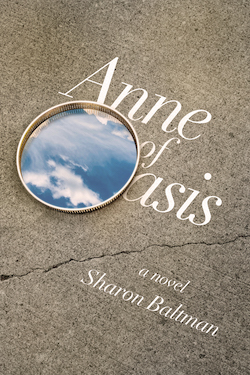
image - Anne of Oasis book coverIn Anne of Oasis, drawing on my many years as a physician psychotherapist, I tell the detailed, fictional story of what goes on in the therapy room when an eccentric, 70-year-old is obsessed with changing her life – or ending it. Anne bumbles through what she views as mysterious rituals with the therapist, explores secrets, re-jigs behaviours and, five years later, finds bliss. Here is the final chapter.

***

Chapter 26: June 2008

For two years, Doug heard sporadically from his mother and continued his requests for pearls. She made it clear to him and his brother she wasn’t coming out to Kelowna anymore. They occasionally visited her in Toronto, or in Golden, where she was staying with Eleanor for longer and longer periods of time.

When he received the phone call from a Toronto hospital, Doug asked if she’d fallen and busted her hip. They said it was more than that. They had found her unconscious on the street in Toronto with no ID, except for a piece of paper with Doug’s number on it as her next of kin. They admitted her as an Unknown Person and she was failing fast. If he wanted to see her alive, he had better come quickly.

He didn’t know what to do. He had promised to be there if she needed him for assistance in dying peacefully, but this was different. Yet how could he leave her to die on her own?

“She’s still your mother,” his wife offered.

He flew out as soon as he could. He arrived at the Toronto General Hospital, where Admitting confirmed there was no patient by the name of Anne Bishop. But a woman had been admitted as an Unknown Person. Doug wandered the halls searching for his mother.

“She was moved to a different floor.”

“She’s in ICU.”

“She’s not in ICU.”

Finally, he stepped into the Cardiac ICU and in the corner he saw a pile of breathing bones. Tube in mouth, IV in arm, sas-sas-sas of a respirator. Unknown Person at the foot of the bed.

“Is this her?” he asked the nurse at the desk.

“She was found with only this slip of paper on her.”

“That’s my name and number.”

“She apparently suffered a sudden, massive heart attack on the street.”

As Doug approached the bed, he recognized the bony lumps on her hands, the chewed-up fingernails, the crepe skin. It was definitely Mum. He gasped. His eyes filled, the lump in his throat tightened. He turned and rushed to the nursing station.

“Please, can the tubes be removed? She didn’t want heroics.”

“We barely know her name. We can’t follow any directives without proper ID and signed papers detailing her wishes.”

He took off uptown to retrieve the Dying With Dignity papers his mother had been talking about for years.

Stepping into his mother’s house, it felt haunted, full of yesterday’s glory. Dust everywhere. Her clothes neatly stashed, but neglect inhabited the place. He walked from room to room, observing photos everywhere – on window ledges, on kitchen counters, on the bedside table. Pictures of Jesse and Catherine and Doug and Bruce and Pam and Sue in every combination. Sitting next to each image was a shiny rock or pebble. He picked up each clear Plexiglass frame and stared. He was shocked to see how she surrounded herself with family. He began to sob.

He found the papers in the second drawer of his grandmother’s mahogany desk, exactly where his mother had said they’d be. Everything was perfectly organized and signed. He grabbed the requisite forms, glanced around at the family photos and returned to the hospital. They removed the tubes.

He returned to the house for a few hours’ sleep and arrived back at the hospital next morning, to find she had again sprouted pipes. The staff explained that overnight she had taken a turn for the worse and they tried to save her.

Angrily showing them the papers again, he repeated her wish to die quietly, and they removed the tubes a second time. He wrapped Mum in her favourite turquoise velour blanket he had brought from her home, took her in his arms and held her exactly as she held him as a sick boy on the farm. He noticed a flicker of a smile cross her face, then she took her last breath.

Just then, Eleanor appeared.

Through their tears, Doug and Eleanor awkwardly made their way to her house together. They expected to start planning how to say goodbye to Anne. But she beat them to it. She had detailed her every wish. They simply had to fulfil them.

“You know what?” Doug asked. “She knew what she was doing all those years ago around Dying With Dignity. We thought she was nuts, but it’s sure helping us now.”

“She was utterly determined in every aspect of her life,” Eleanor replied.

“What do you think we should do with the rocks? My brother thinks we should pitch them.”

“She schlepped them home from every spot she ever visited. Each and every one was special to her,” Eleanor sighed.

“I think we should leave some at the cemetery.”

Because Doug knew Mum hated missing appointments, he searched in her handwritten, dog-eared address book for Dr. C’s number.

“I’m so sorry,” Dr. C responded when he told her the news.

“It’s odd speaking to you in person after hearing about you for so long,” Doug said. “I’m happy to hear your voice. I need to tell you how important you were to my mother. Thank you for helping her.

“She was still difficult to deal with, but she seemed a lot happier. I also want to thank you for all the pearls of wisdom I received second-hand. Mum loved sharing them and they have been extremely helpful in my life.”

“We will all miss her.”

“As per her wishes, we are having a funeral service tomorrow afternoon at 2 p.m. at the Mount Pleasant Cemetery. We would be honoured if you would come.”

“Thank you. It would be a privilege. I’ll see you there.”

Tuesday afternoon, at 2 p.m., under a blistering sun, Doug, Eleanor and Dr. C, along with a handful of grey-haired men and women, gathered as they lowered the casket into the ground. Doug pulled out a heavy purple velvet Crown Royal bag and spoke.

“When I called Dr. C to notify her of Mum’s death, I asked what we could do with the stones Mum collected on her travels. She informed me that according to Jewish tradition, leaving a stone on a loved one’s grave signifies you have been to visit. Because of Mum’s lifelong appreciation of all things Jewish, placing stones on her grave would be a mitzvah, or a blessed act of kindness.

“I am honoured to ask each of you to dig into this bag, which held my marbles as a kid, to take out a pebble and place it on Mum’s final resting place.”

Tears rolled down his face. Doug held the bag open. Eleanor, Dr. C and the others lined up. One by one they removed a rock and placed it on the earth as it was shovelled onto the casket.

For more information, visit sharonbaltman.com.

Posted on November 19, 2021November 18, 2021Author Sharon BaltmanCategories BooksTags aging, Anne of Oasis, Dying With Dignity, estate planning, health

Sharing her inspiration

On Oct. 8, nonagenarian Gloria Levi was the featured speaker at the JSA Snider Foundation Virtual Empowerment Series session co-sponsored by Jewish Seniors Alliance and the Peretz Centre for Secular Jewish Culture. The topic was What Inspires Me at 90.

Gyda Chud, co-president of JSA and president of the Peretz Centre, welcomed the approximately 70 attendees and shared the background of JSA’s Empowerment series.

Fran Goldberg introduced Levi as a feminist, an activist, a COVID survivor, a gerontologist, a therapist, a social worker and a woman of tremendous confidence, who finds joy in even the darkest of moments.

From her talk, it seems that Levi does indeed find inspiration in everything around her, from rustling breezes and glistening sunsets to soulful self-discovery. She finds meaning in both everyday happenings and the larger matters of the heart and social justice. If we were to sum up Levi’s nuanced and profound wisdom in a word, it would be wholeness. She elevates the whole person with all their perfect imperfections.

To Levi, self-discovery and self-knowledge are paramount values. She illustrated the importance of being true to oneself with the charming story of Rabbi Zusia, who lamented to God, bemoaning his not being like Moses and Abraham. God advised him to be exactly who he is – Zusia. The goal in life is not to strive for perfection but to be authentically oneself.

Through Levi’s lens of wholeness, even a global disaster like COVID-19 has vital lessons. A COVID-19 survivor, Levi refers to the virus as the 11th plague, but also is passionate about the important issues that the pandemic has brought to light. For example, it revealed the discrepancy between the haves and the have nots: the ones who support our daily life – the grocery store clerks, hospital employees, delivery drivers and food workers, among others – in stark contrast with the wealthy. The pandemic has yielded an awakening, a heightened awareness that things need to change on numerous levels, both environmentally and socially, said Levi.

Along with her commitment to social justice, Levi draws connections and inspiration from Jewish sources; for example, she refers to Leviticus, in which God tells Moses to instruct the Israelites to give the land a rest. During the sabbath year, the land is to lie fallow and to be “released” from cultivation, she explained. Weaving rest and restoration into our physical and spiritual worlds is a much-needed change, she said.

In conclusion, Levi quoted Ecclesiastes and reminded us that “vanity of vanities; all is vanity.” Her advice: embrace life, enjoy meaningful relationships and small kindnesses – and find inspiration all around us.

Tamara Frankel is a member of the board of Jewish Seniors Alliance and of the editorial committee of Senior Line magazine. She is also a board member of the Jewish Community Centre of Greater Vancouver.

Posted on October 22, 2021October 21, 2021Author Tamara FrankelCategories LocalTags aging, Empowerment Series, Gloria Levi, Jewish Seniors Alliance, JSA, Judaism, lifestyle, Peretz Centre, spirituality

We share same fate

Do you realize that everyone you know will die? Of course you do. All of us know that. But, most of the time, we don’t think about it. We forget about it insofar as it motivates our actions, our interactions with the people in our lives, and the people we meet. If we were wholly cognizant that some of these people were to be gone tomorrow, or next week, wouldn’t it result in some of our behaviours being modified?

We usually have no inkling of when our time will come, or that of our friends or neighbours. When tragedy strikes and we get the bad news, we often react in a drastic way. If we have hates on, we usually stifle them. If we care, we redouble our efforts to connect in ways that might be more useful to the object of our emotion. Even if we don’t have a real link to the person who has died, we may go out of our way to exhibit some form of kindness. We instinctively feel, there, but for the grace of God, go I. Imagining how we would feel in the same situation, we have the urge to do something, anything, to alleviate the pain, the fear, the horror, of the unknown forthcoming.

When the end comes unheralded, suddenly, without warning, it is a shock to the system. Somehow, that person’s passing puts us, ourselves, right in the target zone. The immediacy of something that could happen to anyone, the result of biology or chance, reminds us we are not ready to go. We are chastened by the event.

Attitudes to our final exit vary widely, and certainly evolve over time. When we see some of the reckless behaviour of young people, we have to believe they feel they are immortal. Many out there have the belief that this current “vale of tears” is but a temporary phenomenon, with the best of existence yet to come. My Jewish background and belief system offers no such panacea. We are enjoined to do all we can to get the most out of our current existence.

In my late 80s, I must, of course, accept that I am much closer to the exit scenario than many of the people on this planet. Acceptance is the closest emotion I can discern, having enjoyed a larger slice of life than most.

The people I know have very mixed feelings about the transition we all face. Many are apprehensive. Most of us are happy to do what we can to put off the “evil” day, worried about the experience, and more than reluctant to give up whatever shred of living that we may have in the now, all of our fleshly and mental pleasures, regardless of our pains, potential and real.

What exercises me much more than some of the above is the greediness I feel about engaging with the spirits of all those still around me. Knowing that the time we share is limited by circumstance, more than anything I want to reach out to those souls whose existence I value.

Many of the people I care about have not shared a word with me for decades. My fault, their fault, who knows what were the forces that caused us to drift apart. How strange might they feel about my making an uninvited approach, out of the blue?

If I were to write them a blog like this as a general invitation to reach out and make a contact, some might respond. We all share a common fate. Maybe we also share a sense of the value of our past contacts. Maybe some of you out there are thinking of doing the same thing, reaching out before it is too late? Every week there are some of my contacts that I must erase from my mailing list. So, here I go: how are things for you today? What’s the story? Will we make contact today before the unknown tomorrow comes?

Max Roytenberg is a Vancouver-based poet, writer and blogger. His book Hero in My Own Eyes: Tripping a Life Fantastic is available from Amazon and other online booksellers.

Posted on September 24, 2021September 23, 2021Author Max RoytenbergCategories Op-EdTags aging, death, friends, lifestyle
Making aging healthier

Making aging healthier

Shira Haas is the featured guest at the July 7 event organized by Canadian Associates of Ben-Gurion University of the Negev. (photo from CABGU)

Israeli actress Shira Haas, star of the popular Netflix series Shtisel and Unorthodox, has been busy in recent months. Not only is she preparing to take on the role of a young Golda Meir in the upcoming series Lioness, executive produced by Barbra Streisand, but she is also the featured guest at the Canadian national virtual gala in support of Ben-Gurion University of the Negev (BGU) on July 7.

An “Unorthodox” National Virtual Gala for Brain Research, organized by Canadian Associates of Ben-Gurion University (CABGU), BGU’s Canadian fundraising arm, will raise money for the Canada Fund to Advance Brain Research.

“We are thrilled to share this exciting announcement with our community,” said Mitchell Oelbaum, national president of CABGU.

“According to the World Health Organization, there are approximately 50 million active cases of dementia worldwide, with an estimated 10 million new cases being added each year. Ten million people battle Parkinson’s each year globally. And, according to the World Stroke

Organization, 13 million people suffer from stroke annually. We wanted to do our part to help improve the chances of finding a cure for these debilitating diseases.”

The numbers are large, and there are no signs of a slowdown. That is why the fund was established by CABGU, with the goal of supporting groundbreaking and cutting-edge research for neurodegenerative diseases at the university’s Zlotowski Centre for Neuroscience.

“We are getting closer to determining the causes of age-related neurodegenerative diseases,” explained Dr. Debra Toiber of the department of life sciences in the faculty of natural sciences at BGU. “It’s an exciting time to be a scientist and uncovering the mechanisms of aging.”

Toiber is one of 67 researchers at the Zlotowski Centre. Her lab recently discovered that the SIRT6 protein is critical for the prevention of neurodegeneration, which can lead to Alzheimer’s and Parkinson’s diseases. Colleague Dr. Shelly Levy-Tzedek’s lab studies the impact of age and disease on the control of body movement and how best to employ robotics to facilitate a fast and efficient rehabilitation process. Meanwhile, Dr. Claude Brodski, also with the Zlotowski Centre for Neuroscience, is currently conducting a study, albeit in its early stages, that may offer a disease-modified drug target to address the impact of Parkinson’s. While these findings are encouraging, more research needs to be conducted.

“CABGU launched the Canada Fund to Advance Brain Research at BGU in April,” said CABGU chief executive officer Mark Mendelson. “Our team has been hard at work ever since, and there is a strong appetite for this subject matter here in Canada. The sad reality is that we all know someone, whether it is a relative, a friend or a neighbour, who is struggling with one of these devastating brain diseases.”

The national virtual gala is already more than 50% sold out. To learn how to become a sponsor or to purchase tickets, head to bengurion.ca.


Format ImagePosted on May 28, 2021May 27, 2021Author Canadian Associates of Ben-Gurion UniversityCategories LocalTags aging, Ben-Gurion University, BGU, brain research, CABGU, Canadian Associates of Ben-Gurion University, Debra Toiber, fundraising, healthcare, Israel, Mark Mendelson, medicine, neurodegenerative disease, philanthropy, science, Shira Haas, Zlotowski Centre

Posts pagination

Previous page Page 1 Page 2 Page 3 … Page 5 Next page
Proudly powered by WordPress