Skip to content
  • Home
  • Subscribe / donate
  • Events calendar
  • News
    • Local
    • National
    • Israel
    • World
    • עניין בחדשות
      A roundup of news in Canada and further afield, in Hebrew.
  • Opinion
    • From the JI
    • Op-Ed
  • Arts & Culture
    • Performing Arts
    • Music
    • Books
    • Visual Arts
    • TV & Film
  • Life
    • Celebrating the Holidays
    • Travel
    • The Daily Snooze
      Cartoons by Jacob Samuel
    • Mystery Photo
      Help the JI and JMABC fill in the gaps in our archives.
  • Community Links
    • Organizations, Etc.
    • Other News Sources & Blogs
    • Business Directory
  • FAQ
  • JI Chai Celebration
  • JI@88! video

Recent Posts

  • Zionism wins big in Vegas
  • Different but connected
  • Survival not passive
  • Musical celebration of Israel
  • Shoppe celebrates 25 years
  • Human “book” event
  • Reclaiming Jewish stories
  • Bema presents Perseverance
  • CSS honours Bellas z”l
  • Sheba Promise here May 7
  • Reflections from Be’eri
  • New law a desecration
  • Resilient joy in tough times
  • Rescue dog brings joy
  • Art chosen for new museum
  • Reminder of hope, resilience
  • The national food of Israel?
  • Story of Israel’s north
  • Sheltering in train stations
  • Teach critical thinking
  • Learning to bridge divides
  • Supporting Iranian community
  • Art dismantles systems
  • Beth Tikvah celebrates 50th
  • What is Jewish music?
  • Celebrate joy of music
  • Women share experiences 
  • Raising funds for Survivors
  • Call for digital literacy
  • The hidden hand of hate
  • Tarot as spiritual ritual
  • Students create fancy meal
  • Encouraging young voices
  • Rose’s Angels delivers
  • Living life to its fullest
  • Drawing on his roots

Archives

Follow @JewishIndie
image - The CJN - Visit Us Banner - 300x600 - 101625

New podcast launched

New podcast launched

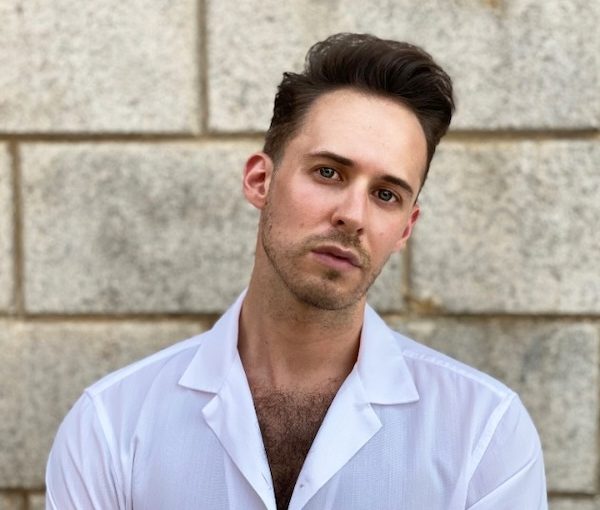
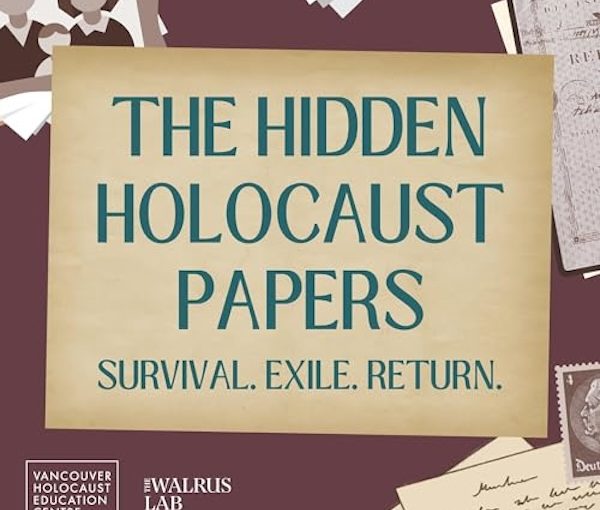
On International Holocaust Remembrance Day, Jan. 27, the Vancouver Holocaust Education Centre (VHEC) and the Walrus Lab launched The Hidden Holocaust Papers: Survival. Exile. Return.  The six-part documentary podcast, hosted by best-selling Canadian author Timothy Taylor, offers a personal exploration of his family’s hidden Holocaust history. 

Through the series, VHEC furthers its mission of Holocaust education and remembrance by supporting stories that bring the realities of the Holocaust to new audiences. Taylor’s journey of discovery is not only an act of personal reconciliation but also a vital contribution to preserving the memory of Holocaust victims and survivors for future generations.  

As Taylor unpacks long-forgotten family archives, the series takes listeners on an emotional journey from his home in Vancouver to Germany, revealing a tapestry of stories about survival, resilience and loss. Alongside his search for answers, Taylor reflects on the universal lessons of justice, remembrance and identity in the face of historical atrocities.  

“The Holocaust isn’t just a chapter in history – it’s a call to action to remember, educate and prevent future acts of hatred and genocide,” said Hannah Marazzi, acting executive director of VHEC. “We are honoured to work with Timothy Taylor to amplify his family’s story and underscore the importance of safeguarding these narratives.”  

In conjunction with the podcast, Taylor’s accompanying feature article, “Paper Trail,” will be published in The Walrus in May; it was made available online on Jan. 27. The article is an account of Taylor’s journey to instal Stolpersteine memorial stones for his family members who suffered under Nazi persecution. 

For more information and to listen to the trailer, visit lnkfi.re/thehiddenholocaustpapers. 

– Courtesy Vancouver Holocaust Education Centre

Format ImagePosted on February 14, 2025February 13, 2025Author Vancouver Holocaust Education CentreCategories LocalTags history, Holocaust, International Holocaust Remembrance, podcasts, The Walrus, the Walrus Lab, Timothy Taylor, Vancouver Holocaust Education Centre, VHEC
JQT-JFS partnership thrives

JQT-JFS partnership thrives

JQT Vancouver’s table at the BC Hospice Palliative Care Association’s Grief, Bereavement and Mental Health Summit 2024, which took place Nov. 20-22. (photo from JQT)

In 2024, JQT Vancouver, a queer and trans nonprofit, and Jewish Family Services Vancouver teamed up – through financial backing from the Jewish Community Foundation of Greater Vancouver and private donations – to create the JQT Mental Health Support Series, a set of informational workshops, resources and events for the LGBTQ2SIA+ community.   

The organizations have now entered 2025 invigorated by the response and eager to continue and expand their offerings.

“Like any marginalized community, queer and trans people are aware of their needs and are tired of being surveyed. They have been historically, persistently and systemically marginalized and are waiting for changes in society and health care to be more inclusive of them,” JQT founder and executive director Carmel Tanaka told the Independent.

Tanaka added that a limited operating budget can present challenges when providing the necessary safe spaces, programs and awareness resources for Jewish queer and trans community members and beyond. These needs for support far outweigh JQT’s capacity alone, she said. 

In her view, moving away from the survey model to a model of outreach and engagement not only fosters community between Jewish queer and trans people but ensures that Jewish queer and trans people are seen and treated as more than survey data. 

Tanaka credited JFS Vancouver chief executive officer Tanja Demajo for understanding this. Demajo listened to the recommendations JQT had been urging for a long time and took steps to fill the gap in mental health support services for the Jewish queer and trans community, said Tanaka.

“This partnership has been an incredible learning experience for me personally,” Demajo shared with the Independent. “Working closely with Carmel and the JQT team made me recognize the importance of being present, listening and understanding how JFS needs to evolve to better serve populations that may have felt isolated. Empowering others to take the lead in this context was inspiring and has already resulted in some truly amazing programming. 

“Seeing the community come together – sharing laughs, conversations and moments of joy – has reinforced one key takeaway: we should continue building these connections and creating even more opportunities to collaborate.”

The partnership between JQT and JFS dates back several years. In 2020, the two groups started conversations pertaining to diversity education, ensuring JFS supports for the social, physical and emotional wellness of all people, and providing a welcoming and inclusive organization for the Jewish LGBTQ2SIA+ community. Their partnership was given the name Twice Blessed 2.0: The Jewish LGBTQ2SIA+ Initiative. The Mental Health Support Series, rolled out last year, is the second phase of the initiative; it follows the 2022 Community Needs Assessment.

The mental health series provided numerous offerings last year that encompassed an array of topics – some serious, some lighter – such as dying and death, clay as a medium for mindfulness, and belly dancing. There was also an evening of comedy with Los Angeles-based performer Antonia Lassar and music from Victoria’s Klezbians.

“This series deals with very heavy issues, a lot of which are highly contentious and divide our communities in a number of ways. Our series also provides opportunities to laugh, have fun, relieve stress and move energy. When it comes to mental health, there needs to be a balance,” Tanaka said.

“There are many highlights for me personally,” she continued, “but one that stands out was when a group of queer Chinese folx attended our mahjong event to learn how to play mahjong because they didn’t have the opportunity to learn in their community. That’s when you know that you’re making a positive difference, when you are also helping out communities beyond your own.”

With the positive reaction thus far,  JQT and JFS are maintaining their partnership into 2025 to bring more programs and support to the Jewish queer and trans community.

“We look forward to continuing our learning journey and offering meaningful programming and support for the LGBTQ2SIA+ community. In partnership with JQT, we’re excited to develop programs over the next year that will clearly reflect our ongoing commitment to inclusivity and connection,” Demajo said.

Throughout the partnership, Tanaka said, JFS “has learned our preferred style of collaboration and communication, and has borne witness to JQT’s growth and its limitations as a 100% volunteer-led organization.

“Today,” she said, “our quarterly JQT-JFS meetings run quickly, smoothly and are a whole lot of fun because we all genuinely like each other, enjoy the work we are accomplishing together, and can see the fruits of our labour.”

In 2024, JQT gained charitable status. This is a significant accomplishment for a small nonprofit, noted Tanaka, who this month starts her seventh year with JQT. 

In 2025, she aims to secure an annual salary for the organization’s executive director position, as well as extended health benefits and program funding.  These, she believes, will set JQT up for further success and future executive directors.

“With an increase in queer Jewish event offerings in town,” said Tanaka, “JQT can now focus on heavier lifting, specifically education and training of Jewish and non-Jewish organizations in and out of community and health care, which has been a decades-long request from Jewish queer and trans people.

“We are starting to feel the synergy around our work and are finally being invited to the table,” she added. “It’s all been worth it and we look forward to continuing our collaboration with JFS in a good, organic way.”

The first event of the 2025 Mental Health Support Series, Jewish Magic Herbal Pottery, takes place on Feb. 25, 6 p.m., at Or Shalom Synagogue. To register, visit jqtvancouver.ca. 

Sam Margolis has written for the Globe and Mail, the National Post, UPI and MSNBC.

Format ImagePosted on February 14, 2025February 13, 2025Author Sam MargolisCategories LocalTags Carmel Tanaka, JFS Vancouver, JQT Vancouver, mental health, Mental Health Support Series, Tanja Demajo

Jews against Spanish fascism

The new historical novel by Vancouver writer David Spaner, Keefer Street, is as much about the idea of Keefer Street as it about the real East Vancouver avenue. This is appropriate, because the book is a reflection on the Spanish Civil War and its Canadian, especially its Jewish, volunteers. For the dead and the survivors, the war was a living hell. But for the survivors and anyone else with a direct or inherited memory of the 1936-39 conflagration, it is an idea. It has been called the Last Great Cause – and that is the underpinning of Spaner’s story.

Spaner takes part in the Feb. 26 JCC Jewish Book Festival event Jewish Fiction from Western Canada, in which Saskatchewan writer Dave Margoshes (A Simple Carpenter) is also featured. 

image - Keefer Street book coverKeefer Street toggles back and forth between the Spanish Civil War and a 1986 reunion of fighters and hangers-on (with occasional detours to family vignettes in other eras and areas). The storyline follows veterans of the Mackenzie-Papineau Battalion, the ragtag Canadian volunteers who made their way to Spain in direct defiance of their own government, joining American volunteers of the Abraham Lincoln Battalion, as well as French, Poles and others signing on in a pre-Second World War proxy against Hitler and Mussolini and their Spanish incarnation, Francisco Franco.

The narrator, Jake Feldman (later Jack Fields), is a Mac-Pap from the neighbourhood – that is, the Strathcona area of East Vancouver, specifically Keefer Street, where waves of immigrants have planted their first roots in Canada. By the time we join Feldman’s spirited (if predictably stereotypical) Jewish family, Strathcona’s Jews have already begun moving to the Oak Street corridor and its environs, but the Jewish element remains prominent among the multicultural milieu of the area. 

Spaner, who has written extensively about Vancouver’s left-wing (see Solidarity: Canada’s Unknown Revolution of 1983, jewishindependent.ca/history-of-left-coast), list-ticks a raft of momentous and minor Vancouver signposts and events, including Stanley Park’s hollow tree, the Sylvia Hotel’s Jewish roots, the lost, lamented Woodward’s flagship department store, Theatre Under the Stars (still going), Eastside firebrand Rose Barrett and her boy Dave, the Carnegie Library turned Downtown Eastside community centre, and the blacklisted singer Paul Robeson singing at the Peace Arch for binational audiences.

Obscure local trivia is also tucked into the pages. The Industrial Workers of the World got their nickname Wobblies here in Vancouver. David Oppenheimer, Bavarian Jew, became the city’s second mayor and has an eponymous park in the Downtown Eastside where the fictional Feldman family frolics. Local gal Sadya Marcowitz became Mary Livingstone and married Jack Benny, going on to become a major radio star.

More momentous local events are introduced, including the On-to-Ottawa Trek, the 1935 Ballantyne Pier riots and the upheaval around the visit of the Nazi warship Karlsbad earlier that year.

The life of Jake/Jack takes on a bit of a Forrest Gump feel with his uncanny ability to be in the right place at the right time, such as when he just happens to be watching an amateur baseball game in Toronto when Nazis descend in what we know now as the infamous antisemitic (and anti-antisemitic counteroffensive) Christie Pits riots.

Keefer Street is sometimes a didactic (perhaps necessarily, given the times) 101 on antisemitism in Canada, including Toronto’s Swastika Club and Quebec’s philo-fascist Adrien Arcand.

The flashbacks feature the parents’ hardscrabble migrant experience and their engagement in the shmata and fur trades, as well as the moderately idyllic life of Vancouver kids and teens in the 1930s. Apparently before the advent of Netflix, something called “shooting pool” was a popular pastime.

Hindsight allows Jake to reflect on the legal proscriptions against enlisting with a foreign militia, then the social ostracism on their return due to the associations of Spanish partisans with communism, then McCarthyism, then the apathy and ignorance of the Me Generation and its aftermaths, in which successive generations don’t know the role the Spanish Civil War or its belligerents played in 20th-century history.

The 1986 reunion allows for the exploration of the emotions of former fighters, wondering what their impacts were and what their lives have become.

Jews played a major role in the Spanish Civil War, as Keefer Street’s central protagonists demonstrate. This was understandable as a first military salvo against fascism, but Spaner illuminates another massive historical consonance that may be overlooked.

“Along with everything else the Civil War stood for, it meant a Jewish return to Spain after centuries in exile,” says one of the characters at the reunion. “During the Spanish Inquisition of the 15th century, the country’s considerable Jewish population, though it had lived there for eons, was given the choice of conversion or expulsion. Many were expelled. In the 1930s, Jews returned to Spain, volunteering in disproportionately large numbers – over half of the American nurses, for instance, from a country three-point-something percent Jewish. One personal note. In 1937, I crossed the same ocean going to Europe that my parents had fled across, coming from Europe just a generation earlier. My parents fled the barbarism of pogroms, inquisitions. I came back to fight it.”

Says Spaner through his character Jake: “Funny how a short time can define a lifetime. For a lot of the volunteers, the Spanish Civil War years are the big memory but, when you think about it, the war lasted less than three years. I was there about a year-and-a-half and so much of it’s a blur.” 

The JCC Jewish Book Festival runs Feb. 22-27. For tickets and the full schedule, visit jccgv.com/jewish-book-festival.

Posted on February 14, 2025February 13, 2025Author Pat JohnsonCategories BooksTags David Spaner, historical fiction, history, JCC Jewish Book Festival, Keefer Street, Spain, Spanish Civil War, Vancouver
Growing a garden together

Growing a garden together

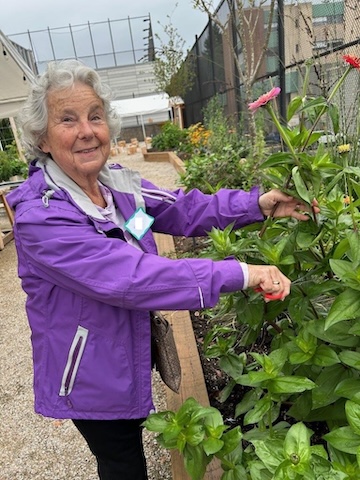
Volunteers, seniors and youth dedicate their time each week to tending, planting and harvesting at the Vancouver Jewish Community Garden. (photo courtesy VJCG)

The Vancouver Jewish Community Garden (VJCG), which opened in May 2023, began as a dream – a vision shared by Vancouver Talmud Torah, Jewish Family Services Vancouver and Congregation Beth Israel. The dream was made possible by the Diamond Foundation, which secured a long-term lease of the land for future development and has allowed for the opportunity to use it for a Jewish community garden on a temporary basis. Significant seed gifts from the Ronald S. Roadburg Foundation and the Jewish Community Foundation also played a vital role in its creation.

photo - A Vancouver Jewish Community Garden volunteer
A Vancouver Jewish Community Garden volunteer. (photo courtesy VJCG)

Generous donors, volunteers, students, garden experts, builders, designers and a project manager all contribute to its success. Every seed planted, every helping hand and every heart involved makes a meaningful impact – both on those who tend the garden and those who benefit from its harvest. As Rabbi Shimon bar Yochai said, “A garden is not just a patch of soil, but a place for the cultivation of the soul.”

Reflecting on two years of growth – including a full harvest season – it is possible to truly appreciate the impact the VJCG has on the Vancouver Jewish community. Under the care of garden coordinator Maggie Wilson, the VJCG has blossomed into a hub for connection, learning and nourishment. Sacred spaces are woven among beds of fruits, vegetables and flowers. 

“The garden is more than a place to grow food – we’ve built a wonderful community where people can experience the healing effects of digging in the soil, and witness the miracle of nature,” said Wilson. “Some participants are having their first experience planting a seed or picking a fresh bean. They are learning what it takes to grow food, and understanding, in a concrete way, how their work contributes to tikkun olam.”

Volunteers, seniors and youth dedicate their time each week to tending, planting and harvesting, ensuring that fresh, nutritious produce reaches Jewish Family Services to support community members facing food insecurity. Beyond its bounty, the garden is also an outdoor classroom. Students engage in hands-on workshops, learning about sustainability, collaboration and the growth cycle.

The VJCG is a community treasure that needs the community’s support to continue to thrive. Feb. 20 will be the first-ever Day of Giving in support of the VJCG. Donations will help sustain the garden, expand programming and continue to provide nourishment, education and inspiration. To contribute, visit jewishcommunitygarden.ca. 

– Courtesy Vancouver Jewish Community Garden

Format ImagePosted on February 14, 2025February 13, 2025Author Vancouver Jewish Community GardenCategories LocalTags Day of Giving, gardening, philanthropy, tikkun olam, Vancouver Jewish Community Garden, VJCG, volunteering
How Jews are indigenous

How Jews are indigenous

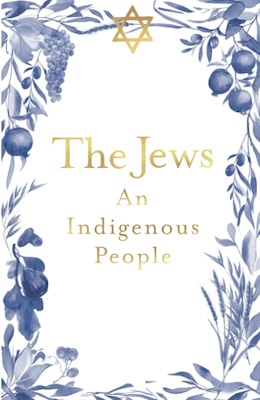
Last month, Ben M. Freeman spoke about his latest book, The Jews: An Indigenous People, as part of Kolot Mayim Reform Temple’s 2024/25 speaker series. (PR photo)

Ben M. Freeman, founder of the modern Jewish Pride movement, spoke from his home in London, England, about his work and ideas in a Zoom webinar on Jan. 12. Titled Building Jewish Pride and Recognizing Jewish Indigeneity, the virtual event was hosted by Victoria’s Kolot Mayim Reform Temple.

The author of Jewish Pride: Rebuilding a People and Reclaiming our Story: The Pursuit of Jewish Pride, Freeman’s latest, The Jews: An Indigenous People, will be released this month.  

Freeman began by calling into question the perception that indigeneity implies people who have lived on the land and are primitive or oppressed.

“I have great issue with that because the idea of those things being inherent is to destroy the great diversity of the indigenous experience,” he said.

The United Nations, he explained, set up seven criteria used to determine the indigeneity of a people to a particular land. Freeman, in his writings and talks, argues that Jews are indigenous to the land of Israel even by the UN’s criteria.

“[The UN] also created rights for indigenous people: the ability to have self-determination, the ability to practise your own religion, have your own language, all of these different things. But, again, many of them are still rooted in this idea that indigenous people are inherently oppressed,” he said.

“We’re not here to say that indigenous people have not experienced oppression. That would be ludicrous. Many indigenous groups do experience that, but we can’t necessarily say these things are inherent….”

To view certain groups as only victims, he contended, strips them of agency.  Freeman would define an indigenous people, rather, as a group whose collective identity begins in one specific land, and it is in that land they remain rooted either physically, spiritually or culturally.

“This is their home and is where they originated, developed and continue to be fixed through a connection to the environment and natural resources, living systems, culture and practice as a people, irrespective of their sovereignty in the land,” he said.

image - The Jews book coverThis definition, Freeman believes, not only applies to Jews in Israel but also refers to the experiences of the Maori in New Zealand and First Nations in Canada, and other peoples in other countries.

From his perspective, Jews were a small group of tribes that developed into a civilization over time. The Torah played a large part as it codified Jewish civilization by taking practices that already existed, reshaped some of them and retold some of the stories, creating a culture that contains religion.

“Almost all the practices were rooted in the land. Pesach was two different festivals: one was a matzah festival and one was a sacrifice festival. Rosh Hashanah, our new year, was the beginning of the agrarian year. Shavuot is an agricultural holiday,” Freeman said. 

“One of the odd experiences of being Jewish is that we exist in this cognitive dissonance almost because we will describe ourselves officially in many ways as a religion, but then we have so much of our practice rooted in land.”

Freeman also put forward that a distinguishing characteristic of Judaism is that, unlike Christianity, it can be a religion but not exclusively a faith or creed.

“Christianity has creed. My partner is a Christian and I sometimes ask him, ‘Could you be a Christian without believing in Jesus?’ And he’s like, ‘no.’ We don’t have that,” said Freeman. “That’s why you can have atheist, secular or agnostic Jews who are part of Am Yisrael. There is nothing we have to believe to be Jews.”

Freeman went on to discuss Jewish pride, which, for him, bears three central tenets. The first is to encourage and empower Jews to reject the shame of antisemitism – to wear one’s Jewishness as a badge of honour.

The second point is to repudiate non-Jewish definitions of Jewish identity.

“I just feel it’s so egregious to me that non-Jews think they have a right to tell us what it means to be Jewish or any aspect of that experience. This is my identity. I will tell you what it means to be a Jew,” he said.

The third tenet is for Jews to go on a journey to explore their identity through a Jewish perspective. “We have to be able to say this is who we are,” he said, “but we have to humbly accept that takes time. We need to be doing real work to investigate our Jewishness and then, most importantly, [do it] through a Jewish lens.”

Freeman is scheduled to travel to Canada in March to discuss The Jews: An Indigenous People, with appearances in Toronto, Windsor and Edmonton. His schedule may include stops in Ottawa and Vancouver, as well.

Next up in the Kolot Mayim 2024/25 lecture series, on March 2, 11 a.m., is Jonathan Bergwerk, author of the Audacious Jewish Lives books, who will speak about Jewish innovators who changed the world. Go to kolotmayimreformtemple.com to register. 

Sam Margolis has written for the Globe and Mail, the National Post, UPI and MSNBC.
Format ImagePosted on February 14, 2025February 13, 2025Author Sam MargolisCategories BooksTags Ben M. Freeman, identity, indigeneity, Jewish Pride, Kolot Mayim
Whimsical “wood friends”

Whimsical “wood friends”

“Jug Band” by Anita Colman, whose work is on display at the Cedar Hill Recreation Centre in Victoria through March 3. (photo from Anita Colman)

The distinctive, colourful characters that artist Anita Colman creates out of driftwood and various objects she discovers around Victoria are currently on display in hallway showcases at the Cedar Hill Recreation Centre in Victoria through March 3.

Her “wood friends,” as she dubs them, constitute a wide assortment of critters – from avians to insects, canines to felines. There are birds nested on a woman’s head, a jug band and a dog with a beanie. There is also a unicyclist and a schoolboy riding a pogo stick. 

photo - “Unicyclist and Pogo Stick Boy” by Anita Colman
“Unicyclist and Pogo Stick Boy” by Anita Colman. (photo from Anita Colman)

Colman grew up in Montreal and studied fine arts at Concordia University. After graduation, with what she jokes were “no applicable skills,” she worked building fences, painting houses and selling produce at an outdoor market.

“Then, in 1980, a friend and I went on an epic road trip from Montreal to the San Francisco Bay and I ended up staying,” she told the Independent.

With a penchant for cartooning, Colman, while getting settled in the United States, freelanced for several greeting card companies, including American Greetings, Marcel Schurman Fine Papers, Andrews McMeel and Hallmark Cards, among others.

One day, Hallmark contacted her to say that they wanted her to work in-house at their headquarters in Kansas City.

“As a single parent at the time, a steady income with a health plan was an offer I couldn’t refuse,” she said. “I’ll never forget the day we landed at the Kansas City International Airport in August. As soon as we exited the airport, we were hit with a blast of hot, humid air. It was an inferno. All I could think was, ‘What have I done?’”

At Hallmark, she was part of Shoebox, an alternative humour studio, where she illustrated not only myriad cards but books and calendars, and designed logos and fonts. Her artwork also was applied to stickers, school supplies, mugs, T-shirts, and dog and cat bowls.

The company, Colman recollected, had a farm where artists would go for what she called “creative renewal.” 

“The barn had a fully equipped woodshop and welding area. That’s where I learned woodworking. We built crazy birdhouses and robots that moved and lit up,” she said.

“There was also a small woodshop for artists at headquarters. It was located beside the model shop, where carpenters built displays for shows, etc. I learned a lot from them. Any free time I had was spent in the woodshop.”

photo - Anita Colman’s creations are on display in Victoria
Anita Colman’s creations are on display in Victoria. (photo from Anita Colman)

As a humour artist, Colman said she was continually developing different characters and critters. Now she does the same with wood. 

“The elements of design are the same – line, form, texture, colour. Driftwood already has texture and shape that can look like a nose, ears or tail.”

Accompanying Colman on her hunts for items to turn into art is her rescue dog Bean.

“He’s my sidekick,” she said. “He comes along when I walk the beach looking for good wood or browse ReStore, Value Village and hardware stores with an eye out for objects I can incorporate in my pieces. Bean’s always on the lookout for treats and makes out pretty good.”

The whimsical wooden creations have become an increasingly familiar sight in the capital city. Last fall, they were exhibited at the library in Victoria’s Commonwealth Place. In January, Colman was featured in a CTV News Vancouver Island report by Adam Sawatsky, which showed her, along with Bean, scouring a Victoria beach for things that could be incorporated into her work.

“Some people like shopping for shoes, I like shopping for junk,” she said.

Bean, too, is a recipient of Colman’s artistic flair. In the CTV report, he was seen clad in a denim vest with flames and a dragon embroidered into the back; his hair was molded into a mohawk to make him look “like a tough little dude.”

photo - Anita Colman creates distinctive characters, a wide assortment of “wood friends,” including dogs
Anita Colman creates distinctive characters, a wide assortment of “wood friends,” including dogs. (photo from Anita Colman)

Colman’s display at the recreation centre is part of a Family Arts Exhibition organized by the District of Saanich. One of the images the municipality’s website is using to promote the event is Colman’s woodwork of a cat ballerina. Other artists whose work will be shown are Tanya Bub, Randy Barron and Susan Wright. 

In the midst of the exhibition, the recreation centre will host a Family Arts Festival on Feb. 17 (Family Day) from 11 a.m. to 3 p.m. in what the municipality is billing as “a celebration of imagination, creativity and discovery.” Among the activities will be mini-quilt design, tin foil sculpture and LEGO robotics.

Colman’s finished products are not for sale. They can, however, be viewed on her website: anitacolmanart.weebly.com. 

Sam Margolis has written for the Globe and Mail, the National Post, UPI and MSNBC.

Format ImagePosted on February 14, 2025February 13, 2025Author Sam MargolisCategories Visual ArtsTags Anita Colman, art, Saanich, Victoria, woodworking
Community a work highlight

Community a work highlight

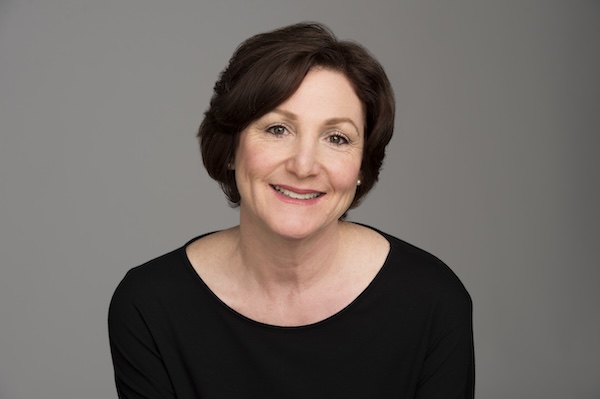
Marcie Flom leaves the Jewish Community Foundation after 21 years, to pursue the next chapter of her professional life. (photo from Jewish Federation)

“I just want to say that I have been blessed to have had the opportunity to serve this community for as long as I have, and I want to acknowledge all the support of the staff and volunteers I have had the pleasure of working with,” said Marcie Flom, whose last day as executive director of the Jewish Community Foundation of Greater Vancouver was Dec. 27. “Community work is a team effort, and we are very fortunate in the Vancouver community to have a wealth of talented and passionate volunteers and professionals who care deeply and contribute wholeheartedly to its success.”

Flom leaves her post after 21 years.

“It is always good to leave on a high note and I achieved my personal goal of stewarding the Jewish Community Foundation over the $100 million mark,” she said. “There is a very strong and competent team in place at the Foundation and Federation and exceptional lay leadership in the Foundation governors under chair Howard Kallner.

“With all that in place, it is the perfect time for me to move on to pursue the next chapter in my professional life. I’m planning to continue my work with donors and families to assist them with their philanthropy – it’s the piece of life’s work that brings me the greatest joy and fulfillment.”

Flom joined the Jewish Federation of Greater Vancouver in 2004, when she was recruited by then-new executive director of Federation Mark Gurvis, who now serves as chief executive officer of the Ronald S. Roadburg Foundation, for the role of Foundation director. (The Foundation was founded in 1989 as the endowment program of Federation and has developed from there.)

“I had spent most of my career in the not-for-profit sector working in the arts, first for the National Ballet of Canada in Toronto and then for the Vancouver Playhouse Theatre Company,” said Flom. 

This experience in marketing and development is one of the reasons Gurvis reached out to her.

“I was a new mother and consulting at the time, and I felt strongly that I wanted to raise my daughter in the community,” said Flom about why she accepted the Foundation position. “It was also a challenging time in Israel, and I thought it was the perfect time to use my experience for the benefit of the community here and in Israel. It was an excellent role for me, and I saw a great deal of potential for growing the Foundation and raising my daughter in a caring community.”

Flom’s role at the organization also grew.

“After a few years as Foundation director,” she said, “the Federation recognized that it needed a more donor-centric and holistic approach to working with donors to match their interests to fill gaps in community services and to meet emerging needs. I had the relevant experience in marketing and fundraising to integrate those functions operationally into a new philanthropic model which addressed financial resource development across the organization.

“I moved into a VP role, which was largely operational. With the level of operational experience and knowledge that I cultivated, I was positioned to serve in greater capacity, culminating in my most recent role, with oversight of the community engagement and local and overseas allocations processes. It was the perfect role as I wrapped up my time with Federation, the integration of revenue and the distribution and granting of charitable funds. I also managed the allocation of our communities Israel Emergency Funds alongside chair Stephen Gaerber and the director of Federation’s Israel office, Rachel Sachs. I cannot begin to express how meaningful and impactful that process has been for me personally during one of the darkest periods in the history of the country.”

Federation is currently recruiting a senior development professional to fill the vacancy Flom’s departure leaves. Not an easy task.

“One of the things that stands out most about Marcie is her people-first approach,” wrote Ezra Shanken, Jewish Federation chief executive officer since 2014, in his weekly Shabbat message last November, when he announced Flom’s decision. “She has mentored many of our staff over the years, and has built authentic and long-lasting relationships with partners and donors who speak of her impeccable integrity, her strategic approach, and her genuine care for community.”

Shanken wrote that it was with “mixed emotions that we share that Marcie will be stepping down from her role with us at the end of this year. We will miss her, but she is ready to start a new chapter in her career, and we are excited for her.”

Among the highlights of her time at the Foundation, Flom said, “Of course, participating actively in our community’s growth and seeing the funding directly impact capacity across community has been incredibly rewarding, but I am also so grateful to have had the opportunity to work with so many community members to help them achieve their philanthropic goals through association with Federation and through their funds at the Foundation. That aspect of my work has always been a true pleasure, and it was only possible because of the many trusted relationships I have with the people I have worked with across our community, including lay leaders and the professionals. Those are treasured and greatly valued.”

There were challenges over the years, notably COVID and Oct. 7.

“I also distinctly remember the financial crisis of 2008,” said Flom. “Isaac Thau was chair of the Foundation’s investment committee at the time, the markets were significantly down and there was tremendous pressure related to portfolio performance. Isaac fondly recalls it as ‘the time that we couldn’t walk through the JCC lobby without wearing a helmet.’ It was challenging for sure, but the Foundation closed the year with a moderate loss compared to others like the Vancouver Foundation and, in the end, the way we navigated that time helped to build our reputation.”

That reputation no doubt helped the Foundation reach the milestone of more than $100 million in assets under management. 

“The growth is attributable to the strategic plan but, more importantly, the trust and confidence the Foundation has built in our community,” Flom affirmed. “The governance and committee structure in place, the passion, knowledge and expertise of our volunteers, particularly at the governor and investment committee tables, have all built confidence so more and more community members and charitable organizations are turning to the Foundation to manage their assets and assist them with their philanthropy.”

The Foundation distributes more than $3 million annually to “a broad range of charitable organizations and areas of service across community through its unrestricted grant program and from donor-advised and -designated funds,” she said. “The Foundation works with fund holders to meet new and emerging needs in the community, support organizations and their program delivery, and to provide legacy support for organizations to carry out their important work in perpetuity.” 

Format ImagePosted on February 14, 2025February 13, 2025Author Cynthia RamsayCategories LocalTags endowments, Jewish Community Foundation, Jewish Federation, Marcie Flom, philanthropy
“We will dance again”

“We will dance again”

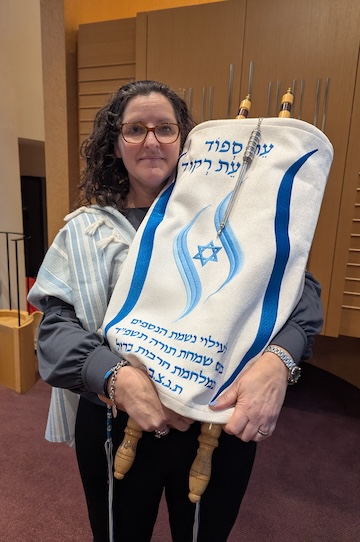
Rabbi Susan Tendler at Beth Tikvah’s aron hakodesh, where two Torahs feature covers memorializing heroes lost in the latest war. (photo by Pat Johnson)

On Simchat Torah, Jews worldwide celebrate the completion of the annual Torah reading and the beginning of another cycle. The day of rejoicing, which across centuries has been marked with often ecstatic festivities, is a time of dancing and spiritual uplift. How, though, do Jews celebrate this day after Oct. 7? The mass murders and litany of horrors perpetrated on Simchat Torah 5784 cast a pall over the occasion.

Rabbi Susan Tendler of Richmond’s Beth Tikvah Congregation expressed the emotional challenge of marking the festive holiday in the changed world.

“I can get through Oct. 7,” she said, “but how am I supposed to joyfully sing and dance on Simchat Torah?” 

Last summer, a friend was headed to Israel and told Tendler about the Simchat Torah Project. The friend was going to attend a ceremony at the Kotel, the Western Wall, with family members of individuals killed on Oct. 7 and in the ensuing war. At the ceremony, specially crafted Torah covers would be transferred to individuals from around the world, who would carry them back to their congregations.

Each cover has the name and date of death of the person it commemorates. So far, 635 Torah covers have found homes in 525 congregations in 287 cities in 31 countries. Two of those are in Beth Tikvah’s ark. Another is at Congregation Schara Tzedeck in Vancouver.

The project is inspired by ancient and modern words. King Solomon declared: “There is a time for everything under the heavens … a time to mourn, and a time to dance.” More recently, Israelis, in defiance of the enemy’s determination to break their national spirit and in emphatic solidarity with those murdered at the Nova music festival, declare, “We will dance again.”

For Tendler, the resonance was crystal clear. With most of the other congregational rabbis in Metro Vancouver, she was part of a trip to Israel in December 2023, which included an emotional visit to the Nova site, where 364 young people were murdered and crimes against humanity were perpetrated, including torture and rapes.

At the same time, in Tel Aviv, the exhibition commemorating the Nova festival pogrom was just opening and everywhere the rabbis saw the defiant declaration, “We will dance again.”

When Tendler heard about the Simchat Torah Project, it was the answer she had been seeking.

“I thought, that’s the pathway for me to be able to breathe and dance again on Simchat Torah,” she said. “On Simchat Torah, as we lifted up the sefer Torah, we would symbolically be lifting up those human beings and enabling them to dance again.” 

The rabbi’s family and another family, Mindy Zimmering and Allan Seltzer, purchased a Torah scroll in honour of the bat mitzvah of Daniella Sadoff, the daughter of Tendler and her husband Ross Sadoff. The Beth Tikvah community united to provide a home for a second cover.

photo - Rabbi Susan Tendler holds one of two Torahs featuring memorial covers from the Simchat Torah Project
Rabbi Susan Tendler holds one of two Torahs featuring memorial covers from the Simchat Torah Project. (photo by Pat Johnson)

One of the covers honours the life of Itamar Shemen, a 21-year-old medic in the Israel Defence Forces who fell in battle on Dec. 23, 2023. He was also a volunteer for Magen David Adom and was known to spend his days off volunteering to help the emergency responders. 

The other cover is dedicated to Ermias Mkurio, a 19-year-old known for his leadership and constant smile. He died a national hero on May 10, 2023.

The Torah covers note the date of death and not the date of birth because, as Tendler describes Jewish tradition, it is the totality of a life that is marked on a yahrzeit.

“We’ve done nothing when we come into this world,” she said. “But the day of our death is about the culmination of the life we’ve lived and our deeds and our legacy.”

The two Torah scrolls – blue lettering on white cloth – stand in Beth Tikvah’s aron hakodesh. 

On Simchat Torah, it was these two Torahs that the community lifted first and foremost.

“We wanted to make sure that these were the ones that were lifted the highest and that sense of connection, that sense that it’s up to us to ensure that these individuals are still rising and still connected and that their lives were not for want or that they are quickly forgotten but instead they are still impacting us and they are still dancing and they are still teaching us,” she said.

“The symbolism of having brought out the scrolls and people going and kissing them was incredibly emotional,” she said. “Watching people, knowing that these are very much in memory of people who have fallen for the state of Israel, recognizing what we are doing, and having these individuals symbolically pass around the congregation, and people finding holiness and treating them with holiness and respect, reaching out to kiss them, to interact, to engage with them, recognize them, and knowing that, no, they’re not here, but symbolically they are with us, and we are grateful and we are moved and we are humbled by your service, by the sacrifice of your life, that you’re still here with us and we are going to continue to keep your memory alive, brought many of us to tears.” 

Format ImagePosted on February 14, 2025February 13, 2025Author Pat JohnsonCategories LocalTags Beth Tikvah, commemoration, Judaism, Oct. 7, Simchat Torah, Simchat Torah Project, Torah scrolls
JWest takes next steps

JWest takes next steps

An artistic rendering of JWest’s new Jewish Community Centre of Greater Vancouver, as seen from 41st Avenue. (image from Federation)

JWest has submitted the development permit application to the City of Vancouver for the first building of the planned community hub, the new Jewish Community Centre of Greater Vancouver (JCC) at the corner of 41st Avenue and Willow Street. 

The design for a six-storey community centre is now being reviewed by the city after consultation with city planners. Rezoning for the site was approved in 2018 and includes a new JCC, a new King David High School and residential towers. Once completed, the hub will provide both housing and amenities for the expanding Oakridge neighbourhood.

The new JCC will be a 200,000-square-foot, state-of-the-art, multigenerational community centre on what is currently the JCC parking lot. The centre will include expanded childcare, services for seniors, arts and cultural spaces, and amenities for all Vancouver residents. More than 20 not-for-profit organizations are expected to call the centre home. In particular, the Vancouver Holocaust Education Centre, the largest Holocaust-based museum in Western Canada, will double in size to meet the growing demand for anti-racism education.

This is Phase 1 of the two-phase project. Phase 2 will include mixed-use rental housing, with units offered at or below market value and open to Jews and non-Jews.

While JWest is a community-led initiative that is Jewish at heart, it will benefit everyone. At $450+ million, it is also the most extensive project in the history of the Jewish community in Western Canada. And fundraising is proceeding apace, with keystone grants from the Government of Canada, the Government of British Columbia, the Diamond Foundation, the Al Roadburg Foundation, the Ronald S. Roadburg Foundation, and dozens of community-minded individuals and families bringing the vision into reality. The plan is to break ground within 13 months.

For more information, go to jwestnow.com. For philanthropic opportunities, contact Emily Pritchard at JWest ([email protected]). 

– Courtesy Jewish Federation of Greater Vancouver

Format ImagePosted on February 14, 2025February 13, 2025Author Jewish Federation of Greater VancouverCategories LocalTags development, fundraising, JCC, Jewish Community Centre of Greater Vancouver, JWest, KDHS, King David High School
Learning about aging

Learning about aging

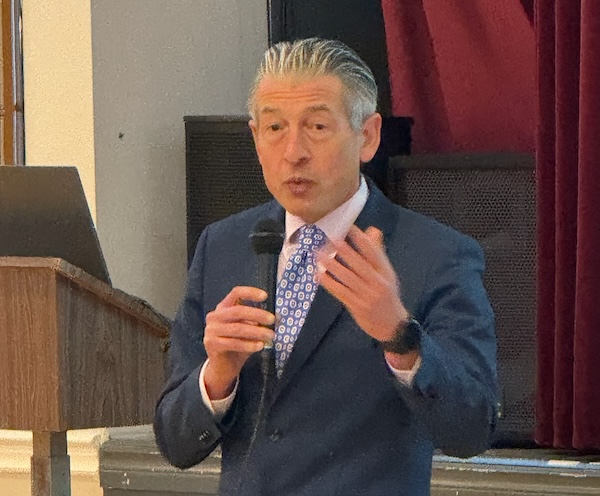
On Jan. 12, Dan Levitt, seniors advocate of British Columbia, spoke at the Jewish Seniors Alliance’s winter symposium. (photo from JSA)

On Jan. 12, Jewish Seniors Alliance, with Kehila Society of Richmond and the Peretz Centre for Secular Jewish Culture, presented the winter symposium titled The Future of Aging. The featured speaker was Dan Levitt, seniors advocate of British Columbia.

Jeff Moss, executive director of JSA, opened the afternoon event and Toby Rubin, co-executive director of Kehila Society, offered some remarks, including that Kehila is always happy to be a co-presenter with JSA.

Gyda Chud, representing the Peretz Centre, told a few stories about the Levitt and Gofsky families (Dan Levitt’s parents) and their history with the Centre. Levitt’s great-grandparents, Rose and Abe Smith, were among the founders of the Peretz. Chud spoke of her mother, Gallia, who is 100 years old – she lives by and instils the values of diversity, inclusion, social justice and advocacy. Chud also mentioned that she had been Dan Levitt’s preschool teacher at the Peretz Centre, where the symposium was held.

Tammi Belfer, chair of JSA, reminded everyone of the organization’s commitment to all the seniors of British Columbia, and thanked everyone for working to enhance the quality of life for all seniors.

Levitt, who is an honorary member of JSA, then educated the 125 attendees about the situation of seniors in this province. He began by giving an example from his time at a home in Mission. The story involves giving plants to seniors on one floor of the facility and telling them that they were responsible for the plants’ upkeep. Plants were also given to residents on another floor, but they were told that the staff was responsible for their care. The residents who were given the responsibility had plants that flourished, whereas the plants on the other floor died. Given purpose and responsibility, said Levitt, people will rise to the challenge.

Levitt continued with some statistics: there are presently 1.1 million seniors in British Columbia and, by 2036, there will be 1.6 million. More than 90% of seniors live independently, but the fastest growing segment of this cohort is over 85 years old, and one in three of them will need care. 

In his travels across the province, Levitt has heard from seniors about age discrimination in the workplace, often related to the regulations of employment, such as losing long-term disability and group insurance coverage after age 65. Many were concerned about the cost of driver’s licence renewal medical forms, which can vary from about $80 to $250, depending on the doctor’s discretion.

Levitt’s office is planning on holding a panel on transportation that will look at the needs of seniors. Some of the concerns are the distances between bus stops and the availability of HandyDART services.

There are many challenges ahead, said Levitt, noting that there are 6,500 people in British Columbia waiting for a publicly-subsidized long-term care bed. Home support, which would enable many seniors to “age in place,” is expensive here – these services are free to users in Ontario and Alberta. There is a need for more advocacy, he said. Support is also needed for caregivers, so they are not lost to other jobs. Combating ageism is also important.

Some other problems include the seismic upgrading needed in many care homes and digital access for seniors. The future must include help at home, with aid in reminders regarding medications, and help with technology. There needs to be age- and dementia-friendly places like they have in Bruges, Belgium.

Recommendations from Levitt and the Office of the Seniors Advocate include improving SAFER (a rental help program for seniors, the rates of which are inadequate); free home support; the funding of shingles, RSV and enhanced flu shots; and developing cross-ministry synergy for seniors’ issues.

After a lively Q & A session led by Chud, Ken Levitt, Dan’s father, who is a longtime board member of JSA, said a few words of appreciation. Larry Shapiro, JSA past chair, presented Dan Levitt with a gift and Moss thanked him. Refreshments followed, and the audience lingered and talked with Levitt before leaving with more knowledge and confidence than when they arrived. 

Shanie Levin is a Jewish Seniors Alliance Life Governor. She is also on the editorial committee of Senior Line magazine.

Format ImagePosted on February 14, 2025February 13, 2025Author Shanie LevinCategories LocalTags aging, BC seniors advocate, Dan Levitt, health care, JSA, policy, seniors

Posts pagination

Previous page Page 1 … Page 53 Page 54 Page 55 … Page 664 Next page
Proudly powered by WordPress