Skip to content
  • Home
  • Subscribe / donate
  • Events calendar
  • News
    • Local
    • National
    • Israel
    • World
    • עניין בחדשות
      A roundup of news in Canada and further afield, in Hebrew.
  • Opinion
    • From the JI
    • Op-Ed
  • Arts & Culture
    • Performing Arts
    • Music
    • Books
    • Visual Arts
    • TV & Film
  • Life
    • Celebrating the Holidays
    • Travel
    • The Daily Snooze
      Cartoons by Jacob Samuel
    • Mystery Photo
      Help the JI and JMABC fill in the gaps in our archives.
  • Community Links
    • Organizations, Etc.
    • Other News Sources & Blogs
    • Business Directory
  • FAQ
  • JI Chai Celebration
  • JI@88! video

Recent Posts

  • Zionism wins big in Vegas
  • Different but connected
  • Survival not passive
  • Musical celebration of Israel
  • Shoppe celebrates 25 years
  • Human “book” event
  • Reclaiming Jewish stories
  • Bema presents Perseverance
  • CSS honours Bellas z”l
  • Sheba Promise here May 7
  • Reflections from Be’eri
  • New law a desecration
  • Resilient joy in tough times
  • Rescue dog brings joy
  • Art chosen for new museum
  • Reminder of hope, resilience
  • The national food of Israel?
  • Story of Israel’s north
  • Sheltering in train stations
  • Teach critical thinking
  • Learning to bridge divides
  • Supporting Iranian community
  • Art dismantles systems
  • Beth Tikvah celebrates 50th
  • What is Jewish music?
  • Celebrate joy of music
  • Women share experiences 
  • Raising funds for Survivors
  • Call for digital literacy
  • The hidden hand of hate
  • Tarot as spiritual ritual
  • Students create fancy meal
  • Encouraging young voices
  • Rose’s Angels delivers
  • Living life to its fullest
  • Drawing on his roots

Archives

Follow @JewishIndie
image - The CJN - Visit Us Banner - 300x600 - 101625

Guns & Moses to thrill at VJFF 

Guns & Moses to thrill at VJFF 

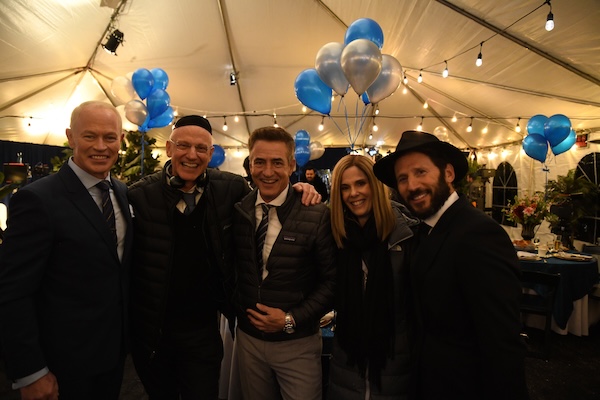
Filmmakers Salvador and Nina Litvak with Guns & Moses cast members Neal McDonough, left, Dermot Mulroney, centre, and Mark Feuerstein, right. (photo from Pictures from the Fringe)

Los Angeles filmmaker and author Salvador Litvak (no relation) will be in the city for this year’s Vancouver Jewish Film Festival to promote and talk about his and wife Nina Davidovich Litvak’s latest movie, Guns & Moses, which screens April 27, 4 p.m., at Fifth Avenue Cinemas.

The action thriller features a Chabad rabbi who becomes a detective and gunfighter to investigate a murder at his synagogue. This will be the third movie by the Litvaks and their production company, Pictures from the Fringe. Their previous films are When Do We Eat?, about “the world’s fastest seder gone horribly awry,” and Saving Lincoln, which is based on the true story of Abraham Lincoln and his friend and bodyguard Ward Hill Lamon.

Between movies, Salvador Litvak became the Accidental Talmudist – in fact, his last event in Vancouver was an Accidental Talmudist Shabbaton at the Kollel. He and his wife co-manage accidentaltalmudist.org, which has more than one million followers. Last year, he published a bestselling book, Let My People Laugh: Greatest Jewish Jokes of all Time.

Salvador Litvak grew up in New York but was born in Santiago, Chile. 

“My mother’s family, both my mother and grandmother, were Holocaust survivors who came to Chile from Hungary and my father’s family ended up in Chile fleeing the pogroms in the Ukraine about 1905,” he told the Independent. As immigrants, he said, “we got to this country and my parents wanted me to go to Harvard to be a doctor and, since I was 5, I said OK, but, eventually, I figured out that I didn’t want to be a doctor and I didn’t want to be a lawyer because I enjoyed writing and creating very much.”  

He said, “Eventually, I talked my way into UCLA film school, where I arrived in the 1990s, attended the MFA director’s program, and said thank G-d I didn’t miss this because this is what I was meant to do.” 

Pictures from the Fringe’s first feature film, When Do We Eat?, about a dysfunctional family’s Passover seder, was inspired by the fact that there were no Jewish holiday movies and the Litvaks wanted to “create a Jewish version of It’s a Wonderful Life.” Both filmmakers are baalei teshuva, or returnees to Judaism, and were “in the early stages of their journey,” said Salvador Litvak. They infused the movie with a “tremendous amount of spirituality, Torah and Chassidut,” but, he noted, “now that we’re Orthodox, we admit that it’s a little edgier than we would like.” However, he said, “All of the deep stuff in it, the Torah, the love, in addition to the raucous humour, stands the test of time.”

Litvak said his journey as the Accidental Talmudist and the establishment of accidentaltalmudist.org have helped When Do We Eat? gain new popularity and provide a built-in audience for Guns & Moses, which was partially inspired by a tragic shooting in California on April 27, 2019.

The couple had “built a large audience interested in authentic Jewish content, and we are filmmakers, so we knew that our next movie would be somehow Jewish. I wanted it to be an action thriller because I love action thrillers,” he said.  

The Litvaks watched a thriller a day for three years to “learn the genre inside out,” he said. “While we were immersed in that, there was a tragic murder, a shooting at a Chabad synagogue in Poway, Calif., where a young white nationalist came in and murdered a woman named Lori Gilbert-Kaye, injured the rabbi, and would have killed a lot more people if his gun had not miraculously jammed and members of the congregation rushed at him and then he fled. 

“I went down the next day and attended Lori’s funeral and interviewed the rabbi and congregants and got to know what happened there personally, and I said there is something in this that can become an action thriller with a murder/mystery structure,” he said.

image - Guns & Moses posterAnd so, Guns & Moses – about a Chabad rabbi who becomes an investigator and gunfighter after witnessing a tragic shooting at his synagogue – came into being. It was filmed in 2022.

Litvak said he knew that a movie about Jews under attack who fight back “would always be relevant, but we had no idea how relevant it would be” after Oct. 7, 2023.

One of the important themes of the movie, said Litvak, is that Jews are in danger and need to protect themselves and be responsible for their own safety. For him personally, that has meant joining a Jewish self-defence organization called Magen Am (which means Shield of the Nation) and going through extensive training (including learning how to use a gun) so that he can protect his own synagogue in case of an attack like the one in Poway. In the movie Guns & Moses, the character of Rabbi Mo Saltzman goes through the same training that Litvak went through.

In Guns & Moses, Saltzman is played by actor Mark Feuerstein, who starred in the hit series Royal Pains and appeared in the movie Defiance, among other things. The cast includes American-Israeli actor Alona Tal as the rebbetzin, Christopher Lloyd as a Holocaust survivor, as well as veteran actors Neal McDonough and Dermot Mulroney, Jake Busey, Craig Sheaffer, Mercedes Mason, Mark Ivanir (who also appeared in When Do We Eat?) and young actor Jackson Dunn, who Litvak believes will become a star. Litvak praised his cast, who only had 20 days to film Guns & Moses.

Litvak is looking forward to coming back to Vancouver, where he has visited many times because he has family here. The city is “very dear to my heart,” he said, and he loves the people and feels at home as soon as he lands here.

For tickets to Guns & Moses and other Vancouver Jewish Film Festival screenings, visit vjff.org. 

David J. Litvak is a prairie refugee from the North End of Winnipeg who is a freelance writer and publicist, and a mashgiach at Louis Brier Home and Hospital. His articles have been published in the Forward, Globe and Mail and Seattle Post-Intelligencer. His website is cascadiapublicity.com.

* * *

Editor’s Note: Guns & Moses’ North American release date is July 18. For more information, visit collider.com/guns-and-moses-trailer-release-date.


Format ImagePosted on April 25, 2025May 16, 2025Author David J. LitvakCategories TV & FilmTags Guns & Moses, movies, Nina Litvak, Salvador Litvak, thrillers, Vancouver Jewish Film Festival, VJFF
Spark honours Siegels

Spark honours Siegels

Camp Solomon Schechter’s Spark event in Vancouver on May 4 honours the Siegel family’s generational connections to the camp. (photo from campschechter.org)

Once again, Camp Solomon Schechter (CSS) is hosting one of its three annual Schechter Spark events in Vancouver – on May 4, at the Tap & Barrel Bridges location on Granville Island.

The fundraising and community-building events hosted by the camp each year run simultaneously in Vancouver, Seattle and Portland – the camp’s main hub cities. This year’s Schechter Spark will honour three families – one tied to each location – who have generational connections to the camp. In Vancouver, former Beth Tikvah and Beth Israel spiritual leader Rabbi Howard Siegel, Ellen Siegel and their growing family will be celebrated.

Rabbi Siegel, originally from Spokane, Wash., first attended CSS in 1961, when it was located on Whidbey Island. His experiences there led him down a path toward the Conservative rabbinate, a Jewish family and a life of Jewish service that took him to Vancouver, as well as many communities in the United States. In 1968, he convinced his then-girlfriend, Ellen Kushner, to join him as a camp counselor. The couple returned again to CSS in 1970, this time at its new (and current) Tumwater, Wash., location – Howard as educational director and Ellen as camp nurse. 

Ellen Siegel credits the camp for helping her perfect her independence as a health practitioner, while Howard Siegel built his future rabbinate under the mentorship of Portland’s Rabbi Joshua Stampfer and Vancouver’s Rabbi Wilfred Solomon.

The Siegels’ three children also attended CSS and their oldest daughter, Ronit, began her relationship with husband Tadd Berger while they were summer staff together in the 1990s. Naturally, they sent their three children to CSS, and all three have been both campers and staff.

The Seattle and Portland Sparks will recognize the Schiller families and Atkins families, respectively, with more than 500 participants expected to attend between the three locations.

“As we celebrate another year of impact, Spark is a time to honour our past, celebrate our present and invest in our future,” said CSS executive director Zach Duitch. “We look forward to gathering with our beloved community to share stories, laughter and our collective commitment to Jewish camping.”

Camp Solomon Schechter has been a cornerstone of Jewish life in the Pacific Northwest for more than 70 years. Spark endeavours to embody the spirit of camp, bringing its values to life through an evening of joy, generosity and togetherness.

Schechter Spark in Vancouver is a free event with online registration, and will include appetizers, drinks and a few camp-style special presentations. For more information or to register, visit campschechter.org/spark or contact Leah Conley, [email protected]. 

– Courtesy Camp Solomon Schechter

Format ImagePosted on April 25, 2025April 24, 2025Author Camp Solomon SchechterCategories LocalTags Camp Solomon Schechter, Ellen Siegel, fundraising, Howard Siegel, philanthropy, Schechter Spark, summer camp
An almost great movie 

An almost great movie 

Coexistence, My Ass! follows Israeli activist and comedian Noam Shuster Eliassi as she develops her show of the same name. (photo from DOXA)

Coexistence, My Ass!, directed and produced by Amber Fares, is almost a great documentary. But it fails to ask at least two key questions that would have made for a more in-depth portrayal of an interesting and complex human being. 

Coexistence, My Ass!, whose May 4 screening at the DOXA Documentary Film Festival already has sold out, is about comedian Noam Shuster Eliassi, who was born in Wahat Al-Salam / Neve Shalom / Oasis of Peace, a village in which Jewish and Palestinian Israelis have chosen to live together. It has been considered a model of coexistence and  Shuster Eliassi grew up amid the idealism it represented, and speaks Arabic fluently. She and her best friend (to this day), Ranin, a Palestinian Israeli living in Oasis of Peace, were among the kids trotted out as the generation who would bring peace. 

Shuster Eliassi’s mother is Jewish Iranian and her father is Jewish Romanian. The couple met in high school (in what country is not revealed), so basically grew up together. They decided to live in Oasis of Peace and became, says Shuster Eliassi in her act, what most Israelis love to hate most: woke, progressive leftists. “They believe in the radical idea that Israelis and Palestinians deserve the same equal human rights! Crazy. So radical.”

It seems important to know why Shuster Eliassi’s parents left their respective countries to live in Israel, but especially her mother. With Iran as the main funder of Hamas’s – and other terrorists’ – murderous activities, and the fact that tens of thousands of Jews had to flee after the 1979 revolution, it seems that Shuster Eliassi’s mother’s experience is crucial to understanding Shuster Eliassi. But this question, if ever asked, doesn’t make it into the film.

Shuster Eliassi is an intelligent and accomplished person. By age 15, she had graduated, so to speak, from being one of the kids giving flowers to visiting celebrities (who would often mistake her, because of her dark skin, for being Palestinian – and with such good Hebrew!) to speaking around the world about coexistence and the possibilities for peace. At 21, she got a full scholarship at Brandeis University for being a peace activist. She even met the Dalai Lama, who, she quips, didn’t think she was Palestinian –  “He just thought I was Indian.”

At 25, Shuster Eliassi landed a “peace worker’s dream job” – a position at the United Nations. We don’t learn much about what her job entailed, but there are clips of her speaking about the West Bank and Gaza as being the biggest prisons in the world, and how “the occupation” affects Palestinians and Israelis. Career-wise, she was on a wave of success, she says in her show, when she saw Ukrainian President Volodymyr Zelenskyy’s TV program, made before he was elected, about a comedian who becomes president. Zelenskyy, of course, then did become president, so Shuster Eliassi observes that, if she wanted to take her political career seriously, she needed to start writing jokes.

photo - Comedian Noam Shuster Eliassi in performance
Comedian Noam Shuster Eliassi in performance. (photo from DOXA)

This takes us to where the film begins, with her at Harvard in 2019, where she’s been asked to deliver a peace-building project. She tells them that Coexistence, My Ass! will be that project, and she’s accepted.

In the documentary, we see the development of Coexistence, My Ass! and how Shuster Eliassi’s views change as the political situation in Israel deteriorates and the violence increases. Her parents are often her sounding board, as are friends and fellow comedians. We witness the results of a hate crime – the school in Oasis of Peace was set on fire in September 2020. We see moments of happiness, most unexpectedly, perhaps, when Shuster Eliassi returns to Israel from the United States with COVID and must be quarantined in a hotel, where sick Jews and Palestinians are being isolated from the general population.

“And everyone is radically getting along. This is a 5-star oasis of peace. If they continue getting along, my comedy career is over. Just kidding, you’ve read the news, I have material for years. Netanyahu has my back,” says Shuster Eliassi in her act. “Somebody give him a beeper,” she adds sheepishly, referring to Israel’s taking out of Hezbollah with exploding pagers in September 2024.

Months before Oct. 7, 2023, Shuster Eliassi was disillusioned and would get into yelling matches with Jewish Israelis protesting the Netanyahu government and dangers to democracy because their protests didn’t also explicitly call for equal rights for Palestinians. Whereas pre-COVID, she says, “My biggest responsibility is to speak to my people…. The Jewish audience is where we have to work,” the purpose of Shuster Eliassi’s comedy ceases at some point to be a way to encourage peace and becomes a form of resistance.

After Oct. 7, when some of Shuster Eliassi’s family and friends abandon their belief in coexistence because they feel peace with Palestinians isn’t possible, Shuster Eliassi goes the other way, giving up on coexistence because she feels – though doesn’t state explicitly – that peace with Jewish Israelis is not possible. 

Moria, a comedy writer, advises Shuster Eliassi that people need to hear what Shuster Eliassi has to say, but it can’t just be “genocide, genocide!” The role of a comedian, says Moria, is “to bring people together. To unify. We can’t stop the killing, but we can unify people. To get people to see the world through your eyes.”

“No, that’s not what I’m doing,” responds Shuster Eliassi, who explains that her goal isn’t to unify, it’s “to voice resistance to this insane show of force that has swept everyone up blindly.”

Shuster Eliassi’s friend Ranin reluctantly retains hope for coexistence because, otherwise, she tells Shuster Eliassi, there is no place for Palestinians and Arabs within Israel. For Shuster Eliassi, though, by the end of the film, there seems to be no place for Jews in Israel. She only sees fault with Israel, and somehow thinks that Hamas wouldn’t want to kill all Jews if Israel had dealt with “the occupation.”

If memory serves, Hamas is only mentioned once in the documentary, in a clip from Shuster Eliassi’s show, where it is part of a joke, perhaps one told before 2023, it’s not clear. Why Hamas plays little or no role in Shuster Eliassi’s view of the evolving situation is the second of those two key questions that would have made Coexistence, My Ass! a better film. 

While Shuster Eliassi laments that Israelis – even the coexistence crowd – are not able to meet Palestinians where they’re at, she is unable to meet her fellow Jewish Israelis where they are at. While she is comfortable performing at a Palestinian festival where she’s greeted by a man wearing a “Palestine vs the world” T-shirt that, on the back, has a Palestinian flag over all Israel, she isn’t comfortable with Israelis who would fill out that same map with no Palestinian territories. While she is correct that peace is only possible between equals, she only sees one oppressor – Israel. Not Hamas. Not any other international party, like Iran. Just Israel. 

Many of the people at the sold-out screening of Coexistence, My Ass! will think it’s the most amazing film ever because, despite attempting to be fair – and it seems like Fares honestly did try to present multiple sides – it ultimately heralds their anti-Zionist beliefs and justifies them. Others will be disappointed that Coexistence, My Ass! ends up being just another anti-Israel film, which will, no doubt, win more awards than it has already, despite its critical flaws. 

Format ImagePosted on April 25, 2025April 24, 2025Author Cynthia RamsayCategories TV & FilmTags coexistence, comedy, Gaza, identity, Israel, Israeli-Palestinian conflict, Neve Shalom, Noam Shuster Eliassi, Oasis of Peace, Oct. 7, politics, storytelling, Wahat Al-Salam, war
20 years on Willow Street

20 years on Willow Street

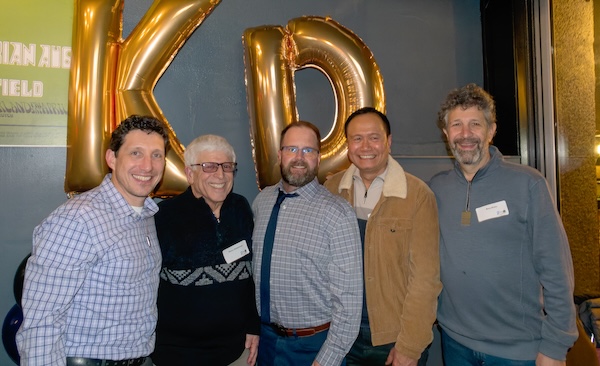
Left to right: Head of school Seth Goldsweig, former head of school Perry Seidelman, deputy head of school Alex Monchamp, head custodian and building manager Jess Sabado and former head of school Russ Klein at a February gathering of alumni to celebrate 20 years of KDHS on Willow Street. (photo from KDHS)

On May 14, with a party at Congregation Beth Israel, King David High School celebrates 20 years since it opened its doors on Willow Street.

“It’s a real blessing,” said KDHS head of school Dr. Seth Goldsweig about having a Jewish high school in the community. 

“Study after study shows that the most effective way to develop and maintain Jewish identity is to go to Jewish day school,” he said. “Our students can continue to develop their Jewish identities and turn into the Jewish leaders of tomorrow.

“We have a high school that stands up to the other amazing independent schools in the area,” he added. “This means that students can have a top-notch Jewish education combined with a rigorous and enriching academic experience. They get the best of both worlds.”

Goldsweig is KDHS’s third head of school, having started the position last fall, after Russ Klein retired. Klein was at the helm from 2008 to 2024.

“In this job, I found a community that I didn’t know I had,” Klein told the Independent last year, as his tenure was winding down. “That was beyond special. I really do think of this job, this position really, as a gift.”

Klein had taken over the position after Perry Seidelman retired. 

In 2001, Seidelman was hired as principal of Vancouver Talmud Torah High School – one of the iterations on the path that led from Maimonides High School, which was started in the 1980s, to KDHS. With 30 years prior experience and his approach to education, he was a key to the successful establishment of King David.

“Without Perry, there would be no school,” Larry Goldstein, president of the Jewish high school during the transition period, says in The Scribe’s Jewish Education in BC issue. “It’s as simple as that. Perry gave the credibility to other parents.”

“With growing interest in the school, a decision was made to build a permanent structure with financing from the Diamond Foundation,” Seidelman writes in The Scribe, which is the journal of the Jewish Museum and Archives of British Columbia. “It was to be built on a property at the southeast corner of 41st Avenue and Willow Street, directly across Willow Street from the Jewish Community Centre. Extensive discussions were held with the JCC administration, as intentions were to use the JCC for some programs, notably the JCC gymnasium for PE classes and the Norman [& Annette] Rothstein Theatre for drama productions.”

As enrolment grew, Alex Monchamp, who had been a teacher at the high school since its Maimonides days, was hired as vice-principal, according to The Scribe. Monchamp now holds the title of deputy head of school.

“I joined King David in July 2001,” Monchamp told the Independent. “I’d only been living in the city for a few months, and I saw a small newspaper ad for a small independent school looking for a half-time English and drama teacher. It was my first teaching job in BC!”

When asked why KDHS has proven successful, while previous versions of the high school struggled, Monchamp said, “I think the main turning point was the year I started, and the school had its biggest Grade 8 class, which I think was 25 or 26 students. Those connected to the school and who were vital in its foundation and ongoing viability made a real concerted effort to engage with the community and make a case for the importance and need for a sustainable Jewish high school. However, the real risk, the real investment, was when those Grade 8 families, and the families that came after, invested their most important resource – their children – in our school.

“When our families started to see that need and started to trust in the school, it allowed the school to grow and become more stable,” said Monchamp. “Stability turned into slow but steady growth, to more students, more teachers, and then our home on Willow Street. However, the building itself did not cement our future – it was also the school’s investment in good leadership and dedicated teachers that secured the future we enjoy today.”

photo - Then-student Nicole Grubner and Gordon Diamond at the 2005 inauguration of the KDHS building on Willow Street
Then-student Nicole Grubner and Gordon Diamond at the 2005 inauguration of the KDHS building on Willow Street. (photo from KDHS)

When Monchamp joined the high school, there were fewer than 70 students, programming was limited and there was no permanent school building, he said. Growth has occurred in multiple areas.

“There are obvious measures, like our student population is over 270 students, we have a vibrant arts program, a strong athletic program and our programming offers our students many ways to explore what they know, what they can do and who they’ll become,” said Monchamp. “All of that happens because we continue to have a team of outstanding teachers and dedicated adults who work extremely hard.

“The ultimate measure is not where our students go to university, the grades they earn or even how many of them are in the building each day,” he added. “There are bigger schools, there’s no shortage of kids going to university and no one is ever going to care what your math mark was in Grade 10. The true measure is that our students discover and develop their capabilities, figure out who they are and what it means for them to be Jewish in this world. In a world of uncertainty and change, our students have the capability to adapt and grow and the values and foundation to be a good person.”

KDHS’s director of development, Esther Mogyoros, who has worked at the school for the past 11 years, echoed Monchamp’s belief that there is more than one component to the school’s growth.

“Over the years,” she said, “King David has grown not only in student enrolment but also in its physical presence, thanks to the expansion of the east campus, made possible by the generosity of the Diamond Foundation and our supportive community. Our reputation has been built on a strong foundation of chesed programs, regular volunteer initiatives, and active participation in celebrations and community events. We take pride in nurturing students who not only excel academically but also continue their educational journeys and give back to the community long after graduation.”

Both Mogyoros and Monchamp said the best part of their jobs is when they connect with others.

“Connecting with students, parents, grandparents and the community at large,” said Mogyoros. “Building relationships and sharing my passion for Jewish education, Israel and the importance/impact of King David in the community.”

“The best part is when I can connect with a student, chat, find out more about them and then, if I can, find ways that I can support them,” said Monchamp. “It doesn’t happen nearly enough in a typical day, but I love it when it does.”

One of Monchamp’s standout moments at the school is when KDHS would take the Grade 9 students to Washington, DC, every spring to visit the US Holocaust Memorial Museum.

“We’d spend a full day at the USHMM, which is a lot, and our students always came away with information or artifacts they hadn’t encountered before and at times it was very emotive,” he said. “The trip also included a day at many of the Smithsonian Institution museums. It was always a treat to watch the kids see real historical items, like the Wright brother’s plane, the ruby shoes from The Wizard of Oz or Prince’s guitars. History is always more relevant to kids if they can get up close to it and connect to their own stories and memories.”

Over the past 20 years, there have been challenges, notably, the pandemic. 

“There was so much unpredictability and an immeasurable amount of learning we had to do on the fly,” said Monchamp of that time. “Despite the numerous challenges, it is moments like that which demonstrate what our school is all about. The overarching goal was what it has always been: putting our students first. And when that was our guiding principle, we figured out the rest…. It was also vital that our families trusted us. Before, during and after COVID, we have consistently demonstrated to our families that we take our role in their children’s growth very seriously and that we always perform in ways that support and benefit their growth.”

“Throughout those difficult years,” said Mogyoros, “our school’s resilience and compassion shone through – not only in maintaining academic standards but also in supporting one another emotionally during a time of unprecedented uncertainty.”

Monchamp hopes the school continues on its current path, becoming “a student-centred learning environment.

“Learning is an active experience and is most successful when students are actively engaged and can apply what they know and can do to their own experiences and contexts,” he said. “We have already seen the tremendous benefit of this shift. It’s what is keeping our school competitive and on par with other Vancouver independent schools and it’s setting up our students for their future successes.”

photo - The King David High School Class of 2019 celebrates graduation
The King David High School Class of 2019 celebrates graduation. (photo from KDHS)

“Our goal,” said Mogyoros, “is to empower students to be confident in their identities, excel in their chosen paths, and take pride in their Jewish heritage, traditions and love for Israel. We strive to inspire them to make a meaningful difference in the world around them.”

JWest is central to the high school’s future. The three-phase development project at 41st Avenue and Oak Street will see the construction of a much-expanded JCC, a new home for KDHS and two residential towers.

“Having a new building where we can continue to develop our programming, where we can engage our students and where we can host real ‘home games’ in our own gym in front of as many students and parents as possible is incredibly important,” said Monchamp. “The school is still very young and a new facility will allow it to continue to shape its identity. Additionally, our community can continue to take pride in the school and all of the many interconnected Jewish organizations in the city. I think the symbolism of one large, proud hub for the Jewish community sends not only a very strong message, but, more importantly, a unified message, one which the community can use as a foundation for its future.”

Mogyoros agrees.

“A larger campus will open doors to more programs, providing students with enhanced opportunities for learning, creativity and personal development,” she said. “We are especially excited about the addition of more space and new sports fields, which will enrich our athletic and extracurricular offerings and foster a vibrant, dynamic environment for our students.”

“We want to see the school continue to grow,” said Goldsweig. “Next year, we will be the biggest we have ever been. So many families have chosen to give their kids a Jewish high school education. We are so appreciative and hope that many more continue to make the same decision.”

The head of school says he has been warmly welcomed into the community, with Friday night dinner invitations every Shabbat, “an amazing staff,” a board that “has been supportive every step of the way,” and parents who “are dedicated to the success of the school and their children. 

“The most impressive group of all has been the students,” Goldsweig said. “They are so inspiring, and I know our future is in good hands.” 

To attend the May 14 gala, participate in the silent auction (which launches April 29), buy raffle tickets or donate to King David High School, visit goldenthreadgala.com.

Format ImagePosted on April 25, 2025April 30, 2025Author Cynthia RamsayCategories LocalTags Alex Monchamp, education, Esther Mogyoros, fundraising, Golden Thread Gala, history, JWest, King David High School, philanthropy, Seth Goldsweig
Students are resilient

Students are resilient

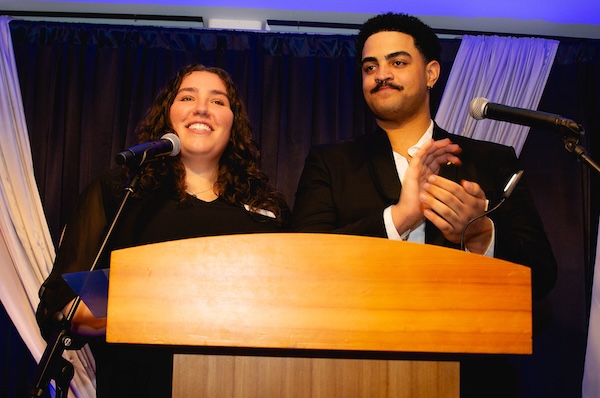
A Night of Resilience, held at UBC Hillel House March 27, was emceed by students Samantha Schwenger and Izaiah Isaac. (photo from Hillel BC)

Jewish students, allies and community members packed the second-floor social hall at the University of British Columbia’s Hillel House March 27 for A Night of Resilience. It was a celebration of the determination and tenacity of students since the Oct. 7 terror attacks and the spike in antisemitism on campuses.

The evening was emceed by Izaiah Isaac, a third-year student studying forest biology, and Samantha Schwenger, a third-year cellular and molecular neuroscience student. They expressed solidarity with the hostages and the broader Israeli population.

“Tonight, we gather here at Hillel to honour more than just achievements,” said Isaac. “We are here to pay tribute to something far deeper – to the resilience of Jewish students, their unwavering courage and their relentless pursuit of justice in a world that has felt, at times, unbearably heavy.”

“In the past year-and-a-half, Jewish students across British Columbia have been faced with an unimaginable reality,” Schwenger said. “The war in Israel, beginning on Oct. 7, brought with it a wave of violence and sorrow that impacted not only our families, but our very sense of security. And, in its wake, antisemitism surged, leaving Jewish students on campuses everywhere to bear the brunt of hatred, fear and division.”

Rabbi Kylynn Cohen, Hillel’s senior Jewish educator, spoke of the strength she has seen among students.

“We are always living Torah and our students have truly exemplified that in the past 17 months,” she said. “I have watched you grieve, pray, teach, love, protest, rally and get up every day … to fight the violence, gaslighting and antisemitism which has been coming at you from all sides. It is truly an honour to celebrate you tonight.”

Ohad Gavrieli, executive director of Hillel BC, spoke of the changed climate on campuses after Oct. 7, 2023.

“One by one, students started showing up at Hillel, some in tears, some shaken, all looking for support,” he said. “They came not only because of the violence and devastation in Israel, but because the atmosphere on campus was already starting to change. Their [teaching assistants] were praising the massacre, their classmates were posting support for Hamas. The shift was fast and it wasn’t subtle. Now, it’s almost 18 months later and we’re still in it. It’s not over.”

photo - Ohad Gavrieli, executive director of Hillel BC, was one of the speakers during the March 27 event
Ohad Gavrieli, executive director of Hillel BC, was one of the speakers during the March 27 event. (photo from Hillel BC)

He noted that the UBC student union had endorsed a student strike for Palestine, part of a larger trend that, he said, has “left Jewish and Zionist students feeling unsafe and unwelcome.”

“Despite all of it, our students didn’t back down,” said Gavrieli. “They continue to speak up. The strength and resilience of our students should make everyone in this room proud. We have leaders here, we have a future in students who are brave, grounded and unwilling to be pushed aside. At Hillel, we do everything we can to stand with them, to be their Jewish home away from home, a place of strength, a place of safety and a place they are never alone. Tonight is about them. It’s about all of you who made this evening possible, as well, and those who stood with Hillel and our students through it all.”

Ezra Shanken, chief executive officer of the Jewish Federation of Greater Vancouver, lauded students, as well as the staff and lay leadership of Hillel.

“This is such an incredible evening that I wish we didn’t have to do,” he said. “I wish that you, as students, were not going through what you’re going through. The hostile environment that’s being created for you here on this campus and on campuses across BC is unacceptable and your courage is incredibly, incredibly inspiring.”

The event featured the presentation of Maccabee Awards to students from campuses throughout the province. 

Shanken presented a Maccabee to Simon Fraser University student Yael Toyber, who Shanken noted is also the recipient of Federation’s 2024 Young Leadership Award. 

“This student fights for justice not through confrontation, but through education – using their creativity and insight to create educational materials that are accessible and compelling,” he said.

Toyber’s work with StandWithUs and their leadership of the Jewish Students’ Association, Shanken said, has made her instrumental in strengthening the Jewish community at SFU.

Gavrieli presented the award to UBC student Rachel Seguin, who he credited for her contributions to the Israel on Campus group, and as “a bold voice for Jewish students, ensuring that our community stands proud.”

“This student has bravely stepped into conversations with UBC administration to address antisemitism, ensuring that Jewish students feel heard and valued,” said Gavrieli. 

Gordon Brandt, president of the board of Hillel BC, recognized University of Victoria student Audrey Gaulin, who he called “a force to be reckoned with.”

“Beyond Hillel,” Brandt said, Gaulin has “stepped into leadership roles as a Common Ground Ambassador with Allied Voices for Israel and as a director-at-large with the University of Victoria Student Society.”

Ellie Sherman, Hillel BC’s director of student life, presented an award to Langara College student Ethan Doctor.

Doctor is a Canadian Jewish Political Affairs Committee (CJPAC) Fellow, an active member of Alpha Epsilon Pi fraternity, and “a champion for the Jewish community,” said Sherman. In his role as the Western Canada representative for the J7 Working Group on Campus Antisemitism, he has “amplified student voices, pushing for meaningful change at both local and national levels.”

Ishmaeli Goldstein, Hillel’s campus advocacy specialist, recognized Roman Chelyuk with an award for allyship. Chelyuk is a senior fellow with CJPAC and an Emerson Fellow with StandWithUs, treasurer of Israel on Campus (IOC) and a past executive of the Ukrainian Club, who has “shown a deep commitment to standing with the Jewish community.”

Andy Gitelson, campus support director from Hillel International, attended the event from Portland, Ore., and presented the second Allyship Award to UBC student Zara Nybo.

“As the president of IOC, a StandWithUs Emerson Fellow, a CJPAC Fellow and a Campus Media Fellow with Allied Voices for Israel and Honest Reporting Canada, this person has consistently demonstrated a strong commitment to using their voice to advocate for the Jewish community,” said Gitelson, who credited Nybo with being a powerful voice on social media, raising awareness, sparking important conversations, “and defend[ing] the Jewish community time and time again.”

photo - Jewish students, allies and community members packed the second-floor social hall at the University of British Columbia’s Hillel House March 27 for A Night of Resilience
Jewish students, allies and community members packed the second-floor social hall at the University of British Columbia’s Hillel House March 27 for A Night of Resilience. (photo from Hillel BC)

Yael Segal, a UBC alumna and co-founder of the Justin and Yael Segal Family Fund, presented the Kehilah Award to Jacoba Moscovitz. The award celebrates students who demonstrate leadership and dedication to the Jewish community by going above and beyond to support their fellow students, foster a sense of belonging and contribute to building a home for Jewish students on campus.

Segal credited Moscovitz as “a familiar and welcoming presence at UBC – somebody who helps others feel at ease and contributes to an inclusive atmosphere.… In many ways, this student has acted as the glue, bringing people together. As a member of the Jewish Students’ Association executive team and [as] a StandWithUs Emerson Fellow, they’ve also taken on leadership roles that strengthen Jewish life on campus. This student also bravely stepped up to be in ongoing conversations about antisemitism with UBC administration, and continues to work hard to ensure Jewish students are welcome and safe at UBC.”

Talia Chivo, Hillel’s lead campus professional at the University of Victoria, presented a second Kehilah Award to Bea Banack Tapia.

“This individual has a gentle way of listening to those around them,” said Chivo. “They take the time to connect one-on-one with so many members of our community and offer support and genuine friendship. Behind the scenes, they’ve put countless hours into making sure things run smoothly. Their dedication isn’t always loud, but it’s felt by everyone around them.”

Tina Malka, director of antisemitism research and education at Hillel International, traveled to the event from San Diego. 

A Night of Resilience took place as the academic term concluded, marking the second year of unparalleled anti-Israel activism and antisemitic agitation on campuses. Speakers repeatedly credited students with the courage to confront the challenges facing them. 

Format ImagePosted on April 25, 2025April 24, 2025Author Pat JohnsonCategories LocalTags A Night of Resilience, antisemitism, courage, education, Ezra Shanken, Hillel BC, Izaiah Isaac, Kylynn Cohen, Oct. 7, Ohad Gavrieli, Samantha Schwenger, students, UBC, University of British Columbia
Reinvigorating Peretz

Reinvigorating Peretz

Itamar Manoff and Adi Burton, co-directors of the Peretz Centre for Secular Jewish Culture, whose vision respects centre’s history. (photo from Peretz Centre)

Adi Burton and Itamar Manoff became co-directors of the Peretz Centre for Secular Jewish Culture last summer. The Independent recently spoke with them about their relatively new positions and the secular humanist Jewish organization’s 80th anniversary this year.

Both Burton and Manoff acknowledge that they arrived at their new roles last year during a tense and uncertain time in the Jewish community. Still, they are bolstered by the vibrancy, solidarity and support that have been present at Peretz for a long time.

“Learning how to do this job is learning how not to think that you need to reinvent the wheel, but actually opening up to the amazing activity and cultural richness that exists here – and finding a way to balance out the diverse needs of this fascinating and unique community while also making space for newness,” Burton said.

Burton and Manoff are simultaneously welcoming new members and ideas to Peretz and carrying on long-standing traditions, such as the focus on Yiddish culture. Further, they are sharing the history of the centre, which is steeped in a commitment to social justice, peace activism and the integration of the Jewish and broader communities.

“Like all Jewish organizations, there is always a lively debate about what Peretz is and can be,” Burton said. “As a community, we constantly rethink and renew culture through these conversations, which shows up in our celebrations of holidays, in our classes and lectures, and community events, [and] everyone is welcome to participate in this process of recreation.”

In 1945, the founders of Peretz – socialists, communists and capitalists, among them – envisaged a place where Jewish and Yiddish culture could be preserved and cultivated. The centre, in its current location on Ash Street, is a home to the riches of that history: the Kirman Yiddish Library, photographs, recipe books, music, and stories of Jewish life in Vancouver over the past eight decades.

In the last 10 years, Peretz has lost three of its pillars: Sylvia Friedman, Claire Osipov and, just this month, Gallia Chud. As well, the centre is still recovering from the pandemic, which reduced in-person participation. A main task in the eyes of Burton and Manoff is to ensure that the legacies of past generations continue. 

“We’re lucky that there are so many people of different ages and backgrounds who are committed to Peretz – often working tirelessly in the background and with little to no support – and who keep us thriving,” Manoff told the Independent.

Burton and Manoff praised Donna Becker and Iosif Gershtein, two Peretz stalwarts who have been driving forces within the centre for more than 20 years.   

Becker, they said, brings a deep understanding of Yiddishkeit, music, progressive politics, programs and event coordination, and extraordinary administrative skills.  Gershtein provides a comprehensive knowledge of the building, an unsurpassed work ethic and a treasure trove of idioms and expressions, they said.

“We appreciate the chance to work with and learn from them,” Burton said. “Each brings a unique perspective and experience to the work that constantly inspires us to revisit our assumptions and act with greater care and respect for others.”

The Peretz Centre, according to Burton and Manoff, prioritizes diversity. It sees the LGBTQ+ community as an important part of its membership, they said, and the organization also opens its doors to interfaith and intercultural individuals and families.

“We keep a radically open definition of what it means to be a part of Jewish life, which, as a secular Jewish organization, we’re grateful to be in the position to do,” Manoff said.

The new directors say the city is entering an exciting period of growth for Jewish and Yiddish culture. There has been a marked increase in renewals and new members this past year, they said.  

On the education front, Peretz offers beginning and intermediate Yiddish classes and a Yiddish history course. Musically, there are klezmer-related events, the Jewish Folk Choir, and Yiddish dance classes with Claudia Bulaievsky.  There have been performances and lectures from well-known artists in the Yiddish music world.

“We’re excited to expand our arts and culture programming, including a few really innovative theatre productions and a film project on four amazing women who were among the founders of the Peretz,” said Burton. “We’re also especially enthusiastic about reviving our programs for youth. Our p’nei mitzvah program provides a pluralistic, non-dogmatic Jewish cultural education for young people aged 10-13 and helps them reimagine the traditional bar mitzvah rite of passage.”

When the Peretz Centre’s executive director position was announced last spring, Burton and Manoff applied together. Both have been involved in nonprofit, social and academic projects and organizations for many years.

“We draw confidence from each other because we hope that, together, we can bring and represent the spirit of friendship and community that has room for difference (makhloket) and strives towards peace,” Manoff said.

During this anniversary year, the relatively new leaders are striving to pay homage to and strengthen connections with those who have been at the Peretz Centre for a long time. They stress that their goal is to make sure that the longstanding traditions at Peretz flourish.

“It’s always such a wonderful experience to see how much is happening in the community and how much has been happening for such a long time, in such creative and independent ways,” Manoff said.

Both Burton and Manoff view the Peretz Centre as a place where people from different walks of Jewish life can come together and explore important questions of identity, history, culture, language, belonging and politics, in a safe and respectful environment – one, they say, that is needed in a time of disconnection and upheaval. 

For more information, visit peretz-centre.org. 

Sam Margolis has written for the Globe and Mail, the National Post, UPI and MSNBC.

Format ImagePosted on April 25, 2025April 24, 2025Author Sam MargolisCategories LocalTags Adi Burton, history, Itamar Manoff, Peretz Centre, secular humanism
Different kind of seder

Different kind of seder

Held on April 15, the Third Seder: Understanding Addiction and the Path to Freedom focused on the slavery of addiction. (photo from JFS Vancouver)

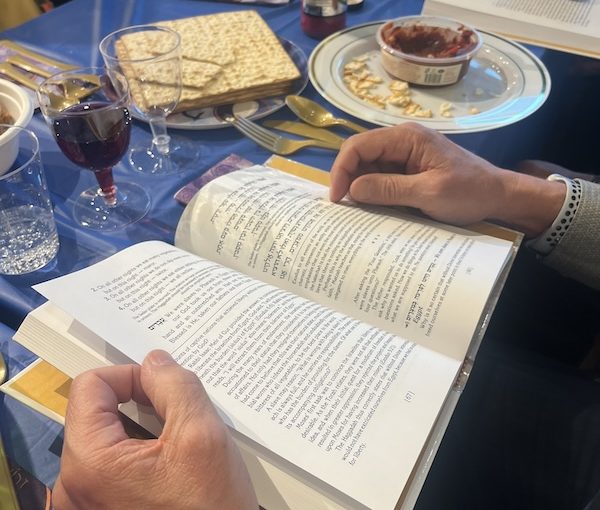
There was matzah, grape juice, charoset and horseradish on the table. Guests read from the Haggadah and enjoyed a meal of matzah ball soup, brisket and roasted vegetables. At first glance, you might think this was just another seder – but it truly was different from all other seder nights.

The Third Seder: Understanding Addiction and the Path to Freedom was held April 15, with Rabbi Joshua Corber, director of Jewish Addiction Community Services (JACS) Vancouver, at the helm. All the guests had something in common: they were people with or recovering from addiction, or family members of loved ones who have experienced or are still struggling with addiction.

“No situation is more similar to slavery than one’s addiction. Someone who has experienced addiction truly understands what it means to be a slave,” said Corber as he introduced guests to From Bondage to Freedom: A Haggadah with a Commentary Illuminating the Liberation of the Spirit, written by Rabbi Dr. Abraham Twerski (1930-2021). 

“Rabbi Twerski, z”l, is an absolute giant,” Corber explained. “Steeped in Torah learning and Chassidus, he was a psychiatrist who specialized in addiction and, with this background, his ability to leverage Torah as a recovery tool is unparalleled. This is reflected in his Haggadah, but he also led the way for other Torah scholars.” 

At all other seders, guests drink wine or grape juice, but at the Third Seder, only grape juice was on the table. Guests recited sections from the Haggadah that wrestled with concepts like liberation from addiction, and how family members could deliver “tough love” by setting boundaries. They expressed their pain and shared their stories with candour.

“Slaves to addiction tend to think recovery isn’t possible,” said one guest, who introduced himself as a recovered alcoholic. 

Corber agreed. “I thought addiction was my life, and that I needed to tolerate it,” he confessed. “I was held down by inertia because addiction was the only life I could imagine. In some ways, it was like I was already dead.”

The guests at the seder, which was held at Reuben’s Deli by Omnitsky, ranged in age from 22 to 80. Some were still wrestling with active addiction, while others had been in recovery for lengthy periods. Together, they formed a community of support that was inclusive and devoid of judgment.

“Addiction is a family disease and having a community for recovery is amazing,” one guest declared.

Corber echoed those sentiments. “A goal of JACS is to get the whole community behind the cause of supporting Jews entering recovery or coming out of addiction and, so far, that’s been missing,” he said.  

There remains a stigma surrounding addiction, particularly in the Jewish community, Corber said. “There seems to be a reluctance to discuss the matter openly in the community and we have to break this stigma. Addiction is not a choice, it’s a disease. And, while most of us acknowledge this, it has not fundamentally changed our attitudes. Jews who are struggling need to feel supported and accepted by their Jewish community.”

Corber said the Third Seder will become an annual event, and more programming is being planned for Shavuot and other Jewish holidays. For more information, visit jacsvancouver.com. 

Lauren Kramer, an award-winning writer and editor, lives in Richmond.

Format ImagePosted on April 25, 2025April 24, 2025Author Lauren KramerCategories Celebrating the HolidaysTags addiction, JACS, Jewish Addiction Community Services, Joshua Corber, Judaism, Passover, slavery, Third Seder
Beckman gets his third FU

Beckman gets his third FU

The big reveal: Vitaly Beckman fools Penn & Teller a third time with his illusion “Still Life.” (image courtesy Vitaly Beckman)

“It’s a real privilege to be able to share something that was created from just an idea, and see how well it’s received,” Vitaly Beckman told the Independent after winning his third FU (Fool Us) trophy on Penn & Teller: Fool Us last month.

With his characteristic charm and sense of humour, Beckman had the host of the show, Brooke Burke, arrange a pineapple, a pomegranate, a couple of melons and a clock (whose hands she set however she liked) either on a fruit stand or beside it. Beckman even invited her to move any item after her initial placement, which she did not. Then, he turned his attention to a covered painting that had been on stage the whole time. When unveiled, the revealed artwork depicted Burke’s arrangement exactly.

“The concept might have been in my head for years,” said Beckman, a member of the Jewish community who lives in New Westminster. “I think I even had a sketch of the idea in my diary years ago. After I finished my off-Broadway run, I had some time to work on a few ideas, and this is the one I decided to pursue in 2019. I started performing it in Singapore and, right after that, the pandemic started, so only a few years later could I test it out some more on the road. So, while the illusion took a few months to create, it took a few years to polish and work out the kinks.”

Beckman fooled Penn & Teller in 2016 and again in 2021.

“Nothing beats the first time,” Beckman said. “However, this was also very exciting because it is harder and harder to come up and stump them, especially after they know me already, but also the illusion I picked is more difficult to perform this time, and a lot more things can go wrong. So, because of that, the stakes were higher! Definitely exciting to be able to do it with all that in mind.”

For his third attempt, Beckman considered several pieces from his current touring show, An Evening of Wonders, and “Still Life” ticked a lot of boxes, he said.

“The illusion was telling a very simple story, in about five minutes, which is the optimal time for a show like Fool Us. Yet, it was also very visually startling,” he said. “It has inspirational elements, as my goal is not really to trick people but to inspire and uplift them. But then, of course, the mystery elements in it were also very strong. I knew that Penn & Teller would have a real hard time with it!”

Winners of the FU trophy get to perform in Penn & Teller’s live show, and Beckman will join them in Las Vegas on April 26. To watch Beckman fool the duo, go to youtube.com/watch?v=Z3hJA2I-Fig. 

Format ImagePosted on April 25, 2025April 24, 2025Author Cynthia RamsayCategories TV & FilmTags An Evening of Wonders, illusion, Penn & Teller, Vitaly Beckman

הדמוקרטיה בישראל נחלשת בזמן שהציבור אדיש

הדמוקרטיה בישראל הולכת ונחלשת וראש הממשלה הכוחני שחושב רק על טובתו מנצל את המצב, בזמן שהציבור הרחב נשאר אדיש. כך דמוקרטיות מוחלפות בדיקטטורות ותופעה מדאיגה זו הולכת וצוברת תאוצה

ראש הממשלה המושחת, בנימין נתניהו, מחזיק במושכות השלטון כבר שבעה עשרה שנים והוא לא חושב לפרוש. הוא מנהל את המדינה ביד רמה, עושה כרצונו ומחליף את אלה שמתנגדים לו בנאמנים חלשי אופי שיסורו למרותו. נתניהו התעשר על חשבון ישראל ולמרות שכיסיו נפוחים הוא לא חושב בכלל לפרוש. יש המאמינים שבבחירות המתוכנות בישראל בסוף השנה הבאה, נתניהו יובס ויעלם מהמפה. אך לא בטוח כלל שזה יקרה כאשר האופוזיציה בישראל היא כה חלשה ולא רלוונטית. מתנגדי נתניהו האמינו שהוא יעלם לאחר אירועי השבעה באוקטובר וזה לא קרה. לאחר מכן הם חשבו שעד סוף שנה שעברה, ממשלת נתניהו תיפול וגם זה לא קרה. הנוכל נתניהו עושה כל הזמן מאמצים עיליים להמשיך להחזיק במושכות השלטון, תוך שהוא מרפד את מקורביו. אצל נתניהו רשימת האחראים לכישלון הנוראי של השעבה באוקטובר היא גדולה וכוללת את ראשי הצבא ומערכת הביטחון, אך לא אותו. כרגיל כמו בכל שנות שלטונו נתניהו מעולם לא לקח אחריות על מעשיו ומחדלים הרבים. הוא זה שטיפח את החמאס בכסף גדול שהגיע קטאר, ולא מן הנמנע שגם הוא קיבל כמה מזוודות של כסף לחשבונותיו בחו”ל. בטימטומו כי רב במקום לחזק את הרשות הפלסטינית ולהחליש את החמאס נתניהו עשה את הבחירה הלא נכונה

לנתניהו יש עדת מעריצים לא קטנה שיעשו הכל כדי שימשיך להישאר על כיסא המלך. זה בכלל לא מעניין אותם שהוא מושחת, שהוא אחראי הראשי לכישלון הביטחוני הגדול ביותר בתולדות ישראל, ושהוא אחראי על פירוק ופילוג החברה בישראל ועוד ועוד. אצל תומכי נתניהו התהליכים המשפטיים נגדו אינם חוקיים והם מנוהלים על ידי גורמים המתנגדים לו. זה הרי לא חדש שעבריינים לא יקחו אחריות על מעשיהם ויאשימו את מערכת המשפט בחוסר צדק. כך גם אצל נתניהו ואנשיו

מכר מהעבר ציין בפני נתניהו ניהל את המלחמה מאז השבעה באוקטובר בהצלחה מרובה ומגיע לו ציון לשבח על כך. אני לא זוכר שבישראל מישהו ציין את הצלחתה של ראש הממשלה, גולדה מאיר, לנהל את המלחמה אחרי השישה באוקטובר בה נפתחה מלחמת יום כיפור, לאחר האחריות הגדולה שלה לכישלון ההוא, שהוא מתגמד לעומת הכישלון של נתניהו בשבעה באוקטובר. מאיר חשבה אפילו להתאבד לאחר פריצת מלחמת יום כיפור אך זה לא יקרה אצל נתניהו, כי הרי מי שלא לקח מעולם אחריות על מחדליו הרבים ישן בשקט גם לאחר השבעה באוקטובר

אותו מכר מצא גם במדויק את האשם האחראי למחדל השבעה באוקטובר. אצלו כמובן זה לא נתניהו אלה “אלוהים שהעניש אותנו”. דברי שטות הבל אלו מוכיחים עד כמה בישראל של היום לא מנסים להוריד את נתניהו, אלה דווקא מנסים לחזק אותו

כאמור הדמוקרטיה בישראל הולכת ונחלשת וזה לא טעות, אלה מעשה מכוון על ידי נתניהו ואנשיו. אך ראוי לציין כי באותו זמן מרבית הציבור הישראלי נשאר אדיש, לא יוצא לרחובות ולא עושה מספיק כדי להיפטר מנתניהו הנוכל

האופוזיציה בישראל חלשה בצורה מבישה ולא נמצאים מנהיגים רציניים שיכולים לאיים על הכוחנות של נתניהו. באם הציבור בישראל לא יתעשת במהרה ויפעל בכל דרך להחליף את נתניהו, ישראל תמשיך בשקיעתה אל מחוזות גרועים מאוד

Posted on April 16, 2025Author Roni RacCategories עניין בחדשותTags democracy, Israel, Netanyahu, Oct. 7, politics, דמוקרטיה, ישראל, נתניהו, פוליטיקה, שבעה באוקטובר
Healing from trauma of Oct. 7

Healing from trauma of Oct. 7

Healing Space has treated more than 20,000 people since it began in response to the trauma caused by the Oct. 7 terror attacks and the ensuing war. (photo from Healing Space)

“It’s important to talk about it because there are still hostages who have been living Oct. 7 every day for over a year-and-a-half. It’s important to talk about it because antisemitism around the world is growing stronger, and there are people who deny or justify the horrors we went through that day. This is not a political matter – it’s a matter of humanity. It’s about human lives,” Raz Shifer, a survivor of Hamas’s horrific terror attack on the Nova music festival, told the Independent.

Shifer, who lives in Giv’atayim, Israel, will be joining Vancouver’s community Yom Hazikaron ceremony on April 29 and Yom Ha’atzmaut celebration on April 30. Another Nova survivor, Inbal Binder, from Petah Tikva, will be coming here as well, and she and Shifer will, among other activities, participate in the events, visit several local Jewish schools and address Federation’s Regional Communities Conference.

Also coming to Vancouver is Dr. Ilana Kwartin, chief executive officer of Healing Space Rishpon, where both Shifer and Binder have participated in workshops and treatments. She has some meetings lined up, but the Israel-related events are the main purpose of the visit.

“In addition, I’m happy to meet people one-on-one or book speaking engagements for groups, communities and teams, where we can share the story of our work and, through that, the story of Israel at this time,” she said.

Healing Space Rishpon was created by Dr. Lia Naor in response to the trauma caused by the Oct. 7 attacks and the ensuing war. With Ra’anan Shaked, therapists and volunteers, Naor set up a centre at Ronit Farm in Sharon that operated for just over a month. With Patrizio Paoletti and Rani Oren, a permanent base was then established in Rishpon. Since Healing Space began, more than 140 therapists have given almost 60,000 hours to treating more than 20,000 people in 16 trauma-healing modalities. 

Kwartin became CEO right after Oct. 7. She and her family live in Eliav, a yishuv she helped found, which is in the northern Negev, abutting the separation barrier.

“The Black Shabbat of Oct. 7 upended my life, like it did for so many others, and as we – individuals, families, communities and a nation – mourn, work to pick up the pieces, mend what can be repaired and rebuild where it cannot, I put my personal and professional background to use as the CEO of this one-of-a-kind haven,” she told the Independent.

photo - Dr. Ilana Kwartin, chief executive officer of Healing Space Rishpon, is coming to Vancouver with Nova music festival survivors Raz Shifer and Inbal Binder for Yom Hazikaron and Yom Ha’atzmaut
Dr. Ilana Kwartin, chief executive officer of Healing Space Rishpon, is coming to Vancouver with Nova music festival survivors Raz Shifer and Inbal Binder for Yom Hazikaron and Yom Ha’atzmaut. (photo from Healing Space Rishpon)

Kwartin was born in the former Soviet Union and made aliyah in 1987, growing up in Jerusalem. “As an officer in the IDF, I served as a tatzpitanit [spotter] in Nachal Oz and later as a founding commander of the Netzarim observation post, and the tragedy of the tatzpitaniyot struck me deeply,” she said, referring to the female military unit that warned of a potential terrorist attack and whose soldiers were among the first killed and kidnapped on Oct. 7.

With BAs in law and psychology from Hebrew University of Jerusalem, Kwartin earned an MA in conflict resolution from Ben-Gurion University of the Negev. Her book, Imprisoned, came from her PhD dissertation on honour-based confinement, which she did at Bar-Ilan University. The stories have inspired activist initiatives across Israel and informed legislation, she said.

Kwartin lectured in law at Sapir College, where she built their legal internship placement program and founded a centre of legal activism, A House of their Own. “More recently,” she said, “I spent three years on shlichut in Los Angeles as the director of Jewish Agency operations on the West Coast. With the outbreak of war in Ukraine, I traveled to the Ukrainian border to help rescue Jewish refugees and bring them to Israel.”

Kwartin’s work at Healing Space Rishpon changes every day. “The programs are so varied and cover many groups of the Israeli population,” she said. “But the most meaningful part is the people who work here – very similar to me, they left everything they were doing and started working at Healing Space to repair the emotional damage we all see around us. They work tirelessly, in uncertain conditions, long hours, doing the hardest work imaginable. It is thanks to the team that Healing Space makes such a big difference in people’s lives.”

Binder found out about Healing Space inadvertently.

“I had heard there was a treatment centre you could go to, but I wasn’t in a mental state that allowed me to reach out for it,” she explained. 

“Later on, I was looking for something that could get me out of the house in the mornings and help create a daily routine. By chance, I came across an ad for a new rehabilitative employment program at Healing Space and it sounded amazing – working with my hands, being in a warm and supportive environment, where I could focus on myself and begin a new movement in my life.”

Binder worked as a beautician before Oct. 7 and, while not currently working, she is taking courses, most recently completing one in conscious psychotherapy. She started going to Healing Space early in the war. It “was the first time I realized that another way was possible – that someone was truly listening to me,” she said.

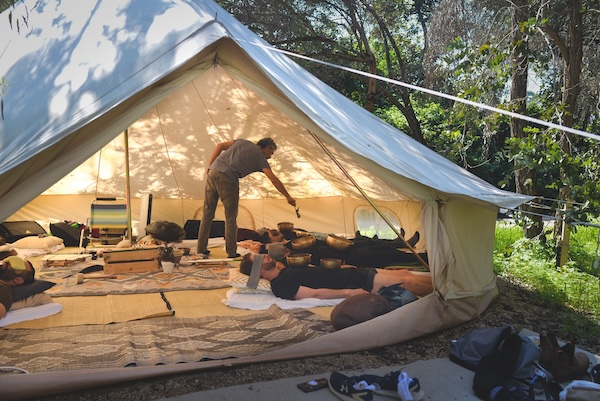
“More than that, I got to experience treatments I never imagined I’d try, like sound healing and yoga therapy. These are treatments I still do to this day, to help maintain my emotional balance and regulate my body.”

At Healing Space, she added, “Even my mom, who was never really drawn to holistic healing, found a deep connection with one of the therapists and opened her heart to her – that really moved me.”

photo - Group gathered outside at Healing Space Rishpon
A group gathered outside at Healing Space Rishpon. (photo from Healing Space)

From a place of not wanting to do anything or face anything, Binder said, “I now want to grow. I want to move forward and live a good life. And none of this would have happened without the process I went through over the past six months.”

Binder’s Vancouver visit will be the first time she is telling her story publicly. 

“Honestly,” she said, “it’s a little overwhelming to come and talk about my healing journey. It also means recognizing my story – and that alone is a challenge for me. I feel both excited and nervous – telling my story for the first time and receiving acknowledgment for it.

“It’s important for people to hear about the massacre because it was a Holocaust repeating itself,” she said. “The Jewish people are once again in danger, and it’s crucial to echo these stories, to make sure people know and remember.

“Beyond that, the connection between Jews in Vancouver and Jews in Israel – to build strong, deep connections across Jewish communities around the world – that connection is what has always kept us strong as a people.”

Binder attended the Nova festival with her sisters.

“It was actually the first evening that my sister’s boyfriend was introduced to our parents,” she said. “From there, the four of us drove to the party in the south.

“In the morning, when the rockets started, I called my mom to let her know and said we were heading home. We got delayed near the party because one of our friends had a panic attack, and we waited with her.

“We made it to the car, but it took time to decide what to do. At 8:30 a.m., the boyfriend took the lead, called his father, picked us up in the car, and we escaped through the fields. His father navigated him over the phone throughout the whole drive, and that’s how we managed to get out safely. Which is crazy in itself – the reality was so different for so many others. It felt like we were in a divine bubble that protected us.”

“It was the scariest day of my life,” said Shifer of Oct. 7. “I didn’t know if I would make it back home or not, and I didn’t know which of my friends would survive. It was a feeling of helplessness, complete loss of control and sheer terror.”

Unlike Binder, who is only now beginning to share her story, Shifer – who is an actor, singer and artist – has been interviewed by media around the world and has spoken at schools, universities and synagogues.

“I also found myself advocating and telling our story through music during performances,” she said. “In addition, I led tours for people who came to the Nova site and shared my personal story with them.”

Initially, Shifer refused to leave her house after Oct. 7.

“Friends told me there was a place where survivors go to heal, but I was too afraid to go outside and couldn’t bring myself to get there,” she said. “Then, one day, a volunteer came to my home and helped me take that first step – to leave the house and arrive at Healing Space. From that day on, something opened up in me, and I began coming every week.”

Healing Space has helped Shifer cope with her trauma in many ways.

“First of all, the location,” she said. “You arrive at a place full of trees and greenery – everything is peaceful and calming.

“There’s something comforting about sitting among people who have been through something similar to me,” she continued. “The therapists at the centre are kind and embracing. The shared music circles helped me find my way back to music. But, more than anything, it’s the feeling that I’m not alone. That I am seen. That there’s a place that can hold me.”

photo - People at Healing Space Rishpon have had similar experiences
People at Healing Space Rishpon have had similar experiences. (photo from Healing Space)

The body treatments have allowed Shifer to release some stress and start letting down her defences.

“The long-term project I joined under Healing Space gave me the tools to return to a routine and become an active human being again,” she said. “Healing Space is a deeply meaningful part of my recovery process – and I honestly don’t know what I would have done without them.”

To register to attend Yom Hazikaron or buy tickets ($18) for Yom Ha’atzmaut, visit jewishvancouver.com. 

Format ImagePosted on April 11, 2025April 10, 2025Author Cynthia RamsayCategories LocalTags healing, Healing Space Rishpon, health, Inbal Binder, Israel, Jewish Federation of Greater Vancouver, Nova music festival, Oct. 7, Raz Shifer, trauma, Yom Ha'atzmaut, Yom Hazikaron

Posts pagination

Previous page Page 1 … Page 43 Page 44 Page 45 … Page 664 Next page
Proudly powered by WordPress