Skip to content
  • Home
  • Subscribe / donate
  • Events calendar
  • News
    • Local
    • National
    • Israel
    • World
    • עניין בחדשות
      A roundup of news in Canada and further afield, in Hebrew.
  • Opinion
    • From the JI
    • Op-Ed
  • Arts & Culture
    • Performing Arts
    • Music
    • Books
    • Visual Arts
    • TV & Film
  • Life
    • Celebrating the Holidays
    • Travel
    • The Daily Snooze
      Cartoons by Jacob Samuel
    • Mystery Photo
      Help the JI and JMABC fill in the gaps in our archives.
  • Community Links
    • Organizations, Etc.
    • Other News Sources & Blogs
    • Business Directory
  • FAQ
  • JI Chai Celebration
  • JI@88! video

Recent Posts

  • Story of Israel’s north
  • Sheltering in train stations
  • Teach critical thinking
  • Learning to bridge divides
  • Supporting Iranian community
  • Art dismantles systems
  • Beth Tikvah celebrates 50th
  • What is Jewish music?
  • Celebrate joy of music
  • Women share experiences 
  • Raising funds for Survivors
  • Call for digital literacy
  • The hidden hand of hate
  • Tarot as spiritual ritual
  • Students create fancy meal
  • Encouraging young voices
  • Rose’s Angels delivers
  • Living life to its fullest
  • Drawing on his roots
  • Panama City welcoming
  • Pesach cleaning
  • On the wings of griffon vultures
  • Vast recipe & story collection
  • A word, please …
  • מארק קרני לא ממתין לטראמפ
  • On war and antisemitism
  • Jews shine in Canucks colours
  • Moment of opportunity
  • Shooting response
  • BC budget fails seniors
  • Ritual is what makes life holy
  • Dogs help war veterans live again
  • Remain vital and outspoken
  • An urgent play to see
  • Pop-up exhibit popular
  • An invite to join JWest

Archives

Follow @JewishIndie
image - The CJN - Visit Us Banner - 300x600 - 101625

Israeli dance sessions

Israeli dance sessions

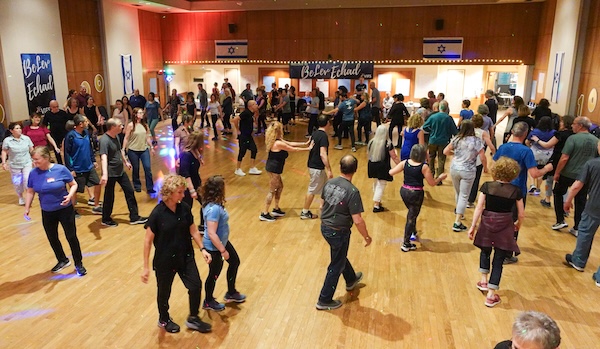
The Vancouver Israeli Folk Dance Society hosted their annual BeLev Echad Workshop at the Jewish Community Centre of Greater Vancouver May 23-25. The society is holding an open house on Sept. 10 for anyone interested in seeing what Israeli dance is all about. (photo from VIFS)

The Vancouver Israeli Folk Dance Society (VIFS) hosted their annual BeLev Echad Workshop at the Jewish Community Centre of Greater Vancouver May 23-25. With a spring theme and the Dance with One Heart slogan, VIFS welcomed more than 100 dancers from at least 12 different cities from all over the world, as far east as Italy and as far south as Costa Rica. This year’s guest choreographers/teachers were Tamir Shalev from Israel, on his first visit to Vancouver, and Marcelo Marianoff from Argentina – on his fifth consecutive visit.

The weekend started with a Shabbat dinner catered by Nava Creative Kosher Cuisine, followed by a dance party that only wrapped up at 1 a.m. Saturday was devoted to teaching and dancing, meeting new friends and catching up with old acquaintances, and even trying one’s hand at a 1,000-piece puzzle. Attendees could choose between a more relaxed-paced room or the main auditorium for more advanced dancers.  Both circle and couple dances were taught. The evening session began with games of balloon pickle ball, and there was a caricaturist artist on site as well. After Havdalah, the dance party began with line dances, circle and couple dances. The hardiest and most energetic dancers continued dancing until 2 a.m.! On Sunday morning, dancers once more gathered for some new learning and a review of all the dances introduced over the weekend.

The event was sponsored by the Snider Foundation, the Lorna Donner Fund, the JCC and the Jewish Federation of Greater Vancouver. It could not have been as great a success as it was without all of those who organized and led it. Many thanks to the wonderful volunteer helpers throughout the weekend. Planning for next year’s workshop is already underway: mark May 29-31, 2026, on your calendar.

VIFS is an inclusive and welcoming community where people of all ages, background and abilities come together to explore and nurture a deep love for Israeli dance and music. On Wednesday, Sept. 10, the society will hold its annual open house, and all those who are interested are encouraged to come and see what Israeli dance is all about.

On Oct. 22, VIFS starts its next season of Beginner’s 1, where new dancers and those who may want a refresher course can learn the basics and start to learn the repertoire. The intermediate class season will also begin on this date, and it will help incorporate dancers into the larger group, as well as teach more of the repertoire. This will be followed by an open session, which combines circles and couples, teaching the newer dances that are currently circulating. There will also be a Monday afternoon session that is only circles, and is devoted to dancing and teaching older repertoire that may not have been danced for many years.

Everyone is welcome to any of VIFS’s sessions – no dance experience is necessary, just a smile and lots of enthusiasm. For more information, contact Pam at 604-839-3931, Nona at 778-834-3488 or Yael at 604-993-0223; or visit vancouverisraelidance.com. 

– Courtesy Vancouver Israeli Folk Dance Society

Format ImagePosted on August 22, 2025August 22, 2025Author Vancouver Israeli Folk Dance SocietyCategories LocalTags culture, education, Israeli Dance, open houses, Vancouver Israeli Folk Dance Society, VIFS
The Dark Lady enlightens

The Dark Lady enlightens

Arghavan Jenati as Emilia Bassano and Nathan Kay as William Shakespeare in Jessica B. Hill’s The Dark Lady, now playing at Bard on the Beach. (photo by Tim Matheson)

There has always been a controversy over whether William Shakespeare was the sole author of all his works. He penned 37 plays and 154 sonnets, with 25 of the sonnets referencing a “Dark Lady,” with raven black brows and wiry hair. Perhaps she contributed to his writing in more tangible ways?

Current thinking is that the Dark Lady was Emilia Bassano, a Jewish woman whose father was Italian and mother Moroccan. She was headstrong and wanted to find success in her own right – something unheard of in Elizabethan England. She was the first woman there to have a work published, her Salve Deus, Rexum Judaeum (Hail G-d, King of the Jews). 

In The Dark Lady, playwright Jessica B. Hill invites audiences to imagine what could have happened if Bassano and Shakespeare had met, particularly early on in his career, around 1589. At that time, Bassano was also starting on her quest to be a published poet. Hill postulates that Bassano enchanted Shakespeare and became his muse, collaborator and lover – and bore his child. 

Bard on the Beach brings this Canadian work to the Douglas Campbell Stage under the steady hand of director Moya O’Connell. With only two characters and 90 minutes long with no intermission, it is an opportunity for the audience to invest in the all-consuming tension, both intellectual and sexual, between the protagonists.

photo - Arghavan Jenati as Emilia Bassano and Nathan Kay as Shakespeare. The opening scene of Jessica B. Hill’s The Dark Lady, with the couple’s Elizabethan pas de deux is a precursor to their complex relationship dance
Arghavan Jenati as Emilia Bassano and Nathan Kay as Shakespeare. The opening scene of Jessica B. Hill’s The Dark Lady, with the couple’s Elizabethan pas de deux is a precursor to their complex relationship dance. (photo by Tim Matheson)

Bassano is an intelligent match for Shakespeare and has no difficulty exchanging witty repartee with him. She challenges him to portray his female characters in a stronger light. At one point, he tells her, “Collaborate with me, I need your mind.” And she willingly gives him the benefit of it. However, despite her contributions, she watches his career flourish while her work remains unrecognized. Ironically, her influence becomes apparent in Shakespeare’s later works, where he does pen female characters who defy traditional stereotypes. 

After Shakespeare’s death in 1616, Bassano comes across his folio of published works and is surprised to find that many of his female characters are named Emilia – clearly a tribute to her – which surprisingly appears to satisfy her thirst for recognition. 

Arghavan Jenati plays Bassano with passion and fury, while Nathan Kay infuses the Bard with the right mix of angst and joy. The opening scene with their Elizabethan pas de deux is a precursor to their complex relationship dance and its inherent power struggle. One memorable scene is their experiment with cross-dressing, as trousered Jenati becomes an aggressive alpha male and Kay an innocent maiden.

While I enjoyed both performances, Jenati was more one-dimensional in her presentation, while Kay provided a more varied interpretation. The dialogue, while mostly classical, is peppered with modern jargon. Throughout, there are references to Bassano’s Judaism, including her grandfather’s forced conversion to Catholicism, his translation of the New Testament into Hebrew, the persecution of her people and her placing of a stone on Shakespeare’s grave in the final scene. 

Ryan Cormack’s sparse set is simple, a series of stacked crates containing various props and costumes. Flowing red silks become bed sheets for the lovers while a cape morphs from a picnic blanket to a shawl to a baby’s coverlet to a shroud. The lighting plays dark or light as needed. Bespoke music by composer and sound designer Anju Singh becomes the third actor in the play, as it accompanies the couple through their 30-year relationship. Alaia Hamer, the costumer, outfits Bassano in a whimsical white frock covered with a suede drawstring bodice while Kay is given a period look for a gentleman of his time. 

This is a production well worth seeing. As artistic director Christopher Gaze notes in the press release, “The Dark Lady invites us to consider how stories are shaped and who gets to shape them.” Director O’Connell sees the play as “an opportunity to shine a light on Bassano and spend time in her orbit.”

Running on alternate nights with The Dark Lady on the small stage is the fast-paced, slapstick romp through all of Shakespeare’s plays and sonnets, The Complete Works of William Shakespeare (abridged) [revised][again]. Jenati and Kay, along with Craig Erickson and Tess Degenstein, share duties with a different combination of three of them taking the stage each night. Director Mark Chavez is at the helm of this irreverent take on the Bard’s repertoire.

On opening night, Kay, Erickson and Degenstein were on stage and were hilarious in their efforts to cover all of the Bard’s works in 90 minutes to avoid a penalty (an offstage voice counts down the minutes). Rife with contemporary references to all things Vancouver and Bard, the audience was in nonstop laugh mode from the start. The second act is all Hamlet, done forwards, backwards and upside down – a credit to the talented, energetic thespian trio. Warning: audience participation is part of the shtick, so you may not want to sit in the front rows.

Cormack’s set is lined with shelves of props from past Bard productions and Hamer brings back statement pieces from the past for the show. Jewish community member Anton Lipovetsky provides the sound design.

This show is probably the most fun you will have at Bard this season. And, if you’ve hated Shakespeare since your high school English classes, it might just change your mind. 

For tickets to all the Bard shows, which run to Sept. 19/20, go to bardonthebeach.org or call 604-739-0559. 

Tova Kornfeld is a Vancouver freelance writer and lawyer.

Format ImagePosted on August 22, 2025August 21, 2025Author Tova KornfeldCategories Performing ArtsTags Bard on the Beach, Emilia Bassano, history, Jessica B. Hill, playwriting, Shakespeare
Making space for kids to play

Making space for kids to play

Simon Fraser Elementary School’s playground, which opened in 2024, was a beneficiary of financial support from the Dayhu Family Foundation. (photo from Dayhu Family Foundation)

For more than 30 years, the Dayhu Family Foundation, formerly known as the Ben and Esther Dayson Charitable Foundation, has helped create playgrounds both locally and in Israel.

“My mother and father always liked the idea of children playing,” said Shirley Barnett, chair of the Dayhu Family Foundation, about her late parents, Esther and Ben Dayson.

In Vancouver, finding the monetary support for playgrounds can be orchestrated by parent advisory councils (PACs) within the public schools. The PACs initiate the fundraising drives, sometimes years in advance, through a multitude of means, from bake sales and lemonade stands to other forms of financial outreach.

According to Barnett, the PAC at Simon Fraser Elementary School was an enterprising group that canvassed the neighbourhood in search of support for their playground project. Dayhu Group of Companies, a real estate investment, development and property management company with a large development near the school, was approached and quickly recognized that this was a worthy endeavour. Before the playground, put together by Habitat Systems, opened in 2024, Simon Fraser had to make do with an area ill-suited for children’s recreational activities.

“My son Jonathan said to me, ‘Didn’t we build two playgrounds in Israel and one at the JCC?  Why don’t we just stick with playgrounds and fund a couple because children need to play?’  It is such a good fit for us,” Barnett explained.

photo - Shirley Barnett at Dayhu Family Foundation’s first venture into playgrounds – the Dayson Playground in Modi’in, Israel, which was built in 1993
Shirley Barnett at Dayhu Family Foundation’s first venture into playgrounds – the Dayson Playground in Modi’in, Israel, which was built in 1993. (photo from Dayhu Family Foundation)

The foundation has a long history of providing financial support to cultural, educational and social causes both within and outside the Jewish community of Greater Vancouver. Its first venture into playgrounds started with the Dayson Playground, a Jewish National Fund project, which was built in Modi’in (outside of Jerusalem) in 1993.

The second playground was also in Israel. Launched in 2018, the Ben and Esther Dayson Outdoor Learning Centre at the Ilanot School in Jerusalem was designed for children with special needs, as the Ilanot School serves children with severe motor and cognitive impairment, including many with cerebral palsy. Its pupils come from many cultural backgrounds, including Jewish, Muslim and Christian. 

“We have also been very involved with the JCC for many years, and so we helped the early childhood education playground, on my son’s initiative, in 2012, at the current JCC,” Barnett said of the Dayhu initiative at the Jewish Community Centre of Greater Vancouver.

A new project at Britannia Community Elementary School is a good fit for the foundation as well, said Barnett, who described the reactions from both Simon Fraser and Britannia as “phenomenal.”

“These are schools that really needed help. The parent committees at Simon Fraser and Britannia have worked so hard to bring about these playgrounds. They are in need and the parents can’t raise much money,” Barnett said.

“A playground can make a huge difference in getting kids outdoors and getting them active, rather than them just running around a gravel field. I think it is obvious that kids need to play. We trust their design, we trust their need and their rationale.”

With both elementary school playground projects, Dayhu operated swiftly after being approached, understanding that there is a process involved before work can commence. Dayhu is not involved in the creativity or development of these projects; rather, it looks at a site and how much money has been raised. When it sees that more funds cannot be raised, it steps in as the lead donor. 

Cassandra Torok, a parent at Britannia, said that, after four years of advocating and fundraising for an expansion and upgrade to the school’s playground, the East Vancouver community felt stuck, unable to obtain the money needed. 

“Meeting Jonathan and Shirley was this amazing tipping point for our school’s playground project,” Torok said. “Her family’s generosity and openness gave our community the support and agency needed to reach the fundraising goals that felt impossible before. Providing the necessary funds to meet students’ needs was a surprising gift that we are so grateful for.

“Without her, her family’s and Dayhu’s philanthropic commitment, we know that we would not be getting the playground needed at our school, the playground our children deserve to grow, develop and improve their well-being as a whole,” Torok added.

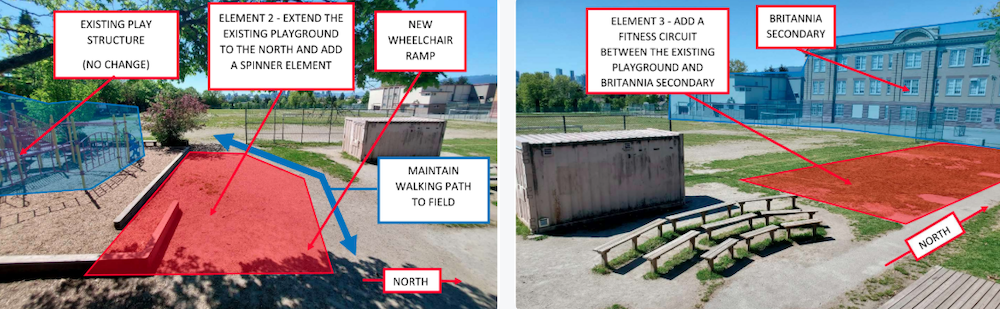
image - A rendering of the proposed playground enhancements at Britannia Community Elementary School, which will be built with financial assistance from the Dayhu Family Foundation
A rendering of the proposed playground enhancements at Britannia Community Elementary School, which will be built with financial assistance from the Dayhu Family Foundation. (image from Dayhu Family Foundation)

Britannia school expects to have shovels in the ground within the next few months. When it opens, the playground will also be accessible to the larger community after school hours, on weekends and during the summer months. 

Dayhu’s efforts have led others to back the creation of playgrounds. At least one other family foundation saw what Dayhu had supported at the JCC and was motivated to help fund similar projects, said Barnett.

“It is a huge accomplishment to be an inspiration for someone else,” Barnett said. “We are not trying to promote our philanthropy. I would love it if someone read this article, and said, ‘You know, we have a few dollars and there is a neighbourhood school with a gravel field, maybe we could do something there.’” 

Sam Margolis has written for the Globe and Mail, the National Post, UPI and MSNBC.

Format ImagePosted on August 22, 2025August 21, 2025Author Sam MargolisCategories LocalTags children, Dayhu Family Foundation, philanthropy, playgrounds, schools, Shirley Barnett

From the JI archives … education

Not surprisingly – “People of the Book,” and all – education is an always-relevant topic that has been covered in the Jewish Independent / Jewish Western Bulletin. The paper seems to have steered clear of editorially supporting any particular Jewish school or type of Jewish schooling, but rather consistently stressed the need for Jewish education, especially for children, but also for youth and adults.

A 1956 editorial noted that “an estimated 50 percent of Jewish children in Canada do not get any Jewish education whatsoever.” While admitting that there were no data to suggest Vancouver fared better than other Canadian cities in this regard, it noted that there were several types of schooling available here, day school, evening classes, religious and secular options. “Only the anti-Semites try to cast all Jews in a common mold, a hateful mold,” it noted. “But the Jews among themselves have always followed diverse paths in the perpetuation of their history, ideals and spiritual heritage.” So, it concluded, “Register your child in the Jewish school of your choice. And, if your child is already enrolled, remind your friend or neighbor about enrolling his child.”

image - clippings from the JI at 95 years about education

Posted on August 22, 2025August 22, 2025Author Cynthia RamsayCategories From the JITags advertising, advice, archives, education spending, history, Jewish Independent, Jewish Western Bulletin, Judaism

טראמפ עוזר לנתניהו ונתניהו עוזר לטראמפ

 במדינות מתוקנות מנהיגים כמו ראש ממשלת ישראל בנימין נתניהו, ונשיא ארצות הברית דונלד טראמפ, היו יושבים בכלא כבר מזמן. אך כיום לצערנו ישראל וארה”ב כבר מזמן לא מדינות מתוקנות, הדמוקרטיה בהן חלשה ומחולשת מדי יום. והציבור או שאינו מבין את חומרת המצב או שלא אכפת לו. מכל מקום: הנזק שגורמים נתניהו וטראמפ למדינותיהם הוא קבוע ובר קיימה ולא יתוקן גם לאחר שהם יעלמו מהמפה הפולטית. יקח מספר דורות אם בכלל להחזיר את המצב לקדומו

בביקורו השלישי בחודשים האחרונים של נתניהו בבית הלבן, נראה המנהיג הישראלי זורח כאילו זכה בפייס. הרי בישראל נתניהו כבר אינו מקובל, ורבים מבינים עד כמה הוא הזיק ומזיק למדינה. אך בבית הלבן כשטראמפ לצידו, מרגיש נתניהו ממש כמו בבית. הרי מה אפכת לו שהוא האחראי הראשי למחדלי השבעה באוקטובר, שחטופים נהרגו כיוון שהוא סירב להגיע להסכמות עם החאמס, ושחיילים רבים כמו פלסטינים רבים נהרגים כמעט כל יום לחינם בעזה

נתניהו המושחת לא התבייש להציע שחברו האמריקני המושחת יקבל את פרס נובל לשלום. עבור מה? עבור הצלחתו להפסיק את המלחמה בין רוסיה לאוקראיינה? האם הצליח טראמפ להביא שלום בין ישראל לאיראן, או בין ישראל לפלסטינים, או בין ישראל לחמאס, או בין ישראל לסוריה, או בין ישראל לערב הסעודית, או בין ישראל ללבנון

אך כאשר שני מנהיגים מושחתחים נפגשים, כל אחד רוחץ את גבו של השני ויש הרבה מה לרחוץ שם. לכן טראמפ לא התבייש לקרוא למערכת המשפט בישראל להפסיק את משפטו של נתניהו. איזה מעמד יש לנשיא ארה”ב שהוא יכול בכלל לצאת בדרישה שכזו

ועל התערבות טראמפ במערכת המשפט בישראל כותב פרופסור אמנון סלע:
אינני קורא מתמיד של ישראל היום. לכן מזמן לא קראתי כתבה של אמנון לורד. כבר לפני שנים רבות הוא הסתמן כאיום כעיתונאי של ה-דיפ-סטייט, מתלהם, לא מדוד. בכתבה החדשה של רבעי אמיתות וחצאי שקרים, הבנתי את גודל החרפה בהתערבותו החצופה של טראמפ במערכת המשפט. נצחון הבורות השמרנית התאפשר, בין השאר בשל התערבות האוונגליסטים ושאר עובדי הדת. מיד יצא הקבינט המטורלל נגד הדמוקרטיה, ומה שנשאר, תוך עשרים וארבע שעות הוא ליבה את המלחמה בין רוסיה לאוקראינה. בהבל-פה הוא סיפח את קנדה וגרנלנד. והסיר מיסים משכבת המיליונרים שהשמינה

בשניה הפכה אמריקה לגדולה כשמפרץ מכסיקו הפך למפרץ אמריקה. באצילות אופיינית לימין לורד תקף את הנשיא ביידן. באותו שאר-רוח שביבי תקף את אובמה. את תמיכת שתי המפלגות ביבי ולורד השליכו הימה לאחר הליך הרס שיטתי של מערכת המשפט האמריקנית, עם נגיחות בקונסטיטוציה. נפנה הנשיא האמריקני הידיד (לפעמים) לנפץ את מערכת המשפט בישראל. זה הנשיא שעסק בפרוסטיטוציה תחת שמי אותו אל. לפני שבע שנים בעצת ביבי ידידו הוא סייע לאיראן להעשיר אורניום. בעצת ביבי ידידו הוא יצא למלחמה נגד אותו איום, ולא הואילו אזהרות הפנטגון והסי.אי.איי, נגד סמכות הקונגרס, אותו קונגרס שתקפו תומכיו, בליווי תפילות דרעי בעל הנס הטרמפיזם מטמא את העולם. נכון, לא לדעת כולם

ועל התנהלות ממשלת ישראל הפוגעת בשלטון החוק אומר איש הצבא הבכיר לשעבר בני ברבש: מחובתנו להציב מול הבריונות השלטונית אמצעי הרתעה יעילים ולמתוח קו עצירה שממנו לא נסוגים. מחיקת עברו והוויתו של כל אדם, יהיה זה אלוף, טוראי או סתם אזרח שלא בא לשלטון טוב בעיניים, היא פרקטיקה מוכרת וידועה של המשטרים האפלים ביותר במאה העשרים, שמפני אחד מהם הזהיר יאיר גולן עצמו. מחר תחליט הממשלה לשלול את תאריו האקדמיים של מדען מזהיר ומחרתיים היא תפקיע משופט עליון את משרתו כי פסיקתו לא תישא חן בעיניהם

Posted on August 20, 2025July 15, 2025Author Roni RachmaniCategories עניין בחדשותTags Amnon Sela, democracy, Israel, Netanyahu, Oct. 7, Trump, United States, אמנון סלע, ארה"ב, דמוקרטיה, טראמפ, ישראל, נתניהו, שבעה אוקטובר

ישראלים שנמאס להם מנתניהו כותבים בפייסבוק

ישראלים רבים כועסים על ממשלת נתניהו והעומד בראשה כותבים את מחאתם בפייסבוק

כבר חודשים אנחנו שומעים, מחטופים ששוחררו וממידע שמגיע ממשפחות, שדווקא פעולות צה”ל בעזה הן שמסכנות את חייהם של מי שנותרו בשבי. חלקם לא שרדו. בדיוק בגלל זה. המציאות הזו ברורה לכולנו כבר יותר מידי זמן. ובכל זאת, ממשלת ישראל ממשיכה באותה מדיניות: להילחם כאילו יש עוד מה לנצח. דובר צה”ל בעצמו מדבר על חמאס שהוכרע. אף אחד מהשרים לא יודע להסביר מה עוד נותר להשיג, אבל אף אחד מהם גם לא מוכן להניח את הנשק. אז מה כן. עוד מאותו הדבר. עוד חיילים. עוד קורבנות. עוד חטופים שלא חוזרים

אנחנו החיילים אלו שיצאו להילחם, לא מוכנים לשתוק עוד. אסור להמשיך ככה. הגיע הזמן לחדש את החוזה בין האזרחים לבין הממשלה: חוזה שבו החיים שלנו באים קודם. שבו למנהיגים יש אחריות, שבו הציבור לא שוכח ולא מסתחרר מכל ספין שהממשלה זורקת. אנחנו, בניגוד אליהם, משלמים את מחיר המלחמה הזו כל יום. יחד עם החטופים, יחד עם החפים מפשע, יחד עם משפחות שכולות שלא קיבלו שום תשובה או מזור. נקודת הרתיחה כבר כאן

העסקה היא הדרך היחידה להשיב את החטופים מבלי להקריב את מי שנשאר בחיים ומבלי לאבד את החללים בין ההריסות. זו החובה המרכזית של מדינת ישראל, זו המטרה היחידה ממטרות המלחמה שעוד בכלל נוכל להשיג בעזה לפני שגם זה יהיה מאוחר מידי

מחבלים יהודים, משיחיסטים שמאמינים בביאת המשיח, שרוב המדינה דוחה אותם על הסף, פוגעים בחיילי צהל ובאזרחי המדינה. חרדים שלא מוכנים להשתתף בהגנה על המדינה ומתעלמים מצורכי בטחון וכלכלה והקיום של מדינת ישראל, חונקים מדינה שלמה בשביל לקיים חיים פרזיטיים על חשבון ציבור הרחב, בדמו. אדלשטיין מסתמן שנכנע לנתניהו רק כדי לקבל עוד כמה חודשים בשלטון. ממשלה שמנצלת את המלחמות כדי להרגיל אותנו לדריסת זכויות יסוד שלנו. נתניהו בוחר בחרדים בזמן שאתם במילואים

ומסתבר שאפילו הבן החמוד של נתניהו אבנר, נגוע בהתנהלות ערכית מזעזעת. מחליף שם וקונה דירה בבריטניה במזומן, יאיר נתניהו שכבר עזב מזמן את הארץ וחי במיאמי, בלתי נתפס המשפחה הזאת. מזכירה לכם מה אמרה שרה נתניהו: אנחנו נעזוב את הארץ ושתשרף המדינה. ולקינוח, נתניהו ממנה שר שיכון חדש אייכלר שכינה חילונים כבהמות אדם וחיות בן גביר פונה לסמוטריץ לסכל עסקת חטופים. אין תחתית לממשלת האסון

הניסיון ליצור קשר בין שחרור החטופים לבין שחרור נתניהו ממשפטו, היא בלתי מוסרית ובלתי חוקית. רק אדם חסר עכבות ומוסר כמו ביבי יכול להפעיל אדם חסר עכבות, מוסר ושכל כמו טראמפ כדי ליצור את המשוואה הזו וגם לאיים. מיותר להזכיר מה היה אומר, או צועק, נתניהו אם היה מדובר בראש ממשלה אחר. או לחלופין, אם נשיא אמריקאי היה מתערב כדי להפסיק את ההפיכה המשטרית, למשל. אבל נתניהו מוכן למכור את הריבונות שלנו תמורת הכיסא שלו והשילטון. אולי כשלב הבא יעודד את טראמפ לקרוא לביטול הבחירות במדינת החסות ישראל. וכשמדובר בנשיא אינפנטיל חסר הבנה, מציאות הזאת קרובה מתמיד

בהתחלה הם באו לקחת את הקומוניסטים, ולא השמעתי את קולי כי לא הייתי קומוניסט. אחר כך הם באו לקחת את היהודים, ולא השמעתי את קולי כי לא הייתי יהודי. אחר כך הם באו לקחת את הסוציאליסטים ואת אנשי איגוד המקצוע, ולא השמעתי את קולי כי לא הייתי אחד מהם. בסוף הם באו לקחת אותי ולא נותר אף אחד שישמיע את קולו למעני

Posted on August 6, 2025July 4, 2025Author Roni RachmaniCategories עניין בחדשותTags Facebook, Gaza, Hamas, Netanyahu, protest, Trump, חמאס, טראמפ, מחאת, נתניהו, עזה, פייסבוק
Krieger takes on new roles

Krieger takes on new roles

Nina Krieger, centre, member of the BC Legislative Assembly for Victoria-Swan Lake, connects with community members. Krieger is the new public safety minister and solicitor general. (photo from Nina Krieger)

After a cabinet shuffle last week, Nina Krieger, member of the legislative assembly for Victoria-Swan Lake, is the new public safety minister and solicitor general, replacing Garry Begg, who became parliamentary secretary for Surrey infrastructure. 

Saying she is “humbled and excited” to take on the position, Krieger told the Independent: “Our province faces complex challenges, and I am committed to working with my colleagues, local governments, Indigenous leadership, police services, business and community organizations to build safe, healthy and resilient communities for everyone.

“Public safety is one of the central issues of our time,” she said, “and British Columbians are looking to us to strengthen public safety through effective support of our law enforcement services and working across government to address the root causes of public disorder. 

“I look forward to working with partners around the province to take meaningful action to keep BC a safe place to live, work and enjoy this beautiful province we call home,” she added.

Before being elected to the Legislative Assembly of British Columbia last fall, Krieger was the executive director of the Vancouver Holocaust Education Centre (VHEC). She takes over her new cabinet position after having served as parliamentary secretary for arts and film. Prior to this shift in roles, she spoke with the Independent about her time in office since being sworn in.

“The role of MLA is a unique opportunity and responsibility. I don’t think anything can quite prepare you for the busy, ever-changing schedule, and the range of issues and people that you encounter on any given day,” Krieger said.

“The learning curve is steep but exciting and I’m grateful to be learning alongside other new MLAs, from veteran members of caucus and from the incredible teams behind the scenes at the BC legislature.”

Krieger describes the move from the VHEC as “bittersweet,” saying it was difficult to leave an organization and a community for which she cares deeply. Nonetheless, she said the skills, experience and values she honed during her work at VHEC have proved meaningful and timely in her current role.

“I keep in close touch with former colleagues and the Holocaust survivor community and was honoured to return to the VHEC this spring to emcee a Yom Hashoah commemorative program featuring Premier David Eby, presented in partnership with the Province of BC and the Centre for Israel and Jewish Affairs,” she said.

Her introduction to the legislative side of the MLA job came during the recent spring session that concluded in May. She sat in the house and committee rooms, sometimes late into the night, delivering speeches about her community and constituents’ achievements and needs, as well as debating and voting on proposed legislation. 

“I was proud to deliver several statements in the house, marking days of significance for BC’s Jewish community,” said Krieger.

“This spring, government passed legislation to protect consumers, respond to the threat of tariffs and implement countermeasures, deliver more renewable energy projects and major infrastructure projects, among other work,” she said.

During the summer months, MLAs return to their communities. 

“I visit and meet with local organizations to hear about the work they do and how we can spotlight and support them,” she said. “I also have the chance to attend local events as an MLA over the summer, from graduation ceremonies to festivals, markets and sports games. With so many amazing people putting on great events around town here over the summer, it adds to the fun of this role.”

As the parliamentary secretary for arts and film, Krieger worked closely with the minister of tourism, arts, culture and sport to advance the 

development and growth of British Columbia’s film, television and animation sectors, as well as supporting and growing the arts and culture sectors in the province. One of the perks of that job was attending film-related events and meetings, like local film festivals.

“It has been amazing to see the talent and work coming out of BC, and rewarding to stand strong in support of workers in the face of tariff threats,” she said.

Krieger acknowledges that it is a difficult time for Jews in the province and throughout Canada, with challenges in finding their political “homes.” She is grateful that there were Jewish voters whose values aligned with those of the BC NDP.

“I know that there is work to do to ensure that Jewish people in BC feel safe and supported, and that nobody is targeted because of who they are,” Krieger said. “Combatting antisemitism – which is illiberal, toxic to democracy and dangerous – requires the work of all levels of government and civil society.”

She continues to be in active contact with Jewish constituents and community leaders in Victoria, which, she says, is home to a diverse Jewish community. Constituents from a range of backgrounds have contacted her and expressed deep concern about the toll of the ongoing Israel-Hamas war on the civilian populations of the region. 

“While foreign policy is beyond my scope as a provincial representative, it is vital to discuss ways to ensure that BC is a safe and inclusive place for all people,” Krieger said. “From my work as a Holocaust educator, I know that it is vital to counter misinformation, disinformation and conspiracy theories, which can fan the flames of xenophobia, antisemitism and hate, and keep communities divided. In my work as MLA, I hope to counter this by bringing people together, modeling respectful dialogue and upholding the values of truth and trust in democratic institutions.”

Krieger explained that her experience as an anti-racism educator showed her the importance of listening and continually learning with openness and compassion. It is relevant to her current work, she believes, because she is entrusted with the stories and experiences of many constituents, which are often shared to build a more just and inclusive society.

“The province helps fund anti-racism and anti-hate work done around BC,” said Krieger, “and I have the opportunity to talk to organizers that are the recipients of grant funding and hear about their work, share experiences and learn how we can continue to collaborate to do this vital work effectively.”

Sam Margolis has written for the Globe and Mail, the National Post, UPI and MSNBC.

Format ImagePosted on July 25, 2025July 23, 2025Author Sam MargolisCategories LocalTags antisemitism, British Columbia, governance, MLAs, Nina Krieger, politics, Vancouver Holocaust Education Centre, VHEC
New day school opens

New day school opens

Tamim Academy of Vancouver is accepting kindergarten through Grade 5 applications for the 2025-2026 school year. (photo from TAV)

Tamim Academy of Vancouver, a new Jewish day school, is accepting applications for the 2025-2026 school year.

Located at Granville and 62nd, in what was the premises of Vancouver Hebrew Academy, Tamim will offer an integrated Judaic and general studies curriculum, with small class sizes.

Vancouver Hebrew Academy had been struggling financially. Several VHA staff members will help as the transition to Tamim takes place. New staff will also be joining the team and “will undergo intensive summer training to prepare for Tamim’s unique, child-centred educational approach,” Rabbi Shmulik Yeshayahu, who sits on the board of the school, told the Independent.

Open to all Jewish families, no matter how observant, Tamim will start this fall with a kindergarten through Grade 5 program and expand to include Grade 6 in 2026 and Grade 7 in 2027. Additionally, Ner Atid, a full-day early-years program for children 5 years old and under, just launched, with the aim of providing a smooth transition into the elementary school. Spots for younger siblings in the Ner Atid daycare program, adjacent to the school, are available as well.

“Together, Tamim and Ner Atid offer a seamless educational journey rooted in tradition and ready for the future, beginning in infancy and extending through the foundational years of learning and growth,” said Yeshayahu, who is also the director the Ohel Ya’akov Community Kollel.

The school day will be from 9 a.m. to 4 p.m., with optional extracurricular activities – an hour before and/or an hour after those times – included at no extra cost. 

“Our objective is to create a school that offers a unified, child-centred and future-ready approach to Jewish education, where academic excellence and spiritual development go hand in hand,” Yeshayahu said.

“At Tamim, general and Judaic studies are integrated, not compartmentalized – reflecting the belief that students should be empowered to live as their whole selves in every environment. We educate the whole child,” he said, “nurturing intellectual growth, emotional well-being, social responsibility and Jewish identity in equal measure.”

Yeshayahu emphasized that each student at the school will have their own learning plan, developed to meet their unique strengths, interests and areas for growth. Tamim offers an educational model that is personal, and designed for the real world, he said.

According to Yeshayahu, the school will include Hebrew taught by native speakers; a values-based culture that stresses kindness, responsibility, resilience and leadership; a nutritious hot lunch; and a diverse community.

photo - Tamim Academy of Vancouver will offer an integrated Judaic and general studies curriculum, with small class sizes
Tamim Academy of Vancouver will offer an integrated Judaic and general studies curriculum, with small class sizes. (photo from TAV)

Among some of the additional program highlights will be gardening, nature exploration (hiking and wildlife observation) and art across several media. The school, with access to a large field and playground, will also feature outdoor play.  

“Tamim students don’t just learn, they flourish,” said Yeshayahu. “They leave school each day feeling capable, connected and proud of who they are.”

Yeshayahu made clear that, while the Tamim Academy is situated on the location of the former Vancouver Hebrew Academy, it is a completely new school with a distinct vision, leadership team and educational model. 

“Tamim Academy of Vancouver is part of a growing international network of schools that are reimagining Jewish education for today’s world,” he said.

“We honour the legacy of Jewish education in this city,” said Yeshayahu. “Tamim carries that commitment forward with renewed energy, a modern educational philosophy and a warm, inclusive community. We welcome Jewish families of all levels of observance and are proud to offer a space where every child is supported, celebrated and inspired to grow.”

Laen Hershler, the school’s director of education, is currently a teaching associate and mentor for pre-service teachers at the University of British Columbia. His work focuses on literacy education, creative pedagogy and inclusive teaching methods. He has previously served as a Judaic educator at King David High School, developed interactive and performance-based learning programs, and contributed to curriculum development across K-12 and post-secondary education.

Itay Reuven – a former army officer and commander, with a background in business studies – is the school’s operations and safety coordinator, and Preet Brar serves as director of student life, innovation and learning enrichment.

Khezia Gibbons is the manager of Ner Atid Early Childhood Centre. She brings more than a decade of experience in early childhood education and, most recently, worked with the Township of Langley, where she guided young learners.

Tamim Academy of Vancouver will be the third Tamim in Canada after those established in the York region north of Toronto and the Kineret Tamim Academy, which opened in Victoria last year. (See jewishindependent.ca/groundbreaking-may-26.) There are 20 such academies in North America, and others around the world. The name stems from Tomchei Temimim, the first formal yeshiva system of the Chabad-Lubavitch movement that was founded in 1897 by Rabbi Sholom DovBer Schneerson in Russia. Each student was referred to as tamim: pure, perfect or complete. The assumption is that each child is inherently holy and good, with the concept of “wholeness” being the foundation of the education model.

For more information, visit tamimvancouver.org. 

Sam Margolis has written for the Globe and Mail, the National Post, UPI and MSNBC.

Format ImagePosted on July 25, 2025July 23, 2025Author Sam MargolisCategories LocalTags education, Jewish day school, Judaism, schools, Shmulik Yeshayahu, Tamim Academy of Vancouver, Vancouver Hebrew Academy, VHA

An ever-changing city

Summer is a time when our routines are happily disrupted. Kids are out of school and many of us take time off from work to enjoy the hometown that draws tourists from around the world. Maybe we wander off the beaten path and see parts of our own city we usually miss on our repetitive commute. Perhaps we leave town for a week or two and return with fresh eyes.

Anyone who has lived in Vancouver and environs for more than a few years can’t help but see change at every turn. Many of us are watching our old elementary and high schools being replaced with new structures, memories being ploughed under with the old bricks. Community centres throughout the city are seeing replacements. Canada’s oldest business, the Hudson’s Bay Company, is being liquidated, leaving another gaping hole (for now, at least) in the retail landscape at the heart of downtown. Woodward’s is a distant memory. And, of course, what old-timers call “the new Oakridge” is being redeveloped into the new new Oakridge, as anyone trying to navigate by car or bus along 41st or Cambie cannot help but be reminded.

Not everyone likes change, put mildly. But, it is inevitable.

It is simplistic to say there is only one way to go – up. There is an alternative, albeit not a good one. We could continue a 20th-century trend to suburban sprawl, in which we lay housing and concrete across precious arable land. 

Novelties like laneway houses have attempted to increase capacity in erstwhile single-family neighbourhoods. Along arteries like Oak, Cambie and Granville, single-family homes are giving way to four-, six- and eight-unit developments. As was always the plan, mixed residential and commercial hubs are skyrocketing from the ground up around transit stations, as evidenced most profoundly around Brentwood, Metrotown, Marine Drive and Oakridge.

Which brings us back to what, for most of the past century, has been the “Jewish neighbourhood.”

That term is a bit of a misnomer. A place where most Jews live does not equate to a place where most people are Jews. Even in the most Jew-dense neighbourhoods, we remain single-digit or low-two-digit proportions of the population. Emotionally, traditionally, spiritually and institutionally, since the 1950s at the latest, the rough area around Oakridge, down Oak and Granville and the surrounding blocks, have been home to Metro Vancouver’s Jews.

This reality began fraying about three decades ago, when housing prices began their notorious upward escalations. (Great for homeowners. Not great for first-time buyers.) And the Jewish community became more geographically dispersed, with inevitable positive and negative consequences.

While the City of Vancouver still holds the largest share of the BC Jewish population (at 58%), other municipalities now have significant Jewish populations, including, in order of size, Richmond, Surrey, the District of North Vancouver and Burnaby. Greater Vancouver’s proportion of the BC Jewish population has decreased, though, from 81% in 2011 to approximately 75% in 2021. (For much more data, see jewishindependent.ca/quick-look-at-canadian-jews.)

For Jewish institutions, this reality has demanded accommodations, with services becoming less geographically rooted. Many agencies, notably the Jewish Federation of Greater Vancouver, Jewish Family Services and even the Jewish Community Centre, which by its nature is geographically rooted, are successfully delivering programs across the region.

For Metro Vancouver’s Jews, and for every cultural group, this relentless change has personal and collective impacts.

The JWest development on the 41st and Oak JCC site will include – among other things – hundreds of new homes, notably purpose-built rentals, the scarcity of which is a major contributor to the crisis in the housing market. These hundreds of new homes will not, of course, all be occupied by Jews. But they will be a dramatic increase in available homes in what was, and may again become, the heart of a “Jewish neighbourhood.”

This does not take into account the thousands of other new homes being developed within a radius of a few kilometres, not least at the Oakridge site. Will these be affordable housing? In Vancouver, that term has perhaps lost all meaning. Everything is relative. But volume and variety of housing options are the key to what approaches the concept of affordability. 

We can only remotely predict the sociological impacts these dramatic physical changes in our city will have on our day-to-day life, including the vibrancy of Jewish life – not only here, but around the Lower Mainland and the rest of the province. 

Posted on July 25, 2025July 23, 2025Author The Editorial BoardCategories From the JITags BC, change, demographics, development, Lower Mainland, neighbourhoods, Vancouver
Marazzi at VHEC helm

Marazzi at VHEC helm

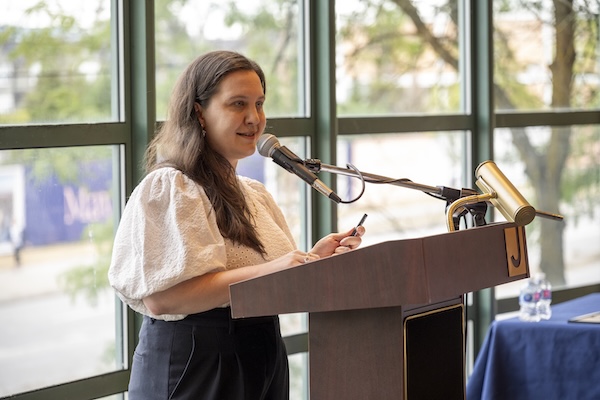
Hannah Marazzi is the new executive director of the Vancouver Holocaust Education Centre. (photo by Alina Ilyasova)

The Vancouver Holocaust Education Centre, which is marking three decades of educating about and commemorating the Shoah, has a new executive director: Hannah Marazzi. She is the first person of non-Jewish background to hold the role.

Barry Dunner was the first executive director of the Vancouver Holocaust Centre Society for Education and Remembrance, the not-for-profit organization that operates the VHEC. Ronnie Tessler then helmed the centre, followed by the late Dr. Roberta Kremer, then Frieda Miller. Nina Krieger served more than a decade as head of the institution before successfully running for the British Columbia legislature last fall. (See story, jewishindependent.ca/krieger-takes-on-new-roles.)

Marazzi had been the VHEC’s director of communications and special projects for about 10 months before being appointed interim executive director. Her permanent appointment was announced on June 17, at the annual general meeting of the society.

The organization’s president, Al Szajman, credited Marazzi’s background as a good fit.

Formally announcing Marazzi’s appointment, Szajman noted her role as “Irwin Cotler’s right-hand person” and her existing relationships with partner groups like the International Holocaust Remembrance Alliance, and with various foundations, government leaders and influencers locally, nationally and internationally.

“In short, we’ve come to recognize Hannah as a leader, someone with passion, vision and maturity. Her Italian-Mennonite background reminds everyone that you don’t have to be Jewish to stand against antisemitism and advance the lessons that everyone should have learned about the Shoah,” he said.

Marazzi has an undergraduate degree in history, political science and government from Trinity Western University and a master’s degree in public policy from Cambridge, where she served as an assistant editor of the Cambridge Review of International Affairs. 

Early in her career, she was working on Parliament Hill when Cotler reached out to her boss, then-MP for West Vancouver-Sunshine Coast-Sea to Sky Country John Weston, to become involved in the case of a woman sentenced to death in Iran. Through the Cotler connection, Marazzi went on to help organize the Nuremberg Legal Symposium. The gathering, which was co-created by March of the Living and the Raoul Wallenberg Centre for Human Rights, in 2016, educated legal professionals and the next generation about the lessons of Nuremberg and how to apply them today, especially as the legal sector addresses hate, denial and incitement. Marazzi became administrative coordinator for the event.

She went on to work for the Cardus Institute, a Christian think tank, and then for United Nations Volunteers, in Amman, Jordan, before Cotler coaxed her to join him when he was appointed to inaugurate the office of Canada’s Special Envoy on Preserving Holocaust Remembrance and Combatting Antisemitism.

Marazzi returned to the West Coast – she grew up in the Fraser Valley – to be closer to her family when her father faced a health crisis.

Addressing the VHEC annual meeting, Marazzi paid tribute to the founders of the organization, who opened the doors to the centre 30 years ago, including Dr. Robert Krell, the founding president, who was present at the meeting.

She reflected on her first visit to Auschwitz, at age 22, 10 days after graduating from university.

“I did not know then that I would return to places like Auschwitz, Treblinka and many other sites of memory and begin learning in my own country at places like the Vancouver Holocaust Education Centre,” she said. “I feel strongly in my bones that we must not allow the lessons of the Holocaust to fade from memory. As my mentor Irwin Cotler says, ‘No one can say that we did not know. We knew. But we did not act.’ This is why I believe so resolutely in the power of Holocaust education to awaken us to the reality of what happens when a society, through silence and inaction, allows evil to flourish unchecked.”

The VHEC has become Western Canada’s leading Holocaust museum dedicated to the promotion of social justice, human rights and genocide awareness. It is at a turning point in its history, as all such facilities prepare for an era when there are no longer eyewitnesses to the events who can share their narratives.

Holocaust museums have increasingly used technology to capture and immortalize those stories – and Marazzi credited Krell as a pioneer in that field, having begun one of the world’s earliest archives of video-recorded survivor testimonies, beginning when the technology was fresh.

Broader developments in the community will have a profound impact on the VHEC. The centre is slated to double in size and attain a new visibility thanks to JWest, the redevelopment of the Jewish Community Centre of Greater Vancouver, where the VHEC is located.

Marazzi emphasized the importance of partnerships in the VHEC’s success, including local connections, such as with the Roma and Rwandan communities. After the Russian invasion of Ukraine, the VHEC partnered with the University of British Columbia to bring to Vancouver 

Dr. Nataliia Ivchyk – an expert on Holocaust studies in Ukraine and East-Central Europe, focusing on gender, memory politics and the experiences of Jewish children during the Holocaust – who was identified as a scholar-at-risk. At the VHEC, Ivchyk took on the Russian-Language Holocaust Testimony Project, conducting interviews with Russian-speaking survivors in the Lower Mainland.

Internationally, World Jewish Congress has reached out to borrow the centre’s current exhibit, Age of Influence, which focuses on how the Nazi regime used propaganda specifically targeted at raising and indoctrinating young Germans. Demand for this exhibit, an original VHEC creation, has led to the creation of traveling versions. 

Marazzi acknowledged that, when she tells people where she works, they sometimes suggest it must be a depressing daily grind.

“It’s actually the most hopeful place you can be at this time,” she said. “You have the survivors who have experienced unimaginable horrors and yet not only are they here with us contributing to society in extraordinary ways, they are willing to dig deep into what was the worst experience of their life and share it to educate students.”

The VHEC has never been busier, she added. Hundreds of kids, teachers and adults, including elected officials and diplomats, law enforcement, groups of coworkers, unions and others, attend the exhibits every week. At national and international conferences, Marazzi has discovered this is not the case in all such institutions. Security fears and possibly other factors have seen attendance drop in many Holocaust education institutions, she said, even amid a flourishing of antisemitism and intolerance, the phenomena they are intended to address.

Marazzi credits the trajectory of success with the work that the VHEC has done for the past 30 years in creating relationships based on trust and mutual respect with other communities, school districts and educators across the province. 

“We are completely inundated and it’s exhausting but it’s delightful,” she said.

The confluence of events – Marazzi’s appointment, the impending expansion of the VHEC and the global increase of antisemitism – place the organization at a moment of challenge and opportunity, said Szajman.

“The moment is – I was going to say big, but it’s huge,” he said. “In my lifetime, I’ve never seen the kind of antisemitism that I’m witnessing now. It sounds horrible, but I’m glad my father, a Holocaust survivor who passed away a few years ago, doesn’t have to see it. I think there’s been a very overt and visible right-wing antisemitism for decades. What we’ve witnessed over the last few years in particular is this explosion of left-wing antisemitism, sometimes overt, sometimes veiled – and thinly veiled at that.” 

The organization’s work has never been more important, he said.

While the eventually expanded VHEC will accommodate more visitors, Szajman noted that the centre has always reached beyond its walls, going to audiences where they are – both in-person and through virtual technologies even before these became everyday tools during COVID.

Szajman used to call the VHEC “the little engine that could.”

That’s not true, though, he said.

“It’s the little engine that does. It’s remarkable. This tiny little group of people who bust their butts every day putting in incredible hours, are so committed, including not just Jewish staff. It’s non-Jewish staff, too, that are so committed to this that, as a board member and as president, I couldn’t be any more motivated if you paid me,” he said, adding with a trademark laugh: “And they don’t.”

Editor’s note: This article is different than the print version that ran July 25, 2025, to reflect more fully the list of executive directors who helmed the VHEC.

Format ImagePosted on July 25, 2025August 19, 2025Author Pat JohnsonCategories LocalTags Al Szajman, antisemitism, education, Hannah Marazzi, museums, Vancouver Holocaust Education Centre, VHEC

Posts pagination

Previous page Page 1 … Page 28 Page 29 Page 30 … Page 662 Next page
Proudly powered by WordPress