
Skip to content
  • Home
  • Subscribe / donate
  • Events calendar
  • News
    • Local
    • National
    • Israel
    • World
    • עניין בחדשות
      A roundup of news in Canada and further afield, in Hebrew.
  • Opinion
    • From the JI
    • Op-Ed
  • Arts & Culture
    • Performing Arts
    • Music
    • Books
    • Visual Arts
    • TV & Film
  • Life
    • Celebrating the Holidays
    • Travel
    • The Daily Snooze
      Cartoons by Jacob Samuel
    • Mystery Photo
      Help the JI and JMABC fill in the gaps in our archives.
  • Community Links
    • Organizations, Etc.
    • Other News Sources & Blogs
    • Business Directory
  • FAQ
  • JI Chai Celebration
  • JI@88! video

Recent Posts

  • Hateful messages intensify
  • Creating entrepreneurs
  • Wrong choice to host Piker
  • Attack on Jewish kids
  • Multiple benefits of a break
  • Dialing up the perfect thriller
  • Empowerment & more
  • Songs in war of peace
  • Successful trip to Cuba 
  • Tackling antizionism head on
  • Thinking of leaving Canada?
  • Kindness as a matter of fact
  • Personal stories, vital lessons
  • Connecting generations
  • Vancouver to Vienna
  • Recipes a form of resistance
  • Community milestones … February 2026
  • Generations … It’s all yours!
  • נתניהו לא מתבייש להאשים את ביידן באחריות להרג חיילים ברצועת עזה
  • Last hostage home
  • New bill targets hate crimes
  • Concerning actions
  • Recipes not always required
  • Survivor urges vigilance
  • Seniors profoundly affected
  • Farm transforms lives
  • Musical legacy re-found
  • A range of Jewish literature
  • A concert of premieres
  • Variety telethon on Feb. 22
  • Victoria club’s many benefits
  • Avodah dedicated to helping
  • Artists explore, soar, create
  • Life’s full range of emotions
  • Community needs survey closes March 29
  • Jerusalem marathon soon

Archives

Follow @JewishIndie
image - The CJN - Visit Us Banner - 300x600 - 101625

Tag: Lower Mainland

An ever-changing city

Summer is a time when our routines are happily disrupted. Kids are out of school and many of us take time off from work to enjoy the hometown that draws tourists from around the world. Maybe we wander off the beaten path and see parts of our own city we usually miss on our repetitive commute. Perhaps we leave town for a week or two and return with fresh eyes.

Anyone who has lived in Vancouver and environs for more than a few years can’t help but see change at every turn. Many of us are watching our old elementary and high schools being replaced with new structures, memories being ploughed under with the old bricks. Community centres throughout the city are seeing replacements. Canada’s oldest business, the Hudson’s Bay Company, is being liquidated, leaving another gaping hole (for now, at least) in the retail landscape at the heart of downtown. Woodward’s is a distant memory. And, of course, what old-timers call “the new Oakridge” is being redeveloped into the new new Oakridge, as anyone trying to navigate by car or bus along 41st or Cambie cannot help but be reminded.

Not everyone likes change, put mildly. But, it is inevitable.

It is simplistic to say there is only one way to go – up. There is an alternative, albeit not a good one. We could continue a 20th-century trend to suburban sprawl, in which we lay housing and concrete across precious arable land. 

Novelties like laneway houses have attempted to increase capacity in erstwhile single-family neighbourhoods. Along arteries like Oak, Cambie and Granville, single-family homes are giving way to four-, six- and eight-unit developments. As was always the plan, mixed residential and commercial hubs are skyrocketing from the ground up around transit stations, as evidenced most profoundly around Brentwood, Metrotown, Marine Drive and Oakridge.

Which brings us back to what, for most of the past century, has been the “Jewish neighbourhood.”

That term is a bit of a misnomer. A place where most Jews live does not equate to a place where most people are Jews. Even in the most Jew-dense neighbourhoods, we remain single-digit or low-two-digit proportions of the population. Emotionally, traditionally, spiritually and institutionally, since the 1950s at the latest, the rough area around Oakridge, down Oak and Granville and the surrounding blocks, have been home to Metro Vancouver’s Jews.

This reality began fraying about three decades ago, when housing prices began their notorious upward escalations. (Great for homeowners. Not great for first-time buyers.) And the Jewish community became more geographically dispersed, with inevitable positive and negative consequences.

While the City of Vancouver still holds the largest share of the BC Jewish population (at 58%), other municipalities now have significant Jewish populations, including, in order of size, Richmond, Surrey, the District of North Vancouver and Burnaby. Greater Vancouver’s proportion of the BC Jewish population has decreased, though, from 81% in 2011 to approximately 75% in 2021. (For much more data, see jewishindependent.ca/quick-look-at-canadian-jews.)

For Jewish institutions, this reality has demanded accommodations, with services becoming less geographically rooted. Many agencies, notably the Jewish Federation of Greater Vancouver, Jewish Family Services and even the Jewish Community Centre, which by its nature is geographically rooted, are successfully delivering programs across the region.

For Metro Vancouver’s Jews, and for every cultural group, this relentless change has personal and collective impacts.

The JWest development on the 41st and Oak JCC site will include – among other things – hundreds of new homes, notably purpose-built rentals, the scarcity of which is a major contributor to the crisis in the housing market. These hundreds of new homes will not, of course, all be occupied by Jews. But they will be a dramatic increase in available homes in what was, and may again become, the heart of a “Jewish neighbourhood.”

This does not take into account the thousands of other new homes being developed within a radius of a few kilometres, not least at the Oakridge site. Will these be affordable housing? In Vancouver, that term has perhaps lost all meaning. Everything is relative. But volume and variety of housing options are the key to what approaches the concept of affordability. 

We can only remotely predict the sociological impacts these dramatic physical changes in our city will have on our day-to-day life, including the vibrancy of Jewish life – not only here, but around the Lower Mainland and the rest of the province. 
Posted on July 25, 2025July 23, 2025Author The Editorial BoardCategories From the JITags BC, change, demographics, development, Lower Mainland, neighbourhoods, Vancouver
Transit is a Jewish issue

Transit is a Jewish issue

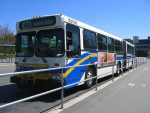
For most Jewish-related services – cultural events, organizational meetings, day schools, high school, camps, Jewish social services – travel is required. (photo by Arnold C via commons.wikimedia.org)

Although there are multiple levels of government in Canada, it is often said, there is only one taxpayer. So it is frustrating to see necessary public policy delayed by intergovernmental squabbling.

This is what’s happening right now with plans for the future of transportation in Metro Vancouver. A year ago, area voters rejected a referendum proposal that would have seen increased taxes to fund better transit. Stagnation has been the status of transit policy since then.

In the budget tabled in March, the federal government ponied up $370 million for transit in the region.

Last week, the provincial government announced $246 million over a three-year period to improve bus and SeaBus service, purchase more SkyTrain cars and launch “initial work towards new major rapid transit in Vancouver and Surrey.”

The provincial minister in charge of TransLink, Peter Fassbender, said he expects Metro Vancouver municipalities to raise $124 million more, for a total of $740 million over three years.

Mayors of Metro municipalities have a grander scheme – to the tune of $7.5 billion over 10 years, which they would see funded through transit fare and property tax hikes, the sale of some TransLink property and more tolls on bridges and roads.

In this space, we are more accustomed to taking on manageable issues like Middle East peace rather than the seemingly intractable difficulties of moving residents of Metro Vancouver from one part of the region to another. But the issue of transportation is having serious ramification for Metro Vancouverites and things will only get worse if something nearly revolutionary doesn’t happen soon.

This has already had and will continue to have specific implications for ethnocultural communities, including the Jewish community. Real estate realities have driven successive generations of Jewish community members out of the erstwhile “Jewish neighborhood” of Oakridge, the heydays of which will be recalled in an upcoming exhibit of the Jewish Museum and Archives of British Columbia.

Reflecting trends that transcend cultural boundaries, home buyers have moved in concentric circles in recent decades, outward from the city proper, first across the bridges to Richmond and the North Shore, then further east and south. Nearly half – 46% – of Metro Vancouver’s Jews now live outside the city limits, with recent years having seen notable increases in the Jewish populations of Surrey/White Rock, the Tri-Cities and the areas of Maple Ridge, Pitt Meadows and Langley. While there are nodes of Jewish life in each of these locations, there is no doubt that, for most Jewish-related services – cultural events, organizational meetings, day schools, high school, camps, Jewish social services – travel is required.

The Jewish Federation of Greater Vancouver has long recognized the particular challenges of providing services to and maintaining cohesion among a community spread across a large geographic space. A recent effort, Connect Me In, is surveying Jewish British Columbians who live outside Vancouver and asking how the communal umbrella agency can serve their needs.

Federation is trying to provide services to people where they live so that it is less necessary to come “into the city.” Yet even the best laid plans well executed cannot erase the barriers of time and space between, say, Squamish and 41st and Oak. Moreover, the delivery of services where Jewish people live will still require some movement … from the core outward.

Maintaining cohesion within our community in such a situation depends both on the ability of our community agencies to respond to the needs, as well as the desire of suburbanites to maintain connection to the Jewish community. It also depends, in ways we should not underestimate, on the simple ability to move from Point A to Point B in the Lower Mainland. Transit is a Jewish issue.

Format ImagePosted on June 3, 2016June 1, 2016Author The Editorial BoardCategories From the JITags community, Federation, Lower Mainland, transit, TransLink, Vancouver
Proudly powered by WordPress