Skip to content
  • Home
  • Subscribe / donate
  • Events calendar
  • News
    • Local
    • National
    • Israel
    • World
    • עניין בחדשות
      A roundup of news in Canada and further afield, in Hebrew.
  • Opinion
    • From the JI
    • Op-Ed
  • Arts & Culture
    • Performing Arts
    • Music
    • Books
    • Visual Arts
    • TV & Film
  • Life
    • Celebrating the Holidays
    • Travel
    • The Daily Snooze
      Cartoons by Jacob Samuel
    • Mystery Photo
      Help the JI and JMABC fill in the gaps in our archives.
  • Community Links
    • Organizations, Etc.
    • Other News Sources & Blogs
    • Business Directory
  • FAQ
  • JI Chai Celebration
  • JI@88! video

Recent Posts

  • Zionism wins big in Vegas
  • Different but connected
  • Survival not passive
  • Musical celebration of Israel
  • Shoppe celebrates 25 years
  • Human “book” event
  • Reclaiming Jewish stories
  • Bema presents Perseverance
  • CSS honours Bellas z”l
  • Sheba Promise here May 7
  • Reflections from Be’eri
  • New law a desecration
  • Resilient joy in tough times
  • Rescue dog brings joy
  • Art chosen for new museum
  • Reminder of hope, resilience
  • The national food of Israel?
  • Story of Israel’s north
  • Sheltering in train stations
  • Teach critical thinking
  • Learning to bridge divides
  • Supporting Iranian community
  • Art dismantles systems
  • Beth Tikvah celebrates 50th
  • What is Jewish music?
  • Celebrate joy of music
  • Women share experiences 
  • Raising funds for Survivors
  • Call for digital literacy
  • The hidden hand of hate
  • Tarot as spiritual ritual
  • Students create fancy meal
  • Encouraging young voices
  • Rose’s Angels delivers
  • Living life to its fullest
  • Drawing on his roots

Archives

Follow @JewishIndie
image - The CJN - Visit Us Banner - 300x600 - 101625

On brink of radical change

On brink of radical change

Prof. Shlomo Hasson was slated to bring a pessimistic forecast for the Middle East’s future to a Vancouver lecture March 31, but his visit was canceled due to the coronavirus crisis. (photo from CFHU Vancouver)

The Middle East is in a time of historical change and geopolitical shifts. The outcome is unknown and, for Israel, there may be good and bad consequences.

This is a core message from Prof. Shlomo Hasson, a professor at the department of geography, School of Public Policy, and Leon Safdie Chair at the Institute of Urban and Regional Studies at the Hebrew University of Jerusalem. Hasson was to speak in Vancouver March 31 at an event organized by the Vancouver chapter of Canadian Friends of the Hebrew University, but the lecture was canceled due to the coronavirus crisis. The Independent spoke with him by telephone about what he intended to discuss.

“We are in the midst of turmoil in the Middle East because we have this havoc with Iran and the intensifying tension between the United States and Iran,” he said. “We have the ongoing conflict within the Middle East, especially in Syria, the war now between Turkey and Syria. We have the recent events in Libya, we have a worsening situation in Yemen. I’m not optimistic about the Middle East and, when it comes to the Israeli-Palestinian case … the peace talks were stalled for a long time and now it seems that [U.S. President Donald] Trump’s initiative, in a way, helps to revive the issue but did it in such an awkward way that I’m not optimistic at all about the consequences of this initiative.”

The warming of relations between Israel and Saudi Arabia, as well as with some Gulf states, is cause for limited hope, he said.

“This is indeed a good reason to celebrate because there has been a change, even a significant change, between the Gulf states and even Saudi Arabia, and Israel because [they] are facing the same adversary, which is Iran,” Hasson said. “Israel supports Saudi Arabia because it supports them in containing Iran. In that sense, I think there is something to celebrate but this is very modest, because … the public in Saudi Arabia, for example, does not support Israel. It’s sort of an alliance between the rulers of the countries, but the public is not there yet.”

An additional crisis is climate change, which is hitting the region especially hard and will continue to do so, although this also presents opportunities for Israel to build bridges.

“We face the problem of water scarcity and droughts and flooding,” Hasson said. “I think that, especially in this crisis, Israel can help a lot because we have the technology, we’ve mastered the know-how and we can help the Middle East and Africa, while coping with this issue.”

Speaking before the most recent Israeli elections, Hasson predicted that, regardless of the outcome, they wouldn’t play a significant role in the bigger Middle East picture.

“Israel is not the central actor here,” he said. The central actors are Saudi Arabia and Iran, with China, Russia and the United States intervening from outside.

“Israel is in a position of reacting to these global, regional and intra-state developments,” he said. Even if Blue and White had won, said Hasson, it is still a right-wing party and the Israeli populace is developing a rightward consensus. “I don’t think that these elections are going to present a significant change in Israel’s political behaviour.”

He compares this moment in Middle East history to the pivotal epochs of the past.

“About 100 years ago, we still had the Ottoman Empire and, after that, we had the colonial regimes, the Sykes-Picot regimes, and then we have the nation-state regimes. The Middle East is at the brink of a change, a radical change, and nobody knows for sure what’s going to happen to the Middle East,” said Hasson. “But, in a way, it’s going to affect everything, it’s going to affect the global structure, it’s going to affect the relationships between the United States, China and Russia.”
Format ImagePosted on April 3, 2020April 1, 2020Author Pat JohnsonCategories WorldTags CFHU, elections, Hebrew University, Israel, Israeli-Palestinian conflict, Middle East, peace, politics, Shlomo Hasson
Motivating people to change

Motivating people to change

Tzeporah Berman is international program director for Stand.Earth. (photo from Tzeporah Berman)

There is no silver bullet when it comes to responding to the climate crisis, according to Tzeporah Berman. The 25-year veteran of environmental activism and international program director for Stand.Earth said it needs a multi-pronged approach.

“A lot of people like to say it’s negotiations or policy work or protests, but, in my experience, the most effective campaigns that have made change have been the ones where there has been a diversity of tactics and approaches,” Berman told the Independent. “The most effective initiatives are the ones that are not just about educating, but are about motivating people to take action on an issue…. What we need to try and do is motivate people to make change.”

Berman was among those who started Stand.Earth (formerly ForestEthics) about 20 years ago. According to the website, the group “designs and implements strategies that make protecting our planet everyone’s business. Our current campaigns focus on shifting corporate behaviour, breaking the human addiction to fossil fuels and developing the leadership required to catalyze long-term change.”

In the 1990s, Berman was an organizer of the Clayoquot Sound logging protests that contributed to agreements to prevent clearcutting. More than two decades later, as construction of the then-Kinder Morgan-owned Trans Mountain pipeline expansion ramped up, Berman participated in the sit-ins on Burnaby Mountain.

“The War in the Woods … it was this tipping point moment on the issues and Canadian history, where people were engaged from all walks of life,” she said. “Whether or not the rainforest should be clearcut was a conversation around everyone’s kitchen table. I think that’s true today of climate change and pipelines, that it’s one of these rare moments in history where it is a populist issue, where everyone is engaged in the conversation, and I think that’s why you see, in both circumstances, such a diversity of people showing up.”

Last year, the concern reached a fever pitch in Canada and elsewhere, with unprecedented numbers of people marching in the streets calling for climate action. Asked what Berman thought of elected officials such as Prime Minister Justin Trudeau or NDP leader Jagmeet Singh participating in marches like last September’s global climate strike – that, at their heart, target leaders such as them to address climate change through policy decisions – she said she believes they show up with good intentions.

“We’re living in this strange moment where our elected officials are starting to understand the urgency and importance of climate change, but that is not yet translating into their policy proposals,” she said. “It’s like there’s a time lag and they’re saying the right words about urgency and joining marches, but their policies represent the best thinking on what climate policy should be from 10 years ago. I don’t think they’re being disingenuous when they join a protest … but one of the big problems that we have is that so many people believe that they’re doing enough and other people need to do more. We like to celebrate how progressive we are, but we have a very mixed record. Canada is among the worst in terms of G7 countries with our climate plan.”

Despite estimates of more than one million people in Canada marching in climate strikes last year, Berman said the environmental movement is sorely outnumbered resource-wise in comparison to the oil and gas industry lobby. In a tweet sent at the beginning of this year, Berman spelled out 10 tips for successful activism.

“Do stuff that makes the world respond. Don’t just respond to the world,” she wrote. She expanded, telling the Independent that advocates need to be sure they are the ones setting the agenda, not governments and corporations. “Campaigners and campaigns are not proactive enough, we just respond to what decision-makers are doing. Instead of doing that, what if, months before, you looked at what you think needs to happen in order to protect the climate, our water, the air, produced a report with recommendations for policy, and then held a press conference and a public information night. Then you’re putting a proposal out there of what you think needs to happen in the world.”

Last November, Berman presented to 400 people at Temple Sholom, giving an overview of the scientific evidence of climate change and the role of nations and individuals moving forward. She spoke of the loss of the “culture of engagement.”

“Today, we have a weak civil society engagement muscle and an overextended hyper-consumer muscle,” she said during the presentation.

“We got lazy,” she explained to the Independent. “We live in a democracy, we assume it’s functioning, and leave it up to the politicians…. I’m not exactly sure how it happened, but I think it’s a culture that was eroding over the last generation. Growing up, it was expected in our community that you volunteer – for your synagogue, for your church. We don’t really have that culture now and the result is we’re not engaging in our communities as much as I think we used to. I notice now that we’re starting to see it more as a result of the more active student movements, but I think that’s because they’re scared.”

The role of community groups such as religious institutions should not be underestimated, she added. “People are going to be more willing to engage in the issues if they feel safe, if they feel a sense of common purpose, if they trust the people they’re organizing with. It’s one thing to hear scientists, or read an article. It’s a very different thing to sit down with people in your community … and organize. A lot of people right now are searching for what they can do. [Institutions] should be providing leadership and structure.”

Berman continues to be a leader in her own right. Late last year, she was awarded $2 million US from the Climate Breakthrough Project to fund her efforts to limit new oil and gas development globally to align with the United Nations Paris Agreement goals of a safe climate. The project will be housed within Stand.Earth.

Shelley Stein-Wotten is a freelance journalist and comedy writer. She has won awards for her creative non-fiction and screenwriting and enjoys writing about the arts and environmental issues. She is based on Vancouver Island.

Format ImagePosted on April 3, 2020April 1, 2020Author Shelley Stein-WottenCategories LocalTags activism, climate crisis, environment, ForestEthics, Stand.Earth, Tzeporah Berman
Modern matchmakers

Modern matchmakers

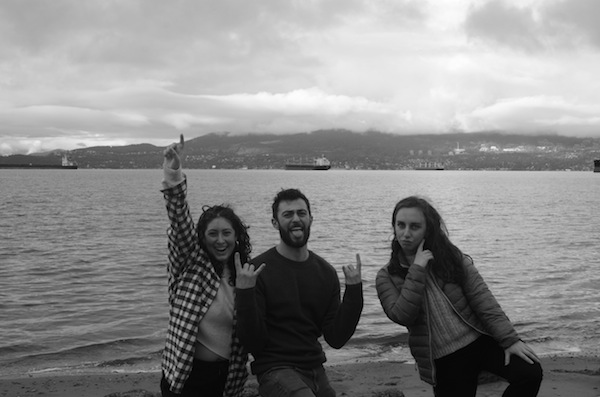
YVR Yenta is the brainchild of Madison Slobin, left, Ben Eizenberg and Ariel Martz-Oberlander. Adapting to the realities of dating during the coronavirus crisis, they have introduced the online meetup Love in the Time of Covid: Virtual Single Mingle. This photo was taken before physical distancing was required. (photo by Madison Slobin)

Three young Jewish Vancouverites have set up a collective to help their friends – and their friends’ friends – find a romantic match “using old traditions to find modern love.”

YVR Yenta is the brainchild of Madison Slobin, Ben Eizenberg and Ariel Martz-Oberlander. The three believe that their old country methods, with the application of 21st-century technology, can procure a better match than any computer algorithm. Describing meaningful connections as “the antidote to capitalist alienation,” the matchmakers see a need to fill in a city where “finding the perfect view is easy, but finding someone to share it with can be challenging,” according to their introductory material.

The matchmaking collective was just getting up and running when the coronavirus crisis hit, but that hasn’t set them back. They resorted to technology to organize Love in the Time of Covid: Virtual Single Mingle, where anyone is welcome to join an online group chat, then tell the yentas of anyone they might like to be introduced to for virtual (and, perhaps later, in-person) meetups.

The idea of incorporating old world matchmaking practices with 21st-century singles is a growing trend.

“I would love to claim it as an original idea but, honestly, I spent the last three-and-a-half years on the East Coast, living in New York City, so I have been quite connected to young Jewish community there,” said Slobin. “It was something that I kind of knew was happening in different places on the East Coast. I heard that there was one happening in Minneapolis and it seemed to me like a new trend that was popping up, which is young, secular matchmaker collectives.”

In an age when Jdate and other online dating apps are a swipe away, why the need for the personal intervention?

For a certain segment of young people, Slobin said, Jdate isn’t cool. The other reality is that apps tend to be based on looks or instant attraction.

“I think a lot of people go on dates based on that and then don’t find success because they may not share anything other than that mutual attraction and so this is an opportunity to go a little bit deeper,” she said.

YVR Yenta invites clients – it’s all free and there’s no profit motive – to complete a comprehensive questionnaire about their religious affiliation and how important that is, whether they want a match of their own religious tradition, their political views, preferences, interests and a host of other attributes.

“We accept anyone into our dating pool who belongs to any religion, any race, any sexuality, any gender,” she said.

As clientele numbers increase, the yentas write to potential matches, “so will the quality of our matchmaking, seeing as we will have more match options to choose from! Please help us spread the word to your friends and family, either through word of mouth (as was done in the old country) or by sharing our Instagram page (as is done in the 21st century).” They are on Instagram at yvr.yenta.

“This is something that I would want for myself,” Slobin added. “I think it’s a very cool idea and I wanted to make it happen for all the people around me because I feel like I know so many amazing people who are looking for partners. So we decided to volunteer our time to make it happen. Really, it’s quite fun, so it doesn’t feel like work.”

Format ImagePosted on April 3, 2020April 1, 2020Author Pat JohnsonCategories LocalTags Ariel Martz-Oberlander, Ben Eizenberg, dating, Madison Slobin, matchmaking, Vancouver, Yentas
A busy year for local artist

A busy year for local artist

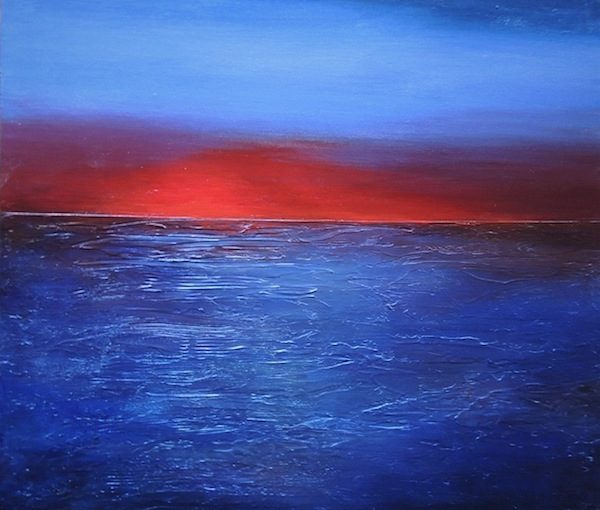
“Midnight Sun” by Monica Gewurz, who was to show her work at Art Vancouver, which has been postponed. (image from Monica Gewurz)

The Jewish Independent last spoke with Vancouver artist and Jewish community member Monica Gewurz when she participated in Art Vancouver in 2018. She was to be a participant in this year’s international art fair, which has been indefinitely postponed because of the coronavirus pandemic.

“As a professional artist,” said Gewurz, “it is important to exhibit at high-calibre international art exhibition shows. Art Vancouver provides me with a platform to display my works as well as sell them – this will be my fifth time exhibiting there.”

Gewurz was to share a booth with fellow contemporary artist Pam Carr. Previous Art Vancouver fairs have drawn more than 10,000 art appreciators and collectors to the Vancouver Convention Centre. The annual event is billed as “Western Canada’s largest contemporary art fair.”

“In the past year,” Gewurz told the Independent, “I have successfully increased the number of juried exhibitions in B.C. and the U.S., including one in Singapore. My sales and my collector base has increased, as well.”

Gewurz’s artwork can be found in corporate and private collections throughout Canada, the United States, Europe, Mexico, Peru, Australia, New Zealand, China and Japan.

photo - Vancouver artist Monica Gewurz
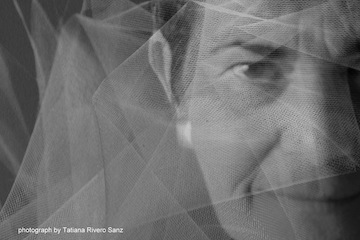
Vancouver artist Monica Gewurz.

Artistically, she said, for this past year, “the focus of my work has become more introspective and philosophical, with less emphasis being put on the literal depiction of the landscape and more on the feelings evoked by the experience.

“The expansiveness and the quiet energy of coastal British Columbia are strongly evident in the imagery and the palette of my recent paintings, which are meant to be a transformative interpretation rather than a literal rendering of the coastal landscape,” she explained. “Using mixed media and metallic paints and foils has allowed me to develop a personalized style that translates and interprets nature and iconography through layers of transparent glazes.”

Another new development since the Independent spoke with Gewurz is that her art is featured on both a wine bottle and on a line of skincare products. While she has always created wearable art, such as jewelry, this foray into commercial art is different.

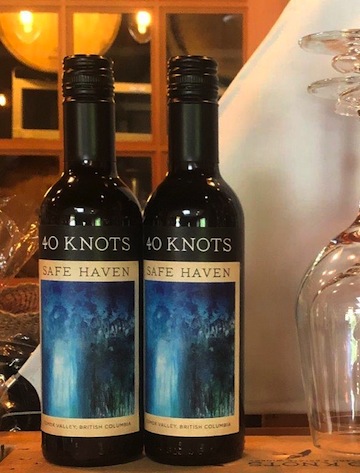
“‘Ebbing’ was chosen through a juried competition to become the label of Safe Haven fortified wine of the 40 Knots winery,” she said. “A portion of the wine sales goes to support the Kus-kus-sum salmon habitat restoration by Project Watershed, an NGO. Because I am a supporter of environmental causes, I donated the artwork.”

photo - Monica Gewurz’s painting “Ebbing” adorns the label of 40 Knots Vineyard and Estate Winery’s Safe Haven fortified wine
Monica Gewurz’s painting “Ebbing” adorns the label of 40 Knots Vineyard and Estate Winery’s Safe Haven fortified wine. (image from Monica Gewurz)

The vineyard also produces its own line of skincare products and, said Gewurz, “The owner of the 40 Knots winery commissioned the artwork ‘Waves of Tranquility’ to be featured in all VinoSpa product labels, using some of the lees of their red wines. The painting was created to capture the feeling of and tranquility and restfulness provided in all VinoSpa skincare lines and their associated spa.”

The winery website explains that Gewurz mixed the lees from the fortified wine with acrylic gels and paints to create the colours of “Waves of Tranquility.” It notes, “Influenced by Turner, ‘the painter of light,’ and Asian traditional painting, Monica’s abstract landscapes aim to reflect truthfully the moods of nature. Captured on canvas or in silver, her work draws on the exceptional landscape of the Pacific West Coast.”

Gewurz was to bring a new collection of work to this year’s Art Vancouver. Her bio noted, “She is excited to share her highly textured, iridescent, colourful acrylic and oil abstract paintings, often worked with a palette knife, unconventional tools and metallic patinas.

“Texture and thin layers of colour are two key elements in her work, as she aims to blur the line between painting and sculpture. She invites you to touch the work, by integrating natural and man-made repurposed materials, including textiles, paper and plastic, each layer of colour and medium allowing you to experience the paintings – perhaps sparking memories, perhaps freeing your mind to wander, imagine and dream. Through materials and her own travels and life experiences, she strives to make work that can be understood across cultures.”

For more on Gewurz, see jewishindependent.ca/inspired-by-cultures-nature, and her website is mgdesigns.org. For updates on Art Vancouver, visit artvancouver.net.

Format ImagePosted on April 3, 2020April 1, 2020Author Cynthia RamsayCategories Visual ArtsTags 40 Knots, art, Art! Vancouver, Monica Gewurz, winery
Working to save our oceans

Working to save our oceans

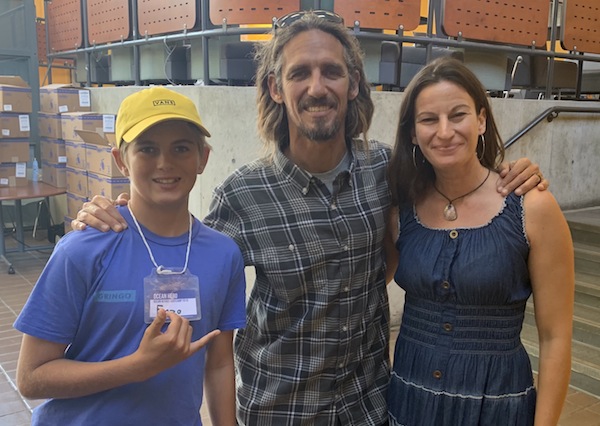
Chatting surf, water refill stations and plastic pollution at Ocean Heroes Bootcamp, left to right: Enzo Ackermann (Ocean Hero), Rob Machado (professional surfer/environmentalist) and Sondra Weiss (art educator). (photo from Sondra Weiss, Founder, Lost Art of Love Letters)

Organized and led by Captain Planet Foundation and Lonely Whale, Vancouver’s Ocean Heroes Bootcamp has a singular purpose – finding ways to save our oceans from plastic pollution.

One of the bootcamp presenters is Sondra Weiss. She offers participants a unique way to inspire action.

Having grown up in Connecticut, close enough to the ocean to fall in love with it, Weiss then went to the University of California. After graduating, she took an art museum educator position, a role she maintained for about two decades. Eventually, however, her love for the ocean drew her to start up the Lost Art of Love Letters.

“I launched this project about four years ago, thinking the world needs more love,” Weiss told the Independent. “As I listen to the news, or my students, or people in the world committing suicide, I just thought that love is a great antidote for everything happening in the world.”

Weiss lives in Santa Barbara, Calif., and was asked to come to Vancouver last year to help with the Ocean Heroes Bootcamp.

“Last year was the second year that they did Ocean Heroes, when I was in Vancouver,” said Weiss. “It brings together 250 local and international youth activists between the ages of 11 and 18, from 20 countries and 24 U.S. states, and the idea is to collaborate worldwide to fight plastic pollution.”

Based out of the University of British Columbia dorms and hosted by Ocean Wise and the Vancouver Aquarium, the next bootcamp is scheduled for June 26-29, though that may change depending on the progress made dealing with the COVID-19 pandemic. Weiss is to lead a part of it called Love Letters to the Sea.

“It is an art-integrative letter-writing project that promotes positive changes for the ocean,” said Weiss. “So, rather than feeling overwhelmed by environmental issues, community members can take action and promote innovation by using their voices to drive policy solutions.

photo - A lot of the letters are sent out to local businesses, council members and political figures to say either thank you for the work they do for the ocean environment, or to ask them to make changes
A lot of the letters are sent out to local businesses, council members and political figures to say either thank you for the work they do for the ocean environment, or to ask them to make changes. (photo from Sondra Weiss, Founder, Lost Art of Love Letters)

“Participants take pen to paper and brush to paint to express their sentiments, their solutions, for ocean love. And, a lot of the letters are sent out to local businesses, council members and political figures to say either thank you for the work they do for the ocean environment, or to ask them to make changes.”

Last year’s focus was on eliminating single-use plastic bottles. Participants were tasked with developing ideas to help the community achieve this goal.

“As mentors in bootcamp, in general, we come up with ideas and have the youth collaborate, come up with campaigns and talk to experts in different fields, figuring out how to create the most change, being creative and positive the whole time,” said Weiss.

Each Ocean Heroes Bootcamp draws many different people from all around the world, she said, including youth who have created changes in their community or on a wider scale.

“There are experts leading panels, workshops and group activities … and Love Letters to the Sea, my personal activity, is more artistic-based,” she said. “So, there are writing prompts for writing, but there are also images to inspire art. There are watercolours, crayons and coloured pencils for campers to express themselves in various ways.”

While there are age gaps, some of the younger kids have inspired more change than some of the older ones. Regardless of age, all are passionate about the issues and put any age-related ego aside to learn from and with one another, said Weiss.

“One of the beautiful things is that youth from all around the world are working together toward the one topic – and the topic is plastic pollution, what plastic pollution and consumerism is doing to affect the planet as a whole,” she said.

Weiss hopes that the letters “help motivate the people doing good work and also helps the community to remain civically engaged … and be part of society, knowing we can make change and, as an educator, working with youth shows them to use their voice for change.

“We can use that same thing – the letter writing, it has been tried and true throughout the years. When someone wants to try and make a decree, the people will use a letter. Or, to really express something to a friend going through a hard time, or a family member, a lot of times, we’ll take pen to paper and write it down. It’s a great way to slow down. We live in such a fast-paced society. We need to slow down and really think about what’s in our hearts.”

Still, Weiss is well aware of the power of technology when well-used. She has worked with Jack Johnson’s band to create a song written by middle school kids who wrote love letters to the sea.

“They took lines from the letters, which became lyrics for a song,” said Weiss. “Letters are personal, but the way to reach the masses is through music and video. And, we created it into love letters, which are strong and powerful.”

Some of the lyrics produced include: “Water can’t be broken, but we can make her cry / Going to write a love letter to the ocean, let her know we are always going to try.”

“It was phenomenal that the students got to express themselves and sing it out,” said Weiss. “They wrote the notes and the music, and then we went into a recording studio and recorded a different version.

photo - Love Letters to the Sea works to create positive changes for the ocean and environment
Love Letters to the Sea works to create positive changes for the ocean and environment. (photo from Sondra Weiss, Founder, Lost Art of Love Letters)

“Letter writing is such a great way to get ideas onto paper and out of your mind and heart. The next stage is to bring music and video to a larger global audience.”

Weiss sees artistic letters as a gateway to reaching people on a different level, touching people’s minds in a different way to promote change.

“Images or music definitely help ignite that,” said Weiss. “For me, when you are talking to them and you see the light in their eyes go up, you see them drawn into the conversation.

“So, what does it takes to ignite someone to care? That’s what I ask at the bootcamp. I ask the youth if they are going to write an organization and ask them to limit their plastic packaging. And I ask them what they think would get them to consider the financial cost … and think more about the overall cost, the environmental cost. We learn so much from the kids and they inspire us as much as we inspire them – and the relationships maintain year-round.”

While Ocean Heroes Bootcamp is free to attend for accepted youth and their chaperones, including room and board, there is a $100 reservation fee and travel costs that may be waived via scholarship. All applications to attend the bootcamp are reviewed by Captain Planet Foundation and Lonely Whale. Qualified candidates are contacted by the Ocean Heroes headquarters team to complete registration.

The Ocean Heroes HQ team accepts a maximum of 300 youth leaders each bootcamp. Each attendee is paired up with a team of squad leaders, peers who guide them through the program and ensure they have the tools, support and information they need to graduate from the camp with a successful campaign plan to eliminate plastic pollution. For more information, visit oceanheroes.blue.

Rebeca Kuropatwa is a Winnipeg freelance writer.

Format ImagePosted on April 3, 2020April 2, 2020Author Rebeca KuropatwaCategories NationalTags activism, environment, Love Letters to the Sea, Ocean Heroes, Sondra Weiss

We are shaped by history

A few weeks ago, my husband got an email out of the blue from a distant relative in Israel. This Israeli was working on some family genealogy. He was stunned to discover that he had many U.S. relatives he never knew about. Together, my husband and this distant relative took on a big extended family project, even as COVID-19 shut down borders and isolated us in our homes.

Suddenly, my husband in Winnipeg and his dad, aunts, uncles and cousins in New Jersey were emailing, sending photos and stories to one another. They tried to iron out all the stories they’d heard and fit the puzzle pieces together. My husband’s paternal grandparents (z”l) were from Mezritch, Poland. They spent the Second World War on the run. They were in a Siberian Gulag work camp. Then, they lived in a shantytown near Tashkent, Uzbekistan. After the war, they stayed in a series of displaced persons camps in Germany before U.S. relatives found them. They arrived in the United States, with their three children, in 1950.

Discovering what may have happened to each relative 75 years ago, and documenting it, has taken on an urgency for both my husband and this “new” Israeli relative. In part, it’s because his oldest aunt, who was 9 when she came to the United States, remembered it all and discussed it with her mother in detail, over and over, as those who’ve gone through huge upheaval sometimes do. For my husband’s aunt, this childhood experience defines much of her worldview. Now, though, her mother, my husband’s grandmother, has died. His aunt is still alive, but unwell. She’s unable to recount the stories or identify the people in photos anymore. The family is racing to record as much of their family history as they can before even more of the pieces are lost forever.

In the midst of this nightly family email exchange, I read a book called Gateway to the Moon by Mary Morris. This novel makes connections between the Sephardi Jews who fled Spain after the Inquisition, the crypto-Jews of New Mexico and the history behind the family connections and modern-day Jewish practice. The author explained that the idea for the book came to her when she met someone long ago. This New Mexican seemed convinced that his family had been Jewish. Indeed, now we know through DNA analysis that many Spanish-speaking people throughout the world have Sephardi Jewish roots.

Gateway to the Moon was graphic, full of historically correct violence, and direct. It took me a long time to get through. It was powerful, but also hard to grasp the scope of the suffering faced during the Inquisition. This religious violence chased Jewish families for hundreds of years through Spain, Portugal, Mexico and beyond.

Morris does a good job of connecting people throughout history in her narrative. This was particularly powerful when a character tastes a lamb dish in Morocco, on vacation, and is instantly transported to her grandmother’s table in New Mexico. Even as their identity was hidden or forgotten, familiar recipes remained. Just the taste of that lamb stew connected the character to the family’s lost past and their Sephardi Jewish identity.

The ramifications of these huge experiences – violence, trauma, colonization, wars, genocides, terrorist attacks and pandemics – will shape us and future generations. We, as Jews, and as people, are forever shaped by these things. We’re about to celebrate Passover. It recounts a huge event in our people’s story – slavery, freedom and migration. This experience shapes us, though it happened (if it happened) long ago. As we say at the seder, Avadim hayinu: Once we were slaves in Egypt, and now we are free. We’re commanded to remember this as though we personally left Egypt.

As I write this, we’re suffering a pandemic, another huge, worldwide and scary experience. My husband and I are Gen Xers. We’ve been shaped by the Holocaust experiences of our families and friends. We were raised hearing their stories and traumas, and it was part of who they, and we, are.

Now, I pray that we, and all our families, and everyone in our community, live to think about what the ramifications of this next event will be. It will impact us all.

My family and I wish you everything good – a chag sameach, zissen Pesach – a happy holiday. Most importantly, may you enjoy it in good health.

Joanne Seiff has written regularly for CBC Manitoba and various Jewish publications. She is the author of three books, including From the Outside In: Jewish Post Columns 2015-2016, a collection of essays available for digital download or as a paperback from Amazon. Check her out on Instagram @yrnspinner or at joanneseiff.blogspot.com.

Posted on April 3, 2020April 2, 2020Author Joanne SeiffCategories Op-EdTags Diaspora, genealogy, history, Holocaust, lifestyle, pandemic, Passover
About the Passover cover art

About the Passover cover art

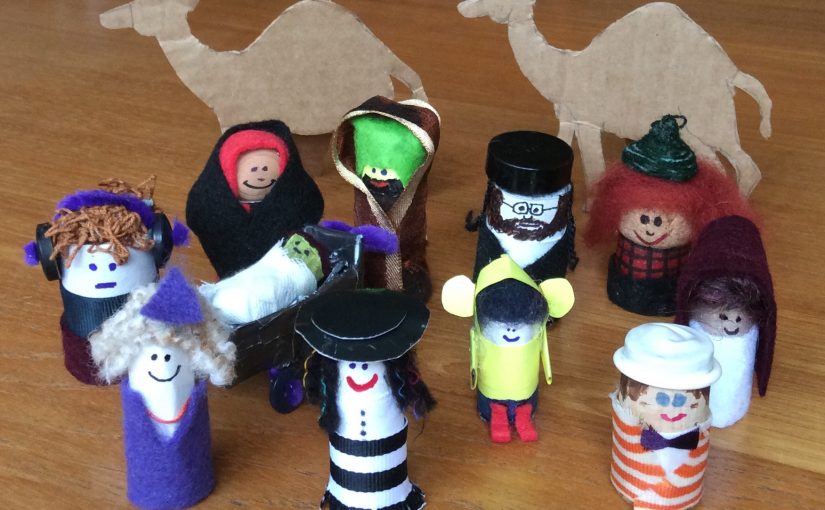
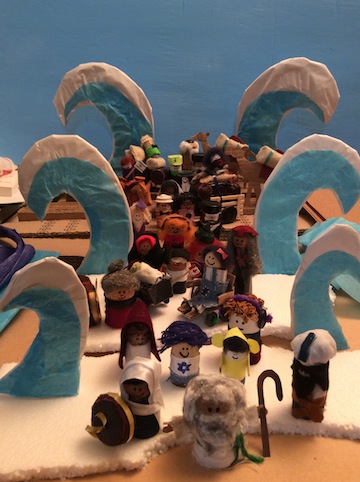
As I always do in anticipation of needing an image for the Jewish Independent’s Passover issue, I started with an internet search. This Passover, I was led to creativejewishmom.com, which features creative projects parents can do with their kids. The Crossing the Red Sea Kid’s Craft captured my imagination. Not one to let the lack of children in my immediate vicinity stop me, I collected the materials necessary and learned to use a glue gun. Through the generosity of a few friends, I didn’t have to buy anything to make the diorama on this issue’s cover.

To capture the notion that, in every generation, we are to regard ourselves as if we personally left Egypt, I created a variety of Israelites, from Moses, Miriam and Aaron leading the group, to a Middle Eastern family from an indeterminate era to a 1920s dandy, a Mary Poppins-inspired woman in a fancy black hat and a Chassid. A teen wears headphones, a toddler wears a mouse-ear raincoat and a girl in a wheelchair negotiates the streambed with the help of a Beatnik.

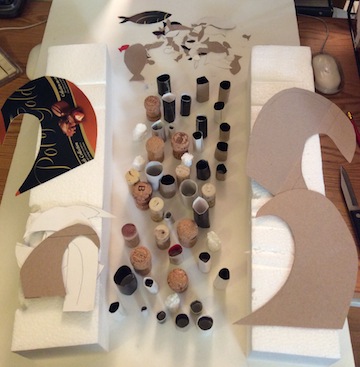
Early stages: Cut cardboard waves and fish. Prepare the toilet paper rolls (before the COVID-19-induced shortage) and corks that will become the Israelites.
photo - Intermediary stages: Make the Israelites and tissue paper the waves. Make a “staircase” so that all the Israelites can be seen in the photo
Intermediary stages: Make the Israelites and tissue paper the waves. Make a “staircase” so that all the Israelites can be seen in the photo.
photo - Final stages: Have JI logo join the exodus to freedom, but scrap the idea because many in the “focus group” interpret the falling letters to symbolize the world falling apart, given COVID-19
Final stages: Have JI logo join the exodus to freedom, but scrap the idea because many in the “focus group” interpret the falling letters to symbolize the world falling apart, given COVID-19.


The project took hours. The logistics of taking a photo that would fit within the parameters of the newspaper’s cover took almost as long to figure out as did the creation of the 29 Israelites, two load-carrying camels, two carts full of supplies, six waves and one streambed “staircase.” The wooden donkey near the back of the image is the only figure I did not make – JI production manager Josie Tonio McCarthy donated it to the effort; she bought the carving on a trip to Israel and we both thought it was appropriate to include, as the travelers’ destination is, of course, the Promised Land.

Wishes for a healthy and meaningful Passover, and a chag sameach.

Just a reminder: The Jewish Independent is now on a publishing hiatus. Our next issue will be April 24 or May 1, depending on the COVID-19 situation. Email [email protected] with story ideas and [email protected] for ad bookings.

Format ImagePosted on April 3, 2020April 2, 2020Author Cynthia RamsayCategories Celebrating the HolidaysTags creativejewishmom.com, kids arts and craft, Passover
Nieces enjoy new kids books

Nieces enjoy new kids books

I review a lot of books for the Jewish Independent. Over the years, that has included many children’s books. I do my best in these instances but, as much as I like to let my inner child run free occasionally and as much as I’d one day like to create a children’s book or two, I’m a grown-up. What do I really know about how enjoyable the single-digit-age set will find a publication? Well, for my latest two reviews, I turned to a couple of experts for advice.

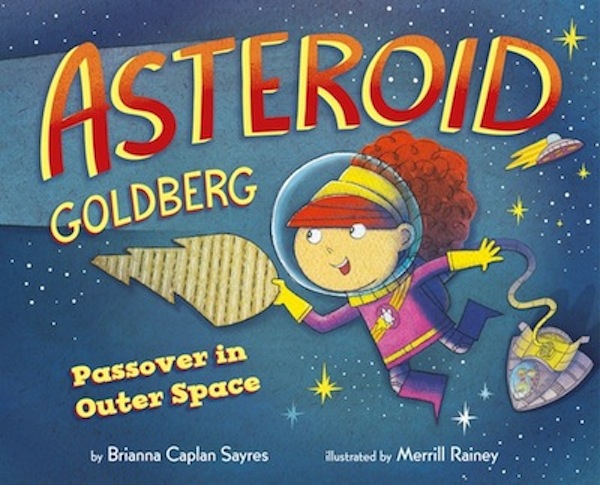
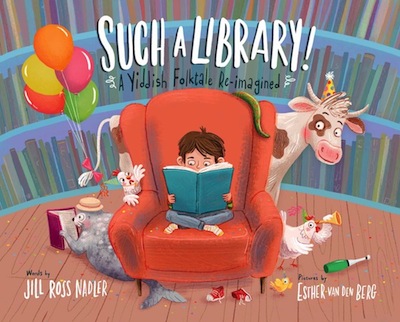
With COVID-19 causing the shutdown of schools, my youngest nieces – Fae, 8, and Charlotte, 6 – were suddenly available to be put to work. With their parents’ blessing, nay, encouragement, I scanned and emailed them two recent books published by Intergalactic Afikoman (see jewishindependent.ca/new-publisher-set-to-launch). The assignment was to read Asteroid Goldberg: Passover in Outer Space by Brianna Caplan Sayres and illustrator Merrill Rainey and Such a Library! A Yiddish Folktale Re-imagined by Jill Ross Nadler and illustrator Esther van den Berg. As my nieces were new to the reviewing world, I gave them a handful of questions to answer: What did you like about the books? What did you not like? What did you learn? Would you recommend the books to your friends?

Their mother, Deborah Weiss, sent me summaries of their answers, as well as Fae’s handwritten responses – I’d asked her to be the family’s scribe for the job.

They started with Asteroid Goldberg, which features Asteroid and her parents on their way home from Pluto for the Passover seder. When the family gets to earth’s orbit, they are not allowed to land (for an unstated reason), so they must make alternate seder plans on the fly (pun intended). A few of Jupiter’s moons for kneidl, a piece of Saturn’s rings for matzah, the Milky Way as their pantry. Who to invite? Family members close by, including Grandma Luna, who was biking on Venus, and Uncle Cosmos, who was hiking on Mars. When they come to the Mah Nishtanah, Asteroid asks, “What makes this night so different?” to which the answer is “Everything!” Caplan Sayres couldn’t have known how relevant her Passover story would be this year.

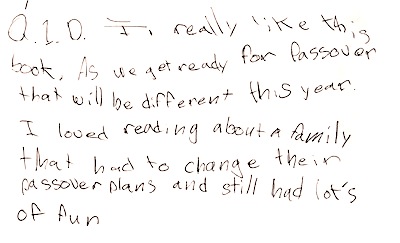
photo - Fae’s note on what her mother, Deborah (D.), thought of the book Asteroid Goldberg: Passover in Outer Space
Fae’s note on what her mother, Deborah (D.), thought of the book Asteroid Goldberg: Passover in Outer Space.

Both Fae and Charlotte loved the story and the artwork. Even though Charlotte found it a bit too long, Fae recommended it for kids 7 and under.

“I like this book because it was a rhyming book and because it had lots of play-along words,” wrote Fae, who explained to her mom that “play-along words are words with multiple meanings.”

As for lessons learned, Fae “did not learn anything.” However, her sister, who can be a pistol, said she learned that one should “never go on a rocket before Passover.”

As for their mom’s thoughts, Deb said, “I really liked this book. As we get ready for a Passover that will be very different this year, I loved reading about a family that had to change their Passover plans and still had lots of fun and found new ways to celebrate. This really resonated with me!”

Deb and the girls also enjoyed Such a Library! “I thought this was a really clever and imaginative take on a well-known folktale,” said Deb, who noted, “Both girls liked the funny text, the story and the artwork. We also liked the clever name of the librarian.”

In Such a Library!, Stevie heads to the public library to read his book – “With three brothers, two sisters and a baby at home, Stevie’s house was never quiet.” As he starts to read, though, he hears pages turning, computer keys tapping. He tiptoes to the librarian, Miss Understood, and says, “This library is too noisy.” He tells her, “It’s like a party in here.” Thinking that a party sounds like a wonderful idea, she opens a book: “Hundreds of colourful balloons flew from the pages, followed by party hats and horns.”

image - Such a Library! book coverEach time Stevie goes to Miss Understood to complain, she opens another book and the library becomes a zoo, then a circus, as the characters jump out of the pages of the books she opens and take over the library. Only once the characters are all returned to their books can Stevie enjoy reading his, to the relatively quiet sounds of the pages turning, computer keys tapping.

Such a Library! is an interpretation of the Yiddish folktale about a man who thinks that his small house is too crowded with his wife and many children. The rabbi recommends that the man also bring into the house the family’s cow, chickens, goats, geese and ducks. When the man can’t take it anymore, the rabbi tells him to kick out all the animals, after which, the small house seems quite big and spacious.

Fae would recommend Such a Library!, once again, to kids age 7 and under, while Charlotte really liked it and would recommend it to anyone.

As for what the girls learned, Deb said, quoting Charlotte, “We learned that, if you’re looking for a quiet place to read, to not to go to the library when it’s full of acrobats!”

To order either book, visit intergalacticafikoman.com/books.

Format ImagePosted on April 3, 2020April 2, 2020Author Cynthia Ramsay with Fae and Charlotte Ramsay and Deborah WeissCategories BooksTags children's books, Intergalactic Afikoman, libraries, Passover, Yiddish
Among Canada’s best books

Among Canada’s best books

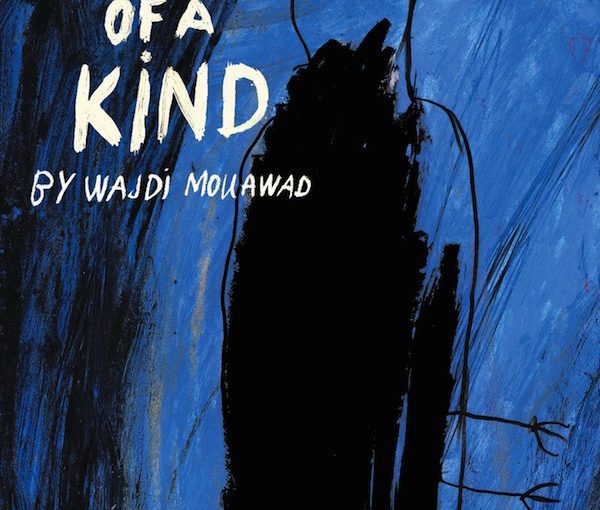
In the play Birds of a Kind by Wajdi Mouawad, the character of Eitan, injured in a terrorist attack in Jerusalem, lies in a coma. As his estranged parents and his grandmother hope for his recovery, they bitterly dig ever deeper into their familial dysfunction. At one point, the doctor tells them about Eitan, “What matters is the voices of those dear to him. His parents, his friends.”

His father responds, “His friends are in Berlin.” His mother, “Or New York.” His grandmother, “But his fiancée is here.” (The Palestinian fiancée that his parents cannot fathom and regarding whom they are nasty, based on a mix of racism, fear, guilt, concern over their own identity, secrets they have kept and more.) The doctor tells the trio, “The stronger the emotional attachment, the quicker the brain responds. We reconstruct ourselves through affection.” Godspeed to Eitan, then.

Birds of a Kind is a fascinating, if somewhat predictable, story and Mouawad’s exposition of complex and hyper-relevant topics, such as group identity versus individual choice, is nuanced and poetic; he uses language beautifully. It is no wonder that Montreal-based translator Linda Gaboriau earned the play its 2019 Governor General’s Literary Award for translation (from French to English).

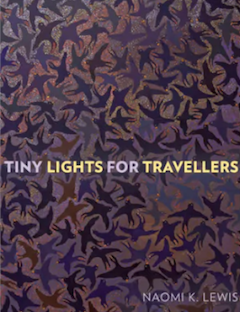
Also faring well in last year’s awards was Calgary writer Naomi K. Lewis, whose Tiny Lights for Travellers was a finalist in the non-fiction category of the prize, which is funded and administered by the Canada Council for the Arts.

image - Tiny Lights for Travellers book coverLewis is extremely candid and self-critical in this travel memoir. Readers learn about her family, her struggle with developmental topographical disorientation (which means she can’t envision a map in her head and, therefore, often gets lost), the complicated messages about Judaism she received growing up, her insecurities about being Jewish (including a botched nose job when she was a teen) and her failed marriage, among other things. We follow her on her literal and metaphorical journeys to self-discovery, -understanding and -acceptance, as her personal story is interwoven with her retracing of the route her grandfather took in 1942 to escape from Nazi-occupied Netherlands to southern France, from where he then traveled through Spain and Portugal to get to London, England.

While Tiny Lights for Travellers includes excerpts from Lewis’s grandfather’s journal of his escape, it is mostly about Lewis and her exploration of identity, family history and the Holocaust. As Lewis notes well into her book, “the journal seemed a tease, so withholding, the anomalous 30-page confession of someone who otherwise lived inside his own experience with no desire to make himself known to anyone.”

Lewis may have set out with a goal of learning more about her grandfather, of connecting to her past, “trying to find what made me,” but there are not clear links from the past to the present. The journey is revealing in the end, just not about her grandfather or exactly how she came to be who she now is, but rather in coming to terms with who that person is.

Format ImagePosted on April 3, 2020April 2, 2020Author Cynthia RamsayCategories BooksTags #ShowUpForShabbat, Birds of a Kind, Governor General’s Literary Award, Israeli-Palestinian conflict, Judaism, literature, memoir, Naomi K. Lewis, politics, Tiny Lights for Travellers, Wajdi Mouawad
A Jewish guide to streaming

A Jewish guide to streaming

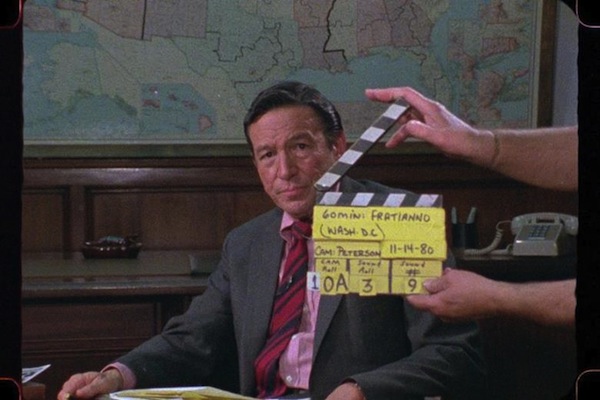
Mike Wallace is Here is one of the smartest and best documentaries of 2019. (photo from Cinando)

In the streaming universe, as with all entertainment, there’s the stuff that everyone watches and talks about. But that’s just the tip of a vast catalogue, a lot of it quite good, that doesn’t get the hype and the buzz. Here’s an eclectic list of accessible Jewish-themed movies that received some hosannas on their initial release. The more obscure (and great) Jewish films of recent years will be on a future list, since, alas, it appears we’ll have ample time to watch more after catching up with these.

The Zigzag Kid (j-flix): The Toronto Jewish Film Foundation has launched a free streaming platform, j-flix, with dozens of terrific recent fiction and documentary features and shorts. You could get lost there for weeks. I suggest you start with this irresistible, action-packed, family-friendly adventure about a precocious Dutch boy, adapted in 2011 by a Belgian director from Israeli author David Grossman’s novel.

The Women’s Balcony (Chai Flicks): Menemsha Films, the venerable U.S. distributor of Jewish-themed films from around the world, offers a free 30-day trial of their streaming platform. (A subscription will then run you $5.99 US a month.) Israeli director Emil Ben-Shimon and screenwriter Shlomit Nehama set their warm and wonderful romp in a small Orthodox congregation dislocated by structural damage to the shul.

Tel Aviv on Fire (Amazon Prime): Sameh Zoabi’s clever comedy about a Palestinian soap-opera writer trying to navigate the demands of both his bosses and an Israeli checkpoint commander will lift your spirits without insulting your IQ. Make a batch of hummus first.

1945 (Amazon Prime): This extraordinary black-and-white Hungarian film parlays the postwar arrival of two exhausted Jews at a small village into an exposé of guilt, betrayal, corruption and murder. One of the most acclaimed European films of 2017, 1945 is a gripping and haunting reckoning with dark history.

Mike Wallace is Here (Hulu): One of the smartest and best documentaries of 2019 examines, entirely through archival television footage, the ambitious journalist who made 60 Minutes essential viewing. Not a Jewish film, oddly enough, but a riveting one.

Disobedience (Amazon Prime): Sebastian Lelio’s taut, understated 2017 drama, adapted from Rebecca Lenkiewicz’s novel, is a remarkably nonjudgmental story that follows a volatile, adrift woman’s (Rachel Weisz) return to London after the death of her estranged father, an Orthodox rabbi. Community, identity, responsibility, sexuality – everything is on the table.

Prosecuting Evil: The Extraordinary World of Ben Ferencz (Netflix): The last surviving U.S. attorney from the Nuremberg trials has an impeccable memory, a spotless moral compass and enormous gravitas. If your fortitude is at a low ebb, Ben Ferencz will give you the strength to persevere.

A Serious Man (Netflix): The Coen Brothers’ most personal and most Jewish film, filmed in and around their childhood stomping grounds of Minneapolis-St. Paul, is a painfully hilarious moral fable guaranteed to provoke a cross-generational dinner table conversation. One politically incorrect question that this devious 2009 movie poses: Are Jews our own worst enemies?

Michael Fox is a writer and film critic living in San Francisco.

Format ImagePosted on April 3, 2020April 2, 2020Author Michael FoxCategories TV & FilmTags COVID-19, documentaries, Judaism, movies, streaming services

Posts pagination

Previous page Page 1 … Page 267 Page 268 Page 269 … Page 664 Next page
Proudly powered by WordPress