Skip to content
  • Home
  • Subscribe / donate
  • Events calendar
  • News
    • Local
    • National
    • Israel
    • World
    • עניין בחדשות
      A roundup of news in Canada and further afield, in Hebrew.
  • Opinion
    • From the JI
    • Op-Ed
  • Arts & Culture
    • Performing Arts
    • Music
    • Books
    • Visual Arts
    • TV & Film
  • Life
    • Celebrating the Holidays
    • Travel
    • The Daily Snooze
      Cartoons by Jacob Samuel
    • Mystery Photo
      Help the JI and JMABC fill in the gaps in our archives.
  • Community Links
    • Organizations, Etc.
    • Other News Sources & Blogs
    • Business Directory
  • FAQ
  • JI Chai Celebration
  • JI@88! video

Recent Posts

  • Story of Israel’s north
  • Sheltering in train stations
  • Teach critical thinking
  • Learning to bridge divides
  • Supporting Iranian community
  • Art dismantles systems
  • Beth Tikvah celebrates 50th
  • What is Jewish music?
  • Celebrate joy of music
  • Women share experiences 
  • Raising funds for Survivors
  • Call for digital literacy
  • The hidden hand of hate
  • Tarot as spiritual ritual
  • Students create fancy meal
  • Encouraging young voices
  • Rose’s Angels delivers
  • Living life to its fullest
  • Drawing on his roots
  • Panama City welcoming
  • Pesach cleaning
  • On the wings of griffon vultures
  • Vast recipe & story collection
  • A word, please …
  • מארק קרני לא ממתין לטראמפ
  • On war and antisemitism
  • Jews shine in Canucks colours
  • Moment of opportunity
  • Shooting response
  • BC budget fails seniors
  • Ritual is what makes life holy
  • Dogs help war veterans live again
  • Remain vital and outspoken
  • An urgent play to see
  • Pop-up exhibit popular
  • An invite to join JWest

Archives

Follow @JewishIndie
image - The CJN - Visit Us Banner - 300x600 - 101625

Down but not out

Prior to the Six Day War, which took place 54 years ago this month, the pages of this paper were filled with foreboding and ominous news of enemy militaries amassing adjacent to Israel’s borders. The very next issue was triumphal and jubilant – the war already had ended.

Such is one of the challenges of publishing a weekly newspaper. When a war only lasts six days, it presents difficulties for a journal that comes out every seven. Since the beginning of the pandemic, we have been on a twice-monthly publishing schedule, adding to the challenges of bringing you news in a time of fast change.

Of course, as regular readers know, we recognize our limitations and strengths and, as the internet has made information accessible 24/7, we have adapted to provide thoughtful, contextualizing essays and ideas, complemented by coverage of local events that only we can deliver.

Still, commenting on events that are subject to rapid flux remains a reality. This week, as we go to press, many or most observers assume that Naftali Bennett will soon replace Binyamin Netanyahu as Israel’s prime minister. Netanyahu continues to insist that such a new government represents something undemocratic. Indeed, his choice of language has been incendiary, and the imagery employed by some of his supporters veers into the realm of the demonization that we saw in the lead-up to the assassination of Yitzhak Rabin. Whatever his political objectives, Netanyahu should beware not to lead Israel down a path of “scorched earth,” as Bennett warned this week.

Bibi seems to be taking a page from the playbook of his ally Donald Trump, who emerged again recently to rehash his lies about stolen elections and assorted nonsense, including his imminent reinstallation in the White House. While scarily huge swaths of Americans (Republicans mostly, of course) believe that Joe Biden is not the legitimate president, we have more trust in the intelligence of Israeli voters to know that whoever is prime minister by the time the dust settles is there by due process.

If, as seems likely, Netanyahu is replaced, do not expect to hear the last of him. Again, like his friend in Florida, Bibi is clearly not done yet. He has been defeated before and returned to hold the position, becoming the country’s longest-serving leader.

Perhaps the biggest variable will be whether his Likud party stands behind him, as Trump’s Republican base has apparently stood by their man. Already, Yuli Edelstein, Netanyahu’s health minister, has said he would challenge Bibi for the party leadership should they lose power.

If successful, Edelstein, or any alternative Likud leader, would almost certainly cause an immediate tectonic shift in politics. That’s because the binary in that country’s politics is now cemented as “pro-Bibi” and “anti-Bibi.” With anyone but Netanyahu at the helm, some of the right-leaning partners in the new, broad coalition would likely look afresh at a deal with the party that has, by a large margin, the most seats in the Knesset.

Netanyahu may yet pull another rabbit out of his hat before Bennett can take his place. More likely, we are about to see a political shift that will see Netanyahu out but not down. That is, he seems to have enough capital to remain a major player in Likud and Israeli politics in general. The corruption case currently proceeding against him may affect that, but it has done little so far to dislodge his defenders.

If, as smart money has it, Netanyahu is unseated in the next few days, we will truly see a new era in Israeli politics. But we would caution that such a new era will begin with a time of flux. The new coalition is unwieldy and may not hold. Netanyahu has been the centre of gravity for Israeli politics for a very long time. In his absence, everything changes.

Our next issue is June 25. We promise this: plenty will have changed by then.

Posted on June 11, 2021June 10, 2021Author The Editorial BoardCategories From the JITags Bennett, democracy, elections, Israel, Netanyahu, politics
Leaving one home for another

Leaving one home for another

Rabbi Don and Meira Pacht with their children, left to right, Ora, Shimie, Shoshana and Aharon. (photo from Pacht family)

“We’re very excited for this new adventure,” said Vancouver Hebrew Academy’s Rabbi Don Pacht of his family’s impending move to New York City. “But Vancouver is a huge part of our lives and always will be a huge part of our lives.”

Pacht has been head of school at VHA since 2004. On July 20, 7 p.m., the school will host the Virtual Garden Party, honouring Pacht and his wife Meira for their service to the community and in support of the school’s Fortify Our Future campaign.

“Hebrew Academy is going to need the support of the community,” Pacht said. “And, as it goes through a leadership transition especially … we need to ensure they are fiscally stable.”

VHA has found a new head of school – Rabbi Barak Cohen, who will come here from St. Ives, Australia. “He used to live in Victoria,” said Pacht, “so he understands the West Coast of Canada as a community.”

Cohen comes with much experience in Jewish day schools, added Pacht, who has known Cohen for many years. The two rabbis have been in touch “in terms of passing the torch of the school,” but there won’t be a physical overlap. “For the next school year,” said Pacht, “I’m going to remain connected as a consultant and available, essentially, for Rabbi Cohen, for the board, for anyone who needs whatever is still in my head and not on paper.”

Pacht and his family will be in Vancouver until late July. They came here from Rochester, N.Y., via Torah Umesorah, the National Society of Jewish Day Schools. When the organization suggested the position in Vancouver, Pacht was interested because his friend Rabbi Dovid Davidowitz had recently come to the city, along with Rabbi Noam Abramchik, to set up the Pacific Torah Institute (which left Vancouver in 2019, after 16 years of operations).

Two aspects in particular of the city’s Jewish community struck him.

“Number one, there was a real growth-oriented spirit,” he said. As well, he added, “I think it is unique and special in the integration across the gamut of the community. You can live your entire life in New York City and never meet a Conservative Jew.” But, in Vancouver, “no one would think twice about attending Hebrew Academy’s events even though they themselves are not Orthodox or families of Hebrew Academy and I wouldn’t think twice about attending an event put on by another organization or school even though they’re not my ‘flavour’ of Judaism.”

That everyone works together “for the cumulative benefit of the broader community was very, very impressive to us,” said Pacht.

When Pacht began his first year at VHA, there were more than 100 students. Currently, he said, enrolment is just under 100. He pointed to demographic changes.

“In the 17 years that I’ve been here,” he said, “I would say we have been more successful over time in attracting a broader spectrum of families. But, we continue to lose Orthodox families in the community. There are rabbis who are leaving, or just families who have aged out of the school system. That’s really what happened to PTI…. All the pioneer families that helped establish the organization, all their boys went through and graduated and we weren’t replacing them with new Orthodox families.”

The exodus worries him, he said, “as someone who is concerned about the global Orthodox community and global growth of Torah and Judaism.” But, with respect to VHA, he said he believes the school “will be just fine” because it offers “a product that is not available in any of the other schools…. And, because it’s something that can’t be done anywhere else in Vancouver, Vancouver understands that we need it.”

For example, he said, if you’re a Schara Tzedeck family, you know that, in order to have rabbinic leadership at the synagogue, you need Orthodox education in the community. Similarly, if you want Judaics teachers, even in non-Orthodox schools, you need to educate those leaders.

When he first came to VHA, the school already had two portables and another was added. “At the height of our enrolment, we probably had 130 students in a facility that was really built for 60, and we accommodated them with three portables, and bursting at the seams,” he said.

“It was always the vision to find a more suitable home,” he continued. “We started with trying to buy the property from the Vancouver School Board.” While not successful in that effort, VHA did manage, a handful of years ago, to secure a 10-year lease from the school board. With that security, it launched a capital campaign to replace the portables and improve the property.

“The dream of being able to offer full-day daycare for 3- and 4-year-olds was finally realized a year-and-a-half ago, when we opened this new facility,” said Pacht.

Then COVID-19 hit. “It has been, without a doubt, the most difficult experience that any of our staff, myself included, can remember,” he said. Part of that was because it entailed a whole type of education that no one had been trained for – remote learning – but also because everybody has been traumatized in some way by the pandemic and schools have had to deal with much of the fallout.

VHA’s relatively small size was an advantage in this instance, said Pacht. “I think schools have been doing a phenomenal job overall, but it’s easier when you only have two cohorts instead of eight cohorts.” When students initially were permitted to attend school in-person again, for example, VHA could accommodate more of its student body within the capacity limits set by the government. Generally speaking, said Pacht, all of the students have since returned to the classroom.

Of accomplishments during his tenure, Pacht pointed to the new building and other physical improvements to the school, “along with the broader community profile. I think it’s a fair statement to say that the number of people who are aware of Hebrew Academy, whether or not it’s the school they send their kids or grandkids to, and the appreciation for Hebrew Academy, it has a very significant standing within the community…. It allowed us to expand and it allowed us to have a successful capital campaign. And it allows us to maintain a school of excellence…. I can say without a doubt that the level of education at this school is really top-notch.”

While Pacht and his family are leaving the city, he said, “This is where our children grew up. This is home – when my kids talk about home, they’re thinking Vancouver. We are leaving because an opportunity came up that we could just not say no to, and that is, I received an offer from a school in New York City that happens to be the elementary school that I graduated from … and it puts us in a neighbourhood where we are in walking distance to my parents, my children and my grandchildren.”

The Virtual Garden Party is free to attend, with donations welcome. To register, email [email protected] or call 604-266-1245.

Format ImagePosted on June 11, 2021June 10, 2021Author Cynthia RamsayCategories LocalTags coronavirus, Don Pacht, education COVID-19, Judaism, Vancouver Hebrew Academy, VHA
Six Jewish musical journeys

Six Jewish musical journeys

Amber Woods and Gary Cohen are the musical duo Kouskous. They were among the speakers in the six-part Journeys in Jewish Music series. (photo from Kouskous)

In ordinary times, the Victoria Jewish Community Choir meets in person at the synagogue building of Congregation Emanu-El. Unable to do so during the pandemic, the choir has instead been offering Zoom presentations on a diverse array of Jewish music.

Throughout the spring, the six-part Journeys in Jewish Music series, funded by the Jewish Federation of Victoria and Vancouver Island, has brought in an audience from around the world. It has featured talks on biblical cantillation by Vancouver’s Moshe Denburg; the songs of Sefarad, with Prof. Judith Cohen of the University of Toronto; Chassidic meditative melodies (niggunim) with Emanu-El’s Rabbi Matt Ponak; and Sing a New Song to G-d: New Prayer Compositions, with Rabbi Hanna Tiferet Siegel, who lives on Hornby Island. The last event in the series, which takes place June 20, will see Denburg return, to speak on the topic The Way of the Klezmer: Klezmer and Yiddish Song.

The Jewish Independent attended the May 23 musical voyage, which was guided by Gary Cohen and Amber Woods, who form the Victoria-based duo Kouskous. It explored Mizrahi music and how it differs from other Jewish musical styles. To demonstrate this, Cohen and Woods took the liturgical song “Lecha Dodi” and sang it with Ashkenazi, Sephardi and Mizrahi interpretations.

“In general, we see the Mizrahi world being divided into three major geographical blocks: North Africa, Turkey and the Middle Eastern (Arabic) countries,” said Cohen.

Following their expulsion from Spain in 1492, Sephardi Jews migrated to many countries in Europe, as well as going to North Africa, Greece, Turkey and Middle Eastern/Arabic countries. “Wherever Jews went, they blended their own musical traditions with those of the countries to which they moved. For example, the Sephardim combined their own musical style with Moroccan rhythms, Arabic instrumentation and Middle Eastern vocal expressions,” he explained.

“The Sephardim in Turkey and Greece often incorporate odd-metered rhythms such as 7/8, 9/8 in their music. In addition to traditional Arabic instruments, Greek instruments like the bouzouki were commonly used,” Cohen said.

Sephardi musicians who moved to Middle Eastern/Arabic countries were heavily influenced by Arabic musical styles, including “a wide melodic range, as well as vocal and instrumental embellishments,” he said. “Lyrics were often in Arabic, Hebrew or Judeo-Arabic.”

Throughout the presentation, Cohen and Woods performed some musical selections – including a few hot and spicy numbers – from the aforementioned genres for the assembled Zoom audience.

Carol Sokoloff, who co-directs the Victoria Jewish Community Choir with Kenny Seidman, is the person who came up with the idea for the lecture series.

“It has been so well-received it seems natural to repeat it and I hope to do that in the fall, going deeper into many of the subjects, as well as exploring new territory, such as Jewish composers of popular songs, Jewish women’s music, the music of the hidden Jews of Spain and Portugal, cantorial traditions and more,” Sokoloff told the Independent.

“Jewish music has so many flavours and is so rich and varied we have only begun to scratch the surface. Through our conversations, we are learning about other people with knowledge to share and, so far, everyone has been very generous in their enthusiasm for this series,” she said.

The shift from live venues to Zoom since the start of the pandemic has allowed the choir to expand its audience outside of Victoria.

“The series has been wonderful in that people who never knew about the Victoria Jewish Community Choir are now aware of us,” said Sokoloff, “and I believe that, when we finally can meet again to sing together, we shall likely attract many new members or new audiences for our performances and concerts. So, the series has allowed the choir to weather this challenging period and likely emerge stronger than ever! I think it has also generally increased interest in Jewish music in our region as well – all very happy outcomes.”

In non-pandemic times, the choir sings a variety of Jewish music: Psalms and prayers in Hebrew and Aramaic, niggunim, Yiddish songs, Sephardi music in Judeo-Spanish, Israeli songs, Broadway tunes, Yemenite music and contemporary compositions. For more information or to support the choir, send an email to [email protected] or visit their Facebook page, where you can also learn how to receive the link for the June 20, 7:30 p.m., talk.

Sam Margolis has written for the Globe and Mail, the National Post, UPI and MSNBC.

Format ImagePosted on June 11, 2021June 10, 2021Author Sam MargolisCategories MusicTags Carol Sokoloff, culture, education, music, Victoria Jewish Community Choir
Artwork flies, returns home

Artwork flies, returns home

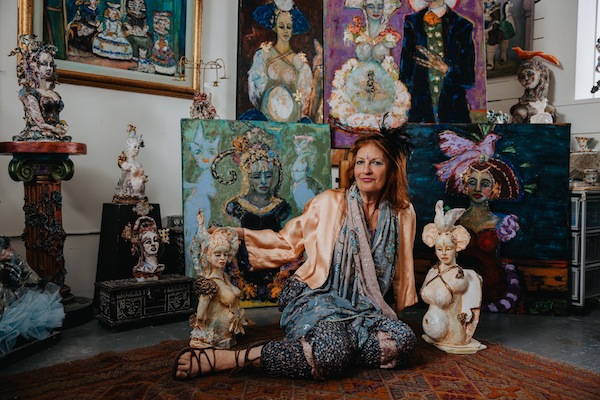
Suzy Birstein in her studio, with works featured in her solo exhibit Tsipora, now at the Zack Gallery. (photo from Suzy Birstein)

Suzy Birstein’s Hebrew name – Tsipora – means bird. The artist’s new show, Tsipora: A Place to Land, which opened at the Zack Gallery on May 20, expatiates on her name’s meaning and its connection to the winged creatures of the sky.

“I love feeling like an exotic bird,” Birstein told the Independent. “I like bringing colour and joy to the people who visit my shows.”

Birstein’s art is bursting with bright hues and glitter. Both her sculptures and her paintings seem to aspire to one purpose only: to instil gladness in people’s hearts, which feels especially important during COVID and all its associated hardships and anxieties.

“The show’s idea was born out of a personal tragedy,” said Birstein. “A few years ago, one of my close friends passed away. I grieved but I knew I didn’t really lose her. She stayed right there, always with me, like a bird on my shoulder, and I thought: what a wonderful concept. I decided to create a series of sculptures of women, with birds incorporated into the whole in different ways.”

Almost every sculpture in the show has a bird. Sometimes, it is a tiny golden bird peeking from behind a woman’s shoulder or hiding in her skirt. Sometimes, it is an elaborate hair ornament. And, sometimes, it is implied rather than shown. But the idea of a bird is always there.

“When I started this series in 2017, my thoughts were all about freedom and travels – flying like a bird,” Birstein said. “I’ve always liked to travel and visited many countries: Europe, Asia, Mexico. I like seeing something new every day.”

Accordingly, the first few sculptures of her new series were reminiscent of her travels, their dark texture a reference to the ancient sacred sites she had visited. Their diaphanous tutus a playful metaphor of dance and flight, a symbol of the weightless grace of a ballerina.

“In 2020, I was planning to travel to the south of France, with a show scheduled in Cannes, when the pandemic hit, and all travel stopped,” Birstein said. After that, the focus of her art changed, becoming more home-oriented.

“Instead of flight, my sculptures became about nesting,” she said. “I couldn’t teach anymore because of the pandemic, didn’t teach for a year due to the school closures, so I took the opportunity and the time to indulge in self-exploration. I asked myself: what is beautiful? And my answer was: birth. And rebirth. Each sculpture I made during that time was of a pregnant woman. Not flights anymore but home and harmony.”

Many sculptures also have mirror fragments embedded in them, making them festive, shining. “The mirror shards help me bridge the inner world of a woman, her home and soul, with the outer world of traveling and flying,” Birstein said.

The show includes not only sculptures but several paintings as well. “The sculptures always come first,” she explained. “They are inspirations for my paintings. After a sculpture is ready, I sometimes paint it: like another version of the sculpture, an exploration of a unique perspective. It is a different experience – working on a flat surface with no fear of breaking the fragile pottery. I don’t use a brush. I paint with a tiny palette and my fingers. It feels almost like working with liquid clay.”

Clay was the medium that catapulted her into the art world, and she feels a deep affinity for it.

“When I was a child,” she recalled, “I couldn’t draw realistically. I thought I couldn’t be an artist. I danced and I modeled for artists. I was about 22 when I started working as an artist model full-time for an art school in Toronto. The administration of the school offered me any art classes I wanted for free, and I decided to try pottery. Clay spoke to me. I also took up weaving and fibre art and liked it. Later, when we moved to Vancouver because of my husband’s work, I wanted to take more art classes. There was no fibre art school at the time, but I enrolled in Emily Carr as a sculptor. They accepted me on the basis of my portfolio – the pieces I created in Toronto.”

Birstein uses white clay for her pieces and paints them before she fires them. “Sometimes, this process has several iterations,” she mused. “I paint the sculpture. Then I fire it, but firing is unpredictable. Colours might burn out or melt into each other in unexpected ways. Then I paint the piece again, maybe add some elements. Fire again. Some pieces take five or six times in the kiln before I know they are ready, but I don’t do perfect. I make mistakes sometimes and then play with my mistakes. I love quirkiness and imperfections.”

It helps that she owns her own kiln. “My kiln is in my basement,” she said. “It was a wedding present from my parents. They knew pottery made me happy.”

It is significant that the most important tool of her art was a gift to celebrate her family.

“I feel free like a bird in my art, but only because I have such strong support from my husband,” said Birstein. “I have stability in my life, a safe place to return, a secure home, and that allows me my freedom of artistic flight.”

That’s why the only image in the show with a man in it is her husband’s portrait.

“I was looking at all those sculptures and paintings of pregnant women in this series and thought: who made them pregnant? There must have been a man,” she said.

“It depicts my husband and my art,” said Birstein of the portrait painting, which features a man standing beside a sculpture of a pregnant woman.

The show Tsipora runs until June 27. In addition to being able to book a walk-through of the exhibit with the gallery, people can arrange a personalized tour with the artist via her website, suzybirstein.com, or by calling her at 778-877-7943.

Olga Livshin is a Vancouver freelance writer. She can be reached at [email protected].

Format ImagePosted on June 11, 2021June 10, 2021Author Olga LivshinCategories Visual ArtsTags birds, painting, paintings, sculpture, Suzy Birstein
Superstein plays at jazz fest

Superstein plays at jazz fest

Andrea Superstein performs July 4 from Pyatt Hall during this year’s TD Vancouver International Jazz Festival, which starts June 25. (photo from Wendy D Photography)

Vancouver vocalist, composer and arranger Andrea Superstein has a new song out. It’s cheerful, upbeat. And she will perform “Every Little Step,” which was released in March, live for the first time at this year’s TD Vancouver International Jazz Festival, which starts June 25 and runs to July 4.

“‘Every Little Step’ was my saving grace during the pandemic,” Superstein told the Independent. “I wrote it at a time when I was feeling really overwhelmed by the uncertainty that living through a pandemic brings. I was emotionally exhausted from listening to the daily press conferences and I just needed something good. I received a Digital Originals grant from the Canada Council for the Arts and that was the impetus.

“The song was inspired by the beautiful landscapes of B.C., which I experienced on a family camping trip to Nelson,” she explained. “We live in such a beautiful place and being able to spend so much time in nature really saved me during the pandemic. In a way, it’s my homage to B.C.”

Of course, Superstein couldn’t meet in-person with musicians to workshop the composition, so, she said, “I had this crazy idea to reach out to musicians across Canada (some of whom I’d worked with before and others who to this day I still haven’t met in person) to write, arrange, record and make a music video completely in isolation. It was wild! We didn’t have one rehearsal – we didn’t even have a group Zoom meeting. Elizabeth Shepherd and I wrote and arranged the song together over Zoom and we communicated some ideas to each specific player and they self-recorded (audio and video) from their home studios. And we made a super-fun music video for it, as well.

“The more I think about it, I can’t even believe what we accomplished. I love the song so much! The vibe is a super feel good ’90s groove but, symbolically, it was so meaningful because, despite all being trapped at home, we found a way to be together in this weird virtual way. It was transformative for me.”

On the video, Superstein and Shepherd’s song is performed by them, with Superstein on vocals, Shepherd on keys, Carlie Howell on bass, Isaac Neto on guitar, Colin Kingsmore on drums and Liam MacDonald on percussion. For the jazz festival performance, Superstein will be joined by Chris Gestrin (keys), Nino DiPasquale (drums) and Jodi Proznick (bass).

“I’m so happy to be playing with them,” said Superstein. “They each offer such a unique perspective to the music and they’re all wonderful humans!”

The show is on July 4, 7 p.m., at Pyatt Hall and will be streamed on Coastal Jazz & Blues Society’s YouTube channel, she said. “Regarding a possible audience,” she added, “the festival is closely monitoring all provincial health orders and will make a decision on indoor audiences after the next provincial health update on June 15.”

Superstein is looking forward to being able to perform live again.

“I miss that special relationship that is forged during live performance,” she said. “There is something truly magical about collectively experiencing a moment in time that can never be recreated. That being said, I am blown away by the digital innovation that has emerged during the last year-and-a-half to keep the arts alive, and I attended some amazing concerts and theatre this year.

“As for me, it’s been relatively quiet on the performance front. I did a livestream concert through Or Shalom’s Light in Winter series in early 2021, which was so incredible. Other than a few other small things, I’ve been keeping it pretty low key, slowly working away at composing new music and taking my time with life.”

Playing at the jazz festival, she said, “I think it will be an incredible way to give momentum to many of the creative ideas I’ve been sitting with these past two years and a great chance for music lovers to reconnect, seeing as it’s been some time since my last performance.”

The last time that the Independent interviewed Superstein was in January 2020, just before the pandemic hit in full force. Among other things, she spoke about her then-new album, Worlds Apart, which she had described to CBC as having the themes of “the pain of being in a one-sided relationship, the loneliness of technology, and positivity in times of destruction.”

“As an artist, I like to observe life and then transform those observations into stories. I think this was helpful for me at the beginning of the pandemic because my curiosity was heightened, there was so much unknown,” she explained. “I found that to be both scary and exhilarating. I was also trying to figure out how to homeschool a 5-year-old while teaching full-time online without completely unraveling. So, creativity, flexibility and leaning in helped me survive most of 2020. Those are definitely skills that I use a lot as an artist. Truthfully, though, I don’t think anything could have prepared us for the pandemic.”

In addition to the new song “Every Little Step,” Superstein has started working on a new album, which she is hoping to release in late 2022.

“It’s a huge undertaking,” she shared, “with lots of moving parts, culminating in a multimedia performance. It will showcase collaborations with Elizabeth Shepherd, whom I treasure, and my dear friend Ayelet Rose Gottlieb (who you have featured before), among others. There’s also upcoming opportunities for non-musicians to be involved in the process, so people can stay in touch with me over social media if they want to know when and where that’s happening.”

As for her upcoming performance, she said, “In terms of what people can expect from the show, we’ll be doing some brand-new arrangements and compositions, a few gems from Worlds Apart, as well as a few old favourites. Like a true Superstein show, I’m going to take the audience on a sonic journey, whether that’s direct from Pyatt Hall or from their living rooms, it’s going to be a celebration!

For tickets ($11) to Superstein’s July 4 concert or any of the jazz festival’s more than 100 virtual events, visit coastaljazz.ca. There will be performances by local artists, as well as streams from New York, Chicago, Philadelphia, Amsterdam and Paris; free online workshops; club performances; and a continued partnership with North Shore Jazz. All streams will be available until midnight on July 6.

Format ImagePosted on June 11, 2021June 10, 2021Author Cynthia RamsayCategories MusicTags Andrea Superstein, Coastal Jazz, jazz, music
Dancing online and onstage

Dancing online and onstage

For this year’s Dancing on the Edge, Alexis Fletcher and Ted Littlemore perform together in a work created and directed by Vanessa Goodman. (photo by Sylvain Senez)

This year’s Dancing on the Edge contemporary dance festival features a lineup of online and onstage live performances, including Tuning, a new duet created and directed by Jewish community member Vanessa Goodman. And Tara Cheyenne Performance is among the artists who will be presenting films (details TBA).

During its July 8-17 run, the festival will present more than 30 shows, with artists from across Canada. On offer will be some specially curated digital programming with recorded performances, premières of dance films, dance discussions, outdoor live performances in the Firehall Arts Centre’s courtyard, for very limited audiences with safety precautions in place, and theatre performances with limited capacity, if permitted, in the centre.

photo - Ted Littlemore
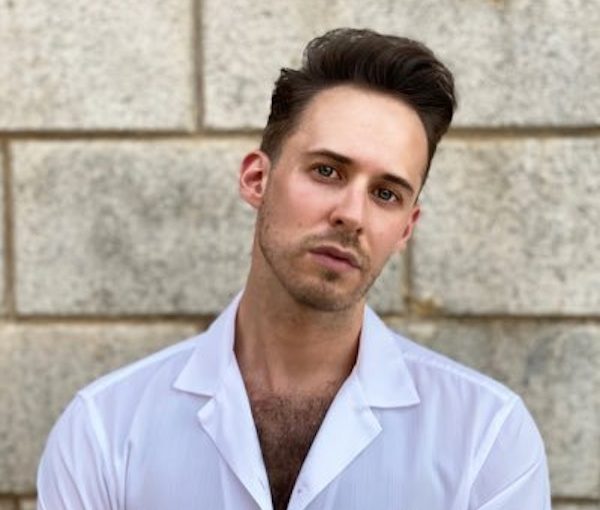
Ted Littlemore (photo by Wendy D Photography)

Commissioned by dance artist Alexis Fletcher, Tuning will be performed by Fletcher, artist in residence at Ballet BC, and Ted Littlemore, aka Mila Dramatic in the drag community. The new work focuses on how people tune to one another. In Tuning, the performers create a live sonic and physical atmosphere using their voices to amplify the conversations of the body.

Festival producer Donna Spencer also announced seven DOTE-commissioned projects, which will première at this year’s festival. Companies/choreographers presenting commissioned works include Ouro Collective, Raven Spirit Dance, Billy Marchenski, Immigrant Lessons, Generous Mess, Rob Kitsos and Meredith Kalaman. “We were thrilled to have offered this incentive, knowing that these commissions have enabled artists to keep creating new work during this challenging time for all,” said Spencer.

Keep an eye on dancingontheedge.org for performance and ticket updates.

– Courtesy Dancing on the Edge

Format ImagePosted on June 11, 2021June 10, 2021Author Dancing on the EdgeCategories Performing ArtsTags dance, Donna Spencer, DOTE, Firehall Arts Centre, Tara Cheyenne, Vanessa Goodman
Herzog joined Mosaic

Herzog joined Mosaic

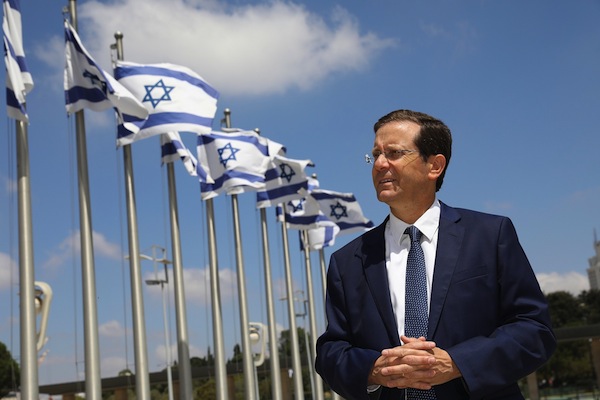
Israeli President-elect Isaac “Bougie” Herzog outside the Knesset. (PR photo)

There was a palpable sense of community, both on a local and an international level, at Schara Tzedeck’s Mosaic 2021: Building a Stronger Jewish Future virtual event May 27.

Rabbi Andrew Rosenblatt and synagogue president Jonathon Leipsic led the festivities through a pre-recorded video in which they drove around town, spoke about the current state of affairs and introduced such guests as the singer Shulem, Rabbi Naftali Schiff and Prof. Lara Aknin of Simon Fraser University.

Israeli President-elect Isaac “Bougie” Herzog was the featured guest. He was voted the 11th president of Israel on June 2, less than a week after addressing the Schara Tzedeck audience. He is the son of former Israeli president Chaim Herzog and the grandson of Rabbi Yitzhak HaLevi Herzog, the first chief rabbi of Ireland and Ashkenazi chief rabbi of Israel from 1936 to 1959.

“I have a huge respect for the Jewish community in Vancouver and for your congregation. It is a thriving, successful and beautiful community. Community is at the heart of Jewish life,” said Herzog, who is also chair of the Jewish Agency for Israel (JAFI). During the pandemic, JAFI has come to the aid, through interest-free loans, of more than 75 Jewish communities around the world that were on the verge of collapsing.

Herzog highlighted the role of religious organizations and spiritual leaders as crucial to post-pandemic life. Also central to community life, he said, is the financial ability to sustain institutions, such as community centres, as well as to involve younger people in leadership positions.

The most important role of JIFA is to create a sense of “connecting” within the Jewish world, said Herzog. Since the creation of Israel, it has welcomed more than four million olim, immigrants. Even during COVID-19, 21,000 olim from 45 countries arrived in Israel.

“Connecting” also involves bringing around 100,000 young people to Israel every year on various programs, sending emissaries to Jewish communities abroad and partnering with Diaspora communities.

“The whole idea is to get to know each other, to respect each other, to understand the pluralistic nature of Jewish life abroad, to understand what it is to be a Jew abroad and the questions of identity that are faced by young people outside Israel,” said Herzog.

He stressed the importance of having young people visit Israel. It is also imperative, he said, to “bring the truth”; that is, to counter false information about Israel.

Herzog, who has ties to Canada, once visited the University of British Columbia to meet with its leadership. In such meetings, his objective is to make sure “the true picture of Israel is told. You can criticize Israeli policy just like you criticize Canadian policy – that has nothing to do with the inherent right to the Jewish people for their own self-determination.” In general, he noted, “Once people know the facts, they have a stronger affinity with one another.”

He concluded, “I believe there is something metaphysical in being Jewish. That is, we feel an affinity – a Jew from Vancouver and myself could land together anywhere and bond immediately, because we feel like brothers and sisters.”

Herzog has family in Toronto. His uncle, Yaacov Herzog, was the Israeli ambassador to Canada from 1960 to 1963 and, while here, participated in a well-known debate with British historian Arnold J. Toynbee.

Shulem Lemmer, better known as Shulem, was the first guest to appear during the Mosaic evening, and he led the audience from his home in New Jersey through a couple of Jewish standards. Shulem was the first Charedi Jew to sign a contract with a leading music label, Universal Music Group, under its Decca Gold imprint, in 2018.

London-based Schiff, the founder and chief executive officer of Jewish Futures, spoke about the GIFT (Give It Forward Today) initiative, which he started in 2004. It was designed to spark a culture of giving between individuals and communal organizations, and it provides volunteering opportunities for young people.

Aknin, whose research interests include prosocial behaviour, happiness, social relationships, altruism, money, social mobility and inequality, rounded out the event.

Sam Margolis has written for the Globe and Mail, the National Post, UPI and MSNBC.

Format ImagePosted on June 11, 2021June 10, 2021Author Sam MargolisCategories LocalTags Bougie, Diaspora, Isaac Herzog, Israel, JAFI, Jewish Agency, Mosaic, politics, Schara Tzedeck
CHW’s Brunch with Bakan

CHW’s Brunch with Bakan

Joel Bakan spoke at a CHW Vancouver Book Club event May 30. (photo from thecorporation.com)

The Canadian Hadassah-WIZO (CHW) Vancouver Book Club hosted a far-reaching 90-minute discussion with author, filmmaker, musician and University of British Columbia law professor Joel Bakan on May 30. Moderating the event, entitled Brunch with Bakan, was Toronto-based writer (and former Vancouverite) Adam Elliot Segal.

Bakan’s widely acclaimed 2004 book The Corporation: The Pathological Pursuit of Profit and Power explored the formation and behaviours of modern-day industrial behemoths. It was later turned into an award-winning film. His new book, The New Corporation: How “Good” Corporations are Bad for Democracy, released in 2020, also has a film attached to it – The New Corporation: The Unfortunately Necessary Sequel, which Bakan co-directed with Jennifer Abbott.

In the CHW event, Bakan shared tidbits about his upbringing, first in East Lansing, Mich., then moving to Vancouver at age 11. “I was a very young draft dodger,” he recalled, as his parents decided to move north at the height of the Vietnam War.

“Family and Judaism have been two of the pillars of my life,” he said, recounting how much of his current activism could be traced to his immigrant grandparents.

“Jewish people, by virtue of their history, understand persecution, they understand injustice. They haven’t had a choice but to understand injustice. Injustice has always been in their face. It’s no coincidence that Jewish people were leaders in the civil rights, labour and other movements,” said Bakan.

“Jewish people have always had an activist sensibility and I think it’s rooted, not only in that history, but in the ethics of the religion – chief among them is tikkun olam, that we have a duty to repair the world, which is very much a duty I take seriously,” he added.

In his recent book, which moderator Segal called a “tour de force” and “meticulously researched,” Bakan tackles such subjects as deregulation, the aviation industry and what he describes as the destructive dependence on technology. In it, he interviews not only influential legal and economic scholars but also references pop culture to explain more difficult concepts.

“I wanted the book to be readable,” he said. “I am an academic by trade, but I am a writer. I want the reader to feel pulled into a story. In all my writing for a popular audience, I try to get away from the academic notion of laying out the facts and instead lull the reader in by telling some good stories. And, once I have the reader, I try to engage them with some more analytical or informational kinds of things.”

Segal asked about Bakan’s Trump-era trip to the World Economic Forum in Davos, Switzerland, for the recent Corporation documentary project. It turned out to be a coup of sorts for a film crew to be allowed access to the normally secretive meetings of the world’s political and corporate elites in the Swiss Alps.

In this work, Bakan discusses the concept of corporate social responsibility, which, he contends, cannot do nearly enough to combat rising global social and environmental threats. He distinguishes between individuals at the top of corporations and the corporations themselves.

An example of this approach is Lord John Browne, the former chief executive officer of British Petroleum, whom Bakan portrays as a very cultured man and one of the “good guys,” who tried to get his firm to be at the forefront of corporate responsibility. However, the problem is that even the most benign, well-intentioned CEOs are hamstrung by their fiduciary and legal responsibilities to their shareholders, according to Bakan.

“A CEO can go a certain distance in trying to do a better job in terms of social or environmental responsibility, but you can’t go further in that direction in terms of what will be profitable,” said Bakan. “It’s great if corporations try to be a little better, but let us not be deluded into believing that they can go far enough to get us out of the mess we are in, be it the social mess or the environmental mess.”

The conversation turned to sports and the recent failed attempt by Europe’s top soccer clubs to form the Super League. The common thread with other societal issue is the goal of corporations or capitalism to commoditize everything, whether it be water, utilities, education or entertainment. In the case of the Super League, the vested corporate interests behind the initiative were trying to increase profits by “taking the local out of sports.”

“If you put the Toronto Maple Leafs in Dubai, they would make more money,” said Bakan. “The Super League stopped because the people and governments rose up.”

The discussion ended on an uplifting note for the future. Bakan advocated extolling the virtues that our societies value, such as democracy, freedom and equality, to create a world “in which people can flourish, where they can thrive, where they can be free, not just of government restrictions but ill health, hunger and poverty, where they can live lives of meaning and purpose in which their material needs are met.”

The past 40 years have seen corporations as drivers of policy rather than as tools, argues Bakan. “We need to understand that our democracy is what matters and its capacity to serve human flourishing and planetary survival. When we think about our policies, they need to be aimed at how we can use markets and corporations towards those ends – not how they can use us to serve markets and corporations.”

The film version of The New Corporation is available on several streaming services in Canada. As well, the CHW talk is available for anyone who donates $18 to CHW, for which a full tax receipt also will be provided. Visit chw.ca/thenewcorporation to register, or call the CHW Vancouver office at 604-257-5160. CHW supports programs and services for children and women, in healthcare and education, in Israel and Canada.

Sam Margolis has written for the Globe and Mail, the National Post, UPI and MSNBC.

Format ImagePosted on June 11, 2021June 10, 2021Author Sam MargolisCategories LocalTags business, Canada, Canadian Hadassah-WIZO, children, CHW, CHW Vancouver, corporations, democracy, healthcare, Israel, Joel Bakan, politics, women
Pride trumps bigotry

Pride trumps bigotry

Writer Ben M. Freeman (PR photo)

Antisemitism is not a Jewish problem, writes Ben M. Freeman in his new book Jewish Pride. “It is a non-Jewish problem that has an impact upon Jews.”

Freeman is a young Scottish Jew whose book projects some of the lessons of his coming out as a gay man onto the experiences of Jews dealing with the internalizing of others’ expectations and prejudices. He speaks of “passing,” of how a member of some minority groups can identify as a member of the majority.

“There are those who describe the ability of some LGBTQ+ people and some Jews to pass as a ‘privilege,’” he writes. “However, from my experience, this is a specific form of oppression itself.”

Freeman insists that the book is not about antisemitism, but rather its opposite: Jewish pride. But, perhaps by necessity, antisemitism plays a big role.

“Our journey is not about fighting antisemitism. That is the non-Jewish world’s journey,” he writes. “The Jewish journey is one of self-discovery, self-acceptance and self-love – in the name of collective pride.”

In the same way that antisemites have gone some distance to characterize who and what Jews are, anti-Zionists have stolen the word Zionism and redefined it to their perverse definitions, he suggests.

Above all, the fact that so many of the perpetrators of antisemitism are unfamiliar with its history is precisely the reason people can exhibit antisemitism while claiming – often haughtily – to be free of it.

“Due to a lack of education about both the conflict and Jewish history, most people are not armed with the knowledge to understand the connection between anti-Zionist rhetoric and historical antisemitism,” he argues. For example, the recurring libel that Israelis harvest organs from unsuspecting victims is a modern variation on the ancient blood libel – but people ignorant of that catastrophic history do not see their complicity as they perpetuate outlandish allegations. Likewise, the depiction of Israel as a unique embodiment of evil in the world mirrors the ancient projection on Jewish people of society’s fears and false narratives of evildoing.

He discusses how the International Holocaust Remembrance Alliance’s Working Definition of Antisemitism has led to a whole new wave of arguments around what is and is not anti-Jewish bigotry.

The British sociologist David Hirsh created the “Livingstone Formulation,” named after the former mayor of London, Ken Livingstone. It encapsulates the pretzel logic in which expressions of concern about antisemitism are met with a refusal to engage and a counter-accusation that the charge of antisemitism is made up as a conspiracy to silence legitimate criticism of Israel, as a “weaponization of antisemitism for political ends.”

This was in clear view during the spate of overt antisemitism that engulfed the Labour Party in the U.K. under the leadership of Jeremy Corbyn. Concerns about rampant Jew-baiting and unconcealed antisemitism were, Freeman writes, routinely dismissed as a “smear campaign against Jeremy.” It was, in short, bullies crying that they are being bullied.

image - Jewish Pride book coverFreeman points out the core problem for Jews in the evolving interpretations of hierarchical discrimination.

“There is a view of racism that suggests it is prejudice plus power, which implies that only those in positions of power over others can be racist,” he writes. “This definition leads to the notion that most forms of racism and prejudice are ‘punching down’ and that only marginalized groups with less or no power are being oppressed. While this experience is true for certain communities, this specific definition of racism, combined with exaggerated antisemitic perceptions of Jewish power and privilege, can be particularly dangerous for Jews. It thus lends to the erasure of the Jewish experience and of antisemitism as a legitimate form of prejudice. It can also allow those on the left – and some marginalized groups – to actively target us as representatives of elite power structures.”

Freeman’s core message is that Jews, like LGBTQ+ people, need to overcome the negative programming with which they are bombarded by the larger world.

“Jewish people have been in a dysfunctional relationship with the non-Jewish world for over 2,000 years,” he writes. “To be accepted, we have tried, over and over again, to change who we are.… In our thousands of years of history, has this sacrifice ever worked? No…. This cycle has to stop. The way to stop this abusive, destructive and exhausting cycle is to turn to ourselves for that acceptance and love.”

One might have hoped that a book on this subject would glance at the remarkable reversal of homophobia in most parts of the Western world in recent years, how that progress was achieved and how the lessons from that experience might be repurposed to fight antisemitism. But that, perhaps, is a future tome for Freeman or someone else to undertake.

Format ImagePosted on June 11, 2021June 10, 2021Author Pat JohnsonCategories BooksTags anti-Zionist, antisemitism, Ben M. Freeman, Israel, Judaism, LGBTQ+, racism, Zionist

Push back against antisemitism

The last three weeks or so have been a trying time for the Jewish community both in and out of Israel.

An 11-day onslaught of terrorist missiles sent thousands to bomb shelters or to their building stairways while the Iron Dome took down 90% of the missiles from the sky. Some got past, however, and 11 Israelis, Jewish and not, died. The loss of innocent life – both Palestinian and Israeli – is heartbreaking.

In the Diaspora, we hoped that a tense political situation would not turn into something worse. When it did, we watched the videos of missiles launched, of buildings hit, of funerals held – and of a country protecting itself and its people.

We then braced for the public opinion backlash. While Israel defended itself from more than 4,000 missiles fired from civilian neighbourhoods into civilian neighbourhoods, we were told by news outlets and celebrities on talk shows and social media that Israel’s actions – in which it went to extreme lengths to target only terrorist assets – were unjust.

I believe that Israel has a right to defend itself. I believe that Israel has a place in the Middle East, and I see it increasingly accepted by its neighbours. I believe Israel has much to offer the world.

Zionist is not a dirty word. I am an unapologetic Zionist. I stand with Israel. I believe in our people’s history, collectivity, peoplehood and right to self-determination.

Grievances with government policy do not give licence to question Israel’s right to exist. I do not believe that anti-Israel equals pro-Palestinian; if it did, then those burning Israeli flags in the streets would be calling for peace, or for a two-state solution, not to “globalize the intifada.”

In Gaza, Hamas – a listed terrorist entity in Canada, the United Kingdom, the United States and the European Union – remains a barrier to peace. I believe Palestinians deserve better. I believe that Palestinians are entitled to equal rights and to self-determination. This is not at odds with my Zionism.

I believe that anti-Zionism, as defined by the International Legal Forum as “the prejudice against the Jewish movement for self-determination and the right of the Jewish people to a homeland in the state of Israel,” can itself be antisemitic and create a climate that allows antisemitism to fester.

Across the world, we are witnessing a horrific surge in antisemitism in connection with the conflict. In the United States, Jews have been chased down and beaten. In the United Kingdom, there were chants to “rape their [Jewish] daughters” and antisemitic incidents have risen almost 500%.

Canada is not immune. Recently, in Montreal, peaceful pro-Israel demonstrators were pelted with rocks. In May, Toronto experienced a 500% spike in antisemitic incidents compared to last year. Nazi symbols were spotted at anti-Israel demonstrations across the country, including in

aOttawa and London. In Vancouver, we saw a Jewish business owner being harassed and threatened, and an increase in hateful posters and graffiti. The recent spate of antisemitism has also spread online. There are numerous incidents of Jewish students bullied, businesses targeted, and many others harassed.

While my phone explodes with messages from family and friends asking how to respond to hateful social media posts and vicious videos and memes, it is easy to feel cornered. It is easy to assume that public opinion equals the right opinion, but a simple understanding of history reminds us that it does not.

We must speak out and push back against this rising tide of antisemitism.

We know that what starts with the Jews never ends with Jews. Combating antisemitism is not only about protecting Jews but also about protecting the very fabric of Canadian society. Thousands across Canada are joining the Centre for Israel and Jewish Affairs (CIJA) in calling for the federal government to convene an emergency summit on antisemitism – a forum to discuss enhancements to community security, education for youth about Jewish history, suffering and triumphs, and a Canada-wide campaign for social media literacy. Join our call to action at fightit.ca.

Neither Israel nor its supporters are perfect. Nobody is. The disproportionate criticism toward the Jewish state is unwarranted. Israel must, and will, stand by its principles, which are – not coincidentally – those same principles that gave rise to Western societies. As long as it does, I will stand with Israel, and you should, too.

Judy Zelikovitz is vice-president, university and local partner services, Centre for Israel and Jewish Affairs (CIJA).

Posted on June 11, 2021June 10, 2021Author Judy ZelikovitzCategories Op-EdTags anti-Zionist, antisemitism, Centre for Israel and Jewish Affairs, CIJA, Hamas, Israel, terror, Zionist

Posts pagination

Previous page Page 1 … Page 211 Page 212 Page 213 … Page 662 Next page
Proudly powered by WordPress