Skip to content
  • Home
  • Subscribe / donate
  • Events calendar
  • News
    • Local
    • National
    • Israel
    • World
    • עניין בחדשות
      A roundup of news in Canada and further afield, in Hebrew.
  • Opinion
    • From the JI
    • Op-Ed
  • Arts & Culture
    • Performing Arts
    • Music
    • Books
    • Visual Arts
    • TV & Film
  • Life
    • Celebrating the Holidays
    • Travel
    • The Daily Snooze
      Cartoons by Jacob Samuel
    • Mystery Photo
      Help the JI and JMABC fill in the gaps in our archives.
  • Community Links
    • Organizations, Etc.
    • Other News Sources & Blogs
    • Business Directory
  • FAQ
  • JI Chai Celebration
  • JI@88! video

Recent Posts

  • Story of Israel’s north
  • Sheltering in train stations
  • Teach critical thinking
  • Learning to bridge divides
  • Supporting Iranian community
  • Art dismantles systems
  • Beth Tikvah celebrates 50th
  • What is Jewish music?
  • Celebrate joy of music
  • Women share experiences 
  • Raising funds for Survivors
  • Call for digital literacy
  • The hidden hand of hate
  • Tarot as spiritual ritual
  • Students create fancy meal
  • Encouraging young voices
  • Rose’s Angels delivers
  • Living life to its fullest
  • Drawing on his roots
  • Panama City welcoming
  • Pesach cleaning
  • On the wings of griffon vultures
  • Vast recipe & story collection
  • A word, please …
  • מארק קרני לא ממתין לטראמפ
  • On war and antisemitism
  • Jews shine in Canucks colours
  • Moment of opportunity
  • Shooting response
  • BC budget fails seniors
  • Ritual is what makes life holy
  • Dogs help war veterans live again
  • Remain vital and outspoken
  • An urgent play to see
  • Pop-up exhibit popular
  • An invite to join JWest

Archives

Follow @JewishIndie
image - The CJN - Visit Us Banner - 300x600 - 101625

Seven decades of poker evolves

Seven decades of poker evolves

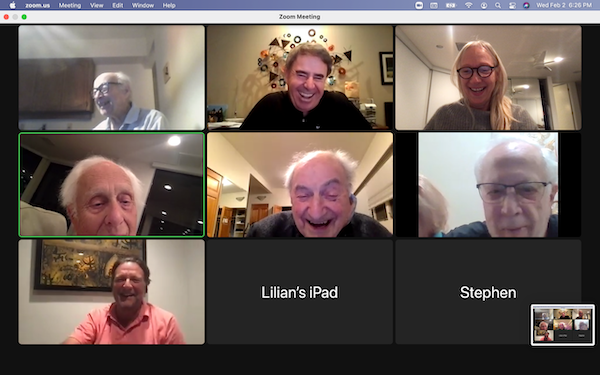
A screenshot of Morley’s Minyan playing poker. Top row, from left: Al Hornstein, Larry Moscovitz and Carolyn Aronson. Middle row, from left: Lyall Levy, Murray Atnikov (the night’s big winner) and Macey Morris. Bottom left is Tony Aronson. Missing are Steve Bernstein, Joel Finkelstein, Marshall Cramer and Irv Sirlin. (image from Carolyn Aronson)

In 1948 or 1949, a group of Jewish students at the University of British Columbia started a weekly poker game. While none of the original players remain, the regular game has continued, with a few interruptions, for more than 70 years. Now, children of some of the earliest members are joining – and the “young” card players are themselves middle aged.

Murray Atnikov, now 97, joined the poker game around 1960. He enjoys playing, but it’s the kibitzing that keeps him coming back.

“The company is very, very jovial, to say the least,” said Murray. “We have a good time.”

The march of time means the faces have changed, but the endurance of the game has been remarkable. It started out as a weekly event, though it went to biweekly when the Vancouver Canucks joined the National Hockey League in 1970. Since the pandemic began, they have played via an online poker platform.

“The continuity is something that amazes me,” said Murray.

Lyall Levy, a retired family doctor who is 85, joined the group in 1964. In those days, the games rotated among the players’ homes. The players were all men and the wives would outdo one another preparing refreshments.

“It would be like going to a high-end Jewish restaurant,” Lyall said. His daughter, Carolyn Aronson, recalls having extra-special lunches the day after poker nights.

Carolyn, now 60, broke the gender barrier when she became the first female to join the men’s game. She is one of four members who are a generation younger than the other players. Her husband, Tony Aronson, also plays. Joel Finkelstein joined the game when his father, Norty, passed away, and Larry Moscovitz took the place of his late father, Bill. The others range from 81 to Murray, at 97.

As the players (and their wives) got older, they moved the games to the Richmond Golf and Country Club, to which they hope to return as soon as the COVID situation makes it reasonable to do so. When some wives complained that the men were driving home on dark winter nights, they moved the games to the afternoon, followed by noshes in the restaurant.

The group never had a name or any formal structure, but after Morley Koffman, a Vancouver lawyer who was a founding player, passed away in 2015 at age 85, they dubbed themselves Morley’s Minyan in his honour.

The players and their families formed tight bonds. Morley, a meticulous record-keeper, would hold back some of the cash from the kitty each week to put toward an annual group golfing and eating excursion in Seattle with spouses.

“I think that appeased the wives because they got to go to Seattle and go shopping or whatever,” speculated Carolyn.

While her husband joined the game in person before the pandemic, she came in only after it went online.

“They’ve never said no girls but there’s never been a woman in the game before,” she laughed. She’s not sure she’ll be invited when they return to live games.

“When we go back to live, she will be there,” her husband insisted. “The other guys will want her there, trust me.”

Her father foresees some potential gender conflicts, though.

“The problem with adding women is, I can think of at least two others whose wives are better players than their husbands,” said Lyall. Another issue, he said, is that some wives may not know how much money their husbands have been losing all these years.

It’s a friendly game – for the most part. Lyall shared tales of sharp competitiveness, referring to some players as “archenemies.”

His daughter downplayed the sharp elbows, insisting it’s all fun and games.

“It’s all fun and games to watch them get at each other,” her father retorted. “There was a lot of hostility between one player and the next. I could tell you some stories.”

“They like ripping each other,” conceded Carolyn, “especially my dad and Murray, they’re old friends.”

When Murray makes a big raise, Lyall studies his opponent’s face.

“I can tell – when his lip starts to quiver, he’s bluffing,” Lyall said. This puts Lyall at a disadvantage in the online game, where faces are obscured and quivering lips are undetectable.

screenshot - Morley’s Minyan as their avatars playing on Pokerstars
Morley’s Minyan as their avatars playing on Pokerstars. (image from Carolyn Aronson)

The Aronsons used to jet off regularly to Vegas to play the game. When Lyall invited his son-in-law to join about four years ago, he warned him that the group takes things seriously.

Tony acknowledged, “When Lyall first invited me to join, he said to me, ‘Tony, you gotta think about whether you want to play.’ I said, ‘I can handle it.’”

But joining a group already (long) in progress involves some adjustments.

“I said, ‘What games do you play?’” Tony recalled. “He said, ‘It’s dealer’s choice. You can play any game you want.’ I said, ‘Oh good, that’s nice.’ The first game I arrived at, it came around to me and I said, ‘OK, we’ll play Omaha.’ ‘No, no. We don’t play Omaha.’ So I said, ‘OK, how about Three-card Monte?’ ‘Nope, we don’t play that.’ I said, ‘I thought it was dealer’s choice.’ They said, ‘It is. Seven or five card stud, whichever one you want.’”

The games are not penny ante, but nor are the pots nothing. A hundred or a couple of hundred bucks may be at stake but the bragging rights are the real jackpot.

Recently, Murray had a big win.

Carolyn said, “I heard my dad talking to him two days later and he said, ‘I’m still walking four feet above the ground.’ He’s phoning everybody he knows to say that he won at poker.”

For the longer-term players, these connections constitute decades-long friendships.

“Some of these people he’s maintained the relationships with them for 50, 60 years,” said Carolyn.

Added Tony: “For the younger generation – Larry and Joel and Carolyn and myself – it’s just been an amazing way to connect with these people in a way that we probably couldn’t have before and it feels good that, during COVID, we have been able to put them together and give them the joy of something that they love that they couldn’t do.”

“It’s always an entertaining evening,” Lyall said, “no matter whether you’ve won or lost.”
Format ImagePosted on February 25, 2022February 23, 2022Author Pat JohnsonCategories LocalTags Carolyn Aronson, COVID, friendship, games, Lyall Levy, Murray Atnikov, pandemic, poker, Tony Aronson
Grateful for ability to play

Grateful for ability to play

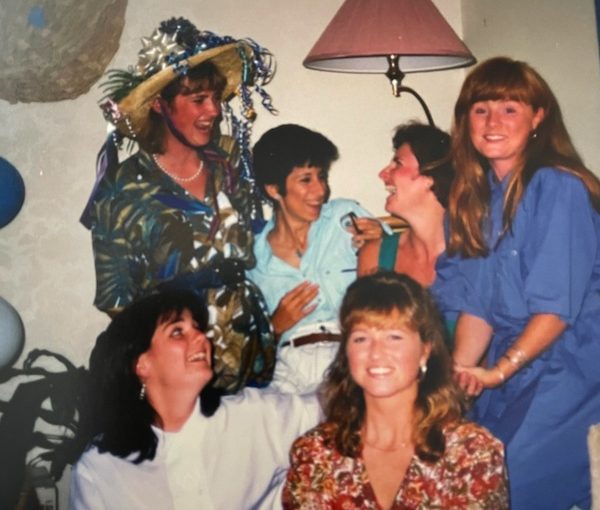
Six members of the 35th Street Gang, with the author second from the left in the back row. (photo from Cassandra Freeman)

Sheena and I don’t recall why we were trying to measure the house with a ball of string. We just remember me holding one end of the string, throwing the rest down from my bedroom, and her running all around the house with the rest of it till she got back to me. We were 8 years old and we were part of what we proudly called the 35th Street Gang.

At a recent reunion, 43 years later, seven of us mischievous women decided that playing was a powerful thing. It was about athletic activity, creativity, community building, trust – and simply some of the funnest times we’ve had.

Fairly early in our lives, “we seven” decided we owned the block. That’s why we called ourselves the 35th Street Gang. For some of us, a rite of initiation to the gang was to climb with hands and bare feet up to the very top of the pole and touch the signs that read 35th and Maple, then slide right back down again.

Kick the can was one of our favourite games. It was a combination of tag and hide-and-go-seek. I remember shivering with anticipation in a neighbour’s garage, hiding from the girl who was “it.” Of course, she found me before the others, and we raced down the short hill and around the corner, each of us trying to be the one who would kick the can first. I’m betting that we ran faster than we ever did in phys ed class. (Some adults still play this game I discovered, and you can search for them on meetup.com.)

Roller skates were all the rage in the early 1970s. They attached to the bottom of your sneakers with a metal key. I can still feel the vibration from the wheels going all the way through my body from the contact with the cement below. And just skating in the middle of the road wasn’t good enough for us. One of us, Louise, created a song we all sang and did the motions to while skating. It went like this: “Butterflies fly, and so do I, and I like it, so I don’t sit, I fly … so do I.”

The most daring kind of play we did was tobogganing. Daring because we slid down a severely slanted sidewalk covered with snow and ice. The year I was 8, winter was particularly cold. That did not deter us and neither did the teenage boys who threw ice balls at us on the way down. We were determined to have a good time.

We had a regular toboggan that fit three of us, a red slippery carpet, and a small round “flying saucer” one that would go round in circles as you went down. The bump we all made in the middle of the run was the most fun. We would fly off that thing so high it took a few seconds to come back down to earth again.

One time, I was sitting in the middle of the flying saucer and flew off that bump and started spinning in circles. I still remember that moment when I realized – too late – that I was going to hit the huge chestnut tree at the bottom of the run. And so I did. Thwack! My back hit that tree so hard it took all the breath out of me. Realizing a few seconds later that I was all in one piece, I got up and marched back up the hill and slid all the way down again on someone else’s toboggan.

We did all of these things running in and out of my parents’ house. As a result, all of my friends still know about all the Jewish holidays and what a kosher kitchen is. They would even march in on Passover with non-kosher-for-Passover popsicles to torment my poor older sister who was trying to keep the holiday. Today, they remember my parents, Joyce and Bernie, as being their second parents growing up. One of us, Madeleine, even says that she became a war crimes prosecutor because she learned about the Holocaust from spending so much time in our house. (See jewishindependent.ca/working-for-human-rights.)

When John Fraser became a member of Parliament, we used his election signs to build a huge maze in the Frasers’ front yard. We crawled around until our knees hurt. We had such a great time until we learned that he and his wife would be leaving for Ottawa with their three daughters. We said our sad goodbyes and waited for the time we would see them again.

Looking back, I am thankful I was involved in an old-fashioned kind of play that created lifelong friendships. Now, at our reunions, we become kids again and laugh our heads off for hours.

Cassandra Freeman is a freelance writer and teaches improv games for parties and performance.

Format ImagePosted on February 25, 2022February 23, 2022Author Cassandra FreemanCategories Op-EdTags 35th Street Gang, friendship, games, history, memoir, play
The joys of parchment paper

The joys of parchment paper

Greek sheet pan chicken, using a recipe from the website Downshiftology. (photo by Shelley Civkin)

I know it’s pretty laughable that I only discovered parchment paper a few years ago, but there’s always someone late to the party. Parchment paper is your friend, and it’s so ridiculously versatile and handy, I can’t believe I baked without it for all these years! (Although, having been single until I was 53, I must admit to not having baked much in those years.) I even turned my husband Harvey onto it. Now he uses parchment paper for everything. I caught him the other day trying to make a fruit salad on parchment paper. We buy the stuff by the truckload now. It saves on clean up, eliminates the possibility of burned pans, and withstands high heat. Plus, it contains some sort of magic that results in perfect meals every time. Seriously, I haven’t had a fail since I became a parchment paper convert. I know. Crazy, right?

My latest foray into culinary exploration using parchment paper was Greek sheet pan chicken. Harvey tried the recipe first, and it scored a 10/10. Weeks later, he asked me if I wanted to make it and, quite frankly, I couldn’t say no. After all, he’s been making me pancakes for breakfast three times a week, so I was hardly in a position to negotiate. I was just worried that I wouldn’t be able to replicate it. But I sucked it up, donned my Disclosure Diner apron and got on with it. Without a word of a lie, this recipe produces the most juicy, harmonious flavours I’ve had in eons. And there was virtually no clean up – winner, winner chicken dinner.

The recipe is from the website Downshiftology, and it’s by Lisa Bryan. Thank you, Lisa. It’s a wee bit labour-intensive, with all the chopping, mincing, dicing and marinating, but what isn’t time-consuming these days? Caveat: the original recipe calls for feta cheese, but since I don’t mix meat and milk, I omit that. Believe me when I tell you that there’s plenty of salt in this recipe already. Feta compli! Just cook up a side of rice, orzo, quinoa or bowtie pasta and you’re set. Oh, and maybe whip up a salad if you’re feeling inspired.

Now, I know that lots of people prefer the leaner white chicken meat, but thighs are just more tender and moist. You can be the judge, but I can’t be responsible for the cooking time for chicken breasts, so you’re on your own there.

Give this recipe a go, and tell me if this isn’t Mediterranean cooking at its best. I generally have a rule to not use recipes that call for more than five or six ingredients, but I made an exception here, and it paid off in spades.

GREEK SHEET PAN CHICKEN

1/2 cup olive oil
juice of 1 1/2 lemons (about 3 tbsp)
4 garlic cloves, minced
2 tsp dried oregano
1 tsp dried thyme
1 tsp Dijon mustard
1 tsp kosher salt
1/2 tsp ground black pepper
6 chicken thighs, bone-in, skin-on
1 medium zucchini, halved lengthwise and sliced
1 yellow bell pepper, chopped into 1-inch pieces
1 red bell pepper, chopped into 1-inch pieces
1/2 large red onion, thinly sliced
1 pint cherry or grape tomatoes
1/2 cup kalamata olives, pitted (more, if you love olives)
1/4 cup feta cheese (optional)
2 tbsp finely chopped fresh parsley

  1. Preheat oven to 425°F. In a small bowl, whisk together the oil, lemon juice, garlic, oregano, thyme, Dijon mustard, salt and pepper.
  2. Put chicken thighs in a bowl (or plastic bag) and pour two-thirds of the marinade on top. Then toss the chicken around in the marinade to make sure it’s well coated. Marinate the chicken for 15 minutes or more.
  3. While the chicken is marinating, put a piece of parchment paper on a baking sheet. Spread the zucchini, bell peppers, red onion and tomatoes onto the sheet and drizzle the remaining marinade on top. Toss together to coat the vegetables.
  4. Add the chicken thighs to the baking sheet and nestle the veggies around them. Bake for 30 minutes.
  5. Remove the baking sheet from the oven, add the olives (and feta, if you’re using it) and then put it back in the oven for another 10 to 15 minutes, or until the vegetables are soft and the chicken is cooked through. You can always turn on the broiler for a minute or two at the end if you like the skin crispy.
  6. Sprinkle the chicken and vegetables with finely chopped fresh parsley before serving.

Not only does this dish look gorgeous, but it’s got deep, rich flavour and the recipe is pretty easy to follow. Of course, if you’re serving it to company, it’ll take a bit of manoeuvring to transfer it to a platter because there are so many moving parts. But it’s a pandemic, so who’s having company over for dinner anyway?

Sometimes, I think to myself: do I really want to bother with all this dicing and chopping and slicing? Operative word: sometimes. This is a treat-yourself-to-a-sumptuous-dinner-and-stop-being-so-lazy kind of meal. Like my dad used to say: you’re the most important guest in your own home. Go nuts. Cook for looks. And taste. Like so many different meals, this one is just as good if not better the next day, since the flavours seem to marry overnight.

As for a pre-dinner treat, why not aim for easy but yummy. If you want to bump up the fanciness quotient a notch, make some toast points (crusts cut off), smear on some mayonnaise or egg mix, and top with caviar. I buy the inexpensive black lumpfish caviar for special occasions and it’s delish. It’ll impress the heck out of your partner, your guests, even yourself. And, you know what? You deserve it! Why should caviar be reserved just for New Year’s Eve or engagement parties? Those poor misunderstood fish roe – they deserve to be showcased all year round. If I weren’t afraid of all the judging that might accompany it, I’d eat caviar every day.

Another caveat: don’t eat this meal before you go for a blood test, because your sodium will be off the charts.

Shelley Civkin, aka the Accidental Balabusta, is a happily retired librarian and communications officer. For 17 years, she wrote a weekly book review column for the Richmond Review. She’s currently a freelance writer and volunteer.

Format ImagePosted on February 25, 2022February 23, 2022Author Shelley CivkinCategories LifeTags Accidental Balabusta, chicken, cooking, Downshiftology, parchment paper

פרידה מאמא

לפני שנה נפרדתי מאבא (בן התשעים ואחת) שהיה חולה מאוד ונדבק בבית החולים בקורונה ונפטר לאחר מספר ימים. לא האמנתי זה יכול לקרות שוב בתוך שנה אאבד הפעם את אמא. היא הייתה בת תשעים ושתיים ובחודש הבא היינו אמורים לחגוג את יום ההולדת התשעים ושלושה שלה. 

בראשית החודש (רביעי) אחי הודיע לי כי אמא נחנקה מאוכל והובהלה לבית החולים איכילוב שליד ביתה בתל אביב. התקשיתי להאמין לדבריו כיוון שאמא בת התשעים ושתיים הייתה בריאה וללא שום מחלות רקע. מספר ימים לפני שטילפן אלי דיברתי עמה והיא הייתה במצב רוח טוב. אני זוכר היטב כי בערב ראש השנה האזרחית היא הזמינה את השכנים לשתות שמפנייה כיאה לה.

רכשתי מייד כרטיס טיסה לישראל והודעתי לסמנכ”ל הכספים בחברה, שהוא המנהל האישי שלי, כי אני יוצא בטיסה דחופה לישראל, לאור מצבה הקשה של אמא. ביצעתי בדחיפות באותו יום את בדיקת הקוביד שעולה כאן מאתיים דולר, ולמחרת (חמישי) יצאתי בטיסה לישראל. לאחר עצירת ביניים ארוכה באמסטרדם, נחתי בתל אביב ביום שבת לפנות בוקר. אחריה מצאת מונית שהביאה אותי לבית אמי. אני מחזיק במפתחות ביתה מזה שנים רבות אך הפעם לא הצלחתי לפתוח את הדלת. הסתבר לי לאחר מכן שהיא החליפה את המנעול בדלת ושכחה לעדכן אותי. לא נותרה לי ברירה ובשעה ארבע לפנות בוקר חיפשתי מלון סמוך לביתה. במלון ויטל היה חדר ויצאתי בכיוונו מהר לאור השעה המאוחרת. המלון נמצא בצמוד לבית החולים איכילוב כך שאני אמצא קרוב לאמא, אמרתי לעצמי.

אחרי שינה חטופה של מספר שעות יצאתי לביקור ראשון בבית החולים בשבת אחר הצהריים. מצאתי את אמא מורדמת, מונשמת ומחוברת להרבה צינורות. מראה לא קל. הרופא התורן (בשם ניר) סיפר לי על מצבה הקשה ועל כך שחמצן לא הגיע לראשה במשך כעשרים דקות, ולכן הנזק שנגרם לה הוא אדיר ובעצם בלתי הפיך. הרופא העריך שמערכות גופה יתמוטטו והיא לא תחזור לחיים. לדבריו כל אפשרות אחרת תהיה גרועה הרבה יותר. וכך אכן קרה למחרת. ביום ראשון בשעה שבע וחצי בבוקר התייצבתי שוב בבית החולים. נכנסתי לחדר של אמא וכשאמרתי לאחות כי אני הבן שלה, פניה החווירו והסגירו הכול. אמא נפטרה כחצי שעה לפני שהגעתי לבקרה. נכנסתי כמעט להלם והתקשיתי להאמין לדברי האחות. אך כשראיתי שכל הווילונות סביבה סגורים הבנתי שזו המציאות. ביקשתי מהאחות לראות את פניה של אמא בפעם האחרונה. היא ביקשה מכל הנוכחים לעזוב את החדר למספר דקות. לאחר מכן הזיזה את הווילונות, ופתחה את השק בו אמא נמצאה. היה זה מחזה קשה ביותר שילווה אותי לאורך כל שארית חיי. ראיתי את פניה של אמא שלווים ורגועים ממש כמו מלאכית קטנה. אחרי מספר דקות עזבתי את מיטתה ויצאתי החוצה להתקשר לאחי ולבשר לו את בשורת האיוב: אמא שלנו נפטרה. הספקתי עוד לעדכן את בני המשפחה האחרים וביקשתי לעצמי מספר דקות של מנוחה.

ביום שני בצהרים נערכה הלוויה בבית הקברות האזרחי בקיבוץ מעלה החמישה. בני משפחה וחברים קרובים הגיעו וכיבדו את אמא שנקברה בסמוך לאבא. טקס הלוויה בניהולו של אחי לא היה קל ולכולנו עלו הזיכרונות מהאישה היפה ואלגנטית הזו, שרצתה כל אך להמשיך ולחיות, להנות מכל רגע, להמשיך לפגוש בני משפחה וחברים, לעשות ספורט, לצאת לארוחות, לקרוא ספר טוב. אמא הלכה עזבה אותנו בפתאומיות ולפחות כמעט ולא סבלה.

Posted on February 23, 2022February 25, 2022Author Roni RachmaniCategories עניין בחדשותTags death, family, Israel, ישראל, מוות, משפחה
Remembering the Holocaust

Remembering the Holocaust

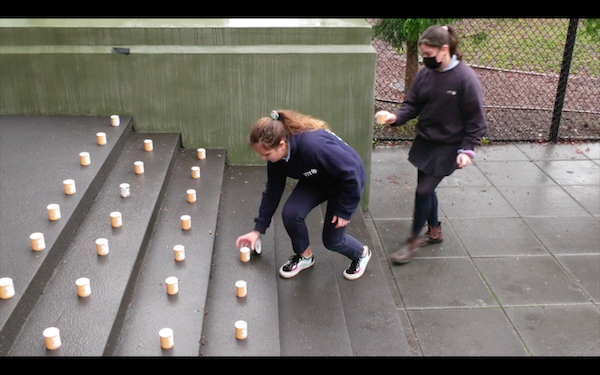
Grade 7 students at Vancouver Talmud Torah light memorial candles to mark International Holocaust Remembrance Day. (screenshot)

Vancouver’s city hall, the Burrard Street Bridge and other landmarks around the city were lit in yellow light Jan. 27, as were buildings across the country, to mark International Holocaust Remembrance Day. The commemoration coincided with the 77th anniversary of the liberation of Auschwitz.

Yellow was chosen, said Vancouver Mayor Kennedy Stewart, to reflect the colour of the candles of remembrance being lit globally to mark the day.

“Antisemitism is on the rise around the world,” the mayor said before reading a proclamation on behalf of city council. “Vancouver has the opportunity to join with the Jewish community and all of our residents and Canadians from all walks of life in demonstrating our commitment to stand against antisemitism, hate and genocide.”

Stewart was joined by councilors Sarah Kirby-Yung, Pete Fry and Adriane Carr.

Kirby-Yung spoke of calls from constituents who have had swastikas drawn on their sidewalks or who have come across antisemitic graffiti in local parks.

“I’ve seen firsthand, when you go to work out at the gym or community facility, the need to post security guards, to have them at schools and daycares, at synagogues during times of worship,” Kirby-Yung said. “It takes all of us individually to stand up to discrimination. We need to continue to work together, collectively with our Jewish community, to ensure safety and inclusion for everybody.”

The Vancouver event was sponsored by the Centre for Israel and Jewish Affairs (CIJA), the Vancouver Holocaust Education Centre (VHEC) and the Jewish Federation of Greater Vancouver.

Nico Slobinsky, Pacific regional director for CIJA, urged unity.

“Antisemitism is not just a Jewish problem, it affects us all,” he said. “Only by working together and standing up against antisemitism are we going to insulate all Canadians against the threat of hatred and racism in our society.”

Nina Krieger, executive director of the VHEC, noted that education about the Holocaust is at the heart of her agency’s mission.

“This mission is perhaps more urgent than ever as globally and in our own backyard we are encountering a rising tide of Holocaust denial and distortion,” Krieger said. “The latter includes actions or statements that seek to minimize, misrepresent or excuse the Holocaust. These assaults on the memory of the most well-documented genocide in history should raise alarms for all citizens of our diverse society. Online or offline, intentional or not, distortion of the Holocaust perpetuates antisemitism, conspiracy theories, hate speech and distrust of democratic institutions, all of which have reached new heights during the pandemic. Around the world, opponents of public health invoke Nazi policies to systematically persecute and murder Jews and others in order to depict themselves as victims and their governments as persecutors. Such outrageous comparisons are clearly inappropriate and deeply offensive to the victims and survivors of the Holocaust.”

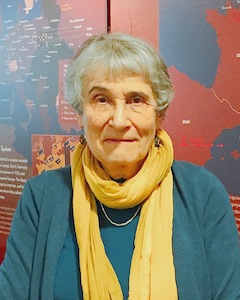
Dr. Claude Romney, a child survivor from France, spoke of her father’s survival during 34 months in Auschwitz – an unimaginable expanse of time in a place where the average life expectancy was measured in days. (Romney’s experiences, and those of her father, Jacques Lewin, were featured in the April 7, 2017, issue of the Independent: jewishindependent.ca/marking-yom-hashoah.)

photo - Dr. Claude Romney, a child survivor from France, spoke at the local commemoration marking International Holocaust Remembrance Day on Jan. 27
Dr. Claude Romney, a child survivor from France, spoke at the local commemoration marking International Holocaust Remembrance Day on Jan. 27. (photo from VHEC)

Prior to the streamed event, Grade 7 students at Vancouver Talmud Torah elementary school lit candles of remembrance. King David High School students Liam Greenberg and Sara Bauman ended the ceremony with a musical presentation.

Earlier, another ceremony was livestreamed from the National Holocaust Memorial in Ottawa. Emceed by Lawrence Greenspon, co-chair of the National Holocaust Memorial Committee, the event featured ambassadors and Canadian elected officials and was presented by CIJA, the National Capital Commission, the embassy of Israel in Canada and the Jewish Federation of Ottawa.

Shimon Koffler Fogel, chief executive officer of CIJA, said the day of remembrance is intended to be as much “prospective as it is retrospective.”

“As we remember, we also reaffirm our resolve to combat the hatred that still plagues our world today, perhaps more so than at any time since those dark days of the Shoah,” he said. “There is an urgent imperative to sound an alarm and refuse to let its ring be silenced. Hate is no longer simmering in dark corners, relegated to the discredited margins of civil society. It has, in many respects, increasingly asserted itself in the mainstream public square. It has become normalized.

“Countering hate speech is both a necessary and essential imperative to preventing hate crime,” he said. “So let us resolve, collectively here today and across this great country, to give special meaning to our remembrance by fulfilling the pledge, ‘never again.’”

Israel’s ambassador to Canada, Ronen Hoffman, told the audience that his grandmother’s entire family was murdered in the Shoah. He denounced the misuse of that history.

“Any claim, inference or comparison to the Holocaust that is not in fact the Holocaust only acts as a distortion to the truth of what happened to the victims,” he said. “Invoking any element of the Holocaust in order to advance one’s social or political agenda must be called out as a form of distortion and, indeed, denial.”

Germany’s ambassador to Canada, Sabine Sparwasser, noted that, in addition to the anniversary of the liberation of Auschwitz, it was also recently the 80th anniversary of the Wannsee Conference, where the “Final Solution” was devised.

“No country has a greater responsibility to learn from the past and to protect the future than Germany,” she said. “Remembrance is the only option. This sacred duty is the legacy of those who were murdered and of those who survived the horrors of the Shoah and whose voices have gradually disappeared. The greatest danger of all begins with forgetting, of no longer remembering what we inflict upon one another when we tolerate antisemitism, racism and hatred in our midst.”

Other speakers included Ahmed Hussen, minister of housing and diversity and inclusion; the American ambassador to Canada, David L. Cohen; Mayor Jim Watson of Ottawa; Andrea Freedman, president and executive director of the Jewish Federation of Ottawa; and Dr. Agnes Klein, a survivor of the Holocaust.

Format ImagePosted on February 11, 2022February 10, 2022Author Pat JohnsonCategories LocalTags Centre for Israel and Jewish Affairs, CIJA, Claude Romney, commemoration, International Holocaust Remembrance Day, IRHD, Jewish Federation, Kennedy Stewart, memorial, Nico Slobinsky, Nina Krieger, Ronen Hoffman, Sarah Kirby-Yung, Shimon Koffler Fogel, Vancouver, Vancouver Holocaust Education Centre, VHEC
Festival opener wows

Festival opener wows

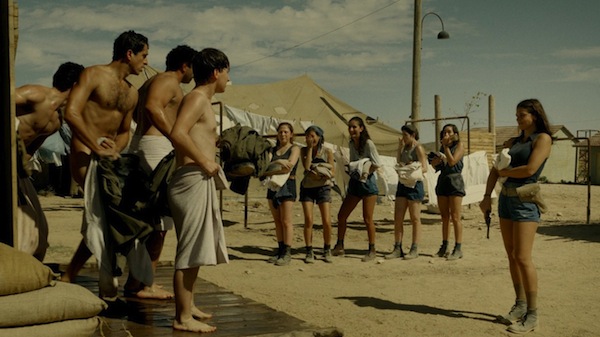
A still of one of the humorous (and relatable) moments in Image of Victory, which is part of this year’s Vancouver Jewish Film Festival.

The Vancouver Jewish Film Festival opening night film is the epic Image of Victory, directed by Avi Nesher. It’s not with grandiosity that the movie leaves its mark, though there is some of that, but rather with the quiet moments of humanity it so movingly depicts.

Sombre piano music over which one can hear missiles flying, bombs exploding, wind blowing are heard as the initial credits are shown, modest white lettering on a black background, nothing showy. “There are moments when you try to make sense of your life,” begins the narrator, as black-and-white footage of a shot-out building appears, then a jeep, soldiers with rifles pointed, tanks. “You wonder if you made good use of the time God gave you on this earth. You seek someone to compare yourself to. Someone you think truly lived.”

For Egyptian journalist and filmmaker Mohamed Hassanein Heikal, that person is Mira Ben-Ari, though he doesn’t know her name or anything about her at the time. It is the image of her from decades ago that he cannot forget – battle-worn, staring down the Egyptian forces, she smiles, she takes out a gun and shoots. Cut to an older Hassanein, in his study, depressed and angry, watching the TV news about Israel and Egypt’s peace agreement, after decades of war. Was all the fighting and all the death it caused in vain? He blames himself for not having the courage to expose Egypt’s president as a traitor for making the peace deal. He idealizes Mira’s bravery and purpose, thinks back to when he was 24, and fearless – when he was assigned to document Egypt’s military operations against the soon-to-be-reestablished Jewish homeland.

Inspired by the Battle of Nitzanim in June 1948, in which the kibbutz was destroyed by Egypt, Image of Victory imagines what it might have been like on both sides of that conflict. Both Mira and Hassanein are based on real people, as are other characters in the film, and this movie is about a near-mythological event. The voiceover, the black-and-white footage, the fancy costumes of New Year’s Eve revellers in Cairo, idealistic kibbutzniks, zealous army commanders. Any one of these elements could have slipped into a larger-than-life portrayal, but director Avi Nesher shows restraint – and a valiant attempt at balance that has an air of realism, though the kibbutzniks are admittedly more developed entities.

The majority of the film takes place in chronological order, six months out from the battle. When we first see the kibbutzniks working the dusty land, they are doing so under occasional fire from the Egyptian farmers who were displaced after their landlord sold said land to the Jews. The rules of engagement are fascinating. After one altercation, the Egyptians yell to the kibbutzniks that they are all done on their side, and the Jews cease their fire so that both sides can safely collect their wounded and dead.

In the midst of the tension, life goes on in the kibbutz – there are broken hearts and newly starting relationships, there is joyous singing, dancing and piano playing, there is hard labour, there is frolicking on the beach. But underlying all the apparent normality is the hyper-reality of mortality, both because many of the residents and their recently arrived Haganah protectors are Holocaust survivors, as well as the threat of Egyptian attack. As one young soldier tells Mira, “You’d think it’s paradise if being here wasn’t risking death.”

After a brutal attack on a truck carrying supplies to the kibbutz, the Egyptian commander doesn’t want Hassanein to film the emptying of the truck of its supplies because it looks like they’re stealing. Perception is Hassanein’s constant battle – what he is being told to film and what he really wants to film. For example, during a lull in the fighting, he makes a film about two Arab villagers falling in love, which is trashed by the producer who hired him. People don’t want to watch that, yells the producer, they want war.

After the Egyptian forces are repelled by the newly declared state of Israel, Hassanein is ordered to film an Egyptian victory, so that King Farouk can save face. The enormity of the Egyptian army descends on Nitzanim, which Israel’s leaders – for ideological reasons encapsulated by the character of (real-life) commander Abba Kovner – have abandoned.

While the kibbutz’s children (including Mira’s young son) and some of the adults were evacuated or assigned to other defence tasks, the rest of the residents and soldiers were left to fend for themselves, vastly outnumbered. The real-life outcome is known: more than 30 kibbutz members and soldiers were killed, more than 100 taken prisoner. What Nesher’s film offers is an idea of the ambitions, the loves, the fears, and more, of some of those who were at the ground level, caught in a situation not entirely of their making.

The acting is phenomenal – adeptly showing the interplay of diverse characters, with their own senses of humour, their own past traumas, their own desires, their own measures of victory. The characters are more than stereotypes and the stories more nuanced than the ones we most often hear. Nesher wants us to be skeptical of national mythologies and of the media that help propel these misleading views, yet respectful of one another’s narratives, as complicated as they may be and no matter how divergent they may be from our own. It’s perhaps an impossible ask, but some ideals are worth dying for – or are they?

Image of Victory director Avi Nesher and producer Ehud Bleiberg participate in a live Q&A on March 6, 11 a.m. The Vancouver Jewish Film Festival runs March 3-13. For tickets: vjff.org.

Format ImagePosted on February 11, 2022February 10, 2022Author Cynthia RamsayCategories TV & FilmTags Avi Nesher, Egypt, film, history, Image of Victory, Israel, Mira Ben-Ari, Mohamed Hassanein Heikal, Nitzanim, politics, Vancouver Jewish Film Festival, VJFF
When to call in, call out

When to call in, call out

Truckers and others ostensibly contesting government pandemic responses have laid siege to downtown Ottawa. In reality, the protesters seem to have a panoply of grievances, many of which manifest as antisemitic, racist, sexist and just plain obnoxious.

Those noxious traits spread across the country last weekend, as satellite protests took place in Vancouver and other cities. In Toronto, a handbill was distributed declaring that “every single aspect of the COVID agenda is Jewish,” followed by a litany of other antisemitic declarations. This is on the heels of the appearance of swastikas and confederate flags at protests, the appropriation of Holocaust imagery by anti-vaxxers and other inappropriate expressions from COVID skeptics.

The defence, such as it is, from organizers and supporters is that these cases are incidental, represent a minority within the movement and, in effect, should be ignored.

Racism, antisemitism and other forms of hatred should never be dismissed or overlooked. Ideas and images like these must be identified, isolated and removed from any movement that wants to be taken seriously by Canadians. It is no less abhorrent to march alongside people carrying a swastika flag than it is to carry a swastika flag.

Some cases, like waving the Nazi flag, are clear cut and easy to call out and condemn as antisemitism. Other cases, like (we suspect) Whoopi Goldberg’s, are more nuanced. Goldberg’s statement that the Holocaust was not “about race” set off a frenzy. As if more fuel was needed, a jokey recipe she submitted to a cookbook decades ago, called Jewish American Princess Fried Chicken, conveniently resurfaced. All of this seems to have opened a floodgate of previously muted concerns about Goldberg’s appropriation of a Jewish last name and even Jewish identity. Goldberg was called out and suspended for two weeks by her producers.

In fact, Goldberg may have been expressing some combination of contemporary “progressive” understandings of race, which sees a hierarchy of oppression based on skin colour. Before we get too self-righteous about the state of racial dialogue today, remember that a couple of generations of Jewish Americans and Canadians have spent a great deal of effort to downplay differences between ourselves and the (white) majority. There is genuine confusion about Jewishness as a religion, a peoplehood and a racialized group. While it should not always fall on minority communities to school others on issues of identity, neither should our default be to assume ill-will when confusion or ignorance remain possibilities.

While people who wave swastikas may be irredeemable, people like Goldberg – who has expressed solidarity with the Jewish community to the extent that she has said, “I just know I am Jewish” – are a different story. She may be misguided about where Jews fit into today’s conceptions of race and identity, among other things, but her flailing in the midst of the controversy suggests she is confused, not hostile.

There is an alternative to “calling out.” There is a term – “calling in” – through which the opportunity is taken to educate someone who has made an unfortunate remark, to encourage them to learn and adjust their outlook. The process has the potential for turning enemies (or perceived enemies) into allies – and it has worked wonders in countless cases.

Acknowledging intent is critical. Goldberg’s words were poorly chosen and she needs some education. People who wave swastika flags are on another level. Putting on a yellow star because you are asked to vaccinate for the health of yourself and others is contemptible. Handing out flyers blaming COVID on the Jews is as antisemitic as words get. There is a time for calling in and a time for calling out.

The organizers and supporters of the trucker protests need to call out the bad seeds among them. The legitimacy of any movement – whether it be against vaccines, for the rights of a group of people, for protection of the environment, or for whatever other cause – depends on well-intentioned members acknowledging and addressing the presence of those who are motivated by less well-intended objectives, not ignoring them.

And this brings us back to us. It is fine, indeed correct, to call out the hypocrisies of our critics and those with whom we disagree. But we have all been in conversations around the dinner table, on social media, in private messages and emails, where our friends, relatives or guests have expressed unacceptable ideas about others, including fellow Jews who look different or who practise Judaism differently. Racism exists in every community.

If we ask other groups to be vigilant about intolerance in their communities – and to be willing to “call out” or “call in” various comments and actions – we should make sure our own house is in order. We cannot demand that others do this if we do not practise it ourselves. It applies to our critics and enemies. It also applies to ourselves and our friends.

Format ImagePosted on February 11, 2022February 10, 2022Author The Editorial BoardCategories From the JITags antisemitism, protests, racism, truckers, Whoopi Goldberg

On safety, listen to your gut

Last week, I received an email, out of the blue, from a Canadian media research company. A part of its business model involves scraping writers and journalists’ internet data, putting it into a public database, and then “enabl[ing] PR professionals to identify the right contacts for their press work.” I found out about it because they approached me. They showed me information they had, which identified me solely from writing this column. They suggested that, unless I revised and improved the profile, it was about to be publicized online as they sent it.

Lots of our data is on the web. It’s not private. I’m not contesting that. I haven’t hidden my identity. However, I felt unsettled by this contact and my lack of control. First, I wondered, did this company’s mission have any benefit for me? The answer to that would be, no. I didn’t want to be barraged by press releases. Also, based on what I wrote about in the Jewish Independent, what would those PR professionals want to market? Jewish book subscriptions? Time-saving devices for Jewish moms? I was baffled – but their approach has more problematic angles as well.

The first would be ethics. I’m a writer, but I didn’t go to journalism school. I write opinion pieces, knitting patterns and, occasionally, informational articles. I have written books for knitters and fibre artists. I’m not a hard-hitting journalist. I’ve signed no official ethical code of conduct. Even so, it doesn’t do me (and most writers and journalists) much credit to assume that, if I were low on ideas, with a deadline coming, that I would rely on press releases for something to say. Essentially, those public relations professionals write press releases so that they can get free publicity or information distributed for their clients. It’s about money, buying and selling.

Now, don’t get me wrong, I’ve written a press release or two of my own. I wrote them to market a new piece or design I’d made, and I sent them to my newsletter subscribers, or editors I worked with – people who might choose to read my work or knit my design. Perhaps they’d like it. So, I am not completely above the fray here, ethically, but I was asking them to read my (low-cost or free) work. I’m not marketing the next best expensive gadget to clean the kitchen floor. In these self-distributed press releases, I suggested people check out my writing. If they liked it, to say so, and I followed up with “thank you.”

The second issue was that of the public distribution of a person’s contact information. I’ve written for Jewish publications over the last 15 years. I’ve had my share of hateful letters, emails, phone calls and threats. Although many of our physical institutions have boosted security, with security cameras, guards and police contacts, as individuals, we don’t all have the same monitoring. Heck, I don’t even earn a salary for what I do. So, in light of the rising antisemitism around us, I pick and choose carefully what to write and what I say. It’s a balancing act. I want to speak out, be proud of my Jewish identity, and also be safe.

These decisions about our personal safety are usually done behind closed doors. Mostly, it’s unconscious, a gut-level response. For example: “Does this dark shortcut look like a safe place to walk at night? Nope, let’s walk farther, along the better-lit sidewalks.”

While I thought about these issues, after a whole spate of antisemitic and racist events in North America and Europe, I was reminded of the discussion in the talmudic tractate of Moed Katan. In this tractate, the rabbis examine what it is to ostracize or excommunicate someone, usually a rabbinic colleague, in the Jewish community. The decision is a hard one, and the details vary from one case to another.

Ostracizing someone is a temporary move. The person is still allowed to study Torah, earn a living, and can seek readmission to the community once he (it’s almost always a “he” here) seeks to correct his wrong or apologize. The notion of excommunication is much more severe. The most well-known “modern” excommunication is of Baruch Spinoza, who was famously excommunicated by the Jewish community of Amsterdam.

While I’m not a rabbi, and certainly lack any level of importance like Rav Yehuda (Rav Judah HaNasi), I do feel like these lessons he offered on page 17 of Moed Katan are still useful. His message is that we cannot separate a scholar from his actions. Even someone who has conducted himself poorly and others have reported that bad behaviour can be suspect. We can choose to separate ourselves from that person.

I asked the newswire to immediately remove me from their database. Their mission didn’t align with mine. In any event, I didn’t feel safe with what they wanted to amplify about me online. It was, in a small way, my chance to distance myself, if not ostracizing or excommunicating.

The recent events surrounding the Freedom Convoy and its allies, throughout Canada, also have given me ample moments to reflect. We were out on the Winnipeg River trail last Saturday, taking a Shabbat walk with kids and dog, when we heard the trucks honking. Freedom Convoy allies protested in Winnipeg, along with displays of antisemitism. I didn’t personally see the Juden stars and swastikas, but, like Rav Yehuda, I didn’t need to. I believed the reports of fellow Winnipeggers. In my gut, things felt out of control. We climbed off the river, up the riverbank and headed home.

Our choices to publicize or keep private, to behave in an upright way or not, to separate ourselves from those whose behaviours don’t align with our values, are personal ones. The talmudic rabbis recognized these behaviours long ago. It’s also a pressing modern-day question. Do we wear things that identify us as Jews? Do we choose to keep good, upright companions around us? Do we speak out against injustice? These are sometimes unconscious steps to protect ourselves and those around us.

Rav Yehuda isn’t here to tell us how to act, but I think most of us know already. When someone approaches us, and the situation seems unsafe? Listen to your gut. We have thousands of years of struggle behind us, helping us to keep safe in perhaps dangerous, or just unknown, waters.

Joanne Seiff has written regularly for CBC Manitoba and various Jewish publications. She is the author of three books, including From the Outside In: Jewish Post Columns 2015-2016, a collection of essays available for digital download or as a paperback from Amazon. Check her out on Instagram @yrnspinner or at joanneseiff.blogspot.com.

Posted on February 11, 2022February 10, 2022Author Joanne SeiffCategories Op-EdTags antisemitism, excommunication, fear, Freedom Convoy, liefstyle, ostracization, Talmud
A great diversity on screen

A great diversity on screen

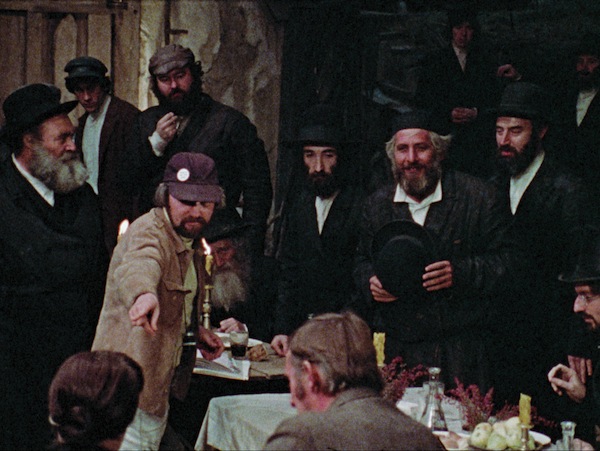
A still from the documentary Fiddler’s Journey to the Big Screen.

The Vancouver Jewish Film Festival runs March 3-13, and features more than 30 films, all of which will be available online for the duration of the festival. As always, there are shorts and features, fictional narratives and documentaries – presenting a great diversity of perspectives. This month, the JI offers readers a peek into the lineup.

Fifty years of Fiddler

Like a lot of people, Norman Jewison thought Norman Jewison was Jewish. When he was growing up in Toronto’s east end, other students would call out, “Hey Jewy!” Decades later, when he was one of Hollywood’s acclaimed filmmakers, it would come as a shock to many that someone with the word Jew as the root of their surname was, in fact, not Jewish. It hit Jewison earlier, when he tagged along to synagogue with one of the only actual Jewish kids in his school.

“When the melamed at the temple told me to leave, I thought, ‘What’s going on?’” he said. “Where do I belong?”

The feature-length documentary Fiddler’s Journey to the Big Screen purports to tell the story of how the stage play based on Sholem Aleichem’s Anatevka tales turned into the cinematic blockbuster Fiddler on the Roof. It does that, but it is also very much a story of Jewison’s trajectory as an interpreter of historical and current events.

Jewison had already made a splash with his 1967 race-focused movie In the Heat of the Night when he conjured the idea of filming Fiddler. Friends and foes predicted failure. Too Jewish. Not a large enough potential audience. But Jewison forged ahead, certain that his version would universalize the story into “a film for everybody.” Arriving at a time of social upheaval in the United States and elsewhere, Fiddler’s underlying themes were relatable to many, Jewish or not.

Case in point: the film was huge in Japan. There may be next to no Jews in that country, but, in the early 1970s, when Fiddler was released, Japanese society, like many countries, was struggling to balance modernity and tradition.

The documentary Fiddler’s Journey to the Big Screen comes a half-century after Fiddler on the Roof’s screen debut. It interviews surviving contributors and actors, many of whom saw their early careers explode with the popularity of the movie. Rosalind Harris, now 75, played Tzeitel both on Broadway (after understudying for Bette Midler) and in the film. Her thrill at the film and her place in it is undiminished by time and she nearly steals the documentary.

The enthusiasm of Jewison himself seems equally undiminished. He tells of how he sought out Isaac Stern, perhaps the 20th century’s greatest violinist, to dub the music of the titular character. He dismissed Frank Sinatra’s entreaties to play Tevye and scored Topol, the Israeli actor (né Chaim Topol), who had played the lead in Israel and then in London, casting aside, in the process, Zero Mostel, Broadway’s longtime Tevye.

Diplomatic relations with the Soviet bloc at the time made it impossible to film in Ukraine, where Anatevka is set, so Jewison struck a deal with the “non-aligned” Yugoslavia and much of the filming took place in Lekenik (now in Croatia), in wooden buildings constructed based on historical architectural records. One commentator in the documentary notes the irony that the film about a disappeared community was filmed in what is now referred to as “the former Yugoslavia” – “another place that is no more.”

Jewison speaks emotionally about watching the film’s Israeli debut beside Golda Meir and a meeting he had with David Ben-Gurion, who told Jewison that whoever is crazy enough to choose to be a Jew is Jew.

“If I’m crazy enough to want to be Jewish, then I’m Jewish,” Jewison interprets Ben-Gurion’s words.

But when he received an Academy Award, he cheekily acknowledged the truth. “Not bad for a goy,” he joked.

Not bad for a Canuck, one might add.

The documentary’s director, Daniel Raim, will participate in a live Q&A on March 7, 7 p.m.

Shorts of all sizes

Since this year’s Jewish Film Festival is online and on demand, you can choose to view the numerous short films as a binge or watch one or two between features as a sort of visual amuse bouche.

At about 30 minutes, Paradise is on the long end of the “shorts” spectrum. It features Ala Dakka, who will be recognizable to Fauda fans, as the doe-eyed Palestinian boxer, Bashar. In real life, Dakka is an Arab Israeli who, in media interviews, has been open about his struggle with his identity. In this film, he plays Ali, who has just arrived at Eilat airport from his home in Berlin, to attend his sister’s wedding. After a fight over the phone with his father (it was cheaper to fly to Eilat than to Tel Aviv, so now he is going to miss the pre-wedding dinner), he decides to skip the festivities altogether and hitchhike to the Sinai. (This after a five-hour interrogation by border security at the airport, which doesn’t help either Ali’s frame of mind or his ability to make the celebratory banquet.)

Picked up by a group of Israeli partiers, Ali opts to introduce himself as Eli, and so begins a subtle and, of course, inevitable succession of miscues and small betrayals. It is a tightly told story of self-identity and the perceptions of others. Dakka is a rising star in Israeli film and he brings memorable depth to his character in this short, charming drama. A subtext of the film is the happy-go-lucky Israelis’ perceptions of Egypt (or perhaps the broader “other”) and a degree of paranoia that one of the party crowd acknowledges doesn’t require pot-smoking to ignite.

A slightly shorter film, at about 20 minutes, is Pops, which pits grieving siblings against each other, as they try to do what they each think their recently deceased father would have wanted regarding his burial. The uptight son and the hippy-ish daughter come to an unorthodox compromise.

image - A scene from the short film Pops, in which two siblings must compromise on their father’s burial plans
A scene from the short film Pops, in which two siblings must compromise on their father’s burial plans.

You’re Invited sees a rabbi’s daughter invite her friends to a funeral when she learns that the deceased has no kin. Charming in concept and cheesy in execution, with uneven acting and heavy-handed writing, the short film is sweet enough, although anyone who has been a pallbearer will recognize an empty box when they see one carried in a movie. Explicitly based on a true story, the 13-minute film is neither too long nor too short.

For a quick laugh, at seven minutes, The Shabbos Goy follows a religious woman as she deals with the unexpected activation of a personal electronic device – a very personal electronic device – during Shabbat lunch. She runs into the street to find a non-Jew who she can entice but, due to halachah, not overtly request to turn the humming device off before the men in the house discover the source of the noise. (The women of the house, notably, remain blasé.)

The Jew who defended Nazis

image - Ira Glasser, a former head of the American Civil Liberties Union, is the focus of the documentary feature Mighty Ira
Ira Glasser, a former head of the American Civil Liberties Union, is the focus of the documentary feature Mighty Ira.

Ira Glasser was the director of the American Civil Liberties Union from 1978 to 2001, a period when the organization exploded in size and relevance – and also when it took on some of the most contentious topics the country has ever faced.

Perhaps not a household name, Glasser and his contributions to civil liberties in particular and to American society more broadly are examined in the documentary feature Mighty Ira.

It is easy to admire Glasser in theory and to support his principles in principle. It is harder to swallow when he champions what Oliver Wendell Holmes termed “freedom for ideas we loathe.” This challenging conflict is at the heart of Glasser’s life’s work and the heart of the film.

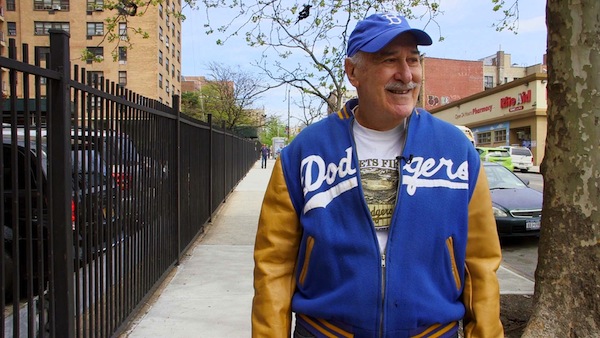
Glasser’s vigilance for justice was born at Ebbets Field, the now-disappeared home of the Brooklyn Dodgers, which Glasser calls his cathedral. The Dodgers were gods to the kids in Glasser’s Flatbush neighbourhood, no less so when Jackie Robinson integrated major league baseball, in 1947. At age 9, Glasser discovered that Robinson was forced to stay in hotels and eat at restaurants apart from his teammates while on road trips to parts of the country. That injustice stirred in young Ira a lifelong mission.

But devotion to racial equality can seem to come head-to-head with First Amendment rights to free expression, as when neo-Nazis sought to march in the Chicago suburb of Skokie, Ill., in 1977. The provocative plan to wear fascist regalia and parade through a town whose population was half Jewish – and which included one of the world’s largest communities of Holocaust survivors – was thwarted by town officials, who used a backdoor ordinance to prevent the event. (There was a 500-member B’nai B’rith chapter in town at the time, all of whose members were survivors.)

Glasser’s ACLU took up the case, and the backlash against the unpopular cause was enormous. It tested the mettle of the ACLU leadership – to say nothing of their fundraising department – and their commitment to free speech. But the leadership, which included a great many Jews, were almost unanimously steadfast.

The documentary shows how the ACLU’s relevance grew in the time of Glasser’s leadership, not solely because of his actions but also because the country was struggling with a range of social and moral conflicts. While the rights group had been at the forefront of issues like the Scopes “Monkey Trial” (addressing the place of religion in public education), the internment of Japanese-Americans during the Second World War and Brown v. Board of Education (banning school segregation), the ACLU’s docket really filled up in the time Glasser was at the helm in large part because the country was confronting and struggling with so many divisive issues.

Mighty Ira is the story of a remarkable man, but it is also a history of American free speech in the second half of the 20th century.

Director Nico Perrino will be a guest at the March 9, 1 p.m., screening of the documentary.

More information about the festival will soon be available at vjff.org.

Format ImagePosted on February 11, 2022February 10, 2022Author Pat JohnsonCategories TV & FilmTags ACLU, Fiddler on the Roof, film, Ira Glasser, Norman Jewison, Vancouver Jewish Film Festival, VJFF
New foundation established

New foundation established

Mark Gurvis returns to Vancouver as head of the new Ronald Roadburg Foundation. (photo from Jewish Federation of Greater Vancouver)

Feb. 1 was Mark Gurvis’s first full day on the job as chief executive officer of the Ronald Roadburg Foundation. A newly established Vancouver-based organization, the foundation aims to bolster Jewish communities locally and internationally while developing innovative solutions to challenging societal issues.

A fixture in the community when he headed the Jewish Federation of Greater Vancouver from 2002 to 2013, Gurvis is excited to be back in town.

“I had a wonderful professional experience and my family had a wonderful life experience being part of the community,” he told the Independent. “We had a great run with the Federation. It is great to come back to a fresh opportunity. We are looking forward to getting involved again.”

At the outset, Gurvis will be busy doing many of the things needed to get a young foundation up and running: sorting out technical matters, getting the office organized, and reaching out to and reconnecting with people to determine the needs of the community.

“This is a complete start-up,” said Gurvis. “As with any new organization, an awful lot goes into the beginning to work out vision, goals and priorities. We have all of that ahead of us. We have a lot to learn about the current state of affairs in each area of focus we want to dive into and explore how we can best make a difference with the resources that will become available. There is a lot of organizational development stuff to tend to as well in starting up an organization from scratch.”

The foundation will be active in examining and assessing the needs of the community. “It’s too early to be putting oars in the water and say this is where we are going,” Gurvis stressed. “I encourage everyone to be patient as we do all the things to get the focus of the organization in place and then see how we can have a positive impact on the community and the region.”

Gurvis has had a full schedule since leaving his job at the Jewish Federation. He was executive vice-president of Jewish Federations of North America through 2020. In 2021, he created Community Network Consulting, a venture that focused on the strategy of nonprofits, community planning and organizational development.

Upon learning of the new position opening up, however, it seemed like the right opportunity to return to Vancouver, he said.

The Ronald Roadburg Foundation was founded by Jack Bogdonov, Stephen Gaerber and Bernard Pinsky, all of whom serve on its board. Gurvis, as CEO of Federation, worked with Gaerber, who was chair of the Coast-to-Coast partnership with the Galilee Panhandle in Israel, and with Pinsky, who was involved with the Jewish Federations of Canada (JFC-UIA).

“We recognized Mark’s intellect, creativity, calm demeanor, and ability to build consensus among constituencies as second to none among all Jewish professionals we had encountered,” said Pinsky. “When Jack, Stephen and I looked for a CEO that could help us accomplish the transformational change we aim for, there was only one person we reached out to: Mark Gurvis.”

Pinksy added, “Our board agrees that we are very fortunate to have Mark join us and, in our view, Mark gives us a big leg up on other start-up foundations because of all of the qualities mentioned above, as well as Mark’s depth and breadth of knowledge of the Jewish community, in Vancouver, Canada, the United States, Israel and the world.”

Ronald Roadburg, the foundation’s namesake, was a local businessman who passed away in 2021. Born and raised in Vancouver, he learned business from his father, Al Roadburg, who also headed the family enterprise, Broadway Properties.

“Two things his father taught him that he especially took to heart were: own property that is where people immediately know its location; and try not to sell properties, ever. These two principles led to the Roadburgs’ great success in the property business. Ron’s will left most of his assets to charity, and the foundation named after him will carry out his intention,” Pinsky said.

To those who knew him, Ronald Roadburg stood out for his sense of humour and compassion. “He loved helping people and he loved animals. He loved art, supporting local artists, and he collected many whimsical and unusual pieces,” Pinsky recalled. “During the last 10 years of his life, he was a director and participated wholeheartedly in making donations to worthy causes through a foundation established by his father.”

Roadburg commissioned numerous murals, which still appear on buildings that he owned around town. He championed several causes to help the less privileged in society and was an unwavering supporter of Israel.

The Ronald Roadburg Foundation will be situated on West Broadway. Over the next few months, the leadership will be honing its focus on specific areas of philanthropic investment and establishing its grant-making policies and practices. To learn more about the foundation, visit roadburgfund.org.

Sam Margolis has written for the Globe and Mail, the National Post, UPI and MSNBC.

Format ImagePosted on February 11, 2022February 10, 2022Author Sam MargolisCategories LocalTags Bernard Pinsky, continuity, Jack Bogdonov, Mark Gurvis, philanthropy, Roadburg Foundation, Ronald Roadburg, Stephen Gaerber

Posts pagination

Previous page Page 1 … Page 182 Page 183 Page 184 … Page 662 Next page
Proudly powered by WordPress