Skip to content
  • Home
  • Subscribe / donate
  • Events calendar
  • Business Directory
  • FAQ
  • News
    • Local
    • National
    • Israel
    • World
    • עניין בחדשות
      A roundup of news in Canada and further afield, in Hebrew.
  • Opinion
    • From the JI
    • Op-Ed
  • Arts & Culture
    • Performing Arts
    • Music
    • Books
    • Visual Arts
    • TV & Film
  • Life
    • Celebrating the Holidays
    • Travel
    • The Daily Snooze
      Cartoons by Jacob Samuel
    • Mystery Photo
      Help the JI and JMABC fill in the gaps in our archives.
  • Community Links
    • Organizations, Etc.
    • Other News Sources & Blogs
  • JI Chai Celebration
  • JI@88! video

Recent Posts

  • Federation now across BC
  • Israel fighting for its existence
  • Deal strengthens Iran
  • Patriotic belonging diminishes
  • A campaign to engage
  • Upstanders’ first live event
  • Responding to Carney
  • Having your own home
  • Music a family tradition
  • Musical to warm heart
  • Community milestones … June 2026
  • Sharing her passion for Israel
  • Or Shalom reopens its doors
  • JFS from past to future
  • Need holistic approach
  • Sharing stories, advice
  • Journalist shares fears
  • Skills to live together
  • Road to independence
  • Cutting grass with scissors
  • Zionism as a solution
  • Deceit, desire & the divine
  • Reclaiming sacredness
  • Creative project ideas
  • Summer squares and cobbler
  • Thou shalt … summer commandments
  • Legal help for students
  • Revisiting myth of Lilith
  • Wrong person rebuked
  • Canada’s mixed messages
  • Questions for museum
  • Symposium on antizionism
  • Making soccer political
  • CJPAC lauds Pulver’s impact
  • City recognizes Vrba’s legacy  
  • Organ donation saves lives

Archives

Follow @JewishIndie
image - CJN box ad Rockowers 2026

Category: From the JI

Space for civil discourse

Social media is instrumental in forming and reflecting the prevalent views of our society. One sign of its importance is that leaders like U.S. President Donald Trump and Israeli Prime Minister Binyamin Netanyahu communicate mainly through Twitter nowadays. And, while many of us may bemoan this fact, the demand for simplistic, polarizing and aggressive political discourse seems as strong as ever.

In our own community, differences of opinion, especially on the topic of Israel, have led to divisiveness. Many Jewish community members choose to avoid the topic altogether. But, while pausing to think before we speak and refraining from saying hurtful things are to be lauded, there are issues that require discussion if we are to ever improve them, ourselves, the community, and the world. We need to create the spaces in which these conversations can safely take place. Any steps we can take to reach that goal, even incremental ones, like holding an event that is admittedly mainstream, but allows for debate on Israel, is a positive development.

This is one reason the Jewish Independent has joined the Jewish Federation of Greater Vancouver, Centre for Israel and Jewish Affairs, Jewish Community Centre of Greater Vancouver, Ameinu, Or Shalom, Schara Tzedeck, Beth Israel and Temple Sholom in co-sponsoring Left vs. Right: The Battle for Israel’s Soul. On Oct. 23, J.J. Goldberg of the Jewish Daily Forward and Jonathan S. Tobin of JNS.org – whose visit here is part of a series that has taken them to dozens of other Jewish communities – will model how we can argue passionately about something as heated as our views on Israel while remaining not only respectful of our “opponent,” but maybe even come to like them. (Click here for event information.)

The modeling of civil discourse about contentious issues is also one of the purposes of the Faigen Family Lecture Series, which will take place on Oct. 30. Presented by Vancouver Hebrew Academy, along with several sponsors, this year’s speaker is conservative journalist and commentator Ben Shapiro, who suggests that social media is not the appropriate place to seek dialogue, noting, “you don’t look to Twitter for meaningful conversation.” (Click here for story.)

The JI sponsored the documentary The Oslo Diaries at this year’s Vancouver International Film Festival for similar reasons. (The Israel Consulate General, Toronto and Western Canada, also sponsored this film. See jewishindependent.ca/oslo-diaries-peace-possible.)

While we all know that, ultimately, the Oslo Accords failed to bring an end to the Israeli-Palestinian conflict, the film shows just how close we came to peace. One of the most important aspects of the documentary, which is based on the diaries of the Israeli and Palestinian negotiators of the accords, is the evolution of the relationship between these enemies, which they were at the time.

One of the most powerful scenes in the film is a conversation between the two chief negotiators, Uri Savir on the Israeli side and Abu Ala on the Palestinian side. Initially, they compete with regard to the history of their ancestors in Jerusalem and how far back their family ties go. However, they soon agree that they are not at these talks to make a better past but to make a better future. While the Oslo Accords failed for reasons beyond their control, the negotiators accomplished what seemed impossible – they formed an agreement – and Savir and Ala, at least, became friends.

Earlier this year, as part of the Civil Conversations Project of the podcast On Being, host and creator of the show Krista Tippet interviewed Imam Abdullah Antepli of Duke University in Durham, N.C., who also co-created and co-leads the Shalom Hartman Institute’s Muslim Leadership Initiative, and Rabbi Sarah Bassin of Temple Emmanuel in Beverly Hills, Calif. The whole conversation is fascinating but one exchange illustrates why respectful discourse on controversial topics is so difficult.

First, Tippet notes that agreement shouldn’t be the goal of such discussions, but rather understanding. She gives an example from an interview Antepli did with Israeli journalist and author Yossi Klein Halevi, where Halevi told Antepli, “I am not a dove. I am not a leftist. My positions are very mainstream, skeptical Israel.” To which Antepli replied, “And I’m not interested in marginal Jews who will agree with everything Muslims believe about Israel.”

Second, in talking about this interview and his relationship with Halevi, Antepli says there is often “a conflation of political disagreement with moral disagreement…. Yossi is like my brother. There is hardly anybody who is closer to me like him, but watch us when we talk about Israeli-Palestinian conflict…. But do I ever doubt his integrity? Do I ever doubt his moral red lines? Do I ever doubt his moral imagination?… I think many people think political disagreement translates itself as moral arguments.”

About her work creating spaces in which her community can engage on controversial issues, Bassin says, “I put out the line that the only people I don’t want in this space are people who are going to physically threaten our security. But, beyond that, I think that we want to welcome as [many] diverse voices as possible…. And it’s been hard, and some people have been challenged by it, but, ultimately, the leadership has really embraced that, because they see the need for it.”

Many of our community leaders and organizations – not just those mentioned here – also see the need, and are continuing or beginning to establish spaces for civil dialogue and debate. We owe it to ourselves and the future of our community to lend them our support – and our voice.

Posted on October 19, 2018October 18, 2018Author The Editorial BoardCategories From the JITags civil discourse, free speech, Israel
Reflections on elections

Reflections on elections

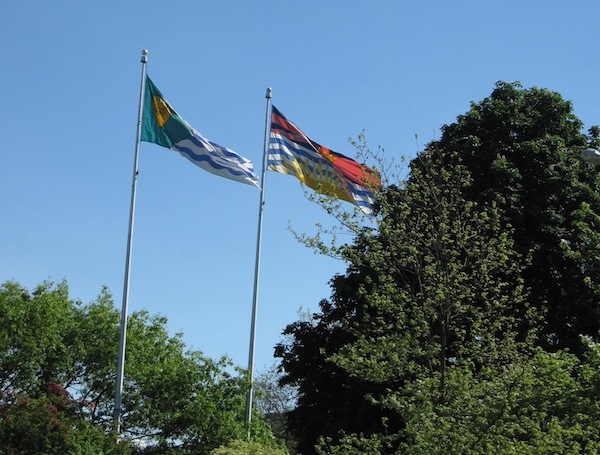
(photo by Cynthia Ramsay)

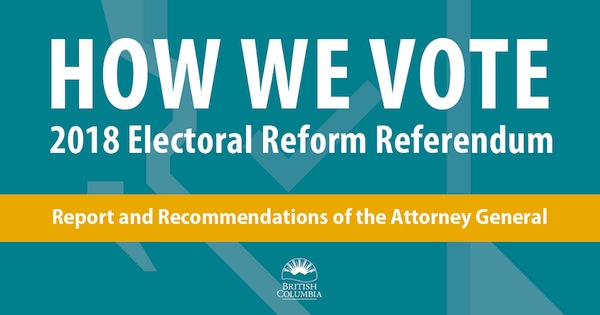
Advance voting is underway across British Columbia for municipal elections that culminate Oct. 20.

There are many dedicated, informed people with excellent ideas running for office in Vancouver and in communities across British Columbia. This is especially fortunate, since this year saw what may be the greatest number of incumbents in recent memory opt not to seek reelection. Of the 10 members of Vancouver city council, for example, only three are running for reelection. (One is running for mayor.) Mayor Gregor Robertson is also leaving the scene.

A similar change is evident across Metro Vancouver, where an inordinate number of incumbent mayors and councilors have chosen not to continue serving. Part of this may be coincidence and part may be that new funding rules put in place by the province have made the task of running more challenging, in some ways. Whatever the reasons, Vancouver and many other communities face a major realignment in our local politics.

Especially at a time like this, it is a little disappointing that there are not more individuals from the Jewish community who have chosen to offer themselves for office. It has been encouraging, on the other hand, to see the number of people from the community who are volunteering on campaigns and taking a very active role in engaging with candidates. The candidates forum for several mayoral hopefuls, sponsored by the Centre for Israel and Jewish Affairs (CIJA) and the social service agency SUCCESS, was well attended. Another event, organized by CIJA and the Canadian Jewish Political Affairs Committee, allowed people to speak one-on-one with those who would like to be mayor of Vancouver.

There are, of course, not a lot of “Jewish issues” in local elections, though candidates for mayor addressed a number of things that are of concern to the Jewish community at a recent candidates forum. (For story, click here.) Ensuring that our municipalities remain welcoming, safe places for members of every ethnocultural community is a top priority. Part of that comes from people in positions of leadership leading by example. We have seen, in the United States, Europe and elsewhere, the licence that can be given to people with ill will when leaders choose to engage in incendiary language. It has been reassuring that there have, to date, been no serious incidents in local campaigns of overtly divisive language or strategies.

While the atmosphere has not been terribly divisive, division is the key word for traditional political parties in Vancouver.

Vision Vancouver, which has dominated the city for the last decade, has collapsed, not even managing to put up a candidate for mayor. The Non-Partisan Association (NPA) is a house divided, with at least two new parties emerging from disaffected former members.

The likelihood of independent candidates being elected to Vancouver city council and boards – as well as to the mayor’s chair – has probably never been greater. It could be an interesting mix for the next four years, with a constructive amalgam of different ideas coming together to synthesize into good policy – or it could be four years of chaos.

On the topic of chaos … a word about Vancouver’s at-large voting system. It is difficult enough to make an informed choice for the one position of mayor with 21 people contesting the race. It is an entirely different ballgame to try to make sense of the 137 candidates running for the 26 positions on city council, school board and park board. There is simply no way to expect reasonable, ordinary people to inform themselves adequately about this number of candidates.

Vancouverites have been floating the possibility of a ward system for decades but still face this daunting and compendious ballot every election. A ward system would not be without it faults – it could have the effect, for example, of elected officials representing their narrow constituencies against the broader interests of the city at large – but it would certainly permit average voters to become more familiar with the candidates who would represent them.

For now, though, this is the system we are in. And finding our way through it and voting with the best information we can access is the least we can do as citizens of a democracy. Despite the fact that local government is the one that has the most direct impact on our everyday lives, it is also the one that tends to attract the lowest voter turnout.

The last election saw a turnout of about 43%, which is comparatively good for a local election. (The one before that saw less than 35% turnout.) Some observers have suggested that the circus-like circumstances this year could help voter turnout, with so many new groups and independent candidates trying to get their supporters to the polls. Still, with 21 candidates for mayor – at least a half-dozen of them serious contenders – the possibility of someone taking the position with, say, 25% of the vote, is a real possibility. If turnout were to rise to a comparatively healthy level of, say, 50%, that would still mean the mayor has a mandate from a mere 12.5% of voters.

But, consider this from your perspective as a voter: the power of your one ballot to influence the outcome may be higher than ever.

Format ImagePosted on October 12, 2018October 9, 2018Author The Editorial BoardCategories From the JITags democracy, elections, politics, Vancouver

Ends and beginnings

As we come to the end of the High Holy Days, we set ourselves on paths of new beginnings. On Simchat Torah, we mark both a beginning and an end. The cycle of Torah reading ends and then immediately begins again. It is said that we read the same passages of the Torah every week, every year, but the meanings change because we are different people year after year, experiencing life and the world with different eyes and, hopefully, with increased wisdom.

The Days of Awe are a time of critical introspection. This period of teshuvah invites us to recognize our shortcomings and commit to improvement. This mission is both individual and collective. As a people, we are obligated to repair the world, and this year calls on us with no shortage of issues to collectively confront: inequality and suffering, environmental degradation, inhumane treatment of animals, the pursuit of justice.

On the latter front, our cousins in the United States are absorbed in a drama around the appointment of the next justice of the Supreme Court and things that he may have done many years ago. The senators considering his nomination heard two irreconcilable narratives last week from the accuser and the accused. The testimony from Dr. Christine Blasey Ford echoes the testimonies of so many people, mostly women but also men, who have felt empowered, motivated or obligated to share their most personal experiences in what has become known as the “#MeToo era.”

Yet the senators’ motivations hinge on more than determining who is telling the truth. Political considerations – advancing President Donald Trump’s second Supreme Court nominee to the bench before the November midterm elections – seem to be the factor front of mind for some elected officials, regardless of Blasey Ford’s testimony. It seems clear that politics may trump justice in this case.

Politics in Canada is not as brash as that in the United States, but populist and exclusionary ideas may be finding a voice here that they did not have before. A new federal political party seems prepared to amplify views that, until recently, were more limited to online discussions and whispered conversations. Meanwhile, the party that won Monday’s provincial election in Québec mooted during the election campaign the idea of throwing out newcomers who do not gain an adequate grasp of the French language within three years of arrival. Unconstitutional as such a policy may be, even voicing such ideas brings us to a new chapter in Canadian public life.

Immigration and refugees are a perennial issue, with the nature of a society at the heart of the discussion. The groups of people at the centre of the discussion – immigrants and refugees – change generation by generation. In this era, Jewish Canadians have an opportunity to bring hard-learned wisdoms to the debate. The federal government is set to formally apologize next month for a most egregious historical example of exclusion: the rejection of the passengers on the MS St. Louis. Indeed, this memory should inform our reaction to the current discussion and the realities for the millions of displaced people and refugees fleeing conflict around the world.

Personal experiences inform our political ideologies. And, through our personal actions, we can affect political affairs. This can be in obvious ways – like showing up to vote in the municipal elections on Oct. 20 or in advance polls – or in more subtle but profound ways, like educating the next generation, modeling the values we hope to advance and creating ripples of goodness across our circles of influence.

In matters of public policy and in the more private ways we behave in our lives, the holy days remind us to take stock of our own role in advancing justice and a better world.

We may feel insignificant in the grand scheme. How can we affect the powers in the White House or in Ottawa or around the world? But Jewish tradition is clear. “It is not your responsibility to finish the work [of perfecting the world], but you are not free to desist from it either,” said the Mishnaic sage Rabbi Tarfon.

Inward reflection is the first and easiest step we can take as individuals to address faults in our world. Based on this reflection, we may choose to move to action. Where it will end, we cannot always tell at the beginning. But it is our job to get the ball rolling.

Posted on October 5, 2018November 20, 2018Author The Editorial BoardCategories From the JITags Judaism, lifestyle, politics, Rosh Hashanah, Sukkot, Yom Kippur

Feast for mind and soul

Smack in the middle of the Days of Awe, hundreds of members of our community came together for an inspiring, entertaining and occasionally emotional evening celebrating unity and inclusion.

The opening event of the 2018 Jewish Federation of Greater Vancouver annual campaign Sunday night once again took the form of FEDtalks, four presentations from individuals with starkly divergent life experiences.

Zoya Schvartzman, whose career now is devoted to improving the lives of individual Jews in Europe and revivifying once nearly obliterated Jewish communities there through her work with the Joint Distribution Committee, talked about how a comparatively simple gesture by the Vancouver Jewish community, when she and her single mother lived here several years back, was a testament to paying it forward. By providing a family in need with a small hand up, probably nobody involved at the time imagined that a kind word and a bag of groceries, including a jar of chocolate spread, would inspire a young woman to positively change the lives of some of the most marginalized Jews in the contemporary world.

Arik Zeevi, an Israeli judo Olympian, talked about the importance of setting goals that seem to exceed our grasp as a means of self-improvement and collective advancement.

Pamela Schuller, a disability activist and stand-up comedian, spoke of how Tourette syndrome went from being her defining characteristic to becoming an integral, appreciated and complementary component of her complex identity. Her endearing and humorous presentation encouraged everyone to look at perceived disabilities as unanticipated gifts.

Rabbi Irwin Kula, in an intellectually packed tour de force, spoke of Judaism’s ability to transform itself, saying that the first Jews of Vancouver would not recognize the Judaism of today and that our descendants a century hence will not recognize our Judaism – and that this is a sign of constructive adaptivity.

The four speakers offered very different perspectives, which, together, reminded all of us at the Vancouver Playhouse that unity and diversity are complementary and not exclusive.

Everyone in the audience certainly left with a lot think about. However, standouts as we reflected afterwards included the idea that, while Judaism treasures tradition, its millennia of continuity is due at least in part to a willingness to break existing paradigms and make room for new ways of being and thinking, as well as fresh voices, being inclusive of multiple identities and ensuring that successive generations are welcomed and included even – perhaps especially – when they challenge the way things have always been done.

Also underlying much of the evening was the concept that our actions have powerful ripple effects that we cannot forecast. Small actions – teaching judo to a 7-year-old, standing up for a classmate with a disability, reaching out to members of the community in their times of need – can lead to life-altering consequences.

Underscoring these messages were words from leaders of our local Federation and campaign, including Federation board chair Karen James, past chair Stephen Gaerber, women’s philanthropy chair Megan Laskin, chair of this year’s campaign Jonathon Leipsic, and Federation chief executive officer Ezra Shanken, all of whom, in particular ways, reminded attendees of the obligation and privilege of participating in a collective movement that changes lives in British Columbia, Israel and around the world.

Leipsic singled out members of his generation, pleading that they maintain and expand upon the institutions and infrastructure that previous generations built for us. He made special note of Charles Diamond, whose funeral had taken place earlier that day. Diamond’s parents were among our community’s pioneers and the Diamond family, through generations, have been role models of the involvement needed for a community to thrive.

In these days of introspection, teshuvah and transcendence, FEDtalks proved a perfect opportunity to come together, reflect, celebrate, think big and rededicate ourselves to making positive contributions individually and collectively.

Posted on September 21, 2018September 20, 2018Author The Editorial BoardCategories From the JITags annual campaign, FEDtalks, Jewish Federation, philanthropy

Tweets raise questions

Dimitri Lascaris, chair of the board of Canadians for Justice and Peace in the Middle East (CJPME), last week tweeted what is being condemned as a blatantly antisemitic swipe at two Jewish members of Parliament.

Despite CJPME’s name, the messaging from the group doesn’t indicate that the “justice and peace” they seek will be particularly just or peaceful for Jewish residents of the Middle East. What happened last week should clarify where the group – or at least its leader – stands.

“Apparently,” Lascaris tweeted, “Liberal MPs Anthony Housefather and Michael Levitt are more devoted to apartheid Israel than to their own Prime Minister and their own colleagues in the Liberal caucus.” The tweet was a bit of a non sequitur. Lascaris had posted on a different platform about a B’nai Brith Canada rally in Toronto, after which two women who had attended the event posted a video saying that Prime Minister Justin Trudeau should face the death penalty. Weirdness all around, certainly, but how Lascaris connected this incident with two Liberal MPs is an open question. Ultimately, whatever link there may be is irrelevant in the bigger context.

Accusing Jews of dual loyalties, of being “others” who are not fully of a society, is an age-old charge almost universally accepted as antisemitic at its core. Encouragingly, politicians of every stripe (as well as plenty of other Canadians) have tweeted or otherwise made clear their dismay at Lascaris’s comment.

The next move is up to members of the organization. If the members of CJPME reject their chair’s remarks and remove him from his role, they will have demonstrated that they understand something about justice. If not, Lascaris and the group he represents should be snubbed by elected officials and anyone with a genuine interest in peace and justice.

* * *

Another interesting tweet came from Tory Senator Linda Frum last week, in response to the announcement that Trudeau would issue an apology for the Canadian government’s refusal in 1939 to allow the MS St. Louis, carrying 907 Jewish refugees, to land in Canada. Forced to return to Europe, 254 of the passengers were murdered in the Holocaust.

“I’ve made this warning before: if Trudeau’s apology for Canada’s rejection of the ‘voyage of the damned’ compares Jews fleeing the Nazis to the contemporary crisis of illegal economic migrants, he will require an apology for his apology. Think carefully,” tweeted Frum.

Thinking carefully is indeed what everyone involved should do.

Leaving aside the criticism about the merits of historical apologies, which we have addressed in this space previously, Frum makes a useful point. To be heartfelt, the apology should stand on its own merits as the voice of a nation genuinely regretful about a scar on our national honour. The apology – scheduled for the week in November that marks the 80th anniversary of Kristallnacht – should be about the St. Louis, its passengers, the victims of Canada’s decision and perhaps the broader lesson of what was not done to aid the mortally endangered Jews of Europe. It should not be taken out of context through the universalizing of the story. That the passengers on the ship were Jews is absolutely critical to understanding the history of the St. Louis and our country’s history of institutionalized antisemitism.

At the same time, what is the point of these apologies, or any commemoration of a past wrong, if we do not learn and apply the lessons to the choices we make in our world today? There is a fine line to walk in respecting the individuality of the St. Louis, on the one hand, and ensuring that the apology and associated discussion results in positive changes in our approach to current and future issues we must confront.

Regrettably, Frum threw an additional wrench in the works with her use of the term “illegal economic migrants.” This is apparently a reference to the concern that some in her party and elsewhere have that the migrants who are entering Canada via the United States from Latin America are not legitimate refugees fleeing persecution or danger, but rather people simply seeking to advance the wealth and condition of their families. While it is fair to bring attention to the illegal crossings, it seems odd for a Conservative (or a conservative) to imply that there is something particularly disagreeable about a person seeking economic advancement, either through migration or other means.

That aside, the apology will almost certainly be welcomed by most Jewish Canadians. It will be an opportunity for Canadians to remember – and, for those who do not yet know, to learn – this history. Once we as a country have made what small penance we possibly can for this tragedy, there will be time to consider how contemporary events can be informed by what we learn from thinking about the St. Louis and its passengers. That is part of the purpose of this entire exercise.

Posted on September 14, 2018September 12, 2018Author The Editorial BoardCategories From the JITags antisemitism, B'nai B'rith, B’nai Brith Canada, Canada, Dimitri Lascaris, Linda Frum, St. Louis

What does power mean?

Necessity is the mother of invention. Throughout Jewish history, whenever economic or social restrictions have been applied against Jewish populations, those same targeted Jews have responded by finding means to succeed despite the hurdles placed in their way.

In notable instances, the “invention” itself has become problematic. By excluding Jews from a range of guilds and thereby denying them the right to participate in the broader economic life of the community, medieval Europe pushed Jews into marginal occupations. One such occupation was moneylending, which created a dangerous dynamic that helped define European Jewish existence for hundreds of years. Existing in a bleak place between the power of the aristocrats and dukes, on the one hand, and the rage of the peasant mobs, on the other, Jews were forced from one place to another in part because of the economic role they were forced to play in society.

More cheerfully, our ancestors understood that learning was an intangible asset that no ducal dictator or antisemitic horde could take away. Continuing the tradition of study practised by for generations, the Haskalah, the Jewish enlightenment, saw Jews turn their minds to secular studies like sciences and the humanities. In a modernizing world, this proved a tremendous advantage. Much of the success enjoyed by Jews today is founded on the collective dedication to learning that began in ancient study halls and continues this very week as Jewish kids return to classrooms all over the world.

Zionism is a natural descendant of the theory of necessity and invention. For hundreds of generations, Jews prayed for a return to Zion and Jerusalem. But when, after the Middle Ages gave way to Enlightenment and emancipation, the place of Jews in Europe still proved precarious, as Theodor Herzl concluded during the Dreyfus Affair, the idea of Jewish self-determination as a national political movement took flight. Necessity increased in the first decades of the 20th century and Zionism went from a somewhat obscure idea to one almost universally accepted by Jews, though its realization would be too slow to save six million lives.

Attacked by its neighbours at the moment of its birth, Israel was forced to pull together a military defence. The alternative was unthinkable, and the generation faced with that reality during the War of Independence had learned just a few years earlier the danger of complacency and unpreparedness.

Facing existential threat once more in 1967 with the Six Day War, Israel again triumphed. The Eichmann trial, still fresh in the collective Jewish memory from earlier in the decade, created a stark awareness in Israeli and Diaspora minds about the precariousness of Jewish existence and the determination of those who would seek to destroy us.

Since 1967, there has been no doubt that Israel is a regional military powerhouse. This truth is axiomatic. If Israel were not a regional powerhouse, it’s likely Israel would not exist. This is what makes uncategorical criticism of Israel for its militarism so infuriating, as it fails to even acknowledge that the “invention” was made necessary by the world’s unquenchable antisemitism.

And so, it seemed, this was among the messages Israeli Prime Minister Binyamin Netanyahu was trying to convey in a speech last week adjacent to Israel’s nuclear research centre, home of the country’s unacknowledged nuclear weapons program. He made some stark statements about the dangers of weakness.

“The weak crumble, are slaughtered and are erased from history while the strong, for good or for ill, survive,” he said. “The strong are respected, and alliances are made with the strong, and, in the end, peace is made with the strong.”

Some have made the case that Netanyahu’s bluster and warnings to enemies are un-Jewish, that acknowledging power, and reveling in the benefits it presents, is antithetical to Jewishness. Perhaps.

Yet, we should also realize that we are in a time of changing paradigms. In the vast scope of Jewish history, the decades since the establishment of the state of Israel are the blink of an eye. We are still recalibrating what it means to be Jewish in an age of Zionism. As Jews in the Diaspora and as Jews in the Jewish homeland, we are redefining our identities and connections in a time of incredible flux. What does Jewish mean now? How do we accommodate and respond to power? What measures must we take to redefine our relationships with non-Jews, including the leaders of other countries, in a time when we have the power to defend ourselves and no longer rely on the ephemeral kindness of strangers?

As Rabbi Irwin Kula (who will speak in Vancouver this month; see page 5) says, we who are alive in this time of extraordinary transition can be a part of “one of the great adventures in the human drama right now.”

Given an option, we may have chosen to live in duller times. But we are here now – and that necessitates us inventing ways to thrive in the world we have inherited.

Posted on September 7, 2018September 6, 2018Author The Editorial BoardCategories From the JITags antisemitism, Israel, politics

Opening Pandora’s box

Maxime Bernier quit the Conservative party last week, at the precise moment that Conservatives from across the country were gathering in Halifax for their national convention, preparing for the federal election that is 13 months away.

Canadian political history would suggest that the former cabinet minister’s departure and his promise to form a new federal political party will be little more than a footnote in the history books when all is written.

The ostensible point of division between Bernier, who came a very close second to Andrew Scheer in last year’s Conservative leadership contest, is supply management. Supply management is an agricultural policy that limits supply in an attempt to stabilize prices so that Canadian farmers can make a decent living. It’s the reason we pay what we do for cheese, milk and poultry and it is prefaced on the understanding that the few extra dollars we pay weekly keeps the agricultural sector viable.

Bernier, who lambasted his former party over the issue, is correct. Support for such meddling in the economy is antithetical to conservative economic values. But it is an oddly Canadian consensus by which parties across the spectrum essentially accede to the status quo for political, if not policy, reasons. Opponents of Bernier in last year’s leadership race expressed fears that his opposition to supply management would undermine the Conservatives precisely where they are most popular: in rural Canada.

If less interventionist economic policies become the basis for Bernier’s new political party, it is hard to imagine how it will catch fire among Canadian voters. From a political standpoint, such a platform seems like a loser from the gate.

But there is a potential wild card in this scenario. Though he skirted the subject during his news conference last week, Bernier’s recent social media statements play to xenophobic, anti-immigrant sentiments. This, far more than economics, has the potential to get the attention of Canadian voters.

The Liberal government under Prime Minister Justin Trudeau likes to be associated with openness and a welcoming diversity, which contrasts nicely with developments to the south. But a recent poll suggests Canadians may not be as settled on this approach as some of us would like to believe.

The poll asked whether Canadians believed that there are too few, too many or the right number of immigrants to Canada. Overall, 18% of Canadians said there are too few immigrants coming to Canada, while 38% said there were too many and another 38% said the numbers were about right. The poll’s breakdown by party label indicates just how divisive this discussion could become. Only 12% of self-declared Liberals said that Canada has too many immigrants, while 73% of Conservatives hold that position.

Canadians, to an extent, have avoided opening a Pandora’s box in the form of a national discussion about immigration, perhaps happy in our complacency and self-image as a welcoming place. If Bernier’s new party – or, indeed, if the Conservatives – see an opening, we may be about to lift the lid somewhat on this issue.

If Bernier decides that he has nothing to lose and something to gain from upsetting accepted wisdom, it won’t necessarily prove a winning formula for his new party. However, if, by raising these topics, he forces other parties to articulate more specifically the generalized approach to multiculturalism and diversity that we take for granted, we may be headed for a reckoning on immigration, diversity and openness.

The election of Doug Ford as premier of Ontario suggests that populist messages are not anathema to Canadian voters. The Quebec provincial election, now underway, may very well provide a test case for some of these ideas that challenge our cherished notions of diversity.

When voter turnout hovers around the 50% mark, mobilizing one’s political base can be as crucial as convincing the undecided. If suspicion of outsiders appears likely to excite an identifiable core of the electorate, ambitious politicians will certainly consider how they might benefit by exploiting it.

Confronted by a heckler in Quebec last week, the prime minister shut her down by dismissing her as racist. It turns out, she may well be. But she also may not be the voice in the wilderness that some, including the prime minister, would like to believe. These people, too, will demand to be represented in Parliament and in the national discussion.

The rest of us, then, will need to have more than happy axioms and comforting self-satisfaction if we are to successfully defend diversity, inclusiveness and the social and economic value of new Canadians.

Posted on August 31, 2018August 29, 2018Author The Editorial BoardCategories From the JITags Canada, Conservatives, elections, immigration, inclusion, Justin Trudeau, Maxime Bernier, politics

Impacts of nation-state

Canada’s identity has evolved dramatically since the Second World War. First, the country’s self-image changed from an Anglo orientation as a member of the British Empire-cum-Commonwealth to a concept of “two founding nations,” which included the recognition of bilingualism and biculturalism as pillars of our identity. No sooner had that change been digested than we broadened the definition of Canadianness to incorporate multiculturalism and then, very belatedly, we have recently come to recognize the important place of indigenous Canadians and to attempt to reconcile our peoples with the history of injustice and cultural genocide perpetrated against First Nations.

Not all countries are given to this sort of evolving self-identity. Israel, in very different ways but over the same period, has struggled to define itself in a manner that reflects both its founding premise and its demographic and cultural realities. For several decades, the country has debated the question “who is a Jew?”; a riddle that goes to the heart of the nation’s identity in part due to the Law of Return, which grants citizenship to any Jew. But the place of non-Jewish citizens – both in the state of Israel and, more problematically, in the territories occupied in 1967 – has confounded the country as it struggles to be both a democratic country and one particularly founded as the homeland of the Jewish people.

This matter was brought to a head (again) recently by a law passed by the Knesset dealing with the country’s Jewish identity.

In practical terms, the “nation-state law” has little impact. If an Israeli didn’t follow the news, they would probably not notice any change in their daily life. The law is mostly symbolic. It enshrines the Jewish calendar as official, declares Jerusalem the country’s capital, codifies what was already the practical reality in terms of Jewish iconography in Israeli national symbols, such as the Star of David on the flag and the menorah on the national shield. But, it also explicitly downgrades the Arabic language, mother tongue of 22% of the country’s population, from official language to one with a “special status.” That doesn’t mean that Arabic (or English) will be erased from street signs or other official places, but it is a calculated poke in the eye to the country’s largest minority population – people who have struggled for decades to adapt themselves to their status as non-Jewish citizens of the Jewish state.

Critics, particularly on the left, have condemned the law as the triumph of Jewishness over democracy in the continuing struggle over the country’s identity as a Jewish and democratic state. Some claim that the accusation of “apartheid” has now been proven and codified. Competing New York Times op-eds by Ronald Lauder, head of World Jewish Congress, and Naftali Bennett, Israel’s minister of Diaspora affairs, took diametrically opposing positions on the law.

The law’s enemies perhaps did themselves no favours during a mass rally in Tel Aviv nearly two weeks ago, when Palestinian flags were prevalent and some participants seemed to be promoting a one-state resolution.

The controversy is the culmination of several years of debate over the law, or variations on the theme. Prime Minister Binyamin Netanyahu defended the final bill, which passed the Knesset overwhelmingly.

“We enshrined in law the basic principle of our existence,” he said. “Israel is the nation state of the Jewish people, that respects the individual rights of all its citizens. This is our state – the Jewish state. In recent years, there have been some who have attempted to put this in doubt, to undercut the core of our being. Today we made it law: this is our nation, language and flag.”

The prime minister’s words are accurate enough. He acknowledges the fundamental and perhaps irreconcilable tug between “the nation state of the Jewish people” and one that “respects the individual rights of all its citizens.” And he is correct that the law enshrines what was already the de facto reality.

He is also not far off the mark in stating that some have tried to put in doubt Israel’s identity as a Jewish state – there are calls in the Middle East and elsewhere for a unitary state between the Mediterranean and the Jordan River, a concept that would effectively eliminate Jewish national self-determination. Yet, this is perhaps the most specious of Netanyahu’s arguments. Yes, there are those would see the Jewish state destroyed. But these voices are no more mainstream nor prevalent than they have been in recent years.

The law is red meat for Netanyahu’s core supporters and those to their right. It is a provocation – and an unnecessary one – that even the prime minister claims has no real, practical impact.

However, it does have an impact – and one that is perhaps not unintended. The law makes non-Jewish citizens of Israel feel isolated and demoralized and it strengthens the case of those inside and outside Israel who condemn the country for inequality and favouritism.

Posted on August 24, 2018August 22, 2018Author The Editorial BoardCategories From the JITags Israel, law

BDS’s lacrosse to bear

Before a soccer match with Maccabi Tel Aviv last week, the Hungarian football team Ferencváros Torna Club paid tribute to István Tóth in what is being heralded as a meaningful move against a creeping antisemitism that has permeated the European sporting world among other spheres.

Tóth was a Ferencváros Torna player and coach in the 1940s before joining the anti-Nazi resistance and saving hundreds of lives, including Jews who he helped escape detention and probable death. Tóth was captured and executed in 1945.

Last week’s game in Budapest was dedicated to Tóth’s memory.

North Americans who were swept up (or bemused) by global soccer mania at the height of the World Cup last weekend can almost appreciate the depths of feeling the sport evokes in much of the world. National feelings – and other high emotions – understandably permeate fan expressions. What is more baffling from afar is the manner in which antisemitism has seeped into the culture of European sport. Among other manifestations, fans from some teams will ridicule or intimidate those of opponents by implying the players or their supporters are Jews. In one instance, fans plastered a town with images of Anne Frank in the opposing team’s uniform. Elsewhere, fans suggested the opponents lacked foreskins. It’s difficult to wrap one’s mind around: that accusations of Jewishness have been used as a tool of intimidation on a playing field. The closest analogy, perhaps, might be the example more common in North American sports, in which opponents are accused of homosexuality. But, with Europe’s history of antisemitism, and the alarming growth of extremist politics across the continent, this hints at a deeper problem. This is why the Budapest event, which was coordinated with the assistance of World Jewish Congress, was as significant as it was. It was an official statement against antisemitism in sport and a testament to a hero of the Holocaust era.

Meanwhile, in a sports competition some distance away, a variant form of political activism, not unrelated to antisemitism, was playing out.

The BDS movement has been trying to isolate Israel in social, economic and cultural spheres. Athletes from Iran and countries with other Israel-hating governments have thrown matches rather than legitimize the Zionist entity, or athletes have refused to shake hands with Israeli competitors. There are even groups urging a boycott of the next Eurovision song contest because, as Israel’s Netta Barzilai was the 2018 victor, Israel will be the host country for next year’s round.

The latest attempt at a boycott, though, comes with a happy ending – and a Canadian twist.

The Iroquois Nationals lacrosse team recently arrived in Israel to participate in the World Men’s Lacrosse Championships. Soccer may be “the world’s game” and hockey may be where many Canadians’ invest our emotional energies, but lacrosse is, officially, our national game. (In a bow to popular demand, Parliament some time ago declared hockey our national “winter” sport and lacrosse our national “summer” sport, but details.) While many Canadians have an almost religious devotion to hockey, the Iroquois refer to lacrosse as “the Creator’s Game.”

The Iroquois team arrived at Ben-Gurion airport with indigenous passports. A few years ago, the team was forced to forfeit their games when the host country, the United Kingdom, refused to accept their travel documents. Israel, on the other hand, welcomed the Iroquois passports after interventions from the Government of Canada and the Canadian embassy in Israel.

While diplomats and respected figures like Irwin Cotler intervened to help, the BDS movement tried to prevent the team from attending. It was a particularly nasty effort, since the Iroquois invented the game. It may have been in this very fact that the BDSers smelled a potential symbolic victory, no matter how offensive the impact would have been on the individual players and the tournament more broadly had the First Nations team – one of the sport’s powerhouses – been excluded. And, as is often the case with the BDS movement, their success would have hurt Arabs as much as anyone. The Iroquois Nationals will lead a coexistence lacrosse clinic for Arab and Jewish young people.

There is a history of friendship, however unlikely, between the Iroquois and Israelis, both indigenous in their homelands. Earlier this year, the Seneca Nation, one of six groups that comprise the Iroquois Confederacy, celebrated Yom Ha’atzmaut, Israel’s Independence Day, issuing a proclamation stating that “the Seneca Nation and the state of Israel share in common a passion for freedom and a willingness to fight for and defend our sovereignty and our shared right to be a free and independent people.”

The lacrosse tournament, which brings together 46 teams in the largest-ever such event, culminates this weekend. It may not elicit the rapturous fandom we saw last weekend in the World Cup. But we certainly have our sentimental favourites.

Posted on July 20, 2018July 18, 2018Author The Editorial BoardCategories From the JITags antisemitism, Holocaust, identity, Israel, lacrosse, soccer, sports

Redefining antisemitism

An Illinois congressional district leans so heavily Democratic that no serious figures contested the Republican nomination for this fall’s midterm elections. As a result, an avowed Nazi has become the official Republican standard bearer in the suburban Chicago area.

The issue is not that he stands a hope of winning. He doesn’t. The critical test is the degree of unanimity with which the mainstream body politic of the United States comes together to condemn the candidate and reject the normalization of his positions. So far, results are tepid.

Some GOP figures are advising voters not to cast a ballot in the race, which seems like bad advice in a democracy. Others are saying, simply, “Don’t vote for the Nazi,” without suggesting voters support the Democrat. When asked if he was urging Republicans to support the Democrat in the district, Illinois Governor Bruce Rauner simply said, “No.”

We have been seeing far too many examples of Americans putting party over country and humanity recently. President Donald Trump has been able to get away with his worst excesses only through the support of a Republican Congress.

Nevertheless, for whatever limits partisanship puts on bulwarks to bad things, most Americans agree Nazism is bad and should be condemned.

A more ambivalent reaction is taking place in the United Kingdom. The British Labour party has been embroiled for some time in a very serious internal conflict around antisemitism. Senior party figures, including MPs, have uttered (or expressed on social media) things that any “woke” person would recognize as founded on antisemitic premises. In some cases – including in a “closed” Facebook discussion group of which party leader Jeremy Corbyn was a part – the most medieval and unequivocal stereotypes, accusations, conspiracies and Jew-hatred have gone unchallenged.

Members of the party have been kicked out after being subjected to internal party investigations for antisemitic rhetoric. But some have been allowed back in and others have been let off without any censure, even after expressing what the most casual observers would recognize as unacceptable attitudes toward a minority group.

A reckoning has been coming. So, in an effort to set some ground rules, a party committee adopted a definition of antisemitism last week that will serve as the measuring stick in upcoming investigations around whether party figures have or have not engaged in antisemitic rhetoric or behaviour.

The party based their new rules on the standards created by the International Holocaust Remembrance Alliance (IHRA) – criteria that have attained a degree of consensus as perhaps the most conclusive definition we can hope to develop for something as amorphous as antisemitism. The guidelines have been adopted by governments and quasi-governmental agencies worldwide, including Britain’s, but the Labour party thought the guidelines could use some improvements – and so they made their own tidy edits.

The Labour party’s red pen took out references that assign antisemitic intent to the equation of Zionism with Nazism. They deleted the parts where the IHRA says that antisemitism includes accusing Jewish people of being more loyal to Israel than their home country. Under the new Labour party rules, it’s OK to say that Israel’s very existence is racist. Holding Israel to a higher standard than any other countries is also fine with the party.

In short, the Labour party retrofitted the definition of antisemitism to comport with the attitudes and actions of their members, instead of forcing their members to adhere to international standards that reject antisemitism.

The new rules also put the onus on the victims to prove intent, which is almost unprovable. In effect, a Labour member can say whatever they wish – “ZioNazi” is a favourite, it seems – as long as they declare that their intent was not antisemitic. For whatever else this represents, it is a betrayal of a core tenet of the global progressive movement: that those who experience discrimination are the ones who get to define it.

As disturbing as the antisemitism crisis in U.K. Labour is – especially as Theresa May’s Conservative cabinet is imploding and a new election could come any day – it is an important moment for addressing left-wing antisemitism throughout the West.

It is one of the first formal, structured discussions we have seen in Western countries around the issue of defining, identifying and censuring antisemitism within mainstream political discourse. It is not a good thing that it is necessary, but it is good that the necessary discussion is taking place.

Of course, this could go (at least) two ways. Labour could experience a backlash over their efforts to redefine antisemitism to their political benefit, realize that they are far outside acceptable discourse and undertake a genuine correction. Alternatively, they could stick with their highly problematic definition of antisemitism, leave their substantial problem of institutional anti-Jewish bias in place and still win the next U.K election. In which case, they will have moved the goalposts of acceptable discourse in dangerous new directions, with implications that go far beyond Britain.

Posted on July 13, 2018July 11, 2018Author The Editorial BoardCategories From the JITags antisemitism, Britain, elections, politics, racism, United States

Posts pagination

Previous page Page 1 … Page 24 Page 25 Page 26 … Page 48 Next page
Proudly powered by WordPress