Skip to content
  • Home
  • Subscribe / donate
  • Events calendar
  • News
    • Local
    • National
    • Israel
    • World
    • עניין בחדשות
      A roundup of news in Canada and further afield, in Hebrew.
  • Opinion
    • From the JI
    • Op-Ed
  • Arts & Culture
    • Performing Arts
    • Music
    • Books
    • Visual Arts
    • TV & Film
  • Life
    • Celebrating the Holidays
    • Travel
    • The Daily Snooze
      Cartoons by Jacob Samuel
    • Mystery Photo
      Help the JI and JMABC fill in the gaps in our archives.
  • Community Links
    • Organizations, Etc.
    • Other News Sources & Blogs
    • Business Directory
  • FAQ
  • JI Chai Celebration
  • JI@88! video

Recent Posts

  • Last hostage home
  • New bill targets hate crimes
  • Concerning actions
  • Recipes not always required
  • Survivor urges vigilance
  • Seniors profoundly affected
  • Farm transforms lives
  • Musical legacy re-found
  • A range of Jewish literature
  • A concert of premieres
  • Variety telethon on Feb. 22
  • Victoria club’s many benefits
  • Avodah dedicated to helping
  • Artists explore, soar, create
  • Life’s full range of emotions
  • Community needs survey closes March 29
  • Jerusalem marathon soon
  • Historic contribution
  • Chronicle of a community
  • Late-in-life cartoonist
  • Cashflow vs growth portfolio
  • My new best friend is Red
  • ישראלים רבים ממשיכים לתמוך בטראמפ ועדיין אינם מבינים במי מדובר
  • עשרים ואחת שנים בוונקובר
  • Supporting the Iranian people
  • The power of photography
  • A good place to start
  • When boundaries have shifted
  • Guitar virtuosos play
  • Different concepts of home
  • Broadway’s Jewish storylines
  • Sesame’s breadth and depth
  • Dylan Akira Adler part of JFL festival
  • Mortality learning series
  • A new strategy to brighten up BC
  • Sharing latkes and light

Archives

Follow @JewishIndie
image - The CJN - Visit Us Banner - 300x600 - 101625

Category: Arts & Culture

Communicating with visuals

Communicating with visuals

“Hanging Out” by Derry Lubell.

Derry Lubell’s photography captures the motion of dance, the ephemeral magic of the art form that generally only exists at the moment of performance. Unless, of course, it is recorded by a talented photographer.

Lubell’s solo exhibition The Body Speaks: Dance • Movement • Emotion opened on July 2 at the Zack Gallery. The official opening on July 8 was in person, as the long months of COVID restrictions started to ease. The gallery’s latest email to its patrons joyously states: “Appointments are no longer needed to see the show in person. Come on in!”

photo - “The Dichotomy” by Derry Lubell
“The Dichotomy” by Derry Lubell.

When you do go in, you’re surrounded by dance and dancers, their beautiful faces, and their astounding bodies. The gallery is a quiet place, but you can almost hear the music floating in the air, while the graceful ballerinas leap and pirouette around you. Most images are black and white or rendered in muted colours. “I think you can see the lines better in black and white,” said Lubell in an interview with the Independent. “The colour is often distracting, and I don’t want that. I don’t like fussy. I want clean shots.”

Lubell has been an artistic photographer for about five years. “Before that, I had a career as a psychotherapist. I had a family to raise,” she mused. “I always had a small camera with me, since I was young, to photograph my family or places I visited, but it was casual, like memory shots. After I retired, I started thinking: what else do I want to do? I always enjoyed talking to people, understanding their emotions. I wanted to do something similar but without the responsibility. Photography allows that. Using photography, I can still communicate with people, discern their emotions, reach their hearts, but on a visual level, without words.”

photo - Derry Lubell
Derry Lubell (photo from Derry Lubell)

The former psychotherapist reinvented herself as a photographer, and it led her on a long road of self-exploration, especially because the technology had progressed so much. “I had to learn computers,” she said. “I work harder now than before I retired. Shooting. Editing my pictures. Studying. Taking classes. Looking at other photographers’ images to see what works and what doesn’t. I put up my pictures on my website and Instagram, so others can see me, too.”

The dancing series is her latest, and it came about almost by accident. “I always enjoyed working with people who are comfortable with their bodies,” she said. “Even as a psychotherapist, I paid attention not only to words but to body language. Many people speak with their bodies. Dancers are the best at that.”

Her admiration of dancers prompted her a few years ago to enrol in dance lessons. “It was incredible,” she remembered. “The instructor was wonderful. I asked her: could I take your photograph? She agreed. After that, I photographed her and some of her students, and some other dancers.”

Lubell prefers taking pictures in people’s natural milieu. Some of the photos in the exhibit she took during rehearsals in the dancers’ studio spaces around the city. For others, she arranged meetings with the dancers outside, in urban surroundings, parks or the beach.

“Each session is an hour or two hours long. Each one is a collaboration between a photographer and a dancer,” she explained. “Together, we choose a location. I would ask her to bring half of her dancing wardrobe, and we try different costumes to see what works for the camera. I often select the background, and then the dancer would start dancing, and I would walk around and take shots. I might suggest a position or a prop, like ‘play against that log’ or ‘turn this way,’ but they are the performers. They like to perform. It is up to me to capture the perfect moment.”

One of those moments resulted in a unique picture. Only the legs of the dancer are showing. One wears a point shoe, posing like a coquette on a staircase. The other is still wearing a stiletto. The photo, titled “The Dichotomy,” emphasizes the dual nature of the subject: a woman and a dancer.

“It was sold before the show started,” Lubell said. “I brought pictures to the gallery to hang on the walls. Everything was still on the floor, in boxes. I left the gallery for a few minutes. When I came back, Hope [Forstenzer, the gallery director] said: ‘You know, this one just sold.’ Before it was even displayed.”

photo - “Form in Flight” by Derry Lubell
“Form in Flight” by Derry Lubell.

Another interesting image, “Form in Flight,” is of a young dancer in street clothing jumping in front of a brick wall. Lubell took the photo in Chinatown. “It is one of the oldest walls in the city,” she said. “I walked around Chinatown with that dancer. She is a student, but she loves dancing. When I saw that wall bordering a parking lot, I asked her to dance against it.” The dancer’s flight in the image is airy and joyful.

Several pictures display more than one dancer. One of those photos, called “Hanging Out,” is imbued with humour: one dancer is hanging from a wall with her hands, while the other is hanging upside down by her feet. “They are best friends,” Lubell said. “They met years ago as gymnasts. One does stunts for the movies now – she is the one who is upside down. I asked them to dance against the wall, and they started playing together, having fun. That mutual pose was a surprise to me.”

Lubell considers her dancers as partners in her art. “They have the right of veto. It doesn’t happen often, but sometimes they would say: ‘Don’t use this picture, my leg is in the wrong position.’ And I won’t. I honour their requests. After all, they honour me by allowing me to shoot their photos.”

The Body Speaks is on display until Aug. 16. For more information, visit the photographer’s website, derrylubell.com.

Olga Livshin is a Vancouver freelance writer. She can be reached at [email protected].

Format ImagePosted on July 9, 2021July 7, 2021Author Olga LivshinCategories Visual ArtsTags art, dance, Derry Lubell, photography, Zack Gallery
Future of Film Showcase starts July 9

Future of Film Showcase starts July 9

A still from Max Shoham’s animated film Sophie and Jacob.

The Future of Film Showcase, an annual short film festival and professional development conference dedicated to fostering the future of emerging Canadian filmmakers, features 11 shorts from Canada’s most promising new voices aged 40 and younger. This year’s slate includes Toronto Jewish community member Max Shoham’s animated film Sophie and Jacob, based on the true story of his great-grandparents, who find love while fleeing Nazi-occupied Romania in 1939. Shoham is a graduate of Etobicoke School of the Arts, where he majored in film, and is currently at Concordia University studying film animation.

The Future of Film Showcase takes place July 9 to 22, with films available to stream for free on the CBC Gem streaming service.

– Courtesy Future of Film Showcase

Format ImagePosted on July 9, 2021July 9, 2021Author Future of Film ShowcaseCategories TV & FilmTags animation, CBC, FOFS, Future of Film Showcase, Gem, Holocaust, Max Shoham
Libby Yu plays music for soul

Libby Yu plays music for soul

Libby Yu performed A Concert for the Soul on June 28, hosted by Jewish Seniors Alliance and the Kehila Society of Richmond. (screenshot)

On June 28, Jewish Seniors Alliance and the Kehila Society of Richmond presented classical pianist Libby Yu in performance via Zoom. A Concert for the Soul was the last session of the 2020-21 JSA Snider Foundation Empowerment Series.

Toby Rubin, coordinator of Kehila Society, welcomed everyone to the concert and introduced Yu, who was born and grew up in Richmond. An accomplished performer, collaborator, teacher and adjudicator, Yu has graced international stages and has appeared as soloist with major symphony orchestras. She brings her passion for music to audiences of all ages and venues. She is an artist for the Health Arts Society’s Concerts in Care, which allows her to share her music in residential care homes and hospitals. Rubin encouraged us all to watch Yu’s fingers as they moved on the keyboard.

Yu greeted everyone from her home, saying how much she enjoys performing for JSA and Kehila and that she looks forward to playing for us in person in the future. She told us that she would be playing Ludwig van Beethoven, Franz Schubert and Frédéric Chopin.

The first piece was Beethoven’s Moonlight in three movements. The first was slow, the second light and happy, while the third was dramatic with many runs and chords.

The next piece was Schubert’s Impromptu, 4th Opus in A Flat Major. This piece is full of cascades, arpeggios, with a beautiful melody. It is in the ABA format, where the third movement returns to the melody of the first.

This was followed by two of Chopin’s Etudes, the first in F minor and the second his well-known revolutionary étude that reflects his turmoil over the instability of his native Poland.

Yu ended her performance with a Chopin Ballade, in G minor. The main theme is a quiet, still melody that builds in virtuosity and then flourishes to huge dramatic chords. The coda is fast and exciting.

It is indeed a pleasure to watch Yu in her intensity and concentration. After her performance, she thanked us and said she hoped the music brought us all joy.

Gyda Chud, co-president of JSA, thanked Yu for the program. She reminded everyone that, in the past, events with Kehila have included lunch and, hopefully, we will all be able to enjoy both lunch and a performance in person soon.

Chud again thanked Yu, saying the concert was not only an inspiration for the soul, but also for the heart and mind.

The Empowerment Series will continue with the theme “Be Inspired” for the 2021-22 season.

Shanie Levin is program coordinator for Jewish Seniors Alliance and on the editorial board of Senior Line magazine.

Format ImagePosted on July 9, 2021July 7, 2021Author Shanie LevinCategories MusicTags Jewish Seniors Alliance, JSA, Kehila Society, Libby Yu, music, piano, seniors
The need to support caregivers

The need to support caregivers

Rick Tash is the primary caregiver of his wife, Bambi Fass, who is dying of cancer. (still)

A new short film by Dr. Jessica Zitter and Kevin Gordon gives an intimate look at the toll involved in caring for a loved one at the end stages of their life.

Zitter happened upon palliative care, she said, before “anyone even knew how to spell the word ‘palliative,’” after she had “finally realized I’d been feeling a lot of burning walls of stress in the way that I had been practising medicine.”

A physician in Northern California, Zitter said, “I’d been treating patients like objects on a conveyor belt, instead of as people, and then began to practise, for the next two decades, palliative care and critical care at the same time, providing me with a strange vantage point within the world of medicine.

“I was inspired to write and share stories about what’s going on in hospitals, and about how we’re treating the seriously ill among us … and I also continue practising medicine.”

Zitter at first opted to educate the public via books, but then she encountered the power of film. “I realized, all these messages I’m trying to get across to people – about medical culture and about what we want to think about differently – they’d lend themselves so well to film, to show the experience of the patient. If a picture is worth 1,000 words, I realized that a movie is worth much more than 1,000 pictures.”

photos - Dr. Jessica Zitter and Kevin Gordon are directors of the short film Caregiver: A Love Story
Dr. Jessica Zitter and Kevin Gordon are directors of the short film Caregiver: A Love Story. (photos from Jessica Zitter)

In the 24-minute Caregiver: A Love Story, the audience meets a woman Zitter met at synagogue, Bambi Fass, and Fass’s husband, Rick Tash. Fass was dying of cancer and Zitter offered palliative care, but was refused, until Fass’s condition became dire.

“She called me and she was extremely sick and had deteriorated,” Zitter told the Independent. “She said she needed help and, that day, we got her into hospice care. She was so, so sick and in so much pain and suffering. That day, her life turned around for the better. All of a sudden, she was living again.”

That is when Zitter asked Fass if she would be willing to be filmed. “She replied, ‘I want to help someone else … if you want to write about me or anything.’ She knew about my book. That’s when we got a film crew. I thought the film would be about her, an amazing woman. What I didn’t realize then is that it would actually end up being about her husband as the main focus. I thought he was just going to be the guy who opens the door for the hospital, but he ended up being a central character.”

Fass had sat a few rows in front of Zitter at their synagogue. “She had a long braid of hair,” recalled Zitter. “I’d always see it from behind. I didn’t know her really, but I did wonder…. She was very, very sick…. I knew she was, because she had brain metastasis. She was vivacious and funny. She was staring her death in the face and she still had a sense of humour. She was a hero, a really fascinating character.”

It took almost two years to put the movie together and to fully grasp the importance of sharing it with the world.

“I never realized – the invisible public health crisis, family caregiver burden – how much this story needed to be told,” said Zitter. “The original intention I had for this film was to show how, once you make the right decision, everything will be OK…. I then realized how naïve that message was. It’s not that easy. You can make decisions that feel like they’re going to be the right choice for the patients, but will it be the right choice for the family as a whole? We have to be much more holistic when we think about our patients. It really needs to include our families as well.

“Even in a loving, caring and organized community like ours, we aren’t necessarily focusing on and supporting the family caregivers among us,” said Zitter. “And there are a lot of family caregivers – rising numbers – with very little support. An organized community has been unable to attend to this man [Tash] who is deteriorating in front of our eyes, because they don’t know what to do with him. We’re not primed to think about caregiver burden as an urgent task.”

Zitter found that her synagogue had no committee to assist family caregivers, and her hospital community was also not paying attention to caregivers.

“They’re an invisible workforce that we don’t pay attention to,” said Zitter. “We don’t attend to them, we don’t think about them, we don’t identify them, we don’t include them in the conversation. But they’re a huge part of our workforce … and we’re just ignoring them.”

Zitter’s hope is that people from various communities, including synagogues, churches and mosques, will watch this movie and then establish a workshop for family caregivers and identify ways to support caregivers. To that end, she has created a keynote message and an hour-long program to raise awareness of this crisis and do something about it.

“The best place to start is at caregiveralovestory.com,” she said. “You can go on the website and see public screenings that are coming up and other ways to watch the film yourself, whether bringing it to your organization or watching it privately.”

Currently, Zitter is working on a film about deathbed spirituality and prayer, as well as on a movie about Ethan Sisser, a Jewish Buddhist.

“Ethan was an amazing, amazing guy,” said Zitter. “He died about two or three months ago. He has a community following on social media. A lot of young people were just so moved by the way he viewed his death and the bravery and beauty of his final days…. We’re making a film about him, which will be beautiful and, hopefully, you’ll see that soon.”

Rebeca Kuropatwa is a Winnipeg freelance writer.

Format ImagePosted on July 9, 2021July 7, 2021Author Rebeca KuropatwaCategories TV & FilmTags Bambi Fass, cancer, caregiver, education, health, Jessica Zitter, Kevin Gordon, Rick Tash
Addicted to streaming

Addicted to streaming

Michael Douglas stars as Sandy Kominsky in The Kominsky Method on Netflix. (photo by Anne Marie Fox / Netflix)

I admit to watching movies and television series on Netflix, kanopy.com, Amazon Prime, TIFF, VJFF and any other website that offers movies and TV shows. I watch Netflix and Amazon Prime on my television set and everything else on my desktop PC. I do not feel guilty nor am I ashamed!

I may never go to a movie theatre again. I like setting my own schedule, I like not having to find parking. I like not standing in line. And I love subtitles. I wear two hearing aids, so, even though I can hear, I sometimes have trouble understanding what the actors are saying, especially if they have accents (I love foreign films). I watch everything with subtitles. What a relief.

Total freedom is at hand. I can stop the show and go to the bathroom, I can prepare a meal and then sit down to eat it while watching my show, I can watch three or four episodes in a row. I am in control! I can start a series and, if I do not like it, I stop watching – too violent, too slow, whatever! I can watch the first season of a series and decide that one season is enough, or I can continue to watch. My record is nine seasons of Doc Martin. Instant gratification you say; you bet!

After one-and-a-half years of COVID-19 restrictions, I can honestly admit that I am addicted to streaming. It has been a wonderful way to be entertained, educated and inspired. I will watch movies, especially foreign films, documentaries and TV series. I now watch much less news on the television. COVID-19 and the pandemic have dominated all newscasts, Israeli politics is getting weird and, frankly, I am tired of seeing Prime Minister Justin Trudeau in need of a haircut.

Raise your hand if you also exhibit some of these symptoms! Ah, wonderful, how comforting to know that I am not alone. By the way, I still managed to create and publish four editions of Senior Line magazine for Jewish Seniors Alliance, do my four physical workouts a week, study twice a week with Hebrew teachers and walk the dog four times a day. I am not a reprobate.

Here are some of my favourite television shows (in alphabetic order):

Amazon Empire: The Rise and Reign of Jeff Bezos: A documentary about the man who changed almost everything. Love him or hate him. Always fascinating.

Blackspace: The most evil bunch of high school students you never want to meet. (one season)

Diagnosis: A documentary that highlights difficult case studies in medicine.

Halston: Elegant and wicked, love the fashion and New York City. (one season)

Jeffrey Epstein, Filthy Rich: A revealing documentary of exploitation and excess.

Lupin: Smart, witty and stylish heist/drama. (two seasons)

New Amsterdam: A medical soap opera of the finest quality. (two seasons)

Nomadland: A woman wanders in her van, grieving her loss, in search of meaningful connections. A soulful and beautiful film.

Shtisel: A warm and delightful view of the ultra-Orthodox lifestyle in Jerusalem. (three seasons)

Snowpiercer: Shocking, violent and riveting end-of-the-world scenario. (two seasons)

The Crown: Queen Elizabeth et al. Just marvelous. (four seasons)

The Kominsky Method: Geriatric best friends, their loves and lives. (three seasons)

Dolores Luber, a retired psychotherapist and psychology teacher, is editor-in-chief of Jewish Seniors Alliance’s Senior Line magazine. She works out four times a week, studies Modern Hebrew twice a week, and is constantly reading books and watching movies. Her motto is “Never underestimate an old lady who can deadlift you.”

Format ImagePosted on July 9, 2021July 7, 2021Author Dolores LuberCategories TV & FilmTags coronavirus, COVID-19, reviews, streaming
Honouring women’s courage

Honouring women’s courage

Anne Petrie (photo from Maurice Yacowar)

The University of Calgary has organized a virtual exhibition to honour the efforts of Jewish women in the Canadian Armed Forces during the Second World War. Called She Also Served, it comprises a series of nine banners by various artists.

Originally scheduled to be displayed at the Military Museums in Calgary during Jewish Heritage Month in May, it has been made available online throughout 2021 and will be physically hung in May 2022. Of the 17,000 Jews who served in the Canadian armed services, more than 275 were women.

Among those selected to display their work is Anne Petrie of Victoria. For her banner, a digital print called “In the Tradition of Service,” Petrie chose to list all the known names of the Jewish Canadian servicewomen. She used a font that is reminiscent of the typewriters of the 1940s. Another layer of the banner has the names of 12 biblical heroines, confirming the tradition of Jewish women’s courage and dedication to serving their communities.

“I was immediately struck by knowing that, although they would not have had to hide their Jewish identity, it was still in those days not something that you would be comfortable being completely open about,” Petrie told the Independent. “Even if it was, at best, very casual antisemitism, it was a reality when they would have signed up. So, there you are fighting (even if it’s only at a desk) for something – a religion, a people, a culture – that you can’t really be openly passionate about.”

image - Anne Petrie’s “In the Tradition of Service,” 2021. Part of the She Also Served exhibit, now online
Anne Petrie’s “In the Tradition of Service,” 2021. Part of the She Also Served exhibit, now online.

For Petrie, She Also Served is an opportunity to reveal and contextualize the “Jewishness” of that other “them, the unsung and – worse – unidentified Jewish-Canadian women soldiers.” She said she is honouring them by naming them in “their doubly suppressed identities, as women and Jews.”

Petrie’s intention was to present the full names and rank (where available) of all the Jewish women known to have served. The collection of names fills the background layer of the 75-by-165-centimetre banner. Each name is in the colour of their respective services: olive green for army, dark navy for the navy and a lighter “air force blue” for the Women’s Army Corps. Emerging from the background in a larger, translucent Hebrew script, and in a camouflage pattern, are the names of Judaism’s biblical heroines, “themselves often subordinated by patriarchal tradition to the male heroes,” said Petrie.

“In making the banner itself, I was struck by how powerful it was to actually write out all the 279 names of the Jewish servicewomen that have so far been identified. I knew none of them personally, of course, but I felt that typing each name was a kind of acknowledgement and, strange as it sounds, I did feel a kind spirit or presence as I typed each of the names. I only wish we did know more about them, but I understand that research is continuing and, hopefully, there will eventually be stories attached to each of these women’s names,” she said.

Petrie thanked Janice Shulman and Rabbi Lynn Greenhough for their assistance with the project.

Prior to beginning her work as an artist, Petrie’s career spanned more than 30 years in radio and television, where she worked as a researcher, producer, documentary-maker, columnist and commentator in news and current affairs. She is also the author of several non-fiction books: Ethnic Vancouver, Vancouver Secrets and Gone to an Aunt’s: Remembering Canada’s Homes for Unwed Mothers.

After retiring from the CBC, she returned to school and obtained a bachelor of fine arts from the Alberta College of Art and Design in 2008. Since then, she has had a number of exhibitions. Her next exhibit, said/unsaid, is a two-person show with Jane Coomb – it opens at the errant artSpace gallery in Victoria (975 Alston St.) on July 9.

The other artists whose work is featured in She Also Served are Razieh Alba, Sophia Borowska, Alysa-Beth Engel, Lily Rosenberg, Talie Shalmon, Jules Schacter, Bev Tosh and Susan Turner. The representations exploring the servicewomen’s experiences range from naturalistic to abstract. Some works use archival photographs, while others use media include oil painting and paper-cutting.

The stories of 41 Jewish servicewomen are also featured on the website. These accounts were an impetus for the call for submissions for the exhibition, which was curated by the University of Calgary’s Prof. Jennifer Eiserman and librarian emerita Saundra Lipton. They ask for help in “completing the story” from anyone who has more information about the featured servicewomen and any of those identified in the list of names collected.

To view the exhibition, visit live-ucalgary.ucalgary.ca/she-also-serves/exhibition.

Sam Margolis has written for the Globe and Mail, the National Post, UPI and MSNBC.

Format ImagePosted on June 25, 2021June 24, 2021Author Sam MargolisCategories National, Visual ArtsTags Anne Petrie, art, Canada, memorial, Military Museums, Second World War, She Also Served, University of Calgary, women
Six Jewish musical journeys

Six Jewish musical journeys

Amber Woods and Gary Cohen are the musical duo Kouskous. They were among the speakers in the six-part Journeys in Jewish Music series. (photo from Kouskous)

In ordinary times, the Victoria Jewish Community Choir meets in person at the synagogue building of Congregation Emanu-El. Unable to do so during the pandemic, the choir has instead been offering Zoom presentations on a diverse array of Jewish music.

Throughout the spring, the six-part Journeys in Jewish Music series, funded by the Jewish Federation of Victoria and Vancouver Island, has brought in an audience from around the world. It has featured talks on biblical cantillation by Vancouver’s Moshe Denburg; the songs of Sefarad, with Prof. Judith Cohen of the University of Toronto; Chassidic meditative melodies (niggunim) with Emanu-El’s Rabbi Matt Ponak; and Sing a New Song to G-d: New Prayer Compositions, with Rabbi Hanna Tiferet Siegel, who lives on Hornby Island. The last event in the series, which takes place June 20, will see Denburg return, to speak on the topic The Way of the Klezmer: Klezmer and Yiddish Song.

The Jewish Independent attended the May 23 musical voyage, which was guided by Gary Cohen and Amber Woods, who form the Victoria-based duo Kouskous. It explored Mizrahi music and how it differs from other Jewish musical styles. To demonstrate this, Cohen and Woods took the liturgical song “Lecha Dodi” and sang it with Ashkenazi, Sephardi and Mizrahi interpretations.

“In general, we see the Mizrahi world being divided into three major geographical blocks: North Africa, Turkey and the Middle Eastern (Arabic) countries,” said Cohen.

Following their expulsion from Spain in 1492, Sephardi Jews migrated to many countries in Europe, as well as going to North Africa, Greece, Turkey and Middle Eastern/Arabic countries. “Wherever Jews went, they blended their own musical traditions with those of the countries to which they moved. For example, the Sephardim combined their own musical style with Moroccan rhythms, Arabic instrumentation and Middle Eastern vocal expressions,” he explained.

“The Sephardim in Turkey and Greece often incorporate odd-metered rhythms such as 7/8, 9/8 in their music. In addition to traditional Arabic instruments, Greek instruments like the bouzouki were commonly used,” Cohen said.

Sephardi musicians who moved to Middle Eastern/Arabic countries were heavily influenced by Arabic musical styles, including “a wide melodic range, as well as vocal and instrumental embellishments,” he said. “Lyrics were often in Arabic, Hebrew or Judeo-Arabic.”

Throughout the presentation, Cohen and Woods performed some musical selections – including a few hot and spicy numbers – from the aforementioned genres for the assembled Zoom audience.

Carol Sokoloff, who co-directs the Victoria Jewish Community Choir with Kenny Seidman, is the person who came up with the idea for the lecture series.

“It has been so well-received it seems natural to repeat it and I hope to do that in the fall, going deeper into many of the subjects, as well as exploring new territory, such as Jewish composers of popular songs, Jewish women’s music, the music of the hidden Jews of Spain and Portugal, cantorial traditions and more,” Sokoloff told the Independent.

“Jewish music has so many flavours and is so rich and varied we have only begun to scratch the surface. Through our conversations, we are learning about other people with knowledge to share and, so far, everyone has been very generous in their enthusiasm for this series,” she said.

The shift from live venues to Zoom since the start of the pandemic has allowed the choir to expand its audience outside of Victoria.

“The series has been wonderful in that people who never knew about the Victoria Jewish Community Choir are now aware of us,” said Sokoloff, “and I believe that, when we finally can meet again to sing together, we shall likely attract many new members or new audiences for our performances and concerts. So, the series has allowed the choir to weather this challenging period and likely emerge stronger than ever! I think it has also generally increased interest in Jewish music in our region as well – all very happy outcomes.”

In non-pandemic times, the choir sings a variety of Jewish music: Psalms and prayers in Hebrew and Aramaic, niggunim, Yiddish songs, Sephardi music in Judeo-Spanish, Israeli songs, Broadway tunes, Yemenite music and contemporary compositions. For more information or to support the choir, send an email to [email protected] or visit their Facebook page, where you can also learn how to receive the link for the June 20, 7:30 p.m., talk.

Sam Margolis has written for the Globe and Mail, the National Post, UPI and MSNBC.

Format ImagePosted on June 11, 2021June 10, 2021Author Sam MargolisCategories MusicTags Carol Sokoloff, culture, education, music, Victoria Jewish Community Choir
Artwork flies, returns home

Artwork flies, returns home

Suzy Birstein in her studio, with works featured in her solo exhibit Tsipora, now at the Zack Gallery. (photo from Suzy Birstein)

Suzy Birstein’s Hebrew name – Tsipora – means bird. The artist’s new show, Tsipora: A Place to Land, which opened at the Zack Gallery on May 20, expatiates on her name’s meaning and its connection to the winged creatures of the sky.

“I love feeling like an exotic bird,” Birstein told the Independent. “I like bringing colour and joy to the people who visit my shows.”

Birstein’s art is bursting with bright hues and glitter. Both her sculptures and her paintings seem to aspire to one purpose only: to instil gladness in people’s hearts, which feels especially important during COVID and all its associated hardships and anxieties.

“The show’s idea was born out of a personal tragedy,” said Birstein. “A few years ago, one of my close friends passed away. I grieved but I knew I didn’t really lose her. She stayed right there, always with me, like a bird on my shoulder, and I thought: what a wonderful concept. I decided to create a series of sculptures of women, with birds incorporated into the whole in different ways.”

Almost every sculpture in the show has a bird. Sometimes, it is a tiny golden bird peeking from behind a woman’s shoulder or hiding in her skirt. Sometimes, it is an elaborate hair ornament. And, sometimes, it is implied rather than shown. But the idea of a bird is always there.

“When I started this series in 2017, my thoughts were all about freedom and travels – flying like a bird,” Birstein said. “I’ve always liked to travel and visited many countries: Europe, Asia, Mexico. I like seeing something new every day.”

Accordingly, the first few sculptures of her new series were reminiscent of her travels, their dark texture a reference to the ancient sacred sites she had visited. Their diaphanous tutus a playful metaphor of dance and flight, a symbol of the weightless grace of a ballerina.

“In 2020, I was planning to travel to the south of France, with a show scheduled in Cannes, when the pandemic hit, and all travel stopped,” Birstein said. After that, the focus of her art changed, becoming more home-oriented.

“Instead of flight, my sculptures became about nesting,” she said. “I couldn’t teach anymore because of the pandemic, didn’t teach for a year due to the school closures, so I took the opportunity and the time to indulge in self-exploration. I asked myself: what is beautiful? And my answer was: birth. And rebirth. Each sculpture I made during that time was of a pregnant woman. Not flights anymore but home and harmony.”

Many sculptures also have mirror fragments embedded in them, making them festive, shining. “The mirror shards help me bridge the inner world of a woman, her home and soul, with the outer world of traveling and flying,” Birstein said.

The show includes not only sculptures but several paintings as well. “The sculptures always come first,” she explained. “They are inspirations for my paintings. After a sculpture is ready, I sometimes paint it: like another version of the sculpture, an exploration of a unique perspective. It is a different experience – working on a flat surface with no fear of breaking the fragile pottery. I don’t use a brush. I paint with a tiny palette and my fingers. It feels almost like working with liquid clay.”

Clay was the medium that catapulted her into the art world, and she feels a deep affinity for it.

“When I was a child,” she recalled, “I couldn’t draw realistically. I thought I couldn’t be an artist. I danced and I modeled for artists. I was about 22 when I started working as an artist model full-time for an art school in Toronto. The administration of the school offered me any art classes I wanted for free, and I decided to try pottery. Clay spoke to me. I also took up weaving and fibre art and liked it. Later, when we moved to Vancouver because of my husband’s work, I wanted to take more art classes. There was no fibre art school at the time, but I enrolled in Emily Carr as a sculptor. They accepted me on the basis of my portfolio – the pieces I created in Toronto.”

Birstein uses white clay for her pieces and paints them before she fires them. “Sometimes, this process has several iterations,” she mused. “I paint the sculpture. Then I fire it, but firing is unpredictable. Colours might burn out or melt into each other in unexpected ways. Then I paint the piece again, maybe add some elements. Fire again. Some pieces take five or six times in the kiln before I know they are ready, but I don’t do perfect. I make mistakes sometimes and then play with my mistakes. I love quirkiness and imperfections.”

It helps that she owns her own kiln. “My kiln is in my basement,” she said. “It was a wedding present from my parents. They knew pottery made me happy.”

It is significant that the most important tool of her art was a gift to celebrate her family.

“I feel free like a bird in my art, but only because I have such strong support from my husband,” said Birstein. “I have stability in my life, a safe place to return, a secure home, and that allows me my freedom of artistic flight.”

That’s why the only image in the show with a man in it is her husband’s portrait.

“I was looking at all those sculptures and paintings of pregnant women in this series and thought: who made them pregnant? There must have been a man,” she said.

“It depicts my husband and my art,” said Birstein of the portrait painting, which features a man standing beside a sculpture of a pregnant woman.

The show Tsipora runs until June 27. In addition to being able to book a walk-through of the exhibit with the gallery, people can arrange a personalized tour with the artist via her website, suzybirstein.com, or by calling her at 778-877-7943.

Olga Livshin is a Vancouver freelance writer. She can be reached at [email protected].

Format ImagePosted on June 11, 2021June 10, 2021Author Olga LivshinCategories Visual ArtsTags birds, painting, paintings, sculpture, Suzy Birstein
Superstein plays at jazz fest

Superstein plays at jazz fest

Andrea Superstein performs July 4 from Pyatt Hall during this year’s TD Vancouver International Jazz Festival, which starts June 25. (photo from Wendy D Photography)

Vancouver vocalist, composer and arranger Andrea Superstein has a new song out. It’s cheerful, upbeat. And she will perform “Every Little Step,” which was released in March, live for the first time at this year’s TD Vancouver International Jazz Festival, which starts June 25 and runs to July 4.

“‘Every Little Step’ was my saving grace during the pandemic,” Superstein told the Independent. “I wrote it at a time when I was feeling really overwhelmed by the uncertainty that living through a pandemic brings. I was emotionally exhausted from listening to the daily press conferences and I just needed something good. I received a Digital Originals grant from the Canada Council for the Arts and that was the impetus.

“The song was inspired by the beautiful landscapes of B.C., which I experienced on a family camping trip to Nelson,” she explained. “We live in such a beautiful place and being able to spend so much time in nature really saved me during the pandemic. In a way, it’s my homage to B.C.”

Of course, Superstein couldn’t meet in-person with musicians to workshop the composition, so, she said, “I had this crazy idea to reach out to musicians across Canada (some of whom I’d worked with before and others who to this day I still haven’t met in person) to write, arrange, record and make a music video completely in isolation. It was wild! We didn’t have one rehearsal – we didn’t even have a group Zoom meeting. Elizabeth Shepherd and I wrote and arranged the song together over Zoom and we communicated some ideas to each specific player and they self-recorded (audio and video) from their home studios. And we made a super-fun music video for it, as well.

“The more I think about it, I can’t even believe what we accomplished. I love the song so much! The vibe is a super feel good ’90s groove but, symbolically, it was so meaningful because, despite all being trapped at home, we found a way to be together in this weird virtual way. It was transformative for me.”

On the video, Superstein and Shepherd’s song is performed by them, with Superstein on vocals, Shepherd on keys, Carlie Howell on bass, Isaac Neto on guitar, Colin Kingsmore on drums and Liam MacDonald on percussion. For the jazz festival performance, Superstein will be joined by Chris Gestrin (keys), Nino DiPasquale (drums) and Jodi Proznick (bass).

“I’m so happy to be playing with them,” said Superstein. “They each offer such a unique perspective to the music and they’re all wonderful humans!”

The show is on July 4, 7 p.m., at Pyatt Hall and will be streamed on Coastal Jazz & Blues Society’s YouTube channel, she said. “Regarding a possible audience,” she added, “the festival is closely monitoring all provincial health orders and will make a decision on indoor audiences after the next provincial health update on June 15.”

Superstein is looking forward to being able to perform live again.

“I miss that special relationship that is forged during live performance,” she said. “There is something truly magical about collectively experiencing a moment in time that can never be recreated. That being said, I am blown away by the digital innovation that has emerged during the last year-and-a-half to keep the arts alive, and I attended some amazing concerts and theatre this year.

“As for me, it’s been relatively quiet on the performance front. I did a livestream concert through Or Shalom’s Light in Winter series in early 2021, which was so incredible. Other than a few other small things, I’ve been keeping it pretty low key, slowly working away at composing new music and taking my time with life.”

Playing at the jazz festival, she said, “I think it will be an incredible way to give momentum to many of the creative ideas I’ve been sitting with these past two years and a great chance for music lovers to reconnect, seeing as it’s been some time since my last performance.”

The last time that the Independent interviewed Superstein was in January 2020, just before the pandemic hit in full force. Among other things, she spoke about her then-new album, Worlds Apart, which she had described to CBC as having the themes of “the pain of being in a one-sided relationship, the loneliness of technology, and positivity in times of destruction.”

“As an artist, I like to observe life and then transform those observations into stories. I think this was helpful for me at the beginning of the pandemic because my curiosity was heightened, there was so much unknown,” she explained. “I found that to be both scary and exhilarating. I was also trying to figure out how to homeschool a 5-year-old while teaching full-time online without completely unraveling. So, creativity, flexibility and leaning in helped me survive most of 2020. Those are definitely skills that I use a lot as an artist. Truthfully, though, I don’t think anything could have prepared us for the pandemic.”

In addition to the new song “Every Little Step,” Superstein has started working on a new album, which she is hoping to release in late 2022.

“It’s a huge undertaking,” she shared, “with lots of moving parts, culminating in a multimedia performance. It will showcase collaborations with Elizabeth Shepherd, whom I treasure, and my dear friend Ayelet Rose Gottlieb (who you have featured before), among others. There’s also upcoming opportunities for non-musicians to be involved in the process, so people can stay in touch with me over social media if they want to know when and where that’s happening.”

As for her upcoming performance, she said, “In terms of what people can expect from the show, we’ll be doing some brand-new arrangements and compositions, a few gems from Worlds Apart, as well as a few old favourites. Like a true Superstein show, I’m going to take the audience on a sonic journey, whether that’s direct from Pyatt Hall or from their living rooms, it’s going to be a celebration!

For tickets ($11) to Superstein’s July 4 concert or any of the jazz festival’s more than 100 virtual events, visit coastaljazz.ca. There will be performances by local artists, as well as streams from New York, Chicago, Philadelphia, Amsterdam and Paris; free online workshops; club performances; and a continued partnership with North Shore Jazz. All streams will be available until midnight on July 6.

Format ImagePosted on June 11, 2021June 10, 2021Author Cynthia RamsayCategories MusicTags Andrea Superstein, Coastal Jazz, jazz, music
Dancing online and onstage

Dancing online and onstage

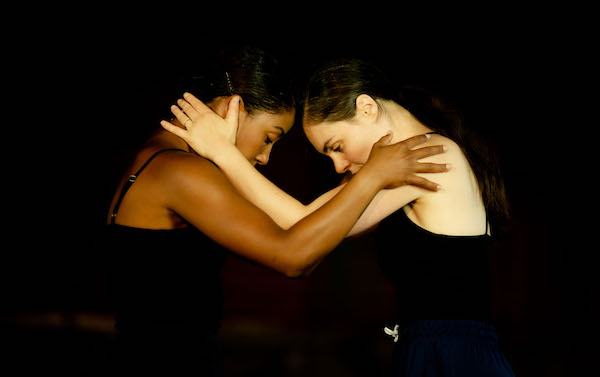
For this year’s Dancing on the Edge, Alexis Fletcher and Ted Littlemore perform together in a work created and directed by Vanessa Goodman. (photo by Sylvain Senez)

This year’s Dancing on the Edge contemporary dance festival features a lineup of online and onstage live performances, including Tuning, a new duet created and directed by Jewish community member Vanessa Goodman. And Tara Cheyenne Performance is among the artists who will be presenting films (details TBA).

During its July 8-17 run, the festival will present more than 30 shows, with artists from across Canada. On offer will be some specially curated digital programming with recorded performances, premières of dance films, dance discussions, outdoor live performances in the Firehall Arts Centre’s courtyard, for very limited audiences with safety precautions in place, and theatre performances with limited capacity, if permitted, in the centre.

photo - Ted Littlemore
Ted Littlemore (photo by Wendy D Photography)

Commissioned by dance artist Alexis Fletcher, Tuning will be performed by Fletcher, artist in residence at Ballet BC, and Ted Littlemore, aka Mila Dramatic in the drag community. The new work focuses on how people tune to one another. In Tuning, the performers create a live sonic and physical atmosphere using their voices to amplify the conversations of the body.

Festival producer Donna Spencer also announced seven DOTE-commissioned projects, which will première at this year’s festival. Companies/choreographers presenting commissioned works include Ouro Collective, Raven Spirit Dance, Billy Marchenski, Immigrant Lessons, Generous Mess, Rob Kitsos and Meredith Kalaman. “We were thrilled to have offered this incentive, knowing that these commissions have enabled artists to keep creating new work during this challenging time for all,” said Spencer.

Keep an eye on dancingontheedge.org for performance and ticket updates.

– Courtesy Dancing on the Edge

Format ImagePosted on June 11, 2021June 10, 2021Author Dancing on the EdgeCategories Performing ArtsTags dance, Donna Spencer, DOTE, Firehall Arts Centre, Tara Cheyenne, Vanessa Goodman

Posts pagination

Previous page Page 1 … Page 54 Page 55 Page 56 … Page 161 Next page
Proudly powered by WordPress