Skip to content
  • Home
  • Subscribe / donate
  • Events calendar
  • News
    • Local
    • National
    • Israel
    • World
    • עניין בחדשות
      A roundup of news in Canada and further afield, in Hebrew.
  • Opinion
    • From the JI
    • Op-Ed
  • Arts & Culture
    • Performing Arts
    • Music
    • Books
    • Visual Arts
    • TV & Film
  • Life
    • Celebrating the Holidays
    • Travel
    • The Daily Snooze
      Cartoons by Jacob Samuel
    • Mystery Photo
      Help the JI and JMABC fill in the gaps in our archives.
  • Community Links
    • Organizations, Etc.
    • Other News Sources & Blogs
    • Business Directory
  • FAQ
  • JI Chai Celebration
  • JI@88! video

Recent Posts

  • Sharing her testimony
  • Fall fight takes leap forward
  • The balancing of rights
  • Multiple Tony n’ Tina roles
  • Stories of trauma, resilience
  • Celebrate our culture
  • A responsibility to help
  • What wellness means at JCC
  • Together in mourning
  • Downhill after Trump?
  • Birth control even easier now
  • Eco-Sisters mentorship
  • Unexpected discoveries
  • Study’s results hopeful
  • Bad behaviour affects us all
  • Thankful for the police
  • UBC needs a wake-up call
  • Recalling a shining star
  • Sleep well …
  • BGU fosters startup culture
  • Photography and glass
  • Is it the end of an era?
  • Taking life a step at a time
  • Nakba exhibit biased
  • Film festival starts next week
  • Musical with heart and soul
  • Rabbi marks 13 years
  • Keeper of VTT’s history
  • Gala fêtes Infeld’s 20th
  • Building JWest together
  • Challah Mom comes to Vancouver
  • What to do about media bias
  • Education offers hope
  • Remembrance – a moral act
  • What makes us human
  • המלחמות של נתניהו וטראמפ

Archives

Follow @JewishIndie
image - The CJN - Visit Us Banner - 300x600 - 101625

Byline: Cynthia Ramsay

Exchange of expertise

Exchange of expertise

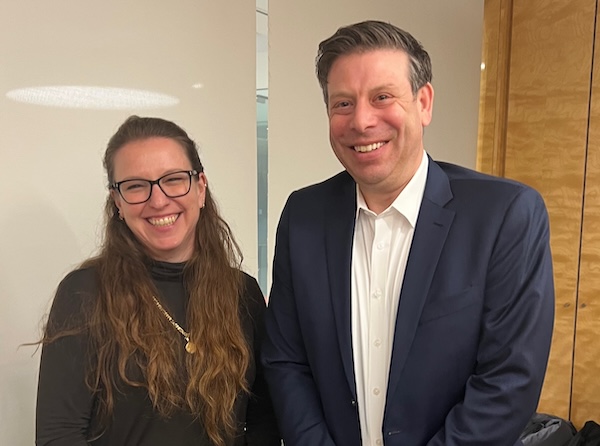
Among the activities in which Hebrew University of Jerusalem’s Dr. Shiran Reichenberg, left, took part while she was in Vancouver was a lunch and learn at Lawson Lundell LLP, hosted by Peter Tolensky. (photo from CFHU Vancouver)

Dr. Shiran Reichenberg, executive director of the Hebrew University of Jerusalem law faculty’s Clinical Legal Education Centre, was in Vancouver recently, as part of a professorship exchange with the University of British Columbia.

The exchange program started in 2010, with funding from Canadian Friends of the Hebrew University of Jerusalem and members of the local legal profession and judiciary. From 2013 to 2019, it was named in honour of Mitchell Gropper, QC, and, since 2021, in recognition of the Koffman family’s financial support, it has been formally called the Morley Koffman Memorial Allard School of Law UBC and Hebrew University Law Faculty Professor Exchange Program.

Koffman was an alum of UBC law school in 1952. He practised at Freeman, Freeman, Silvers and Koffman, and was awarded Queen’s Counsel in 1986. His firm, Koffman Kalef, was established in 1993.

One of the founders of the exchange program was Bruce Cohen, whose career has included, among other things, almost three decades as a BC Supreme Court justice. In the CFHU and UBC announcements of the Koffman family’s donation, Cohen says, “Given the high level of respect and regard for Morley’s reputation in the legal, university, Jewish and general communities as a wise counsel and recognized leader it is perfectly appropriate for the program to be named in his honour as a reflection of the importance placed by him and his family on scholarship, professionalism and tikkun olam.”

On the CFHU website, Cohen notes, “The ability of the program to operate in the initial few years of its existence was due in large measure to Morley’s assistance.”

The CFHU Vancouver organizing committee for the exchange program consisted of Cohen, Sam Hanson, Peter Hotz, Shawn Lewis, Randy Milner, Phil Switzer, Peter Tolensky, Dina Wachtel and the late Allen Zysblat. The annual exchange even operated during the pandemic, albeit virtually.
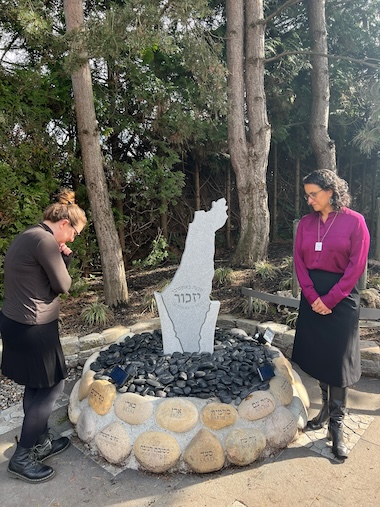
photo - Dr. Shiran Reichenberg, left, visits Temple Sholom’s Oct. 7 memorial with the synagogue’s Associate Rabbi Carey Brown
Dr. Shiran Reichenberg, left, visits Temple Sholom’s Oct. 7 memorial with the synagogue’s Associate Rabbi Carey Brown. (photo from CFHU Vancouver)

Reichenberg’s February-March visit to Vancouver was for just over two weeks, during which time she taught a course at UBC and spoke to various groups, including at Lawson Lundell LLP for a lunch and learn hosted by Peter Tolensky and at UBC’s Peter A. Allard School of Law, as well as at Temple Sholom for a lunch and learn organized by the Sisterhood, said Wachtel, vice-president, community affairs, at CFHU.

While Reichenberg regularly attends international conferences and lectures, this was her first time in Vancouver and, she said, “It was a very, very different experience to teach an intensive course for two weeks, each class three hours.”

Reichenberg, who is also the director of the Clinical Legal Education Centre’s Children and Youth Rights Clinic, said the course she gave here focused on the development of children’s rights and covered international documents, such as the Convention on the Rights of the Child, and other agreements, like the African Charter on Human and People’s Rights.

“We got very deep into several aspects of the convention and main principles, mainly best interest [of the child] and the right to participation. We talked about youth at risk, in criminal proceedings, in care proceedings,” she said.

Reichenberg graduated with her bachelor and her master of laws from the Hebrew University. She also studied in London, England, having received the Leonard Sainer Chevening Scholarship for LLM studies at University College London. She became interested in children’s rights law when she was a second-year student and participated in the Clinical Legal Education Centre’s Street Law Program, which is still part of the Children and Youth Rights Clinic she now directs.

“Each of us was put in a different residential care facility for youth at risk,” said Reichenberg, who was placed with a locked facility in Jerusalem. “When we entered this place and got an explanation about the girls and their life and what happened to them, it changed the course of my life. I stayed and I did another legal clinic in my third year of law school: representation of children’s rights, of children in court proceedings.” 

In doing her PhD, Reichenberg focused on the right of youth at risk to participate in care proceedings, and her research included interviews with some of the girls from the Jerusalem care facility.

Children’s rights have their origin in labour law, Reichenberg said.

“Children, from the beginning of humanity until maybe the Industrial Revolution … died a lot, so parents didn’t get attached to them that much,” she explained. “And they were also considered as property of their parents, mostly their fathers, so they were sold, they were used to work, they were part of supporting the family; they weren’t what we consider them today. There is evidence that, in ancient times, children weren’t even given names, just numbers, because they died so much.”

But when children came to be working in mines and in factories, for example, “legislation gave them rights, to work only 12 hours a day and sleep at night, and things like that,” said Reichenberg, adding that the invention of the printing press, which meant that people needed to learn how to read, was an impetus for the establishment of schools. 

The first child-related labour laws were English laws, passed in the early 1800s. The first youth court took place in the United States in 1874, and it involved the first case reported of child abuse, said Reichenberg. “[Mary Ellen McCormack] was abused by her stepmom and when the people wanted to help her, there was no law that protected children, so they used the law that protected animals from abuse.”

The Children and Youth Rights Clinic is one of nine offered by the Clinical Legal Education Centre. There are also clinics on climate change and environmental law; human rights in cyberspace; multiculturalism and diversity; representation of marginalized population groups; criminal justice; international human rights; the rights of people with disabilities; and wrongful convictions.

The centre can take a maximum of 140 students, with each clinic having, on average, 16 to 20 students. 

“We have many more people who want to enrol than the places that we can give,” said Reichenberg, explaining that the clinics must be kept relatively small, given that they are working on legal cases.

“Each clinic is taught by a lawyer and there is a maximum number of cases that one person can handle, so we can’t have too many students,” she said. “Also, it allows us to have in-depth discussions in our classes with our students. And we always sit in a circle and there’s always dialogue, and it’s something that can be accomplished only in small groups.”

The Clinical Legal Education Centre takes a three-pronged approach. It handles upwards of 1,000 cases a year, providing legal aid and representation to individuals from marginalized groups. It also works for policy change, through test cases and position papers, for example, and offers public lectures and workshops to raise awareness, increase knowledge and promote discussion.

Since the Hamas terror attacks on Israel on Oct. 7, 2023, the centre has taken on an increased role in teaching and advocating for human rights. It has represented groups like the Hostages and Missing Families Forum in front of different United Nations bodies, for example, and has been operating Hamal Hevrati (War Room), a Facebook page providing legal aid to vulnerable populations, which has handled about 100 inquiries to date.

As well, the centre serves diverse clients and has a multicultural staff and student body, all of which include members of the Palestinian minority.

“We are not in war with the entire Palestinian people, we are in war with Hamas, and there is a difference,” said Reichenberg.

“So, we help those who need our help. And we work together, we study together,” she said.

It’s been hard, she admitted. “But we have to believe in working together and living together because none of us is going anywhere and we have to live together and work together for a long time … we have to find a way to do that and this is what we do.”

Reichenberg is proud of how the centre has adapted to the situation.

“In class, we have students who came from military reserves, still with their uniforms and their weapons. We have Arab students who have family in Gaza, which they haven’t heard from,” she said. “We have students who lost people they loved on the 7th of October and since. I personally have a student who I loved deeply and he died in the war, in his military reserve [service] in Gaza. And, also, in the staff, as I said, we’re a mixed staff and a lot of emotions came out on the 7th of October and we did a lot of preparation for staff, how to work with the students in this environment.”

While it’s not perfect, Reichenberg said, “it is certainly an amazing thing to see how everyone is sitting together, learning together, doing legal work together, for the same goal.” 

Format ImagePosted on March 28, 2025March 27, 2025Author Cynthia RamsayCategories LocalTags Canadian Friends of Hebrew University, CFHU, children's rights, education, Hebrew University, history, Koffman family, law, Shiran Reichenberg, UBC, University of British Columbia
Unique meals for Passover

Unique meals for Passover

Ilan Rabchinskey’s photograph of Tamarind Street Corn Cups in Sabor Judío: The Jewish Mexican Cookbook inspired me to make them. (photo by Ilan Rabchinskey)

Since reviewing Sabor Judío: The Jewish Mexican Cookbook by Ilan Stavans and Margaret E. Boyle for the Independent’s Hanukkah issue, I’ve tried several more recipes. And I’ve really enjoyed everything. So much so, that I pulled out the cookbook to try some Passover meals, and found some foods I would never have thought to make.

Stavans and Boyle have a section on Passover (Pésaj) in which they discuss some of the Mexican Jewish traditions. For example, some families incorporate Mexican history into the seder discussions, and the bitter herbs on the seder plate can include a variety chiles. They list 12 seder favourites, but, throughout the cookbook, they point out which dishes – like Stuffed Artichoke Hearts – are considered essential components of the Passover meal by some.

photo - Snapper Ceviche con Maror, from Sabor Judío: The Jewish Mexican Cookbook by Ilan Stavans and Margaret E. Boyle
Snapper Ceviche con Maror, from Sabor Judío: The Jewish Mexican Cookbook by Ilan Stavans and Margaret E. Boyle. (photo by Ilan Rabchinskey)

Of the seder favourites, I made Snapper Ceviche con Maror, Tamarind Street Corn Cups, Apricot Almond Charoset Truffles and Tahini Brownies. The photos by Ilan Rabchinskey drew me into the corn cups, as I’m not a huge corn fan and might not have made them otherwise. I will do so again, however – they were easy, and they were a very tasty break from the ordinary. The snapper ceviche, too, will be a repeat, and the brownies were some of the best I’ve tasted, not too sweet, and very light, almost fluffy, but moist –   I broke up a chocolate bar instead of using chocolate chips, which worked really well, and the sea salt on the top tasted so good. While the truffles were also delicious, they tasted more familiar, and were very date forward – I might try to mix up the date-apricot balance when I make them again.

The Jewish connections were obvious for some of these recipes, not so much for others. The snapper is served with a dollop of horseradish: “The use of maror, or horseradish, in this recipe was an invention during a Passover seder in Mexico City, creating a savoury contrast among the fish, the jalapeño and the horseradish,” write Stavans and Boyle.

The Jewish link to the corn cups is that the tamarind-flavoured hard candies the recipe calls for – Tamalitoz – were created by Jack Bessudo, who is of Mexican Jewish descent, and his husband, Declan Simmons. Since Tamalitoz are not available here, I bought another tamarind-flavoured candy from a local Mexican store and it worked quite well.

The brownies recipe comes from Israeli immigrants to Mexico, who shared with the cookbook writers that “tahini is also infused into their adaptations of mole, the sesame flavour substituting for more common varieties that rely on peanut or almond.”

Chag sameach!

SNAPPER CEVICHE CON MAROR
(serves 6; prep time 25 min plus chilling)

3/4 cup fresh lime
1/4 cup fresh lemon juice
1 small jalapeño chile, seeds removed, finely chopped
1 small red bell pepper, seeds removed, finely chopped (about 1/2 cup)
1 small yellow bell pepper, seeds  removed, finely chopped (about 1/2 cup)
1/2 small red onion, thinly sliced
1 small garlic clove, minced, grated, or pushed through a press
1/8 tsp ground cumin
1/2 tsp kosher salt
1 pound red snapper fillets, skin removed
2 tbsp finely chopped fresh cilantro
1 tsp extra-virgin olive oil
prepared horseradish, for topping (optional)

1. In a large bowl, stir together the lime juice, lemon juice, jalapeño chile, red and yellow bell peppers, red onion, garlic, cumin and salt.

2 . Using a sharp knife or kitchen shears, cut the fish fillets into 1/2-inch pieces and add to the citrus mixture, stirring to combine. Cover the bowl and refrigerate for 30 minutes.

3. Just before serving, stir in the cilantro and oil. Serve immediately, dolloped with horseradish, if desired.

TAMARIND STREET CORN CUPS
(serves 4; prep time 40 min)

for the corn
3 tbsp unsalted butter
1/2 large white onion, finely chopped
2 medium garlic cloves, peeled and finely chopped
1/2 serrano chile, seeds removed, if desired, and finely chopped
1 1/4 tsp kosher salt, plus more as needed
2 fresh epazote leaves (whole) or 1 tsp dried oregano
5 cups fresh corn kernels (from about 10 cobs of corn, or use frozen corn kernels)
2 1/2 cups water
1/4 cup mayonnaise

for serving
crumbled Cotija cheese
crushed chile piquin or red pepper flakes
crushed Tamalitoz candies,  tamarind flavour
fresh lime juice

1. Melt the butter in a large frying pan set over medium heat. Add the onion and garlic and cook, stirring occasionally, until soft and translucent, about 5 minutes.

2. Add the serrano chile, salt and epazote leaves (or oregano), followed by the corn kernels and the water. (The water should barely cover the mixture.) Raise the heat to high and bring to a boil, then lower the heat to medium and cook, stirring occasionally, until the corn is tender and the liquid has almost completely evaporated, 30-35 minutes. Taste and add more salt, if needed.

3. Remove from the heat and discard the epazote. Add the mayonnaise and stir to combine.

4. Divide the corn mixture into four tall cups. Top with the Cotija cheese, chile piquin and crushed tamarind candies, to taste. Drizzle each cup with a little lime juice just before serving.

TAHINI BROWNIES
(serves 6; prep time 15 min, baking time 22 min)

3 tbsp almond flour
1/4 cup cocoa powder
1/2 tsp kosher salt
1/4 cup extra-virgin olive oil
1/2 cup well-stirred tahini
4 ounces baking chocolate, roughly chopped
2 large eggs
1/2 cup granulated sugar
1 tsp vanilla extract
1/2 cup chocolate chips
flaky sea salt, for sprinkling

1. Heat the oven to 350˚F and lightly grease an 8-by-8-inch dish. In a small bowl, whisk together the almond flour, cocoa powder and kosher salt and set aside.

2. Combine the oil, tahini and chopped baking chocolate in a small saucepan set over medium-low heat and cook, stirring often, until the chocolate is melted and the mixture is smooth. Remove from the heat and let cool slightly.

3. Meanwhile, in a large bowl, vigorously whisk together the eggs and sugar until frothy, 3-5 minutes. Whisk in the vanilla, followed by the cooled chocolate mixture.

4. Add the dry ingredients to the chocolate mixture and stir to combine, then fold in the chocolate chips. 

5. Transfer the batter to the prepared pan, smoothing the top, then sprinkle lightly with flaky sea salt. Bake until a tester inserted in the centre comes out clean, 18-22 minutes. Remove from the oven and place the pan on a wire rack to cool. Serve warm or at room temperature. 

APRICOT ALMOND CHAROSET TRUFFLES
(makes about 3 dozen; prep time 15 min plus chilling)

2 cups pitted and chopped medjool dates
1 cup chopped dried apricots
1 cup golden raisins
1 cup roasted salted almonds
1 tbsp honey
3 tbsp sweet red wine (or grape juice)

1. Working in batches, add the dates, apricots, raisins, almonds and honey to a food processor and pulse until a textured paste forms. Transfer the mixture to a bowl and stir in the wine, 1 tablespoon at a time.

2. Scoop out tablespoons of the mixture and, using lightly moistened hands, roll them into balls. Place the truffles on a baking sheet or large plate lined with parchment paper as you go.

3. Refrigerate the truffles (uncovered is fine) for 2 hours, then transfer to a container with a lid and continue to refrigerate until needed. Serve chilled or at room temperature. 

Format ImagePosted on March 28, 2025October 12, 2025Author Cynthia RamsayCategories Celebrating the HolidaysTags cookbooks, cooking, food, Mexico, Passover, recipes, Sabor Judío
Family fun with City Birds

Family fun with City Birds

Tamar Eisenman, left, and Sagit Shir bring their children’s music project, City Birds, to Vancouver for a March 23 concert at the Rothstein Theatre, as part of Chutzpah! Plus. (photo by Javier Ortega)

Looking for fun, positive music for your kids that will get you moving to the beat and singing along with them? Check out City Birds on March 23, 11 a.m., at the Rothstein Theatre. 

The creative and talented duo with seemingly boundless energy is coming to Vancouver for the Chutzpah! Plus Spring Edition, which runs March 19-23.

“Our goal is to weave a musical tapestry that captivates the imagination of the children and to accompany them on their mammoth journey of growing up, while also resonating with the hearts of older kids and parents,” write Tamar Eisenman and Sagit Shir on their City Birds website. “Our work is a celebration of families and about telling stories where children and parents find comfort, joy and inclusion.”

Even people without kids will appreciate the music’s playfulness, its folk and rock rhythms, and unique lyrics, all intended to uplift. 

“It’s a lot of fun, and the inclusive elements are a key part of our craft – whether it’s mentioning all types of families, using different pronouns, or embracing a creative, childlike perspective that also serves as a wonderful reminder for grownups,” Eisenman told the Independent.

Both Eisenman and Shir are accomplished musicians. Eisenman has released multiple albums over the years and is currently touring with a couple of shows, including City Birds. Shir is the co-founder of the indie rock duo Hank & Cupcakes, and she teaches music and songwriting, specializing in early childhood music education. They each have some 20 years of music writing and touring to their credit.

“We met through Ariel, Sagit’s husband/partner,” said Eisenman. “Ariel and I went to high school together, and we’ve been really good friends ever since. I think I was about 18 or 19 when I first saw Sagit perform. She was singing with her trio in small music venues around Jerusalem, covering my favourite songs by Tori Amos, Suzanne Vega and others. Her voice and performance completely blew me away!”

“I remember that cover band!” said Shir. “Tamar was always a musical presence I was aware of beyond her years-long friendship with Ariel (who was also her bassist at some point). I remember being in awe of her musical and performative talents and generally admired how she ‘had it together’ at an age where I was just starting to seriously explore my musical tendencies.”

After Shir and her family moved back to New York City, she and Eisenman reconnected and started meeting up more often, sometimes with their kids.

“If I remember correctly, in September 2023, Sagit invited me to a friend’s show in the Lower East Side, where we first talked about the idea of writing and composing songs for kids and families, with LGBTQ awareness at the core. I personally felt there was a gap in family entertainment in that space,” said Eisenman.

“Sagit had her ukulele with her and, after the show, we hung out outside the club, brainstorming our first ideas for the project. From there, we each worked individually on some concepts, exchanging demo recordings, lyrics and ideas back and forth. As the songs took shape, we rehearsed, and, once we had about six songs ready, we performed at our daughters’ schools for the first time.”

The feedback was wonderful, said Eisenman. “That’s when we knew we wanted to keep folk Americana as the foundation of our sound – while adding some punk rock, of course. We wanted the music to feel close to home, reflecting the styles we personally connect with,” she said. 

“It was also important to keep it organic and live, creating something that we, as adults, could relate to just as much as kids,” she continued. “The music is for everyone – it exists in that ‘in-between’ space: for kids growing up, for parents who were once kids, and for all of us witnessing that journey. It’s a fascinating timeline when you think about it. And then there’s our secret ingredient – Ariel. He’s such an incredible musician and he plays bass and other instruments on the record.”

image - City Birds Family Song coverWhile the meeting at the club may have been the first time the two musicians sat down together and brainstormed about writing and performing music geared towards children, Shir said the idea for City Birds came earlier.

“Tamar brought it up when our families went on a small vacation in upstate New York some time before,” said Shir, “and I was so excited at the prospect of collaborating with Tamar, whom I secretly admired, that I wrote the first lines of ‘The Family Song’ that very night.”

That Shir had worked on some songs already helped when the two started working together. For those pieces, Eisenman said, “we refined the lyrics, arranged the music together and made adjustments as needed.

“Other times, we each brought in songs, fragments or ideas and we’d have a little creative ‘ping-pong’ session to develop them,” she added. “For example, I wrote the verse of a lullaby I was working on, and Sagit added the B section musically, then we expanded the lyrics together from there. There’s really no single format or structure; we try to keep the process open, flexible.”

While their being Jewish doesn’t necessarily inform their music, Eisenman said their cultural heritage is an inherent part of who they are – “both in a traditional sense and as part of our roots,” she said. “The Hebrew language is, of course, dear to our hearts and, as my native language, it’s especially meaningful to me. Being able to incorporate it into our songs is a lot of fun as well.”

Shir’s background in early childhood music education no doubt plays a key role in their songs’ appeal. 

The daughter of two teachers, Shir said, “I’ve found myself specializing in teaching language through music, especially Hebrew. I find that, with very young students, teaching them Hebrew through music almost works like magic. They find themselves learning important basic concepts such as colours, body parts and feelings without even realizing it’s happening. Music makes the language-learning process effortless and fun. I started the company Global Kids Music LLC a year ago and feel lucky to have found my calling.”

The March 23 Chutzpah! show will be City Birds’ Canadian premiere. The two musicians are “so happy for the opportunity to share our music with the Vancouver community and go on this musical journey together,” said Eisenman. “We’ve got a few surprises planned – including a special tribute to the music from back home.”

For more on City Birds, go to citybirdsmusic.com. For tickets to their Chutzpah! show, visit chutzpahfestival.com. 

Chutzpah! Plus Spring Edition includes theatre March 19 (Iris Bahr), comedy March 20 (Talia Reese), dance March 21-22 (Belle Spirale Dance Projects & Fernando Hernando Magadan) and music March 22 (Yamma Ensemble).

Format ImagePosted on March 14, 2025March 13, 2025Author Cynthia RamsayCategories Performing ArtsTags Americana, children's music, Chutzpah!Plus, City Birds, music, Sagit Shir, Tamar Eisenman
Searching for hope in future

Searching for hope in future

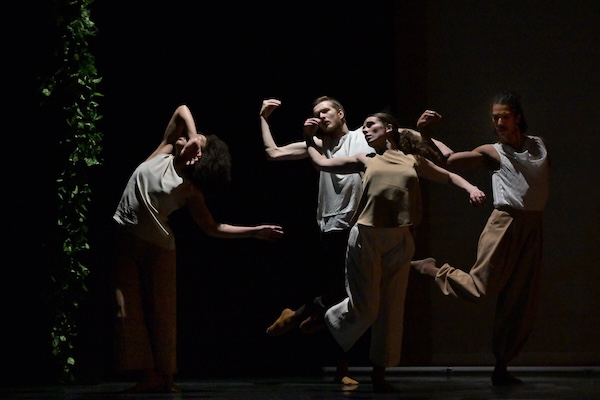
Belle Spirale’s dance double-bill, Universus, is at the Vancouver Playhouse March 21-22, as part of the Chutzpah! Plus Spring Edition. (photo © Michael Slobodian)

“As I think many of us are right now, I am feeling sense of trepidation, endangerment and uncertainty about the future that I have honestly never felt before in this way. My faith in the future and humanity’s ability to call in a future that I want (for myself and also for future generations) has been shaken to the core,” Alexis Fletcher told the Independent. “And yet, my spirit knows that hope, togetherness, connection – they are all necessary. Indeed, they are what propel the world, evolution, the cosmos and each other forward. Everything and Nothing asks what hope and resiliency mean to me – as a woman, as an artist, as a citizen – at this moment in history.”

Fletcher is co-director with Sylvain Senez of Belle Spirale Dance Projects. Their March 21-22, 8 p.m., Chutzpah! Festival dance double-bill at the Vancouver Playhouse, called Universus, also features Fernando Hernando Magadan’s Statera.

The title of Belle Spirale’s Everything and Nothing comes from a poem Fletcher wrote several years ago, “exploring the idea that we are at once both the entire universe and a tiny speck of almost nothingness within the vastness of that universe. That we are both ‘everything and nothing in the same split-instant,’” she said.

Acknowledging that this was a broad place from which to start, she and the dancers asked themselves, “Who are the leaders of the future that we actually want? How can we create an imagination-based, artistic response to these important questions and feelings? I see so many qualities of this leadership in each and every person who is making Universus with us,” said Fletcher. “I have been curious about what the archetypes, or the energetic qualities, these future leaders would embody, and how could they usher the world forward into a new and more hopeful paradigm.”

To explore these questions, Fletcher came to the studio with “movement phrases,” she said. “The dancers then took these movements and made new sequences which combined the original phrases with their own responses to the text, images and perceptions about the subject matter.

“We also use structured improvisation to explore different states of being and allow those to inform the choreography,” she added. “Then, everything gets layered together and composed into different sections, working with the music, the design aspects, and how that all relates in space and time to where the audience will be. It is a truly collaborative process, with each artist contributing hugely to the final outcome.”

This includes “the images of the natural world and the cosmos that Sylvain has so exquisitely crafted with his visual design,” said Fletcher. “These images, to me, represent our shared origin point in the cosmos, reminding us that our journey is mystical as well as concrete or tangible. While this is all explored in an abstract way very open to interpretation, we hope to evoke a sense of possibility, of awe and wonder with this work.”

Another important collaborator is Marisa Gold, who Fletcher and Senez met some time ago. “Immediately, I was compelled by her stage presence and the insightful, kind, courageous way she conducts herself in the world,” said Fletcher, noting that Gold has been part of Everything and Nothing from its beginnings in 2023. As the piece has developed, Fletcher felt that a live, spoken-word element “could act as a counterpoint to the inherently more abstract and image-driven metaphor of the dancing body and the choreography.

“Inside of this desire for text, I had a gut feeling that it wasn’t supposed to be my voice or my writing,” said Fletcher. “I needed to bring a different voice into the mix, with different lived experience and perceptions than my own. What came out of this was expanding and amplifying Marisa’s role within the work by commissioning her to create and perform original poetry and spoken word throughout Everything and Nothing. And … she still does a phenomenal amount of dancing, and she is incredible in that too! I can’t wait for everyone to share in her journey. What Marisa has created is truly special – profound and insightful. I gain something new from the text every day.”

For Gold, Everything and Nothing has a powerful message.

“Personally,” she said, “the subject matter and poetry of Everything and Nothing align very closely to my interests as an artist and human being in a volatile world. As a collective humanity, the depth of our connection to Earth is reflected in our ability to deeply connect with ourselves and each other. This work addresses not only our inner/personal world, it also drives home the mirroring effect and metaphor which surrounds us in nature. From my perspective, these images are incredibly supportive to the healing so needed on our planet today.”

The scope of the work wouldn’t have been possible, said Fletcher, if she and Senez weren’t artists in residence at the Chutzpah! Festival.

“We have been fortunate to receive residency, creation and presentation support from the Chutzpah! Festival since 2019,” she said. “Each of these years provided us with stage creation time, financial contributions to our projects and the opportunity to premiere new works; this relationship has been instrumental to our artistic practice. 

“Theatre and studio residencies are critical to artists collaborating and developing their craft. In addition, 

having a presenter invest in a project from research to presentation creates an environment grounded in solidity and consistency,” she said.

“I really cannot over-emphasize not only how rare, but also how needed and important it is, what Chutzpah! is doing with their residency program.”

This season, Belle Spirale had a couple weeks on stage to rehearse and create, then a two-week, full time technical residency, where the visual and lighting design for the performance was created, so the company could mount the show at the Playhouse.

“The art we make together is a way of life for us, and inseparable from our relationship,” said Fletcher about husband and fellow artist in residence Senez. “While we have different strengths that make us a great team, we also share a profound kinship with regards to our artistic sensibilities and reverence for this art form.”

The two were with Ballet BC for many years, and started creating and producing work together in 2015. 

“As a couple – both in our personal story of coming together and in our creative partnership – we have always made each other brave, right from the start, dreaming big and diving into creative ventures without fully realizing the scale they would eventually take,” said Fletcher.

“Tackling meaningful subjects and focusing on the humanity that touches us all, we initially began with quite intimate work,” she said. But, as their exploration continued, so did their desire to integrate other creative voices alongside their own. Formally bringing Belle Spirale into being “became a necessary next step,” and the company was launched in July 2023. The not-for-profit structure allows them to create community networks and garner the support they need. “This comes in the form of our board of directors, and our partnerships with like-minded creative spirits such as our sister company Dance//Novella,” said Fletcher.

“Most importantly,” she said, “Belle Spirale was born from our desire to expand our ability to support a range of artistic voices through commissioning new work, creating our own work, fostering and celebrating Vancouver’s exceptional freelance artists, and presenting/producing both our own, and others’, creations…. We truly believe in the power of the live performing arts to bring people together, to create community and a lifeline for the spirit – a space to contemplate, reflect and be moved – during these complex times we live in.”

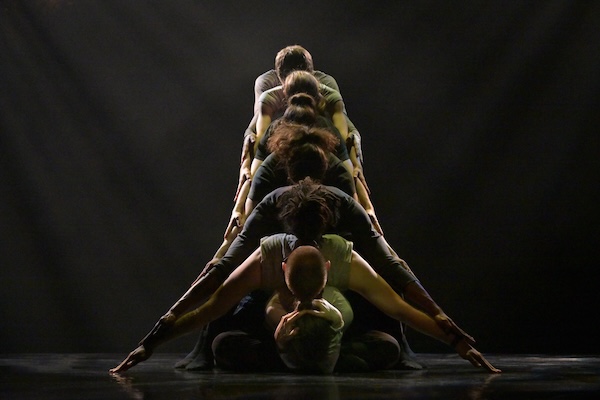
photo - Belle Spirale performs at the Playhouse March 21-2
Belle Spirale performs at the Playhouse March 21-22. (photo © Michael Slobodian)

One of the aspects Fletcher and Senez like most about cross-disciplinary work is the ability “to reach a broader demographic of audience members,” said Fletcher. “Every person feels connected, or has their heart opened, in different ways by different things. Human beings are layered and complex, and we use different mediums, such as film, set design, text and lighting design, to reflect this complexity in our stage environments. 

“We love to create textured, visually impactful and theatrical settings which are completely immersive for the dancers,” she continued. “Everything is crafted to highlight the humanity, athleticism and journey of the dancing body – this human instrument is always the focus of our work…. In my pieces, I work co-creatively with the dancers, with Sylvain as visual/set/film designer and with Belle Spirale’s lighting designer Victoria Hunter Bell.”

In Universus, Fletcher also has gotten to work with Magadan – she co-created and dances in Statera.

“Sylvain and I both met Fernando in 2014, when he created White Act for Ballet BC,” Fletcher explained. “I was an original cast member of this work and Sylvain was his rehearsal director, as well as assisted with some of the visual design. We all just clicked … and it has always been a dream of ours to work with Fernando again. When we commission work at Belle Spirale, I am fortunate to get to be one of the performers we bring together.”

Universus would not exist, said Fletcher, without Belle Spirale’s partnership with Chutzpah! She also noted that, thanks to the company’s partnership with Vancouver International Dance Festival, they are able to offer general admission and sliding scale ticket prices, which start at $25. Visit chutzpahfestival.com. 

Format ImagePosted on March 14, 2025March 13, 2025Author Cynthia RamsayCategories Performing ArtsTags Alexis Fletcher, Belle Spirale, Chutzpah!Plus, dance, Marisa Gold, poetry, Sylvain Senez, Universus

What your tchotchkes think

Ever wondered what your leather-bound journal thinks about you? Your menorah? The bowl you made in a pottery class? What astrological sign your keepsakes might be? How they’d like to be handled, cared for? Where they’d like to be in your home?

For most of us, the answer is probably no … to all of the above. But Elisabeth Saake has thought of all these things. And, after reading her latest book, Tchotchkes and their F*cked-Up Thoughts: The Messed-Up Minds of Your Trinkets and Treasures (Collective Book Studio), you will too. It’s a follow-up to her 2023 Houseplants and Their F*cked-Up Thoughts: PS, They Hate You, which she wrote with Carlyle Christoff.

image - Tchotchkes and their F*cked-Up Thoughts book coverDivided into five sections, no knickknack is spared. Saake covers the whimsical (lava lamp, rubber chicken, etc.), vintage and collectibles (antique compass, souvenir spoon, etc.), cultural and artisanal (woven tapestry, ceramic urn, etc.), spiritual and mystical (worry stone, crystal ball, etc.) and functional and decorative (novelty salt and pepper shakers, participation trophy, etc.).

About your journal, don’t worry, it thinks “your poetry is profound” and is “totally listening and deeply moved”; it only appears to be setting itself on fire.

But your menorah would like to be treated as more than a “fancy candleholder”: “Fill my branches with holy oil from trees grown on the Mount of Olives, just a day’s worth, and watch me burn for eight! Or cram in cheap candles from your big box store’s Hanukkah display. That works, too. Way to honour your ancestors, nudnik.”

And your handmade pottery is a “real bowl,” even if it “was made in a beginner’s night class at the community college”: “I’m round enough, I’m stable enough and, doggone it, people like me!” Though, it’s “a bit wobbly,” so perhaps no soup … maybe just display it on a kitchen shelf, as the “mantel is for the perfect porcelain.”

Tchotchkes and their F*cked-Up Thoughts would make a great gift to any friend (with a sense of humour) who’s a collector of things, or to any friend who has judged others’ collections of things. It’s snarky, a little dark at times, but will bring many chuckles and laughs, even if every joke doesn’t land. It’s colourful and beautifully put together. Hopefully, it will think as highly of you, its place in your home and how you care for it – and have an astrological sign that’s compatible with yours. 

Posted on March 14, 2025March 13, 2025Author Cynthia RamsayCategories BooksTags Collective Book Studio, Elisabeth Saake, home, lifestyle, Tchotchkes and their F*cked-Up Thoughts

The roots of antisemitism

For decades, conversations about antisemitism and racism have been running on separate tracks, Prof. Magda Teter told the Independent. But there is a connection, she said, and, in her March 4 talk at Congregation Beth Israel, she will explain that link.

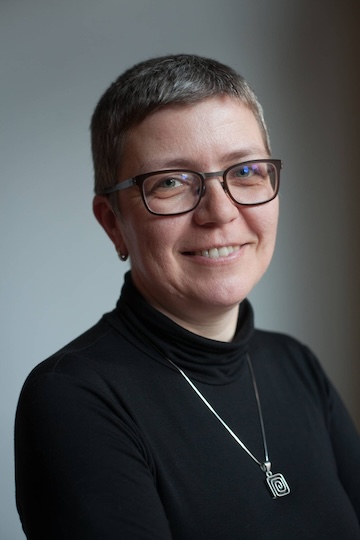
photo - Prof. Magda Teter, author of the forthcoming book Blood Libels, Hostile Archives: Reclaiming Interrupted Jewish Lives, speaks at Congregation Beth Israel on March 4
Prof. Magda Teter, author of the forthcoming book Blood Libels, Hostile Archives: Reclaiming Interrupted Jewish Lives, speaks at Congregation Beth Israel on March 4, 7:30 p.m. (photo by Chuck Fishman)

The lecture, called Reckoning with the Roots of Antisemitism and Racism, is co-presented by the synagogue and the Archdiocese of Vancouver. Teter, a professor of history and the Shvidler Chair of Judaic Studies at Fordham University, is president of the American Academy of Jewish Research. She is the author of several books, most recently Christian Supremacy: Reckoning with the Roots of Antisemitism and Racism (2023). Her book Blood Libel: On the Trail of An Antisemitic Myth (2020) won several awards, including the 2020 National Jewish Book Award. Other publications include Sinners on Trial: Jews and Sacrilege after the Reformation (2011), Jews and Heretics in Catholic Poland (2006) and many articles (in English, Hebrew, Italian and Polish). 

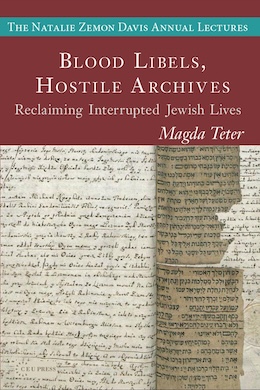
Teter has a new book coming out soon, called Blood Libels, Hostile Archives: Reclaiming Interrupted Jewish Lives, which, according to the summary, “explores two places: Trent, in northern Italy, and Sandomierz, in eastern Poland … both had been sites of anti-Jewish libels falsely accusing Jews of killing Christian children, Trent in 1475 and Sandomierz twice – in 1698 and 1710; in both, the instigators of the Jews’ persecution left unique and extensive archives, both towns have physical remnants of these deadly affairs, and, finally, neither town has an existing Jewish population. Yet, centuries later, these anti-Jewish libels have not been relegated to the past; in both towns, their legacies still reverberate today.”

image - Blood Libels, Hostile Archives book cover“There has been a lot of scholarship about blood libels – the false accusations against Jews that emerged in the Middle Ages, charging them with killing Christian children,” said Teter. “Scholars, including myself, have analyzed the trials, the rhetoric, iconography and anti-Jewish works to understand how these anti-Jewish ideas emerged and spread. What is largely missing from this scholarship is the real, not the imagined, Jews – those Jews whose lives were destroyed by these accusations. So, what this book is trying to do is to recover the lives of Jews who were subjects of these accusations and tell us about them, how they lived, rather than how they were imagined by their accusers. The tricky part of this is how you recover their lives from documents that were created for the purpose of showing Jews’ guilt and how cruel, heinous and hateful Jews were. So, this book is trying to do just that: to peel through the layers of hostility for the glimpses of lives that were destroyed. It matters. This allows us to wrest the story away from the Jews’ accusers.”

Teter, who isn’t Jewish, grew up in communist Poland where, she said, “Jewish topics were a taboo.” Nonetheless, Poland is “a country whose history is so tightly intertwined with Jewish history, so I was very conscious of Poland’s Jewish past,” she said. “I wanted to learn more.”

This led Teter to Columbia University, where she earned a PhD.

“One of the inspirations for me in taking on difficult topics is the arduous path of Jewish-Catholic dialogue and reconciliation in the aftermath of World War II,” she explained. “It was a process of hard and honest conversations. What these conversations and subsequent documents that emerged show is that hard truths don’t have to tear groups apart but can bring people closer together. But, I think, in the last several years, we have been losing the ability to talk to one another on difficult topics. We, as a society, tend to look for affirmation or we walk away, block or dismiss. We closed ourselves in comfortable bubbles.

“My last book picks up threads that may have been left unexamined in the history of antisemitism – the questions of power and domination,” she continued, referring to Christian Supremacy. “As for the responses, in general, people are initially taken aback by the book’s title … but then, if they are willing to read or listen, they become appreciative of my pointing to something that they had not noticed before. That’s my goal in teaching and writing – I am not looking for affirmation, I hope readers or listeners will leave with a few ‘new thoughts.’ I also hope to learn from the readers and listeners. Their questions often help me clarify my thoughts as well and often inspire ‘new thoughts,’ too.”

Teter, who became a fellow of the American Academy for Jewish Research in 2016, has served on the executive board and, at one point, as treasurer of the academy. She was elected president in 2022 for a two-year term, and is currently in her second and last term.

“It is the oldest organization of scholars in Jewish studies in North America,” she said of the academy, which was founded in 1920. 

“While at the beginning it focused on amplifying the scholarship of the fellows,” she said, “since the beginning of this century, the academy has been focused on programs intended to cultivate the next generation of scholars. For example, the academy awards the annual Salo Baron Prize for the best first book in Judaic studies, runs the biennial summer graduate student workshop and the early career workshop for untenured faculty and, with the increasingly diminishing opportunities for graduate student research, the academy offers dissertation research grants.”

Last month, in an interview with The New York Review of Books – for which she has written – Teter was asked what responsibility historians have to be guided by what’s happening in the present. She cautioned, “We must allow the past to speak on its own terms, even when asking questions that are pertinent to the present.”

“We are all shaped by our own experiences and contexts,” Teter told the Independent. “We often ask questions that are relevant to our own lives. But these may be questions that people of the past did not ask. We have to try to understand their lives on their own terms. They did not know what we now know. They did not hold the same values we do. So, it’s OK to ask about how women or non-binary people were treated in the past, or how people thought about the environment, or how they responded to pandemics, but we should not try to make them feminists or environmentalists.

“Let me give you another example, the world is now animated by the Israeli-Palestinian conflict, and many ask questions about how these different peoples engaged with each other historically, how they thought about one another – if they thought of one another. To find answers, we go to historical sources, but we have to read these historical sources on their own terms, not look only for examples that confirm what we already believe. We need to let them speak in the language and the values of the time in which they were created, not through the lens of now.”

There are other lenses too, and ways of connecting the past with the present. In a 2023 interview with JTA, Teter said, “Understanding Jews’ place in history and society, on their own terms but also on the terms imposed on them from the outside, holds much relevance today.” 

“There are two vantage points from which Jews’ place in history can be seen: from the outside, and how Jews experienced their own lives,” she told the Independent. “The 2023 interview took place before Oct. 7 in the context of a recognition by the New York Jewish Week of my role in giving Jewish life in the Bronx more visibility, a borough that has now one of the smallest Jewish populations in New York but one that was, in the mid-20th century, proportionally, the most Jewish borough in New York, with nearly 50% of the population being Jewish.

“But that sentence from 2023 can be illustrated in 2025 in another way. Today, we are still reeling from the aftermath of Oct. 7. One of the main topics that concerns Jewish communities around the world is the rise of antisemitism. But when we talk or write about the history of antisemitism, we typically talk about what antisemites think or do – that is, we discuss it in terms ‘imposed’ from the outside, but what I am asking us to do is to also pay attention to Jews’ lived experiences, and not to refract that experience solely through the external lens. It is something that my forthcoming book is trying to do.”

When asked whether she was, in this moment, hopeful, despondent about or resigned to what humanity is capable of, Teter said, “We live in very dark times. I am very depressed when I look at the ruling elites, whether political or corporate. I am also despondent about the role social media is playing in our society – robbing us of our ability to talk to one another, to argue and reason with one another. I am most hopeful when I am with my students, when we have time to spend together and patiently wrestle with difficult topics or texts. When humans take that time to stop, read, think and talk, things can become better. Social media and the current commercial media environment push us to react without discernment. 

Prof. Magda Teter’s talk at Beth Israel is a free event, but registration is required at bethisrael.ca.

Posted on February 28, 2025February 26, 2025Author Cynthia RamsayCategories LocalTags antisemitism, Beth Israel, blood libel, Christianity, education, history, Magda Teter, racism
Sharing parts of their lives

Sharing parts of their lives

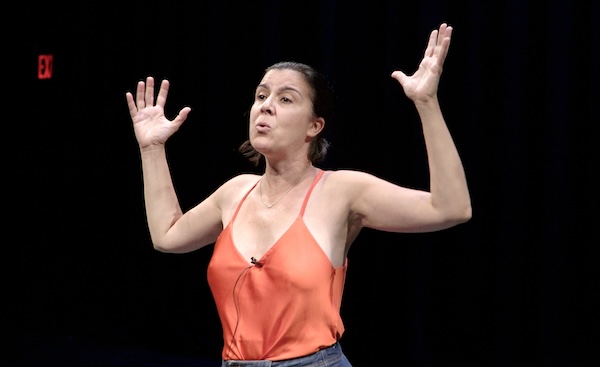
Iris Bahr opens the Chutzpah! Plus Spring Edition on March 19 with Stories from the Brink: My Festive Near-Death Adventures. (photo from Chutzpah! Festival)

The Chutzpah! Plus Spring Edition kicks off with comedy, though the laughs will mix with thoughtful moments of reflection on life, family, being Jewish, and more. Live, all the way from New York, Iris Bahr will perform at the Rothstein Theatre on March 19, and Talia Reese will be on stage there March 20.

Bahr is coming to Chutzpah! with her show Stories from the Brink: My Festive Near-Death Adventures.

“I don’t want to give anything away,” Bahr told the Independent. “Let’s just say I talk about my childhood in the Bronx, where I had to lead a double life. My bacon-eating parents sent me to an Orthodox yeshivah, which, as you can imagine, was extremely stressful. I was also stung by an entire beehive. But there’s a lot more. Just come and see. I really look forward to sharing the story and coming back to the theatre. I’ve missed it. Vancouver’s one of my favourite places to perform.”

Bahr explained why she has ventured into the non-fiction realm with her performance work.

“Some very significant events happened in my life, like my mom’s stroke, which was the basis of my previous show See You Tomorrow, that I performed in Vancouver a few years ago,” she said. “I felt a need to not only share the story because it was a very dramatic story, but, even more so, as I was in the depths of caregiving for my mom [in Israel], first with a stroke and then with dementia, I realized how isolating it was, especially with a loved one with dementia. And I realized how important it was, as an artist, to create a new piece about it, because so many people undergo similar caregiving trials and tribulations. I’ve been doing that show for over three years, and the amount of people that come up to me after, thanking me and hugging me and telling me they found comfort and were also entertained and were able to find the humour thanks to the show, is truly the reason I keep doing it.

“With my current show, Stories from the Brink, I had been exploring this theme of near-death experiences for awhile, first on a podcast that I created and then near-death-themed stand-up shows, with guests sharing their own stories,” continued Bahr. “But, after Oct. 7 and my experience in Israel on that morning, which was obviously terrifying and gut-wrenching, and the rise in antisemitism and extreme anti-Israel sentiment, it was very important for me to create a show that was framed by that experience that I knew would reach people from all persuasions and attitudes. But that is only one small piece of the mosaic of the show which is also filled with a lot of other life shmutz and a lot of humour.”

For Bahr, humour is one of the ways in which she handles challenges.

“Any coping mechanism that can find light amongst the darkness is a highly effective one,” she said. “And, as someone who has always reveled in the world of humour and made it a living, it seems like an obvious go-to when dealing with dark times. It’s not even a conscious decision, it just exists as a muscle, an internal reflex.”

While See You Tomorrow was written as a long-form story, Stories from the Brink comprises vignettes. Bahr explained that See You Tomorrow “takes everyone on a ride and hyper focuses on one aspect of a story. There are some tangents there, but it really is this one event that has a clear beginning, middle and end in a finite time.”

She took a different approach with Stories from the Brink because, she said, “I have a larger theme that I’m trying to explore from many different facets. The vignettes kind of tackle that theme from different angles and ways. And, it’s also a very colourful way to put a show together. It’s like a mosaic and there’s something beautiful about a mosaic, as well. Mixes it up a bit, especially for those audience members that have short attention spans.”

But audiences don’t have to be concerned about remaining focused on Bahr, who is an accomplished storyteller. Being an engaging performer, she said, “comes from physicality to voice to emotional presence and being authentic, being in the moment. Especially with storytelling, you have to have that combination of performance and authenticity and live in the present as you are recounting these stories. Otherwise, you’re just kind of giving a clinical recap, as I tell my students. You also have to really paint a picture and create a world and you have to depict the characters, including yourself, in a very full manner.”

Reese, who went from being a comedian to being lawyer and back to being a comedian, agrees about the importance of being a good storyteller. It has served her well both as a lawyer and as a stand-up comedian.

“So, this is random, but I’m a really good summarizer,” she said. “At the law firms, my thing was summarizing case law for memoranda and stating the facts of a case succinctly but informatively in a pleading,” she explained. “I think I took that skill to joke writing. Word cutting is so important, saying just enough to get to your punchline then move on to the next. 

“I also really enjoy telling stories, which is helpful in law and in comedy. I can tell a good story, ya know? That’s why I  have a low tolerance for stories that dwell on unnecessary details. I zone out fast, which is why I think I was so tough on teachers. But I’m all about entertainment value. Entertain me or go away.”

photo - Comedian Talia Reese takes to the Rothstein Stage on March 20
Comedian Talia Reese takes to the Rothstein Stage on March 20. (photo by Limor Garfinkle)

Reese shared that she was the “class clown” growing up, which meant she was “thrown out of class a lot.”

“It really depended on the teacher though,” she said. “I was just so bored in middle school and most of high school and the teachers were such characters. Getting to act in plays was a saving grace for me. I enjoyed doing Neil Simon comedies so much. I wish I was still doing that.”

In high school, Reese said, “I was all about acting in comedies and then, in college, I was the director of a comedy troupe where I wrote all the sketches and played many wacky characters. Coming out of U of Penn, I felt tremendous pressure to choose a more traditional career path, so I did the law thing. Law school was an amazing education but the all-encompassing practice was not the life I would have ever envisioned for myself, so I took a stand-up class on a lark and wound up sticking with that.”

Coming from an acting and then sketch comedy background, Reese wasn’t sure she’d be good at stand-up. “But,” she said, “it was the only way to do comedy on my own schedule, after putting the kids to bed. I’d go to open mics and talk about my life, try out jokes, build setups around lines that I thought were funny. One by one my stories would pop, or a joke would come to life, and it was the most exciting thing since college, when I wrote those sketches. I think I found my voice, and am still finding it, when I started to talk more about my actual life, telling specific stories. And it always amazes me when something so random that struck a chord in me will get an audience going too. It validates that I’m not crazy. Or that I am, but everyone else is too.”

Reese, who describes herself as Modern Orthodox, grew up in a Reform environment, “but we always had a traditional Friday night Shabbat dinner at my savta and sabbah’s house,” she said. “I think, given that my father is Israeli and of Sephardic descent, having Shabbat with my grandparents and cousins every week gave me a strong sense of Jewish identity. Also, my grandparents on my mother’s side survived the Holocaust and I have childhood memories of being in the room when they played cards with their friends, most of whom were Polish and some had numbers on their arms.

“My ‘Jewishness’ played such a strong role in forming my personal identity that it wasn’t a stretch to become more religious for me, or for my parents and siblings, who consider themselves baal teshuva as well.”

She adapts her comedy routine to the situation, she said. “I try to be respectful of religious institutions that hire me to do a night of clean comedy. I know where that line is and I’ll go right up to it and then walk it back. I like to play with an audience’s expectations. Like I talk about my two failed marriages. Then mention that I’m still in one of them. As far as getting to know my audience, at a live show, I’ll usually do some crowd work to see what I’m working with, or throw questions out up top.”

As for how she works, she said, “If I make myself laugh with a thought, I write it down. If I make my friends laugh with a story, I write it down. Then comes the development. Will this be good for the stage? Are there enough moments in the build-up that keep it funny? Like, I was thinking about how my daughter’s name is too long for how much I have to yell at her. Isabella, too many syllables, it’s exhausting. So, just abbreviate. Isabreakfast! Isabedtime! Who knows, maybe that will make it into the act!” 

* * *

Spring Chutzpah! Plus

The Jewish Independent interviewed Jessica Gutteridge, artistic managing director of the Chutzpah! Festival and the Rothstein Theatre, in advance of the March 19-23 Chutzpah! Plus Spring Edition.

JI: Why has Chutzpah! decided to do a spring edition?

JG: Chutzpah! has for many years presented special programming outside of the main festival through our Chutzpah! Plus program. It has been a goal of the festival to expand this programming in order to deepen our engagement with audiences and to take advantage of artists’ touring schedules that bring them to the area throughout the year. In late winter 2024, we were delighted to offer a Winter Weekend of programming. Now, with a shorter fall festival, we are able to shift some of our programming into the spring, offering opportunities throughout the arts season for audiences to enjoy what the festival has to offer.

JI: Last fall, there was concern about the future of Chutzpah! How is it looking now?

JG: We were gratified to see the community come together to support Chutzpah! at a time of crisis, contributing generously and expressing a shared commitment to Jewish arts and culture. Adjusting our festival schedule to a shorter fall flagship festival plus our spring edition has also aided our sustainability. Important capacity-building support has come from philanthropic organizations like the Diamond Foundation and the Azrieli Foundation.

But significant challenges remain. The grant-funding landscape has not improved appreciably and, with more organizations competing for less funding, costs rising and the general economy precarious, it’s critical that we keep the momentum going. Not only is it important that the community continue to sustain us as donors and sponsors, we need audiences to “vote with their feet” and come out to festival shows and events – and bring friends. Showing support and getting to enjoy fantastic artists – it’s a win-win!


The Chutzpah! Plus Spring Edition runs March 19-23. Universus, a dance double-bill by Belle Spirale Dance Projects and Fernando Hernando Magadan is at Vancouver Playhouse March 21-22, 8 p.m.; Yamma Ensemble is at Rothstein Theatre March 21, 10 a.m., and March 22, 7 p.m. (for more about Yamma, see jewishindependent.ca/unique-in-style-rich-in-culture); and City Birds, a new project in the tradition of Americana by Tamar Eisenman and Sagit Shir, will perform music for families March 23, 11 a.m., at Rothstein Theatre. For tickets, visit chutzpahfestival.com or call 604-257-5145.

Format ImagePosted on February 28, 2025February 26, 2025Author Cynthia RamsayCategories Performing ArtsTags Chutzpah!, comedy, Iris Bahr, storytelling, Talia Reese
Helping house community

Helping house community

Anat Gogo, executive director of Tikva Housing Society, speaks at the opening of Susana Cogan Place, Sept. 13, 2023.  (photo by Alina Ilyasova)

Tikva Housing Society’s annual fundraising campaign starts March 3 and runs to March 9. While the society has increased its capacity over the years, the demand for its services continues to outpace its resources.

“The need for affordable housing within the Jewish community remains urgent, with 691 people currently on the Jewish Housing Registry, which Tikva maintains in partnership with Jewish Family Services,” Anat Gogo, executive director of Tikva Housing Society, told the Independent. “Among those on the registry, there are 103 families, which includes a total of 179 children who are currently without stable homes.”

This is the case, despite Tikva Housing having expanded its reach and impact within Vancouver’s Jewish community.

“While rental prices have started to stabilize after two years of unprecedented increases, affordability remains a pressing issue, and the need for Tikva’s services continues to grow,” said Gogo.

Currently, Tikva manages 168 housing units and provides stable housing and financial support to 374 individuals – 260 adults and 114 children – across seven properties and through its Rent Relief Program, said Gogo.

“To better support tenants and provide more direct management, Tikva has brought property management in-house for two of its properties,” she added. “This recent change is in addition to two other sites that are managed in-house and three properties where we provide tenant-relation services.”

Tikva recently raised the maximum Rent Relief Program subsidies from $750 to $828 per month for individuals and couples, and from $1,200 to $1,330 per month for families. 

“This increase is in alignment with Canada Mortgage and Housing Corporation guidelines, which define the average rents in Metro Vancouver,” explained Gogo. “Our passionate and dedicated team continues to grow, and we have brought on new staff to ensure our tenants receive the support they need. We’ve also enhanced our volunteer board and committees made up of professionals with expertise in real estate, development, finance and the nonprofit sector.”

This year’s fundraising campaign aims to raise $100,000 to help address the growing housing affordability crisis, said Gogo, noting, “The challenge of affordability is not limited to low-income families. Increasingly, two-parent households that were once able to manage market rents are now struggling to keep up. There is also an ongoing need for affordable housing close to Metro Vancouver’s Jewish amenities and community resources.

“Rising costs, financial instability and security concerns due to rising antisemitism have contributed to a growing number of community members reaching out to Tikva Housing for housing options,” she said. “This campaign is an opportunity for our community to come together and ensure that more individuals and families have access to safe, stable and affordable housing.”

Since 2011, Tikva’s Rent Relief Program has helped hundreds of community members facing temporary financial crises stay in their homes, said Gogo. “Expanding this program is the primary focus of our annual fundraising campaign, as it provides urgent, critical financial assistance to individuals and families who are paying market rent but are at risk of losing their housing due to unexpected financial hardship.”

Both the Rent Relief Program and Tikva’s properties are at maximum capacity.

“The only way Tikva can address our community’s housing insecurity is through donor generosity,” said Gogo. “Donations are crucial to help us achieve our mission to provide access to innovative and affordable housing solutions.”

To support Tikva Housing Society’s annual fundraising campaign, visit tikvahousing.org or call 778-998-4582. 

Format ImagePosted on February 28, 2025February 26, 2025Author Cynthia RamsayCategories LocalTags affordable housing, Anat Gogo, fundraising, Tikva Housing Society
Light as a metaphor for life

Light as a metaphor for life

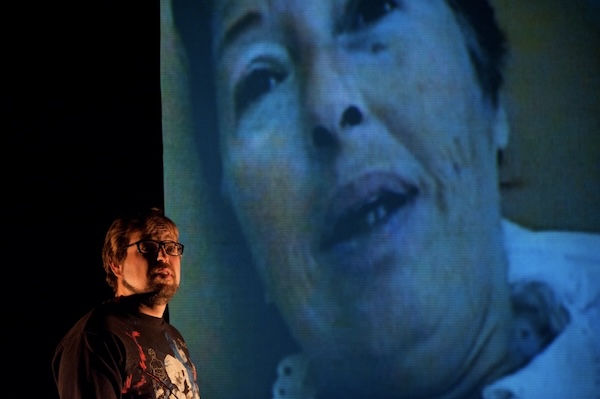
Itai Erdal, with his mom, Mery Erdal, z”l, on screen, in How to Disappear Completely, which opens at the Historic Theatre in Vancouver March 15. (photo from The Chop Theatre)

Itai Erdal’s award-winning How to Disappear Completely, which has toured the globe, will be at the Historic Theatre in Vancouver March 15-22.

Created by Erdal, with James Long, Anita Rochon and Emelia Symington Fedy, How to Disappear Completely premiered at the 2011 Chutzpah! Festival. The one-man show then toured internationally, being performed in more than two dozen cities around the world before COVID hit. The March run marks its first remount since the pandemic.

“It’s been a dream come true,” said Erdal about traveling with the production. “Performing this show is the closest thing I have to hanging out with my mom, so being able to introduce my mom to so many people around the world has been wonderful. I also got to do it in Hebrew – I performed the show in Jerusalem and Tel Aviv and many of the people in the audience knew my mom so that was really special.”

Erdal immigrated to Canada from Israel in 1999. The following year, he found out his mother had been diagnosed with lung cancer and only had months to live. He returned to Israel to be with her as much as possible and, during that time, encouraged by his mother to do so, he shot hours of film and took hundreds of photos. 

“We laughed a lot, and you can see it in the show,” Erdal told the Independent in 2012, when How to Disappear Completely had its first remount. “It’s a tragedy turned to joyful memories,” he said about the piece, which also focuses on his approach to theatrical lighting. Erdal is a multiple-award-winning expert in lighting design.

“This was the first show I wrote and the first time I performed, so we had to come up with a theatrical device to explain why a lighting designer is standing on stage and telling this story,” Erdal told the Independent in an email interview earlier this month. “So, the premise was that this was a lecture about lighting design, and I ran all the lights from the stage. The connection between my mother’s story and lighting design wasn’t obvious at first, but when we started doing workshops, the audience loved all the lighting stuff and responded very strongly to it. I wanted to show how a PAR [parabolic aluminized reflector] can get warmer as it dims, so I took it down one percent at a time, and people got emotional because they thought about the life leaving my mom’s body. The show is full of these accidental metaphors, and the lighting became the emotional heartbeat of the show.”

Over the 14 years since he first wrote and performed How to Disappear Completely, Erdal – who founded the Elbow Theatre – has co-written and performed several other works: Soldiers of Tomorrow, Hyperlink, This is Not a Conversation and A Very Narrow Bridge. So, while How to Disappear Completely hasn’t changed much since it was written, Erdal said, “I am much more relaxed as a performer, so the show got better.”

He added, “The main thing that’s changed in the past 14 years is that I have become a father and I understand better why my mother said it was so important to be a parent. I often think about what a great grandmother my mom would’ve been and I wonder how she would’ve handled some tough parenting moments.”

Erdal doesn’t tire of performing How to Disappear Completely, and he sees how affected audiences continue to be.

“Creating this show has been the most exciting and rewarding thing I’ve ever done,” he said. “You would think that reliving the hardest moment of your life on stage every night would be a daunting task, but it’s a joyful experience. My mother was smart and funny and her personality really shines through. Every time I perform the show, there is a lineup of people waiting to talk to me after, wanting to tell me their stories about finding love and about losing their parents, and I love connecting with them and feeling that my show might help them a bit with their grief.”

And that’s what makes this very personal show widely popular.

“Unfortunately, almost everyone in the world knows someone who died from cancer, and the grief of losing a parent is something almost everyone can relate to, so the show has many universal themes,” said Erdal. “It also deals with loneliness and the search for love, which are also very relatable themes.”

For tickets to How to Disappear Completely, visit thecultch.com/event/how-to-disappear-completely or call 604-251-1363. 

Format ImagePosted on February 28, 2025February 27, 2025Author Cynthia RamsayCategories Performing ArtsTags family, How to Disappear Completely, Itai Erdal, lighting design, memoir
Leaving a legacy of wellness

Leaving a legacy of wellness

Vancouver Talmud Torah students in the new Hildy Barnett Wellness Centre. (photo from VTT)

“It was a dream that came true,” said Jeffrey Barnett of the new Hildy Barnett Wellness Centre at Vancouver Talmud Torah.

The centre, named in honour of his late wife, was dedicated last November.

“As a graduate of Vancouver Talmud Torah and as a teacher of over 30 years, and also being a child psychologist, she knew the value of supporting kids in a Jewish environment,” said Barnett of Hildy, who died April 25, 2024. She and Jeffrey were married 47 years; they have two children and four grandchildren.

Hildy Barnett specialized in education for children with special needs. She worked with the Vancouver School Board for three decades and, after retiring, continued to work with children and teens in various capacities. She volunteered at Canuck Place and with the Jewish Community Centre of Greater Vancouver, among other things. She helped start Jewish Family Services Vancouver’s Innovators Lunch, with friends Naomi Gropper Steiner, z”l, and Kristina Berman.

Shortly before Hildy Barnett passed away, she and Jeffrey made the decision to fund the wellness centre at VTT. Hildy had asked Shirley Barnett, who had a relationship, via her sons, with Shane Foxman, associate director of development at VTT, to inquire about legacy opportunities at the school. Foxman connected Shirley with Emily Greenberg, VTT head of school.

“When Shirley first told me about Hildy, I asked her to tell me a bit more about what she did, her passions, her career,” Greenberg told the Independent. “It became almost immediately clear that she should be part of realizing the vision for the wellness centre. As her health diminished rapidly, Shirley came to the school and I told her to film me speaking about my vision for the space, the children it would serve and the reason we needed to create such a space for our students. I knew what I wanted it to look like, but I wanted to paint that picture for her. I remember, when we stopped recording, I had goosebumps because I could feel how special this room was going to become.

“We hurriedly sent the recording over to Hildy’s daughter, Mira, to show her in her hospital bed,” continued Greenberg. “I remember Shirley got a text back from her within a few minutes. She said that it was exactly what she had hoped for. Hildy, unfortunately, passed away just a couple hours later, but I have always been so grateful that she knew about the wellness centre before she left this world. I think this has made this work even more sentimental. We really wanted to get every detail right.”

photo - Before she died last April, Hildy Barnett, with her husband Jeffrey, decided to fund the building of a wellness centre at Vancouver Talmud Torah, which has been named in her honour
Before she died last April, Hildy Barnett, with her husband Jeffrey, decided to fund the building of a wellness centre at Vancouver Talmud Torah, which has been named in her honour. (photo by Alexandre D. Legere)

A VTT newsletter leading up to the centre’s November dedication noted, “Approximately 20% of our students require some form of extra assistance to fully engage in the curriculum and to meet their full potential…. Over the last several years, we have completed a landscape study to understand best practices for supporting students with learning needs and have implemented several new layers of services to help create unique learning pathways.”

The study comprised a review of what many other schools are doing for student support services, said Greenberg. “There were many takeaways,” she said, “but one of them was that the spaces we create can really enable the programming and support we want to offer. The wellness centre has catapulted our counselors from being in a windowless, uninspiring, tiny office to in a centre that exudes safety, support, belonging and comfort.”

Over the past five years, VTT has gone from having a half-time counselor to two full-time counselors: Donna Cantor and Shakaed Greif. The two are both experienced counselors who are helping “to better support our students, parents and, sometimes, staff, as they navigate the many pressures and challenges of life, especially in a post-Oct. 7 world,” said Greenberg.

The counseling team “has been imperative in helping our many new Israeli students settle into life at VTT. They also run many support groups, including our Free to Be Me club, Chesed club and more,” she said.

The Hildy Barnett Wellness Centre allows Cantor and Greif to have their own offices, as well as a shared space for working with small groups and families.

“When I look back, in a very quiet way, Hildy did what she loved and, having the facility at TT is the ultimate,” Jeffrey Barnett told the Independent. “It brought smiles to her face. She knew that she wasn’t going to be around. She knew that the legacy she was doing would benefit so many youngsters, including the fact that our own grandchildren would be at the school, and that not only this generation but future generations [would be helped]. And it made me feel good that she felt good. It’s still very sad, very touching, and we miss her a great amount.”

Barnett spoke of Hildy’s approach to education, which was based on the methods of the late Dr. Reuven Feuerstein, with whom Hildy Barnett had studied.

Feuerstein was a psychologist from Romania, who trained with the Russian psychologist Lev Vygotsky, explained Charlene Goldstein, who, with Hildy Barnett, years ago established with the Vancouver School Board a learning centre for speech language pathologists, teachers, counselors and others, which has since faded away. Goldstein is a registered psychologist in the neonatal follow-up program at BC Women’s Hospital and Health Centre; she also has a private practice.

“Reuven came to Israel right after the Holocaust and he began to work with children from the Holocaust, as he did with children from Ethiopia,” Goldstein told the Independent. “And what he saw was that these children only lived in the present, that they had limited memories of the past and very few [visions] of the future, and that was because, to protect them, their parents didn’t want them to know too much, plus they had a lot of losses. So, he had a group of volunteers together who would sit by the beds of these children, so if they had nightmares, they would calm them.

“Then, he began to notice that some people were saying that these children were incapable of learning, that type of thing,” she continued. “But what Reuven and Vygotsky believed in [is that] you can have direct learning, where, let’s say I’m a child and I’m looking at putting some blocks together and I figure it out and nobody has to tell me what to do. Or, you could have mediated learning, which is, someone is between the child and the activity helping them to learn what to do. 

“So Reuven, and I still do this now – when a child says to me, I can’t do this, I say, well, what do you already know here? What do you already recognize? What about this is new? And I start asking questions about things. So, what do you call this? Oh, my goodness, look at all of these things that you already know. Reuven would also say to teachers, think of the child, and his logo was ‘just a minute … let me think.’ Because he believed, as I do, that everybody has the potential to think, everyone has the potential to learn. We may not all learn everything the same, but we have potential to learn. And that everyone has potential to give back to society.”

Part of the funds raised by the Hadassah Bazaars – which Hildy’s mother, Marjorie Groberman, helped start here and in other places across Canada – were sent to Israel to support Feuerstein with his work, said Jeffrey Barnett.

Groberman, who was “Mrs. Hadassah-WIZO for many years,” had heard Feuerstein speak at a Hadassah convention, said Goldstein. He was brought to Vancouver by Hadassah-WIZO and Variety Clubs International, with which Jeffrey Barnett was involved, she said.

Feuerstein came back to Vancouver many times, said Goldstein. When here, he trained many educators, including those who worked with Indigenous children.

“Some of the children would think he was Santa Claus and would call him that because he had a long, white beard and his beret,” said Goldstein.

Among the people in Feuerstein’s sphere was Dr. Lorna Wanosts’a7 Williams, an expert in Indigenous language revitalization and education. Williams met Goldstein and Barnett in the mid-1980s, when she was hired by the Vancouver School Board as a specialist in First Nations education.

“I was looking at Reuven’s work because of his ideas around what happens with children when they get separated from the knowledge, from their parents,” Williams told the Independent. (People wanting to know more about this aspect of Williams’s work should watch the 1994 National Film Board of Canada documentary The Mind of a Child.)

Williams said Hildy Barnett was focused on “supporting all children to learn and enable them to overcome all their trauma. She just was so dedicated to that kind of work.” 

Barnett knew how to move things along, said Williams. “She was able to bring people together in such a beautiful way.”

She added, “I really honour her for all the help she gave me and that she gave many other people. She was very quiet but she was very strong.”

Goldstein, who knew Barnett from having grown up in the local Jewish community, before they connected more in Hadassah-WIZO and with Feuerstein’s work, echoed Williams’s observation.

“Hildy had the most gentle voice, she had a great sense of humour, but she had strong determination,” said Goldstein. “In Star Trek, there’s one person who says, ‘Make it so,’ and that’s what Hildy was like. She would say, ‘Make it so,’ and you just didn’t say no to Hildy because Hildy listened to everybody and had such compassion, such compassion.”

photo - Rabbi Philip Bregman, at back, and Jeffrey Barnett, middle, hang the mezuzah at the door of the Hildy Barnett Wellness Centre, along with Barnett’s daughter, Mira, and son, Joel, who is holding one of Barnett’s grandchildren, Blake
Rabbi Philip Bregman, at back, and Jeffrey Barnett, middle, hang the mezuzah at the door of the Hildy Barnett Wellness Centre, along with Barnett’s daughter, Mira, and son, Joel, who is holding one of Barnett’s grandchildren, Blake. (photo from VTT)

The Nov. 24, 2024, dedication ceremony of the Hildy Barnett Wellness Centre was originally envisioned as a small family gathering to honour Barnett’s legacy, said VTT’s Greenberg. “But, to our delight, she was so beloved in the community that many more people attended.

“I think it was an opportunity for many people to pay their respects to her powerful legacy of believing in children, and the Hildy Barnett Wellness Centre has become a healing place in so many ways, including for those who are grieving Hildy’s loss.” 

Format ImagePosted on February 28, 2025February 27, 2025Author Cynthia RamsayCategories LocalTags health, Hildy Barnett, Jeffrey Barnett, mental health, Vancouver Talmud Torah, VTT, wellness

Posts pagination

Previous page Page 1 … Page 9 Page 10 Page 11 … Page 85 Next page
Proudly powered by WordPress