Skip to content
  • Home
  • Subscribe / donate
  • Events calendar
  • Business Directory
  • FAQ
  • News
    • Local
    • National
    • Israel
    • World
    • עניין בחדשות
      A roundup of news in Canada and further afield, in Hebrew.
  • Opinion
    • From the JI
    • Op-Ed
  • Arts & Culture
    • Performing Arts
    • Music
    • Books
    • Visual Arts
    • TV & Film
  • Life
    • Celebrating the Holidays
    • Travel
    • The Daily Snooze
      Cartoons by Jacob Samuel
    • Mystery Photo
      Help the JI and JMABC fill in the gaps in our archives.
  • Community Links
    • Organizations, Etc.
    • Other News Sources & Blogs
  • JI Chai Celebration
  • JI@88! video

Recent Posts

  • Legal help for students
  • Revisiting myth of Lilith
  • Wrong person rebuked
  • Canada’s mixed messages
  • Questions for museum
  • Symposium on antizionism
  • Making soccer political
  • CJPAC lauds Pulver’s impact
  • City recognizes Vrba’s legacy  
  • Organ donation saves lives
  • Theodore’s March premiere
  • A healing Shabbaton
  • Supplying healthy food
  • A chime of metal tags
  • Yellowknife seder a first
  • Ishai energizes, unifies
  • A Lag b’Omer to remember
  • Expanding the healing
  • Hannah Senesh – a unique hero
  • Community milestones … May 2026
  • Sharing her testimony
  • Fall fight takes leap forward
  • The balancing of rights
  • Multiple Tony n’ Tina roles
  • Stories of trauma, resilience
  • Celebrate our culture
  • A responsibility to help
  • What wellness means at JCC
  • Together in mourning
  • Downhill after Trump?
  • Birth control even easier now
  • Eco-Sisters mentorship
  • Unexpected discoveries
  • Study’s results hopeful
  • Bad behaviour affects us all
  • Thankful for the police

Archives

Follow @JewishIndie
image - The CJN - Visit Us Banner - 300x600 - 101625

Author: Dr. Alana Hirsh

Compassion needed

“… what the Lord doth require of thee: only to do justly, and to love mercy, and to walk humbly with thy God.” (Micah 6:8)

Despite its solemnity, Yom Kippur is my favourite of the Jewish holidays. The ritual of atonement, the accounting for our soul’s transgressions, humbles and connects us.

When we ask God for forgiveness, what are we asking for? Not for His acceptance, nor His condoning of our transgressions. What we are seeking is His compassion: the recognition that we are human and that, to be human, is to have both divine potential and to be inherently flawed. Atonement humbles us; His compassion restores our dignity.

As a physician specializing in addiction medicine, I see and support people who truly believe they are unworthy of this compassion. Many people believe that addiction is not something that affects Jewish people. I can attest that Jews are as susceptible to this neurological disease as any other group. From the Downtown Eastside SRO (single-room-occupancy) hotels, to the extravagant homes of Shaughnessy, substance dependence is having a deep impact on our community as a whole.

Our failure to acknowledge the addiction issues within our community has forced people with substance dependence into hiding and fostered ignorance over compassion. Isolating drug users can be deadly. We know that, statistically speaking, the majority of the lives lost throughout the overdose epidemic have been people who have used drugs alone in their homes.

Is it possible for us to consider extending the compassion, the dignity that we desire to receive on Yom Kippur, to people who are dependent on drugs?

For most of my patients, drug use began as a coping tool, a way to manage physical or mental pain. Haven’t we all resorted to coping strategies at some time, sometimes constructive, sometimes foolish?

What is your coping mechanism? When you don’t want to deal with a situation, do you binge on Netflix? Do you eat junk food, work too much, smoke? Fiddle with your phone, endlessly scrolling through social media? Do you sometimes misuse a prescription medication to help you manage your thoughts or worries?

Have you ever experienced shame around your coping mechanism? Do you find yourself shutting the phone off when your spouse walks in the room? Eating differently when others are around?

Imagine if your coping mechanism was not easily hidden. Imagine if, when you realized that it had become a problem and you tried to stop, you plummeted into severe anxiety and physical withdrawal – convulsing, vomiting, sweating, aching everywhere – but you couldn’t afford the days or weeks it would take to withdraw because you had a job to do, a family to care for. So, you spiraled deeper, always in search of a way to manage your pain. Until, eventually, it became impossible to hide.

Drug addicts are our vulnerability and suffering made visible. Or, as Rabbi Shais Taub said, “Addiction is but the human condition writ large.”

Last September marked the launch of Jewish Addiction Community Services (JACS) Vancouver, an organization created to provide members of our community with support around the effects of addiction. Rabbi Paul Steinberg spoke at the opening event. His words continue to resonate: “… I pray that we can tear down our walls of fear and provide a safe place to express our vulnerabilities, truly embracing teshuvah as a real agent of transformation. If our congregations cannot be a place for the depressed, the addicted, the junkie or the ex-con, then what claim are we making on our Judaism? What kind of temple have we really built?”

This Yom Kippur, let us acknowledge and have compassion for the addict in all of us. Let us welcome those with substance dependence into our congregations, and into our hearts and prayers. If you know someone with an addiction problem, let them know that you are grateful for the effort they are making, an effort that reflects a persistent theme in the history of the Jews – escaping enslavement and finding freedom. We all have something to learn from their struggles.

And let them know they are not alone. Tell them about JACS Vancouver. For more information, visit jacsvancouver.com, email [email protected] or call 778-882-2994.

Dr. Alana Hirsh is a Jewish Addiction Community Service (JACS) Vancouver volunteer and program committee member.

Posted on September 29, 2017September 28, 2017Author Dr. Alana HirshCategories Op-EdTags addiction, JACS, Yom Kippur

Yiddishkeit – a story of love

Dear Yiddishkeit, I’m home! Did you miss me? Sorry I was away for so long. I got kind of lost in the desert. But I’m finally back, and living happily in … well, different places: at Ohel Ya’akov Community Kollel, at Chabad of Richmond and, recently, at the National Jewish Retreat in Palm Desert, Calif. (Not that other desert.)

I met your family, Chabad Lubavitch, about 13 years ago. They seemed authentic and sincere, and welcomed me warmly. I got the sense that they live what they preach: that every Jew is important and has a unique mission in life. This really resonates with me and makes me want to search for the mission that drives my life. Even though I’m not a Torah-observant Jew, your family treats me like one of their own. I don’t dress all that modestly, but I never feel judged by them. It’s funny, I grew up living a fairly secular life, yet I’ve never been more certain about where I belong, and that’s Chabad.

Oh, Yiddishkeit, I’ve admired you from afar for years. I know we haven’t always seen eye to eye on everything – you know, that Shabbos thing, the kosher thing. But there’s always been a chemistry between us. Even if it was unspoken. I have to admit, I’m enthralled; I want to know everything about you. Your likes and dislikes, your temperament, what you look for in a partner. I do know you’re a veritable buffet of fascinating facts and your family’s unabashed optimism and positivity inspires me beyond words. You and your family are smart, solid, attractive and respectful. How could I not love you?

So, how come we’ve played a game of “come here, go-away” most of my adult life? You were shy, yet inviting, all at once. And me? I was just non-committal. You never pushed me into anything though. You just waited me out until the time was right.

I remember in 1997 when one of your family – Rabbi Avraham Feigelstock – called me in the hospital when he found out I was very sick and had been there for 43 days. I’d never even met the man, and here he was calling me: “How are you feeling? Do you want a visit? Can I bring you anything? Let me give you my home and office phone numbers, in case you feel like talking.” I will always be grateful for that. I knew that there was more to this than mere friendliness.

After I recovered, I began going to weekly Friday night dinners and Saturday Shabbat services at the Kollel, where I met Rabbi Shmulik Yeshayahu. His Shabbat sermons jumpstarted something inside me that made me want to know you better. The Kollel is also where I met my bashert, Harvey. I owe you a lot, Yiddishkeit.

Until recently, I wasn’t even sure where I stood with you, Yiddishkeit. But now I know for a fact that I’m smitten. You swept me off my feet. And it only took 61 years! The turning point for me was last year at my retirement party, where another of your family members – Rabbi Yechiel Baitelman – gave a beautiful speech. He said: “Retirement doesn’t mean retiring from life. It means going on to do mitzvahs, and study and do good things.” This fanned the fire inside, and now I enjoy weekly Torah study classes at Chabad of Richmond and volunteer with the Light of Shabbat and Israel Connect programs. I have even attended the Jewish Learning Institute’s National Jewish Retreat. Twice! Rabbi Baitelman’s enthusiasm, encouragement and positivity are infectious.

But let me back up a bit. Early last year, I had a personal issue that was troubling me deeply and I needed someone to talk to. So, I asked Rabbi Baitelman if he could spare the time to speak with me. Long story short, we met at a Starbucks in Richmond and, for the next one-and-a-half hours, he looked directly at me and focused like I was the only person in the world who mattered. That, Yiddishkeit, made a huge impression on me. It reinforced everything I’d heard and read about Chabad – that they consider every Jew important and indispensable.

I once heard someone say, “We don’t choose Judaism. Judaism chooses us.” I am unspeakably honoured that you chose me, Yiddishkeit. I’m sure there are others much prettier, smarter and more devoted than I. Why me? You must have your reasons. Never mind.

All I know for certain is that you have given my life meaning and purpose. I’m more committed than ever to doing mitzvahs, studying Torah and learning about all things Jewish. What started as curiosity has blossomed into commitment. I regularly listen to Jewish scholars like rebbetzins Rivkah Slonim and Menucha Schochet and rabbis Moshe Bryski, Yitzchak Schochet, Y.Y. Jacobson, Mendel Kalmenson and others on Torah Café; and watch Rabbi Simon Jacobson’s videos from his Meaningful Life Centre. Books like The Secret of Chabad, Toward a Meaningful Life, My Rebbe, The 613 Mitzvot, The Empty Chair, The Rebbe’s Army, and books on davening, healing, Tanya, Shabbat and Jewish grieving have enriched my life unimaginably. One of the most life-changing events, though, was the National Jewish Retreat.

As I do more Jewish reading, I come across Yiddish and English adages that impress me with their profundity. It’s what I try to live by now. Check them out:

“Tracht gut, vet zein gut,” “Think good, and it will be good.” (Rebbe Menachem Mendel Schneerson of Lubavitch)

“Who is wise? One who learns from every man.” (Ben Zoma from Pirkei Avot, Ethics of the Fathers)

“Always remember: you are never given an obstacle you cannot overcome.” (Rebbe Nachman of Breslov)

“Gam zu l’tovah,” “This, too, is for good.” (Nahum Ish Gamzu)

My Jewish learning is like a prospector who shuffles the rocks around on his sieve, hoping to find gold. The more I infuse my life with Yiddishkeit, the more gold I find.

Let me declare, Yiddishkeit, in front of heaven and earth, that I commit, forever more, to being faithful, trusting and open to the love you give me. I promise not to squander or minimize it. I promise to hold you close and be there for you, like you are for me.

Fast forward. Hashem and I are now on a first name basis. We live together blissfully and share the chores. We hold each other up, and we’re true partners. I admire and adore you, Hashem. There is You and only You. Always.

Did I come to this love story overnight? Heck, no! It’s taken me decades of searching, questioning, losing and then finding myself. Yet, here I am – home. Where I’m meant to be.

My husband Harvey says there’s nothing quite as cloying as a convert. Even if it’s a Jewish-to-Jewish convert, like me. I’ve become a cheerleader for Yiddishkeit. Everything excites me, because it’s all so new. Learning to read Hebrew – let’s celebrate! Torah study class – break open the Manischewitz! Trying to keep Shabbat – woo-hoo!

I’m taking it all with baby steps. Nothing too drastic or radical, even though there are days I want nothing more than to totally immerse myself in Yiddishkeit. I’ve learned there’s no speeding up a process that has its own timetable. For now, lighting Shabbos candles, saying certain blessings, going to Torah classes and giving up certain foods is where I’m at.

At this point, I’ll slow dance with Yiddishkeit, keeping a respectful distance. And I won’t let anyone cut in. It’s just the two of us. The perfect shidduch!

Shelley Civkin recently retired as librarian and communications officer at Richmond Public Library. For 17 years, she wrote a weekly book review column for the Richmond Review, and currently writes a bi-weekly column about retirement for the Richmond News.

Posted on September 29, 2017September 28, 2017Author Shelley CivkinCategories Op-EdTags Chabad, Community Kollel, Judaism, Yiddishkeit
Win free dance tickets!

Win free dance tickets!

Hasta Dónde…? is one of two works Compañía Sharon Fridman brings to Vancouver Oct. 12-14. (photo by Gerardo Sanz)

The work of Israeli choreographer Sharon Fridman comes to the West Coast for the first time, with a program featuring Hasta Dónde…? and All Ways. And Jewish Independent readers can win two tickets to the Oct. 14, 8 p.m., performance at Scotiabank Dance Centre – simply email [email protected] by Wednesday, Oct. 4, 5 p.m., to be entered in a draw. The winner will be contacted.

Fridman has taken the dance world by storm since establishing his company in Spain in 2006: his athletic, adventurous work is rooted in contact improvisation, filtered through an innate musicality and an eye for design. Hasta Dónde…? explores the relationship between two dancers as it evolves through dependency, struggle and harmony. The endlessly fluid lifts and tumbles are propelled by a surging score. All Ways is a meditation on the multiple paths before us: seven dancers power through a physical and emotional spectrum, which ranges from fierce urgency to calm contemplation.

Hasta Dónde…? premièred in 2011 and has toured to more than 30 cities worldwide, receiving several prizes and audience awards. Fridman describes the work as: “A struggle between two sides, the inner sides we all somehow contain. How far can you transmit? How far can you pull or let yourself be pulled?.… No side is a winner.” All Ways is Fridman’s latest work, and it premièred in 2016. The company visits Halifax prior to Vancouver, in its first North American tour.

Fridman was a dancer with leading companies including the Tadmor Dance Company, the Vertigo Company and Kibbutz Contemporary Dance Company, before moving to Spain and forming Compañía Sharon Fridman in Madrid in 2006. His works have toured to countries including France, Italy, Germany, Belgium, the United Kingdom, the Netherlands, Colombia, South Korea and Singapore, receiving multiple awards. The work of the company is based on the language of contact improvisation, deconstructing and exploring the technique to create a dramatic language that evolves in the hands of the dancers. In addition to many works for the stage, Fridman has created large-scale, open-air, site-specific performances for as many as 70 participants. Fridman’s works are also in the repertoires of companies including Ballet Nacional de Paraguay, Vertigo Dance Company (Israel), Compagnie Jus de la Vie (Sweden) and Compañía Nacional de Danza (Spain).

Compañía Sharon Fridman’s performance is part of the Dance Centre’s Global Dance Connections series. There are shows Oct. 12-14, 8 p.m., at the centre, with a post-show talkback Oct. 13. For tickets ($32/$24), call 604-684-2787 or visit ticketstonight.ca. For a chance to win two free Oct. 14 tickets, email [email protected].

Format ImagePosted on September 29, 2017October 1, 2017Author Dance Centre and the JICategories Performing ArtsTags contemporary dance, Dance Centre, Sharon Fridman
JSA AGM honours volunteers

JSA AGM honours volunteers

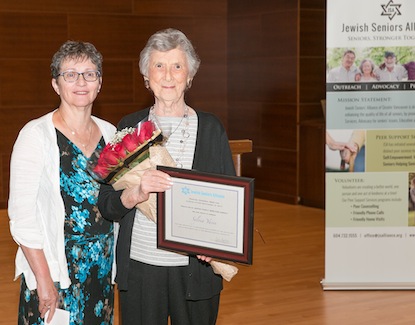
Karon Shear was one of the volunteers honoured at the Jewish Seniors Alliance AGM on Sept. 14. (photo by Alan Katowitz courtesy of Jewish Seniors Alliance)

The annual meeting of the Jewish Seniors Alliance was held on Sept. 14 at Congregation Beth Israel. The business meeting was followed by a dinner and awards ceremony.

The business portion of the evening was called to order by JSA president Ken Levitt. Prior to the presentation of committee reports, a number of organizations offered greetings. A d’var Torah was delivered by Beth Israel’s Rabbi Jonathan Infeld, who emphasized that, according to Jewish law, we are not to cast aside seniors as they are at the heart of the community. And both Ezra Shanken, chief executive officer of the Jewish Federation of Greater Vancouver, and Gudrun Langolf, acting president of the B.C. Council of Senior Citizen Organizations (COSCO), also said a few words.

Following the approval of the agenda and the minutes of last year’s AGM, Larry Meyer delivered the treasurer’s report. He outlined the various funding sources of JSA – government, corporate and private grants, as well as the $18 annual fee from members/supporters. He also listed the programs this money supports, such as peer counseling, Senior Line magazine, the fall symposium, the spring forum and the Empowerment Series, as well as the website, jsalliance.org.

Pamela Ottem, chair of the Peer Support Program, outlined the various aspects of the service. Peer counselors are required to take 55 hours of training prior to being assigned a client. They are given ongoing support in their work by Grace Hann, who is also the trainer, and Charles Leibovitch, who is a social worker. It takes 15 hours of training to become a Friendly Visitor. These volunteers visit shut-ins and lonely seniors; another part of the program is friendly phone calls and service information and referral. The peer support program has 56 trained volunteers serving 70 seniors.

The JSA’s Ambassador Program, whose goal is to raise awareness of elder abuse, started with a one-year grant and has been incorporated into the other offerings. Hann, Leibovitch and some of the volunteers make presentations to other seniors groups about their activities.

Binny Goldman reported that JSA has 596 members/supporters, of whom 320 are individual members, 150 are members of the Most Russian Bridge group and 21 are from affiliate organizations.

photo - Debbie Rozenberg, left, and Sylvia Yasin
Debbie Rozenberg, left, and Sylvia Yasin. (photo by Alan Katowitz courtesy of JSA)

In Levitt’s president’s report, he briefly reviewed the activities of the JSA, emphasizing that the organization would not exist if it were not for the active involvement of its volunteers. He pointed out that the peer support program alone, if it were carried out by paid staff, would cost much more than JSA’s total budget. He thanked everyone, both staff and volunteers, who have worked so hard and contributed so much over the past year.

Marilyn Berger presented the report of the nominations committee. She read out the slate for the coming year and moved for acceptance. Two former board members were mentioned, Edith Shier, who has passed away and was the previous editor of Senior Line, and Milton Adelman, who has retired from the board but was for many years the treasurer of JSA. Levitt then called for the adjournment of the business part of the evening and everyone was invited to move to the tables for dinner, volunteer recognition and musical entertainment.

Jazz singer Jill Samycia entertained the approximately 150 dinner guests, after which came the awards presentations to volunteers. As has become JSA’s custom, several organizations were asked to nominate senior volunteers who have spent time and energy enhancing the goals of their organizations.

Karon Shear, who was coordinator and administrator of JSA from 2005-16, was nominated by JSA. Her service to seniors, and enthusiastic marketing, played a vital role in the development and growth of the organization. In presenting her with the award, Serge Haber described her as the heart and soul of JSA. He spoke of the countless hours she spent, off the clock, on weekends, working at home; how she produced the Senior Line magazine basically on her own for a time.

photo - Nassa and Arnold Selwyn
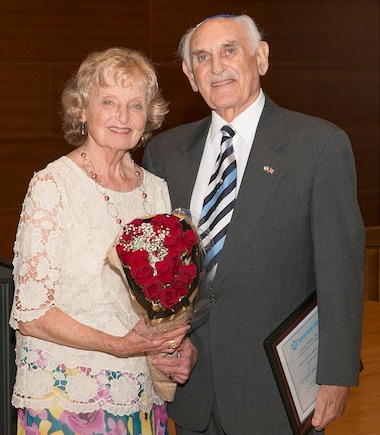
Nassa and Arnold Selwyn. (photo by Alan Katowitz courtesy of JSA)

Sylvia Yasin was nominated by the Jewish Family Service Agency. Yasin has volunteered for many years with the Jewish Food Bank and was instrumental in creating relationships with various groups and individuals and obtaining ongoing donations of supplies for school-aged children. She was presented with her award by Debbie Rozenberg, who noted that Yasin began volunteering while still working full time. Yasin has been involved with the Terry Fox Run and with ORT. Among other things, she organized the gift wrapping in shopping malls that raised funds for ORT. She also helps set up and clear for the seniors lunches at the Kehila Society and is still involved with the Jewish Food Bank.

Nassa and Arnold Selwyn were nominated as a couple for their longtime volunteerism at Congregation Beth Israel. Infeld talked about Arnold’s singing for the congregation and Nassa’s beautiful sewing of the parochet (ark curtain) and the siddur covers. Together they bring holiness into the world, said the rabbi. Both of them act as greeters and have been part of many other committees. They are also active in the general community and are part of Showtime, an entertainment group of seniors.

All of the honourees expressed their thanks and appreciation to JSA and the nominating organizations. The message to all was, volunteer whenever you can and wherever you can – it will bring you feelings of fulfilment and joy.

Samycia performed again, during dessert, and a number of the guests got up and danced to the music. The evening ended with a draw for door prizes.

Barbara Bronstein and Larry Shapiro were co-chairs of the event.

Tamara Frankel is a member of the board of Jewish Seniors Alliance. Shanie Levin, MSW, worked for many years in the field of child welfare. During that time, she was active in the union. As well, she participated in amateur dramatics. She has served on the board of the Jewish Federation of Greater Vancouver and is presently on the executive of JSA and a member of the editorial committee.

Format ImagePosted on September 29, 2017September 28, 2017Author Tamara Frankel and Shanie LevinCategories LocalTags Beth Israel, Jewish Family Service Agency, Jewish Seniors Alliance, JFSA, JSA, seniors, volunteerism
Housing, high-tech, musicals and more – this week in the community

Housing, high-tech, musicals and more – this week in the community

Tikva welcomes residents: The Storeys Complex in Richmond. (photo from facebook.com/tikvahousing)

We are taught from an early age that giving, repairing the world and being kind are the tenets of living a Jewish life. In our community we don’t have to look very far to find people who fit this description. One of the latest projects that has come to fruition is the Diamond Residences in the Storeys complex in Richmond. Thanks to the generosity of the Diamond Foundation, Tikva Housing Society now owns 18 (chai!) units that are being rented at below-market rates to people in the community for whom stable, safe housing was unpredictable and unaffordable, at best.

Tikva Housing partnered with four nonprofit societies and the City of Richmond to build these and other apartments. Tikva worked hand in hand with community agencies such as the Jewish Family Service Agency to place tenants in need in these units, as well as with the Jewish Federation of Greater Vancouver and B.C. Housing. Most of the tenants will have moved into their units by the end of this month.

The Diamond Residences will house six singles and, of those, five are seniors. Also, 12 families and a total of 22 children will be living there. One 83-year-old woman cried when she was told she would be moving into a studio unit, as she has not had a place to live for years and was sleeping on someone’s couch. A single Israeli mother with two children is moving into a three-bedroom unit; her kids have never had their own rooms. Another single mother with three children has been sharing a two-bedroom place and has not had her own room in two years. One family has moved to Greater Vancouver from out of town and can now attend Shabbat services, be close to their family and the Jewish community. There are many more such stories.

 – Courtesy of Tikva Housing Society

* * *

Simon Fraser University recognized four distinguished alumni on Sept. 13 at Four Seasons Hotel. Among them was Gary Cristall, co-creator of the Vancouver Folk Festival.

The annual awards, presented by SFU and the Alumni Association, recognize those whose accomplishments and contributions reflect the university’s mandate of engaging the world. An advocate for the arts and human rights, Cristall has been a cultural groundbreaker, having co-founded the Vancouver Folk Music Festival in 1978. In an industry plagued with an unscrupulous reputation, Cristall has been instrumental in fighting for the rights of artists to be treated professionally and with respect while also defending their rights to fair performance fees and copyright ownership.

Cristall served as acting head of the music section of the Canada Council for the Arts and was the founding president of the Public Service Alliance of Canada, the first union at the Canada Council. Today, Cristall continues to serve as a prominent mentor and educator, assisting artists in building their careers and guiding communities in enhancing dynamic cultural interactions that enrich and benefit a healthy, democratic society.

* * *

After a grueling 33 hours of programming, DragonFruit – Benjamin Segall, Jacy Mark, Viniel Kumar and Pritpal Chauhan – completed StoryTree and demonstrated it live to a panel of judges at Hack the North, an international student hackathon held at the University of Waterloo in Ontario, which this year took place Sept. 15-17.

Canada’s biggest hackathon, Hack the North was founded and is organized by Techyon, a student-run nonprofit organization, in partnership with Waterloo Engineering. The event brings together 1,000 students from top universities across 22 countries in the world. Students collaborate and create impactful new hardware projects or mobile and web applications of their own design for a weekend at the University of Waterloo, all expenses paid.

DragonFruit’s StoryTree was one of the 14 projects chosen out of the more than 250 demonstrated at Hack the North. StoryTree is an online workspace for aspiring authors to collaborate on books together. All you have to do is write a paragraph or a chapter, or even just a sentence, and, as more and more people add or branch off from a story, that story you’ve always wanted to write becomes a reality.

DragonFruit will be continuing the project and are looking for alpha testers for January 2018. If anyone is interested in being a part of this project or for more information on it, contact them via facebook.com/dragonfruitcode or dragonfruitcode.com.

* * *

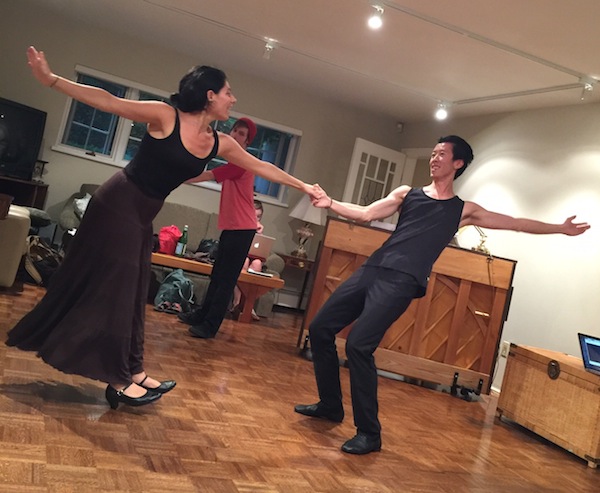
photo - Swinging Sylvia rehearsals: Advah Soudack and Sky Kao create a whirlwind of action in rehearsal of the second one-act play that comprises Two Views from the Sylvia
Swinging Sylvia rehearsals: Advah Soudack and Sky Kao create a whirlwind of action in rehearsal of the second one-act play that comprises Two Views from the Sylvia. (photo by Sue Cohene)

 Rehearsals have started for Two Views from the Sylvia, a new musical theatre production by Kol Halev Performance Society. This original production – which will be at Waterfront Theatre Nov. 8-12 – tells the story of the iconic Sylvia Hotel and its historic connection to the local Jewish community and the city of Vancouver.

Two Views from the Sylvia comprises two one-act plays.

The first play, Sylvia’s Hotel, is set in Vancouver in 1912. It brings to life the origin of the Sylvia Hotel, named for Sylvia Goldstein (Ablowitz) and the story of the Goldstein family who built it. Young Sylvia Goldstein and the legendary Joe Fortes, the beloved English Bay lifeguard, develop a bond that helps Sylvia realize her dreams.

In the second play, The Hotel Sylvia, the story continues as we meet the characters whose lives and loves became interwoven with the story of the Sylvia over her 100-year history. It includes vignettes revealed to the production’s researchers by Huguette, the front desk clerk who worked at the Sylvia for 35 years.

Jewish community members play key roles in both plays. In the lead roles are Advah Soudack (as Sylvia) and Adam Abrams (as Abraham Goldstein); Anna-Mae Wiesenthal and Joyce Gordon are cast in important supporting roles. Behind the scenes are Sue Cohene (producer) and Heather Martin (associate producer), as well as Gordon (assistant producer) and Abrams (graphic designer and webmaster) and Gwen Epstein (production team). Marcy Babins and Michael Schwartz collaborate in their roles at the Jewish Museum and Archives of British Columbia, which has created an historical photo display to accompany the production.

Two Views from the Sylvia is a project of Kol Halev in partnership with the B.C. Arts Council, Government of British Columbia, City of Vancouver, Granville Island Cultural Society, CMHC Granville Island and the JMABC. For information and tickets ($28), visit sylviamusical.com.

– Courtesy of Kol Halev

 * * *

Bema Productions’ Victoria Fringe Festival play Horowitz and Mrs. Washington was a great success. All seven performances at Bema’s Black Box Theatre at Congregation Emanu-El were sold out and the production company’s work was once again as one of the best dramas in the Victoria Fringe.

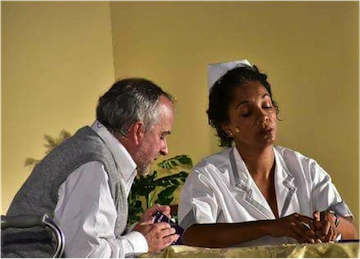
photo - Bema Productions’ Victoria Fringe Festival play Horowitz and Mrs. Washington was a great success
Bema Productions’ Victoria Fringe Festival play Horowitz and Mrs. Washington was a great success.  (photo from Bema)

Mrs. Washington is hired to nurse Sam Horowitz, who’s been mugged and had a stroke. She’s a determined tyrant and he’s a bigoted Jewish widower. The two must find a mutually beneficial relationship when his daughter tries to make him leave his home. The play by Henry Denker reflects the attitudes of the 1970s and illuminates the power to be found in ordinary lives.

“The electric performance of the actors enabled the audience to visit uninhibitedly the issues of racism, stroke recovery and aging in place,” reads the review “Bravo Bema!” on Emanu-El’s website.

“For the most part,” said the review, “the actors were provided with a very humorous script that relied on stereotyping but went beyond it for its punchlines. The audience was asked to stretch their imaginations – who would have considered invoking Michelangelo to explain why the naming of a grandson ‘Douglas’ instead of ‘David’ was inappropriate? There were a few moments when the pace flagged but very few.”

While the play “revealed little about the face of contemporary racism,” the “potential disempowering of aging adults by their loving offspring is an issue of contemporary concern.”

The Bema production was directed by Zelda Dean and Angela Henry and was performed by David Macpherson, Rosemary Jeffery, Christine Upright, Alf Small, Cole Deo and Graham Croft.

– Courtesy of Bema Productions

 * * *

photo - Miki Mochkin teaches a class on baking challah
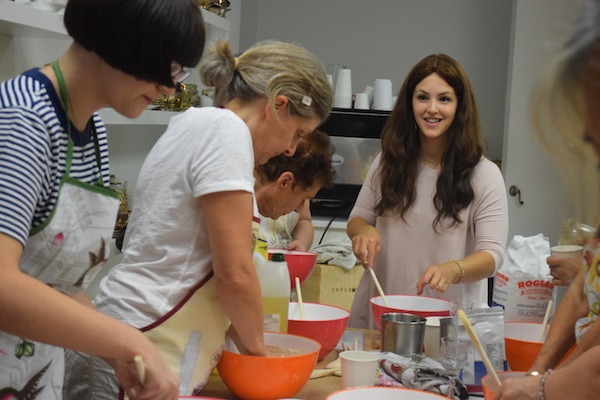
Miki Mochkin teaches a class on baking challah. (photo by Shula Klinger)

Chabad North Shore hosted a challah bake at Mia Claman’s store in West Vancouver on the night of Sept. 6. Miki Mochkin taught a class on baking challah to local women. While the bread was rising, she explained the significance of each ingredient for Jewish women. From the sweetness of the honey to the harshness of the salt, every element serves to remind the baker of its symbolic role in our lives as women and mothers.

– Courtesy of Shula Klinger

* * *

photo - Panelists at Congregation Beth Israel discuss the topic Our Leaders: Are They Above the Law?
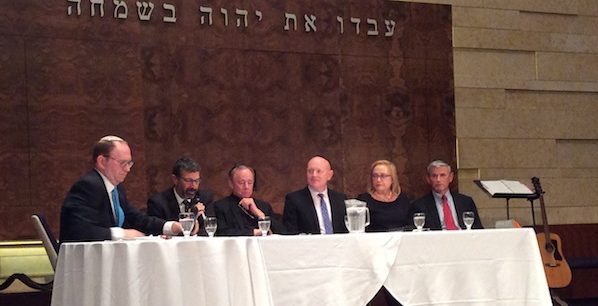
Panelists at Congregation Beth Israel discuss the topic Our Leaders: Are They Above the Law? (photo by Cynthia Ramsay)

In the photo, left to right, are Congregation Beth Israel Rabbi Jonathan Infeld, King David High School head of school Russ Klein, Vancouver Catholic Diocese Archbishop Michael Miller, Vancouver Police Chief Constable Adam Palmer, B.C. Court of Appeal Justice Sunni Stromberg-Stein and MLA Andrew Wilkinson. On Saturday night, Sept. 16, at the synagogue, this panel of speakers took on the topic Our Leaders: Are They Above the Law? Infeld framed the contemporary discussion around a talmudic discussion regarding an important rabbi in a community, rumours surrounding his conduct and whether the rabbi should be excommunicated. The panelists took this starting point to talk about their own professions, present-day accountability standards and various other issues.

– Courtesy of Cynthia Ramsay


Format ImagePosted on September 29, 2017September 28, 2017Author Community members/organizationsCategories LocalTags affordability, Bema Productions, Benjamin Segall, Beth Israel, Chabad, Emanu-El, Gary Cristall, Hack the North, Jonathan Infeld, Kol Halev, Miki Mochkin, musicals, SFU, Simon Fraser University, StoryTree, Sylvia Hotel, technology, Tikva Housing, Victoria Fringe
Mystery photo … Sept. 29/17

Mystery photo … Sept. 29/17

Beth Israel National Confab (clergy), 1975. (photo from JWB fonds, JMABC L.09862)

If you know someone in this photo, please help the JI fill the gaps of its predecessor’s (the Jewish Western Bulletin’s) collection at the Jewish Museum and Archives of B.C. by contacting [email protected] or 604-257-5199. To find out who has been identified in the photos, visit jewishmuseum.ca/blog.

Format ImagePosted on September 29, 2017September 28, 2017Author JI and JMABCCategories Mystery PhotoTags Beth Israel, history, JMABC, Judaism
A look back at the year 5777

A look back at the year 5777

September 2016, Jerusalem. At the funeral of former president and prime minister Shimon Peres, U.S. President Barack Obama offers a tissue to Peres’ son Chemi. (all photos from Ashernet)

In reviewing the Jewish year 5777, one name stands out – Binyamin Netanyahu. Despite having to fend off accusations of various wrongdoings at home, the Israeli prime minister has had a successful diplomatic year.

This year, Israel welcomed U.S. President Donald Trump and India’s Prime Minister Narendra Modi. Modi’s visit marked the first time since the foundation of the state of Israel that a sitting Indian prime minister had visited. Meanwhile, Netanyahu was warmly received by China in March and, a month prior to that, by Australia. Closer to home, he established good relations with Greece and Cyprus.

In September 2016, Israel bade a final farewell to former president and prime minister Shimon Peres. His funeral was attended by many sitting and former heads of state, including former U.S. presidents Barack Obama and Bill Clinton.

Last December, the Israel Air Force received its first F-35 fighter plane from the United States. In January, settlers in the West Bank outpost of Amona fought with police following a court order that declared Amona an illegal Jewish settlement.

On Jan. 8, four people were killed when a released Arab prisoner ran a truck into a group of people on the Armon Hanatziv Promenade in Jerusalem. This act of murder was referred to as the “truck intifada.” In Gaza, Hamas activists handed out sweets in celebration. This method of terror was soon to be repeated many times in countries all over the world.

At regular intervals during the year, announcements were made concerning important archeological finds all over Israel. Israeli law states that the Israel Antiquities Authority must be notified as soon as there is indication of archeological remains and that, only after specialist examination and, if necessary, excavation, can the development proceed.

The year also saw the celebration of the 50th year since the reunification of Jerusalem in the Six Day War ( June 1967).

It has been an outstanding year for Israel’s high-tech sector. In particular, 2017 saw the largest business deal in Israel’s history when Mobileye was bought by Intel for some $15 billion.

The Jewish year ended with a bit of confusion, as the region once again became unsettled as Iran attempts to get a stronger foothold in Syria, along with their continued efforts to arm Hezbollah.

photo - November 2016. A serious fire breaks out near Latrun in the Jerusalem corridor following yet another dry, hot summer. Some 140 firefighters are needed to bring the blaze under control.
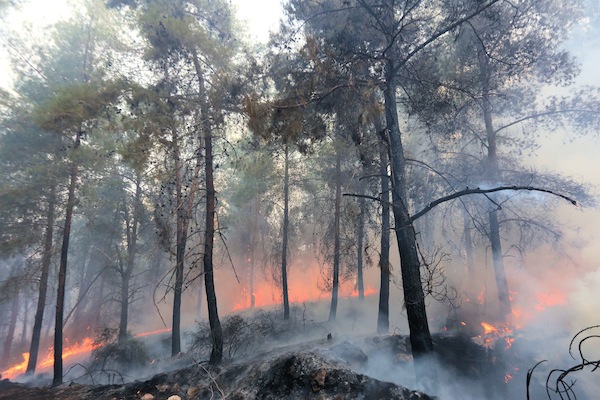
November 2016. A serious fire breaks out near Latrun in the Jerusalem corridor following yet another dry, hot summer. Some 140 firefighters are needed to bring the blaze under control.
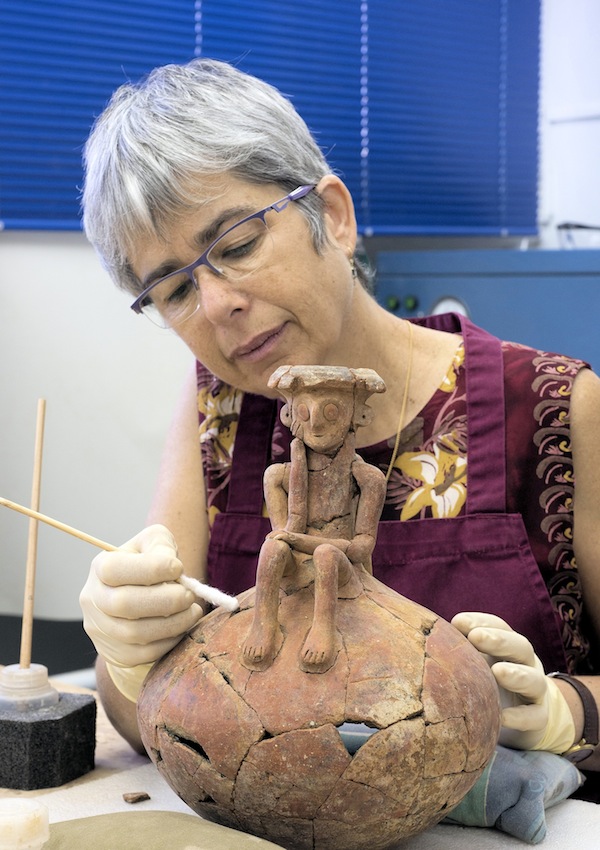
photo - November 2016. A high school student taking part in an organized excavation in Yehud, near Ben-Gurion International Airport, finds a 3,800-year-old jug from the Middle Bronze Age, seen here during its restoration.
November 2016. A high school student taking part in an organized excavation in Yehud, near Ben-Gurion International Airport, finds a 3,800-year-old jug from the Middle Bronze Age, seen here during its restoration.
photo - December 2016, Jerusalem. Left to right: Greek Prime Minister Alexis Tsipras, Cypriot President Nicos Anastasiades and Israeli Prime Minister Binyamin Netanyahu hold historic tripartite talks to improve cooperation between the three eastern Mediterranean countries
December 2016, Jerusalem. Left to right: Greek Prime Minister Alexis Tsipras, Cypriot President Nicos Anastasiades and Israeli Prime Minister Binyamin Netanyahu hold historic tripartite talks to improve cooperation between the three eastern Mediterranean countries.
photo - December 2016. The first of 50 F-35 stealth fighters arrive in the Israel Air Force base in Nevatim. The IAF was the first air force outside the United States to receive this state-of-the-art fighter plane
December 2016. The first of 50 F-35 stealth fighters arrive in the Israel Air Force base in Nevatim. The IAF was the first air force outside the United States to receive this state-of-the-art fighter plane.
photo - January 2017. Four pedestrians are murdered in Jerusalem’s East Talpiot neighbourhood by a truck driven at speed; 13 others are injured. The terrorist is shot dead by police
January 2017. Four pedestrians are murdered in Jerusalem’s East Talpiot neighbourhood by a truck driven at speed; 13 others are injured. The terrorist is shot dead by police.
photo - February 2017. Following a High Court ruling, the illegal Jewish settlement of Amona, 20 kilometres north of Jerusalem, is forcibly evacuated by police and security forces. The court ruled that the settlement had been established on Palestinian-owned land
February 2017. Following a High Court ruling, the illegal Jewish settlement of Amona, 20 kilometres north of Jerusalem, is forcibly evacuated by police and security forces. The court ruled that the settlement had been established on Palestinian-owned land.
photo - February 2017. Some ultra-Orthodox riot over government insistence that all able-bodied young men be drafted into the army. While heads of many Charedi yeshivot have encouraged their students not to report to induction centres, there are many Israel Defence Force units that have ultra-Orthodox soldiers in their ranks
February 2017. Some ultra-Orthodox riot over government insistence that all able-bodied young men be drafted into the army. While heads of many Charedi yeshivot have encouraged their students not to report to induction centres, there are many Israel Defence Force units that have ultra-Orthodox soldiers in their ranks.
photo - February 2017. Binyamin Netanyahu is the first incumbent Israeli prime minister to officially visit Australia. The picture shows Netanyahu and his wife Sara at the Sydney Jewish School of Moriah
February 2017. Binyamin Netanyahu is the first incumbent Israeli prime minister to officially visit Australia. The picture shows Netanyahu and his wife Sara at the Sydney Jewish School of Moriah.
photo - March 2017. Prime Minister Binyamin Netanyahu with Chinese President Xi Jinping. Netanyahu, together with a business delegation, made the visit to China to expand trade between the two countries
March 2017. Prime Minister Binyamin Netanyahu with Chinese President Xi Jinping. Netanyahu, together with a business delegation, made the visit to China to expand trade between the two countries.
photo - March 2017. Mobileye is bought by Intel, but the headquarters of the company will remain in Jerusalem. Left to right are Amnon Shashua, Eli Cohen, Prime Minister Binyamin Netanyahu, Brian Krzanich and Ziv Aviram
March 2017. Mobileye is bought by Intel, but the headquarters of the company will remain in Jerusalem. Left to right are Amnon Shashua, Eli Cohen, Prime Minister Binyamin Netanyahu, Brian Krzanich and Ziv Aviram.
photo - May 23, 2017. U.S. President Donald Trump, seen here with Prime Minister Binyamin Netanyahu, made Israel one of the first overseas countries he visited since becoming president
May 23, 2017. U.S. President Donald Trump, seen here with Prime Minister Binyamin Netanyahu, made Israel one of the first overseas countries he visited since becoming president.
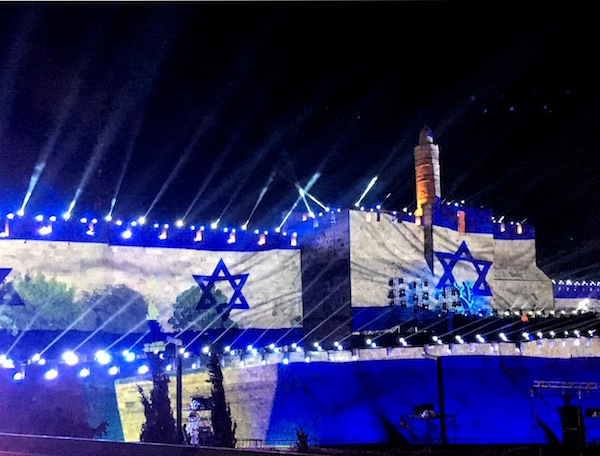
photo - May 2017. On May 20, Jerusalem was illuminated to celebrate the 50th year of the city’s reunification following the Six Day War
May 2017. On May 20, Jerusalem was illuminated to celebrate the 50th year of the city’s reunification following the Six Day War.
photo - July 2017. Indian Prime Minister Narendra Modi, left, becomes the first sitting Indian prime minister to officially visit Israel. Accompanied by Prime Minister Binyamin Netanyahu, Modi meets with Moshe Holtzberg, 10, who survived the terrorist attack that killed Moshe’s parents and seven others at Mumbai’s Chabad House in November 2008
July 2017. Indian Prime Minister Narendra Modi, left, becomes the first sitting Indian prime minister to officially visit Israel. Accompanied by Prime Minister Binyamin Netanyahu, Modi meets with Moshe Holtzberg, 10, who survived the terrorist attack that killed Moshe’s parents and seven others at Mumbai’s Chabad House in November 2008.
Format ImagePosted on September 29, 2017September 28, 2017Author Edgar AsherCategories IsraelTags Binyamin Netanyahu, Israel, Middle East, politics, terrorism
Controversy over Icke’s talk

Controversy over Icke’s talk

David Icke spoke in Vancouver earlier this month at the Orpheum. (photo by Tyler Merbler via cjnews.com)

David Icke – a controversial conspiracy theorist, antisemite and Holocaust denier – spoke in Vancouver at the Orpheum on Sept. 2, despite the city’s civic theatres board’s recommendation to Mayor Gregor Robertson and city council that Icke’s booking be canceled.

In a statement quoted in the Vancouver Sun, the city said that under the Charter of Rights and Freedoms, “the city is not in a position to take action intended to censor speech that is otherwise permissible under Canadian law.”

Icke is a British author and speaker known for his bizarre views. A former football player and sports broadcaster for the BBC, Icke was once also a spokesperson for the U.K. Green Party. All that changed in 1990, when, by his own account, a psychic told him that he had a special mission on earth and would soon begin receiving messages from the spirit world. The following year, he announced on primetime British television that he was “the son of godhead” (also a title of Jesus Christ’s) and predicted global natural disasters to come.

Over the next several years, Icke developed his worldview, which has been called “new age conspiracism.” He described himself as “a full-time investigator into who and what are really controlling the world.” In his 1994 book The Robots Rebellion, he answered the question by singling out Jews. But, he also argued that the really major players in world dominion were an ancient order of shapeshifting, blood-drinking reptilian humanoids called the Babylonian Brotherhood. Their goal, according to Icke, is the creation of a neo-fascist global state, known as the New World Order.

When Icke added Holocaust denial to his worldview in his 1995 book And the Truth Shall Set You Free, his publisher felt he had crossed a line. As a result, that book, and Icke’s subsequent works, were published at his own expense.

Icke combines familiar New Age philosophies with conspiracy theories about public figures being reptilian humanoids and pedophiles. He believes in reincarnation, a collective consciousness that has intentionality and the “law of attraction” (that good and bad thoughts can attract like experiences).

According to a report by Political Research Associates – an American nonprofit research group that studies white supremacist groups and militias – Icke’s ideas are “a mishmash of most of the dominant themes of contemporary neofascism, mixed in with a smattering of topics culled from the U.S. militia movement.” The same report details the support that Icke has gotten from far-right and neo-Nazi groups, including the violent U.K. group Combat 18, which was linked to bombings of minority neighbourhoods in London.

Aiden Fishman of B’nai Brith Canada described Icke’s views as “classic antisemitic ideas” and said the booking should never have been allowed. “It’s totally, totally incompatible with the city of Vancouver’s role as an open and tolerant multicultural municipality to allow Mr. Icke to speak at a city-owned facility after we’ve brought all these concerns to their attention,” Fishman told CBC News.

“You are free to be a racist in Canada, you are free to say so and tell others that they should be, too,” Micheal Vonn, policy director of the B.C. Civil Liberties Association, told the CJN. “But this is not just about Mr. Icke’s rights. Everyone who comes to see him has their Charter rights involved, as well. The government should not be in a position to prevent you from hearing what you would like to hear.”

To those who say that the talk should not have been held at a city-owned venue, Vonn said: “The city does not support this, the city is neutral with regards to the content. Can you imagine if the city could pick and choose who among the public they allowed to make use of the venue? They can’t be cherry-picking what members of the public get that benefit. The city can’t be saying this is available only to people that we like. It is, as it should be, available to all members of the public involved in lawful activity.”

To be unlawful, Icke’s speech would have to constitute criminal hate speech, which has a high burden of proof in Canada. “He would need to be intentionally and explicitly inciting harm,” said Vonn.

An admittedly unscientific Vancouver Sun poll asking whether the event should be canceled, showed that most readers supported Icke’s right to free speech, with more than 81% of respondents saying the show should go on.

Despite significant coverage of the event leading up to the talk, Icke’s lecture, which he claimed would last 10 hours, apparently failed to attract a media presence. Nor have there been any allegations of criminal hate speech.

Matthew Gindin is a freelance journalist, writer and lecturer. He writes regularly for the Forward and All That Is Interesting, and has been published in Religion Dispatches, Situate Magazine, Tikkun and elsewhere. He can be found on Medium and Twitter. A longer version of this article was originally published by CJN.

Format ImagePosted on September 29, 2017September 28, 2017Author Matthew GindinCategories LocalTags antisemitism, David Icke, free speech
השגת יעדי האינפלציה

השגת יעדי האינפלציה

המשנה לנגיד הבנק המרכזי של קנדה חלקה שבחים לישראל על השגת יעדי האינפלציה החל משנות התשעים. (צילום: Grauesel)

המשנה לנגיד הבנק המרכזי של קנדה, ד”ר נדין בודו-טרכטנברג חלקה שבחים רבים למדינת ישראל, על שהצליחה להשיג את יעדי האינפלציה הרצויים החל משנות התשעים. דבריה של ד”ר בודו-טרכטנברג נאמרו במסגרת הרצאה לפני מספר ימים בכנס של הבנק המרכזי הקנדי, שעסק במדיניות המונטרית והכלים של המדיניות השונים להשגת המטרות שלה.

חלק מרכזי בהרצאתה של המשנה לנגיד עסק בהתפתחויות העיקריות ובאתגרים השונים, בהשגת יעדי האינפלציה בישראל בשנים האחרונות. לדבריה המשק הישראלי חווה בשנים האחרונות צמיחה כלכלית יציבה, עלייה בשכר, התחזקות המטבע המקומי (השקל) מול הדולר האמריקני ושאר המטבעות הבולטים, וכן שמירה על רמת אינפלציה נמוכה שלא רק שהיא מתחת ליעד שנקבע, אלא אף מצויה בתחום השלילי מזה כשלוש שנים.

ישראל חוותה עשור של היפר-אינפלציה בשנות השבעים וכן בתחילת שנות השמונים. ולאחר מכן עשור של מדיניות דיסאינפלציה שהתמקדה בחתירה לקצב של אינפלציה ההולך ופוחת. מאז שנת 2003 יעד האינפלציה של ישראל הוא בתחום שבין אחוז לשלושה אחוזים. למרות שרמת האינפלציה בהסתכלות אחורה על השנה האחרונה חרגה לפעמים מהטווח הזה, הסטייה נרשמה בעיקר בתקופות קצרות כתוצאה מתנודות בשערי החליפין. לפני כשלוש שנים חל שינוי משמעותי כאשר מאז נמצאת האינפלציה באופן עקבי, מתחת ליעד. עם זאת יש לציין, כי הציפיות לאינפלציה לטווחים הבינוניים הארוכים ממשיכות להיות מעוגנות היטב בתוך רצועת היעד, ובכך משקפות את אמון השוק במדיניות המונטרית של בנק ישראל.

חשיבות השמירה על יציבות המחירים בישראל קיבלה מישנה תוקף עם חקיקת חוק בנק ישראל החדש (בשנת 2010), שקבע כי תפקידו הראשון במעלה והחשוב ביותר של המוסד הוא לשמור על יציבות המחירים בשוק, ובמקביל לתמוך בצמיחה כלכלית וביציבות הפיננסית של המשק הישראלי. החוק החדש מאפשר להנהלת הבנק פרק זמן של שנה להחזיר את האינפלציה לרמת היעד, מה שנראה בזמן שהוא חוקק על ידי הכנסת – פרק זמן סביר. כך שיתאפשר לבנק המרכזי להכיל זעזועים זמניים, וכן גם אירועים חד-פעמיים שצפויים להסיט את האינפלציה מהיעד לזמן קצר.

לדברי המשנה לנגיד הבנק המרכזי של קנדה בשנים האחרונות בזמן שרבות מהמדינות ששותפות בסחר עם ישראל עמדו בפני משבר פיננסי חמור, וכלכלתן דישדשה, הכלכלה של מדינת ישראל צמחה בהתמדה, וכעת היא קרובה לשיעורה הפוטנציאלי, תוך שהיא נתמכת בעלייה מתמשכת בשיעור ההשתתפות בכוח העבודה, במיוחד של הנשים הישראליות, צמיחה בשיעור התעסוקה בכלל ענפי המשק, וכן בעלייה בשכר הריאלי והנומינלי, שאיפשרו התרחבות של הצריכה הפרטית. כמובן שהנתונים שמציגים תמונה זו לא התקבלו באופן רציף, ומלבד נתוני שוק העבודה שהיו חזקים באופן קבוע, חזינו בתנודתיות רבה של הנתונים, כולל אף תיקונים משמעותיים בנתוני החשבונות הלאומיים-הרבעוניים.

למרות העודף המובהק בחשבון השוטף, המשק הישראלי התמודד עם ביצועי החסר של מגזר היצוא. ההאטה ביצוא נבעה בין היתר מההאטה הכללית בסחר העולמי. יש לציין כי השקל הישראלי המשיך להתחזק, מעבר למה שהוערך בתחילה, דבר המשקף את ההתאמה הנורמלית לביצועים הטובים יחסית של המשק הישראלי.

ד”ר בודו-טרכטנברג מוסיפה עוד כי בישראל רמת האבטלה נמצאת ברמה הנמוכה ביותר מאז הקמת המדינה, ובמקביל השכר עולה בזמן שהאינפלציה נשארת ברמה נמוכה. בישראל גברה המודעות למחירים הגבוהים וגברה התחרות בתחום הקמעונאי, בעיקר עם התגברות השימוש באינטרנט. כיוון שרמת המחירים במדינה גבוהה היא מותירה מקום רב יותר להפחתת מחירים, שמקורה בתחרות המוגברת.

Format ImagePosted on September 27, 2017September 24, 2017Author Roni RachmaniCategories עניין בחדשותTags economy, inflation, Israel, אינפלציה, ישראל, כלכלה
Revisiting the Venice ghetto

Revisiting the Venice ghetto

A page of the digital interactive installation of the domestic space of the Jewish ghetto, which was created by camerAnebbia. Part of the exhibit Venetian Ghetto: A Virtual Reconstruction: 1516-2017, which is at the Italian Cultural Centre’s Il Museo until Oct. 30. (photo by Cynthia Ramsay)

The Venetian ghetto – a segregated enclave for Jews and the one from which the very name “ghetto” emerged – was created 500 years ago. An exhibit at Vancouver’s Italian Cultural Centre tells the history of the ghetto and is one of a number of local cultural events this year marking the half-millennium since the notorious decree.

The Venetian Ghetto: A Virtual Reconstruction: 1516-2017 opened at the centre’s Il Museo this summer. It is an abridged version of a larger exhibit showing concurrently at the Doge’s Palace in Venice, said the museum’s curator, Angela Clarke.

Clarke and Il Museo had wanted to do something around the topic of the ghetto in part because of a connection with a member of Vancouver’s Jewish community. When the late renowned University of British Columbia architecture professor Dr. Abraham Rogatnick passed away in 2009, he left his collection of Venetian books and other materials to the museum.

“A lot of the prints we have in the hallways are from his collection,” said Clarke. “Venice was his specialty.”

Rogatnick took his architecture classes to Venice and was also noted for turning his lectures into theatrical performances, accompanied by moody lighting and complementary background music. (After his retirement, he became immersed in Vancouver’s alternative theatrical scene, depicting, as he put it, “usually dying old men.”)

“We have, for a long time, wanted to do something in honour of Abraham Rogatnick,” said Clarke. When she discovered that the Doge’s Palace was planning an exhibit to mark the 500th anniversary, she contacted the institution. They agreed to reproduce a version of the exhibit tailored to Il Museo’s space.

It was the palace’s 16th-century resident, Lorenzo Loredan, the doge of the Republic of Venice from 1501 until his death in 1521, who determined that Jews should be segregated from the general Venetian population.

Although the origin of the term “ghetto” is disputed, many accept the view that it comes from the Venetian dialect’s word ghèto, foundry, which was the neighbourhood in which Jews were confined. Jews were allowed access to the city during the day, but were restricted to the ghetto at night. Space limitations in the ghetto led to upward expansion, including multi-storey homes and buildings, a unique architectural approach to that date.

“They built upwards to accommodate their family life and their businesses, so you got these very, very high staircases in buildings and they just built upwards,” Clarke said. “For the Jewish community, it’s all about going up stairs. I think a lot about the aging people in these families. What happened to them? What would an 80-year-old do? How would they negotiate that and go about their family life and business? And the stairs are incredibly steep. That was just their everyday life.”

The exhibit has four parts, including an interactive exploration of the ghetto’s synagogues through a virtual reconstruction. The architecture of the ghetto, the cemeteries and “the ghetto after the ghetto” – the fate of the area after Napoleon conquered Venice and emancipated the city’s Jews in 1797 – round out the exhibit.

The ghetto was remarkably multicultural, Clarke emphasized.

There were four main cultural groups that came to Venice, she said. “There were the Italian Jews, there were the German Jews, there were the Spanish Jews and then there were the [Levantine] Sephardic Jews, and they all came to Venice, so there were a number of synagogues and each synagogue was like a different cultural centre, based on your group, because each synagogue, of course, had schools. You have Hebrew but then your own cultural language. So the synagogues really did deal with a diverse group of people who came.”

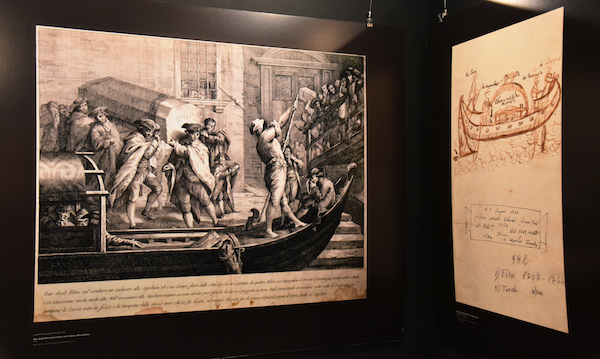
photo - Image of a boat leading to the Jewish cemetery circa 1700s. Part of the Venetian Ghetto: A Virtual Reconstruction: 1516-2017 exhibit at Il Museo
Images of boats leading to the Jewish cemetery circa 1700s. Part of the Venetian Ghetto: A Virtual Reconstruction: 1516-2017 exhibit at Il Museo. (photo by Meghan Kinnarny)

Jews began gravitating to Venice as early as the 900s, with a surge in the 1300s and then again after the expulsion from Iberia.

The segregation of Jews was premised on economic concerns, said Clarke, with restrictions on professional activities that pushed the Jewish residents into dubious roles like moneylender. As in so many instances across European history, Jews were forced to wear differentiating articles of clothing; in Venice’s case, a red hat. The exhibit demonstrates the constancy of the compulsory topper while also depicting changing styles across centuries.

“The fashions change but the red hat stays the same,” Clarke says guiding visitors from one painting to another. “The woman over there, she’s very Renaissance. Over here, it’s the 1700s and he’s still wearing the red hat but the fashion has changed dramatically.”

Napoleon liberated the Jews, but he had somewhat bigoted notions of the city of Venice.

“He called it the drawing room of Europe, depicting Venice as this beautiful little elegant community,” Clarke said. “However, I’ve been reading Florence Nightingale and she [observes that] referring to something as a drawing room is a pejorative term. For a man to be in a drawing room is basically to say that he’s effeminate.

“When you look at it in that historical context – especially when you’re dealing with a megalomaniac who’s got basically size issues – it’s a veiled term,” she said, laughing.

The exhibit at Il Museo coincided with the Stones of Venice exhibit at the Jewish Community Centre of Greater Vancouver (profiled in the Independent Aug. 18) and performances of Merchant of Venice and Shylock as part of this year’s Bard on the Beach (reviewed July 21).

“It all just seemed to come together, which is very bizarre,” said Clarke. “It doesn’t often happen that way.”

The Venetian Ghetto: A Virtual Reconstruction: 1516-2017 continues until Oct. 30 at Il Museo in the Italian Cultural Centre of Vancouver, 3075 Slocan St. More information at italianculturalcentre.ca.

Format ImagePosted on September 22, 2017September 21, 2017Author Pat JohnsonCategories Arts & CultureTags antisemitism, ghetto, history, Il Museo, museums, Venice

Posts pagination

Previous page Page 1 … Page 423 Page 424 Page 425 … Page 669 Next page
Proudly powered by WordPress