Skip to content
  • Home
  • Subscribe / donate
  • Events calendar
  • News
    • Local
    • National
    • Israel
    • World
    • עניין בחדשות
      A roundup of news in Canada and further afield, in Hebrew.
  • Opinion
    • From the JI
    • Op-Ed
  • Arts & Culture
    • Performing Arts
    • Music
    • Books
    • Visual Arts
    • TV & Film
  • Life
    • Celebrating the Holidays
    • Travel
    • The Daily Snooze
      Cartoons by Jacob Samuel
    • Mystery Photo
      Help the JI and JMABC fill in the gaps in our archives.
  • Community Links
    • Organizations, Etc.
    • Other News Sources & Blogs
    • Business Directory
  • FAQ
  • JI Chai Celebration
  • JI@88! video

Recent Posts

  • Sharing her testimony
  • Fall fight takes leap forward
  • The balancing of rights
  • Multiple Tony n’ Tina roles
  • Stories of trauma, resilience
  • Celebrate our culture
  • A responsibility to help
  • What wellness means at JCC
  • Together in mourning
  • Downhill after Trump?
  • Birth control even easier now
  • Eco-Sisters mentorship
  • Unexpected discoveries
  • Study’s results hopeful
  • Bad behaviour affects us all
  • Thankful for the police
  • UBC needs a wake-up call
  • Recalling a shining star
  • Sleep well …
  • BGU fosters startup culture
  • Photography and glass
  • Is it the end of an era?
  • Taking life a step at a time
  • Nakba exhibit biased
  • Film festival starts next week
  • Musical with heart and soul
  • Rabbi marks 13 years
  • Keeper of VTT’s history
  • Gala fêtes Infeld’s 20th
  • Building JWest together
  • Challah Mom comes to Vancouver
  • What to do about media bias
  • Education offers hope
  • Remembrance – a moral act
  • What makes us human
  • המלחמות של נתניהו וטראמפ

Archives

Follow @JewishIndie
image - The CJN - Visit Us Banner - 300x600 - 101625

Author: Shelley Civkin

Purpose is to help others

“It’s not for me.” “I’m too busy.” “I’ll volunteer when I’m retired.” All of these responses (excuses?) are familiar to me. Because, at one time or another, I hid behind each one of them.

I never felt I was good at time management, so how could I possibly take on volunteering when I was working full-time? Sure, I could multitask at work, because I had to. But did I enjoy working that way? Not even a little.

To me, time management meant working eight hours a day, worrying about work for the next eight hours, sleeping and dreaming about work for the following six hours, spending the next two hours showering, eating breakfast and reading the newspaper, then repeating the process. For decades, I functioned – notice I didn’t say lived – this way. I had tunnel vision of the worst variety.

Then I retired.

The novelty of not having to rise at a particular hour is intoxicating. Not that I indulge myself very often. After all, I had 34 years of 6 a.m. alarm clock reminders that had trained my body to get up with the sun. I confess that now, after two years of retirement, I occasionally sleep till 8:30 or even 9 a.m. But then, of course, I feel guilty. I’m Jewish after all.

Not long after I retired, I got an email from Rabbi Yechiel Baitelman of Chabad Richmond notifying me about an upcoming six-week Jewish Learning Institute course. I think it was called The Jewish Course of Why. Since I’m an inveterate question-asker and perpetually curious, I took the bait. And I was hooked.

Somewhere between the questions and the answers, the good rabbi saw an opportunity to recruit me for some volunteering. I may have casually mentioned that I’d just taught myself to bake challah using YouTube. Next thing I know, I get a call from Grace Jampolsky (“the Challah Whisperer,” as I call her), asking if I’d like to help bake challah for the bi-weekly Light of Shabbat meals that Chabad Richmond delivers to the elderly in Richmond. Sounded like a good thing to do. And who doesn’t love the smell of freshly baked bread?

From there, I volunteered to help pack the Light of Shabbat boxes and occasionally deliver them. This gave me the opportunity to visit and shmooze with some seniors, some of whom I already knew through my parents. We talked about family and books, everything and anything. It was a blessing for both of us.

About six months into retirement, I realized I still had way too much free time on my hands, and needed to do something useful. Something outside myself. So, I contacted B.C. Children’s Hospital, hoping to volunteer as a “baby cuddler,” not realizing that there’s a long waitlist to do that. But, as soon as the hospital’s volunteer coordinator saw my resumé, she offered me a volunteer position in the Family Support and Resource Centre. After all, what else would a librarian want to do in retirement, but jump right back into working in a library! Naively, I didn’t think to mention in my interview that I’d like anything but a library position. Nevertheless, I gave them the year’s commitment that they asked for and then resigned. Being an infrequently used part of the hospital, the centre didn’t provide the stimulation I was hoping for. I wanted to make more of an impact in my volunteering.

Soon after, Rabbi Baitelman asked if I’d be interested in volunteering with Chabad Richmond’s Israel Connect program, in which local retirees tutor Israeli high school students in English once a week, via Skype. It sounded like fun, so naturally I said yes. If memory serves me correctly, it was about two-and-a-half minutes later that he asked me if I would consider coordinating the Israel Connect program in Richmond. He had me at “Would you be interested….”

The rabbi knows that I have a background in writing and editing, so it wasn’t long before he asked for my help writing press releases and marketing pieces for Chabad Richmond. Writing is my happy place, so I was delighted to pitch in. It has only snowballed since then, and I’m thrilled to report that I love my volunteer activities, and I’m always open to considering new ones.

All of this is to say that there is life after retirement – volunteering has been enormously rewarding.

At its essence, volunteering is about saying yes to what you want to do, and saying no to the rest. And the yes, well, it’s just so darn sweet! Knowing that Jewish seniors are enjoying the challah I bake, and that the short visits we have might be the only human interaction they encounter in a week – that’s why my heart is drawn to do these things. Believe me, as a volunteer, working with people, you get way more than you give.

And Israel Connect? It’s the best spent 30 to 45 minutes of my week. Helping an Israeli teen improve their English so they can get into university or pursue a career that requires English proficiency – that makes my heart sing. And, we have fun. With each different student (all girls, so far), I’ve managed to make a connection and form a bond. After each week’s official tutoring is finished, we talk: about their hobbies, plans for the future, our families, travel, everything. From week to week, I notice not only improvements in their English, but a relaxation that comes from forming a real intergenerational friendship. I hope to visit my students when we travel to Israel soon.

I’d be remiss if I didn’t include the bits and pieces of volunteering I did while I was still working full-time as a librarian and communications officer at Richmond Public Library. I did manage to squeeze in some fundraising and communications work to help promote the Crohn’s and Colitis Foundation of Canada’s annual Gutsy Walk fundraiser.

In a much more humbling capacity, I was also part of a program about eight years ago, called Feed the Hungry, in which a bunch of volunteers from Ahavat Olam made and served lunch to Downtown Eastside (DTES) residents on a regular basis. And, for several years, I volunteered, along with my husband, brother-in-law and/or friends, serving Christmas lunch at the Salvation Army Harbour Light Mission in the DTES.

For a couple of years, I was a volunteer board member with the Isaac Waldman Jewish Public Library, as well as being the B.C. Library Association representative for the West Coast Book Award Prize Society. All of them together were growing and learning experiences of the highest order.

We guard our free time so rabidly, we forget that part of why we’re put on this earth is to help others. The satisfaction and joy that comes from doing something outside ourselves, something for a higher purpose, is indescribable. Believing is seeing. But don’t just take my word for it.

Shelley Civkin is a happily retired librarian and communications officer. For 17 years, she wrote a weekly book review column for the Richmond Review, and currently writes a bi-weekly column about retirement for the Richmond News.


Posted on March 16, 2018March 15, 2018Author Shelley CivkinCategories Op-EdTags Chabad Richmond, tikkun olam, volunteering
Foxtrot steps on toes

Foxtrot steps on toes

Itay Exlroad as Dancer Soldier. (photo by Giora Bejach, Courtesy Sony Pictures Classics)

An audacious work of art that melds raw emotion and absurdist allegory into a blistering assessment of contemporary Israel, Samuel Maoz’s Foxtrot deserves to be seen and demands to be discussed.

Winner of the Silver Lion at the Venice Film Festival – where Maoz’s taut debut, Lebanon, won the Golden Lion in 2009 – and eight Ophir Awards (Israel’s Oscars), including best film, director and actor, Foxtrot uses a small-scale story to examine some of Israel’s deepest issues: the concept of military sacrifice, the oppression of Palestinians and the legacy of the Holocaust.

Skilfully strewn with ironies all the way to the final shot, Foxtrot was shortlisted for the Academy Award for best foreign language film but did not receive a nomination.

The film begins with a middle-aged man (the sublime Lior Ashkenazi, who played a fictitious prime minister last year in Norman and Yitzhak Rabin in this month’s 7 Days in Entebbe) opening his door to the worst possible news for a father with a son in the army. Even as the gravity of the situation and the intensity of his response wallops us in the face and grabs us by the collar, Maoz counter-intuitively undercuts the emotional naturalism with precision camerawork and a stylized set design.

It appears, at first, that the filmmaker is evoking the surreal, detached and alienating experience of being struck with a life-changing bulletin. But we get the nagging feeling, from Ashkenazi’s character’s black-humour interactions with the army representatives to the off-centre introductions of his wife and daughter, that there’s more on tap than the melodrama of domestic tragedy.

Indeed, Maoz pulls the rug out from under us, then cuts from the climate-controlled setting of a high-in-the-sky condo to an isolated checkpoint in the barren, forgotten north of Israel. This is where the son, Yonatan, is assigned the “mission” of guarding a remote, nonessential road with a handful of other bored young men.

The tilted shipping container that comprises the soldiers’ base and barracks fronts on a puddle-strewn mudfield, which they must trudge across to the checkpoint. The roadblock itself is cartoonishly minimalist, resembling a set you’d see onstage more than a military installation, and putting us in mind of surrealist (anti-)war films like Apocalypse Now and Catch-22.

Nothing happens in this God-forsaken spot, and everything happens here. Each detail has significance, though one must pay close attention because it may not be clear until events play out. In fact, the meaning of a close-up or sound cue often remains obscure until the movie is over, at which point the viewer is required to arrive at his or her interpretation.

Two key events occur at Yonatan’s base: one at the checkpoint involving a carload of Palestinians heading home from a party and the other in the barracks when the soldiers are killing lonely downtime. The latter scene, in which Yonatan relates an anecdote from his father’s youth, is the most astonishing passage in this taboo-trampling movie.

photo - Left to right: Danny Isserles as Official Military Officer, Yehuda Almagor as Avigdor, Michael’s brother, and Lior Ashkenazi as Michael
Left to right: Danny Isserles as Official Military Officer, Yehuda Almagor as Avigdor, Michael’s brother, and Lior Ashkenazi as Michael. (photo by Giora Bejach, Courtesy Sony Pictures Classics)

Yonatan has rendered his memory into a graphic novel, and Maoz brings it to life in the form of animation. This harrowing episode connects the Holocaust – and the self-reliance, persistence, shared sacrifice and residual faith that survivors applied to building the Jewish state – to a modern Israel, where idealism has curdled into a pursuit of temporary pleasures, and worse offences.

To be sure, in every land and every age, older generations castigate young people for ignoring tradition and abandoning their core values. But this parable takes place in Israel, so Yonatan’s father’s hormone-driven rashness hearkens to Esau swapping his birthright for a bowl of stew.

Threaded through Foxtrot is a critique of Israel’s leaders for maintaining a culture of cynicism and corruption that results in the unnecessary deaths of young soldiers. Furthermore, each loss is described as heroic regardless of the circumstances.

This is not unique to Israel, of course, but it’s harder to push back against the military spin when you’re a small country surrounded by enemies than a superpower. Maoz satirizes PR functionaries in the opening scene, in fact, and never stops spearing sacred cows.

Maoz’s triumph, finally, thanks in large measure to Ashkenazi’s unexpectedly vulnerable performance, is tracking the human cost amid the not-quite-real scenarios and sociopolitical commentary. Foxtrot is an altogether remarkable work, not least because it is a beautiful film about ugly truths.

Foxtrot is in Hebrew with English subtitles, runs 113 minutes and is rated R for some sexual content, including graphic images and brief drug use. It opens at Vancity Theatre on March 23, and runs to April 1.

Michael Fox is a writer and film critic living in San Francisco.

Format ImagePosted on March 16, 2018March 15, 2018Author Michael FoxCategories TV & FilmTags Foxtrot, IDF, Israel, military, movies, war
A record marathon

A record marathon

Jerusalem Marathon winner Kipkogey Shadrack (No. 1) led the field from the start. (photo from Ashernet)

photo - The half-marathon gets underway
The half-marathon gets underway. (photo from Ashernet)

More than 35,000 runners, including some 4,000 from 72 countries outside Israel, participated March 8 in this year’s Jerusalem Marathon – the largest to date. The winner of the main event was 27-year-old Kenyan runner Kipkogey Shadrack, who completed the course in 2:21.26. Participants set off opposite the Israel Museum in slightly overcast, but dry, weather. Many of the city’s streets were closed from 5:30 a.m. and scheduled to reopen at 2:30 p.m. There were five other courses apart from the 42.2-kilometre main event: a half-marathon, a 10k, a 5k, a family race (1.7 km) and a community race (800 metres) for people with special needs.

Format ImagePosted on March 16, 2018March 15, 2018Author Edgar AsherCategories IsraelTags Israel, Jerusalem, marathon
משבר כלכלי גדול?

משבר כלכלי גדול?

האם קנדה עומדת לפני משבר כלכלי גדול לאור מה שמתרחש בענף הנדל”ן? (צילום: Cynthia Ramsay)

יש סיכוי סביר שקנדה תתמודד עם משבר כלכלי חריף בקרוב לאור מה שמתרחש בענף הנדל”ן המקומי. כך מעריכים אנליסטים שעוקבים מקרוב אחר מה שקורה בכלכלה הקנדית. הם מציינים כי לאור החוב הגדול של משקי הבית בקנדה, המדינה הצפונית בפתחו של משבר נדל”ן גדול. זאת לפני שאר קבוצת המדינות בעולם המפותח.

האנליסטים מסבירים כי מחירי הנדל”ן לא מפסיקים לעלות בשנים האחרונות, בעיקר באזורים החמים – שהם ונקובר וטורונטו. גם צינון המחירים שעובר לאחרונה על בתים בשתי הערים המובילות בקנדה, לא משנה את המגמה המסוכנת.

אך יש לזכור כי מחירי הנדל”ן בקנדה עלו בשיעור הרבה יותר גבוה מהעלייה בשכר העובדים, כך שהפער להשגת בתים ודירות הלך וגדל. במקביל לאור הריבית הנמוכה במשק מחירו של האשראי נמוך במיוחד, והיה קל להשיג משכנתאות נושאות ריביות נמוכות לרכישת נדל”ן. זאת ועוד: לא היה עד כה פיקוח על כסף זר המגיע לקנדה עבור רכישת נדל”ן. כך שתושבים זרים ומטבע הדברים ברובם סינים, רכשו נדל”ן בכמויות גדולות וכמעט בכל מחיר. הסינים מאמינים כי השקעה בנדל”ן בקנדה ובעיקר בוונקובר – היא המקום הבטוח “להחנות” בו את כספם, ועדיף לאין שיעור על ביצוע השקעות בסין. אין זה מפתיע לכן שוונקובר נחשבת לעיר השניה בעולם בחוסר האפשרות לרכוש נדל”ן בהשוואה לשכר העובדים. הראשונה איך לא היא הונג קונג.

אך כעת לאור עלייה ולו הקטנה במחירי האשראי במשק הקנדי (מאז חודש יולי אשתקד הריבית במשק עלתה ל-1.25%), מתחיל הלחץ על רוכשי המשכנתאות לעשות את שלו. והיקף האשראי הזמין במשק הולך וקטן. כבר ידוע כי בטורונטו נרשמה בחודשים האחרונים ירידה משמעותית במחירי הנדל”ן, ובביקושים לרכישת נדל”ן. למשל בחודש ינואר נרשמה ירידה של כ-22% במחירות, לעומת אשתקד. מדובר בירידה החדה ביותר מזה תשע שנים.

האנליסטים מציינים עוד כי משכנתאות רבות בקנדה אינן מבוטחות בחברות הביטוח, כך שהסיכון להתמוטטות ענף הנדל”ן ועימו הכלכלה המקומית, הולך וגדל. אם בשנת 2014 כ-60% מהמשכנתאות שבידי הציבור לא היו מבוטחות, אשתקד גדל היקפן כבר לכ-75%. בוונקובר עצמה אחוז המשכנתאות הלא מבוטחות אף גבוה יותר ועומד כיום על לא פחות מכ-90%!

מה שמדאיג במיוחד הוא שיותר ויותר נשמעים באוויר מושגים של מכירות משכנתאות לצד שלישי, ו”משכנתאות שקריות”, מושגים שהובילו את המשבר הנדל”ן הגדול של ארה”ב בשנת 2008. וזה גרר את כל העולם למשבר פיננסי החריף ביותר מאז שנת 1929.

עוד סממן למשבר אפשרי בקנדה הוא מצבה של חברת המשכנתאות בסאב-פריים ‘הום קפיטל’. החברה נקלעה למצב כספי קשה בקיץ אשתקד. רק המיליארדר האמריקני וורן באפט, נחלץ להצילה לאחר שהעביר לה מימון גבוה בהיקף 2.4 מיליארד דולר.

בראשית השנה הממשלה הקנדית החליטה על הנהגת חוק פדרלי חדש, שמקשיח שוב את התנאים לקבלת משכנתאות. מעתה על רוכשי המשכנתאות להוכיח כי הם יכולים לעמוד בתשלומים – גם עם הרבית במשק תמשיך לעלות. הפעם מדובר בתנאי שיקשה מאוד על רבים לזכות במשכנתאות. גם זה לא מבשר טובות ויתכן והביקושים לנדל”ן יחלשו ברחבי המדינה. לאור החוק החדש רבים ניסו לרכוש נדל”ן אשתקד עם משכנתאות זולות וללא מגבלות. לכן שנת 2017 הייתה השנייה החזקה ביותר מבחינת היקף מכירות הנדל”ן בקנדה, וגם המחירים לא הפסיקו לעלות. ודצמבר יצויין כי רמת המכירות הגיע לשיא. כך יש שרואים משבר בפתח ויש שטוענים לא יהיה.

Format ImagePosted on March 14, 2018March 14, 2018Author Roni RachmaniCategories עניין בחדשותTags Canada, financial crisis, mortgages, real estate, הנדל"ן, משבר פיננסי, משכנתאות, קנדה
Exploring the science of life

Exploring the science of life

Amy Amantea and Jake Anthony in Sequence, which runs March 14-24 at Presentation House Theatre. (photo by Tim Matheson)

“To direct this play requires a willingness to grapple with the concepts, to accept that sometimes questions are more important than answers, not everything is answerable, and to be committed to entertaining possibilities. It’s heady stuff,” director Rena Cohen told the Independent about Sequence, which opens next week at Presentation House in North Vancouver.

Describing the play as “a science thriller that will challenge as much as it entertains,” Cohen, who is also managing artistic director of Realwheels Theatre, explained, “In Sequence, we follow two absorbing stories. In one, a professor confronts a student who’s defied probability by taking a multiple-choice exam only to get every answer – 150 of them – wrong (the chance of achieving this is one in a pentillion). In the second story, the ‘Luckiest Man Alive’ – his status cemented by his uncanny ability to predict the winner of the Super Bowl coin toss for 20 years running – is confronted by a young woman who claims to know his secret.

“Each of these narratives is presented coherently, cleverly and simultaneously, and it’s how they intertwine through ‘wormholes’ in the dialogue that makes the play fascinating, and mystifying. Playwright Arun Lakra compares the structure of the play to two strands of intertwining DNA. You could argue it’s comparable to a Möbius strip-like dramatic encounter. You’re following two narratives, only to have the carpet swept out from under you.”

For readers who don’t have Wikipedia or a dictionary handy, a Möbius strip, or band, is “a surface with only one side and only one edge. It can be made using a strip of paper by gluing the two ends together with a half-twist.” It’s a non-orientable surface, which means it “cannot be moved around the surface and back to where it started so that it looks like its own mirror image.” The example given for further explanation, is that “no matter what, a human right hand, cannot be rotated in such a way that it becomes a human left hand. The right hand is, therefore, orientable.”

How does one direct a play like Sequence so that it’s enjoyable and comprehensible?

“There are ways we harness the ‘language of theatre’ to capture audiences’ attention, to heighten a moment,” said Cohen. “Sometimes, it’s in the way an actor delivers a line, the way they land on a phrase containing important information. We also signal key moments using lighting and/or sound, so even if, when information doesn’t necessarily register on a conscious level, you absorb it.’”

The material of the play – “Wading into new intellectual territory, learning the mathematical concepts used to understand randomness and probability” – was initially a challenge for Cohen.

“My last physics course was in high school, the last time I studied math was in CEGEP [a post-secondary school program in Quebec] and I’ve never taken a biology course,” she said, “so some of the references in the play – regarding genetics, for example – may not be complicated to a Grade 10 biology student, but they’ve been a challenge to me.

“Sequence is also very fast-paced, and there’s a ton of stage business, most of which is – incidentally – performed by Amy Amantea, our actor who lives with blindness. She’s fearless.”

And, added Cohen, “Working with an integrated cast of performing artists with disabilities and able-bodied artists means there’s a wider range of experience, and we’re challenged to become an ensemble in a few short weeks.”

photo - Krista Skwarok and Byron Noble
Krista Skwarok and Byron Noble. (photo by Tim Matheson)

Amantea (as the professor) will be joined in the performance by actors Jake Anthony (the student), Byron Noble (the “luckiest man”) and Krista Skwarok (the woman who purports to know his secret).

“Two members of the cast live with disability: Amy is legally blind and Jake lives with autism,” said Cohen. “The casting speaks to our (Realwheels’) commitment to fostering interchange between mainstream and disability arts sectors. That means interchange between artists, and we’re all learning from each other.

“Amy Amantea has such a generous spirit, so much heart and decency and, in Sequence, she’s playing a dark, angry character. Her character is also very funny and over-the-top, and this is new territory for Amy, who left the performing arts after she lost her sight 11 years ago. Furthermore, Amy’s character lives with severe sight loss, but of a type that’s different from her own, so there’s a whole other layer of challenge. She also has the most ‘stage business.’

“Jake Anthony is a sensitive actor, and an incredible advocate for persons with autism; getting to know him means gaining appreciation for the gifts that accompany autism,” continued Cohen. “Jake is a decisive and determined individual, very focused, so lovely and respectful to everyone, and he’s bringing tremendous insight into his character, a young man of faith, and an inveterate optimist.”

Skwarok is a recent graduate of Langara College’s Studio 58 theatre program, said Cohen, “and this is her first professional gig. Such bright energy, she’s super-smart and quick and creative and game. Expect to see a lot more of her – Krista’s talent is explosive.”

As for Noble, Cohen said he “is loaded with charm.” In Sequence, she said, his character “is slick, playful and, yes, he’s a charmer – and we get to see his character grow and other unexpected qualities emerge. It’s beautiful to watch. Byron is the most seasoned actor in the Sequence company, and we’re all benefiting from his experience and generosity.”

She said this play feels made for Realwheels “because it isn’t about disability, yet disability forms the landscape against which universal issues are debated onstage.”

She explained, “The four characters in Sequence are attached to their individual frameworks of the world: faith versus science, fate versus DNA. Did God use evolution as a means of creation? If something isn’t testable, how do you justify believing it? Is there an innate rightness to biological outcomes rooted in our fundamental DNA?”

Sequence has won several awards. The playwright, Lakra, is an ophthalmologist in Calgary, where he splits his time between practising medicine and writing, said Cohen. “This is the first time,” she said, “the play is being produced with an integrated cast – professional actors with disabilities playing alongside able-bodied actors.”

Sequence runs 80 minutes with no intermission, and is not suitable for children. It is at Presentation House Theatre March 14-24 (except March 19), with proceeds from the March 14 preview going to Realwheels Society to cover production costs. For tickets ($28-$10), call 604-990-3474 or visit phtheatre.org.

Format ImagePosted on March 9, 2018March 7, 2018Author Cynthia RamsayCategories Performing ArtsTags Arun Lakra, inclusion, physics, Presentation House, Realwheels, science, Sequence
Combining love of music, art

Combining love of music, art

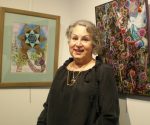
Ava Lee Millman Fisher at the opening of her solo exhibit, I See Music, on March 1. (photo by Olga Livshin)

The new solo exhibit by Ava Lee Millman Fisher, which opened at the Sidney and Gertrude Zack Gallery on March 1, seems eclectic at first glance. It includes landscapes and floral compositions, Judaica and symbolism. But all the paintings are united by the theme and name of the show: I See Music. That’s how the artist perceives the world around her.

“I see music and I hear colours,” said Millman Fisher in an interview with the Independent. “It’s what my art is all about. I have synesthesia.”

According to a dictionary, “Synesthesia is a perceptual phenomenon in which stimulation of one sensory or cognitive pathway leads to automatic, involuntary experiences in a second sensory or cognitive pathway. People who report a lifelong history of such experiences are known as synesthetes.”

Every one of Millman Fisher’s images includes musical notations, and the compositions’ colours flow like notes in a symphony. “I’ve always loved both music and art, since I was a child,” said the artist. “I had trouble choosing what I wanted to do professionally, until life interfered. After high school, I won a vocal scholarship to McGill University. But I never stopped painting.”

Millman Fisher specialized in classical opera and lieder (songs for solo voice, with piano). She sang a lot and taught music for awhile. Later, she went back to school to become a licensed music therapist. Throughout her entire career in music and mental health, she painted. “I love painting,” she said. “It is my visual voice. I often think in musical terms when I paint.”

She has been fortunate as a commercial artist. “I started selling my works when still at university,” she said. “Friends saw my paintings. They liked them. Someone wanted to buy. The word-of-mouth spread.”

From the beginning, Millman Fisher has painted in watercolours and created works with Jewish themes and images. “My paintings could be subdivided into two categories,” she said, “both well-represented in this show: secular art and Judaica. My Judaic pieces are very important to me. Unfortunately, there are not many places in Vancouver to showcase them. On the other hand, people from all over the world buy them. I have a Facebook page, and it helps a lot with promotion. By now, my Judaica paintings have found homes in Canada, Israel, the United States. Imagine: they want to buy my paintings in Israel, despite there being such a wide selection [of Jewish-themed work] inside the country. And, of course, I’m willing to ship anywhere.”

Millman Fisher recently sold a large Judaic painting to a client in New York. She couldn’t hide her joy as she told the story. “That lady from New York has been following my Facebook page for years,” explained Millman Fisher. “She said she loved my art but had no space in her home. When she moved to a larger home, she bought one of my paintings.”

image - The Zack Gallery show includes the piece “Libretto of the Lilies”
The Zack Gallery show includes Ava Lee Millman Fisher’s piece “Libretto of the Lilies.”

But Millman Fisher doesn’t only sell her art. “I’m always happy to share, to give them away,” she said. “I like donating my paintings to Jewish causes and organizations. Some of my pieces hang in Vancouver Talmud Torah and in the Louis Brier Home.”

One of her most interesting Judaic pieces in the show is a large painting called “Miriam,” which also has a long subtitle. Its visual structure is no less complex. “I needed to tell Miriam’s story,” Millman Fisher said. “She was the first music therapist in history. She always brought her tambourine to the gatherings and employed music to calm people.”

The artist pointed to a dense flock of birds framing the painting. “Each bird is individually made from rice paper, cut and glued to the painting,” she explained. “There are dozens of them, and they are all different.”

The musical snippets written inside each bird are also different but, together, they could be built into a song of Miriam. The painting is representative of Millman Fisher’s mixed media work.

“Originally, I painted in watercolours,” she said. “I still do and I love watercolours, but, about 15 years ago, I began experimenting with mixed media. At first, I saw the technique in other artists’ works and liked it. They would put anything into their paintings: coins, fabrics, souvenirs. Then I became a friend with a Jewish lady from Iraq. She passed away some time ago but, before that, we were good friends for years. When she escaped Iraq, she brought some golden chains with her, concealed in her clothing. She gave them to me and urged me to include them in my paintings. That was the first mixed media I did. Those paintings are almost all sold by now, and the chains practically gone. I have only a few fragments left. I used some of them in the ‘Miriam’ painting.”

Millman Fisher creates her mixed media on wood panels, and the works consist of many layers and involve a number of materials, including crystals and rice paper, metal and ribbons. “Sometimes, I cover the paintings with lacquer to make them shiny, but it doesn’t always work,” she said. “I would have an idea when I start a piece, but then it might change as I keep painting. The images have a life and will of their own. They often depend on the music I listen to when I paint. The pieces dictate, and I follow.”

Like everything else she does, Millman Fisher signs her name in a unique way. Her signature is her first name, Ava Lee, followed by a treble clef below. “My favourite moment is when I finish a painting and sign my name,” she joked. “The treble clef denotes my connection to music. It shows my double nature: a musician and an artist.”

I See Music is on display at the Zack until April 7, and there is an exhibit-inspired poetry night on March 15 at the gallery. For more information on Millman Fisher’s art, check out her website, creatavalee.net.

Olga Livshin is a Vancouver freelance writer. She can be reached at [email protected].

Format ImagePosted on March 9, 2018March 7, 2018Author Olga LivshinCategories Visual ArtsTags Judaica, Millman Fisher, painting, Zack Gallery

What is anti-Zionism?

Last year, the Students’ Society of McGill University, in Montreal, barred the reelection of three Jewish members of the board of directors. The issue, according to a report undertaken on behalf of the university, was not the students’ Jewishness, but their Zionism. It was, the report concluded, a political issue, not one of discrimination against Jews. There is a great deal to unpack in this story.

B’nai Brith Canada has launched a petition calling for a comprehensive investigation into antisemitism on the campus, noting that the SSMU incident was far from the only concerning episode in recent years.

Sometimes, antisemitism is unequivocal. Swastika graffiti and statements that overtly target Jews for condemnation or murder are uncontestable. But, in many cases, unwitting perpetrators are so unaware of the history of antisemitism and its associated symbols and tropes that they employ antisemitic concepts without consciously knowing it. For example, many images and much of the language of the anti-Zionist movement dovetails with traditional images of scheming Jews merely recast as scheming Zionists or Israelis. Note the term “Israel lobby,” which does not imply a legitimate political position but rather suspect coercion.

With the McGill situation, part of the problem is that “anti-Zionism is not antisemitism” is often stated as a self-evident truth. A more accurate statement would be “anti-Zionism is not necessarily antisemitism.” Because, sometimes it is. For example, the most casual perusal of online discussions about Israel turns up volumes of images evoking blood libels of the Middle Ages. And the equation of Zionism with Nazism, which can plausibly be denied as explicitly antisemitic, intentionally rubs salt in the most painful of Jewish historical memories. Label such comments as one will, they have the very deliberate effect of inflicting pain on Jews.

And this is the important point here. People can defend their positions by saying that their criticisms are of Israel, not of Jews; that their positions are political, not based on ethnicity or religion. But, as we have said in this space before, outcome matters as well as intent. Israel may be the intended target but Jews feel the effects.

It doesn’t matter that not all Jews are Zionists. It would not matter even if most Jews opposed Zionism. The fact is that opposition to the existence of a Jewish state – which is the definition of “anti-Zionism” – is arguably de facto antisemitic. There are all sorts of defences, of course. Some people claim to oppose all forms of nationalism, yet the practical application of their ideology is to start by boycotting the Jewish state rather than, say, the Mexican, Malaysian or Dutch nations. As well, opposing Zionism, while knowing the historical impacts of Jewish statelessness, including history that took place in the memory of living generations, could be viewed as such disregard for Jewish individual and collective security as to be antisemitic.

Others claim they support Israel’s right to exist, but then take positions that defy these words, such as denying Israel’s right to defend itself, which in effect is a denial of, if not statehood outright, the right of Israeli citizens to live free from terrorist murder and missiles. What name should we give that?

When Jews say they feel singled out because of their Jewish identity or because of their support for a Jewish state, they are met with responses ranging from outright denial of the legitimacy of their experiences to accusations that they are fabricating their concerns as a political weapon. The idea that anti-Zionism is not rife with antisemitism would be more believable if its purveyors acknowledged that such a thing does exist, and condemned it.

Posted on March 9, 2018March 7, 2018Author The Editorial BoardCategories From the JITags anti-Zionism, antisemitism, Canada, Israel, McGill

A need for ethical guidelines

This time of year, we read Torah portions in the Book of Leviticus. It’s full of information about how to do sacrifices at the Temple in Jerusalem. It’s a good reminder – things have changed in the Jewish world, haven’t they? Perhaps we don’t need details for how to do a sin offering, an offering of well-being or for first fruits? Then again, maybe we do.

Huh? No, I don’t mean we need to learn to kill animals to sacrifice them. However, the rituals described in Leviticus have become guidelines for other things we do. For instance, it’s common to make a donation to a synagogue in honour of someone, or to express gratitude for a return to good health, a success at work or a family celebration. There are modern interpretations for some of these rituals, including the need to do something to repair things when feeling guilt or after committing a sin.

Parts of Leviticus offer us good metaphors … reminders that we can apply to other things in Jewish life.

I receive an email newsletter from the Jewish news organization JTA. One of the articles that popped up was about fundraising: “Women in Jewish fundraising say harassment is pervasive.” I followed the link. It turns out that fundraisers for Jewish organizations and in the nonprofit world are mostly women.

Donors? You guessed it, are predominantly men. Just like in other parts of the #MeToo professional world, many Jewish fundraisers have tolerated widespread harassment in order to do their jobs. If you don’t bring in the money, it’s hard to keep your fundraising job. These fundraisers have told hair-raising tales of stalking, requests for dates or sexual favours and dangling professional opportunities “if only” the woman professional would “cooperate.”

Most of us don’t want to imagine that one’s body has to be part of a professional encounter in the fundraising arena, unless perhaps your wife, daughter, mother or sister is a sex worker (and Jewish tradition has plenty of those. Read the Bible for more on that). Imagine if your daughter, recently graduated from university, went to lunch for her job at a Jewish nonprofit. A grey-haired man sat next to her, put his chequebook down, stuck his hand up her thigh under the table, and let her know that there would be more money to come if she just went out with him.

Disgusting? Yes. These days, there are laws that say both men and women deserve the same fair pay for their work and freedom from harassment on the job.

Oh, come on, some say – this doesn’t happen in the Jewish world. Well, it does. Jews can be alcoholics, drug addicts, adulterers, criminals and more. We are people. People aren’t perfect. We commit sin, and feel guilty. (Remember those Temple sacrifices?)

The sad part is that, in many ways, we groom children to be cooperative, to respect adults in their community, to listen and obey us even if they don’t know everyone’s name. This grooming, particularly for girls, starts young. This sometimes results in bad things happening. Young women tolerate a lot before they realize something bad happened and they should complain.

As someone who used to teach full-time (and a mom), I see things that make me scared in this regard. Imagine free-range preschoolers and elementary schoolers, left to roam in a Jewish community building without adequate parental supervision. Adults offer them candy or encourage them to find their parents, but no one leads them directly to the children’s activity or to their parents. Never mind the potential for accidents or getting into mischief … worse happens.

This situation is ripe for a predator to step in with candy and lure a child away. This is how horrible, life-altering, illegal things happen to children. When I mentioned this concern aloud, the response was: “Oh, kids roam around. It’s always been this way.” Really? Thank goodness that, in Jewish tradition, we evolve and change. Even the most traditional among us don’t do sacrifices anymore. We no longer sweep childhood sexual abuse under the rug. We no longer think it is OK for women to earn less, or that they must tolerate sexual harassment on the job. We no longer think it is OK for male donors to expect they can get away with this, if only they write a big cheque.

The key to changing a culture that allows sexual predation is in Leviticus, too. The instructions for sacrifice are well laid out and clear to follow. There’s a set of steps and a ritual to each one. In the JTA article written by Debra Nussbaum Cohen, she outlines some of the new efforts to make organizational and structural change to these interactions between funders and donors. This includes laying out ethical guidelines when it comes to sexual harassment and abuse, specifically addressing the power imbalance between fundraisers, who solicit donations to keep their jobs, and funders, who hold the purse strings.

Judaism has plenty to offer when it comes to respecting someone’s body, modesty and personal space. If we know the rules to appropriate behaviour, we recognize that we can do a lot to make modern environments safer and more ethical. We also must be aware that harassing fundraisers (who happen to be women), paying our Jewish professionals (who are often women) inadequately, or failing to provide our children Jewish “safe” spaces are not acceptable ways to behave as Jews.

If Jewish tradition alone doesn’t matter to some? Many of these behaviours are also illegal. We may mourn the loss of the Temple and pray for its return. However, I vote to exchange Leviticus’s ritual steps for bloody sacrifice with those ethical behavioural guidelines for donations that emerged from the rabbinic age. We can ritualize good behaviour around tzedakah (charity) instead.

Joanne Seiff writes regularly for CBC Manitoba and various Jewish publications. She is the author of three books, including From the Outside In: Jewish Post Columns 2015-2016, a collection of essays available for digital download or as a paperback from Amazon. See more about her at joanneseiff.blogspot.com.

Format ImagePosted on March 9, 2018March 7, 2018Author Joanne SeiffCategories Op-EdTags #MeToo, discrimination, fundraising, harassment, Judaism, Leviticus, women
Team Kosher at work

Team Kosher at work

Team Kosher are Marat Dreyshner and Barbi Braude. (photos from Dreyshner and Braude, respectively)

Within three months of its launch, more than 700 people in the Greater Vancouver area had signed up to receive Team Kosher Vancouver’s weekly e-publication. The people behind the initiative, Barbi Braude and Marat Dreyshner, say they’re just getting started.

The weekly newsletter primarily features information on kosher products available at the Marine Drive location of Real Canadian Superstore. It highlights specials and new products, and includes community announcements and recipes.

“This is a community-based service,” said Braude. “We would like to use our newsletter to inform the community of events as well as using it as an educational tool about kashrut.”

Braude maintains that people think keeping kosher is difficult and expensive and Team Kosher wishes to change people’s minds by showing them the plentiful, affordable and healthy options available at Superstore. “It’s easy to know what’s in the store with this weekly newsletter,” she said.

Before the e-initiative, Dreyshner – who works at the Marine Drive location – said he spent hours every week answering individual inquiries via text, phone and email. “I wanted a way to reach the community as a whole rather than answering individual questions and, after several conversations with Barbi, Team Kosher was born.”

Dreyshner has been the bakery and grocery supervisor for kosher products at Superstore for several years. He orders the products, acts as mashgiach (kashrut supervisor) and produces a line of freshly baked goods – “I’m very proud of my hand-rolled sourdough bagels that have been at Superstore for a number of years now,” he said.

Ensuring that the kosher section – which is, coincidentally, in Aisle 18 – is stocked with the products people want is a complicated task. Dreyshner collaborates with several vendors in Eastern Canada, New York and Israel to get the products in and personally stocks the shelves. He said the support of former store manager Remo Mastropieri and current store manager Carlo Fierro has enabled the kosher program at the Marine Drive Superstore to grow and thrive.

The number and variety of products continues to increase, especially around the holidays. Braude said the store devotes a section right at the entrance to special holiday food. At Purim, there was a selection of hamantashen and she is anticipating more than 200 products for Passover.

To reach more Jews, Dreyshner advises other Loblaws-owned stores in Metro Vancouver on what kosher products to carry. But the local Jewish community is not the only target for this team.

“We have reached out to the Seventh Day Adventists and are looking at vegan associations. We provide a service to kosher visitors and others with dietary challenges,” explained Braude.

She said that, because kashrut supervision is an extra level of oversight, many people feel kosher food is safer, healthier and of higher quality. Many of the products that come from Israel meet the needs of vegans and, she said, when products are labeled parve, those with dairy issues can rest assured the item is dairy-free.

As Team Kosher continues to grow its database and reaches more people, Dreyshner and Braude want feedback from the community.

“I stress to people that they can reach out to me to make sure we have products at the store they want instead of making an unnecessary trip to find their favourite products out of stock,” said Dreyshner.

“We care about the Jewish community and wanted to work to get the word out that Superstore is making a huge effort to bring our community high-quality, specialty kosher products,” said Braude. “Superstore is very involved with a variety of events in our community and the whole community needs to appreciate that because we all benefit.”

With Passover approaching, Dreyshner added, “We look forward to continuing to provide the best resource for kosher food and holiday specialties.”

For more information or to sign up for the Team Kosher weekly newsletter, contact [email protected], follow them on Instagram or sign up with Kosher Chef on Facebook.

Michelle Dodek is a freelance writer living in Vancouver.

Format ImagePosted on March 9, 2018March 7, 2018Author Michelle DodekCategories LocalTags Barbi Braude, kashrut, Marat Dreyshner, Superstore, Team Kosher
Holiday baking

Holiday baking

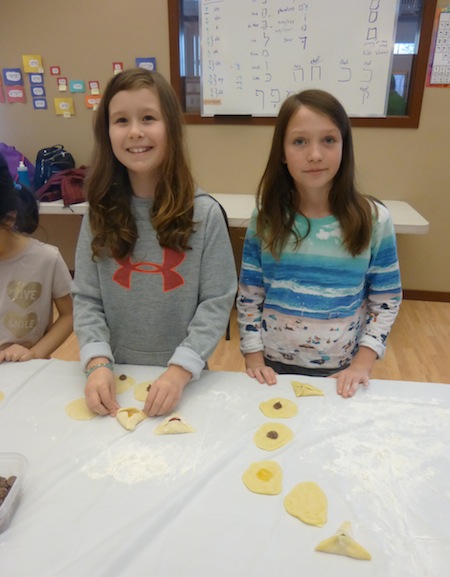
photo - In preparation for Purim, students of White Rock South Surrey JCC Religious School baked hamantashen to take home and share with their familiesIn preparation for Purim, students of White Rock South Surrey JCC Religious School baked hamantashen to take home and share with their families. (photos from WRSS JCC)


Format ImagePosted on March 9, 2018March 7, 2018Author WRSS JCCCategories Celebrating the HolidaysTags education, hamantashen, JCC, Judaism, Purim, White Rock

Posts pagination

Previous page Page 1 … Page 392 Page 393 Page 394 … Page 667 Next page
Proudly powered by WordPress