Skip to content
  • Home
  • Subscribe / donate
  • Events calendar
  • News
    • Local
    • National
    • Israel
    • World
    • עניין בחדשות
      A roundup of news in Canada and further afield, in Hebrew.
  • Opinion
    • From the JI
    • Op-Ed
  • Arts & Culture
    • Performing Arts
    • Music
    • Books
    • Visual Arts
    • TV & Film
  • Life
    • Celebrating the Holidays
    • Travel
    • The Daily Snooze
      Cartoons by Jacob Samuel
    • Mystery Photo
      Help the JI and JMABC fill in the gaps in our archives.
  • Community Links
    • Organizations, Etc.
    • Other News Sources & Blogs
    • Business Directory
  • FAQ
  • JI Chai Celebration
  • JI@88! video

Recent Posts

  • Sharing her testimony
  • Fall fight takes leap forward
  • The balancing of rights
  • Multiple Tony n’ Tina roles
  • Stories of trauma, resilience
  • Celebrate our culture
  • A responsibility to help
  • What wellness means at JCC
  • Together in mourning
  • Downhill after Trump?
  • Birth control even easier now
  • Eco-Sisters mentorship
  • Unexpected discoveries
  • Study’s results hopeful
  • Bad behaviour affects us all
  • Thankful for the police
  • UBC needs a wake-up call
  • Recalling a shining star
  • Sleep well …
  • BGU fosters startup culture
  • Photography and glass
  • Is it the end of an era?
  • Taking life a step at a time
  • Nakba exhibit biased
  • Film festival starts next week
  • Musical with heart and soul
  • Rabbi marks 13 years
  • Keeper of VTT’s history
  • Gala fêtes Infeld’s 20th
  • Building JWest together
  • Challah Mom comes to Vancouver
  • What to do about media bias
  • Education offers hope
  • Remembrance – a moral act
  • What makes us human
  • המלחמות של נתניהו וטראמפ

Archives

Follow @JewishIndie
image - The CJN - Visit Us Banner - 300x600 - 101625

Author: Deborah Rubin Fields

Israeli horses’ ancient links

Israeli horses’ ancient links

In 2016, under the supervision of Prof. Jodi Magness of the University of North Carolina at Chapel Hill, archeologists excavating at the fifth-century CE Huqoq synagogue found a mosaic floor on which there is an image of an Egyptian soldier and his horse floundering in the Red Sea. (photo by James Haberman)

Who doesn’t have some mental picture of the crossing of the Red Sea? Now, you can check how your subjective image matches the “facts on the ground,” as it were. In the summer of 2016, under the supervision of Prof. Jodi Magness of the University of North Carolina at Chapel Hill, archeologists excavating at the fifth-century CE Huqoq synagogue in Israel’s Lower Galilee found a stunning mosaic floor. Of relevance to the soon-to-be-upon-us Pesach holiday is an image of an Egyptian soldier and his horse floundering in the Red Sea (see Exodus 14:28). The Egyptian has separated from his horse and is about to become a large fish’s dinner.

The horse is not one of the animals that immediately comes to mind when thinking of both ancient and modern Israel. Most people would probably think of camels, donkeys, goats or sheep, rather than horses. Yet, the horse and Israel “go way back.” This history possibly starts at Ubeidiya, a location close to the southern end of the Sea of Galilee. There, Israeli archeologists found a horse bone dating back to the Lower Paleolithic Period. At the Hayonim Cave in Israel’s Galilee region, Israel Antiquities Authority archeologists discovered an image of a horse engraved in limestone, a find that dates back to the Upper Paleolithic Period.

From these and other digs, we can assume Israel’s ancient inhabitants were familiar with the horse. This is confirmed, for example, in the City of David, where archeologists uncovered a horse figurine from the Iron Age II. Indeed, there is concrete evidence that, thousands of years ago, people had already domesticated horses and were using them as a means of transportation. Thus, during the first millennium BCE, the horse was transformed from a yoked animal pulling some kind of wagon or cart to an animal that could be mounted. Archeologists discovered another horse-and-rider pottery set at the Tel Erani excavation in southern Israel, near Kiryat Gat, which dates to the Persian Period. Furthermore, an Achziv (located along Israel’s northern Mediterranean coast) discovery of a clay horse and rider, also dating back to the Iron Age II, indicates that the horse was already being used in battle, as the rider is holding a round shield.

A visual depiction of the Assyrian destruction of the town of Lachish in 701 BCE – the original relief is housed at the British Museum while a copy hangs at the Israel Museum – clearly shows that the conquerors used warhorses. Also at Lachish, archeologists dug up an even older piece crafted from gold. This piece is a plaque from the 13th century BCE, the Late Bronze Age. It depicts a naked goddess, probably Astarte or Anat, standing on a horse.

While on the subject of conquests of ancient Israel and pagan gods, the Hebrews returning from Egypt were instructed not to raise horses nor to return to Egypt to obtain horses (Deuteronomy 17:16). In the later period of the kings, King Josiah took away the horses of the kings of Judah, as “they had given them to the sun.” (II Kings 23:11)

Horses are also mentioned in early administrative documents of ancient Israel. Hence, at Arad in southern Israel, archeologists recovered a list written in ink on pottery. This fourth-century BCE list supposedly details items to be given to a particular person named Qos. The list includes a horse.
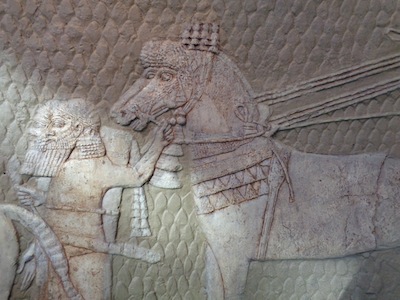
photo - A copy of panels depicting the Assyrian destruction of Lachish, part of Israel Museum’s archeology collection. The original panels date to the Late Iron Age, First Temple Period, 1000-586 BCE, and are housed at the British Museum
A copy of panels depicting the Assyrian destruction of Lachish, part of Israel Museum’s archeology collection. The original panels date to the Late Iron Age, First Temple Period, 1000-586 BCE, and are housed at the British Museum. (photo by Deborah Rubin Fields)

Moving to northern Israel, archeologists in the Dan region discovered a unique Aramaic inscription, which was part of a monumental basalt stone slab. (In the ancient world, Aramaic was, for a time, the Near East’s lingua franca of commerce and trade.) The writing, which dates to the ninth-century BCE, commemorates the military victories of Hazael, king of Aram. In the text, the king claims he killed 70 kings who harnessed thousands of chariots and thousands of horsemen (horses).

Probably the earliest literary reference to horses is found in the Book of Genesis (47:17), where it says that, during a famine in Egypt, Pharaoh’s right-hand man, Joseph, gave “bread in exchange for horses.” And, from the report in I Kings 10:26, it seems King Solomon had 400 chariots and 12,000 horsemen. Moreover, there is a legend, possibly originating with the Bedouins, which states that the Queen of Sheba presented King Solomon with a mare named Safanad. All Arabian horses are supposedly descended from this mare. As it happens, Israel’s Arabian Horse Association is today made up of both Jews and Arabs, and the organization’s bilingual website is indicative of the members’ cooperation.

Later rulers of the divided kingdoms of ancient Israel likewise used horses. Thus, at Tel Meggido, the remains of King Ahab’s (869-850 BCE) stables have been discovered. Evidence, however, of ancient stables does not end there. Rock-hewn Crusader stables and water troughs from 1140 CE are still visible at the Tomb of Samuel the Prophet (also called Kever Shmuel ha-Nevi, Nebi Samwil or Mont de Joie). It stands to reason that, instead of returning to their European (or Asian) home countries, the Crusaders and later conquerors of the Holy Land acquired local horses when they needed to resupply their armies.

The horse has continued to importantly figure in Israel’s more modern period. For political and religious reasons, in 1898, Kaiser Wilhelm II (the last German emperor and king of Prussia) presented himself in Jerusalem on a white horse. Less than 20 years later, after the Ottomans had been defeated, Britain’s General Edmund Allenby dramatically rode on horseback to Jerusalem’s Jaffa Gate (but then purposely entered the Old City on foot).

At the end of October 2017, some 200 visiting members of the Australian Light Horse Association reenacted at Beersheva River Park the charge of the Australian Light Horsemen. In this battle, mounted Allied soldiers helped take Beersheva from the Ottomans. In the 100-year commemoration, original First World War uniforms were worn.

Israel’s horse connection continues to this day. Although it is an expensive pleasure, some Israelis ride for enjoyment. Therapeutic riding schools exist for people with special needs. And Israeli police use horses for crowd control.

How to summarize Israel’s long interest in horses? With this Song of Songs (1:9) quote: “I have compared you, my love, to a company of horses in Pharaoh’s chariots.”

The documentary Lachish the Epic was released earlier this year. It can be found on YouTube.

Deborah Rubin Fields is an Israel-based features writer. She is also the author of Take a Peek Inside: A Child’s Guide to Radiology Exams, published in English, Hebrew and Arabic.

Format ImagePosted on March 23, 2018March 23, 2018Author Deborah Rubin FieldsCategories IsraelTags history, horses, Israel, mosaics
Genetics or lifestyle?

Genetics or lifestyle?

Study brings hope for improving our health.

The question of nature versus nurture extends to our microbiome – the personal complement of mostly friendly bacteria we carry around with us. Study after study has found that our microbiome affects nearly every aspect of our health; and its microbial composition, which varies from individual to individual, may hold the key to everything from weight gain to moods.

Some microbiome researchers have suggested that this variation begins with differences in our genes, but a large-scale study conducted at the Weizmann Institute of Science challenges this idea and provides evidence that the connection between microbiome and health may be even more important than we thought.

Indeed, the working hypothesis has been that genetics plays a major role in determining microbiome variation among people. According to this view, our genes determine the environment our microbiome occupies, and each particular environment allows certain bacterial strains to thrive. However, the Weizmann researchers were surprised to discover that the host’s genetics play a very minor role in determining microbiome composition – only accounting for about two percent of the variation between populations.

The research was led by research students Daphna Rothschild, Dr. Omer Weissbrod and Dr. Elad Barkan from the lab of Prof. Eran Segal of the computer science and applied mathematics department, together with members of Prof. Eran Elinav’s group of the immunology department, all at the Weizmann Institute. Their findings, which were published last month in Nature, were based on a unique database of around 1,000 Israelis who had participated in a longitudinal study of personalized nutrition.

Israel has a highly diverse population, which presents an ideal experimental setting for investigating the effects of genetic differences. In addition to genetic data and microbiome composition, the information collected for each study participant included dietary habits, lifestyle, medications and additional measurements. The scientists analyzing this data concluded that diet and lifestyle are by far the most dominant factors shaping our microbiome composition.

If microbiome populations are not shaped by our genetics, how do they nonetheless interact with our genes to modify our health? The scientists investigated the connections between microbiome and the measurements in the database of cholesterol, weight, blood glucose levels and other clinical parameters. The study results were very surprising: for most of these clinical measures, the association with bacterial genomes was at least as strong as, and in some cases stronger than, the association with the host’s human genome.

According to the scientists, these findings provide solid evidence that understanding the factors that shape our microbiome may be key to understanding and treating many common health problems.

“We cannot change our genes,” said Segal, “but we now know that we can affect – and even reshape – the composition of the different kinds of bacteria we host in our bodies. So, the findings of our research are quite hopeful: they suggest that our microbiome could be a powerful means for improving our health.”

The field of microbiome research is relatively young; the database of 1,000 individuals collected at the Weizmann Institute is one of the most extensive in the world. Segal and Elinav believe that, over time, with the further addition of data to their study and those of others, these recent findings may be further validated, and the connection between our microbiome, our genetics and our health will become clearer.

Elinav’s research is supported by the Adelis Foundation; Andrew and Cynthia Adelson; the estate of Bernard Bishin; Valerie and Aaron Edelheit; the European Research Council; Jack N. Halpern; the Leona M. and Harry B. Helmsley Charitable Trust; the Bernard M. and Audrey Jaffe Foundation; the Else Kroener Fresenius Foundation; the Park Avenue Charitable Fund; the Lawrence and Sandra Post

Family Foundation; the Rising Tide Foundation; Vera and John Schwartz; Leesa Steinberg; and Yael and Rami Ungar. Elinav is the incumbent of the Sir Marc and Lady Tania Feldmann Professorial Chair.

Segal’s research is supported by the Adelis Foundation; Judith Benattar; the Carter Chapman Shreve Family Foundation; the Crown Human Genome Centre, which he heads; the European Research Council; Jack N. Halpern; the Else Kroener Fresenius Foundation; Donald and Susan Schwarz; and Leesa Steinberg.

For more on the work being done at the Weizmann Institute, visit wis-wander.weizmann.ac.il.

Format ImagePosted on March 23, 2018March 23, 2018Author Weizmann InstituteCategories IsraelTags genetics, health, microbiome
What is freedom?

What is freedom?

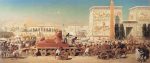
“Israel in Egypt” by Edward Poynter, 1867. (photo from Wikimedia Commons)

There is a certain inherent ambivalence when we think of the meaning of freedom and its association with the holiday of Pesach. One of the essential features of the liberation story is our freedom from human subjugation: “Yesterday we were slaves to Pharaoh, today we are free men and women.”

This freedom, however, did not come about as a result of a revolution instigated by the Jewish people but, rather, as the biblical story relates, through the redemptive hand of God. As a result, this physical redemption is often connected with a religious duty: “I am the Lord your God, who brought you out of Egypt, out of the land of slavery; you shall have no other gods besides me.” (Exodus 20: 2-3)

What is the nature of this connection? Is it an obligation or an opportunity? Is our commitment to God and the Torah a price we pay for the Exodus, or is it a gift – a gift made possible by our physical freedom, but one that we may choose whether or not to receive? The question we as Jews ought to reflect on this Pesach is whether the freedom from Egypt is limited to liberation from physical servitude, or does it include freedom of conscience and faith.

Historically, Jews did not engage extensively in questions of personal autonomy; at most, they spoke about what Isaiah Berlin referred to as “positive liberty” (Berlin, Two Concepts of Liberty). As opposed to the simple, more intuitive concept of negative liberty – “the freedom from” constraints or compulsion, positive liberty is “the freedom to” – the freedom to be all one ought to be, to do that which is the fullest expression of one’s potential. The notion of positive liberty is clearly present in the rabbinic tradition, in such statements as, “There is no free person but he or she who studies Torah.” (Avot 6:2) Freedom, for Jews, has traditionally meant “the freedom to” – the ability to achieve complete self-realization, through a firm, unwavering commitment to God and His word.

Standing alone, however, positive liberty is an extremely precarious concept. We need look no further than the 20th century, when different fascist leaders established their rule on a promise of positive liberty (the freedom to live in a stable society, the freedom to attain financial prosperity, the freedom to fulfil one’s destiny as a member of the master race), to appreciate the danger it harbours: the creation of oppressive, totalitarian regimes, violently trampling the rights of their citizens in the name of freedom. Without the underlying basis of negative liberty, positive liberty means nothing more than the freedom to do that which others determine you ought, to fulfil what others have decided to be your potential.

This question becomes all the more pointed in the context of the state of Israel. So long as Jews lived in Western liberal democracies, they vicariously inherited the value of negative liberty and functioned within its confines. But an essential question facing the modern state of Israel, the only Jewish democracy, is what concept of liberty does it officially espouse? Is Israel a “free state” that dictates the forms of Judaism that are most appropriate? Or does it guarantee its citizens the right and conditions to determine their own individual Jewish path?

If Pesach is going to be not simply a liberation story of our past but a modern, continuous liberation story “in every generation,” we must recognize that positive liberty is an incomplete liberty, that the freedom from Egypt – indeed, our very existence as a free people in our own country – must be accompanied by a commitment to religious freedom and the diversity it will engender.

The spirit of Pesach requires a national pledge to free Israeli society of all and any vestiges of religious coercion, including the manipulation of public funds in order to constrain spiritual choices. In the spirit of Pesach, we must commit ourselves to speaking only in the language of education, and never in the language of indoctrination and coercion.

One of the great paradoxes of Israeli society is that those who function in the name of positive liberty actively limit the actualization of the spiritual potential of Jews. Consequently, the state of Israel is one of the only places in which non-Orthodox Jews can barely receive a Jewish education. Religious coercion and legislation hasn’t furthered our marriage with God; rather, it has created an ever-increasing rift and divorce.

The freedom of Pesach has multiple dimensions. It is our responsibility to ensure it is understood and employed as a catalyst for progress, as a basis for assimilating the broadest notions of negative liberty within our religious language and values. Just as we reject being enslaved by Pharaoh, so, too, must we reject the subjugation of our minds and souls to any authority. In the end, if God is to be the God of the Jewish people, if Judaism and its values are to shape our lives, it will not be because we owe God for our redemption from Egypt, but because we choose a life with God as free men and women.

Rabbi Dr. Donniel Hartman is president of the Shalom Hartman Institute and author of the 2016 book Putting God Second: How to Save Religion from Itself. Articles by Hartman and other institute scholars can be found at shalomhartman.org.

Format ImagePosted on March 23, 2018March 23, 2018Author Donniel Hartman SHICategories Celebrating the HolidaysTags freedom, Israel, Passover, Shalom Hartman Institute
Pesach’s lessons for today

Pesach’s lessons for today

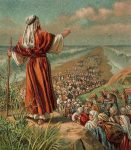
Israel’s Escape from Egypt, illustration from a Bible card published in 1907 by the Providence Lithograph Company. (photo from Wikimedia Commons)

We begin Passover – which starts this year on the night of March 30 – with two seders, and invite family, friends and guests to celebrate the holiday with us. At both seders, we eat matzah, to recall the swiftness of our ancestors’ departure from Egypt, maror (horseradish) to commemorate the bitterness of the slavery in Egypt and charoset, which resembles the mortar our ancestors were forced to use to build pyramids for Pharaoh. The 15 steps of the seder (order) are our way of retelling the tale.

G-d Himself rescued His beloved children from their bitter situation. As written in the Haggadah, “Vayotzeeaynu Hashem Mimitzraim, lo al yiday malach, v’lo al yiday saraf, v’lo al yiday shaliach, ela haKadosh Baruch Hu bichvodo uviatzmo” – “G-d brought us out of Egypt, not through an angel, not through a fiery angel and not through a messenger, but it was the Holy One blessed be He, He Himself in His glory.”

The Israelites had spent 210 years in Egypt, which was an agricultural country, where the soil was fertile, irrigated by the Nile. Our commentaries teach that Pharaoh didn’t want anyone to see him taking care of his bodily functions, so he would go to the Nile early in the morning then return to the palace. He guarded his power with brutality. We recall the birth of Moses and his early life in a basket on the Nile, saved by Pharaoh’s daughter, Batya (the daughter of G-d) and his rise to life in the palace of Pharaoh.

One of the most striking features of the Exodus was the Israelites’ faith in the promises of G-d. They were an entire nation, men, women and children, numbering several million, who willingly left a prosperous and well-settled country, whose pagan values had already left their impression on them, to venture on a long and dangerous journey without provisions, but with absolute reliance on the word of G-d, as spoken to Moses.

Even more, they didn’t follow the familiar and shorter route through the land of the Philistines, which, although it involved the risk of war, was far more attractive than the prospect of crossing a vast and desolate desert. In war, there is a chance of victory and, even in defeat, there is the chance of escape, but, in a desert, with no food or water, nature allows no chance of survival. Yet they followed this route, disregarding rationality and trusting in the word of G-d.

Why did they do this?

This question is echoed in every generation. In the contemporary, materialistic and competitive world, where we all struggle for economic survival, how can we exempt ourselves from its values? How can we adhere to a code of precepts that restricts our actions? The answer lies in the Exodus from Egypt.

In that time, when Jews responded to the call of G-d, disregarding what seemed reasonable, breaking with the values of their Egyptian environment, it transpired that the path they took was the path of true happiness, spiritually in receiving the Torah and becoming G-d’s Chosen People, and materially, in reaching the Promised Land, flowing with milk and honey.

So it is today and always. Through the Torah – the Torat Chayim, the Law of Life – and the mitzvot (good deeds or commandments), a Jew attaches themselves to the creator of the world, and frees themselves from all “natural” limitations. This is still the way of happiness.

Wishing you a happy, kosher and enjoyable Passover, wherever you find yourself in the world. If you find yourself traveling, or even here in Metro Vancouver without a place to celebrate, there are Chabad Houses where you can commemorate our ancestors’ freedom from Egypt at a joyous and meaningful seder. Chag kosher v’sameach.

Esther Tauby is a local educator, writer and counselor. She wrote this article using excerpts from the letters of the Lubavitcher Rebbe.

Format ImagePosted on March 23, 2018March 23, 2018Author Esther TaubyCategories Celebrating the HolidaysTags Judaism, Passover
A few Pesach songs’ origins

A few Pesach songs’ origins

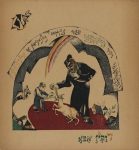
An illustration by Russian artist El Lissitzky in the book Had Gadya, 1919. (photo from getty.edu)

We sing them every year, but from where did Passover songs such as “Chad Gadya” originate?

“Chad Gadya” or “One Little Goat” is a playful cumulative song in Aramaic and Hebrew, sung at the end of the seder. According to Wikipedia, the melody may have its roots in medieval German folk music. It first appeared in a Haggadah printed in Prague in 1590, which makes it the most recent inclusion to the traditional Passover seder liturgy.

The Haggadah was a project that was initiated by the anshei Knesset Hagedola, the members of the Great Assembly, the supreme council of sages that ruled during Temple times in Jerusalem. They were the first to compile and canonize many of the texts that we have today. The Haggadah, however, was only started during that era – it was not completed until much later.

“Chad Gadya” also only found its way into the Haggadah at a much later date. This is because the song was written in Aramaic, which was the vernacular of the Jews of Babylon, and not in Hebrew – at least not in Hebrew for the most part. The slaughterer, angel of death and Holy One Blessed Be He in the song are referred to in Hebrew.

Some suggest that “Chad Gadya” was written by Rabbi Eliezer Rokeach in the 12th century.

According to some modern Jewish commentators, the song may be symbolic. One interpretation is that “Chad Gadya” is about the different nations that have conquered the Land of Israel: the kid (goat) symbolizes the Jewish people; the cat, Assyria; the dog, Babylon; the stick, Persia; the fire, Macedonia; the water, the Roman Empire; the ox, the Saracens; the slaughterer, the Crusaders; the angel of death, the Turks. At the end, God returns to send the Jews back to Israel. The recurring refrain of two zuzim is a reference to the two stone tablets given to Moses on Mount Sinai, or refer to Moses and Aaron.

Versions of the song exist in Ladino, Judeo-Italian and Judeo-Arabic.

***

We know that the “Avadim Hayinu” (“We Were Slaves”) section was written by Rabbi Eliezer Hagadol in the second century). It is an introduction to the formal narration of the Exodus from Egypt, based on the views of Samuel. Passages of unknown origin supplement the narration, stressing its importance.

***

“Echad Mi Yodea” (“Who Knows One”) is another cumulative riddle with versions in Hebrew and Yiddish. The song relates the 13 basics of Judaism. After relating God’s wonders and kindness and the events of the Exodus, it demonstrates how everything can and should relate to God.

According to Encyclopedia Judaica, this song is first found in Ashkenazi Haggadot of the 16th century. It is believed to have originated in Germany in the 15th century, possibly based on the German folk song “Guter freund ich frage dich,” which means “Good friend, I ask you.”

***

“Dayenu” is a Hebrew song, traditionally sung during Passover. The word itself essentially means, “It would have been enough for us.” Day is the Hebrew word for “enough” and the suffix enu means “our.”

This traditional up-beat Passover song is more than 1,000 years old. The earliest full text of the song occurs in the first medieval Haggadah, which is part of the ninth-century Seder Rav Amram.

The song goes through a series of gifts believed granted by God to the Israelites, such as Torah and Shabbat, proclaiming that any of them alone would have been sufficient. It is 15 verses long, sequentially recounting each divine intervention in the story of the Exodus. After each divine act, the chorus “[If God had done only this,] it would have been enough for us” is sung.

Canadian journalist, author and social activist Michele Landsberg wrote “The Women’s Dayenu”:

“If Eve had been created in the image of God and not as a helper to Adam, dayenu.

“If she had been created as Adam’s equal and not been considered a temptress, dayenu.

“If Lot’s wife had been honoured for compassion for looking back at the fate of her family in Sodom, and had not been punished for it, dayenu.

“If our mothers had been honoured for their daughters as well as for their sons, dayenu.

“If our fathers had not pitted our mothers against each other, like Abraham with Sarah and Hagar, or Jacob with Leah and Rachel, dayenu.

“If the just women in Egypt who caused our redemption had been given sufficient recognition, dayenu.

“If Miriam were given her seat with Moses and Aaron in our legacy, dayenu.

“If women had written the Haggadah and placed our mothers where they belong in history, dayenu.

“If every generation of women together with every generation of men would continue to go out of Egypt, dayenu.”

***

“Adir Hu” (“Mighty is He”) is a hymn naming the virtues of God in the order of the Hebrew alphabet, expressing hope that God will rebuild the Holy Temple speedily.

The tune of “Adir Hu” has undergone several variations over the years, but the origin is from the German minnesinger period. The earliest extant music for the song is from the 1644 Rittangel Haggadah, the second form was in the 1677 Haggadah Zevach Pesach, and the third version can be found in the 1769 Selig Haggadah. In the Selig Haggadah, “Adir Hu” is also referred to, in German, as “Baugesang” (the song of the rebuilding of the Temple).

There are 24 short, simple lines, each beginning with an attribute of God. Most of the virtues of God are adjectives – for instance, holy (kadosh) – however, a few are nouns, “Lord is He.”

There is also a feminist variant of the song by Rabbi Jill Hammer of the Academy for Jewish Religion in Yonkers, New York. In it, God is feminine (She) and, quoting Hammer, the song “emphasizes God’s sharing in human joys and griefs, and God’s ability to renew life through the strength of the earth.”

Sybil Kaplan is a journalist, lecturer, book reviewer and food writer in Jerusalem. She created and leads the weekly English-language Shuk Walks in Machane Yehuda, she has compiled and edited nine kosher cookbooks, and is the author of Witness to History: Ten Years as a Woman Journalist in Israel.

Format ImagePosted on March 23, 2018March 23, 2018Author Sybil KaplanCategories Celebrating the HolidaysTags Judaism, music, Passover
Contending with contradictions

Contending with contradictions

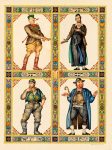
“The Four Sons,” Arthur Szyk, 1934. According to Wikimedia, Szyk “originally intended his Passover story of persecution and deliverance (told through the traditional text of the Haggadah) to be a strong statement against the Nazis, but no publisher in his native Poland dared take on a project with strong anti-Nazi iconography. He ultimately found a publisher in England. This image of the Four Sons … depicts the Wicked Son as an assimilated German complete with porkpie hat and Hitler mustache.” (image from From Arthur Szyk Society, Burlingame, Calif.)

The significance of the seder’s Four Questions should not be confined to being a concrete educational tool for the purpose of teaching historical information to children having a limited sense of abstraction and who bore easily. The questions are a characteristic of the adult intellectual culture during the time of the rabbis.

In the Mishnah, the child is the one who asks and the parent teaches, but, in the Talmud, another source is quoted that requires the adult to ask questions of him or herself: “Our rabbis taught: if his child is intelligent he asks him, while if he is not intelligent his wife asks him; but if not, he asks himself. And even two scholars who know the laws of Passover ask one another.” (Babylonian Talmud, Pesachim 116a)

Here the point is not to recount the story of the Exodus to children, but rather to create a dialogue of questions and answers among adults. The questions of the wise child may be thought-provoking to his or her parents; similarly, the questions of one colleague would be of interest to another. Someone who knows all the laws of Pesach is still required to ask questions, and scholars on their own at the seder are required to ask themselves questions. Why?

At a certain level, the questions serve as an external pretext to refresh the memory in order to raise the level of consciousness concerning the Exodus, even for those who have passive knowledge of the information. At another level, someone who asks himself or herself questions and then answers them, can delve deeper and discover new aspects of knowledge.

This is the educational method practised in the Lithuanian yeshivot – two students on the same level study the text by asking each other questions, raising hypotheses and debating the issues, without hearing lectures from a teacher “who knows the answers.”

This is common practice in universities, where a researcher finding himself or herself at an impasse takes a walk alone while conducting an internal dialogue, which may culminate with new insights into a subject with which s/he is very familiar. The question is a powerful tool for the advancement of the thinking of both the one who asks and answers it.

The rabbis identified a particular type of question, known as a kushiya. A kushiya queries a practice that contains an internal contradiction or which runs contrary to other authorized sources. Unlike the kushiya, an ordinary question generally begins with the word “what,” for example, “What time is it?” It is as if the object of the question has something, information, that the one asking the question needs, and that the one asked “lends” out (literally, sh’ayla, in Hebrew).

The formulation of the kushiya is more sophisticated: “One would expect that such a thing would happen or be written, but why has something else, something unexpected happened or been written?” The poser of the kushiya comes equipped with information and expectations for a certain world order, and this makes him or her aware of deviations, contradictions and the disappointment of expectations. “How is this night different from all other nights – on all other nights we eat leavened bread and matzah, but on this night we eat only matzah?”

The one posing the kushiya sees the whole picture and has expectations of a rational world order. That is why any contradiction requires a rational explanation. We might expect that the more one learns, the fewer questions s/he might ask, after all, s/he already has so much information. But the true intellectual will pose ever more kushiyot, because s/he is all the more aware of the complexity of the world, which is arranged according to so many principles. Curiosity is increasingly aroused and that is why the wise child is the one who asks the kushiyot of his or her own volition, while the younger children need the help of the parent to ask even the simplest question.

Paradoxically, the search for rationality is sustained by the unusual and not by the regular orderly routine. People do not query that which can be taken for granted, even if the explanation is unknown. For example, based on the experience of many Pesachs and seder nights, to the adult Jew, the youngest child asking the Four Questions is taken as a matter of course. But as soon as s/he discovers a different version of the questions, such as the one we saw in the Mishnah, s/he asks “Why do we ask these questions and not others? What is the reason?” or “Why does the Mishnah say the parent says Ma Nishtanah rather than the child?”

The search for rationality in our familiar world is sustained by the ability to imagine alternatives to the existing order. There is a set introduction to the midrashei halakha, homiletic interpretations and inferences of the rabbis (in the Mekhilta). It involves the raising of a hypothetical question, as in this example from the Haggadah. The rabbis wondered:

“You shall tell your child on that day: ‘It is because of this, that the Lord did for me when I went free from Egypt.’” Could this verse mean that you should begin to tell the story at the beginning of the month (in which the Exodus occurred)? No, for the verse explicitly states “on that day” (of the Exodus). Could that mean that we start when it is still daytime? No, for the verse explicitly states: “because of this.” “This” refers to matzah and maror laid before you (only on seder night) (Mekhilta).

“This” implies that the parents must point at the matzah and maror, and use them as visual aids to tell the story (Rabbi Simcha of Vitri).

“Could this verse mean” introduces an imaginative, alternative hypothesis based on the biblical text. “No, for the verse explicitly states that” is a strict construction of the meaning of the existent version of the text that neutralizes the feasibility of an alternative suggestion.

Indeed, the midrashei halakha ask even when no additional version has been found, and only an imaginative person could envisage other reasonable possibilities. There is no attempt here to undermine the accepted text or religious practice, but rather to understand what lies behind it.

If so, then the study method of the rabbis is seemingly founded on a paradox. In order to understand the reasons for the existing order of the customs or the words of the biblical text, we must be able to conceive of another order based on alternative logic. Only that which is not self-explanatory and is not accepted blindly as tradition can lead to a process of thought and discovery of the rationality it contains. The ideal scholar in the culture of the rabbis is not an authoritative figure acting on the basis of a simplistic faith who accepts basic premises without question.

Noam Zion has been a senior research fellow at the Shalom Hartman Institute since 1978, and he teaches in Hartman Institute rabbinic programs. He also works with the Muslim Leadership Institute, the Hevruta gap-year program for Israeli and American Jews, and the Angelica Ecumenical Studies program in collaboration with the Vatican University Angelicum in Rome. He has developed study guides on Bible, holidays and rabbinic ethics, has numerous publications to his credit and lectures worldwide. Articles by Zion and other Hartman Institute scholars can be found at shalomhartman.org.

Format ImagePosted on March 23, 2018March 23, 2018Author Noam Zion SHICategories Celebrating the HolidaysTags Judaism, Mishnah, Passover, Shalom Hartman Institute
מדד השחיתות

מדד השחיתות

מדד המדינות המושחתות בעולם: קנדה במקום השמיני וישראל רק במקום השלושים ושתיים. (צילום: Cynthia Ramsay)

בימים האחרונים התפרסם מדד המדינות המושחתות בעולם לשנת 2017. המדד כולל מאה ושמונים מדינות שנסקרו, ומיקומן נקבע על פי השחיתות במגזר הציבורי, באמצעות שלושה עשר מקורות מידע משנים עשר מכוני מחקר עצמאיים ובלתי תלויים.

מהתוצאות עולה כי קנדה נמצאת במקום השמיני והגבוה בקרב המדינות הכי פחות מושחתות. ואילו ישראל איך לא לאור פרשות השחיתות הרבות שמאפיינות אותה, ובעיקר את ראש הממשלה, בנימין נתניהו, נמצאת מאחור במקום השלושים ושתיים.

להלן העשירייה הראשונה של המדינות הכי פחות מושחתות: ראשונה – ניו זילנד, שנייה – דנמרק, שלישית – פינלנד, רביעית – נורבגיה, חמישית – שוויץ, שישית – סינגפור, שביעית – שבדיה, שמינית – קנדה, תשיעית – לוקסמבורג ועשירית – הולנד.

העשירייה השנייה: אחד עשרה – בריטניה, שתיים עשרה – גרמניה, שלוש עשרה – אוסטרליה, ארבע עשרה – הונג קונג, חמש עשרה – איסלנד, שש עשרה – אוסטריה, שבעה עשרה – בלגיה, שמונה עשרה- ארצות הברית, תשעה עשרה – אירלנד ועשרים – יפן.

העשירייה השלישית: עשרים ואחד – אסטוניה, עשרים ושתיים – איחוד האמירויות הערביות, עשרים ושלושה – צרפת, עשרים וארבעה – אורגוואי, עשרים וחמשה – ברבדוס, עשרים וששה – בהוטן, עשרים ושבעה – צ’ילה, עשרים ושמונה – איי בהאמה, עשרים ותשעה – פורטוגל ושלושים – קטאר.

אחריהן במקום השלושים ואחד טיוואן, במקום השלושים ושתיים ישראל, במקום השלושים ושלושה ברוניי, במקום השלושים וארבעה בוטסואנה ובמקום השלושים וחמשה פולין.

ערים מתקדמות הופכות אשפה למשאב: ונקובר פועלת להיות העיר הירוקה בעולם

ערים רבות בעולם פועלות בשנים האחרונות לחסוך את העלות הגבוהה של סילוק פוסלת האשפה, הנוצרת בהן מדי יום בכמויות ענק. הן פועלות להפחית את כל צורות הפסולת שלהן, ולהשתמש בפסולת עד כמה שאפשר כמאשב, כך שהיא תהפוך לחומר גלם אחר. כך מדווח אתר הידען מישראל המפרסם מידע בתחום המדע והטכנולוגיה.

הערים בעולם הופכות למאוכלסות יותר וראשי הערים מחוייבים לשאת באחריות למצוא ולפתח פתרונות להרי הזבל שנוצרים בהן. הנוף העירוני הוא כיום הסביבה, שבה מתרכזים האתגרים הכרוכים בניהול חיים אנושיים מורכבים. בערים מתבזבות כמויות גדולות של אנרגיה, פחמן דו-חמצני, מזון, מים, מרחב וזמן. העירייות יכולות לפתור מספר בעיות בעת ובעונה אחת, ולהבטיח לתושבים, הפחתה משמעותית של חלק מהפסולת, תוך הפיכתה למשאב בעל יתרונות כלכליים.

כיום אין בהזרמת הפסולת למי הביוב פתרון סופי ויש להפחית מראש את הפסולת שנוצרת בערים, ולהשתמש בחלק גדול ממנה, לשימושים יעילים יותר. פעילות זו נקראת “כלכלה מעגלית”.

באתרי הטמנה האשפה של ונקובר לוכדים את גז המתאן הנפלט מהאשפה הרבה, ובחום שנוצר משריפתו משתמשים לחימום חממות בסמוך להם, בהן גדלות עגבניות. זו דוגמא טובה של יצור אררגיה חיובית מאשפה.

ונקובר שפועלת להיות העיר הירוקה ביותר בעולם, מחלקת לתושבים מיכלים נפרדים לאשפה רגילה, לפסולת אורגנית (כמו שאריות מזון, ענפים וגזם), לפסולת זכוכית, פסולת נייר, פסולת פלסתיק ועוד. עיריית ונקובר שמצפה מאזרחי העיר שיפעלו בהתאם עם הפסולת לסוגייה כמתבקש, שולחת מעת לעת פקחים לבדוק שזה אכן נעשה.

מן הפסולת האורגנית העירייה מפיקה את גז המתאן, וכן מוצרים מוצקים שיכולים לשמש לדישון הקרקע. לפתרונות אלה מספר יתרונות בעת ובעונה אחת: הם חוסכים לעיר הוצאות על אנרגיה, הם מפחתים משמעותית את הצורך בהטמנת פסולת באתרי האשפה וכן הם מועילים לענף החקלאות.

Format ImagePosted on March 21, 2018March 14, 2018Author Roni RachmaniCategories עניין בחדשותTags Canada, corruption, environment, Israel, Vancouver, waste reduction, הסביבה, הפחתת פסולת, השחיתות, ונקובר, ישראל, קנדה
Winnipeggers reach to Israel

Winnipeggers reach to Israel

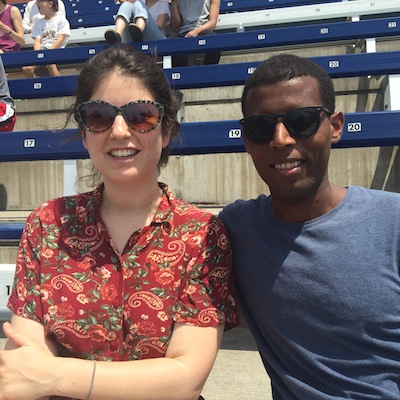
Samara Carroll, second from the left, with Dawit Demoz, right, and members of his host family – Sunita and her daughter Persia. (photo from Samara Carroll)

Soon after Samara Carroll returned from a yearlong program in Israel, she took action to help African asylum seekers in Israel come to Canada.

Carroll grew up in Winnipeg, went to Talmud Torah and then to Gray Academy. She was involved in many aspects of the Jewish community growing up, including with B’nai B’rith Youth Organization, leading trips to Israel, and attending Camp Massad for 17 years (for two of which she was the camp director).

In 2012, Carroll was accepted to be the first Canadian participant of the New Israel Fund Social Justice Fellowship. “This fellowship gives you the opportunity to choose an Israeli nonprofit and work there for a year,” Carroll told the Independent.

“I chose ASSAF – Aid Organization for Asylum Seekers and Refugees – located in south Tel Aviv. I worked as a community organizer, activist and counselor, supporting families who had fled, mostly from Eritrea and Sudan, and were dealing with the trauma related to their past experiences and the ongoing challenges of being in Israeli society.”

During her time at ASSAF, Carroll heard hundreds of gut-wrenching stories, but also learned many things from the asylum seekers with whom she worked.

“The Israeli government does not have a proper process to assess whether or not someone is an asylum seeker,” said Carroll. “So, instead of creating a system, they have created policies that make life extremely difficult for asylum seekers…. They do not have basic access to healthcare, proper housing, employment or education. And, they face significant racism, directly from the Israeli government. They have been referred to as a ‘cancer.’

“The Netanyahu government claims that the asylum seekers have come to Israel for employment opportunities, but you only have to hear one story from an asylum seeker about their experience facing genocide and dictatorship in their country of origin – leaving behind everything they knew, being smuggled, human trafficked and tortured by smugglers in Sinai and then arriving in a foreign country – to understand that they are fleeing desperate situations.

“When you ask many asylum seekers where they’d want to be, they say ‘back home,’ but they cannot go back home,” Carroll said, summing up her belief using a quote from writer Warsan Shire: “You have to understand no one puts their children in a boat unless the water is safer than the land.”

After her year in Israel, Carroll decided to pursue a master of social work degree at the University of Toronto. About six months after she had arrived in Toronto, she was approached by Dawit Demoz, an Eritrean asylum-seeking man who was an activist in Israel, about giving asylum seekers more rights in Israel.

“He approached me, asking if I would sponsor him to Canada,” explained Carroll. “He felt that, although he loved the community he had established in Israel – his Israeli friends, the food and the culture – the policies of the Israeli government were just getting worse and he knew he had to try to leave the country if he ever wanted freedom.

“I agreed to sponsor him and did so through a SAH (Sponsorship Agreement Holder). The sponsorship process is detailed, but is very manageable and I believe more people would be open to sponsoring asylum seekers if they understood this.”

photo - Samara Carroll and Dawit Demoz
Samara Carroll and Dawit Demoz. (photo from Samara Carroll)

Demoz arrived in Toronto in March 2016. “He says this is the first time in his life he has felt free,” said Carroll. “He studies psychology at York University, works as an interpreter for a refugee organization, led canoe trips through Algonquin Park as a counselor last summer, and worked as a counselor at the Heart to Heart Program through Camp Shomria. He also plays soccer on a team, hosts Eritrean dinners for his many Jewish friends, and enjoys life.

“Five of our friends have submitted a Group of Five sponsorship to bring his mother [who he hasn’t seen in 10 years] to join him in Toronto,” said Carroll.

Following her example, Carroll’s parents, Sharon Chisvin and Marshall Carroll, have sponsored an Eritrean couple with the support of a local church-based sponsorship agreement agency, Jewish Child and Family Service Winnipeg and donations from friends, family and community members. The couple – Tsege and Kidane – arrived in Winnipeg in May 2016.

“They are generous, wonderful people and have created a strong community for themselves in Winnipeg, and they also support other newly arrived asylum seekers,” said Carroll. “While it is clear that you can positively shape someone’s life who has never experienced freedom before, you do not know how much they will positively impact your life.”

According to Carroll, the situation for asylum seekers in Israel has worsened since 2016. Prime Minister Binyamin Netanyahu has signed an order to deport asylum seekers from Israel to third-party countries, such as Uganda and Rwanda, she said. “This is a human rights violation, as we do not know what is waiting for them in these new countries – countries they have no connection to. Men who have already been deported there have been given no status or rights.”

For her part, Chisvin has started working with Canadians Helping Asylum Seekers in Israel (CHAI), which she described as “a grassroots group formed in Toronto in response to Netanyahu’s deportation order. It is primarily made up of Toronto Jewish activists who feel deeply that Israel’s intent to deport 38,000 African asylum seekers to third countries – and to certain suffering – is a strict violation of Jewish values, history and memory. This sentiment has been shared by 20,000 Israelis who protested against the deportation in Tel Aviv [recently], myriad Israeli rabbis, teachers, psychiatrists, El Al pilots and authors, as well as Irwin Cotler, Alan Dershowitz, the ADL [Anti-Defamation League], HIAS [Hebrew Immigrant Aid Society] and many other individuals and agencies.”

In Toronto, there is growing group of support for CHAI, and Chisvin is working to create a similar group in Winnipeg and beyond. Its goals, she explained, include raising awareness within the Jewish community about the deportation; encouraging people to ask the Israeli government to rescind its deportation order and implement a humane strategy for refugees and asylum seekers; appealing to the Canadian government to pressure the Israeli government to rescind the deportation order and work together on a solution; and encouraging people to commit to private refugee sponsorships.

“I have been assisted in my efforts, helped by a handful of people here in Winnipeg, who are helping me raise awareness in the community about the issue – urging others to speak up and fundraise for the refugees I have, and am in the process of sponsoring,” said Chisvin.

Further to that, Chisvin is in the early stages of organizing a community event to raise awareness about the issue and to explain how and why Canadian Jews should be moved by the plight of African asylum seekers who are at risk of being deported or indefinitely detained, and how and why they should commit to help sponsor some of them to Canada as refugees.

“The best solution, of course, is for Israel to rescind its deportation order, properly process the refugee claims of the asylum seekers, grant them refugee status, and all the rights inherent in that status,” said Chisvin. “But, if Israel doesn’t rescind the order, it is incumbent on Canadian Jews to lobby their government to increase the number of African asylum seekers it brings to Canada and to commit to privately sponsor African asylum seekers to Canada.”

There are many other ways to become involved, including supporting sponsors with money to help settle asylum seekers, provide housing and employment opportunities – as well as just being open and generous with newcomers. For more information, email [email protected] or visit facebook.com/canadianshelpingasylumseekersinisrael or letushelpil.org/canada.html.

“Israel needs to deal with the asylum seeker situation in their country and not force out people who have already experienced unspeakable trauma to a third country that will again violate their human rights,” said Carroll. “Our message and the message of many Jewish communities now is, ‘Do not deport. Let us help.’”

Rebeca Kuropatwa is a Winnipeg freelance writer.

Format ImagePosted on March 16, 2018March 15, 2018Author Rebeca KuropatwaCategories WorldTags asylum seekers, Canada, human rights, immigration, Israel, Samara Carroll, Sharon Chisvin
The telling of stories

The telling of stories

Left to right: Yoo Ra Kang (Asaka, Mother of the Earth), Ricardo Pequenino (Agwe, God of Water), Alexandra Quispe (Erzulie, Goddess of Love) and Sari Rosofsky (Papa Ge, Sly Demon of Death) in Fabulist Theatre’s production of Once On This Island, which opens April 6. (photo by Tina Clelland)

None of us mere mortals is a god. But some of us get to play one on the stage.

Sari Rosofsky takes on the role of Papa Ge in Fabulist Theatre’s upcoming production of Once On This Island. Papa Ge is one of four gods who affect – for better and for worse – the life of the main character, Ti Moune, a peasant girl living on an island in the French Antilles.

“What I love about Papa Ge is she’s the evil one!” said Rosofsky. “Ever since I was a child, I’ve always loved the bad guys more than the good because I felt they had more depth and dimension to them, and they always had the cooler songs. I think what is the most challenging part of this character is how to be a villain without being crazy – while I still want to portray the darkness and depth Papa Ge has to offer, I want audience members to be drawn to her despite her being the bad guy. It’s a delicate balance for sure, but I’m certainly up for the challenge.”

Based on the novel My Love, My Love; or the Peasant Girl by Rosa Guy, the one-act musical (with book and lyrics by Lynn Ahrens and music by Stephen Flaherty) “includes elements of Romeo and Juliet and Hans Christian Andersen’s The Little Mermaid,” explains the press material. Ti Moune “uses the power of love to bring together the different social classes living on her island.”

“Right now, I’m auditioning for a wide variety of shows, as I want to do as much theatre as possible to gain experience,” Rosofsky told the Independent about how she landed her role. “I saw the call [for Once On This Island] and saw that the production team had some familiar names, and knew I wanted to work with them – the music director, Amy Gartner, was actually in a show with me at the time I saw this call. I approached her and asked about the auditions and she strongly encouraged me to submit. So, I did, but, sadly, the auditions were during a time when my show had some important rehearsals. Thankfully, the production team decided to have me audition during the callbacks when I was available, and had me sing for multiple roles, Papa Ge included. And the rest, you can say, is history!”

Traditionally, director Damon Jang told the Independent in an email, the role of Papa Ge is played “by a man, but portrayed by a woman in the Broadway revival version.” Rosofsky, he said, “was the best person for the part, so we cast her.”

According to her bio, Rosofsky has “a passion for the arts, whether that be in singing, acting or modeling.” In addition to starting voice lessons at age 12, she started auditioning for school plays. She won her first role in Grade 8 – as a sailor in Shakespeare’s Twelfth Night. Her first musical came the next year, when she was part of the ensemble of Kiss Me Kate. She continued singing and acting through university, but did her degree in earth and ocean sciences.

Starting her sciences degree at the University of Waterloo, she finished it at the University of British Columbia. “While at UBC,” notes her bio, “she rediscovered her passion for musical theatre with the show Guys and Dolls, where she played Big Julie.”

Rosofsky has released two songs – “Save Me” and “Turn Around” – under the name Sari Rose. In her everyday life, she goes by the name Sari Chava Rosove. Rosofsky is her stage name, she said.

“My name alone is very difficult to pronounce for most people so I wanted to change it to something that rolls off the tongue slightly easier, but still maintain the uniqueness,” she explained. “It turns out my family already had this one taken care of for me – while Rosove is my legal last name, Rosofsky was the original family last name before they immigrated from Russia in 1901. They changed it to Rosove, as they were Jewish refugees and wanted to avoid antisemitism when they came to Canada. And so that’s where my stage name comes from, by paying homage to my roots.”

Rosofsky grew up in Seattle, where, she said, she spent most of her Jewish childhood at Herzl-Ner Tamid. “I went to Sunday school, along with additional after-school classes to prepare for my bat mitzvah, and, after that, I just kept going!” she said. “One of the most memorable things I did growing up at this synagogue was a program my mother actually ran, where a group of us would get together and make sandwiches that would be donated to a group that would hand out paper bag lunches to the homeless in Seattle. Of course, I also attended summer camp for a few summers at Camp Solomon Schechter.”

Rosofsky graduated from UBC in 2013, and then studied musical theatre at Capilano University.

“It’s a three-year, full-time program – and they truly keep you very busy,” she said. She attended Capilano from September 2014 to April 2017. “The entire program was so much fun. I learned a lot not only about the industry but about myself as a performer from some truly inspiring instructors.”

Recently, Rosofsky was in the ensemble for Merrily We Roll Along, put on by United Players, and played the wife in Draining the Swamp, by Curious Creations Theatre. “In between all of my endeavours in theatre,” she said, “I also dabble in competitive pole dancing which, in actuality, can be quite a performance! I competed and placed in my division back in October and will be training at Tantra Fitness for the upcoming competition in September, in between my other projects.”

Once On This Island is at the Red Gate Revue Stage on Granville Island April 6-14, 8 p.m. The show is approximately 90 minutes with no intermission.

The production is Vancouver’s first semi-professional cast of Once On This Island, according to the press release. Added Jang, “We wanted to cast based on the culturally diverse community of performers who make up Greater Vancouver and might otherwise be underrepresented in the city. We fully acknowledge that the story is a largely set in Haiti, but we wanted to use the story as a platform to address the more universal themes of love, death, and fighting against the class system. At the end of the day, these are storytellers telling a story.”

For tickets to the show, visit ootivan.brownpapertickets.com.

Format ImagePosted on March 16, 2018March 21, 2018Author Cynthia RamsayCategories Performing ArtsTags Damon Jang, Fabulist Theatre, musical theatre, Sari Rosofsky
When will it be enough?

When will it be enough?

For a people who make up a fraction of one percent of the world’s population, Jews sure do gather a lot of attention and get credit for an extraordinary amount of bad doings on the planet.

Last week, Russian President Vladimir Putin, who evidence suggests directly meddled in American politics and is partly (if not entirely) responsible for Donald Trump’s election, said maybe it was “Jews” who meddled in the election.

Why wouldn’t he? It’s a strategy that has worked in Europe for centuries. In trouble? Look around. Find a Jew. Blame them.

About the same time, Trump was giving a farewell address to Gary Cohn, his erstwhile chief economic adviser, who resigned last week because of disagreements over tariff policy.

In his toast to Cohn, Trump said: “He may be a globalist but I still like him.” An untrained ear could hear the president’s remarks and assume Cohn is a free trade proponent in an administration filled with economic protectionists. But anyone familiar with alt-right radio broadcasts and white supremacist dialectics knows exactly what it means: Jew.

Jonathan Greenblatt, national director of the Anti-Defamation League, says the term was adopted in extremist and white supremacist circles as a euphemism for a stereotype of someone engaged in a global conspiracy. And the president of the United States feels confident he can use it with impunity.

Also at the same time – because fighting antisemitism these days is rather like the carnival game Whack-a-Mole – the leader of the United Kingdom’s Labour Party, Jeremy Corbyn, was found to have been an active participant on a hidden Facebook page called Palestine Live, where overt antisemitism, Holocaust denial and white supremacism were rampant. He even hosted an event at Westminster for the leaders of the secret group. Now, confronted with his past association with it, Corbyn’s response is, essentially, “What? I didn’t see any antisemitism. I don’t spend all day reading social media.” This comes as Corbyn’s supporters are being investigated for and purged from his party by the head office over seemingly incessant expressions of Jew-hatred and repetition of classical antisemitism. A glance at the evidence being presented online by anti-hate wings of the Labour party include every imaginable accusation against Jews – and plenty more that are beyond the imaginings of a healthy mind.

Then there is Louis Farrakhan. The head of the American-based Nation of Islam held his annual Saviour’s Day event in late February. There, Farrakhan declared Jews his enemy, “the mother and father of apartheid,” claimed that Jews have chemically induced homosexuality in black men through marijuana and are “responsible for all of this filth and degenerate behaviour that Hollywood is putting out, turning men into women and women into men.” He added: “When you want something in this world, the Jew holds the door.” Most chilling, and self-aggrandizingly, he declared: “Farrakhan … has pulled the cover off the eyes of that Satanic Jew, and I’m here to say your time is up, your world is through.”

Oddly, rather than holding Farrakhan to account for his words, perhaps because that is deemed a futile endeavour, most of the fallout has been around the association leaders of the Women’s March have with Farrakhan. Individuals like Linda Sarsour and Tamika Mallory have attended Saviour’s Day events and refused to condemn Farrakhan’s latest broadside on Jews. The march organization issued a statement, saying that his words were “not aligned with the Women’s March Unity Principles.” (By contrast, organizers of the Women’s March in Canada issued an unequivocal repudiation of Farrakhan and his remarks.)

Yet another notable incident happened recently. Residents of the Montreal borough of Outremont attended a public meeting to complain about a network of buses used by their Chassidic neighbours. Some of their complaints seemed justified. It appears the buses cause congestion on neighbourhood streets. But some of the residents appeared at the meeting wearing strips of yellow tape on their clothing. The allusion was obvious to anyone. This was meant to invoke the Nazi “Jude” star.

Some residents defended their choice, saying, effectively, “What? No! The yellow tape represents the buses that are disturbing our neighbourhood.” But one forgot to follow the script. “[The Jews] always bring up their painful past,” Ginette Chartre said. “They do it to muzzle us.”

In this month’s issue of The Atlantic, Armando Iannucci, an acute political observer who created the satirical TV program Veep and the recent film The Death of Stalin, noted: “Things are being said now that you wouldn’t have tolerated 10 year ago.”

As we approach Passover, we reflect on our history and celebrate our freedom. It is simplistic and insufficient to say that history and freedom have seen their ups and downs. But this time of year does invite us to put today’s events in a broader context. As much as the situation has worsened for us, we are not the only targeted minority, and oppressors to rival Pharaoh still abound. When we toast to next year in Jerusalem, we might also add wishes for the strength and wisdom to help bring about a tipping point at which people of goodwill say “Enough!” – and work even harder to ensure that our better natures win out.

Format ImagePosted on March 16, 2018March 15, 2018Author The Editorial BoardCategories From the JITags antisemitism, Farrakhan, Outremont, Putin, Trump, Women's March

Posts pagination

Previous page Page 1 … Page 391 Page 392 Page 393 … Page 667 Next page
Proudly powered by WordPress