Skip to content
  • Home
  • Subscribe / donate
  • Events calendar
  • News
    • Local
    • National
    • Israel
    • World
    • עניין בחדשות
      A roundup of news in Canada and further afield, in Hebrew.
  • Opinion
    • From the JI
    • Op-Ed
  • Arts & Culture
    • Performing Arts
    • Music
    • Books
    • Visual Arts
    • TV & Film
  • Life
    • Celebrating the Holidays
    • Travel
    • The Daily Snooze
      Cartoons by Jacob Samuel
    • Mystery Photo
      Help the JI and JMABC fill in the gaps in our archives.
  • Community Links
    • Organizations, Etc.
    • Other News Sources & Blogs
    • Business Directory
  • FAQ
  • JI Chai Celebration
  • JI@88! video

Recent Posts

  • Sharing her testimony
  • Fall fight takes leap forward
  • The balancing of rights
  • Multiple Tony n’ Tina roles
  • Stories of trauma, resilience
  • Celebrate our culture
  • A responsibility to help
  • What wellness means at JCC
  • Together in mourning
  • Downhill after Trump?
  • Birth control even easier now
  • Eco-Sisters mentorship
  • Unexpected discoveries
  • Study’s results hopeful
  • Bad behaviour affects us all
  • Thankful for the police
  • UBC needs a wake-up call
  • Recalling a shining star
  • Sleep well …
  • BGU fosters startup culture
  • Photography and glass
  • Is it the end of an era?
  • Taking life a step at a time
  • Nakba exhibit biased
  • Film festival starts next week
  • Musical with heart and soul
  • Rabbi marks 13 years
  • Keeper of VTT’s history
  • Gala fêtes Infeld’s 20th
  • Building JWest together
  • Challah Mom comes to Vancouver
  • What to do about media bias
  • Education offers hope
  • Remembrance – a moral act
  • What makes us human
  • המלחמות של נתניהו וטראמפ

Archives

Follow @JewishIndie
image - The CJN - Visit Us Banner - 300x600 - 101625

Author: Cynthia Ramsay

JCC Book Fest awards given

JCC Book Fest awards given

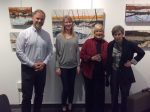
Western Canada Jewish Book Award 2018 winners, left to right: Roger Frie, Deborah Willis, Kathryn Shoemaker and Irene Watts. Missing: Tilar Mazzeo. (photo by Cynthia Ramsay)

Deborah Willis became a writer, in part, because it is a way “to learn about the things that you’re curious about.” Irene N. Watts and Kathryn E. Shoemaker were motivated to reimagine a decade’s-old story in light of its relevance to pressing issues of today. And, in his latest work, Roger Frie found a way to discuss a past for which, previously, “the words were missing for how to speak about it.”

The Western Canada Jewish Book Awards, presented by the Cherie Smith JCC Jewish Book Festival, took place on April 26. Self-proclaimed book lover Daniella Givon, who is part of the JBF committee and was chair of the awards committee, introduced the evening.

“As I looked for ways to enhance the Jewish Book Festival,” she said, “I had a vision that book awards would marry the goals of the festival with the celebration of, and support the achievements of, local Jewish writers from Western Canada and showcase the winning authors. Since then, we’ve already gone through the process of bringing the ideas to fruition with the help of a subcommittee and the first round of awards … a beautiful ceremony was held here two years ago, recognizing five best-deserving authors.”

This year, four awards were presented, as chosen by the selection committee of former librarian Linda Bonder (Victoria); author and librarian Elisabeth Kushner (Vancouver); author and poet Dave Margoshes (near Saskatoon); writer, teacher and critic Norman Ravvin (Montreal); and Judith Saltman, professor emerita at the University of British Columbia School of Library, Archival and Information Studies. The winners were Calgary-based Willis for The Dark and Other Love Stories (Diamond Foundation Prize for fiction); Tilar J. Mazzeo, who divides her time between Maine, New York and Vancouver Island, for Irena’s Children (Pinsky Givon Family Prize for non-fiction); Vancouver’s Watts and Shoemaker for Seeking Refuge (Jonathan and Heather Berkowitz Prize for children and youth literature); and Frie, professor of education at Simon Fraser University and affiliate professor of psychiatry at UBC, for Not in My Family: German Memory and Responsibility after the Holocaust (Kahn Family Foundation Prize for writing on the Holocaust).

At the awards ceremony, each of the donors, or their representative, announced the winner of their sponsored award, which included a cash component. The winners – except for Mazzeo, who could not attend – read excerpts from their books and were interviewed briefly by Marsha Lederman, Western arts correspondent for the Globe and Mail.

Frie, who seven years ago discovered his maternal grandfather’s involvement with the Nazis, told Lederman, “This was a past no one had spoken about and, as I soon learned to understand, I think the words were missing for how to speak about it.” About the war in general, he said, his parents – who immigrated in the 1950s to Canada (Frie was born here) – talked about Germany’s responsibility for the Holocaust, however they did not speak about what his grandparents believed or what their involvement was in the war. He has found, in his research, that this “is a common dynamic amongst Germans in the postwar period.” He said that, while Germany has faced its past, “the emphasis on collective memory and collective understanding and collective responsibility has, in some way, allowed individual families to avoid confronting the past, and this book [Not in My Family] is very much a representation of that.”

Lederman described Mazzeo’s book as “astonishing.”

“I knew nothing about Irena Sendler before I picked up this book, so this has been a gift,” she said. “Irena Sendler was a Polish woman who saved … thousands of Jewish children during the Holocaust with amazing feats of courage, often in the Warsaw Ghetto. Her story is incredible, this book is incredible, and I can only hope that Steven Spielberg gets his hands on a copy.”

Shoemaker gave a brief presentation on the creative process she and Watts went through to create the graphic novel Seeking Refuge, which is based on Watts’ book Remember Me (first published in 2000). And Watts spoke of the challenge of cutting 27 chapters down to nine. “What I had to keep in mind,” said Watts, “is you can get so carried away by cutting and changing the language to make it more dynamic that you lose the story a little bit, and I had to watch that I didn’t diminish the characters.”

About the cover of the graphic novel, which features a girl sitting on a suitcase looking forlorn, Watts said Shoemaker “told the story in that one image.” Later, in response to a question from Lederman, Watts said the current refugee crisis was “the major reason to bring this book back in a different format.”

As for Willis, she spoke with Lederman about her winning collection of short fiction. “I was writing the stories for about five years, and I actually started noticing that the word ‘love’ was coming up over and over again. I was at first a little dismayed by that because I was thinking, oh, love stories, that’s been done. But then I embraced it and I wanted to try and explore that theme in a way that was true to my esthetic, or my goals as a story writer. I set it almost as a challenge.”

After an open Q&A with the authors, JCC Jewish Book Festival director Dana Camil Hewitt wound up the event with thanks to the sponsors, judges, awards committee and audience.

For an interview with Watts and Shoemaker, visit jewishindependent.ca/meet-award-winning-artists and, for a review of Not in My Family, visit jewishindependent.ca/a-grandfathers-sins.

Format ImagePosted on May 4, 2018May 2, 2018Author Cynthia RamsayCategories BooksTags children, Daniella Givon, Deborah Willis, fiction, Holocaust, Irene Watts, Jewish Book Festival, Kathryn Shoemaker, Marsha Lederman, memoir, Roger Frie, Tilar Mazzeo

Abuse comes in many forms

In the second of a series of articles on sexual harassment and violence in the Jewish community, the Jewish Independent speaks with Dr. Alan Stamp, clinical director at Vancouver’s Jewish Family Services.

The #MeToo movement, founded by Tarana Burke in 2006, is based on the concept that empowerment for scores of survivors is possible through empathy – from survivors knowing they are not alone. The movement aims to achieve radical community healing and disruption of all systems that have allowed sexual violence to flourish.

Dr. Alan Stamp, clinical director at Vancouver’s Jewish Family Services, stressed the particular need to protect children. From a psychological standpoint, around the age of 9, there is nothing worse than what is called a “boundary violation” of a young person inflicted upon him or her by an adult.

“Adults, parents, caregivers … are meant to keep kids safe,” Stamp told the Independent. “And when a child is abused by an adult figure, it breaks the trust that the child has – not only in that person, but it breaks their trust in the world. The world becomes an unsafe place to be.”

Stamp went on to explain that children have simple intellectual lives, in that they expect to be cared for in a way that is warm, nurturing and attentive. “When abuse happens, this is stripped away,” he said. “The impact on the developing psyche is that … I have to be vigilant, watchful, that there could be danger all around me…. And, it could be a teacher, an adult and/or a family member.

“The child puts a lot of focus on being vigilant rather than what they are meant to do, which is to learn through play, through relationships. So this is a very injurious act, probably the most injurious act a child can experience.”

Young people who have had this kind of experience develop all kinds of coping strategies – from withdrawing, to acting out, being aggressive and developing learning problems. These coping mechanisms can last a lifetime.

photo - Dr. Alan Stamp
Dr. Alan Stamp (photo from JFS)

“I’ve had many clients over my life who, when they are in their 60s, 70s or 80s, they tell me they’ve never told anyone this story before … and they launch into a story about being harmed … and that it has had an effect on all the relationships they’ve gone on to have in their lives,” said Stamp. “This is why it’s so injurious to a child. If you’re an adult and you have the horrible misfortune of being assaulted or abused, you have had more life experience to be able to manage it. If abuse happens to a youth, while not a child any more, they’re still at a tremendous disadvantage. For young people, getting help, intervening as soon as possible for an extended period of time, really increases the potential for people to do better later in life.”

Outside of explicit sexual abuse, other forms of abuse include emotional abuse, which can involve behaviour that is berating, condescending, hostile or threatening.

“This can be telling a young person that, if you don’t get a top mark in your class, you’re going to ‘suffer these consequences’ – like withdrawing food, be sent to the basement as punishment, neglect, or any manner of things,” said Stamp.

Another form of abuse is physical. “I’ve seen kids who’ve been hit by cast-iron frying pans on their head,” said Stamp.

“I can tell you what parents are meant to do,” said Stamp. A parent “is meant to provide their child with guidance, affection, warmth, food, shelter and education. And, when a parent or caregiver is withholding things, punishing without a clear reason, disciplining inappropriately for the offence – all of these things are felt as abuse to a child.

“This is different than simply being a strict parent by sticking to boundaries, having guidelines, curfews and insisting that homework or chores are done,” he clarified. “This may be strict, but it’s not abusive. It’s abuse when an act or reaction is an inappropriate response to behaviour. A child may think she or he is being treated unfairly, but it is not necessarily abuse. Abuse is something that will shake up the developmental life of the child and will cause them to look at the world through a different lens. Being a strict or controlling parent isn’t necessarily abuse, but the line can be crossed.”

Financial abuse is more often seen among adults, when someone is in a relationship – a spouse, significant other or adult child, for example – takes control of the other’s bank account. Stalking is a form of psychological abuse, making a person feel threatened and unsafe in their own home, neighbourhood or community. And there is sexual harassment. Violence can be two-sided, where both parties are abusive toward each other, or one-sided.

“Elder abuse is now happening with tremendous frequency, where adult children are abusing their elderly parents,” said Stamp. “This is something that’s almost a pandemic, I think, in many – even North American – societies.”

For people who are in an abusive relationship, it is often difficult to leave an abuser. Violence against women is a form of very fierce oppression, according to Stamp. “It oppresses their spirit. They often will say that they should have left and that they knew they had to, but that they couldn’t – that they felt paralyzed with fear for themselves or of harm coming to them, their child or to other family members … or that they didn’t have the confidence to leave,” he said.

“The psychological or physical abuse of a spouse or partner is very systemic,” he explained. “It affects them in many ways. Often, women will take up to eight years to leave an abusive relationship – that’s a very telling stat. When they do leave, they can look back on it and say that they should have left earlier. What I advise is, ensure that you are safe, that you have a safety plan … that you can get up and out of the house with your child within minutes.”

Stamp advises people in abusive relationships to always include in their escape plan talking to family and friends about the situation, as well as to identify resources in their community, just in case. “There are many resources in the community for women fleeing domestic violence,” he said. “It’s a very scary proposition, but, to get what you want, you have to give something up. You have to fight for yourself and become your own hero in many ways, your own best friend. There is help, there are resources…. Life is not meant to be lived being oppressed, threatened or being fearful for your safety.”

Stamp said it is important to remember that abuse is often passed down in families. If you were raised in a home where your parents yelled at each other, hurt each other, used foul language or were otherwise disrespectful, you have a much greater chance of being abusive yourself.

“Using one’s anger is a way of trying to gain control and to oppress others,” said Stamp. “Abuse is something that tends to be systemic, so it can be familial…. It can go back in time and come back to haunt us in the present.

“I’ve seen and worked with many men who were abusive and I’d say that 85% of those men came from homes where they were abused. So, unless we’re addressing that kind of family situation and the people who use abuse as a way to control or manage themselves and others, we’re going to continue to see this pattern throughout time.”

Stamp said the only way to create change is by means of awareness and education – through campaigns, schools, reporting, and by having community services that can positively intervene.

For more information about the counseling services offered by JFS, visit jfsvancouver.ca or call Stamp at 604-637-3309.

Rebeca Kuropatwa is a Winnipeg freelance writer.

Posted on May 4, 2018May 2, 2018Author Rebeca KuropatwaCategories NationalTags abuse, Alan Stamp, children, harassment, Jewish Family Services, JFS, seniors

The value of memoirs

This academic year marks the second session of Writing Lives, a two-semester project at Langara College, coordinated by instructor Dr. Rachel Mines. Writing Lives is a partnership between Langara, the Vancouver Holocaust Education Centre, and the Azrieli Foundation. Last fall, students learned about the Holocaust by studying literary and historical texts. In January, students began interviewing local Holocaust survivors and are now in the process of writing the survivors’ memoirs, based on the interviews. Students are keeping journals of their personal reflections on their experiences as Writing Lives participants. They used their most recent journal entry to reflect on the topic of The Importance of Memoirs. Here are two excerpts.

Memories are our experiences: our interactions with people we love or hate, our communication with the ever-changing world. Our memories remind us of our moral values, our knowledge, our appreciation of our own lives, and perhaps our own inadequacy in being the person that we wanted to be. Our memories are a true reflection of who we are, and that is exactly why they are our most valuable asset.

Writing down our memories is a great way to retain them and, hence, it is meaningful to write a memoir on behalf of David, a man who has experienced one of the most controversial and complex events in history – the Holocaust – so that his memories will be retained in concrete form and can be passed on to many generations. I believe David’s descendants, and anyone who cares about other human beings, will be inspired by what David fought for in the past and will be grateful for what they have. Sometimes, we take food and safety, peace and dignity, the privilege to love and to be loved, for granted, and we forget about the unfortunate ones.

Most importantly, memoirs of Holocaust survivors are a stern reminder of the fact that we humans can turn into perpetrators for not so obvious reasons. It would be wrong for us to think that, since we are civilized, rational, educated people, we cannot become perpetrators. We have come to realize that it is not the case that only psychotic or inherently evil people can harm others in callous and appalling ways. The Holocaust has demonstrated that hatred, racism, conflicts between religions and a sense of insecurity can easily be used to justify our wrongdoings. With the real-life experiences of survivors recorded in memoirs, hopefully people will never forget this painful lesson in human history.

– Bonnie Pun

Storytelling is a phenomenon that all manners of societies and cultures have practised since the hominid species first learned to communicate. We use stories to convey social values and wisdom. In Western society, thanks to pioneers such as Sigmund Freud and Carl Rogers, storytelling forms the bedrock of modern counseling practice. The intimacy of sharing a story with a compassionate and safe person can literally transform a life. Stories transmit meaning, both individually and socially. It’s as simple and complex as that.

Memoirs are a place where individuals can encounter and transform their experience into one that has larger meaning. On a societal level, projects like Writing Lives present the human experience and personal costs of the atrocities that have occurred. The personal narrative transforms historical facts into real and impactful events that can be felt, if not fully understood.

The Holocaust is so often constructed and taught as an historical anomaly, a mysterious evil; however, the fact of the matter is that it is a story of social relationships. Sadly, “stories” such as this have occurred far too frequently over the last 70 years. Globally, we have seen genocidal processes of hate in countries such as former Yugoslavia, Rwanda, Cambodia, Russia, Sudan … the list goes on. As our neighbour to the south, the United States, struggles with an ideological divide that has become so significant it is now one of the countries monitored by the NGO Genocide Watch, memoirs from the Holocaust become particularly important here in the Western world. I think it is sometimes easy to look at racially motivated brutality in the second and third worlds and feel a certain sense of safety. These memoirs confront us with a different reality, one which is too important to ignore.

– Ann Thomas

Posted on May 4, 2018May 2, 2018Author Writing Lives studentsCategories LocalTags Azrieli Foundation, education, Holocaust, Langara College, memoir, survivors, VHEC
Long-enduring trauma

Long-enduring trauma

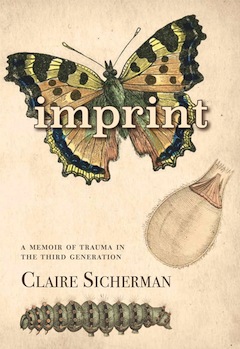
I approached Imprint: A Memoir of Trauma in the Third Generation (Caitlin Press, 2017) with reluctance. But Claire Sicherman’s account of her murdered family members, of her grandparents who were the sole survivors of the Holocaust and of her own intimate life as granddaughter, woman, wife and mother is profoundly moving and tender. Her accounts of her relatives’ lives and deaths under the Nazi regime are brutal and shocking. The proximity of these emotions makes the book challenging to read but hard to put down.

Sicherman’s choice of the title Imprint helped me understand just how stubborn and long-lasting the impression of anxiety, grief and horror can be to the human psyche. My mind went to the reality of fossils. According to one source online, sometimes an animal “is buried before it is destroyed. And when that happens and conditions are just right, the remains of the animal are preserved as fossils…. Fossils are the naturally preserved remains or traces of ancient life that lived in the geologic past…. Fossils represent the remains or traces of once-living organisms.”

For Sicherman, the emotions related to the destruction of her family are permanently imprinted in her body and in her genetic makeup. She must now bring them to conscious awareness.

The juxtaposition of cold, hard accounts of death – as in the chapter “My Family” at the beginning of the book – immediately followed by the first letter to her 9-year-old son Ben, signed “Love Always,” warns the reader that what follows is not for the faint-at-heart. She alternates between three essential narratives: the telling of the destruction and deaths of her relatives in Poland; the survival of her grandmother and grandfather, which leads to the intimate story of her mother and Sicherman’s youth; and the traumatic birth of her son Ben, which acts as a catalyst, breaking through lifelong barriers of ignorance, denial and grief.

book cover - ImprintIn gazing at the cover of the book, the three images of caterpillar, cocoon and butterfly began to make sense. This metamorphosis becomes the symbol of Sicherman’s lifecycle; the lack of awareness of her family’s history, the birth of her son, and her desperate search for knowledge and understanding of why she suffers from chronic health conditions, anxiety and depression.

Sicherman’s answer to the question “why” lies within the concept of epigenetics, the study of heritable changes in gene expression. Traumatic events cause changes in gene expression that can then be inherited. For Sicherman, her task is to explore, through various forms of therapy, the intergenerational transmission of trauma – the genetic imprinting of the horrors that befell her great-grandparents, her great-aunts and great-uncles and their progeny. Despite the distance of being a third-generation Holocaust survivor, her writing captures the beauty and intimacy of family affection (“My Babi,” “My Deda”). Hope of healing and surviving trauma permeate the pages of this creative book, offering acceptance and guidance to others of her – and the next – generation.

Dolores Luber, a retired psychotherapist and psychology teacher, is editor of Jewish Seniors Alliance’s Senior Line magazine and website (jsalliance.org). She blogs for yossilinks.com and writes movie reviews for the Isaac Waldman Jewish Public Library website.

Format ImagePosted on May 4, 2018May 2, 2018Author Dolores LuberCategories BooksTags Claire Sicherman, epigenetics, Holocaust, memoir, survivors, third generation

Civil dissent: a Jewish value

Last week, I participated in a survey on Canadian Jews done by the Environics Institute for Survey Research, in partnership with Prof. Robert Brym of the University of Toronto and Prof. Rhonda Lenton of York University. It’s considered a “landmark national survey of Jews in Canada in 2018.”

The phone call came at 5 p.m. This time coincides with making dinner, school lunches for my kids, feeding our dogs, and keeping the twins and dogs from roughhousing too much in the meanwhile. (Did I mention my biologist husband was away, doing field work?)

However, I knew this was important. This was a situation where my opinions and experiences mattered. I needed to contribute despite being the only adult present to address the chaos at my house.

Often, we think of politics, religion and money as things to avoid. They’re too emotionally laden to make good dinner conversation. Still, we need to talk and think about this to figure out where we stand. If one looks only at the Torah portion of the week, you might see it as black and white pronouncements about how one should behave or observe the commandments. Yet Oral Law is also part of Judaism. We care what the rabbis thought and discussed. Over thousands of years, our ideas developed, changed and grew. Those talmudic discussions include majority and minority opinions, as well as stories and sayings.

In our tradition, subtle differences matter. Opinions matter. According to the joke, if you ask two Jews, you’ll get three opinions.

That’s why I was stunned by the reaction to actress Natalie Portman’s choice to decline the Genesis Prize. In her statement, she lovingly celebrated her Israeli identity, her friends and family and her citizenship. She also explained that she felt uncomfortable with the current government, specifically, Prime Minister Binyamin Netanyahu’s choices, and its “violence, corruption, inequality and abuse of power.”

A torrent of media and political reaction followed, some of it hysterical in tone. The president of the Zionist Organization of America, Mort Klein, was downright misogynistic. He called the Harvard-educated actor and director “beautiful, but not too bright.”

Portman carries two passports as a dual American-Israeli citizen. Some called for her to be stripped of her Israeli citizenship. Since when is it OK to tell someone they can no longer be a citizen of a democratic country because she spoke out on political issues that concern her?

I’m a dual American-Canadian citizen. If I speak out on a political issue, I am within my rights as a citizen of (either) democratic society. I hear comments on Prime Minister Justin Trudeau’s government or U.S. President Donald Trump’s latest tweets wherever I go. All that said, some of those survey questions made me realize – I no longer feel comfortable publicly writing about or speaking either in support of Israel or criticizing Israel’s policies. Why?

All subtlety has dropped out of the conversation.

Old guard, right-wing Zionists who say “I stand with Israel” bristle whenever anyone says something critical of the current Israeli government’s policies. Meanwhile, anyone with liberal or left-wing politics feels uncomfortable with the notion that Israel would deport asylum-seekers, never mind the current violence with Palestinians or the reactions to their using the word “occupied.”

Many have given up even trying to discuss the issues. They don’t want to be attacked. Getting vitriolic responses from friends, acquaintances and family members, or a stream of emails about those “antisemites,” or worse, seems par for the course now.

A New York magazine article online, “Natalie Portman and the crisis of liberal Zionism,” helps explain the dilemma. Many younger North American Jews embrace liberal North American politics about equality and human rights, and feel disconnected from Israel. The old notion of a liberal Zionist or progressive supporter is no longer courted by Israel, either. The support of Christian evangelicals and a growing block of Orthodox, conservative voters might mean that some in Israel believe they no longer need the support of those liberal Zionists of old.

You may wonder why my columns don’t discuss Israel much. I’d respond with what Israelis told me as a teenager, living on an Israeli kibbutz. “If you want to weigh in on Israeli politics? Move to Israel and vote. Otherwise? We’ve heard enough from you North Americans.”

I tend my garden, as Voltaire says – I write about Judaism, religion, family and about where we stand as Canadian Jews. Our religion teaches us to learn, analyze and form opinions, like the rabbis do. As a citizen of both the United States and Canada, I defend wholeheartedly Portman’s right to speak out on politics and human rights issues that matter to her. It’s an essential part of free speech and the democratic ideal. One has to wonder whether the virulent reaction to her statement says more about Portman, or about the people who have responded so negatively.

In a democracy, we should be able to express well-considered opinions and disagree about things in a civil way, without fear of threats. Why would anyone consider it acceptable (Jewish) behaviour to threaten, embarrass or demean someone else? Many rabbis taught us: threats, embarrassment or denigrating others are just not Jewish things to do.

Joanne Seiff writes regularly for CBC Manitoba and various Jewish publications. She is the author of three books, including From the Outside In: Jewish Post Columns 2015-2016, a collection of essays available for digital download or as a paperback from Amazon. See more about her at joanneseiff.blogspot.com.

Posted on May 4, 2018May 2, 2018Author Joanne SeiffCategories Op-EdTags Binyamin Netanyahu, civil discourse, democracy, Genesis Prize, Israel, Judaism, Natalie Portman

Place blame where due

For weeks since March, each Friday, thousands of Gazans have rallied at the border with Israel, leading to violent confrontations with the Israeli military. The objective is to build up to an incursion of such proportion that Israel’s military is unable to prevent an invasion into Israeli territory. The stated goal of the so-called March of Return is to catalyze the movement toward a “right of return,” which would have the not coincidental consequence of demographically threatening the Jewish nature of Israel.

Of course, even tens of thousands of Palestinians trying to breech the border will not result in this goal. Instead, there is an unstated goal: Hamas seeks to turn global opinion (further) against Israel. Shamefully, it seems that a few dozen Palestinian lives is a small price to pay, in Hamas’s worldview, for the PR benefits they deliver. As the New York Times reported Sunday, at least some of the protesters believe that they have nothing to lose. “It doesn’t matter to me if they shoot me or not,” said a 22-year-old protester interviewed by the paper. “Death or life – it’s the same thing.” That attitude will suit Hamas just fine.

To overseas audiences, march proponents depict it as an unarmed, peaceful, civilian-led mass action – and a peaceful protest is something we could accept, if not agree with. However, evidence shows that it is stage-managed by Hamas and anything but peaceful. Flying swastika-festooned kites with petrol bombs are sent over the border, massive tire fires are set to obscure the view of Israeli soldiers and tug-of-war lines are formed to pull down the border barrier, while crowds simultaneously hurl projectiles. At this past weekend’s action, there were reports of a few protesters armed with pistols.

Writing in the Times two days earlier, Fadi Abu Shammalah, executive director of the General Union of Cultural Centres in Gaza and a documentary film producer, insisted that he loves life, but that he is prepared to risk it to give his children a future with dignity.

A more effective means to ensure that Palestinian children live a life of dignity would be for Shammalah and others like him to write opinion pieces in the New York Times and to agitate elsewhere for the Hamas leadership to abandon both violence and their refusal to live in coexistence with the Jewish state. These are the two prerequisites to Palestinian self-determination. But such actions could well get Shammalah and others killed faster than marching against the border with Israel.

A sovereign country has the fundamental right to protect its borders from invasion. Ideally, this could be achieved without the use of live ammunition, and should minimize casualties as much as possible. Killing unarmed protesters is not acceptable.

Exclusively blaming Israel, however, is unjust. But this is more than misplaced blame: it has the precise consequence of rewarding Hamas’s strategy of sacrificing its own citizens. The more world media and activists condemn Israel and reward Hamas, the more Palestinians will be pushed toward the border. In such a scenario, the blame lies not solely with Israel or even with Hamas. The blame must be shared by these overseas enablers who, by rewarding Hamas, truly deserve part of the responsibility for the deaths and injuries.

Posted on May 4, 2018May 2, 2018Author The Editorial BoardCategories From the JITags Gaza, Hamas, Israel, Israeli-Palestinian conflict, Palestinians

Cynicism and realism

Last week, thousands of Germans of all faiths and identities participated in a “kippa march,” standing in solidarity with German Jews who feel endangered in the current political climate. In 2017, there were 1,468 reported antisemitic attacks in Germany, most perpetrated by members of the far-right.

The gesture is lovely. However we cannot help wondering if the whole “Je suis Charlie,” “We are all Muslims” or the “Ich bin Eine Jude” movements that pop up as gestures of solidarity are not at least slightly misplaced.

We will leave it to others to speak for their communities. But we would note that there may be a degree of comfort among some people in Europe and North America to criticize Jews. Since Christianity is descended from Judaism, it seems that there is felt more freedom to criticize Jewish behaviours, including the policies of the Jewish state. After all, the thinking might go, we are all part of the same family; it’s practically constructive self-criticism. Yet this ignores millennia of significantly divergent experiences and theology.

While the idea that donning a kippa will help keep Jewish neighbours in Germany safe, recent European history should give us reason to worry that today’s gesture of solidarity could be repurposed as a cover for criticism tomorrow on the pleasant idea that Ich bin Eine Jude.

This is a cynical response to a kind gesture, we realize. But sometimes cynicism and realism are not unrelated.

Posted on May 4, 2018May 2, 2018Author The Editorial BoardCategories From the JITags antisemitism, Germany, solidarity

Basic facts not known

During the week of Yom Hashoah (Holocaust Remembrance Day), the Conference on Jewish Material Claims Against Germany (Claims Conference) released the results of a comprehensive national survey of Holocaust awareness and knowledge among adults in the United States. The survey found that there are critical gaps both in awareness of basic facts as well as detailed knowledge of the Holocaust, and that there is a broad-based consensus that schools must be responsible for providing comprehensive Holocaust education. In addition, a significant majority of American adults believe that fewer people care about the Holocaust today than they used to, and more than half of Americans believe that the Holocaust could happen again.

Major findings of the survey include that 70% of Americans say fewer people seem to care about the Holocaust than they used to, and a majority of Americans (58%) believe something like the Holocaust could happen again. The study also found a significant lack of basic knowledge about the Holocaust:

  • Nearly one-third of all Americans (31%), and 41% of millennials, believe that fewer than two million Jews were killed during the Holocaust, as opposed to the six million Jews who were killed.
  • While there were more than 40,000 concentration camps and ghettos in Europe during the Holocaust, almost half of Americans (45%) cannot name a single one, and this percentage is even higher among millennials (49%).

At the same time, there are encouraging notes in the survey. In particular, there are key findings underscoring the desire for Holocaust education. More than nine out of 10 respondents (93%) believe all students should learn about the Holocaust in school and 80% of respondents say it is important to keep teaching about the Holocaust so it does not happen again.

The findings show a substantial lack of personal experience with the Holocaust, however, as most Americans (80%) have not visited a Holocaust museum.

“This study underscores the importance of Holocaust education in our schools,” said Greg Schneider, executive vice-president of the Claims Conference. “There remain troubling gaps in Holocaust awareness while survivors are still with us; imagine when there are no longer survivors here to tell their stories. We must be committed to ensuring the horrors of the Holocaust and the memory of those who suffered so greatly are remembered, told and taught by future generations.”

The Holocaust Knowledge and Awareness Study was commissioned by the Conference on Jewish

Material Claims Against Germany. Data were collected and analyzed by Schoen Consulting with a representative sample of 1,350 American adults via landline, cellphone and online interviews. Respondents were selected at random and constituted a demographically representative sample of the adult population in the United States.

The task force led by Claims Conference board was comprised of Holocaust survivors as well as representatives from museums, educational institutions and leading nonprofits in the field of Holocaust education, such as Yad Vashem, the United States Holocaust Memorial Museum, American Jewish Committee, the Jewish Agency and George Washington University. Claims Conference president Julius Berman noted, “On the occasion of Yom Hashoah, it is vital to open a dialogue on the state of Holocaust awareness so that the lessons learned inform the next generation. We are alarmed that today’s generation lacks some of the basic knowledge about these atrocities.”

For more information, visit claimscon.org/study.

Posted on May 4, 2018May 2, 2018Author Claims ConferenceCategories WorldTags education, Holocaust, United States, Yom Hashoah
Groves in their honour

Groves in their honour

Belkin Forest Grove was dedicated in Baal Shem Tov Forest on March 27. (photo by Lilah Weiss)

On March 27, Keren Kayemeth LeIsrael-Jewish National Fund held a special event in memory of JNF Canada friend and philanthropist Elliot Belkin. About 20 family members arrived from Canada for an organized tour of Israel during Passover. As part of their trip, they traveled to the north of Israel for a special ceremony honouring Belkin’s contributions to KKL-JNF.

When Belkin’s father, Morris, also a generous donor, passed away, Belkin created a forest grove in his memory in Biriya Forest, and brought his nephews, Kostia and Aurore Belkin, to Israel together with him. When Belkin passed away, his nephews continued the family tradition by donating a forest grove in his memory in Baal Shem Tov Forest.

“Aurore and I thought that it would make him very happy that there would be a forest grove in Israel in his name, and that’s why we’re here today,” said Kostia Belkin. “This is a modest gesture compared to what he did in his time, but we’re happy to be part of the tradition.”

The Belkin nephews unveiled a plaque honouring their uncle, and were presented a framed KKL-JNF certificate of appreciation. After the ceremony, the group planted cedar trees in the young forest grove.

About half the trees in Baal Shem Tov Forest were damaged in 2013 by a heavy snowstorm. New species of trees are being planted to ensure greater diversity, making the forest more resilient against weather damage.

Referring to the ceremony and tree planting, Belkin’s family said, “This has been one of the high points of our visit. These trees are like the children that Elliot never had.”

Kostia Belkin summed up the visit to Biriya Forest: “This has been an event that we will always remember,” he said. “We want to express our thanks to KKL-JNF for organizing this visit. Through their deeds, Morris and Elliot taught us about love of Israel and its people, and the symbolical meaning of planting trees in this soil.”

Format ImagePosted on May 4, 2018May 2, 2018Author Jewish National Fund Pacific RegionCategories IsraelTags Baal Shem Tov Forest, Belkin, Biriya Forest, JNF, KKl-JNF, trees
זוועה בטורונטו

זוועה בטורונטו

עשרה הרוגים וארבעה עשר פצועים בטורונטו – מרביתם קשה מרכב שפגע בהם בכוונה תחילה. (צילום: Linda Ward/CBC)

אחד האירועים הקשים ביותר בתולדות טורונטו העיר הגדולה בקנדה, שהתרחש ביום שני בצהריים לפני כעשרה ימים, גבה מחיר כבד מאוד. עשרה הרוגים וחמישה עשר פצועים, מהם תשעה במצב קריטי. זאת כתוצאה מרכב מסחרי שכור מסוג ואן לבן בו נהג אלק מינסיאן (סטודנט בן 25 מהעיר ריצ’מונד היל), שפגע בהם בכוונה תחילה. דווקא שסוף סוף בא האביב על העיר וחום השמש הורגש אחרי חורף קשה, התרחשה בטורונטו זוועה נוראית.

מינסיאן נסע ברחוב יאנג הסואן ובצומת עם שדרות פינ’ץ שבצפון טורונטו, הוא עלה עם רכבו על המדרכה והחל לנהוג במהירות רבה, תוך שהוא פוגע בהולכי רגל ללא הבחנה. ובעיקר מחפש נשים כך התברר. הנהיגה הרצחנית של מינסיאן נמשכה לאורך שני ק”מ (מספר בלוקים), ולאחר כעשרים ושש דקות הוא נעצר ע” המשטרה, לאחר שניסה להימלט. לשוטר שהתקרב אליו עם אקדח שלוף הוא צעק: “הרוג אותי, יש לי אקדח בכיס, הרוג אותי”, וממש התחנן למות. במשטרת טורונטו ציינו לשבח את השוטר שעצר את הרוצח בקור רוח ומבלי שירה אפילו פעם אחת.

מניעיו של מינסיאן שלא היה מוכר למשטרה לא ברורים עדיין והשר לביטחון פנים בממשלה הפדרלית, רלף גודייל, שלל את האפשרות שמדובר בפיגוע טרור. הוא ציין בצורה חד משמעית כי קנדה לא נמצאת בשום סכנה ביטחונית.

הנהג הרוצח סבל מבעיות נפשיות לאורך שנים. הוא לא הצליח להשתלב בחיים החברתיים ונחשב לבודד מאוד. זאת לטענת סטודנטים שלמדו עימו בבית הספר וכן שכניו. לפי העיתונות המקומית מניסיאן לפני שיצא למסע ההרג הנוראי, בירך בפוסט בפייסבוק את אליוט רוג’ר מקליפורניה, שבשנת 2014 רצח שישה איש, פצע ארבע עשר ולכן מכן והתאבד. זאת לטענתו כיוון שנידחה ע”י נשים. רוג’ר נחשב לגיבור לאומי אצל קבוצת גברים שמקושרים באון- ליין ויוצאת נגד נשים וגברים מצליחים. כפי הנראה גם מניסיאן נדחה קרוב לוודאי על ידי נשים וזה היה המניע העיקרי למעשיו המסוכנים.

תחילה חשבו בטורנטו עם קבלת מידע אל האירוע החמור כי לאור אופיו מדובר באירוע טרור, כפי שקרה באירופה בשנים האחרונות, לא מעט פעמים. רכבים שימשו כלי לפיגועי טרור ורבים נהרגו. יש לזכור שמפגש של מדינות הג’י-7 התקיים ממש באותה שעה בטורונטו, דבר שהוסיף לחששות כי מדובר בפיגוע טרור. מהר מאוד התברר כי אין קשר בין הנהג הדורס לארגוני טרור, שהוא לא גוייס על ידי אף אחד, הוא לא התאסלם ומניעיו אינם פוליטיים.

בתי החולים שקלטו את הפצועים הפעילו את מערך החירום “קוד כתום” (דבר הנדיר בקנדה), לאור כמות הגדולה של הנפגעים שהגיעו לחדרי המיון, ומשם הובלו במהירות לחדרי הניתוח.

המשטרה ממשיכה בחקירה מואצת להבין מה המניע את מינסיאן להרוג כל אך הרבה אזרחים חפים מפשע. השוטרים פשטו על ביתו לפחות פעמיים והחרימו מכל הבא ליד, כולל מסמכים, תמונות ומכשירים אלקטרונים. במקביל מינסיאן הופיע לראשונה בבית משפט (מיוצג על ידי הסנוגוריה הציבורית), כדי לשמוע מהשופט כי כתב האישום נגדו כולל עשרה סעיפים של רצח מדרגה ראשונה וארבעה עשר סעיפים של כוונה לרצח. כך או כך ברור שהוא ימשיך את חייו עד יומו האחרון בין כתלי הכלא. זה מה שמגיע לצעיר שהשתגע, הרגיש מקופח והחליט לנקום בחפים מפשע. יש שטוענים כי פעילותו של מינסיאן לא שונה מפעולת טרור גם עם המניעים אחרים.

Format ImagePosted on May 2, 2018May 2, 2018Author Roni RachmaniCategories עניין בחדשותTags Alec Minasian, terrorist attack, Toronto, אלק מינסיאן, טורונטו, פיגוע טרור

Posts pagination

Previous page Page 1 … Page 382 Page 383 Page 384 … Page 667 Next page
Proudly powered by WordPress