In a speech to the governing body of the Palestine Liberation Organization last week, Palestinian President Mahmoud Abbas rambled off a host of textbook antisemitic myths. He reiterated the refrain that Jews have no historical connection to the land of Israel, unearthed a legendary trope about Ashkenazi Jews actually being descended from Khazars and accused European Zionists of collaborating with the Nazis.
Abbas went on to say that the tragedies of Jewish history were not a result of antisemitism, but of Jews’ own behaviours. “The Jewish question that was widespread throughout Europe was not against their religion,” he said, “but against their social function, which relates to usury and banking and such.”
One of the things Abbas has in common with other elected leaders is the willingness to try to get away with something and then to apologize when called out. Though his wasn’t much of an apology: “If people were offended by my statement … especially people of the Jewish faith, I apologize to them.”
The speech gave Israeli and other commentators the opportunity to once again insist that the Palestinian leader is no partner for peace, something that is no more or less true today than it was last month. Abbas has been saying things like this most of his adult life. His doctoral dissertation, which was later published as a book, quibbled over the number of Jewish victims of the Shoah and advanced the perverse conspiracy theory he returned to last week: that Zionists were Nazi collaborators for whom six million (or, on Abbas’s abacus, fewer) Jewish lives were a small price to pay for advancing the Zionist cause.
Inherent to most antisemitic suppositions is the defence that Jewish particularities, habits, traditions, identities – in other words, whatever stereotypes the purveyor is advancing – are the legitimate causes of Jewish woes. In Abbas’s telling, all European Jews were usurers and bankers. (Consider the corollary: That, if true, being bankers and usurers would seemingly justify genocide.)
It is appalling that a man who is accepted as a legitimate figure on the international stage can claim, with minimal consequence, that Jews brought the Holocaust upon themselves. So, the most salient point from this terrible incident may be what it says about his audience.
Consider this in the context of the widespread global interpretation of the Arab-Israeli conflict. One can disagree with the policies or approaches of an Israeli government or any number of historical and contemporary developments. But, by no fair reading of history can the full blame for 70 years of conflict be laid at the feet of Israelis. Yet, at almost every point in history – when a pizzeria blows up in Tel Aviv or Jews are stabbed walking down the street in Jerusalem or when Hamas sends thousands to the Israeli border and floats firebombs that set the Israeli landscape aflame – there will be a sizable number of people who will conclude that Jews brought it on themselves.
Whatever else his speech may have accomplished, and despite his apology, Abbas has succeeded in bolstering the stereotype that cunning Jews will sacrifice whatever is necessary to reach their devious aims, and that any horrors that befall them are their own fault. That suits the contemporary popular narrative neatly.
Cyclists met some of the audience in Safra Square during the opening ceremony May 4. (photo from Ashernet)
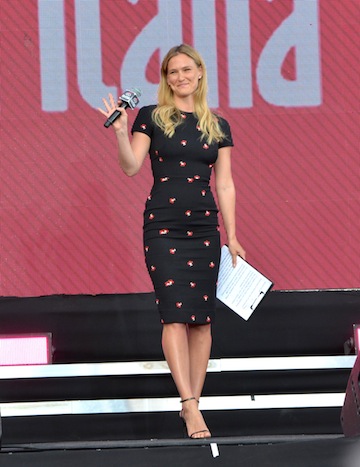
Israeli model Bar Refaeli was one of the hosts on opening night. (photo from Ashernet)
The night of May 4 saw a spectacular ceremony to welcome the scores of participants and visitors to Israel to mark the opening of the Giro d’Italia cycling race. This year, the three-week race started in Jerusalem with a time trial. Cyclists from around the world then raced from Haifa to Tel Aviv, then from Beersheva to Eilat, across the Negev Desert. On Sunday, the teams flew by special aircraft, with all their gear, to Sicily to continue with the race on Tuesday. This is the first time that such a prestigious world-class sporting event has been organized in Israel. The three most important cycling events in the world are, in order of importance: Tour de France, Giro d’Italia and La Vuelta (Spain).
“Oh, I know that I owe what I am today to that dear little lady so old and grey, to that wonderful Yiddishe momme of mine.”
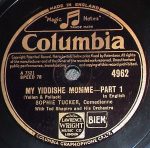
The beautiful song “My Yiddishe Momme” was written by Lew Pollack and Jack Yellen in the 1920s. Sophie Tucker sang it (among many others), making it a hit in 1925. It has become a classic in acknowledging the culture of that era, when the stereotypical mother was the very essence of love, warmth and selfless devotion and sacrifice. (See the 2006 article “Jewish Mothers” by Philologos in the Forward.)
This Sunday, May 13, many people will pay homage to their mothers. No matter the distance, flowers will be sent and phones will be ringing as sons and daughters take a few moments to honour the woman who nurtured and cared for them, who was the source and sustenance of life, and to acknowledge her sacrifices. On this day, once a year, we recognize the value of a mother. But, there is, perhaps, a contradiction that belies our actions. While we rightly honour our mothers on Mother’s Day, we devalue their role on other days. For example, the recognition and awareness of the crucial role of mothering in a child’s healthy development and, consequently, to future generations, is often seen as a secondary role in the scheme of our busy lives.
Psychologist and author Penelope Leach says in her book Child Care Today: Getting It Right for Everyone (Alfred A. Knopf, 2009), “unlike all other mammals, most of the growth of the human brain is postnatal, and continues for several years.” Social and economic pressures continue to present conflicts for all mothers in terms of child care, as attachment theory emphasizes the importance of mothering in the early years.
But mothers don’t have to be perfect. Like her children, she has her own needs and cares. Yet, she performs a multitude of tasks in ensuring her child’s needs are met, and that is a greater challenge and more important than any other undertaking. We can attempt to delineate her role in three areas: providing the basic physical, emotional and psychological needs; protecting her children from harm, along with safety, security and stability; as well as being a role model who offers guidance as her children make their way in the world. In what way can we define her worth? Do we put a monetary value on it? That is impossible because it is priceless.
To this point, I have only described the practical responsibilities that mothers do. What cannot be seen, but only felt, is the unconditional love that permeates her actions, which envelops her child like a warm blanket. We’re much like Linus, a character in the Charles Schulz’s Peanuts comic strip, who clings to that security blanket like a lifeline.
Perhaps the importance of my Yiddishe momme can best be expressed in the words of the child in each of us:
She gives me a hug when I am sad And holds me close when I am mad She cools my brow when I am sick And puts my art work on the fridge She makes me wear mittens, and a toque, and a scarf, and boots when it’s cold outside, even if I don’t want to She holds me when I have bad dreams, when I am afraid of the dark, or when lightning and thunder scare me She kisses me for no reason She loves me just because I’m me.
These needs are not just for children. They remain with us all our lives. We learn how to satisfy them better as we “mature,” but, when life overwhelms us, or we feel sad or lonely or frightened, we all hunger for a mother’s touch, for a mother’s hug, for a mother’s love. As Barbra Streisand sings in the song, “People,” “we are … letting our grown-up pride hide all the need inside.”
This is why the most fundamental loss of a mother – due to an untimely death, or her being present physically but absent emotionally or psychologically through mental illness or other debilitating disorder – is the loss of love. A child may recognize who they have lost but not what they have lost. Only in her absence does the impact of the loss become clearer. Only in her absence does her value become perceptible. Only when it disappears is the value of a mother deeply felt. And it is irreplaceable.
Doris Lessing, who was a Nobel Prize-winning author and lecturer at the CBC Massey Lectures, shared a deep insight in the 1986 essay “Prisons We Choose to Live Inside,” when she said, “… what we have we take for granted. What we are used to, we cease to value.”
To those who are fortunate to still have your Yiddishe momme in your lives, be thankful, and let her know how much she is cherished. For those who don’t, treasure the memories, which are precious. And, for those who are themselves mothers, you have undertaken one of the most difficult but important tasks of life with all its pleasures and perils. To all mothers and to those who “mother,” we honour you, today and every day.
Libby Simon, MSW, worked in child welfare services prior to joining the Child Guidance Clinic in Winnipeg as a school social worker and parent educator for 20 years. Also a freelance writer, her writing has appeared in Canada, the United States and internationally, in such outlets as Canadian Living, CBC, Winnipeg Free Press, PsychCentral and Cardus, a Canadian research and educational public policy think tank.
Mother’s Day might be celebrated only once a year, but being a mother is an everyday, every minute occupation. Rashi, the brilliant 11th-century sage, offered a moving interpretation: “A mother is a woman who gives life,” he wrote (see Rashi, Genesis 3:20).
Rabbi Pinchas Allouche, spiritual leader of Congregration Beth Tefillah in Scottsdale, Ariz., explained, “A mother does not just live; she makes life. She does not just occupy space for herself; she makes space for others. She does not desire to take; she desires to provide. She does not seek power; she seeks influence. She does not just live by existing; she lives by giving. And she breathes life, continuously, into her own children, and into her own surroundings.”
Since most moms are so busy taking care of everyone else, this special day is an opportunity to give back to this wonderful person, if you’re lucky enough to have her still in your life. Here are a few ideas on how to celebrate.
Something sweet
If you live in the Metro Vancouver area, check out the new tea service at the H Tasting Lounge at the Westin Bayshore in Coal Harbour (westinbayshore.com/htasting-lounge). It has two choices, Eastern-style and Western. Their Western Tea includes smoked salmon and cucumber tea sandwiches, as well as a variety of sweet samplings such as scones with jam and cream. Meanwhile, the Eastern Tea, while also a classic tea service, includes a mix of traditional Asian foods, such as a duck wrap.
If you would rather create something unique at home, try using Yonanas (yonanas.com). My mom and I made a healthy dairy-free dessert, as the machine transforms frozen fruit into what tastes like ice cream – without all the calories. They include a recipe book with the machine, but we found it fun to experiment. We added, for example, a little chocolate and cinnamon to the frozen bananas.
DNA kit
Mother’s Day is a great opportunity to get to know your mom better in myriad ways and a DNA test is a great way to learn about your family. We used the Living DNA test (livingdna.com), but there are others.
My mom swabbed the inside of her mouth and, within a few weeks, we discovered that some of our ancestors were Dutch, Finnish and Swedish! Living DNA does a comprehensive analysis. It provided data on our ancestry throughout human history, as well as percentages of our ethnic backgrounds from 80 global regions. The company also offers a full-colour coffee table book of your results, which preserves your family history for future generations.
Something stylish
I recently discovered a few new stylish brands of purses for moms. MZ Wallace and Be Brilliant have purses that are useful for a variety of purposes, from practical to simply being fashionable, which is always a treat for the mom shlepping around a million items usually not for herself. Both brands are easily cleaned, offer lots of pockets and, best of all, will make your mom feel special. (And both companies sell and ship to Canada.)
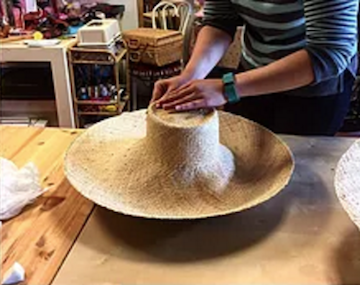
To design and make your own hat, check out Vancouver-based West Coast Hatters. (photo from westcoasthatters.com)
The purse can be paired with a fancy hat. I love creating new fashions, and spending quality time with my mom doing something creative is always a joy. To design and make your own hat, check out Vancouver-based West Coast Hatters (westcoasthatters.com), which specializes in creating hats for film and hosts one-on-one workshops or small classes for people who want to create their own special style.
In the fascinator-making class, students use a straw base and build up from there. However, if you want to get serious about hat-making, try the two-day class, where you will create a masterpiece by hand, blocking, steaming and draping the fabric into your own special creation.
Spa day
A personal favourite is to treat my mom to a spa day. The truth is I have yet to meet a mom would couldn’t use some time for herself, and what better way to celebrate each other than by spending quality time together in a quiet setting.
There is also the option of a do-it-yourself spa day. You can set the mood by lighting candles and putting out comfortable chairs while you and your mom give yourselves facials.
Personally, I like American spa owner David J. Witchell’s eponymous collection (davidjwitchell.com), which features an all-natural line of products. I like DJW’s Matcha Wash with grit for cleansing, using a towel or natural sea sponge, then following it with the company’s Shaman oil blend, which firms and illuminates the tone and texture of the skin, and its Time Traveler, which brightens, hydrates and protects your skin.
To complete the spa experience, you can gift your mom some luxury body soaps. One brand I use it Costa d’Oro (siegebrands.com/naturalsoaps). Its soaps are natural, made in Arizona and leave my body feeling a decade younger. I especially like Himalayan Salt Scrub with Activated Charcoal; Lemongrass and Rosemary; and Gardenia.
The best part of a do-it-yourself spa day is that your mom can use the products again and again.
Happy Mother’s Day!
Masada Siegelis an award-winning journalist and photographer. Follow her @masadasiegel and visit her website, masadasiegel.com.
Jerusalem has been reunited now for 50 years. For five decades, we have had the privilege of praying at the Kotel, the Western Wall. On Jerusalem Day, 28 Iyar, which falls this year on May 13, thousands of worshippers will flock to the city, many before sunrise.
Nothing has ever come easily to the Jewish people. For 19 years, from 1948 to 1967, Jerusalem was cut in half and, at the Mandelbaum Gate, outside the Old City, there were signs: “Danger. Frontier ahead. Snipers nearby … stay out of the middle of the street!” Neighbourhoods and streets were split down the middle. Jews were evicted from their homes and synagogues in the Old City, and the Western Wall was out of bounds. Across the dividing line, Jordanian troops stood with rifles at the ready.
Jerusalem’s story covers thousands of years, but this segment began in 1948. Before the ceasefire was signed on Nov. 30 that year, Moshe Dayan, the commander of Israel’s forces in Jerusalem, met with his Jordanian counterpart, Abdullah El-Tel. In a deserted house in Musrara, they marked out their respective positions. These rough, indistinct marks expanded from the heat and blurred over time, yet they were accepted as the borders between Jordan and Israel in Jerusalem. The map was locked up at Government House and referred to in all disputes.
On June 5, 1967, while Israel was still warning King Hussein of Jordan to stay out of the impending war, a foreign radio station announced the conquest of Mount Scopus by Jordanian troops. It was a mistake, but it confirmed Israel’s suspicions of Jordan’s intentions, and that Mount Scopus, with its Hebrew University and Hadassah Hospital, was in danger. The Jordanians believed that Israeli troops would come from east to west, but instead the Jerusalem Brigade attacked from the opposite direction, taking Armon HaNetziv, three Jordanian positions, the Arab village of Sur Baher and Mutzav HaPaamon, before several Arab troops came out of hiding and killed six Israeli soldiers.
Below, on the road to Bethlehem, stands Kibbutz Ramat Rachel. Jordanians and Egyptians fought Israelis on the southernmost part of the dividing line and the kibbutz changed hands three times. However, the Israelis eventually held it, which helped stop the Arab invasion of southern Jerusalem.
Soldiers of the Jordanian legion conquered the British High Commissioner’s residence, but were driven back by the Israeli Defence Forces, who moved towards the City of David. At dawn on Tuesday, 27 Iyar, a unit of paratroopers advanced, taking the police school, the district of Sheikh Jarrah, the American Colony and the area of the Rockefeller Museum. After a bloody battle at Ammunition Hill, the paratroopers reached Mount Scopus.
Jerusalem’s great day was 28 Iyar. With a daring thrust, Israeli soldiers scaled Mount of Olives, advancing beyond the village of Al-Azariya. Armoured vehicles burst through the Lions’ Gate towards the Temple Mount. At 10 a.m. came the announcement: “The Temple Mount is ours. It is in our hands!” Soldiers, even secular ones, ran towards the Western Wall, caressing its stones, their eyes full of tears and with a prayer on their lips, even if they didn’t know the words. A few minutes later, Rabbi Shlomo Goren, then IDF chaplain, blew the shofar at the holy site. David Rubinger, a military photographer, took the now-famous photo that has been reproduced around the world, of a soldier named Yitzhak Yifat (who is now a gynecologist living in Rishon lesion), removing his helmet and looking up at the wall in awe.
One of the first to reach the Kotel was a former Australian, Mordecai (Mark) Rechtschafner, from my hometown of Melbourne. He told me that, although he was overwhelmed by the sense of history at that moment, he was far from euphoric. Heavy losses had been sustained and he had lost many comrades. “I was exhausted, filled with sadness at the unbearable death of so many of my friends,” he said. “The Six Day War ended swiftly, but we paid a heavy price.” Every year, on Jerusalem Day, he comes to the city from Kibbutz Ein Zurim, where he lives, for the memorial service, to pay tribute to the many friends he lost in the battle.
Until the First Intifada and its ongoing aftermath, the hope of peaceful coexistence between Jews and Arabs seemed a possibility and some believe it still is. Thousands of Arabs used to pour into Western Jerusalem each morning to work. On weekends, the narrow lanes of the Old City’s Arab shuk (market) would be packed with Israeli shoppers, but, today, it is mostly tourists who fill the market. The future is a question mark, as ongoing violence brings renewed tears to families throughout the land.
But the city of Jerusalem remains unforgettable and heartbreakingly beautiful. To me, it is a poem. One night, as darkness descended, I was moved to write these lines:
Black velvet spangled with stars Is night in Jerusalem. Splashes of silver, The sob of the wind, An ancient perfume, A taste of nectar. Skyline of turrets and domes Is night in Jerusalem. Pine trees are sighing. Through a tracery of leaves Golden lights dot A midnight canvas. Landscape of enchantment Is night in Jerusalem.
Dvora Waysmanis a Jerusalem-based author. She has written 14 books, including The Pomegranate Pendant, which was made into a movie, and her latest novella, Searching for Sarah. She can be contacted at [email protected] or through her blog dvorawaysman.com.
אתר מסע אחר מפרסם בימים אלה חידון גיאוגרפי על קנדה, בעברית כמובן. החידון כולל חמש עשרה שאלות המבליטות את היחודיות של קנדה ואת מה שקשור בה.
שאלה ראשונה: איזה מהזמרים הבאים לא נולד בקנדה? הזמר ברוס ספרינגסטין, הזמר לאונרד כהן או הזמר ג’סטין ביבר. התשובה הנכונה: הזמר האמריקני ברוס ספרינגסטין.
שאלה שנייה: מהן שתי השפות הרשמיות בקנדה? השפות צרפתית וספרדית, השפות אנגלית וניב אינדיאני מקומי או השפות אנגלית וצרפתית. התשובה הנכונה: השפות אנגלית וצרפתית.
שאלה שלישית: אין נראה הדגל של קנדה? פסים אדומים-לבנים ושלושה כוכבים, שני פסים אדומים, מרובע לבן ועליו עלה או חצי לבן, חצי אדום. התשובה הנכונה: שני פסים אדומים, מרובע לבן ועליו עלה.
שאלה רביעית: המטבע הנהוג בקנדה נקרא? פרנק קנדי, דולר קנדי או פלורינט קנדי. התשובה הנכונה: דולר קנדי.
שאלה חמישית: בעבר קנדה הייתה מושבה? צרפתית, בלגית או בריטית. התשובה הנכונה: מושבה בריטית.
שאלה שישית: מהו המאכל הלאומי של קנדה? סירופ מייפל, ריבת פירות יער או דבש מפירות הדר. התשובה הנכונה: סירופ מייפל.
שאלה שביעית: ממה מפיקים את המאכל הקנדי הלאומי סירופ מייפל? עצי תפוזים, עצי תאנה או עצי אדר. התשובה הנכונה: עצי אדר.
שאלה שמינית: קנדה נחשבת למדינה? המדינה המאוכלסת ביותר בעולם, המדינה השנייה בשטחה בעולם או המדינה הצפונית ביותר בעולם. התשובה הנכונה: המדינה השנייה בשטחה בעולם.
שאלה תשיעית: מרבית תושבי קנדה גרים באזור? דרום המדינה, מרכז המדינה או בצפון המדינה. התשובה הנכונה: דרום המדינה.
שאלה עשירית: מה הקשר בין ראש הממשלה הנוכחי ג’סטין טרודו לראש הממשלה בעבר פייר טרודו? השניים הם אב ובן, השניים הם סב וכנד או השניים הם אחים. התשובה הנכונה: השניים הם אב ובן.
שאלה אחת עשרה: מהי הבירה של קנדה? העיר אוטווה, העיר אדמונטון או העיר ויניפג. התשובה הנכונה: העיר אוטווה.
שאלה שתיים עשרה: מהו הספורט הלאומי של קנדה? משחק ההוקי קרח, משחק הפוטבול או משחק הכדורגל. התשובה הנכונה: משחק ההוקי קרח.
שאלה שלוש עשרה: מהן שתי המילים הראשונות בהמנון של קנדה? “קנדה לנצח”, “קנדה אהובתי” או “הו קנדה”. התשובה הנכונה: “הו קנדה”.
שאלה ארבע עשרה: מהי העיר הגדולה ביותר של קנדה? העיר קוויבק סיטי, העיר טורונטו או העיר מונטריאול. התשובה הנכונה: העיר טורונטו.
שאלה חמש עשרה: כמה משטחה של קנדה מכוסה כולו ביערות? עשירית משטחה של המדינה, שליש משטחה של המדינה או מחצית משטחה של המדינה. התשובה הנכונה: מחצית משטחה של המדינה.
מסע אחר ממליץ על תחנות ברוקינס הקנדיים
הרוקיס הקנדיים משתרעים על פני 1,450 ק”מ בפרובינציות של אלבטרה ובריטיש קולומביה, ונחשבים לאזורי הטבע מהיפים בעולם. פסגות הרים מרשימות שמושלגות מרבית ימי השנה, נהרות ומפלי מים עשירים, קניונים גדולים, אגמים שצבע המים שלהם טורקיז, מעניינות מים חמים, יערות עצי אשוח גדולים, קרחונים גדולים ושדות קרח.
אלה עשרות התחנות ברוקיס שלא מומלץ להחמיץ: העיירה באנף שהיא שער היציאה להרי הרוקי, קניון ג’ונסטון בפארק הלאומי באנף, אגם לואיז האהוב במיוחד ברוקיס, אגם מוריין שנדרך אליו פתוחה רק בקיץ, דרך פארק אייספילדס ואגם פייטו הנחשבת לאחת הדרכים היפות בעולם, שדה הקרח קולומביה שכוללת שישה קרחונים, אגם מליין בשמורת ג’ספר, מפלי טקקאו הגבוהים ביותר ברוקיס, הר רובסון הגבוה ביותר ברוקיס ורכבת הרי הרוקי למי שתקציב כספי אינו מהווה בעייה עבורו.
Yikealo Beyene, left, and Oded Oron. (photos courtesy of the speakers)
Yikealo Beyene was among the first wave of African asylum-seekers to arrive in Israel. He left his home in Eritrea in 2005, at the age of 21. The political situation in the country had deteriorated since 2001 and, after Beyene penned an article critical of the authoritarian regime, he was arrested twice. He walked under cover of darkness to the Ethiopian border and spent more than three years in a refugee camp, where he earned a stipend as a teacher and running a makeshift library.
“I did not complain,” Beyene told the Independent. “Life was extremely difficult [but] I felt safe.”
That changed when hostilities reignited between Eritrea and Ethiopia. The camp’s proximity to the Eritrean border made Beyene and others worried. Military service is mandatory in Eritrea, so every emigrant is a de facto deserter. With a group of fellow refugees, he traveled to Sudan, and to another refugee camp.
Beyene, who will speak in Vancouver this month at an event co-presented by the Independent and Temple Sholom, stresses that he is not a typical refugee. Unlike many, he had a small nest egg that allowed him to buy tickets to move between places and, as his story proceeds, crucial supports from family, nongovernmental organizations (NGOs) and generous strangers overseas. Most are not so fortunate.
Life in Sudan felt no safer. Eritrean security forces would sometimes cross into Sudan and abduct people.
“It was terrible,” he said. “It felt even more dangerous than my life in Ethiopia. I decided to leave. I ended up in Egypt.”
In Cairo, he lived in an apartment with about 30 other refugees. By this point, the Egyptian government (as well as that of Libya) had an agreement with the Eritrean government to repatriate citizens of that country. Concurrently, Libya had signed an agreement with Italy preventing people from migrating across the Mediterranean. Egypt’s comparative stability would soon be upended by the Arab Spring and its aftermath. Escape routes were closing.
In Cairo, word spread that smugglers were willing to help people cross the Sinai to Israel. Employing Bedouins, Beyene made it to the Israeli border in February 2008. He thinks he paid about $600 US to the smugglers. As migrants flowed toward Israel in later years, that number would skyrocket to as much as $50,000, Beyene said, and lead to a horrific trade founded on kidnapping, ransoms and organ harvesting.
Once inside Israel, Beyene and the two dozen or so other asylum-seekers he traveled with were transferred to successive military camps and, eventually, bused to Be’er Sheva, where they were left to their own devices in the cold midnight air. With three others and pooled cash, he made his way to Tel Aviv and, after connecting with Eritreans there, immediately found jobs in Jerusalem, doing construction and custodial work.
Beyene, again unlike most asylum-seekers, obtained an education, entering the Interdisciplinary Centre in Herzliya, where he received a bachelor’s and a master’s in psychology, thanks to part-time jobs, scholarships, help from NGOs and an American Jewish benefactor.
A woman who was his girlfriend in the first refugee camp had been accepted to the United States in 2009 and, in 2012, she came to Israel and they were married. He moved to Seattle on a family reunification visa.
Beyene will share more of his story at the event May 19, where he will be accompanied by Oded Oron, an Israeli and a PhD candidate at the University of Washington, whose dissertation deals with African asylum-seekers in Israel.
For Sudanese migrants, Oron said, repatriation was potentially deadly because many, especially Darfuris, were fleeing the deadly persecution of Janjaweed militias or had been part of rebel groups opposing the tyranny of Omar al-Bashir. For all refugees, the crisis was exacerbated by the smugglers’ greed.
“Entire communities would sell everything they had or work an extra shift just to make sure that they can release people,” said Oron. “Unfortunately, many people were tortured and killed in the Sinai. Some of them were killed because they couldn’t raise the funds and others were harvested for their organs.”
In all, about 64,000 asylum-seekers entered Israel, of which 37,000 remain. Most of those who left migrated to Europe or North America. A much smaller number accepted an offer of resettlement to Uganda or Rwanda, though, of these, many found themselves still lacking in rights or opportunity and returned to the migration route, some dying on the way.
As the numbers of asylum-seekers skyrocketed, detention facilities that were never meant for illegal border-crossers, became overcrowded. The prison authority gave inmates one-way bus tickets to Tel Aviv. At times, there were 3,000 Africans sleeping under the stars in Levinsky Park, outside Tel Aviv’s main bus station.
In 2014, the government opened the Holot Detention Centre, a prison in the Israeli desert. After several NGO appeals, the Israeli Supreme Court determined that detention of asylum-seekers must be limited to one year and there has been a rotation of people serving their one-year term of detention and then returning to the legal limbo of life as an African asylum-seeker in Israel.
NGOs asked the Supreme Court to interpret the status of the migrants. The government maintained that it would neither process their asylum requests nor give them work permits. However, under pressure, the government told the court that it would not enforce the ban on working. The government did, however, require employers to collect deductions for taxes, as well as for social services for which the migrants are not eligible, and to withhold 20% of their income, to be released only on their exit from the country.
In November 2017, the government declared its plan to offer asylum-seekers two choices: accept $3,500 US and a plane ticket to Rwanda or Uganda, or face indefinite detention.
In March 2018, following public pressure, Rwanda backed out of the deal. The government then suggested a resolution that would see about half the 37,000 offered a temporary residency short of citizenship, while 16,000 would be resettled in Western countries, through a deal brokered by the United Nations High Commission for Refugees.
Even so, right-wing members of the governing coalition balked. The “solution,” announced in the morning, was annulled in the afternoon.
Then, late last month after Uganda, too, backed out of the agreement with Israel following public pressure, the Israeli government told the court that it would not proceed with the deportation plan for now.
The Jewish Independent and Temple Sholom invite readers to join us at the event Let My People Stay: Seeking Asylum in the Jewish State. In the spirit of learning on Shavuot, it will take place on May 19 at Temple Sholom. Shavuot services will start at 7:30 p.m., followed by Havdalah and an ice cream oneg at 8:30 p.m., and the program at 9 p.m. Everyone is welcome to all or part of the evening. RSVP to templesholom.ca/erev-shavuot or 604-266-7190, so that there will be enough ice cream for everyone.
***
Number of African* migrants entering Israel by year.
2006 – 2,758
2007 – 5,132
2008 – 8,886
2009 – 5,261 (decline possibly attributable to war with Gaza)
2010 – 14,715
2011 – 17,272
2012 – 10,421 (barrier completed along Sinai border)
2013 – 49
2014 – 21
2015 – 220
2016 – 18
2017 – 0
* Approximately 70% Eritrean, 20% Sudanese and 10% from other African countries.
Leonard Brody talks about The Great Rewrite at the Jewish Family Services Innovators Lunch April 24. (Rhonda Dent Photography)
Sitting in the JFS client base are this community’s greatest and most hopeful assets,” said Jewish Family Services Innovators Lunch keynote speaker Leonard Brody. Donating to JFS is not charity, he said, but rather an investment with high returns.
The 600-plus attendees at the JFS’s main annual fundraising event obviously agreed. At press time, more than $350,000 had been raised for the agency’s work, and donations were still coming in, making this year’s lunch the most successful Innovators yet.
Event co-chairs Shannon Ezekiel and Candice Stein Thal welcomed those gathered at the Hyatt Regency Vancouver on April 24, and gave a brief overview of the JFS and of the organization’s new logo and look, which, they said, “inspired the theme for this year’s lunch: ‘Uplifting Lives.’”
Rabbi Jonathan Infeld of Congregation Beth Israel, who is the Rabbinical Association of Vancouver representative on the JFS board, did the blessing over the bread. “This week’s biblical portion is Acharei Mot-Kedoshim,” he said. “Kedoshim is really the essence of why we are here – ‘You shalt be holy,’ the portion begins, and then it gives us a litany of laws in which we are able to bring holiness into this world. A number of those laws do not ask, but demand, that we take care of those who are in need. And one of those laws in particular demands that we feed those who are hungry. Many of us here are hoping to make a difference in this world. We are here, maybe with the idea in mind of a business connection, but, really, the essence of what the JFS is all about is bringing holiness into this world by helping those who are in need.”
After a video, which told the stories of three individuals who were helped by JFS in some way, JFS board chair Bill Kaplan said a few words, stressing that, “most importantly, our volunteers and staff treat our clients with a respect and warmth that uplifts them, makes them feel part of the community and, if you ever visited, you’ll see, it becomes a social highlight for their week.”
All of the lunch guests were given a bag full of items – including some packaged food, toiletries, a poncho and gloves – and asked to give it to someone on their way to work or to a JFS client. The bags were packed by more than 80 kids and their families at Beth Israel a few weeks earlier.
Among those who Ezekiel and Stein Thal thanked were the event’s corporate sponsorship committee, chaired by Audrey Chan; the more than 40 sponsors at the lunch, who had “helped contribute over $183,500 … a record in sponsorship for this event”; the 28 table families; day-of-event chair Dr. Sherry Wise; and JFS’s Maya Dimapilis and her team. The lunch was co-presented by the Diamond Foundation, Austeville Properties Ltd. and Shay Keil; Neil and Michelle Pollock matched every new or increased portion of a donation raised through the lunch, up to $25,000, which was dedicated for the Jewish Food Bank.
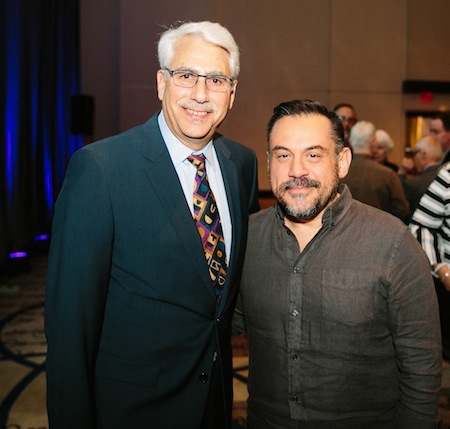
Jewish Family Services executive director Richard Fruchter, left, and entrepreneur, venture capitalist and author Leonard Brody. (Rhonda Dent Photography)
JFS executive director Richard Fruchter spoke about JFS, its history and the expanding services it provides. It is because of this growth in the demand for JFS’s services, he said, that “it became important for us to be more visible in the community and tell our story to a much wider audience …. we’ve updated our logo and our name to reflect that. Our logo is a simple, elegant symbol – it conveys the warmth and heart of what we do here at Jewish Family Services.”
“For me, this is not just an amazing lunch with a marquee speaker,” said Keil before he introduced Brody. “It’s an opportunity for me to stand before you and proudly announce my support of the Jewish Family Services, and to thank the army of staff and volunteers … [for their] work in the community.”
Brody’s talk was on The Great Rewrite, a book he is creating with Forbes Magazine, based on a documentary series they produced. “Really what we’re doing this morning,” said the entrepreneur, venture capitalist and author when he took to the stage, “is talking about an evolution, an evolution in us, in our human story.”
Based on about a decade’s worth of research, he said, The Great Rewrite began with the question, “How is this moment in time different? We’ve been through a lot of innovation cycles, from the web and mobile, and now entering into AI and robotics… Is this vast amount of change that we’re all experiencing … substantively different from anything we’ve been through before? Is this a fourth industrial revolution?”
Humanity is “literally rewriting this planet from the ground up,” he said, arguing that we are currently undergoing “pretty much the largest institutional shift in the history of our species.”
The co-founder of four companies, Brody said, “The concept of this rewrite has nothing to do, for me, with just theory – it started as a theory but it’s really what we do and what I do every day for a living at CAA [Creative Artists Agency].”
Before looking at what we can expect in the next 730 days – the next two years – Brody explained how we, the humans of today, are nothing like the people of 100 years ago. For example, he said, the average person now lives 2.7 times longer and is three to four inches taller; the rate of poverty has been reduced from 90% in 1900 to 10% now, literacy increased from 12% to 85% and access to basic education risen from 17% to 86%. We are also “living in the lowest point of human death [caused by any factor] since we could record it, since 1400,” he said, and “the average human being living on this planet works about half the number of hours than someone living in 1900.”
We are fundamentally different people now, said Brody, and herein lies the challenge. “The houses we built don’t fit the people who live here any more,” he said. “We built institutions – I’m talking about all the institutions that govern your life, education, government, religion, work, the family unit – they are all going through massive pressure points today because they are structures based on assumptions, often technological, some patriarchal, that are just no longer true.”
So, he said, “The whole essence of this rewrite is you are living in the disconnect between the people we have become, the technological tools available to us today and the failure of our institutions to keep pace with that.”
One of the reasons for this, he explained, is “inversion.” Most of our institutions are organized as pyramids, with, for example, a head of state or religious figure at the top; however, the internet has flipped this power structure. Up to the mid-1990s, all the methods of communication, from radio to the telephone, had limited reach and were regulated by government, he said, but, with the internet, it “was the first time where millions of people could speak with millions of other people with virtually no hit on their disposable income” and where it was “impossible for governments to regulate.”
With respect to the internet, said Brody, “the average North American spends two-thirds of their working day in their virtual identity and not their physical one. The average Canadian, by the way, spends 63% of their time with close friends and family in their virtual identity and not their physical one, meaning not face-to-face. So, the virtual form of yourself is now the predominant human form, not the physical.”
And our behaviours are different online than in person. “You do things in your virtual identity that you would never dream of in your physical and vice versa,” he said. For example, the average internet user is four times more trusting than they are in person. He illustrated this using a question he asked his 83-year-old uncle: “When your children were babies, would you post their baby pictures on the lamp posts in your neighbourhood?” The response was an emphatic no. “So, then, why do you post hundreds of photographs of your granddaughter on Facebook and Flickr, which is a globally open, searchable and highly manipulated light post, and his face just went totally blank.”
As for how the internet has changed our institutions, Brody gave the example of marriage. As of the end of 2017, he said, “two-thirds of all new marriages in the Western world originated online” – and, for those who met their spouse online, the likelihood of divorce is 15 to 20% less. “The algorithms on these dating sites work from a data perspective,” he said. And, connected to the institution of marriage, he noted that, in the 2016 census, about 40% of Canadian adults reported themselves as living alone, while, in 1955, that statistic was four percent.
Brody went on to explain what CAA was doing in the field of entertainment with virtual reality and how, “in the next decade, roughly 30% of all ‘live’ entertainment will come from performers who are no longer living. You will take your children to go watch the Beatles and Michael Jackson and Elvis Presley – in fact, the Elvis tour has just begun; the estate just signed off on it.”
Currently, there are up to three-and-a-half billion people on the internet, he said, and, over the next two years, another billion people will join. This new billion will be “one of the most significant economic events in human history, if not the most significant,” he said, noting the amount of money to be made from e-commerce.
This coming two-year period, he added, “is the very beginning of a long journey in the rewrite of currency.” He said that traditional wealth generators, such as home ownership and the stock market, will not be profitable in the future, so currency “will become the new stock.”
Brody spoke about the fact that we’re about a decade away from creating machines able to think for themselves, and how computers can now create, for example, a Rembrandt painting that can fool the computers that detect fraud at top auction houses. “The reason I share that with you,” he said, “is because the very thing that makes us human is art. And, once machines begin to make art, you get a very clear indication of how different this world is going to be, and very clearly that we are on a path where humans may no longer be the predominant species on this planet. So, we have very important decisions to make in the next decade about how we regulate the ethics of artificial intelligence.”
He concluded, “Why are we talking about The Great Rewrite and the rewrite of this planet at a JFS Innovators Lunch? There are two specific reasons. The first is this massive shift in institutional power that’s coming…. And the second has to do with math, pure math; in particular, the number 70. Why 70? According to StatsCan, 70% of all charitable donations in this country come from primary donors – 70% come from a small group that make up the vast majority of the donations. So, I started to do a little bit of digging and I brought in my friends and partners at Forbes to help me out on it. It turns out, if you look through the Forbes millionaire and billionaire list, which many Canadians sit on, it turns out that … 70% of that [primary donors] group came from nothing” and could have been clients of an organization like JFS at one point in their lives.
“Benevolence and charity were the wrong lens” with which to look at giving, Brody said. “The right lens was investment. If it’s true, which it is, that the vast majority of donations to charitable causes in this country … and the vast majority of those individuals [who are giving] were, at some point in their lives, disadvantaged and downtrodden, then the math and the investment is very simple. An investment made in JFS today has the greatest statistical likelihood of identifying the next pillars in this community and the next great funders.”
Khalaf and Gawre’s family is the 10th to come to Winnipeg thanks to Operation Ezra. (photo from Michel Aziza)
What started as a small local initiative has grown to be a leader, by example, and a reminder of what can be achieved when an intention is set and action is taken.
About a year ago, the Jewish Independent ran a story about Operation Ezra in Winnipeg that, at the time, was aiming to sponsor five Yazidi refugee families. Led by Michel Aziza, a local businessman and once a refugee himself (from Morocco), and a small group of individuals connected to the Jewish community, the initiative was a response to the plight of the Yazidi people being viciously persecuted by ISIS in Iraq.
Nafiya Naso, now a young woman, who came to Winnipeg as a child with her family, has been an instrumental figure in Operation Ezra.
“She was reaching out to people outside their community to raise awareness of the genocide that was going on, March of 2015,” said Aziza, recalling Naso’s early involvement. “I was semi-retired and looking for something to occupy myself, and this was a good opportunity for me to get involved with a volunteer-type of project. Essentially, that’s what I have been involved with over the last almost three years.
“At the beginning,” he said, “we knew nothing about the Yazidi people. After talking with Nafiya, we identified a family of eight people and thought we could raise the necessary funds to submit a sponsorship application. We started lining up a few speaking engagements for Nafiya…. We started speaking to people, making calls, and … the original target was $34,000 for this family of eight … [and] within three or four weeks, we raised $34,000. And that number kept on growing as people talked to other people.”
To date, with the generous help of people in Winnipeg and elsewhere, Operation Ezra has raised just over $500,000. This has made it possible for them to sponsor 10 Yazidi families – 55 people – with the last family having arrived in March.
“As soon as we realized this was bigger than a grassroots project, we decided to incorporate Operation Ezra within the organized Jewish community,” said Aziza.
Jewish Child and Family Service (JCFS) saw this as an opportunity to do something in line with what they were already doing – helping with the settlement of immigrants and refugees – so they came on board, gradually reaching out to other organizations and agencies.
Gray Academy of Jewish Education and the Jewish Foundation of Manitoba joined the effort and, currently, Operation Ezra is an umbrella group of some 20 different agencies and organizations. Most of the members are Jewish, but not all. There are two churches involved, the Salvation Army and a number of corporate partners, with IKEA being the biggest name.
Many volunteers help Operation Ezra in various aspects of the settlement process. Naso has been hired by JCFS to manage everything.
One service Operation Ezra offers is an English-as-an-additional-language (EAL) program, which takes place at a synagogue every Thursday, with 70 to 80 refugees attending and about 20 volunteer teachers. Some Yazidi participants are government-sponsored.
Out of the total 250 refugees who are government-sponsored, about 100 have asked for help from Operation Ezra. “So, we are touching the lives of about 200 people,” said Aziza. “We have organized and have helped organize many community events for the Yazidi people. We celebrated Yazidi New Year’s 6768 on April 18, 2018, with a very large number of people coming out for that dinner,” he said by way of example. “We’re trying to help this group of newcomers to get organized, and to organize themselves as a community … to socialize and to help each other and so on.”
According to Aziza, Operation Ezra is the only multifaith group doing this work in North America.
One recipient family of Operation Ezra is Majid and Safya, along with their children. They shared their thoughts on their experience to date, with translating help as needed from Naso.
“My name is Majid. I was born and raised in a small village…. I am married with two kids – one boy who is 4 and one girl who is 6. My wife, Safya, and I are currently enrolled in EAL classes, hoping to learn English and find work in the near future.
“On August 3rd, 2014, at around 9 a.m., my family, community members and I fled to Mount Sinjar. We were lucky to have escaped when we did. If we had stayed any longer, I would be in a mass grave with many other Yazidis. I can still hear the rapid gunfire as ISIS members surrounded everyone who wasn’t able to flee and started shooting.
“We then reached Mount Sinjar, where we stayed for seven days with little to no food or water. As we were coming down the mountain closer to the Kurdistan region, we were able to hop into a truck. But, soon after, we saw ISIS members driving at us, firing round after round. I still don’t know how we escaped that day. Everything was such a blur. All I really remember was covering my kids and wife, hoping they would make it. Fortunately, we all made it to a refugee camp in Dohuk.
“The conditions in the camp were very scary. We were always worried about getting enough to eat, drink … about medical treatment. And we stayed for a few months, but couldn’t make it. So, we left for Turkey hoping for better living conditions.
“After spending almost two years in Turkey,” he said, “we heard about Operation Ezra and reached out. And, by some miracle, we were sponsored. Everything felt like it was going to be OK after we received confirmation we would be coming to Canada.
“I will never forget the welcome we received coming down at the airport. I was in awe of all the people who had come to greet us and welcome us into their community.”
Majid said they arrived in Canada in December 2016. “My experience in Canada has been great and could not be any better!” he said. “I have many friends and family who are in refugee camps in Iraq and Turkey who call me and tell me that the situation in the camp is getting worse by the day. My dreams are that my family and I are able to live in Canada without the fear we faced back home – the constant fear for our lives, hate and discrimination we faced because of our religious beliefs.
“I encourage all Canadians to reach out to Operation Ezra and learn about this amazing program, the only program of its kind in the world today. We have thousands of Yazidi still living in segregated refugee camps, fearing for their lives and waiting for anyone to reach out and lend a helping hand. I also encourage the Canadian government to support groups like Operation Ezra to help out more refugees.”
Khalaf and Gawre’s family are the most recent Operation Ezra arrivals to Winnipeg. (Although they were the last family Operation Ezra had planned to sponsor, the group has unanimously decided to continue their efforts.)
“My name is Khalaf and I arrived in Winnipeg on March 29th with my mother, who is 83 years old, my wife, and five kids – two boys and three girls, ages ranging from 12 to 24. I was ripped away from my four older kids after ISIS attacked our village (Dugere).
“At 8 a.m., we heard gunshots and got calls from other Yazidi villages that ISIS had murdered hundreds of men and was kidnapping all the women and young girls. Ten minutes later, my family and I started walking toward the mountain. My mom and dad were so lucky they were able to get rides to the refugee camp in Dohuk. My wife, Gawre, and five children were stranded on the mountain for seven days.
“We were able to escape the mountain with the help of PKK [Kurdistan Workers’ Party]. We lived in a refugee camp on Dohuk for six months. The conditions were horrible and heartbreaking. Many people died in the camps, because there was no humanitarian aid, no water and no medical care. My father passed away, because we could not get him the medical attention he needed.
“Shortly after, we decided to go to Turkey. It was no better there, but we did not have a choice and could not afford to move back to Iraq again.
“My sister and her family were sponsored by Operation Ezra just over a year ago. We got on the list when we heard about this amazing project from the people in the refugee camp.
“Months after contacting Nafiya [Naso] and Asmaeil, we were told we would be sponsored! My family and I definitely won the lottery here. We will always be grateful for everyone who made this possible.
“My dream is to see my family and Yazidis around the world live free of persecution. We hope and encourage all Canadian and other countries around the globe to support groups like Operation Ezra and help them in saving lives.”
Naso added, “Operation Ezra is working to raise more funds and keep sponsoring Yazidi refugees. There are thousands waiting who are in desperate need of help. They have no voice, so we must be a voice for them and speak out for them.”
Ted Littlemore, in Orfeo ed Euridice, the research for which will be presented by Idan Cohen and Ne. Sans on May 13 at the Dance Centre. (photo by Ted Littlemore)
A relatively recent arrival in Vancouver, Israeli choreographer and opera director Idan Cohen is already making his mark. On May 13 – with the support of the Dance Centre, Arts Umbrella and Vancouver Academy of Music – Cohen and Ne. Sans will present Orfeo ed Euridice, a glimpse into Cohen’s reenvisioning of Christoph Willibald Gluck’s opera.
The myth of Orpheus is a story of love. Poet and musician Orfeo mourns the death of his wife, Euridice, and he determines to get her back from Hades. With the intervention of Amor (Cupid), the god of love, Orfeo heads into the Underworld, gaining entry by winning over the Furies with his music, and he is reunited with his wife. However, Amor has set a condition – Orfeo must not look at Euridice, or explain why he is not doing so, until the two are back on earth. It’s a condition Orfeo breaks when Euridice begins to doubt his love and begs for a glance to assure her. When he gives in, Euridice dies again and Orfeo, grief-stricken, resolves to kill himself so that he can be with her. In the face of such love, Amor intervenes once more, to save both Euridice and Orfeo, and return them to earth.
“This opera was created in 1762 and, for me, a significant part of directing a classic opera is the studying of the values that originally inspired the music and the performance,” Cohen told the Independent. “Looking at concepts of novelty and tradition and respecting those as the DNA of this creation was quite valuable in my creative process. At the same time, those are values that are violent, discriminative and often quite outdated. One clear example that I personally find fascinating is the fact that Orfeo ed Euridice was originally written to be performed by a male castrato. Nowadays, it is often performed by a female mezzo-soprano or a male singer singing in a falsetto technique, but, for me, the history of the castrato and the violence that history entails against the human body is an example of difficult questions and issues that are a part of the time this opera was created in.
“It is even more fascinating and relevant,” Cohen added, “since the mythological story of Orpheus presents to us a musician and a poet who had the ability to enchant all living creatures through his musical gift. Orpheus’s strength was art and, hence, he is the ultimate representation of art and the artist. So, in Orfeo, these values can be represented in the most honest, vulnerable way, exposing their inner human truth and the limits through which we define and accept artistic beauty.”
Cohen grew up in Kibbutz Mizra in the north of Israel, but lived in Tel Aviv for 10 years before coming to Vancouver with his partner about a year ago. “When we got here, I completely fell in love with the city, the nature, the people,” said Cohen.
“Besides the personal reasons that brought me here,” he said, “I’m finding Vancouver’s arts scene most inspiring, and the city was very welcoming to me. I’ve received this wonderful DanceLab residency at the Dance Centre, I have been creating for Arts Umbrella’s pre-professional program, led by Lesley Telford, and with Modus Operandi, directed by David Raymond and Tiffany Tregarthen. These great artists invited me to teach and create when I just got here, and I immediately felt at home.
“Also, for the past years, I have been interested in directing opera through dance and movement … [and] there is so much going on in the city both in opera and in dance – I feel I have something to contribute to this city’s rich arts scene by fusing the two. Historically, they do belong together.”
As well, said Cohen, “living in Vancouver makes traveling so much easier and, when you travel often, this can be very convenient and helpful. This June, I will present at the Seattle International Dance Festival with Ne. Sans, my new Vancouver-based society, and, on the following day, will catch a flight to go to Sydney to present work in Sydney and Newcastle.”
According to Cohen’s website, Ne. Sans “is a home for the research and creation of work that seeks to deepen and reconnect opera and dance.” And this melding “opens a whole new world of collaborative opportunities: a space that involves working with singers, dancers, musicians, visual artists and designers.”
“Directing an opera like Orfeo ed Euridice through dance is a huge task that requires a tremendous amount of preparation,” said Cohen. “This opera was created 256 years ago, but has kept its immortality through its beautiful music and a story so rich, layered and full of depth.”
As he enjoys exploring operas with dancers in the studio – “It’s a great way to get intimate with the music, through the body” – Cohen said, “I’ve started this process by creating a 20-minute duet that was inspired by Orfeo ed Euridice, using parts of Gluck’s music and the main ideas behind the story, and translating those to pure dance. The dramaturgy of that dance piece was inspired by the opera and its libretto [by Ranieri De’ Calzabigi]…. But, looking at it closely and breaking it apart in the studio presented an opportunity to create a more abstract version of the story, in dance form. Fortunately, it was very well-received and won an award from the Be’er Sheva Fringe Festival, in Israel’s Negev.”
The presentation at the Dance Centre “will be performed by 18 singers from VAM [Vancouver Academy of Music] Schola Cantorum chorus, conducted by Kathleen Allan; six dancers from Arts Umbrella’s pre-professional program; two amazing dancers/musicians, Ted Littlemore and Jeremy O’Neil; and mezzo Debi Wong [director of re:Naissance opera company]. It’s a rather big cast for what I’m hoping will be an honest, pretty direct sharing of the research and ideas that will then be transformed into the ‘real deal,’ the full opera production.”
The Orfeo ed Euridice presentation is open to the public and is free of charge. It takes place in the Dance Centre’s Faris Family Studio May 13, 3 p.m. RSVP to [email protected] to reserve a seat.