Skip to content
  • Home
  • Subscribe / donate
  • Events calendar
  • Business Directory
  • FAQ
  • News
    • Local
    • National
    • Israel
    • World
    • עניין בחדשות
      A roundup of news in Canada and further afield, in Hebrew.
  • Opinion
    • From the JI
    • Op-Ed
  • Arts & Culture
    • Performing Arts
    • Music
    • Books
    • Visual Arts
    • TV & Film
  • Life
    • Celebrating the Holidays
    • Travel
    • The Daily Snooze
      Cartoons by Jacob Samuel
    • Mystery Photo
      Help the JI and JMABC fill in the gaps in our archives.
  • Community Links
    • Organizations, Etc.
    • Other News Sources & Blogs
  • JI Chai Celebration
  • JI@88! video

Recent Posts

  • Or Shalom reopens its doors
  • JFS from past to future
  • Need holistic approach
  • Sharing stories, advice
  • Journalist shares fears
  • Skills to live together
  • Road to independence
  • Cutting grass with scissors
  • Zionism as a solution
  • Deceit, desire & the divine
  • Reclaiming sacredness
  • Creative project ideas
  • Summer squares and cobbler
  • Thou shalt … summer commandments
  • Legal help for students
  • Revisiting myth of Lilith
  • Wrong person rebuked
  • Canada’s mixed messages
  • Questions for museum
  • Symposium on antizionism
  • Making soccer political
  • CJPAC lauds Pulver’s impact
  • City recognizes Vrba’s legacy  
  • Organ donation saves lives
  • Theodore’s March premiere
  • A healing Shabbaton
  • Supplying healthy food
  • A chime of metal tags
  • Yellowknife seder a first
  • Ishai energizes, unifies
  • A Lag b’Omer to remember
  • Expanding the healing
  • Hannah Senesh – a unique hero
  • Community milestones … May 2026
  • Sharing her testimony
  • Fall fight takes leap forward

Archives

Follow @JewishIndie
image - The CJN - Visit Us Banner - 300x600 - 101625

Author: Olga Livshin

Art reflects constant change

Art reflects constant change

Carly Belzberg’s solo show is at Zack Gallery until Aug. 3. (photo by Nathan Garfinkel)

Carly Belzberg is a Zen practitioner, and her art reflects her beliefs. Her solo show at the Zack Gallery – The Spirit of Cloud, The Spirit of River – is all about change.

“I’m frequently at the Zen Centre of Vancouver,” she said in an interview with the Independent. “I study there and I realize that everything in life is in flux. A river is always changing. Water is quiet one moment, turbulent the next. It could be playful or angry, rushing or swirling, transforming from moment to moment. There are bubbles and spray and flow. Nothing is ever constant. The same is true of clouds. You can’t say a cloud is fluffy. It’s only fluffy one moment. It’s dynamic, fluid. The same is true of humans. We change from one day to the next, under the influence of the world. That’s what I wanted to express in my paintings: the freedom of change, its boundlessness. Nothing stays ‘this way.’ Everything evolves. Everything grows, and the essence of change is clearest when watching the river or the clouds.”

Watching the river or the sky helps her meditate. “Nature comes into you,” she said. “You breathe it in, and then it comes out again.”

Part of what comes out for Belzberg is her art. Colours and lines coalesce and crisscross in her abstract images of movement and form. The paintings represent the essence of change, as she sees it.

“It is my first-ever solo show,” she said, although she has participated in several group shows at the Zack in the last few years. “My art is a joy, and I wanted to spread my joy. I’m really happy to share my vision, something I’ve been nurturing for so long.”

Her path to this exhibit was as complicated as a water drop. She grew up in Vancouver, then studied at Concordia University in Montreal, Drexel University in Philadelphia and, later, at Simon Fraser University. With a bachelor of fine arts and art education and a master’s in art psychotherapy, she started her working life in Baltimore as an art therapist.

“I painted as a school girl and loved it. Had an amazing art teacher. That’s why I decided to do a master’s in art therapy. Art helped me a lot when I was sick as a teenager, and I wanted to learn how to use art to help others.”

Her work in Baltimore was in crisis intervention and with elderly dementia patients. She loved both sides of her job.
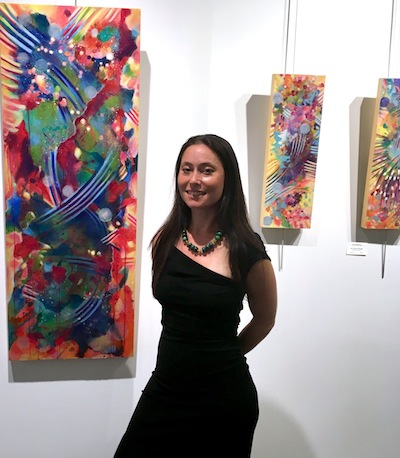
photo - Carly Belzberg at the July 5 opening of her solo exhibit at the Zack Gallery, called The Spirit of Cloud, The Spirit of River
Carly Belzberg at the July 5 opening of her solo exhibit at the Zack Gallery, called The Spirit of Cloud, The Spirit of River. (photo by Nathan Garfinkel)

“Art gives people in crisis a voice,” she said. “It soothes. It supplies cathartic relief. Art is much better than talk because it gives people distance from their trouble and their feelings. Art provides a safe outlet.”

She also explained about the people she worked with who had dementia: “Some of them lost their memories in words, but the images are still there and they come out in the … paintings, even if they don’t remember. They draw their memories.”

While she kept on painting all that time, her focus was on building her art therapy career. Like many hobbies, her painting became relegated to the sidelines of her life.

After awhile, she moved to Winnipeg and, a few years later, around 2007, returned to Vancouver.

“I didn’t do much art, and it made me unhappy,” she said. “I wasn’t connected to who I really am. I found the lack of liveliness inside. I needed art. It is something to look forward to in the morning.”

Unfortunately, between her work for the Vancouver School Board and her private therapy practice, she couldn’t seem to find a place for her own art. Then, about three years ago, things changed.

“There was a demo at Opus, the art supply shop on Hastings in downtown,” Belzberg recalled. “It was held by a wonderful Vancouver artist, Suzan Marczak. I went there and I loved it. There were some difficult people attending that demo, and Suzan dealt well with them. I was impressed, and we talked. Suddenly, I wanted to get back to my painting. I guess I needed a push in the right direction. I started studying with Suzan. She is a very talented teacher, demanding but generous.”

Since their first meeting, the two have become such good friends that Marczak helped Belzberg hang the paintings for her Zack show.

“Suzan reminded me how much I loved painting,” said Belzberg. “It happens sometimes – you forget parts of what you are, and then you remember, and you have this desire to create again.”

About the same time, Belzberg made a serious commitment to studying Zen. This also led her back to her artistic core.

And her work for the school board helped, too. “I offer art therapy classes for the children of Vancouver elementary schools. Young kids don’t have stereotypes, their minds are free,” she said. “They see everything with fresh eyes, and it meshes with the Zen philosophy. In Zen, you let go of your preconceived ideas, of stereotypes. Eternal change means there are no stereotypes.”

This approach is what led to the current exhibit. “This show was a spontaneous exploration of change, prompted by curiosity. I never knew what would happen when I started a piece. As one of my teachers said, painting without a final product in mind is akin to driving on a dark highway, where you only see a short distance ahead of you at a time. Each decision is based on moment-by-moment input, on what you see on your canvas right now.”

Despite the prolonged period of partial withdrawal from the arts, Belzberg has had some sales and commissions over the years. One of her biggest commissions was the purchase of 14 paintings for a nursing home in Winnipeg. But she doesn’t paint for money.

“If I had to paint for money only, I think I’d get sick,” she said. “I want my paintings to go to people’s homes, make their space beautiful. You know, they say sometimes, ‘This house is so you.’ That’s how it is with me in my house. I like crystals and plants, they make me feel good, so I buy them for my home. If someone buys my paintings to make them feel good, to create an environment that resonates with their souls, that makes me happy.”

The Spirit of Cloud, The Spirit of River exhibit opened July 5 and continues until Aug. 3. For more information on Belzberg and her work, visit carlybelzberg.com.

Olga Livshin is a Vancouver freelance writer. She can be reached at [email protected].

Format ImagePosted on July 13, 2018July 11, 2018Author Olga LivshinCategories Visual ArtsTags art, Carly Belzberg, painting, Zack Gallery, Zen
An end, a beginning

An end, a beginning

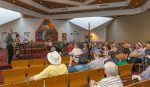
Holocaust survivor Serge Haber speaks with Tina Macaspac and other students at the Writing Lives closing ceremony April 26. (photo by Jennifer Oehler © Langara College)

Langara College recently held the closing ceremony for Writing Lives: The Holocaust Memoir Project, a two-semester collaboration between Langara College, the Vancouver Holocaust Education Centre (VHEC) and the Azrieli Foundation.

At the April 26 event, Dr. Rachel Mines, a member of Langara’s English department and coordinator of the project, described Writing Lives.

“In the first semester of this project,” she said, “students learned about the European Jewish culture and the Holocaust in the classroom, through studying historical and literary texts. They also researched and wrote a paper on prewar European Jewish communities.

“In the second term, students were teamed up with their survivor partners. They interviewed the survivors, transcribed the interviews and turned the transcriptions into written memoirs. The memoirs will be archived and possibly published, and they will also serve as legacies for the survivors and their families.”

Mines also relayed a message from Melanie Mark, B.C. minister of advanced education, skills and training.

“The Writing Lives project gives a voice to Holocaust survivors and teaches us about the type of courage and resilience it takes to overcome injustice,” said Mark in her statement. “These emotional and moving stories help connect people from different cultures and inspire us to do better for each other. I am proud to be part of a government that is committed to building a vision of reconciliation through the adoption and implementation of the United Nations Declaration on the Rights of Indigenous Peoples, and the Truth and Reconciliation Commission’s calls to action. As an indigenous minister whose grandparents went to residential school, as the first person who ever graduated from high school in my family and went to college and university, I know the power of education. I know how transformative it is and how impactful it can be on our communities. Thank you for being truth tellers and helping to keep these stories alive in the minds of people.”

Gene Homel, former chair of the liberal studies department at the British Columbia Institute of Technology, encouraged students to consider entering the fields of history, politics or literature.

“History is very important in providing context to some disturbing developments, not so much in Canada but other parts of the world, which are not as fortunate as Canada,” he said. “History is a scientific-based discipline, and that kind of approach is all the more important in the context of fake news and alternative facts. It is very important that the stories be told, and for us to take an inclusive but evidence-based and scientific approach to history.”

“When I invited the survivors in this program,” said Dr. Ilona Shulman Spaar, education director at the VHEC, “I mentioned two things: first, I expressed that the VHEC is confident that the experience of meeting with a Holocaust survivor will prove meaningful for the students and, secondly, I mentioned that I hope the survivors, too, will benefit from this opportunity. Listening to the positive feedback that I received from both the students and the survivors, and looking at the overall outcome of this project, I am glad to see that my hopes for this program became true.”

Serge Haber, a Holocaust survivor and a Writing Lives participant, talked about the significance of his memoir. “It is very crucial to me, because, for the last 35 years, I have been thinking of writing my experience in this life,” he said. “I never had a chance, the time or the person to listen to me. I hated the machines that record, so [a] personal touch was very important to me. And here it was, presented by Langara. I worked with two students, and I think we created a relationship, a personal understanding of what I went through.”

Haber added, “In fact, I have never been in a concentration camp, but it is important to know that the Holocaust happened not only in camps but also in many cities around Europe, where thousands upon thousands of Jewish people, young and old alike, perished for nothing, only because they were Jewish. I profoundly remember three words that [I was told] while I was watching what was happening on the streets below, where thousands of people had been killed – my father mentioned to me, ‘Look, listen and remember.’ And I remember.”

Heather Parks, reflecting on the passion and dedication that she and her fellow students contributed to the project, shared an emotional speech.

“For their trust in us, we poured our hearts into building their legacy,” she said. “We spent our days and long nights taking words told to us in confidence. We poured our hearts – and sometimes tears – into making a story fit for the most incredible people we have had the honour of meeting. Every part of this was hard work, and every part of this was worth it. We learned so much from them.

“Besides the lessons on history, we learned what true strength means,” she said. “We learned that love can remain even after trauma, loss or heartbreak; that new love grows as lives move forward, and that time can heal many wounds, even though they may leave scars. We were lucky to have been included in this love, this trust and this experience. I am not the only one in this project – in the experience of all of us, this project was illuminating and enlightening. It was surreal and awe-inspiring in every sense of the word. The experience taught us compassion, how to listen and what it means to love in the face of hate.”

The Writing Lives closing ceremony, however, may be an end that ushered in a new beginning. According to Dr. Rick Ouellet, director of Langara College’s indigenous education and services, his department is currently taking initiatives to continue the program. Writing Lives was a collaboration in the two years it ran. Similarly, the future project would be in collaboration with organizations that are working closely with residential school survivors, such as the Indian Residential Schools Survivors Society and the British Columbia Residential School History and Dialogue Centre, to establish necessary protocols and ensure the stories of survivors are respected and the students are well prepared. Though not yet finalized, Ouellet aims to initiate the new Writing Lives program in fall 2019 at Langara.

Marc Perez, a Writing Lives student participant, lives and works on the unceded territories of the Musqueam, Squamish and Tsleil-Waututh First Nations. His creative nonfiction and fiction appear in Ricepaper Magazine and PRISM international 56.3. His personal essay “On Meeting a Holocaust Survivor” is published in Zachor (May 2018).

Format ImagePosted on July 13, 2018July 11, 2018Author Marc PerezCategories LocalTags First Nations, Gene Homel, Heather Parks, Holocaust, Ilona Shulman Spaar, Langara College, Melanie Mark, memoir, Rachel Mines, residential schools, Serge Haber, survivor, VHEC, Writing Lives
Raising funds for basics

Raising funds for basics

Phillipa Friedland is trying to raise funds to sustain basic facilities at the Population and Immigration Authority in B’nei Brak, where thousands must go to renew or obtain visas to remain in the country. (photo from gofundme.com/restrooms-for-refugees-israel)

When she left Vancouver for Israel more than a year-and-a-half ago, Phillipa Friedland, 54, became involved in social activism. Today, she is trying to raise funds to sustain basic facilities like toilets and seating at the Population and Immigration Authority (PIBA) in B’nei Brak, where thousands must go to renew or obtain visas to remain in the country. The Independent interviewed Friedland recently to find out more about her involvement.

Jewish Independent: When did you learn about the work of the Population and Immigration Authority?

photo - Phillipa Friedland
Phillipa Friedland (photo courtesy)

Phillipa Friedland: I met an Eritrean refugee at the passport office when my daughter Eli and I lived in Israel in 2014, and we became friends. At the end of February, the Israeli government abruptly closed the South Tel Aviv PIBA office and left a note in Hebrew, not the first language of any refugees, stating that the PIBA office had moved to B’nei Brak, to a very large, barren parking lot in an industrial part of the city. I went with my friend to hand in his form and he waited in line six times, just to hand in the paper.

JI: You’re not happy with the facilities PIBA is providing. Why?

PB: The B’nei Brak municipality refuses to provide shade, toilets, water or seating for those who wait in line. Once refugees gain entry, there are ablution facilities and seating. However, there are approximately 40,000 refugees and the only places to apply for or renew visas are in Eilat and B’nei Brak. Knowing that thousands of people would converge on these centres, the government should have done infrastructural planning to accommodate such numbers.

Activists at the site have confided that, since the government closed the detention centres and refugee prison, they are using PIBA as a “soft” place to repel the refugees. They can no longer threaten them with prison or repatriation to a third African country, since these negotiations fell apart when it was revealed that these are not safe-haven countries for refugees. So, the goal is for the refugees to become so frustrated and disheartened by the visa process that they will voluntarily leave.

JI: How many asylum seekers are using PIBA in B’nei Brak, and where are they from?

PB: Most Sudanese have left Israel, so most of the PIBA users are from Eritrea. Some days, there are over 1,000 people there, though, in recent days [in late May], the number has dropped dramatically, as more refugees are given visas. Families are provided with six-month visas and single men are given two-month visas. They are required to take off work and are not paid when they leave to wait for a visa. By contrast, in many countries, a visa application can be obtained online.

JI: Are these asylum seekers also refugees, or a mixture of both?

PB: The Israeli government says they are all economic migrants. It has granted asylum to 11 people – a very poor showing for a country of refugees ourselves. The government … considers them infiltrators. In fact, the education minister declared openly on public TV that the migrants are infiltrators. It stuns me that a nation that promised to never forget has an education minister that has forgotten the persecution the Jews experienced.

JI: What are you doing at PIBA?

PB: After visiting the PIBA in B’nei Brak, I was compelled to take action. I was reviled by apartheid South Africa, and taught about the perils of discrimination and racism for 15 years at the Vancouver Holocaust Education Centre. I could not just watch quietly.

I decided to sponsor two toilets for a month in the barren parking lot where the refugees line up. These cost $600 per month. I also bought 10 benches, seating for only 50 people. Unfortunately, this is all that I could personally afford.

The toilets were so direly needed that, after three days at the site, I paid additional fees to have them emptied, as the company I lease them from only empties them once a week. Myself and an Eritrean lady, Sabrina, clean them when we are on-site, replenish the toilet paper and spray them with toilet spray.

I realized that I could not sustain this expense every month on my own, as I am an immigrant and earn a salary commensurate with working in a nonprofit organization. So I decided to start a GoFundMe Campaign called “Restrooms for Refugees.” So far, I have raised [almost $3,000]. The Good People Fund run by Naomi Eisenberg in New Jersey is donating $1,800 over three months. [gofundme.com/restrooms-for-refugees-israel]

The B’nei Brak site has been running very effectively thanks to amazing Eritrean volunteers who ensure the lines run smoothly and that people get a turn. One of them is Michael, who left Eritrea after 15 years in forced military conscription; he had 10 years still to complete. His back has many scars from being tortured in the military. He left his wife and four children behind and hopes to come to Canada, where his brother is living.

JI: What do you want Jewish Vancouverites to know about this? Why is it important to you personally, and why should it be important to us?

PB: I believe that, as Diaspora Jews, we have rose-coloured glasses on when it comes to Israel. I love and support Israel, however that does not mean I support racist and discriminatory government policies. Eighteen Jewish U.S. Democratic senators spoke out about Israel’s refugee policy and 400 rabbis, pilots, teachers and other groups spoke out vehemently against the deportation policy the government was adopting. Since Israel first accepted and then rejected the UN’s offer to Israel regarding the refugees, there has been no new Israeli policy. The refugees essentially live in limbo, renewing their visas and being treated with no dignity.

I believe we should treat everyone with dignity. I know that, being such a small country, Israel cannot open its doors to an unlimited number of people. However, those strangers within our Jewish borders should be treated with care, as commanded 37 times in the Torah.

Lauren Kramer, an award-winning writer and editor, lives in Richmond. To read her work online, visit laurenkramer.net.

Format ImagePosted on July 13, 2018July 11, 2018Author Lauren KramerCategories IsraelTags asylum seekers, B'nei Brak, fundraising, human rights, immigration, Israel, refugees
Musical season ending

Musical season ending

Caviar and Lace entertain at the last session of the 2017/18 Jewish Seniors Alliance Snider Foundation Empowerment Series. (photo by Alan Katowitz for JSA)

On June 25, Jewish Seniors Alliance and the Kehila Society of Richmond co-sponsored the fifth in the JSA’s Empowerment Series program. This year’s theme was “Laughter and Music: Feeding the Soul” and the subtitle for this final event in the season was “Music for our Hearts and Songs We Love.”

Toby Rubin, coordinator of Kehila, introduced the afternoon and welcomed everyone. About 100 enthusiastic attendees dug into the summertime lunch of burgers and hot dogs prepared by Stacey Kettleman.

After lunch, everyone proceeded to the sanctuary to be entertained by Caviar and Lace, comprised of Michelle Carlisle and Saul Berson. The duo performed an eclectic mix of classic, jazz and folk songs. Carlisle plays piano and Berson plays a variety of instruments, from saxophone to clarinet. They both played and sang, encouraging the audience to join in. The mix of oldies, and especially songs from the 1950s, was indeed music to the ears of the listeners, who were familiar with most of the melodies.

A new JSA Snider Foundation Empowerment Series will start in the fall.

Shanie Levin, MSW, worked for many years in the field of child welfare. During that time, she was active in the union. As well, she participated in amateur dramatics. She has served on the board of the Jewish Federation of Greater Vancouver and is presently on the executive of JSA and a member of the editorial committee.

Format ImagePosted on July 13, 2018July 11, 2018Author Shanie LevinCategories MusicTags Caviar and Lace, Empowerment, JSA, Kehila Society, seniors
New views on heart disease

New views on heart disease

Dr. Ross Feldman is leading various teams as the principal investigator for women’s health at the Institute of Cardiovascular Sciences at the city’s St. Boniface Hospital. (photo from Dr. Ross Feldman)

Many of us are under the impression that heart disease mainly affects men. But researchers have been trying for the last few decades to change this skewed view. One such researcher, Dr. Ross Feldman, recently found his way to Winnipeg. Feldman is leading various teams as the principal investigator for women’s health at the Institute of Cardiovascular Sciences at the city’s St. Boniface Hospital.

According to Feldman, “Most of what we know in terms of risk and benefit and treatment of those factors that contribute to heart disease initially came from studies of younger people with more advanced risk factors – be it cholesterol, high blood pressure, [etc.] – and what the benefit was from the treatment of those problems, in terms of reducing risk of heart attacks or strokes. Women tended not to be included in those studies, because premenopausal heart disease risk is so much lower. So, in the earlier days, we developed guidelines that were mostly based on findings in younger men. It really wasn’t appreciated that women had accelerating risk after menopause.”

This new understanding about the connection between post-menopause and heightened risk of heart disease has only come to light in the past 10 to 15 years. The Heart and Stroke Foundation is only now, within the last year, opting to make the topic a priority.

“I think it’s taken even longer for it to register on the psyche of healthcare professionals … that women are at an increased risk post-menopause,” Feldman told the Independent. “They’re also much less likely to be diagnosed appropriately, less likely to get appropriate treatment, and they are more likely to have complications with trying to fix blood vessel problems. They’re less likely to be sent out following a cardiac event on all the right medications. And then, ultimately, a little more likely to die of heart disease.”

Feldman believes this lag time – for women to get the correct diagnostics and treatments – will not change anytime soon, unfortunately, as the training provided in medical schools is still based on past knowledge about women and heart disease. Medical students are still being taught that women are more likely to present with atypical chest pain, with no further explanation, said Feldman.

“If women are most likely to present that way, why are you calling it atypical chest pain?” he asked. “It gives you an idea of how male-centric our whole approach to heart disease has been. What we get out of it is, you often see a dichotomy, that sometimes you’ll see premenopausal women at risk of being over-treated.

“A woman, premenopause with hypertension, probably doesn’t need blood pressure-lowering therapy unless their blood pressure is greater than 160 over 100. Whereas, a post-menopausal woman with multiple smaller elevations in individual risk factors – a little bit higher blood pressure, a little bit higher cholesterol – will often get overlooked…. Yet, she is at a much greater risk than will be projected, based on consideration of any individual risk factor.

“There needs to be a sex-specific approach to management of the risk factors of heart disease and the presentation for heart disease,” he said. “The guidelines for that approach are still in flux.”

As medical practitioners are lagging behind the latest findings about women and heart disease, Feldman said that premenopausal women don’t need to be as concerned about risk factors that may be a little out of whack, such as LDL cholesterol or blood pressure. However, he said, post-menopausal women need to be advocates for more aggressive treatment for even seemingly marginal elevations in risk factors.

“The problem is that primary care professionals, a lot of them, will tend to underestimate the risks,” said Feldman. “There are reasonable calculators that will tell people, if you add up several small risks for a post-menopausal woman, that translates into an overall risk level that mandates more aggressive therapy. Generally, blood pressure and cholesterol are the most important factors to look at, but it’s the whole aggregate risk based on the calculation that tells you how aggressively you need to treat, regardless of the extent of the elevation.”

While researchers like Feldman are working on sex-specific therapies, women can help themselves by reducing their degree of risk via exercise, maintaining a healthy weight and a healthy diet, keeping hydrated and finding ways to keep stress and anxiety levels down.

“As women age, as with men, excessive salt intake increases blood pressure and often that excessive salt doesn’t primarily come from the salt shaker, but from processed foods,” said Feldman. “When shopping, shop the rim of grocery stores. Stay away from the aisles. Maybe shop in the frozen food sections, but probably not.

“To date, there is no real sex-specific preventative approach. That is, exercise, as far as I know, is as effective in blood pressure reduction and weight reduction for men as it is for women … maybe a little more effective in women, but likely marginal differences. I think it’s important for women to know that weight gain and a more sedentary lifestyle are bigger risks for them than for men. Men tolerate being couch potatoes a little better than women do.

“The slope of the line for weight gain in men is pretty linear,” he said. “In women, there’s an increase in slope of weight gain after menopause. Women’s systems are less tolerant of the kinds of changes that occur with age than men’s.

“We know there are ethnic differences in risk tolerance,” he added. “We know that Asians are less tolerant to weight gain than Caucasians. That is a genetic difference. We hadn’t appreciated that sex differences work the same way, although we should have, as, ultimately, a sex difference is a genetic difference.”

Rebeca Kuropatwa is a Winnipeg freelance writer.

Format ImagePosted on July 13, 2018July 11, 2018Author Rebeca KuropatwaCategories NationalTags heart disease, menopause, Ross Feldman, science, women
Book has added spice

Book has added spice

Traditions can disappear within a blink of an eye. But keeping certain practices alive is what helps us remember where we came from and shapes how we live and be Jewish today.

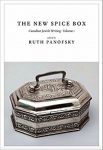
I was excited and curious to read volume 1 of The New Spice Box: Canadian Jewish Writing, edited by Ruth Panofsky, and published by New Jewish Press. I wanted to see how various writers used their family’s history in stories and poems to express their views.

The book is divided into three sections: voice, place and practice. Oppression and triumph are recurring themes throughout, and the stories exhibit strength and are endearing. Panofsky has brilliantly chosen selections that represent what it means to be Canadian in a Jewish context – overcoming difference while maintaining tradition.

The Spice Box: An Anthology of Jewish Canadian Writing was first published in 1981 by Lester and Orpen Dennys; it was edited by Gerri Sinclair and Morris Wolfe. The original book featured many authors, and brought Jewish stories to the forefront in Canada, including translations from original Yiddish texts.

For this new edition, Panofsky researched extensively writings from 1980 to the present. Material that did not make it into the original book was re-evaluated. Pieces relevant to the lives of Jews today were picked out and the contributors include authors from the first edition, such as Matt Cohen and Seymour Wayne. Current pieces were added, and they complement the other writings tremendously. This contemporary collection is intended to provoke new ideologies of culture and what Jewishness means in Canada. To do so, some of the stories refer back to a time before Jews arrived in Canada, while others relate modern-day situations. Readers can see how traditions and circumstances have changed over the years.

The collected pieces within The New Spice Box present how the writers see themselves today and how moving to Canada shaped who they are. In some stories, Canada is depicted as a haven, but also as an intimidating place for new arrivals. Moving to a new location during the war would have been difficult and somewhat terrifying, and these stories show just how much tenacity these immigrants had to begin again. Their families are what kept them going; making sure the next generations would play a role in telling their histories and keeping age-old traditions current.

One story, in particular, demonstrates how daunting moving to another country is. In “My Mother’s Luck” by Helen Weinzweig, a daughter is talking. Initially, it is written in the first person, but the narrative changes into the second person as the story continues. Esther begins, telling her story, but the mother’s perspective takes over. Lily is preparing her daughter, Esther, for her journey to Germany from the United States. Esther is very reluctant to go, even though she agreed beforehand to do so, in the pursuit of a higher education. Esther is scared about the impending changes and is nervous about fitting into a new country, as well as living with her estranged father.

Lily reassures her daughter that this is what she needs to accomplish, even though she herself is skeptical about the value of a higher education, believing that people who are more educated do not necessarily get decent paying jobs in their chosen profession. This attitude is most likely based on Lily’s terrible experiences with men. For example, Esther’s father abandoned them shortly after she was born, preferring to be around his university friends. But, even if mother and daughter fight throughout, Lily’s love for Esther shines through, and Lily assures her daughter that, if everything does not go smoothly, she has a ticket to come back home.

Meanwhile, “Pesach en Provence” by Gina Roitman highlights a duty to safeguard Jewish holiday customs. The narrator describes why making a Passover meal is particularly significant. While in Alpes-Maritimes, taking a break from her life in Montreal, she is planning a seder for a friend. Most of her family was killed in the Holocaust and, besides her brother, only distant relatives remain. In planning the seder, overwhelming memories of her mother at Passover return. Because of these recollections, the narrator adds dishes to the menu other than those she initially planned. By the end of the story, she comes to understand why the meal was so prominent in her family and why Passover is something powerful to celebrate. She realizes her mother’s importance in keeping the tradition alive, and comes to appreciate both her mother and her culture more.

Chloe Heuchert is a fifth-year history and political science student at Trinity Western University.

Format ImagePosted on July 13, 2018July 11, 2018Author Chloe HeuchertCategories BooksTags immigration, Judaism, memoir, Ruth Panofsky
More literary than practical

More literary than practical

As a longtime reviewer of recipe books, I’ve come to realize there are two distinct categories in this genre. One is the practical cookbook you leave open on your kitchen counter while cooking. It delivers bright, inspiring images that lift you out of the doldrums of your everyday repertoire and offers concise, clear instructions using as little text as possible. Bottom line: it’s super-practical. The second kind is more of a bedside reading book, more literature than cooking aid. It comes with lengthy introductions and reflections on what particular recipes mean to the author and it’s not a book to pull out if you need to bake a quick batch of chocolate chip cookies for the last-minute guests about to arrive or the kids coming home from school.

This latter category perfectly fits Daphna Rabinovitch’s cookbook The Baker In Me (Whitecap Books, 2016), which received the top prize in the single subject cookbook category at the Taste Canada Awards earlier this year. The Jewish author of this 478-page tome has superb credentials that include director of Canadian Living magazine’s test kitchen, studies in Italy and co-authoring a host of other books, which have received accolades from culinary and literary critics. In this, her first solo book, she aims squarely at the ordinary baker and spends many pages explaining the basics for successful results making cookies, bars, chocolate, muffins, breads, cakes, pies and other desserts.

You’ll want to read these essays slowly and quietly before you tackle the recipes, which is why I recommend this book as good bedside reading. Thanks to Rabinovitch’s many years in the field, she has a plethora of baking tips and gems to share. She offers pragmatic advice on the art of measuring ingredients, the variety of cooking techniques (convection versus radiant) and what they are best used for, when to use chocolate instead of cocoa powder, and how to make your biscuits flaky.

Jewish readers will enjoy her challah, rugelach, Rosh Hashanah honey cakes and Passover recipes. Kid-size bakers will love the oversized peanut butter and oat cookies, the fudgy brownies and the peek-a-boo chocolate cupcakes. And grownup bakers will enjoy the challenge of a chocolate devil’s food cake with chocolate buttercream, One Damn Good Cookie, and the chocolate truffle pecan tart with spun sugar dome. There is lots here to impress friends and family with special occasion and everyday treats. But, as the title suggests, this cookbook is all about baking, so don’t approach it with a dieter’s caution. This is high-calorie fare. We’re talking the full mix of butter, sugar and chocolate with no concessions for waistlines.

Rabinovitch’s recipes aren’t that complicated or out of reach for a beginner baker, but there’s a fair amount of reading involved if you want to be sure you’re baking them the right way. For bakers who are keen learners, her expert viewpoint and strategic advice will add volumes to their knowledge of baking. For bakers who just want to get straight to the recipe with no lengthy reading process, this may not be the right choice for a handy kitchen companion.

Lauren Kramer, an award-winning writer and editor, lives in Richmond. To read her work online, visit laurenkramer.net.

Format ImagePosted on July 13, 2018July 11, 2018Author Lauren KramerCategories BooksTags baking, cookbook, Daphna Rabinovitch
Enjoy summer’s many fruits

Enjoy summer’s many fruits

Who doesn’t look forward to summer’s bounty? Not only are fruits healthy – blueberries, for example, are low in calories but high in fibre, Vitamin C, Vitamin K and have a high antioxidant capacity – and delicious on their own but they make for great desserts, salads and spreads. Here are some recipes for a few of my favourite fruits: blueberries, peaches and apricots.

REVERSED BLUEBERRY COBBLER
six to eight servings

base:
2 cups blueberries
1/2 cup sugar
1 tbsp flour
2 tsp grated lemon peel
1/8 tsp nutmeg
2 tbsp pareve unsalted margarine

cake:
1 1/3 cups flour
3/4 tsp baking soda
3/4 tsp baking powder
1/4 tsp nutmeg
6 tbsp unsalted pareve margarine
1/2 cup sugar
2 eggs
1/2 tsp vanilla
1 1/2 tsp grated lemon peel
2/3 cup non-dairy creamer

1. Preheat oven to 350°F. Grease a baking dish.
2. Combine blueberries, sugar, flour, grated lemon peel, nutmeg and margarine for base. Bake 10 minutes.
3. In a bowl, combine flour, baking soda, baking powder and nutmeg for cake.
4. In another bowl, cream margarine with sugar and eggs. Add vanilla and lemon peel.
5. Mix in dry ingredients with non-dairy creamer. Drop batter atop blueberry mixture. Bake for 40 minutes. Serve warm with pareve whipped cream or ice cream.

BLUEBERRRY YOGURT CAKE 1

1/2 cup butter or margarine
1 cup brown sugar
1 egg
1 tsp vanilla
2 cups flour
1 tsp baking soda
1/2 tsp baking powder
1 cup blueberry yogurt

1. Preheat oven to 350°F. Grease a cake pan.
2. Cream butter or margarine and brown sugar.
3. Add egg and vanilla and blend.
4. Stir in flour, baking soda, baking powder, alternately with yogurt.
5. Pour into a cake pan. Bake for 50 minutes.

BLUEBERRY YOGURT CAKE 2

1 cup brown sugar
1/2 cup butter or margarine
3 eggs
2 cups flour
1 tsp baking powder
1 tsp baking soda
2 cups blueberry yogurt
1 tsp vanilla
1 tsp cardamom

1. Preheat oven to 325°F. Grease a cake pan.
2. Cream half cup sugar and butter or margarine. Add eggs.
3. Gradually add flour, baking powder and baking soda.
4. Stir in one cup blueberry yogurt. Add vanilla and cardamom. Pour half of batter into cake pan.
5. Spread remaining sugar and yogurt on the batter. Add rest of batter. Bake for 45-50 minutes.

SPICED PEACHES

4 cups sliced peaches
1/4 cup brown sugar
2 tsp lemon juice
12 cinnamon sticks
2 tsp brandy

1. Place peaches, sugar, lemon juice, cinnamon sticks and two cups water in a saucepan.
2. Bring to a boil. Reduce heat and simmer 20 minutes.
3. Cool and add brandy. Pour into a jar with a lid or a bowl.

WALDORF PEACH SALAD
four servings

1/2 cup chopped celery
1/2 cup sliced grapes
1/2 cup chopped apples
1/4 cup chopped nuts
4 sliced peaches
4 pieces Romaine lettuce
1 tbsp brown sugar

dressing:
1/2 cup mayonnaise
1 cup whipped cream
1 tsp grated orange peel

1. In a bowl, combine celery, grapes, apples and nuts. Toss lightly.
2. Place a piece of lettuce on each salad plate with a sliced peach on top. Fill with a quarter of the salad.
3. Sprinkle with brown sugar. Refrigerate.
4. In a bowl or jar with a lid, combine mayonnaise, whipped cream and orange peel. Spoon over each peach salad serving.

PEACH UPSIDE DOWN CAKE

1 cup brown sugar
1 cup chopped nuts
2 cups chopped peaches
1 cup brown sugar
1/4 pound butter or margarine
1 egg
1 cup milk or non-dairy creamer or pareve almond milk
1 tsp vanilla
2 cups flour
1 tsp baking powder
1/2 tsp cinnamon
1/2 tsp nutmeg

1. Preheat oven to 350°F. Grease a cake pan.
2. Toss together one cup brown sugar, nuts and peaches. Sprinkle on the bottom of a cake pan.
3. In a bowl, cream one cup brown sugar and butter or margarine. Add egg, milk and vanilla and stir.
4. Add flour, baking powder, cinnamon and nutmeg and blend. Spoon into cake pan. Bake for one hour or until a cake tester comes out clean. Allow to cool before turning out onto a cake plate.

APRICOT JAM
This is a Grace Parisi recipe taken from Food & Wine Magazine’s online recipe pages. It makes three half-pint jars.

photo - apricots2 pounds pitted apricots, cut into 1/2-inch pieces
1 1/2 cups sugar
2 tbsp fresh lemon juice

1. In a nonreactive saucepan, toss the apricots with sugar and let stand, stirring until the sugar is mostly dissolved, about one hour.
2. Add lemon juice and bring to a boil until sugar is dissolved. Simmer until the fruit is glassy and the liquid runs off the side of a spoon in thick, heavy drops, 20-25 minutes. Skim off scum that rises to the surface.
3. Spoon into three half-pint jars, leaving a quarter of an inch at top. Close and let jam cool to room temperature. Store in refrigerator for up to three months.

SPICED APRICOTS

2 cups apricots cut into halves
2 tbsp brown sugar
1 tsp lemon juice
6 pieces stick cinnamon
1 tsp brandy

1. Place apricots, sugar, lemon juice and cinnamon in a saucepan with a little water. Simmer until soft.
2. Add brandy and heat. Cool and spoon into a jar.

APRICOT BUTTER

five cups
2 pounds halved apricots
1/4 cup sugar
1 tsp cinnamon
1/2 tsp cloves
1/4 tsp allspice
2 tsp lemon peel
1 tbsp lemon juice

1. Place apricots in a saucepan. Cook over low heat in their own juices until soft.
2. Puree in a blender and measure. Return to sauce pan, adding a quarter cup sugar for each cup of pulp.
3. Add cinnamon, cloves, allspice, lemon peel and lemon juice. Bring to a boil. Spoon into jars, close and refrigerate.

APRICOT LEATHER

2 cups pitted apricots, cut into pieces
1 tsp lemon juice
1/2 cup sugar

1. Preheat oven to 175-200°F.
2. Drop apricot pieces into a blender and puree. Add lemon juice and sugar.
3. Spray a cookie sheet with vegetable spray. Spread pureed apricots evenly, quarter-inch thick on a cookie sheet. Place sheet in oven and keep door open. Bake until dry, three to six hours. Let cool.
4. Cut crosswise once, lengthwise three times, so you have six pieces.
5. Cover with plastic wrap and roll up.

Sybil Kaplan is a journalist, lecturer, book reviewer and food writer in Jerusalem. She created and leads the weekly English-language Shuk Walks in Machane Yehuda, she has compiled and edited nine kosher cookbooks, and is the author of Witness to History: Ten Years as a Woman Journalist in Israel.

Format ImagePosted on July 13, 2018July 11, 2018Author Sybil KaplanCategories LifeTags baking, cooking, fruit, summer
Archeological cliff-hanger

Archeological cliff-hanger

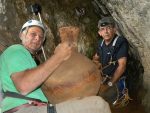
Dr. Yinon Shivtiel, left, and Dr. Danny Syon inside the cave where large wine jars, a cooking pot and other pottery more than 2,000 years old were salvaged two weeks ago in a joint operation of the Sefad Academic College, the Israel Antiquities Authority (IAA), the Israel Cave Research Centre and the Israel Cave Explorers Club. (photo by IAA from Ashernet)

photo - The pottery was found in a cave high on a sheer cliff, under an overhang
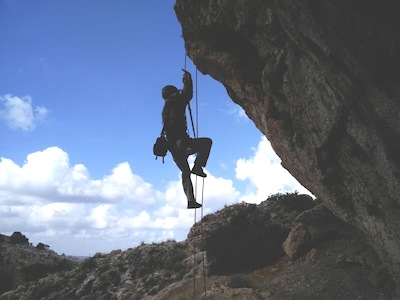
The pottery was found in a cave high on a sheer cliff, under an overhang. (photo by IAA from Ashernet)

In 2017, Dr. Yinon Shivtiel, a speleologist and senior lecturer at Sefad, conducted a survey in Western Galilee, aided by the Israel Nature and Parks Authority, to locate caves that served as shelters and hiding places. He discovered a cave high on a sheer cliff, under an overhang, which contained ancient pottery vessels. “As a first impression,” said Dr. Danny Syon, senior archeologist with the IAA, “the finds seem to date to the Hellenistic period: between the third and first centuries BCE…. We assume that whoever hid here escaped some violent event that occurred in the area. Perhaps by dating the vessels more closely, we shall be able to tie them to a known historic event. It is mind-boggling how the vessels were carried to the cave, which is extremely difficult to access. Maybe an easier way that once existed disappeared over time?”

Format ImagePosted on July 13, 2018July 11, 2018Author Edgar AsherCategories IsraelTags archeology, history, Israel, pottery
פורום הישראלים בקנדה

פורום הישראלים בקנדה

פורום אתר תפוז (בבעלות חברת אורנג’ הולדינגס) עבור הישראלים בקנדה ממשיך להיות עמוס בשאלות רבות, ובמידע רב הנדרש עבורם. כיום 15,309 איש עוקבים אחר נעשה בפורום. תפוז מפעילה בנפרד פורום עוברים לקנדה שעוסק בענייני הגירה. כיום 11,369 איש עוקבים אחר הנעשה בפורום הזה.

לפי תפוז הפורום עבור ישראלים בקנדה הוא “הבית לישראלים הגרים במדינה השנייה בגודלה בעולם, למי שמעוניין לדעת על החיים כאן, ולאלו שבדרך. זה המקום ליצירת קשרים ומתן מידע לישראלים הרבים החיים ברחבי קנדה. מסעדות, עבודה, מגורים ובילויים – הבמה פתוחה לכל נושא שמעניין אתכם ויהפוך את הפורום והחיים פה ליותר מעניינים. לאלו מכם שנמצאים בדרך, בחבלי ההגירה לקנדה, אנחנו מבקשים תשעיינו במאגרי הקישורים, המאמרים ובדף השאלות הנפוצות ותבדקו שם את המידע, כיוון שאם שאלתכם כבר נענתה שם, תקלו על הפורום מחזרה על עצמו. הפורום הזה ששואף לתמוך בקהילה גדולה של חברים, מבוסס על סובלנות ועזרה הדדית, וכמה דברים אינם מקובלים בו: אין כאן מקום לניגוח בנושא השהייה בחו”ל, לא יתקבלו כאן הטפות מוסר. הודעות מעין אלה, ובמיוחד אם יכתבו בשפה בוטה – ימחקו בשלב ראשון ויחסמו בשלב השני. התקפות אישיות על גולשים או חשיפה של פרטים אישיים על גולשים ע”י גולשים אחרים, לא יתקבלו כאן. הודעות כאלה ימחקו וכותביה יחסמו. הפורום פתוח לכל הגולשים המעוניינים להשתתף בו ולכולם ניתנת זכות ביטוי שווה. הודעות המשתיקות גולשים אחרים מכל סיבה אף הן אינן רצויות כאן. יש להקפיד על התייחסות בכבוד לכל משתתף/ת בפורום, ללא התבטאויות פוגעות במזיד, קללות וכדומה. נא לשמור על שפה נקייה ונעימה בפורום. כמו בכל קהילה, גם כאן יש מקום לידיונים וחילוקי דעות. אנא שמרו על דיון ענייני ובוגר. השתדלו לנסח את דעותכם בצורה סובלנית, תרבותית, חיובית ובונה, גם כשאתם נסערים”.

בין השאלות שהועלו לדיון בפורום לאחרונה: היבטים פסיכולוגים בגידול ילד מחונן, הגירה לקנדה, מעבר לארה”ב, מחפשים ספרים ישראלים בוונקובר, כיצד ניתן לצפות בערוצים ישראלים בחו”ל, רואי חשבון בטורונטו, ספרי ילדים ונוער מחפשים בית חם, מה דעתכם על הילודה בקנדה, הבדיקות הבטחוניות לקבלת כרטיס פי.אר, שבוע בטורונטו עם הרכב – היכן מומלץ לשהות, הוצאת רישיון נהיגה, האם יש מגבלות גיל להגירה, המלצות על סוכן נדל”ן במונטריאול, ישראלים בקולונה, המנטליות בקנדה, בית ספר יהודי בטורונטו, לימודי פסיכולוגיה בקנדה, האם יש סיכוי ששער הדולר הקנדי ירד, דמי ניהול בבניינים, מס על הכנסה, אתר לחיפוש דירות להשכרה, יציאה מישראל עם דרכון זר, מערכת הבריאות הציבורית בקנדה, מיסוי כפול וביטוח לאומי, מכירת בית בישראל, אפשרות לרילוקיישן ועוד.

אתר תפוז מפעיל גם פורום להשקעות נדל”ן בקנדה. מדובר בפורום חדש יחסית שנפתח ביולי אשתקד, ומספר העוקבים שלו עומד על 1,241 איש. בין השאלות שהועלו לדיון בפורום זה: חוזה שכירות אחיד בטורונטו, משקיעים זרים בנדל”ן בטורונטו, קניית בית והשכרה לדיירים, הזדמנויות להשקעה, עתיד בקנדה, השקעות בקנדה לא מובילות לאזרחות קנדית, מה העדיפות של קנדה על ארה”ב, השקעה של אזרח קנדי, מה התשואה שאפשר להשיג על נדל”ן בקנדה, האם יש הגירה חיובית כל כך שמצדיקה השקעה בנדל”ן, האם המיסוי של 15% על השקעות בנדל”ן לזרים לא מוחק את היתרון, קרן פנסיה קנדית תסכים להתחייב לאזרח ישראלי לפנסיה, מה דין הבנקאות בקנדה בייחס לתיירים, כיצד מובטחת ההשקעה על שם המשקיע ובאיזה אופן כדאי להשקיע בקנדה.

Format ImagePosted on July 11, 2018July 9, 2018Author Roni RachmaniCategories עניין בחדשותTags Canada, immigration, investments, Israel, real estate, Tapuz, הגירה, השקעות, ישראל, נדל"ן, קנדה, תפוז

Posts pagination

Previous page Page 1 … Page 374 Page 375 Page 376 … Page 670 Next page
Proudly powered by WordPress