Skip to content
  • Home
  • Subscribe / donate
  • Events calendar
  • News
    • Local
    • National
    • Israel
    • World
    • עניין בחדשות
      A roundup of news in Canada and further afield, in Hebrew.
  • Opinion
    • From the JI
    • Op-Ed
  • Arts & Culture
    • Performing Arts
    • Music
    • Books
    • Visual Arts
    • TV & Film
  • Life
    • Celebrating the Holidays
    • Travel
    • The Daily Snooze
      Cartoons by Jacob Samuel
    • Mystery Photo
      Help the JI and JMABC fill in the gaps in our archives.
  • Community Links
    • Organizations, Etc.
    • Other News Sources & Blogs
    • Business Directory
  • FAQ
  • JI Chai Celebration
  • JI@88! video

Recent Posts

  • עשרים ואחת שנים להגעתי לונקובר
  • Eby touts government record
  • Keep lighting candles
  • Facing a complex situation
  • Unique interview show a hit
  • See Annie at Gateway
  • Explorations of light
  • Help with the legal aspects
  • Stories create impact
  • Different faiths gather
  • Advocating for girls’ rights
  • An oral song tradition
  • Genealogy tools and tips
  • Jew-hatred is centuries old
  • Aiding medical research
  • Connecting Jews to Judaism
  • Beacon of light in heart of city
  • Drag & Dreidel: A Queer Jewish Hanukkah Celebration
  • An emotional reunion
  • Post-tumble, lights still shine
  • Visit to cradle of Ashkenaz
  • Unique, memorable travels
  • Family memoir a work of art
  • A little holiday romance
  • The Maccabees, old and new
  • My Hanukkah miracle
  • After the rededication … a Hanukkah cartoon
  • Improving the holiday table
  • Vive la différence!
  • Fresh, healthy comfort foods
  • From the archives … Hanukkah
  • תגובתי לכתבה על ישראלים שרצו להגר לקנדה ולא קיבלו אותם עם שטיח אדום
  • Lessons in Mamdani’s win
  • West Van Story at the York
  • Words hold much power
  • Plenty of hopefulness

Archives

Follow @JewishIndie
image - The CJN - Visit Us Banner - 300x600 - 101625

Author: Sam Margolis

Funds for Jewish studies

Funds for Jewish studies

Prof. Gregg Gardner has held the Diamond Chair in Jewish Law and Ethics at the University of British Columbia since 2011. (photo from UBC Media Relations)

Gregg Gardner conveys an infectious exuberance when speaking of the $1 million donation from the Diamond Foundation to the University of British Columbia this September.

“None of this would have been possible in terms of Jewish studies at UBC without the Diamond family,” Gardner, an associate UBC professor, told the Independent. “Their sense of giving is felt not just here but throughout the broader community.”

The Diamond Foundation’s most recent gift to the school will build on achievements of the Diamond Chair in Jewish Law and Ethics at UBC to date, with a particular focus on the expansion of Jewish studies programming both in the classroom and beyond the UBC campus.

“The gift is part of a larger initiative which will really go a long way in helping to create and augment programming, assist in having students travel to Israel, bring in new speakers and assist in new research,” said Gardner, current holder of the Diamond Chair.

He plans to invite an array of speakers during the 2020 and 2021 academic years.

“The money from the Diamonds can be used to bring in authorities in various aspects of Jewish research to Vancouver. Once here, they can speak at the university as well as at synagogues, retirement homes or cultural centres in town,” he said.

Gardner also hopes the new funds can serve as a stepping stone towards such things as creating a centre for Jewish studies at UBC and, ultimately, bringing the field of Jewish research at the institution to a level commensurate with that of other universities in North America.

Students at UBC, he said, have shown a widespread interest in Jewish studies, and this interest extends well beyond their own personal background.

The Diamond Chair in Jewish Law and Ethics was established in 2001. Gardner has held the position since 2011, with his research concentrating largely on the history of Jewish thought. At UBC, his classes focus on the history of religions, together with exploring Jewish history, texts and traditions.

In 2018, he teamed up with the Hebrew University of Jerusalem to lead a group of UBC students in an archeological field school at Horvat Midras in Israel, a site that may have been developed by King Herod. There, they helped excavate a pyramid that marked a tomb from the first century and an elaborate underground system of tunnels and caves that served as hideouts for Jewish rebels against Rome in the second century.

The Diamond gift will additionally allow Gardner himself to present more lectures locally and internationally. Heretofore, he has given has public talks at Hillel BC (UBC) and academic lectures at Oxford, Cambridge and Yale universities.

Gardner has authored several academic papers and books, including The Origins of Organized Charity in Rabbinic Judaism (Cambridge University Press, 2015), which examines foundational rabbinic texts and places their discourses on giving within their historical – second- and third-century – contexts.

The Diamonds are equally enthusiastic about the results their donations have brought and will bring.

“We wanted to enhance the current chair and enable Dr. Gardner to play a pivotal role in generating sophisticated research and understanding of Jews and Judaism,” said Leslie Diamond. “He has inspired students and the community by enriching their knowledge of Judaism through his courses, public talks and events with visiting scholars.”

She added, “I am very proud with what our funding of the Jewish Chair in Ethics and Jewish Law has accomplished.”

The Diamond Foundation has long played a pivotal and prominent role in Vancouver philanthropy. Created by Jack, z’l, and Gordon Diamond in 1984, its mission is to improve the quality of life for people in the communities in which the Diamonds live and do business. It donates to organizations throughout the Greater Vancouver area, including schools, hospitals and numerous Jewish organizations. The foundation seeks investments in organizations and issues that strengthen Jewish community life throughout the city and its environs. At age 25, family members are invited to become directors of the foundation.

Jack Diamond arrived in British Columbia as a near-penniless refugee from Poland in 1927 and went on to create the province’s largest meat-packing firm, Pacific Meats. He is credited with setting up Vancouver’s first kosher butcher shop and was instrumental in building the Schara Tzedeck Synagogue, among countless other endeavours.

Sam Margolis has written for the Globe and Mail, the National Post, UPI and MSNBC.

Format ImagePosted on December 20, 2019December 18, 2019Author Sam MargolisCategories LocalTags Diamond Foundation, education, Gregg Gardner, Jewish studies, philanthropy, UBC, University of British Columbia

Police incident at shul

No one was injured and police are ruling out antisemitic motivations after an intruder caused a standoff in Victoria’s Emanu-El synagogue.

Victoria police were called to the historic Blanshard Street synagogue shortly after 8:30 a.m. on Dec. 9 after a report of an unwanted man inside the building.

“Upon arrival of officers, they attempted to speak with the man, which was not successful,” according to a police statement. “Out of an abundance of caution, the Greater Victoria Emergency Response Team was activated along with crisis negotiators.”

The standoff lasted nearly four hours.

“Shortly before 12:30 p.m., the man, who was suffering a mental health crisis, was apprehended and transported to hospital with non-life threatening injuries,” according to police.

Rabbi Harry Brechner, spiritual leader of Congregation Emanu-El, which is Canada’s oldest synagogue in continuous operation, issued a statement later in the day.

“A mentally ill person brushed past a Gan Shalom (daycare) parent and managed to enter the building not due to any fault of the daycare parent,” Brechner wrote. “Another daycare parent quickly called emergency 911 and the police were dispatched. The police were remarkably responsive, communicative and efficient. Our daycare children were never in a dangerous situation and, for most of the incident, they were not aware that anything unusual was happening.

“This mentally ill man held himself up in the balcony of the sanctuary; we were not successful at talking him down and out of the building. The police provided a transit bus for the daycare to transport the children to the other Gan Shalom daycare and the children felt like they were going on a field trip. It took the police a bit of force to subdue and retain the intruder and we are left with some broken windows and a mess to clean up. I am super-thankful to Victoria’s finest for their professionalism in containing this situation and ensuring that everyone was safe,” said Brechner. “This incident had nothing to do with antisemitism and could have occurred in any downtown building. The incident is a difficult and powerful reminder of the intensity and difficulties associated with our current mental health crisis.”

The rabbi concluded: “I want to also state that the Gan Shalom staff and Gan Shalom parents who stayed by to ensure that the children were safe were remarkable and very calm. We are very safe, our protocols were tested and proved efficient.”

Posted on December 20, 2019December 18, 2019Author Pat JohnsonCategories LocalTags Emanu-El, mental health, security, Victoria

Extremes and elections

Drawing parallels between political events in disparate countries may be folly, but it’s the season for frivolity, so why not. As British Conservative Prime Minister Boris Johnson was piling up an historically massive majority government, Canada’s Conservative leader Andrew Scheer was giving in to an apparently inevitable whimpering end to his leadership.

For most British Jews and many other observers, Johnson’s victory elicited something between relief and elation. While the Labour party has been the traditional home for many or most of that kingdom’s Jewish voters for generations, it is estimated that just six percent of British Jews voted to elect Labour leader Jeremy Corbyn prime minister this year. Corbyn has alienated Jewish voters and aligned with the most extreme elements in British society; his party is demonstrably rife with antisemitic people and ideas, as evidenced in a years-long probe first by the party and now by the country’s human rights watchdog. Under Corbyn, it seemed, there were two things the party would not tolerate: racism and Jews.

Of course, the election was not a litmus test on Corbyn’s antisemitism. Few non-Jewish voters probably made their decision based on that concern. Rather, his position on the ballot question – Brexit – was confused and inarticulate. Still, it was with a sense of justice, if not schadenfreude, that many Jewish observers watched Corbyn’s career collapse last week. Even so, the horse they bet on isn’t without serious flaws: Johnson is well known for his racism, xenophobia and Islamophobia, and his hard-right agenda is antithetical in other ways to many Jewish voters who may have found themselves between a rock and a hard place.

Hours earlier, Canada’s Scheer dropped the bomb that he would resign as party leader. The wagons had been circling since his defeat in the federal election in October. His Achilles heel, it is widely accepted, was his ambiguity around socially conservative policy issues.

During the campaign, opponents suggested that Scheer had concealed plans to threaten marriage equality and reproductive rights. However, the law permitting gay marriage and the absence of a law around abortion are both consequences of Supreme Court decisions, not of Parliament acting of its own volition. Barring a revolutionary shift at the Supreme Court, the status quo constitutionally could not be undone. More practically, there is very little political will to alter the status quo on these and a host of other litmus test issues. Not only are Canadians at large mostly in agreement with the way things stand, the critical mass of voters who swing elections are overwhelmingly centrist.

On the face of it, Scheer’s argument – that he has specific personal views that he would not manifest into legislation or policy; indeed, Justin Trudeau effectively and successfully made the same case four years earlier – is a morally valid one. Scheer’s problems on this front were twofold. He expressed his position poorly, failing to articulate either his deeply held values or his endorsement of the people’s consensus in a way that resonated with voters, and he misread the depth of investment many or most Canadians now have on these topics. He bet that Canadians might be satisfied with and respect the idea that he believes particular things but would not legislate on the basis of these faith-based positions. While this left many of his core supporters unenthused, it also misread the enthusiasm of the very voters he was trying to capture. Scheer’s refusal to participate in Pride parades became symbolic. A proportion of Canadians – the proportion that could swing elections – no longer wants a leader who will merely not interfere with an individual’s right to marry or to control their reproductive system, they want leaders who will unambiguously champion these rights.

There was plenty else wrong with the Conservative party’s campaign but, as Scheer tried to remind rogue members of his own party in the weeks following the results, they kept the Trudeau Liberals to a minority and, indeed, created a genuine threat of defeating them at points in the campaign, something few Conservatives thought was a reasonable possibility when Scheer was first elected party leader two years ago. Alas for him, the party smells blood and seems to want someone who can go in for the kill when this minority Parliament dissolves.

Even with the Conservative party in transition, Canadians might have to head to the ballot box before Trudeau’s four years are up. For the British, this month’s election was their third in less than five years. Meanwhile, Israel is gearing up for its third election in a year and the United States, too, is tumbling towards a fraught election.

We are in the midst, it seems, of a continuing test as to how well democracy can negotiate political extremism. At least for now, in Canada, the socially conservative “private” views of Scheer are political losers, but election results in other democracies prove that complacency can’t be an option.

Posted on December 20, 2019December 18, 2019Author The Editorial BoardCategories From the JITags Andrew Scheer, antisemitism, Boris Johnson, Canada, Conservative Party, democracy, elections, politics, United Kingdom
Jacob Samuel records album

Jacob Samuel records album

Jacob Samuel is at Yuk Yuk’s Vancouver Dec. 27-28 to record his debut stand-up comedy album. (photo from Jacob Samuel)

Jacob Samuel’s headlining performances at Yuk Yuk’s Vancouver Dec. 27 and 28 are special – Samuel is recording his debut stand-up comedy album live.

“I have complete freedom content-wise, and I am trying to record an album that has 45 minutes of the best jokes possible,” Samuel told the Independent. “I’ll mainly be recording jokes from the act I’ve honed over the last five to six years in venues throughout Canada. Part of my act has jokes about being Jewish and Judaism that I’m very proud of because they challenge stereotypes people may have about Jewish people as opposed to confirming them.”

The last couple of years have been productive for Samuel.

In 2017, he was part of the television taping at the Winnipeg Comedy Festival and he made his first appearance on CBC’s The Debaters. Since then, he has appeared two more times at the Winnipeg Comedy Festival and has returned to The Debaters, as well.

In 2018, he made his debut at the Just for Laughs Festival in Montreal and he was featured on JFL Northwest’s Best of the West Compilation album last year. In total, he has now taped five sets for Canadian TV and has performed even more times on CBC Radio.

“This summer,” said Samuel, “I got booked to go to the Just for Laughs Festival in Montreal for the second time, back-to-back. I went to perform on the Hasan Minhaj Gala. The galas are taped for TV in the 3,000-person theatre at Place des Arts.

“Getting on a JFL gala is the most coveted spot in Canadian comedy because those are the biggest shows at the festival. Every year, only a dozen or so Canadian comics get that opportunity.

“JFL Montreal, by the way, is the biggest comedy festival in the world – the entire comedy industry is there. So, when I was there, I was able to connect with 800 Pound Gorilla, an American Record label (based in Nashville) for comedy, and I told them I was doing a gala and wanted to record an album soon and, luckily, they were interested in signing me.”

Success entails doing harder gigs and carries the pressure to produce material at a faster pace, said Samuel, but he seems to be keeping things in perspective.

“I’m in my early 30s now, so the main thing in my life is that I enjoy getting home and going to bed earlier more than I use to. I don’t stay up late hanging out and drinking with other comics as much after shows. Not that I was ever a big partier, but it’s just nice to admit you like being in pajamas now.

“I also met my girlfriend/partner through comedy and we’ve been living together for a year-and-a-half now. So, I do a lot of writing by bouncing ideas back and forth with her. I have many more jokes now about being in a long-term relationship. My partner is not Jewish and did not know many Jewish people growing up, so it’s been interesting observing what she thinks about Jewish culture. I took her to her first Passover seder last year. On the way there, she asked me what it would be like and I said, ‘It’s hard to describe but tonight will be the most excited you’ll ever be to eat a hard-boiled egg.’”

Samuel recalled his early days in comedy.

“When I did my first open mic, I just wanted to see if I could physically do it,” he said. “I did not intend to become a comedian but, somehow, I got hooked and kept going. I’m starting to close in on 10 years and it’s weird to think about because, in some ways, comedy still feels like such a new thing. Having said that, when I look at very old videos, I cringe. I keep a hard copy of some of my earliest jokes in a drawer just to remind myself how far I’ve come (those jokes were very bad).”

When asked how his comedic content, delivery or style has changed since he began, Samuel said, “In short, it’s gotten a lot better. Part of learning how to do comedy is trying a lot of different types of jokes and seeing what works for you. So, now, I have a much better idea of what my ‘style’ is. Also, after countless professional club gigs, five TV tapings and several radio appearances, I’m a much stronger performer than I used to be. I’m able to do more complicated bits of material and I can now take ideas that used to be too abstract or subtle and make them work. I now have way fewer jokes about being single and way more jokes about things like carrot cake and moths.”

In addition to stand-up, Samuel is also a talented cartoonist, even having his work published in The New Yorker. While this aspect of his creative life has been put on the backburner for the last few years, he said, “I’m still cartooning but I’d like to put more time into it after this album.”

Other than that, he said he doesn’t have any other major projects planned at the moment.

“I’d like to do a second album in a few years, when I have more material. In the meantime,” he said, “I’ll keep trying to return to Canadian festivals and TV and radio. My partner and I would also like to do more sketch writing. Maybe I’ll submit to write for Canadian TV.”

Tickets for the live album recording shows Dec. 27 (8 and 10:30 p.m.) and Dec. 28 (7 and 9 p.m.) are on sale at yukyuks.com/vancouver.

Format ImagePosted on December 20, 2019December 18, 2019Author Cynthia RamsayCategories TV & FilmTags comedy, Jacob Samuel, Just for Laughs, television, Yuk Yuk's
It’s a Wonderful Life in music

It’s a Wonderful Life in music

Erin Palm and Nick Fontaine reprise their roles as Mary and George Bailey in Patrick Street Productions’ musical It’s a Wonderful Life. (photo by David Cooper)

So ingrained in popular culture is Frank Capra’s It’s a Wonderful Life that many Jews probably make it an annual tradition to watch the 1946 film. This year, there is also the chance to see a musical adaptation of the classic, in which the angel Clarence is assigned the job of trying to save Bailey Building and Loan owner George Bailey from committing suicide on Christmas Eve, after there is a run on the bank and George faces the possibility not only of financial ruin but of believing his life has been a waste.

Patrick Street Productions presents the musical version by Peter Jorgensen, with arrangements and orchestrations by Nico Rhodes, at the Anvil Centre Theatre in New Westminster from Dec. 19 to Jan. 5. The show is the only ticketed event of Winter Celebrations, free daily performances by professional artists, singers and musicians at the Anvil Centre until Jan. 5.

It’s a Wonderful Life features a few Jewish community members: Erin Palm as George’s wife, Mary; Andrew Cohen as Ernie, who Cohen describes as “everyone’s favourite Bedford Falls cabbie”; and Stephen Aberle playing, in his words, “the ruthless, cold-hearted capitalist Mr. Potter, as well as the Sheriff, and hero George Bailey’s father, Peter.”

“Mr. Potter is the antagonist of the piece,” explained Aberle. “He owns practically everything in the small town of Bedford Falls, other than the little Bailey Building and Loan Society that George Bailey’s father founded and that George continues. Potter hates the Building and Loan and does everything he can to crush it because it helps working people to save and buy their own homes instead of having to rent from him and live in the slums he owns.”

While Cohen and Aberle are new to the show, Palm played Mary in the 2018 Patrick Street production at the Gateway Theatre. As an aside, she said, “I also auditioned for the original production in Chemainus so many moons ago. I am so happy it all worked out the way it did. I truly believe it was the right fit for me at this time in my life. I have so much more personal growth and experience to bring to the role of Mary.”

Never wanting her acting to be a copy of someone else’s work, Palm said she has not seen the movie in its entirety. “I have seen some clips,” she said, “but not enough to develop a multifaceted character. Peter has written a great script and all I need to bring Mary to life is in the text. The musical aspect is completely different from the movie, and I think a beautiful addition.”

About her character, Palm said, “I appreciate Mary’s faith in community and her love for her family. She’s really strong and an anchor for George. When she wants something in her life, she goes after it. She’s the matriarch and heroine of the story. She comes through for her family and for her community when times are at their worst.

“I also appreciate her love of the simple life. In complex times like ours, and when I find my ambition too great, it’s people like Mary that remind me I can be happy and grateful for what I have, what I have worked so hard to create.”

One of Palm’s favourite scenes is “the moment right before we meet Clarence,” she said. “George is on the bridge and he’s deciding the fate of his own life, the same bridge where so many of his life’s highlights happen. It often makes me weep backstage. It’s difficult to think of people who carry the weight of the world with them, feeling isolated and alone, especially around the holidays, but the reality is the troubles of the world do not stop around those times and are in fact amplified for people who are struggling with depression and financial hardship. It’s a beautiful reminder how important it is to reach out to those around you, be a light in their lives. It only takes one person, one gesture to change the outcome of the lives of many.”

For her part, Palm is grateful to be working with the cast and especially Aberle, who happens to be her father-in-law. “Working on a show that has to do with family makes me long for family during the holidays and it is a gift to work with him,” she said.

Of the Christmas aspect of the show, Palm said the story is based in community and, “while we sing some Christmas carols, the heart of the piece is a very human story of how communities can overcome hardship by coming together around the holidays to help those who need it most, to support each other and to celebrate life. It touches on how faith can be a guiding light, but, ultimately, it’s in our own hands. Our daily work, prayer and decisions can change our own lives and people around us.”

While acknowledging that the story “seems to be somewhat synonymous with this season,” Cohen said it’s “the story of a stalwart man who continually puts the needs of his community members above his own. He learns that the value of life is not determined by monetary gain or ambition but rather the positive impact you have made on the lives of others. Even though we like to watch this story around Christmas time, it is not a story about any one holiday, but rather a family man who learns how to be a mensch.”

Aberle echoed his co-stars’ comments, adding more context and noting some Jewish connections.

“It’s a Wonderful Life is about the importance of family, fairness, justice, courage in resistance to oppression and people sticking together in hard times,” he said. “It celebrates the human spirit and the importance of individual action and responsibility. While it’s true that the climactic scenes of the story are set at Christmas time and that our production (like perennial TV broadcasts of the film) is coming out at that time of year, I’d say (with director Frank Capra himself) that it’s not a Christmas story. To quote Capra: ‘I didn’t even think of it as a Christmas story when I first ran across it. I just liked the idea.’ In a 1946 interview, Capra described the film’s theme as ‘the individual’s belief in himself.’

“It happens that several of the writers who were involved with it were Jews, or of Jewish descent,” Aberle added. “The original short story, The Greatest Gift, was by Philip Van Doren Stern, whose father was of Bavarian Jewish extraction, and the writers who contributed to the film screenplay included Clifford Odets and Jo Swerling, both Jewish, and Dorothy Parker, whose father was a Jew.

“A heck of a lot of the music in this adaptation – like a heck of a lot of American musicals in general – is by Jewish composers and librettists, including George and Ira Gershwin, Alan Jay Lerner, Kurt Weill.”

For tickets to It’s a Wonderful Life, call 604-684-2787 or visit patrickstreetproductions.com. The show is recommended for ages 9+.

Format ImagePosted on December 20, 2019December 18, 2019Author Cynthia RamsayCategories Performing ArtsTags Andrew Cohen, Christmas, Erin Palm, musicals, Patrick Street Productions, Stephen Aberle, theatre
Be in on the joke in AI

Be in on the joke in AI

Hannah Everett, left, and Drew Carlson co-star in Artisanal Intelligence, at the Havana Theatre Jan. 14-18. (photo from Spec Theatre)

Drew Carlson and Jewish community member Hannah Everett are reprising their roles in Artisanal Intelligence, which again plays at the Havana Theatre, Jan. 14-18.

Written by Jewish community member Ira Cooper, the show had a limited two-show run this past July at the Havana; both of those performances sold out. It also traveled to a few Fringe festivals, garnering positive reviews.

Carlson plays Barry, a hipster customer-service robot who is filled with esoteric knowledge and mad skills. Everett plays Jane, the entrepreneur who created Barry.

“The content will be the same, aside from a few tweaks and tightens,” Cooper told the Independent about how the January production differs from the summer show. “One of the songs, ‘No Off-Switch for Love,’ will be fully orchestrated, as opposed to the passable version of it that I created on GarageBand with digital instrumentation, so that is exciting and new. I am hoping it will fill out the song more, give it its deserved panache, and get people dancing in and out of their seats. It’s a Boney M.-inspired funk track, so I am really happy that it will finally be given the backtrack it has always longed for.”

photo - Ira Cooper’s Artisanal Intelligence is at the Havana Theatre Jan. 14-18
Ira Cooper (photo from Spec Theatre)

The idea for Artisanal Intelligence took a couple of years to develop.

“In 2017, I went to live in China for a year to teach at a Canadian high school abroad,” said Cooper, who teaches the younger grades English and drama at King David High School. “My partner stayed in Canada and so I was there, in a new city, in a massive apartment, concocting, creating and percolating thoughts, ideas, words and scribbles to fill a void. Artisanal Intelligence was my attempt to write an accessible Fringe show…. Hipsterism just has so much great material to rib and, being that I would self-identify as a ‘hipster,’ I needn’t go too far to do my research. And robots. And AI. All are distinct and widely known, relevant, partaken in and discussed topics, so it seemed like an easy fit with my own personal playwriting aspirations this time around.

“I do not remember much about the writing process for the initial drafts. Knowing myself, it was probably over a three- or four-week period. Then drafts. Collaboration is integral to everything I and Spec Theatre do, so, early on in the process, I had people reading the script and giving me notes. Then it was sitting down with the director, Bronwen Marsden, for more edits. Then with the actors. Then with my partner, who is also the artistic designer for Spec, Ruby Arnold. The more feedback the better. The end result is a deeply heart-filled joint-effort, which we are all proud of and which we all had a part in molding, from the very words on the page outwards.”

Cooper said Artisanal Intelligence lampoons and lambasts hipster culture, as opposed to critiquing it.

“The show uses a lot of recognizable hipster motifs, tropes and allusions, but the audience is consistently in on the joke,” he said. “The show is a discussion on identity, self-perseverance, self-reliance and the impending (or not) robot apocalypse, but in a soft and humorous way.

“I think the show actually exemplifies why culture can be important, how it can bind us to something bigger than ourselves. We are constantly looking for the ‘bigger than ourselves’ entities. And so, with the culture references, the clearly identifiable razzing and fun that takes place in the 55 minutes of Artisanal Intelligence, the audience, who get what the show is alluding to, are part of each joke’s equation – that knowledge links culture, the audience and the performers.”

The performances at the Havana in January will be relaxed, said Cooper, which means “the houselights will never fully dim and people are free, if they need or want, to get up, stretch, move, go for a walk, etc. We want theatre to be accessible to everyone and we respect, acknowledge and cherish the diversity of our audiences. Also, if you’re an artist of any kind, Spec Theatre is always looking to collaborate, to make unique, experimental, new things. Reach out!”

For tickets to Artisanal Intelligence, go to spectheatre.com.

Format ImagePosted on December 20, 2019December 18, 2019Author Cynthia RamsayCategories Performing ArtsTags artificial intelligence, artisanal, Hannah Everett, Havana Theatre, Ira Cooper, theatre
Alice’s wonder and silliness

Alice’s wonder and silliness

Kat Palmer, left, and Kyra Leroux during the final dress rehearsal for Alice in Wonderland – The Panto, which opened at Metro Theatre Dec. 13 and runs to Jan. 4. (photo by Tracy-Lynn Chernaske)

“In Alice in Wonderland – The Panto, audiences will see all of their favourite characters from the original story in a new, more hilarious light,” Kyra Leroux told the Independent. The panto opened at Metro Theatre on Dec. 13 and runs to Jan. 4.

“This show is definitely a lot more silly and ridiculous than the original Alice in Wonderland story, but the difference that really strikes me the most is my character, Alice,” said Leroux, who is a member of Perry Ehrlich’s ShowStoppers and a past participant in the Gotta Sing! Gotta Dance! annual summer theatre program at the Jewish Community Centre of Greater Vancouver. “In this show, Alice has so much confidence and spunk, which is exactly what you would expect from a curious, forward-thinking young woman!

“She’s such a fun character to play because I see myself in her in so many ways. Although at first she is confused about which direction she wants to take her life, relying on others to show her the way, she soon realizes that she can make her own decisions and take charge of her own life, thereby gaining so much confidence.

“Alice loves to joke around,” added Leroux, “and, at times, even matches the absolute absurdity of characters such as the Mad Hatter, the Cheshire Cat and the Queen of Hearts. Despite feeling stuck in her confusing situation, Alice is never one to take herself too seriously, which is exactly like me in real life.”

An easy-going attitude will also help Jewish community member Kat Palmer in her role as stage manager of the production.

“Pantos definitely conjure up the phrase ‘controlled chaos.’ While there is always a certain element of surprise with live theatre,” said Palmer, “each performance of the panto is undoubtedly ever-changing, with a unique audience every night – so much of this show is determined by audience participation and the actors improvising.

“Pantos are always a family favourite,” she said, “because kids are encouraged to react loudly – they boo the Demon and cheer for the Good Fairy. As a stage manager, I might plan to call a sound or lighting cue on a certain line but, if the actor is ad-libbing or we have a particularly rowdy audience, the line may not happen when it’s supposed to. You have to be on your toes and focused all the time. Whereas musicals and plays are more set in stone, the panto will be a different show every night.”

The silliness of it all is what Leroux most enjoys.

“Throughout the process,” she said, “it has been so much fun to just let go and allow myself to be absolutely ridiculous along with my castmates. My favourite days in rehearsal are when I get to watch other actors make choices that make me laugh so hard I feel like I could explode! With that in mind, the most challenging thing about being in a panto is being so focused and in character onstage that you will never break character and laugh at what others are doing. There are so many hilarious moments in the show that even I, after seeing them over and over again, have to work hard not to laugh. That being said, I’m so excited to see how audiences will react when they see all of my favourite moments for the first time.”

For tickets to Alice in Wonderland – The Panto, call 604-266-7191 or visit tickets.metrotheatre.com.

Format ImagePosted on December 20, 2019December 18, 2019Author Cynthia RamsayCategories Performing ArtsTags Alice in Wonderland, Kat Palmer, Kyra Leroux, Metro Theatre, panto
Classes on being a DJ

Classes on being a DJ

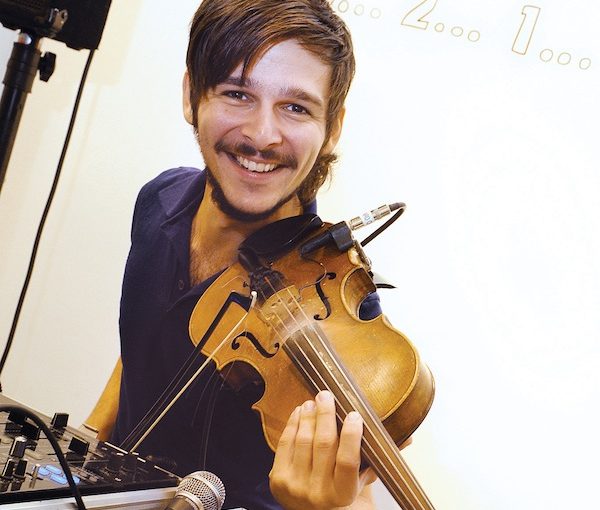
Michael Fraser teaches group electronic music and DJ classes at the Jewish Community Centre of Greater Vancouver. (photo from Michael Fraser)

As a violinist, music producer and DJ, Michael Fraser’s musical talents traverse many realms. Yet, despite the proficiency and versatility he has to create his art, Fraser believes that “personal connection to music transcends skill.”

It is that personal musical connection that the 30-year-old, born-and-raised Vancouverite hopes to instil in the next generations – be they performers or devotees – in the group electronic music and DJ classes he is teaching at the Jewish Community Centre of Greater Vancouver through spring 2020.

The early stages of Fraser’s musical trajectory began in grade school as a Suzuki violin player, though numerous other styles – from classical to hip-hop – seeped into his sphere of artistic influences through various musical mentors. Among them was Vancouver-based saxophonist and flautist Tom Keenlyside, who had a tremendous impact and helped Fraser “connect with music in an abstract, rather than a theoretical, way.”

Marrying and starting a family with his partner Camille, though, has brought about a shift in Fraser’s musical focus in recent years. The sense of wonder possessed by children, and the simple way it is often expressed, led him to view things from a different perspective and to feel a sense of responsibility to teach.

Fraser began playing music for his son before his son was even born. When Isaac turned three, Fraser observed him connecting to the process of making music himself.

“After Isaac was born, I started to see that my purpose as a musician is to help young artists develop their innate creativity and coach artists to deeper levels of emotional intelligence,” said Fraser. “When my son asks to hear my music, I want to help him cultivate a relationship to music and life that goes beyond what words can express.”

Fraser’s professional musical career began in 2007, while in his late teens. Since then, he has collaborated with numerous recording artists, including the Ault Sisters, a Toronto-based vocal jazz trio; performed at the Shambhala Music Festival and the Montreal Jazz Festival, among many other venues; and opened for internationally known acts, such as Michael Bublé, Caravan Palace and Arrested Development.

His success as a live performer led him to working with Ben Affleck on the original score for Ben Affleck on the Meaning of Life, an animated short film about the actor and director’s Eastern Congo Initiative, which premièred at the 2012 Toronto International Film Festival. Fraser also appeared as a violin player in a scene of The Revenant, an Academy Award nominee for best picture in 2016 and for which Leonardo DiCaprio won the prize for best actor.

Currently, Fraser is devoting his expertise to artist development (on both the career and creative sides), as well as working with Black Octopus Sound, a company that produces samples and musical production tools.

Fraser said he has always felt “a visceral connection to Jewish music that can only be explained as being deeply embedded in my DNA. It is the main access point for a depth of emotion that can only be expressed through tones and rhythms.”

On Oct. 29, he began facilitating his first DJ course at the JCCGV for youth aged 10-16, showing them the basics of how music is composed electronically, and the ins and outs of being a DJ. This session ran until Dec. 17.

He could feel how the group connected with the music, and foresaw many new up-and-coming DJs in the Vancouver Jewish community.

“When I am in the class with students, we are focused on how the beat feels. Are there styles of music that feel good? Knowing your tastes is going to differentiate yourself from other DJs,” Fraser explained. “I will sit with a class and play various drums and figure out which one speaks to a particular student. Having that distinction brings us closer to the music – which chords carry tension and which carry release in chord progression? What does that connection to music feel like? How is it one can play the same series of notes in different order and have a different outcome feeling?”

His students take what was done in class and make musical experiments when they get home. Fraser finds that, when they open up GarageBand or Caustic, two of the more popular DJing apps, they don’t feel as though they are doing homework.

Often, he noted, students have used DJing apps before. He also pointed out that, unlike kids from earlier times, kids today don’t differentiate between DJs and music creators. Those barriers are completely gone, he said.

The courses – $180 for JCCGV members and $225 for non-members – comprise 10 lessons, run Tuesday evenings and are open to kids 10-16. Students should bring a pen and paper, a mobile device (laptop, tablet, cellphone) and headphones. For more information, visit jccgv.com/performing-arts/school-of-music.

Sam Margolis has written for the Globe and Mail, the National Post, UPI and MSNBC.

Format ImagePosted on December 20, 2019December 18, 2019Author Sam MargolisCategories MusicTags DJing, education, electronic music, JCCGV, Jewish Community Centre, Michael Fraser, youth
Annual civil courage tribute

Annual civil courage tribute

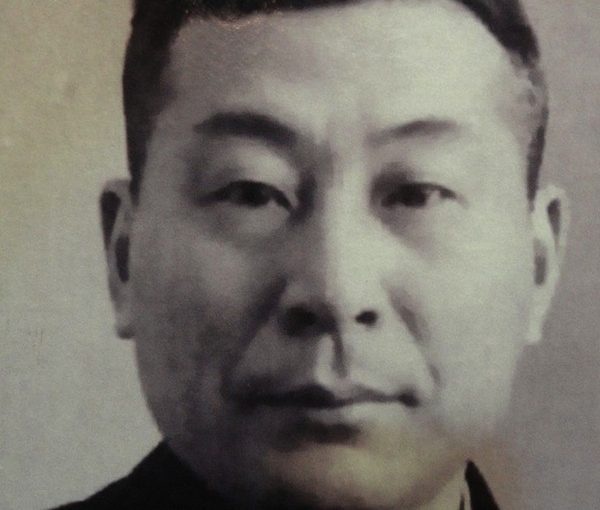
Chiune Sugihara, 1941. This year’s Raoul Wallenberg Day event includes the screening of Persona Non Grata: The Story of Chiune Sugihara. (photo from Vilnius-Green House exhibit)

On Sunday, Jan. 19, the 15th annual Raoul Wallenberg Day event pays tribute to courageous actions by diplomats Raoul Wallenberg of Sweden and Chiune Sugihara of Japan. During the Second World War, they engaged in selfless acts of civil courage, at grave risk to themselves and their families, to rescue many tens of thousands of Jews during the Holocaust.

This year, the Vancouver-based Wallenberg-Sugihara Civil Courage Society focuses on the story of Sugihara. The event features a showing of the biographical film drama Persona Non Grata: The Story of Chiune Sugihara. As a consular official for Japan in eastern Europe during the Second World War, Sugihara saved thousands of refugees by issuing transit visas that allowed people to escape Nazi German forces. Once reviled in Japan, today Sugihara is considered a hero, with museums and a memorial site.

The keynote speaker on Jan. 19 is George Bluman, a local descendent of Sugihara visa recipients and an international expert on Sugihara’s life. Some of those saved by his visas ended up in Vancouver and other parts of Canada.

When possible, the Civil Courage Society also presents an award to an individual associated with British Columbia who, at significant personal risk, helped improve the lives of others while defying unjust laws or norms, past or present. Past recipients include Hon. Ujjal Dosanjh, Chief Robert Joseph and Mary Kitagawa. Their stories inspire Canadians to act with courage and live by their moral values.

This year’s event – sponsored by the estate of Frank and Rosie Nelson, and supported by several organizations and volunteers – is being held at the H.R. MacMillan Space Centre, and it begins at 1 p.m. Admission is free; donations are appreciated. A reception follows. For more information, visit wsccs.ca. New volunteers and nominations for the Civil Courage Award are always welcomed.

Format ImagePosted on December 20, 2019December 18, 2019Author Wallenberg-Sugihara Civil Courage SocietyCategories LocalTags Chiune Sugihara, courage, George Bluman, Holocaust, Righteous Among the Nations, Wallenberg-Sugihara Civil Courage Society

O My God at Emanu-El

Bema Productions presents the Canadian première of the comedy O My God at Congregation Emanu-El Synagogue in Victoria, Jan. 16-26. In O My God by Israeli playwright Anat Gov, God walks into a therapist’s office suffering from depression. The therapist asks, “How long have you felt this way?” God says, “Two thousand, five hundred years. Give or take.” “You’ve been depressed for 2,000 years and only now you’ve come to therapy? What were you waiting for?” asks the therapist. And God says, “I thought time would heal.”

Gov, who died of cancer at 58, was born in 1953, and was a graduate of Thelma Yellin High School of the Arts. She was briefly a student in Tel Aviv University’s theatre department – she dropped out to become a successful playwright and television writer. She also married and was a mother of three and grandmother of two.

The Bema Productions staging of O My God is directed by Zelda Dean and performed by Christine Upright (the therapist), Rosemary Jeffery (God) and Jesse Wilson, who is on the autism spectrum himself, plays the autistic son of the therapist.

Tickets ($23) can be purchased online at ticketrocket.co or at the door.

Posted on December 20, 2019December 18, 2019Author Bema ProductionsCategories Performing ArtsTags Anat Gov, Bema Productions, Emanu-El, philosophy, theatre, Victoria

Posts pagination

Previous page Page 1 … Page 269 Page 270 Page 271 … Page 649 Next page
Proudly powered by WordPress