Will local go global?

The Independent asked candidates we profiled two additional questions: “Will you (or won’t you) use your position as a platform to discuss international affairs, specifically Palestine and Israel?” and “If so, can you provide a brief explanation of your perspective on the subject?” (image from Wikipedia)

Civic politics generally deals with maintaining roads and sewers, reviewing development applications and a vast range of close-to-the-ground issues. But municipal politics has also been a place where a vast range of other issues are discussed. For example, Vancouver city council voted in 1983 to declare the city a “nuclear weapons free zone” and, formally or informally, members of council have felt free to address topics of national and global concern.

During debate around the city’s adoption of the International Holocaust Remembrance Alliance Working Definition of Antisemitism – which a majority of council voted to refer to committee, effectively defeating it – critics of the definition warned that it could place limits on the right to criticize Israel, despite that the definition explicitly states that it is legally non-binding. While the condemnation of antisemitism is not an international issue, examples accompanying the definition included several relating to anti-Zionism.

Because of the history of using civic positions as platforms for international issues, the Independent asked candidates we profiled two additional questions: “Will you (or won’t you) use your position as a platform to discuss international affairs, specifically Palestine and Israel?” and “If so, can you provide a brief explanation of your perspective on the subject?”

Christine Boyle, the incumbent Vancouver city councilor who voted to refer the IHRA issue to committee, said that commenting on international affairs is not generally part of the role of a city councilor.

“And there are so many important issues and struggles locally that continue to be the focus of my attention,” she said. “But my practice on any topic is to listen to and engage with communities most impacted on an issue, always seeking to uphold human rights, peace and justice.

“I have spent much of my adult life actively engaged in justice work, including opposing and challenging hate and discrimination, and working to strengthen the human rights of all people,” she continued. “I am deeply committed to challenging antisemitism and ensuring that Jewish residents in Vancouver feel safe at home, at worship, and everywhere.

“When a motion came to council asking Vancouver to adopt the IHRA Definition of Antisemitism, council received hundreds of emails on the subject, with a diverse range of perspectives on the topic,” said Boyle. “Even my own Jewish family members didn’t all agree on the issue. What I heard clearly from the community was that, while there wasn’t agreement on this definition, there was absolutely a need for the city to do more to address antisemitism and racism. And so council referred the definition to the City of Vancouver’s Racial and Cultural Equity Advisory Committee, with direction for staff to continue working vociferously to address antisemitism and other forms of racism and hate. Since then I have worked hard each budget cycle to ensure our anti-racism and anti-hate efforts are well funded and supported, and will continue that work.”

Vancouver council candidate Ken Charko told the Independent, “Yes, I would use my position as a city councilor as a platform to discuss international affairs [and] yes support of Israel will be part of that platform…. I support Canada moving its embassy to Jerusalem and recognizing it as the capital of Israel. I would use my position as a Vancouver city councilor and federal Conservative member to outline why Canada should do that under the next Conservative government.”

John Irwin, an incumbent member of the Vancouver Park Board, switched from the Coalition of Progressive Electors last election to Vision Vancouver this election because, he said, “There was a disagreement with COPE regarding their lack of acceptance of the IHRA definition of antisemitism (which was accepted by the Canadian government).”

He added: “As a local politician, I generally use my platform to discuss local issues.”

Carla Frenkel, also a candidate for the Vancouver Park Board, said simply: “I have no intention to use the role of park board commissioner as a platform for international affairs.”

Kyla Epstein, who is seeking a seat on the Vancouver School Board, said that, to her knowledge, international affairs do not regularly come up at the school board table, nor is it generally within the scope of the role of a trustee to take a position on international affairs.

“What I do know is that I bring to the role a deep commitment to human rights and an opposition to antisemitism, Islamophobia, anti-Palestinian racism, anti-Black racism, anti-Indigenous racism, and all forms of discrimination, racism and hatred,” she said. “In addition, my approach to governance is to listen, welcome different perspectives and reduce barriers for public and stakeholder participation – on any issue. I will fight to uphold a public education system that is a place of learning, curiosity and questioning. I will, no matter the issue that comes to the school board table, reach out to communities, listen and learn, and make my decisions to uphold human rights and equality.”

Ellison Mallin, running for council in the District of North Vancouver, said, “I am always discussing international issues with people, as, in this increasingly connected world, events that happen anywhere can affect us here.

“I do not intend to use any municipal specific platforms, or my position, to bring up Israel and Palestine, and will keep discussions on the subject to appropriate venues. I do recognize that, given my religion, there will likely be comments and questions directed to me, which I will not shy away from,” he said. “I strongly believe in Israel’s right to exist. A safe place for Jewish people to live and to foster Jewish identity and culture is needed. Perhaps, sadly, it is needed now more than ever, as we do see a rise in antisemitism in many areas. On that note, I do not deny Palestine’s right to exist, and believe a two-state solution is needed. I would also like to see Israel stop building settlements in the West Bank, as this further creates divides and hostilities.”

Jonathan Lerner, council candidate in Lantzville, said he does not see Middle Eastern affairs coming into play in Lantzville politics. But, he added: “Everyone familiar with my work will know that I am a strong advocate for respectful dialogue on these issues.

“Where I think municipal governments can play a larger role is in diversity, inclusion and anti-racism initiatives,” said Lerner. “Many communities, including the Jewish, Muslim and LGBTQ communities, have been targeted by an increase in hate crimes in Canada. Municipalities have a key role to play in addressing this issue. For example, governments of all levels are considering adoption of the International Holocaust Remembrance Alliance definition of antisemitism, as well as other racism classifications that help to define and address discrimination.”
Candidates in Victoria

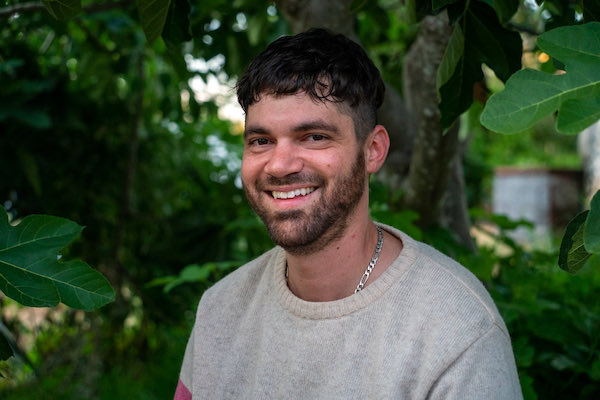
Tony Yacowar (PR photo)

Tony Yacowar will be vying for a seat on the Victoria city council this Oct. 15. Among his stated priorities, if elected, are affordable housing, addressing climate change and amalgamation within the Greater Victoria region.

Housing in Victoria, as in Metro Vancouver, is a primary concern among residents. Yacowar hopes to help pass the “Missing Middle Initiative,” a long-debated but deferred policy that he says would make it easier to add more housing units to areas of the city that have been traditionally residential.

“Victoria has an urgent housing crisis and we need leadership that will articulate a cohesive vision for the city in order to build the housing we need. We have an immediate deficit of between 4,500 and 6,300 homes. People need places to live. This impacts absolutely every aspect of city life. The healthcare crisis in this province is exacerbated by the fact that doctors and nurses can’t find places to live. We all want safe communities to live in and, if we aren’t able to provide housing to folks experiencing homelessness, we aren’t able to have safe communities for the long term,” Yacowar said.

“Gentle densification of our residential neighbourhoods is an important aspect of how we are going to accommodate the next generation of doctors and nurses, small business owners, artists and young professionals. Folks at all income levels need places to live. Missing Middle is not the solution to the affordability crisis, but it is the solution to the question of ‘where are these folks going to live?’”

Further, Yacowar would like to build density around the Douglas Street Corridor, the main thoroughfare linking the Victoria’s downtown and uptown, to support light rail transit. According to Yacowar, there is a strong connection between more homes and better transit in terms of reducing a city’s carbon footprint overall.

Yacowar is also pressing for amalgamation. “We need a cohesive vision for our city and we can’t have each municipality doing its own thing,” he said. “A city of 245,000 would be better able to advocate for more support from senior levels of government when it comes to housing and transit than a city of 91,000.”

A certified public accountant who is currently the chief financial officer at Royal Mountain Records, Yacowar regards having no prior involvement in politics as an advantage.

“I think it’s important to have a diverse set of views and backgrounds on council,” he said. “We don’t often get accountants in politics and I think there is a real benefit to having someone at the table with the kind of organizational and financial background that a CPA would bring, as well as someone representing the Jewish and LGBTQ communities. Quite often we have career politicians and bureaucrats running for office, but our democracy is at its best when we have folks of diverse backgrounds bringing different points of view to the table.”

photo - Ben Isitt
Ben Isitt (PR photo)

Of the eight present councilors in Victoria, only one, Ben Isitt, is seeking reelection. Five councilors elected in 2018 are stepping down and two are running for mayor. Isitt, too, identifies as a member of the Jewish community.

Isitt has served as a city councillor and regional director since 2011. His short bio on the City of Victoria website notes that he is an author, historian and legal scholar, who has taught at the University of Victoria and other institutions. It notes: “Ben’s involvement in civic politics builds from grassroots volunteer work for social and ecological justice, in support of worker rights, climate action, Indigenous rights, non-violence, the abolition of poverty and racism, and protection of forests and farmland. Ben’s research on housing, land use, forestry and public education reflect this community-based approach, as does his hands-on experience as a former housing support worker with Victoria’s street community.”

 Sam Margolis has written for the Globe and Mail, the National Post, UPI and MSNBC.

Directing the campaign

Gayle Morris (photo from jewishvancouver.com)

Gayle Morris joined the Jewish Federation of Greater Vancouver this summer as its annual campaign director. Morris arrives to the role with an abundance of experience in helping people both within the Jewish community and throughout the Greater Vancouver area.

Crediting “great mentors” for guiding her through several leadership and business strategist positions, Morris carries a CV that stretches from crown corporations to startups to nonprofit organizations. She also has volunteered with various Jewish community groups, including Congregation Beth Tikvah, where her son had his bar mitzvah, and has served on the City of Richmond’s Advisory Committee for Sister City Relations.

“Building relationships is central to all that I do,” she told the Independent. “For me, volunteerism has so many benefits and is quite humbling. Fast forward to this year, on June 19, I co-chaired Chabad Richmond’s 25th anniversary celebration honouring two individuals [Rabbi Yechiel and Chanie Baitelman] who I admire and respect. Planning and executing this community-wide event where 380 people were in attendance, along with overseeing a committee of volunteers, truly led me and propelled me into the role at Jewish Federation. I am honoured to take this role, so I can deepen my relationships in the community and help Federation support Greater Vancouver, Israel and the incredible partner organizations and programs here and overseas.”

As campaign director, Morris is integral to the planning, support and execution of the campaign to ensure it raises the funds necessary to meet the growing and evolving needs of the community.

“Being new to the position, the team collaboration and support among all Federation departments is invaluable,” said Morris. “Everyone brings so much value, wisdom and knowledge, which has contributed to my easing into the position as campaign director.”

Morris emphasized that “challenges” is not a word she employs frequently. She prefers to view such circumstances as opportunities that demonstrate the need to respond to changes in the environment.

“Just as we were coming out of a pandemic, the world has been hit with inflation, unlike anything we have seen in decades,” she said. “Soaring costs are wreaking havoc on families, individuals and seniors. Our partner agencies are being hit hard – their costs to deliver their services and programs are rising, while at the same time they are receiving more requests for help and cannot pass on the added costs to their clients. Our partners rely on a healthy Federation annual campaign to help provide financial stability so they can continue their important work.”

Morris could not be more excited to be spearheading the initiative. “I love it! I have always felt a strong connection to my Jewish heritage and, as a second generation Vancouverite, I am familiar with our local Jewish community,” she said.

“My appreciation, affinity and commitment to Israel have always been important to me. Two months into this role now, I have had the opportunity to observe, connect and engage and bring my skill set, passion and purpose to Jewish Federation. There is so much team collaboration and support. Overseeing all aspects of stewardship in this vitally important role, I believe, is a perfect fit for me.”

Federation’s annual campaign is the largest in the community and takes planning and input from across all departments of the organization. The local and global engagement departments, according to Morris, make every effort to be aware of the new and evolving needs of the community through work with Federation’s partners. In turn, this helps inform the focus of each year’s campaign.

Meanwhile, the marketing and campaign teams include, she said, “amazing volunteer members who work closely together to develop the creative and programming to engage our community and draw attention to community needs.”

Morris has expanded her team by bringing on Estelle Tabenkin and Ronen Sabag to join her and women’s philanthropy campaign manager Ricki Thal. “I am extremely grateful to have a team who share in Federation’s community leadership drive and outpouring of services,” said Morris.

“All that we do throughout the year is built on our core values of tikkun olam, tzedakah, klal Israel and chesed, and this is how we create a vibrant, caring and inclusive community that I am so grateful to call home.”

The Federation campaign kicked off Sept. 8 and runs through the end of December. For more information, visit jewishvancouver.com/annual-campaign.

Sam Margolis has written for the Globe and Mail, the National Post, UPI and MSNBC.

Willkommen to the cabaret

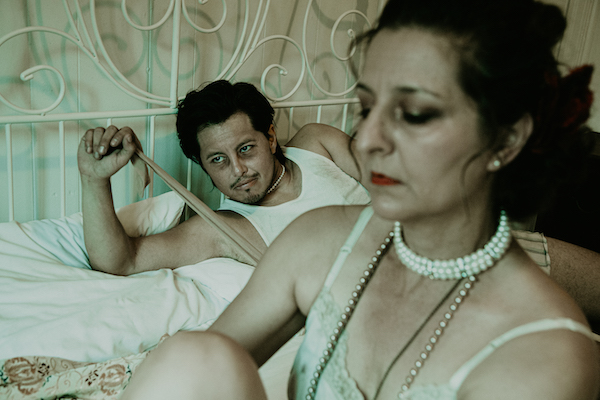
Vicente Sandoval and Sylvia Zaradic are among the cast of Raincity Theatre Company’s Cabaret, which opens Oct. 15. (photo by Nicol Spinola)

Given the excellence of its previous two site-specific immersive musicals – Sweeney Todd: The Demon Barber of Fleet Street and Company – it can be expected that Raincity Theatre Company’s Cabaret will be provocative and entertaining, a most memorable night.

For Cabaret, Raincity will create its own Kit Kat Klub at 191 Alexander St. in Gastown Oct. 15-Nov. 4.

Audiences will be transported to the sexy and somewhat scary fictional nightclub. The story centres around singer Sally Bowles (played by Jessie Award-winning Alex Gullason), who works at a sleazy establishment in Berlin. Set in 1931, the club’s “outrageous Emcee becomes a mirror reflecting a society spiralling toward disaster with the rise of Hitler’s Nazis.”

Cabaret is a cautionary tale about the dangers of apathy in the face of hatred,” producer Kat Palmer told the Independent.

“Given the increasing surge in racism (particularly antisemitism) and homophobia, we can all learn a lesson from this show,” she said. “It is no secret that antisemitism increased during the COVID-19 pandemic – even close to home. I recall a recent case in Richmond, where a wooden post with the message ‘COVID is Jew World Order’ was found on a busy street. This eerily echoed much of the anti-Jewish Nazi propaganda that existed during the time our show is set.

“The time may come when Cabaret will seem like an artifact of a distant and unremembered past. But, sadly, we are nowhere near that point, and we are not likely to get there any time soon.”

For people concerned about being in an immersive performance of a musical with such dark elements, director Chris Adams said, “I would implore them to come anyway. I believe we learn, work and grow in the uncomfortable, but I can assure you, although the actors will be close, there is no audience participation and everyone will have a fantastic, intimate, view of the show.

“The other wonderful thing about a venue like this,” he added, “is seeing … your own version of the show, depending on what you are watching and where you are looking. We’ve created a world for you to witness, so come on out and embrace it.”

That said, Palmer, who is a member of the Jewish community, admitted, “Being a third generation survivor, this show has brought up some intergenerational trauma I was not prepared for. It has reaffirmed my commitment to continue to speak up for justice, speak up for diversity and speak up for tolerance. Most importantly, to speak up for those who had their voice taken much too soon – to remember the millions of lives lost and think about what I can say and do to make sure this never happens again.”

Fellow Jewish community member Michael Groberman also contributed to the production.

“Working with a researcher is invaluable,” said Adams of Groberman. “As a director, I can read and watch everything I can and everything I think will come up before rehearsals begin, however, there are always surprises in the room. And I think there should be surprises, actually. Being able to turn to Michael and ask questions as we go, as we work and as we create, allows us such freedom.”

“The musical from 1966 was based on the 1951 play I Am a Camera, which itself was based on a series of related short stories by the British writer Christopher Isherwood, whose fiction was autobiographical,” Groberman explained. “Like the narrator of his [novel] Goodbye to Berlin (1939), Isherwood traveled to Berlin in 1930 to enjoy the bars, cabarets and sexual openness of Weimar Berlin. He wrote at the start, ‘I am a camera.’ He was there to witness what he found, and to write about it.”

One of the aspects of the stage production that surprised Groberman was that Sally Bowles, as characterized by Isherwood, is actually a very bad singer and even worse performer. “I imagined the role demanded a Liza Minnelli performance, belted and big,” he said. “I was wrong.”

He also shared a 2021 interview in the Guardian with composer Fred Ebb, who talked about the original Broadway production. “It was Hal [Harold] Prince, the original director, who came up with the breakthrough idea that the songs of the Emcee, played directly to the audience, would be a metaphor for the soul of Germany as the Nazis rose to power,” said Groberman. “Prince also called it ‘a parable of contemporary morality,’ one that he saw as drawing parallels between the spiritual bankruptcy of Berlin in the 1920s and America in the 1960s. This ability to be continuously relevant, as much as its fabulous songs, keeps the show’s flame alive.”

What also keeps it relevant are the creative choices different productions make. “For example,” said Groberman, “one of the main characters, Cliff, has a sexuality that shifts from production to production. Why these directorial choices?”

As the director, Adams not only has to makes these types of decisions, but pragmatic ones, including how best to present the piece on a “thrust stage, or a three-quarter round,” where the audience sits on three sides of the stage.

“Above and beyond the stage itself, is, of course, the entire venue,” said Adams. “We have to move the Kit Kat dancers around the space and I had to find points in the script that lend themselves well to utilizing different areas of the venue. For instance, if the script mentions getting a drink at the bar, then the actors will go to the bar, the same bar the audience members just purchased a drink at. We learned early on, when producing and directing in unusual spaces, you cannot ignore them – you must embrace them.

“New this year for us is VIP seating with a VIP entrance, something we couldn’t have done at our previous venues,” added Adams. “This venue lends itself to the world we need it to be – seedy, dark, but beautiful, where the drinks can flow all night.”

VIP seating includes a complimentary drink and the most immersive experience audience members can have. Since the musical deals with adult subject matter, Raincity asks that “viewers under the age of 19 not purchase VIP seating” and notes that “children under the age of 12 are not permitted.”

For tickets to Cabaret, visit raincitytheatre.com.

Talking with authors

The 35th annual Vancouver Writers Festival includes many members of the Jewish community among the more than 115 authors from across Canada and around the globe who will join the events on Granville Island and elsewhere Oct. 17-23.

The festival will celebrate the five shortlisted Scotiabank Giller Prize finalists; engage in conversations with Booker Prize-winner Douglas Stuart, as well as Canadian superstars Heather O’Neill, Billy-Ray Belcourt and Wayne Johnston. It’ll host conversations between emerging Canadian and American poets, novelists and memoirists, and feature flagship favourites like the Literary Cabaret, Sunday Brunch and Afternoon Tea.

The guest curator of this year’s festival is 2021 Scotiabank Giller Prize winner Omar El Akkad, who has invited a wide range of authors, including Noor Naga (Egypt), Elamin Abdelmahmoud (Ontario) and Threa Almontaser (United States) – and many others – to join him for six conversations that focus on home, identity and storytelling

Among the Jewish community members participating in the festival are Méira Cook, with her adult-young adult crossover novel, The Full Catastrophe, in Mecca, Mitzvah and Milestones, and in Wry Humour for Modern Life; Tilar J. Mazzeo (Sisters in Resistance: How a German Spy, a Banker’s Wife and Mussolini’s Daughter Outwitted the Nazis) speaks with Marsha Lederman (Kiss the Red Stairs: The Holocaust, Once Removed); Sarah Leavitt facilitates a workshop led by University of British Columbia’s creative writing department; and Guy Gavriel Kay (All The Seas of the World) takes part in Fabulous Historical Fantasy.

Lederman is one of the authors participating in the The Power of Story: Live Recording for CBC’s The Next Chapter, she hosts Generational Fiction: Stories of Lineage, History and Things Passed Down, and moderates Bestseller to Blockbuster. Actor, theatre critic and UBC professor emeritus Jerry Wasserman moderates Building Suspense, on writing thrillers, and Dr. Gabor Maté talks with Globe and Mail reporter Andrea Woo about his latest book, The Myth of Normal: Trauma, Illness and Healing in a Toxic Culture.

Festival tickets ($25) can be bought online at writersfest.bc.ca or at the event venue, starting 45 minutes prior to the performance. There are discounts offered for regular events to seniors (10%) and youth under 30 (50%).

– From writersfest.bc.ca

VRS hosts Schiff, Rondeau

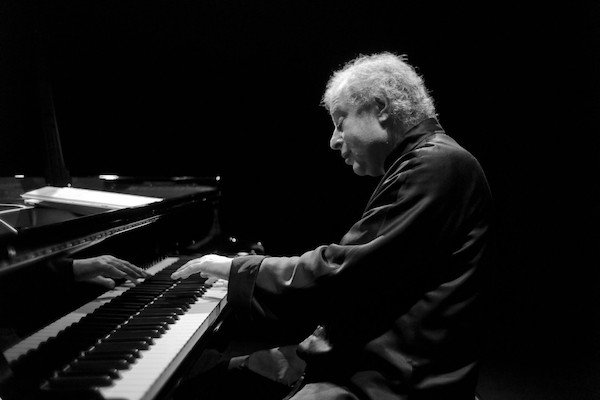
As part of the Vancouver Recital Society’s fall programming, both pianist Sir András Schiff (above), and harpsichordist Jean Rondeau will perform J.S. Bach’s Goldberg Variations.

The Vancouver Recital Society’s season opened last month with the Canadian debut of Italian pianist Filippo Gorini. It continues Oct. 16 with Steven Isserlis (cello) and Connie Shih (piano), and Oct. 18 and 20 with pianist Sir András Schiff.

Rounding out the fall program, Turkish cellist Jamal Aliyev makes his Canadian debut with Turkish pianist Fazil Say on Oct. 30, Jean Rondeau (harpsichord) plays on Nov. 6, and American violinist Randall Goosby and Chinese pianist Zhu Wang perform together on Nov. 27.

Sir András was scheduled to fly to Vancouver in March 2020 to help VRS celebrate its 40th anniversary. Instead, he was detained in Japan as the world went into lockdown due to COVID-19. His Oct. 18, 7:30 p.m., performance at the Vancouver Playhouse will be special – Sir András will announce and discuss what he is going to play from the stage. On Oct. 20, 7:30 p.m., at the Orpheum Theatre, he will perform the Goldberg Variations. Originally written for harpsichord, J.S. Bach’s Goldberg Variations were first published in 1741 and are named after Johann Gottlieb Goldberg, who may have been the first performer of the work.

Sir András’s Oct. 20 performance is a benefit concert. It will help the VRS set the stage for its next big milestone – its 50th anniversary season in 2030. In addition to the Variations, Sir András will play Bach’s Italian Concerto in F major and Bach’s Overture in French Style in B minor.

photo - Jean Rondeau will perform at Beth Israel Nov. 6
Jean Rondeau will perform at Beth Israel Nov. 6. (PR photo)

Rondeau also will perform the Goldberg Variations – his Nov. 6, 3 p.m., concert, will take place at Congregation Beth Israel.

“An ode to silence” is how Rondeau has described the Variations. “I feel they were written for silence, in the sense that they take the place of silence,” he says. “All Bach is there in the Goldberg Variations … all music is there … and I will no doubt spend my life working on them.”

For tickets and more information, visit vanrecital.com.

– From vanrecital.com

From despair to hope

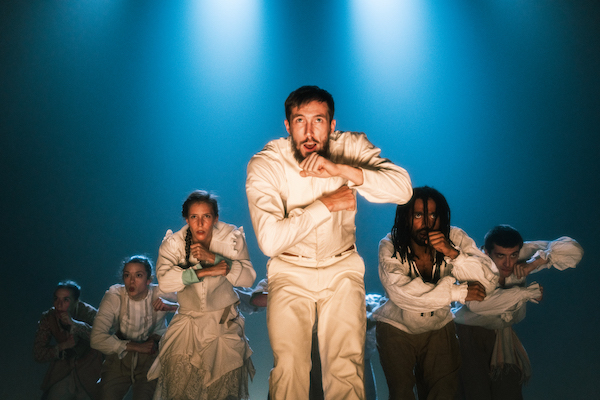
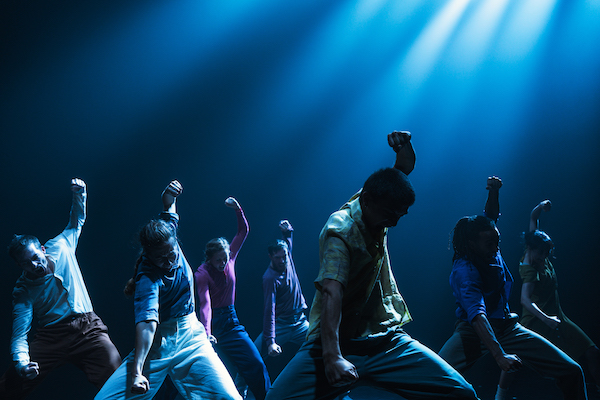
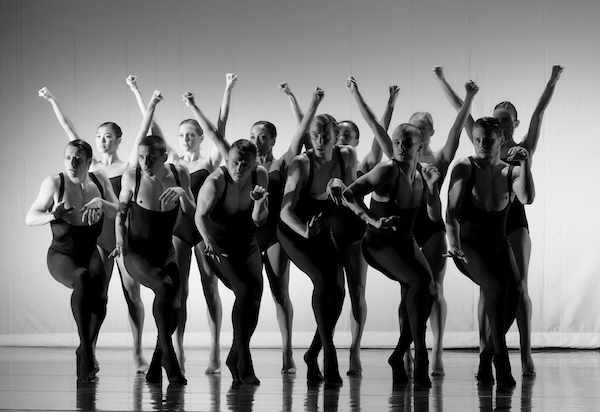
A scene from Clowns by Hofesh Shechter Company. (photo by Todd MacDonald)

Double Murder takes audiences on a journey from cynicism and violence to hope and healing. The double bill from the United Kingdom’s Hofesh Shechter Company features Clowns, described as “a macabre comedy of murder and desire,” and The Fix, “an antidote to the murderous, poisonous energy of Clowns,” which “brings a tender, fragile energy to the stage.”

Presented by DanceHouse at the Vancouver Playhouse Oct. 21 and 22, U.K.-based Israeli choreographer Hofesh Shechter told the Independent he is excited to share the works with audiences in North America.

photo - Hofesh Shechter
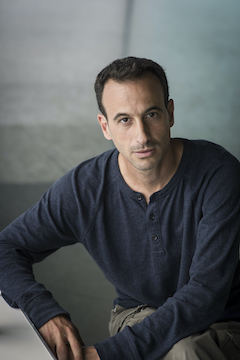
Hofesh Shechter (photo by Hugo Glendinning)

Clowns debuted at Nederlands Dans Theater 1 in 2016 and later was produced as a film and broadcast by the BBC. The Fix is a more recent piece. The company was in the middle of creating it when COVID hit and everything shut down, Shechter told the Independent. “And so we had this weird start/stop experience, where we sometimes could have two or three weeks of work, and again get shut in our homes for a few months. For me, it was a really interesting experience artistically. The work is about healing and about a communal effort, or the ability as a community, to heal ourselves and each other. The spirit of the time became a part of the energy of the work, and the craving for human contact and communication became even more urgent and relevant. There was a weird synergy between worldly events and The Fix, and I personally found it a very healing experience post-COVID.”

Hope plays a key role in the relationship between Double Murder’s two contrasting works.

“The energy of hope was something the dancers and myself discussed in the studio, months before COVID, as I knew I would like to create a balancing piece to Clowns,” said Shechter. “Clowns presents a rather sarcastic, somewhat hopeless world in perpetual power games. I was adamant to have another perspective in the evening on what the world can be, and we discussed in the studio that the most precious currency of our days must be ‘hope.’ It felt like an interesting and powerful direction to go to, and we embarked on trying to produce this energy through the means of movement and composition.”

photo - An image from The Fix by Hofesh Shechter Company
An image from The Fix by Hofesh Shechter Company. (photo by Todd MacDonald)

Shechter is also a musician and composer and his original scores interweave with his choreography, deepening his dances’ emotional impact.

“Creating new work for me is a chaotic process of releasing thoughts, feelings and ideas from the inside out,” he said. “Anything can be an idea, from a sketch of sound to a sketch of movement; lots of writing in my messy notebooks and recording sounds/music and experimenting in the studio. There is no particular order in which the elements are born – it is an organic, chaotic process of producing material, which is then followed by the process of editing and decision-making. The process of decision-making is complex, and does not always happen through the thinking mind, instincts have a big part in deciding which way to go.”

And his instincts have proven sound. In addition to choreographing for leading ensembles around the world, Shechter has choreographed for theatre, television and opera. His works have been performed internationally and Hofesh Shechter Company has won multiple awards. Shechter himself was awarded an honorary Order of the British Empire for his services to dance.

When asked about the courage it takes to be creative in the public sphere and whether it has become easier or harder as his career has progressed, Shechter told the Independent, “The level of difficulty of being publicly creative is not really dependent on external elects, such as time or external success. I find that the internal processes and thoughts or, in other words, the way I perceive my reality is what can make things tough – the expectations I might think are placed upon me and so on. All these are thoughts and, in truth, I cannot know or presume to know what people might be expecting. Therefore, I rather divert my inner thinking and process to what excites and inspires me – sharing my experiences, thoughts and feelings and sensations with people through the means of movements and sound. This communal sharing of experience is the most powerful aspect of performance for me, and a very fulfilling one as well.”

For tickets to Double Murder: Clowns/The Fix, visit dancehouse.ca or call 604-801-6225 during a weekday.

Capturing community spirit

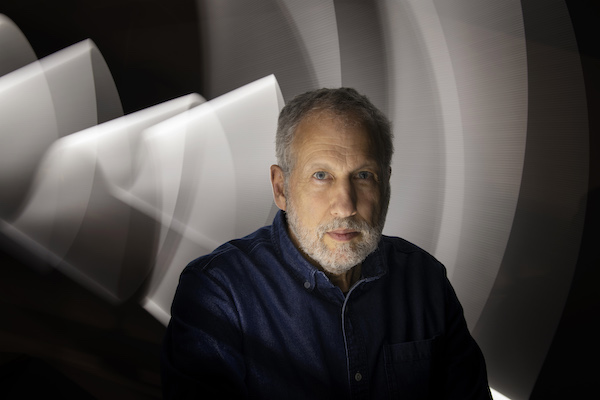
Photograher David Cooper in a self-portrait.

David Cooper is renowned for the skill with which he captures energy and light in photographs and film. But the multiple-award-winning artist was not appointed a Member of the Order of Canada in 2020 only for his “innovative contributions to Canadian performance photography,” but also “for his dedicated mentorship of emerging artists.” One of the many ways in which he has shown that dedication is his support of the Downtown Eastside (DTES) community in which he is based.

Cooper has taken countless photographs for the DTES Heart of the City Festival since the annual festival began 19 years ago, and for Vancouver Moving Theatre – the festival’s main presenter, along with Carnegie Community Centre and the Association of United Ukrainian Canadians – for at least three decades. The festival photo sessions at his studio have been community-building gatherings and the festival provides copies of their photos to the culturally and socially diverse artists who live, perform and create in the neighbourhood. This year’s Heart of the City takes place Oct. 26-Nov. 6, with more than 100 events throughout the DTES and online.

photo - Larissa Healey, from the Heart of the City Festival, in a photo taken by David Cooper
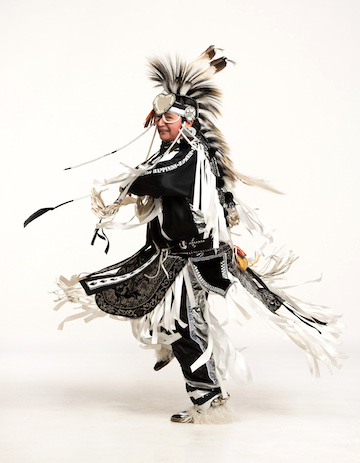
Larissa Healey, from the Heart of the City Festival, in a photo taken by David Cooper.

It was Vancouver Moving Theatre co-founder Terry Hunter who introduced Cooper to the Heart of the City Festival, since it involved artists, writers, singers and storytellers and Cooper’s career has always been in the arts. Though that wasn’t always where his interest lay.

“I started training at U of T [University of Toronto] for architecture,” Cooper told the Independent. “It was a five-year undergraduate program and I came out west after my second year, as a break. I’ve always had a camera but never had formal photography training beyond a summer course at Banff when I was a teenager. Through a friend, I checked out a local theatre company to see if they needed any photos taken. Eventually, I was given a chance to shoot a play at the Vancouver Playhouse Theatre, directed by Christopher Newton. They were really excited about the results from a dress rehearsal and offered me a job. I spent four years there in the publicity department, also creating posters and marketing material.”

Cooper is from Forest Hill in Toronto. He grew up in a conservative Jewish neighbourhood. “I went to Hebrew school but I stopped practising Judaism when I moved out west from my family,” he said. “I still go back for special occasions and joined the JCC here in Vancouver.”

As a theatre, dance and music photographer for more than 40 years, Cooper’s photos and videos have publicized more than 60 companies throughout Canada and the United States. The Shaw Festival, Bard on the Beach, Arts Club Theatre, the Royal Winnipeg Ballet, 605 Collective, Karen Flamenco Company, Vancouver Opera, Vancouver Symphony, Electra Women’s Choir, Chor Leoni Men’s Choir, Spirit of the West and Uzume Taiko Drummers are just a dozen-plus of the groups with which he has worked. He has been a stills photographer for several TV series and his dance videos have been shown internationally. In addition, he teaches and mentors students, holds workshops for both amateur and professional photographers, and photographs for theatre and dance schools.

Among the many recognitions Cooper has garnered, he received a Jessie Richardson Theatre Award in 1995 for his outstanding contribution to the Vancouver arts community and was elected a pioneer member of the B.C. Entertainment Hall of Fame in 2006.

“I’ve mostly been a theatre photographer, shooting live shows,” said Cooper. “I spent 15 years shooting film and transitioned to digital in 2001. It was a Canada Council grant in 1978 that took me to the Royal Winnipeg Ballet to learn more about ballet and I spent two weeks in class and rehearsals documenting the process.”

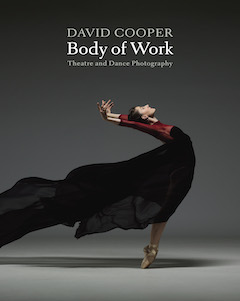
Firefly Books in Ontario recently published the coffee table book David Cooper Body of Work: Theatre and Dance Photography. Each of the 500 copies published includes a limited-edition print signed by Cooper.

photo - Only 500 copies of David Cooper Body of Work have been printed
Only 500 copies of David Cooper Body of Work have been printed.

“I have worked with a great graphic designer and art director, Scott McKowen, for 30 years, photographing marketing materials for the Stratford Festival, the Shaw Festival, Yale Repertory Theatre, Canadian Stage, Theatre Calgary and others together,” said Cooper of how the publication came to be. “He suggested we compile all our work into a book and include my dance work that is separate from the theatre.”

According to Firefly’s website, the book includes essays on Cooper’s theatre photography (by Newton, artistic director emeritus of the Shaw Festival), on his dance images (by Vancouver writer and arts commentator Max Wyman) and on his marketing images (by McKowen). Ballet dancer Evelyn Hart “has contributed an appreciation, and Cooper himself discusses the most intimate relationship between photographer and subject – portraiture.”

When asked what the most gratifying parts of his career are, Cooper told the Independent: “Working with talented performers. Getting to travel all across Canada and the U.S. shooting for different arts organizations.”

For more information on Cooper, visit davidcooperphotography.com. To purchase a copy of David Cooper Body of Work, go to fireflybooksstand.com. And for the lineup of this year’s Heart of the City Festival, check out heartofthecityfestival.com.

Ballet BC set to start season

Artists of Ballet BC in a previous presentation of Bedroom Folk by Sharon Eyal and Gai Behar. (photo by Cindi Wicklund)

Ballet BC will share five new commissions as well as beloved audience favourites in its 2022/23 season. From emerging, locally based voices to renowned choreographers with deep connections to the company, and from intimate creations to large-scale ensemble works, there is much to explore.

The season opens Nov. 3-5 with Overture/s, featuring a world première from Dutch sibling duo Imre and Marne van Opstal, co-produced by Finland’s Tero Saarinen Company, the return of Bedroom Folk from Israeli choreographers Sharon Eyal and Gai Behar, and Silent Tides, a work by Ballet BC artistic director Medhi Walerski.

The season continues with Horizon/s March 16-18. Vancouver-based Shay Kuebler and Czech choreographer Jiří Pokorný will each share a world première, new works exploring dichotomies within the human body and mind. Israel’s Adi Salant – former co-artistic director of the Batsheva Dance Company – will be back to share WHICH/ONE, originally commissioned for Ballet BC in 2019. Salant’s work is anchored by a deep sense of presence, navigating between explosive physicality and delicate scarcity. Set to musical excerpts from A Chorus Line, in addition to an original soundscape, the piece highlights the entire company and explores contrasting themes of human performance and mundanity.

The final program of the season, Wave/s, runs May 11-13. It features two world premières from two of today’s top visionaries in contemporary dance. Tel Aviv-based Roy Assaf shares his debut creation for the Ballet BC stage and Sweden’s Johan Inger returns to share an all-new work following the success of Walking Mad and B.R.I.S.A.

Lastly, Ballet BC welcomes Royal Winnipeg Ballet’s Nutcracker back to the Queen Elizabeth Theatre Dec. 9-11.

For tickets to any of the season’s offerings, visit balletbc.com.

– From balletbc.com

The repackaging of a hero

Anyone who knows more than a little bit about Holocaust hero Rudolf Vrba – a Vancouverite for 31 years – will approach Jonathan Freedland’s The Escape Artist: The Man Who Broke Out of Auschwitz to Warn the World (London, UK: John Murray, 2022) with delight and apprehension.

Will this Guardian journalist and thriller writer take the high road, encouraging everyone to seek out Vrba’s own fascinating, still-in-print memoir? Or will he be more like Elvis swinging his hips, simulating Black-style music, because, hey, most people won’t know the difference?

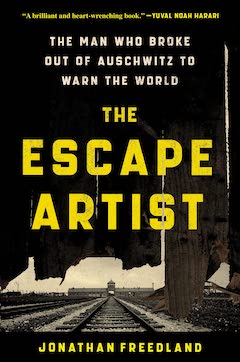
Rudolf Vrba’s name is nowhere to be found on the cover. At the top of the jacket is the subtitle. At the bottom, Freedland’s name. The main title, front and centre, implies 19-year-old Vrba was Houdini-like but, as Freedland well knows, Vrba and his co-escapee Alfred Wetzler took advantage of an escape plan and a hideout conceived and built by others.

The pair’s report on Auschwitz was by far Vrba’s greater achievement – exposing the vast scale of murder at Auschwitz to the world-at-large, convincing everyone who read it. The pair is now credited with saving 200,000 lives.

* * *

As someone who knew Vrba, I am sympathetic to Freedland’s undertaking. How do we get more people, including academics and even Jewish community members, to celebrate one of the greatest heroes of the 20th century?

Thankfully, The Escape Artist is clear and precise storytelling. With access to Vrba’s archival materials in New York’s Franklin Delano Roosevelt Library and input from both of Vrba’s wives, Freedland has also been able to add a good deal of fresh information to the public record.

It will be enlightening for most readers to learn that four other men actually planned and built Vrba’s getaway hideout (where Vrba and his cohort Wetzler hid for three days). This seldom-cited quartet tested it for real, escaping for several days before being caught and tortured, but not killed.

Vrba’s own narrative – first entitled I Cannot Forgive and later changed to I Escaped From Auschwitz – omitted crediting the extreme courage of these men. Without them, Vrba would never have reached Slovakia and co-written the Vrba-Wetzler Report, intended to forewarn 800,000 Jews of Hungary not to get on those trains. From Freedland, not from Vrba, we also learn how one of the tortured members of that quartet was able to assure Vrba that he and his escapees had not divulged their undiscovered hideout in the “Mexico” section of the camp.

“Mexico” was so-named, Freedland tells us, because poor souls marooned in the construction zone with makeshift shelters were not given clothes; consequently, naked prisoners had to drape themselves in blankets and other prisoners at Auschwitz-Birkenau thought they looked like New Mexico Indians.

Vrba did make clear, however, that in order to travel over land through hostile territory for a grueling 14 days, he and Wetzler had followed explicit directives that Vrba had received from a Russian prisoner named Dimitri Volkov. Hence, it was Volkov who was the master of escapology; Vrba was his disciple.

image - The Escape Artist book coverFor virtually all of the people on the planet who have not sought out the two volumes of fascinating, self-published memoirs by Vrba’s first wife, Gerta, The Escape Artist will be welcomed for divulging details of Vrba’s first marriage. Gerta had to take her leave, penniless, with their two daughters, to escape from a philandering and distrustful husband who was clearly still in recovery after almost two years in Auschwitz.

The extent to which both his daughters felt estranged from him is touched upon. We also learn more about his eldest daughter Helena’s apparent suicide in Papua New Guinea in 1982 (an overdose of chloroquine in response to her love affair with a married man who left her) after she had all but severed ties with her father three years earlier.

As well:

  • Freedland notes there is a distinct possibility that Vrba’s father might have died by suicide as a failed businessman (when Vrba was aged 4).
  • Vrba was his mother’s only child (he had two, much older step-brothers and a step-sister from his father’s previous marriage).
  • After his father’s death, Vrba’s mother was a traveling saleswoman for much of his early childhood, absent for much of his formative years.
  • Vrba’s penchant for science might have emerged after all Jewish children were told to return their textbooks, but a friend named Erwin Eisler managed to keep his organic chemistry text by Czech scientist Emil Votocek.

Gerta’s books have already revealed that Vrba, as a youth, emerged as a leader in a self-teaching circle of friends and that, when Gerta was 13, she was enraptured by his precocious intelligence and confidence. Vrba was 15 and sometimes dismissed her as childish.

Gerta Vrbova and Vrba’s second wife, former Vancouver realtor Robin Vrba, were invaluable informants for Freedland but we have no idea who told him what. Their contributions to history are invisiblized, not unlike what could have happened to Vrba and Wetzler, who were advised by Jewish elders in their native Slovakia not to have their names attached to their momentous reportage.

* * *

One error must be cited: on page 8, Freedland states that Vrba and Wetzler were “the first Jews to break out of Auschwitz.” Freedland later devotes three pages to Siegfried Lederer’s marvelous escape on April 5, 1944, when Lederer [tattoo # 170521] outwitted Nazi guards by donning an SS uniform provided by SS officer Viktor Pestek.

Google will tell you that Siegfried Lederer, aka Vítězslav Lederer (March 6, 1904-April 5, 1972), was born to a Jewish family in Písařova Vesce in the Sudetenland. Czech sites convey he was a Resistance fighter who was transported from the Terezín Ghetto to Auschwitz-Birkenau (arrival on Dece. 18, 1943). He was forced to wear both yellow and red triangles, marking him as a Jew and as a political prisoner. After he escaped, he warned Judenrat elders at Theresienstadt about the mass murder of Jews at Auschwitz – but he was both disbelieved and told to remain quiet.

If Freedland has some contradictory information to prove that Lederer is not Jewish, he might well have provided it. Certainly, for marketing purposes, it sounds better to imply Vrba and Wetzler were first. Sure enough, an uncredited review now permanently appears on the Guardian/Observer website and it baldly asserts: it took until 10 April, 1944, but eventually Vrba and fellow prisoner Alfred Wetzler “achieved what no Jew had ever done before: they had broken out of Auschwitz.”

One has to wonder who wrote that uncredited summary. On page 171 of his book, Freedland slyly covers himself by saying, “Fred Wetzler and Walter Rosenberg [Vrba’s birth name] were on their way to becoming ‘the first Jews to engineer their own escape from Auschwitz.’” Trouble is, he has already told us that four prisoners – named Citrinm, Eisenbach, Gotzel and Balaban – ought to be chiefly credited for building (ie. engineering) the hideout, not Vrba and Wetzler.

We like to assume people who write for the Guardian must have higher standards, but, hmm, maybe not. Now people all over the world can watch Freedland’s June 18th promotional video on YouTube in which he self-assuredly states, “I know, since I’ve nailed this down, that only four Jews ever escaped from Auschwitz, and Vrba and Wetzler were the first.” Either this is a lie or research standards at the Guardian have drastically plummeted.

Overall, The Escape Artist is an intelligent, valuable and easy-to-read account by someone who is bright enough to know that a warts-’n’-all portrayal of Vrba’s life is the best possible way to get the world interested.

If Freedland treads lightly when it comes to defending Vrba and foremost Vrba expert Ruth Linn in their battle with Yad Vashem historian Yehuda Bauer, well, perhaps he can be excused for wanting as many readers as possible in Israel. Robert Krell, as the founding force behind the Vancouver Holocaust Education Centre, was interviewed but he appears on only one page. Two other Vancouverites, Dr. Joseph Ragaz and Prof. Chris Friedrichs, were interviewed by Freedland, but their input is not cited except in an acknowledgements section. Linn, an Israeli academic and a part-time Vancouverite, who was for eight years the only scholar that Vrba permitted to interview him, declined to be interviewed. Linn and Freedland both first became aware of Vrba’s existence by watching Claude Lanzmann’s nine-and-a-half-hour documentary Shoah.

* * *

I greatly appreciate the effort it took to fashion a potential bestseller for a new generation that knows increasingly less about the Holocaust. I am certain Vrba’s co-author Alan Bestic, who overcame different obstacles for his time, would likewise approve. Unfortunately, the bibliography omits any mention of Bestic’s co-writing of the memoir I Cannot Forgive and it’s only mentioned once in the text, on page 272. For that matter, Vrba’s own book, with its current title, is cited precisely once in small print within the depths of a seven-page bibliography. (There it is, on page 358, included alongside a scientific paper Vrba published about his research on rat brains.)

London-based Bestic was a fantastic writer. Freedland is a very fine one, too. He can turn a phrase. He can step back and be invisible. He has poise and tact. It is unfortunate, therefore, that Bestic’s essential role as Vrba’s co-writer has been ignored and even somewhat denigrated (“a supremely skilled Fleet Street journalist of the old school”). We don’t learn anything about him. If Freedland has the means to undertake research in New York and Vancouver, why is there no apparent digging to tell us anything about the man who wrote most of the text upon which The Escape Artist itself is necessarily based?

As a writer, Freedland has a very cool, even calculating hand. That’s good for journalism; it might even be good for thriller writing. But the drama of Vrba’s story has been subdued in this modern version. The Escape Artist is nonetheless an essential and welcome work, if it gets the world aware of one of the greatest whistleblowers of the 20th century. Ideally, the book will lead more people to seek out the latest version of Vrba’s own narrative, I Escaped From Auschwitz: The Shocking True Story of the World War II Hero Who Escaped the Nazis and Helped Save Over 200,000 Jews, released in 2020, co-edited by Nikola Zimring and Robin Vrba, minus its original opening chapter.

Alan Twigg’s 20th book is Out of Hiding: Holocaust Literature of British Columbia (Ronsdale Press, 2022). This year, he received an honorary doctorate from Simon Fraser University.