
Welcomed in Kiryat Gat

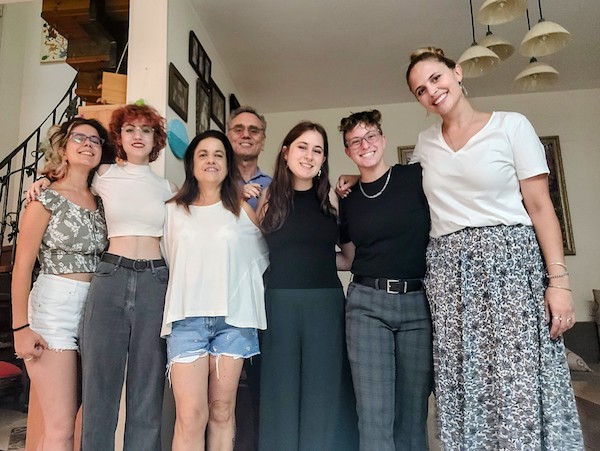
Laura Soda, right, with her host family, the Lipiks, and some of her MITF colleagues at Rosh Hashanah. (photo from Laura Soda)

Growing up as a Jewish young adult in White Rock, I always had mixed feelings about celebrating the High Holidays. On one hand, I enjoyed the traditions and the feeling of community that I experienced when we would go to services. However, early fall has always been a hectic and stressful time for our family as well. Aside from Rosh Hashanah and Yom Kippur, there was the beginning of a new school year, all four family birthdays falling within a month of one another and, finally, Thanksgiving. It’s a six-week family marathon.

During the High Holidays, I also was overwhelmed with the feeling of being the “token Jew” in every class. At the beginning of every school year, I dreaded having to approach the teacher and ask for time off so that I could observe holidays that most of my peers, and even some of my teachers, had never heard of. I almost had a sense of guilt, as if I were inventing holidays just to get out of class. All I wanted was to fit in and be like everybody else. And, in the White Rock of my childhood, there was little cultural, ethnic or religious diversity. There were two other Jewish kids at my school, but we rarely – if ever – acknowledged our mutual Jewish connection outside the context of Hebrew school, synagogue or youth group. It wasn’t that we were actively hiding our Jewishness; for me, I simply felt that any sign of difference was “uncool.”

I am currently on a 10-month program teaching English in Israel with Masa Israel Teaching Fellows (MITF). I am living in Kiryat Gat, a small, mostly religious up-and-coming city in the south of Israel. For the next 10 months, I will be teaching English to the children of the community in which I live. Most of the people here do not speak English, and I feel grateful to be in a place where I can help break language barriers and contribute to English language education. For me, however, it has been quite an adjustment.

With the challenges of settling into a new country, in a town where not many people speak English, I am overwhelmed by the tremendous sense of community and unity. Despite the inconvenience of the train and bus schedules around the holidays, it wasn’t just me being inconvenienced. For the first time in my life, I was in the same situation as everyone around me.

Recently, I celebrated my first Israeli Rosh Hashanah with a host family that I was connected to through the MITF program. The Lipik family welcomed my peers and I, quite literally, with open arms and have made us feel at home. My roommate and I walked to Rosh Hashanah services in the morning and passed many others doing the same. Suddenly, I realized that, although I had been prepared to feel like an outsider in a tight-knit community of people who were more religious than me, my Rosh Hashanah experience was so welcoming. I smiled at the children who listened to the shofar with wonder, and I was reminded that children are simply children, no matter where they live or what language they speak.

Later, we joined our host family at their backyard barbeque along with their extended family and friends, and we ate our hearts out as we basked in the smell of smokey chicken kebabs and toasted marshmallows for dessert. Throughout it all, it sunk in that, this year, I don’t have to explain myself. This year, it is my turn to learn – to watch and listen to how other Jews celebrate, being curious about the differences, but, more often, being surprised by the many similarities in our traditions. My first Rosh Hashanah in Israel taught me that although I am far from my home in Canada, I am exactly where I need to be – I feel right at home.

Laura Soda is currently on a 10-month program teaching English in Israel with Masa Israel Teaching Fellows. For more information on the MITF and other Masa programs, visit masaisrael.org.
Solidarity Cycle 2022 – an awesome ride

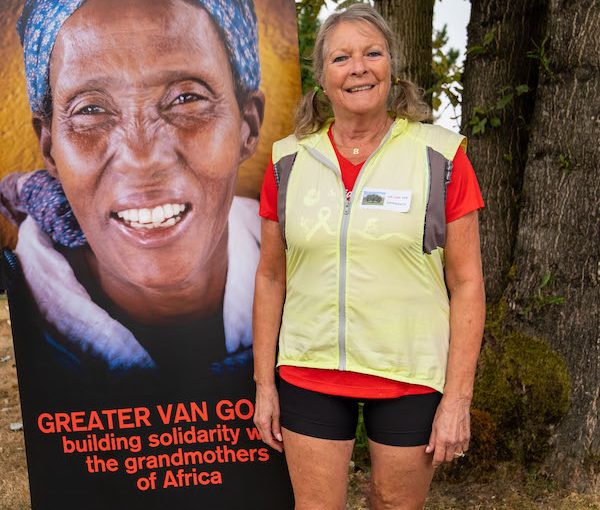
Barbara Halparin writes about her experience of riding in the Greater Van Gogos’ sixth annual Solidarity Cycle, a fundraising event in support of the Stephen Lewis Foundation Grandmothers to Grandmothers Campaign. (photo from Tikun Olam Gogos)

Editor:

On Sunday, Sept. 11, Grandparents Day, Greater Van Gogos held their sixth annual Solidarity Cycle, a fundraising event in support of the Stephen Lewis Foundation Grandmothers to Grandmothers Campaign.

The Grandmothers campaign was initiated in 2006 by the Stephen Lewis Foundation in response to the AIDS pandemic and the emerging crisis faced by grandmothers in Africa, as they struggled to raise millions of children orphaned by AIDS. Grandmothers and “grand-others” across Canada rallied together to raise funds and offer support to their African counterparts and we continue to this day.  Our motto is “we will not rest until African grandmothers can rest.”

Tikun Olam Gogos (gogo is a Zulu word for grandmother), affiliated with Temple Sholom, is one of 11 groups within Greater Van Gogos who participated in the event. After the cycle, one of our enthusiastic participants, Barbara Halparin, shared her experience in a letter to her sponsors, which eloquently expresses the sentiments of the day…. Barbara is in her mid-70s and “Baba” to eight grandchildren.

We thought you might like to share Barbara’s letter as human-interest story and a wonderful example of tikkun olam. We hope other members of the Jewish community are moved to donate to the event, slf.akaraisin.com, and/or to join the cycle ride next year, solidaritycycle.weebly.com.

Darcy Billinkoff
Co-chair, Solidarity Cycle, and member of Tikun Olam Gogos

* * *

Our sixth Solidarity Cycle, and this year we had it all: rain (OK, a light 20-minute sprinkle), wildfire smoke (ecru-hazed mountains but a sky still blue-ish), heat (a high of 29 degrees) and even a bear.

We had a great new route to cycle, too, one that took us across rustic wooden bridges and loooong, high suspension spans, through tunnels and underpasses, past two local airports, skirting parks, acres of blueberries and corn, suburbs, farms, swampland lush with bulrushes. What an awesome ride! Even through viscous air the magnificence of the Fraser Valley was clear.

We started out from the home of Kyler and Cari in Pitt Meadows, and were soon pedaling across the Pitt River Bridge into Coquitlam. We rode the first 50 kilometres along hard-packed dike paths bordering the river. I had one brief moment of terror when out of nowhere a shot rang out at close range. Was it duck hunting season? Was someone shooting cyclists for sport? We had been warned of bears in the area and another rider and I ultimately decided someone must have fired off a “bear scare.” I found out later that Marty, who was riding sweep, came along shortly thereafter to find himself wheel-to-face with a black bear squatting smack in the middle of the dike.

Solidarity Cycle likes to include a free “adventure.”

We tackled the Pitt River Bridge again and looped back to our point of origin for lunch (healthy, delicious and very welcome), and the news that the air-quality advisory had worsened since morning. A number of cyclists chose to defer the rest of their ride for a clearer day, an option that Janine and Darcy, our safety-wise coordinators, always offer. But the temperature was hovering around 25 with a lilting breeze and, since my lungs didn’t feel like I’d just smoked a pack, I decided to go for it. Besides, if I left, I’d miss dinner.

So on to Fort Langley, via the Golden Ears Bridge. Now there’s a challenge: long on-ramp, longer, steeper climb to the highpoint, big vehicles pounding the deck, and a tight spiral exit ramp. So fun! We left hard-pack trails for the relief of pavement, dotted with occasional roundabouts designed to confuse, spectacular open country through gently rolling terrain and, finally, charming Fort Langley, where the best treat awaited: Joyce and Marie serving up fresh chilled water and ice cream bars, as they welcomed us with shofar blasts.

Sho far, sho good.

Twenty kilometres to go, and I am a horse who knows the barn door has opened and the hayrack is full. We retrace our route, even more stunning in its familiarity. Suddenly out of the haze looms the Golden Ears Bridge. Whoever told me it was easier on the way back, could we please have a word? But then I am over it – I own this bridge! The last five kilometres are a breeze, and I find myself thinking I’m not ready for the ride to end. But it must, and the celebration kicks in with beer, burgers and gusto.

I can describe the scenery well enough, but the feelings generated by the day and the reasons for it are quite another thing. As I write this today – the day after – my smile is wide, as texts and emails fly back and forth. I recall the pure joy on dusty faces, the urge to hug everyone, the over and over “Thank you!” “You are amazing!” “What a day!” It feels like my heart is swelling.

Perhaps best of all is the news that we are within a few dollars of reaching our goal of $50,000, and knowing that we will crest that hill momentarily. And, for this, the credit goes straight to you, my steadfast sponsors. More than 60 generous, loving people rode my handlebars for 100 kilometres. Far from weighing me down, you fueled me in ways you may not imagine. You are the power, and you are the difference in the lives of millions. Those millions also ride with me, and I think – I know – you feel their presence, too.

Barbara Halparin

P.S. If you should be feeling left out, if you had every intention of giving your support and life somehow got in the way, it is not too late! The fundraising link will remain open until December. Just Google Solidarity Cycle 2022, click “donate” and claim your rightful share of the joy.

I’m gratified to have surpassed my personal fundraising goal, and I would love to be able to set my sights higher next year. You can make it happen. You can be a difference.

Again, my grateful thanks.

Free expression in workplace

I heard once about an executive who explained in an interview: we debate a lot behind the scenes, but when we present our opinion or policy, it is a united front. We expect all employees to avoid saying or writing anything that would contradict this in public, they continued. Further, it’s spelled out in the work contract what you can and cannot say, and employees must stand behind the policy decisions of the organization.

If you find this kind of approach unsettling, you wouldn’t be alone. Yet, it’s not an uncommon requirement of employees. I wondered, after hearing this, how much money employees have to earn to make it worthwhile to give up their opinions or their right to free speech. Also, what happens if, during the debate behind the scenes, a younger or less powerful employee has a viewpoint that is starkly different than the party line? How does that go? Must an employee then give up her income or change jobs in order to have freedom of expression on those topics? If mainstream, moderate opinions and moderate disagreements are swept under the rug, what else isn’t allowed?

After hearing of this model, which shuts down dissent or situations that might conflict with the policy, I felt nervous. I ended up joking around. This felt like the Mafia. Disagree with the boss? What happens if nobody likes what you have to say? You too could end up in the river wearing some concrete overshoes!

These issues around employment and freedom of expression loom large in democracies and rightly so. If we look back to Judaism’s most foundational texts, written and oral Torah, we see that, consistently, Judaism values hearing all the opinions. Minority voices or rejected outcasts also have their views included and written down. We’re still reading and hearing about rabbis and even outsiders to the community who expressed minority opinions 2,000 years ago that didn’t go forward. In other words, their views did not become “policy.”

For instance, in the Talmud, we learn about Hillel versus Shammai, but mostly Hillel, who is more lenient. The rabbis and, therefore, Jewish law, tend to follow Hillel’s lead. That said, nobody got rid of Shammai’s point of view. He didn’t get fired from the rabbis’ club for having an unpopular opinion.

I recently had a couple of informational interviews. Well, they were really just Zoom chats, which came about because a friend reposted something from a small advocacy group on Instagram. Beware of social media if you are a novice like me. I prodded my friend with an off-the-cuff comment, saying, “So, don’t you think this is just a PR scam?!” Oops … I wasn’t just writing my online friend.

To my surprise, both the chief executive officer and the education and programming lead of the group got in touch with me. They wanted to tell me all about their efforts to make positive change – it wasn’t a publicity stunt. They explained what they hoped to achieve. I was pretty embarrassed by my post. By the end of the first chat, I was impressed with the information they had offered me and how they had engaged. They welcomed all opinions. They asked me if I wanted to contribute in an open and friendly way.

Our second meeting resulted in them recruiting me to serve on a volunteer advisory panel because of what they saw as my expertise. I agreed willingly because our exchange had been such a positive experience.

There’s a meme offered this time of year, that, while how we behave between Yom Kippur and Rosh Hashanah matters, it’s how we behave the rest of the year that counts.

Choosing to be open to differing opinions and innovation keeps us learning and growing. It also aligns us with the model of the rabbis, who discussed and debated and recorded it all in plain view, with minority views counting, too. Also, admitting one’s mistakes – wow, how embarrassing was I on social media? – helps us grow and become better people.

The least Jewish model, I think, is the example with which I led off this article, where everyone is allowed to debate, in theory, but all opinions aside from the official party line are discarded or silenced. We’re speaking here of relatively mainstream opinions, not radical ones. Want the kicker? From what I understood, this is a model used by some nonprofit Jewish organizations.

The smaller advocacy group isn’t a Jewish organization, but one of their employees is. Part of our chat involved a bit of Canadian Jewish geography regarding their Winnipeg relatives. Also, they suggested that I perhaps write up a Jewish topic for their group one day. They were open and excited about diverse voices.

Work life and individual identity can sometimes be entirely separate things. Yet, in others’ lives, Jewish identity, values and models and careers go hand in hand. I want to address my Jewish identity through making the world a better place, including at work. Watching these two different models emerge on my radar recently reminded me that, in fact, non-Jewish organizations can model Jewish ways of questioning and validating ideas, while some Jewish groups choose not to do so.

In a perfect world, we’d all do meaningful, life-changing work. In real life, we know that compromises and the bottom line matter. Sometimes, work isn’t that place of deep meaning or free expression, and we can’t always say everything we think in the workplace, either. However, perhaps there’s a way to avoid stifling creativity – having multiple voices valued in the workplace, while still communicating the basic mission of the organization. Perhaps we can all learn and grow better this way, making educated debate matter, just as the rabbis did 2,000 years ago.

Joanne Seiff has written regularly for CBC Manitoba and various Jewish publications. She is the author of three books, including From the Outside In: Jewish Post Columns 2015-2016, a collection of essays available for digital download or as a paperback from Amazon. Check her out on Instagram @yrnspinner or at joanneseiff.blogspot.com.

Earn Frequent Fryer points

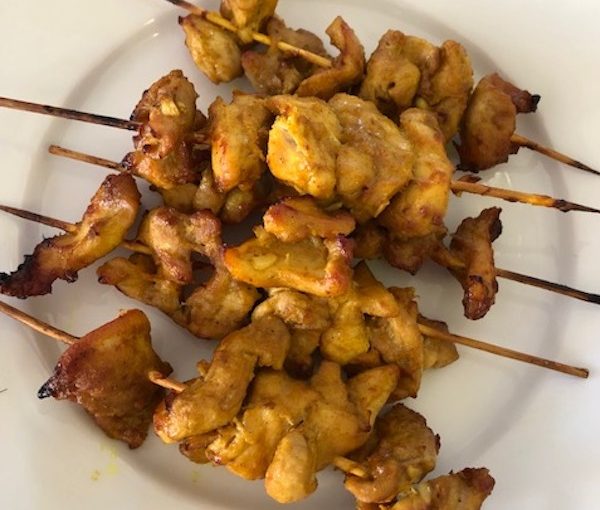
Mouthwatering air fryer chicken satay with peanut sauce. (photo by Shelley Civkin)

My father, alav hashalom, used to use the Yiddish phrase “Don’t hock me a tscheynik,” meaning, literally, don’t bang my teakettle. But, idiomatically, it means don’t bother me with nonsense. My husband Harvey has been hocking me a tscheynik for months now, in the hope that he’ll wear me down and I’ll finally give him the OK to buy an air fryer. Vos air fryer? Whenever people said air fryer, it conjured up a deep fryer filled with greasy doughnuts floating on the top. Or fatty chicken served with waffles, south of the border. It was about as appealing as an oozing wound.

I didn’t know from air fryers. But then my nephew and his wife got one, and regularly post pictures of the mouthwateringly delectable dinners they produce in their newfangled appliance. Still, I was not sold on the idea. While our apartment is a good size, our kitchen was designed for someone who’s culinarily challenged, petite in stature and not in favour of wasting space. Or, for someone like the character of Carrie Bradshaw, from Sex and the City, who only uses her oven to store sweaters. In short, it’s a galley kitchen that only fits two people, if you turn sideways and suck in your stomach. Our counter space is almost non-existent, yet we’ve managed to find a home for a Nespresso machine, waffle maker, Breville toaster oven, Breville blender and two Henckels knife blocks. I can barely fit a Vitamin C tablet on the remaining space. Still, Harvey thinks we can’t live (or at least not live well) without an air fryer.

After months of fighting him on this, I finally relented. Harvey did his due diligence, researched all air fryers known to man (and woman), then snuck out in the dead of night (notice how I made that all dramatic) and bought one. We got the Instant Vortex six-quart air fryer, which is big enough to hold a smart car. Or a baby buffalo.

As you can imagine, we had to make room for it on our aforementioned miniscule counter. The waffle maker now lives in the closet. The Nespresso machine has taken up residence in the liquor cabinet. And the Breville blender now cohabits with the Henckels Dutch oven under the butcher block. Our little family of appliances resembles a group home for wanton, headstrong youth. But still, we love them all the same.

A week has passed since we installed the air fryer into our humble abode and, well, it’s sheer bliss. I never knew it could be like this. So far, Harvey has made baked chicken thighs, carrots and broccoli, hardboiled eggs, potato wedges and hamburgers. All of which passed with flying (frying) colours, except, I’m sorry to say, the broccoli. It was a stringy, hard mess. The air fryer was literally begging us (OK, so I’m anthropomorphizing) for overtime – or at least a day off.

So, does this make us Frequent Fryers?

Meanwhile I’ve been Googling recipes for air fryer eggplant, tofu (Harvey would rather eat nails) and teriyaki salmon. Then, inspiration struck like yummy lightning – I found a bunch of mouthwatering recipes for air fryer chicken satay with peanut sauce. The deal was sealed. Note that, up to this point in time, I had not so much as touched our new appliance. I’d read the owner’s manual a dozen times though. Not wanting to challenge myself too much – you know, performance anxiety, fear of failure – I glommed onto the easiest, most appealing recipe I could find (credit goes to “Damn Delicious”). You’re welcome.

CHICKEN SATAY WITH PEANUT SAUCE

1/4 cup coconut milk
2 tbsp reduced sodium soy sauce
2 1/2 tsp yellow curry powder (I omitted this)
1 1/2 tsp turmeric
3/4 tsp cumin
3 cloves garlic, minced (I used 2 cloves)
1 tbsp freshly grated ginger
1 tbsp brown sugar
1 tbsp fish sauce (I omitted this)
2 lbs boneless, skinless chicken thighs or breasts cut into 1-inch cubes
1 tbsp canola oil (I used olive oil instead)
kosher salt and ground black pepper, to taste
rice vermicelli noodles

for the peanut sauce:
3 tbsp creamy peanut butter
1 tbsp reduced sodium soy sauce
1 tbsp freshly squeezed lime juice
2 tsp brown sugar
2 tsp chili garlic sauce (I used 1 clove garlic, minced instead)
1 tsp freshly grated ginger

  1. To make the peanut sauce, whisk together peanut butter, soy sauce, lime juice, brown sugar, chili garlic sauce (or minced garlic) and ginger in a small bowl. Whisk in two to three tablespoons water (I used coconut milk) until desired consistency is reached. Set aside in the fridge.
  2. In a medium bowl, combine coconut milk, soy sauce, curry powder (optional), oil, salt, pepper, turmeric, garlic, ginger, brown sugar and fish sauce (optional).
  3. In a large Ziploc bag or large bowl, combine chicken and coconut milk mixture, and marinate for at least two hours to overnight, stirring the mixture occasionally.
  4. Make some rice vermicelli noodles, rinse, drain and let them cool in the fridge.
  5. Soak bamboo skewers in water for 30 minutes before using.
  6. Drain the chicken from the marinade, discarding the marinade.
  7. Preheat the air fryer to 385°F for 12 to 14 minutes, or maybe a couple of minutes longer, depending on the wattage of your air fryer.
  8. Thread the chicken somewhat loosely onto the soaked skewers – don’t jam them together or they won’t cook evenly.
  9. Place the skewers into the air fryer basket, leaving room between each skewer. You may have to do a couple of batches to accommodate them all.
  10. Bake for six to seven minutes, then turn the skewers over and bake for another six to seven minutes, until they reach an internal temperature of 165°F.
  11. Serve immediately with peanut sauce over a bed of rice vermicelli noodles. Garnish with thinly sliced green onion or cilantro, and crushed peanuts.

To say that this meal was a success would be a gross understatement. In fact, I think Harvey proposed to me all over again. Then he offered to buy me a new computer. And a car. Perhaps the exhilaration of this delicious meal has gone to my head. Maybe he just said, “Thanks, it was delicious!” I can’t be sure. But my bet is on a new car.

Shelley Civkin, aka the Accidental Balabusta, is a happily retired librarian and communications officer. For 17 years, she wrote a weekly book review column for the Richmond Review. She’s currently a freelance writer and volunteer.