Community milestones … Goldschmidt, Mines, BGU & Weizmann Institute

A German translation of the Talmud, and the first translation of the book ever completed by a single person, is now available on Sefaria, a free nonprofit online library of Jewish texts. The translation by scholar Lazarus Goldschmidt was the first German translation of the Talmud and was released in 1935. While it is used in German Jewish studies departments and universities, it had not been widely accessible to the general public until now.
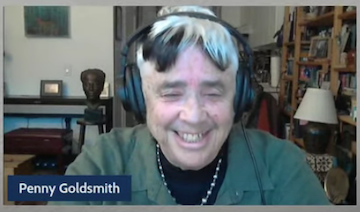
screenshot - Penny Goldsmith
(screenshot)

A celebration of the release took place virtually on Oct. 24. One of the speakers was Penny Goldsmith, Goldschmidt’s eldest granddaughter. Goldsmith is a longtime anti-poverty community worker in Vancouver, and owns a small independent publishing company, Lazara Press, named after her grandfather, who died a few months before she was born. She spoke of her grandfather’s books, “beautiful typographical masterpieces.”

“Grandfather was a type and book designer,” she said. Among his books were literature and poetry, including a collection of poetry he wrote in his early 20s, in Hebrew, “a very unusual choice,” Goldsmith noted, “as Hebrew at that time was reserved for religious study only.”

Goldschmidt was a scholar of Near Eastern languages and, in addition to the Talmud, he translated other religious texts, including a Hebrew translation of the Ethiopic Book of Enoch and a German translation of the Koran. Born in Lithuania, he learned German at the age of 18. His translation of the Talmud took 39 years to complete and he continued to make revisions after publication. He was also a collector of rare books and his extensive collection is now part of the Royal Library in Copenhagen.

After the Goldschmidt Talmud translation became public domain in January 2021, a team of four led by Igor Itkin, a rabbinical student at Rabbinerseminar zu Berlin, integrated its 9,434 pages of text into Sefaria’s free online library. The team’s work included manually linking sections of the translation to corresponding Talmud texts in English and Hebrew/Aramaic already in the Sefaria library. The connections allow scholars, educators and others to navigate between the translations and connect them to the larger library of Jewish scholarship. The team’s work was supported by a grant from the Rothschild Foundation Hanadiv Europe.

***
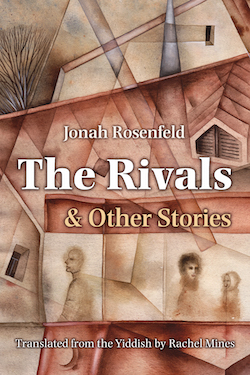
image - The Rivals book coverThe Rivals and Other Stories by Jonah Rosenfeld, translated from the Yiddish by Vancouver’s Rachel Mines – who recently retired from Langara College’s English department – has been selected by the Yiddish Book Centre as one of its picks for the 2022 Great Jewish Books Club. The book is available through the Yiddish Book Centre’s store and other online booksellers, including its publisher, Syracuse University Press, which is offering The Rivals at a 50% discount until Dec 1, 2021 (press.syr.edu).

Rosenfeld was a prolific and popular writer from the early 1900s until his death in 1944. Although his writing received critical praise, very little was translated into English until the publication of The Rivals. His stories foreground social anxiety, cultural dislocation, family dysfunction and the search for meaningful relationships – themes just as relevant today as they were to their original audiences. (See jewishindependent.ca/stories-that-explore-the-mind.)

***
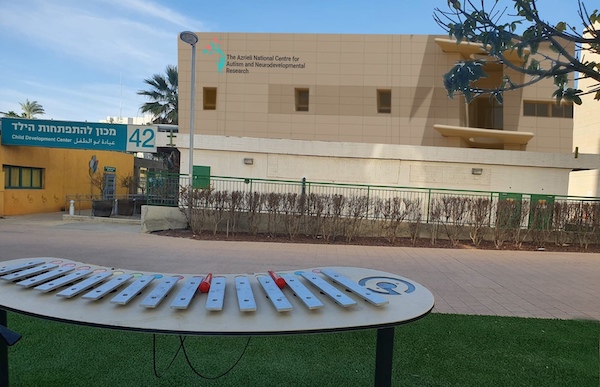
photo - The National Autism Research Centre of Israel
The National Autism Research Centre of Israel (photo from Canadian Associates of Ben-Gurion University of the Negev)

The Azrieli Foundation recently donated $15.6 million Cdn to the National Autism Research Centre of Israel, a collaboration between scientists from Ben-Gurion University of the Negev and clinicians from Soroka University Medical Centre (SUMC), both in the city of Be’er Sheva, Israel. The centre, originally established by the Ministry of Science and Technology, is dedicated to translational research that aims to revolutionize diagnosis techniques and interventions for autism and other neurodevelopmental conditions. In honour of the donation, the centre has been renamed the Azrieli National Centre for Autism and Neurodevelopment Research.

A dedicated facility inside SUMC will be constructed that will double the space for working with children with autism spectrum disorder and performing research. It will house genetics/bioinformatics, biomarker-detection and neuroimaging labs. Existing data collection will be expanded to many autism clinics throughout Israel, where multiple types of clinical and behavioural data, biological samples (e.g., DNA and blood samples) and neuroimaging data will be collected. This data collection will enable the rapid expansion of the National Autism Database, which will triple in size within five years. New faculty members, post-docs and graduate students, as well as scientific, clinical, technical and administrative support staff will be recruited to manage the data collection and sharing effort.

***
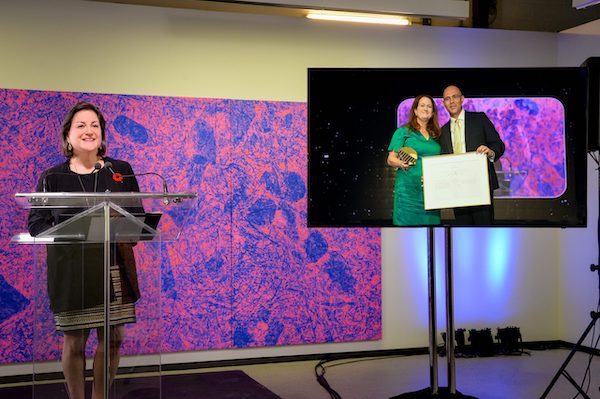
photo - Naomi Azrieli, chief executive officer, Azrieli Foundation Canada, and co-chair, Azrieli Foundation Israel, at the Nov. 7 announcement in Montreal, which took place concurrently with the announcement in Israel
Naomi Azrieli, chief executive officer, Azrieli Foundation Canada, and co-chair, Azrieli Foundation Israel, at the Nov. 7 announcement in Montreal, which took place concurrently with the announcement in Israel. (photo by PBL Photography)

The Weizmann Institute of Science and Weizmann Canada recently received a donation of $50 million US from the Azrieli Foundation, to enable catalytic brain research with the establishment of the Azrieli Institute for Brain and Neural Sciences. A longstanding supporter of the institute, this latest donation adds to past philanthropic investments of nearly $30 million US by the foundation towards Weizmann research facilities and fellowships.

Weizmann’s Azrieli Institute for Brain and Neural Sciences, which will be located at the Weizmann Institute campus in Rehovot, Israel, will promote the full spectrum of neuroscience research, from basic, curiosity-driven studies to translational work of high clinical relevance, with global impact. The donation will enable the construction of a new building that will serve as a hub for neuroscience activities, facilities and technologies.

The Azrieli Institute will focus on research in the development of neural networks; perception and action; mental and emotional health, positive neuroscience; learning, memory and cognition; the aging brain; neurodegeneration; injury and regeneration; theoretical and computational neuroscience; development of innovative neurotechnologies; and integrative brain disorders.
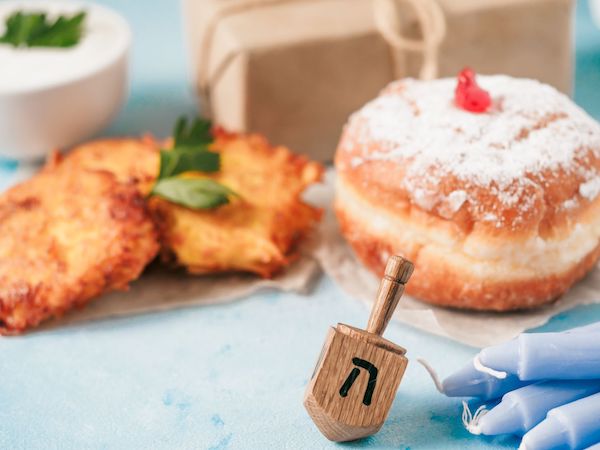
Chanukah Market at JCC

Chanukah treats will be plentiful at the JCC Chanukah Market. (photo from JCCGV)

Come celebrate the Festival of Lights on Nov. 28 at the first-ever Chanukah Market. From 11 a.m. to 5 p.m. that day, the parking lot at the Jewish Community Centre of Greater Vancouver will be transformed into a marketplace for all to enjoy.

Under large heated tents, visitors will be able to shop at arts and crafts vendors, peruse affordable art, seek out that perfect gift, enjoy live, all-ages entertainment and participate in family activities – or just soak up the ambiance and enjoy a nosh from one of the food vendors on site. The day’s festivities will culminate in the lighting of the first candle on the chanukiyah at sundown.

Performances will include the music of Tzimmes, singer/guitarist Anders Nerman, children’s entertainer Monika Schwartzman, the Vancouver Jewish Folk Choir, singer-songwriter Auto Jansz, the klezmer sounds of the Klezbians plus other bands and singers, dancers and surprises. Kids and their families will find lots of things to do, from playing on bouncy inflatables to joining in some hands-on art-making specially designed and delivered by the JCC early childhood department.

More than 20 vendors will be on tap to offer jewelry and other creative, useful and decorative items and chachkas. In addition, an 11-member arts and crafts group is presenting an exhibition and sale, offering items such as giclée prints, ceramics, woodwork, glass design, photographs and textiles.

Food trucks and vendors will offer Mediterranean and Mexican cuisines – and Chanukah treats, including latkes and sufganiyot.

The market is presented with the assistance of Canadian Heritage and admission is free with a donation to the Jewish Food Bank. For the full vendor list and more information, visit jccgv.com/chanukah-at-the-j.

– Courtesy Jewish Community Centre of Greater Vancouver

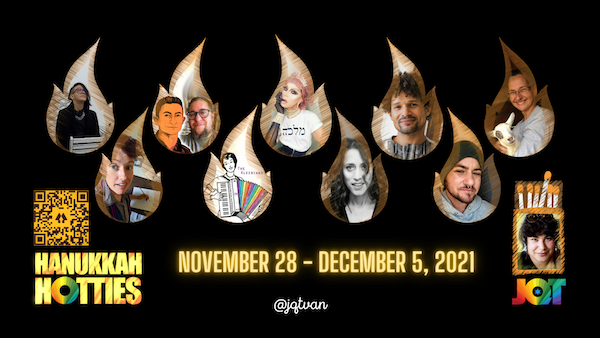
JQT’s 2021 Hanukkah Hotties

(image from JQT)

JQT Vancouver has a sizzling lineup of Hanukkah Hotties this year. Tune in to daily livestreams on Facebook with each Hanukkah Hottie, as they light their chanukiyah or share another tradition, and chitchat with JQT about their life, craft, activism and intersecting Jewish queer trans identities for the duration of the candles’ burning.

Hosted by Carmel Tanaka, founder and executive director of JQT Vancouver, who identifies as a queer, neurodivergent, Jewpanese woman of colour, the scheduled guests are:

Candle 1 (Nov. 28, 7 p.m.): Karen Newmoon, an Indigenous Jew-ish land dyke and subsistence farmer in Johnsons Landing, B.C.

Candle 2 (Nov. 29, 7 p.m.): Jersey Noah, a Jewish (Sephardi/Ashkenazi) transgender, autistic stoner in Oakland, Calif.

Candle 3 (Nov. 30, 7 p.m.): Adam W. McKinney / LaShawnah Tovah, a gay, Black, Native Jewish artist, and co-director of DNAWORKS in Fort Worth, Tex.

Candle 4 (Dec. 1, 1 p.m.****): Aviva Chernick, a queer, Jewish artist, and voice and meditation teacher in Toronto, Ont.

Candle 5 (Dec. 2, 7 p.m.): The Empress Mizrahi, a nonbinary/queer Persian Jewish Instagram content creator and activist in Los Angeles, Calif.

Candle 6 (Dec. 3, 7 p.m.): The Klezbians, a band of unruly, chutzpah-licious musicians from the Isle of Klezbos in Victoria.

Candle 7 (Dec. 4, 7 p.m.): Saul Freedman-Lawson and S. Bear Bergman. Freedman-Lawson is a student and illustrator in Toronto and Bergman is trans writer and educator from Toronto.

Shamash candle (Dec. 5, 9 a.m.): Tikva Wolf, a cartoonist in Asheville, N.C. (Cherokee territory).

Candle 8 (Dec. 5, 7 p.m.): Ari Fremder, a nonbinary, autistic, Latinx artist/animator and JQT Dream Team member in Vancouver.

During the livestream, closed captioning will be provided by Facebook’s AI bots, and JQT volunteers aim to post edited closed captioning videos on both Facebook and YouTube two to three days after each interview.

This series is supported by Creating Accessible Neighbourhoods (canbc.org), an organization that advocates for and educates about people with disabilities and/or chronic health conditions who have multiple intersecting identities.

For more on the participating artists and JQT, visit facebook.com/jqtvan.

**** NEW TIME!

– Courtesy  JQTVancouver

Discussing Jewishness

Maxine Lee Ewaschuk, in a still from the documentary Periphery, which premièred last month at the Prosserman Jewish Community Centre in North York, and is available to view online.

On Oct. 28, the Prosserman Jewish Community Centre in North York hosted a hybrid launch for Periphery, a newly produced documentary film and photo exhibit that explores the lives of multiracial and multiethnic Jews within the Greater Toronto Area.

The 27-minute film features interviews with several individuals who might be considered as existing on the fringes of a homogenous, stereotypical notion of the Jewish world – a world that, in reality, is multifaceted and ever-evolving.

“What Periphery does for us is bring together a diverse view of our community,” said Andrew Levy, one of the event’s organizers.

From the outset, the film asks, “What makes a Jew? What do you have to know to be a Jew?” Implicit in those questions is another question, how can the Jewish community extend its tent to include those who might feel left out of the broader mishpachah, family? Notably, those whose parents are not both Jewish.

“There becomes a question of, can I say I am Jewish? When can I say I am Jewish? Is it ever OK for me to say I am Jewish before I complete my conversion, even if I am functioning very Jewishly in my day-to-day life. Sometimes, I say I am a Jew-in-progress,” shared dancer Maxine Lee Ewaschuk.

“Maybe I don’t know everything about what it is to be Jewish, but I am fiercely, proudly Jewish. It’s my experience and my experience is valid,” said actor Nobu Adilman, whose heritage is Jewish and Japanese.

“I knew my Indian grandparents super well, but I never knew where my Jewish grandparents came from,” said author Devyani Saltzman, who recounted a trip to Russia with her father to look into the roots of the paternal side of her family.

Saltzman also remembered an observation she had as a child of looking at other classmates who came from solely Hindu or Jewish families and thinking, non-judgmentally, “that must be really nice to know one’s place and space so clearly.”

In the cases of both Adilman and Saltzman, their parents married out of a love that transcended religious, cultural and geographic barriers.

“My father put a lot of his energy into my mother’s culture. He didn’t talk a lot about his upbringing. He was proudly Jewish, but he didn’t want to impose it on us,” Adilman said.

Adilman, too, related a kinship he has with other Jewish people who have gone through the same sorts of questioning that he has.

Ariella Daniels, Daniel Sourani and Sarah Aklilu each spoke of connections to places far removed from the GTA.

Daniels, who descends from Bene Israel Jews of India, explained that, for her, being a Jew represents several layers of identity – cultural, religious and national – and that the perspective she has of the world comes through being Jewish.

Sourani, who identifies as a gay, Iraqi Jew, focused on the importance of family – and the gatherings around Shabbat, holidays and lifecycle events – to his Jewish experience.

Aklilu, meanwhile, sees herself as Jewish, Ethiopian and Canadian.  She told of the many times her Jewish identity has been called into question and, as a result, she has questioned who she is. Ultimately, she asserted, “I know I am Jewish and I feel that I don’t need to explain to people that I am.”

Tema Smith, a Jewish community professional and daughter of a Black father and Jewish mother, outlined the odd experiences she has had because people often assume she has two European Jewish parents.

“People say things that they would never say if a Black person were in the room. I feel completely unseen in those moments,” Smith said. “I feel trapped in these weird moments of having to swallow what just happened.”

For Asha, a Black and Jewish woman, her connection to Judaism is one that she described as developing and expanding. “I think, if you look Black, like I do, then you go through life as a Black person,” she said. “I don’t know if you have to choose internally, but it is chosen for you in the wider world. So, people don’t look at me and think I am Jewish.  I don’t think that’s ever going to happen. If it did, it would be weird.”

While the experiences in Jewish spaces of those interviewed were frequently frustrating and alienating, it was also pointed out in the documentary that there are positive aspects to having a multiracial background. There is richness and happiness in belonging to different cultures and this, in itself, can be invigorating.

The screening was followed by a conversation with director Sara Yacobi-Harris, cinematographer Marcus Armstrong and film participants. Periphery was produced by No Silence on Race, an organization that seeks to establish racial equity and inclusivity within Jewish spaces in Canada, in partnership with the Ontario Jewish Archives. To view the film, visit virtualjcc.com/watch/periphery.

Sam Margolis has written for the Globe and Mail, the National Post, UPI and MSNBC.

London’s Ghetto Songs

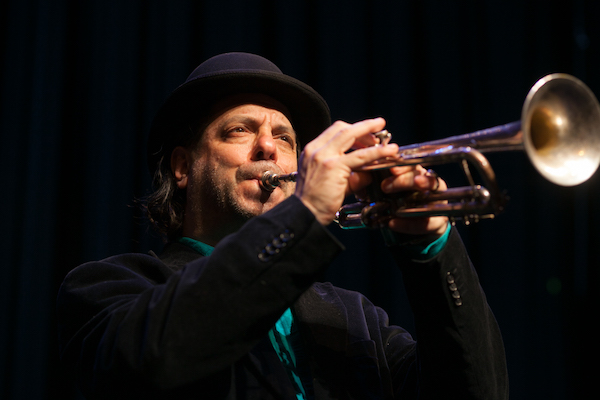
Frank London recently released a new album, Ghetto Songs (Venice and Beyond). (photo by Chuck Fishman)

Trumpeter and composer Frank London, an unwavering presence in numerous musical genres for more than four decades, released a new album, Ghetto Songs (Venice and Beyond), on Felmay Records earlier this year. The project incorporates music from around the world and delves into the history of “ghetto music.”

Coming out this past April – to coincide with the anniversary of the Warsaw Ghetto Uprising in 1943 – the concept for Ghetto Songs began in 2016, when the Grammy Award-winning London found himself in Venice on a residency with Beit Venezia, a foundation that aims to promote Jewish thought and culture, and serve as a bridge between people of all cultures and religions.

“It all started with my being invited by Dr. Shaul Bassi and Beit Venezia to go to Venice and conceive a special way to commemorate the 500th anniversary of the opening of the Venice Ghetto, the first segregated urban area to be called a ghetto,” London told the Independent. “The particularity of the Venice Ghetto and the universality of ghettos themselves inspired Ghetto Songs.”

The Jewish ghetto in Venice was situated in the polluted grounds of an ancient copper foundry, or geto. By the early 20th century, the term ghetto came to signify the crowded urban quarters of any minority group.

As London sees it, ghettos are historically complex phenomena. They offer both freedom and restriction, protection and imperilment. By isolating specific groups from the outside world, they become cultural “petri dishes” in which the ghettoized group’s culture can thrive.

Ghetto Songs celebrates the music and poetry that emerges from and about the world’s many ghettos. The playlist for the new release includes 17th-century music and poetry from the Venice ghetto (works from Salomone Rossi, Benedetto Marcello and Sara Copia Sullam); a piyyut (Jewish liturgical poem) from a mellah, a Moroccan Jewish quarter; kwela, street music from South Africa’s townships; and works by Cantor Gershon Sirota, who lived and died in the Warsaw Ghetto. There is also version the 1972 hit by the band War, “The World is a Ghetto.”

When it came to selecting what pieces would be the best fit for an album covering ghetto music encompassing five centuries and numerous locations, London recounted, “This is my favourite part of the process! I do the deep dive: tons of research into music from the world’s ghettos throughout history, across time and place. I pick out songs that I love, but that also tell a story, that inform each other, that complement each other, and that work together as a unified whole despite their incredible differences.”

London has assembled an array of talent for the release. Among the vocalists are tenor Karim Sulayman, Cantor Svetlana “Sveta” Kundish, Yaakov “Yanky” Lemmer (considered one of the best in the new generation of chazzans) and singer/guitarist Brandon Ross. They are joined by drummers Kenny Wollesen and Zeno De Rossi, cellists Francesca Ter-Berg and Marika Hughes, bassists Greg Cohen and Gregg August, and multi-instrumentalist Ilya Shneyveys.

“What might have been seen as challenging – getting the right musicians who can play such a diverse, variegated set of musics, styles, genres, etc., was really no problem. I am blessed to know and work with some of the world’s finest musicians and, with them, there were really no big challenges,” said London. “I have worked with each of these fantastic musicians in different projects and situations – mine, theirs, and as side musicians for others – over my 40-year career.”

To summarize London’s career in the space of an article, let alone a paragraph of two, is not an easy task. Among the artists he has worked with are Itzhak Perlman, Allen Ginsberg, LL Cool J, Mel Tormé, Iggy Pop, John Cale and Jane Siberry. He is a member of the Klezmatics and Hasidic New Wave, as well as leader of the Frank London’s Klezmer Brass All Stars and the Glass House Orchestra, a band that plays Austro-Hungarian Jewish music. London has made 30 solo recordings, is featured on more than 400 CDs and is the recipient of the Hungarian Order of Merit.

The veteran musician is working on several projects at present. These include Ich Bin Eine Hexe, a dance/theatre spectacle about pioneering performance artist Valeska Gert; “Rube G (Music for Brass Trio and Percussion,” a dance score for choreographer and filmmaker Jody Oberfelder; ESN: Songs from the Kitchen, a cooking and music video with Lorin Sklamberg and Sarah Gordon; Salomé: Woman of Valor, a CD with poet Adeena Karasick (jewishindependent.ca/salome-cd-launched); and Transliminal Rites, a CD of improvised music with Eyal Maoz and Guy Barash, who, together with London, make up the EFG Trio.

Sam Margolis has written for the Globe and Mail, the National Post, UPI and MSNBC.

Walking through our history

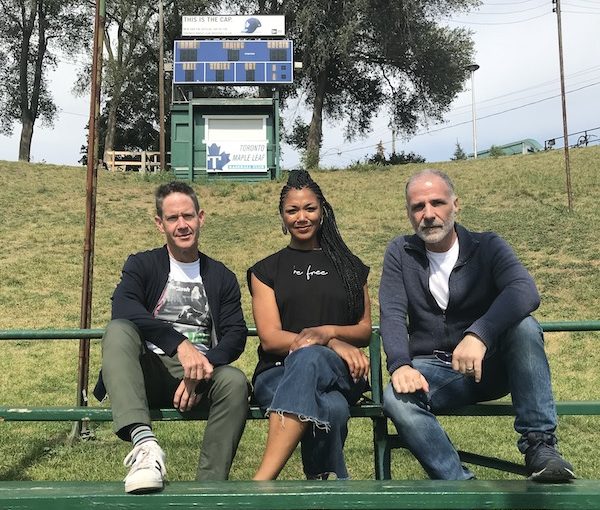
Left to right: Drew Carnwath, Measha Brueggergosman and Sam Rosenthal are the main creatives behind the podcast The Christie Pits Riot. (photo by John Ebata)

On Aug. 16, 1933, Toronto experienced what is viewed as one of the worst race riots in Canadian history. Earlier this fall, the Hogtown Collective, an immersive theatre company, released a four-part podcast that recreates the events of that summer evening 88 years ago.

The eponymously named podcast, The Christie Pits Riot, is seen through the eyes of its 12-year-old protagonist, Joey Rosenbaum. Created by Sam Rosenthal and Drew Cranwath of Hogtown Collective and set amid the circumstances of the Great Depression, Hitler’s rise to power in Germany and escalating ethnic unrest within Toronto, the series also contains an interactive walking tour through the neighbourhood where the riot took place.

The centre of the conflict is a baseball diamond in Christie Pits Park. Tensions began festering during a playoff between two local teams, the Harbord Playground, consisting mostly of Jewish and Italian players, and St. Peter’s, a club sponsored by a local church. Fights erupted and a full-on riot ensued. There were many injuries, but no fatalities.

The mass brawl, which lasted six hours, started after the final out of the second game of a quarterfinal pitting Harbord against St. Peter’s. Two nights earlier, at the first game, a swastika had been displayed by some fans. In the weeks before these games, troubles in Toronto had been brewing more broadly between some Jewish residents and antisemitic groups, primarily those calling themselves the Swastika Club.

A number of Jewish boys and young men who had heard about the swastika incident at the first game rushed to destroy the swastika unfurled at the end of the second. Supporters of both sides, including the Italians, who supported the Jews, joined in the melee.

In the podcast, narrated by Rosenthal, the listener gets a snapshot of life in the city at the time and follows Joey through his day – running errands for his father’s drugstore – along Bloor Street, near the ballpark.

“We wanted the audience to be able to access this story through an emotional, not just historical, perspective,” Rosenthal told the Independent. “Making our hero a young boy allowed us to show the world from his perspective.

“Exploring the deeper issue of systemic racism and antisemitic behaviour can be challenging,” he added. “Our young hero doesn’t understand hatred the way an adult might, so his character provides a means of asking questions about antisemitic racism. We also wanted a way to keep things rooted in the present simultaneously, so as to be able to draw clear parallels to the same problems and issues” that still exist.

The first three instalments take the audience through Depression-era Toronto, with the final episode coming to a head at the fateful game. When the riot breaks out in the story, we find Joey trying to get his friend Rachel home. They are helped along the way by Nala – voiced by Juno Award-winning soprano Measha Brueggergosman – who encourages Joey to stand up for what he believes.

In addition to providing her vocal talent, Brueggergosman was the podcast’s musical supervisor.

In releasing a theatrical production during the pandemic, the creators spotted a chance to provide audiences with a safe and tangible way to experience where the riot happened via the walking tour.

“To look out at Christie Pits Park and imagine what it would be like being in the middle of 1,000-plus people fighting is a terrifying thought, and so it makes the story land in a more visceral way if one can actually be there while listening in,” Rosenthal said. “Since my grandfather owned a store at the corner of Bloor and Manning, the walking tour is a perfect addition to share some of my family history within the broader scope of this chapter from Toronto’s history.”

Several scenes in the story are situated in the drugstore operated by Rosenthal’s grandfather from the early 1920s until the late 1950s.  Rosenthal’s father, Joseph, grew up in the neighbourhood and worked there. Joseph was born after the riot, and knew about it from his own father.

“My dad shared many stories of being a young boy in a deeply divided antisemitic Toronto,” said Rosenthal. “When he told me there were once signs posted at the Balmy Beach Club that said, ‘No Jews or Dogs,’ and that there were Swastika Clubs in the 1930s, I felt compelled to tell this story. My father and his friends were often brutalized or threatened whilst walking home from school. I wonder how many Toronto residents know this about our city’s past, and why it seems still entrenched in our present.”

Rosenthal’s hope for the production is that younger listeners not only learn that the riot was a dark chapter in Canadian history, but see it as a way to honour previous generations who paved the way for the diverse culture that Toronto is celebrated for today.

The Christie Pits Riot is available online from multiple providers. The Anchor app can be used by anyone interested in taking the guided walking tour through the Toronto neighbourhood where the riot transpired – the app can be found at hogtownexperience.com.

Sam Margolis has written for the Globe and Mail, the National Post, UPI and MSNBC.

Lean into our identity

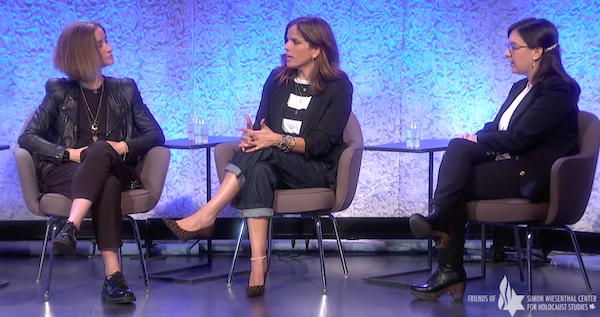
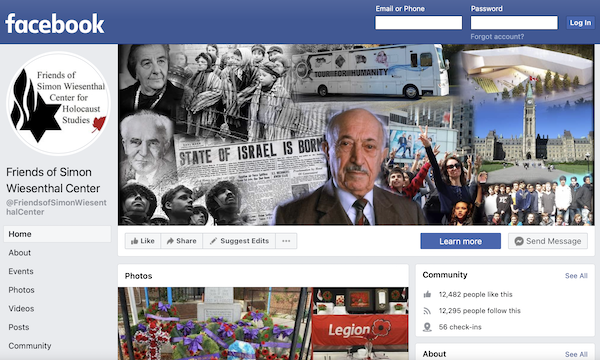
Left to right: Eve Barlow, Noa Tishby and Bari Weiss participate in a Nov. 3 panel hosted by the Friends of the Simon Wiesenthal Centre for Holocaust Studies. (screenshot)

In a time of burgeoning antisemitism and anti-Zionism, Jews need to lean into their identities, says a leading voice in the fight against anti-Jewish racism.

“In other instances in Jewish history, we believed, wrongly, that the way to get acceptance, the way to get along, was to self-abnegate and erase who we are,” said Bari Weiss. “If there has been one lesson in thousands of years of Jewish history, it’s that that is a terrible strategy.”

Weiss is a former writer at the New York Times. She resigned her position there, citing a hostile work environment, and is the author of the book How to Fight Antisemitism. She was speaking as part of a panel convened Nov. 3 by the Friends of the Simon Wiesenthal Centre for Holocaust Studies (FSWC). She was joined by Eve Barlow, a pop-culture writer who grew up in the United Kingdom and has worked in music journalism as deputy editor for NME New Musical Express but who, most recently, is using her voice to stand up against antisemitism. Also on the panel was Noa Tishby, an Israeli-American actor, producer and author of the book Israel: A Simple Guide to the Most Misunderstood Country on Earth.

The three women have become prominent voices, online and off, in the fight against the latest upsurge of antisemitism and anti-Zionism. The Nov. 3 discussion took place in Los Angeles, where all three women are now based. They were joined by Michael Levitt, president and chief executive officer of FCSW, and the panel was moderated by journalist Jamie Gutfreund, both of whom traveled from Toronto for the event, titled State of the Union: Fighting Back Against Hate.

Weiss said the first step in confronting the problem must be vocal and unequivocal pride in Judaism and Zionism.

“The mere act of doing that is radical and contagious and changes the whole conversation,” she said. Doing grassroots work building alliances is another overlooked key to confronting the issue, she added.

“Let’s take a page from the book of our political opponents,” she said. “How have they done what they have done? Deep work inside communities on a grassroots level.”

The Black Lives Matter organization – not the wider movement, Weiss stressed, but the leadership of the organization – has exhibited problematic approaches to Jews and Israel. But no one should concede that there are not plenty of African-Americans (and Canadians) who are allies, she said.

“There are huge parts of the Black community that the Jewish community in America can still be allied with; there are other parts of it that we would be extremely foolish to try and ally ourselves with,” Weiss said. “There are other communities though. I’m thinking about Hispanics, I’m thinking about Hindus, I’m thinking about all kinds of other groups that I don’t see our community actively and affirmatively reaching out to and trying to build relationships with based on our mutual interests.”

Weiss warned that the polarization of politics in the United States and across the West does not bode well for Jews.

“That puts Jews in a deeply uncomfortable position because, I believe, where the political centre thrives, Jews thrive because, if the political centre is thriving, it means that there is room for nuance, that there is room for disagreement, that it’s not a kind of Manichaean, black-and-white, pure-impure, red-blue thinking. Right now, that is the world we are living in and – guess what? – we Jews don’t easily slot into either of those categories. We are both hyper-successful and also we are the victims of more hate crimes than any other group in this country. We are white-passing and yet white supremacists hate us because we are the greatest trick the devil has ever played. We predate the newfangled notions of ethnicity, of race, of religion. We are before all of that. I think that there is a dovetailing between fighting antisemitism and fighting Jew-hate, and standing up for liberalism, broadly defined, because, where liberalism thrives … Jews thrive too.”

Much of the panel’s discussion was about flourishing anti-Jewish hatred online, but Barlow warned that no one should assume there is a substantive difference between what happens online and what happens offline.

“We have seen how [online hatred] has contributed vastly to the amount of physical violence that happens offline and you would have to be extremely ignorant to … say right now that what happens online does not have offline ramifications,” said Barlow.

Tishby agreed, but suggested that offline violence may not be inspired by online hate but rather is part of a broader battle.

“Social media is just the tip of the iceberg of a well-funded political campaign that has been waged against Israel in the past 20 years,” Tishby said. “This is not by accident. This happened by design. The language, everything that we are seeing right now, originated in the Durban conference against racism in Durban in 2001 that was so antisemitic that the U.S. and Israel pulled out of it…. They have been putting a lot of money, a lot of effort and a lot of groundwork in going into these social justice causes, going to Black Lives Matter, going to the Women’s March, going to gay and lesbian marches in San Francisco, going to unions and actually slowly changing their minds and poisoning them basically with lies to make them shift against Israel. These are nefarious powers and nefarious countries that want to dismantle the Jewish state, period, end of story.”

screenshot - At a panel discussion hosted by the Friends of the Simon Wiesenthal Centre, journalist Bari Weiss warned of the potential dangers in pressuring social media giants like Facebook to censor certain messages
At a panel discussion hosted by the Friends of the Simon Wiesenthal Centre, journalist Bari Weiss warned of the potential dangers in pressuring social media giants like Facebook to censor certain messages. (screenshot)

Acknowledging that some of the most prominent anti-Zionists are themselves Jews, Barlow called the phenomenon “koshering antisemitism.” However, she advocates a compassionate response.

“I believe that how we deal with them has to be different than how we deal with non-Jewish antisemites because they are part of our people, we love them regardless and they are part of our tribe and I think we have to really understand the nuances of why people become anti-Zionist,” Barlow said. “I think a lot of what I see is trauma from the Jewish community and a rejection of the Jewish community that presents itself in this anti-Israel fashion.”

She offered up what she acknowledged as a controversial joke: “Don’t blame Israel for your daddy issues.”

Tishby laid much of the blame for anti-Zionist Jews on the Jewish education system.

“We need to take a good look at ourselves and what we did in order to allow for this,” she said. “We took our kids, put them through … this beautiful Jewish education, we give them all the values and we tell them Israel is the most amazing people and place in the world and we send them off to college without ever acknowledging the concepts of ‘ethnic cleansing,’ ‘apartheid.’ We let college talk to them about this for the first time.… Nobody ever [said], let’s talk about why people call Israel an apartheid state. Let’s have a conversation about this, not when they get to college, [but] when the kid is 12, 13, 14, bring it up. Say, here’s the argument, here is where it’s completely false, here are the facts. Let’s talk about what’s happening in the West Bank.”

Weiss, who has spent her career in mainstream media, said those media outlets are “the most intellectually homogenous environment I’ve ever been in in my entire life.” But she warned against swallowing conspiracy theories.

“I think sometimes people in the Jewish community who are frustrated by this bias imagine some kind of secret conspiratorial meetings where they’re cooking up how to screw the Jews and the Jewish state,” Weiss said. “It’s just a reflection of the consistent bias among all the people that work there.”

The power of social media giants like Facebook and their haphazard responses to hate speech are a problem, Weiss said, but Jews and Zionists may be hastening their own defeat by pressuring them to censor certain messages.

“I think it is a genuinely knotty and complicated question whether or not the Jewish community should be going to these big tech companies and saying, in the same way that you’re censoring x, y and z, also censor the people who hate us,” she said. “My fear is that, in asking these companies [to] do more censorship on our behalf, then, in a way, we are actually feeding the fuel that will come to burn all of us. The ideology that is currently dictating the choices at many of these companies is an ideology that says Zionism is racism. That is part of that broader worldview.… What happens six months from now when … they want to go and censor Zionists because now they have decided that Zionism, to follow the Soviet lie, is a form of racism? Would we be happy with that? I don’t think so.”

The full video can be viewed by registering at friendsofsimonwiesenthalcenter.com.

The quirky stories of Israel

The images posted at facebook.com/sipurisraeli highlight the diverse stories and people covered on the Israel Story podcast, which is in its sixth season.

The podcast Israel Story started its sixth season in September. The show, which offers a long-form journalism approach to quirky stories of the people and events in Israel that do not often appear in the headlines, has been called the Israeli version of This American Life by none other than Ira Glass, the host of the National Public Radio hit.

Started in 2011 and originally intended for family and friends, Israel Story has grown to attract thousands of listeners. It is one of the most popular Jewish podcasts in the world.

The Independent recently caught up with Zev Levi, managing producer of the podcast, for some behind-the-scenes insight on the behind-the-scenes show about Israel – and to ask him what’s in store for upcoming episodes.

“The rest of this season is packed with moving stories about identity, healing, looking back, and looking forward. We’ll hear about the everyday lives changed forever by a national tragedy, the space project that lifted hopes around the world, an unlikely pro sports team, a soldier’s unexpected journey to tabletop gaming, and an internet scam that made people’s blood boil,” Levi revealed.

Already featured in episodes this season have been the story of a day in which all nine of the show’s producers spent from early morning to evening interviewing various and sundry characters at the historic Jerusalem International YMCA; an effort to save a 2,000-year-old mikvah; and a look at the life of Bung-Ja Ziporah Kim Rothkopf, the woman who opened the Seoul House restaurant in Jerusalem and started KOKO, a Korean kosher food brand.

image - from facebook.com/sipurisraeliEver since its beginning, the show has covered the stories of a wide range of groups living in Israel: Jews, Muslims and Christians; Israelis and Palestinians; Ashkenazim and Sephardim; Russians, Bedouin and Ethiopians; Filipino foreign workers and Eritrean refugees; Orthodox and secular; political hawks and doves.

And, not surprisingly, according to Levi, there is an endless source of material for future shows based on Israel, a land of storytellers. Levi said that ideas for topics are supplied by listeners and others, who send in potential stories. The team of producers is also encouraged to chase narratives they think should be told. He said the team prides itself on investing the time and energy to “find the perfect stories that shine a spotlight on what it’s like to be here. We look for the everyday lives that bring listeners to Israeli streets and fill their lungs with Israeli air.”

He added, “We see our show as a platform to display the complexities and depth of living in this amazing part of the world. And there are always unique subcultures and norms and clashes to explore. We live in an area where there are so many different ways to define yourself – religion, culture, politics, race, language – and there are endless permutations of the intersections and clashes between them. The story of how people make themselves is something anyone around the world can relate to and connect with.”

image - from facebook.com/sipurisraeliLevi elaborated on the process the team undertakes to determine what stories will be aired. Most episodes run roughly an hour or more with some bonus segments added.

“To paraphrase [Albert] Einstein, a story should be told as succinctly as possible, but no more succinctly than that,” said Levi. “While pitching a story, we generally have an idea of how long it will take to tell it, but, during the production process, there are countless examples of a story being way more complex than first thought, and needing more time. And countless examples of a story being much more simple, and being trimmed down, or even killed completely.”

The team would prefer to curate several stories that speak to different angles of a single theme, or to restrict themselves to three 20-minute stories in each episode, said Levi. However, they feel such an approach would not do justice to the stories themselves.

“When it comes to holding interest, our first defence is our own team,” he said. “We each dedicate time to analyzing when a story loses its engagement, and what we (as listeners) would need to avoid that. Several producers will often weigh in on drafts to make sure the best, most-engaging version of a story is what makes it to listeners. But all our stories are about people. People struggling to be authentic. People struggling to heal. People struggling to achieve. And we can all relate to that.”

Israel Story was founded by Dr. Mishy Harman, who serves as the podcast’s host and chief executive officer. The show can be heard on Apple Podcasts, Spotify and Stitcher, among other streaming services.

Sam Margolis has written for the Globe and Mail, the National Post, UPI and MSNBC.

Wherever did the time go?

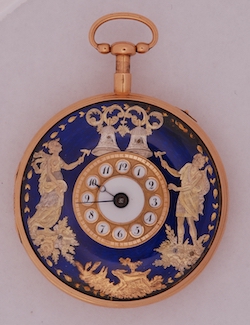
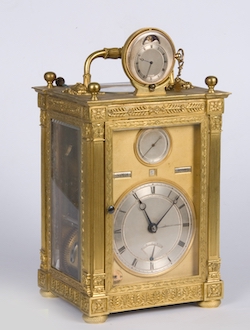
A few of the clocks that were stolen from Jerusalem’s L.A. Mayer Museum for Islamic Art in 1983, and eventually found and returned. (photos by Daniella Golan)

Over the past few weeks, many countries, including Canada, switched from daylight savings time to standard time. So, it seems like the right time (no pun intended) to talk about the biggest clock and watch robbery in Israel’s history.

Back in 1983, more than 100 antique timepieces vanished from Jerusalem’s L.A. Mayer Museum for Islamic Art. I remember visiting the museum about a year after the robbery, only to find the empty stands and cases – as if the museum staff hoped the watches would magically reappear.

For years, the Israeli police didn’t know where to go with this case. In fact, they struggled for a quarter of a century to solve the mystery of the 102 (a number of media reports stated 106) missing clocks. All that was clear was that, one spring night in 1983, these timepieces disappeared from the museum.

photo - one of the timepieces that was stolenThese missing clocks were not like the ones a regular person hangs on their kitchen wall or sits on their nightstand. They were highbrow antiques. Some were inlaid with jewels. Many had been cast from gold. One was made by famed watchmaker Abraham-Louis Breguet for Queen Marie Antoinette, but she met up with the guillotine 34 years before Breguet finished the timepiece – actually, Breguet’s son finished what is called an “open-work” watch.

Altogether, the stolen clocks and watches were worth millions of dollars. Given the magnitude of the theft, a special task force within the police was set up. Reportedly, Interpol was contacted, and the company that had insured the collection hired private investigators.

For years, police theorized that only a group of robbers could have taken so many clocks in one night. It turned out, however, that one thief did the job.

The alleged thief was Naaman Diller, also known as Naaman Lidor. He took advantage of the museum’s incompetence at that time. For example, he discovered that the museum’s alarm system did not work. And, while the museum windows apparently had bars, they were more for show than anything else – Diller/Lidor was able to bend a few of them. He had no difficulty entering and exiting undetected with the stolen items and placing them in his truck outside.

Many of the clocks were physically small and relatively light (i.e., pocket-size timepieces). He took most of them out of Israel. Some were hidden in Holland, some in France and the rest went to the United States. Several ended up in the home he set up in the Los Angeles area.

Despite – or perhaps because of – the great monetary value of his haul and because of how renowned some of the pieces were, Dillor/Lidor found it was hard to sell them. He only managed to sell less than 10% of the stolen collection. The majority of these timepieces spent 25 years locked up, unseen.

photo - one of the timepieces that was stolenFollowing the robbery, Dillor/Lidor lived on and off in Tel Aviv. In the early 2000s, he reportedly was hospitalized in Israel’s Tel HaShomer Hospital, suffering from skin cancer complications. When told that the cancer had spread to the bone, he refused radiation. In 2004, he died in his Tel Aviv apartment and was buried at Kibbutz Ein HaHoresh, his birthplace. In the end, he willed the clocks to his wife, Israeli ex-pat Nili Shamrat.

Within a few years of Dillor/Lidor’s death, an attorney representing the widow entered into a quiet, negotiated “buy-back” with the museum. According to the L.A. Mayer Museum for Islamic Art, in 2006, 39 of the original 102 stolen clocks were returned.

Two years down the road, the case further unraveled. The museum officially states that investigators located the remaining clocks in various bank safes. Some media reports said the clocks had been in France and in Holland. In any case, the clocks and watches have since made their way back to the museum. Unlike almost 40 years ago, they are now well-secured, with the clock exhibit housed in a sophisticated light-sensitive vault.

In the United States, the widow was charged with receiving stolen property. In 2010, however, she received a sentence of five years’ probation and 300 hours of community service. In her defence, her lawyer successfully maintained that she was a victim of circumstances – that is, her new husband (although they’d been together for many years, they’d been married for only a year when he died) had only told her about the clocks near the time of his death.

Deborah Rubin Fields is an Israel-based features writer. She is also the author of Take a Peek Inside: A Child’s Guide to Radiology Exams, published in English, Hebrew and Arabic.

Kalla’s latest great read

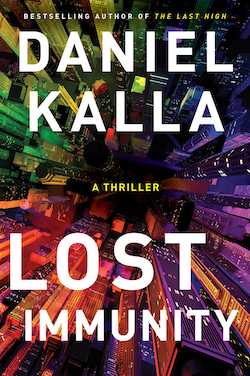
There’s something comforting about reading a thriller writer whose novels you’ve enjoyed in the past. You know exactly what to expect, and yet the pages almost turn themselves. Given, however, that we’ve been living through a real pandemic for almost two years now, it might feel “too close to home” to pick up a Daniel Kalla – who writes about mysterious diseases that run rampant, plagues that resurface, surging deaths from opioids and other such things – but, somehow, he makes it fun rather than depressing. His latest, Lost Immunity (Simon & Schuster), is a great read.

image - Lost Immunity book coverIt helps that Kalla is a real medical doctor. An emergency room physician here in Vancouver, he knows that of which he speaks and can relate complicated information without sounding didactic. And there’s always what to explain in his books. In Lost Immunity, the lessons are particularly relevant, about how a bacteria spreads, the challenges of contact tracing and containment, the benefits and side effects of vaccines, the concept of herd immunity, etc., etc. But he does all this while being completely entertaining. Readers of Lost Immunity will have an idea of what Dr. Bonnie Henry and her team have been going through these last many months – minus (I hope) the human killer element.

Lost Immunity features a smart and likeable protagonist in Lisa Dyer, Seattle’s new chief public health officer. In a community health forum about a law mandating immunization for middle-school girls and boys with the latest HPV vaccine, Dyer takes on the doubters – members of “the ‘vaccine hesitancy’ community” – calmly and compassionately, with science always as her guide. Within this community are her own sister and father, so she’s had much practice.

As exhausting and frustrating as the forum is, Dyer’s job gets more challenging even before the Q&A is over – “her phone buzzes on the lectern. She can’t help but glance down at the health advisory from her office that pops up on the screen. ‘Four dead from meningitis. All attended the same local Bible camp.’”

The campers are children and teenagers, and the death rate rises quickly. (I admit to having skimmed the parts about dying kids, as they added a little too much realism for me.) Dyer and her colleagues must try to contain the outbreak – of the same strain of bacteria that caused 35 deaths in short order in Iceland six months earlier, and for which an American pharmaceutical firm is doing final-phase trials on a promising vaccine. Dyer pressures the company into releasing the vaccine early – as the mortality rate in Iceland was 46% – and goes ahead with a vaccination campaign. At first, it seems to be working, but then some severe and fatal apparent side effects bring everything to a halt. But is it really the vaccine that’s responsible? Even if you can probably guess the answer, Dyer’s journey to get there is full of twists, as well as fascinating exchanges on all aspects of the vaccination issue. 

For a review of Daniel Kalla’s We All Fall Down, visit jewishindependent.ca/could-the-plague-come-back.