Skip to content
  • Home
  • Subscribe / donate
  • Events calendar
  • News
    • Local
    • National
    • Israel
    • World
    • עניין בחדשות
      A roundup of news in Canada and further afield, in Hebrew.
  • Opinion
    • From the JI
    • Op-Ed
  • Arts & Culture
    • Performing Arts
    • Music
    • Books
    • Visual Arts
    • TV & Film
  • Life
    • Celebrating the Holidays
    • Travel
    • The Daily Snooze
      Cartoons by Jacob Samuel
    • Mystery Photo
      Help the JI and JMABC fill in the gaps in our archives.
  • Community Links
    • Organizations, Etc.
    • Other News Sources & Blogs
    • Business Directory
  • FAQ
  • JI Chai Celebration
  • JI@88! video

Recent Posts

  • Sharing her testimony
  • Fall fight takes leap forward
  • The balancing of rights
  • Multiple Tony n’ Tina roles
  • Stories of trauma, resilience
  • Celebrate our culture
  • A responsibility to help
  • What wellness means at JCC
  • Together in mourning
  • Downhill after Trump?
  • Birth control even easier now
  • Eco-Sisters mentorship
  • Unexpected discoveries
  • Study’s results hopeful
  • Bad behaviour affects us all
  • Thankful for the police
  • UBC needs a wake-up call
  • Recalling a shining star
  • Sleep well …
  • BGU fosters startup culture
  • Photography and glass
  • Is it the end of an era?
  • Taking life a step at a time
  • Nakba exhibit biased
  • Film festival starts next week
  • Musical with heart and soul
  • Rabbi marks 13 years
  • Keeper of VTT’s history
  • Gala fêtes Infeld’s 20th
  • Building JWest together
  • Challah Mom comes to Vancouver
  • What to do about media bias
  • Education offers hope
  • Remembrance – a moral act
  • What makes us human
  • המלחמות של נתניהו וטראמפ

Archives

Follow @JewishIndie
image - The CJN - Visit Us Banner - 300x600 - 101625

Month: September 2019

Cultivating self-awareness

Cultivating self-awareness

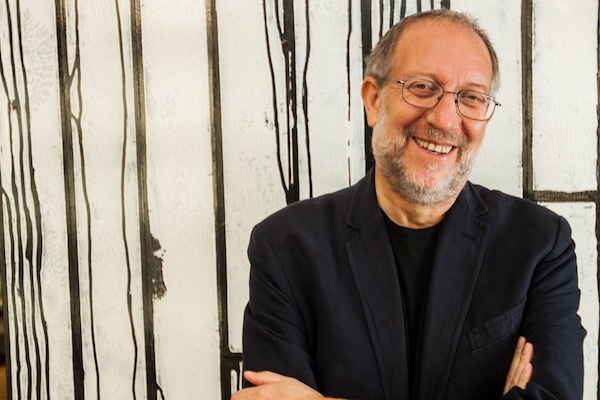
Oren Jay Sofer believes that, with nonviolent communication, a person can learn “how to identify what is most important to you and what’s more important to someone else … and, then, how to come up with more solutions and ideas for complex situations.” (photo from Oren Jay Sofer)

Oren Jay Sofer, author of Say What You Mean: A Mindful Approach to Nonviolent Communication, took a longer route to finding his connection to Judaism. “Probably,” he said, “most of it was because the teachings weren’t really available for me growing up – the more mystical or spiritual teachings of Judaism.”

The Buddhist practice of meditation resonated with Sofer. Then, he happened upon Dr. Marshall Rosenberg’s practice of nonviolent communication. Through learning about it, Sofer gained an accessible and practical complement to the inner transformation of meditation. “The two really started to work together in a synergistic fashion – in my personal transformation, in my relationships and in my direction in life,” said Sofer. “That, over time, led me to the work I’m doing today.”

A couple of years ago, Sofer was approached by a publisher about writing a book on his practices. He jumped at the opportunity to share what he had learned from integrating meditation practice, nonviolent communication and other concepts through Dr. Peter Levine’s work of somatic experiencing, a way of healing trauma through the nervous system.

“I was getting feedback [from students] that there was something unique about bringing these systems together, that people found really helpful,” said Sofer. “So, I wanted to reach more people, to write it down in a way that other people can go through this sort of progress of learning that I’ve put together – that could be of great benefit to them personally and for our society, in terms of the kinds of divisiveness and polarization people are experiencing around the world in so many places.

“I wanted to reach more people and help them have the tools to have more meaningful conversations in their life,” he added.

Sofer has found that communication and mindfulness are effective vehicles for aligning one’s life with one’s values, insofar as the choices we make, the work we do and the conversations and relationships we have.

This way of communication is accessible to anyone, no matter what age, religious belief, race, gender, or otherwise. “It’s for anyone who wants to improve their communication and have better conversations – parents, employees, supervisors, spiritual seekers, students, anyone – that is something I find so powerful and gratifying about this work, that it unites us as human beings,” said Sofer.

“We all communicate. And, we do it pretty much all day long in every area of our life. Even when we are alone, we have that inner voice going. So, the audience isn’t limited in any way, because we all depend on communication in our lives and it’s one of the things that determines our happiness. I really see this as a life skill that’s important for everyone.”

According to recent research conducted by Shawn Achor and others, the social relationships and connections we foster are one of the greatest predictors of long-term happiness, as well as of many different health markers. And, the quality of our relationships, to a large degree, is determined by our communication skills.
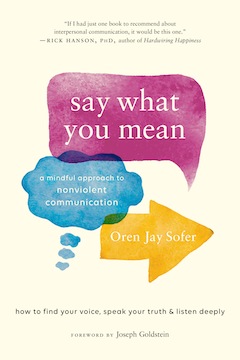
image - Say What You Mean book coverThe book is set up rather like a field guide of how to communicate and converse. So, it’s not the kind of book you will read over one weekend or week. It is one you can read over several months, taking a few pages at a time, with exercises and principles interspersed throughout to work on and absorb.

“You can’t learn to swim by reading a swimming manual, right?” said Sofer. “You need to get into the water. You can’t learn to communicate from a book. You have to do it. But, the book can tell you how to do it in a way that you’re running experiments that will give you the information you need to figure out what will work best in your life and relationships. It’s really meant to be applied in a step-by-step way. And, it takes people through a whole arc of training with specific foundations to integrate into their lives.”

The book’s first foundation is to “Lead with Presence,” which Sofer views as an essential prerequisite for any effective conversation or meaningful relationship.

“We need to be here to have more self-awareness if we’re going to navigate the complex terrain of human interaction with any skill or clarity,” said Sofer. “So, there’s a whole section about what it means to have more self-awareness, how to cultivate it and how to bring it into our relationships and conversations.

“And, there are all kinds of practices, skills and pointers – everything from pausing, to developing more embodied self-awareness, to developing what I call ‘relational awareness,’ which is the capacity to be not just aware of yourself, but of the other person, space and energy between you.

“Then, the book looks at our intentions, which is a huge component of human interaction, happening beneath the words. Our non-verbal communication is, to a large degree, shaped by our intentions.”

With the goals of building the kind of goodwill, trust and collaboration that lead to more satisfying connections, Sofer guides the reader through a self-reflection about their habits, training, family, culture and society, to help them determine which parts need improvement.

“There are many different stories I tell about the power of intention in conversation,” he said. “The third section really looks at how we navigate conversations themselves – in terms of where we place our intentions, how we say what we really mean, how we know what we mean, how we come to more clarity about ourselves about what’s happening, and how we hear others more clearly, even when they’re speaking to us in ways that are critical.

“This section is really where the training in nonviolent communication comes in, looking at the mechanics of the conversation, how to become more skilful, how to identify what is most important to you and what’s more important to someone else … and, then, how to come up with more solutions and ideas for complex situations.”

According to Sofer, one of the roots of violence stems from our relationship to emotional and psychological pain, and the views and beliefs we hold about their origins.

“If I believe that you caused my pain, then there is a very short distance to the assumption that you deserve to be punished or to have retribution, being the cause of my pain,” said Sofer. “In nonviolent communication, we differentiate between the cause and the stimulus. Obviously, we affect one another in this world. We stimulate pain, but we don’t directly cause it. This is a very radical concept in many ways for people to take in.

“When we examine it, we start to see the truth of it, which begs the question if anyone can actually make you feel some way. And, you know, two different people will respond to the same event completely differently. One person will respond completely differently on two different days.

“So, the nonviolent component, in one way, is pointing to this link between our language and our willingness to use physical violence to accomplish our aims or meet our needs. When we think and speak in ways that are connected to our shared humanity, one of the aims of nonviolent communication is that violence no longer makes sense, as we’re in touch with a deeper layer of our existence.”

Sofer also speaks about the origins of nonviolent communication as a tool to create social change, noting “Without transforming our outlook, interactions and consciousness, it’s impossible to transform our society for the better.”

Sofer’s book, Say What You Mean: A Mindful Approach to Nonviolent Communication, is sold by many vendors, but there is a free gift offer when it is purchased from the author’s page, orenjaysofer.com/book.

Rebeca Kuropatwa is a Winnipeg freelance writer.
Format ImagePosted on September 20, 2019September 17, 2019Author Rebeca KuropatwaCategories BooksTags lifestyle, nonviolent communication, Oren Jay Sofer, relationships
Laying out Israel’s case

Laying out Israel’s case

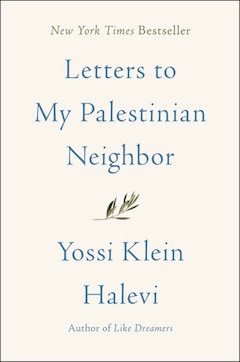
Yossi Klein Halevi’s Letters to My Palestinian Neighbour is recently out in paperback. (photo by Ilir Bajraktari / The Tower)

Yossi Klein Halevi grew up in the right-wing Zionist youth movement Betar, the ideological stream of Ze’ev Jabotinsky and Menachem Begin. As a youth, he wore a silver outline of the land of Israel “as we understood it” that included not only the West Bank but also the area that became the kingdom of Jordan, which the British had severed from historic Palestine. As he’s aged, he’s emphatically mellowed.

His book Letters to My Palestinian Neighbour, recently out in paperback, is, he writes, “an attempt to explain the Jewish story and the significance of Israel in Jewish identity to Palestinians who are my next-door neighbours.”

He lives in the French Hill neighbourhood of Jerusalem and repeatedly throughout the book reflects on how he is face-to-face with the division between their places.

Each chapter – essay, really – begins with “Dear neighbour.”

image - Letters to My Palestinian Neighbour book cover“From my apartment, I can just barely see the checkpoint you must cross – if you have a permit at all – to enter Jerusalem.” He talks about when, “before the wall was built, before so much else that went wrong, I tried to get to know you.”

In 1998, he set out on a pilgrimage into Islam and Christianity, a religious Jew “seeking not so much to understand your theology as to experience something of your devotional life. I wanted to learn how you pray, how you encounter God in your most intimate moments.”

During those comparatively placid times, he recalls, Israelis made little effort to accommodate their neighbours.

“For many years we in Israel ignored you, treated you as invisible, transparent. Just as the Arab world denied the right of the Jews to define themselves as a people deserving national sovereignty, so we denied the Palestinians the right to define themselves as a distinct people within the Arab nation, and likewise deserving national sovereignty. To solve our conflict, we must recognize not only each other’s right to self-determination but also each side’s right to self-definition.”

Klein Halevi made aliyah from the United States in 1982. Now a senior fellow of the Shalom Hartman Institute – “Israel’s preeminent centre for pluralistic Jewish research and education” – he co-directs the institute’s Muslim Leadership Initiative, is the author of numerous books and is a prolific commentator and former contributing editor of the New Republic. He has made the book’s Arabic translation available to download for free.

He argues that each side must be allowed to define themselves.

“So who are the Jews? A religion? A people? An ethnicity? A race?… That question impacts directly on our conflict. It goes to the heart of the Arab world’s rejection of Israel’s legitimacy as the nation-state of the Jewish people,” Klein Halevi writes. “Even Palestinian moderates I’ve known who want to end the bloodshed tend to deny that the Jews are an authentic nation. So long as Palestinian leaders insist on defining the Jews as a religion rather than allowing us to define ourselves as we have since ancient times – as a people with a particular faith – then Israel will continue to be seen as illegitimate, its existence an open question.”

He acknowledges that the problem occurs on both sides.

“Some Jews continue to try to ‘prove’ that Palestinian national identity is a fiction, that you are a contrived people. Of course you are – and so are we. All national identities are, by definition, contrived: at a certain point, groups of people determine that they share more in common than apart and invent themselves as a nation, with a common language, memory and evolving story. The emergence of a nation is an inherently subjective process.”

But he attempts to disabuse Palestinians and Arabic readers of the idea that Israel can be overcome.

“I’ve often heard from Palestinians that, just as the Ottoman Turks came here and left, and the British came here and left, so, too, will the Zionists one day leave. That analogy ignores Zionism’s singular achievement. None of those invaders founded a thriving society, let alone a sovereign state. They eventually went back to their own homelands. More than anything else, I need you to understand this: the Jews succeeded where the Crusaders and the Ottomans and the British failed because we didn’t merely come here. We returned.”

This sense of destiny is evocatively expressed when Klein Halevi writes about the War of Independence.

“Our side began the war with three tanks and four combat planes. And we were alone. That, as it turned out, was a crucial advantage, because desperation forced us to mobilize our entire society for a war of survival. If your side had prevailed, few if any Jews would have been left here. As a result, the Jews fought with such determination that only a handful of our communities fell. There was nowhere left to run; we’d reached the final shore of Jewish history.”

But the author makes an effort to acknowledge some of the harsh realities of that victory and the subsequent Israeli control of Palestinian areas and its effect on people. He recalls a moment during a call-up during his reserve service.

“A chubby teenage Palestinian boy, accused of stone throwing, was brought, blindfolded, into our tent camp. A group of soldiers from the border police unit gathered around. One said to him in Arabic: ‘Repeat after me: one order of hummus, one order of fava beans, I love the border police.’ The young man dutifully repeated the rhymed Arabic ditty. There was laughter.… That last story haunts me most of all. It is, seemingly, insignificant. The prisoner wasn’t physically abused; his captors, young soldiers under enormous strain, shared a joke. But that incident embodies for me the corruption of occupation. When my son was about to be drafted into the army I told him: there are times when as a soldier you may have to kill. But you are never permitted, under any circumstances, to humiliate another human being. That is a core Jewish principle.”

He acknowledges his pain over an eventual partition that would, for example, see the Jewish holy city of Hebron as part of an independent Palestine. But, he says: “The only solution worse than dividing this land into two states is creating one state that would devour itself. No two peoples who fought a 100-year existential war can share the intimate workings of government. The current conflict between us would pale beside the rage that would erupt when competing for the same means of power. The most likely model is the disintegration of Yugoslavia into warring ethnic and religious factions – perhaps even worse. A one-state solution would condemn us to a nightmare entwinement – and deprive us both of that which justice requires: self-determination, to be free peoples in our own sovereign homelands.… If Jaffa belongs to you and Hebron belongs to me, then we have two options. We can continue fighting for another 100 years, in the hope that one side or the other will prevail. Or we can accept the solution that has been on the table almost since the conflict began, and divide the land between us. In accepting partition we are not betraying our histories, neighbour; we are conceding that history has given us no real choice.”

Near the end, Klein Halevi reflects that some simple human goodness could have made a massive historic difference.

“Israel is a restless society of uprooted and re-rooted refugees and children of refugees, and the dark side of our vitality is a frankness that can easily become rudeness, the antithesis of Arab decorousness. Israelis often don’t know how to treat each other with respect, let alone those we are occupying. We are a people in a hurry to compensate for our lost centuries of nationhood, a people that doesn’t pay attention to niceties. Sometimes I think that, if only we’d known how to show your people simple respect, so much could have been different here.”

The new paperback edition includes an epilogue of “letters” in response to his neighbourly missives. Some, the author admits, are predictably harsh, dismissive and threatening. But many are long, thoughtful and inspiring. Klein Halevi has started a conversation. It is invigorating and heartily recommended to be a part of it as a reader.

Format ImagePosted on September 20, 2019September 17, 2019Author Pat JohnsonCategories BooksTags civil society, history, Israel, Israeli-Palestinian conflict, lifestyle, philosophy, Yossi Klein Halevi
Stories about the Holocaust

Stories about the Holocaust

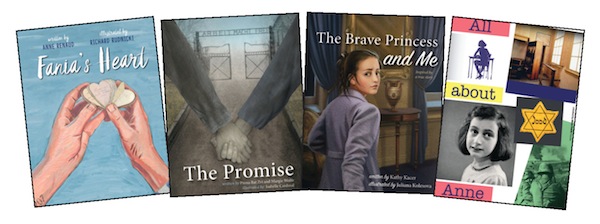
On the Jewish Independent’s bookshelf are four books recently published by Second Story Press. All are inspired by real women and girls, and all share lessons of bravery, solidarity and compassion, as well as of the Holocaust.

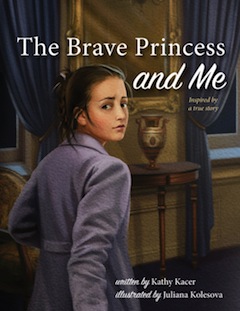
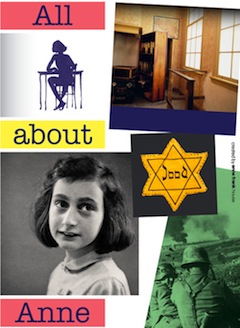
Fania’s Heart by Anne Renaud and illustrated by Richard Rudnicki, The Promise by Pnina Bat Zvi and Margie Wolfe and illustrated by Isabelle Cardinal, and The Brave Princess and Me by Kathy Kacer and illustrated by Juliana Kolesova are hard-covered picture books for readers ages 7-11. All About Anne, by Anne Frank House and illustrated by Huck Scarry (son of children’s authors Patricia Scarry and Richard Scarry), is a soft-cover encyclopedia of sorts for readers ages 9-13.

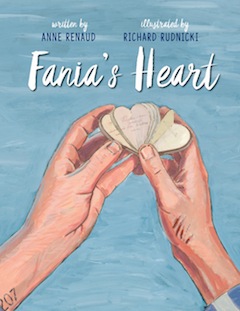
image - Fania’s Heart book coverFania’s Heart is based on the story of Fania Landau Fainer, from Bialystok, Poland, who survived Auschwitz. In the book, her daughter, Sorale (Sandy), who is “almost 10,” finds a heart-shaped book in her mother’s dresser, where she “was not supposed to rummage.” She takes it to her mom, who tells Sorale about the book’s origin – a 20th birthday present of unimaginable meaning, made by fellow prisoners, at great risk, with breadcrumbs and stolen or bartered thread, pencil, paper and other materials. It is a story told with minimal sentimentality and with illustrations in the 1950s-style of the time in which it would have taken place in real life. An author’s note explains the Holocaust very briefly and how the card, which unfolds “like an origami flower,” ended up at the Montreal Holocaust Museum.

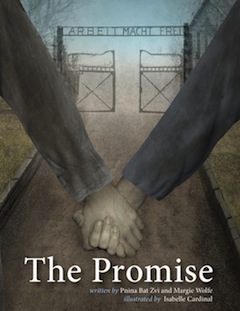
image - The Promise book coverIn The Promise, cousins Bat Zvi and Wolfe tell the story of their mothers, Rachel and Toby, who survived Auschwitz. It starts two years after the sisters were separated forever from their parents, who gave Toby three gold coins to use “only if you have to” and advised, “above all, stay together.” When Rachel becomes ill and is taken from the barracks, the coins play a crucial part in Toby’s rescue attempt. In a four-sentence epilogue are photos of the real sisters, but no context other than that in the story itself, which mentions Nazis and Auschwitz but not the Holocaust. The artwork for the book is somewhat creepy – the disproportionally large heads are photo-like, and placed on more traditionally illustrated bodies.

image - The Brave Princess and Me book coverLess emotionally powerful – in part because there is too much text – is The Brave Princess and Me, which relates how Princess Alice hid Jewish mother and daughter Rachel and Alice Cohen in her home. The Nazis invaded Greece in 1941, and The Brave Princess and Me starts in 1943. Princess Alice, the mother of Prince Philip, was born deaf and she uses her impairment to protect the Cohens. More about the princess, who was honoured as one of the Righteous Among Nations, is included after the story.

image - All About Anne book coverRounding out the publications is All About Anne, a relatively comprehensive telling of Anne Frank’s story, which uses drawings, photographs and text from the Anne Frank House museum in Amsterdam. Its content is based on the questions most frequently asked by visitors to the museum. While it centres around Anne, her life and her diary, it includes broader information about the Second World War and the Holocaust. It is an excellent resource.

For more information on these and other books from Second Story Press, visit secondstorypress.ca.

Format ImagePosted on September 20, 2019September 17, 2019Author Cynthia RamsayCategories BooksTags education, Holocaust, Second Story Press, youth

Need earth-friendly policies

We are now well into the Hebrew month of Elul, which provides an incentive for heightened introspection, a chance to practise teshuvah, changes in our lives, before the Days of Awe, the Days of Judgment, the High Holidays of Rosh Hashanah and Yom Kippur. The shofar is blown every morning (except on Shabbat) in synagogues during the month of Elul to awaken us from slumber, to remind us to consider where we are in our lives and to urge us to consider positive changes.

How should we respond to Elul today? How should we respond when we hear reports almost daily of severe, often record-breaking, heat waves, droughts, wildfires, floods and storms; when July 2019 was the hottest year since temperature records were kept in 1880; when 18 years in this century are among the 19 hottest years and 2014, 2015 and 2016 successively broke temperature records; when polar ice caps and glaciers are melting far faster than projections of climate experts; when climate scientists are warning that we could be close to an irreversible tipping point when climate change could spiral out of control with disastrous consequences, unless major changes are soon made; when we appear to also be on the brink of major food, water and energy scarcities; and when, despite all of the above, so many people are in denial, and almost all of us seem to be, in effect, rearranging the deck chairs on the Titanic as we approach a giant iceberg?

Israel is especially threatened by climate change since, among other dangers, a rising Mediterranean Sea could inundate the coastal plain, which contains much of Israel’s population and infrastructure; and the hotter, drier Middle East projected by climate experts makes terrorism and war more likely, according to military experts.

It is well known that one is not to shout fire in a crowded theatre – except if there actually is a fire. The many examples of severe climate change indicate that the world is on fire today. Therefore, we should make it a priority to do all that we can to awaken the world to the dangers and the urgency of doing everything possible to shift our imperiled planet onto a sustainable path.

We should urge that tikkun olam (the repair of the world) be a central focus in all aspects of Jewish life today. We should contact rabbis, Jewish educators and other Jewish leaders and ask that they increase awareness of the threats and how Jewish teachings can be applied to avert impending disasters. We should write letters to editors, call talk shows, question politicians and, in every other way possible, stress that we can’t continue the policies that have been so disastrous.

As president emeritus of Jewish Veg, formerly Jewish Vegetarians of North America, I want to stress that shifting toward a vegan diet is something that everyone can do right away. It would significantly reduce greenhouse gas emissions and it would be consistent with Jewish teachings on preserving human health, treating animals with compassion, protecting the environment, conserving natural resources, and helping hungry people.

The afternoon service for Yom Kippur includes the book of Jonah, who was sent by God to Nineveh to urge the people to repent and change their evil ways to avoid their destruction. Today, the whole world is Nineveh, in danger of annihilation and in need of repentance and redemption, and each one of us must be a Jonah, with a mission to warn the world that it must turn from greed, injustice and idolatry, so that we can avoid a global catastrophe.

Richard H. Schwartz, PhD, is professor emeritus, College of Staten Island, president emeritus of Jewish Veg and president of Society of Ethical and Religious Vegetarians. He is the author of several books, including Judaism and Vegetarianism and Who Stole My Religion? Revitalizing Judaism and Applying Jewish Values to Help Heal Our Imperiled Planet, and more than 250 articles at jewishveg.org/schwartz. He was associate producer of the documentary A Sacred Duty: Applying Jewish Values to Help Heal the World.

Posted on September 20, 2019September 17, 2019Author Richard H. SchwartzCategories Op-EdTags climate change, Elul, environment, lifestyle, Rosh Hashanah, tikkun olam
Holidays as a child

Holidays as a child

A Klein family portrait. (photo from Libby Simon)

As I get older, I look forward to my childhood memories of the High Holidays with my original family. This year, Rosh Hashanah begins before sundown on Sept. 29 and ends on nightfall Oct. 1, Yom Kippur.

My parents, four older brothers and I had moved to several rental houses after our arrival in Winnipeg’s legendary North End, but the one on Robinson Street is the earliest in my awareness as a preschooler. The neighbourhood was refuge for a host of other immigrant Jewish families who came from the same geographical area and shared the same culture, language and religion. This bond and kinship brought these landsleit together and they congregated around the Talmud Torah Hebrew Free School, where my father taught the children, and the Chevra Mishnayes Synagogue, directly across from our house, giving us the opportunity to attend services in a building that also acted as an unofficial community centre.

Papa attended all Shabbat services at the shul, which was the centre of many family weddings, bar mitzvahs and funerals. Since we observed the Orthodox Jewish religion, women and men did not sit together, so, while the men were seated on the main floor, the women were sequestered in an upstairs oval-shaped balcony overlooking the activity below. Not particularly interested in the liturgy, they tended to talk to one another about their children, their homes and other areas of interest, especially cooking on the High Holidays. This “noise” often interfered with the men as they recited the prayers. At some point, the shamas (the person running the service) would look upward, pound on the podium and shout “Schveig, viber!” (“Quiet, women!”) as if we were all one big family. Things subdued for awhile until the chatter swelled again, requiring intermittent reminders with more pounding, and a commanding, “SHHAA!”

Our old, wood-framed house had a screened veranda where I played and sometimes slept on warm summer nights. Once I was old enough, on Saturday mornings, I was allowed to cross the street to join Papa after a bar mitzvah celebration. There were always treats after the service, and he would prepare a small plate of schmaltz herring and chickpeas for me, and a piece of honey cake for dessert. I loved schmaltz herring and would devour it quickly while Papa looked on with a broad, proud smile.

But clouds of the Great Depression hung heavy over this North End community and there was widespread poverty. Most women did not work outside the home and, like many other men, my father lost his teaching job for a period during the Depression.

When I accompanied Mama to the grocery store or the kosher butcher shop, I didn’t understand why her face flushed and her eyes looked away as she stammered out in Yiddish, “I need food for the children. Can you put this on credit? We will pay you as soon as we can.” Her embarrassment and humiliation collided with my father’s shame, and resulted in many heated arguments between them over money.

The stress was particularly hard on Mama because she wasn’t well and had a large family to care for. She developed a “milk leg” while pregnant with my youngest older brother, Matty. It created a painful swelling of the leg after giving birth, which caused inflammation and clotting in the veins and affects some postpartum women. I vividly recall the too-numerous times when an ambulance came tearing down Robinson Street to our house with wailing warnings. Big men dressed in white would rush in, lift Mama onto a stretcher and take her away amid the shrieking sirens that were now competing with the high-pitched howls of her two frightened preschoolers, Matty and me.

Back then, children were not allowed to visit in hospitals, for fear of transmitting disease, so we could not see our mother for intermittent periods. On one such occasion, my father had enough money to take us to the ice cream store a few blocks away. Holding Papa’s hand on one side, with Matty on the other, I felt safe as we all walked together. And the tears subsided.

Canada declared war on Germany in September 1939 after Hitler invaded Poland, and, although my parents’ family was safe in Canada, their hearts and minds were with the loved ones they had left behind. Yet, our home was filled with joy and laughter.

My mother played happy, lively Russian, Yiddish and Hebrew songs at the black upright piano that held a place of honour among the flowery wallpaper and sagging couches of our living room. The eldest of the five children would lead us in a conga line with me at the other end, and we would dance from room to room, up and down the stairs, and all around the house. Sometimes, he would pick me up, throw me over his shoulder and call out “A zekele zaltz!” like a peddler. “A sack of salt, I have a sack of salt for sale! Who wants to buy my little sack of salt?” Or sometimes I was “potatoes.” Whether salt or potatoes, he would haggle with whichever of my other brothers offered to “buy” me.

Although I was still a preschooler, I knew that Papa was listening to “the news on the radio.” The worry was in his eyes, his face, his body, and his words expressed his extreme concern for our families back in the homeland. But the true catastrophic human saga that was unfolding, even as he listened, would not emerge until the war ended. We would learn much later that most of the relatives left behind, including my maternal grandfather, died in the Holocaust.

Even Papa’s fears could not have fathomed such destruction. The radio had become so much a central focus and source of news that, when the war ended in 1945, I recall asking, “Papa, now that the war is over, will they close the radio?”

“Why do you think they will close the radio?” he asked with a puzzled look.

“Because what else would they have to talk about?”

Libby Simon, MSW, worked in child welfare services prior to joining the Child Guidance Clinic in Winnipeg as a school social worker and parent educator for 20 years. Also a freelance writer, her writing has appeared in Canada, the United States, and internationally, in such outlets as Canadian Living, CBC, Winnipeg Free Press, PsychCentral and Cardus, a Canadian research and educational public policy think tank.

Format ImagePosted on September 20, 2019September 17, 2019Author Libby SimonCategories Celebrating the HolidaysTags family, history, Rosh Hashanah, Winnipeg

Our life accomplishments

We humans spend most of our lives searching for a path forward. Our priorities tend toward avoiding pain and seeking pleasure. We don’t even think about it, it is the instinctive reaction of any living thing. In this, we are essentially the same as any other life form on our globe. Humanity is no different than an amoeba, for example, in its instinctive struggle to survive, seeking the positive environment and avoiding the negative.

It is reported that Socrates said that the unexamined life is not worth living. In his day, he was reportedly a gadfly, challenging everyone and everything with his relentless questioning. Difficult and sometimes uncomfortable though it may be, we ourselves often feel the need to honestly examine the what, the who and the why of our lives. And we have to look at both its micro and macro elements.

As for myself, on the macro side, I find I have a huge loyalty to my tribe, the Jewish tribe that I was born into. I am so proud of the contribution we have made, as a people and as individuals, and are continuing to make, in the advancement of the human condition in so many fields. I believe that much of this flows from the unique cultural package that adherents absorb with their mother’s milk.

But I am also aware that, along with the benefits of the moral code that our religiosity has contributed to improving the life on our planet, comes the distressing tendency for religion’s most orthodox adherents, whatever their stripe, to insist on a closing of minds to ideas that do not fit into an inflexible and unalterable worldview. I have needed to come to terms with the role my tribe (e.g. Baruch Spinoza) has played in that.

We have seen that, when religious and political dogma become state policy for believers and non-believers, and these are forced on the unwilling (e.g. the Inquisition, Communism), humanity stumbles on its way forward. We have seen the expression of the effort to avoid this in the adoption of the principle of separation of church and state, but this is imperfect and does not solve the problem of secular fanaticism. For me, humanity must always move to avoid extremism and the inevitable pain and destruction it causes to so many people.

Historically, we have seen how the advances that humanity made during the Greek flowering in the arts, philosophy and science were lost for a millennium. Some of this was salvaged under early Rome. They were then smothered for centuries by religious orthodoxy. We have seen how we have benefitted as humans from their liberation. These forces have shaped the world we live in, and the lives we are living, as we seek our pleasures and strive to avoid life’s pains.

On the micro side, I, like many of you must have, and must have been, studying the trajectory of our lives. Thinking back over my times, I wonder at the career decisions that I have made. I wonder at my actions during what proved to be watersheds in my life. Some of it was not much fun. I wonder at the impact on those whose lives, willy-nilly, were carried alongside of me in the tide of my life.

Then there is the question of nature or nurture. To what degree are our futures driven by the DNA package we inherited? Surely, to some extent, we are programmed in our reactions to fate by our inheritance. I wonder at the impact if our blood is programmed to run a certain way or another, or if our hormones, liver and kidneys function efficiently, the quickness of our minds, the quickness of our step, the state of our health. Doesn’t that make a huge difference in what we can accomplish? How much do we owe to our forbears for our results?

And then, what if we are raised on the “right side of the tracks,” our parents are educated, they pay attention to the development of their offspring, or none of these things? If we were born into abject poverty or in a country in turmoil, how greatly would our opportunities be constrained? Does not colour, economic circumstance and location make a huge difference in our range of opportunities? Doesn’t the political system, religion, sex and sexual orientation, the very epoch in which we were raised, make a difference even in these so-enlightened times?

Some of us can believe we deserve all the credit for our accomplishments, but how much do we owe to all the positive circumstances that affected our lives? Or, we may weep over our misfortunes, and surely we can truly finger the circumstances and the evidence that show that all of us do not start out on a level playing field.

We have little room for arrogance about our outcomes in the lottery. We can count on our lucky stars if we are winners, if we overcame our disadvantages enough and, summoning the best of the resources we salvaged, we can find some satisfaction in the outcomes. For those still on the trail, you may wish to proceed with caution with your assertions of personal mastery. As well, the knowledge that we face disadvantages will not absolve us from desperately trying our best in our lives. We have that obligation to ourselves.

We will know in our hearts at the end of the trail where we failed and where we succeeded. Special pleading will not help when we face our internal judge and jury, as we are the harshest of the judges we face when we examine our lives. My advice is to be kind to yourself and to one another.

Max Roytenberg is a Vancouver-based poet, writer and blogger. His book Hero in My Own Eyes: Tripping a Life Fantastic is available from Amazon and other online booksellers.

Posted on September 20, 2019September 17, 2019Author Max RoytenbergCategories Op-EdTags lifestlye, memoir

Still loyal if vote Democrat

The Aug. 29 Jerusalem Post had an article, “Pipko to Post: Jewish Democrats are walking away,” which argued that “The Democrats have changed and so should [Jewish] support for them.” It is part of an effort carried out by Republicans before every presidential election to make Israel a wedge issue, to convince Jews to switch to supporting Republicans.

Polls have found that most Israelis also believe that U.S. Jews should support President Donald Trump and other Republicans, largely because of what they perceive as their strong support for Israel. In his efforts to get U.S. Jews to change their political allegiance, Trump has stated about Jews that, “In my opinion, you vote for a Democrat, you’re being very disloyal to Jewish people, and you’re being very disloyal to Israel.”

Despite these opinions and statements, in the same Aug. 29 issue of the Post was the article “Trump vs. Gallup: Report shows Jews will vote Dem,” which indicated that a very strong majority of U.S. Jews (roughly 75%) are very likely to continue to vote for Democrats.

As an American who made aliyah about three years ago, after living in the United States for 82 years, I would like to discuss why U.S. Jews generally vote for Democrats and, in doing so, are, I believe, loyal to Jews, Israel and Jewish values.

A major reason is that Trump, along with virtually all U.S. Republican politicians, denies climate change, an existential threat to Israel, the United States and, indeed, the world. Trump and virtually all Republicans are doing everything possible to support the fossil fuel industry and weaken efforts to reduce greenhouse gas emissions. Research from Columbia Law School, Harvard Law School and other sources revealed more than 80 environmental rules and regulations on the way out under Trump.

Another important reason that most Jews vote for Democrats is that many of Trump’s policies are contrary to basic Jewish values of kindness, compassion and concern for the disadvantaged, the stranger and the poor. Rather than improving Obamacare, which provided health insurance to tens of millions of Americans, Trump supported legislation that would result in as many as 32 million Americans losing their health insurance and making others pay higher premiums.

Also, instead of rebuilding America’s crumbling infrastructure, rated a D+ by the American Society of Civil Engineers, Trump and Republican legislators pushed through a tax bill that overwhelmingly benefits the wealthiest Americans and highly profitable corporations. This will greatly increase the U.S. national debt, giving the Republicans an excuse to try to carry out their longtime desires to cut programs Americans depend on, including Social Security, Medicare and Medicaid.

Most Jews also disagree with the views and policies of Trump and other Republicans on many issues, including immigration, civil rights, gun control, church-state separation, judicial appointments, diplomacy and the Iran nuclear agreement.

While a significant majority of Israelis approve of the United States getting out of the Iran nuclear deal, the results of that action remain to be seen. A strong majority of military, nuclear and strategic experts believe that the pact is the best approach to curbing Iran’s nuclear weapons ambitions. Among the negatives of Trump’s decision is that European and other nations have been alienated, America’s credibility in keeping agreements has been reduced and the potential for war and terrorism may have increased.

Then there is the issue of Trump’s character. As the New York Times’ conservative columnist Bret Stephens, a former chief editor of the Jerusalem Post, wrote in a recent article, Trump’s character involves “lying, narcissism, bullying, bigotry, crassness, name-calling, ignorance, paranoia, incompetence and pettiness.” Do we really want to honour such a person and make him a role model for our children and grandchildren?

Jews who vote Democrat generally support Israel, but they believe that, while it will be difficult to obtain, largely due to Palestinian positions and actions, Israel needs a resolution to its conflict with the Palestinians in order to avert continued and possibly increased violence, effectively respond to its economic, environmental and other domestic problems, and remain both a Jewish and a democratic state. They view Trump’s statements and actions with regard to Israel in terms of that belief.

American Jewish Democratic party supporters recognize that Trump’s recognition of Jerusalem as Israel’s capital, his movement of the U.S. embassy there and his other supportive policies and actions with regard to Israel are good for Israel’s morale, but they do not believe it makes peace more likely or terrorism less likely.

Of course, Jerusalem is the capital of Israel, always has been and always will be. But, almost all of the nations of the world will only acknowledge this if it is part of a comprehensive, sustainable resolution of the Israeli-Palestinian conflict. Trump’s shift of the U.S. embassy to Jerusalem has totally alienated the leadership of the Palestinian Authority, which now rejects a U.S. role in forging peace with Israel. Trump’s decision would have made sense as the capstone of a final peace agreement with the Palestinians, but its timing seems counterproductive, alienating many nations, adding impetus toward anti-Israel violence and reducing prospects for a negotiated resolution of the Israeli-Palestinian conflict.

The price that Israel will have to pay for Trump’s support should also be considered. Most analysts believe that it was pressure from Trump that convinced Israeli Prime Minister Binyamin Netanyahu to cancel the visit by the two U.S. congresswomen, a decision that received widespread criticism, even from strong supporters of Israel, including AIPAC.

It is very significant that, of the 36 Jewish Congress members, 34 are Democrats.

Israel may also suffer significantly by Trump and other Republicans making Israel a wedge issue, harming the important bipartisan support of Israel, in efforts to convince Jews to vote Republican.

Another factor is the major increase in antisemitic acts since Trump became president, which many people believe is due to his failure to sufficiently condemn white nationalists and other bigots.

In light of all these considerations, I believe that U.S. Jews are correct in supporting Democratic politicians and, in doing so, are being loyal to Jews, Jewish values and Israel.

Richard H. Schwartz, PhD, is professor emeritus, College of Staten Island, president emeritus of Jewish Veg and president of Society of Ethical and Religious Vegetarians. He is the author of several books, including Judaism and Vegetarianism and Who Stole My Religion? Revitalizing Judaism and Applying Jewish Values to Help Heal Our Imperiled Planet, and more than 250 articles at jewishveg.org/schwartz. He was associate producer of the documentary A Sacred Duty: Applying Jewish Values to Help Heal the World. A version of this article was originally published in the Jerusalem Post.

Posted on September 20, 2019September 17, 2019Author Richard H. SchwartzCategories Op-EdTags Donald Trump, environment, politics, United States
Kibbutz’s beauty and history

Kibbutz’s beauty and history

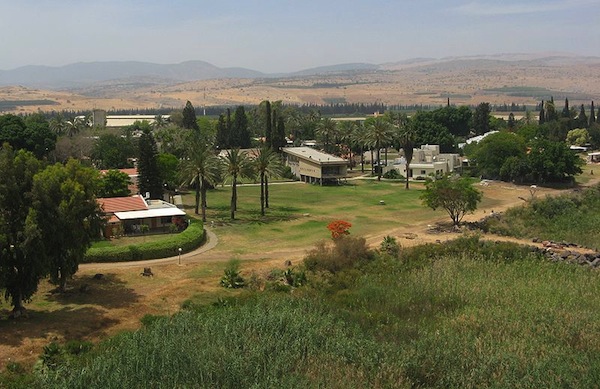
Kibbutz Ginosar (photo from wikicommons)

Planning a three-week trip to Israel last year, I booked a short kibbutz stay near the Sea of Galilee, the Kinneret. I chose Kibbutz Ginosar for no other reason than its location right on the water and ease of access to the various attractions in the area.

When I mentioned to an Israeli-Canadian friend the name of the kibbutz, she said, “Isn’t that Yigal Allon’s kibbutz?”

I like to imagine I have at least a passing knowledge of Israeli history, but the name meant nothing to me. As I have asked around since, I find the man’s name and reputation are not as widely known as they should be.

To back up: I did not go through the conventional kibbutz booking process. I found the charmingly comfortable but rustic cottage on Airbnb, a development around which the socialist Zionists of the Youth Aliyah who founded the place would doubtless have had trouble wrapping their heads.

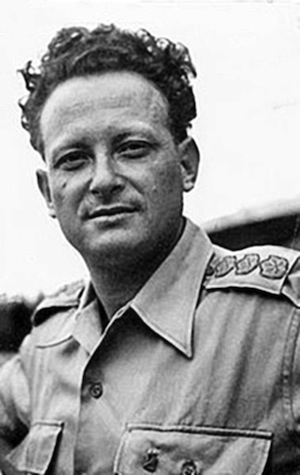
In any event, I soon learned that Allon, who was born in 1918 in the Yishuv, was one of the founding leaders of the Labour movement. In the 1930s, he commanded field units of the Haganah during the Arab revolt and, during the Second World War, worked with British forces fighting in Syria and Lebanon. He later helped found the Palmach, the elite fighters of the Haganah, becoming deputy commander in 1943, and he was, from 1945 until the creation of the state, its commander. It was on Allon’s orders, received from David Ben-Gurion, that the Haganah shelled the Irgun ship Altalena, in June 1948, a pivotal moment in the creation of a unified Israeli military and, indeed, in Jewish and Israeli history.

phot - Yigal Allon
Yigal Allon (photo from wikicommons)

During the War of Independence, Allon commanded forces in many major operations. In 1955, he was elected to the Knesset, serving 25 years until his death in 1980. He served, variously, as minister of labour, immigrant absorption, education and culture, as well as deputy prime minister. And here is a footnote to history with which you can entertain guests at your upcoming holiday celebrations: Allon served as prime minister of Israel.

Well … interim prime minister. In the three weeks between the death of Levi Eshkol, in 1969, and the ascension of Golda Meir to the Labour Party leadership and the prime minister’s office, Allon filled in.

Perhaps as intriguing, though, Allon was, in a way, the northern analogue to the southern Ben-Gurion. Ben-Gurion recognized the necessity of planting both human roots and agricultural roots in the Negev. Allon was an advocate for populating the northern part of the country after the War of Independence.

The Yigal Allon Centre, located on the kibbutz, celebrates “The Man in the Galilee.” In addition to telling the story of his life and career, the museum features an unrelated attraction that has become a must-see on Christian pilgrimages in the area.

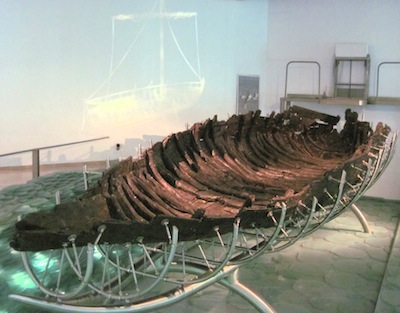
Somewhat serendipitously – bashert might be the better word – the kibbutz has enjoyed a giant spike in Christian tourism after the discovery, in 1986, of an ancient boat. During a terrible drought, when the waters of the Kinneret receded, local fishermen – brothers Moshe and Yuval Lufan – discovered the remains of a boat about 27 feet long and seven-and-a-half feet wide. Carbon dating indicated that it was probably from around the first century CE.

A 12-day, around-the-clock operation excavated the boat from the mud and prevented exposure to the atmosphere by wrapping it in insulating foam, which allowed the vessel to be transported safely and buoyantly. It was then submerged in a bath of wax for a dozen years, preventing the internal water and external air from disintegrating the structure.

There is not, of course, any evidence to say that the boat was ever touched by Jesus or his disciples, but the carbon dating to that time period has allowed entrepreneurial tourism officials to market the exhibit as of particular interest to Christian visitors.

photo - The Sea of Galilee Boat or “Jesus Boat” on a metal frame in the Yigal Allon Museum in Kibbutz Ginosar, Tiberias, Israel
The Sea of Galilee Boat or “Jesus Boat” on a metal frame in the Yigal Allon Museum in Kibbutz Ginosar, Tiberias, Israel. (photo by Travellers & Tinkers/wikicommons)

In Christian tradition, Jesus called on another pair of brothers – Peter and Andrew, fishermen on the Sea of Galilee, later beatified – to follow him and become “fishers of men,” proselytizers for the new religion, Christianity.

In the way that public relations can sometimes stretch credulity, the admittedly intriguing ancient find is sometimes marketed as “the Jesus boat,” which does nothing to discourage the backlog of tour buses that pile into Kibbutz Ginosar any given day of the week and whose passengers pack the adjacent gift shop.

With Ginosar as a base, travelers can easily drive south to Tiberias or north to the mesmerizing holy city of Tzfat, a centre of mysticism and kabbalah. The laid-back atmosphere of the kibbutz can also be a refuge from the hectic pace of Israeli tourism. Ginosar is home to Israel’s legendary Jacob’s Ladder music festival.

On our visit, our host invited us to an open-mic night. Not sure what to expect, we were greeted with one of the most memorable celebrations of our entire trip. Apparently, almost every kibbutz resident, human, canine and feline, plus visitors, showed up for a multigenerational celebration that seemed not so much about the music, although that was great, but about the utter joy of community.

Format ImagePosted on September 20, 2019September 17, 2019Author Pat JohnsonCategories TravelTags Ginosar, history, Israel, Jesus Boat, kibbutz, Yigal Allon
Being Jewish in Sitka, Alaska

Being Jewish in Sitka, Alaska

The mountains of Sitka, Alaska. (photo by Deborah Rubin Fields)

“You have to look at Jews like Bina Gelbfish, to explain the wide range and persistence of the race. Jews who carry their homes in an old cowhide bag, on the back of a camel, in the bubble of air at the centre of their brains. Jews who land on their feet, hit the ground running, ride out the vicissitudes and make the best of what falls to hand, from Egypt to Babylon, from Minsk Gubernya to the district of Sitka.” (from Michael Chabon’s The Yiddish Policemen’s Union)

Unlike Bina Gelbfish, Lisa Busch is not a fictional character living in Sitka, Alaska. The executive director of the Sitka Sound Science Centre, she has lived in the city for 30 years. She and her husband have two daughters and are active in the local Jewish community. Busch described her congregation as laid-back.

photo - A Tlingit totem pole on grounds of Sitka’s Totem Park
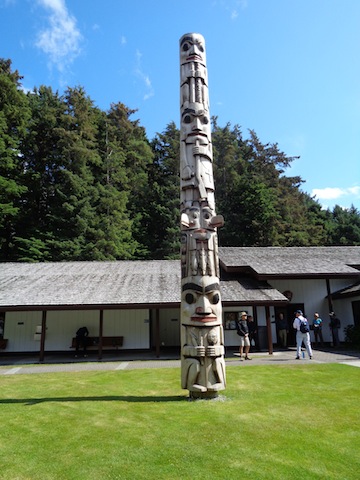
A Tlingit totem pole on grounds of Sitka’s Totem Park. (photo by Deborah Rubin Fields)

The congregation functions out of people’s homes. It does not have its own building. What it lacks in a physical facility, however, it makes up for in creativity. “We share Shabbat and holidays,” said Busch. “When my kids were little, we had a tot Shabbat group of moms and kids and the kids did mitzvot, making challah for neighbours, etc.”

Also when her “kids were little, we put on a Purim play every year,” she said. “My family hosts a Passover seder every year and my husband makes homemade gefilte fish out of rock fish or halibut.”

Both of Busch’s daughters had bat mitzvah celebrations. They learned Hebrew via Skype and the family brought up a rabbi to oversee. Accordingly, the ceremonies were a mix of Jewish traditions and local ones.

Busch said Hebrew lessons are taught by whomever “we could find in town who was willing. For example, we have a Coast Guard air station and buoy tender here and, sometimes, someone was just in town for a few years and willing to pitch in with the teaching. Also, one of the more observant Jews here, David Voluck, spent time with my kids when they were older and met with them over Torah studies and Jewish ideas.”

Busch said, “I am so very appreciative of all the community members who helped educate our kids. I was raised a humanist Jew and, while I am confident in our Jewish values, there is always so much more to know, and having people around us who were willing to share what they know was so wonderful. I’m not sure I could have accessed those kinds of people or those kinds of lessons in a larger city.”

When asked who leads the congregation’s prayers and/or Torah reading, Busch said it’s the task of the person who suggests the event.

The Sitka Jewish community has contact with the congregations in Juneau and Anchorage. The city has had visiting rabbis from both places.

Nowadays, with her daughters grown up, Busch participates in Shabbat and holiday gatherings. What she likes best about her congregation is it casualness and flexibility.

photo - A Tlingit bib from a display at Sitka’s Sheldon Jackson Museum
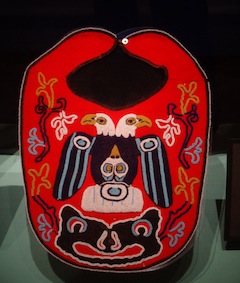
A Tlingit bib from a display at Sitka’s Sheldon Jackson Museum. (photo by Deborah Rubin Fields)

The flexibility of the Jewish congregation is reflected in the town as a whole, as today’s Sitka honours diversity. While this was not always the case – especially during the period of Russian rule (1799-1867) and when Alaska was a United States territory (statehood was achieved in 1960) – the culture of the indigenous Tlingit people is now highly respected.

There are examples, though, of acceptance that hearken to the past. One of the more humourous incidents involves St. Peter’s by the Sea, a small Episcopal church that is more than 100 years old. Before it opened in 1899, Bishop Peter Trimble Rowe and his congregants decided to include a rose window in the construction of the sanctuary. They placed an order with a glass company located in the eastern United States. They waited many months for the window to arrive. When the window finally came, they found that, instead of the Christian symbol that had been ordered as the focal point, there was a six-pointed Star of David. Considering the time it took to manufacture the window and the window’s complex dimensions, they decided to keep it. The church’s website notes that the Star of David window reminds congregants that Christianity grew out of Judaism.

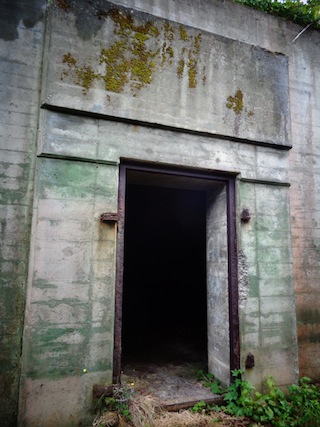
photo - The United States used Sitka as a defensive base in the Second World War. Ammunition magazines, gun emplacements and the headquarters command centre may still be seen at Fort Rousseau historic site
The United States used Sitka as a defensive base in the Second World War. Ammunition magazines, gun emplacements and the headquarters command centre may still be seen at Fort Rousseau historic site. (photo by Deborah Rubin Fields)

Jews apparently began to live in Alaska shortly after the United States purchased the territory from the Russian Empire. A small group of Jews opened up shops in Sitka and, in 1868, a year after the U.S. purchase, Emil Teichman sailed to the city on behalf of the London Fur Co. He wrote in his diary: “the traders, keepers of billiard saloons and dealers in spirits … were mostly of the Jewish race and carried on a more or less illicit trade with the soldiers and Indians, evaded customs and excise duties, and were liable to prosecution at any moment had the administration of the law not been so lax.” (A Journey to Alaska) Interestingly, one Friday night, by chance, he passed a warehouse where some 20 Jewish men were conducting Sabbath eve prayers. Teichman commented: “Jews everywhere, even in the most remote countries, practise their devotional exercises. I should scarcely have expected it in Sitka among a community which engaged in such very disreputable occupations.”

Surrounded by water, temperate rainforests, wildlife and mountains, Sitka (visitsitka.org) is a very pleasant, picturesque and friendly town. It is not hard to understand why Jews have chosen to make it their home.

Deborah Rubin Fields is an Israel-based features writer. She is also the author of Take a Peek Inside: A Child’s Guide to Radiology Exams, published in English, Hebrew and Arabic.

***

Historic decision

In 1938, Harold L. Ickes, U.S. secretary of the interior department visited various parts of Alaska. He wanted to see whether the Alaskan territory could be used as a resettlement sanctuary for persecuted German Jews. Ickes maintained much of Alaska was uninhabited and underdeveloped. He believed that mass Jewish resettlement could potentially strengthen security in a U.S. territory then deemed vulnerable to attack. He had interior undersecretary Harry A. Slattery write a report, The Problem of Alaskan Development. The proposal advocated for the relocation of incoming European refugees into four main parts of Alaska. Opposition came from both within the American Jewish community and from without. Ultimately, the proposal failed, as President Franklin Delano Roosevelt did not give it his backing. Knowing today what happened to European Jewry over the next seven years, this was indeed a sad decision. See Gerald S. Berman’s article, “Reaction to the Resettlement of World War II Refugees in Alaska,” Jewish Social Studies 44 (Summer- Autumn, 1982): 271-282.

– DRF

Format ImagePosted on September 20, 2019September 22, 2019Author Deborah Rubin FieldsCategories TravelTags Alaska, history, Holocaust, Judaism, Sitka, Tlingit
Rosh Hashanah’s many foods

Rosh Hashanah’s many foods

At a Sephardi Rosh Hashanah seder, one of blessings, over leeks (or cabbage) is the request, may “our enemies be destroyed.” (photo from Wikimedia)

Food customs differ among Ashkenazi and Sephardi Jews. For example, whereas Ashkenazim dip apple in honey at Rosh Hashanah, some Sephardim traditionally serve mansanada, an apple compote, as an appetizer or dessert, according to The World of Jewish Desserts by Gil Marks, z”l.

Just as gefilte fish became a classic dish for Ashkenazi Jews, baked sheep’s head became a Rosh Hashanah symbol for many Sephardi Jews, dating back to the Middle Ages. Some groups serve sheep brains or tongue or a fish with head, probably for the same reasons, for fruitfulness and prosperity and wishes for the New Year of knowledge or leadership.

The Talmud mentions the foods to be eaten on Rosh Hashanah as fenugreek, leeks, beets, dates and gourds, although various Jewish communities interpret these differently.

According to Rabbi Robert Sternberg, in The Sephardic Kitchen, Sephardi Jews have a special ceremony called the Yehi Ratsones (Hebrew for “May it be Thy will”), where each food is blessed. There are foods that symbolically recognize God’s sovereignty and our hope He will hear our pleas for a good and prosperous year.

The Hebrew word for gourds is kara, which sounds like both the word for “read/proclaim” and the word for “tear.” When we eat the gourd or pumpkin, there are two possible Yehi Ratzons that can be said. The first one goes: “May it be your will, Hashem, that our merits be read/proclaimed before you.” The other is that the decree of our sentence should be torn up.

The second food mentioned is fenugreek, or rubia, which sounds like yirbu, the Hebrew word for “increase.” Therefore, we say a Yehi Ratzon that contains the request, may “our merits increase.”

The word for the third food, leeks or cabbage, is karsi, krusha or kruv, which sounds like kares, or the Aramaic word karti, to cut off or destroy. The Yehi Ratzon asks, may “our enemies be destroyed.”

The fourth food, beets or beet greens, silka or selek, sounds like siluk, meaning removal, or she’yistalqu, to be removed, or the Aramaic word silki. The Yehi Ratzon requests that “our adversaries be removed.”

The last food is dates, tamri or tamar, which sounds like the Hebrew word sheyitamu and the Aramaic word tamri, to consume. Hence, we say a Yehi Ratzon that asks, may “our enemies be consumed.”

image - For many Jewish cultures, the fish head is a symbol on the Rosh Hashanah table
For many Jewish cultures, the fish head is a symbol on the Rosh Hashanah table. (image from chabad.org)

All of these foods, which grow rapidly, are also symbols of fertility, abundance and prosperity. Among other items that might be on a Sephardi table at Rosh Hashanah, Sternberg includes baked apples dipped in honey or baked as a compote with a special syrup; dates, which were among the seven species found in Israel; pomegranates, which have many seeds, or black-eyed peas, to represent our hoped-for merits; rodanchas, a pastry filled with pumpkin whose spiral shape symbolizes the unending cycle of life; and a fish head, symbolizing a wish to be the head in life, a leader, and not the tail. The main course might feature stuffed vegetables, symbolizing a year full of blessings and prosperity.

Some communities ban sharp, bitter or black foods for Rosh Hashanah, such as black olives, eggplant, chocolate or coffee.

In The Classic Cuisine of the Italian Jews, Edda Servi Machlin, z”l, who grew up in Pitigliano, Tuscany, explains that her father held a seder for Rosh Hashanah around the theme of growth, prosperity and sweetness. On the seder plate were a round challah, a boiled rooster’s head, fish such as anchovies, boiled beets, figs and pomegranates. In the centre was a dried, round, sourdough cake with an impression of her father’s right palm and fingers, and fennel weed growing on each side.

The foods were then blessed – “May we grow and multiply like fish in the ocean, like the seeds of a pomegranate, like the leavening, grain and fennel of the bread. May the year be sweet like beets and figs.”

The meal consisted of soup, fish, salad, chicken and fruit. Italian Jews also often serve at Rosh Hashanah desserts made with honey and nuts; stick or diamond-shaped cookies; strufali, cookies made of fried dough balls in honey; or ceciarchiata, cookies that resemble chickpeas and are made from bits of dough like the Ashkenazi teiglach.

A Greek cookbook writer from Ioannina (Yahnina) wrote that the people of her area made koliva, a thick porridge of wheat berries flavoured with cloves, cinnamon, walnuts and honey for eating on the eve of Rosh Hashanah. According to Marks in The World of Jewish Desserts, wheat berries are unprocessed whole wheat with the outer husk removed, leaving a nutty flavour and chewy texture. Jews of Yahnina also ate kaltsoounakia, a half-moon-shaped cake stuffed with ground walnuts, honey, cinnamon and cloves. For the main course, dishes in Yahnina were influenced by the Turkish occupation and included stuffed tomatoes, stuffed squash and stuffed vine leaves – filled with lamb, rice and parsley, as well as okra stewed with chicken.

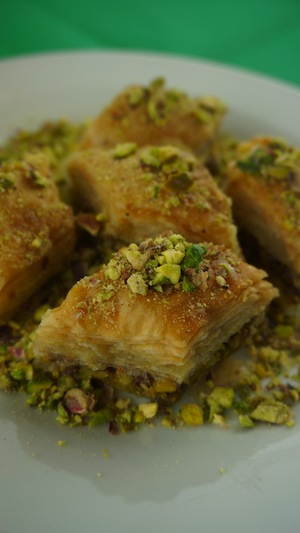
photo - Instead of honey cake, Greek Jews might have baklava for Rosh Hashanah dessert
Instead of honey cake, Greek Jews might have baklava for Rosh Hashanah dessert. (photo from Wikimedia)

Other Jews of Greece have different customs. Nicholas Stavroulakis, author of Cookbook of the Jews of Greece, writes that some people soak apples in honey or eat quince or rose petals cooked in syrup as the New Year sweet. Fish is often the main course and, in place of honey cake for dessert, Greek Jews use almonds or pumpkin in making turnovers, as a symbol of abundance. Other desserts include semolina cake in syrup, pastry triangles filled with nuts or dried fruit, or baklava.

Among Jews of Syria, sugar or honey is substituted for salt at the table, and many families do not serve any dishes that are sour. For the second night Shehechiyanu blessing, the fruit used may be quince, prickly pear, star fruit or figs. Instead of, or in addition to, dipping apples in honey, Jews of Syria often dip dates in honey.

Many Jews from Muslim countries also eat autumn foods cooked with sugar and cinnamon; the food names contain a symbolic allusion to prayers in Aramaic and, through alliteration, are recited over the vegetables and fruits. Syrian Jews use the same prayers but over different vegetables: leek, Swiss chard, squash, black-eyed peas, pomegranate and the head of an animal. This idea of wanting people to be smart, as symbolized by the head or brain, is observed by Jews of Tunisia in their serving of a cake made with chicken and calves brains.

Moroccan Jews take sesame seeds, warm them in the oven and eat them with apple dipped in honey to symbolize that Jews should be fruitful and multiply like the seeds and have the sweet year. They also eat the pomegranate because of its alleged 613 seeds, which symbolize the 613 mitzvot. Moroccan Jews identify the seven autumnal foods as pumpkin, zucchini, turnip, leek, onion, quince and Chinese celery, and sprinkle these with sugar and cinnamon to eat at the beginning of the meal.

Some Moroccan Jews also serve cooked lamb head as an appetizer for Rosh Hashanah. Other lamb dishes served might be lamb with prunes and almonds or lamb intestines filled with rice, meat and tomato, seasoned with cinnamon and cardamom.

Another popular dish served by Moroccans for Rosh Hashanah is couscous, the traditional North African grain, or farina. It is steamed above a stew made with meat or chicken, chickpeas, pumpkin, carrots, cinnamon and raisins. Baked fish with the head, made with tomatoes and garlic, tongue with olives, or meat and rice rolled in Swiss chard are other Moroccan New Year’s dishes. Two soups that may be served are vegetable soup with pastels, a meat-filled turnover similar to kreplach, and potakhe de potiron, a yellow, split-pea and pumpkin soup. The evening may be completed with honey-dipped “cigars,” filled with ground almonds and traditional hot mint tea.

“Cigars” are traditional for Moroccan events and can be made sweet or savoury. The sweet version is a slim roll of Phyllo pastry filled with almonds, pistachio nuts or walnuts, baked or deep fried and sprinkled with confectioner’s sugar. Savoury cigars may be filled with cheese, chicken, meat, potatoes or tuna.

For Rosh Hashanah, Jews of Egypt make loubia, a black-eyed pea stew with lamb or veal, to symbolize fertility.

Jews of Iraq cook apples with water and sugar like applesauce, as a symbol of a sweet New Year. Some also prepare a special, pale-green bottle-shaped squash, which they eat with whole apple jam and sugar. They also make the blessings over leek, squash, dates, pomegranate and peas and place the head of a lamb on their Rosh Hashanah table.

Yemenite Jews, who do not consider themselves Ashkenazi or Sephardi, dip dates in honey instead of apples; others mix sesame seeds and anise seeds with powdered sugar and dip dates in this mixture. They also eat the beet, leek, pomegranate and pumpkin, as well as a salted fish head. The main meal for Yemenites would be a soup made of chicken or meat, carrots, potatoes and the spice hawaj (a combination of black pepper, cumin, coriander and turmeric). Meat stew, cooked chicken, rice, dried fruit and nuts complete the meal.

Whatever your family’s origins, why not try something from another Jewish culture this Rosh Hashanah?

Sybil Kaplan is a journalist, lecturer, book reviewer and food writer in Jerusalem. She created and leads the weekly English-language Shuk Walks in Machane Yehuda, she has compiled and edited nine kosher cookbooks, and is the author of Witness to History: Ten Years as a Woman Journalist in Israel.

Format ImagePosted on September 20, 2019September 17, 2019Author Sybil KaplanCategories Celebrating the HolidaysTags culture, food, Rosh Hashanah, Sephardi

Posts pagination

Previous page Page 1 Page 2 Page 3 Page 4 … Page 6 Next page
Proudly powered by WordPress