Skip to content
  • Home
  • Subscribe / donate
  • Events calendar
  • News
    • Local
    • National
    • Israel
    • World
    • עניין בחדשות
      A roundup of news in Canada and further afield, in Hebrew.
  • Opinion
    • From the JI
    • Op-Ed
  • Arts & Culture
    • Performing Arts
    • Music
    • Books
    • Visual Arts
    • TV & Film
  • Life
    • Celebrating the Holidays
    • Travel
    • The Daily Snooze
      Cartoons by Jacob Samuel
    • Mystery Photo
      Help the JI and JMABC fill in the gaps in our archives.
  • Community Links
    • Organizations, Etc.
    • Other News Sources & Blogs
    • Business Directory
  • FAQ
  • JI Chai Celebration
  • JI@88! video

Recent Posts

  • Sharing her testimony
  • Fall fight takes leap forward
  • The balancing of rights
  • Multiple Tony n’ Tina roles
  • Stories of trauma, resilience
  • Celebrate our culture
  • A responsibility to help
  • What wellness means at JCC
  • Together in mourning
  • Downhill after Trump?
  • Birth control even easier now
  • Eco-Sisters mentorship
  • Unexpected discoveries
  • Study’s results hopeful
  • Bad behaviour affects us all
  • Thankful for the police
  • UBC needs a wake-up call
  • Recalling a shining star
  • Sleep well …
  • BGU fosters startup culture
  • Photography and glass
  • Is it the end of an era?
  • Taking life a step at a time
  • Nakba exhibit biased
  • Film festival starts next week
  • Musical with heart and soul
  • Rabbi marks 13 years
  • Keeper of VTT’s history
  • Gala fêtes Infeld’s 20th
  • Building JWest together
  • Challah Mom comes to Vancouver
  • What to do about media bias
  • Education offers hope
  • Remembrance – a moral act
  • What makes us human
  • המלחמות של נתניהו וטראמפ

Archives

Follow @JewishIndie
image - The CJN - Visit Us Banner - 300x600 - 101625

Tag: travel

Unique heritage trip to China

Unique heritage trip to China

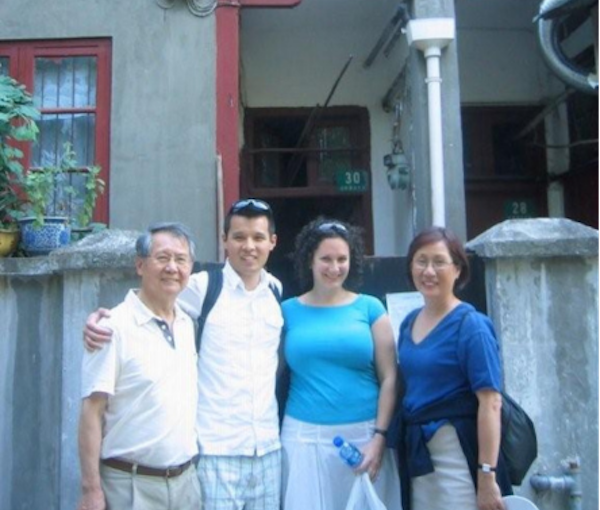
Len, Jeffrey, Sharon and Valerie on their family trip to China in 2009. (photo from Valerie [Chan] Hum)

Little did we realize when our son, Jeffrey, married Sharon Szmuilowicz in August 2008 that we would find ourselves visiting China nine months later as a family and visiting all our ancestral homes.

My family comes from the village of Sui Nam, Toi San district, Guangdong province. My grandfather was sponsored by a tailor and moved to Victoria in 1893 as a 16-year-old from a very poor family. He eventually married, started a restaurant business (the Panama Café) and fathered 12 children. Today, more than 140 Chan family members have been born in Canada over five generations and 131 years.

My husband Len’s family was from a small village of 30 houses in Chongkou, Kaiping district, Guangdong province. Len’s father traveled back and forth between China and New Westminster to earn money to support his family. In 1950, Len and his grandmother left China for Vancouver and then met up with Len’s father, who had moved to Ottawa. Two years later, the rest of Len’s family arrived in Canada. The family owned a number of restaurants over the years.

When our son married a Jewish woman from Toronto, we never thought we would learn that her family has ties to China as well.

The idea for the trip to China was initiated by Sharon. She felt it was important to learn about Jeffrey’s culture and family history. However, since the Szmuilowicz clan also had a direct link to China via Shanghai, it was an opportunity to explore both their histories.

On May 13, 2009, 62 years after Sharon’s family left China, our tour guide Hao brought us to the Shanghai Jewish Refugees Museum, the former Ohel Moishe Synagogue, at Sharon’s request, where we were able to access a computer database listing all the refugees who had lived in Shanghai. We were so pleased to see Sharon’s grandfather and great-grandfather listed in the database, including their former address. Jacob and Samuel Szmuilowicz, age 59 and 21, were listed as Polish refugees living at 30-50 Zangyang Rd. What a tremendous discovery! And, to top it off, 30-50 was next door to the synagogue and was still standing.

photo - Valerie and Sharon outside the Shanghai Jewish Refugees Museum, the former Ohel Moishe Synagogue
Valerie and Sharon outside the Shanghai Jewish Refugees Museum, the former Ohel Moishe Synagogue. (photo from Valerie [Chan] Hum)
We decided to knock on their door and see if anyone remembered Sharon’s family. The present residents moved into the building in 1950 and had no recollection of the previous Jewish residents who had crammed into these small apartments more than 70 years ago. Although we could not find anyone who knew Sharon’s family, it was still a remarkable discovery to find the records and the home they had lived in.

For the purposes of our trip, Sharon’s story begins with her grandfather, Samuel. To escape conscription into the Russian army, Samuel and his father, Jacob, left their homes, by foot, in 1939, making their way to Japan via Manchuria. At the time, Samuel was at university in Vilna (now Lithuania; then under Polish occupation), studying mathematics, and Jacob was running a general store in Lida, then in Lithuania (now in Belarus). 

Their transit visas were issued by Japanese diplomat Chiune Sugihara. He was giving out these visas without the knowledge of his government. It was dangerous for him to do so, but he knew that he needed to do something to save as many Jews as possible. In 1985, Sugihara was the first and only Japanese citizen to be listed by Yad Vashem as a Righteous Among the Nations.

With visas in hand, the journey took nearly two years to complete. They traveled by day and hid at night, finally arriving in 1941. In January 1942, they were transferred to Shanghai, where they joined the approximately 20,000 Jews who had migrated there in three waves beginning in the 1800s.

During their five years in Shanghai, Jacob sold rice while Samuel, who was attending the American School and learning English, ended up driving jeeps for the American army. They made enough money to leave for Mexico City in 1947, where they ran a textile factory that manufactured cotton goods, and started the Spanish-speaking arm of the Szmuilowicz clan. Sharon’s parents met in Mexico and moved to Canada, so her dad could pursue a career in medicine.

We learned that there were many Jews who fled Eastern Europe and ended up in Hong Kong or China.

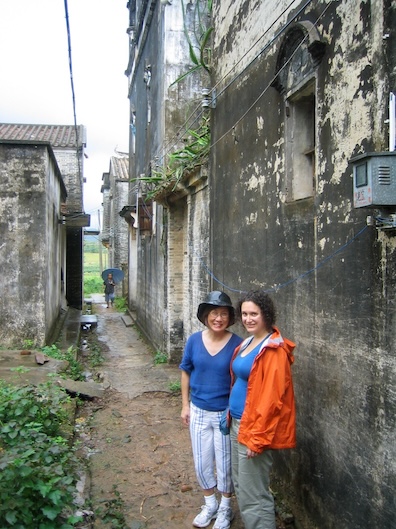
The next part of our discovery trip found us traveling by ferry from Hong Kong over to the mainland city of Zha Hai, where we were then met by distant Hum clan relatives, who drove us to my paternal grandfather Chan’s hometown of Sui Nam. I suspect I am the only descendant who has made the trek back to the town of Sui Nam, which appears very old and somewhat decayed, but still standing. 

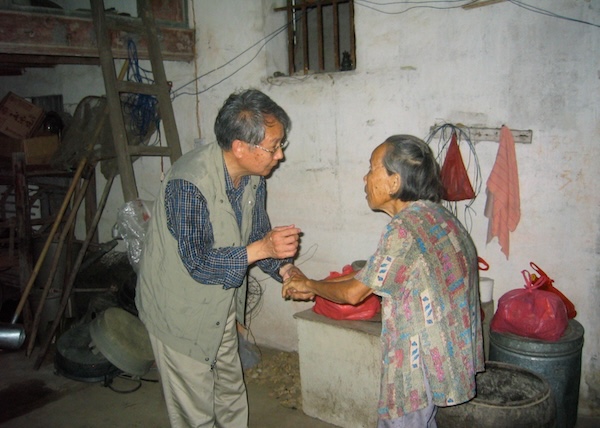
photo - In the village of Lohk Hing Leih, 90-year-old Mrs. Tam remembered Len, who used to play with her eldest son
In the village of Lohk Hing Leih, 90-year-old Mrs. Tam remembered Len, who used to play with her eldest son. (photo from Valerie [Chan] Hum)
Half an hour later, we arrived in the small village of Lohk Hing Leih, a cluster of 27 buildings housing the remaining Hum clan. Len’s family left the village in 1949, spending a year-and-a-half in Hong Kong awaiting their papers for entry into Canada. The village remains very poor, comprised of mostly vacant buildings surrounded by rice paddies and vegetable gardens.

Ninety-year-old Mrs. Tam, looking remarkably spry and pleasant, incredibly, remembered Len, who used to play with her eldest son. The other village residents were too young to remember him, but they swiftly brought out some food offerings, the incense, paper money to burn before the family altar, and lit some Chinese firecrackers. These are age-old traditions, in honour of the Hum ancestors. There were no young people living in the village. They had all left to find jobs in the cities. We wonder if the village will even exist in 20 years’ time.

Call it fate or bashert that, from the 1940s, three different families who started off in China, one a Jewish refugee family in Shanghai and two native Chinese families living in small villages near Canton, would be reunited in Canada through marriage 70 years later. The biggest blessing is that, on May 11, 2024, a Szmuilowicz-Hum great-great-granddaughter celebrated her bat mitzvah in Toronto. We were all be thrilled to be there. 

Valerie (Chan) Hum lives in Ottawa. She was born in Victoria, where her family have lived since 1893. Her grandparents ran the Panama Café at 1407 Government St. for many decades. This article was originally published by the Ottawa Jewish Bulletin.

Format ImagePosted on June 28, 2024June 27, 2024Author Valerie (Chan) HumCategories NationalTags Canada, China, family history, Holocaust, travel

ישראלים מרגישים לא בטוח ברחבי העולם

למלחמה בין ישראל והחמאס ברצועת עזה יש השלכות חמורות לגבי ביטחונם של הישראלים הגרים מחוץ למדינה. המראות הקשים של ההרוגים הרבים בעזה מסיבים נזק גדול לישראל. רבים בעולם כמעט ושכחו מה הביא לפעילות של ישראל בעזה – אירוע השבעה באוקטובר הנחשב לדבר בלתי נתפס. ולמרות זאת, בעולם מתעסקים כיום בעיקר בצד הפלסטיני הסובל מהרוגים ופצועים רבים, בו בזמן שרצועת עזה הולכת ונמחקת

הפגנות נגד ישראל, ישראלים, יהודים ומוסדות ישראלים ויהודים בעולם מתרחשות כל העת במקומות רבים. הכעס והשנאה המופנה כלפי ישראל כבר מזמן חצה את הקו האדום ולא זכורה תקופה כזו בעבר

בנוסף להפגנות יש גילוי שנאה ואלימות כלפי ישראלים ויהודים הגרים בערים שונות במערב. גם תיירים מישראל מרגישים כבר שלא בנוח לטייל במקומות שונים

המטה לביטחון לאומי פרסם לפני מספר שבועות היום את הערכת האיום לישראלים בחו”ל מצד גורמי טרור, במטרה להגביר את המודעות של הציבור הישראלי לאיומי הטרור במקומות שונים בעולם. במוקד: בקשה מהישראלים להימנע מהגעה למדינות שכנות של שיראל ובהן: לטורקיה, מרוקו, מצרים (כולל חצי האי סיני) וירדן. וכן מומלץ באופן כללי לא להחצין סממנים ישראליים או יהודים

בהודעה שפרסם המטה לביטחון לאומי נכתב כי בשנים האחרונות מזוהה מגמה מתמשכת של החמרה באיום כלפי ישראלים ויהודים בחו”ל, שהוחרפה מאז תחילת מלחמת חרבות ברזל (בחודש אוקטובר אשתקד), לאור עלייה במוטיבציה של גורמי טרור שונים בעולם לממש פיגועים. במסגרת זאת, בולט האיום האיראני שהתעצם ולצידו גם חמאס וגורמי ג’האד עולמי, המקדמים ביתר שאת פיגועים נגד ישראלים ויהודים מחוץ לישראל

עוד נכתב כי בחודשים האחרונים סוכלו עשרות פיגועים נגד יעדים ישראלים ברחבי העולם. לאור זאת, הדגישו במטה לביטחון לאומי כי פוטנציאל איומי הטרור כלפי ישראלים ויהודים כעבור למעלה משבעה מתחילת המלחמה – גבוה במיוחד

חודשים האחרונים התגברו הפרסומים של ארגונים אלו ותומכיהם, הקוראים ומעודדים לפגוע ביהודים וישראלים ברחבי העולם. במדינות המערב, האיום המרכזי הינו מצד מפגעים בודדים, אשר פועלים בהשראת הארגונים ועלולים לממש פיגועים כנגד ישראלים ויהודים, כפי שאירע למשל בשוויץ ששם נדקר אזרח מקומי יהודי בראשית חודש מרץ. זאת, ביתר שאת לאור אווירת המלחמה, האנטישמיות וההסתה חסרת התקדים נגד ישראל, ישראלים ויהודים ברחבי העולם

גורם המדיני ציין כי גם משחקי היורו שיתקיימו במהלך קיץ בגרמניה והאולימפיאדה שתתקיים בצרפת, שני אירועים שעשרות אלפי ישראלים צפויים לפקוד אותם, הם אירועי שיש לנקוט בהם זהירות מיוחדת. עיקר החשש הוא מגורמי ג’יהאד עולמי, כאשר גם ישראלים ויהודים על הכוונת, אמר הגורם הישראלי. בכל רגע נתון יש מאמצים חובקי עולם כדי לבצע פיגועים נגד ישראלים ויהודים, הוסיף אותו גורם. יחד עם גורמי ביטחון מקומיים, קהילת הביטחון של ישראל מבצעת אינספור פעולות על מנת לסכל. מפעם לפעם יש פרסומים על סיכולים, אך מה שמתפרסם הוא קצה הקרחון של מה שקורה באמת

אני עצמי חזרתי לאחרונה מנסיעה בת שבועיים בספרד כולל הערים ברצלונה ומדריד. לאור המצב המתואר לעיל נקטתי באמצעי זהירות מירביים. לא הסתובבתי ליד שום ארגון יהודי או ישראלי ולא דיברתי עברית בשום מקום. אני לא נושא שום סממנים ישראלים או יהודים בכל מקרה אך הפעם הקפדתי במיוחד. ולכן גם לא הבאתי עימי לטיול הפעם ספר בעברית. ראיתי בטיול לא מעט דגלים פלסטינים התלויים באזורים שונים בברצלונה וספרד וזה לא בדיוק נעים

Posted on June 12, 2024Author Roni RachmaniCategories עניין בחדשותTags Israel-Hamas war, security, terrorist attacks, travel, ביטחון, לנסוע, מלחמה בין ישראל והחמאס, פיגועים נגד ישראלים ויהודים
Enjoy weekend in Montreal

Enjoy weekend in Montreal

A bike tour with Fitz Montreal. (photo © Fitz and Follwell Co)

There’s nothing like a weekend in Montreal, whether you’re in the mood for a classic bagel, a mouthwatering babka dripping with chocolate, or a heaping smoked meat sandwich from Schwartz’s Deli. Now that Porter Airlines has launched direct daily flights between Vancouver and Montreal, it’s a great time to explore this fabulous city, which oozes with personality, culture, history and great food. 

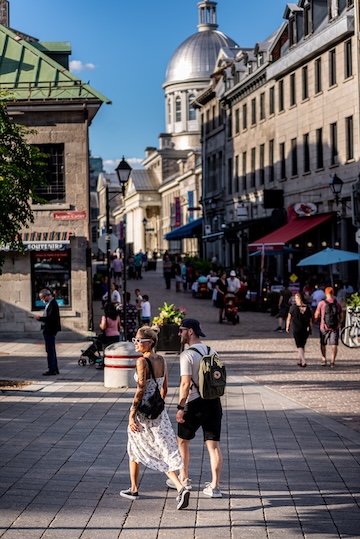
We joined a fast-paced bike tour to see the city’s highlights, pedaling 15 kilometres through green alleyways, busy boulevards and along the Lachine Canal to get a broad overview of Montreal’s history. We rode through the Old Quarter, with its ancient stone buildings, following the canal past factories and warehouses reincarnated into swanky apartments. We puffed up the hill to the base of Mount Royal and zipped back down past the austere buildings of McGill University. 

At Place d’Armes, we stopped to gaze at a pair of statues called “The Two Snobs.” On one side, a Francophone woman holds her poodle, looking with contempt at the head office of the Bank of Montreal, a symbol of English power. On the other, an Anglophone holds his pug, looking with similar disdain at the Notre-Dame Basilica, a symbol of the Catholic Church in Quebec. The statues hint loudly at the enduring, simmering tensions between English and French in Montreal.

photo - The Old Quarter of Montreal
The Old Quarter of Montreal. (photo © Freddy Arciniegas – Arcpixel – Tourisme Montréal)

We escaped the tourist crowds in the Old Quarter by heading to Mile End to join a food and history tour offered by the Museum of Jewish Montreal. Our guide, Avery Monette, a 23-year-old master’s student at Concordia, led us on a gastronomic feast as she described the city’s Jewish origins in 1760. That’s when Jews first arrived in Montreal to work as fur trade merchants. The community stayed small until the 1880s, when pogroms drove Eastern European Jews to the safety of Montreal’s Mile End. Over the next 90 years, it would become the largest Jewish community in Canada.

We bit into a sweet, rich cheese crown from Boulangerie Cheskie, a small kosher bakery in the neighbourhood, and then braved the cold wind to line up outside St-Viateur Bagel, one of Montreal’s two most famous bagel shops. Established in 1957 by Hyman Zeligman and Myer Lewkowicz, the store never closes. Ever. “In April 2023, there was an ice and snowstorm that knocked out all the electricity in the area,” Monette recalled. “Even then, this place was open!” 

We strolled along rue Jeanne-Mance in Mile End, where frum families pushed strollers alongside us and a man wearing a shtreimel strode by, headed for the synagogue with his tallit tucked under his arm. The Jewish influence was easily spotted, with most houses having mezuzot on their doors and many with the skeleton of a sukkah in their front yard. 

By the 1950s, Jews in Montreal had migrated to the middle class, and many left Mile End for larger homes in Côte Saint-Luc, Hampstead and Côte-des-Neiges. We passed the College Français, once the home of the B’nai Jacob Synagogue, which was known as the Carnegie Hall of cantorial singing in its heyday. 

Our Vancouver jackets were feeling pretty inadequate in Montreal weather by the time we arrived at Fairmount Bagel, where the line out the door was even longer than at St-Viateur. Once inside, we were surrounded by garlic, pumpernickel, cranberry and muesli bagels, as well as matzah with sesame, onion and poppy seeds. While none of it is kosher, the store is still owned by the same Shlafman family that first opened it in 1949. 

A few doors away is Wilensky’s, a small restaurant with origins in 1932 and family members still at the helm. With its Formica counters, bar stools and what could easily be the world’s tiniest washroom, the store feels like a 1930s time capsule. Monette orders the Wilensky Special, an original family recipe featuring beef salami, beef bologna and mustard on a grilled roll. No special requests or modifications are allowed, not for us or for Anthony Bourdain and Mordecai Richler, both of whom were customers. 

On Boulevard Saint-Laurent, new stories mingle with the old. We picked up a babka at Hof Kelsten, where Jeffrey Finkelstein is turning heads with his challah, rugelach and rye. We passed Leonard Cohen’s grey-stoned triplex, a house he lived in from 1968 and that’s still owned by his family. “He was well known for padding around the streets in the slippers he bought right here,” Monette says, gesturing at J. Schreter, a shoe shop on the corner.

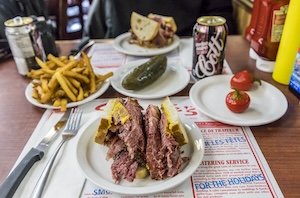
photo - Lunch at Schwartz’s Deli
Lunch at Schwartz’s Deli. (photo © Eva Blue)

Between the bagels, the babkas and the Wilensky Special, it’s hard to make room for more food, but the length of the line outside Schwartz’s Deli tells us this one is not skippable, so on we go. Famous for its smoked meat sandwiches since its inception in 1928, the deli is now owned by Celine Dion and her partners, who have kept things much the same, adding a smoked meat poutine to the menu. Take a bite of one of Schwartz’s sandwiches, which literally bulge with hefty portions of meat, and you understand precisely why the little deli is such a cultural icon in the city. Quite simply, it’s unforgettable. It’s a fitting symbol for the city of Montreal, which is bursting with flavour.

Whether you come for the food, the history, the arts scene or the culture, Montreal is charmingly seductive, and so vastly different from Vancouver that it feels like an entirely different country. Now just four-and-a-half hours away, it’s an easy decision to put this sophisticated French city on the itinerary. 

If you go …

• In April, Porter Airlines launched its daily round trip service between Vancouver and Montreal (flyporter.com)

• A bike tour with Fitz Montreal is a great way to explore Montreal’s highlights, with many sights packed into an exhilarating, fast-paced ride (fitzmontreal.com)

• Museum of Jewish Montreal offers regular Beyond the Bagel Tours in the spring, summer and fall. The three-hour tours include food and range from $79-$95 per person (museemontrealjuif.ca/beyond-the-bagel)

• Humaniti Hotel offers sophisticated accommodation in the heart of the city, steps from Old Montreal, the Palais des congrès and the Quartier des Spectacles (humanitihotel.com)

Lauren Kramer, an award-winning writer and editor, lives in Richmond. 

Format ImagePosted on May 24, 2024May 23, 2024Author Lauren KramerCategories TravelTags arts, culture, food, history, Montreal, Porter Airlines, travel

Exploring ideas, worlds

“If there is one thing we learn during difficult times, it’s that community plays a crucial role, fostering unity, resilience and offering emotional support,” writes Dana Camil Hewitt, director of the annual Cherie Smith JCC Jewish Book Festival, in her introduction to this year’s event, which will once again bring community members together to share stories and conversations – and in a difficult time.

The festival opens Feb. 10 with playwright, journalist and author Michael Posner in conversation with Alan Twigg, founder and editor for 33 years of BC BookWorld, about Posner’s three-volume biography of musician, composer and poet Leonard Cohen. The opening night includes a live musical performance with Harriet Frost and Martin Gotfrit, which illustrates perfectly how the influence of books extends beyond the printed page.

The world around us and how it shapes who we are, and vice versa, is front and centre in the Feb. 11 festival event Essays as Life Stories, featuring Vancouver’s Yosef Wosk and Hamilton’s Gary Barwin.

Traveling beyond the world

image - Naked in a Pyramid book coverIn his new book, Naked in a Pyramid: Travels & Observations, scholar, rabbi and philanthropist Yosef Wosk brings readers along on his extraordinary journeys throughout the world. But this is no Rick Steves guidebook. There are no hotel recommendations or Top 10 must-see lists. Far from it. Rather than inspiring wanderlust, in fact, some of Wosk’s adventures will make the reader happy to be home in an easy chair experiencing vicariously rather than accompanying him on these not-always-alluring quests. 

Wosk acknowledges that travel for him is not about R&R but always about adventure, challenging himself to discover not only the world but his place in it. Travel, for him, is “more of an intuitive imperative, a pilgrimage to the ends of the earth so that I might know both the planet and myself better.”

To these ends (literally), Wosk has traveled to both the north and the south poles. His reflections on being – within a little more than a year of each other – at the figurative top and bottom of the planet, lead to fascinating metaphysical contemplations. He is also provoked to contest mundane assumptions when he sees, at the South Pole, an upside-down globe. Why, he realizes he has never contemplated, should north be on top?

Wosk does not just see stuff, or even experience it, like an ordinary traveler, but finds himself transported beyond even the remote locales he visits to some supernatural planes. Near the North Pole, for example, he alarms travel-mates by laying down, albeit densely insulated, on the frozen Arctic ground “like some marooned sapien seal.” Becoming one with the planet’s most northerly extremity, he recalls, “I was seized by this unanticipated epiphany of transcendent unity.” 

The intensity with which he lives the places he encounters makes for a fascinating read and those of us who lack his depth of connection with the ethereal may feel pangs of jealousy, if not inferiority, at failing to experience as profoundly.

He visits Venice, the birthplace of Marco Polo – well, one of the reputed birthplaces – and finds resolve from the “Master of Travelers, the one who dared.” But Venice, as magnificent as it is, seems to be among the least remarkable of Wosk’s destinations.

“I have explored caves and caverns in Israel, Thailand and deep within the Rock of Gibraltar where Neanderthals lived for over 100,000 years, and also entered the coastal caves along the cerulean Na Pali coast in Kauai,” he writes. “Gazing into the luminous waters of the Blue Grotto in Capri, one of the most enchanting islands on the planet, one senses its womb of wonders.”

Claustrophobia is a recurring theme (for the reader, if less so the writer), with reminiscences of crawling on his back into a sarcophagus, descending into the bowels of a Soviet-era nuclear-powered Arctic icebreaker, or meditating (naked) in the subterranean hollows of the pyramid that gives the book its title. 

The book is deeply personal, including revealing insights into his deepest thoughts, as well as the sorts of travel nightmares to which anyone can relate, such as being stuck together with a sulky travel companion who he had considered a potential love interest, but who turns out to be the roommate from hell. He seems to recognize that his well-intentioned psychoanalyzing of her behaviour may not have been the remedy he had hoped.

His sense of being an outsider is not merely social but otherworldly.

“I have always felt like a fool, somewhat awkward in an unfamiliar world – as if I have just awakened from a distant dream and been planted, like Adam, in a strange Garden of Gaia. I spent most of my life as an unrepentant pilgrim, exploring often exotic and embarrassing sensations of mind, body and soul.” 

He openly admits that some of these sensations are enhanced by herbal or chemical assistance.

“On a beach off the road from Pafos to Limassol, in southern Cyprus, a friend and I took LSD at the fabled birthplace of Aphrodite,” he writes. “The beach was gravel and the waters rough but as the long, foaming waters born of the massive surf around the Rock reached the shore, one could easily imagine the earth being impregnated by the semen-bubbled surf and picture the goddess of love emerging from the sea.”

The book is about travel, but Wosk also covers voyages more broadly defined, such as the process of moving through life itself, including the reflection that a great rabbi imparted to him.

“One of my teachers, Zalman Schachter-Shalomi, used to tell us that you don’t have to wait until you’re dead to die; that one can be involved in a succession of deaths and rebirths, that there is non-mortal death and resurrection while still alive,” writes Wosk.

In a harrowing experience while illicitly climbing the Egyptian pyramid of the title, he seems to have exactly this sort of non-mortal death, which may well have been entirely mortal had things turned any further awry.

Wosk has rubbed shoulders (or, more accurately, minds) with greats like Buckminster Fuller, Marshall McLuhan and Joseph Campbell. He worked at the right hand of Nobel laureate Elie Wiesel as his teaching assistant and calls the late humanitarian author “one of the most influential mentors in my life.”

If Wosk sometimes seems a figure remote from the ordinary human, he yanks himself back down to earth in numerous segments, such as explaining how he overcame his intimidation at applying for Harvard’s divinity school. He eventually conquers his resistance and completes the graduate school application in the mechanic’s anteroom while his car is being serviced nearby. Even by the standards of a vegetarian, which he is, Wosk’s culinary tastes are decidedly and literally down to earth. (Favourite food? The potato.)

He refers modestly to his extensive philanthropy, which includes the Beit Wosk Community Centre, in Ashkelon, Israel, and the Dena Wosk School of Performing Arts at the Jewish Community Centre of Greater Vancouver (named for his late mother), but elides hundreds of other contributions over the years.

He pays tribute to his late father Morris (“MJ”) and late uncle Ben, who arrived as children in this country. The brothers did odd jobs before starting a business collecting and repairing used pots and pans, which they shined up and sold around town using a horse and buggy. From this, they graduated to a storefront and later a furniture chain. Eventually, the brothers reshaped the city’s skyline with some of Vancouver’s most recognizable high-rise residential towers. To say the family came a long way from rural Ukraine is an understatement. MJ Wosk is estimated to have donated $50 million to a variety of causes.

It is difficult to sum up this book as this or that genre. While one section is an extended poem, much of the rest reads as prose poetry. Moreover, it is travel journal, philosophy treatise, theological tract and memoir of a person who curates and collects not just fascinating objects (which he does) but ideas, experiences and memories. Perhaps the book could be best described as an exhibition, a retrospective of a just a few of the intangible treasures Wosk has amassed in a lifetime that seems more unique than every life, by definition, is.

As fellow thinker John Ralston Saul said of this book, “He brings us a life intensely lived.” To appreciate how intensely, one really needs to immerse oneself in these pages.

 – Pat Johnson

Exploring language’s many facets

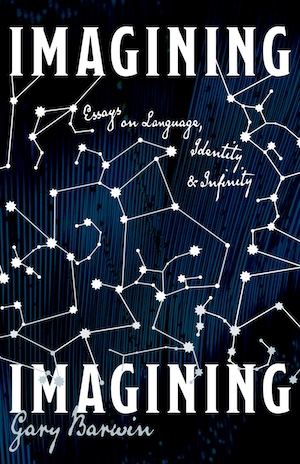
Gary Barwin’s Imagining Imagining is reflective, sentimental, intellectual and absurd. His facility with the English language is remarkable and he is more well-read than most of us, but there are various levels of understanding of any text, and everyone will take away something of value from this imaginative and mind-expanding collection of essays.

image - Imagining Imagining book coverThe multiple-award-winning author of some 30 books, including the bestselling Yiddish for Pirates, Barwin is also a musician, composer and artist. He draws upon all his varied skills and interests in his imaginings. He begins with reflections on the Hebrew alphabet, where the Book of Genesis says the world began: “the earth was without form and void until God gave shape or reality to it, all with words. With the letters that form the Hebrew alphabet.” He talks of the letters’ sounds and shapes, even illustrates the letter shin with an extra arm on the left that looks like it is topped with a crown, the image of which appears on the tefillin box that Orthodox Jews place on their forehead for morning prayers. According to a kabbalist text, there is a letter missing from the Hebrew alphabet and some think this four-armed shin might be it. “So, the thinking goes, we might already know what it looks like. But we don’t know what new sound it might make, this new sound that might heal the universe.”

While lauding language and its potential as a cause for hope, Barwin warns that language can also lull and trick us. “We must always look very carefully at language. At its beauty, its mystery. Its power to make us think and feel things. Its power to make and remake the world,” he writes.

If it’s not obvious already, Barwin is a big thinker. And he has a big vocabulary. Imagining Imagining might be a book to read as an ebook, for easy access to a dictionary. For the most part, however, his skill as a writer means that we get the gist if not the whole idea, that our curiosity is piqued and we continue to revel in our own thoughts long after we finish reading an essay.

Those who have read Barwin’s novels will know that he has a great sense of humour, and there are many smiling, even laugh-aloud, moments in these essays. One essay is entirely devoted to humour, and it’s fascinating – and funny. In it, he shares his favourite poem, “Modern Poem,” written by Martin Laba: “one, two, / three, four, / five, you idiot.”

“I like it because we can empathize with the feeling of having read something, perhaps a modern poem, something that is so hard to understand, that appears to be saying something willfully inaccessible or that appears so entirely pointless that it seems to be deliberately trying to make you feel like an idiot,” writes Barwin. “I like the poem because of the nice twist, the surprise at the end, the shock of recognition. Oh yes, I know poems like this. And I know that feeling.”

There are many shocks of recognition in Imagining Imagining, as there are shocks of non-recognition. Barwin is a smart, accomplished person and his views on things – from Hebrew letters, to insomnia, to ampersands, to his grandfather’s moustache, and more – will have you thinking about yours in new ways. For example, that chapter on humour stresses the immense value in laughter, not the least of which is that it “gives us an alternative to despair,” it allows us “the ability to frame our experience.”

“Through humour, we are able to stand outside what’s happening and look at it philosophically. Through humour, we find a way to engage, to think about what is happening and still have agency,” writes Barwin.

Engagement, community, the interconnectedness of all things. Barwin challenges readers to think outside the box, to reconsider what is a box, whether a box can ever truly exist. Speaking “mostly but not entirely metaphorically,” Barwin asks about the need for (cell) walls, “don’t things morph into one another, if only eventually? The same is true of concepts and abstractions. One person’s manbun is another’s mantra. Is it true that someone’s pain is my pain and it is only the self and society which create reasons to keep them at a distance? I want my thinking and feeling to reflect the fundamental unipanrhizomatubiquity between/of things.”

After reading Imagining Imagining, you should have a notion of what “unipanrhizomatubiquity” means, even though Prof. Google doesn’t. That feeling of getting it, not getting it, is an unsettling sensation perhaps, but it’s one that propels questions, discovery. That makes what seems impossible potentially possible. That makes reading – and so many other things – exciting and worthwhile.

– Cynthia Ramsay

For the Cherie Smith JCC Jewish Book Festival, guide visit jccgv.com/jewish-book-festival. 

Posted on January 26, 2024January 24, 2024Author Pat Johnson and Cynthia RamsayCategories BooksTags essays, Gary Barwin, JBF, JCC Jewish Book Festival, Jewish Book Festival, travel, writing, Yosef Wosk
Preserving links to past

Preserving links to past

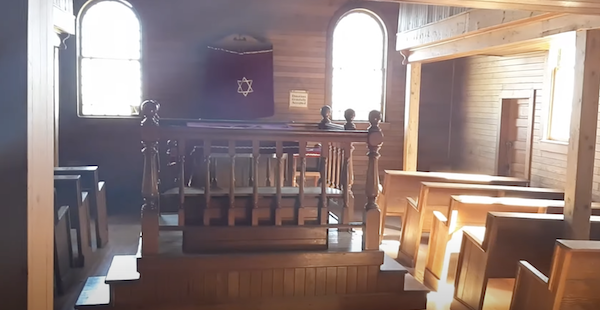
Screenshot from Jordan Amit’s video on the former Jewish settlement of Edenbridge, Sask. The synagogue and the Jewish cemetery are cared for by the Saskatchewan Wildlife Federation.

Almost 120 years ago, 56 Jews fled Lithuania and ended up in a remote Saskatchewan prairie that would become the community of Edenbridge. The town and its people have scattered to the winds – but the spirit of the place comes to life again in a short video by North Vancouver filmmaker Jordan Amit.

In addition to filmmaking – which he hopes to turn into his main gig – Amit has a window-washing business and, for years, traveled to Alberta and Saskatchewan for seasonal work. Through the Chabad rabbi in Saskatoon, he learned about the abandoned Jewish settlement, which lies about two-and-a-half hours northeast of Saskatoon – the last leg on a dirt road.

The shul is beautifully maintained – or it was when Amit took his camera there – and the small synagogue is open to the public. Said to be the oldest shul in the province, the site, which includes the Jewish cemetery, is cared for by the Saskatchewan Wildlife Federation, which was granted a 40-acre plot in 1987, when the rest of the Jewish settlement’s land was sold.

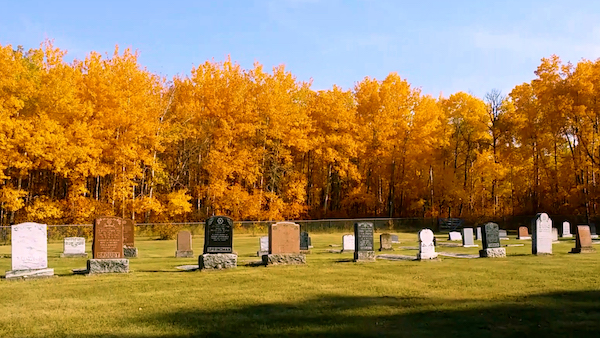
photo - The Jewish cemetery at the former Jewish settlement of Edenbridge, Sask
The Jewish cemetery at the former Jewish settlement of Edenbridge, Sask. (photo by Jordan Amit)

The Litvaks, Lithuanian Jews, who came here did not set out for one of the coldest, most unforgiving places on earth. They traveled first to South Africa, where one of their party, Sam Vickar, saw an ad for cheap land in the Canadian West. They uprooted again, arriving in 1906 at what they would call Edenbridge.

Originally, they wanted to call it Jewtown, but the government balked. They chose Edenbridge as a sort of Anglicization of “yidden bridge,” reflecting the bridge that traversed the small Carrot River nearby.

On their initial 160 acres, bought for $10, they built Beth Israel Synagogue. Expanding out into other fields, three schools, a Jewish community hall and numerous houses would eventually form the structures of a community that, at its peak in the 1920s, was home to 170 people.

Indigenous neighbours helped teach them how to survive the first winter with sod-roofed dugouts.

While other Jewish settlements in Saskatchewan were funded by Baron Maurice de Hirsch, Edenbridge does not appear to have received such support, Amit said, though he doesn’t know that for sure.

The Depression and the general trend toward urbanization started a decline in the town and, by 1964, the synagogue ceased operation. The exact date of Edenbridge’s transition into ghost town status is vague, in part because local farmers moved to Saskatoon and returned seasonally to farm.

At the cemetery, the last gravestone is dated 2000, a departed resident who chose to be interred in the cemetery of the abandoned village. The last bar mitzvah at the shul was more recent – the child of one of the community’s descendants, in 2021. Amit had his own bar there, too. Born in Israel, he came with his family to Vancouver as a child and never became bar mitzvah. So, his friend and rabbi in Saskatoon suggested he have a belated ceremony at the historical site, and it was the first since 1976.

As more people have seen the video online, descendants of the settlers have reached out to him. He is piecing more history of Edenbridge together, and also is on the lookout for additional off-the-beaten-path Jewish (and non-Jewish) sites to explore for his growing online video explorations.

photo - Jordan Amit
Jordan Amit (photo from Jordan Amit)

“I always have this feeling when I see Jewish sites that are kind of in the middle of nowhere, there’s something so fascinating about it,” he said, recalling a trip to the Indian province of Kerala, where he explored three abandoned synagogues. “When you go into the synagogue, it’s a special experience. You go in and you just feel this presence of the building and the silence.”

Amit invites anyone with knowledge of Edenbridge, or ideas for future videos, to contact him at [email protected]. He also recommends road-trippers make the diversion to the remote location to see the place themselves.

“It’s fully open to the public,” he said. “You just open the latch and walk inside. You only see that in Saskatchewan, that kind of trust. They just trust that it’s going to get taken care of and respected.”

In the story of Edenbridge, Amit contemplates the settlers’ tenacity and the opportunities, sometimes hard won, of newcomers to a land.

“[It is] something we could learn from, that despite difficulties of life and all the odds against us in realizing our dreams, really, if we put our mind to it, we can do whatever we want,” he said. “We can self-realize and create the life that we want, just like they did.”

Format ImagePosted on June 23, 2023July 6, 2023Author Pat JohnsonCategories TV & FilmTags continuity, Edenbridge, Saskatchewan, Saskatchewan Wildlife Federation, travel
An Aardvark gap year

An Aardvark gap year

Vancouverite Eitan Nurick, right, with Aardvark madrich (counselor) Alon. (photo from Aardvark Israel)

“When my siblings came back from their year abroad and couldn’t stop raving about it, I couldn’t help but experience it myself. When the day came and the program started, I was anxious, as expected, but mostly excited,” said Eitan Nurick, 18, who went to King David High School.

Nurick was referring to Aardvark Israel, which offers four-to-10-month gap-year programs in Jerusalem and Tel Aviv, specializing in internships; volunteering, partnered with Masa Israel Journey and Israel Volunteering Association; and technology, partnered with the Developers Institute.

“The biggest learning curve was definitely figuring out how to live with four complete strangers,” said Nurick, from Tel Aviv. “I learned that the most important thing to do was to communicate and let your roommates know what you need, eventually coming to a decision that works for everyone.

“Something that I have been especially loving is my internship,” he said. “I work at Inklude, a tattoo studio…. While running the social media, and overall helping out around the studio, I have also been given the opportunity to learn how to tattoo, which ties in perfectly with my love for art. I really feel like I have been welcomed into the workplace and have made meaningful connections with my co-workers. So far, my experience in Israel and with Aardvark Israel has been amazing. I have been able to strengthen my bond with my religion and culture, as well as learn lifelong skills that will stick with me forever.”

Toronto student Lisa Fireman, 18, who attended TanenbaumCHAT high school, also is benefiting from her internship, which is at Eden Gallery in Tel Aviv. She described it as her favourite part of Aardvark.

“I am currently helping plan four events for Art Basel in Miami,” she said. “This has been the experience of a lifetime for me. I love my boss here and feel as if I am being trusted and treated as a real member of the Eden Gallery team. As someone going into art history in university, this could not be a more ideal internship. I love spending my days at the gallery, knowing that this experience will help me in my future path.”

She admitted, “It can be stressful living alone, but I wouldn’t want to do it in any other way. I have gained so much independence, friends I love with my whole heart, and a job that makes me feel so fulfilled.”

photo - Toronto’s Lisa Fireman, second from the left, on a Shabbaton with fellow Aardvarkians Maya, Hayley and Dina
Toronto’s Lisa Fireman, second from the left, on a Shabbaton with fellow Aardvarkians Maya, Hayley and Dina. (photo from Aardvark Israel)

Fireman is preparing for her spring semester in Jerusalem.

“A lot of the gap year promotional testimonies write as if gap year is all peaches and sunshine,” she said. “While they aren’t wrong about how much fun it can be, being on Aardvark is so much more than that. My gap year story started last October, when my best friends were considering gap year programs. Out of a fear of going into college without them, I started looking into Aardvark Israel…. I fell so hard for the program that, even when all of my friends eventually decided against gap year, I still committed to spending time on Aardvark. So I went. Absolutely alone. And it was as terrifying as it sounds.”

Fireman had anxiety surrounding making new friends, but put herself out there anyway.

“I did this by asking people to be my ‘bus buddy’ on Tiyul Tuesdays, going to Wednesday night programming, and hosting Shabbat dinners,” she said. “I started to realize that everyone on Aardvark is just as alone as I was. We all had come from around the world and had to create our inner circle … so everyone was open and actively putting themselves into new social situations.”

Last month, Aardvark Israel’s first international trip since COVID took place – five days in the Czech Republic. Both Nurick and Fireman participated. Both students moved to Israel last August.

For more on Aardvark’s gap-year programs, go to aardvarkisrael.com.

– Courtesy Aardvark Israel & Masa Israel Journey

Format ImagePosted on December 9, 2022December 11, 2022Author Aardvark Israel & Masa Israel JourneyCategories IsraelTags Eitan Nurick, internships, Israel, Lisa Fireman, travel

נסיעה שנייה לישראל

חזרתי מנסיעה שנייה לישראל בסוף חודש מאי. בראשית חודש פברואר טסתי בדחיפות לישראל כיוון שאמי היתה מאושפזת במצב קריטי בבית החולים איכילוב שליד ביתה, לאחר שנחנקה מחתיכת תפוח שהיתה בסלט שאכלה. היא נפטרה לאחר מספר ימים ונקברה בדיוק באותו יום בו אבי נקבר, שנה קודם לכן. הנסיעה השנייה לישראל במאי בוצעה על ידי כדי לעזור לאחי להמשיך ולפנות דברים מדירת הורי, במקביל לחתימה על מסמכים שונים בפני עורך הדין של המשפחה. זו בעצם הפעם הראשונה מאז שעזבתי את ישראל לפני למעלה משבע עשרה שנים (בראשית שנת אלפיים וחמש), שאני מגיע לשני ביקורים בשנה. מודה אני שזה יותר מדי בשבילי. הטיסות הארוכות, השינויים בזמנים וכן באופי של שתי המדינות (ישראל וקנדה) מעייפים מאוד

הביקור הנוכחי בישראל היה קצר ונועד כאמור לטיפול בעניינים משפחתיים ולא מפגשים חברתיים. לכן לראשונה מאז עזבתי את ישראל, לא הודעתי מראש לאף אחד מחברי שאני מגיע. למעט אחי ואשתו, באותה סיבה לא פגשתי את שאר חברי המשפחה. כיוון שהספקתי לעמוד בכל המחויבויות ניצלתי את מספר הימים המועט שנשאר לי לפגוש מספר קטן של חברים קרובים. למרות ההיכרות הארוכה, אותה שפה (עברית) בה אנו מדברים, הרגשתי הפעם יותר מתמיד כמה אנו רחוקים זה מזה. אין ספק שהמגורים מחוץ לישראל, הפכו אותי לרחוק וזר מול מה שקורה במדינה, ובעיקר אצל אלה שגרים בה. אינני בטוח שהייתי היום יכול לגור בישראל. זו מדינה שהולכת ומשתנה תדיר ולצערי לכיוון הלא נכון

לפני שטסתי בחזרה לוונקובר הצלחתי להסתובב קצת ברחובותיה העמוסים לעייפה של תל אביב. ומה מצאתי: רעש קשה שחלקו נובע מבניית רכבת תחתית, פקקים אינסופיים ובעיקר ישראלים שלא אכפת להם מכלום. הם מדברים בטלפונים בכל מקום, מעשנים בכל פינה, צופרים נון-סטופ בעת הנהיגה הפרועה שלהם ועוד ועוד. בכל ביקור אני שם לב שגם בתל אביב כמות חובשי הכיפות הולך וגדל. הזכרתי זאת לבעלת בית קפה בכיכר מסריק והיא הגיבה במשפט אחד: “כמות הדתיים והבורים הולך וגדל”. כנראה שהיא צודקת

לאחרונה שמענו שהממשלה החילופית בראשות בנט ולפיד לראש הממשלה הנצחי – נתניהו, לא הצליחה במשימתה להחזיק קדנציה שלמה, ובחירות חדשות יערכו במהלך חודש אוקטובר. לפיכך יש סיכוי גדול שנתניהו שעומד למשפט על מעלליו הלא חוקיים, יחזור שוב לכס השלטון, לאחר שישב כבר על כיסא ראש הממשלה במשך כחמש עשרה שנים. זה הדבר האחרון שישראל צריכה כיום, וזה הדבר העיקרי שימשיך להזיק למדינה ולאזרחיה. נתניהו הוא מלך מלכי הפילוגים. בתקופת שלטונו ההסתה נגד גורמי אכיפת החוק ובית המשפט גדלה באופן משמעותי, כמו גם השסע בין האזרחים: דתיים מול חילוניים, ימנים מול שמאליים, ספרדים מול אשכנזים ויהודים מול ערבים

כשאני מסתובב כיום בישראל אני מרגיש זר לחלוטין. אינני מתחבר למה קורה במדינה, אינני אוהב את התנהגות הישראלים וסדר העדיפות שלהם. גם מבחינה תרבותית אני מרגיש כיום רחוק וזר. זה לא מתאים לי יותר. הישראלים הופכים יותר ויותר ללאומניים, ימנים ודתיים. במקום דו שיח יש יותר שנאה ואלימות מילולית (ולפעמים גם פיזית), במקום סדר יום חדש ובריא יותר למדינה ולאזרחיה: ישראל חוזרת לאחור והדת תופסת מקום מרכזי בחיים

כשעזבתי את תל אביב בטיסה בחזרה לוונקובר, נשמתי עמוקות וניסיתי לארגן את מחשבותי. למסקנה אחת ברורה הגעתי: בשנים הקרובות אינני מתכוון לחזור ולבקר בישראל

Posted on July 13, 2022July 7, 2022Author Roni RachmaniCategories עניין בחדשותTags Canada, Israel, lifestyle, politics, travel, טיולים, ישראל, סגנון חיים, פוליטיקה, קנדה

נסיעה מקנדה לישראל בתקופת הקוביד

בימים אלה חזרתי לקנדה מנסיעה לישראל עייף ומותש. הוראות הקוביד במדינות השונות הפכו את הנסיעה לדבר מסובך, מורכב ובעיקר מעייף. כמובן שזה גם הרבה יותר יקר לטוס בימים אלה. יש לקוות שתקנות הקוביד יבוטלו ונחזור לשגרת חיים רגילה. לדעתי הגיע הזמן להתייחס לקוביד כמו אל כל זן חדש של שפעת. אי אפשר להמשיך במגבלות השונות שנה שלישית ברציפות. 

הצטרכתי לטוס מוונקובר לתל אביב בשל אשפוזה של אמי בבית החולים. לאחר מספר ימים שם היא נפטרה ואז נשארתי למסע הלוויה ופרק הניחומים. 

רכשתי כרטיס טיסה בקיי.אל.אם מהרגע להרגע והתענוג עלה לי לא פחות מאלפיים ארבע מאות דולר. יצאתי מיד לבצע בדיקת קוביד לפי דרישות מדינת ישראל והתשלום הוא גבוה במיוחד: מאתיים דולר. נדמה לי שקנדה היא המדינה היקרה ביותר במערב בכל הנוגע לבדיקות קוביד עבור אלה שטסים. כיוון שהתוצאות של הבדיקה הובטחו לי בתוך עשרים וארבע שעות לא יכולתי לצאת לכיוון ישראל בעשות הבוקר ולכן נשארה לי רק האופציה של החברה התעופה ההולנדית. 

בגלל הביקור החפוז החלטתי שלא לעשות צ’ק אין למזוודה ולקחתי עמי תיק מסמכים ומזוודה קטנה למטוס. למרות זאת נאלצתי לעבור בדלפק של קיי.אל.אם בשדה התעופה שלוונקובר, כדי שיאשרו את כל מסמכי הקוביד: תוצאה שלילית של הבדיקה, הטפסים עבור הכניסה לישראל ואישור שחוסנתי בקנדה כבר שלוש פעמים. 

לאחר הטיסה הארוכה שנמשכה למעלה מתשע שעות נחתנו באמסטרדם לעצירת ביניים. בדרך כלל אני יוצא מהשדה אל העיר לאור כך שיש לי כעשר שעות של המתנה עד לטיסה שיוצאת לתל אביב, אך הפעם החלטתי שלא לנהוג כך, כדי שלא אאלץ שוב לאשר את מסמכי הקוביד. 

הסתובבתי שעות בשדה, אכלתי לא מעט, שתיתי יין, התקלחתי ואף שכרתי חדר במלון שבטרמינל למספר שעות. למרות זאת נשארתי מאוד עייף, נמנמתי קלות בטיסה לתל אביב שיצאה בסביבות תשע בלילה. 

נחתנו בתל אביב בסביבות שתיים לפנות בוקר ולשמחתי שדה התעופה היה כמעט ריק בלילה שבין שישי לשבת. רצתי מייד לבצע בדיקת קוביד שנייה עבור ישראל, שעברה מהר יחסית והייתה הרבה יותר זולה מזו שעשיתי בוונקובר. 

יומיים לפני הטיסה בחזרה לוונקובר ביצעתי בתל אביב בדיקת קוביד נוספת, הפעם עבור הממשלה הקנדית. גם היא הייתה הרבה יותר זולה מאשר זו שעשיתי כאן. מילאתי את כל הטפסים הדרושים בעידן הקוביד: טופס יציאה מישראל וטופס כניסה לקנדה. עדכנתי גם את האתר של קיי.אל.אם בכל המסמכים הדרושים ובכן בתוצאת הבדיקה. 

עם זאת כשהגעתי לשדה התעופה בתל אביב נדרשתי שוב לאשרר את כל המסמכים. קיוויתי שזה הסוף לטירטורים בעידן הקוביד אך טעיתי בגדול. 

עם הנחיתה באמסטרדם נאלצתי שוב לאשרר את כל מסמכי הקוביד עבור קנדה. המתנתי בתור ארוך והפקיד רשם משהו על כרטיס עליה למטוס שלי. כשהגעתי לשער העלייה למטוס התברר שהפקיד לא הוסיף מדבקה המאשרת את המסמכים וצוות הקרקע סירב לאפשר לי להיכנס למטוס. נאלצתי שוב לחפש את אותו פקיד כאשר תור גדול של אנשים עמד לפניו. למזלי אשת צוות קרקע עזרה לי והעבירה לו מיד את כרטיס עלייה למטוס והוא הוסיף את המדבקה המיוחלת. רציתי במהירות לשער העלייה למטוס כי פחדתי שהטיסה תצא אל הדרך. 

עם הנחיתה בוונקובר נחתה עלי מכה נוספת: נתבקשתי באופן אקראי לעשות בדיקת קוביד נוספת, רביעית במספר בטיול זה. חוקי הקוביד עייפו אותי עד מאוד בנסיעת חירום זו. 

Posted on March 2, 2022March 10, 2022Author Roni RachmaniCategories עניין בחדשותTags COVID, family, flights, Israel, travel, vaccine, חיסון, טיסות, ישראל, לִנְסוֹעַ, משפחה, קוביד
Debbie Tabenkin set to retire

Debbie Tabenkin set to retire

Debbie Setton Tabenkin sees travel, genealogy and fun with grandkids in her future. (photo by Jocelyne Hallé)

Debbie Setton Tabenkin, one of the most familiar faces to anyone who has frequented the Jewish Community Centre of Greater Vancouver in the past three decades, is retiring at the end of January.

Tabenkin began teaching English as a second language at the JCC in 1995. In conjunction with that role, she was instrumental in creating the drop-in child-minding program for kids of parents using the centre’s facilities or attending programs. In the succeeding quarter-century, she has served in a variety of roles and retires as director of programming and strategic initiatives, where she oversees about 10 program areas and 12 budgets.

Tabenkin’s interesting family history plays a role in her approach to her work. Her parents’ lineage is from the Syrian and Turkish Jewish communities and, in the early part of the 20th century, parts of her family migrated to Jamaica and Panama. Because there was a polio pandemic in Jamaica when her mother was pregnant, they traveled to Panama, where Tabenkin (née Setton) was born, returning to Jamaica as a babe in arms.

“I was used to what the community centre meant in Latin America,” she said of her philosophy around the work she does. “It was a social place where you came and you met people.” The “living room” of the community, she calls it. That is what she believes she has helped foster in Vancouver.

But there was a winding road before she ended up here.

The Setton home in Jamaica was the holiday destination for any Jews who happened to be on the island, whether American Peace Corps volunteers or Israelis helping the nation with agricultural infrastructure.

When she was 16, the family left Jamaica, where violence was becoming frequent, and moved back to Panama.

Her grandfather owned the kosher supermarket in Panama City, where family members – she has about 100 first cousins – still operate it. The store moved into new digs that include a kosher sushi restaurant just two weeks ago.

She was the black sheep of the family, she cheerfully admits.

“I came from a very traditional family where the girls got married,” she said. “One [sister] got married at 19 and one got married at 17 – and I knew I wanted a different lifestyle.”

She did a two-year associate’s degree at the American college in the Canal Zone and then taught Grade 2. She wanted to further her education and her parents said she could either go to New York City, where a sister had moved, or to Vancouver, where her brother, Victor Setton, had settled in 1975.

She completed her bachelor of education at the University of British Columbia, but the federal government at the time did not have a program that allowed her brother to sponsor her to remain in the country. So, she returned to Panama and taught English at the Jewish day school, Instituto Alberto Einstein.

She decided to pursue a master’s degree and, in 1980, was accepted at both Columbia and New York University. She got her MA at Columbia in the then-new field of educational technology and media.

“I lived in New York for five years and, you know, everything is for a reason,” said Tabenkin. “I’m so happy the Canadian government didn’t take me because that gave me five years in New York and those five years made me the person I am.”

She drank in the cultural offerings of the city and became very involved with the Sephardi association there.

“I became very proud of being Sephardic,” she said. “I really learned the history of the rich culture that Sephardic Jews have. I took multiple classes. I accessed everything and that’s when I learned Hebrew.”

She returned again to Panama but, then aged 30, set her sights on a new conquest.

“I really wanted to have a child and I really wanted to get married,” she said. “I decided, OK, I’m going to go to Israel. My mother was delighted when I left to Israel.”

She had taken up scuba diving in Panama and poked her head into a scuba store in Tel Aviv looking for information about opportunities to pursue the sport. She chatted with a young man named Yair Tabenkin.

A few days later, a friend invited Debbie to tag along to a Purim party and a scuba expedition in Eilat being organized by a young man. When the friend described the pal who was planning the trip, Debbie replied, “I think I met him.”

When the mutual friend told Yair who she was bringing along, he said, “Oh, is that the girl with the beautiful blue eyes?”

“He remembered my eyes – and that was it,” she said. “The rest is history. We met that Purim and we got married in August.

“On the year anniversary that I had moved to Israel, I was married and pregnant,” she said. “Let’s put it this way: I accomplished my goal.”

Before that happened, there had been some snooping. Yair Tabenkin had some family in Panama and queried about the Setton family. A similar investigation was happening in reverse.

“My mother went to the rabbi and said, look, my daughter is dating this guy named Yair Tabenkin,” she said. “And the rabbi said ‘Tabenkin? It’s like marrying a Kennedy.’”

Yair’s grandfather, Yitzhak Tabenkin, was a founder of the kibbutz movement and a leading figure in the creation of Mapai, the precursor to the modern Labour Party, along with David Ben-Gurion and Berl Katznelson, and was a member of the first Knesset.

After Debbie and Yair married, they were speaking with Debbie’s brother in Vancouver, who said he had an opportunity for the new husband. The couple moved here in 1990.

Her responsibilities at the JCC expanded quickly from that first ESL gig. She began organizing events – something she had been doing since her teenage years, when she created a Purim party in Panama.

On New Year’s Eve 2003, Tabenkin organized a multi-generational event at the JCC, where kids were entertained by camp counselors in the gym and pool while parents dined and discoed before everyone came together at midnight.

In 2004, she began Festival Ha’Rikud, a celebration of Israeli culture through music, dance, food, art, workshops, literature, family activities and marketplace. This year saw the festival’s 18th iteration.

In 2008, she spearheaded the Israel at 60 festival in Stanley Park, one of the largest and most visible public celebrations in Jewish community memory.

As director of programming and strategic initiatives, she has a finger in pretty much every pie at the centre, but a particular point of pride is the inclusion department.

“Debbie’s had a very distinct impact on many people’s lives in the community,” said JCC executive director Eldad Goldfarb. “She’s a very caring person, both to her staff and team and to the members of the community, always trying to find what she likes to call the ‘magic moment,’ basically trying to find something good out of the bad and trying to solve problems and make people happy.”

Tabenkin holds a great deal of institutional memory not only of the JCC but of the entire community, Goldfarb added.

“She’s definitely someone whose big shoes are going to be difficult to fill,” he said. “She’s someone who’s got not just the history, but the personal connection to a lot of people in the community.”

In retirement, Tabenkin may do some consulting, spend more time with her three adult children and two grandchildren and she hopes to get back to some exotic adventures. Just before COVID, she returned from Ethiopia. Before that, she visited Uzbekistan. She wants to delve deeper into genealogy and would love to spend a month in Turkey investigating that branch of her family.

She looks back with more than fondness.

“I truly love this place,” she said. “My whole family has benefited so much. I always say a membership to the JCC buys you 15 extra years of your life. You’re keeping healthy, you’re working out, you’re with people, you’re not isolated. It’s truly a place where everyone can be together, it doesn’t matter what your socioeconomic background is, it doesn’t matter your religion. It’s a place where we all get to be together. It’s our living room.”

Format ImagePosted on December 17, 2021December 16, 2021Author Pat JohnsonCategories LocalTags community engagement, Debbie Setton Tabenkin, diversity, Eldad Goldfarb, immigration, JCC, Jewish Community Centre, retirement, travel
נסיעה לישראל בעידן הקוביד חלק ב

נסיעה לישראל בעידן הקוביד חלק ב

הכנסות לנסיעות בימים אלה הרבה יותר מסובכות בגלל תקנות הקוביד, השונות בין מדינה למדינה. אני טסתי ברחבי העולם פעמים רבות אך הפעם הטיסה לישראל ובחזרה עם עצירת ביניים באירופה מורכבת מאוד.

נדרשתי להקדיש מספר לא מבוטל של ימים ללמוד את הנושא, ובעיקר להתייעץ עם אחרים שכבר טסו לישראל, בעיקר מקנדה. ניסיונם חשוב לי מאוד כיוון שלא לא היה מושג בנושא, עד שפתחתי בהכנות לנסיעה בדצמבר. אני מתחיל עם ישראל לבקר את אמי ומשם ממשיך לגרמניה והולנד, כאשר מספר הנדבקים בשתי מדינות אלה גדל בימים האחרונים.

מזה חודשים ארוכים אני מתכנן את הנסיעה לישראל ונאלצתי לדחותה בגלל המגבלות השונות. הפעם אני מקווה התכנון יצא אל הפועל ואנחת בישראל בראשית דצמבר. הפעם בניגוד לביקורים קודמים שלי בתל אביב, אני מתכנן להקצות את מרבית זמני להיום עם אמי.

בשלב ראשון הבנתי שעלי לעבור ארבע בדיקות קוביד בנסיעה זו. הראשונה כאן בוונקובר עד שבעים ושתיים שעות לפני ההמראה, השנייה מיד עם הנחיתה בנמל התעופה בן גוריון, השלישית בתל אביב עד שבעים ושתיים שעות לפני ההמראה לאירופה, והרביעית באמסטרדם שבעים ושתיים שעות לפני ההמראה בחזרה לוונקובר. למרבית הפלא בדיקות קוביד בקנדה עבור הטסים נחשבות משום מה ליקרות בעולם. הבדיקה כאן עולה לי כמאתיים דולר. להערכתי עלות שלוש הבדיקות הנוספות (בישראל ובאירופה) יעלו לי גם כן ביחד כמאתיים דולר. כך שעלויות הנסיעה מתייקרות משמעותית.

לשמחתי הצלחתי לקבל חיסון שלישי של פייזר לקראת הנסיעה וזה אמור להקל עלי לעבור בין המדינות, וכמובן לשמור על בריאותי. יש לי כבר את פספורט החיסונים של הממשלה הפדרלית הקנדית שרק הוא טוב לנסיעות בעולם, בניגוד לפספורט החיסונים של ממשלת בריטיש קולומביה.

ומה קורה בנושא הטפסים: בעשרים וארבע השעות האחרונות לפני הנחיתה בישראל עלי למלא טופס מיוחד בנושא הקוביד מטעם מדינת ישראל. בעשרים וארבע השעות האחרונות לפני עזיבת ישראל עלי למלא שוב טופס מיוחד בנושא הקוביד מטעם מדינת ישראל. עם הנחיתה באמסטרדם עלי למלא טופס מיוחד בנושא הקוביד מטעם מדינת הולנד. ועם הנחיתה בברלין עלי למלא טופס מיוחד בנושא הקוביד מטעם מדינת גרמניה. עדיין לא ברור לי האם בשעת החזרה לאמסטרדם עלי למלא שוב טופס מיוחד בנושא הקוביד מטעם מדינת הולנד. לפני הנחיתה בקנדה עלי למלא את אפליקציית ארייבקאן בנושא הקוביד מטעם ממשלת קנדה. בקיצור לא חסרה לי עבודה בנושא הטפסים השונים.

אני מעריך שצפויים לי עדיין מספר נעלמים הקשורים בתקנות הקוביד של כל שלוש המדינות בהן אבקר, וכן של קנדה, שאינני יכול לחזות מראש. אני מאמין שהיערכותי הרצינית מראש וכן העובדה שקיבלתי כבר חיסון שלישי, יעזרו לי לעבור את כל המכשולים הבירוקרטים הצפויים לי בנסיעה מורכבת זו.

מספר מילים על השינויים בטיסות שגרמו לי להפסיד יום אחד מהביקור בתל אביב. כיוון שחברות התעופה מנסות להתייעל ולאחד טיסות כדי למלא אותן בנוסעים, הכרטיס שלי שונה כבר חמש פעמים. אני מניח שלא יהיו עוד שינויים כי אחרת אאלץ לבטל את כל הנסיעה. במקור הייתי אמור לטוס מוונקובר לפריז ביום שלישי אחר הצהרים, לנחות למחרת (רביעי) בבוקר. ולאחר המתנה של כשעה וחצי לצאת בטיסה לתל אביב ולנחות שם אחר הצהרים. כאמור הטיסה הזאת בוטלה ולאחריה בוטלו עוד שלוש טיסות שלי, ולבסוף מתברר שאגיע לתל אביב רק ביום חמישי לפנות בוקר.

Format ImagePosted on December 15, 2021December 1, 2021Author Roni RachmaniCategories עניין בחדשותTags COVID, family, flights, Israel, travel, vaccine, חיסון, טיסות, ישראל, לִנְסוֹעַ, משפחה, קוביד

Posts pagination

Previous page Page 1 Page 2 Page 3 … Page 5 Next page
Proudly powered by WordPress