Skip to content
  • Home
  • Subscribe / donate
  • Events calendar
  • Business Directory
  • FAQ
  • News
    • Local
    • National
    • Israel
    • World
    • עניין בחדשות
      A roundup of news in Canada and further afield, in Hebrew.
  • Opinion
    • From the JI
    • Op-Ed
  • Arts & Culture
    • Performing Arts
    • Music
    • Books
    • Visual Arts
    • TV & Film
  • Life
    • Celebrating the Holidays
    • Travel
    • The Daily Snooze
      Cartoons by Jacob Samuel
    • Mystery Photo
      Help the JI and JMABC fill in the gaps in our archives.
  • Community Links
    • Organizations, Etc.
    • Other News Sources & Blogs
  • JI Chai Celebration
  • JI@88! video

Recent Posts

  • Legal help for students
  • Revisiting myth of Lilith
  • Wrong person rebuked
  • Canada’s mixed messages
  • Questions for museum
  • Symposium on antizionism
  • Making soccer political
  • CJPAC lauds Pulver’s impact
  • City recognizes Vrba’s legacy  
  • Organ donation saves lives
  • Theodore’s March premiere
  • A healing Shabbaton
  • Supplying healthy food
  • A chime of metal tags
  • Yellowknife seder a first
  • Ishai energizes, unifies
  • A Lag b’Omer to remember
  • Expanding the healing
  • Hannah Senesh – a unique hero
  • Community milestones … May 2026
  • Sharing her testimony
  • Fall fight takes leap forward
  • The balancing of rights
  • Multiple Tony n’ Tina roles
  • Stories of trauma, resilience
  • Celebrate our culture
  • A responsibility to help
  • What wellness means at JCC
  • Together in mourning
  • Downhill after Trump?
  • Birth control even easier now
  • Eco-Sisters mentorship
  • Unexpected discoveries
  • Study’s results hopeful
  • Bad behaviour affects us all
  • Thankful for the police

Archives

Follow @JewishIndie
image - The CJN - Visit Us Banner - 300x600 - 101625

Tag: tikkun olam

Interfaith youth unite in service

Interfaith youth unite in service

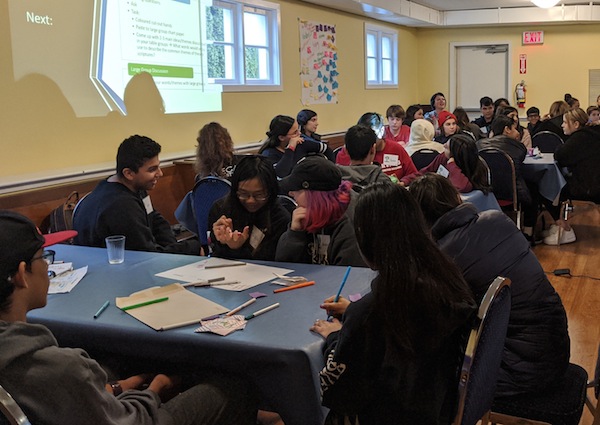
Interfaith Youth BC participants gather at Or Shalom Synagogue on Dec. 8. (photo from Pamela Evans)

Being stewards of the earth, performing acts of kindness: it’s not just Judaism that promotes these principles, and it’s for this reason that three faith groups in Metro Vancouver have brought youth together to explore shared values while participating in community service projects.

The Ismaili Centre of British Columbia, Or Shalom Synagogue and the United Church of Canada began working together in 2019 under the moniker Interfaith Youth BC to deliver programs for youth ages 11 and up. Participants learn about tenets of Islam, Judaism and Christianity while giving back to the community at large.

“You have kids, especially the ones in high school, they’re getting together and some of them have preconceived ideas of the [different faiths],” said Harriet Frost of Or Shalom Synagogue. “Sure, they get along in what they have in common in terms of their interests, ages and what they’re all going through as teenagers, but we’re addressing the elephant in the room. We’re addressing their faith traditions…. It’s an opening to see that they have a lot more in common than they might have realized before.”

Pamela Evans, a regional minister for youth and young adults for the United Church, said the guiding principle behind the collaboration is relationship building. “We make assumptions about others that aren’t based on reality,” she said. “If we’re able to build relationships, it’s less comfortable for us to do that and it affects the way we think about things. I love that sense that [the program] is an open place for curiosity and it’s grounded in this respect for one another.”

In May 2019, youth were given texts from the Torah, Qur’an and Bible that focused on stewardship and caring for the land, and had to determine which holy book each quote was from.

“The fascinating thing is no one could get it quite right because it was quite similar,” said Frost. “It’s a powerful exercise for anyone to see that.”

Later, the youth cleaned up English Bay beach in partnership with the Great Canadian Shoreline Cleanup.

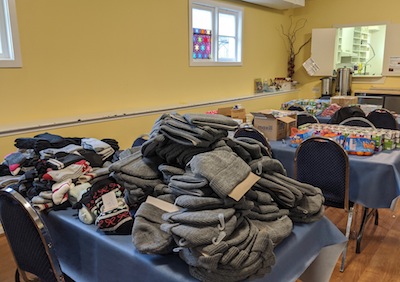
photo - Some of the items Interfaith Youth BC participants assembled into care packages to distribute in Downtown Eastside on Dec. 8
Some of the items Interfaith Youth BC participants assembled into care packages to distribute in Downtown Eastside on Dec. 8. (photo from Pamela Evans)

On Dec. 8, 45 young people gathered in the social hall at Or Shalom to once again dive into pieces of scripture, this time focused on acts of kindness. They assembled 150 care packages that included warm clothing, toiletries, sandwiches and snacks to distribute in the Downtown Eastside with support from the Lookout Housing and Health Society. The teens composed handwritten notes to include in each package. Several businesses donated items for the packages.

Through the nexus of study and action, “we are able to … provide a greater understanding of how faith and service are connected,” said Alina Daya, a secondary teacher at Ismaili Tariqah and Religious Education Board. “Through these events, youth are able to actually live out the guidance of their respective faiths and appreciate the similarities in values, guidance and practice within all of our traditions.”

Gabriel, one of the youth who attended the Dec. 8 event, was moved by the opportunity to make a difference. “I thought it was great how all the teens from different religious backgrounds could come together to help provide some small comforts to those less fortunate in Oppenheimer Park,” he said. “I was surprised at how similar our values were, especially of human kindness and compassion.”

Frost believes the exposure to different faiths and cultures can, in the long run, have the potential to break down political barriers. “It’s a bridge to sitting down and talking about it…. It’s a pathway towards peace and reconciliation in a broader sense,” she said. “If you develop a personal relationship, you realize the commonalities between everything.”

While the program is for youth, Evans sees it has ripple effects for adults as well. “I learn from my colleagues about things I didn’t know about and it feels like a blessing and a privilege to be a part of those conversations. I think sometimes adults are afraid to be in those conversations, or their privilege clouds their understanding. Youth don’t do that, so what would it look like if we shaped this generation of youth to think differently?”

The organizers plan to hold another event this year, a “festival of faiths,” at which they hope to invite other faith communities to participate.


Shelley Stein-Wotten is a freelance journalist and comedy writer. She has won awards for her creative non-fiction and screenwriting and enjoys writing about the arts and environmental issues. She is based on Vancouver Island.

Format ImagePosted on January 24, 2020January 22, 2020Author Shelley Stein-WottenCategories LocalTags interfaith, Ismaili Centre, Or Shalom, tikkun olam, United Church, youth
Ride to help Israeli veterans

Ride to help Israeli veterans

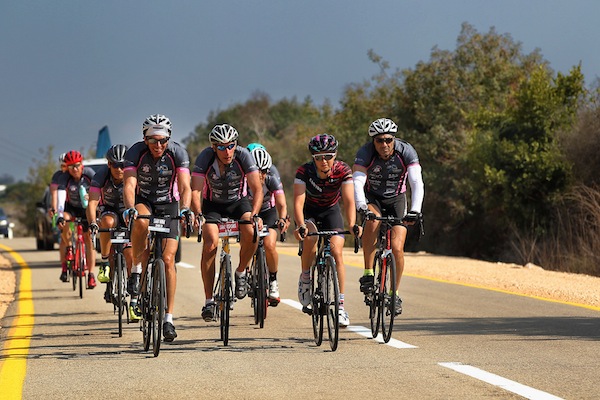
Beit Halochem Canada’s Courage in Motion saw many riders return to do the five-day annual cycle in Israel again. (photo from Beit Halochem Canada)

The 12th annual Courage in Motion, an initiative of Beit Halochem Canada, Aid to Disabled Veterans of Israel, welcomed cyclists from across Canada, joined by some Americans and Israelis. From Oct. 27-31, these international cyclists rode alongside Israel’s disabled veterans on five fully supported routes through northern Israel’s archeological sites and landscapes.

Fundraising is open until Dec. 31, and it is expected that the ride will raise approximately $750,000 Cdn. Sponsors’ support and cyclists’ fundraising facilitated the participation of more than 100 injured Beit Halochem Israel members this year. Money raised also funds programming at Beit Halochem centres in Israel. Thanks to the ongoing success of the ride, cycling has steadily grown in popularity at the state-of-art centres.

Lisa Levy, national executive director of Beit Halochem Canada, is the ride’s founder. An avid cyclist herself, she said, “Cycling in Courage in Motion means visiting Israel, supporting an incredible cause, and connecting directly with our members. Beyond the ride’s huge fundraising component, I never fail to be excited by witnessing lifelong friendships taking shape. It is truly a life-altering experience that you never forget and one that participants want to repeat!”

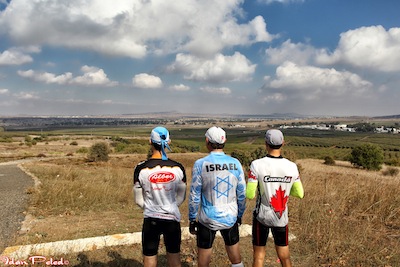
photo - 3 cyclists
(photo from Beit Halochem Canada)

Annually, the ride welcomes both new and repeat participants. This year, returning cyclists included Toronto-born Keith Primeau, who rode in last year’s CIM for the first time. Primeau enjoyed the experience so much that his daughter Kylie accompanied him this time.

Primeau played 15 seasons in the National Hockey League, most notably with the Philadelphia Flyers, prior to his career being cut short due to multiple concussions. He co-wrote the book Concussed! Sports-Related Head Injuries: Prevention, Coping and Real Stories (2012), detailing life after concussion.

Other international returnees included former cycling champion Eon D’Ornellas, who competed throughout the 1970s and 1980s on behalf of both Canada and his native Guyana. The proprietor of Toronto’s D’Ornellas Bike Shop, he started a cycling club more than 25 years ago. In 2011, D’Ornellas, then 59-years old, suffered a stroke during a training ride.

Among the Beit Halochem members participating in Courage in Motion 2019 was Asi Mekonen. In 2012, just prior to his release from the Givati Brigade, Mekonen suffered severe head injuries, with resulting brain damage, vision and hearing impairment, and memory loss. Following five years of physical and cognitive rehabilitation at Beit Halochem, he is now a Jerusalem-based musician. Besides experiencing several Courage in Motion rides, he has completed two marathons. Mekonen was already known to many of the ride’s Canadian participants through his on-stage appearances in this year’s Beit Halochem Canada Celebration of Life concerts.

This year, cyclists may have ridden alongside a future Paralympics hand-bike medallist. Critically wounded in 2002 in a military operation while serving in the artillery corps, Amit Hasdai was left with paralysis on the right side of his body. During rehabilitation, he benefited from equestrian therapy, later competing internationally. Since turning to hand-bike racing at Beit Halochem Tel Aviv, Hasdai has enjoyed participating in Courage in Motion. Hasdai’s natural talent, enhanced by Beit Halochem’s support of his training and coaching, has resulted in his current ranking of eighth in the world. He is training to qualify for the 2020 Paralympics in Tokyo.

Courage in Motion’s participants enjoyed group activities, including a cycling tour of the agriculture region of the Hula Valley and an evening with Israel’s heroes – all Beit Halochem members – who shared their personal stories of tragedy and resilience.

The next Courage in Motion takes place in Israel from Oct. 18-22, 2020. Registration is expected to open in March 2020. See courageinmotion.ca.

Format ImagePosted on December 13, 2019December 12, 2019Author Beit Halochem CanadaCategories IsraelTags Beit Halochem Canada, Courage in Motion, cycling, disabled veterans, health, Israel, philanthropy, tikkun olam, travel
Compassion over hate

Compassion over hate

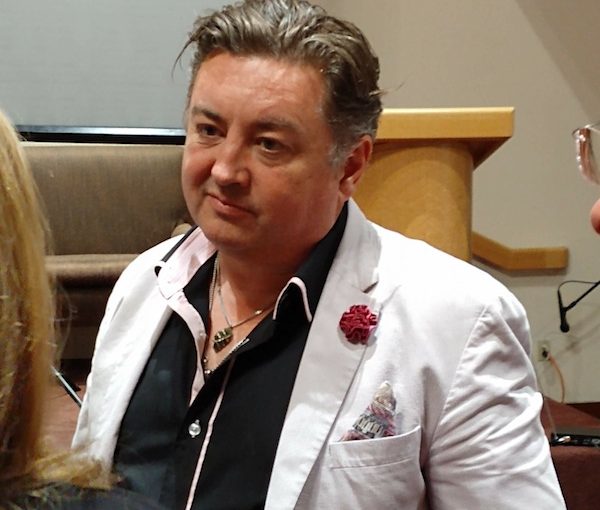
Tony McAleer, who helped found the organization Life After Hate, spoke at Congregation Beth Tikvah last month, along with fellow Life After Hate member Brad Galloway. (photo by Pat Johnson)

A former leader in Canada’s far-right white nationalist movements says targets of white supremacist extremism should not be expected to “hug a Nazi.” But, as difficult as it may be, seeing the humanity in everyone and finding compassion for people who lack compassion may be key to reducing the problem of racist extremism.

Tony McAleer was a member of the so-called White Aryan Resistance and his early embrace of technology and the internet helped propel that movement into the digital age. He later helped found the organization Life After Hate and now works with others who want to leave the neo-Nazi movement. He shared his personal history at Beth Tikvah synagogue, in Richmond, on Sept. 8. He has also spoken at other synagogues and venues in recent weeks.

“While we condemn the activities, while we condemn the ideology, we don’t condemn the human being,” McAleer said of his organization’s strategy. “It’s coming from that place of compassion.… The hardest thing to do in the world is to have compassion for people who don’t have compassion. We do that as harm reduction – hurt people hurt people, and we can bring them back from that place of hurt so they don’t do it anymore.”

McAleer grew up in a stable, comfortable Dunbar home, which contradicts some stereotypes, he said. He attended private Catholic school but lost respect for authority figures when he caught his father with a woman who was not McAleer’s mother.

“Can anyone remember the day when God fell off the pedestal?” he asked. His grades fell, his behaviour deteriorated and he was regularly sent to the principal’s office for canings.

“When I look back on it, I don’t think that I’ve ever felt more powerless than I did in that office time after time after time after time,” he said. “It didn’t make my grades go up. I continued to tune out.… I went from listening to Elton John and Queen to the Clash and the Sex Pistols. I was angry and the music I listened to was angry. It eventually led me down the road into the punk scene and later into the skinhead scene. And, in the skinhead scene, I found an outlet for my anger.”

Ideology is secondary, at best, as an attractant to racist groups, he said.

“What we find in the young men and women who are drawn to these movements is there’s an underlying rage, underlying vulnerability that makes the ideology so seductive,” he said. “I want to be very clear here. I’m not for a minute blaming anything I did on my childhood. Everything I did I chose to do and I take accountability for that and I always will. I work for Life After Hate, do things like this to pay back for that.”

He shares the story of his early life as an explanation, not as a justification, he said.

“What I found in the movement, what I found from being a skinhead – I found a sense of power, a sense of purpose, a sense of meaning,” McAleer said. “I got power when I felt powerless. I got attention when I felt invisible and I got brotherhood, camaraderie and acceptance when I felt unlovable.… Those are the vulnerabilities that make the ideologies so seductive. If you have those in a healthy way, the ideology doesn’t make sense to you. But, for somebody craving those things, the ideology becomes something powerful, a false seduction.”

When he was 21 years old, McAleer’s girlfriend gave birth to a baby girl.

“For the first time, I connected to another human being. Up until that point, I was completely cut off from my heart, I was completely dehumanized,” he said. “I believe that the level to which we dehumanize other human beings is a mirror reflection of how internally disconnected and dehumanized that we are.”

That began the transformation. He had a son months later and was soon a single father being assisted by his mother who, he said, “never gave up on me.”

“It’s safe to love a child,” he said. “They see the magnificence in us when we can’t see it ourselves when we look in the mirror…. The more I can connect to my humanity, the more I can connect to the rest of humanity. I couldn’t connect to the rest of humanity because I couldn’t connect to myself.”

Though he was heavily involved in antisemitism, it wasn’t about Jews, he said.

“I was projecting my crap and I had a vehicle to project it onto – the Jewish people – and that’s what I did.”

The compassion Life After Hate promotes must be accompanied by healthy boundaries and consequences, he said.

“It doesn’t mean we let people off the hook. It doesn’t mean we don’t hold people accountable,” he said. “We do hold them accountable. It’s like tough love. But we need to see the humanity, even in someone whose heart is filled with hate. I don’t think we can afford to dehumanize anybody regardless of how inhuman their behaviour. I believe that nobody is irredeemable. It’s tough work.”

Brad Galloway, who is also a member of Life After Hate, joined McAleer at the event. Also a former white supremacist, Galloway is now completing a degree in the school of criminology and criminal justice at the University of the Fraser Valley. He researches extremism and participates in interventions with members of hate groups to help them leave the movements.

Galloway too came from a middle- to upper-class home. After a fairly typical adolescence and a period of struggling to find his identity, he ran into a childhood friend who was involved in the white power movement.

“I was looking for an identity,” said Galloway. “I was looking for something to belong to, something that I can call my own. He gave me the chance. We’ll give you brotherhood, we’ll back you up, we’ll be there for you … some sort of pseudo-support network which never, never came to fruition. They never provided any of those things for me.”

photo - Brad Galloway
Brad Galloway (photo by Pat Johnson)

Like McAleer, it was fatherhood that made Galloway realize his extremism was putting his family at risk.

He also reflects on compassion he received from police and others during his time in the far-right.

“Why do these people care about me?” he wondered, adding that he began to recognize that individuals who were kindest to him were often members of the very cultural groups he demonized. After a gang brawl where Galloway was nearly killed, he saw compassion in action.

“I ended up in a hospital and I’m lying on the table and a doctor walks in and he’s an Orthodox Jew. I’m lying there with a swastika shirt on, blood all over me, thinking this guy should not help me. I do not deserve to be helped at all right now…. I felt like I was a terrible person and I didn’t feel I deserved this person’s time,” said Galloway. “He did not mention anything about me. He just did his job as a doctor and provided me exactly what I needed. That moment made me start to think about all these different times when minority communities had been good to me.”

Since the racist rally in Charlottesville, Va., in 2017, Life After Hate has been inundated with requests for help. About 300 new cases have opened, about half of which are people trying to leave the movement, the other half family seeking help to extricate their loved ones.

Cpl. Anthony Statham, one of two members of the RCMP’s B.C. Hate Crimes Unit also spoke, outlining the legal strategies employed to fight extremism.

McAleer’s book, The Cure for Hate: A Former White Supremacist’s Journey from Violent Extremism to Radical Compassion has just been released by Arsenal Pulp Press.

Format ImagePosted on October 11, 2019October 11, 2019Author Pat JohnsonCategories LocalTags antisemitism, Beth Tikvah, books, Brad Galloway, lifestyle, racism, The Cure for Hate, tikkun olam, Tony McAleer, white supremacism
Wonderful night of honours

Wonderful night of honours

Jewish Seniors Alliance’s first silent auction, which offered a selection of close to 30 items, from gift certificates from local businesses to paintings and prints. (photo by Susan Curtis)

How do you say thank you to individuals who strive to better the lives of people in the community? Jewish Seniors Alliance’s answer is an appreciation dinner, part of its annual general meeting, which comprises a tribute to three conscientious community personalities. As well, at this year’s AGM on Sept. 19, thanks were given to outgoing JSA president Ken Levitt and new co-presidents Gyda Chud and Larry Shapiro were welcomed.

Levitt’s leadership was praised by Shapiro, who noted the outgoing president’s “ever-present love of life, which inspires everyone and brings out the best in each person whom he meets.”

Chud read a poem, “Captain Ken,” written by JSA honourary life member Binny Goldman. It noted: “You listened with your ear and understood with your heart. Your experience, knowledge and judgment always saw us through successfully – you are a leader, a man above most men.”

Anne Kang, MLA for Burnaby-Deer Lake, spoke about the ongoing efforts of the B.C. government on seniors’ issues, including improved long-term care assistance and training of care workers, and the overseeing of buildings and streets, to ensure that they are accessible and safer for seniors.

Emcee Jack Altman began the honouree ceremony with a tribute to Tzvia Estrin, who was nominated by Yaffa House.

Estrin’s son Avie, who is the current president of Yaffa House, recounted the efforts of his mother and late father Aaron, who worked for 10 years to establish Yaffa House. It opened in 2001 as Western Canada’s first home dedicated to housing community members with mental illness in the context of a Jewish living environment, including kosher food. He said his mother continues full-throttle, being at Yaffa House every day, usually at 6:30 a.m. And he emphasized that “nobody could have achieved what Tzvia has attained and continues to do for the most vulnerable segment of our own community.”

Yaffa House presently oversees four homes across the city, including a newly opened women’s facility. Its mandate is to provide permanent non-transitional housing and has in-house support. It takes people off the streets and tries to keep them off the streets.

Tzvia Estrin thanked everyone and read the poem “Don’t Turn Your Back,” which emphasizes the importance of taking the time to compassionately listen to others’ needs and to help them as lovingly as one is able.

Cindy Charkow, a director of Yaffa House, noted the outstanding, much-needed service that the facility provides and stressed that, “without Tzvia, there wouldn’t be a Yaffa House.”

The second honouree, Jack Wizenberg, was recognized for his work with Tikva Housing Society, which helps lower-income Jewish people find affordable housing. He said, “Seeing Jewish individuals and families who are alone, struggling and having to rely on social insurance and the food bank to survive, touches my heart.”

Wizenberg served on the Tikva board for six years, bringing to the position his 41 years’ experience in property management, as well as a lifelong involvement in a range of Jewish organizations and causes in Calgary, Edmonton and Vancouver.

He said he felt “extremely moved” when reading a Jewish Federation of Greater Vancouver housing needs study indicating that, in 2015, 16% of the Jewish population in Greater Vancouver were living below the poverty line “and, in all likelihood, those numbers have increased over the last four years.” He emphasized that things beyond their control prevented these people from working and, in a blink of an eye, they found themselves in need and relying on social assistance to survive.

Wizenberg began his service at Tikva helping with maintenance and tenant issues at Dany Guincher House. Since the first 11-suite apartment building in Marpole was purchased in 2008, he said, Tikva has made available 18 units of mixed single and family housing in the Diamond Residences in Richmond and another 32 family townhouses will be available in the Ben and Esther Dayson Residences in Vancouver’s Fraserview area. Last year, 100 individuals were helped by the Esther Dayson Subsidy Program, which provided those in need with adequate funds to allow them to continue living in their current accommodations.

Tikva president Shelley Karrel said Wizenberg seemed to have a passion for property management and often joined the property management and/or fire-safety group when doing walkthroughs to evaluate building conditions and the need for repairs. His positions have included treasurer, building committee head and acquisitions committee head.

“He was always seeking to ensure the best for Tikva, the buildings and its tenants,” said Karrel. “He is a person who respects others, is very organized and is a great team player. We are blessed to have Jack as a board member and friend.”

Evening honouree , whose tenor singing voice has brought joy to countless individuals and organizations throughout the Jewish and general communities for more than six decades, was introduced by JSA president emeritus Serge Haber.

“We’re honouring people who love community,” said Haber. “Maurice has helped seniors so very much by enthusiastically and nobly giving his special talents, his outstanding voice to the community, and particularly to seniors. Your father, George Moses, a celebrated rabbi/cantor in Bangalore, India, would have been most proud of you. Without question, you are most deserving of this honour.”

Moses spoke of the pleasure he receives by entertaining, and especially in doing so for senior citizens, emphasizing that “our precious seniors should not be ignored and they should be entertained and respected for their countless contributions to life in the community. The only way that I can thank seniors for all they have done is through my singing. It gives me great satisfaction to see their smiling faces, their faces lighting up when I see them react to a song familiar to them.”

Moses shared some of his many religious/concert participations for seniors, including singing for 17 years at Shabbat services at Louis Brier Home and Hospital. He has sung with the Jewish Community Centre Choir, the Shiron Singers, with Elizabeth Wolak and Muriel Morris, and the Rinat Ensemble, all of which performed for seniors. He also has produced a Vision TV show, Let’s Sing Again, which featured a popular tunes sing-along aiming to revive seniors’ nostalgic memories.

He has sung and danced for the past 10 years with the seniors’ concert group Showtime, which is produced by Beryl Israel, as well as with the Vancouver Jewish Men’s Choir (VJMC), the Kol Simcha Choir (composed of members from all synagogues), at Temple Sholom services with Cantor Emeritus Arthur Guttman, at Beth Hamidrash, at Beth Tikvah Synagogue and at Chabad Richmond with Cantor Steve Levin. He is an active participant with the Choir of the Performing Arts Lodge (PAL), which stages a variety of special shows for community seniors.

Moses said his enduring love for seniors was developed by his interactions with the late Beth Israel Cantor Murray Nixon, who constantly stressed the importance of treating older people with respect.

“I am so pleased,” said Moses, “that this evening is taking place at Beth Israel, truly ‘my home away from home,’ where I served in the synagogue’s choir for 66 years under seven different cantors and six different rabbis – and with Pucky Pelman, my mentor for 45 years.”

Moses expressed appreciation to his “guest of honour,” his daughter Melissa, “who has been by my side through three bouts of cancer, making me drink lots of water, eat healthy foods, and go on long walks at the Southlands.”

He gave “a most sincere thank you” to a number of people: Arnold Selwyn, his “35-year wonderful partner in song”; Morris, a pianist with whom he has performed for 55 years; Miriam Breitman, with the Rinat Ensemble and now the PAL chorus, and PAL co-founder Bill Harvey; Binny Goldman, for her help at Louis Brier services; Stan Shear, VJMC musical director; Cantor Yaacov Orzech with the Kol Simcha Choir; and Jonathan Berkowitz of BI’s Purim Shpiel.”

He ended by singing “Let’s Sing Again” and, with Selwyn, Adon Olam.

A video on JSA’s outreach and peer support activities, produced by Cory Bretz of Heirloom Films, was screened, followed by the JSA’s first silent auction, which offered a selection of close to 30 items, from gift certificates from local businesses to paintings and prints.

The event was co-chaired by Tammi Belfer and Larry Shapiro, with committee members Tamara Frankel, Helene Rosen, Marshall and Marilyn Berger, and JSA staff Elizabeth Azeroual and Rita Propp. Catering was provided by Nava Creative Cuisine; the photographer was Susan Curtis.


Bob Markin is a longtime Jewish Seniors Alliance supporter.

Format ImagePosted on October 11, 2019October 11, 2019Author Bob MarkinCategories LocalTags AGM, Beth Israel, health, Jack Wizenberg, Jewish Seniors Alliance, JSA, Maurice Moses, seniors, tikkun olam, Tikva Housing, Tzvia Estrin, Yaffa Housing
Dealing with adversity

Dealing with adversity

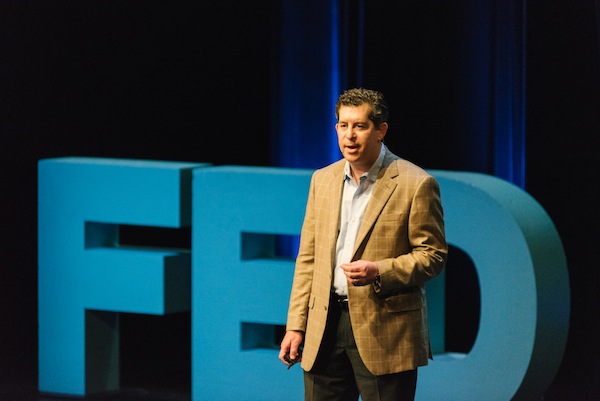
Houston Rabbi Brian Strauss lost both his family home and his synagogue to Hurricane Harvey, but the story he brought to FEDtalks Sept. 9 was an uplifting one. (photo from JFGV)

A time-lapse video showed the unrelenting advance of Hurricane Harvey. The security camera at Houston’s Jewish community centre captured the natural disaster’s impact on the building’s interior from the moment the first drops of water came through the front door until the deluge reached the ceiling. Furniture became unmoored and began to swirl around the building’s lobby.

The Category 4 hurricane made landfall in August 2017, slamming Texas and Louisiana with catastrophic flooding and dozens of fatalities. Material damages were estimated at $125 billion US, mostly in Houston and southeast Texas.

The Jewish community of Texas had to rebuild. Synagogues, the JCC, the Jewish seniors home and one in every 13 Jewish family homes were ruined.

Rabbi Brian Strauss, who spoke in Vancouver Sept. 9, lost both his family home and his synagogue. The issue was not merely flooding. Any flooding damages property, but the area’s topography meant that Houston was submerged in toxic bayou water, rendering everything it touched toxic. Added to this, the humidity of Houston caused mold to grow immediately. Houston received 52 inches of rain in three days – equivalent to its average annual rainfall. (By contrast, he noted, Vancouver gets 46 inches of rain annually.)

But the story Strauss brought to the Vancouver Playhouse – he was one of four speakers at FEDtalks, the opening event of the Jewish Federation of Greater Vancouver’s annual campaign – was an uplifting one.

Volunteers from around the world descended on Houston. The federal government provided resources to rebuild synagogues, homes and communal facilities. Especially notable: Israel donated $1 million to a Diaspora community struggling with crisis. Strauss juxtaposed the phenomenon of Jewish giving, which for decades flowed from the Diaspora to Israel, with the reality that Israel is now in a position to help a community in crisis abroad.

Also speaking at the campaign launch event was Risa Alyson Cooper, executive director of Shoresh. She shared her journey into Jewish spiritual and ethical issues around food. Shoresh is an Ontario-based organization that “inspires and empowers our community to take care of the earth by connecting people, land and Jewish tradition.”

“Eating is an ethical act,” Cooper said. By engaging community members “from seed to harvest,” the organization reduces the stigma of receiving “donated” foods.

“It’s not a handout,” she said. People are involved in creating their own food sustainability.

Cooper’s journey of exploration began during a trip in Nelson, B.C., a story she shared in an article the Independent ran in advance of the event. (See jewishindependent.ca/b-c-inspires-activists-work.)

Also at FEDtalks, Isaac “Bougie” Herzog – who chose to sit out not one but two Israeli elections this year – spoke about his role as head of the Jewish Agency for Israel.

Herzog is Israel’s former leader of the opposition and former head of the Labour party. In contextualizing his role as chairperson of the world’s largest Jewish organization, an agency that has been central in creating and building the Jewish state, he spoke of continuing a family legacy.

His grandfather, Rabbi Yitzhak HaLevi Herzog, who was the first Ashkenazi chief rabbi of Israel, went on a rescue mission in 1946 to find hidden Jewish children in churches and monasteries throughout Europe, bringing thousands of them to Palestine. Herzog’s father, Chaim, who went on to become president of Israel, served with the U.K. army, landed in Normandy, fought in the Battle of the Rhine and was among the first to enter the Bergen-Belsen concentration camp. Abba Eban, the legendary Israeli diplomat and statesman, was an uncle.

“I’m fulfilling the orders of my forbearers,” said Herzog, who was introduced by Karen James, immediate past board chair of the Jewish Federation and a member of the board of the Jewish Agency. The Independent also interviewed Herzog in advance of his visit. (Read the story at jewishindependent.ca/building-jewish-future.)

The most emotional presentation of the night came last. Dr. Gillian Presner recounted how she was invited to join the Federation movement’s National Young Leadership Cabinet. When she was told the commitment was five years, she replied: “That’s the rest of my life.”

Presner was diagnosed with a brain tumour in 2016, while pregnant with her third daughter. Nine days after the baby was born, she suffered a stroke.

Despite the challenges of raising a very young family while enduring terminal brain cancer, she accepted the invitation to join the cabinet because, she said, “I refuse to die before I’m dead.”

She added: “I am full of hope, but I am also a realist.”

She understands that she needs to leave a legacy of vibrant memories to her daughters – the family took a trip to Israel together, certain it would be her only chance – but she also knows that her daughters will “have to learn about me by hearing about what Mommy did.”

By continuing to devote herself to philanthropic causes, she is “showing my daughters what I truly value.”

Ezra Shanken, chief executive officer of the Jewish Federation, closed the evening, noting “our most precious commodity we have here is our time.”

Alex Cristall, chair of the board of Federation, welcomed the audience, acknowledging in particular 150 people in their 20s and 30s whose presence was made possible through a contribution by Jonathon and Karly Leipsic. Jonathon Leipsic is the annual campaign chair for the second consecutive year.

“It is a pleasure to have you,” Cristall said. “We need you.”

Jonathon Leipsic spoke of Theodor Herzl’s dream of Jewish self-determination and noted: “Our generation has never known a generation without emancipated Jewish freedom.”

He urged the audience to go to YouTube and find Chaim Herzog’s speech to the United Nations in 1975 against the motion that equated Zionism with racism.

“It will send shivers down your spine,” he said.

Members of Parliament Joyce Murray, Don Davies, Jody Wilson-Raybould, Randeep Sarai and Hedy Fry were in attendance, the latter of whom spoke from the podium and brought greetings from the prime minister. Also present were Selena Robinson, British Columbia’s minister of municipal affairs and housing; George Heyman, minister of environment and climate change strategy; George Chow, minister of state for trade; and Anne Kang, member of the Legislative Assembly. Vancouver city councilors Melissa De Genova, Colleen Hardwick, Sarah Kirby-Yung and Pete Fry attended, as did the consuls general of France, Germany and the United States, and Vancouver Police Chief Adam Palmer.

O Canada and Hatikvah were sung by the King David High School Choir.

To donate to the campaign and watch videos of all the FEDtalks speakers, visit jewishvancouver.com.

Format ImagePosted on September 27, 2019September 24, 2019Author Pat JohnsonCategories LocalTags FEDtalks, Jewish Federation, JFGV, philanthropy, tikkun olam
NCJW Vancouver fall update

NCJW Vancouver fall update

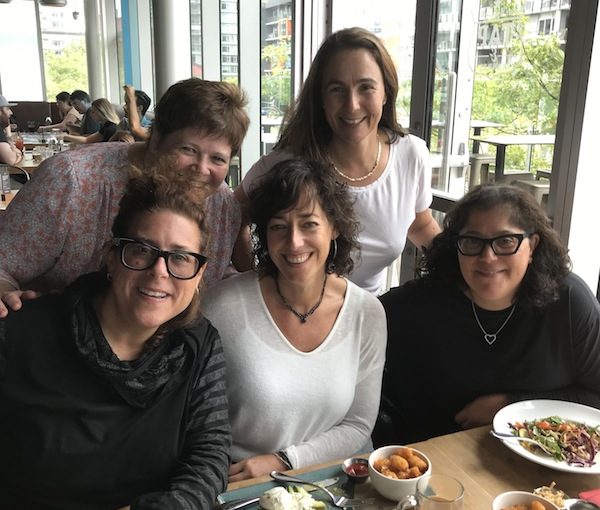
National Council of Jewish Women of Canada, Vancouver section, members. Seated, left to right, are Lisa Boroditsky, Jill Kipnis and Sandi Hazan Switzer. Standing are Heather Sirlin, left, and Jane Stoller. (photo from NCJWC Vancouver)

Members of National Council of Jewish Women of Canada, Vancouver section, have been busy close to home, not only supporting various initiatives for disadvantaged children in local schools – Books for Kids, HIPPY, Operation Dressup, and hygiene and nutrition school programs – but learning more about the Jewish history of the city.

photo - Newcomers to Vancouver, Guillermo and Debby Castillo from Mexico, who joined the NCJWC walk Sunday morning
Newcomers to Vancouver, Guillermo and Debby Castillo from Mexico, who joined the NCJWC walk Sunday morning. (photo from NCJWC Vancouver)

On Sept. 8, more than 25 people participated in a sold-out walk through the “old city” of Vancouver, organized by Lisa Boroditsky, Jane Stoller and Sandi Hazan Switzer. Participants were enthralled by the stories of Harry Hammer, by the geographical and architectural details, to say nothing of the oral history of horse-drawn carts, family stores and tales of running to the bus for cheder.

NCJWC members also worked nationally, supporting successful efforts by CIJA (Center for Israel and Jewish Affairs) to get Parliament to adopt the International Holocaust Remembrance Alliance’s definition of antisemitism; and internationally, issuing a call to action to participate in the campaign to free human rights lawyer Nasrin Sotoudeh, who has been imprisoned in Iran’s Evin prison since June 2018.

In May of this year, Prof. Irwin Cotler, chair of the Raoul Wallenberg Institute in Montreal, addressed the executive of the International Council of Jewish Women on the issue of human rights. He made a compelling case for participation in the campaign to free Sotoudeh, sentenced to 38 years and 148 lashes in Iran because of her work defending women’s rights. She has been imprisoned four times since 2010.

Freedom of expression and peaceful assembly are integral to ensuring rule of law and the functions of democracy; they are fundamental principles clearly defined in international law and they are the inherent right of all people. These two democratic themes were betrayed in 2018 when, as part of peaceful protests, some women removed their hijabs and waved them like flags and then were prosecuted for this behaviour. For defending these women, Sotoudeh has been unjustly imprisoned.

The International Council of Jewish Women executive voted to support Cotler’s recommendation and Debby Altow, vice-president for Canada on this executive, circulated a backgrounder and sample letter of protest for 33 affiliates worldwide. Both email and postal addresses for United Nations Secretary-General António Guterres and UN Commissioner Michelle Bachelet, were distributed, making such protest letters easier to submit. For more about Sotoudeh and NCJW Vancouver section, visit ncjwvancouver.org.

Format ImagePosted on September 20, 2019September 17, 2019Author NCJW VancouverCategories LocalTags history, human rights, Nasrin Sotoudeh, NCJW, philanthropy, tikkun olam, volunteering, women
In solidarity with neighbours

In solidarity with neighbours

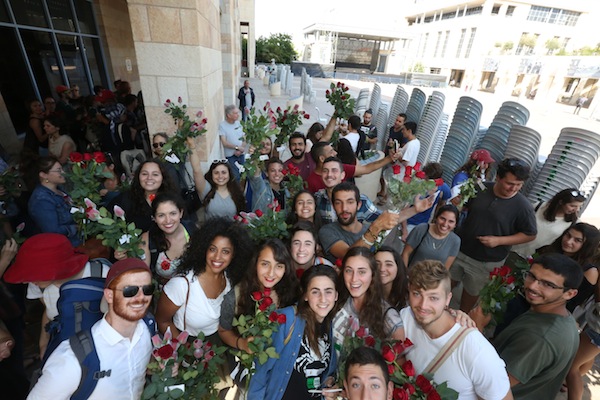
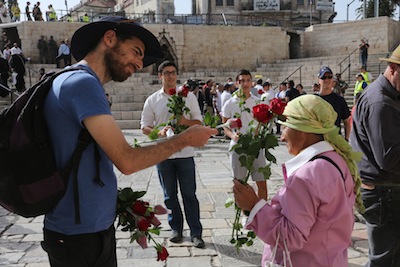
One of Tag Meir’s annual events is Flowers of Peace. Participants hand out roses on the streets of the Old City in Jerusalem on Jerusalem Day. This year, they gave out some 2,000 flowers as a message of peace to Muslims and Christians in the city. (photo from Tag Meir)

To counter what Tag Meir head Gadi Gvaryahu described as incitement by radical settlers through Tag Mechir (Price Tagging), Tag Meir (Light Tagging) was formed.

Tag Meir, which started in 2011, is operated by members of the same segment of religious Zionistic Judaism that started price tagging (attacking Palestinian property and people) in 2009. Members of Tag Meir started visiting victims on both sides of the conflict in an effort to show solidarity and repair physical and psychological damage.

Today, Tag Meir is supported by many organizations and institutions in Israel from all segments of Jewish society – secular, Reform, Conservative, Orthodox and ultra-Orthodox Jews – coming together to stand against hate and intolerance.

Though he now lives in Rehovot, Gvaryahu still considers Jerusalem home. He is the eighth generation of his family to live there.

Gvaryahu was deeply affected by the assassination of Yitzhak Rabin and the fact that the killer had come from his segment of religious Zionism, Kippot Srugot (Knitted Kippot). He decided he had to put his passion for helping animals aside – he is a farm animal behavioural researcher by training – to find ways to mend Israeli society.

“I decided it’s about time to be more involved in public business – not politics, but more education,” said Gvaryahu. “Me and a few other families initiated a synagogue, an Orthodox synagogue in Rehovot, named after Yitzhak Rabin.”

Gvaryahu realized there was something wrong with the education system when he received a call from the head of his son’s yeshivah, demanding his son apologize for an outburst.

“Six months after Yitzhak Rabin’s assassination, a famous rabbi came to my son’s school,” recalled Gvaryahu. “He said that now, with Rabin dead, all his bad things were forgiven. And he didn’t even mention that he was murdered. He just treated him like someone who’d sinned a lot, talking to the whole synagogue, like 400 students, including the head of the synagogue … and they were all silent, except one person – my son.

“My son said, ‘How dare you say that? He just passed away! And, how dare you say that he has sins? He was killed, murdered!’ Then, he left the room, crying.”

When the rosh yeshivah called, Gvaryahu commended his son’s actions and said, “This rabbi should apologize. I’m not going to ask my son to apologize.”

Eventually, they consulted a leading rabbi who declared that Gvaryahu’s son “did a wonderful job and there’s no reason for him to apologize.”

It was at that point that Gvaryahu decided they needed to start their own school.

The first time that Israelis heard the term “Price Tag” in the context of payback was in December 2009. It was dubbed so by a small group of extreme right-wing West Bank settlers who had begun indiscriminately attacking Palestinians.

Gvaryahu explained the psychology behind it: “Something happened to us by Palestinians, by the army, by politicians, whatever … someone will pay the price. The thinking is, we don’t care that you’re innocent, we don’t care that you are Christian, Muslim…. You’re not Jewish, you’ll pay the price. We’ll burn, damage your mosque, your house, your car, your olive trees, and that’s called, ‘Price Tag,’ happening almost daily in the West Bank. Most of them, we don’t hear about. But, after a terror attack by Muslims, unfortunately, we have a bunch of them in the last two months … there’s been attacks by extreme settlers.”

While Tag Mechir destroys, Tag Meir aims to rebuild and bring light. “So, we call the people, the victims, in hospitals, villages, wherever, mosques, monasteries or churches, and we create a solidarity visit,” said Gvaryahu.

photo - Flowers of Peace volunteers on Jerusalem Day
Flowers of Peace volunteers on Jerusalem Day. (photo from Tag Meir)

“Over the years, we’ve gained many, many Jewish, Christian and Muslim friends, and that’s very important. It’s important, because it’s a correct response to that crime, because they want to create terror or fear, especially among Muslims and Christians. So, those visits strengthen the relationship between Jews and Muslims and Christians. We have three Facebook pages – one in Hebrew, one in Arabic and one in English – with 35,000 followers.”

People in Israel not connected to Tag Meir have started solidarity visits by themselves, aiming to mend fences with Palestinian neighbours. “First, you know, I’m happy about Tag Meir,” Gvaryahu said about this development. “Second, that they get that this is the right way to respond to a hate crime or a price tag attack – it’s wonderful. It’s what we want to happen.

“This isn’t something that can be solved quickly. It’s education. We try to educate society, especially the Zionist society, we hope.”

This year, due to the rise in Tag Mechir attacks, Tag Meir held an education symposium on Sept. 10 at the Van Leer Jerusalem Institute, near the home of the president of Israel, Reuven Rivlin. Among the speakers were the former head of the Israeli security agency, Shin Bet, Yaakov Peri, senior rabbis from different segments of society, and the mother of one of the Jewish victims of terror, Sarah Rosenfeld.

“Her son [Malachi Moshe] was murdered and she will give her strong condemning opinion about ‘price tag,’” said Gvaryahu prior to the symposium. “When we came to visit the Rosenfeld family, she said that, if Malachi would be with us, he would join Tag Meir.

“This is very unique about Tag Meir, that we visit both settlers and victims of Tag Mechir on the Palestinian side. It’s not that pleasant an activity sometimes, but we feel it’s very important.”

One of the yearly events Tag Meir hosts is a flower giveaway called Flowers of Peace. They go out into the streets of the Old City in Jerusalem on Jerusalem Day and hand out roses. “This year, we spread 2,000 flowers all over the Old City,” said Gvaryahu. “It’s a symbolic act, sending a message of peace to Muslims and Christians in Jerusalem.”

While Gvaryahu said 40% of the people in Jerusalem are Muslim, Jerusalem Day is only celebrated by the Jewish population. He said some of the songs that are traditionally sung must irritate the Muslim population. “Unfortunately, we don’t celebrate it, in our opinion, in the right way,” he said. “We just march with Israeli flags from West Jerusalem to the Western Wall through the market. Not all the songs are horrible, but a few of them are. So, this is our response. We march with Flowers of Peace.”

For more information, visit tag-meir.org.il/en.

Rebeca Kuropatwa is a Winnipeg freelance writer.

Format ImagePosted on September 20, 2019September 17, 2019Author Rebeca KuropatwaCategories IsraelTags coexistence, Gadi Gvaryahu, Israeli-Palestinian conflict, Judaism, peace, Tag Mechir, Tag Meir, tikkun olam

Need earth-friendly policies

We are now well into the Hebrew month of Elul, which provides an incentive for heightened introspection, a chance to practise teshuvah, changes in our lives, before the Days of Awe, the Days of Judgment, the High Holidays of Rosh Hashanah and Yom Kippur. The shofar is blown every morning (except on Shabbat) in synagogues during the month of Elul to awaken us from slumber, to remind us to consider where we are in our lives and to urge us to consider positive changes.

How should we respond to Elul today? How should we respond when we hear reports almost daily of severe, often record-breaking, heat waves, droughts, wildfires, floods and storms; when July 2019 was the hottest year since temperature records were kept in 1880; when 18 years in this century are among the 19 hottest years and 2014, 2015 and 2016 successively broke temperature records; when polar ice caps and glaciers are melting far faster than projections of climate experts; when climate scientists are warning that we could be close to an irreversible tipping point when climate change could spiral out of control with disastrous consequences, unless major changes are soon made; when we appear to also be on the brink of major food, water and energy scarcities; and when, despite all of the above, so many people are in denial, and almost all of us seem to be, in effect, rearranging the deck chairs on the Titanic as we approach a giant iceberg?

Israel is especially threatened by climate change since, among other dangers, a rising Mediterranean Sea could inundate the coastal plain, which contains much of Israel’s population and infrastructure; and the hotter, drier Middle East projected by climate experts makes terrorism and war more likely, according to military experts.

It is well known that one is not to shout fire in a crowded theatre – except if there actually is a fire. The many examples of severe climate change indicate that the world is on fire today. Therefore, we should make it a priority to do all that we can to awaken the world to the dangers and the urgency of doing everything possible to shift our imperiled planet onto a sustainable path.

We should urge that tikkun olam (the repair of the world) be a central focus in all aspects of Jewish life today. We should contact rabbis, Jewish educators and other Jewish leaders and ask that they increase awareness of the threats and how Jewish teachings can be applied to avert impending disasters. We should write letters to editors, call talk shows, question politicians and, in every other way possible, stress that we can’t continue the policies that have been so disastrous.

As president emeritus of Jewish Veg, formerly Jewish Vegetarians of North America, I want to stress that shifting toward a vegan diet is something that everyone can do right away. It would significantly reduce greenhouse gas emissions and it would be consistent with Jewish teachings on preserving human health, treating animals with compassion, protecting the environment, conserving natural resources, and helping hungry people.

The afternoon service for Yom Kippur includes the book of Jonah, who was sent by God to Nineveh to urge the people to repent and change their evil ways to avoid their destruction. Today, the whole world is Nineveh, in danger of annihilation and in need of repentance and redemption, and each one of us must be a Jonah, with a mission to warn the world that it must turn from greed, injustice and idolatry, so that we can avoid a global catastrophe.

Richard H. Schwartz, PhD, is professor emeritus, College of Staten Island, president emeritus of Jewish Veg and president of Society of Ethical and Religious Vegetarians. He is the author of several books, including Judaism and Vegetarianism and Who Stole My Religion? Revitalizing Judaism and Applying Jewish Values to Help Heal Our Imperiled Planet, and more than 250 articles at jewishveg.org/schwartz. He was associate producer of the documentary A Sacred Duty: Applying Jewish Values to Help Heal the World.

Posted on September 20, 2019September 17, 2019Author Richard H. SchwartzCategories Op-EdTags climate change, Elul, environment, lifestyle, Rosh Hashanah, tikkun olam

Value of is and ought

Ought is one of the 3,000 most frequently used words in English. We say one ought to do something as an indication that some action is good, proper, expected or owed. The word should carries many of the same implications. In recent years, should and ought have been criticized as being negative words, engendering guilt and removing individual initiative from people. People have begun to say, “I don’t like shoulds” or “Religion is too full of shoulds.”

The contemporary psychological pushback against ought and should is rooted in efforts to help people feel better about themselves. Moreover, it is suggested that, to liberate ourselves from should statements, we must more clearly express what we want and why we want it. It is important to fill in the gap between, “You should take out the garbage,” with the reasons why such an action is desired.

In many ways, the contemporary discussion is based in the work of David Hume (1711–1776), the great Scottish philosopher. He noted that many people make factual observations, describing events or people, and then make a casual transition from statements about what is to claims about what ought to be. In his Treatise of Human Nature, Hume cautioned against using descriptive statements (about what is) as the basis for prescriptive statements (about what ought to be). For example, the observation that locally grown produce is readily available in the market and the claim that one ought to eat local are not connected. What is missing is the explanation of why eating local might be environmentally beneficial, economically justified and morally desirable. The present situation may be described as it is. But if we think that something should (according to our values) be changed, we can begin to think about how to change things that are into what we believe they ought to be.

The claim that there is a smaller Jewish community now because of the Holocaust does not immediately lead to the conclusion that one should financially and politically support the state of Israel. Making the moral claim is not enough. We must be able to give reasons to fill in the gap between the demographic implications of the deaths of so many Jews and the importance of Israel to the continuation and rebuilding of the Jewish people.

Yet ought and should are also ways of thinking aspirationally, articulating what we hope or want to be. My colleague, Rabbi Harold Schulweis, has written about the is/ought dilemma in a way that reminds us of the power and possibility of ought (and should):

“Think ought. Not what is a Jew, but what ought a Jew to be. Not what is a synagogue, but what ought a synagogue to be. Not what prayer is, but what prayer ought to be. Not what ritual is, but what ritual ought to be.

“Focus from is to ought, and our mindset is affected. Is faces me toward the present; ought turns me to the future. Ought challenges my creative imagination, opens me to the realm of possibilities and to responsibilities to realize yesterday’s dream.

“Ought and is are complementary. Without an is, the genius of our past and present collective wisdom is forgotten. Without an ought, the great visions of tomorrow fade. Ought demands not only a knowledge of history but of exciting expectation. Is is a being, ought is a becoming. Ought emancipates me from status quo thinking. Ought is the freedom of spirit.”

The Torah tradition is built around the idea of ought and should. “Barukh atah … Praised are You who commanded us” is a core concept of Judaism, critical to who we are as Jews. This idea is at odds with contemporary sensibilities that seek to discard shoulds and oughts. We recognize responsibilities, obligations, mitzvot, as essential to the building of individual character and collective community. Whether those obligations are interpersonal or directed toward the Holy One, they encourage us to look beyond ourselves to see a greater good.

Many times during the Days of Awe, we will use the words should and ought. Instead of thinking of these words as ways of placing guilt on others, let us try to explain why something – attending shul with the family, marrying within the Jewish community, giving tzedakah – is important. Let’s try to fill in the reasons for our claims of should and ought.

As well, the Yamim Nora’im lead us to see statements of should and ought as moral claims that extend beyond past history. We might hear such comments as indications of our responsible aspirations and our hopeful desires. Then should and ought can be motivational terms. They push us forward toward making the world, our society, our family and our closest relationships a bit better.

Rabbi Baruch Frydman-Kohl is rabbi emeritus of Beth Tzedec Congregation in Toronto and is a rabbinic fellow of the Shalom Hartman Institute of Jerusalem. He is the author of scholarly articles in the area of Jewish philosophy and mysticism. For more articles from the SHI, visit hartman.org.il.

Posted on September 20, 2019September 17, 2019Author Rabbi Baruch Frydman-Kohl SHICategories Celebrating the HolidaysTags Judaism, Rosh Hashanah, tikkun olam
Belong at Bayit and beyond

Belong at Bayit and beyond

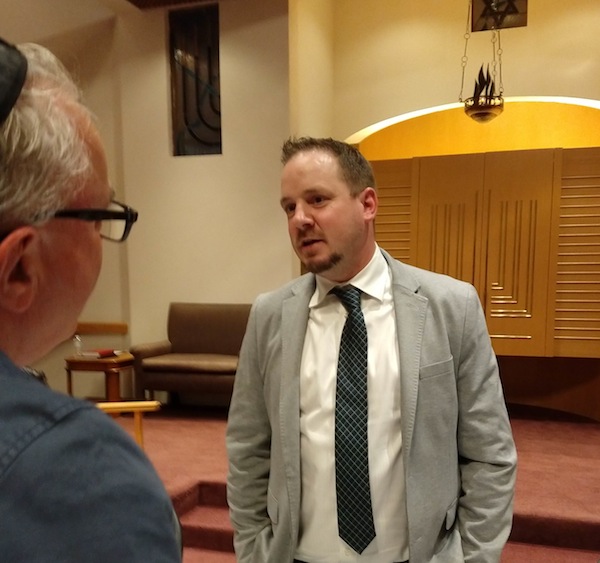
Shira Sachs and Dan Shmilovitch at the Bayit’s Belong launch May 12. (photo from facebook.com/thebayit)

Earlier this year, the Bayit in Richmond launched Belong. The goal of the program is “to create a community where belonging grows and isolation disappears.”

Belong was developed by a committee of six Bayit members: Mel Bauer, Matti Feigelstock, Shelley Goldberg, Shira Sachs, Dan Shmilovitch and Rabbi Levi Varnai.

“There are people that you know you should be connecting to, [or] they should be connecting to you as an organization, but, for whatever reason, they’re not. So, we started talking about how we could address that issue as the Bayit,” explained Shmilovitch, who has been active in the Jewish community for more than 30 years.

There is never just one reason why people feel isolated, he said. “People are isolated for a whole range of reasons – health issues, economic circumstances, mental health issues, maybe they are recently widowed or divorced.”

It is easy to assume that Jewish communities are inherently so strong as to make isolation impossible, but this is not the case. Shmilovitch spoke of the need for “deepening Jewish connections … because isolation is a huge problem in every community and it affects the Jewish community as well, for all age groups.”

There are challenges in combating isolation. “As a Jewish organization, as a synagogue, you’re always looking to invite people in,” he said. “But, when you have people who are isolated and really disconnected, your approach has to be different to get that connection because that’s not their mindset. At that moment in time, that’s not where they’re at.”

photo - Left to right: Mike Sachs, Dan Shmilovitch and Rabbi Levi Varnai at the Bayit’s Belong launch May 12
Left to right: Mike Sachs, Dan Shmilovitch and Rabbi Levi Varnai at the Bayit’s Belong launch May 12. (photo from facebook.com/thebayit)

The Belong committee started their planning by examining the obstacles that prevent people from making contact. There is more to being a community member than simply going to shul, explained Sachs, who is a teacher at Vancouver Talmud Torah.

She noted that people can still feel “uncomfortable or isolated” attending social gatherings outside regular services. She talked about how loneliness has a profound effect on a person’s health and can lead to depression. Using her own childhood story as an example, she described arriving in Canada when her mother, now deceased, was pregnant with twins; Sachs is the oldest of four.

“Community became so important to us,” she said. “We didn’t have the language and, within a couple of months, we went from a family of four to a family of six. My mom was a new mother in a new country, with twins.”

Going to shul helped the family make connections, learn about which schools the family wanted for the children. As a parent herself now, Sachs described how this ethos has shaped her own approach to family life. “When we came back from L.A., it was the number one thing to do – find a community and slowly grow with it. Now, how do we do that for others?”

The Belong committee determined multiple strategies for community development, the first of which was through Friday night dinners. The Belong team sought Bayit members who were willing to invite people to meals at home. They also reached out to Jewish Family Services for help locating people in Richmond who needed help.

“If you have a lady who is a single parent, you match them with another single parent,” said Sachs. “If you have a person who is passionate about literature, you sit them with someone who has the same passion. It was all assigned seating.” She added, “It’s comforting to know, ‘I don’t have to worry about that.’ Maybe that anxiety is why people haven’t come to a dinner.”

Belong is also working to offer food deliveries to families in need. “Food security is an issue in the Jewish community,” said Shmilovitch. The program has been running for awhile now but he hopes that deliveries will become more frequent in future.

“There are vulnerable people in the Jewish community – whether they don’t have enough food, feel isolated for a short time or in the longer term. Regardless, it’s hard to come out at the other end. That’s what drives us.”

In addition, Belong has created a support structure for new mothers. Inspired by and in partnership with Mamatefet, a support organization for Hebrew speakers in Vancouver, Mama Belong will work to diminish the feelings of isolation that often follow the birth of a baby. (See jewishindependent.ca/mothers-embrace-mamatefet.) Mama Belong started delivering baskets to Jewish mothers this summer.

The future of Belong came into focus at the May 12 launch. Current members of the Bayit were invited to learn about the new program. Guests were given a card with tear-off tabs that suggested a wide range of ways in which people could contribute, including hosting Friday night dinners, Russian language conversation groups and cash donations, among other ideas. Between 90 and 95% of the attendees folded over a tab.

From Mama Belong to food bank deliveries and Shabbat dinners, the program is striving to create a warm sense of community for those in need. “You never know what’s going to happen at what point in your life,” said Shmilovitch, but “something’s going to happen to connect you.”

Shula Klinger is an author and journalist living in North Vancouver. Find out more at shulaklinger.com.

Format ImagePosted on August 23, 2019August 22, 2019Author Shula KlingerCategories LocalTags Bayit, Dan Shmilovitch, Judaism, lifestyle, Shira Sachs, tikkun olam

Posts pagination

Previous page Page 1 … Page 12 Page 13 Page 14 … Page 30 Next page
Proudly powered by WordPress