Skip to content
  • Home
  • Subscribe / donate
  • Events calendar
  • News
    • Local
    • National
    • Israel
    • World
    • עניין בחדשות
      A roundup of news in Canada and further afield, in Hebrew.
  • Opinion
    • From the JI
    • Op-Ed
  • Arts & Culture
    • Performing Arts
    • Music
    • Books
    • Visual Arts
    • TV & Film
  • Life
    • Celebrating the Holidays
    • Travel
    • The Daily Snooze
      Cartoons by Jacob Samuel
    • Mystery Photo
      Help the JI and JMABC fill in the gaps in our archives.
  • Community Links
    • Organizations, Etc.
    • Other News Sources & Blogs
    • Business Directory
  • FAQ
  • JI Chai Celebration
  • JI@88! video

Recent Posts

  • Sharing her testimony
  • Fall fight takes leap forward
  • The balancing of rights
  • Multiple Tony n’ Tina roles
  • Stories of trauma, resilience
  • Celebrate our culture
  • A responsibility to help
  • What wellness means at JCC
  • Together in mourning
  • Downhill after Trump?
  • Birth control even easier now
  • Eco-Sisters mentorship
  • Unexpected discoveries
  • Study’s results hopeful
  • Bad behaviour affects us all
  • Thankful for the police
  • UBC needs a wake-up call
  • Recalling a shining star
  • Sleep well …
  • BGU fosters startup culture
  • Photography and glass
  • Is it the end of an era?
  • Taking life a step at a time
  • Nakba exhibit biased
  • Film festival starts next week
  • Musical with heart and soul
  • Rabbi marks 13 years
  • Keeper of VTT’s history
  • Gala fêtes Infeld’s 20th
  • Building JWest together
  • Challah Mom comes to Vancouver
  • What to do about media bias
  • Education offers hope
  • Remembrance – a moral act
  • What makes us human
  • המלחמות של נתניהו וטראמפ

Archives

Follow @JewishIndie
image - The CJN - Visit Us Banner - 300x600 - 101625

Tag: survivors

A virtual Yom Hashoah

A virtual Yom Hashoah

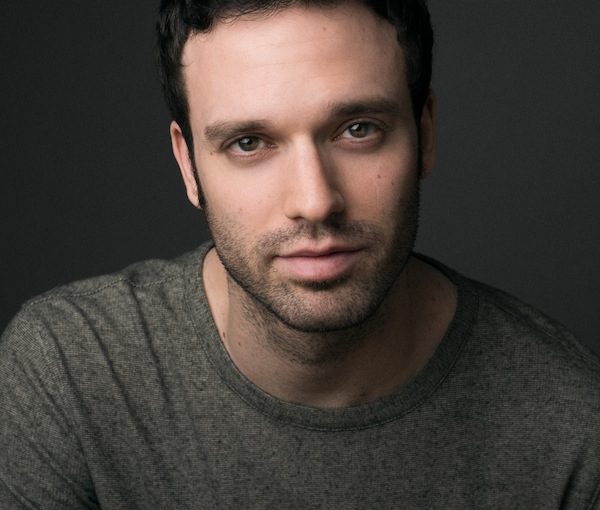
Toronto actor Jake Epstein hosted Canada’s online Yom Hashoah commemoration on April 20. (PR photo)

Days after many Canadian families celebrated Passover remotely using online platforms for virtual seders, Yom Hashoah was commemorated with a virtual ceremony that linked survivors and others across the country in an unprecedented, but deeply moving, program of remembrance and education.

The 27th of Nissan was set aside in 1951 by Israel’s parliament, the Knesset, as Holocaust and Heroism Remembrance Day. This year marked the 75th anniversary since the end of the Second World War and the end of the Holocaust.

Hosted live by Toronto actor Jake Epstein, the event, on April 20, featured prerecorded content from organizations across Canada and new footage broadcast live, including candlelighting from six locations across the country, among them the Vancouver home of Shoshana and Shawn Lewis and their children Charlie, Julian and Mattea.

In a recorded message, Prime Minister Justin Trudeau said Canada stands firm against antisemitism and with Israel and the Jewish people.

“The Shoah was undoubtedly one of the darkest periods in human history and these moments where we pause to remember matter, both to honour those who lived through these horrors but also to make sure these atrocities are never repeated,” Trudeau said. “Sadly, acts of antisemitic violence are more and more frequent today and Canada is not immune to this trend. For many Jewish Canadians, the rise in attacks is not only troubling, it’s downright scary. But, let me be clear, attacks against the Jewish community are attacks against us all. Let me be equally clear, Canada and Israel are partners, allies and close friends and we will continue to stand proudly with Israel. Attacks against Israel, including calls for BDS and attempts to single her out at the UN, will not be tolerated.… We will always condemn any movement that attacks Israel, Jewish Canadians and the values we share.”

The Yom Hashoah program also included recorded messages from Israeli diplomats in Canada and prerecorded musical components.

“During the war, music played an important role in lifting the spirits of ghetto inhabitants, camp inmates, as well as being used as a bargaining chip in negotiating small freedoms in the camps,” said Epstein.

Pieces were performed by the Toronto Jewish Chorus, participants in previous March of the Living programs and by shinshinim, young Israelis performing overseas duties after completing high school. Memorial prayers, El Maleh Rachamim and Kaddish, were offered by Cantor Pinchas Levinson of Ottawa.

Epstein, a grandson of Holocaust survivors, spoke of his family’s history, the good fortune of his grandparents’ survival and the resilience they showed in beginning a new life in a new land.

“Upon being liberated from the camps, survivors faced the inconceivable realization of the enormity of their loss,” Epstein said. “Recovery was a long road ahead. Survivors, like my grandparents, immediately searched for any other surviving family members, only to discover that they had lost everyone. And yet, somehow, they rebuilt their lives.

“My grandparents came to Canada through Pier 21 in Halifax before ultimately moving to Toronto. Even though they were free, the culture shock, the language, the difficulty in finding work, made life extremely hard. My grandfather, an architectural engineer in what was then Czechoslovakia, was lucky enough to find work as a bookkeeper for a lumberyard. My grandmother became a seamstress, working day and night, not only making clothing for customers, but making dresses for my mom as well. Somehow, they managed to connect with other survivors who became like family.…My grandparents’ story of resilience and adversity is a common one. They, like so many other survivors in Canada, raised families, found employment, learned new languages and contributed to Canadian society and Jewish communal life. Some even dedicated their lives, decades later, to speaking out against hate and injustice by sharing their Holocaust stories with students and the public.”

Survivors from across Canada, in video recordings, spoke of their liberation experiences and offered advice to successive generations.

Faigie Libman of Toronto recounted her moment of liberation.

“We saw a man on a horse, a Russian soldier, coming towards us,” she recounted. “He said he was a captain, that we are free. You cannot imagine the joy, you cannot imagine the exhilaration. I still see the picture in front of my eyes, women who could hardly walk, some were even crawling, pulled him down, they were kissing him, they were hugging him, and that day will always be in my mind – Jan. 21, 1945 – we were finally free.”

Sydney Zoltan of Montreal expressed concern about Holocaust awareness after the eyewitnesses pass.

“We, the youngest survivors, now stand in the frontline,” he said. “We often ask ourselves what memory of the Shoah will look like when we are gone. We depart with the hope that our fears are only imaginary.”

Another survivor asked younger generations to be vigilant.

“I want young people to remember, I want them to be politically aware, that their government should never preach hate,” said Elly Gotz of Toronto. “I want them to understand how damaging hate is to people.”

The commemoration, coordinated by the Sarah and Chaim Neuberger Holocaust Education Centre in Toronto, was presented in partnership with organizations across the country, including the Vancouver Holocaust Education Centre. Earlier the same day, a global Yom Hashoah memorial event took place from an eerily empty Yad Vashem in Jerusalem, again with video-recorded survivor testimony and messages from political, religious and civic figures.

Format ImagePosted on May 15, 2020May 14, 2020Author Pat JohnsonCategories NationalTags Holocaust, Jake Epstein, memorial, survivors, VHEC, Yom Hashoah

Using past to improve future

Without interpretation, the world’s greatest art is little more than a lot of pretty pictures. Similarly, absent interpretation and thoughtful reflection, history is not much more than a litany of names and dates.

This month, we are marking many anniversaries. The end of the Second World War in Europe. The liberation of the last Nazi concentration camps. The beginning of Soviet-versus-Western tensions and proxy wars that lasted decades.

In some ways, we cannot begin to comprehend the Holocaust, or the world’s reaction to it, without reflecting on a different anniversary we mark this month. It was 60 years ago this week – May 11, 1960 – that Mossad operatives captured Adolf Eichmann, a prime architect of the Holocaust. The astonishing operation, which amazes observers even today with its bizarre twists and chutzpah on an international scale, stands out as a turning point in the way the world – Jews especially – view Holocaust history.

Holocaust survivors themselves understood the particularity of the Holocaust, while much of the world perceived the millions of Jewish lives lost as a part of the larger war casualties, not qualitatively different from the deaths of citizens of Dresden or Coventry or Stalingrad. It should need not be said that every human life lost is a tragedy. But, from the perspective of historical meaning, the murder of Jews, Roma, people with disabilities, homosexuals and others targeted for identities unrelated to the national conflicts, must be understood apart from the tragic consequences of war.

This is the consensus position today – that the Holocaust paralleled the Second World War but was substantively and morally different from broader contemporary events. This consensus emerged to a great extent from the Eichmann capture and trial.

Eichmann was living in Argentina, so confident in his security that, in retrospect, his subterfuge was minimal. Once tipped off, the Mossad had little trouble locating him.

Eichmann’s legendary defence, that he was merely following orders, was dismissed by the Israeli court. Whatever moral or military defence that argument posited was defied by the facts. Eichmann, according to eyewitnesses and documentary evidence, did far more than follow orders. He enthusiastically fulfilled directives beyond the letter or spirit of the command.

When the trial began, in 1961, it was said that one could walk through Tel Aviv and hear the proceedings on radio through every open window. The implications of the Eichmann trial for the world’s understanding of this history, and for Israeli and Jewish consciousness, was revolutionary.

Even among families that included survivors, or who had lost entire branches of the family tree, the historical context of the Holocaust was nebulous until this time. The small amount of survivor testimony that had emerged immediately after the war had largely dissipated, in part because the public did not want to face the most grotesque evidence of human depravity and because, in many cases, the survivors chose to sublimate their experiences and attempt to rebuild and move on with their lives.

It was only in the minutiae of the evidence at trial, the mind-boggling precision, industrial-style execution of diabolical plans and indescribable sadism of the Nazi war against Jews that people began to understand both the quantitative and the qualitative nature of the Shoah.

In addition to gaining insights into what their parents or other survivors might have experienced, younger Jews and Israelis intuited from the evidence a larger realization about their people. According to some historians, an idea persisted in the years after 1945 that the Jews of Europe had gone silently – “like sheep,” in the dehumanizing terminology too often employed – to their deaths.

Gaining an understanding of the inescapable precision and indefatigable determination of the Nazis to identify and murder every single Jew in their realm, younger Jews and Israelis came to know that their lost civilization did not go willingly. Indeed, among the earliest memorializations of the Holocaust – including here in Vancouver – were commemorations of the bravery and resistance of the Warsaw Ghetto uprising. The nuances of the historical record were enriched by this knowledge, with implications for the self-identity of Jews everywhere. The extent of the cataclysm was a result of the homicidal tenacity of the Nazis and their collaborators, not of the responses of their victims.

The Eichmann trial opened a floodgate. The contemporary era of Holocaust history, including survivor memoirs and public discussion of that time, really began then. A decade later, this new understanding led to a backlash of Holocaust denial and revisionism which, in turn, inspired yet more survivors to speak out to correct and add to the record.

Today, we struggle to keep this history alive and to challenge its diminishment and misuse. Even among well-intentioned people who would never mean to belittle this history, there is a tendency to invoke it in situations that by no measure are comparable.

Additionally, especially in Europe, public opinion polls reveal that there is a fatigue around the subject. In many countries, pluralities or even majorities say that too much attention is paid to the Holocaust. Incongruously, the same polls indicate that it is in countries where ignorance of this history is most pronounced that citizens contend there is too much focus on it. Try to square those results.

We always view the past through the changing lens of the present. We have seen transformations in the understanding of and responses to Holocaust history for 75 years now. One of the challenges of our generation and successive ones is to be active in addressing these changing perceptions and interpretations. Our desire to continue to delve into this difficult experience and our people’s enduring trauma cannot depend on other people’s ignorance or assessment of what’s considered “too much” or “too in the past.” Our obligation, as carriers of this knowledge and witnesses to the survivors, is to glean the lessons of the past that improve the future and help strengthen our community and our societies. We will continue to do this work and to honour our ancestors. And we will continue to share what we know to be true, as we search for ways to make “Never again” a reality.

Posted on May 15, 2020May 14, 2020Author The Editorial BoardCategories From the JITags education antisemitism, Holocaust, remembrance, resistance, survivors
Illustrating Holocaust stories

Illustrating Holocaust stories

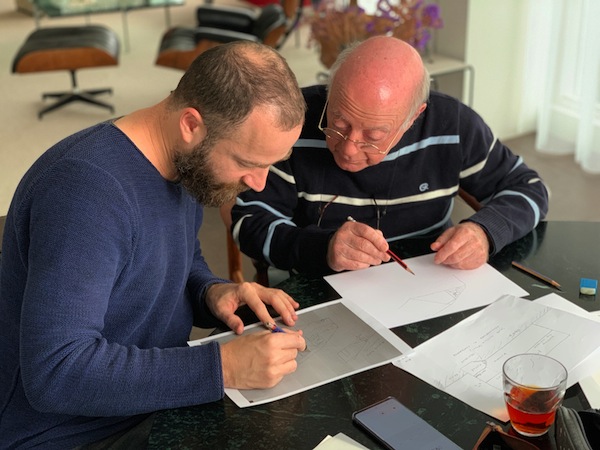
Gilad Seliktar, left, and Rolf Kamp in Amsterdam. They are drawing the last hiding place of Nico and Rolf Kamp in Achterveld, which was liberated in April 1945 by Canadian troops. (photo from UVic)

A University of Victoria professor is orchestrating an international project that links Holocaust survivors with professional illustrators to create a series of graphic novels, thereby bringing the stories of the Shoah to new generations.

Charlotte Schallié, a Holocaust historian and the current chair of UVic’s department of Germanic and Slavic studies, is leading the initiative, which connects four survivors living in the Netherlands, Israel and Canada with accomplished graphic novelists from three continents.

The project, called Narrative Art and Visual Storytelling in Holocaust and Human Rights Education, is supported by the Social Sciences and Humanities Research Council of Canada. Its aim is to teach about racism, antisemitism, human rights and social justice while shedding more light on one of the darkest times in human history.

UVic is partnering with several organizations in the project, including the Canadian Museum for Human Rights in Winnipeg, the Anne Frank House in Amsterdam and the Vancouver Holocaust Education Centre.

Many historians of the genre have argued that the rise of graphic novels as a serious medium of expression is largely due to the commercial success of Art Spiegelman’s Maus in 1986. Maus, the first graphic novel to win a Pulitzer Prize, depicts recollections of Spiegelman’s father, a Shoah survivor, with Jews portrayed as mice, Germans as cats and Poles as pigs.

Schallié told the Independent that the idea for the project came from observing the interest her 13-year-old son has in graphic novels and the appeal Maus has had among her students, who have continually selected it as one of the most poignant and memorable materials in her classes.

“Though a graphic novel, Maus could hardly be accused of treating the events of the Holocaust frivolously,” she said from her office on the campus of the University of Victoria.

As most survivors are now octogenarians and nonagenarians, the passage of time creates an ever more compelling need to tell their stories as soon as possible.

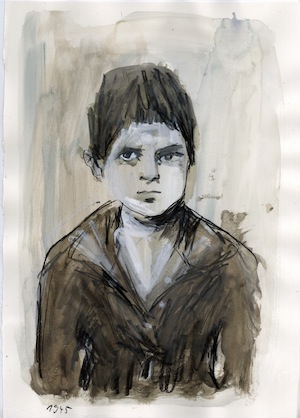
image - Barbara Yelin’s illustration of Emmie Arbel, now
Barbara Yelin’s illustration of Emmie Arbel, now. (image from UVic)
image - Barbara Yelin’s illustration of Emmie Arbel, then
Barbara Yelin’s illustration of Emmie Arbel, then. (image from UVic)

“Given the advanced age of survivors, the project takes on an immediate urgency,” said Schallié. “And what makes their participation especially meaningful is that each of them continues to be a social justice activist well into their 80s and 90s. They are role models for the integration of learning about the Shoah and broader questions of human rights protection.”

The visual nature of a graphic novel allows it to bring in elements or depict scenes that are not possible with an exclusively written work, according to Schallié. A person may describe an event in writing but leave out aspects of a scene that might add more to the sense of what it was like to be there at the time.

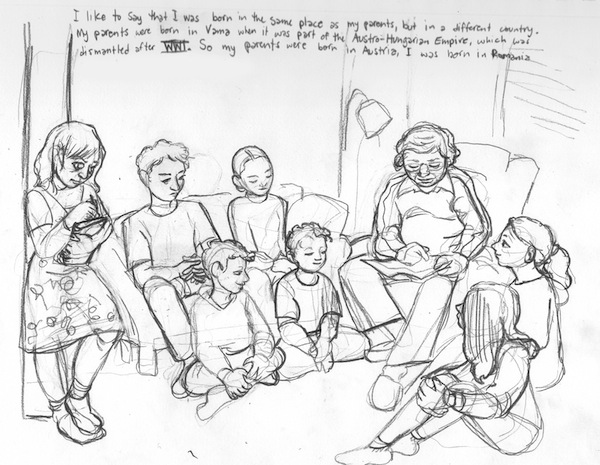
One of the survivors participating in the project, David Schaffer, 89, lives in Vancouver. He is paired with American-Israeli comic artist Miriam Libicki, who is also based in the city. The two met in person in early January so that Libicki could learn the story of how he survived the Holocaust as a child in Romania.

In 1941, Schaffer was forcibly sent with his family to Transnistria, on the border of present-day Moldova and Ukraine, by cattle car. There, they suffered starvation and were subjected to intolerable and inhumane living conditions.

image - One of the illustrations by Miriam Libicki, who is working with survivor David Schaffer
One of the illustrations by Miriam Libicki, who is working with survivor David Schaffer. (image from UVic)

“The most important thing is to share the story with the general population so they realize what happened and to avoid it happening again. It’s very simple. History has a habit of repeating itself,” said Schaffer.

Libicki, who was the Vancouver Public Library’s Writer in Residence in 2017, is the creator of jobnik!, a series of graphic comics about a summer she spent in the Israeli military. An Emily Carr University of Art + Design graduate, she also published a collection of essays on what is means to be Jewish, Toward a Hot Jew. (See jewishindependent.ca/drawing-on-identity-judaism.)

“The more stories, the better. The wiser we can be as people, the more informed we can be as citizens and the more empathy we can have for each other,” Libicki said. “Graphic novels are not just a document in the archives; they’re something people will be drawn to reading.”

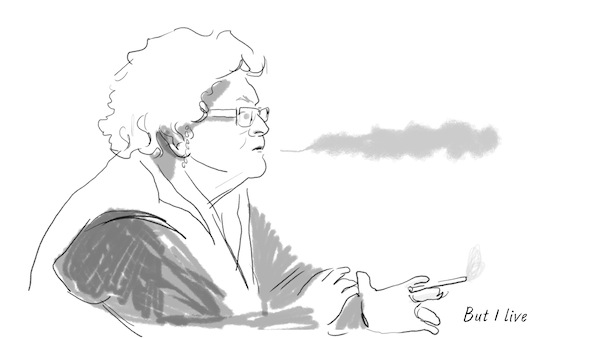
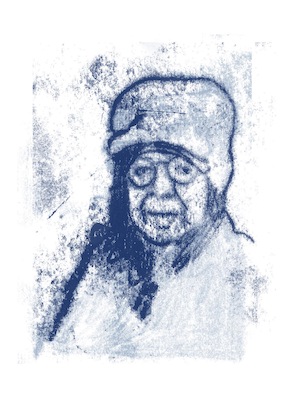
image - Gilad Seliktar drew this sketch of Rolf Kamp
Gilad Seliktar drew this sketch of Rolf Kamp. (image from UVic)

The other illustrators are Barbara Yelin, a graphic artist living in Germany, and Gilad Seliktar, who is based in Israel. Yelin is the recipient of a number of prizes for her work, including the Max & Moritz Prize for best German-language comic artist in 2016. Seliktar has illustrated dozens of books – from publications for children to adult graphic novels – and his drawings frequently appear in leading Israeli newspapers and magazines.

Brothers Nico and Rolf Kamp in Amsterdam and Emmie Arbel in Kiryat Tiv’on, Israel, are the other three survivors who are providing their accounts of the Holocaust.

The books will be available digitally in 2022. A hard copy version of each book is planned, as well. When finished, the graphic novels will be accompanied by teachers guides and instructional material designed for schools in Canada, Germany, Israel, the Netherlands, the United Kingdom and the United States.

UVic hopes to match a larger number of survivors with professional illustrators in the future. To learn more, contact Schallié at [email protected]. You can also visit the project’s website at holocaustgraphicnovels.org.

Sam Margolis has written for the Globe and Mail, the National Post, UPI and MSNBC.

Format ImagePosted on April 3, 2020April 1, 2020Author Sam MargolisCategories BooksTags art, Charlotte Schallié, David Schaffer, graphic novel, history, Holocaust, Miriam Libicki, survivors, University of Victoria, UVic
Forgiving but not forgetting

Forgiving but not forgetting

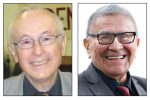
Robbie Waisman, left, and Chief Robert Joseph, will speak at Temple Sholom’s Selichot program Sept. 1. (photos from Temple Sholom)

Two men who have built bridges between Canada’s indigenous and Jewish communities will speak about reconciliation, forgiveness and resilience at Temple Sholom’s Selichot program.

Robbie Waisman, a survivor of the Holocaust who was liberated as a child from Buchenwald concentration camp, and Chief Robert Joseph, a survivor of Canada’s Indian residential schools system, will address congregants on the subject of Forgiving But Not Forgetting: Reconciliation in Moving Forward Through Trauma. The event is at the synagogue on Sept. 1, 8 p.m.

Waisman is one of 426 children who survived Buchenwald. At the age of 14, he discovered that almost his entire family had been murdered. He came to Canada as part of the Canadian War Orphans Project, which brought 1,123 Jewish children here under the auspices of Canadian Jewish Congress.

Joseph is a hereditary chief of the Gwawaenuk First Nation, located around Queen Charlotte Strait in northern British Columbia. He spent 10 years at St. Michael’s Indian Residential School at Alert Bay on the central coast of the province. He recalls being beaten for using his mother tongue and surviving other hardships and abuse. A leading voice in Canada’s dialogue around truth and reconciliation, the chief is currently the ambassador for Reconciliation Canada and a member of the National Assembly of First Nations Elders Council. He was formerly the executive director of the Indian Residential School Survivors Society and is an honourary witness to Canada’s Truth and Reconciliation Commission.

Waisman and Joseph have become close friends over years of discussing, publicly and privately, their respective histories and the challenges of building a life after trauma. Waisman has become a leading Jewish advocate for indigenous Canadians’ rights.

“I think we have a duty and obligation to give them a stand in the world,” Waisman said. “For many, many years, many people ignored them, and their story about truth and reconciliation was just in the background, they weren’t important. I think that now that we give them an importance – and it is important that they speak up and speak about their history and so on – [it is possible] to make this a better world for them.”

Waisman believes that the experiences of Holocaust survivors and the example that many survivors have set of assimilating their life’s tragedies and committing themselves to tikkun olam is a potential model for First Nations as they confront their past and struggle to address its contemporary impacts.

“We were 426 youngsters who survived Buchenwald and the experts thought that we were finished,” Waisman said of his cohort of survivors, who have been immortalized in The Boys of Buchenwald, a film by Vancouverites David Paperny and Audrey Mehler, and in a book by Sir Martin Gilbert. “We wouldn’t amount to anything because we’d seen so much and we’d suffered so much and lost so much. And look what we have accomplished. We have little Lulek [Rabbi Yisrael Meir Lau], who became the chief rabbi of Israel, Eli Wiesel, Nobel Peace Prize winner, and I can go on and on. When I speak to First Nations, I say, ‘look what we’ve done,’ and then I quote [Barack] Obama and say, ‘Yes, you can.’”

One of Waisman’s first experiences with Canadian indigenous communities was when he was invited to the Yukon. His presentation was broadcast on CBC radio and people called in from all over the territory, asking that Waisman wait for them so that they could come meet him.

“They kept phoning in and saying, ‘Don’t let Robbie leave, we are coming in to see him,’” Waisman recalled. “It was just amazing. I would sit on a chair and they would come and touch me and then form themselves in a circle and, for the first time, they were speaking about their horrors and how to move on with life.”

This was a moment when Waisman realized the power of his personal story to help others who have experienced trauma gain strength.

The Selichot program was envisioned by Shirley Cohn and the Temple Sholom Working Group on Indigenous Reconciliation and Community, which Cohn chairs.

“It’s the right thing to do given the political atmosphere, the increased awareness about indigenous issues and just the fact that, as Jews, I think we need to be more tolerant of others, and these are really the first people in Canada, and they’ve suffered discrimination, as we have, and I think it’s important,” she said.

The message is especially relevant at this time of penitence and self-reflection, she added. “It’s a time for thoughtfulness and looking inward,” said Cohn, who is a social worker.

Rabbi Carrie Brown said the Temple Sholom community sees the topic as fitting.

“We want to look at this further as a congregation,” said Brown. “Selichot is a time of year when we really start to think about ourselves as individuals and ourselves as a community and the conversation between Robbie Waisman and Chief Joseph really fits nicely into that, about trauma and reconciliation and forgiveness and all of these major themes of the season.”

This is “not just a one-off program,” the rabbi stressed, but the beginning of a process of education and conversation.

Format ImagePosted on August 24, 2018August 22, 2018Author Pat JohnsonCategories Celebrating the HolidaysTags Chief Robert Joseph, education, Holocaust, reconciliation, residential schools, Robbie Waisman, Selichot, survivors, Temple Sholom

The value of memoirs

This academic year marks the second session of Writing Lives, a two-semester project at Langara College, coordinated by instructor Dr. Rachel Mines. Writing Lives is a partnership between Langara, the Vancouver Holocaust Education Centre, and the Azrieli Foundation. Last fall, students learned about the Holocaust by studying literary and historical texts. In January, students began interviewing local Holocaust survivors and are now in the process of writing the survivors’ memoirs, based on the interviews. Students are keeping journals of their personal reflections on their experiences as Writing Lives participants. They used their most recent journal entry to reflect on the topic of The Importance of Memoirs. Here are two excerpts.

Memories are our experiences: our interactions with people we love or hate, our communication with the ever-changing world. Our memories remind us of our moral values, our knowledge, our appreciation of our own lives, and perhaps our own inadequacy in being the person that we wanted to be. Our memories are a true reflection of who we are, and that is exactly why they are our most valuable asset.

Writing down our memories is a great way to retain them and, hence, it is meaningful to write a memoir on behalf of David, a man who has experienced one of the most controversial and complex events in history – the Holocaust – so that his memories will be retained in concrete form and can be passed on to many generations. I believe David’s descendants, and anyone who cares about other human beings, will be inspired by what David fought for in the past and will be grateful for what they have. Sometimes, we take food and safety, peace and dignity, the privilege to love and to be loved, for granted, and we forget about the unfortunate ones.

Most importantly, memoirs of Holocaust survivors are a stern reminder of the fact that we humans can turn into perpetrators for not so obvious reasons. It would be wrong for us to think that, since we are civilized, rational, educated people, we cannot become perpetrators. We have come to realize that it is not the case that only psychotic or inherently evil people can harm others in callous and appalling ways. The Holocaust has demonstrated that hatred, racism, conflicts between religions and a sense of insecurity can easily be used to justify our wrongdoings. With the real-life experiences of survivors recorded in memoirs, hopefully people will never forget this painful lesson in human history.

– Bonnie Pun

Storytelling is a phenomenon that all manners of societies and cultures have practised since the hominid species first learned to communicate. We use stories to convey social values and wisdom. In Western society, thanks to pioneers such as Sigmund Freud and Carl Rogers, storytelling forms the bedrock of modern counseling practice. The intimacy of sharing a story with a compassionate and safe person can literally transform a life. Stories transmit meaning, both individually and socially. It’s as simple and complex as that.

Memoirs are a place where individuals can encounter and transform their experience into one that has larger meaning. On a societal level, projects like Writing Lives present the human experience and personal costs of the atrocities that have occurred. The personal narrative transforms historical facts into real and impactful events that can be felt, if not fully understood.

The Holocaust is so often constructed and taught as an historical anomaly, a mysterious evil; however, the fact of the matter is that it is a story of social relationships. Sadly, “stories” such as this have occurred far too frequently over the last 70 years. Globally, we have seen genocidal processes of hate in countries such as former Yugoslavia, Rwanda, Cambodia, Russia, Sudan … the list goes on. As our neighbour to the south, the United States, struggles with an ideological divide that has become so significant it is now one of the countries monitored by the NGO Genocide Watch, memoirs from the Holocaust become particularly important here in the Western world. I think it is sometimes easy to look at racially motivated brutality in the second and third worlds and feel a certain sense of safety. These memoirs confront us with a different reality, one which is too important to ignore.

– Ann Thomas

Posted on May 4, 2018May 2, 2018Author Writing Lives studentsCategories LocalTags Azrieli Foundation, education, Holocaust, Langara College, memoir, survivors, VHEC
Long-enduring trauma

Long-enduring trauma

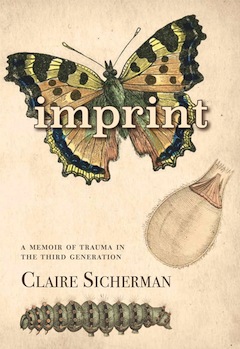
I approached Imprint: A Memoir of Trauma in the Third Generation (Caitlin Press, 2017) with reluctance. But Claire Sicherman’s account of her murdered family members, of her grandparents who were the sole survivors of the Holocaust and of her own intimate life as granddaughter, woman, wife and mother is profoundly moving and tender. Her accounts of her relatives’ lives and deaths under the Nazi regime are brutal and shocking. The proximity of these emotions makes the book challenging to read but hard to put down.

Sicherman’s choice of the title Imprint helped me understand just how stubborn and long-lasting the impression of anxiety, grief and horror can be to the human psyche. My mind went to the reality of fossils. According to one source online, sometimes an animal “is buried before it is destroyed. And when that happens and conditions are just right, the remains of the animal are preserved as fossils…. Fossils are the naturally preserved remains or traces of ancient life that lived in the geologic past…. Fossils represent the remains or traces of once-living organisms.”

For Sicherman, the emotions related to the destruction of her family are permanently imprinted in her body and in her genetic makeup. She must now bring them to conscious awareness.

The juxtaposition of cold, hard accounts of death – as in the chapter “My Family” at the beginning of the book – immediately followed by the first letter to her 9-year-old son Ben, signed “Love Always,” warns the reader that what follows is not for the faint-at-heart. She alternates between three essential narratives: the telling of the destruction and deaths of her relatives in Poland; the survival of her grandmother and grandfather, which leads to the intimate story of her mother and Sicherman’s youth; and the traumatic birth of her son Ben, which acts as a catalyst, breaking through lifelong barriers of ignorance, denial and grief.

book cover - ImprintIn gazing at the cover of the book, the three images of caterpillar, cocoon and butterfly began to make sense. This metamorphosis becomes the symbol of Sicherman’s lifecycle; the lack of awareness of her family’s history, the birth of her son, and her desperate search for knowledge and understanding of why she suffers from chronic health conditions, anxiety and depression.

Sicherman’s answer to the question “why” lies within the concept of epigenetics, the study of heritable changes in gene expression. Traumatic events cause changes in gene expression that can then be inherited. For Sicherman, her task is to explore, through various forms of therapy, the intergenerational transmission of trauma – the genetic imprinting of the horrors that befell her great-grandparents, her great-aunts and great-uncles and their progeny. Despite the distance of being a third-generation Holocaust survivor, her writing captures the beauty and intimacy of family affection (“My Babi,” “My Deda”). Hope of healing and surviving trauma permeate the pages of this creative book, offering acceptance and guidance to others of her – and the next – generation.

Dolores Luber, a retired psychotherapist and psychology teacher, is editor of Jewish Seniors Alliance’s Senior Line magazine and website (jsalliance.org). She blogs for yossilinks.com and writes movie reviews for the Isaac Waldman Jewish Public Library website.

Format ImagePosted on May 4, 2018May 2, 2018Author Dolores LuberCategories BooksTags Claire Sicherman, epigenetics, Holocaust, memoir, survivors, third generation
S Word changes perceptions

S Word changes perceptions

Craig Miller in a shot from the documentary The S Word, which screened for the first time in Western Canada on March 22 in Winnipeg. (photo from MadPix, Inc.)

Jewish Child and Family Service of Winnipeg (JCFS) partnered with the Suicide Prevention Network and the Jewish Federation of Winnipeg’s Young Adult Division to show the documentary The S Word for the first time in Western Canada. The screening took place March 22 at the JCC Berney Theatre, and the event’s aim was to help put a stop to the silence surrounding the subject of suicide.

“Suicide is widespread and affects all age groups and communities,” said Carli Rossall, JCFS addictions and mental health caseworker. “There are many ‘S words’ that reinforce the behaviour around suicide, such as silence, stigma, shame and struggle. The hope is to turn this around into S words such as support, survival, sharing and solutions.”

Rossall has taken the lead in organizing this project, along with Cheryl Hirsh Katz, JCFS manager of adult services, and Shana Menkis, JCFS director of operations.

JCFS is a member of the Suicide Prevention Network, which is a group of agencies and individuals committed to enhancing the mental wellness and quality of life of people in Winnipeg, preventing suicides and supporting those bereaved by suicide.

“I think our goal with this [event] was to begin to create a safe space within the community where topics like suicide can be freely and openly discussed,” said Rossall. “Staying silent doesn’t make an issue cease to exist. Suicide is a reality in our community as it is in all communities. Healing requires openness, acceptance and dialogue. The more we talk about these things, the more fluency we develop when it comes to hard conversations, [and] the better equipped we all are to support one another.”

“Bringing this film to our city and specifically to this community,” Hirsh Katz added, “will hopefully give a voice to this problem and put a face to the solution.”

The S Word aims to open the conversation surrounding suicide. Its director, Lisa Klein, is a survivor of both her father’s and her brother’s suicides. In the film, she wanted to show the voices of those who survived suicide attempts, as well as others, to provide an honest portrayal of the thoughts and feelings surrounding suicide. She further wanted to provide positive messaging.

“It’s an outstanding collection of stories that, unlike other films on the same subject, shines a light on hope,” said Klein. “It talks about language, relationships, relapses in mental health, and about how recovery is rarely a straight trajectory. It’s very real and raw. I consider it to be one of the best mental health documentaries I’ve ever seen … unique in its approach to an otherwise familiar topic.

“We hear about suicide epidemics, about over- and under-medicating, about the bereaved when it comes to suicide in the community, but, rarely do we hear from survivors. Frankly, I don’t know if ‘survivor of suicide’ is a concept most people even know exists.”

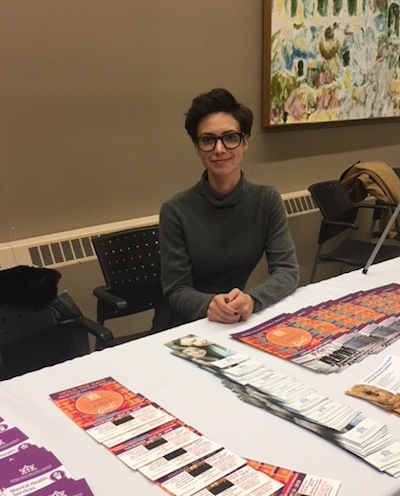
photo - Carli Rossall, Jewish Child and Family Service of Winnipeg addictions and mental health caseworker, at the information table on March 22
Carli Rossall, Jewish Child and Family Service of Winnipeg addictions and mental health caseworker, at the information table on March 22. (photo from JCFS)

“Loss is never easy to talk about,” said Rossall. “But, when loss gets tied together with morality, as suicide often does, an added layer of stigma exists. Anything that challenges our definition of ‘right,’ ‘moral’ or ‘normal’ tends to make us uncomfortable – and it often makes people look to blame.

“Generally,” she said, “people who have thoughts of suicide suffer from intense psychological pain, where there is a feeling of hopelessness, isolation, and no alternative. The reasons for this can vary, from those experiencing mental health challenges or physical illness, to those who have experienced trauma, are struggling financially or have addictions. The rise in suicide rates may be due to life’s increasing pressures and complex circumstances.”

It was in her late teens that Klein lost her father and then, three months later, her brother, to suicide.

“It’s something that obviously is a huge part of my life, my existence, and it wasn’t something that right away I knew what I’d do with,” said Klein. “It affected me greatly. I really didn’t know who to talk to. That was a big part of why I did this film, because it’s so difficult to talk to people when you’ve lost people. They don’t know what to say to you.

“When I came out to L.A. and went to graduate school, I did a film prior to this one…. We started to do documentaries. We did one on bipolar personalities and, when we did that one, we had someone who was in the film who had lost their daughter to suicide. I thought, OK, I’ve dealt with this. And then, almost immediately, I realized that I actually hadn’t. I thought it was time to do something, because people weren’t, and aren’t, talking about it enough, not talking about it responsibly.”

As Klein began researching the topic, she found a large community of people dealing with suicide – so great a number that they were holding conventions in the United States about it. Klein found this resource helpful when it came to finding specific stories to include in her film.

While The S Word is not yet widely available, Klein has worked to get the message across through teachers, mental health professionals and survivors. And she created a toolkit that is on the movie’s website that anyone can access to find ways to bring the message to their communities.

“We’ve signed with an educational distributor and eventually it will be available – probably in the late fall…. We want to help open the conversation, for sure,” said Klein. “We want people to feel less alone, like they’re not the only ones going through this. And we want people to know that they can be there for somebody else, too. Also, to know that, if you, yourself, are struggling, there are people to talk to.

“A lot of times, what can really kill people, what can drive people to this is the silence or the hopeless feeling of being alone – feeling that they have nobody to talk to, and the stigma and shame keep people from talking about it.

“We see this also in the rape culture and the whole #MeToo movement,” she added. “People who were so afraid to talk are now coming forward. And it’s so important to be able to do this. We want to be part of that conversation.”

Klein invited everyone to visit the film’s website – theswordmovie.com – for more information and to watch the many interviews conducted with suicide survivors that did not make it into the film (click on the “#SWordStories” link). She further encouraged people to send in written stories about their own experiences to the website.

In Winnipeg, JCFS is ready to help anyone in need, via their active mental health services program for the Jewish community and counseling services that are open to the general public. In Vancouver, Jewish Family Services is also ready to help.

“Through these supports, there are opportunities for individuals and families to address their concerns, feelings related to suicide, and other issues on a proactive basis,” said JCFS’s Hirsh Katz. “There are also several other community-based agencies in Winnipeg that provide both crisis and non-crisis work with suicide. The Canadian Association for Suicide Prevention is a nationwide organization dedicated to offering support. Livingworks Education Inc. is a leading provider of suicide intervention training through various workshops – the training is focused on identifying, speaking and intervening with people who have thoughts of suicide, and it is invaluable for individuals ages 15 and over who want to help people be safer from suicide.”

Rebeca Kuropatwa is a Winnipeg freelance writer.

Format ImagePosted on April 20, 2018April 18, 2018Author Rebeca KuropatwaCategories TV & FilmTags #SWordStories, Carli Rossall, health, JCFS, Lisa Klein, suicide, survivors, Winnipeg

Reflections on first meeting

This academic year marks the second session of Writing Lives, a two-semester project at Langara College, coordinated by instructor Dr. Rachel Mines. Writing Lives is a partnership between Langara, the Vancouver Holocaust Education Centre and the Azrieli Foundation. Last fall, students learned about the Holocaust by studying literary and historical texts. In January, students began interviewing local Holocaust survivors and will write their memoirs on the basis of the interviews. Students are keeping journals of their personal reflections on their experiences as Writing Lives participants. Students used their most recent journal entry to reflect on their first meetings with the survivor with whom they are partnered. Here are a few excerpts.

Prior to meeting our survivor partner, one of our group members spoke to him on the phone, and she described him as a person “who doesn’t let anything past him.” It seems he’d tested her on her ability to say the word “Holocaust” without shuddering an apology.

It is clear that our partner refuses to spend his time telling his story to anyone who cannot handle it. On one hand, his attitude is a comfort; I believe we will be able to show him that not only are we unafraid to hear his story, but also that we care deeply about helping him tell it authentically. On the other hand, this adds to the building anxiety about our interviews and our worries about writing the memoir. Producing a memoir that our survivor is 100% proud of is my biggest goal and also my biggest fear. I feel that telling the story of another person’s life is a tremendously huge responsibility, and I do not take it lightly.

– Chelsea Riva

We actually met D. before our first meeting: he came to our class to give a talk last semester. Our first interview was arranged at his home, and D. was as warm and friendly as before. So was his wife, and they took good care of us. They helped us with our coats and insisted that we did not have to take our shoes off. D. said we must have walked a long way, and it was the shoes that kept us walking comfortably; therefore, we should not take them off. I immediately recalled what Primo Levi wrote in his book Survival in Auschwitz. Yes, shoes are of the utmost importance, and D. has experienced that. However, we quickly realized that the house was immaculately clean, and so was the light beige carpet that we were stepping on with our shoes! Anyway, while I was worrying about the carpet, the meeting began.

– Bonnie Pun

When I first met D.S., I was apprehensive. The culmination of the past four-and-a-half months was finally at hand, and I was set to be the lead interviewer for our group – not a task that fell lightly on my shoulders.

Moira and he came into the room and she introduced him (she had met him previously). D.S. smiled so widely that his eyes crinkled, and he shook each of our hands in turn. When we were done, D.S. said a few words about himself and then quickly launched into a very compressed, detailed story about his life.

We had been expecting a more casual, getting-to-know-you first interview, and none of us had been expecting to take in such a massive amount of information – although, in hindsight, I’m glad we did. At the end of the interview, after D.S. had given us advice about meeting deadlines and making sure we had enough time to edit and rework parts of his story, we breathed a sigh of relief – it had gone well.

The opportunity to have a question-and-answer session with a person who has survived such great personal trauma is incredible. D.S. is a wonderful storyteller, and the interviews so far have been a continuously rewarding experience.

– Susan Scott

Some of the stories that D.S. shared with us at that first meeting were hard to absorb. I think I didn’t really want to understand what he was saying, as a way of protecting myself, so I wouldn’t show I was affected while I was in the room with him. It was only after I listened to the recorded interview that I could even start to imagine the events that he had endured. It sunk into me that this was a real thing that had happened to a real man, one who sat in front of me, ready to share his pain and perseverance with us. For that, I am grateful and honoured.

What D.S., the other survivors, the Vancouver Holocaust Education Centre, the Azrieli Foundation and Langara College are doing through the Writing Lives program is so immensely important – something I have come to understand on a new level after that meeting. I think the point is to affect others in the way that this one meeting affected me. It’s to try and understand people’s suffering as best we can, though we will never feel their pain, and to use that understanding to become better people, and not be complicit in others’ suffering in the future.

– Moira Henry

Posted on March 2, 2018July 2, 2020Author Writing Lives studentsCategories LocalTags Azrieli Foundation, Holocaust, Langara College, memoir, survivors, VHEC
Goldman memoir is a must-read

Goldman memoir is a must-read

Breakfast at Andrésy circa 1945. René Goldman is holding his bowl out for more food. The children peering through the windows are from another dining room, who had likely finished their meal but had not yet been given permission to leave. (photo from memoirs.azrielifoundation.org)

René Goldman’s account of his childhood – A Childhood Adrift (Azrieli Foundation) – is set in Belgium and France during the Second World War, when Hitler’s plan was to annihilate all European Jews. Each European Jewish child was automatically sentenced to death. Only between six and 11% of European children survived the Holocaust. Ironically, this memoir describes both a heartbreaking and an uplifting story of one Jewish boy’s struggle to stay alive and sane despite all odds against him.

A Childhood Adrift is both personal and, at the same time, an important historical document. The story, written with a spatter of tongue-in-cheek humour, is a fascinating labyrinth of multiple narratives; stories within stories. It is not only about René the child, but also René the man, who revisits the past and examines the wounds left by war.

Goldman weaves his experiences throughout the periods of war and postwar, when he is a young man who travels back to the places that sheltered him and other children lost in the horror of war. The entire narrative is skilfully infused not only with historical and political facts but with the geography of various places so poignantly described one can feel and see them.

Goldman writes about the time when children lost parents, siblings and homes. These children had to depend on the kindness of strangers or were left alone to fend for themselves.

Goldman was 6 years old when the Nazis invaded his native Luxembourg, where he was born, and Belgium, where his family had taken refuge. In 1942, the family fled Belgium for France. From the last station before the French border, they walked on foot to the Demarcation Line between the German Occupied Zone and the Free Zone. No sooner did they cross the line than they were arrested by the French police, who were rounding up Jews escaping from the Occupied Zone, and the family was interned in Lons-le-Saunier. On Aug. 26, Goldman and his mother were taken to the city’s train station for deportation. His aunt appeared from nowhere and tried to take him away, but to no avail. Eventually, she found someone in authority to send two officers to rescue the young boy and save him from boarding the train. His mother was already in one of the cars waving goodbye as the train was pulling out of the station. This was the last time Goldman saw his mother. He was 8 years old.

His father disappeared that morning and it was only in 1944 that Goldman was reunited with him for a brief time, until his father was arrested and taken away. Only after the war did Goldman find out that his father died at the end of the death march from Auschwitz, in January 1945.

In 1942, Goldman was placed in the care of the OSE (Oeuvre de Secours aux Enfants) and brought to Château du Masgelier. After two weeks, he was taken to the village of Vendoeuvres, where a young couple offered to take care of him. Soon afterward, the Free Zone was invaded by the Germans.

What followed for Goldman were moves to several homes due to the changing circumstances, which necessitated a constant search for safe places for children.

Left an orphan in 1945, Goldman was placed in the care of the CCE (Commission Centrale de l’Enfance), an organization inspired by communist ideology, which was instrumental in shaping his political beliefs. His faith in this system remained unshaken until he lived in Poland for three years, when he became disillusioned, even shocked, by it.

He writes, “I can now in all candidness recognize that I caught myself wondering whether communism was not the greatest lie of the century, if not of all time.”

Goldman’s narrative strength, among his many others, leans towards the lyrical.

One of the immediate postwar places to which Goldman was moved in France was the town of Andrésy and its Manoir de Denouval, which inspired poetic instincts in him. Here, he found the beauty of gardens and serenity, a “sanctuary” that shielded him for a time from his loneliness and the postwar chaotic reality. Interestingly, Marc Chagall, who donated funds for the children’s care, would occasionally visit the manor.

“I was enthralled with the Enchanted Manor,” writes Goldman. “It nourished in me a fascination with mystery as I explored it for hidden nooks and ventured up the narrow winding steps that led to the turret, sometimes even in the dark of night.” And, indeed, these were dark times in the young boy’s life for it was then that he realized he was an orphan.

Friendships played a huge part during the war and in the postwar period. In the boys and girls Goldman befriended along the way, and some of the kind teachers, he found a certain relief from the loneliness he felt, and from the lack of affection and support. One person who played an important role in his life was Sophie Micnic, who became his caregiver and friend. This woman, a founding leader of the MOI, the Jewish communist resistance movement in Paris and Lyon during the war, later became the director of CCE. It was she who took Goldman under her wing, and recommended that he live in the “Enchanted Manor.”

A Childhood Adrift – a must-read – is a powerful testimony of a child’s response to the calamities of war and their everlasting imprint on his life. It is also a statement of courage and survival in the face of adversity. Eventually, Goldman developed a tremendous hunger for knowledge, education and a desire for communication in as many as 10 languages.

In the last section of the book, the author reveals himself as a poet and a grown man still deeply immersed in his past.

Lillian Boraks-Nemetz is a Vancouver Holocaust Education Centre outreach speaker, an award-winning author, an instructor at the University of British Columbia’s Writing Centre and the editor of the No Longer Alone section of VHEC’s Zachor, in which a longer version of this book review was originally published. René Goldman will be the keynote speaker at the community’s Kristallnacht commemoration on Nov. 5, 7 p.m., at Congregation Beth Israel. Copies of his memoir will be distributed to those in attendance. Holocaust survivors are invited to light a memorial candle. The ceremony is presented by VHEC, Beth Israel and the Azrieli Foundation. For Pat Johnson’s review of Goldman’s book, which was initially called A Childhood on the Move, visit jewishindependent.ca/fragmented-childhood.

Format ImagePosted on October 27, 2017October 25, 2017Author Lillian Boraks-NemetzCategories BooksTags Azrieli Foundation, Beth Israel, Holocaust, Kristallnacht, René Goldman, survivors, VHEC
Students pen survivors’ memoirs

Students pen survivors’ memoirs

Dr. Peter Suedfeld, professor emeritus of psychology at the University of British Columbia, spoke on behalf of the survivors who participated. (photo by Jennifer Oehler)

Emotions were high at a graduation event where survivors of the Holocaust and Langara College students who wrote their memoirs shared their reflections on the experience.

Writing Lives was a two-semester course and a partnership between Langara College, the Vancouver Holocaust Education Centre (VHEC) and the Azrieli Foundation. In the first semester, students learned about the history of European Jewish culture and the Holocaust. In the second term, groups of three students were teamed with a Holocaust survivor. Students interviewed the survivor, transcribed their recollections and wrote their memoirs, which were presented at the closing event April 20.

“These memoirs will be given to the survivors as gifts for themselves and their families, but they will also be archived and they may possibly be published, and they will also serve as legacies for the survivors, their families and perhaps the research community in general,” said Dr. Rachel Mines, an English instructor at Langara and coordinator of the Writing Lives project. “I’m also the daughter of survivors, so I know how important it is that the stories get told and kept as a legacy for the families and the children and the grandchildren and great-grandchildren and also for the community at large, which I think is something that this particular program has succeeded in very well.”

Dr. Peter Suedfeld, professor emeritus of psychology at the University of British Columbia, spoke on behalf of the survivors who participated.

“I have been interviewed a number of times by different people, of different levels of experience. So, when I was asked if I was willing to be interviewed by some students from Langara, I thought, ‘Oh well,’” Suedfeld said to laughter. “It’s not going to be very interesting. They are probably amateurs who don’t really know what they’re doing.”

He was pleasantly surprised, he said.

“My expectations were not fulfilled at all,” he said. “They had fresh points of view, they had interesting ideas about the Holocaust, they had interesting questions – not the kind of routine things that I’ve gone through before with more professional interviewers who tend to ask the same questions the same ways. Some of the questions made me think about my own experiences in ways that I never had before…. The interviews were always interesting and lively, occasionally funny, sometimes a bit frustrating and rarely, but once in awhile, irritating. But, all in all, a very positive experience and I expect that most of my cohort probably had similar experiences, and I certainly hope that the students did as well.”

Frieda Krickan, speaking on behalf of the students in the program, saw Writing Lives as an opportunity to honour the survivors, deepen her knowledge of Holocaust history and serve her Jewish community.

“This class has been so much more than that in so many ways,” she said. “It’s been a life-changing experience and I feel incredibly lucky to be a part of it. This class has taught me the importance of personal perspectives and historical documentation. Memoirs put a more human face on history and they memorialize what our survivors have been through and create empathy that historical facts and figures just cannot…. These survivors represent living history. These memoirs are a way of honouring survivors and making sure that history will never forget them…. You cannot get that sort of visceral emotion and intense human connection from a book or documentary. This is a living, breathing human being in front of you opening up about their most intimate and painful memories. It is an experience I will never forget.”

photo - Frieda Krickan, speaking on behalf of the students in the program, saw Writing Lives as an opportunity to honour the survivors, deepen her knowledge of Holocaust history and serve her Jewish community
Frieda Krickan, speaking on behalf of the students in the program, saw Writing Lives as an opportunity to honour the survivors, deepen her knowledge of Holocaust history and serve her Jewish community. (photo by Jennifer Oehler)

She added: “I came out of this class with something I did not expect: hope. Amidst all their personal accounts of suffering and loss, our survivors still managed to impart upon us the importance of hope. I don’t know if I’ve ever had such a life-affirming experience as talking to these survivors.”

Gene Homel, an instructor in liberal studies at the B.C. Institute of Technology who taught part of the Writing Lives course, said evidence-based and factual history are important at a time when the veracity of events past and present are being called into question.

The collection and preservation of eyewitness accounts is what makes the Writing Lives project so valuable, said Ilona Shulman Spaar, education director at the VHEC.

“Some students told me that they would never forget the personal encounters that they had with their interviewees and that they will always carry them close to their hearts. Some even mentioned that this program was life-changing for them,” she said. “Some of the survivors shared with me that they greatly appreciated being part of this program. For them, too, it was a unique experience, as most of them never gave interviews to this extent or in such depth.”

Robbie Waisman, one of the survivor participants, said the greatest fear that Holocaust survivors have is what’s going to happen after they are gone.

“What you are doing gives us hope that it’s going to be remembered, to make this a better world,” he said. “So thank you.”

Serge Vanry, another survivor participant, said it was an experience that he hadn’t expected.

“I started out wanting to do this, but feeling uneasy about somehow getting involved in the past, a past that has been put away quite a bit,” he told the audience. “I was talking about events that I had forgotten, things that were difficult, things that were hard to live with and things that can haunt you. As I was looking back at the past, I started to discover a lot of things that I had forgotten – events, situations that really had disappeared for me.”

Turning to the students, he said: “You did extremely well and I am really thankful and I’ve really appreciated what you’ve done for me, for the things that I don’t want to forget, the things that need to be told again for me and for my family.”

Other survivors who participated in Writing Lives were Alex Buckman, Amalia Boe-Fishman, Jannushka Jakobouvitch and Mark Elster. Excerpts from student-participants’ journals have run in previous issues of the Independent (search “Writing Lives” at jewishindependent.ca).

Mines thanked the Azrieli Foundation, for expertise and materials that made Writing Lives possible, and the VHEC, “which has been crucial, essential, absolutely indispensable in supporting Writing Lives … through liaising with survivors, making their library available for research and as an interview room and, generally, just being generous in terms of their time, their advice, expertise and not to mention moral support.”

Mines added that she hoped this pilot project of Writing Lives would become an ongoing program and, in the days following the closing ceremony, she received the news that Writing Lives will indeed run again, starting in the fall semester.

Pat Johnson is a communications and development consultant to the Vancouver Holocaust Education Centre.

Format ImagePosted on May 5, 2017May 3, 2017Author Pat JohnsonCategories LocalTags Azrieli Foundation, Holocaust, Langara College, memoir, survivors, VHEC

Posts pagination

Previous page Page 1 … Page 3 Page 4 Page 5 Page 6 Next page
Proudly powered by WordPress