Skip to content

  • Home
  • Subscribe / donate
  • Events calendar
  • News
    • Local
    • National
    • Israel
    • World
    • עניין בחדשות
      A roundup of news in Canada and further afield, in Hebrew.
  • Opinion
    • From the JI
    • Op-Ed
  • Arts & Culture
    • Performing Arts
    • Music
    • Books
    • Visual Arts
    • TV & Film
  • Life
    • Celebrating the Holidays
    • Travel
    • The Daily Snooze
      Cartoons by Jacob Samuel
    • Mystery Photo
      Help the JI and JMABC fill in the gaps in our archives.
  • Community Links
    • Organizations, Etc.
    • Other News Sources & Blogs
    • Business Directory
  • FAQ
  • JI Chai Celebration
  • JI@88! video
image - Weizmann Canada Physics Tournament 2025
image - The CJN - Visit Us Banner - 300x600 - 101625

Recent Posts

  • היהירות היא אחד האויבים הגדולים ביותר של ישראל
  • Vrba monument is unveiled
  • Music to build bridges
  • A better future possible
  • Anne Frank exhibit on now
  • Human rights in sport
  • Telling the story of an icon
  • Crawl bigger than ever
  • JCC Maccabi in Toronto
  • A way to meet fellow Jews
  • Time to include
  • Add Jewish joy to the mix
  • Reminder of humanity’s light
  • From the archives … editorials
  • Year-round holiday recipes
  • מדוע עזבתי את ישראל ואינני חושב לחזור ארצה
  • OJC hosts Oct. 7 memorial
  • A journey beyond self
  • Antisemitism a problem
  • Young man is missed
  • Orr action sparks complaint
  • Prison sentence for hate
  • Etgar Keret comes to Vancouver
  • New fall lecture series
  • Series explores music
  • Doc on Zapiro screens Nov. 6
  • Joy of shared existence
  • Community milestones … October 2025
  • MAID vs Jewish values
  • Cheshvan a great month, too
  • Bull, bear or bubble?
  • From the archives … a coin, etc.
  • מדוע האנטישמיות הולכת וגואה בעולם
  • New bio gives Vrba his due
  • Joy brighter than ever
  • When approaches differ

Archives

Follow @JewishIndie

Tag: survivors

Moments with Elie Wiesel

Moments with Elie Wiesel

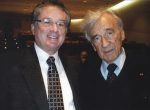
Robert Krell, left, and Elie Wiesel. (photo from Robert Krell)

I met Prof. Elie Wiesel in 1978. I was 38 years old. He was 49. Elie, as he insisted I call him, came to Vancouver to speak at a commemorative event. It was for Yom Hashoah, the day of Holocaust Remembrance.

He arrived Friday afternoon and I fetched him at the airport and brought him to our home for a few moments pre-Shabbat and then to his hotel. He had agreed to a press conference on Saturday morning stipulating only that no microphone be used. Elie was observant.

I moderated that morning. He was engaging, handled difficult and peculiar questions equally graciously, and made a deep and lasting impression on the journalists and religious leaders who attended. I learned that morning that his book, Night, a slim 120 pages, had once been nearly a thousand pages written in Yiddish and published in Argentina. How had he reduced it to its present size? By eliminating every paragraph without which the book would not lose its essence, and then by eliminating every sentence in those paragraphs that was not needed to sustain its narrative. Ever since, I have tried to practise that in my talks and writings.

Elie asked me to visit at the hotel on Sunday for breakfast and we ended up talking all day. That evening, he spoke to an audience of 500. I had the honor of introducing him. I used two minutes. How long does one need to introduce Wiesel? He was known to all, even though he had not yet received the Nobel Peace Prize; that was to come in 1986. His lecture that evening was astonishing. One could listen to him forever, one of the few speakers in the world who commands attention and seldom, if ever, loses his audience.

We remained friends. He was the kindest, gentlest, wisest person in my life. And he always made time for me although he was also the busiest and most prevailed upon person imaginable.

So, I took it upon myself to do two things. One was to call him from time to time and briefly visit when I was in New York. Famous people sometimes have no one who inquires as to their own lives. I did not ask him for anything unless the idea began with him. No demands, requests, or favors. The other was to assist wherever I could with whatever little I could do. For example, he asked whether I could arrange for him to be in touch with Rudolf Vrba, one of only four or five escapees from Auschwitz and the author of the Vrba-Wetzler Report (Auschwitz Protocols) warning of the imminent deportation of Hungarian Jews in 1944.

Vrba lived in Vancouver and I knew him well. Elie and Rudi subsequently corresponded for years and I can only guess that some of it concerned the fact that the Wiesel family was not informed by those who received the report in Hungary when there was still a chance to flee into the nearby Carpathian Mountains. Did they ever meet? I offered Elie the opportunity. His response, “I do not think I can look into his eyes.”

One time, when in New York, I received Elie’s return call. Yes, he had time for me to have a brief visit on Monday morning. I went to his home and we caught up for perhaps a half hour. During that time, he excused himself only once, to take a call from the White House. Presidents, secretaries of state, governors and senators, all sought his counsel. He often flew at short notice to speak, to warn, in the midst of various crises around the world.

It was close to Passover. He asked who was traveling with me and I told him, my wife Marilyn and our oldest daughter and granddaughter. Elie was upset not to greet them and he insisted we all visit the next Thursday so he could personally wish them a happy Pesach. How he made time in his wildly busy schedule, I will never understand.

I saw Elie speak in Israel at the 1981 World Gathering of Jewish Holocaust Survivors at Lohamei HaGeta’ot (the Kibbutz of the Ghetto Fighters) and at the closing ceremonies with then-prime minister Menachem Begin. While in Los

Angeles in 1982, I heard him speak at Cedars-Sinai Hospital on “the Holocaust patient” and on “talmudic tales” at UCLA Hillel House. Spellbinding.

For the very first International Conference of Child Survivors and Their Families – the 1991 Hidden Child Foundation/Anti-Defamation League conference – the New York-based committee asked if I could convince Elie to speak. Since Elie seldom said no if he was able to attend, wherever in the world he was needed, this request for my involvement was puzzling. After all, this was New York, his home and the site of the gathering. But he had declined. My guess is that the situation had become complicated by competing factions.

I called him and reminded him that this was “the gathering of the children.” Where else would he want to be? He graciously agreed to give the closing address. I introduced him on the closing night and wondered out loud how it was possible that I had heard him lecture at Yale, in Israel, New York and Los Angeles. Somehow, wherever he was, I found him. I must be his groupie! I certainly never missed an opportunity to hear him and to learn from him.

In 1998, in New York, Elie presented me with the Elie Wiesel Holocaust Remembrance Medal for my work in Holocaust education, my psychiatric contributions to the care of Holocaust survivors and the founding of the Vancouver Holocaust Education Centre. Elie had visited the VHEC and served on its international advisory council along with Irwin Cotler, Yaffa Eliach and Sir Martin Gilbert. My family was there and my children all came to know him better. His loving presence is seared into their memories. Children, for him, were like a magnet. All who wrote to him received a personal response. How he managed this, in between teaching at Boston University, speaking around the world and publishing at least one book every year, I do not understand. But that is what he did.
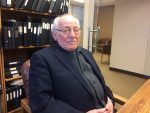
In 2008, I went to Boston to celebrate his 80th birthday, which consisted of a three-day Festschrift devoted to his scholarship and writings, as well as a tribute concert.

Although surrounded by his friends and fellow scholars, I found him sitting alone in the front row and joined him. At one point, I turned to him, “Elie, what is it like to hear all these scholars speak about your contributions all day long?” His response, “I am a good listener.” And, indeed, he was. He listened attentively, to individuals and to humanity.

I nominated Elie for an honorary doctorate from the University of British Columbia and, although he was still recovering from open heart surgery (and wrote a book Open Heart), he traveled to attend the 2012 ceremony and to participate in An Evening with Elie Wiesel, held at the Orpheum theatre, attended by some 3,000 people. Our cab driver said, “Oh, look, Elie Wiesel is speaking.”

As the interviewer for the evening’s proceedings, I asked questions, some “naïve,” as in “Why remember such awful events?” referring to the Shoah.

Elie’s response: “How can you not? Memory is part of who you are, your identity. I have so many wonderful memories of my family and being in shul and it’s all I have now of my family except my two surviving sisters, of whom one has since passed on. Without memory, who would I be? The moments are so important.”

“Elie,” I asked, “you were asked to be the president of Israel. Can you tell us about this?” He answered that the thought had tormented him. How could he turn down the highest honor that could ever be bestowed upon him? He felt he was letting down the state of Israel that wanted him and his leadership. But, he explained, he was without political experience and all he really has are words which, as a politician, would no longer be his. “And besides,” he joked, “my wife would have divorced me.”

“How do you choose the language in which you write?” (Elie speaks Hungarian, Romanian, Yiddish, Hebrew, French and English.) “I prefer the eloquence of French, which is the easiest for me. And, sometimes, my choice is determined by what I am writing about. And I like to write to classical music, preferably a quartet, as an orchestra is too distracting.”

“What message would you send to our young people here tonight?” His response, “Your life is not measured in time and years. It is a collection of moments. You will look back and have so many moments in time that remain fresh, memorable and meaningful. I would tell all of you young people in the audience to enjoy all these moments in time. Being here in Vancouver this weekend has been one of those moments for me.”

With his passing, I shall be without more such moments with him. His death leaves an enormous void, for his moral strength and inspiration will be missing from all who benefited. We must resolve to step up and commit to continuing to learn from and emulate this remarkable human being who returned from the depths of despair and loss to provide a measure of hope.

I urge you to read Night and Elie’s brilliant memoir in two parts All Rivers Run to the Sea and And the Sea is Never Full. Having absorbed at least these books, you may then reflect upon, and hopefully act upon, the lessons learned. They will last you a lifetime.

Dr. Robert Krell is professor emeritus, department of psychiatry, University of British Columbia, distinguished life fellow of the American Psychiatric Association and founding president of the Vancouver Holocaust Education Centre, in whose newsletter, Zachor, this article has also been published.

Format ImagePosted on September 23, 2016September 21, 2016Author Robert KrellCategories Op-EdTags Elie Wiesel, Holocaust, survivors

More survivor support

It was announced on July 29 that Holocaust survivors in Canada will now receive more aid to help them cope with financial burdens of basic needs such as food, medicine, medical care and living expenses.

The Azrieli Foundation has partnered with the Conference on Jewish Material Claims Against Germany (Claims Conference) to provide supplemental funding to Holocaust survivor programs that the Claims Conference established and has supported for two decades.

For 2016, the Azrieli Foundation is providing a total of $457,500 to four organizations to provide emergency financial assistance to Holocaust survivors: the Cummings Centre for Seniors in Montreal, Jewish Family and Child Service of Greater Toronto, Jewish Family Services of Ottawa and Jewish Family Service Agency in Vancouver.

Azrieli’s funding will add to the $23 million that the Claims Conference will distribute to 12 organizations throughout Canada, including the aforementioned four, for a wide range of services that aid survivors. The Claims Conference funds home care, medical care, medicine, food, transportation, emergency assistance and socialization for 3,000 survivors throughout Canada.

“The Azrieli Foundation has been an immensely valuable partner, working cooperatively with the Claims Conference and contributing to the welfare of Holocaust survivors in their time of need,” said Sidney Zoltak, a member of the Claims Conference board of directors and co-president of Canadian Jewish Holocaust Survivors and Descendants. “We wish to thank the Azrieli Foundation, not only for this generous contribution but also for the important project it oversees publishing survivors’ memoirs.”

The Holocaust Survivor Memoirs Program was established by the Azrieli Foundation in 2005 to collect, preserve and share the memoirs and diaries written by Holocaust survivors who came to Canada.

Organizations receiving the Azrieli funding for survivor services will report on their use of the grants through the Claims Conference online system, eliminating the need for the Azrieli Foundation to develop its own system for tracking its funding.

The Azrieli Foundation supports a wide range of initiatives and programs in the fields of education, architecture and design, Jewish community, Holocaust commemoration and education, scientific and medical research, and the arts. The foundation was established in 1989 to realize and extend the philanthropic goals of David J. Azrieli.

The Claims Conference (claimscon.org) represents world Jewry in negotiating for compensation and restitution for victims of Nazi persecution and their heirs. It administers compensation funds, recovers unclaimed Jewish property and allocates funds to institutions that provide social welfare services to Holocaust survivors and preserve the memory and lessons of the Shoah.

Posted on August 19, 2016August 18, 2016Author Claims ConferenceCategories NationalTags Azrieli Foundation, Holocaust, Shoah, survivors

Mourning Elie Wiesel

Dr. Elie Wiesel was motivated by his experience as a survivor of the Holocaust to become one of the world’s foremost advocates for social justice and human rights. He was also a friend to members of the Vancouver Holocaust Education Centre community and we mourn his passing. In his writing and his activism, he gave voice to the experiences of survivors but, as he acknowledged, also saw it as his responsibility to represent those who did not survive.

Wiesel and Robbie Waisman, a past president of the VHEC, were among the 426 “Boys of Buchenwald” liberated on April 11, 1945, and began their post-Shoah lives together at a facility in France.

“We had a common bond,” Waisman said. “On the 11th of April, I usually go into my office and call some of the boys. Elie was part of it. There’s so much that I shared with him.

“The world lost an irreplaceable human being.”

Dr. Robert Krell – recipient of the Elie Wiesel Holocaust Remembrance Medal for his work in Holocaust education, psychiatric contributions to the care of Holocaust survivors, and his role as founding president of the VHEC, which Wiesel visited – became friends with Wiesel over several decades.

“He was the kindest, gentlest, wisest person in my life,” said Krell. “And he always made time for me, although he was also the busiest and most prevailed upon person imaginable.”

Wiesel once said: “There is much to be done, there is much that can be done.” And the Vancouver Holocaust Education Centre commits to continuing the work that defined his life’s mission.

The VHEC will honor the life and work of Elie Wiesel during our annual High Holidays Cemetery Service. The commemoration will take place at 11 a.m. on Sunday, Oct. 9, at Schara Tzedeck Cemetery, 2345 Marine Dr., New Westminster. Everyone is welcome.

The service, held annually on the Sunday between the High Holidays, affords participants the opportunity to mourn those who perished during the Holocaust at this symbolic gravesite.

Posted on July 15, 2016July 13, 2016Author Vancouver Holocaust Education CentreCategories LocalTags Elie Wiesel, High Holidays, Holocaust, Krell, survivors, Waisman
לא שוכח

לא שוכח

ביקור לרה”מ ג’סטין טרודו במחנה ההשמדה אושוויץ. (צילום: auschwitz.org)

ראש ממשלת קנדה, ג’סטין טרודו, לא שוכח את זכרם של קורבנות השואה והניצולים ממחנות ההשמדה. לאחר ועידת הפיסגה של חברי נאט”ו שנערכה בסוף שבוע שעבר בווארשה פולין, הגיע טרודו ביום ראשון כמתוכנן מראש לביקור ארוך באתר של מחנה ההשמדה אושוויץ- בירקנאו. את טרודו ליוו שר החוץ, סטפן דיון, השרה לשיתוף פעולה בינלאומי, כריסטינה פרילנד, ניצול מחנה אושוויץ, נייט לייפציגר, הרב אדם שאייר, המשמש חבר מועצת הרבנים של מונטריאול, ומנהל מוזיאון אושוויץ, פיוטר צ’יווינסקי. לייפציגר בן ה-88 נולד בצ’ורזו פולין ב-1927 ובגיל 11 הועבר למחנה אושוויץ עם משפחתו. שם איבד את אימו ואחותו שנשרפו בתאי הגזים. הוא ואביו ניצלו לאחר שהאב הצליח לשכנע קצין אס. אס להעבירו לקבוצה של הפועלים שעבדו במקום. לייפציגר היגר לטורונטו בשנת 1948 עם אביו עת היה בן 21. הוא הוציא תואר בהנדסה ושימש כל העת אחד מראשי הקהילה היהודית של טורונטו.

באמצעי התקשרת בקנדה פורסם בהרחבה דבר הביקור הראשון של טרודו באושוויץ, והביקור עצמו זכה לסיקור נרחב מאוד. טרודו ביקש לראות מקרוב את מה שנשאר מאחד הפרקים האפלים ביותר בתולדות האנושות. כמליון ומאתיים איש נרצחו באושוויץ- בירקנאו שבדרום מערב פולין ומרביתם היו יהודים.

טרודו ביקר בחלק גדול של התערוכה המוצגת במוזיאון הממלכתי, שכוללת צילומים של יהודים שהגיעו ברכבות מהונגריה, ציוד שנבזז מהיהודים ואת המבנה שאיחסן את תאי הגזים. לאחר מכן הוא צעד ליד מסילת הרכבת ונגע בקרונות שהובילו את הקורבנות למחנה. טרודו עם כיפה לראשו בחלק מהביקור עבר גם ליד הריסות תאי הגזים, בהן נהרגו אמו ואחותו של לייפציגר ושם לא יכל לעצור את דמעותיו. הוא אף קרא את תפילת יזכור באנגלית. טרודו הניח זר לזכר הקורבנות של הנאצים. ראש הממשלה הקנדי לא אמר מילה ורק דמע מספר פעמים, ובסוף הביקור חיבק את לייפציגר שנשק על לחייו. הביקור הארוך נמשך כמעט שלוש שעות. לאחריו כתב טרודו בספר האורחים של המוזיאון, את הדברים הבאים: “התרגשתי מאוד לבקר באושוויץ ובירקנאו. האנושות חייבת ללמוד לאהוב את ההבדלים בינינו. היום אנו עדים על היכולת האנושית בביצוע אכזריות מכוונת ורוע. נקווה שהיותנו עדים ליכולת של האנושות לבצע מעשים רעים שכאלה, רק תחזק את המחוייבות שלנו שלא לאפשר עוד לעולם לחשיכה שכזו לנצח. מדובר באחד הפרקים הגרועים ביותר בהיסטוריה האנושית ואנחנו לעולם לא נשכח זאת. זה המקום להזהיר בפני חוסר סובלנות ולהציע מסר של אהבה”.

לייפציגר אמר בראיון לאחר הביקור עם טרודו: “לא חשבתי שאשרוד את המחנה, שלא לדבר לראות את ראש ממשלת קנדה צועד כאן. לא הייתה שום דרך שיהיה לי עתיד. והיום אני חוזר לכאן לאחר 73 שנים עם ראש הממשלה של קנדה הנפלאה. טרודו הוא מנהיג רהוט שלוקח את קנדה לכיוון חדש. ניסיתי להראות לטרודו מה בני אדם עשו לבני אדם. השנאה הזו שהניעה קבוצה של אנשים לרצוח אנשים אחרים. שנאה כזו ממשיכה להתקיים בעולם גם כיום, ומיעוטים מופלים לרעה ונרצחים. טרודו קיבל את המסר שלו לזכור את העבר, תוך כדי עבודה להגיע לעתיד טוב יותר. הוא בכה איתי, הוא הזיל דמעות איתי. זה הביטוי הגדול ביותר של הבנה ורגשות שהוא היה יכול לעשות עבורי”.

טרודו הוא ראש הממשלה השלישי של קנדה שמבקר אושוויץ- בירקנאו. קדמו לו ז’אן קרטיין וסטיבן הרפר שטרודו החליפו.

Format ImagePosted on July 13, 2016July 13, 2016Author Roni RachmaniCategories עניין בחדשותTags Auschwitz-Birkenau, Holocaust, Leipciger, survivors, Trudeau, אושוויץ- בירקנאו, טרודו, לייפציגר, ניצולים, שואה
We must keep trying

We must keep trying

No reasonable people contend that the Holocaust did not occur. However, a great many assert that it has been considered enough, that it is time to put the past behind and effectively close the book on that era. Similarly, discussion today about the Holocaust is likely to elicit a sort of comparative or competitive response: “The Jews are not the only people who have suffered,” or something similar. While such assertions are almost tautological in their obviousness, they betray a different sort of exceptionalism around the Holocaust: the Jewish people are not the only group in history to have suffered, but they are the only ones today being told to buck up and shut up about it.

Somewhere between these two responses – outright denial and exasperated acknowledgement – is a large swath of indifference. A great many people in Canada and elsewhere are aware of the history of the Holocaust, express appropriate responses to it and may utter rote pieties about preventing history from repeating itself. As a civilization, though, all of these responses have so far led to an unsatisfactory status quo.

photo in Jewish Independent - Elie WieselElie Wiesel, who died Saturday, believed that understanding the Holocaust is key to the crucial need to understand human capabilities for evil and possibly to provide its antidote. If Wiesel’s formula is correct, the briefest glance at the headlines today is all the proof necessary to show we have thus far failed to consider and understand that terrible history.
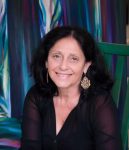
For decades, Wiesel was not only a global voice for survivors, but a sort of moral compass for a world that has not learned the overarching lesson of the Shoah. Speaking out again and again on issues of contemporary injustice and genocide – though some advocates for Palestinians have contended that he wasn’t as vocal on that issue – Wiesel at the same time expressed regret that his interventions should be necessary.

In an interview with the Independent in 2012, Wiesel lamented that all his efforts and those of other survivors have failed to create the ideal world free of hatred and genocide.

“Maybe, deep down, all of us who have survived have had a feeling, if we told the story, the world would change, and the world hasn’t changed,” he said. “Does it mean that we did not tell the story? Or not well enough? Simply, we did not find the words to tell the story? Had we told the story well enough, maybe it would have changed the world? It hasn’t changed the world.”

The outpouring of grief over the passing of Wiesel is the appropriate response to the loss of a great individual. But it also reflects a larger lament; it is a reminder that the generation of eyewitnesses is diminishing. For many of us – and for the world – Wiesel was the face of the survivor, the voice of the Holocaust experience. His unflinching writing on the subject defined the discipline of the eyewitness Holocaust narrative. Not only was Wiesel able to articulate and validate the experiences of survivors who could not express themselves for various reasons, more importantly, as he himself acknowledged, he had an obligation to those who did not survive.

It is this same sense of obligation that motivates survivors to regularly make the emotionally exhausting effort to share their experiences with audiences, particularly young people. As Wiesel acknowledged, the world has not responded adequately. But, in the same interview, he said failure would have been to not try.

When Wiesel was recognized in 1986 with a Nobel Prize in literature, it was a recognition of his contribution, certainly, but it was also an affirmation for all survivors – indeed, for all of those whose identities attracted the Nazis’ genocidal hatred – that their experiences were valid, legitimate and incontestable.

When Wiesel’s book Night was published in English in 1960, it was at the start of a global conversation of the Holocaust and its meaning for humankind. Wiesel rightly hoped, but perhaps should not have expected, that a catastrophe of this magnitude would be adequately understood or its lessons assimilated in the comparatively short span of a human lifetime. He was correct that understanding the Holocaust is a key to humanity’s future. By their actions, Wiesel and all the survivors who share their lived experiences have helped to lay a foundation for a world in which the key to peace and a better future can emerge. As the eyewitness survivors pass that responsibility along to the rest of us, it is our ambitious mission to build on that foundation and to extend their calls of compassion, humanity and reflection to a world in great need of perfecting.

Format ImagePosted on July 8, 2016July 6, 2016Author The Editorial BoardCategories From the JITags Holocaust, survivors, tikkun olam, Wiesel
Honorary degree for Frimer

Honorary degree for Frimer

Linda Frimer was honored earlier this month by the University of the Fraser Valley for her artistic, humanitarian and philanthropic contributions and accomplishments. (photo from UFV)

For Linda Frimer, art is a form of reconciliation, and creativity a means of expressing the love within us all. The Vancouver artist has been sharing her art to heal, help worthy causes, and reconcile nature and culture for more than 35 years. In recognition of her artistic, humanitarian and philanthropic contributions and accomplishments, Frimer received an honorary doctor of letters degree from the University of the Fraser Valley at its June 2 afternoon convocation ceremony at the Abbotsford Centre.

Born in Wells, B.C., and raised in Prince George, Frimer connected with nature early on, and it informed her artistic development from the start. “I always had a pencil in hand and was allowed to roam the forest freely as a young girl,” she recalled.

Born a few years after the Second World War ended, she heard the adults in her family whispering about the devastation of the Holocaust. Even decades before the war, her family faced hatred and expulsion. Her grandfather fled Romania during the pogroms in the late 19th century, becoming one of the “footwalkers” roaming Europe, then following the Grand Trunk Railroad in Canada to its terminus in Prince George, where he became a merchant.

“I was too young to understand it all, but I knew something very bad had happened,” said Frimer. “I was a highly sensitive child, and absorbed the pain and anguish that others were carrying. I turned to nature for healing and reconciliation. I would enter the forest with a sense of awe and wonder. It’s what unites all people. When we suddenly see a magical tree or a sunset that leaves us breathless, that wonder belongs to everyone. I’ve always wanted to bring together the worlds of nature and culture. They are all connected, and recognizing that interconnectedness facilitates healing.”

Compelled by a desire to reflect the pain of her community and work towards healing, she created many works of art examining this theme. She co-founded the Gesher (Hebrew for Bridge) Project, a multidisciplinary group that helped Holocaust survivors and their children express their traumatic experiences through art, words and therapy.

Reflecting on the project during a talk she gave to the Canadian Counseling and Psychotherapy Association, she noted that creative expression is a critical component to healing. “I’ve done work that reflects my culture and my people and their plight, but I don’t want to get caught in the dark places. I want to share reverence between all cultures. I want to bring light and love to the forefront.”

From an early age, Frimer felt an affinity for the aboriginal people she grew up near in rural British Columbia. Her connection became more formalized when she befriended Cree artist George Littlechild (also a UFV honorary degree recipient). The two felt an immediate connection through their interest in incorporating family and history into their art and their use of vibrant colors. They have collaborated to produce art shows presented in venues such as the Canadian consulate in Los Angeles, and produced a book titled In Honor of Our Grandmothers.

“Both of our peoples have been through so much that we felt a real connection,” explained Frimer. “Growing up, I felt a real sense of ‘otherness’ and not fitting in. Many aboriginal people can relate to that, too.”

Frimer’s affinity to nature has led to her supporting many environmental causes. Her paintings for the Wilderness Committee, the Trans-Canada Trail, the Raincoast Environmental Foundation and other groups have raised funds for wilderness preservation, and also raised awareness of threatened forests and ecosystems.

“I love my environmental work because I know that’s where I can make a difference,” she said. “I am committed to helping to preserve endangered species and ecosystems, as well as helping people at risk or in crisis.”

Frimer spent her 20s raising her children and developing her artistic skills by finding mentors with whom to study. She didn’t begin her formal training until she was 33, when her last child started school. She then finished a four-year degree at Emily Carr in three years, receiving credit for her prior learning and artistic work.

More than three decades into her career, Frimer’s paintings and murals can be found in galleries, synagogues, churches, retirement centres, hospitals, hospices, schools, transition houses, corporate offices, and public and private collections. She has been very prolific but says it’s been easy to create so much art because she feels she is merely a vessel for a strong creative force. “It’s like joy coming through me, rather than me making it happen,” she said.

Frimer has received many accolades, honors and titles, but said her favorite title is “Grandma.” She and her husband Michael raised their blended family of eight children and now enjoy the company of nine grandchildren. “It’s profoundly important, especially for the Jewish people, who have lost so much, to rebuild the family we’ve lost and share reverence with others who have had similar losses,” she said.

Still, receiving an honorary doctorate is a special distinction for her. “My parents would have been extremely proud, and I know that my husband and children will be too,” she said before the convocation. “You can’t really declare yourself a successful artist – you need affirmation from the outside. I’m so grateful that my messages have been heard, and that the care that I’ve put into bringing more culture, nature, creativity, expression, healing and light into the world through the gift of art is being honored.”

For more about Frimer and her art, visit lindafrimer.ca.

Format ImagePosted on June 24, 2016June 22, 2016Author University of the Fraser ValleyCategories LocalTags art, Frimer, Gesher Project, Holocaust, survivors
The resilience of survivors

The resilience of survivors

Peter Suedfeld and his mother. Taken at Vajdahunyad Castle, Budapest, Hungary, circa 1939/40. (photo from Peter Suedfeld)

Dr. Peter Suedfeld has devoted his life to the study of how human beings adapt to and cope with challenge, stress and danger. Yet it was many years into his work that he acknowledged his choice of academic pursuit may be related to his personal life history as a survivor of the Holocaust.

Suedfeld, professor emeritus of psychology at the University of British Columbia, will deliver the keynote address at the Vancouver Holocaust Education Centre’s community-wide Yom Hashoah commemoration at the Jewish Community Centre of Greater Vancouver on May 4.

Through the years, he has often been asked if his research was influenced by his family’s experience in the Holocaust.

His mother was murdered at Auschwitz; his father survived Mauthausen. Suedfeld was a hidden child in Budapest, living as a Christian in an orphanage run by the International Red Cross.

“My answer always used to be no,” he said, “because my research for a long, long time was fairly straightforward experimental psychology, cognition, perception, memory, things like that.”

But, when he was interviewed for the VHEC’s survivor testimony project, he “put it all together,” he said. “I started to think that maybe there really is a connection, because almost all of my research – not quite all, but most of it – has to do with how people adapt under unusual, extreme, challenging, sometimes traumatic environments and situations.”

His early work focused on sensory deprivation, looking at how removal of external stimuli affects things like cognition, studying astronauts, cosmonauts and people who work in polar research stations.

“I also started looking at people who were under stress because they had to make really important decisions in stressful circumstances, such as political and military leaders,” he said. “I realized that might have had something to do with my own experiences. How do people face unusual, extreme and sometimes dangerous environments – which people who have survived the Holocaust have had to do, including me? But, I want to emphasize that, at the time I was doing this research, I never thought this way. People asked me why I do all these things, and I said something interests me and I do research on it, that’s all, and I have a wide range of interests. But then, I thought maybe this does have something to do with my personal history.”

At the Yom Hashoah event, Suedfeld will reflect on his personal experience, discuss the Holocaust more broadly and then address the issue of the long-term adaptation of survivors of the Holocaust, a topic on which he has conducted a series of studies.

Suedfeld has reviewed the psychological reports written soon after the war about the long-term potential of survivors to survive and thrive.

“In general, what I found is that the early reports of psychologists and psychiatrists about how permanently damaged survivors are were, to put it bluntly, wrong,” he said. “Yes, of course, some people were permanently damaged and some people could never put their life back together again. But there are a lot of people who did put their lives together or build new ones, who were quite resilient and still are, did well in their occupation or in education if they were young when they came here, have family lives that are certainly no less happy than anybody else’s, are proud of their kids and grandkids if they have any, don’t think about the Holocaust all the time, don’t let it ruin their life.”

Many survivors, he said, have some post-traumatic stress, but not post-traumatic stress disorder. “Disorder means it really interferes with normal life,” he said. “And very few have that.”

Reviewing the early literature and knowing what he knows from personal experience and acquaintance with many survivors, Suedfeld is more surprised by the early negative prognoses than by the remarkable resilience of survivors.

“What did surprise me was the negativity of the scientific reports, which overlooked or ignored or never got to see any of the people who were so resilient,” he said. “There is now a substantial and rapidly growing literature showing not only resilience but post-traumatic growth and people’s strength instead of just emphasizing the weakness. And, again, that’s not to deny by any means that there are some people who were so terribly affected that they haven’t recovered, but that is not the norm.”

Suedfeld also cautioned that every experience of survivors is unique.

“We talk about the Shoah as though everybody had pretty much the same experience,” he said. “I want to bring home to people that that is also a mistaken idea, that people experienced very different things, all of which are lumped under the label of Holocaust or Shoah, but that’s an incredibly wide diversity of experiences to which an incredibly wide diversity of people responded in an incredibly wide, diverse way, so you cannot talk about survivors or victims as an undifferentiated lump. They’re not.”

Pat Johnson is a communications and development consultant to the Vancouver Holocaust Education Centre, as well as a member of the Independent’s editorial board. This article first appeared in the VHEC publication Zachor.

Format ImagePosted on April 22, 2016April 20, 2016Author Pat JohnsonCategories LocalTags Holocaust, Suedfeld, survivors, VHEC, Yom Hashoah

Recording testimony

As every year passes, more firsthand accounts of the Holocaust are lost. Carleton University has launched a new initiative to help preserve these important accounts for future generations.

Led by Mina Cohn, director of the Centre for Holocaust Education and Scholarship (CHES) within Carleton University’s Zelikovitz Centre for Jewish Studies, this initiative is hoping to raise $7,500 using Carleton’s Futurefunder crowdfunding platform to record and preserve the testimonies of Ottawa Holocaust survivors as oral histories.

The project will ensure the preservation of Ottawa Holocaust survivors’ accounts and their experiences before, during and after the Holocaust. These recorded testimonies will become a powerful pedagogical tool to be used in any educational institution or setting and will allow Carleton professors and students to explore online the unique power of survivors’ memoirs. The recordings and associated educational materials will form the basis of a special Ottawa-based Holocaust memorial project and will become a public resource freely accessible on the CHES website.

Each survivor has a unique and personal story to tell. These eyewitness accounts unite personal experience with the history of the period in a powerful way, creating a feeling of immediacy to the events, and there is an urgent need to record and preserve survivor accounts before it is too late. CHES is in contact with local Holocaust survivors and is already working with those interested in participating in this project.

The $7,500 to be raised will help cover the cost of producing, editing and arranging a public launch of the video testimonies of Ottawa Holocaust survivors. In the first round, CHES will record up to 10 different survivor testimonies, in a professional studio environment with the help of professional videographers. If sufficient funding is available, it will produce thematic videos on associated topics, such as life before the Holocaust in certain locations, camp experiences, child survivors, Jews in hiding, etc. Recording is scheduled to start in June 2016.

The unedited recording and videotapes will serve as resources for scholars, students, educators and the public, and provide glimpses into the individual lives during the Holocaust that cannot be obtained from documents or written records. Such testimonies are also an excellent resource for the development of anti-racism educational materials.

To learn more, visit futurefunder.carleton.ca/project/ottawa-holocaust-survivors-testimony.

Posted on April 22, 2016April 20, 2016Author Carleton UniversityCategories NationalTags Carleton, Holocaust, survivors
Survivor helps others

Survivor helps others

On Nov. 18, Robbie Waisman spoke at the Jewish Museum and Archives of British Columbia. (photo by Pat Johnson)

The head of Canada’s Truth and Reconciliation Commission is crediting Robbie Waisman, a Vancouver man and a child survivor of Buchenwald concentration camp, with making a significant impact on the work of the landmark national initiative.

Justice Murray Sinclair, the first Aboriginal judge appointed to the Provincial Court of Manitoba, headed the commission that handed down its report earlier this year. It is a compendious study of the legacy of Indian residential schools in Canada, with recommendations for redress. Over the course of a century, an estimated 30% of Aboriginal children in Canada were taken from their family homes and placed in residential schools. Funded by the federal government and run by Christian churches, the schools forbade children from speaking their native languages. Countless numbers were physically and sexually abused, even murdered, starved to death or died from lack of medical attention. Of the estimated 150,000 children who went through the system, 4,000 are believed to have died. Survivors have struggled for decades with the legacies of the experience. The Truth and Reconciliation Commission (TRC) was the first comprehensive nationwide effort to address the history.

Sinclair told the Independent that Waisman made a crucial suggestion that informed the work of the commission. It can be extremely difficult for survivors to tell their stories directly to their children, Waisman told Sinclair. He himself did not tell his own children about his experiences in the Holocaust; they learned some of the details by witnessing their father tell his history to others. The commission took this advice to heart, said Sinclair.

“Based on that, when we go to a community, we bring all the [residential school] survivors in and we always make a point to bring their children in so that when the survivors are talking to us, the children are hearing them,” Sinclair said. “That proved to be an exceptionally strong piece of advice for us to open the lines of communication within families. From the perspective of residential school survivors, often the most important process of reconciliation that they wanted to engage in, that they needed to engage in, was to apologize to their own families for how they behaved after residential schools and to be given an act of forgiveness by their children, their spouses, their family members.”

Waisman participated in the entire TRC process, traveling to every part of Canada to speak with residential school survivors about his own story of survival and about creating a life after experiencing the most unimaginable horrors.

“I told them that I am one of the 426 teenagers that was liberated at Buchenwald,” Waisman explained. “We couldn’t go home, we went to France and, in France, the experts that analyzed us told the French government that these kids, first of all, won’t amount to anything because they’ve seen too much and they’ll never rehabilitate. Get a Jewish organization to look after them, they told the French government. Number two, they won’t live beyond 40. So here we are. Six years ago, I phoned [Nobel laureate and fellow Buchenwald survivor] Elie Wiesel, who wasn’t going to amount to anything, and I wished him a happy 80th. And little Lulek [Yisrael Meir Lau], who became chief rabbi of Israel. This is what I related to them. You see what we have achieved? So, then I quote [Barack] Obama: ‘We did it … yes you can.’”

On Nov. 18, Waisman spoke at the Jewish Museum and Archives of British Columbia about his experience in the Holocaust and about participating in the TRC.

Waisman has been involved with First Nations communities for years. He was first contacted by Canadian Jewish Congress when David Ahenakew, a former national chief of the Assembly of First Nations, uttered antisemitic comments in 2002. CJC engaged with First Nations leaders and brought Waisman to meet with them. Waisman’s relationship with CJC goes back further – as an orphaned child survivor, he was sponsored to come to Canada by CJC.

Because of his effectiveness as a speaker, Waisman was invited to speak to residential school survivors in the Northwest Territories. As he spoke, he noticed maybe a dozen people in booths, speaking into headphones. It turned out his words were being translated into local dialects and broadcast across the territories. A trip that was supposed be a daylong in-and-out turned into a four-day sojourn as residential school survivors came from surrounding villages to meet him.

“They figured that nobody cared,” said Waisman. “Many of them have begun to talk about their horrors after they listen to me.”

Sinclair is full of warm words for Waisman. “He’s a stalwart supporter and a warm and kind and loving man who always understood what the survivors were talking about and let them know that,” said the judge.

Format ImagePosted on November 27, 2015November 24, 2015Author Pat JohnsonCategories LocalTags Holocaust, Murray Sinclair, residential schools, Robbie Waisman, survivors, Truth and Reconciliation Commission
Survivors’ immense impact

Survivors’ immense impact

Holocaust survivors who came to Canada after the Second World War remade this country’s Jewish community.

Before survivors arrived in numbers, beginning in 1947, Canada’s Jewish community had a few poorly resourced social service agencies. The demands created by thousands of new arrivals – many with significant emotional and physical challenges – spurred the growth of Jewish communal organizations across the country. In turn, those survivors have had an impact on the community in the successive seven decades that is incalculable. The impact of the Holocaust – and the arrival of its survivors – is perhaps the defining factor in the development of Canada’s Jewish community.

photo - Adara Goldberg
Adara Goldberg (photo from Cherie Smith JCC Jewish Book Festival)

“The Holocaust is a watershed moment and the scale of this watershed resettlement was unprecedented,” said Adara Goldberg, a Vancouverite and author of Holocaust Survivors in Canada: Exclusion, Inclusion, Transformation, 1947–1955. “Many of the agencies across Canada only came to be as a result of the Holocaust. Jewish Immigrant Aid Services [JIAS] did exist, but this was a small organization that only dealt with small numbers up to this point. Having some 35,000 people come in, in less than a 10-year span, really trampled the organizations.”

Survivors who moved to the United States joined a vibrant Jewish community already in progress, while those who came to Canada found a Jewish community with little infrastructure. What exists of the Jewish community and its social service agencies today was built, in large part, for the survivors and, subsequently, by them.

To an extent, there was an unwillingness among Canada’s existing Jewish community to address the Holocaust experiences of the newcomers – those who did not experience the Holocaust may have been afraid of opening wounds or been unwilling to hear the horrors others experienced. There was also a history in Canada of immigrants getting off the boats and throwing themselves instantly into building a new life, leaving the past behind.

Still, Goldberg said, there was a recognition by people like the head of JIAS that these immigrants had some very particular needs.

“The problem was availability,” she said. “This is uncharted territory. Social workers themselves and the Canadian Jewish community were only learning with the survivors about how to treat victims of trauma … the idea of post-traumatic stress didn’t really exist.”

Getting the newcomers integrated was not only a matter of meeting social needs, she added.

“There is also a legal element to that,” Goldberg said. “The fact is, refugees who came to Canada under the auspices of either the Canadian Jewish Congress, or who received support from JIAS or who had relatives sponsor them, were liabilities. If they didn’t find work, if they didn’t have a home, if they became dependent, they risked deportation. They risked becoming a drain on the existing Jewish community, which was already really reaching its max in terms of what they could do.”

A symbol of success is that very few fell through the cracks, although many of the case studies in the book indicate that some survivors were miserable in their assigned living conditions or workplaces.

There was a realization after the war, as the magnitude of what would come to be called the Holocaust dawned, that Canada had failed the imperiled Jews of Europe in the 1930s, when there was still time.

“After the war, relationships changed and there was significant international pressure on Canada to help do its part in relieving the postwar refugee crisis of Jewish and also non-Jewish displaced persons,” Goldberg said. “On the one hand, we can say this was a humanitarian gesture.… There’s also a practical element that we can’t overlook in that Canada stood to gain something from allowing in the Holocaust survivor refugees. There was a need for skilled laborers and this is how most survivors did come in, they came in for skilled labor posts, so Canada benefited.”

The equation of immigration and Canada’s need for labor is underscored by the fact that there was no ministry of immigration at the time – until 1950, Canada’s immigration policy was administered by the ministry of mines and resources. The influx of Jewish and non-Jewish refugees postwar familiarized the Canadian government and public to the concept of receiving refugees on humanitarian grounds. The first major instance of this reconsideration came in 1956 after the Soviet Union crushed the democratic uprising in Hungary. Canada admitted 37,000 refugees in the course of a year.

book cover - Holocaust Survivors in Canada: Exclusion, Inclusion, Transformation, 1947–1955Goldberg’s book begins with a refresher on Canada’s abominable record in the prewar period. Chapters then take on topics such as the unique requirements of young orphaned refugees; the double-edged sword of interned “enemy aliens” – Jews from enemy states, mostly Germany and Austria, whose nationality, in the eyes of Britain and its Canadian dominion, trumped their status as endangered victims of Nazism; the various programs under which refugees were admitted to Canada and how established Jewish communities, especially their women’s organizations, cared for refugees’ personal needs; the creation of social clubs and synagogues by and for survivors; the development of an ultra-Orthodox and Chassidic community here; and “transmigrants,” those who came to Canada after a sojourn elsewhere, often in Israel. She has included the stories of survivors who didn’t want to be found; those whose experiences in Europe led them to hide their Jewishness and their past as they began a new life in Canada. It is a monumental work.

A Toronto native, Goldberg wrote the book in fulfilment of her PhD at Clark University in Massachusetts and, while there are differences between the dissertation and the book, which was published in September by University of Manitoba Press, the book avoids the academic jargon that can exclude ordinary readers.

“As a social history that was created with the research that I did both in archives as well as through interviews and other sources, it was written with a wide readership in mind,” she said.

Goldberg eschews statistics in favor of personal case studies both from in-person interviews and records of social service agencies from decades past. The result is an introduction to hundreds of individuals and their stories, as well as a testament to the resilience of the survivors and the history of a small Jewish community rising – not always flawlessly – to the challenge of welcoming tens of thousands of co-religionists who had suffered unspeakable horrors.

The dissertation took about three years to complete and, after Goldberg moved to Vancouver, where she worked for three years as education director at the Vancouver Holocaust Education Centre, she took the opportunity to do additional research that incorporates more local content. The book is enriched by her background as a trained social worker, which underpins a deep analysis of the successes and failures of social service agencies in those early years.

Refugees are the top global news story today and Goldberg sees lessons for the present in her book.

“It’s a very different crisis,” she said. “I think what we can do is, without trying to compare individual experiences, to remember the risk of nativist attitudes and what happened when Canada had very discriminatory, restrictive immigration policies 75 years ago. Canada accepted the fewest number of Jewish refugees of any country in the Western world … Canada had an opportunity at that time to distinguish itself, to take a very restrictive policy and widen the gates. They could have done this and they elected not to. What we can do now is reflect on the result of this inaction. History does not need to repeat itself. Canada can distinguish itself as a world humanitarian leader.

“Similarly,” she continued, “Holocaust survivors have contributed to all aspects of Canadian society. I imagine that so, too, do other refugees to Canada and so will other waves that come in the future. There is so much that we can gain.”

The Vancouver launch of Adara Goldberg’s book takes place on Nov. 25, 5:30 p.m., at the Vancouver Holocaust Education Centre, as part of the Cherie Smith JCC Jewish Book Festival. Admission is free.


Format ImagePosted on November 13, 2015November 11, 2015Author Pat JohnsonCategories BooksTags Cherie Smith JCC Jewish Book Festival, community, Holocaust, immigration, survivors, Syria

Posts pagination

Previous page Page 1 … Page 4 Page 5 Page 6 Next page
Proudly powered by WordPress