Skip to content
  • Home
  • Subscribe / donate
  • Events calendar
  • News
    • Local
    • National
    • Israel
    • World
    • עניין בחדשות
      A roundup of news in Canada and further afield, in Hebrew.
  • Opinion
    • From the JI
    • Op-Ed
  • Arts & Culture
    • Performing Arts
    • Music
    • Books
    • Visual Arts
    • TV & Film
  • Life
    • Celebrating the Holidays
    • Travel
    • The Daily Snooze
      Cartoons by Jacob Samuel
    • Mystery Photo
      Help the JI and JMABC fill in the gaps in our archives.
  • Community Links
    • Organizations, Etc.
    • Other News Sources & Blogs
    • Business Directory
  • FAQ
  • JI Chai Celebration
  • JI@88! video

Recent Posts

  • עשרים ואחת שנים בוונקובר
  • Supporting the Iranian people
  • The power of photography
  • A good place to start
  • When boundaries have shifted
  • Guitar virtuosos play
  • Different concepts of home
  • Broadway’s Jewish storylines
  • Sesame’s breadth and depth
  • Dylan Akira Adler part of JFL festival
  • Mortality learning series
  • A new strategy to brighten up BC
  • Sharing latkes and light
  • Johnson awarded for human rights work
  • Cherished tradition ensured … Silber Family Agam Menorah
  • Nothing as lovely as a tree
  • Camp welcomes new director
  • Popular family camp expands
  • A life-changing experience
  • Benefits of being a counselor
  • Camper to counselor
  • האלימות בישראל מורגשת בהרבה מגזרים
  • טראמפ עוזר דווקא לנושא הפלסטיני
  • New rabbi settles into post
  • A light for the nations
  • Killed for being Jewish 
  • The complexities of identity
  • Jews in time of trauma
  • What should governments do?
  • Annie will warm your heart
  • Best of the film fest online
  • Guitar Night at Massey
  • Partners in the telling of stories
  • Four Peretz pillars honoured
  • History as a foundation
  • Music can comfort us

Archives

Follow @JewishIndie
image - The CJN - Visit Us Banner - 300x600 - 101625

Tag: speakers

A childhood spent on the run

A childhood spent on the run

Survivor Miriam Dattel, right, with the Vancouver Holocaust Education Centre’s Ellie Lawson at the Yom Hashoah commemoration April 23. (screenshot)

Miriam Dattel was born Branka Friedman, in September 1940, in the Croatian city of Zagreb, then part of Yugoslavia. She was about six months old when the Nazis invaded and her family began a life in hiding. Fleeing ahead of the Nazis and their collaborators, the family survived together through a series of close calls, lifesaving tips from compassionate officials, luck, determination and exhausting treks through the wilderness in search of refuge.

Dattel shared her family’s story at the annual Yom Hashoah commemoration at Temple Sholom on April 23.

Upon invading Yugoslavia in April 1941, the Nazis, aided by their Croatian fascist Ustaše collaborators, immediately instituted the Nuremberg Laws and set up the first concentration camps in Yugoslavia. Dattel’s father and uncle were thrown out of the university and all Jews were forced to don the yellow star – including on young Branka/Miriam’s baby carriage.

The family was set to flee to Budapest, where they believed they would find refuge with family. When the day came, the baby Branka was ill, so her grandmother, Irma Stern, was sent on ahead. It was the last time the family saw her. 

In her haste, the grandmother left behind her prayer book, which was her ubiquitous companion. Branka’s mother viewed the holy book as a fortuitous omen that all would be well in the end. At the commemoration last month, Dattel held the prayer book, now more than a century old and suffering the inevitable evidence of time. 

Eventually, the family fled – but not to Hungary. Branca/Miriam, her parents, Andor and Margita Friedman, and her aunt and uncle, Lili and Fritz, were transported with the help of a friend of her uncle’s southwest to the Croatian city of Split on the Adriatic coast. Sections of the city were controlled by the Italian fascists and others by the Croatian regime. 

One day, her father was tipped off by a high-ranking Italian officer that the Croatians were preparing to deport Jews from the areas of Split they controlled. He returned home in the middle of the night and evacuated the family to the Italian side. Eventually, the family’s race against fate continued, with a journey under false identities by ship to northern Italy.

“In 1943, when eventually Mussolini was finished, the Germans took over,” Dattel said in a video at the ceremony. Again, her father was tipped off by an Italian official, who warned him to disappear. 

“From then on, from what I saw in my father’s diary, we went through 18 different hiding places,” she said, noting assistance from underground operatives.

As a child forced to race from one place to another, few distinct memories remain. However, in various barns where they took refuge, people would roast chestnuts and that remains an evocative taste-memory for her.

Ovaltine is another. And it is a flavour from the very moment that may have saved the life of Miriam and her family.

The group – now six with the addition of her newborn cousin Gerardo – had made their way through northern Italy, around Lake Como and toward the Swiss border. After walking for hours, crossing under fences and trudging through difficult terrain, they came to the frontier of Switzerland.

“There were two Swiss border guards there,” said Dattel. “They said the border is closed. And my father said, impossible, you are not going to let two kids be killed. My recollection is this Swiss soldier [with] a German Shepherd coming towards me, lifting me up and carrying me to the station, to the border house.”

There, the guard gave her Ovaltine and, while she has tried to recreate the flavour, it has never tasted the same.

The family members were placed in refugee camps, Miriam separated from her parents. In Switzerland, the family lived out the war, returning to Zagreb afterward before Miriam and her parents made their way to Israel. 

About 1.5 million Jewish children were murdered in the Holocaust. Miriam was one of an estimated six to 11% who survived. In addition to the video screened at the event, Dattel spoke on stage with Ellie Lawson, the Vancouver Holocaust Education Centre’s education manager.

Claire Sicherman, a granddaughter of survivors, was the third-generation descendent speaker. She spoke of being consumed by grief in early life and growing up in a family filled with silences. (Sicherman shared her story of trauma and recovery earlier this year. See jewishindependent.ca/healing-trauma-possible.)

Hannah Marazzi, acting executive director of the VHEC, noted that this year marks the 82nd anniversary of the Warsaw Ghetto Uprising, a symbol of defiance in the face of annihilation. In addition to remembering the millions of lives lost and the resilience of survivors, she said, “We remember the young Jewish fighters who rose up against the Nazis and whose courage continues to inspire us to stand against oppression in all of its forms.”

Rabbi Carey Brown, associate rabbi of Temple Sholom, welcomed attendees to the synagogue and reflected on the past’s lessons for the present.

Dr. Abby Wener Herlin, associate director of programs and community relations for the VHEC and a member of the third generation, introduced survivors, who lit candles of remembrance.

Cantor Shani Cohen chanted El Moleh Rachamim, the memorial prayer for the martyrs.

Wendy Bross Stuart was responsible for musical direction and arrangement, and played piano. Eric Wilson played cello. Cantor Michael Zoosman, Erin Aberle-Palm, Matthew Mintsis and Lorenzo Tesler-Mabe sang.

As is traditional, the annual ceremony ended with the singing of “Zog Nit Keynmol,” “The Partisan Song.” 

Format ImagePosted on May 9, 2025May 8, 2025Author Pat JohnsonCategories LocalTags Claire Sicherman, history, Holocaust, Miriam Dattel, second generation, speakers, survivors, VHEC, Yom Hashoah
Emergency medicine at work

Emergency medicine at work

Dr. Oren Wacht of Ben-Gurion University of the Negev will be in Vancouver this month, giving a public lecture May 25 and promoting Heartbeat of Education, a project geared to helping more Israeli paramedics further their education in emergency medical services. (photo from BGU Canada BC & Alberta Region)

Dr. Oren Wacht, who heads the department of emergency medicine and is the academic director of the Field Family Medical Simulation Centre at Ben-Gurion University of the Negev, will be in Vancouver May 23 to 25. As part of his visit, he will speak to the community on May 25, 7 p.m., at an event titled Emergency Medicine in Action: Healing the Negev Post-Oct. 7.

An experienced emergency medical technician and the first paramedic in Israel to receive his PhD, Wacht serves, too, as a volunteer paramedic for Magen David Adom, Israel’s national emergency service.  Since Oct. 7, 2023, he has seen months of active service between his teaching and training responsibilities.  Thousands of BGU faculty, staff and students were called to serve after the Hamas attacks.

Wacht said his May 25 talk will be about his department, which trains paramedics, and will briefly touch upon his own experiences as a paramedic. 

“Since the war, I have spent most of the time in the military, in the infantry, as a paramedic,” he told the Independent. “I am trying to combine this with my work at BGU as a head of department and researcher, and, of course, my personal life and family. It is very challenging, but there is no other choice.”

Wacht’s visit to Vancouver will promote Heartbeat of Education, a project geared to helping more Israeli paramedics from all walks of life access and earn a bachelor’s degree in emergency medical services (EMS).

As the national EMS system,  Magen David Adom (MDA) has very close ties with the program. In February 2022, MDA and BGU signed an affiliation agreement as part of an academic initiative designed to improve training for paramedics and EMTs. The affiliation, believed to be the first between a national EMS service and a university, strives to bolster the quality of pre-hospital emergency care in Israel and elsewhere. 

“We want Israel to have the best paramedics and, with the program’s support, we can help our students go through our very intense program with less financial stress,” Wacht said. 

“Our program is unique,” he added, “because students do EMS shifts at MDA from the first year of studies. We are incredibly excited about this opportunity – and being able to support our students, especially since the war, is one of the most important things we need to do.”

In Israel, MDA paramedics are among the first on the scene in emergencies to provide critical care.  However, many paramedics lack the financial means to pursue higher education. The purpose of the Heartbeat of Education program is to enable paramedics to take on more specialized roles within the health-care system, bring enhanced expertise to emergencies and thereby save more lives and improve outcomes, drive innovation and support a diverse, inclusive environment that can provide life-saving services to everyone who lives in Israel.

Wacht also has created a summer program, in English, in emergency medicine at BGU. It will open this year, from July 20 to 30, and is geared towards laypeople and professionals alike. The program uses the extensive experience of tactical medicine – the delivery of care in hostile or high-risk situations that integrates medical and tactical operations to preserve life – at BGU and brings it to people in the course in a realistic environment at the school’s medical simulation centre. In addition to offering graduates a certificate from BGU, the program hopes to provide participants with the confidence to handle demanding medical challenges. 

The Field Family Medical Simulation Centre occupies four floors of the Rachel and Max Javit Medical Simulation and Classroom Building at BGU.  It includes classrooms equipped with medical devices, advanced simulators and research laboratories, and features state-of-the-art medical simulation rooms to train doctors, nurses and paramedics.  The rooms are designed to reflect real-life medical situations, such as cardiopulmonary resuscitation, procedures for trauma victims and emergency surgeries.

Since Oct. 7, many medical teams, from army and civilian organizations, have asked for guidance at the centre, and the centre has helped prepare many Israel Defence Forces teams. 

“Despite the challenges we face, and despite the fact that a significant part of the team has been called up for reserve duty, hospitals and MDA, this is our small contribution, and we stand united with the medical community in these difficult times,” Wacht said in October 2023. 

“The support of Jewish people from around the world gives all of us, and me personally, a lot of strength in these challenging times,” Wacht told the Independent. “We invite readers to visit BGU and see the fantastic work in many fields of research.”

To register for the Metro Vancouver event, visit bengurion.ca/events/vancouver-events. 

Sam Margolis has written for the Globe and Mail, the National Post, UPI and MSNBC.

Format ImagePosted on May 9, 2025May 8, 2025Author Sam MargolisCategories LocalTags Ben-Gurion University, education, emergency medicine, Israel, Magen David Adom, Oct. 7, Oren Wacht, paramedics, speakers, terrorism

Women enrich Judaism

Rabbi Elyse Goldstein delved into the impact of women’s evolving roles in Judaism during a webinar hosted by Kolot Mayim Reform Temple on Dec. 8. Her talk – Open Doors, Open Hearts: How Women Have Enriched Judaism – was part of the Victoria synagogue’s 2024-25 lecture series.

Using her own journey, the rabbi emerita of City Shul in Toronto explored how women’s leadership and scholarship have not only enriched the Jewish community but also transformed it for the better. 

From her vantage point as a (recently) retired rabbi, Goldstein asserted that Jewish feminism has been a lifeline to Judaism over the past several decades. She referred to the profound changes within Judaism regarding the involvement of women as “disruptions” in the positive sense of the word: namely, “a societal thought pattern that profoundly changes everything around it.”

photo - Rabbi Elyse Goldstein
Rabbi Elyse Goldstein (photo from cityshul.com)

For Goldstein personally, a disruptive point arrived during her bat mitzvah. When it was time for her speech, she announced to the congregation – to the widespread gasps of those assembled and the dismay of her rabbi – that she, too, wanted to become a rabbi. 

“I never really thought when I was 13 that women becoming rabbis would shake the very foundations of Judaism,” she said. That women “would question every assumption of Jewish life, which was based on patriarchal power, that they would challenge what it means to be a Jew altogether. I didn’t realize that I was in the middle of a quiet revolution that would not remain quiet.

“One of the biggest disruptions of Jewish feminism to Jewish life is that people who identify as female are going to lead not in spite of being female but because of it. In other words, that’s a big part of who they are. That is part of their self-identity and they’re going to lead from within that identity – not push it aside.”

The changes brought about by women becoming leaders appear, Goldstein said, in the pages of prayer books, in seminaries, in the boardrooms of Jewish organizations, yeshivot and the Israeli government.

“Our liturgy would change to not only include the matriarchs,” Goldstein said. “We would use neutered language for God and start singing songs of Miriam in summer camp. We would learn Talmud from Orthodox women. We would feel empowered to create midrashim (interpretations of the Bible).”

She referred to the first stage of Jewish feminism as “equal access Judaism,” or the idea that women should be given the same religious opportunities and responsibilities as men.

The second stage, Goldstein said, went further by questioning notions, not simply behaviours. 

“It challenged the way we think and our theological language in describing God,” she said. “It began to shake the foundational assumptions about women and men, Jewish tradition and Jewish law. We didn’t just have women rabbis – those rabbis made us rethink not so much about what a rabbi looks like but what a rabbi is.”

We are in the third stage of Jewish feminism, one that considers if there is more that can be done, she said. “We have to ask about violence against women in the Jewish community and if that’s ended. We have to examine the court system in Israel, where women are still routinely denied Jewish divorces. We have to talk about the ordination of Orthodox women and how that is happening … and we’re not paying attention to it.”

Goldstein went on to talk about what are, in her view, four disruptions to Jewish life brought on by Jewish feminism: the ordination of female rabbis, starting in 1972; Jewish rituals that speak more directly to the experiences of women; changes in religious garb, with, for example, women in a congregation wearing tallitot (prayer shawls); and the reshaping of the gender-related language pertaining to God. 

In addition to being the founding rabbi of City Shul, Goldstein started Kolel: The Adult Centre for Liberal Jewish Learning. An award-winning educator, a writer and  a community activist, she has lectured across North America, Israel and the United Kingdom. Her works include ReVisions: Seeing Torah through a Feminist Lens and, as editor, The Women’s Torah Commentary.

Ben M. Freeman will present the next lecture in the Kolot Mayim series, on Jan 12. The author of the Jewish Pride trilogy, Freeman will discuss his latest book, The Jews: An Indigenous People, which will be released in February. Visit kolotmayimreformtemple.com to register for upcoming talks. 

Sam Margolis has written for the Globe and Mail, the National Post, UPI and MSNBC.

Posted on December 20, 2024December 19, 2024Author Sam MargolisCategories LocalTags City Shul, Elyse Goldstein, feminism, Judaism, Kolot Mayim, speakers, women

Hear from Wexner scholars

photo - Sefaria’s Sara Tillinger Wolkenfeld speaks Dec. 15 and Jan. 12, as part of Our Story, Our Heritage: A Speaker Series with Wexner Scholars
Sefaria’s Sara Tillinger Wolkenfeld speaks Dec. 15 and Jan. 12, as part of Our Story, Our Heritage: A Speaker Series with Wexner Scholars. (photo from facebook.com/thejewishnetwork)

Our Story, Our Heritage: A Speaker Series with Wexner Scholars launched here in September. It features top Jewish educators from across North America who teach in the two-year Wexner Heritage Program, which focuses on Jewish learning and leadership training. While in Vancouver, the scholars give a talk that is open to the public, and also hold learning sessions with the local Wexner cohort, a diverse group of young local community members set to steer the community. 

The speaker series began Sept. 22 with Yonatan Cohen, the rabbi of Congregation Beth Israel in Berkeley, Calif., and a senior fellow at the Shalom Hartman Institute. His talk, titled Our Texts in Tense Times, offered insights into Jewish texts that help frame recent experiences, particularly as the first anniversary of Oct. 7 approached. 

Cohen spoke again on Nov. 17, giving a lecture called Agree to Disagree: The Seeds of Jewish Pluralism Revealed in Talmudic Debate. In it, using classic cases from the Talmud that elucidate the rabbinic approach to makhloket (debate or dispute), he considered how the rabbinic tradition distinguishes between “ultimate truth” and “public policy,” and how ancient texts might help guide the way one operates in a contemporary pluralistic Jewish community.

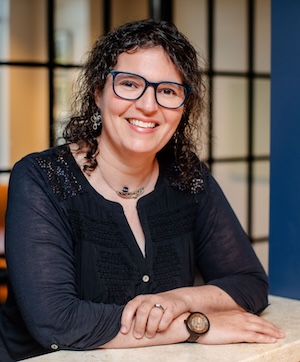
Next up on the Wexner speaker circuit is Sara Tillinger Wolkenfeld, chief learning officer at Sefaria, the free online library of Jewish texts, on Dec. 15. Her topic will investigate how ancient wisdom might offer insights into navigating the realities of social media. Wolkenfeld will return on Jan. 12 to examine tikkun olam, repair of the world, what it means and why it is important.

An alumna of the David Hartman Centre at the Hartman Institute of North America, Wolkenfeld also serves as scholar-in-residence at Ohev Sholom Congregation in Washington, DC. Her current research and writing focus is on the intersection between Jewish ethics and technological advancements. 

photo - Dr. David Shyovitz, a professor of history and Jewish studies at Northwestern University, gives online talks Feb. 9 and March 2
Dr. David Shyovitz, a professor of history and Jewish studies at Northwestern University, gives online talks Feb. 9 and March 2. (photo from from davidshyovitz.com)

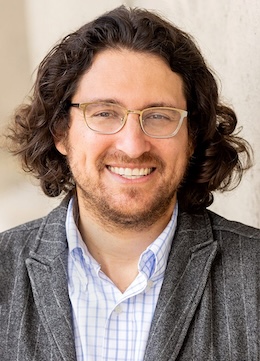
Dr. David Shyovitz, a professor of history and Jewish studies at Northwestern University, will talk on Feb. 9 and March 2. His first lecture will look at Jews and Muslims from an historical perspective. His second asks, “Has there ever been a ‘Judeo-Christian’ tradition?” and digs into what the registration page for the talk describes as “an uneasy alliance.”

“Obviously, these are both very big and complex topics, so there is no way we will do either of them justice fully,” Shyovitz told the Independent. “But they are also topics about which many people have limited knowledge or dramatically oversimplified assumptions, so the goal will be to share some interesting ideas and sources and give participants a glimpse of the rich and nuanced history of inter-religious relations.”

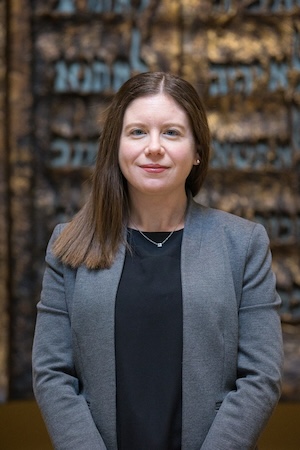
Rabbi Dr. Tali Zelkowicz, director of curriculum and research at the Wexner Foundation, is slated to speak on March 16. She will revisit a debate in Jewish education.

photo - The Wexner Foundation’s Rabbi Dr. Tali Zelkowicz, speaks on Jewish education on March 16
The Wexner Foundation’s Rabbi Dr. Tali Zelkowicz, speaks on Jewish education on March 16. (photo from Wexner Foundation)

“It has become a widely accepted fact that, across every age and stage, the field of Jewish education has split between the sub-fields of so-called ‘formal’ versus ‘informal’ (also known as ‘experiential’ education) or, alternatively, between ‘education’ versus ‘engagement,’” Zelkowicz said. “But how did we get to this default assumption, and is it helping us?”

By taking a closer look at assumptions about how learning works in Jewish life, Zelkowicz hopes to show how we are mired in what she sees as a “nonsensical debate” around which kind of learning setting is most needed or effective in Jewish life while avoiding the much more important question, what counts as great learning? 

Devin E. Naar, a professor of history and Jewish studies at the University of Washington, winds up the series with lectures on March 30 and June 2. His first will study the formation of Sephardi Jewish communities in the Ottoman Empire.

“This lecture traces the trans-Mediterranean journey of the exiled Spanish Jews to the sultan’s realm and the cultural and political dynamics that shaped the communities they created and developed over the subsequent centuries. In short, it explores how the descendants of Spanish Jews eventually became Ottoman Jews, and the implications of those transformations today,” Naar told the Independent.

photo - Devin E. Naar of the University of Washington winds up the Wexner series with lectures on March 30 and June 2
Devin E. Naar of the University of Washington winds up the Wexner series with lectures on March 30 and June 2. (photo from University of Washington)

Naar’s second session will probe how the history of Middle East Jews might change the perception of Israel.

“This talk moves beyond polemics to delve into the history of the long-standing Jewish presence in the geography that now forms the state of Israel,” he said.

“The talk situates Jewish experiences within the broader framework of the Ottoman Empire (which ruled from 1517-1917) during which Ladino – not Hebrew, Arabic or Yiddish – largely remained the primary Jewish language of Jerusalem,” Naar continued. “The talk also introduces some of the key challenges that Sephardic and Mizrahi Jews confronted with the establishment of the state of Israel. What are the lingering effects of those transformations today?”

The Wexner Heritage Program has returned to Vancouver after a 24-year absence thanks to the support of the Diamond Foundation, the Jewish Federation of Greater Vancouver and alumni of the first local cohort.

“It was a transformative experience for me. Because of Wexner, I became a better Jewish leader,” said Jonathan Berkowitz, a member of the original cohort, and a former Vancouver Federation president and chair of Federation’s annual campaign. He was an instrumental figure in rebooting the program in Vancouver.

To register for any of the lectures, go to jewishvancouver.com/wexner-speaker-series. 

Sam Margolis has written for the Globe and Mail, the National Post, UPI and MSNBC.

Posted on December 13, 2024December 11, 2024Author Sam MargolisCategories LocalTags David Shyovitz, Devin E. Naar, education, history, Jonathan Berkowitz, Judaism, Sara Tillinger Wolkenfeld, speakers, Tali Zelkowicz, Wexner Foundation, Wexner Heritage Program
Is this your moment?

Is this your moment?

Rabbi Liz P.G. Hirsch spoke on the topic Just for this Moment: Stepping Up to Lead. (screenshot)

Rabbi Liz P.G. Hirsch kicked off the fifth season of Kolot Mayim Reform Temple’s Building Bridges lecture series Nov. 3 with the topic Just for this Moment: Stepping Up to Lead, which drew on her experience and insights into leadership for women, particularly within Reform Judaism.

Hirsch, who hosts the Just For This podcast, is the chief executive officer of Women of Reform Judaism (WRJ), a position she has held since 2023. Started in 1913 as the National Federation of Temple Sisterhoods, WRJ is the women’s affiliate of the Union of Reform Judaism and it represents thousands of women in hundreds of congregations throughout North America.

Now based in Cincinnati, where WRJ was founded, Hirsch spoke about the name of the podcast. The title, Just for This, comes from the point in the Book of Esther when Mordechai tells Esther to reveal her identity and step up to lead: “Who knows, maybe it is just for this moment that you find yourself in a position of leadership.” (Esther 4:14)

In each episode, Hirsch speaks to women who stand out in their field(s) and asks her guests to describe their “just for this moment” or when they found themselves in the right place and time to take on a leadership role. 

Hirsch played excerpts from her podcast to give the Zoom audience an idea of what her program is all about. The first clip was of Abigail Pogrebin, an American writer and the president of Central Synagogue in New York City from 2015 to 2018.

Pogrebin is the author of several books, her latest – It Take Two to Torah: An Orthodox Rabbi and Reform Journalist Discuss and Debate Their Way Through the Five Books of Moses – having been released just this past September. While Pogrebin didn’t provide a specific “Esther moment” that took place in her life, she did say it is something one should think about regularly. She said perhaps the question should be asked instead as, “Where do I have a role to play?” For Pogrebin, her purpose is to be a bridge between the person who knows a lot and the person who is afraid of what they don’t know.  

“There are many smart Jews out there who have an anxiety of ignorance,” she said. “Sometimes people opt out because, though you are a smart person, you don’t want to appear in places because you don’t know the difference between Sukkot and Shavuot.”

Pogrebin addressed the reluctance at times for women to step into leadership roles out of fear of not having enough experience or expertise when, in fact, they do. She praised Hirsch’s podcast for providing female role models, women who confidently and assertively demonstrate their abilities.

A second clip spotlighted an interview with composer, instrumentalist and prayer leader Elana Arian, who delved into the power of connection. She believes that music can allow for people to connect, even in this time when there are so many issues that polarize individuals.

“It is starting to be quite countercultural to go into communities with the express purpose of bringing people together through music,” she said. “It is really not normal these days to get people to sing together to get more connected to faith, so I feel I bring something to this moment that is specific.”

The final segment Hirsch played for the audience came from a discussion with Cochav Elkayam-Levy, a post-doctoral fellow at Hebrew University in Jerusalem who specializes in gender, conflict resolution and peace. She established and leads Israel’s Civil Commission on Oct. 7th Crimes by Hamas Against Women and Children. 

Elkayam-Levy said she felt compelled to do her work, not from bravery but rather that the necessity of the moment called for it. “I wanted to give a voice to the victims and be respectful to their memories,” she said. “I felt that, despite the fact it was difficult, I just felt that this was what I needed to do. That this was my mission.”

Hirsch concluded her talk by saying that “just for this” moments happen for everyone and encouraged listeners to consider when such times have occurred in their lives.

Hirsch was ordained at the Hebrew Union College-Jewish Institute of Religion in New York. Among other things, she has been a pulpit rabbi and she was the founding co-chair of Religious Action Centre of Reform Judaism, Massachusetts. She serves on the National Council of Jewish Women’s Rabbis for Repro Rabbinic Advisory Council and played a key role in the 2020 campaign to pass the ROE Act in Massachusetts. A prolific writer on social justice, spiritual practice and trends in Jewish life, Hirsch has contributed chapters to several publications, including The Social Justice Torah Commentary. Her podcast can be heard at justforthispodcast.com.

Victoria’s Kolot Mayim synagogue titled this year’s speakers series Kvell at the Well: Celebrating the Joys of Being Jewish in response to the Oct. 7, 2023, Hamas terror attacks on Israel, believing “that it is more important than ever to highlight our proud and strong Jewish culture, history and heritage.”

The series press release also explains the symbolism of a well: “It is the source of life-giving water, a community meeting place and a place for divine revelation. Our goal with this series is to inspire and empower Jews to draw from the well of our collective experience and proudly celebrate (kvell about) our shared identity as a people.”

The second speaker in the series was Rabbi Elyse Goldstein, one of the first female Reform rabbis in Canada, and author of ReVisions: Seeing Torah Through a Feminist Lens, on Dec. 8. On Jan. 12, 11 a.m., Ben Freeman, author of the Jewish Pride trilogy, will discuss his latest book, The Jews: An Indigenous People, set to be released in February, in which he puts forward the position that Jews are unequivocally indigenous to Israel.

To register for any of the series lectures, visit kolotmayimreformtemple.com/2024-25-lecture-series. 

Sam Margolis has written for the Globe and Mail, the National Post, UPI and MSNBC.

Posted on December 13, 2024December 11, 2024Author Sam MargolisCategories LocalTags Abigail Pogrebin, Building Bridges, Cochav Elkayam-Levy, education, Judaism, Kolot Mayim, Liz P.G. Hirsch, speakers
The ethics of triage in war

The ethics of triage in war

Dr. Salman Zarka (photo from Ziv Medical Centre)

Dr. Salman Zarka is general director of Ziv Medical Centre, in Safed, Israel, which is about 11 kilometres from the border with Lebanon. He visits Vancouver this month, speaking at Congregation Beth Israel on Nov. 21, 7:30 p.m., on the topic of Medicine Under Fire: The Ethics of Triage in War. He also speaks during Shabbat morning services on Nov. 23 about Who are the Druze? And How Does Diversity Help Medical Outcomes in Ziv Hospital?

Zarka is a member of the Druze community. He served in the Israel Defence Forces for 25 years, and is a colonel brigadier in the reserve force. An epidemiologist, he is an expert in public health and public health administration. He is also a practising physician, and lectures at University of Haifa’s School of Public Health. He was chief COVID-19 officer in Israel’s Ministry of Health from 2021 to 2023 and, prior to that, the medical assistant of the ministry’s general director.

To hear Zarka speak, register at bethisrael.ca.


Format ImagePosted on November 8, 2024November 7, 2024Author JI staffCategories LocalTags Beth Israel, Druze, ethics, Israel, medicine, Salman Zarka, speakers, war

Stepping up to lead

Kolot Mayim Reform Temple’s Building Bridges Speaker Series returns on Nov. 3, 11 a.m., with Rabbi Liz P.G. Hirsch, chief executive officer of Women of Reform Judaism, speaking on Just for this Moment: Stepping Up to Lead.

photo - Rabbi Liz P.G. Hirsch
Rabbi Liz P.G. Hirsch (photo from cdn.fedweb.org)

Hirsch hosts the weekly podcast Just For This, where she invites women leaders to discuss their journeys, challenges and triumphs. She previously served as rabbi of Temple Anshe Amunim in Pittsfield, Mass. She was the founding co-chair of RAC-MA (Religious Action Centre of Reform Judaism, Massachusetts) and serves on the National Council of Jewish Women’s Rabbis for Repro Rabbinic Advisory Council. A writer on social justice, spiritual practice and trends in Jewish life, she has contributed chapters to publications including The Social Justice Torah Commentary (CCAR Press, 2021) and Prophetic Voices: Renewing and Reimagining Haftarah (CCAR Press, 2023).

The theme for this year’s Kolot Mayim Building Bridges series is Kvell at the Well: Celebrating the Joys of Being Jewish. Within the context of the dramatic increase in antisemitism since the events of Oct. 7, 2023, it is more important than ever to highlight proud and strong Jewish culture, history and heritage. The series, which runs on various Sundays until April, will explore Jewish identity, faith, traditions and community, and highlight resilience, survival and hopes for the future. The lectures are free but pre-registration is required via kolotmayimreformtemple.com/2024-25-lecture-series.

– Courtesy Kolot Mayim Reform Temple

Posted on October 25, 2024October 24, 2024Author Kolot Mayim Reform TempleCategories LocalTags Building Bridges, faith, identity, Kolot Mayim, leadership, Liz P.G. Hirsch, speakers, Women of Reform Judaism

Racism talk versus action

When George Floyd was murdered by a Minneapolis police officer in 2020, it reawakened awareness about police violence and institutional racism in the United States and beyond. Nearly three years later, many of the anti-racist pledges made during that time remain unfulfilled.

“Do you know that most of those commitments have not been met and there is no accountability for not doing this?” said June Francis, special advisor to the president of Simon Fraser University on anti-racism, director of the Institute for Diaspora Research and Engagement, co-founder of the Black Caucus at SFU and an associate professor in the Beedie School of Business. “Companies said they were going to do X,Y and Z, research shows they’re not doing it. Accountability is everything. If we don’t see change and there are no repercussions … then we get tired, society goes back.”

Francis was speaking Nov. 3 at an event titled From Talk to Action: Challenging Racism in Canada Today. The panel discussion, at Robson Square, was presented by the Simces & Rabkin Family Dialogue on Human Rights in partnership with the Canadian Museum for Human Rights and Equitas, an international human rights education organization.

Francis aimed a particularly sharp critique at academic institutions.

“When students arrive at a university, they are being groomed to become racist people,” she said. “I say this honestly because what they are taught is any ideas worth knowing emanate out of white supremacists. White ideas are the enlightened [ones], the primitive becomes us, our art is considered primitive, our work is always denigrated. It’s only recently that Indigenous knowledge has become a thing, only because we’ve totally destroyed the planet and now we’ve suddenly awakened and, even then, we have a certain category of it as being nonscientific. Universities are founded on these ideas that are meant to create this idea that some people are superior to others and we perpetuate this every day. Then we go on to only fund research that does that. We go on to promote people who do that research. We go on to insist that our students who dare to challenge the system don’t graduate unless they do what we tell them to do.”

Annecia Thomas, who joined Francis on the panel, was mobilized to action in the aftermath of Floyd’s murder, as well as when students at her Kamloops high school made light of the murder in an online post. She was afraid to speak up, she said.

“But, I think, through this fear I gained another fear – that was not speaking up,” she said. “Without speaking up, it would just continue.”

Also on the panel was Daniel Panneton, director of allyship and community engagement at the Friends of Simon Wiesenthal Centre for Holocaust Studies. He addressed online hate and how it can transmute into real-world violence, citing the case of Dylan Roof, the South Carolina man who was radicalized online and, in 2015, murdered nine people in an African-American church.

Concerns about free speech rights, which are sometimes invoked to defend racist, misogynistic or otherwise bullying behaviours online are specious, he argued. These actions effectively deter members of historically marginalized communities from running for public office and participating in the public sphere, he said.

“The tolerance of hate and threatening speech in our society threatens the free-speech rights of vulnerable communities,” said Panneton.

The panel was moderated by Niigaan Sinclair, an Anishinaabe man who is head of the department of Indigenous studies at the University of Manitoba and is a frequent commentator in national media.

“I grew up as a refugee, but I didn’t know it,” he said, referring to Canadian governments who forced his ancestors off their lands. “In every other country of the world, that would be called ethnic cleansing, but in Canada they call it progress.”

He said the ultimate goal of racism is to erase its own history.

“The outcome of violence is always silence, not to talk about it, to make sure that it happens in perpetuity and that it’s somehow legal and justified,” said Sinclair.

Zena Simces and Dr. Simon Rabkin, who launched the annual series four years ago, spoke of their motivations.

“We established the dialogue on human rights because we saw a void in Vancouver with respect to a dedicated program on human rights for everyone in the community, for all groups,” said Simces, a consultant in health, social policy and education and a former leader in the now-defunct Canadian Jewish Congress.

“To combat racism, we first need to understand it, think about the background and understand the history,” said Rabkin, a professor at the University of British Columbia medical school who has provided health care to underserviced areas in northern Canada and in Kenya. “Talk and reflection is not enough, it won’t move us forward. We need a vision of the future in order to provide a guidepost and a goal to aim towards.”

Posted on November 11, 2022November 9, 2022Author Pat JohnsonCategories LocalTags Annecia Thomas, anti-racism, Daniel Panneton, human rights, June Francis, Niigaan Sinclair, racism, Simon Rabkin, speakers, Zena Simces

Judaism’s differing practices

Burquest Jewish Community Centre has invited a series of local Jewish leaders to visit the centre and discuss their approach to Jewish practice. A Coat of Many Colours: Conversations about Jewish Practice takes place every other Sunday, through Dec. 11. It started Oct. 16.

Rabbi Laura Duhan-Kaplan – rabbi emerita of Or Shalom (Renewal), volunteer at Beth Israel (Conservative) and director of inter-religious studies and professor of Jewish studies at Vancouver School of Theology – began the series with a talk called An Integrative Spirituality.

On Oct. 30, 1:30 p.m., Congregation Har El’s Rabbi Philip Gibbs speaks on The Conservative Synagogue and the Modern Jew.

“As a Conservative rabbi, I believe that Jewish law develops over time so that even a deep commitment to live according to Jewish values, traditions and rituals can fit with modern sensibilities,” he said. “At the same time, as a community leader, I also recognize that not every person wants to or is able to follow the discipline of an observant life. The synagogue acts as a spiritual toolbox with the many rituals and values that can add meaning to your life. The tension between an individual’s interest and the communal practice is both a challenge to create a welcoming space and an opportunity to explore the deeper meaning of our tradition. We will look at a few examples of how a synagogue could approach rituals like kashrut, prayer and Shabbat.”

Rabbi Tom Samuels of Okanagan Jewish Community Centre, Beth Shalom Synagogue, will give the Nov. 13, 1 p.m., talk, on the topic From Synagogue to Home.

Samuels, who does not identify with any singular Jewish denomination, institution, theology, pedagogy and the like, said, “My session will explore the idea of relocating the North American model for ‘doing Jewish religion’ from the synagogue building to the home. In response to the destruction of the Second Temple, a new Judaism emerged called Rabbinic Judaism. The ancient rabbis established a new locus of Jewish identity and connection to the home, and specifically, to the shulchan, the Shabbat table. Using the model of the Chassidic tish (or botteh, or what Chabad Lubavitch call the farbrengen), we will experience the seamless tapestry of Torah learning, tefillah (prayer), singing and eating that could be replicated by Jewish communities, with or without a local synagogue, throughout North America.”

On Nov. 27, 1 p.m., Temple Sholom’s Rabbi Dan Moskovitz will speak on These Are The Things – 10 Commandments for Living a Purposeful Life.

“Reform Judaism in general emphasizes the moral ethical commandments as being obligatory while the spiritual ritual commandments are more subjective to the individual worshipper with the autonomy to make meaningful, informed choices in their personal practice,” said Moskovitz. “My current rabbinate as senior rabbi of Temple Sholom is shaped by an emphasis on finding meaning through Jewish custom and practice, social justice work, inclusion, outreach to the unaffiliated and developing a relational community.

“I will present a passage from the Mishnah called Elu Dvarim, which details 10 commandments that, if followed during your life, receive reward now and for eternity…. I will present and we will discuss how the application of these particular commandments to your life, regardless of your faith tradition or whether or not you even have one, is one answer to the eternal question what is the meaning of life.”

Rounding out the presenters will be Rabbi Dovid Rosenfeld, Chabad Lubavitch, on Dec. 11, 1 p.m., with a topic to be announced.

Further information on presentations and presenters is available under events at burquest.org.

Posted on October 28, 2022October 27, 2022Author Burquest JCCCategories UncategorizedTags Beth Shalom, Burquest, Chabad-Lubavitch, Dan Moskovitz, Dovid Rosenfeld, Har El, Judaism, OJCC, Okanagan Jewish Community Centre, Philip Gibbs, speakers, Temple Sholom, Tom Samuels
Diverse learning series

Diverse learning series

Rabbi Gila Caine (photo from Kolot Mayim)

Kolot Mayim Reform Temple in Victoria welcomes back Rabbi Gila Caine, spiritual leader of Temple Beth Ora in Edmonton, to speak on the topic Toratah/Her Torah: Women Rabbis Revealing the Goddess in Torah.

The Nov. 7, 11 a.m., lecture on Zoom kicks off a six-part series of talks called Building Bridges: Celebrating Diversity in Jewish Life. The community is invited to listen and learn from Indigenous, Black, Asian, feminist and differently-gendered and differently-abled advocates who are working to make our world a better place.

As a people who have experienced the devastating impact of antisemitism and hatred, Judaism commits us to the responsibility of tikkun olam (repairing our world). In that spirit, Kolot Mayim’s series of speakers will lead attendees on a journey to deepen their understanding of these contemporary issues and how they can support those who do not feel included.

Kolot Mayim’s Rabbi Lynn Greenough describes the series as “an opportunity to build bridges – bridges that enable us to link to what is and what can be, to step beyond our own particular experiences.” The Hebrew word for bridge is gesher, she explained, pointing to the song, “Kol Ha’Olam Kulo,” “the whole world is a very narrow bridge; the important thing is not to be afraid.”

In the series opener, Caine will explore how, throughout the millennia, rabbinic tradition, and especially written tradition, was composed from within a man-focused and -experienced perspective. Now, after around half a century of ordaining women, there is a growing corpus of documented writing flowing from within woman’s experiences and interpretations of Torah and life. In her talk, Caine will read a few Torah commentaries written by (women) rabbis from North America and Israel, as examples of weaving together rabbinic and women’s experience into something new.

Born and raised in Jerusalem, Caine graduated Hebrew University with a master’s in contemporary Judaism and received her rabbinic ordination at the Hebrew Union College-Jewish Institute of Religion’s Israeli program in 2011. Her rabbinic thesis explored liturgical, spiritual and ceremonial aspects of birth in Jewish tradition and contemporary practice.

Stemming from that, as well as her years as a volunteer at a rape crisis centre, Caine is one of the founders of the Israeli rabbinic women’s group B’not Dinah, creating a female and feminist rabbinic tradition of healing after sexual trauma. She now serves as rabbi at Temple Beth Ora and her Building Bridges talk is co-sponsored with her shul.

Other speakers in the 2021/22 series are:

  • Carmel Tanaka, founder and executive director of JQT Vancouver (Jewish Queer and Trans Vancouver) on A Day in the Life of a Queer, Neurodivergent, Jewpanese Millennial (Dec. 5);
  • Rivka Campbell, executive director of Jews of Colour Canada, on Harmony in a Divided Identity: A Minority Within a Minority (Jan. 9);
  • Joy Ladin, poet, author and first openly transgender professor at a Jewish institution, on Jonah, God and Other Strangers: Reading the Torah from a Trans Perspective (Feb. 6);
  • Reverend Hazan Daniel Benlolo, director of the Shira Choir, Spanish & Portuguese Synagogue, Montreal, on The Power of Music: In Honour of Jewish Disability Awareness and Inclusion Month (Feb. 13); and
  • Patricia June Vickers, Indigenous artist and independent consultant, and Rabbi Adam Cutler, senior rabbi of Adath Israel Congregation in Toronto, on An Indigenous and Jewish Dialogue on Truth and Reconciliation (March 20).

Kolot Mayim has been active for 20 years and this is the fourth year that the synagogue is offering this speaker series. Talks are free and held on the scheduled Sundays from 11 a.m. to 12:15 p.m. PST. To register, visit kolotmayimreformtemple.com.

– Courtesy Kolot Mayim

Format ImagePosted on November 5, 2021November 4, 2021Author Kolot MayimCategories LocalTags Building Bridges, diversity, education, inclusion, Jews of colour, Judaism, Kolot Mayim, LGBTQ+, speakers, Torah, women

Posts pagination

Previous page Page 1 Page 2 Page 3 Next page
Proudly powered by WordPress