Skip to content

  • Home
  • Subscribe / donate
  • Events calendar
  • News
    • Local
    • National
    • Israel
    • World
    • עניין בחדשות
      A roundup of news in Canada and further afield, in Hebrew.
  • Opinion
    • From the JI
    • Op-Ed
  • Arts & Culture
    • Performing Arts
    • Music
    • Books
    • Visual Arts
    • TV & Film
  • Life
    • Celebrating the Holidays
    • Travel
    • The Daily Snooze
      Cartoons by Jacob Samuel
    • Mystery Photo
      Help the JI and JMABC fill in the gaps in our archives.
  • Community Links
    • Organizations, Etc.
    • Other News Sources & Blogs
    • Business Directory
  • FAQ
  • JI Chai Celebration
  • JI@88! video
image - Weizmann Canada Physics Tournament 2025
image - The CJN - Visit Us Banner - 300x600 - 101625

Recent Posts

  • היהירות היא אחד האויבים הגדולים ביותר של ישראל
  • Vrba monument is unveiled
  • Music to build bridges
  • A better future possible
  • Anne Frank exhibit on now
  • Human rights in sport
  • Telling the story of an icon
  • Crawl bigger than ever
  • JCC Maccabi in Toronto
  • A way to meet fellow Jews
  • Time to include
  • Add Jewish joy to the mix
  • Reminder of humanity’s light
  • From the archives … editorials
  • Year-round holiday recipes
  • מדוע עזבתי את ישראל ואינני חושב לחזור ארצה
  • OJC hosts Oct. 7 memorial
  • A journey beyond self
  • Antisemitism a problem
  • Young man is missed
  • Orr action sparks complaint
  • Prison sentence for hate
  • Etgar Keret comes to Vancouver
  • New fall lecture series
  • Series explores music
  • Doc on Zapiro screens Nov. 6
  • Joy of shared existence
  • Community milestones … October 2025
  • MAID vs Jewish values
  • Cheshvan a great month, too
  • Bull, bear or bubble?
  • From the archives … a coin, etc.
  • מדוע האנטישמיות הולכת וגואה בעולם
  • New bio gives Vrba his due
  • Joy brighter than ever
  • When approaches differ

Archives

Follow @JewishIndie

Tag: research

Ben-Gurion goes global

Ben-Gurion goes global

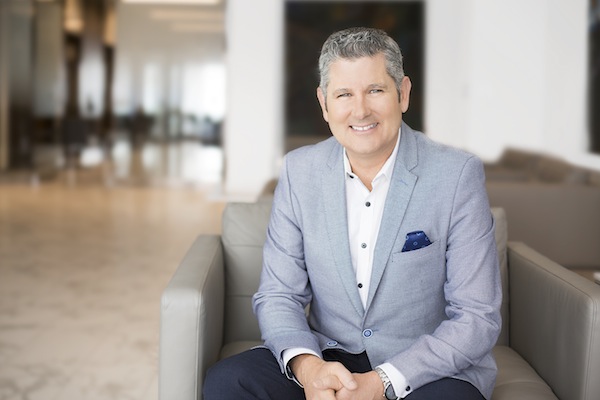
Canadian Associates of Ben-Gurion University honouree Martin Thibodeau, B.C. president of RBC Royal Bank, speaks at the June 9 gala. (photo from CABGU)

Less than six decades ago, the city of Beersheva, in Israel, had more camels than people. Now, it is home to one of the world’s most innovative post-secondary institutions – Ben-Gurion University – and 400 British Columbians packed a Vancouver ballroom June 9 to help launch the university’s new School of Sustainability and Climate Change.

The Canadian Associates of Ben-Gurion University (CABGU) event at the Fairmont Pacific Rim Hotel honoured Martin Thibodeau, B.C. president of RBC Royal Bank, and featured Prof. Daniel A. Chamovitz, president of Ben-Gurion University (BGU), in conversation with event emcee Robin Gill.

Since taking the helm of RBC in the province, in 2018, Thibodeau has continued an involvement in Jewish community affairs that began earlier in his career, in Winnipeg and later in Montreal. He credits his mother with instilling in him a respect for multiculturalism and a connection with the Jewish experience.

In 2018, RBC Royal Bank created a cybersecurity partnership with BGU, investing in artificial intelligence and machine learning technologies to develop advanced cyber-security techniques. Two years later, RBC British Columbia sponsored the first two research fellowships at the new School for Sustainability and Climate Change and, later this year, Thibodeau will lead a summit to Israel, bringing a group of Canadian business leaders to BGU. He is engaged with a host of community organizations, including the Jewish Community Centre of Greater Vancouver, the Jewish Federation of Greater Vancouver, United Way of the Lower Mainland, B.C. Children’s Hospital, Science World and others. He is also co-chair of RBC’s Diversity Leadership Council.

“I’m always amazed at the dynamic and progressive work that continues to be produced by the scholars and the teams at Ben-Gurion University,” Thibodeau said at the June event. “The world owes a great deal of debt to the outstanding advancements that have already contributed to how we live and work as a society. I am excited to see what the future holds in the hands of these amazing and brilliant individuals.”

Thibodeau, who oversees 7,000 employees in the province, was introduced by Lorne Segal who, with his wife Melita, co-chaired the event. Segal gave an emotional testimonial to his late father, Joseph Segal, who passed away 10 days earlier, at age 97. Segal said his father had not attended many events in the past several years but had been looking forward to being present to honour Thibodeau.

In his presentation, Thibodeau thanked the Segals for their support, and for their presence in a time of mourning. Thibodeau paid credit to Joe Segal, who called him soon after he arrived on the West Coast, invited him for lunch and offered advice and an open ear.

In recorded greetings, Israel’s ambassador to Canada, Ronen Hoffman, called Thibodeau “far more than just a businessman. He is a leader, innovator and community-oriented friend of the Jewish people, of Israel.”

Chamovitz, the university’s president, noted that David Ben-Gurion’s dream of a university “at the gates of the Negev Desert” was intended to uncover secrets: “How to make energy from the sun, water from the air and agriculture from the infertile sands, taking advantage of resources that, until now, were going to waste.”

The changing climate has made innovations such as solar energy, desalinization and agriculture in inhospitable places answers to urgent questions that affect lands far beyond the Negev.

“We all of a sudden realized that what we thought was a local problem is now a global imperative and people from all over the world started coming to Beersheva to learn from our expertise,” said Chamovitz, who grew up in Pennsylvania and has been president of the university since 2019. The Abraham Accords have opened new doors to cooperation between BGU and Gulf States that need these technologies, he added.

The School of Sustainability and Climate Change was announced last year and, so far, 25 departments are collaborating on planetary life-and-death topics. (See previous articles at jewishindependent.ca.)

“My simple challenge was to get them to collaborate in order to really leverage our expertise into something that’s much greater than the sum of each of those departments,” said Chamovitz. Even the department of Hebrew literature is involved.

“Hebrew literature did a big seminar on climate fiction, understanding how climate change is influencing what people write about and how this literature is influencing public opinion about climate change,” he said.

While BGU was created with the development of the Negev Desert in mind, the work they are doing is global, with impacts reaching British Columbia, said Chamovitz.

“You cannot look at British Columbia divorced from the world,” he said. Flooding and heat domes are processes that are happening worldwide. Mitigation and prevention must take place both locally and globally, he said.

Chamovitz credited the leadership of Thibodeau and RBC for making it easier for BGU to go to other major donors to fund the new school.

Another new development at the university, he said, is a high-tech park dedicated to advanced research in cybertech, agricultural technologies and green energy.

CABGU B.C.-Alberta board member Eli Joseph chaired the event and board member Rachelle Delaney was the convener. Si Brown, president of CABGU B.C.-Alberta, opened the event. The corporate sponsorship committee was chaired by board member Adam Korbin, and David Berson is CABGU regional executive director.

Terry Beech, member of Parliament for Burnaby North-Seymour, brought greetings from the federal government. Representing the government of British Columbia, Minister of Finance Selena Robinson spoke of her family’s connections to Israel.

Format ImagePosted on July 8, 2022July 7, 2022Author Pat JohnsonCategories LocalTags Ben-Gurion University, BGU, CABGU, climate, Daniel Chamovitz, education, fundraiser, Israel, Martin Thibodeau, RBC, research, science
Investing in the climate

Investing in the climate

Martin Thibodeau, RBC’s B.C. region president, will be honoured at the Ben-Gurion University Gala Dinner June 14. (photo from RBC)

On June 9, Ben-Gurion University president Daniel Chamovitz and members of the Canadian Associates of Ben-Gurion University (CABGU) will visit Vancouver to recognize the launch of its new School of Sustainability and Climate Change (SSCC) and the local supporters who have helped make its opening possible. In particular, Royal Bank of Canada and Martin Thibodeau, RBC’s B.C. region president, will be honoured at the event.

SSCC opened last October at BGU’s Be’er Sheva campus, where its growth has been rapid. Seven months old, the school currently offers two undergraduate degrees and four graduate-level environmental science-related degrees. Its two graduate fellowships, which have supported work in renewable energy and smart city design, were funded by RBC.

“The RBC Research Fund at BGU’s School of Sustainability and Climate Change [is] being established in Martin’s honour, [and] will enable undergraduate and graduate students to be trained as, and pursue meaningful careers as, climate change innovators, entrepreneurs and policy experts,” said David Berson, who serves as CABGU’s executive director for the B.C. and Alberta Region. The funding that is raised at the gala will help further SSCC’s research programs.

SSCC’s mandate isn’t just to address environmental concerns at home in Israel, said Chamovitz. It will have a global reach, as well. BGU is currently working to cement research partnerships with universities and countries that have similar interests in addressing climate challenges. Chamovitz said RBC’s investment in its new school will provide a pathway to meeting that global need.

“RBC was one of the early supporters of SSCC, and this support was essential for leveraging subsequent support,” he said. “The Royal Bank of Canada believes in us,” and that support has served as an encouraging model for other companies to invest in BGU’s programs as well, he said.

Lorne Segal, president of Kingswood Properties and director of the Vancouver Board of Trade, who is an honorary co-chair of the June event with his wife, Mélita Segal, said corporate sponsorship is crucial to startup programs like SSCC. He said corporate support is also vital to finding answers to environmental challenges like global warming.

“Sponsorship from leading businesses and industry leaders does provide imaginative solutions to complex issues impacting our people and the planet,” he said. “Without significant and generous sponsorship support, this crucial work, simply put, would not be possible.”

Segal said supporting initiatives that bring about positive change is part of Thibodeau’s nature.

“Martin Thibodeau truly is a lifelong builder of community,” said Segal. “He is deeply praised by Ben-Gurion University for his commitment to the cause of finding solutions to climate change. It is truly remarkable how much he and RBC Royal Bank have done to enhance the capacity of the Ben-Gurion University community programs and agencies, and advance the conversation on Canada’s transition to a net-zero economy.”

Thibodeau’s support of Canadian Jewish communities and of Israel goes back decades. Originally from Quebec, he served as RBC’s regional president in Montreal until he moved to Vancouver. He oversees some of the largest – and smallest – branches and more than 4,000 employees.

In 2015, while working in Montreal, Thibodeau volunteered as a co-chair for Quebec’s largest multi-day walk for women’s cancers, held by Pharmaprix, to raise money for research at the Jewish General Hospital. “I have been involved with the Jewish community for almost my entire RBC career,” he told the Independent.

He is a strong supporter of the Jewish Federation of Greater Vancouver and the Jewish Community Centre of Greater Vancouver and their community initiatives, and he has been to Israel several times. It was in 2014, said Thibodeau, that he and his wife, Caroline, visited Be’er Sheva and learned of BGU’s environmental research. “[I was] so inspired by the research [and] the innovation,” he said, noting that it wasn’t hard to get behind the creation of a school that was working to find solutions to climate concerns.

“It’s right there in front of me every day,” he said. “I am a proud father of three children and I believe we have a responsibility to make sure that our climate can continue to thrive, and well beyond my lifetime. It is my personal belief that we need to do that today more than ever.”

Thibodeau said it’s been an interesting journey since that first visit to BGU in 2014. “It’s become such a tough priority for the world,” he said of climate change. In Canada, among other things, he supported RBC’s Blue Water Project, which helped provide clean water access to Canadian communities.

Still, Thibodeau is a reticent honouree. He admits that he is uncomfortable with the idea that he will be the guest of honour at a gala, even if it is for a cause he loves. “I’m very humbled,” he said. “I don’t like to have that kind of spotlight on me.” But, he said, raising money for research that might one day create a safer and better environment, that is something he will gladly get behind.

photo - Mélita and Lorne Segal, honorary chairs of the BGU Gala Dinner for Sustainability and Climate Change
Mélita and Lorne Segal, honorary chairs of the BGU Gala Dinner for Sustainability and Climate Change. (photo by The Collective You)

The gala will also acknowledge Lorne and Mélita Segal, who are well-known for their philanthropy and other work. Both have been recognized by Capilano University with honorary doctor of letters, and Lorne Segal has a doctor of laws (hon.) from the Justice Institute of British Columbia. He was inducted into the Order of British Columbia for his work as founding chair of Free the Children’s WE Day Vancouver and as chair of the Coast Mental Health Courage to Come Back Awards. The Segals regularly open their home to fundraising galas.

“When Lorne and I built our home, we didn’t really do it for ourselves but, rather, to share it with the community,” said Mélita Segal. “Whether it was Dr. Peter AIDS Foundation, Arts Umbrella, Chor Leoni, JNF [Jewish National Fund] or WE Charity … it has been a great joy for us and very fulfilling to give back and share in this way.”

Berson described the Segals as “tireless builders of community, leading by example while creating opportunities for people in the business world to make a difference in the lives of others. Ben-Gurion University, Canada, is genuinely fortunate to have their leadership for this event and for our organization.”

The Ben-Gurion Sustainability and Climate Change Gala on June 9 takes place at Fairmont Pacific Rim. Tickets and tables can be purchased at bengurion.ca/vancouver-gala-2022-tickets or by contacting Berson at [email protected].

Jan Lee is an award-winning editorial writer whose articles and op-eds have been published in B’nai B’rith Magazine, Voices of Conservative and Masorti Judaism and Baltimore Jewish Times, as well as a number of business, environmental and travel publications. Her blog can be found at multiculturaljew.polestarpassages.com.

Format ImagePosted on May 6, 2022May 4, 2022Author Jan LeeCategories LocalTags Ben-Gurion University, BGU, business, CABGU, climate change, Daniel Chamovitz, David Berson, environment, fundraiser, health sciences, Lorne Segal, Martin Thibodeau, Mélita Segal, philanthropy, research, science, sustainability
The scarcity of water

The scarcity of water

The seawater desalination plant in Ashkelon, Israel. (photo from © VID)

The Consulate General of Israel in Toronto and Western Canada marked World Water Day on March 22 with a webinar entitled “Squeezing Water from a Stone.” Dr. Alex Furman of Technion – Israel Institute of Technology in Haifa and Dr. Roy Brouwer of the University of Waterloo focused on Israeli and Canadian perspectives of water conservation and management.

Furman, director of the Stephen and Nancy Grand Water Research Institute at Technion, provided an overview of water management in Israel, describing how a land that is 60% desert – and uses more than 100% of its water – still has water left for use.

“The issue of water scarcity in the future is going to grow as the population grows and we need more water to feed people and for agriculture,” Furman said.

Israel’s population, which has expanded tenfold in the past 75 years, continues to climb. Further, its Western standard of living, including such things as daily showers, presents a further strain on the country’s water supply.

Israel recognized the need for innovation in this area several decades ago. Starting in the 1980s, it began treating wastewater for reuse in agriculture and, in the 2000s, the country started major desalination projects. Desalinated water now constitutes a large amount of the water consumed in Israel, but is not a completely win-win scenario. For example, a detrimental consequence of desalination is that the process also removes essential minerals, such as magnesium.

Another area where Israel is taking the lead is in water-saving technology, such as drip irrigation. Agricultural use of water in Israel has decreased in the past 30 years, a period over which agricultural production increased.

“Instead of irrigating the land, we irrigate the plant. Drip irrigation is providing water for what the plant needs. It’s not the amount of water that is important but the precision in how water is applied,” Furman said.

Concurrently, Furman added, Israelis are doing more to reduce water usage in the home, and the country has developed educational campaigns to inform its citizenry on ways to minimize water consumption.

“We are a very fast-growing country that requires a lot of water and requires the development of new water resources at all times,” Furman said.

Brouwer, an economics professor with an academic interest in water resources, highlighted the broader need for collective international partnership in looking at solutions for water issues through interdisciplinary cooperation, policy expertise and innovation.

“Water disregards boundaries and so must we,” he said, employing the motto of his department at the University of Waterloo.

The working definitions of water security, as put forward by the United Nations, Brouwer explained, are to have stable, peaceful and reliable access to adequate quantities and acceptable quality water. This, in turn, should sustain livelihoods, human well-being, socioeconomic development, protection from pollution and other water disasters, and preservation of ecosystems.

“From an economic point of view,” he said, “we need water to produce all kinds of things.”

As examples, Brouwer showed how much water is needed for basic clothing items: 10,000 litres of water are used to produce a kilogram of cotton, which, therefore, means 2,500 litres are required to make a 250-gram T-shirt and 8,000 litres for an 800-gram pair of blue jeans. For a morning cup of coffee, the equivalent of 1,000 cups of water are needed – from growing the bean, processing it and transporting it to the consumer.

Pressures on the international water supply are further exacerbated as countries such as China, Brazil and India achieve a higher standard of living and demand more goods like Western clothing and coffee.

“We expect that water stress will continue into the future,” Brouwer said, noting that two billion people in the world currently live in areas where water is scarce, including in the Middle East and in Northern Africa.

Global demand for water is, according to Brouwer, expected to grow one percent per year until 2050. By that time, 45% of global output would come from countries experiencing water scarcity. Tel Aviv, along with Sao Paulo, Cape Town and Karachi, is among the cities in the world most at risk of experiencing water shortages.

In a chart, Brouwer showed the skewed distribution of water usage around the world – from the average American, who uses 156 gallons per day to a French person who uses 76, an Indian at 38 and a Malian at three. Canada is the second-largest consumer of water per capita in the world. The average Israeli consumes 40% less water than their Canadian counterpart.

In his final remarks, Brouwer said the widely held view of water abundance in Canada may be a misperception when water quality and access to clean and safe drinking water are taken into consideration.

He concluded that water has value, but that its price is not reflective of its true value. Attention, he said, should be paid to both increasing water supply and policies that reduce water demand, and that water pricing is one way to raise awareness for essential water services.

Technion Canada partnered with the consulate on the World Water Day initiative.

Sam Margolis has written for the Globe and Mail, the National Post, UPI and MSNBC.

Format ImagePosted on April 22, 2022April 21, 2022Author Sam MargolisCategories WorldTags Alex Furman, Canada, Consulate General of Israel, economics, environment, Israel, research, Roy Brouwer, science, Technion, University of Waterloo, water
BGU tackles climate change

BGU tackles climate change

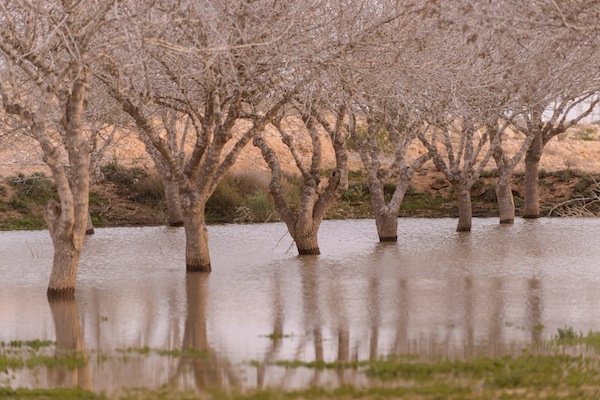
Researchers at Ben-Gurion University of the Negev’s School of Sustainability and Climate Change have been experimenting with alternative ways of irrigating trees, in this case, by floodwater. (photo by Dani Machlis/BGU)

“It is in the Negev that the creativity and pioneer vigour of Israel shall be tested,” David Ben-Gurion, Israel’s first prime minister, predicted in 1955.

The country was not even a decade old. Ben-Gurion was trying to inspire a growing population of immigrants, including Holocaust survivors, to realize their collective potential – to not just embrace a new home, but to build a new, resilient future. That legacy, he maintained, would be found in the most unlikely of places: in the harsh expanse of the country’s southern water-poor and undeveloped desert. But their hard work, he insisted, could one day transform Israel.

“In order to be a realist, you must believe in miracles,” he said.

Today, his vision for the Negev lives on at the university that was founded in his name. Ben-Gurion University of the Negev sits, not coincidentally, at the northern tip of the desert. Some 13,000 square kilometres of semi-arid, rocky terrain make up the Negev, punctuated by dry riverbeds and desolate vistas. It’s on the cusp of this wilderness that Israel’s first School of Sustainability and Climate Change (SSCC) was established last October.

This June, Canadian Associates of Ben-Gurion University of the Negev will be holding a gala dinner in Vancouver to raise funds for the SSCC’s ongoing research. Co-chaired by Melita and Lorne Segal, the event will honour Royal Bank of Canada’s B.C. regional president, Martin Thibodeau, for his community-building efforts.

Existential research

According to BGU president Daniel Chamovitz, environmental research has always been a part of BGU’s mission. Water reclamation, sustainable food production and creating plant species that can survive in adverse environmental conditions have been continuing themes of study since the university’s inception in 1969. Establishing a school that could serve as an umbrella for diverse areas of climate and sustainability research was a natural progression.

“We are the engine, by necessity, of development and change in the Negev,” Chamovitz said. That existential motivation has not only led to new ways to desalinate sea water for industrial purposes and engineer new foods, but new collaborative opportunities with countries experiencing climate impacts. The university is home to three campuses that house climate- and sustainability-related studies, as well as a business park with more than 70 multinational companies. It’s also become fertile ground for Israel’s start-up industry and research collaboration.

Chamovitz said countries like the United Arab Emirates (UAE) and Morocco are looking to partner to solve common environmental challenges. Desertification, the erosion of arable lands driven by a changing climate and urbanization, now affects more than one-sixth of the world’s population. There are also real-time challenges in the Middle East, where dry lands predominate but research experience may be limited.

“The Abraham Accords here have been essential for the growth of the school,” said Chamovitz. It’s not only opened doors for political alliances, it’s fostered new research partnerships for institutions like BGU, he said.

“For 50 years, we have been learning to live in our desert,” he added, noting that what was once seen in Israel as a hyper-local challenge – how to live in a desert – has become a concern for an increasing number of countries.

This month, a delegation from Morocco’s Mohammed VI Polytechnic University (UM6P) arrived in Israel to discuss a new research partnership with the university. The collaboration, which will focus broadly on addressing food insecurity, demands for smart agriculture and alternative energy options, will also lead to educational partnerships with UM6P. “They are very excited,” Chamovitz said. “We already have our first students [from Morocco].”

But international collaboration isn’t the only byproduct of the SSCC. There’s growing interest within Israel, as well.

“[The] school has become the magic dust which influences everything,” Chamovitz said, noting that departments and researchers without any seeming connection to climate change and sustainability are identifying ways to explore environmental subjects.

“One of the most surprising and fulfilling outcomes,” he said, “is that our department of Hebrew literature.… That’s when we knew we had succeeded – when Hebrew literature became part of the school.”

Prof. Noam Weisbrod, who directs SSCC’s Jacob Blaustein Institutes for Desert Research, estimates that about 70% of BGU desert research, in one way or another, touches on topics related to climate change and sustainability. The list of departments is diverse, ranging from biology and medical sciences, to environmental geography and earth sciences.

“The idea is to team up and create a force which is focusing on climate change and sustainability and their impacts in different angles and different directions, and to enable multidisciplinary research” that attracts students who can lead the next generation of research into sustainable ways to combat climate change, Weisbrod said.

Mitigation imperative

In February of this year, the International Panel on Climate Change released its sixth report: Climate Change 2022: Impacts, Adaptation and Vulnerability.

“Approximately 3.3 to 3.6 billion people live in contexts that are highly vulnerable to climate change,” the IPCC stated, noting that “current unsustainable development patterns are increasing exposure of ecosystems and people to climate hazards.”

“Diminishing resources is a real challenge,” said Weisbrod, adding that the solutions may lie in how we manage those precious resources. “There is a lot of research on how to get more crop for drop of water. I like that sentence, ‘more crop for drop,’ because this is what we’re trying to do – to get the maximum crop for minimum resources,” he said.

The latest IPCC report suggests humanity is on the right path. Countries like the United Arab Emirates are taking action to protect water resources and reduce climate change impacts like desertification, steps that are part of BGU’s cooperative strategies with UAE.

According to Chamovitz, many of these advances wouldn’t be possible without investors that are willing to support sustainability initiatives. He noted that RBC was one of the SSCC’s first donors and has been important to the school’s success – in 2020, RBC, British Columbia, sponsored the first two research fellowships at SSCC.

Chamovitz will be a special guest at the Ben-Gurion University Gala Dinner for Sustainability and Climate Change on June 9 at Fairmont Pacific Rim. Tickets for the event are available from bengurion.ca/vancouver-gala-2022.

Jan Lee is an award-winning editorial writer whose articles and op-eds have been published in B’nai B’rith Magazine, Voices of Conservative and Masorti Judaism and Baltimore Jewish Times, as well as a number of business, environmental and travel publications. Her blog can be found at multiculturaljew.polestarpassages.com.

Format AsidePosted on April 22, 2022April 21, 2022Author Jan LeeCategories LocalTags Ben-Gurion University, CABGU, climate change, Daniel Chamovitz, fundraising, gala, Martin Thibodeau, Middle East, Noam Weisbrod, RBC, research, science, UAE, Vancouver

Community milestones … Federation campaign success & Hebrew U donation

In announcing the results of the 2021 Jewish Federation of Greater Vancouver annual campaign, campaign chair Lana Marks Pulver expressed deep gratitude for the generosity of donors. Acknowledging the ongoing impacts of the pandemic, she said, “Yet, we have also seen some impressive achievements. Organizations have innovated faster and better. Volunteers have dedicated countless hours, pitching in wherever they are needed. And donors have given more generously than ever before.

“Together, we have generated $11.16 million for our community!”

The annual campaign raised $9.52 million, while $1.64 million was raised for additional support, which includes additional support for special projects, community recovery, emergency relief and donors’ multi-year commitments to Federation’s international partners.

In addition, the community raised more than $388,000 for B.C. flood relief during the campaign period. And the community has come together to generate more than $850,000 so far for Ukraine relief.

“We can all take pride in this remarkable achievement, which reflects our collective commitment to our Jewish values of tzedakah and tikkun olam (repairing the world), and our responsibility to one another,” said Marks Pulver.

“From the start of the pandemic, Jewish Federation took the lead in getting our community through to a brighter future. A successful annual campaign is a big part of our ability to do that and, as chair of the campaign, I am deeply grateful for your support.”

* * *

The Canadian Friends of the Hebrew University is pleased to announce a major gift of more than $5 million dollars from the estate of a Vancouver resident, to establish the Institute for Medical Research, Israel-Canada (IMRIC) Hub for Addiction Research at Hebrew University.

photo - Prof. Rami Aqeilan, chair of IMRIC
Prof. Rami Aqeilan, chair of IMRIC (photo from CFHU)

The mission of the IMRIC Hub for Addiction Research is to bring about wiser policies, better care and new treatment avenues for those struggling with addiction. This new program will focus on medical research relating to addiction, providing insights into the physical and chemical aspects of addiction, its prevention and treatment.

A silent addiction epidemic affects nearly 11% of adults (more than 615,000) in Israel. In any given year, one in five Canadians experiences a mental illness or addiction problem. Addiction can include both substance addiction (alcohol, drugs and other substances) and compulsive sexual behaviour, problematic use of pornography and problematic use of the internet. Moreover, addiction and mental health issues go hand in hand and must be addressed in tandem. Each year, addiction costs the Israeli economy approximately seven billion NIS and causes untold peripheral damage to families and communities.

“As a result of this generous gift, we at IMRIC are able to engage our best researchers in several specific research projects with diverse perspectives on addiction,” said Prof. Rami Aqeilan, chair of IMRIC. “Additionally, the hub will promote national and international interaction and foster collaboration with Canadian researchers.”

Posted on April 22, 2022April 21, 2022Author Community members/organizationsCategories LocalTags addiction, annual campaign, CFHU, flood relief, IMRIC, Jewish Federation, Lana Marks Pulver, philanthropy, Rami Aqeilan, research, Ukraine
Studying social sense

Studying social sense

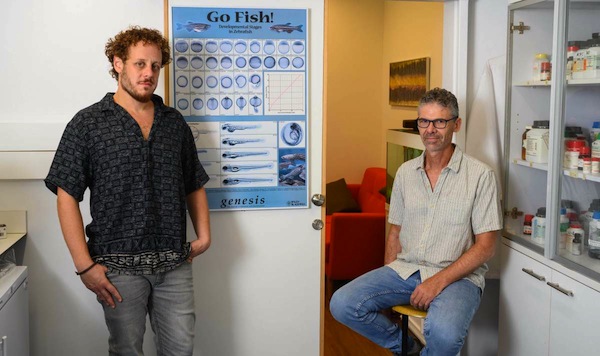
Michael Gliksberg, left, and Prof. Gil Levkowitz are among the researchers who have discovered that oxytocin in a developing zebrafish brain determines later social behaviour. (photo from Weizmann Institute)

Whenever we decide to throw a party, invite in-laws to dinner or embark on a cruise, we are driven by the most basic component of social behaviour: the desire to hang out with other humans. Considering that the drive to form groups with members of one’s own species has been conserved throughout evolution, it’s evident that social behaviour is governed by genes, at least to some degree. But our parents and teachers help us hone our social graces, so teasing apart the effects of nature and nurture on this behaviour is hard, if not impossible. By studying zebrafish, Weizmann Institute of Science researchers, in collaboration with scientists in Portugal, have managed to solve part of the riddle of how social behaviour is hardwired into the developing brain.

Zebrafish are perfect for studying the inborn basis of behaviour because they receive zero nurturing from parents. “Some fish species take care of their young, but not zebrafish,” explained Prof. Gil Levkowitz of the Weizmann Institute’s molecular cell biology and molecular neuroscience departments, who headed the research team together with Prof. Rui F. Oliveira of Instituto Gulbenkian de Ciência in Portugal. “The female zebrafish spawns several hundred eggs, which are fertilized by sperm released into the water by the male. She does provide her offspring with a ‘lunchbox’ – a protein sac, or yolk, that makes up part of the egg – but, otherwise, her message to her children is: manage on your own.”

At about four weeks of age, the centimetre-long juvenile fish, just out of the larval stage, begin to socialize. Though not as exquisitely synchronized as the schools of moonfish in the movie Finding Nemo, they do exhibit a strong tendency to swim together as a group, termed a shoal. Much like humans, they have an incentive to seek company; in their case, the group provides them with advantages in searching for food, overcoming currents, avoiding predators and finding mates. The shoaling behaviour of zebrafish requires sophisticated processing of visual and social cues, very similar to that which takes place in the brains of socializing humans. In particular, the zebrafish must be able to identify other fish as belonging to their own, “friendly” – as opposed to different or, worse yet, predatory – species.

To learn how the social behaviour of zebrafish develops, the researchers focused on the hormone oxytocin, one of the most important neurochemicals known to enhance social interactions, including bonding. Postdoctoral fellow Dr. Ana Rita Nunes and doctoral student Michael Gliksberg created a system for exploring the effects of oxytocin on the developing brains of zebrafish larvae. They produced transgenic larvae whose oxytocin-making neurons harboured a bacterial gene encoding fatal sensitivity to antibiotics. The researchers could then eliminate these neurons from the brains of the larvae at different stages of their development by adding antibiotics to the water, and they later observed the zebrafish behaviour as they became adults.

The scientists discovered that the larvae whose brains lacked oxytocin early on – specifically, in the first two weeks of life – grew into adult fish with an impaired capacity for social interaction, namely, swimming in a shoal. Although their brains regenerated the oxytocin neurons later in life, this capacity was not restored. This meant that, for adults to be capable of social behaviour, their brains had to be organized by oxytocin in a certain manner during a critical time window of brain development in which the social traits are established.

The researchers further discovered the mechanisms by which oxytocin primes the growing brain for socializing. They showed that oxytocin-producing neurons were critical to the birth of another type of neuron, one that releases the neurotransmitter dopamine, which is known to regulate feelings of reward and motivation. Zebrafish whose brains had not been exposed to oxytocin during the first two weeks of life had reduced numbers of dopamine-making neurons, as well as a reduced number of connections to these neurons, in two distinct brain areas.

One of these areas was responsible for processing visual stimuli, apparently of the kind essential for recognizing potential swimming partners. An analogous area in the brains of mammals, including humans, is involved in processing visual cues in social situations. It controls eye movements that scan, for example, different elements of the face in a particular order to decipher facial expressions. This pattern is often absent in people with autism, suggesting that their brains respond to social-based visual cues differently.

The other dopamine-deficient brain area in the zebrafish was analogous to a major reward centre in the mammalian brain, which is involved in the positive reinforcement of social interactions.

A lack of oxytocin in the critical early developmental period also disrupted a system of neuronal connections known as the social decision-making network – a group of brain areas that work together to process social information. In fish whose brains had developed without oxytocin, the synchronization patterns of neuronal activities among these centres were completely different from those of regular fish.

Nunes summarized: “Oxytocin organizes the developing brain in a way that’s essential for responding to social situations.”

– Courtesy Weizmann Institute

Format ImagePosted on January 14, 2022January 13, 2022Author Weizmann InstituteCategories IsraelTags Ana Rita Nunes, Gil Levkowitz, health, Michael Gliksberg, oxytocin, research, science, social behaviour, Weizmann Institute, zebrafish
mRNA & cancer drugs

mRNA & cancer drugs

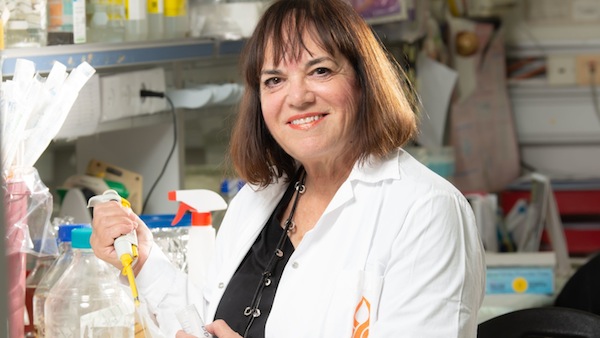
Prof. Etta Livneh (photo by Shay Shmueli/BGU)

Most everyone on the planet has now heard of mRNA, thanks to the vaccines against COVID-19 from Pfizer and Moderna, which are based on messenger RNA. But, before mRNA was used to address COVID, research was conducted into how it could fight cancer. Now, researchers at Ben-Gurion University of the Negev have discovered a key connection between mRNA, peptide proteins and tumour progression.

Messenger RNA codes for different proteins, each with a unique function. There are both “long” and “short” peptides. Until now, scientists were not sure if short peptides had any biological function.

Prof. Etta Livneh of BGU’s Shraga Segal Department of Immunology, Microbiology and Genetics has shown that single short peptides in fact have a very important role – as a kinase inhibitor that can slow tumour growth and invasion, cancer cell survival and metastasis.

Proteins (and protein kinases in particular) propagate signals that carry instructions to the cells and dictate cell fate. There are more than 500 different kinases in the human body.

With cancer, a kinase erroneously tells the cells to divide and reproduce in a rapid and uncontrollable manner. But the flipside is also true: if a kinase can be inhibited, it should block the proliferation of cancer cells.

And that’s “just the tip of the iceberg,” said Livneh, whose discovery has been a decade in the making. “Now that we know that at least some peptides have a biological function, we can begin to discover the roles of many more.”

Kinase inhibitors are already one of the hottest areas of cancer research, in some cases replacing chemotherapy. Livneh’s research will allow scientists to better understand how to control this cancer-fighting technology.

The research was supported by a grant from the Israel Science Foundation and published in PNAS (Proceedings of the National Academy of Sciences of the United States of America).

Israel21c is a nonprofit educational foundation with a mission to focus media and public attention on the 21st-century Israel that exists beyond the conflict. For more, or to donate, visit israel21c.org.

Format ImagePosted on January 14, 2022January 13, 2022Author Brian Blum ISRAEL21CCategories IsraelTags Ben-Gurion University, BGU, cancer, Etta Livneh, health, kinase, mRNA, research, science
The effects of isolation

The effects of isolation

How technology can connect people and reduce social isolation was the topic of the Jewish Seniors Alliance’s fall symposium. (photo from pixnio.com)

At the fall symposium of the Jewish Seniors Alliance, which took place on Zoom Nov. 21, attendees heard from experts on the topic Triumphs and Trials Using Technology: Social Isolation Among Older Adults.

Dr. Kristen Haase, assistant professor of applied science at the University of British Columbia School of Nursing, and Dr. Megan O’Connell, professor of geriatric psychology at the University of Saskatchewan, were welcomed by Gyda Chud, co-president of Jewish Seniors Alliance. Chud pointed out that this session related to the key pillars of JSA:

  1. Outreach: to seniors in the community.
  2. Education: we can learn from the professors’ study results.
  3. Peer support: JSA has projects that help combat loneliness and isolation.

Of their study on social isolation among older adults during the pandemic, Haase said they wanted to explore how the inability to interact in person during the pandemic has impacted seniors. She mentioned that two scientific publications – The Lancet and The Journal of the American Medical Association – had commented on the detrimental effect of isolation on seniors. Haase and O’Connell wanted to look at the effects and what could be done to alleviate them.

There is empirical evidence that social isolation impacts mental, physical and cognitive health. Since technology can facilitate social connection, the idea was to train older adults to use these facilities to lessen their isolation. Use of both the telephone and Zoom was embraced by many older adults, and even those people with some cognitive impairment could be trained to use Zoom and other such tools.

Haase and O’Connell reached out to groups and individuals in British Columbia and Saskatchewan for participants. Four hundred individuals and 41 seniors groups were involved in the study, including JSA. Two of the questions were: How did they change their programs? and How did they maintain social connections?

Some groups opted to meet outdoors. The advent of a vaccine helped alleviate some fears. One of the findings was that introverted people, as well as those who lived in rural areas and those who had family nearby, fared better than more extroverted people.

Many community groups rose to the challenge and introduced new technology to their members. In addition to providing training, they also kept in touch with frail members. In rural areas, where broadband access was problematic, groups had to make major use of the telephone. A 1-800 line was purchased to facilitate contact in these areas. These types of disparities in access were highlighted by the pandemic.

A few community groups closed during COVID, but many rose to the occasion by staying in regular contact, providing iPads to clients and helping them learn how to use them.

Haase and O’Connell then turned to the audience for any questions or other information that would help with their research.

One question was how do we find the truly isolated, as we usually rely on people to self-identify if they are in need. The poser of that question, Larry Shapiro, pointed out that, in the United Kingdom, they use the postal service to check on isolated individuals.

Another issue raised was whether groups should continue with a hybrid model of services – this would involve in-person events plus a Zoom possibility. Hybrid models make programming more accessible for those who are ill or who have a disability that impedes mobility. As well, many older adults are still fearful and need help to re-enter society. Funding would be needed to facilitate such programs.

Tammi Belfer thanked the speakers for their research, which was helping improve the lives of older adults.

Shanie Levin is program coordinator for Jewish Seniors Alliance and on the editorial board of Senior Line magazine.

Format ImagePosted on December 10, 2021December 8, 2021Author Shanie LevinCategories LocalTags health, healthcare, isolation, Jewish Seniors Alliance, JSA, Kristen Haase, Megan O’Connell, research, seniors, UBC, University of British Columbia, University of Saskatchewan
Seven summer camp benefits

Seven summer camp benefits

(photo from flickr)

There’s a single destination that gets kids outside having fun, experts say, while teaching them lifelong skills. It’s called camp.

The benefits of camp are plenty, from life lessons beyond the classroom and the value of playtime to appreciating nature and building confidence and leadership skills.

“The major changes in [campers’] growth speaks tremendously of the summer camp experience,” said Troy Glover, the director of the University of Waterloo’s Healthy Communities Research Network.

Glover spearheaded the Canadian Summer Camp Research Project, a nationwide study on the effects of camp on kids. The results demonstrated that for “bubble-wrapped” youth who have been over-programmed and overprotected, camp provides a safe environment to freely learn, grow and develop their capabilities. Summer camp, according to the study, fosters emotional intelligence (or EQ), self-confidence, independence, healthy living, environmental awareness, learning, leadership and other skills that prove beneficial long into adulthood.

The core benefits of camp include building friendships and social skills; developing resiliency and confidence; becoming and staying physical; overcoming nature deficit disorder; learning the values of leadership; continuing education in the summer; and carving time for “active play.”

 Friendships & social skills

It may seem scary at first to enter a whole new social world at camp. However, camp offers a crash course on meeting new people – helping children build social skills, explore their independence and improve their self-esteem, said Stephen Fine, research chair for the Ontario Camps Association. “Teamwork, cooperation and negotiation are inherent to the camp experience,” Fine explained. “Kids’ confidence levels and their ability to be in social situations increase.”

At camp, children boost their self-esteem and develop risk-taking and conflict-resolution skills as they learn to make their own decisions without their parents’ help.

Camp provides children with a “blank slate,” allowing them to try on different behaviours and identities. And the relatively short duration of a camp session decreases the cost of making mistakes.

One of the Canadian Summer Camp Research Project’s most significant findings was in the area of emotional intelligence, often referred to as EQ (emotional quotient). With EQ, which involves recognizing, understanding and managing emotions, children learn how to work, play, relate, get along, empathize and connect with others.

“It’s not just about IQ in children,” Glover said. “Research supports how EQ is more important in terms of future success…. This is an essential component of the maturation process and a skill that camp is successfully developing.”

Resiliency & confidence

Saturated with 24-hour news highlighting crimes in their communities, many parents today are overprotective of their children, “bubble-wrapping” them in order to keep them safe and sheltered. While Glover said it’s safer now, statistically, than it was when he was a child, parents are not as willing to let their kids out of their sight.

At camp, children are encouraged to go outside their comfort zone through activities such as high ropes courses, dramatic and musical performances, or wilderness camping. By allowing children to take risks and face challenges, camp helps children build their independence, resiliency, and self-esteem in a safe, supervised and supportive environment, the study found.

These invaluable life skills often translate into improvements at home and at school, said Mike Pearse, director of Camp Tawingo, a traditional overnight camp in Muskoka, Ont.

Pearse said the camp experience can be divided into the hard skills – for example, learning how to paddle a canoe, tie a knot, identify an edible plant and play a team sport – and accompanying soft skills, such as perseverance, creativity, responsibility and courage.

“At camp, every child has an opportunity to succeed,” he said.

This translates into increased self-confidence and, in many cases, an improved school experience. “I’ve had parents come to me and say, ‘My child is doing so much better in math class this year because of the confidence boost he got from camp,’” Pearse said.

Becoming & staying physical

With video games, Facebook and smartphones all vying for a young person’s attention, the national epidemic of obesity and inactivity won’t be easy to overcome. One Statistics Canada study found that only seven percent of youth aged 6 to 19 got the recommended hour a day of exercise they need.

Enter summer camp, where physical activity is well disguised in the form of fun and games, allowing youth to adopt a healthy lifestyle, often without even realizing it.

“Our study found that campers’ attitudes toward physical activity really improved toward the end of the camping session,” Glover said. “When given a choice, these campers will now choose physical activity because they realize it makes them feel good and contributes to their well-being.”

Along with banning the use of electronics, many camps provide a daily routine that involves waking up early, getting lots of physical activity, eating regular meals and spending extended periods of time outdoors.

“At camp, you’re always on your feet, always on the move, even if you’re just walking to a meal,” Glover said. “So, it’s not about forcing kids to spend 20 minutes on a treadmill, but rather easing them into an active lifestyle that includes lots of walking, engaging in team sports and playing outside with other kids.”

Nature deficit disorder

A bond with nature is sorely missing in the lives of many children today unlike a generation ago, Richard Louv writes in his book Last Child in the Woods: Saving Our Children from Nature-Deficit Disorder. It’s a world where kids may be all too aware of environmental problems, yet rarely venture out to experience the natural world, he writes.

“Camps have their own pressures, but the healing quality of nature is always there, just beyond the screen door,” Louv said.

At camp, kids are given the opportunity to see what they’re missing, and form lifelong bonds and connections with the natural world they may have never experienced before. “Even camps in the city usually have an outdoor dimension to them,” said Glover.

“Children need nature for the healthy development of their senses and, therefore, for learning and creativity,” Louv added.

Values of leadership

A leader isn’t always the loudest person in a group, or the most active. Many leaders share a range of skills and qualities that help him or her take charge: confidence, creativity in their decision-making and an understanding of teamwork, to name a few. It takes practise to become a good leader, too.

That’s where camp comes in, said Moira MacDougall, who heads teen and young adult strategies for the YMCA of Greater Toronto, a charity providing community support programs. Camp helps gradually build leadership skills, MacDougall said.

“You’re often having to rely on your teammates or cabinmates to complete an activity,” said MacDougall. “That builds in-group bonding and, in that process, what you hope the young person’s learning is either to have some voice within that group … or how to be persuasive.”

According to the Canadian Summer Camp Research Project, most campers demonstrated an increase in emotional intelligence and self-confidence, both characteristics attributed to good leaders.

As campers enter their teenage years, there are more opportunities to obtain explicit leadership skills. Most camps offer an LIT (leader-in-training) or CIT (counselor-in-training) program that walks young people through the skills they need to plan activities and programs, care for younger campers and communicate effectively.

Whether it’s by cleaning their cabins without being asked, helping younger campers find their way to the dining hall, or contributing their talents to a play or talent show, youth of all ages learn to take initiative at camp.

Learning how to take the lead essentially teaches youth how to be good citizens. “They learn that we all have a role to play to contribute to a better society, and nothing happens if you sit back and wait for someone else to act,” said Glover.

Continuing education

“It’s not only cognitive learning, it’s emotional learning,” said Tom Potter, associate professor at Lakehead University in Thunder Bay, Ont. Potter has been involved in outdoor adventure education for more than 30 years.

Camp is the kind of place where children can learn canoeing, archery, life skills such as teamwork, and apply the lessons they learned during the school year in many enjoyable activities. Geocaching lessons offered at some camps, for example, teach kids scientific and math skills.

“They’re getting instant and immediate feedback, so if they do something well, they’ll get feedback; if they’re sailing a sailboat and it’s going in the right direction, they’ll get feedback on that,” Potter said. “But if the boat turns upside down, that’s OK … it’s all part of it.”

Time for “active play”

Many children today simply don’t get enough of unstructured playtime. “If you look at time in school, time at home, time watching TV, those things have either stayed consistent or gone up,” said Michelle Brownrigg, chief executive of Active Healthy Kids Canada. “But active playtime has decreased.”

Canadian children are reportedly spending an average of four to six hours a day with TVs, computers and cellphones.

Camp gives children the playtime they need while encouraging creativity and social engagement. Play not only offers children the tools to entertain themselves, it also builds their imagination.

“Kids learn to set their own boundaries, to develop in an environment that’s not necessarily focused on a competitive end, to interact with one another, to determine how to win and lose, and to trade roles and be involved in an active way with their peers,” she said.

This article is a shortened version of the original, which is ourkids.net/camp/benefits-of-summer-camp.php.

Format ImagePosted on December 10, 2021December 8, 2021Author ourkids.netCategories NationalTags Canadian Summer Camp Research Project, health, kids, research, summer camp, Troy Glover, University of Waterloo, youth
CABGU gala now sold out

CABGU gala now sold out

Mitchell Oelbaum, national president of Canadian Associates of Ben-Gurion University. (photo from in.bgu.ac.il)

Raising nearly $800,000 at a not-for-profit gala is no small feat, nor is having more than 1,200 people register for an event. When you add a pandemic to the mix and make it a virtual event, one might assume that it would be impossible to come close! But that’s precisely what the Canadian Associates of Ben-Gurion University (CABGU) did in just seven weeks.

“We are a lean but unbelievably keen staff at CABGU, with an incredibly generous and committed group of lay leaders,” said Mark Mendelson, CABGU’s chief executive officer. “Achievements like this make me so proud!”

Mendelson knew that every detail of the event was accounted for, beginning with the star attraction. Israeli actress Shira Haas, star of the popular Netflix series Shtisel and Unorthodox, recently nominated for both a Golden Globe and an Emmy, is the featured speaker. Fresh off her recent press tour for the newly released movie Asia, she will be joining the event live from Israel. Haas will be taking questions from Canada’s Sen. Linda Frum, who will be moderating the conversation along with Prof. Daniel Chamovitz, BGU’s president.

CABGU’s An “Unorthodox” National Virtual Gala for Brain Research at BGU raises money for the Canada Fund to Advance Brain Research. “The fund will go a long way in assisting researchers at the university with conducting groundbreaking and out-of-the-box research,” said Mitchell Oelbaum, national president of CABGU.

“CABGU launched the Canada Fund to Advance Brain Research at BGU in April,” added Mendelson. “We know that there is a strong appetite for the subject of brain research because so many of us know at least one person, if not more, who is impacted by neurodegenerative diseases here in Canada.”

Tickets for the July 7 virtual gala are sold out. However, a few sponsorships are still available at bengurion.ca.

– Courtesy Canadian Associates of Ben-Gurion University

Format ImagePosted on June 25, 2021June 25, 2021Author CABGUCategories NationalTags Ben-Gurion University, Canadian Associates of Ben-Gurion University, fundraising, health, Mark Mendelson, Mitchell Oelbaum, research, science gala

Posts pagination

Previous page Page 1 Page 2
Proudly powered by WordPress