A voice that’s missed

Four years have passed since the loss of Rabbi Lord Jonathan Sacks (1948-2020), and more than one year since the outbreak of the Iron Swords conflict. In these turbulent times, we can only imagine the wisdom that Sacks – who was a global religious leader, philosopher, award-winning author and respected moral voice – might have shared, the guidance he would have offered. His voice is profoundly missed, especially now, when his words could have offered clarity and hope. This longing to “hear” his perspective propelled me on a journey.
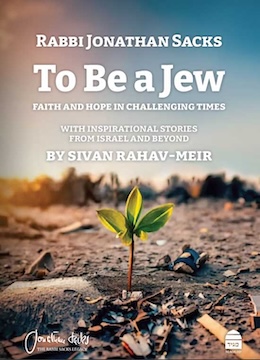
image - To Be a Jew book coverTo Be a Jew is a booklet that was born from a deep desire to find meaning in the current historic moment. Distributed freely across the globe, with more than a quarter of a million copies printed in Hebrew and English – and soon to be available in additional languages – it shares the timeless lessons of Rabbi Sacks with all who seek them. Below is a small selection of his enduring wisdom. For the full booklet, available as a free download, visit sivanrahavmeir.com/to-be-a-Jew. 

Growth from crisis

Every tragedy in Jewish history was followed by a new wave of creativity. The destruction of the First Temple led to the renewal of the Torah in the life of the nation, exemplified by the work of Ezra and Nehemiah. The destruction of the Second Temple led to the great works of the oral tradition, Midrash, Mishnah and the two Talmuds. The massacres of Jewish communities in northern Europe during the First Crusade led to the emergence of Hassidei Ashkenaz, the German-Jewish pietists. 

The medieval encounter with Christianity led to a renewal of Bible commentary. The meeting with Islam inspired a renaissance of Jewish philosophy. The Spanish Expulsion was followed by the mystical revival in Safed in the 16th century. The greatest catastrophe of all led to the greatest rebirth: a mere three years after standing eyeball to eyeball with the angel of death at Auschwitz, Bergen-Belsen and Treblinka, the Jewish people responded by their greatest collective affirmation of life in 2,000 years, with the proclamation of the state of Israel.… Jews [do not] give way to defeat or despair. They are the people of hope.

The Chinese ideogram for “crisis” also means “opportunity.” Perhaps that is why Chinese civilization has survived for so long. Hebrew, however, is more hopeful still. The word for crisis, mashber, also means a “childbirth chair.” The Jewish reflex is to see difficult times as birth pangs. Something new is being born.

(Sacks, Future Tense, pp. 54-55)

Response to terrorism

The first prime minister of Israel, David Ben-Gurion, said, “In Israel, to be a realist you have to believe in miracles.” For Jews, faith is as necessary as life itself. Without it, the Jewish people would simply not have survived. 

In 2001, after the Oslo peace process had broken down and the suicide bombings had begun, I told the then-Israeli ambassador: “In the past, Israel’s enemies have tried to put it in a military crisis and failed. Then they tried to put it in a political crisis and failed. Now they are about to put it in a spiritual crisis, and they may succeed.” 

That, ultimately, is what 21st-century terror is about, and Israel has been its most consistent target. The suicide bombings brought war from the battlefront to the buses of Haifa, the shops of Tel Aviv and the restaurants of Jerusalem. There were times when Jewish parents sent their children on the school bus not knowing whether they would see them alive again. The missiles of Hezbollah and Hamas placed two-thirds of Israel – the north and south – within their range. As I write, there are 7-year-old children in Sderot who have only known safety in a bomb shelter. The delegitimization of Israel among some media, academic and NGO circles has left its people feeling abandoned and alone. The aim is to intimidate and create despair, and it needs immense resources of faith and courage not to be affected. That is the spiritual crisis.

(Sacks, Future Tense, pp. 18-19)

Where is man?

When I first stood at Auschwitz-Birkenau, the question that haunted me was not, “Where was God?” God was in the command, “You shall not murder.” God was in the words, “You shall not oppress the stranger.” God was saying to humanity, “Your brother’s blood is crying to Me from the ground.” God did not stop the first humans eating forbidden fruit. He did not stop Cain committing murder. He did not stop the Egyptians enslaving the Israelites. God does not save us from ourselves. That, according to the Talmud, is why creating man was such a risk that the angels advised against it. The question that haunts me after the Holocaust, as it does today in this new age of chaos, is “Where is man?” 

(Sacks, Judaism’s Life-Changing Ideas, p. 7)

Everything has purpose

Life is meaningful. We are not mere accidents of matter, generated by a universe that came into being for no reason and will one day, for no reason, cease to be. We are here because a loving God brought the universe, and life, and us, into existence – a God who knows our fears, hears our prayers, believes in us more than we believe in ourselves, who forgives us when we fail, lifts us when we fall and gives us the strength to overcome despair. The historian Paul Johnson once wrote: “No people has ever insisted more firmly than the Jews that history has a purpose and humanity a destiny.” 

(Sacks, Ceremony & Celebration, p. 22)

Everyone has a mission

God enters our lives as a call from the future. It is as if we hear him beckoning to us from the far horizon of time, urging us to take a journey and undertake a task that, in ways we cannot fully understand, we were created for. That is the meaning of the word vocation, literally “a calling,” a mission, a task to which we are summoned.

We are not here by accident. We are here because God wanted us to be, and because there is a task we were meant to fulfil. Discovering what that is, is not easy, and often takes many years and false starts.

(Sacks, Studies in Spirituality, p. 24) 

Sivan Rahav-Meir is a primetime news anchor who lives in Jerusalem. She has a weekly podcast on Tablet, called Sivan Says, and has published several books in English. Her “Daily Thought” on social media has hundreds of thousands of followers and is translated into 17 languages.

Security through peace

Noa in conversation with Rabbi Dan Moskovitz at Temple Sholom Oct. 30. (screenshot)

Israeli singer/songwriter and peace activist Achinoam Nini (Noa) was in British Columbia recently to do a Vipassana meditation. While here, she stopped at Temple Sholom Oct. 30 for a conversation with Rabbi Dan Moskovitz (which is on YouTube) and at Congregation Emanu-El Nov. 4 for a talk with Rabbi Harry Brechner.

Noa was born in Israel in 1969. She’s the fifth generation of her family in Israel, their presence dating back to the mid-1800s. They immigrated from Yemen.

“They came because they were persecuted at the time and they came to the only place they knew, that their heart drew them to, and that was Jerusalem and the Kinneret,” she said. “That was the two places. They walked across the desert and took boats and were smuggled by Bedouins. It’s a very dramatic story, how the family made it to the Holy Land.”

Noa’s father got a scholarship to study at the University of Rochester, so she spent the first couple of years of her life in Rochester, NY.

“When I went into first grade, my family moved to the Bronx, NY. My dad was now doing his PhD in Columbia University. And my parents decided to send my brother and I to yeshivah…. I was the only dark-skinned kid in the school, the only Israeli kid in the school, the only family that didn’t live in something that looked like a mansion. 

“My way of dealing was in two ways,” said Noa. “First, fortunately, I was a gifted student, so I had a scholarship to school that helped my parents…. And music. I started writing songs at a very young age…. I was interested in physics and mathematics, I loved history. I wanted to go to Harvard and do a PhD in physics and history, but that didn’t happen, obviously. Music … chose me.”

At age 17, on a summer vacation in Israel, Noa met a soldier on leave.

“I went back home,” she said. “I told my parents, I’m making aliyah. I said, you raised me to be a Zionist. We love Israel. I want to live in Israel.”

To this day, Noa is married to that man (Asher Barak, now a medical specialist and entrepreneur), and they have three children, two of whom are in the Israel Defence Forces, one in service, the other in the reserves.

Noa did her army service in a military entertainment unit, then started her music career. While at the Rimon School of Music, she met Gil Dor, who was one of her teachers. “He’s an extraordinary and amazing, brilliant musician and we’ve been working together now for 34 years,” said Noa.

They caught the attention of guitarist Pat Metheny, who produced Noa’s first album and brought it to David Geffen, who then signed Noa at Geffen Records.

“I started performing abroad and foreign journalists started asking me my opinion about the Palestinian-Israeli conflict and I’m like, I’m an artist, I don’t speak about things like that, don’t ask me questions like that.”

But she didn’t feel good about not responding. “And so, I started learning more and reading more and I became more and more depressed,” she said. “And then came Yitzchak Rabin and he started talking about peace. And I was like, yes, this is great!”

A believer in the Oslo Accords, Noa was the only leading Israeli musician to agree to perform at the peace rally where Rabin was murdered.

“I saw Rabin and I hugged him … and I walked down the stairs. Ten minutes later, he walked down the stairs and was killed…. I remember the rush and the cry and everybody running, and panic, and myself running and pushing to see what had happened,” Noa shared. “It was a trauma. I haven’t recovered, absolutely not. I haven’t recovered – and neither has Israel.”

At that moment, said Noa, “I said, OK, well, if this guy just paid with his life for our future, the future of Israel, the future of my children, then I, too, can do something. And then, maybe, I’ll pay a price and that’ll be OK because it’s the right thing to do. And that’s when I started becoming an activist for peace.”

There were two other life-changing events for Noa in the 1990s. She was invited to sing at the Vatican for Pope John Paul II and she was asked to write the lyrics and sing the theme song of the film Life is Beautiful (La Vita e Bella), which won an Oscar.

Among her many achievements, Noa represented Israel in the Eurovision Song Contest in 2009. She did so with Palestinian-Israeli singer/songwriter Mira Awad. “I wrote a song called ‘There Must Be Another Way,’ and we sang it in English, Hebrew and Arabic,” said Noa. “It made a lot of waves around the world and I have to say that, until today, it is taught in schools around the world.”

She related a story about that experience. 

“Mira, her mother is from Bulgaria and her father is Palestinian. She’s quite fair-skinned, with green eyes. My family is from Yemen…. I’m an Arabic Jew. And so, when we sat in front of media, I remember there was one day where they had BBC Iran, they had Al Jazeera, they had all kinds of media…. All the Arab media immediately came up to me in Arabic and to her in English, [assuming] she’s the Jew. And so, I told them, you see, that is the role of art – our role is to shake you up a little. You think you understand everything. Maybe you don’t. Maybe there’s another way of looking at it…. You can’t think that you understand everything about everything. No, it’s not black and white. And that’s, of course, very relevant to where we are today.”

That said, there has been progress towards peace, she contended.

“There’s a huge polemic about whether there should be or there shouldn’t be a Palestinian state,” she admitted, “but there is a conversation being had about it…. In the past, it was not even talked about at all. It was underground.”

She also pointed to the many organizations that work with and/or are staffed by Arabs and Jews. Noa is on the boards of the Arava Institute and the Umm el-Fahem Museum of Art, for example. She’s also involved with the Parents Circle – Families Forum.

“The world in general is not a great place for people who believe in peace right now,” she acknowledged. “I think that we are under attack by forces, if you like, forces of darkness from everywhere. But, like I always say, that’s not reason enough not to continue raising the voice…. I believe in peace. I don’t see any other way to live. Has the peace camp changed? It has transformed in many ways.”

She gave the example of a WhatsApp group called Voices of Solidarity. She said a lot of young people are doing things – “it’s either art, it’s underground theatre, it’s alternative music.” She mentioned the organization Standing Together.

“Yitzhak Rabin, when he started talking to [Yasser] Arafat, the terrorist, everyone was like, what, no way, forget it. Seventy-five percent of the Israeli public were against any kind of interaction with Palestinians but then he came [along] with his charisma and his leadership and his integrity and his honesty and his track record, and he started saying, we’re going to be doing this and this is the right thing and this is for Israel’s future, for our children, we’ve made enough wars…. And then, it was like a month later, the entire public opinion, it shifted towards being positive about the chances for peace.”

That could happen again. A change in circumstances, a particular leader’s personality, the right timing, she said.

For Noa, Israel is in a worse situation now than immediately after Oct. 7.

“The hostage situation … is a nightmare beyond words. I go every week, sometimes I go twice a week, three times a week, to stand with them [the families and others calling for the hostages to be brought home]…. They’re desperate. I don’t know how they are still sane…. And the fact that that their children are still there [in Gaza], that they haven’t been brought back, that not everything has been done to bring them back, is not anything that Israel will ever recover from.”

She is appalled that the government is still in power.

“Not only did they not resign,” she said, “they then turned around to blame everybody that saved Israel, including Brothers and Sisters in Arms, including all the organizations that volunteered, [and] to blame the hostage families for daring to want their children back…. It’s beyond words.”

She advised diaspora Jews to distance themselves from the government: “separate the Israeli government from the Israeli people, it’s not the same thing,” she said.

“If you are going to look at a lot of consistent polls, you’ll see that people – even people that voted for the present government – feel betrayed by what the government has eventually done. They don’t understand how the government is not taking responsibility. They don’t understand how the dictatorship coup keeps moving forward when we’re in such a stressful situation. They don’t understand how our relationship with the entire world has come to a complete collapse under the auspices of this government. The Israeli government right now is the enemy of the Israeli people. And you can say that…. We support the Israeli people, we support the country of Israel, but we do not support the government of Israel.”

She warned of the dangers extremists pose in any country, and asked people to “strengthen the moderates in civil society in any way you can.”

She added, “Throughout history, countries have fallen into terrible situations of leadership. Italy, my favourite country in the world after Israel, became a fascist country at some point, with Mussolini, and there was Franco [in Spain] and there were other people, other countries that came into [similar] situations. Does that delegitimize the country? No. It means that a certain combination of events led to the fact that a country was now held hostage by leadership that did not work in her benefit. That is what is happening right now to Israel, and we have to work through it together with the help of our friends, and you are our friends.”

Noa doesn’t just fault the Israeli government. “In my opinion,” she said, “everybody in the region is to blame for the horrible situation we’re in. Nobody made the efforts. The leadership did not make efforts to make peace, not Israeli leadership, definitely not Palestinian leadership.”

She believes Israel had to defend itself after Oct. 7.

“What were we supposed to do? Sit around [twiddling our thumbs] while our kids were being massacred and our women were being raped? Yes, Israel needed to go in. The war was legitimate. But – it was legitimate to the extent that there was a plan. There needs to be a plan. Say, we have to fight, but now, let’s see, we’ve attacked, we’ve retaliated, we’ve done this, we’ve shown that, we’re there for our people. But we have to bring the hostages back…. Second, we have to see, who are our allies? We’re a small country, we’re nine million people – whoa, we want to attack the entire world? No. Who are our allies? Who are our friends? How can we start progressing towards a solution to this? Not endless warfare. Who are the people that want to talk to us? The UAE, the Saudis, the Americans, the Europeans, let’s reach out to them. This is what the Israeli government should have done immediately.”

While acknowledging that Israel needs a strong army, Noa said, “at the same time, parallel institutions need to come in and do their job, the diplomatic job, to reach out to our friends … and make sure that Israel is secure. Our security will come with peace, only with peace, and we have to look at this as an opportunity to make peace. And are there partners? There are.”

She said, “As a woman who lives in Israel, loves Israel and sends her kids to the army…. We need to be able to look forward to a time when we will not be sending our children to the army. Is it possible? Yes.” 

Israel’s war is unique

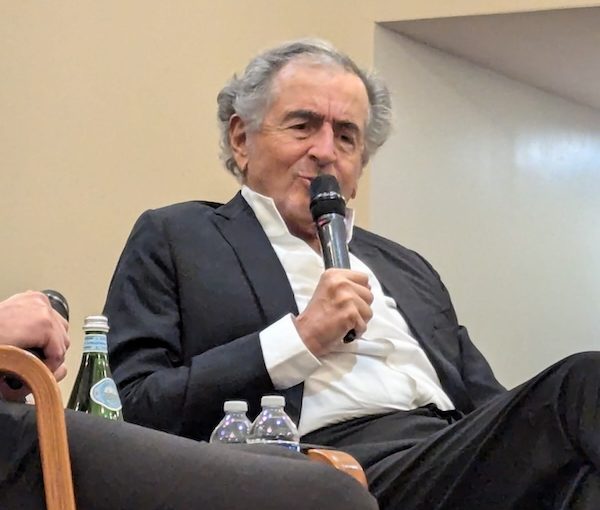
French writer, filmmaker and human rights activist Bernard-Henri Lévy was in Vancouver at Schara Tzedeck Synagogue Nov. 6, in conversation with the National Post’s Tristin Hopper. (photo by Pat Johnson)

Bernard-Henri Lévy, a public intellectual so well-known in France that he is generally referred to simply as BHL, has thrown his energies into an “emergency” effort to defend Israel in a moment of history when the world has turned against the Jewish state.

Lévy was in Vancouver at Schara Tzedeck Synagogue Nov. 6, in conversation with Tristin Hopper, a writer for the National Post.

Throughout his career as a reporter, commentator, filmmaker and activist, Lévy has written and spoken extensively about humanitarian crises in Bangladesh, Darfur, Rwanda, Bosnia and many other flashpoints. Now, he said, “I am pleading with all my energy for Israel and for the defence of Israel.”

His latest book – his 47th or 48th, he thinks – is Israel Alone.

Israel’s war is unique, he said, because it involves enemies who are not driven by ideas but by the nihilistic aim of destroying a nation and a people. The differentiation between antisemitism and anti-Zionism is irrelevant to Hamas and Hezbollah, said Lévy, noting that many of those killed on Oct. 7 were among Israel’s leading peace activists.

“Those crimes have nothing to do with seeking a political solution to the suffering of Palestinians,” he said. “They don’t care about peace. They don’t care about a two-state solution. They don’t care about the fate of the old people. They only care about killing Jews. [The victims] could have been right-wing Jews. It happens that they were left-wing Jews, but they just don’t care. For Hamas, there is not left-wing or right-wing Jews. There is just Jews who deserve to be hated, tortured and, if possible, killed.”

Lévy urges the world not to be misled into thinking that Hamas and Hezbollah are national liberation movements. “They are the proxies, the puppets, of a very powerful country, which is Iran,” he said.

Lévy is optimistic because Israel is winning the war.

“What makes me a little less optimistic, and even pessimistic, what sometimes discourages me, is the reaction of the world,” he said. “Instead of saying bravo to Israel, instead of saying thank you to Israel, instead of standing at the side of Israel, who is waging an existential war for [itself] but also a useful war for the rest of the world – instead of that, the rest of the world, sometimes the allies of Israel, mumble, object, groan, accuse and ask, demand, beg, require from Israel ceasefire, compromise, negotiation.

“When you think about it, I don’t see any precedent of a just war, a fair war, which is treated by the allies of the country that is waging it, with such strange behaviour,” said Lévy. “It is unique.”

The West is responding like cowards to the threat of Iranian-backed Islamist terror, he argued, which has formed an alliance with Vladimir Putin’s Russian regime. Part of this refusal to stand with the victims is an ingrained tendency in Western civilization, he said.

“There are a lot of people in the West who love Jews when they are victims, who love to support them and to shed tears on their face when they are beaten, wounded and sometimes killed,” he said, “but who don’t like to see them proud and strong and behaving with heads up.”

On the positive side, Lévy believes, most people in Europe and North America are not irreversibly antisemitic or anti-Israel but are influenced by biased commentary. His new book is a tool for these people and those who engage with them, he said. “Those [people] can be addressed with reasonable arguments, with historical facts, and … can be not only addressed but convinced, I’m sure of that. That is the aim of this book.”

Canada has been a safe haven for generations of Jews, he said. But now, Canadian Jews hear fellow citizens calling for their destruction.

“What is the future of the Jewish communities in France and in Canada?” he asked. “I will tell you one thing. I know very few Jews who do not have, somewhere in the back of their mind, the precise or vague or very vague idea that they could go one day to Israel. This is the state of Jewry since 1948. To be a Jew means to be a good Canadian citizen, a good French citizen, but to have somewhere, even remotely, in the mind, the idea that Israel could be an option.”

The global condemnation of Israel is a reincarnation of a long-familiar trend, Lévy said. “The new argument of antisemitism, the new form, the new phase, the new name of the virus is anti-Zionism,” he said.

The best and “only efficient way to be antisemitic today” is to be anti-Zionist, he argued. Blaming Jews for deicide or some of the other historical justifications for antisemitism is no longer effective, he said. “If you say that today, honestly, you will not meet with great success. If one wants to hate with efficiency the Jews, there is only one way left.”

Israel has few supporters among non-Jews, he said, even among ostensible allies, whose support he described as often coming with conditions.

Lévy called the former and future president of the United States, Donald Trump, “a true ally of Israel, for sure, no doubt on that.” But he also reminded the audience of an incident in the election campaign, during which Trump warned a Jewish audience that he would blame them for his loss if he were defeated.

“And if you are responsible for my defeat, within two years, Israel will disappear,” Lévy paraphrased Trump. “It was a slip of the tongue probably. [But it meant that, in Trump’s mind], the Jews deserve to be protected, but conditionally, if they supported [Trump], if they were good guys and good ladies, if they gave him victory.”

Schara Tzedeck’s Rabbi Andrew Rosenblatt welcomed the audience and acknowledged members of the Ukrainian, French and other communities in attendance. He also credited Robert Krell and Alain Guez for Lévy’s visit to Vancouver. 

Update on taskforce

Since Oct. 7, 2023, many members of the Jewish community have experienced antisemitism in some form or another. Jewish Federation of Greater Vancouver and the Centre for Israel and Jewish Affairs have been addressing these incidents, as well as progressing on a strategy to combat it.

A taskforce on antisemitism was appointed last November. Phase 1 was an emergency response in the months directly after Hamas’s attack on Israel. Phase 2, well underway, is about protecting the local community, strengthening relationships with allies, expanding education and raising awareness. This second phase includes an examination of how antisemitism is preventing community members from thriving, and research on how other communities have responded to similar challenges. It seeks to answer the questions, what can we learn from others and what are the best practices for combating antisemitism?

The taskforce is composed of volunteer professionals with different subject matter expertise from across the Jewish community. Between now and April 2025, they will examine manifestations of antisemitism in various sectors and how community members are responding to it. In April, they will deliver findings to the Federation board, with a formal presentation scheduled for the annual general meeting in June. The goal is to develop insights that will ensure the Jewish community can continue to thrive.

“We’re looking at different aspects of community life, including schools for children K-12, Hillel and campus life, the unions and the experiences of new Israelis coming to Vancouver,” said Mijal Ben Dori, vice-president, community planning, partnerships and innovation at Federation. “For example, new-to-Vancouver Israelis are having challenges finding jobs because they have to answer questions about whether they’ve served in the IDF and if they were in Israel after Oct. 7. Based on their answers to these questions, fewer Israelis are passing through the human resource departments of firms in BC.” 

Emet Davis, director of Community Organizing Against Antisemitism, at Federation, said the taskforce has identified key areas that are particularly egregious “In the K-12 school system, school boards and teachers unions are engaged in rewriting history or the erasure of the Jewish experience in curriculum and lesson planning,” said Davis. “At post-secondary institutions across BC, antisemitic tactics this year have been more vitriolic and widespread, posing safety threats to our Jewish students. These are areas where we really have to focus our attention.” 

The arts community is another concerning sector. “Groups like the BC Arts Council and Canada Council for the Arts are using DEI criteria to issue grants, which excludes Jews,” Davis said. “That’s not the only area where Jews are being excluded based on DEI criteria.”

This three-to-five year phase of Community Organizing Against Antisemitism will require a budget of $10 million, for staffing, fight-back advertising and a legal resiliency fund. The hope is that funding will come from private foundations, the Jewish and broader communities. 

Lauren Kramer, an award-winning writer and editor, lives in Richmond.

How hostages survive

Dr. Ofer Merin, director general of Shaare Zedek Hospital, spoke at the event via video. He was expected to be in Vancouver in person but stayed in Jerusalem due to intelligence that Iran might strike Israel during the time he was scheduled to be away. (Adele Lewin Photography)

A top Mossad psychologist who has interviewed hostages released from captivity in Gaza explained to a Vancouver audience this month the traits that allow some people to survive and overcome unimaginable conditions.

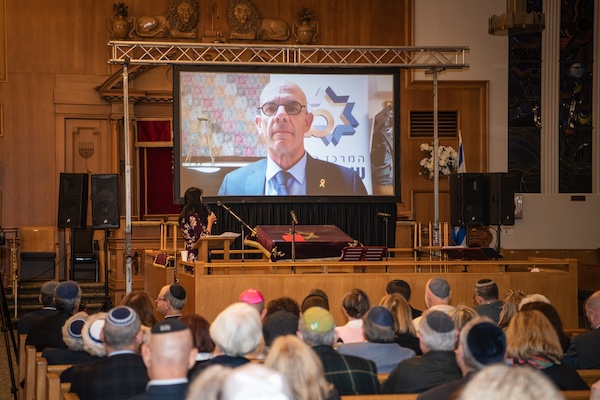
Dr. Glenn Cohen, who made aliyah in 1982 after growing up in New York, served seven years in the Israeli Air Force as a pilot, then 25 years in the Mossad. His reserve duty has been in the hostage negotiation unit. He spoke at Schara Tzedeck Synagogue Nov. 10 as part of a national tour titled Voices of Resilience. The Vancouver event marked the inauguration of the Canadian Shaare Zedek Hospital Foundation Western region. The hospital’s director general, Dr. Ofer Merin, spoke via video from Jerusalem.

The first hostages to be released after Oct. 7 were vital to intelligence-gathering for Israel’s military, but Cohen quickly realized that the psychological well-being of the former hostages presented challenges to obtaining the information that could help locate and free others.

“We have two goals here,” said Cohen. “One is to get lifesaving, critical intelligence about the other hostages. But, at the same time, these people came out of captivity. We have to give them a soft landing and tender loving care.”

Cohen wrote a protocol to receive civilians from situations like these.

When more than 100 hostages were released through an agreement last November, Cohen and his team of 30 psychologists met each one and debriefed them. 

“The first thing we asked them was, who did you see?” Cohen said. “What condition physically, mentally? And,  with this information, we brought a sign of life for some people who had no idea if their loved one was alive or not.”

Some news was good, while other reports confirmed the worst fears of some families.

Cohen has trained soldiers for the potential of being held hostage and he was surprised that, without this sort of training, human instinct told some of the hostages how to respond.

A core trait among those who successfully survive such scenarios, he said, is hopeful certainty that they will be released. Too much optimism, though, can lead to crushing depression when hopes are not met. Those who are certain of imminent release or rescue may succumb to heartbreak and even give up on life as days and weeks tick by, he said.

It is necessary, Cohen said, to balance hope with realistic expectations.

A 16-year-old boy who was among the released hostages remembered the story of Gilad Shalit. The boy told himself: “How long was he in captivity? Five years. I’m in for five years. A day less is a bonus.”

“A 16-year-old kid,” said Cohen. “Wow. What type of resilience is that? He didn’t go through any POW training. He was just a 16-year-old Israeli boy and he’s got that in his DNA.”

Maintaining any sense of control or normalcy is a small victory. Some hostages counted the days and weeks by listening to the muezzin, the Muslim call to prayer, which is different on Fridays. A seven-year-old boy was given three dates to eat each day, and he kept the seeds to measure how many days he had been in captivity. Others made fun of their captors, secretly referring to them by disparaging names.

Generally speaking, Cohen explained, it is psychologically better for a hostage to be held with other captives, even if underground without natural light, than to be held above ground alone.

Also advantageous, Cohen said, is recognizing the captors as human beings.

“There is another person on the other side,” he said. “Even though we call Hamas animals or … monsters or whatever, the point is, they are human beings who can be influenced. When you realize that, that this is an interpersonal situation, that gives you power.”

Cohen shared one story of hostages who told their captors, “Put your gun down, you’re scaring the children,” and they did.

In another instance, a woman with a cardiac condition asked to get some exercise by walking down the tunnel she was held in. She came across two other hostages and asked why they couldn’t be brought together. They were.

“A lot of the hostages actually managed to bond with their captors and because of that bond they survived better,” said Cohen. 

News of such incidents has led to unfortunate events, he said.

“I heard not too long ago that hostages were cursed on the streets of Israel because they talked about their relationship with the hostages and didn’t call them animals,” Cohen said. “I feel like I have a mission now to educate people to realize that if people are speaking like that, as a hostage, it means it’s a healthy survival mechanism and God forbid we be critical of any of them.”

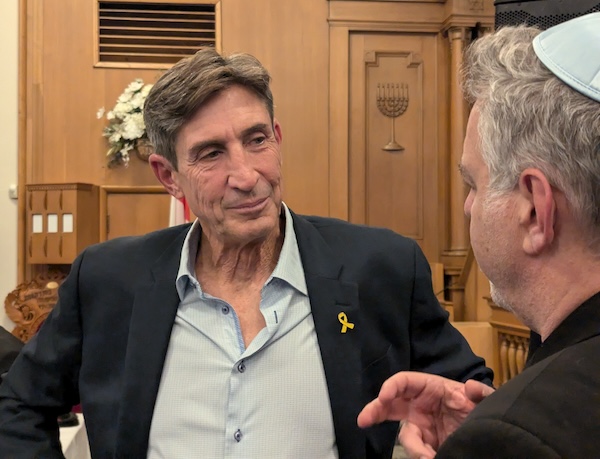
photo - Dr. Glenn Cohen speaks with an audience member at Schara Tzedeck Synagogue Nov. 10. He was in Vancouver as part of a national tour titled Voices of Resilience
Dr. Glenn Cohen speaks with an audience member at Schara Tzedeck Synagogue Nov. 10. He was in Vancouver as part of a national tour titled Voices of Resilience. (photo by Pat Johnson)

Merin, the director general of Shaare Zedek Hospital, was expected to be present in Vancouver but remained in Jerusalem due to intelligence that Iran might strike Israel during the time he was scheduled to be away. Merin also serves as head of the medical intelligence committee involved with the current hostage situation in Gaza.

“The day after the war started, we opened a designated emergency room just to treat the many, many hundreds of patients who came in the first week in need of mental health support,” he said, estimating that tens of thousands of Israelis will be diagnosed with some form of post-traumatic stress disorder in the coming months.

Amid the extreme physical and mental health demands, the hospital has also faced human resources challenges, with hundreds of staff members called up for duty and 15 experiencing the deaths of immediate family members during the war. The anxiety of having family on the frontlines adds to the stress for everyone, said Merin. The multicultural nature of the staff, which roughly mirrors the demographic makeup of Jerusalem, is also a factor. 

“How do we preserve the cohesion between these people?” he asked. “This is a major daily challenge in times of normal emotions among staff people, how to keep this amazing cohesion of people who are working for years, for decades, shoulder to shoulder together. How to keep it during times of war is a major challenge.”

Hinda Silber, national president, and Rafi Yablonsky, national executive director, of the Canadian Shaare Zedek Hospital Foundation, traveled from Toronto for the event, which was co-chaired by Dr. Marla Gordon and Dr. Arthur Dodek. The evening was presented by Canadian Shaare Zedek Hospital Foundation Western region, in partnership with Congregation Schara Tzedeck. The Jewish Medical Association of BC was the educational sponsor, with King David High School and Hillel BC participating in the program. Schara Tzedeck’s Rabbi Andrew Rosenblatt welcomed the audience. 

“Since Oct. 7, the mental health landscape in Israel has been profoundly affected,” said Ilan Pilo, Western region director of the organization. “The nation is navigating an unprecedented surge in psychological distress as individuals and communities cope with the aftermath of trauma and uncertainty.”

Proceeds from the evening will support a new mental health facility. 

A Learning Stones memorial

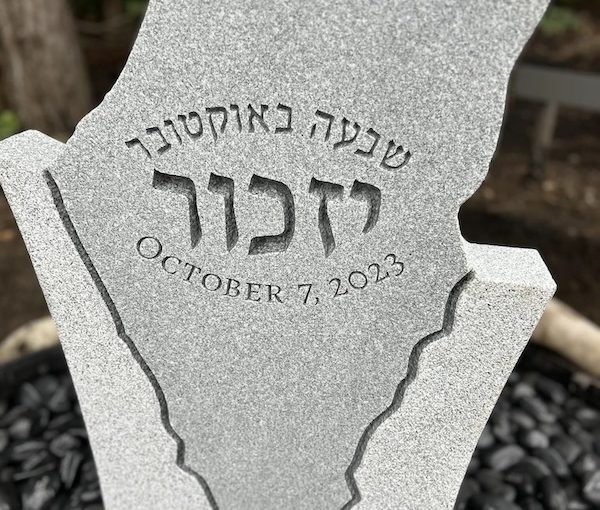
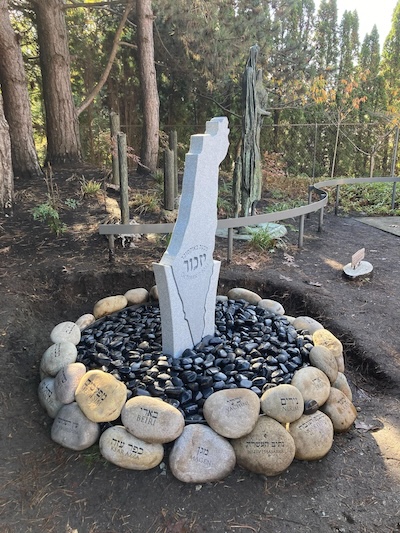
A newly created monument in the garden of Temple Sholom Synagogue commemorates the victims of Oct. 7, 2023, and the Israeli civilians, soldiers and foreign nationals who have lost their lives since that day. (photo from Temple Sholom)

There’s a newly created monument in the garden of Temple Sholom Synagogue – a serene and contemplative space. It’s not a cemetery, as you might expect, but a place to remember the horrific events of Oct. 7, 2023, and the tremendous loss of Israeli civilians, soldiers and foreign nationals who have lost their lives since that day. The project, envisioned by Temple Sholom Senior Rabbi Dan Moskovitz, draws on the Jewish tradition of placing stones when visiting the graves of the deceased and the “stumbling stones” of Berlin. The monument stands adjacent to the Temple’s Holocaust memorial. The proximity of the two is its own heartbreaking reminder of Jewish loss and tragedy

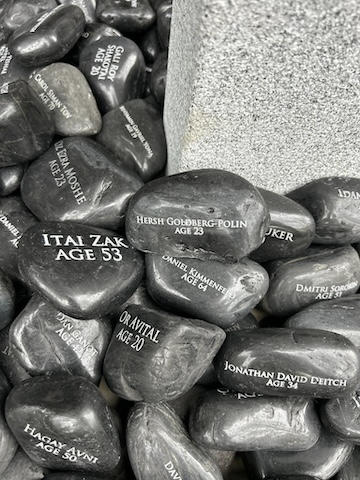
The new monument is surrounded by 33 large boulders, each inscribed with the name of a town or kibbutz attacked on Oct. 7; there is also one for the Nova Music Festival. Encircling the monument’s base lie some 1,658 small black stones, each one bearing the name and age of a victim.

The act of placing stones on a grave signifies that the person’s soul is remembered and honoured. It reflects the belief that the soul continues to exist in the afterlife and that the memory of the deceased remains alive in the hearts of the living. In this case, Rabbi Moskovitz’s intention was to make sure his community remembers those killed not as one massive number but as individual Jews. Every individual had a unique life story, just as each stone is unique. 

It was this topic that the rabbi talked about in his Kol Nidre sermon only days after the one-year anniversary of the Oct. 7 attacks. A reminder that we must keep the memory of every person who died on that horrible day alive. All members of the congregation were asked to take home a small black polished stone inscribed with the name and age of a victim of the Hamas attacks and the Israelis killed in the war since then.

photo - The Oct. 7 memorial draws on the Jewish tradition of placing stones when visiting the graves of the deceased and the “stumbling stones” of Berlin
The Oct. 7 memorial draws on the Jewish tradition of placing stones when visiting the graves of the deceased and the “stumbling stones” of Berlin. (photo from Temple Sholom)

Congregants were asked to research the name engraved on their stone(s); learn their story, their plans, and to even write a message on the stone if they so wished. They were then requested to bring their stone(s) back to the synagogue by Simchat Torah, when the monument would be dedicated. Moskovitz anticipated that the one-year anniversary that falls on the Jewish holiday, marred by the attacks, would be a time of sorrow, reflection and memory as the community gathered for what is otherwise a joyous holiday.

The sermon had a profound impact both in person and online. People wrote back from as far away as Thailand and the majority of synagogue members picked up a rock on their way home.

Inspiration for the monument came from when Moskovitz was a teenager. He recalls wearing a metal bracelet with the name of a Soviet refusenik, a Jew who was denied permission to emigrate to Israel. When the names of the hostages were gradually released, the rabbi said: “The idea struck me that we must hold on to the names of the hostages, share them and never let the world forget their torment and danger. I also wanted to do something to help raise money for the families and all of those in Israel forever changed and impacted by Oct 7. And so began the production and distribution of 10,000 bracelets engraved with the name of each hostage, their age and where they were taken from in a project called Till They All Come Home.”

As the anniversary approached, Moskovitz used the basis of the bracelet project to inspire the memorial stones. Temple Sholom Sisterhood provided the funding for the rabbi to purchase 1,000 pounds of stones and commission a five-foot-tall monument for the synagogue garden. Each stone was personally engraved by the rabbi and his family and the project took more than a month. Every victim was researched on the internet and often the entire family grieved as they reflected upon the age of the victim and the personal stories.

“Chana Kritzman’s was the first stone I picked up,” said Barb Halparin, a Temple Sholom congregant. “Its shape, a glistening black tear drop, attracted my attention. Chana’s age, 88, was etched below her name and I felt the immediate kinship of senior womanhood. Googling Chana’s name only intensified my sense of identification with her. I learned that, as a founding member of Kibbutz Be’eri, Chana had established the kibbutz library, where she ‘raised her children and grandchildren on a love of books, reading, and the art of storytelling.’

“I’ve been an avid reader all my life, and I earned my BA in English literature. I value my membership in the Isaac Waldman Library, and my favourite gift to my grandchildren is a book.”

Kritzman was shot by Hamas invaders while being evacuated from her home. She fought for her life in hospital for two weeks before succumbing to her wounds.

Halparin expressed how reading about Kritzman, her life, her love of words, her senseless, suffering death was a deeply emotional experience for her, as was placing her stone beside the memorial’s larger rock dedicated to Kibbutz Be’eri.

“It felt like I was in some small way bringing her home,” she said. “When Rabbi Moskovitz introduced the stumbling stone concept, I was deeply touched and eager to participate in such a meaningful project of remembrance.”

Another Temple Sholom member, Reisa Schneider, said: “One of the stones I took home was of Tair David, who was 23 years old when she and her sister Hodaya, age 26, were murdered by Hamas terrorists at the Nova music festival on Oct. 7, 2023. They were from the town of Beit Dagan. Their father, Uri, spent 30 minutes on the phone with them. He could hear blasts of gunfire nearby; he instructed them to lie on the ground, hold hands and breathe. Their connection was cut; he never heard from them again.”

On Instagram, their sister Liza wrote that Tair was “just like her name, a child of light, with a smile that could be seen for miles and a presence that is hard to hide.” 

“I found it interesting, maybe even coincidental, that the name of the person who I was expected to remember meant light,” said Schneider. “We gave our middle daughter the Hebrew name Orah, which also means light. Additionally, my maiden name is Smiley. I have tried to keep the name alive by smiling authentically and frequently. I have happily and intentionally passed that quality on to my daughters and grandchildren. I plan to honour Tair’s memory by bringing light into this broken world and by continuing to smile, despite these challenging times.”

photo - The Oct. 7 monument in the garden of Temple Sholom
The Oct. 7 monument in the garden of Temple Sholom. (photo from Temple Sholom)

Synagogue member Louise Krivel wrote: “After hearing Rabbi Moskovitz’s amazing sermon on Yom Kippur and learning about the over 1,600 rocks that his family had engraved in memory of the victims of Oct. 7 and beyond, I felt a tremendous sense of responsibility to honour the memory of the individuals whose rocks our family had been given.

“I researched each one and reached out to a couple of Israeli families via Facebook to advise them of our synagogue’s memorial and to let them know what Rabbi Moskovitz had been responsible for creating.” 

Yoni Znati, the father of Matan Znati, a 23-year-old Nova festival-goer, who died protecting his girlfriend, was one of those grieving family members Krivel contacted. He responded that he was very excited to hear about the memorial. He appreciated it very much, requested photos and hopes that, one day, he can meet Krivel so that he can tell her more about Matan.

“I can’t think of a more meaningful way that we as a congregation could honour the victims of Oct. 7,” Krivel shared. “I am so proud of Rabbi Moskovitz and his family and our congregation for creating this meaningful and beautiful memorial. Am Yisrael Chai.”

These are just three brief stories that Temple Sholom congregants researched from the horrific attack of Oct. 7 and those killed during the year since.

It’s after Simchat Torah. I am standing in the memorial garden. It’s now flooded with the rocks. Inside the synagogue, there’s a bat mitzvah. I can faintly hear the lively sounds of playfulness and laughter.

There will always be moments of celebration and sadness. As Kohelet (Ecclesiastes) reminds us, “To everything there is a season, and a time for every purpose under heaven.” 

Jenny Wright is a writer, music therapist, children’s musician and recording artist.

לא רואים סוף למשבר

ישראלים רבים לאור אירועי השבעה באוקטובר הפכו להיות פסימים ובצדק. הם לא רואים שום תמונה אופטימית באופק ופתרונות לסיום המשבר הבלתי נגמר

האחראי הישיר למשבר בישראל הוא ראש הממשלה בנימין נתניהו, שעושה הכל כדי להמשיך בתפקידו ולא מעניין אותו המחיר הכבד לכך. נתניהו כיום הוא אחד המנהיגים השנואים בעולם, כולל במרבית מדינות המערב וכן בישראל. היום רבים מבינים מיהו האיש, כיצד הוא פועל ומה האינטרסים שלו. מצער שהשבעה באוקטובר האירו בצורה רבה עד כמה ישראל לא היתה מוכנה, ועד כמה נתניהו מסוכן ולא יקח אחריות על מעשיו ומחדליו הרבים

בישראל העדיפו להגן על ההתנחלויות בשטחים הכבושים ואף לעבות אותן במקום להגן על גבולות המדינה. העדיפות ניתנה למתנחלים על חשבון תושבי ישראל. זו הקונספציה שנתניהו הוביל וזה מחדל אדיר שהוא לא יוכל להימלט ממנו

יש לא מעט שנוטים להעריץ מנהיגים שזה מנהג לא בריא שיכול להפוך למסוכן, כאשר מדובר באישים כמו נתניהו ודונלד טראמפ. הערצה לנתניהו לאורך השנים הרבות שבה הוא מעורב בפוליטיקה הישראלית, הפכה את תומכיו לעיוורים ואת נתניהו לנוכל. אהוד אולמרט נכנס לכלא על עבירות פחותות בהרבה מאלה של נתניהו, שמתכחש להן כמובן. נתניהו המכהן בתפקידוכשבעה עשרה שנים צבר עבירות רבות בתחומים שונים. הוא הפך לאיש עשיר, הוא מחזיק במספר נכסים וחשבונות בנק מנופחים. נתניהו ומשפחתו חיים ברמת חיים גבוהה והחשבונות מוטלים על משלם המיסים הישראלי

לאור שנותיו בפוליטיקה הבויל נתניהו מהלכים מסוכנים ביותר. הוא הוביל את ההסתה הרבתי שהביאה לרצח של יצחק רבין, הוא הוביל תוכניות רבות להרחבת והוספת  ההתנחלויות בשטחים שפוגעות קשות בעתיד של ישראל והפלסטינים. הוא לחץ על טראמפ לבטל את הסכם הגרעין עם איראן – כאשר המומחים לנושאי ביטחון בישראל טוענים שמדובר במהלך שגוי ומסוכן לישראל. נתניהו גם איפשר העברת כסף רב מקטאר לחמאס, ששימש לחימושו בממדים אדירים. עדיין לא ברור האם לנתניהו היה גם רווח אישי מהעברות כספים אלה

נתניהו בימי שלטונו – דאג במדיניות ההפרד ומשול שלו כמו דיקטטורים – ליצור וללבות שנאת אחים בתוך ישראל. המצב היום בחברה הישראלית הוא כה חמור שכבר אי אפשר לגשר על הפערים בין תומכי נתניהו למתנגדיו. התעמולה השיקרית המופצת על ידיי נתניהו, בנו יאיר ומקורבים אחרים ומכונה “מכונת הרעל” רק מוסיפה שמן רותח לסכסוך הפנימי בישראל. הגיעו הדברים לידי אבסורד כאשר תומכי נתניהו מאשימים את משפחות החטופים כאילו הן שייכים לשמאל. לא מעט משפחות החטופים הוכו ואויימו על ידי תומכי נתניהו. ומה תומכיו אומרים לישראלים יוצאי אירופה: תחזרו לאירופה כדי שהיטלר יחסל אתכם. דוגמאות אלה מוכיחות שמאז שנתניהו השתלט על ישראל, המדינה החלה להתפרק והתהליך המדאיג הזה רק מתעצם

תומכי נתניהו מעריצים דמות בעייתית לא פחות והיא טראמפ. הם מאמינים כי רק טראמפ ידאג לישראל. לעומתו המועמדת השנייה לנשיאות בארה”ב, קמלה האריס, לא תדאג לישראל. הישראלים התומכים בטראמפ עיוורים למעשיו המסוכנים ורצונו להפוך לדיקטטור. כידוע הישראלים ונתניהו בראשם לא מסתכלים על התמונה הכוללת, אלה רק על היום ומחר. מבחינתם טראמפ יפתור את הבעיות של ישראל היום ומחר. הם לא קולטים עד כמה טראמפ מסוכן לארה”ב ולמערב, ולכן גם לישראל. אם טראמפ יחזור לשלטון יחליש הדבר את ארה”ב וזה בדיוק מה שרוצים ברוסיה ובסין. בישראל כיוון שלא חושבים על העתיד לא מבינים עד כמה ארה”ב חלשה תחליש גם את ישראל

Samidoun on terrorist list

Samidoun was an organizer of an Oct. 7 rally celebrating Hamas’s terror attacks on Israel a  year earlier. Protesters tried to burn the Canadian flag while shouting that Israel should burn. They also chanted “death to” Canada, the United States and Israel. (screenshot Global News)

Last week, the Government of Canada designated Samidoun, a not-for-profit corporation based in Canada, as a terrorist entity under the Criminal Code. At the same time, the United States Department of the Treasury announced Samidoun is now a “specially designated global terrorist group.”

Also known as the Palestinian Prisoner Solidarity Network, Samidoun has close ties to the Popular Front for the Liberation of Palestine (PFLP), which has been designated by Canada and other countries as a terrorist group for many years. 

At rallies in Vancouver and throughout Canada, Samidoun’s international coordinator, Charlotte Kates, has expressed open support for the Oct. 7 attacks on Israel. On the one-year anniversary of the attacks, she led a rally where chants of “death to Canada, death to the United States and death to Israel” were heard. Videos show rally participants setting fire to the Canadian flag, while shouting “Israel, burn, burn,” among other things. 

“We’re very thankful for today’s decision by the Government of Canada to designate Samidoun as a terrorist entity under the Criminal Code,” said Nico Slobinsky, vice-president, Pacific Region, Centre for Israel and Jewish Affairs (CIJA). “For the past year, they’ve organized some of the most vicious protests in Canada, openly and explicitly celebrating the Oct. 7 attacks and, just last week, they were chanting ‘we are Hamas, we are Hezbollah’ at their rally.”

Kates was arrested after an April 26 rally, at which she called the Oct. 7 terrorist attacks “heroic and brave” and led chants of “Long live Oct. 7.” The conditions of her release order – which prohibited her participation or attendance at any protests, rallies or assemblies for a period of six months – expired Oct. 8 because the Crown had yet to file charges against her.

Slobinsky said CIJA called for the BC Prosecution Service (BCPS) to charge Kates under hate speech laws four months ago, so that she face the full consequences of her actions for glorifying terrorism. But just how long it will take for the BCPS to make a decision is unknown. 

Damienne Darby, communications counsel for the BCPS, confirmed that the BCPS had received a Report to Crown Counsel in relation to Kates. “We are reviewing it for charge assessment, and I am unable to provide a timeline for completion,” she wrote in an email, declining to provide further comment. 

In a statement, Shimon Koffler Fogel, president and chief executive officer of CIJA, said, “Listing the group as a terrorist entity means they will no longer be able to use our streets as a platform to incite hate and division against the Jewish community; this is a significant step toward ensuring the safety and security of Canada’s Jews.” 

But, while the designation as a terrorist group will affect Samidoun’s ability to fundraise, recruit and travel, it is unclear whether it will affect their ability to hold rallies and further promulgate hatred. 

CIJA has asked the federal government to re-examine whether Kates and her husband, Khaled Barakat, obtained Canadian citizenship fraudulently by failing to fully disclose their affiliation with the PFLP. The United States has put Barakat on a terrorism watch list for his connections with the PFLP.

Public Safety Canada notes that one of the consequences of being listed as a terrorist organization is that the entity’s property can be seized or forfeited. Banks and brokerages are required to report that entity’s property and cannot allow the entity to access their property. It’s an offence for people to knowingly participate in or contribute to the activity of a terrorist group. Including Samidoun, there are now 78 terrorist entities listed under the Criminal Code, according to Public Safety Canada.

This terrorist designation is long overdue, said Rabbi Jonathan Infeld, chair of the Rabbinical Association of Vancouver. “To have an organization that creates chaos, hatred and threatens the Jewish community operating freely in Vancouver and Canada was terrible,” he said. “When Samidoun burned the Canadian flag and called for the destruction of the US and Canada on Oct. 7, they demonstrated who they truly are. I hope this decision will give the Canadian government and the police the ability to prevent Samidoun from operating in the manner they have and to prosecute.” 

Lauren Kramer, an award-winning writer and editor, lives in Richmond.

(Editor’s Note: For the CJN Daily podcast host Ellin Bessner’s conversation with NGO Monitor’s Gerald Steinberg about Samidoun’s terror links and more, click here.)

Evening of resilience, hope

In Vancouver, on the evening of Nov. 10, the Canadian Shaare Zedek Hospital Foundation will present Voices of Resilience, featuring Prof. Ofer Merin, director general of Shaare Zedek Medical Centre, and Glenn Cohen, former Mossad psychologist and hostage negotiator. Part of a national tour, the event aims to shed light on the experiences and insights following the tragic events of Oct. 7, 2023.

photo - Prof. Ofer Merin, director general of Shaare Zedek Medical Centre
Prof. Ofer Merin, director general of Shaare Zedek Medical Centre. (photo from CSZHF)

Merin completed his fellowship in adult cardiac surgery at Sunnybrook Hospital in Toronto. Upon returning to Israel, he became a pivotal member of the Shaare Zedek team, where he now serves as director general. A colonel in the Israel Defence Forces, Merin has led numerous humanitarian efforts and, as of Oct. 7, 2023, has headed a medical intelligence committee that plays a role in assessing the hostage situation in Gaza.

photo - Glenn Cohen, former Mossad psychologist and hostage negotiator
Glenn Cohen, former Mossad psychologist and hostage negotiator. (photo from CSZHF)

Cohen has served as an air force pilot, Mossad officer, hostage negotiator and special forces psychologist for more than 30 years. Retiring with the rank of colonel and chief of psychology in Mossad, he now trains organizations worldwide using a methodology he developed. During the war that followed Oct. 7, Cohen has served more than 100 days to date in reserve duty, providing critical debriefing for the released hostages.

All proceeds from Voices of Resilience will go to the Healing Minds Campaign, which focuses on extending the mental health support available at Shaare Zedek Medical Centre. This initiative provides specialized training in therapy, post-traumatic stress disorder counseling, psychotherapy and other services for those affected by the Oct. 7 attacks. The centre hopes to increase their mental health team from 14 to 42 professionals to meet the overwhelming demand, an increase that would require $1.6 million Cdn for medical and para-medical training, as well as ongoing staffing costs.

To date, Shaare Zedek has treated more than 700 individuals, primarily IDF soldiers, with injuries ranging from minor to life-threatening. Nearly every patient presents signs of mental trauma, whether immediately or in the weeks following hospitalization. Many young patients have been exposed to traumatic battlefield conditions and the loss of life. Even those who initially report limited emotional impact often show symptoms later. To address this, Shaare Zedek has created a comprehensive emotional trauma care service. Every patient admitted for war-related injuries is evaluated by the psychiatry team, they are monitored throughout their stay and receive counseling prior to discharge, with follow-up care recommendations.

To attend Voices of Resilience in Vancouver on Nov. 10, 7 p.m., visit linktr.ee/voicesofresilience2024. Tickets are $18 ($72 for the VIP meet-and-greet). The location will be provided to registrants closer to the event date. 

– Courtesy Canadian Shaare Zedek Hospital Foundation

שיחה ישראלית

ישראל נמצאת בסכנה קיומית מהיום שהתחלתי לנשום לפני למעלה משישים וחמש שנים ואני לא אומר זאת כדי להפחית מחומרת העניין. מצער מאוד שחבורת פושעים בלתי אנושית של החמאס וחבריהם “הזכירו” שוב לישראלים בשבעה באוקטובר, כי הם גרים באזור מסוכן ביותר. ישראל ישנה והישראלים כהרגלם התעלמו מכל התרעה אפשרית לחדירה כה קשה כפי שאירעה באוקטובר

פרופ’ ישעיהו ליבוביץ אמר לאחר כיבוש השטחים כתוצאה ממלחמת ששת הימים שנכפתה על ישראל, כי זהו דבר חמור שיגרום נזק גדול לישראל, ישחית את המדינה ואולי אף יביא לקיצה. כל יום מאז התבגרותי הרגשתי עד כמה דבריו החמורים של פרופ’ ליבוביץ נכונים, ועד כמה הישראלים ברובם לא ראו שום בעייה בנושא החזקת השטחים הכבושים. להיפך: שטחים אלו יצרו גל הולך וגדל של תנועה משיחית של יהודים פנאטיים, שמאמינים בכל ליבם שאת השטחים הכבושים הם קיבלו מאלוהים ומצווה עליהם להתיישב בהם. תנועה משיחית מסוכנת זו שמספר תומכיה גדל משמעותית כל שנה, ממשיכה במלאכת בניית התנחלויות והרחבתן בשטחים, תוך שמתקבלות תמיכה ועידוד רב ממשלות נתניהו השונות. בנימין נתניהו ראש הממשלה הנצחי של ישראל שיושב על כיסא המלך כבר כשבעה עשרה שנים, מיישם את תפיסתו ותפיסת אביו – שיש ליישב יהודים בכל ארץ ישראל, כולל ובעיקר בשטחים הכבושים. תפיסה זו שמקובלת על ידי חלק נרחב מתושבי ישראל כיום, מונעת כל אפשרות של הקמת מדינה פלסטינית בשטחים שנכבשו. וכך גם נמנע מישראל לחיות בביטחון מלא תוך אפשרות של שלום עם מרבית מדינות ערב. מי שמתעלם מהבעייה הפלסטינית בעצם מתעלם מהאופציה היחידה לפתרון הסכסוך הארוך והנוראי הזה בין ישראל לשכנותיה. בין היהודים למרבית המוסלמים בעולם

הישראלים רוצים בדומה לאזרחי מרבית המדינות בעולם לבלות, לטוס לחו”ל וליהנות מהזריחות ומהשקיעות כאחד. אך הישראלים מעדיפים לשכוח כי מי שרוצה להחזיק בשטחים של עם אחר לא יכול לחיות חיים אזרחיים רגילים, אלא חיים מלאים בצבא, ביטחון, כוננות והתרעות. כאמור מחבלי החאמאס הוכיחו לישראלים מה קורה שישנים באזור מסוכן זה

טעה מי חשב שהחזרת רצועת עשה לתושביה יפתרו כל בעיותיה של ישראל. אי אפשר להפריד בין תושבי הרצועה לבין התושבים הפלסטינים בשטחים הכבושים. לא היה שקט באזור אחד אם לא יהיה שקט גם באזור השני. ועובדה היא שהמלחה בעזה מעוררת את הפלסטינים להתעמת עם צה”ל והישראלים ופיגועי הטרור הולכים גדלים מאז באוקטובר

כשאומרים לישראלים כי לא בטוח לגור בישראל הם עונים כמעט אוטומטית כי לא בטוח לישראלים ויהודים לגור בשום מקום אחר בעולם. האם פעם אחת שאלו תושבי ישראל מדוע אחיהם בגולה לא בטוחים? השנאה והאנטישמיות הולכות וגדלות משמעותית מאז השבעה באוקטובר? האם יש שמבינים כי מה שצה”ל עושה ברצועת עזה הוא נוראי – גם לאחר המאורעות הקשים ביותר שאירעו בשבעה באוקטובר? האם זה מובן שהנקמה צריכה לבוא בכל הכוח, ללא הפסקה ולהביא למותם של אלפי פלסטינים חפים מפשע בעזה? האם בישראל מבינים שהתוצאות הקשות של המלחמה בעזה יגרמו נזק קשה מאוד למדינה ולישראלים והיהודים בחו”ל

בישראל לא אוהבים לראות את התמונה הכוללת ולחשוב על העתיד. קל יותר להתנהל מהרגע להרגע, ללא תכנון וללא ארגון. נתניהו מנהל את המלחמה הקשה הזו בעזה שלא מביאה לעתיד טוב יותר בישראל, בדיוק כמו שהוא נכשל בהגנה על גבולותיה של המדינה. נתניהו רק חושב על נתניהו ועל רצונו להמשיך ולשלוט על המדינה שהוא הורס