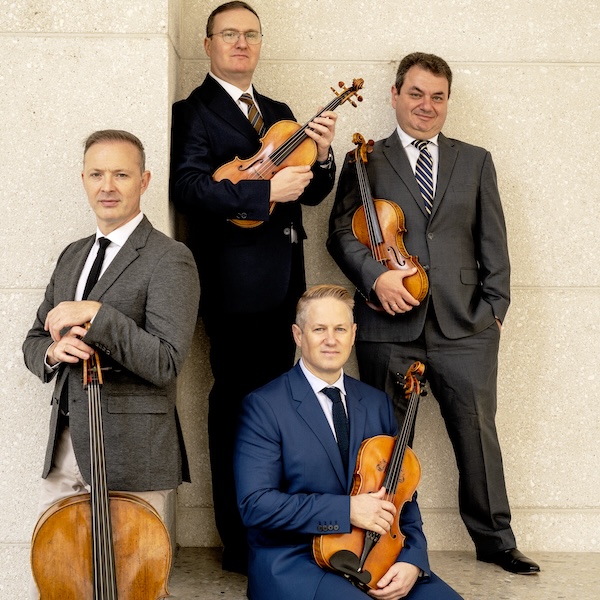
The Vancouver Recital Society welcomes the multiple-award-winning Jerusalem Quartet back to the city for a concert at the Vancouver Playhouse Oct. 19. The program features works from Hadyn, Janácek and Beethoven.
This year marks the 30th anniversary of the establishment of the Jerusalem Quartet. Since their first appearance for the VRS in 2001, the ensemble has become a regular and beloved presence on the world’s concert stages. They have appeared many times in Vancouver, and a highlight in the annals of the VRS was their five-concert performance of all the Shostakovich string quartets in the Telus Theatre at the Chan Centre in 2006. They are returning to Vancouver to perform the same program they played in their Wigmore Hall debut 25 years ago, an appearance that launched them to international fame. It features Hadyn’s Quartet in B-flat major, Op. 76, No. 4 (“Sunrise”); Janácek’s Quartet No. 1 (“Kreutzer Sonata”); and Beethoven’s Quartet in B-flat major, Op. 130, with the Grosse Fugue finale, Op. 133.
The Jerusalem Quartet is Alexander Pavlovsky (first violin), Sergei Bresler (second violin), Kyril Zlotnikov (cello) and Ori Kam (viola). Both individually and as the quartet, the musicians have performed around the world, garnering numerous accolades.
Born in Ukraine, Pavlovsky immigrated with his family to Israel in 1991, and is a graduate of the Jerusalem Academy of Music and Dance.
Bresler was also born in Ukraine. He started to play violin in age of 5 and, at the age of 12, gave his first recital. He immigrated to Israel in 1991, where he studied at the Rubin Academy of Music and Dance in Jerusalem.
Zlotnikov also studied at the Rubin Academy, having begun his studies at the Belarusian State Music Academy, and Kam, who was born to Israeli parents in La Jolla, Calif., grew up in Israel and studied there, as well as in the United States and Germany. Kam started his musical education at the age of 6, began playing the viola at 15 and had his debut at age 16.
The Jerusalem Quartet has found its core in a warm, full, human sound and an egalitarian balance between high and low voices. This approach allows them to maintain a healthy relationship between individual expression and a transparent and respectful presentation of the composer’s work. It is also the drive and motivation for the continuing refinement of their interpretations of the classical repertoire, as well as exploration of new epochs.
In 2019, the quartet released an album exploring Jewish music in Central Europe between the wars and its far-reaching influence, featuring a collection of Yiddish cabaret songs from 1920s Warsaw, as well as works by Schulhoff and Korngold. The second instalment of their Bartok quartet recording was released in 2020. Starting this year, the quartet began recording exclusively for BIS records, with their first release featuring three quartets by Shostakovich: Nos. 2, 7 and 10.
Although the Quartet No. 2 was composed in 1944, it makes no direct reference to the war; yet, this is a substantive work, dark, powerful and, at times, dissonant. Quartet No. 7, consisting of three short movements played without interruption, is an enigmatic and deeply personal work dedicated to the memory of the composer’s wife. For all its questioning and complex inner references, Quartet No. 10 is among the most immediately appealing of Shostakovich’s later works. By this stage in his life, his music tended to speak in a quieter voice and to a more intimate audience.
The Jerusalem Quartet’s performance at the Playhouse on Oct. 19 starts at 3 p.m., but there is also a pre-concert talk, at 2:15 p.m. For tickets, visit vanrecital.com.
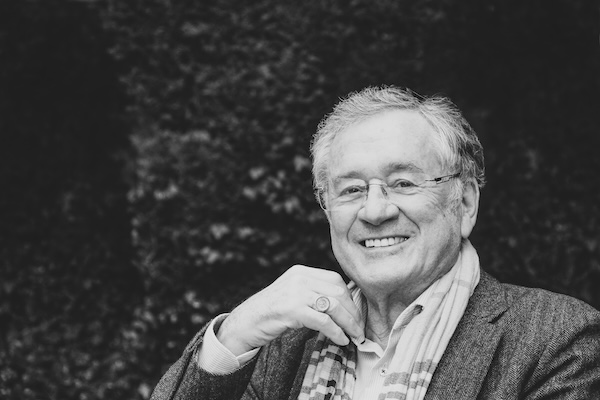
Rudolf Vrba, in the 1960s. (photo from University of British Columbia. Archives)
Rudolf Vrba’s escape from Auschwitz and testimony helped alert the world to the horrors of the Holocaust, and Vrba is credited with saving the lives of more than 100,000 Hungarian Jews. On Oct. 26, 2 p.m., at Schara Tzedeck Cemetery Chapel in New Westminster, a commemoration ceremony will be held for Vrba. The program will feature reflections on his life, legacy and enduring impact from Dr. Robert Krell and Dr. Joseph Ragaz, and will conclude with the dedication of a memorial monument inVrba’s honour.
Jewish Addictions Community Services (JACS) welcomes two members to its team.
Jordana Jackson, JACS’s new addictions specialist, is a certified addiction counsellor. In addition to having a wealth of experience working in addiction and recovery spaces throughout Vancouver Coastal and Fraser Health authorities, she is the founder and director of AWARE (Addicts With Aspirations Recovery Entertainment), a therapeutic performance-arts program. Jackson is already making a difference at JACS, creating navigation support structures and providing counseling for clients.
Elana Epstein, JACS’s new group facilitator, is a certified recovery coach. More importantly, she has years of experience being a mother of a child who struggled with addiction and is now in recovery. At JACS Family Circle, Epstein is using both her spiritual and professional skill sets to hold space for individuals whose friends and family have been affected by addiction. These group counseling sessions are an important aspect of JACS.
* * *
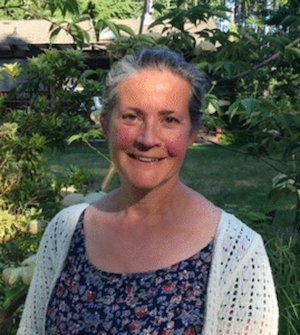
Elvira Molochkovetsk takes on the role of a community connector in Victoria. This position is a joint Jewish Federation of Victoria and Vancouver Island (JFVVI) and Jewish Federation of Greater Vancouver project. Her goal is to connect and engage all community members but, in particular, those who do not attend any existing synagogue or Jewish association.
Over the past two years, Molochkovetsk has been part of the JFVVI as a PJ Library parent, volunteer, connector and, for the past year, as PJ Library coordinator for Vancouver Island and the Gulf Islands. PJ Library has focused on connecting people with children up to the age of 13 and, in her expanded role as a connector, Molochkovetsk will be expanding it to reach out to teenagers, seniors and young entrepreneurs.
The parents of four kids, Molochkovetsk and her husband, Dimitri, have run family businesses for the last decade. Almost three years ago, they moved to Victoria from Winnipeg, where they lived for seven years. They both grew up in Israel and have family there.
Dr. Robert Krell will be honoured at the Sept. 7 gala of the Canadian Shaare Zedek Hospital Foundation’s Western region. (photo from CSZHF, Western region)
Ilan Pilo had recently arrived in Canada from Israel in 2013 when he attended a Jewish National Fund gala in Toronto honouring Stephen Harper, Canada’s then-prime minister. Pilo thinks it may have been the largest kosher dinner ever on Canadian soil – but what struck him most was the rapturous enthusiasm among attendees for the country’s head of government.
“Harper was, and has been, one of the most genuine and strong allies and voices on behalf of Canadian Jewry and Israel,” said Pilo, now Western Canada executive for the Canadian Shaare Zedek Hospital Foundation.
Pilo will dine again with Harper, when the former prime minister is the keynote speaker at the first-ever gala of the Canadian Shaare Zedek Hospital Foundation’s Western region, which takes place Sept. 7.
“In these challenging times, we all deserve to get some hope and strength by having a strong ally like him speaking in front of us,” said Pilo. “We all were astonished and so proud to hear his great support, his genuine support for Israel, and just now we need it more than ever.”
The gala, which also marks the 50th anniversary of the Canadian Shaare Zedek Hospital Foundation, will see the Kurt and Edith Rothschild Humanitarian Award bestowed upon Dr. Robert Krell.
The founding president of the Vancouver Holocaust Education Centre, Krell is a child survivor of the Shoah and a renowned Vancouver-based psychiatrist, academic, author and educator, who has devoted his life to supporting survivors, educating on genocide and combating intolerance. In 2020, he was inducted into the Order of Canada.
The Kurt and Edith Rothschild Humanitarian Award is named in memory of the late Kurt Rothschild, a Canadian philanthropist, Jewish community leader and co-founder of the Canadian Shaare Zedek Hospital Foundation. Along with his wife Edith, Rothschild devoted his life to strengthening the Jewish people, the state of Israel and institutions like Shaare Zedek Medical Centre in Jerusalem; he also served as president of the World Mizrachi movement. The award recognizes exceptional individuals whose integrity, leadership and service have left a meaningful impact both locally and globally.
Krell told the Independent that he has felt a special connection with Shaare Zedek Medical Centre in Jerusalem since he read Dr. Gisella Perl’s 1948 memoir, I Was a Doctor in Auschwitz.
Imprisoned in the death camp, Perl, a gynecologist, was forced to work under the notorious Dr. Josef Mengele in the camp’s women’s infirmary. She performed countless life-saving – but excruciating – procedures without anesthesia, including secretly conducting abortions to save pregnant women from certain execution. Later, while serving in the maternity ward at Shaare Zedek Medical Centre, she would say a silent prayer before every delivery, “God, you owe me a life.”
“So, Shaare Zedek has been on my mind for a long time and, therefore, to be asked to be an honouree of that particular hospital talked to me,” Krell said.
The hospital’s maternity ward delivers 20,000 babies annually – by comparison, that’s three times as many as Vancouver’s BC Women’s Hospital & Health Centre. About 1,000 of those newborns are premature and the Sept. 7 gala is the culmination of a campaign to generate revenue to purchase five new $50,000 incubators for the Jerusalem hospital.
Krell is especially honoured, he said, to receive the award in the presence of Harper.
“It’s a great honour to be with someone who is truly admired for their statesmanship,” he said. “It’s been a long time since we’ve seen a statesman in Canada.”
Pilo noted that Krell’s selection for the award was unanimously supported by the award committee, which was chaired by Rabbi Andrew Rosenblatt, and included Dr. Arthur Dodek, Marie Doduck, Shannon Gorski-Averbach and Dr. Jonathon Leipsic, as well as Pilo.
“We were aiming to find the right person to be awarded for the first time ever with the Kurt and Edith Rothschild Humanitarian Award in the Western region,” Pilo said. “The committee agreed, without any hesitation, that our award recipient should be Rob Krell, since he is renowned for support of Canadian Jewry and Israel. His lifelong efforts at preserving the memory of the Holocaust and his dedication for children, which aligns with our incubator drive, [made it] so natural that he is the right person to receive this award.”
Pilo credited the foundation’s national executive director, Rafi Yablonsky, for securing the former prime minister’s presence at the celebration, which will be emceed by Dr. Marla Gordon. Dinner co-chairs are Yael Segal and Carol Segal. Community partners for the event are the Jewish Federation of Greater Vancouver, the Canadian Jewish Political Affairs Committee, Congregation Schara Tzedeck, the Jewish Medical Association of British Columbia and the Jewish Independent. Tickets are at hospitalwithaheart.ca.
The short film The Fast Runner, which was shot in the Greater Victoria area, won a 2025 Leo Award in cinematography for David Bercovici-Artieda. Bercovici-Artieda was also nominated for best direction, and the piece had six nominations in total.
The Leo Awards are a Project of the Motion Picture Arts & Sciences Foundation of British Columbia. This year, there were more than 1,300 eligible entries in 16 different program categories.
In addition to nominations for direction and cinematography, The Fast Runner was nominated for screenwriting (Michael Adams), production design (Sarah Monteith), costume design (Constance Moerman and Josie Saldat) and make-up (Teia Dumaresq, Akina McCrea, Lindsay Pilkey, Donia Nikoo, Naomi Burnell and Mayhanna Haslam).
“It’s not just about telling a story,” Bercovici-Artieda, the son of a Holocaust survivor, told the Independent earlier this year. “It’s about honouring the memory of those who lived through unimaginable horrors, including my own father. Every frame, every scene and every creative choice carries the weight of history – my family’s history.” (See jewishindependent.ca/balancing-education-and-art.)
For more about Bercovici-Artieda, the film and the many other awards and recognition it has received, visit thefastrunnerfilm.com.
* * *
At its annual general meeting last month, the Vancouver Holocaust Centre Society for Education and Remembrance presented its annual Life Fellow Award to Sidi Schaffer and Keith Morgan. The award is given to individuals who have made exceptional contributions to Holocaust education and remembrance.
Sidi is a Holocaust survivor and talented artist whose life and work are powerful testaments to resilience and remembrance.
Sidi Schaffer (photo from VHEC)
Born in northern Romania, Sidi was just a child when she and her family were forced into the Czernowitz ghetto in 1940, and later deported to the Djurin concentration camp in what’s now Ukraine. They endured unimaginable hardship for four years before returning to Romania in 1945. Sidi later moved to Israel, where she earned her degree in art education, and eventually settled in Canada with her husband David and their three sons.
After completing a bachelor of fine arts at the University of Alberta, Sidi continued to use art as a way of processing and sharing her experience. Her piece “Earth, Don’t Cover Their Blood” (featured in the VHEC’s 1998 Gesher Project) remains a moving tribute to those lost – and a powerful educational tool.
Sidi continues to share her story and use her art to bear witness as a long-time member of the VHEC’s Child Survivor Group.
Keith, a best-selling author and award-winning journalist, has dedicated his work to preserving Holocaust memory.
Keith Morgan (photo from VHEC)
Born in Blackpool, England, in 1954, he moved to Vancouver in 1980, where he became a columnist on cars and motoring for the Province and Sun newspapers.
In 1997, he wrote a newspaper feature about Ruth Kron Sigal and her community impact. Moved by Ruth’s family story and motivated by his own limited knowledge of the Holocaust in the Baltics, Keith collaborated with Ruth, the eldest daughter of Meyer and Gita Kron, on her memoir, Ruta’s Closet (Shavl Publishing, 2008), about the murder of 200,000 Lithuanian Jews during the Holocaust and the Kron Sigal family’s survival during the Nazi occupation of Lithuania.
Keith worked on Ruta’s Closet while working as a journalist, researching daily, conducting interviews and using his holidays to travel across Europe, Israel and North America. Since its publication in 2008, the book has become a vital educational resource. According to historian Sir Martin Gilbert, it is “one of the finest Holocaust memoirs.”
* * *
Wendy Cocchia, lieutenant governor of British Columbia, has accepted to serve as honorary patron of the Holocaust Theatre Production Society’s Survivors program. Patronage, in the spirit of supporting and encouraging meaningful initiatives, is a role of the Office of the Lieutenant Governor, rooted in the Crown’s tradition of recognizing and uplifting worthy endeavours.
The play Survivors, by Wendy Kout, is an hour-long educational drama that enacts the story of the Holocaust through eyewitness testimony of 10 survivors. Young and diverse audiences relate to the young and diverse cast, who are guides on the perilous journey of their ever-changing world. The survivors in the play also provide life lessons and encouragement to speak up and act up against hatred and bullying today. Suitable for young adult and adult audiences, this play about the past is a warning and a wakeup call for the present and the future.
As of June 30, Survivors was booked for more than 30 performances across Vancouver Island, bringing the society’s Holocaust education program to middle and high schools, both public and private, as far north as Campbell River.
Thank you to the Victoria Foundation for their support, which will ensure that the program can be delivered to Victoria schools in October.
Last month, the Vancouver Holocaust Education Centre presented the 2025 Meyer and Gita Kron and Ruth Kron Sigal Award for Excellence in Holocaust Education to Chantel Parsons. Chantel has consistently demonstrated an exceptional commitment to Holocaust education throughout her career, significantly impacting her students, colleagues and the broader school community.
Chantel Parsons (photo from VHEC)
Chantel is a geography and history teacher at Mark R. Isfeld Secondary School in the Comox Valley. The teacher’s Genocide 12 course, which centres on the Holocaust, remains one of the most popular senior-level electives at her school, drawing students eager to engage deeply with this critical history.
Chantel’s approach to Holocaust education is marked by historical precision, critical inquiry and meaningful impact. Her students explore complex issues around historical responsibility and the roles of perpetrators, victims, bystanders and resistors, challenging simplified narratives and examining the complexities of human behaviour during the Holocaust.
The lasting influence of her teaching is reflected in the words of a former student: “You were probably one of the best teachers I had. The focus you put on the atrocities in WWII, and the effort you put into teaching us how to recognize the patterns that lead up to events like this made me question a lot of things I probably wouldn’t have otherwise…. I often think back to things I learned in your class.”
A distinctive feature of Chantel’s teaching is her focus on Holocaust denial and distortion – topics often underrepresented in high school curricula. Her students study landmark Canadian legal cases concerning Holocaust denial, and benefit from guest speakers and witnesses connected to these cases.
Despite teaching in the smaller community of Courtenay, Chantel’s students access extensive enrichment opportunities through VHEC’s online programs. This year, her class participated in multiple live Zoom workshops, survivor speaker presentations, virtual exhibition tours and accessed a wealth of online teaching materials.
The Kron Sigal Award was established in memory of Meyer and Gita Kron and their daughter Ruth Kron Sigal, Lithuanian Jewish survivors of the Holocaust who reestablished their lives in Vancouver. Through their lifelong involvement with education and community, the family touched the lives of thousands of students. The award in their name is presented annually to British Columbian teachers who have demonstrated excellence and commitment to teaching students about the Holocaust and its important lessons for humankind.
* * *
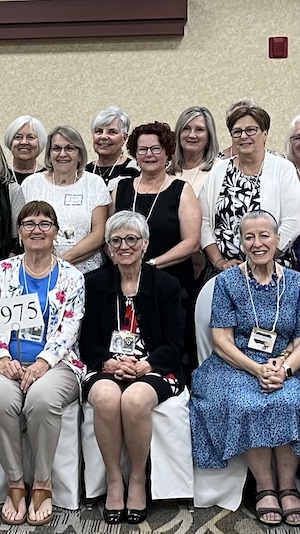
Gerri Klein (centre, seated) with some of her graduating colleagues at the 50th anniversary of the Winnipeg Health Science Centre School of Nursing. (photo from Gerri Klein)
Gerri Klein recently celebrated 50 years as a nurse! She was part of the first nursing class from the Winnipeg Health Science Centre School of Nursing.
During her career, Gerri, who now has a master’s in nursing (2003, University of British Columbia), has been honoured with the Canadian Diabetes Educator of the Year Award in 2020 and a Nurses and Nurse Practitioners of BC 2023 Nursing Award of Excellence: Excellence in Advancing Nursing Knowledge and Research. She currently works as a diabetes educator at BC Diabetes in Vancouver.
* * *
Dr. Aaron Klein (photo from Gerri Klein)
Aaron Klein graduated from the University of Toronto with a doctor of philosophy, aerospace studies, department of mechanical and industrial engineering, on June 17, 2025. Aaron, who is working and living in Toronto, stays busy raising his young family with his wife Carolyn.
While the odd recipe or food-related article can be found in the Jewish Western Bulletin even before it became the Bulletin, regular food columns or special sections seemed to have become a part of the paper under Sam and Mona Kaplan, who owned the paper from 1960 to 1999. The Independent has carried on the tradition, with its annual Food & Drink issue, which you hold in your hand, and with the inclusion of recipes in our three holiday issues, Rosh Hashanah, Hanukkah and Passover. One thing that becomes apparent in flipping through the archives is that tastes change, and not every recipe, or recipe name, withstands the test of time.
The winners of the 44th Annual Simon Rockower Awards for Excellence in Jewish Journalism were announced June 23 at the American Jewish Press Association’s annual conference, which took place in Pittsburgh. Among the winners was the Jewish Independent.
The awards honour achievements in Jewish media published in 2024 and, according to the Pittsburgh Jewish Chronicle, the AJPA received 1,160 entries this year. There were 40 different categories, from excellence in commentary, news coverage and feature writing, to podcasting, graphic art, and more.
The JI editorial board – Pat Johnson, Basya Laye and Cynthia Ramsay – was recognized for excellence in editorial writing, taking both first and second place in the category, submissions for which comprise three editorials. The category was open to all types of media: newspapers, magazines and web-based.
Winning first prize were the editorials “Anti-racism work at risk,” “Legislating a fine line” and “Upheaval, good and bad.” Judges commented: “Three thoughtful, thorough, balanced and persuasive editorials that examine current-day antisemitism and offer sage insights and wise calls to action.”
The honourable mention for excellence in editorial writing went to the Washington Jewish Week, out of Columbia, Md.
The Canadian Jewish News took home three honourable mentions: for excellence in commentary, personal essay, and writing about the war in Israel: schools and universities.
Watch for the full list of Rockower winners and links to all the winning articles at ajpa.org. Of course, you can re-read all the JI wins at jewishindependent.ca.
Susan Inhaber, president, Na’amat Canada (left), with Dalia Margalit-Faircloth, president, Na’amat Vancouver. (photo by Heather Freed)
Na’amat Canada and NA’AMAT USA came together last month to celebrate a milestone: 100 years of community work.
The Centennial Celebration, held in Toronto May 16-18, brought together leaders, members and supporters for a weekend filled with joy, reflection and renewed purpose. The program featured tributes, performances and presentations from Na’amat International leaders. Together, participants honoured a century of activism and achievement while charting the course for the work ahead.
Na’amat was “the first and last women’s organization for which I ever worked,” said the late Golda Meir, national secretary (president) of Na’amat in the 1930s, decades before she became Israel’s prime minister.
Founded in 1925, Na’amat Canada is a Jewish nonprofit volunteer organization dedicated to improving the lives of women, children and families in Israel and Canada through education, advocacy and social services.
“From our humble beginnings as a single organization to the growth of two vibrant organizations dedicated to empowering women and children in Israel, we can take great pride in our rich and storied history,” said event co-chairs Jan Gurvitch (NA’AMAT USA) and Susan Inhaber (Na’amat Canada). “This celebration honours not only the trailblazers who came before us but also the dedicated individuals who continue to give their time and energy to carry our mission forward.”
The weekend began with welcomes and candlelighting, continued with performances and storytelling, and culminated in atribute to Na’amat’s past national presidents, women who helped shape the organization’s direction for generations. Attendees also heard from Na’amat Israel leaders Hagit Pe’er and Shirli Shavit, who shared updates on urgent needs and inspiring progress on the ground.
“Today, as we honour this remarkable milestone, we celebrate not only the achievements of the past but also the enduring partnership that continues to drive our mission forward,” said Pe’er, president of Na’amat Israel and Na’amat International. “Together, we have built a legacy of resilience, compassion and progress that will inspire future generations.”
The event captured the deep sense of community that defines Na’amat: from singing and dancing, to laughter and reflection, to sharing dreams for the next 100 years.
Kanot Youth Village
After wrapping up the centennial, the occasion served as the launchpad for Na’amat Canada’s next major initiative: a fundraising campaign to equip a brand-new middle school building at Kanot Youth Village, a life-changing boarding school for at-risk youth in Israel.
“We help children cross the bridge – from being lonely to being socially connected, from failing in school to succeeding, from mistrust and alienation to belonging, connection and pride in being part of society,” said Dr. Hezi Yosef, director of Kanot, who is an expert in cognitive-behavioural psychotherapy and lectures at educational institutions and organizations in Israel and worldwide.
Founded by Na’amat in 1952, Kanot today serves 700 students, many of whom face poverty, trauma or loss. The new building – a collaborative project between Na’amat Canada, donors and Israel’s Ministry of Education – is nearly complete but, to open its doors in September 2025, it must be fully furnished and equipped.
Na’amat aims to raise $180,000 CAD to provide classroom furniture, lab tools, creative arts supplies and technology to transform the space into a vibrant learning environment.
To learn more about Na’amat’s impact or to support the Kanot campaign, visit naamat.com or call 1-888-278-0792.
The Vancouver Jewish Folk Choir has its spring concert on June 15, at the Peretz Centre for Secular Jewish Culture. (photo from VJFC)
The Vancouver Jewish Folk Choir’s spring concert this year celebrates the Peretz Centre for Secular Jewish Culture’s 80th anniversary.
Since it was established in 1979, the choir has been recovering, preserving and singing traditional and contemporary Jewish folk music. This year’s concert – on June 15, 7 p.m., at the Peretz Centre – features “Ikh bin a yid,” a cantata by Vladimir Heifetz (1894-1970), based on the poem by Itzik Feffer (1900-1952). Feffer was a Soviet Yiddish poet and member of the Jewish Anti-Fascist Committee who was executed on the Night of the Murdered Poets. The poem emphasizes how, through courage and creativity, the Jewish people have survived centuries of adversity.
The choir also will perform “Sankt besht,” a poem by Itsik Manger set to music by Vancouver Jewish Folk Choir director David Millard. In the poem, the Baal Shem Tov (the 18th-century Jewish mystic and founder of the Hasidic movement) is awakened from sleep and meditates on grief, joy and dreams.
On the program, as well, is a selection of songs arranged by choir founder Searle Friedman, including “Doyres Zingen” (“Generations Sing”), based on a poem by Ben Chud, first principal of the Peretz Shule.
For concert tickets, visit peretz-centre.org. General admission is $36, but, until May 31, people can get tickets for $12 each. However, no one turned away for lack of funds – there is a “pay as you can” option.