Skip to content
  • Home
  • Subscribe / donate
  • Events calendar
  • Business Directory
  • FAQ
  • News
    • Local
    • National
    • Israel
    • World
    • עניין בחדשות
      A roundup of news in Canada and further afield, in Hebrew.
  • Opinion
    • From the JI
    • Op-Ed
  • Arts & Culture
    • Performing Arts
    • Music
    • Books
    • Visual Arts
    • TV & Film
  • Life
    • Celebrating the Holidays
    • Travel
    • The Daily Snooze
      Cartoons by Jacob Samuel
    • Mystery Photo
      Help the JI and JMABC fill in the gaps in our archives.
  • Community Links
    • Organizations, Etc.
    • Other News Sources & Blogs
  • JI Chai Celebration
  • JI@88! video

Recent Posts

  • SFU honours Gloria Gutman
  • Lifting people’s spirits
  • Wedding a ray of light
  • Indigeneity and Zionism
  • Rule of law broken: councilor
  • Football and its roles
  • The burden of defence
  • Fish Café returns after fire
  • All right in what goes wrong
  • Nuns & mermaids at TUTS
  • Camp offers holiday retreat
  • Students and mentors inspire
  • Once-in-a-lifetime trip
  • 100 dancers, one heart
  • Money for the sciences
  • What “Jewish food” means
  • Have a cookie, schnitzel too
  • Federation now across BC
  • Israel fighting for its existence
  • Deal strengthens Iran
  • Patriotic belonging diminishes
  • A campaign to engage
  • Upstanders’ first live event
  • Responding to Carney
  • Having your own home
  • Music a family tradition
  • Musical to warm heart
  • Community milestones … June 2026
  • Sharing her passion for Israel
  • Or Shalom reopens its doors
  • JFS from past to future
  • Need holistic approach
  • Sharing stories, advice
  • Journalist shares fears
  • Skills to live together
  • Road to independence

Archives

Follow @JewishIndie
image - CJN box ad Rockowers 2026

Tag: lifestyle

BI hosts Zoom scholar series

On Feb. 16, Congregation Beth Israel welcomed the first of four renowned Jewish scholars in a made-for-Zoom series, The BI Scholars. Canadian-born Dr. Henry Abramson, dean of Touro College in New York and a specialist in Jewish thought and history, kicked off the series with a talk entitled Becoming the People of the Byte: The Internet, Talmud and the Future of the Jewish People.

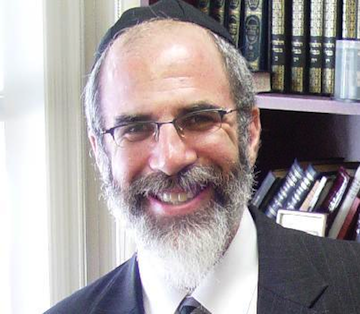
photo - Dr. Henry Abramson launched The BI Scholars series on Feb. 16
Dr. Henry Abramson launched The BI Scholars series on Feb. 16. (photo from Beth Israel)

His discourse looked at how Jews, over time, and to this day, use and relate to new information technology, and how it changes our modes of learning and disseminating texts. Abramson explained that Jews are generally early adopters of technology, beginning in the second century CE when, under the guidance of Judah Ha-Nasi, we moved from an oral tradition to the documentation of the Mishna in manuscript form, a big change that encountered significant resistance along the way. This was followed by the era of the printing press and, now, digital technology.

These communications technologies allow for significant democratization, and Abramson pointed out the value of the internet in that learning is available to all, whereas “treasured texts were previously not accessible to 50% of the Jewish community – namely, women.”

However, technology also presents dangers in terms of knowing the authenticity and authority of texts. It is our job, said Abramson, “to discover what we can trust and what we can discard.”

One of the female scholars about whom Abramson speaks is Ilana Kurshan, who has completed a remarkable feat of Talmud study – finishing the whole Talmud in seven-and-half years, Daf Yomi, a page a day. Kurshan will speak at the March 9 instalment of the Zoom series about her award-winning memoir If All the Seas Were Ink, which takes readers on a guided tour of the Talmud, while detailing her personal stories of love, loss, marriage and motherhood.

It is, indeed, one of the most unique Talmud commentaries ever written, as she explains: “The memoir is secondary. The way I happened to write this commentary on the Talmud is through my life.”

During her years studying the Talmud, Kurshan, a rabbi’s daughter from Long Island, N.Y., came to discover the terminology to understand her own daily experiences. “Talmud speaks to the human dimension of experience and, in many ways, that does not change,” she said. According to Kurshan, you cannot divorce the human experience from one’s own experience. “Just as the Talmud is a commentary on life, my life became a commentary on Talmud.”

On April 20, Dr. Benjamin Gampel, the Dina and Eli Field Family Chair in Jewish History at the Jewish Theological Seminary, will speak on the topic Riots, Inquisitions and Expulsions, and the Emergence of the Sephardic Diaspora. Gempel is a specialist in medieval and early modern Jewish history.

The series ends with Yuri Vedenyapin from McGill University, whose topic is The Adventures of a Yiddish Teacher. An actor and a singer-songwriter, his areas of academic interest include Yiddish language and culture.

All BI Scholars Zooms start at 7:30 p.m. To register, visit bethisraelvan.ca/happenings/adult-programs/bischolars.

Posted on February 26, 2021February 24, 2021Author Beth IsraelCategories LocalTags BI, daf yomi, education, Henry Abramson, Ilana Kurshan, Judaism, lifestyle, philosophy, Talmud, technology
What makes people happy?

What makes people happy?

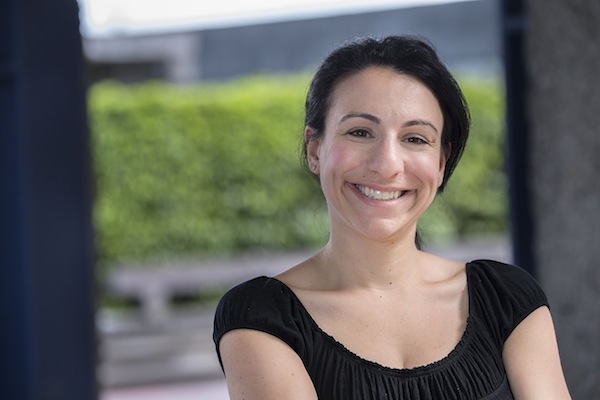
Simon Fraser University Prof. Lara Aknin (photo from SFU Communications & Marketing)

There are several paths to finding happiness, according to Prof. Laura Aknin. “But a central theme that rises above the rest is that a lot of happiness comes from our relationships with other people, and how we help and give to others.”

Aknin will deliver the talk A Reality Check, for Good: A Talk on Happiness via Zoom on Feb. 22.

“Guest speaker Lara Aknin is a distinguished associate professor of psychology at Simon Fraser University, and director of the Helping and Happiness Social Psychology Lab at SFU,” said Rabbi Yechiel Baitelman, director of Chabad Richmond. Born and educated in Vancouver, Aknin became interested in social psychology and human emotions while studying as an undergrad and graduate student at the University of British Columbia. According to Aknin, “Human emotions colour our existence, and bring meaning to a lot of what we do.”

Among Aknin’s research interests are well-being, happiness, social relationships, prosocial behaviour and altruism. She established the Helping and Happiness Social Psychology Lab, which studies the predictors of happiness and what makes people happy, the emotional consequences of kind and generous behaviour, and the well-being outcomes of specific spending choices. The lab also looks at how people can increase their happiness.

“Happiness is broadly universal, yet religious people tend to report higher levels of happiness,” said Aknin, when asked how happiness relates to Judaism. “One of the major lessons emerging from our helping and happiness lab and our study of well-being is that it’s not just what we do for ourselves, it’s what we do for others. When we help others and give to others, that’s when we find happiness.”

While not overtly connected, it appears that happiness aligns with Judaism’s emphasis on giving tzedakah and doing mitzvot.

“Helping others is a pretty clear and reliable path to experiencing greater well-being,” confirmed Aknin.

While acknowledging that religion is not her specific area of research, Aknin said, “The notion, or central message that giving to others, whether it be G-d or other people in your community or beyond is a meaningful source of finding joy, reward, value and meaning in life, is certainly aligned with the evidence in the literature.”

A fundamental concept in Judaism is the importance of serving G-d with joy.

“The emotional rewards of giving are a psychological universal, not just particular to the Jewish faith, but it might align with many of the teachings of the Jewish faith and others,” said Aknin. “Researchers see this not just in North America, but in rich and poor countries around the globe. We see it in kids under the age of 2 … we see it in ex-offenders. People experience emotional rewards when they engage in kind behaviour. Many religious principles regularly espouse the value and virtue of giving to others … these ideas have been around for centuries, but the evidence is now documenting the importance of this.”

The topic of helping and happiness resonates with people.

“At some level,” said Aknin, “our intuition says that giving to others is emotionally rewarding but, in real life, people are spending more on themselves – out of necessity, for things like paying their bills, [but] we often overlook opportunities [to give] and would be better off spending the money in our pocket on someone else, rather than on an extra coffee.”

Is it always about our own sense of well-being or is happiness a byproduct of something more altruistic? Is it selfish, for example, to donate clothes to a homeless shelter because it makes us feel good? Is it wrong to have a sense of well-being when we give to others?

“Those questions are central to the work that I do,” Aknin said. “It’s important to distinguish what the motives are for giving in the first place, versus how do you feel afterwards. There’s no question that there are emotional benefits for the giver, and that donating one’s time or money to others promotes well-being and increases life satisfaction. Sometimes, people give to feel good but, by and large, people are giving because they think it’s the right thing to do, and they want to help the person in need. Feeling good about it afterwards isn’t a bad thing. On the contrary, I think that’s a beautiful feature of human behaviour. It serves a purpose to help inspire us to do it again. It’s indicative of a care for humanity. Feeling indifference after giving would be more surprising.”

Aknin said happy people tend to have strong social relationships, they tend to be individuals who donate. and they tend to be relatively comfortable with where they are in life, not only financially, but also proud of what they’ve accomplished. Happy people also tend to live in a safe environment, she said, so being able to trust your neighbours is important.

Aknin is working on a commission that’s studying the trends around happiness and physical/mental health. Findings show that, during the COVID-19 pandemic, most people’s physical and mental health has suffered.

“Negative emotions are up, mental distress is up, depression and anxiety are up. Yet, despite all that, there is still some resilience and stability,” she said. The pandemic has given people time to evaluate their lives, and there is still much stability to be seen.

Aknin said some behaviours that are “protective,” such as exercise, make us feel better. “But people still feel better when they’re helping others,” she said.

According to Aknin, most people are happy, because “we’re very adaptive”; even though we think we aren’t, we are.

When asked if she’s happy doing what she’s doing, Aknin replied: “Yes, there’s great meaning and purpose in what I do.”

To register for Aknin’s Feb. 22, 8 p.m., talk, go to chabadrichmond.com/happiness.

Shelley Civkin is a happily retired librarian and communications officer. For 17 years, she wrote a weekly book review column for the Richmond Review. She’s currently a freelance writer and volunteer.

Format ImagePosted on February 12, 2021February 11, 2021Author Shelley CivkinCategories LocalTags Chabad Richmond, happiness, Lara Aknin, lifestyle, science, SFU, Simon Fraser University

Tu b’Shevat when it’s -30°C

As I went through my undergraduate and graduate school years, I cobbled together several different part-time jobs. One of my favourites was teaching Jewish music at weekend religious schools. This time of year, Tu b’Shevat (aka the New Year of Trees), songs were part of the lesson plan. Often, the kids I taught were just learning Hebrew for the first time, so I taught in English, too. One of my all-time hits was “The Garden Song,” which started with “Inch by inch, row by row, I’m gonna make this garden grow. All it takes is a rake and a hoe and a piece of fertile ground.” My second chart-topper was “Inchworm, inchworm, measuring the marigolds, won’t you stop and try to see how beautiful they are?”

Now, as I write this, I feel transported to a warm, sunny day in my garden, which is good, because it was -30°C with the windchill when I walked my dog in Winnipeg this morning! It’s good to be in touch with both the long-term hopes and dreams of summer and the realities of where we are. Holding that paradox, of both frostbite weather and sunny heat at once, is a great metaphor for where many of us are these days.

As a dual U.S.-Canadian citizen, I’ve been in knots over the unrest “down south” and the U.S. presidential transition. As well, I’m worried about the pandemic and about how poorly vaccine roll out has gone so far in Manitoba, and in Canada overall. I’m both thrilled to hear that all my children’s grandparents have gotten their first vaccine shot in the States, and also so sad to know that our local “adopted” Manitoba grandparents, both over 80, have no idea when they’ll get theirs.

Many people who have been sick with COVID-19 have struggled with challenging effects afterwards, including significant mental health issues. The anxiety and mortality struggles are pretty serious concerns for many of us, even if we haven’t gotten sick. One way my household has succeeded in coping is in burrowing in at home – into learning, good books, art and other DIY projects, building Lego and cooking. Everyone here, from age 9 and up, has kept busy with work and learning. We try to keep positive things in mind as much as we can.

I’ve been thinking about all of this, as I’ve considered what my plans are for the next days, months and even the year. In early January, I celebrated a birthday and the one-year anniversary of starting to study Daf Yomi, a page of Talmud a day. I am proud of finding the time to do this, however brief and poor my attention span may be sometimes. While I struggled with finding good (quick) resources for study, I found an Instagram page, posted by a rabbi, which seemed to summarize each page of study.

Hurray! I thought, I can review this in a glance while I help my kids with remote school lessons. Of course, anything that is in my Instagram feed has to then be kid-safe. Imagine my surprise when my account dumped two Daf Yomi posts with very scary images at me. One showed a person with a plastic bag over her head, struggling to breathe. The other showed someone’s hands, coated and dripping with blood.

Normally, I would simply unfollow this kind of thing without comment. However, these posts about Talmud were written by a rabbi, so I messaged her. “Hey!” I said, “I am so pleased to be doing Daf Yomi. I followed your posts, but I have to unfollow. These images on Tractate Pesachim 57 & 59 are too graphic. I don’t want my kids to see them.”

I got a response that left me, well, reminded that rabbis are just people, and that some of them may miss the mark at times. It was a “sorry to offend” kind of message. She indicated that she was a visual learner, that these posts were meant for those over 18 and that, to her, these seemed essential as an artist/interpreter, and she was guessing others felt the same. While she congratulated me on taking on Talmud study, I was also “othered,” as she, an artist, felt that dedicated followers would prefer this gory imagery in their social media feed.

I was disappointed. Although I am way past age 18, I am choosing, over and over, to focus on what I can gain positively from the talmudic text, even during a hard time. The talmudic rabbis, in parsing what had happened in Temple sacrifice, were trying to understand ritual events that had occurred a long time before. It was a disruptive period in history. Things weren’t stable. In fact, they weren’t actually doing sacrifices or actively harming people who didn’t observe properly. They were ironing out Jewish law for centuries to come, by confronting the past and figuring out the future through discussion, debate and study.

They did this by examining one small thing at a time. Much like the “Inchworm” song, Jewish rabbinic tradition teaches us to examine what is in front of us and to find solutions to challenges. I am distraught when I have to “hold” overwhelming images of rioting in the U.S. Capitol, the pandemic illness and deaths, and even a gory Instagram feed in my mind. Instead, I’m choosing a different path. It’s one that focuses on the next kids’ snack and meal, the next dog walk, and the next time I pick up the warm handknit mitts from the radiator as I face a cold morning outside. Inch by inch, row by row, we will get to sunny days in the garden ahead.

Sometimes, we do best when we embrace the ritual of “one thing at a time.” It’s one wintertime walk and, even, to knit each stitch as it presents itself on the needle to make more mittens. We’ve got a lot on our plate these days. Even so, we must eat only one bite at a time. It’s a metaphor and a paradox that the talmudic rabbis knew well. It might be a cliché but, for us, it also works.

Joanne Seiff has written regularly for CBC Manitoba and various Jewish publications. She is the author of three books, including From the Outside In: Jewish Post Columns 2015-2016, a collection of essays available for digital download or as a paperback from Amazon. Check her out on Instagram @yrnspinner or at joanneseiff.blogspot.com.

Posted on January 29, 2021January 27, 2021Author Joanne SeiffCategories Op-EdTags coronavirus, COVID-19, daf yomi, education, Instagram, Judaism, lifestyle, parenting, ritual, social media, Tu b’Shevat

Journey of the Soul

Starting in February, a few B.C. Chabads are offering Journey of the Soul: A Fresh Look at Life, Death and the Rest – In Peace, a six-session online Zoom course from the Rohr Jewish Learning Institute (JLI) that answers the question, What happens when we die?

“Participants will embark on a journey that will enlighten them and put them at ease with the topics of life and the afterlife. Practical and powerful, thoughtful and relatable, Journey of the Soul teaches a Jewish perspective on life, that begins before birth and lasts well after a person’s passing,” said Rabbi Yechiel Baitelman, director of Chabad Richmond and a local JLI instructor.

“Death is both mysterious and inevitable,” added Baitelman. “Understanding death as a continuation of life reveals the holiness of life, while putting everything in a dramatically new context. The soul is on one long journey that is greater than each particular chapter.”

According to Baitelman, Journey of the Soul considers what happens to the soul at birth and again at death. It ponders whether there is a better place after this one; whether our loved ones continue to connect with us; the Jewish understanding of reincarnation; and how to relate to an afterlife even if we’re not spiritual. Journey of the Soul is designed to appeal to people at all levels of knowledge, including those without any prior experience or background in Jewish learning. It is open to the public.

Doctors and most mental health professionals can earn CME or continuing education credit by attending the course – visit myjli.com/continuingeducation for more information and a complete accreditation statement.

“The discounted cost of $40 per person takes into account COVID-19, and the fact that so many people have faced illness, job loss, reduced incomes and other challenges. While this is far below the regular price of the course, we ask you to please consider adding a donation of any size to help defray the course costs, if you are able to,” added Baitelman about the fees to attend the Chabad Richmond series. “And feel free to try the first class for free with no commitment.”

Chabad Richmond offers Journey of the Soul starting either Feb. 3 or 4, 7:30 p.m., and running weekly until March 10 or 11, respectively (chabadrichmond.com or 604-277-6427). The course is also being offered by Lubavitch BC Feb. 2-March 9, 7:30 p.m., with Rabbi Dovid Rosenfeld (lubavitchbc.com or 604-266-1313); and Feb. 3-March 10, 7 p.m., with Rabbi Meir Kaplan (chabadvi.org or 250-744-2770). The series cost varies.

Posted on January 29, 2021January 27, 2021Author Chabad RichmondCategories LocalTags Chabad, death, education, health, Judaism, lifestyle, mental health, philosophy

Kindness a blessing to share

I was crying in front of the computer screen during a funeral service livestream. Again. It wasn’t my first of this pandemic. Even if the person didn’t ostensibly die of COVID, he’d been ill alone, unable to see family for long stretches because of it. And, because of COVID, I couldn’t be at the funerals in person, which were all in the United States. In normal times, I’d be rushing across the continent to be at these services with my family.

The person being eulogized, Rabbi Laszlo Berkowits, was a family friend, and was close to my parents. I called him “uncle” as a kid. He and his family were always part of our family’s holiday celebrations and gatherings. I played with his kids at his house. Their phone number was my elementary school’s emergency contact for me.

Rabbi Berkowits (Uncle Larry) was my family’s rabbi. He was also a Holocaust survivor. For a person who spent his teenage years in concentration camps, including Auschwitz, my Uncle Larry’s positivity, joy and ability to find the good in others were amazing. He had an incredible, long career, supporting and inspiring others to make positive change.

At the funeral, his family and friends (including my pediatrician) talked about how my Uncle Larry felt so grateful for the kindness of others, including the kindness of strangers. Without that help, he wouldn’t have survived the Second World War. Without the assistance and loving kindness of strangers – in Sweden, the United States and beyond – he wouldn’t have regained his health, gone on to serve in the U.S. military or received a full scholarship to become a rabbi. He wouldn’t have had the opportunities that truly enabled him to make such a difference in so many others’ lives.

This pandemic makes me think about how important that effort, to be kind and to reach out to one another, is for all of us right now. A year ago, the CBC Manitoba webpage ran a piece I wrote, “Mom’s emergency granola bar is there when you need it – no matter who you are.”

The article was about how I try to carry around snacks (granola bars) for my kids, just in case they need one, but that, sometimes, the best option for me is to offer that extra snack to someone else on the street, who is hungry, instead.

The thing is, since the pandemic started, like many Manitobans, we haven’t been out and about nearly as often. I don’t carry around snacks now because my kids are remote schooling. We’re working and learning at home, trying, like most of us, to reduce the number of people who might get sick or die from COVID. On a daily basis, I am not physically handing out those granola bars to anybody other than my kids.

A week ago, I got the most amazing email from a single mom friend who is a grocery store cashier in a city more than 200 kilometres away. She works very hard to keep her family afloat. She’d been waiting until her break to write me: “A man came through with 25 boxes of granola bars. No judgment – they were on sale! Then, he tells me he read an article about someone and their child or children who handed a person a granola bar and it stuck with him. So, now he has granola bars in his car and always hands them out to panhandlers and people who need them when he can.”

I could imagine her hearing this at the grocery store, her jaw dropping in surprise. She told the man that we were good friends and that she would tell me about this. The man said to pass along that, she wrote, “he has been doing this since the week he read your article and to thank you! Simple acts of kindness are what is keeping him going these days.”

When I read her email, I cried. It had been “one of those pandemic days” – where the news, the work and learning struggles at home, had all felt so hard. We’re all tired of worrying, so concerned about our loved ones. In fact, I’d been feeling badly that I couldn’t do more for others, write more, donate more, while juggling things on the stay-at-home front.

Another email from my friend arrived. She’d mentioned this man’s purchase to one of the grocery store owners. He’d said, if she sees this man again, the store would give him a discount on these purchases. Then he printed out the story to pass along, too.

I felt so grateful to this anonymous stranger who was carrying around all these granola bars to feed others, and continuing this kindness when I couldn’t. I wanted to thank him, but I also respect just how many anonymous givers might be out there. It takes all of us to beat this pandemic. Next year, I hope to host my amazing essential worker friend and her kids for a big celebratory Chanukah dinner again.

I’m so heartened to hear that the kindness my Uncle Larry encouraged in others is continuing to be passed along. I carry with me his constant reminders to be an upstanding person who does the right thing, who helps others, shines a light for others, even if he himself isn’t here anymore.

My Uncle Larry would say, “Be the best. Be a blessing.” He’d add something like, “We never know how long we’ll be here on earth. It’s our job to do good for others whenever we can – right now.”

At his funeral, another longtime family friend, Sam Simon, spoke, reminding us: “Be that stranger whose kindness is a blessing to someone so that they, too, can become a blessing to the world.” I am sure the biggest blessing of all would be if more people took that to heart.

Joanne Seiff has written regularly for CBC Manitoba and various Jewish publications. She is the author of three books, including From the Outside In: Jewish Post Columns 2015-2016, a collection of essays available for digital download or as a paperback from Amazon. Check her out on Instagram @yrnspinner or at joanneseiff.blogspot.com.

Posted on January 15, 2021January 13, 2021Author Joanne SeiffCategories Op-EdTags CBC, coronavirus, COVID-19, death, funeral, granola bars, gratitude, kindness, Laszlo Berkowits, lifestyle, tikkun olam

We Jews are a people of destiny

It was heartbreaking to read Rabbi Denise Handlarski’s op-ed titled “Harris-Emhoff’s significance.” [Jewish Independent, Nov. 27] Heartbreaking, yes. Shocking, unfortunately, not at all. Almost every single Jewish family, including my own, has a relative or close friend who has intermarried or has seriously contemplated intermarriage were the opportunity to present itself. A 2017 Jewish People Policy Institute study shows that, in the United States, 60% of non-Orthodox Jews, aged 40-44, are intermarried. In the 35-39 age bracket, 73% are intermarried; the percentage rises to 75% when dealing with those between 30 and 34. We are clearly witnessing a dramatic upward trend.

Rabbi Handlarski, ordained by the International Institute for Secular Humanistic Judaism, an institution that focuses on living a life with a cultural Jewish identity through a “non-theistic philosophy of life,” expresses her excitement over this popular trend and its prevalence among families of our global leaders. She writes, “Jewish communities have spent the past several decades trying to stop intermarriage. These efforts have failed…. It’s time we embrace our pluralistic and diverse families….”

It is true: we have failed. We have failed as a people to teach about the centrality of Judaism in our lives, the impact we, as a small nation, have made upon the entire world, the destiny of our future and the need to secure our traditions, beliefs and values within our families.

However, as a believer in God and the mission that we, the Jewish People, were charged with more than 3,000 years ago, the embracement of a non-Jewish spouse is: 1) an option that is simply not on the table and 2) even if it were on the table, the acceptance of such marriages is a recipe for failure for anyone with an interest to preserve Judaism.

Why is intermarriage off the table?

There is a well-known atheist, European author and philosopher Alain De Betton, who speaks about Atheism 2.0, a version of atheism that also incorporates our human need for connection, ritual and transcendence. He believes that religion adds a great deal to the world, but he just doesn’t believe in God.

De Betton articulates a defence of the halachic system that is both true and profound. He states: “The starting point of religion is that we are children and we need guidance. The secular world often gets offended by this. It assumes that all adults are mature – and, therefore, it hates didacticism, it hates the idea of moral instruction. But, of course, we are children, big children who need guidance and reminders of how to live. And yet the modern education system denies this. It treats us all as far too rational, reasonable, in control. We are far more desperate than secular modernity recognizes. All of us are on the edge of panic and terror, pretty much all the time – and religions recognize this.”

I once heard an insightful comment from a rabbinic teacher of mine: the word “mitzvah” has two very different connotations – a good deed and an obligation. For an action to be a good deed, it just needs to embed an inherent goodness. To fulfil a commandment means that there is a Commander. As soon as I acknowledge that I am doing a mitzvah, I am metzuvah – I am commanded and there is a Commander. Therefore, God’s word comes before mine.

Even if my rationale leads me to the conclusion that intermarriage expresses the positive values of acceptance and diversity, God has already decided that other values, perhaps unbeknownst to humankind, outweigh it. Maimonides, the 12th-century leading philosopher and codifier of Jewish law, writes in his code of law: “There is a biblical prohibition when a Jew engages in relations with a woman from other nations, [taking her] as his wife or a Jewess engages in relations with a non-Jew as his wife. As [Deuteronomy 7:3] states: ‘You shall not intermarry with them. Do not give your daughter to his son, and do not take his daughter for your son.’”

In truth, the conversation should stop here; it is a law from God and there is nothing more to discuss.

Why is intermarriage destined to fail?

However, not all of us find the word of God a compelling argument, or believe in His existence to begin with. To that group, the statistics should speak for themselves.

Rabbi Handlarski admits that there are very real grounds to fear assimilation, but, she argues, Jewish pride and identity can and does exist within many intermarried families. However, a 2013 Pew Research study showed that more than one in five Americans identify themselves as without a religion, more than two-thirds do not have any affiliation with any synagogue, and more than a third believe that Jesus being the Messiah is compatible with Judaism. The average Jew in North America knows who Jesus and his mother were, but they cannot name our forefathers, foremothers and who was married to whom. The average Jew knows more about Christmas carols than they do about Jewish liturgy.

Doron Kornbluth, author of Why Marry Jewish, writes that even among intermarried families who raise their children as “Jews only,” a mere 11% of those children would be very upset if their own kids did not view themselves as Jewish. The fears of assimilation are very real indeed, and there is an undeniable and direct causal link between intermarriage and assimilation.

Former British chief rabbi Lord Jonathan Sacks, of blessed memory, in his book The Dignity of Difference, writes that the prohibition to intermarry is not racist or intolerant; just the opposite! Without diminishing our love and concern for any fellow Jew, irrespective of her choices, Rabbi Sacks explains that, in our day, global cultural homogenization threatens to

destroy all minority groups and their culture. When we have a bit of everything, we represent nothing. This global phenomenon impacts many minority cultures and limits their impact on the broader world. In order for the Jewish people to continue to spread their values and be a light onto the nations, we must secure and safeguard our tradition from the threat of homogenization. We must first ignite a light before it can shine on others. To choose “romantic” love over faith is to set the trajectory for all future descendants towards a path of Jewish annihilation.

Finally, a few years ago, a guest rabbi lecturer was speaking here in Vancouver. He told the following story. A few years back, he was speaking to university-aged students and, a few minutes into the talk, a young woman raised her hand and said: “Rabbi, we are in attendance today for you to

answer just one question: Why should we marry Jewish?” He responded, “The question is not, Why marry Jewish? The question is, Why isn’t Judaism the central and integral part of your life such that ‘Why marry Jewish?’ is not even entertained as a question?”

The real question we must ask ourselves is, What does it mean to be a Jew? Are we culturally Jewish? Are we socially Jewish? Is our Judaism the same thing as Zionism? History has proven that none of these defines Judaism. Judaism has existed for thousands of years, and the state of Israel is but 70 years old. A Jew from Eastern Europe lived a drastically different cultural life from the Iranian Jew. Judaism is a charge that we were given at Mount Sinai to live a life in service of God, to better the world, and to pass the commandments and values down from generation to generation. It is a heavy responsibility, but history has proven that we can persevere with great pride and fulfilment.

Today, Dec. 18, is the last day of Chanukah. Ironically, if we saw any beauty in intermarriage as Rabbi Handlarski views it, then there would be no holiday, no celebration. The essence of Chanukah is about strong-willed Jews and their ability to withstand the pressure of Greek culture and to retain their identity. “Maoz Tzur,” the song that we sing when lighting the menorah, is all about the survival of the Jew throughout the centuries and our ability to maintain not just some of our values and traditions, but all of them. The solution is not to accept defeat. The solution is to become more aware of our history, understand what it means to be a Jew – today and every day – and live towards a viable future.

Rabbi Ari Federgrun is associate rabbi at Congregation Schara Tzedeck.

Posted on December 18, 2020December 16, 2020Author Rabbi Ari FedergrunCategories Op-EdTags assimilation, Denise Handlarski, intermarriage, Judaism, lifestyle

That glitter gets everywhere

I’ve been thinking about Caillou, a TV show for toddlers and preschoolers. It’s been on television since 1997. Caillou is a little bald French-Canadian kid. He’s broadcast in both French and English, and offers gentle lessons to kids everywhere. My twins watched a lot of Caillou.

The episode I’ve been remembering offers something basic that we should all know. The summary: Caillou’s doing art at preschool with glitter. When he finishes, he doesn’t clean up or wash his hands. The rest of the episode shows off exactly where the glitter ends up, from light switches to friends’ bodies to snack and the table and chairs. That’s why it’s so important to wash your hands after playing with glitter.

The glitter message sticks with kids. It’s also a remarkably easy way to explain germ theory – useful during a pandemic. Glitter, like germs, gets everywhere.

As an early glitter fan, I found this lesson powerful. As a kid, I had several surgeries for birth defects by the time I was 5. I was in the hospital a lot. During one recovery period, I was brought to a big sunny room in the pediatrics ward to do arts and crafts, including glitter, which I loved. My mother still jokes about this more than 40 years later – remembering the day the surgeon came to check my incisions. My mom likely hovered, anxious, as he checked my abdomen and sides. He looked up and grinned when she asked how things were healing. He said things were coming along nicely and were “very colourful!”

What does this have to do with Judaism? I’ve been studying Tractate Pesachim as part of my pursuit of Daf Yomi (a page of Talmud a day). Pesachim’s topic is Passover. In Pesachim 15, the issue is how to burn all the chametz (leavened bread) that we get rid of right before the holiday. It’s considered “impure.”

Impurity here is often defined as something “in the wrong place at the wrong time.” There are many reasons why something is considered impure. The questions the rabbis are weighing are interesting. They wonder, “Is it OK to burn two different kinds of impure things together?” They imagine the Temple priests having to get rid of all this and finish cleaning by the start of the holiday.

The other impure things brought up – and this rabbinic impurity topic is complex – are pigul and nottar, two categories of sacrificial meats that have gone wrong. Jane Shapiro, in introducing this issue on the My Jewish Learning website, explains that pigul is something sacrificed “with improper thought.” That is, something sacrificed in error; that is, the priest thought it was to be burnt or eaten at the wrong time. Nottar was an offering made at the right time and not eaten – basically, leftovers, which are then considered impure. There’s common sense in this. Sometimes we cook things incorrectly (pigul) or, lacking refrigeration, we might just have to get rid of leftovers (nottar) to avoid food poisoning. In these cases, the impurity’s a mess-up. It’s not an unclean animal, another source of impurity, but, rather, a human mistake that leads to the disposing of something.

As the rabbis sort through what can be burned together, they examine how one kind of impurity causes a first-degree impurity, which, if it touches something else, becomes a second or a third degree of impurity. Something in this discussion reminded me of glitter and, then, germ theory.

Even the most careful person can be surprised by a sneeze, or get too close to someone when they are supposed to be social distancing. In fact, keeping oneself safe from invisible germs, like the coronavirus, can be difficult. Even healthcare workers, swathed in protective equipment, can slip up. In a sense, this rabbinic concept of impurity is a lot like catching germs. If we accidently mix items or people inappropriately, we pass along impurity, or germs.

If we visualize germs like Caillou’s glitter or my preschooler hospital craft project, we better understand how tricky a time we’re in. We’re still facing a long haul.

Yes, we hear a vaccine is on its way, but we don’t yet know how long it will take for enough Canadians to be vaccinated. We don’t know how effective the vaccine will be, or if enough people will be willing to take it. Meanwhile, COVID-19 is spreading just like that glitter. It’s everywhere that we are, and it’s scary. There’s every chance that we might encounter the virus through an inadvertent slip up (like the rabbinic impurity of pigul or nottar) but, since it’s germs and not glitter, we won’t know until later. We must act as if we are impure because the virus isn’t visible.

The most poignant part of this whole complicated impurity narrative is that the rabbis just can’t figure it all out. They say more than once that we’ll just have to wait for the prophet Elijah to return to give us the right answers. Reading it, you can imagine their shoulders shrugging as they struggle with what they don’t know and can’t figure out.

Scientists and doctors everywhere are also figuring things out as they go. They have to learn to live with the mystery. We don’t know everything – about the pandemic, how it works, when it will end and about those germs that spread like glitter.

For most, 2020 has been a rocky year. As we turn towards the secular year 2021, it’s important to remember that a vaccine might not be an instant fix. We face the future much as the rabbis faced some of these difficult questions about impurity long ago, and the researchers do today. We don’t know all the answers. We must do our best, square our shoulders, and keep on keeping on.

Yet, every week, as we end Shabbat, we sing about Eliyahu (Elijah) and we welcome him to every Passover and every bris. It’s in yearning for Elijah that we find the faith to keep trying.

Wishing you a happy and healthy 2021! I hope your home celebrations are great – and without glitter!

Joanne Seiff has written regularly for CBC Manitoba and various Jewish publications. She is the author of three books, including From the Outside In: Jewish Post Columns 2015-2016, a collection of essays available for digital download or as a paperback from Amazon. Check her out on Instagram @yrnspinner or at joanneseiff.blogspot.com.

Posted on December 18, 2020December 16, 2020Author Joanne SeiffCategories Op-EdTags arts, Caillou, coronavirus, COVID-19, germs, glitter, health, Judaism, lifestyle

Sabbath of life

I am one of the fortunates who has achieved the treasured time of contemplation, a time to appreciate in the profoundest way some inkling of what it has meant to be alive. I am not unique; I do not claim that. There are many around us who share, and have shared, this gift. Usually, it comes to those who have added years to their time on earth.

We have survived the birthing process in the wider sense. We have learned what it takes to live among our fellows. We have found a trade to gain the resources to provide for our creature comforts. We have succeeded in making connections with others to ensure our emotional needs are met. Hopefully, we have made a contribution to others. These things are in our past although we may carry them on for our own pleasure. They seem to be necessary elements in arriving at a time of peace within ourselves.

No matter what your religious persuasion is, or if you are agnostic or an atheist, there is room for this idea within your consciousness. We can survive “the slings and arrows of outrageous fortune,” as Shakespeare wrote in Hamlet, to arrive at this state and spend some of our time contemplating the mysteries of life. Behind us are so many things we would do differently if only we could. Behind us are the many times of terror, threatening unknowns regarding our plans and projects. Behind us are our brushes with an untimely death for which we were not ready.

If we have been incredibly lucky, we may be leaving behind some material evidence of our passage – a child, a service, some indelible scratch in the wall of time, whether remembered by others or not. Some of us may still have a file folder full of plans, a list of to-do items on our agenda. Godspeed to you! But, if you recognize that this is your Sabbath time, you are now more than willing to pass the baton to others. You are now more than willing to accept that there will always be more things to be done. And you are ready to contemplate that others will be found to carry out and complete those tasks. You are ready to sit back for awhile in the sun, enjoy the beauties of nature, the bounties of nature, the beauty of your children and your children’s children. Or the beauty of other people’s accomplishments, the beauty of other people’s children!

Much remains to be fixed in the world and some of it hurts dreadfully to contemplate. It is not surprising that we sometimes feel overwhelmed. But there are blessings we can count on our fingers. There are things you can point to that you have been responsible for, some positives that you can take credit for. You can take a deep breath and hug yourself. You did good! Real good! You deserve to celebrate the Sabbath, a rest day for your soul.

Max Roytenberg is a Vancouver-based poet, writer and blogger. His book Hero in My Own Eyes: Tripping a Life Fantastic is available from Amazon and other online booksellers.

Posted on December 18, 2020December 16, 2020Author Max RoytenbergCategories Op-EdTags aging, Judaism, lifestyle, philosophy

The man behind the curtain

It was a beautiful Wednesday morning. I awoke in a tangle of bed sheets and to an IV stuck in my left arm. I had been in a road biking accident in the city the night before, breaking my now throbbing right leg in three places. The night had been a blur of ambulances, narcotics and doctors bustling around the noisy emergency room. It was quiet now. I had been moved to a shared room on the seventh floor. Long beige curtains had been pulled around my hospital bed, shielding me from the other patients. I could see the sunlight splashing through the window on my left, as I looked out to the surrounding city buildings. It was still summer, but mine was over.

A tired nurse interrupted my thoughts, rushing in with an awkward blood pressure machine and a temperature wand. I wondered if the frequent checks were to ensure I was clear of infection and, perhaps, COVID-19. The ward was eerily empty of visitors. Strict regulations were now in place because of the pandemic, and the impact was evident. Suddenly, with fewer family members visiting, there was more for the staff to do. The nursing station seemed to be a never-ending symphony of ringing, as patients buzzed for attention.

On the other side of my bed curtain, I heard a patient cheerfully chatting to a nurse who had arrived to assist with his medication. The nurse’s smile was audible as she told him about her coming birthday plans at the beach, physically distanced, of course. I eavesdropped that day and I realized that my roommate knew the name of every care aide and nurse who came to his side. He greeted them with enthusiasm as they entered the room, as if welcoming each into his home. He called them by name and asked with sincerity about their families and futures. I never once heard this man whisper a word about his own pain.

That night I wept, overwhelmed by self-pity and my coming trip to the operating theatre, where they would screw my splintered bones back together. I lay still and stared at the ceiling, listening to the hum of the machines around me. I thought about how I was going to get the kids to school, how my work would be affected and all the things I could, temporarily, no longer do. This year was not getting any easier. And then, as I attempted to use my bedpan, it spilled.

I awoke the next day to the sunshine dappling on my starchy bed sheets and the scattered magazines on my bedside table. It was agonizingly early, and the birds were chirping loudly as if to flaunt the beauty of the day. I was disheartened by my bedridden state, my swollen leg wrapped in plaster and the unsightly road rash that covered my body. I sat up in bed and dreaded the lonely hours that lay ahead.

The silence of the room was soon broken by a quiet voice from behind the curtain.

“Good morning,” the voice said calmly, clearly directed at me. “Are you doing OK?”

The patient next to me must have heard my sobs the night before. Hesitantly, I responded. From there, he drew me into a conversation and brought me into his world, spinning my despair on its head.

For days, we talked endlessly through the hanging fabric to pass the time, without seeing each other. Each morning he would greet me with unwavering cheer, found somewhere in the depths of his own being, despite his medical challenges.

“Good morning, Caroline,” he would beam. “You are going to get through this.”

He was almost 80 years old, he proudly told me. He had a wonderful life filled with a loving family, amazing friends and memories. His heart was full. And come hell or high water, he was going to get better and get out of this joint.

This stranger became my unrelenting cheerleader, as if it was his personal mission to lift me up from my melancholy. As I told him about my family, he reminded me to enjoy these precious years with my young children and how fortunate I was to have a partner who was by my side, when the hospital allowed. As we talked through the curtain, he encouraged me to find the best in all difficult circumstances, including this one, and to remember that the glass is always half full. Life is not always easy, he would say, but you have to carry on and look for the positive. His optimism radiated throughout our hospital room.

After our hours of conversation, we asked the nurse if we could see each other. Bedridden, connected to IV poles and draped in matching hospital gowns, we waited in anticipation as the curtain was drawn. As his eyes sparkled, he smiled knowingly and told me that I had so much to look forward to. I felt a sense of exhilaration, seeing him for the first time, after all that had been shared in our intimate room.

Despite his own ill health, he continued to coach me from his hospital bed in the days that followed, gracefully placing my injury in perspective. It was left unsaid that I was one of the lucky ones. I only needed to look over to the third patient in our room, who had been in a motorcycle accident, to count my blessings.

My roommate was wise and unrelenting with his words of encouragement. He was infectiously optimistic and didn’t complain, except about the food, assigning a score out of 10 to each meal. We joked about this often, that and the dismal TV options. My discharge papers were finally signed on the fifth day and I waited eagerly to get home to my family. As I was wheeled out of the room, our eyes met and we said our final goodbyes. I felt emotional, as I knew that I would likely never see him again.

I think of my exceptional roommate often and of what a gift he was to me. The impact he made during those difficult days on the hospital ward still resonates. Everything will be okay and there are brighter days ahead, for all of us. Thank you, Sanford, for being my silver lining, my ray of sunshine. I am grateful.

Caroline Dickson lives in Vancouver. This story was originally published in the Globe & Mail and a Jewish community member shared it with the JI. In recognition of Sanford Cohen’s kindness towards everyone he meets, Dickson is collecting Chanukah gifts from the community for him this year. If you would like to contribute a gift or send a card, please email [email protected]. Drop-off locations are available in Richmond and Vancouver.

Posted on December 4, 2020December 2, 2020Author Caroline DicksonCategories Op-EdTags Chanukah, health, kindness, lifestyle, Sanford Cohen

Past helps decode present

My husband saw the pair of decoder rings in a catalogue, long before our twins were old enough for them. Still, he ordered them and put them away. At the time, it amused me. How could he predict the future? Would our kids want these someday?

Fast forward to one October 2020 pandemic weekend. I’m not sure how he knew it was the right time. Before I knew it, two 9-year-olds were whizzing around the house, holding onto rings much too large for their fingers, and sending each other secret messages in code.

When they returned to school that Monday, they continued with the crazy codes, trying to teach their classmates about it. Unfortunately, this fun was short-lived. About a week later, we got an email from the school. It said that remote learning “may” be offered, and that we could sign up if we “might” be interested.

The situation was worsening in Manitoba, so we clicked through late on a Saturday night. This seemed wise, if we indeed understood the confusing letter correctly, that this remote learning might be happening. In any case, if some people signed up for the remote learning, it would allow more room in our older, smaller school building for others to social distance. Well, surprise! We were contacted on Monday morning and, by that Wednesday, our kids were at home again, learning with us. In the long run, this is the right choice – Judaism teaches us to value life above all else.

Both my husband and I are already working from home. At the beginning of my career, I used to teach school. Although I’ve never taught Grade 4 before, we’re muddling through. The remote learning we’re offered doesn’t continue the Hebrew curriculum we had before. It started with a single Hebrew packet, but, when it looked like we were nearing the end and I asked the school if it had more to share, I got a stern “no” in response. Remote learning offers only the basics, even if we can see via Instagram that, in class, the kids’ schoolmates are still doing fun projects without us.

It’s hard on children to feel left out. However, since there’s already been a COVID virus exposure at the school, we made the safe choice for us. My kids are lonely for their friends. My husband, a biology professor, thinks that schools should shut down now, until the infection rate lessens and the health system isn’t so overburdened.

Yet, here we are, with an everyday virtual, multi-age “school lesson” that lasts an hour. We do the reading, writing, math and science on our own. We also do something Jewish. One night, it was a discussion about Mezritch, which was a centre of Chassidism. Another day we talked about tefillin. On a third day, we learned about Sigd, the Ethiopian Jewish holiday celebrated 50 days after Yom Kippur, which is now a national holiday in Israel. The kids keep up their Hebrew as best we can, with my support and by using a free language program online.

Today, we hit the very last page of the Hebrew packet sent home by the school a couple weeks ago. There were moans about how hard it was and further cries when they realized there was no more of the “packet Hebrew.” For me, the last page left a special, coded gift.

This page taught about how each letter of the aleph bet, the Hebrew alphabet, also signified a number. Aleph is one, for instance. The numerical values of the letters of chai, the word for life, add up to 18.

My kids struggled with this page for entirely different reasons. But, if we can learn to write the numbers in Arabic numerals (also called the Hindu-Arabic system), we can learn the Hebrew ones. We’ll learn to spell out the number names in Hebrew. Like magic, I’d been given a gift, a secret decoder system to share. We just have to learn all the symbols together!

I won’t lie. I wish my kids’ class had all gone “remote” together, so they could see their classmates for an hour a day. I wish the pandemic hadn’t happened. I wish I’d gone to bed earlier over the weekend, instead of staying up late, reading the huge obituary section – but wait, that’s not right.

My biggest wish that puts all these little ones to shame? I want to honour every life that’s in those obits, every life that has been lost. There’s so much suffering, death and loss right now, and we’re all working our way through it.

I also want to honour the diverse positive ways we’ve innovated and managed during a scary, singular experience. Studying a textual tradition like ours, that’s thousands of years old, means we have deep resources. We can hear about deaths and the first obituaries in the Torah portions this time of year. We imagine similar chaotic experiences like Noah’s ark in the flood, or the destruction of Sodom and Gomorrah. There are plenty of opportunities to think through our rich history during remote or home school.

On the plus side? It also means that I have a Hebrew lesson plan for tomorrow and beyond. We have access to an ancient, special Hebrew numerical code, called Gematria, and a mom teacher who now gets to figure out how to use that, along with those fancy decoder rings, for good – for the twins to learn math, puzzles, Hebrew and more … in Grade 4.

Joanne Seiff has written regularly for CBC Manitoba and various Jewish publications. She is the author of three books, including From the Outside In: Jewish Post Columns 2015-2016, a collection of essays available for digital download or as a paperback from Amazon. Check her out on Instagram @yrnspinner or at joanneseiff.blogspot.com.


Posted on November 27, 2020November 25, 2020Author Joanne SeiffCategories Op-EdTags coronavirus, COVID-19, education, family, Gematria, Judaism, kids, lifestyle, parenting

Posts pagination

Previous page Page 1 … Page 12 Page 13 Page 14 … Page 24 Next page
Proudly powered by WordPress