Rosh Hashanah greeting cards (above and below) from the author’s family’s collection. The cards are almost 100 years old. The translation of the one in which people are walking is “Into the synagogue.” It is signed by Chaim Goldberg, a well-known artist who also illustrated many children’s books. The party postcard, also done by Goldberg, is a printed rhyme, which translates as, “Boy, girl! Dear, refined! Who is like you? Happy letters, dear writings, I have for you!”
The Jewish calendar is an amazing conceptualization of time that has evolved (what else?) over time.
In his blog on the Museum of the Jewish People at Beit Hatfutsot website, Ushi Derman relates that, originally, the Jewish calendar was a solar calendar. But it was not just a solar calendar, it was a holy solar calendar, delivered by angels to Enoch. (See the Book of Enoch, the section dealing with astronomy, called “The Book of Heavenly Luminaries.”) Temple priests had to follow a rigorous schedule – time itself was judged to be sacred. Thus, the Temple in Jerusalem was regarded as both the house of G-d and the dwelling of time.
With the destruction of Jerusalem’s Second Temple, the priests lost their power. They were no longer the mediators between G-d and the people. Authority switched to the scholars (our sages) of the Mishnah (edited record of the Oral Torah), Talmud and Tosefta (similar to the Mishnah, but providing more details about the reasons for or application of the laws).
In a bold move, the scholars declared that G-d had handed religious authority to humans. “Each month, envoys were sent to watch the new moon and to determine the beginning of the month. Thus, the ownership of time was expropriated from G-d and delivered to man – and that is why the Hebrew calendar has survived for so many centuries,” writes Derman in the 2018 blog “Rosh Hashanah: The Politics and Theology Behind Jewish Time.”
Here is a lovely story from The Book of Legends, edited by Hayim Nahman Bialik and Yehoshua Hana Ravnitzky, illustrating the above change. A king had a clock. “When his son reached puberty, he said to him: My son, until now, the clock has been in my keeping. From now on, I turn it over to you. So, too, the Holy One used to hallow new moons and intercalate years. But, when Israel rose, He said to them, until now, the reckoning of new moons and of New Year’s Day has been in My keeping. From now on, they are turned over to you.”
Perhaps oddly, the Mishnah mentions more than one new year. In fact, it points out four such dates on the Jewish calendar:
The first of Nissan is the new year for kings and for festivals;
The first of Elul is the new year for tithing of animals (some say the first of Tishrei);
The first of Tishrei is the new year for years, sabbaticals and Jubilee, for planting and vegetables;
The first of Shevat is the new year for trees, according to the House of Shammai, while the House of Hillel (which we adhere to today) says the 15th of Shevat, or Tu b’Shevat.
With its thrice daily prayers, the synagogue came to replace the Temple. Excluding Yom Kippur, synagogue attendance is higher on Rosh Hashanah than any other time of year. Rosh Hashanah prayers are compiled in a special prayer book, or Machzor.
Amid COVID-19, the following words about Rosh Hashanah have heightened meaning: “The celebration of the New Year involves a mixture of emotions. On the one hand, there is a sense of gratitude at having lived to this time. On the other hand, the beginning of a new year raises anxiety. What will my fate be this year? Will I live out the year? Will I be healthy? Will I spend my time wisely, or will it be filled in a way that does not truly bring happiness?” (See the Rabbinical Assembly’s Machzor Lev Shalem for Rosh Hashanah and Yom Kippur, published almost a decade ago.)
Sounding the shofar is one of the special additions to Rosh Hashanah services. According to Norman Bloom – in a 1978 article on Rosh Hashanah prayers in Tradition: A Journal of Orthodox Jewish Thought – the timing of the shofar blowing weighed in the physical safety and comfort of the congregation. Hard as it may be to comprehend today, scholars considered potential attacks from both local enemies of the Jews and from Satan himself. They also considered the comfort of the infirm, who might not be able to stay through a long service.
Rosh Hashanah has other curious customs. For example, there is a tradition of having either a fish head or, among some Sephardim, a lamb’s head as part of the Rosh Hashanah meal. This is meant to symbolize that, in the year to come, we should be at the rosh or head (on top), rather than at the tail (at the bottom). Vegetarians and vegans substitute a head of lettuce.
Both Sephardi and Ashkenazi Jews have Rosh Hashanah seder traditions. The symbolic foods include beets, leeks, pomegranates, pumpkins and beans. As Rahel Musleah has pointed out, each food suggests a good wish for the coming year. Thus, before eating each one, people recite a special blessing. Humour is at play, too, as some of the blessings are puns on the food’s Hebrew or Aramaic name. (Read Musleah’s article “A Sephardic Rosh Hashanah Seder” at myjewishlearning.com/article/a-sephardic-rosh-hashanah-seder.) Of course, we cannot neglect to mention that the festive table also includes apples dipped in honey, for a sweet new year, and a round challah, symbolizing both the cycle of life and G-d’s kingship.
Another Rosh Hashanah custom is Tashlich. This ceremony involves going to a body of water to symbolically cast off one’s sins. Breadcrumbs are often used, as are leaves, but, seeing that COVID-19 will be a part of this year’s holiday, here is another suggestion. Originally, this activity was used with youth groups of the Reform movement – participants wrote out their sins and then the papers on which they were written were put through a paper shredder. A dramatic gesture, suited to our current need for social distancing.
My city, Jerusalem, is a land-bound city without a sea or lake in its immediate vicinity. So, what do residents of the capital do? Those who wish to practise Tashlich go to one of the following four sites. Two of the four places are near the Supreme Court: the Jerusalem Rose Garden and the Jerusalem Bird Observatory. Also in the same general area is the Botanic Garden in the Nayot neighbourhood and, in the Old City, one can go to the Shiloah Springs in City of David.
Wishing all readers a year of blessings and not of curses.
Deborah Rubin Fields is an Israel-based features writer. She is also the author of Take a Peek Inside: A Child’s Guide to Radiology Exams, published in English, Hebrew and Arabic.
* * *
Additional observations
• Hebrew has a number of expressions using the word rosh. Here are just a handful of examples: rosh hamemshala (prime minister); rosh kroov, literally cabbage head, or a negative reference to someone who is not very bright; rosh katan, someone who is small-minded; l’kabel barosh, to be defeated; and rosh tov, or good vibes.
• Anyone interested in learning more about the solar calendar should read Prof. Rachel Elior’s article, “Enoch Son of Jared and the Solar Calendar of the Priesthood in Qumran,” which can be found in a Google search.
One of the many names of Rosh Hashanah, the Jewish New Year, is Yom Harat Olam, the birthday of the world. It is the day on which our tradition says the world was created.
Before we can begin to celebrate this “birthday,” however, something is required of us. During the month prior to Rosh Hashanah, we prepare ourselves spiritually for forgiveness and, in the 10 days between Rosh Hashanah and Yom Kippur, the Day of Atonement, we are meant to ask forgiveness of anyone we may have hurt during the year, even unintentionally. We are required to atone for wrongs between people, in contrast to the sins that arise between us and G-d. We cannot make a spiritual “return,” if we remain shackled with unresolved guilt and resentments.
More Jews attend synagogue on these two holidays than at any other time. Many of the prayers praise the mighty and wondrous works of the Creator, in keeping with the theme of “the birthday of the world.” We are to recognize that life itself is a Divine gift and has a sacred purpose.
According to our tradition, everything we do is recorded in the Book of Life. No deed, word, thought, good or evil, goes unrecorded. The record is supposedly kept in heaven. One belief accords this job to Elijah the prophet, keeper of the records of humanity’s deeds. On Rosh Hashanah, the Book of Life is examined, our acts in the preceding year weighed and judged. On this basis, it is decided “who shall live and who shall die … who shall be brought low and who shall be exalted.” For this reason, we wish for one another, “May you be inscribed for a good year.” We are taught that the only way to avert a severe decree is by “penitence, prayer and charity.”
According to Rabbi Kruspedai, in the name of Rabbi Yohanan, three books are opened on Rosh Hashanah – one for the wholly righteous, one for the wholly wicked and one for most of us, those in between. The wholly righteous are inscribed and sealed in the Book of Life, the wicked in the Book of Death and the rest of us are held suspended until Yom Kippur, when we are judged worthy or unworthy. The zodiacal symbol for the Hebrew month of Tishrei is, fittingly, a balance – the scales of justice.
Many people accompany all meals at this time with apples and honey. In addition to its other symbolism, the apple represents the Shechinah (Divine Presence), which kabbalists refer to as an apple orchard.
With the emphasis on creation at this time, it is customary to eat an apple dipped in honey on the first night of Rosh Hashanah, after the blessing on the wine and bread, and say: “Blessed art Thou, O Lord our G-d, King of the Universe, who created the fruit of the tree.” This is followed by: “May it be Your will, our G-d and G-d of our fathers, to renew unto us a good and sweet year.”
On the second day of Rosh Hashanah, we eat a new fruit – one we have not yet tasted this season – and we recite a blessing over it.
How do we know on what day of the year the world was created? We know that the first word of the Torah is Bereishit, in the beginning. When the letters are changed around, they read: aleph b’Tishri, the first of Tishrei, when G-d began to create the heaven and the earth.
May we all be inscribed for a good year.
Dvora Waysmanis a Jerusalem-based author. She has written 14 books, including The Pomegranate Pendant, which was made into a movie, and her latest novella, Searching for Sarah. She can be contacted at [email protected] or through her blog dvorawaysman.com.
Reboot’s annual 10Q annual reflection project, which sends participants a question a day for 10 days will return for the 13th year this month. But, with the challenges, grief and fear of COVID-19 weighing heavily on the world, this year’s 10Q will include additional questions to offer a space for exploring and preserving feelings and experiences of this unique time in a digital time capsule.
Each year, for 10 days, the 10Q project from the nonprofit Reboot captures daily insights, experiences and beliefs from tens of thousands of people, many of whom have been participating since 10Q’s founding in 2008 and have amassed a personal archive.
“It has been found again and again that, when difficult circumstances hit, the simple experience of taking a pen and paper and allowing our inner voice to speak through our pens is in itself a healing and regenerative act,” said Nicola Behrman, 10Q co-founder (in partnership with writer Ben Greenman and educator Amelia Klein). “We know from 13 years of answers just how meaningful the 10Q experience is for so many, but, this year, when the foundation of everyday life has shifted so seismically and we are desperately attempting to find meaning in the madness, this simple act of reflection is both anchoring and essential.”
For 10 days, starting Sept. 18, and coinciding with the traditional period of reflection during the High Holidays, participants of all backgrounds will get the 10Q questions by email, leading them to their private digital portal, where the answers will be stored. The annual 10Q questions are not intrinsically religious and are focused on life, personal goals, plans for the future, relationships, our place in the world and more.
The answers are returned to participants the next year before the project starts again. The 10Q vault serves as a digital time capsule, and answers to the new questions will serve as a chronicle of experiences through COVID-19 that can also be shared by participants with future generations. For some people, this is a one-time experience; for others, 10Q has created an annual tradition of building a personal archive for future years and mapping personal growth.
Although the project is rooted in the Jewish idea of ethical wills and runs during the 10 days between Rosh Hashanah and Yom Kippur, in the last decade, more than 70,000 people of all backgrounds and ages have turned to 10Q for a meaningful and modern spin on the centuries-old tradition of introspection, atonement and self-change during the High Holidays. The questions have scrolled on the jumbo screens at Times Square in New York City and on the Las Vegas Strip.
“It has never felt so important to pause and reflect on ourselves and the world around us,” said Reboot chief executive officer David Katznelson. “We are living in such a unique moment of human history, a moment that is worth turning to the individual to ask big questions about what we can learn to take us into the future.”
To find out more about 10Q and to register, go to doyou10q.com. Find out more about Reboot at rebooters.net.
Like many of you, I approach the New Year and Yom Kippur with a heavy heart. Ashamnu. We have sinned. Much is not well, not as it should or can be. Our communities are filled with anger, fear, hatred, pain, and acrimony.
Our tradition placed a heavy burden on us. Atonement is only attainable when accompanied by a commitment to change one’s behaviour. The burden is doubly heavy, for we are not merely responsible for our individual failings, but for our societal ones. Ashamnu. We have sinned. Yom Kippur is not merely a day of prayer in search of Divine forgiveness, but a day of taking responsibility for the world that we have created.
There are so many places to start this process and, for those who don’t know where, the Jewish prayer book provides guidance. Ashamnu. Bagadnu. Gazalnu. Dibarnu dofi. We have sinned. We have betrayed. We have taken that which is not ours. We have spoken evil.
This year, I will begin with the sin of certainty. The certainty that I have the truth and others do not. The certainty that I am right and others wrong. The certainty that I am good and others bad. The certainty that I love my country and others do not.
“Our God and God of our ancestors, we are neither so insolent nor so obstinate as to claim in your presence that we are righteous, without sin; for we, like our ancestors who came before us, have sinned.” (Yom Kippur Machzor)
Inherent to every social structure is the reality of difference. Members, adherents, citizens, who join or are joined together by blood, race, gender, ideology, religion, culture or nationality, inevitably find themselves disagreeing over issues both minor and major. Differences are a permanent and inevitable reality of life. By themselves, they do not undermine social cohesion. What threatens unity is how we respond to the reality.
The three conceptual tools for reflecting on difference are pluralism, tolerance and deviance. When those who are different are classified as deviant, the possibility of a shared society with them comes to an end. It is here that the sin of certainty spreads its destructive poison. The hubris of certainty allows one to shun and shame those who do not share in the truth as you know it, and to move them to the margins of society, if not outside it. Armed with certainty, acts of blatant aggression are clothed with the garments of self-preservation and sanctioned as acts of group loyalty.
A certainty of a different form is played out in the category of pluralism. We are pluralistic toward those differences that we assume to be of equal value to our own positions – “These and these are the words of the living God.” With pluralism, we accommodate difference that we believe is equally authentic and that we can associate as being on par with our truth, our knowledge and our beliefs. These and these are the words of the living God, but not those and those. And the one who decides is us.
Why tolerate that which I believe to be wrong?
The danger that lies with the sin of certainty is that it attempts to create social life around the categories of pluralism and deviance alone. Difference to which I ascribe value is accommodated and welcomed as my friend. Difference that I do not, is rejected and ostracized as my enemy. I and my certainty are the ultimate arbiters of who is in and who is out, who is valued and who is not, who is to be cared for and who is not, who is to be respected and who vilified.
It is tolerance, the often-derided category, that is most absent in much of contemporary social discourse. One does not tolerate that which one values, but rather that which one thinks is wrong. Tolerance can only take root in those places where we are able to relinquish our claim to certainty. Why tolerate that which I believe to be wrong? Because I know it is possible that my belief may also be wrong. Because I believe that truth, knowledge and enlightenment will only grow when I expose my certainty to the critique of others; when I am open to learn from others’ truths, knowledge and experience.
Why tolerate that which I believe to be wrong? Because I and those like me do not have a monopoly over the “true” identity of our society. It is theirs just as much as it is ours. We are destined to live with those who believe and do that which we hold to be intolerable. In some cases, judgment of deviance is both called for and necessary and, without boundaries, our societies will dissolve and lose any purpose, meaning and identity.
Which difference do we tolerate, and which do we not, is the question. The sin of certainty both blinds us to this question and renders us incapable of such discernment. The price? The price is the dysfunctional harmful social discourse and behaviour dominating our lives today.
“Our God and God of our ancestors, we are neither so insolent nor so obstinate as to claim in Your presence we are certain.”
Rabbi Dr. Donniel Hartmanis president of the Shalom Hartman Institute and author of the 2016 book Putting God Second: How to Save Religion from Itself. Articles by Hartman and other institute scholars can be found at shalomhartman.org.
Sarah Hurwitz will help launch Jewish Federation of Greater Vancouver’s annual campaign on Sept. 8. (photo from Jewish Federation)
Sarah Hurwitz, who for seven years served as head speechwriter for former first lady Michelle Obama, will be a featured speaker at the Jewish Federation of Greater Vancouver’s annual campaign opening on Sept. 8, which will be held virtually.
Hurwitz spoke to the Independent about her new book, Here All Along: Finding Meaning, Spirituality, and a Deeper Connection to Life – in Judaism (After Finally Choosing to Look There), and her upcoming Vancouver talk, which, before the pandemic, she had planned to deliver in person.
Here All Along traces Hurwitz’s personal journey back to her Jewish roots, a journey that began after an introduction to Judaism class in 2014. Before that time, she said, her main points of contact with the faith had been at “dull, incomprehensible” High Holiday events and a “lifeless” seder.
Her book delves into such areas as the Jewish traditions of questioning, debating and interpreting religious texts, “freeing God from his human-shaped cage,” and marking holidays and lifecycle events.
“What most surprised me (after taking the class) was the depth of spiritual and ethical wisdom Judaism had to offer,” she said. “I had always been proud to be Jewish and considered myself a ‘cultural Jew,’ but I knew almost nothing about Judaism. Once I started learning, I discovered thousands of years of profound wisdom about what it means to be human – how to live a worthy life, how to be a good person, how to find spiritual connection, and so much more.”
When asked how this discovery has affected her life, she explained: “My Judaism informs how I live every day of my life. It informs the ethical decisions I make each day about how to treat others, especially when it comes to the words I speak to and about them. It’s helped me develop an adult spirituality – beyond simplistic notions of the divine as a man in the sky who controls everything and punishes us when we’re naughty – which allows me to feel greater awe, wonder and gratitude each day. And it’s brought me into an amazing community of people, not just in the U.S., but across the globe – spiritual leaders, scholars and Jewish professionals who’ve become my dearest friends, mentors and teachers.”
Study, Hurwitz said, is a big part of her Jewish practice these days, though she would not label it an “intellectual pursuit.”
“Law school was an intellectual endeavour. Jewish study is deeply spiritual and emotional for me. I don’t study Jewish texts to gain information or facts, or to hone my analytical skills. I study them to glean the deepest wisdom of my ancestors about how to live my life,” she explained.
Currently, she is studying Psalms in chavruta (partnership) with a friend. Every week, they connect on Zoom and discuss the language and themes of the Psalmists. She also had a recent series of one-on-one study sessions with a rabbi that focused on Chassidic texts.
Selected last December by the Forward as one of the 50 most influential Jewish Americans, Hurwitz helped the former first lady put together many well-received speeches – including her 2016 Democratic National Convention address – and traveled with Obama around the world. She also worked on policy issues, as a senior advisor to the White House Council on Women and Girls.
Before working at the White House, Hurwitz was chief speechwriter for Hillary Clinton during Clinton’s 2008 presidential primary campaign. She then joined the Obama campaign, serving as a senior speechwriter for then-Senator Barack Obama and helping Michelle Obama draft her 2008 Democratic National Convention speech.
Prior to the Clinton and Obama campaigns, Hurwitz served as deputy chief speechwriter for Senator John Kerry’s 2004 presidential run and also worked as a deputy chief speechwriter for General Wesley Clark’s primary bid, as well as for Senator Tom Harkin. Earlier in her career, she was a lawyer at the Washington, D.C., office of WilmerHale. Presently, she is working on a proposal for another book and, while she does not write speeches at the moment, she does “help people out with remarks they’re giving, or offer edits.”
Hurwitz’s Vancouver talk will explore a wide range of subjects, such as working for Michelle Obama in the White House, spiritual and ethical insights in Judaism that have most transformed her life, and some thoughts on the future of Judaism. She will be joined at the virtual launch by fellow keynote speaker Nigel Savage, president and chief executive officer of Hazon (jewishindependent.ca/the-world-needs-us-to-change). To register for the Sept. 8 campaign opening, visit jewishvancouver.com/faco2020.
Sam Margolis has written for the Globe and Mail, the National Post, UPI and MSNBC.
Services in the Schara Tzedeck auditorium, with social-distancing measures in place. (photo by Camille Wener)
In early March, Canadians were just beginning to take COVID-19 seriously. Then, in what seemed like an instant, the province shut down all places where people gather. Religious organizations were forced to close their doors – in some cases for the first time in more than a century – and rethink everything about how they engage with their congregants.
In a survey of rabbis and synagogue leaders across British Columbia after a summer of COVID, what emerges is not so much a story of hardship and difficulty but of resilience, creativity and a paring away of the superfluous to rediscover the most elemental things that we seek from spirituality and community.
The loss of life, the horrible illness and difficult recovery have directly affected thousands of British Columbia families, but we have fared better than many other jurisdictions. Even those not directly affected by the virus itself have had heartbreaking occasions, such as losing loved ones to other causes without family beside them, funerals and shivahs conducted online and, of course, the various burdens and isolation experienced by older people, those who live alone or others who are especially vulnerable.
As we approach High Holidays that are assured to be unlike any we have experienced before, there is an air of anxiety, but more evident is a flexibility and commitment to make the holidays as meaningful as possible. Although close coordination has taken place through RAV, the Rabbinical Association of Vancouver, every congregation is finding its own way and the holidays in most cases will occur along a spectrum of hybrid in-person and online services, most with multiple smaller, shorter programs. Services that routinely occur outdoors, such as Tashlich, will be joined in some cases with shofar-blowing and other services held out of doors. Despite all, reaction among rabbis is that community engagement and flexibility have made these months far better than could have been predicted in March.
“From day one, our motto was, we are not ramping down, we are ramping up,” said Rabbi Jonathan Infeld. His Conservative shul, Beth Israel, had not previously done programs or services online but, within 24 hours of the shutdown, all activities had moved online.
Zoom, an online meeting platform that almost no one had heard of before the pandemic, has proved a lifeline for individuals and communities, including almost all synagogues in the province. The platform’s interactivity allows individuals to participate in services, make virtual aliyot, engage in back-and-forth with teachers and guest speakers, and participate from home in numbers that rabbis say are routinely higher than in-person programs in “normal” times. “The social community of the synagogue’s remained intact,” said Infeld.
Most of Beth Israel’s congregants will experience the High Holidays from home, online. “It’s only the people who are leading the services and/or their families who will be in the building,” he said.
Provincial regulations permit a maximum of 50 people in any gathering, with social distancing enforced. For synagogues, that number varies based on the size of a sanctuary and the reality is that, to ensure two-metre separation, smaller synagogues will be able to accommodate far fewer than 50.
For the Orthodox Congregation Schara Tzedeck, however, online Shabbat and holiday services are not an option.
“We’ve had to think very creatively,” said Camille Wenner, executive director of the synagogue. “This was the first time in 110 years that our doors closed for davening,” she said.
People who had made minyan every week of their life suddenly couldn’t.
“That was really difficult,” said Wenner. “That’s why it was so important for us to mobilize a chesed committee to connect with everyone and make sure that everyone was OK. That’s how the idea of Shabbat in a Box developed and the idea of feeding people and making them feel that that ritual of Shabbat is still very much alive, you don’t have to be here to do it, we can still do it together.” That concept will be extended to Rosh Hashanah in a Box, which will go to more than 300 households.
Office administrator Anna Herman is among those who sanitize the prayer books for congregants to use at services. (photo by Camille Wener)
Schara Tzedeck was the first Orthodox synagogue in Canada to reopen to limited in-person services, on June 1. “It was nerve-racking,” Wenner admitted. The usual single Shabbat service has been increased to two. Hand sanitizers and masks are required. Those who do not bring their own siddur are handed a newly cleaned one. Additional custodial staff are on hand to wipe down the entire sanctuary between services. An online registration program allows congregants to see how many of the 50 seats remain available.
For the holidays, services will be expanded to meet demand, she said. Rabbis and cantors who work in day schools and elsewhere in the community have volunteered to lead smaller services, which will occur in various places throughout the building and may even take place under a tent in the parking lot, if need be.
“The services will be condensed to about two hours instead of the regular five,” she said. “Right now, we’re looking at six or seven services back to back starting at 6:30 in the morning.”
The Peretz Centre for Secular Jewish Culture normally doesn’t run programming through the summer. But, this year, the Sholem Aleichem Speakers Series has continued every Friday on Zoom and Exploring Jewish Writers, on Saturday mornings, also has continued through the summer, said Donna Becker, the centre’s executive director. “Both of them are better attended on Zoom than they were in person,” she said.
Peretz Centre holiday services will feature Stephen Aberle singing Kol Nidre, but the usual musical program, which sees the Vancouver Jewish Folk Choir interspersed with the audience, is obviously out of the question.
This year’s High Holidays will be the first since the inception of the progressive congregation Ahavat Olam in 2004 that will not be held at the Peretz Centre. Said board member Alan Bayless: “We would prefer not to use computers for Shabbat or High Holiday services, but we believe that virtual services are necessary for our community this year given the danger of the coronavirus.”
Rabbi Yitzchak Wineberg of Chabad Lubavitch BC, said the 10 Chabad centres in the province are all adopting protocols appropriate for their congregants’ needs. He worries that, with daily infection reports often heading in the wrong direction, the province may re-impose stricter regulations by the time the holidays roll around. Either way, he suspects many or most people will be marking the holidays at home. “It’s the reality,” he said. “It’s a question of what works and what is acceptable and what isn’t.”
On the positive side, online learning has skyrocketed.
“The amount of study that’s going on by Zoom is absolutely unprecedented,” Wineberg said. “That’s the silver lining. I have a feeling that it will continue once this pandemic is over, God willing as soon as possible, I think people are going to continue learning that way. You have the convenience of sitting in your home and participating almost as if you are there – that’s the new reality.”
The Reform synagogue Temple Sholom had a running leap at livestreaming services, so some of the infrastructure was well in place before the pandemic. The difference now is the effort they are going to not just to allow people at home to observe, but to participate in the services. Classes, webinars and other programs have been expanded online. The Men’s Club and the Sisterhood have moved their programs onto Zoom. The accessibility means Temple Sholom programs are reaching new audiences, often far outside Vancouver.
The summer weather has allowed the synagogue to hold some events in parks and in the courtyard behind the shul. Still, Rabbi Carey Brown has no illusions that these High Holidays will be like any other. For one thing, only clergy will be in the sanctuary.
“It will be really different,” said Brown, who is the synagogue’s associate rabbi. “We are working really hard to put together High Holiday services and experiences that will help people feel the sense of the season, both the newness of the new year and the reflectiveness of the season.”
The Okanagan Jewish Community, which does not have a permanent rabbi, has depended on volunteers to deliver programs and services. The Kelowna-area centre has seen significant growth, and is running an 11-person conversion class and various adult education programs on Zoom. As great as all that is, Steven Finkelman, the centre’s president, thinks this might be a tough year financially for the group, a concern expressed by several interviewees. Revenue generated at the High Holidays and through in-person galas or other fundraising events in normal years is likely to suffer this year.
While online programming has proven hugely popular, there can be no denying that this experience has resulted in some missed opportunities. Rabbi Philip Gibbs of West Vancouver’s Conservative shul Har-El, has pangs of regret when he thinks back to the grand plans the synagogue had in January for a year of innovation and new initiatives.
“I was very excited about both the scale and the types and the variety of programming – more cooking events or culturally focused programs that really were going to give our community the chance to gather and engage in a really fun, exciting and meaningful way,” he said. “Unfortunately, we’ve lost that opportunity.”
The challenges and opportunities of the High Holidays will be met with one or more services on different days, he said. While he and his congregation are making the best of the situation, Gibbs laments the loss of in-person collective connection.
Similarly, Rabbi Hannah Dresner of Or Shalom, which is affiliated with the Jewish Renewal movement, grieves the loss of some in-person connections. However, she feels that Zoom can provide an intimacy that a large group gathering might not. As well, not only are out-of-towners joining Or Shalom’s offerings, but the rabbi and others are surfing programs throughout the Jewish world and beyond.
“I just think it’s a time when the world is our oyster,” said Dresner. “Spiritually you can look for whatever kinds of workshops you want, so people are experimenting a lot more.”
Or Shalom will hold successive Tashlich services at False Creek, each accommodating congregants in limited numbers. For the well-being of ducks and other birds, Or Shalom members drop leaves rather than bread in the water.
“I love the creative challenge, but I can’t say it doesn’t keep me up at night,” Dresner said, laughing. “I hear a lot of rabbis say, I didn’t sign up for this. There’s nothing that we’re doing that I signed up for.”
This extraordinary time has forced and invited rabbis and others to reconsider everything. The changes have made her reflect on “what’s at the heart of the service, what do we really need, what’s extraneous, what makes it tedious? Because it cannot be tedious. It’s got to be tight, shorter and beautiful.”
Rabbi Levi Varnai of the Bayit in Richmond concurs that the crisis forced a reckoning. “If a synagogue is not doing services – and we don’t do services online – what do we do? It got us thinking to the real core of what a synagogue is really supposed to be about,” he said.
As an Orthodox shul, the Bayit cannot stream services on Shabbat or the holidays, but they have expanded classes throughout the week and held socially distanced events at Garry Point Park. Pre-Shabbat events help people prepare for the Sabbath and regular phone calls and visits by the rabbi and volunteers to speak with people from a distance and drop off packages keep a sense of community alive.
Now that limited in-person gatherings are permitted, the shul’s size permits 25 congregants. But even that is not quite as it was. “It’s coming in, praying and going, which is great because it’s more than we had before that,” he said, but there’s no food and no kibbitzing.
The holidays will see multiple services and people can arrange to be there specifically for Yizkor but perhaps not come for the entire day.
The chaos of shifting suddenly from the way things have always been done has not left Varnai a lot of time to reflect. But, when pressed, he acknowledged how surreal it is.
“It’s a huge change to the regular Jewish life that I’m accustomed to since I was a young boy, since my bar mitzvah, praying three times a day with a quorum of others,” he said. It’s a stunning transformation, but entirely within Jewish tradition. “We always put safety and well-being and health first.”
He puts the whole thing in perspective. “Our people came out of the centuries and had to go through a lot worse,” he said. “Not going to synagogue is not fun but, thank God, other generations were challenged with much greater hardships and we’re relatively blessed.”
Beth Hamidrash, the only Sephardi synagogue in Canada west of Toronto, counts among its congregants Dr. Jocelyn Srigley, a microbiologist who is a director with the infection prevention and control branch of the Provincial Health Services Authority. Rabbi Shlomo Gabay and shul president Eyal Daniel credit Srigley with helping guide them through this difficult time and say it was on her advice that their synagogue was the first in the city to close.
Services at Beth Hamidrash with COVID-19 precautions in place. (photo from Beth Hamidrash)
Despite the challenges, however, engagement is better than ever, said the rabbi. Daniel added that synagogue membership has actually jumped 20% since the pandemic began, something he credits to an increased desire for meaning, and also a direct outreach he began when he became president in June to encourage occasional attendees to commit to membership.
The strange situation has also helped strengthen relations between Beth Hamidrash and the two Sephardi congregations in Seattle. They virtually co-hosted an Israeli historian speaking on Medieval Spain, for example.
Probably no rabbi has had an experience quite like Rabbi Susan Tendler. The new spiritual leader at Richmond’s Conservative shul Beth Tikvah arrived in the midst of the lockdown with her family from her previous posting in Chattanooga, Tenn. The family then had to quarantine for 14 days, with community members dropping off prepared meals and greeting the family from a distance. Despite that unusual arrival, or perhaps because of it, she has reflected on big things.
“While I would never wish the pandemic on this world or on any person, really, this is an opportunity for renewal,” she said. “We do all have to reconsider what we’re doing and what our goals are and find new paths for reaching them.”
While hoping that services might return to normal in the not-too-distant future, she acknowledged that the very term sanctuary implies that every congregant must feel secure. “At a minimum,” she said, “it has to feel safe.”
Editor’s Note: This article has been amended to reflect that Or Shalom is affiliated with the Jewish Renewal movement, not the Reconstructionist movement, as stated in the original online and print versions.
It’s been almost two months since we launched our open letter on June 30 and so much has happened since then!
We have received hundreds of signatures of support from the Jewish community across Canada and several Canadian organizations, congregations and initiatives have written public statements outlining their commitment to our pillars. We have published these statements on our website and you can view them at nosilenceonrace.ca/statements. We’ve also received some coverage in Jewish publications across the country. We have made them available on our website as well. Although our set date of July 29 has passed, we are still accepting signatures and statements.
We have had conversations with leaders in our community and we know that many organizations are committed to action and to change. The work of creating inclusive, anti-racist and equitable Jewish spaces is a daily pursuit and we are encouraged to see the way our community has embraced our letter and the need for action and accountability.
Many of you have expressed interest in learning more about our pillars. Our team has launched a resource page (nosilenceonrace.ca/resources) on our website dedicated to furthering the conversation on each of our pillars and on how our community can collectively enact meaningful systematic change. We have also included equity consultants on this page that organizations can connect with directly to begin and continue this work.
Thank you to all of you who have reached out to us directly expressing your support and desire to get involved with our team and our work. We will be reaching out to you all soon. If you are reading this and would like to get involved with us, we’d love to hear from you! Please fill out our Get Involved page (nosilenceonrace.ca/get-involved) on our website to join us as we continue our work and create opportunities to connect with the community, grow our platform and take action.
We look forward to a time where we can create an in-person event and come together as a community. Until then, we encourage everyone to keep the conversation alive with your family, friends, communities and workplaces.
– Sara Yacobi-Harris, Akilah Allen-Silverstein and
Daisy Moriyama, co-founders, No Silence on Race
This summer, we passed signs along the Trans-Canada Highway. These are the ones that mark 10 kilometres, one kilometre at a time, allowing drivers to see if their vehicle’s odometer is properly calibrated. My kids haven’t done much in the way of long-distance car trips, and this was a novelty for them, like seeing horses, cows and fields of canola and flax flowers.
I was driving my kids out of town to social distance and pick berries at a farm on the prairies. In the middle of the day, we took a dip in Lake Manitoba at Delta Beach before driving home. The water was shallow and tepid, the sand dark-looking and the humidex 40. I sat huddled under a towel, trying to keep from roasting in the sun. My kids had a blast. I think this kind of outing will be something they’ll remember for a long time, even as I think of nicer beaches we should have tried, perhaps on a cooler or breezier day.
I was considering this afterwards, “in the rear-view mirror,” as I continued to read my page of Talmud each day. Part of doing Daf Yomi, for me, is seeing how the rabbis compare and discuss things. For instance, one rabbi might indicate the custom or halachah (Jewish law) in his town, while another says, no, that’s not how it’s done … someplace else. Even when the rabbis are living right in the same place, their perception differs in terms of how things go and what is acceptable. It’s all relative. Their efforts to define and shape Jewish law in a new age, after the loss of the Temple, required all kinds of careful legal arguments, and much of it is illustrated with anecdotes and backed up by quotes from Torah.
However, in Eruvin 6b, it’s made clear that one can’t just decide to follow “all the stringent rules” or all the lenient ones. Instead, we must choose one or the other, and demonstrate internal consistency and intellectual integrity. You can’t just follow parts of Beit Hillel or parts of Beit Shammai. A person who just does the strict things laid out by both Hillel and Shammai, who is he? “The fool walks in darkness.” (Ecclesiastes 2:14) The person who always chooses the easy, most lenient path is flat-out “a wicked person.”
Much of daily life revolves around these comparisons and measurements we make. As a parent, I’m often striving for internal consistency, while knowing all the time that much of what is going on in the world doesn’t make sense to me. It certainly isn’t consistent! How do we find helpful rules and guidelines as everything changes around us?
For one thing, we can look back through literature (Talmud) and (Jewish) history to find comparisons and role models, and this helps me at times. I know that, while this particular virus, COVID-19, may be new, many of the challenges we’re facing aren’t. Just as the rabbis used their experiences to compare and measure and create talmudic Jewish guidelines, we must rely on our education and experiences to navigate this time.
When I thought about it, I realized how many of my usual kilometre markers had changed. A “normal” summer for me as a kid involved summer camp and a family vacation, neither of which happened this year for my kids. A “normal” school year, beginning in September, might revolve around school bus rides, tests, grades, holiday gatherings and aiming towards things like bar mitzvah or graduation or other life events.
However, thinking critically doesn’t always mean that we must compare something to a fixed standard, or the way things ought to be or used to be. It might mean that we’re able to take the available evidence, compare things, and make meaning about what’s happening, instead. It may mean drawing conclusions from the available evidence.
Our evidence? This summer, my household has had far more family time. There’s been time for free play and day trips, spontaneous water play in the yard, long dog walks, ice creams, gardening, and even time for reading in the cool basement on very hot days. Despite some car repairs and the loss of much of my freelance work, our finances have actually been OK – because we have nowhere to go! (We haven’t spent money on a big trip to visit our relatives in the United States, for one thing.)
Like nearly everybody else, we’ve skipped big gatherings for school, holidays and birthdays. We’ve charted a different course. And, when I thought back to the markers on our day trip, I realized something. My car, purchased in the United States, measures distance in miles, so I can’t check my odometer on the Trans-Canada! Comparing kilometre markers in a car odometer that works in miles? That’s an apples to oranges comparison. It doesn’t work.
So, the introverts in our house didn’t have camp or anything “normal,” but also didn’t really mind missing the annual big events – no weddings, bar mitzvahs or graduation parties this year. Instead, my kids grew big cucumbers, learned to swim better, dug sandcastles, read many mystery stories out loud during our family “reading group” and practised cursive. Small markers, but still important ones.
Like the rabbis, we parsed out what made the experience meaningful during a difficult time. In the end, miles or kilometres, we made the same trip. Comparisons bring us understanding, order and sometimes even enjoyment, no matter how far we drive or how we measure it. If you’re sad about missing major milestones, it might be time to change the measurements you’re using. No matter what markers you use, you’ll find you still traveled a long ways this summer, metaphorically or literally. It’s all in how you use and view the comparisons.
Joanne Seiffhas written regularly for CBC Manitoba and various Jewish publications. She is the author of three books, including From the Outside In: Jewish Post Columns 2015-2016, a collection of essays available for digital download or as a paperback from Amazon. Check her out on Instagram @yrnspinner or at joanneseiff.blogspot.com.
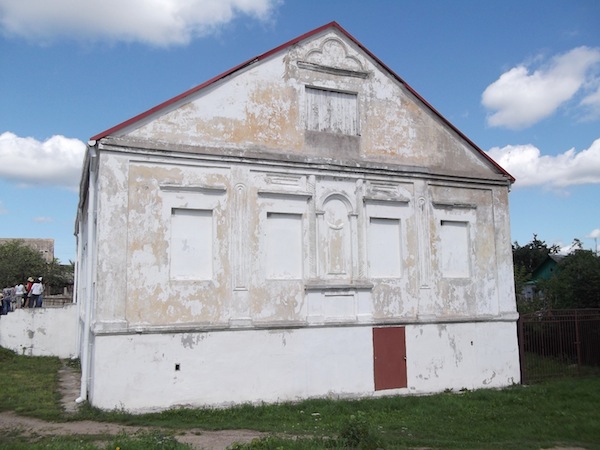
Following a North American call for submissions and an exhaustive selection process, Jewish Family Services (JFS) in Vancouver has been chosen by the Network of Jewish Human Service Agencies for participation in Year Two of the NJHSA Jewish Poverty Challenge, an offering of the network’s Centre for Innovation and Research. The goal of the program is to help NJHSA member agencies better analyze the marketplace, launch and manage solutions, and implement sustainable measures for success to address the many dynamics associated with responding to Jewish poverty.
NJHSA has partnered with Start Co., a venture development consultancy firm based in Memphis, Tenn., with an expertise in launching startup, entrepreneurial initiatives and engaging municipalities, corporations and nonprofits in poverty reduction responses. The team at Start Co. will provide expert consultation assistance as JFS rethinks and redesigns products and services, adjusting assumptions and organization models. Throughout, special attention will be paid to the impact of COVID-19 on service delivery methods.
“We are so honoured to have been selected to participate in this challenge,” said Tanja Demajo, JFS chief executive officer, in a press release. “The demand for our services has increased during COVID-19 and we have had to pivot quickly. Although we have adapted, we are experiencing growing pains. This opportunity through the NJHSA and with Start Co. is timely in helping us address our pain points in an innovative way so we can be more efficient and can operate at a pace our clients are demanding during this crisis.”
Reuben Rotman, president and chief executive officer of the network, added, “The COVID-19 pandemic has even further heightened the critical need for innovative solutions to the challenges of Jewish poverty. With newly vulnerable clients reaching out for assistance in unprecedented frequency, the agencies are challenged to identify new ways of working and new efforts to achieve sustainable solutions for those in need.”
For more than 80 years, JFS has delivered a continuum of social services to individuals and families of all ages and in all stages of life in the Greater Vancouver area; its pillars of support include food security, counseling and mental health, care management, financial aid and home support.
The Network of Jewish Human Service Agencies is an international membership association of more than 140 nonprofit human service agencies in the United States, Canada and Israel. Its members provide a full range of human services for the Jewish community and beyond, including healthcare, career, employment and mental health services, as well as programs for youth, families and seniors, Holocaust survivors, immigrants and refugees, persons with disabilities and caregivers.
Dr. Mel Krajden is among those who will be appointed to the Order of British Columbia this year. The announcement of the 13 new appointments was made on BC Day, but the investiture ceremony will be postponed due to COVID-19 restrictions and held for recipients and invited guests at Government House in Victoria in 2021.
Krajden is medical director of the BC Centre for Disease Control (BCCDC) Public Health Laboratory and has made significant contributions to fields of research, including hepatitis, HIV, HPV and, most recently, COVID-19.
With the emergence of COVID-19, British Columbia and Canada needed urgent access to rapid, validated tests for the virus. Under his leadership at BCCDC, and relying heavily on his expertise, Krajden and his team were able to rapidly develop an assay for the province to commence testing in January 2020, weeks before other jurisdictions. Access to this test was an essential element in the management and control of the outbreak and the safety of British Columbians.
Krajden created the world-leading B.C. Hepatitis Testers Cohort, which integrates de-identified data on 2.4 million individuals tested for, or diagnosed with, hepatitis B, C, HIV and TB infections, linked to their corresponding healthcare administrative data since 1990, to create longitudinal medical histories. This cohort has produced influential pieces of evidence that shaped clinical and public health guidelines and policy in Canada and globally. He was instrumental in the development and continued progress of the Canadian Institutes of Health Research-funded Canadian Network on Hepatitis C, a multidisciplinary group committed to developing a national strategy for hepatitis C elimination.
Krajden was one of the key personnel in the STOP HIV initiative in British Columbia. This public health endeavour saw the implementation of acute HIV testing, allowing diagnosis during the most infectious period of the disease, resulting in timely interventions and communication to partners to reduce transmission. This undertaking helped lead to the lowest HIV incidence on a provincial scale in decades.
Krajden also played a pivotal role in global public policy changes in human papillomavirus (HPV) vaccine dosing regimen and the associated reduction of financial access barriers to care. Similarly, his work with respect to assessing the utility of HPV testing versus traditional Pap smears is expected to contribute to guidelines that will benefit women worldwide.
In his educational capacity, Krajden has the reputation of being a wonderful teacher and valued mentor, training researchers, health professionals and students at all levels. He is known for his willingness to provide input and advice despite numerous other commitments, contributing to the success of others. His dedication further extends into the clinical realm, where he always has patient interests at heart and never hesitates to devote his own time to make a difference in client outcomes.
In appointing Krajden to the Order of British Columbia, it is recognized that, over many decades, he has demonstrated exceptional innovation, leadership and sustained contributions to the province, country and the world. He is a highly respected visionary, scientist and educator who has inspired countless researchers and health professionals with his clinical excellence, dedication and generosity of spirit.
***
Rabbi Mimi Micner
Tamara Micner, Rembrandt Koppelaar, Karen and Jack Micner and Dr. Talie Lewis are extremely proud to announce the ordination of Mimi Micner to the rabbinate. The virtual ceremony took place June 7 from Hebrew College in Boston. Mimi and Talie live in Watertown, a half-hour drive from Mimi’s new position, rab- bi at Temple Beth Torah in Holliston, Mass.
Mimi is the granddaughter of Kela (z’l) and Lito (z’l) Guincher, who are kvelling on the Richter scale above. She is also the granddaughter of Chaim (z’l) and Susie Micner, who are surely enormously proud as well.
It is time for Jews to restore and transform the ancient and largely forgotten Jewish holiday of Rosh Hashanah l’Ma’aser b’Heimot (the New Year for Tithing Animals) into a day devoted to considering how to improve our relationships with animals. The holiday occurred on the first day of the month of Elul (Aug. 21 this year) and was initially devoted to counting domesticated animals intended for sacrificial offerings (Mishnah, Seder Moed, Tractate Rosh Hashanah 1:1).
There is a precedent for such a transformation. Rosh Hashanah l’Ilanot (New Year for Trees), a day intended for tithing fruit trees for Temple offerings, was reclaimed in the 17th century by mystics as a day – Tu b’Shevat – for appreciating nature and its beauty and bounty.
It is important that Rosh Hashanah la’b’Heimot (the New Year for Animals) becomes a day devoted to increasing awareness of Judaism’s powerful teachings on the proper treatment of animals and to a tikkun (healing) for the horrible ways that animals are treated today on factory farms and in other settings.
Currently, with regard to animals, Jewish religious services, Torah readings and education are primarily focused on the biblical sacrifices, animals that are kosher for eating, and laws about animal slaughter. This emphasis on animals that are to be killed should be balanced with a greater emphasis on Judaism’s more sympathetic teachings; for example, “God’s compassion is over all his works [including animals]” (Psalms 145:9) and “the righteous person considers the lives of his or her animals” (Proverbs 12:10). Another example is that farmers are not to yoke a strong and a weak animal together, nor to muzzle an animal while the animal is threshing in the field. As well, the Ten Commandments indicates that animals, as well as people, are to rest on the Sabbath day and there are many parts in the Torah mandating that Jews are to avoid tsa’ar ba’alei chaim, causing any unnecessary “sorrow to animals.” Moses and King David were deemed suitable to be leaders because of their compassionate care of sheep when they were shepherds.
Despite these and additional teachings, most Jews ignore the widespread abuses of animals. For example, egg-laying hens are kept in cages so small that they can’t raise even one wing, and they are debeaked – without the use of anesthetics – to prevent them from harming other birds by pecking them, due to their natural instincts being thwarted. More than 150 million male chicks are killed annually, shortly after birth, at egg-laying hatcheries because they can’t lay eggs and haven’t been genetically programmed to have much flesh. Dairy cows are artificially inseminated annually so that they will be able to continually produce milk, and then their babies are taken away almost immediately after birth, often to be raised for veal, under very cruel conditions.
Renewing and transforming the ancient holiday is especially important today because a shift away from animal-based diets, in addition to lessening the mistreatment of animals, would reduce the number of diet-related diseases that are afflicting Jewish and other communities. A shift would also reduce environmental and climate change threats to humanity that are greatly increased by the massive exploitation of animals for food. And it would encourage Jews to consider plant-based diets that are more consistent with Jewish mandates to preserve human health, treat animals with compassion, protect the environment, conserve natural resources, help hungry people, and pursue peace and justice.
Transforming the holiday would show that Judaism is applying its eternal teachings to today’s important issues, and improve the image of Judaism in the eyes of people concerned about animals, vegetarianism, the environment and related issues, by reinforcing a compassionate side of Judaism. The holiday might even bring back some Jews who are currently alienated to some extent from Judaism, especially those who are concerned about animal welfare, and strengthen the commitment of vegetarian and vegan Jews who are already involved in Jewish life, but feeling somewhat outside the Jewish mainstream, as they are often among a small minority in their congregations.
The first day of the Hebrew month of Elul is an appropriate time for this renewed holiday because this date is the beginning of the month-long period of introspection during which Jews are to examine their deeds before the High Holidays of Rosh Hashanah and Yom Kippur. Starting on that date and for the entire month of Elul (except on Shabbat), the shofar (ram’s horn) is blown in synagogues during morning services to awaken people to their responsibilities, and that is an appropriate time to consider how we can improve conditions for animals. It is significant that, for chiddur mitzvah, to enhance mitzvot (commandments), the shofar and other ritual objects should ideally come from animals that have been raised without cruelty and have died natural deaths.
A coalition of Jewish groups is leading a campaign to make this renewed holiday an important part of Jewish life today and I was part of recent Zoom events in the United States, United Kingdom and Israel, at which rabbis, Jewish vegetarian and vegan activists, and environmentalists discussed many issues related to the renewal initiative and answered questions about it. The group is also compiling lists of Jewish organizations, rabbis and other influential Jews who support the initiative. And it is planning to use the next year to create sample holiday haggadot, outlines of sample holiday seders, and other materials that can help expand holiday activities in the coming years.
Working to renew an ancient Jewish holiday that most Jews are completely unaware of may seem audacious, but it is essential, in my opinion, to helping revitalize Judaism, improving the health of Jews, sharply reducing the massive mistreatment of animals, and shifting our precious but imperiled planet onto a sustainable path.
Richard H. Schwartz, PhD, is professor emeritus, College of Staten Island, president emeritus of Jewish Veg and president of Society of Ethical and Religious Vegetarians. He is the author of several books, including Judaism and Vegetarianism and Who Stole My Religion? Revitalizing Judaism and Applying Jewish Values to Help Heal Our Imperiled Planet, and more than 250 articles at jewishveg.org/schwartz. He was associate producer of the documentary A Sacred Duty: Applying Jewish Values to Help Heal the World.