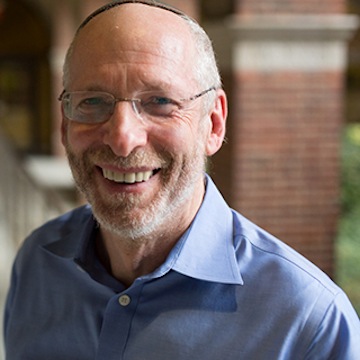
Drescher opens Federation campaign

Fran Drescher, best known for the TV show The Nanny, among other comedic roles, enraptured audience members at the Jewish Federation annual campaign launch Sept. 8. She offered deeply vulnerable descriptions of being raped and of surviving cancer, and the related mental health impacts these life-altering events sparked.

The presentation was the centrepoint of an evening dedicated to the topic of mental wellness. Actor, neuroscientist and Jeopardy host Mayim Bialik joined live from Los Angeles along with her partner and podcast cohost Jonathan Cohen. Their podcast, Mayim Bialik’s Breakdown, is focused on myths and misunderstandings about mental health and emotional well-being. They were interviewed by Globe and Mail reporter Marsha Lederman.

A panel of local experts completed the evening. Alisa Farina, Federation’s new child and youth mental health worker, Danya Rogen, a social worker who specializes in mood disorders, Dr. Annie Simpson, a clinical psychologist focused on childhood anxiety, and Tanja Demajo, chief executive officer of Jewish Family Services, shared reflections with Dr. Sandy Penn Whitehouse, a pediatrician and clinical associate professor at the University of British Columbia and medical director at B.C. Children’s Hospital.

Lana Marks Pulver, chair of the campaign, opened the event. Candace Kwinter, chair of the Federation board, introduced a video on mental wellness. Sue Hector, chair of women’s philanthropy, introduced Drescher. Federation chief executive officer Ezra Shanken closed the event. King David High School Vocal Ensemble led the Canadian and Israeli national anthems.

Shared society in Jerusalem

The Jerusalem Business Development Centre (known in Hebrew by the acronym MATI) makes a direct contribution to shared living, and two leaders of the Israeli organization will visit British Columbia next month. (photo from CFHU Vancouver)

Shared living in Jerusalem takes many forms and, even during periods of unrest and tension, shared living continues for many people in the city. In the public spaces of Jerusalem, you will find Arabs and Jews and many others. They share the same spaces but they rarely have meaningful interactions and they often don’t even share the same language for communication.

The challenge of building bridges, trust and communication between diverse population groups has been one of the mandates of the Jerusalem Foundation since its establishment. For many years, it has created new community centres, cultural venues and parks and schools for all neighbourhoods across the city, working to ensure that equal access to services and leisure could be achieved.

The foundation supports programs for learning Arabic in Jewish schools and Hebrew in Arabic-speaking schools, assisting Jewish and Arab women in creating art together, in increasing their skills and employment opportunities, in finding ways for Jewish and Arab children to learn together, to play together, to understand what they have in common and not what makes them different.

Jerusalem is home to the Hebrew University which, like the city, encompasses students from a mosaic of religions, languages, ethnicities, cultures and socioeconomic backgrounds. The university leadership understands that this rich diversity is a precondition for academic excellence, critical examination, intellectual stimulation and the cultivation of the next generation of Israeli and regional leaders. Over the past decade, Hebrew University has devoted considerable efforts and resources to social and academic inclusion, as well as support of traditionally underrepresented populations.

The Israeli public elementary and high school system is separated for Arab and Jewish youth, as well as for religious and secular Jews and many places of residence are homogenous. Campuses, therefore, have great potential for shaping students’ perceptions and views regarding fairness, diversity and inclusion. Indeed, a positive campus experience will motivate university graduates from all groups in society to work alongside those from other groups in the workforce and to function as agents of change in their communities.

There are many challenges to shared living in Jerusalem, yet both the Jerusalem Foundation and Hebrew University believe that the diversity of Jerusalem is the city’s greatest asset and creates the resilience and strength needed to face all challenges for living together.

The Jerusalem Business Development Centre (known in Hebrew by the acronym MATI), which was founded by the Jerusalem Foundation in 1991 to strengthen and develop small businesses and entrepreneurship in the city, makes a direct contribution to shared living. The centre focuses on the city’s weakest economic populations: new immigrants, the ultra-Orthodox and East Jerusalem residents. Each year, MATI Jerusalem helps thousands of entrepreneurs and business owners create or expand businesses in the city, thus aiding in the creation of thousands of new jobs and advancing the city’s overall economic development.

A joint project of Hebrew U and the Asper Innovation Centre, together with the Jerusalem Foundation and MATI, sponsored microloans for women in East Jerusalem and led to the establishment of a full-time MATI centre in East Jerusalem.

Hebrew U established the Al-Bashair Program for Excellence in East Jerusalem, with the Jerusalem Municipality, as a leadership program for excelling students at the university from East Jerusalem. They attend a two-year program that includes leadership skills, internships, tours and career support. Al-Bashair for High Schools aims to prepare excellent high school students (grades 10-12) for higher education.

On Oct. 27 and 30, the Jerusalem Foundation of Canada and Canadian Friends of Hebrew University will bring the women leaders from MATI to Victoria then Vancouver, to tell their story and, through them, the story of Jerusalem. Michal Shaul Vulej, deputy chief executive officer, and Reham Abu Snineh, East Jerusalem manager, will speak about their experiences in East and West Jerusalem, and working to help empower and support underserved communities in workforce development and business opportunities. Their visit across Canada is sponsored by the Asper Foundation. In Vancouver, the visit is organized in partnership with the Jerusalem Foundation, CFHU and the Jewish Federation of Greater Vancouver.

For more information on specific events, contact Dina Wachtel, vanc@cfhu.org, or Nomi Yeshua, JFC, nomiy@jfjlm.org.

Talking about mental health

Jonathan Cohen and Mayim Bialik, co-hosts of the podcast Mayim Bialik’s Breakdown, help launch the Jewish Federation of Greater Vancouver’s annual campaign on Sept. 8. (PR photo)

Television viewers watched Mayim Bialik grow up, most notably as the character Blossom Russo on the series Blossom, and in a string of other TV and movie roles, including playing the child version of Bette Midler’s character in Beaches. More recently, Bialik has been nominated four times for an Emmy Award for her role in The Big Bang Theory and it was announced last month that she and Ken Jennings will jointly fill the late Alex Trebek’s shoes as hosts of the game show Jeopardy.

But, when Bialik speaks to a Vancouver audience Sept. 8, she will not be acting or holding the cards with all the answers. She will be opening up about an issue that is close to her own experience: mental health.

Bialik is one of three headliners at the opening event of the Jewish Federation of Greater Vancouver’s annual campaign. She will be beamed in live from Los Angeles, along with her podcast partner Jonathan Cohen. They co-host Mayim Bialik’s Breakdown, which is described as “a quirky, informative and interactive podcast breaking down the myths and misunderstandings about mental health and emotional well-being.” While the pair will join from Los Angeles, live on stage at Congregation Beth Israel will be Fran Drescher.

Best known for her titular role in the 1990s sitcom The Nanny, Drescher is also an accomplished producer and author who has won several awards in the health field. Only recently, she has begun to open up about the traumas and major health issues she experienced earlier in her life, including those she says she never adequately dealt with at the time. At the campaign launch, she will reflect on how important mental health issues are to overall well-being.

In a recent interview with the Independent, Bialik and Cohen shared some of their vision and a little of what audiences can expect when they speak. Mental wellness is a core theme of the opening event, in part because these issues have become more pervasive due to stress, uncertainty and isolation caused by the pandemic. Bialik has been open about her own experiences with these challenges.

“I think one of the things about mental health is, depending on what you’re dealing with, there can be a lot of isolation,” Bialik said. “Talking about it, and being part of challenging the stigma, I think, makes you feel less alone. I definitely feel less alone. A lot of my fears around my challenges have definitely gotten less. I have less fear about talking openly about it. I think that’s really made an impact on me.”

On the podcast, she and Cohen discuss their personal experiences, welcome experts and also introduce a buzzy crowd of celebrities like Sarah Silverman, Dustin Hoffman, Margaret Cho and Howie Mandel. Topics include managing anxiety, overcoming trauma, alternative medicine, body positivity, grief and gratitude.

A lot of the time, Bialik said, people tell her and Cohen that the show raises questions viewers didn’t know they needed to ask, or that they didn’t have the ability to express to their medical professional – or maybe they do not have access to professional care.

“We are not doctors of that sort, we’re not looking to make diagnoses,” she said. “But, in sharing our experience, a lot of people are hearing their stories and that’s been really, really very powerful. We’ve had some incredible interactions with some of our fans. One of the reasons that we do a lot of giveaways and things like that is it creates a sense of community and it lets people know that we are real people behind our microphones.”

They hope to hear from audience members in Vancouver.

“We really want to have an interactive component to the evening because, for us, we are very interested in other people’s stories and we really enjoy that part of our podcast,” said Bialik. “So we’re excited to bring that to an audience live and be able to share, and also hear what other people want to share. We are also quite funny together – we think so, but other people have told us that as well – so it will be a way for us to show how we use our humour to interact and especially discuss difficult things like mental health.”

In addition to the podcast, the pair have pitched a few TV pilots, which have yet to get picked up, but they have more up their sleeves.

“It’s been a very fun partnership and we have lots of ideas of ways we’d like to change the world,” she said.

“We also both like to explain things,” said Cohen, “which sometimes makes us compete for airtime, but usually results in a further understanding of something.”

They both balked jokingly when asked if they were drawn together by their “nerdy” pursuits. Bialik is a neuroscientist and Cohen’s expertise is artificial intelligence.

“Neuroscientists and people in AI are the new superstars,” said Cohen.

“It’s not really nerdy,” Bialik insisted with a laugh.

But seriously, she continued: “Really, when we started talking again and connecting again, [that] was when we started realizing how much we had in common in terms of our interest in science and mind and body.”

Bialik is tough to pigeonhole. A mother, a scientist, an actor, an author, a game show host, a proud Jew, a vocal Zionist – she doesn’t feel a need to choose between her complex identities.

“I don’t know if it was ever really a question of settling for just one,” she said. “I’m a mother and I think that is the role I most enjoy personally. In terms of professional activities, I really did enjoy being a scientist and the knowledge that I acquired does not go away just because I’m not a full-time scientist. I do love advocating for causes that are important for me. I love writing. I do love writing. I guess it’s hard to pick just one.”

Hosting Jeopardy is a very different kind of job than being an actor, she acknowledged.

“I obviously have to be myself, but I have producers and judges talking in my ear the whole time, so it’s a big division of attention and that can be hard,” she said. “It’s a lot of really difficult words to pronounce, which I do get to practise a little bit that morning before we tape each set of episodes, but [it’s] very, very different and you have to be ready for anything because anything really does and can happen at Jeopardy.”

As one of Hollywood’s most visible Zionists, Bialik has been a lightning rod for anti-Zionism and antisemitism. But that’s not new, she said.

“The fact is, I’ve been dealing with antisemitism and anti-Zionism for decades in my professional presence,” Bialik said. “I will say that the climate of North America has definitely shifted.… [But] for me, it’s always been an issue. It’s one I was raised to know about and be aware of. I think I’m more touched, as many of us are, by the increase in antisemitic acts, and violent acts especially, against Jews. As someone who has been going to Israel and continues to go to Israel – I’ve been probably a dozen times – that’s always something on my radar. There’s definitely been more of this kind of hatred and activity and specifically targeting me. But it’s also been something that I’ve always had to think about.”

The Thursday, Sept. 8, Federation annual campaign launch at Beth Israel starts at 7:30 p.m. Tickets, $18, are at jewishvancouver.ca.

Community milestones … B.C. lieutenant governor visits, Diamond invested into OC, Belfer a Star of Richmond

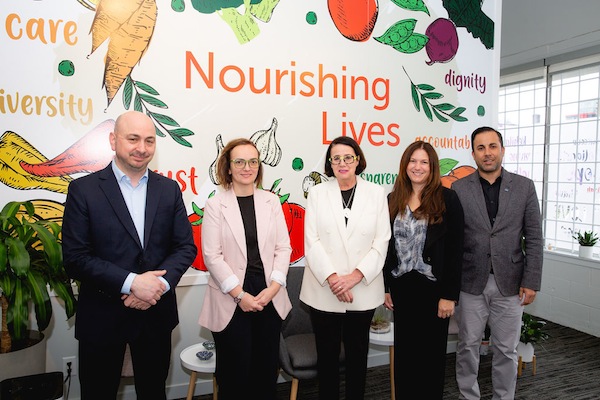
Left to right: Ezra Shanken (Jewish Federation), Tanja Demajo (Jewish Family Services), B.C. Lieutenant Governor Janet Austin, Simone Kallner (JFS board member) and Nico Slobinsky (CIJA). (photo from Jewish Federation)

Earlier this month, B.C. Lieutenant Governor Janet Austin, honorary patron of the Jewish Federation of Greater Vancouver, spent a full day getting to know the Metro Vancouver Jewish community.

Austin visited the Kitchen at Jewish Family Services, Schara Tzedeck Synagogue, the Jewish Community Centre of Greater Vancouver, the Vancouver Holocaust Education Centre, and Hillel House at the University of British Columbia.

photo - Ezra Shanken, left, with Lt. Gov. Janet Austin and Schara Tzedeck Synagogue’s Rabbi Andrew Rosenblatt.
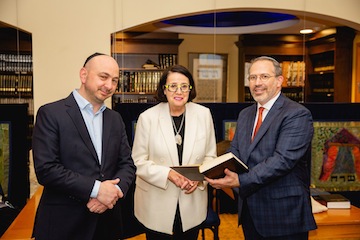
Ezra Shanken, left, with Lt. Gov. Janet Austin and Schara Tzedeck Synagogue’s Rabbi Andrew Rosenblatt. (photo from Jewish Federation)

It was an opportunity to talk together about the strategic work that Jewish Federation and its partners are doing. The Jewish Museum and Archives of British Columbia, Shelley Rivkin and Daniella Givon gave presentations about the community.

The visit to Hillel was an opportunity to see not just their good work, but how Jewish students are dealing with antisemitism on campus. They are singled out in ways other students and groups simply are not, including students connected with countries that are wrestling with difficult issues within their borders, or are led by dictators, or have dismal human rights records.

The dichotomy is shocking, and it is part of why Jewish Federation continues to push for local and provincial governments to follow the federal government in adopting the International Holocaust Remembrance Alliance definition of antisemitism.

For more photos of the day, visit facebook.com/jewishvancouver.

– Taken from Jewish Federation of Greater Vancouver chief executive officer Ezra S. Shanken’s weekly email update (May 6)

***

photo - Gordon Diamond
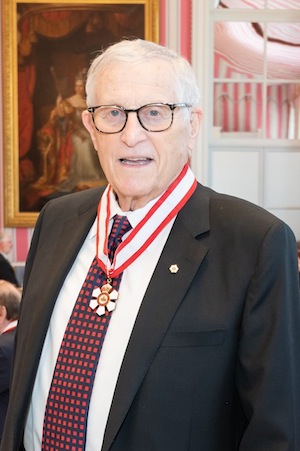
Gordon Diamond (photo from gg.ca)

On May 6, Governor General of Canada Mary Simon invested 10 Officers (OC) and 13 Members (CM) into the Order of Canada during a ceremony at Rideau Hall. Vancouver Jewish community member Gordon Diamond, OC, OBC, was among the honourees:

“Gordon Diamond has upheld the family’s exceptional legacy in philanthropy and business. Chair and owner of West Coast Reduction Ltd. and Austeville Properties Ltd., he has built them into two of Western Canada’s largest family-owned businesses. As one of our country’s leading philanthropists, he and his eponymous foundation focus on health care and social services. He is noted for his landmark donation to a major Vancouver outpatient health centre, and his support for Jerusalem’s Shalva National Centre for disabled persons and the Simon Wiesenthal Museum of Tolerance.”

– From the website of the Governor General of Canada

 ***

Richmond Cares, Richmond Gives presented the 2022 Volunteers Are Stars Awards virtually on April 27, during National Volunteer Week. Tammi Belfer was one of the four winners.

image - screenshot of Tammi Belfer shares some of the reasons she volunteers in a video on the awards website
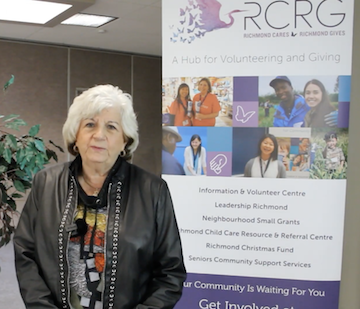
Tammi Belfer shares some of the reasons she volunteers in a video on the awards website. (screenshot)

The 18 individuals and groups who were nominated all made a meaningful difference in the Richmond community. Collectively, they’ve contributed thousands of hours to dozens of causes, enhancing the lives of residents. Their volunteer work has impacted children and youth, seniors and families, and those experiencing poverty and homelessness. In short, every one of them is a star, and their light makes our community shine so much brighter.

Belfer was honoured as a Star of Richmond for excellence in nonprofit leadership. Li Qing Wang of Richmond Women’s Resource Centre was Shooting Star Award Winner (outstanding youth volunteer); South Arm United Church Outreach Committee was the Constellation Award Winner (outstanding volunteer group); and Dawn Thomson, Special Olympics B.C.-Richmond and Salvation Army Rotary Hospice House was the Nova Star Award Winner (outstanding individual volunteer).

Belfer has been volunteering for nearly five decades, often in leadership roles.

From 1974 to 2000, she served as a board member with the Organization Through Rehabilitation and Training (ORT). Rooted in Jewish values, the organization enhances the economic prospects of individuals and communities by providing them with employment and entrepreneurial skills.

Through much of the 1980s, Belfer was a board member with the Richmond Aquanaut Swim Club, which later merged with the Richmond Racers to become the Richmond Rapids Swim Club. During her time there, she served as treasurer, supported membership development and regularly volunteered at swim meets.

She also served eight years on the board of Richmond Cares, Richmond Gives, back when the organization was known as Volunteer Richmond Information Services. Here, too, she volunteered as treasurer. She remains involved with the organization’s Richmond Christmas Fund program, volunteering each holiday season to assist families in need.

Since 2015, Belfer has served as board president of the Richmond Women’s Resource Centre, where she’s had a transformational impact. She’s played a key role in developing the organization’s board, recruiting a diverse group of new members – including many young people – who are passionate about helping women build connections and thrive in their community.  She also volunteers as project manager for the organization’s annual International Women’s Day event, which is both a community gathering and a major fundraiser, complete with an auction and raffle. Recently, she helped lead the Resource Centre in drafting a five-year strategic plan and, in 2019, was a key voice in the organization’s rebranding effort, which resulted in a new logo created in consultation with the community.

During COVID, Belfer worked with the organization’s executive director to bring all of its programs and services online, so they would remain accessible throughout the pandemic.

Speaking of programs, it’s another area where Belfer has had a substantial impact. She helped create many of the Resource Centre’s most popular initiatives, from Hot Ink, a creative writing program for teenage girls, to Work Ready, which supports women in developing employment and job-search skills.

Belfer is also a current board member of the Jewish Seniors Alliance and of Beth Tikvah Synagogue, where she actively participates on committees and generously shares her knowledge and experience, so both organizations can better serve their constituents.

Through her decades of service, Belfer has left an indelible mark on the Richmond community, and improved thousands of lives. She’s still giving her time, and still making a difference, even as she mentors young volunteers on their way to becoming community leaders. She’s one of the giants on whose shoulders they’ll stand.

Belfer shares some of the reasons she volunteers in a video on the awards website, rcrg.org/vas.

– Courtesy Richmond Cares, Richmond Gives

Shalhevet honours Vivian Claman

Vivian Claman was one of the founders of Shalhevet Girls High School and served on the school’s board for 14 years. (photo from Vivian Claman)

Vivian Claman was one of the founders of Shalhevet Girls High School. More than 14 years later – during which time she has served on the board of the school, including until recently as president – she is being celebrated at the school’s 2022 gala celebration May 22.

Leslie Kowarsky, president of the Shalhevet board, credits Claman with the school’s very existence.

“There is no one in our community who has not benefited from Vivian’s efforts, whether for Schara Tzedeck, for the Jewish Federation, or for many other worthy causes,” said Kowarsky. “I can say with confidence that Shalhevet would not exist without her tireless commitment.”

Shelley Rivkin, vice-president of the Jewish Federation of Greater Vancouver and the honoree at last year’s gala, echoed those words.

“Vivian has shown unswerving dedication and passion to maintaining and strengthening Orthodox education for girls in Vancouver,” Rivkin said. “She is a dynamic and energetic volunteer and she brought this commitment to her work on Federation’s allocation committee and other community organizations.”

Claman reflected back on the school’s creation. Ten parents, including Terrance Bloom, who would serve as the first board president, came together to address where their daughters would continue their education after they completed Grade 7 at Vancouver Hebrew Academy (VHA).

“My daughter was one of six girls in the Grade 7 class,” Claman said. “We had a little evening meeting to discuss the idea of doing a high school for the girls. My daughter said, I’m willing to try and convince the other girls to try, so we started the school.”

The availability of Orthodox Jewish education in Vancouver has been a recurring challenge and is among the range of issues being address by a new initiative called Torah West, which seeks to retain and attract more Orthodox Jews to live in Vancouver.

VHA now offers Orthodox education for boys up to Grade 10 and Claman said talks are underway to move the boys school and Shalhevet under a shared administrative umbrella.

“It makes the most sense, certainly for the donors,” she said. “They would prefer to have one institution so that we are not separate institutions going to the donors and asking for money.”

Whatever administrative structure is adopted, there will always be a separate boys school and girls school, adhering to Orthodox standards, she said.

Shalhevet is experiencing challenges that reflect larger trends in the community. With the departure of the Pacific Torah Institute yeshivah, some Orthodox families have left Vancouver.

“We absolutely need to have a strong Orthodox community and the only way we’ll do that is if Vancouver Hebrew Academy thrives and Shalhevet thrives,” said Claman. “Right now, though, to be honest, we’ve had a lot of attrition in the last couple of years. We are down numbers in our school. It is very upsetting, but that’s the reality of Vancouver. We kind of have waves. We have ups and we have downs. Right now, we are in that slump. That’s one of the reasons why Torah West is being created.”

In the school year now winding down, there are 10 students across five grades at Shalhevet, down from a peak of 25 or 27, she said.

While those numbers are disappointing, she said, there is a silver lining.

“Because of small numbers, we really can cater to the individual needs of each girl,” she said. “That’s really important. There are a lot of girls who have different issues and it’s really wonderful that they get that kind of attention. At a normal high school, there could be 30 kids in the classroom. The competition is pretty fierce.”

She added that single-gender education has been demonstrated to be advantageous, especially to girls.

“Studies have shown that girls do extremely well when they are on their own without feeling the competition or the pressure of being around boys,” said Claman. “It really does make a difference.”

On being recognized at this year’s gala – the first in-person gala in three years – Claman said she is “overwhelmed, to be honest.”

“I just announced my retirement plan – I had warned them I was going to be leaving the board after 14 years. I thought it was enough – so they decided to honour me. I’d really prefer not to be, but I didn’t really have a choice in the matter,” she said, laughing.

However, she acknowledged: “It’s a really nice way of the school showing appreciation for the many years of really hard work I put into the school.”

As past president, Claman still attends every board meeting and remains very active in school affairs. Nevertheless, as time permits, she plans to devote more hours to her emerging role as a painter.

“I was a fashion designer by profession for many years,” she said. “I retired because it was just too much time away from being a mother of three kids.”

Because she likes being busy and creative, Claman took up painting about seven years ago.

“I had taken a class many years ago in acrylic with a teacher here for one year but this time I decided to take it seriously and I’ve been painting ever since,” she said.

After a friend’s dog died, Claman painted a portrait of the pet and gave it to the grieving friend. That has led to a raft of pet portraits, but she is also receiving commissions for other works as well. (Her portfolio is at vivianclaman.com, though she acknowledges she has not had time to keep it up-to-date.)

Although she is concluding her time as a board member, Claman’s commitment to the school remains steadfast.

“To me, the most important thing about Shalhevet is we provide an Orthodox education for the Orthodox families here,” she said. “It’s wonderful to have a pluralistic community, but we absolutely must have the common denominator of the Orthodox community here. Orthodox families will not live here unless they know that they can send their kids, their girls and boys, to a high school that caters to their guidelines as to what an Orthodox Jewish education should be.”

For tickets to the May 22, 6:30 p.m., gala, which takes place at Schara Tzedeck Synagogue, visit shalhevet.ca.

StandWithUs Canada course

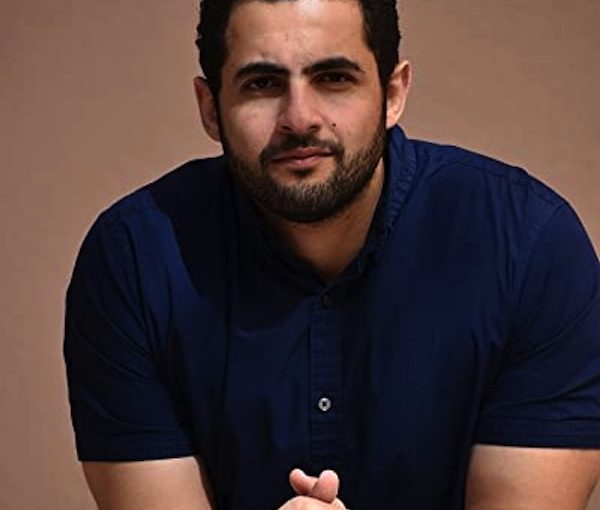
Hussein Mansour Aboubakr (PR photo)

After an almost three-year hiatus due to the pandemic, StandWithUs Canada is again holding events. On May 15, StandWithUs Canada and the Diamond Foundation are presenting the crash course Antisemitism and Anti-Zionism Today: What to Expect on Campus.

The course is a chance for high school (grades 11 and 12) and first-year university students to attend interactive sessions, hear from speakers, meet like-minded students and enjoy a free kosher dinner. Students who register and attend can also receive community service hours and a gift card.

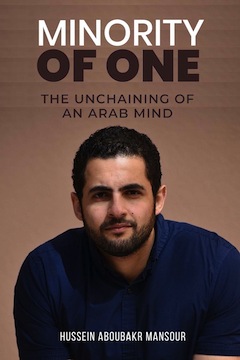
image - Minority of One book coverSpeakers include Penina Edery, high school director, StandWithUs Canada, and Aviv Attia, StandWithUs educator and Israeli speaker. Special guest speaker Hussein Mansour Aboubakr was a dissident imprisoned in his home of Cairo, Egypt, for the crime of wanting to learn more about the country and the people he was raised to hate – Israel and Jews. One of the course sessions will be Aboubakr speaking about his journey. Other sessions will include a panel of students speaking about their experiences with antisemitism and anti-Zionism in high school and university.

The Diamond Foundation is sponsoring this crash course to reach out to Vancouver high school students and their families, to help them learn the skills, get the knowledge and find out about the resources available to support Israel and fight antisemitism. Also involved in presenting the event with StandWithUs Canada are Camp Hatikvah, Masa Israel Journey, King David High School and the Jewish Federation of Greater Vancouver.

The May 15 crash course will take place at KDHS from 4 to 8 p.m. Registration is required to attend. Students can register at forms.gle/hPncontVmAC4Jfor6.

– Courtesy StandWithUs Canada

Fundraiser for Ukraine

Among the works for sale is “Spring Time” by Yuri Padal.

On April 3, at Art Works Gallery, Art in Aid of Ukraine was launched. Artists and communities in Vancouver, standing in solidarity with the Ukrainian people, came together for the opening of the exhibit and sale. The opening featured local speakers, as well as guests via video link from Toronto and Ottawa. Among the speakers were members of Parliament, the consuls general of Ukraine and Poland, Ukrainian Canadian Congress leadership, and others.

The fundraiser is a non-partisan grassroots event highlighting the role of community engagement; the humane power of art and the critical importance of defending the democratic process. Donations and partial proceeds from artwork sales will go to the Ukraine Humanitarian Appeal of the Ukrainian Canadian Congress and the Ukraine Emergency Relief Fund of the Jewish Federation of Greater Vancouver.

The featured artist, Yuri Padal, was born in 1949 in Kyiv, and studied under the direction of Glushenko. Padal now lives in Vancouver. His works connect to the universal energies of beauty, colour, freedom and positive balance.

For other participating artists, visit artworksbc.com. Art Works Gallery is located at 1536 Venables St., and the fundraiser runs to April 27.

– Courtesy Art in Aid of Ukraine

Community milestones … Federation campaign success & Hebrew U donation

In announcing the results of the 2021 Jewish Federation of Greater Vancouver annual campaign, campaign chair Lana Marks Pulver expressed deep gratitude for the generosity of donors. Acknowledging the ongoing impacts of the pandemic, she said, “Yet, we have also seen some impressive achievements. Organizations have innovated faster and better. Volunteers have dedicated countless hours, pitching in wherever they are needed. And donors have given more generously than ever before.

“Together, we have generated $11.16 million for our community!”

The annual campaign raised $9.52 million, while $1.64 million was raised for additional support, which includes additional support for special projects, community recovery, emergency relief and donors’ multi-year commitments to Federation’s international partners.

In addition, the community raised more than $388,000 for B.C. flood relief during the campaign period. And the community has come together to generate more than $850,000 so far for Ukraine relief.

“We can all take pride in this remarkable achievement, which reflects our collective commitment to our Jewish values of tzedakah and tikkun olam (repairing the world), and our responsibility to one another,” said Marks Pulver.

“From the start of the pandemic, Jewish Federation took the lead in getting our community through to a brighter future. A successful annual campaign is a big part of our ability to do that and, as chair of the campaign, I am deeply grateful for your support.”

* * *

The Canadian Friends of the Hebrew University is pleased to announce a major gift of more than $5 million dollars from the estate of a Vancouver resident, to establish the Institute for Medical Research, Israel-Canada (IMRIC) Hub for Addiction Research at Hebrew University.

photo - Prof. Rami Aqeilan, chair of IMRIC
Prof. Rami Aqeilan, chair of IMRIC (photo from CFHU)

The mission of the IMRIC Hub for Addiction Research is to bring about wiser policies, better care and new treatment avenues for those struggling with addiction. This new program will focus on medical research relating to addiction, providing insights into the physical and chemical aspects of addiction, its prevention and treatment.

A silent addiction epidemic affects nearly 11% of adults (more than 615,000) in Israel. In any given year, one in five Canadians experiences a mental illness or addiction problem. Addiction can include both substance addiction (alcohol, drugs and other substances) and compulsive sexual behaviour, problematic use of pornography and problematic use of the internet. Moreover, addiction and mental health issues go hand in hand and must be addressed in tandem. Each year, addiction costs the Israeli economy approximately seven billion NIS and causes untold peripheral damage to families and communities.

“As a result of this generous gift, we at IMRIC are able to engage our best researchers in several specific research projects with diverse perspectives on addiction,” said Prof. Rami Aqeilan, chair of IMRIC. “Additionally, the hub will promote national and international interaction and foster collaboration with Canadian researchers.”

Celebrating Israel together

Israel’s Gilat Rapaport and the InJoy Band headline this year’s Yom Ha’atzmaut celebration on May 4 at the Vogue Theatre. (photo from injoyprod.com)

This year’s Yom Ha’atzmaut celebration on May 4 at the Vogue Theatre, headlined by Israel’s Gilat Rapaport and the InJoy Band, marks 20 years since the first large-scale community-wide event to celebrate Israel’s Independence Day was organized by the Jewish Federation of Greater Vancouver.

“Growing up in Vancouver, the community had occasional large Yom Ha’atzmaut events with Israeli performers and I have wonderful memories of attending them,” said Stephen Gaerber, who co-chaired that first major gathering. “I was incredibly impressed by a large event held to celebrate Israel’s 50th in 1998 at the Orpheum [which was chaired by Judy Mandleman]. It was 2001, the Second Intifada was raging, Camp David had resulted in failure and Israel was, as usual, being disparaged in the press. My friend, Rick Schreiber, had become the chair of the Federation’s Israel department, and I told him that I thought the community should be having large-scale events every year to celebrate Yom Ha’atzmaut and all that is wonderful about Israel. His response was, ‘OK, you chair it.’ That’s how I became chair for the 2002 Yom Ha’atzmaut celebration, first co-chairing with my wife, Shari, and then, starting in 2003, with my brother Allen.”

Of course, local groups celebrated Israel’s birthday in various ways prior to 2002, notably the now-defunct Canadian Zionist Federation (CZF). Bernard Pinsky was CZF chair in the late 1980s.

“In the 1980s,” said Pinsky, “CZF brought in big names from Israel for a Yom Ha’atzmaut concert, including top artists like Nomi Shemer, Chava Alberstein, and Haparvarim. The concert was held at the JCC and wasn’t always right on Yom Ha’atzmaut, it was when the artists were available. The venue meant that we could only sell about 400 tickets, and CZF did a lot of fundraising to cover costs.”

Geoffrey Druker, who still leads the community’s annual Yom Hazikaron (Israel’s Memorial Day) ceremony, said he was recruited by Pinsky to become involved in CZF and it was from Pinsky that Druker took over the role of local CZF chair in the early 1990s.

“We ran most Israel-related community programs,” said Druker, including Yom Ha’atzmaut, Yom Hazikaron, Walk with Israel (which took place on Jerusalem Day), the student public-speaking contest and other programs. When CZF closed nationally, Druker said he gathered past local leaders of the group to decide “whether to become an independent local organization or join Federation.”

The choice was to join the Israel desk at Federation, and Druker continued to chair many of the events, with most of the Yom Ha’atzmaut activities being held at the Jewish Community Centre of Greater Vancouver, he said.

“Federation didn’t have the funds for a large Yom Ha’atzmaut, and we couldn’t risk having a large celebration … while keeping the event tickets affordable to all,” said Druker. “So we ran smaller celebrations and with less-known artists.”

Affordability remained key when Federation, led by a committee put together by Stephen and Shari Gaerber, took over the event.

“Our goal wasn’t to just make it a concert, but a real community celebration,” said Stephen Gaerber. “We kept ticket prices very low so that everyone could afford to attend – and if they couldn’t afford even that, we made free tickets available through JFS [Jewish Family Services]. We invited all Jewish organizations in the city to add their names as Community Partners, and dozens did. We had children from Hebrew Academy, Talmud Torah and RJDS performing in addition to Israeli singer Danny Maseng.

image - The ad promoting the 2002 Yom Ha’atzmaut celebration
The ad promoting the 2002 Yom Ha’atzmaut celebration.

“We were given no budget (other than staff time) for the event from the Federation and I didn’t want one. I was determined that the Federation not take anything away from what they were allocating to local community agencies in order to make this event happen. We believed that the community would support the event and we were right. We raised the funds from generous donors, rented the Chan Centre and signed a contract with the performer. We put tickets on sale and we sold out all 1,200 seats very quickly. The event itself is a bit of a blur, but my most vivid memory is the joy people expressed to us at its conclusion.”

With that success behind them, the goal was to involve even more individuals and organizations in the celebrations.

“For years,” said Gaerber, “Jonathan and Heather Berkowitz wrote a piece for young community members to perform and we were fortunate to have Wendy Bross Stuart direct them. We later added the JCC’s children’s Israeli dance troupes to the program, sometimes joined with dancers from our partnership region in the Upper Galilee.

“Pam Wolfman took over chairing the event in 2014 and continued to tweak things to make sure everything is new and fresh and even better each year, including involving the entire community in the community song,” he said. “What hasn’t changed is the support from the community. To this day, other than staff time, the Federation has not had to give any funding at all towards putting on the event. The group of donors has grown over the years and that allows the event to continue to stay true to our initial vision – tickets are still affordable and many are available at no cost to those who need them – and the events continue to sell out.”

The annual celebration brings Israeli performers – from veteran musicians to up-and-coming singers and musical groups – to Vancouver on Yom Ha’atzmaut.

“For many,” said Gaerber, “it was their first time performing outside of Israel on Yom Ha’atzmaut, as they hesitate to leave the country for this important day. Without exception, they have all expressed how incredibly meaningful it was for them to experience the warmth of our community and its love for Israel. A number of our performers who would not have otherwise considered coming to Vancouver for Yom Ha’atzmaut have only done so because they have heard from other performers about their experience and our Jewish community.

“Despite our Jewish community’s relatively small size,” he said, “we have been told by Israeli diplomats that Vancouver’s Yom Ha’atzmaut celebration, always occurring actually on erev Yom Ha’atzmaut, is one of the largest celebrations of its kind taking place on that day outside of Israel.”

For tickets to this year’s event and a sneak peak at the program guide, go to jewishvancouver.com/yh2022.

BI scholar-in-residence

Rabbi Eliezer Diamond (photo from jtsa.edu)

“I am particularly interested in the way that Torah can help us look inward. Each of the topics is about religious character formation, various ways in which we create a more godly character and personality,” said Rabbi Eliezer Diamond in a Zoom conversation with the Jewish Independent ahead of his visit to Vancouver next month.

Congregation Beth Israel will be hosting Diamond as its scholar-in-residence for three in-person talks under the collective title Making a Life of Meaning. A professor of Talmud and rabbinics at the Jewish Theological Seminary of America, in New York, Diamond will speak on Addiction and Judaism (April 28, 7:30 p.m.), the Power of Gratitude (April 29, 6 p.m., with a dinner to follow) and Seeking and Granting Forgiveness (April 30, 9:30 a.m.).

In regard to addiction, the rabbi compares the 12-step process of Alcoholics Anonymous with the laws of repentance by Maimonides and notes the parallel paths taken towards sobriety and repentance: acknowledgement, regret and acceptance.

“Not drinking and being sober are not the same thing. To recover from alcoholism, one has to change one’s way of living and thinking,” said Diamond, who discusses addiction from both a personal and professional perspective.

“I am a recovering alcoholic and I know about addiction from the inside,” he said. “Even though I am not a therapist or addiction counselor, what I can do is help people to be honest with themselves and say ‘I have a problem,’ which is an acknowledgement of the sin and a step towards repentance. It is important to help people see where they are at so that they can begin to make changes.”

It is also helpful, he added, for his rabbinical students to know that their teacher is a recovering alcoholic because there is frequently a shame involved in addiction and a sense that one is a diminished person as a result.

“I am there to say to them, those may be the cards one has been dealt. You can still be a productive human being and, if you take the steps you need to take to deal with addiction, there is no reason for shame. On the contrary, there is a reason for pride. You have been faced with a challenge and you have addressed it,” he said.

Diamond pointed out that, in a broad sense, there has been an acknowledgement in the past couple of decades within the Jewish community that Jews, like everyone else, have problems with addiction.

“We are not immune to addiction, as people think or would like to think,” he said. “In my own lifetime, the community has become more open. The founding of Jewish Addiction Community Services [JACS] is an example of that.”

In addition to Congregation Beth Israel, Diamond’s talks in Vancouver are being sponsored by JACS Vancouver, Jewish Family Services Vancouver and Jewish Federation of Greater Vancouver.

Diamond’s discussion on gratitude is tied to the teachings of Rabbi Eliyahu Eliezer Dessler, an early 20th-century leader in the mussar (Jewish ethics or values) movement, who saw giving as being at the heart of the religious personality. In Dessler’s teachings, God, by providing life, is the ultimate giver. Therefore, to follow in God’s path, we must be givers ourselves. There are times, however, when we must also be receivers, and the best way to receive is through gratitude, Diamond explained.

Expanding on the theme of gratitude, Diamond added, “Ultimately, whether or not we experience ourselves as wealthy or poor is intimately connected to finding happiness and satisfaction with what we have. If we focus on what we have and the happiness that it can bring us, then we can feel wealthy. This is a choice that all of us, especially in a first-world situation, have.”

On forgiveness, the rabbi cited Christian theologian C.S. Lewis, who spoke of the human desire to seek forgiveness yet the difficulty humans have in granting it.

“Forgiving is a hard thing to do,” said Diamond. “What does it actually mean to forgive someone? Because, unless we lobotomize ourselves, we are not going to forget what happened. The essence of what I will be talking about is the relationship between forgiveness and recognizing the essential humanity of every human being, including those who have wronged us.”

What often stands in the way of forgiveness, he said, is the inability to view another person as anything other than evil, and not as a flawed individual who has stumbled, as we all stumble. The path towards forgiveness, according to Diamond, is to make that distinction.

Amid social and political divisiveness, which causes rifts in families and communities, Diamond further emphasized the importance of being able to listen to and appreciate the inherent humanity and sincerity in belief of those with whom we may strongly disagree.

“Rabbi Diamond is one of most well-respected scholars in the Conservative movement today,” said Beth Israel’s Rabbi Jonathan Infeld. “He is exceedingly bright, knowledgeable and eloquent. He is also passionate about the human value of gratitude and the importance of recovery. Considering the fact that drug and alcohol addictions and overdoses have been less spoken about during the pandemic, we knew that Rabbi Diamond should be our first in-person scholar-in-residence since the beginning of COVID-19. We are so happy that other community agencies are joining us. We look forward to welcoming Rabbi Diamond to Vancouver and learning from this incredible rabbi.”

To register for the April 29 dinner, visit bethisrael.ca.

Sam Margolis has written for the Globe and Mail, the National Post, UPI and MSNBC.