Skip to content
  • Home
  • Subscribe / donate
  • Events calendar
  • News
    • Local
    • National
    • Israel
    • World
    • עניין בחדשות
      A roundup of news in Canada and further afield, in Hebrew.
  • Opinion
    • From the JI
    • Op-Ed
  • Arts & Culture
    • Performing Arts
    • Music
    • Books
    • Visual Arts
    • TV & Film
  • Life
    • Celebrating the Holidays
    • Travel
    • The Daily Snooze
      Cartoons by Jacob Samuel
    • Mystery Photo
      Help the JI and JMABC fill in the gaps in our archives.
  • Community Links
    • Organizations, Etc.
    • Other News Sources & Blogs
    • Business Directory
  • FAQ
  • JI Chai Celebration
  • JI@88! video

Recent Posts

  • Sharing her testimony
  • Fall fight takes leap forward
  • The balancing of rights
  • Multiple Tony n’ Tina roles
  • Stories of trauma, resilience
  • Celebrate our culture
  • A responsibility to help
  • What wellness means at JCC
  • Together in mourning
  • Downhill after Trump?
  • Birth control even easier now
  • Eco-Sisters mentorship
  • Unexpected discoveries
  • Study’s results hopeful
  • Bad behaviour affects us all
  • Thankful for the police
  • UBC needs a wake-up call
  • Recalling a shining star
  • Sleep well …
  • BGU fosters startup culture
  • Photography and glass
  • Is it the end of an era?
  • Taking life a step at a time
  • Nakba exhibit biased
  • Film festival starts next week
  • Musical with heart and soul
  • Rabbi marks 13 years
  • Keeper of VTT’s history
  • Gala fêtes Infeld’s 20th
  • Building JWest together
  • Challah Mom comes to Vancouver
  • What to do about media bias
  • Education offers hope
  • Remembrance – a moral act
  • What makes us human
  • המלחמות של נתניהו וטראמפ

Archives

Follow @JewishIndie
image - The CJN - Visit Us Banner - 300x600 - 101625

Tag: Holocaust

VHEC reopens with exhibits

VHEC reopens with exhibits

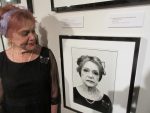
Jannushka Jakoubovitch, a Holocaust survivor, looks at her portrait, taken by Pulitzer Prize-winning photographer Marissa Roth, part of the Faces of Survival exhibit at the VHEC. (photo by Pat Johnson)

Two new original exhibits opened at the Vancouver Holocaust Education Centre recently, concurrent with the opening of the centre’s redeveloped space.

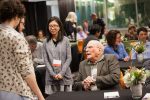
Following the annual general meeting of the Vancouver Holocaust Centre Society for Education and Remembrance on June 20, attendees moved from the Jewish Community Centre of Greater Vancouver’s Rothstein Theatre to the Holocaust centre for the official opening of the exhibits and a first look at the revamped space. (An article on the centre’s renewal project will appear in a future issue.)

photo - Following the AGM, attendees moved from the Rothstein Theatre to the Holocaust centre for the official opening of the exhibits and a first look at the revamped space
Following the AGM, attendees moved from the Rothstein Theatre to the Holocaust centre for the official opening of the exhibits and a first look at the revamped space. (photo by Pat Johnson)

Both exhibits emphasize local relevance of broader Holocaust history.

In Focus: The Holocaust through the VHEC Collection includes items that the Holocaust centre has assembled over decades. Thematic aspects of Shoah history are illustrated through documents, photographs and artifacts. Interactivity is incorporated through replica items in adjacent drawers, which visitors can handle and explore. Electronic kiosks encourage deeper and broader exploration of topics, including cross-referenced databases that connect, for example, all holdings related to an individual, a place, an event or other search query.

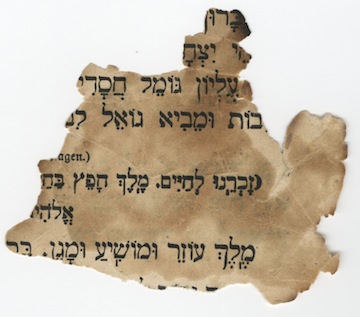
Among the items on display are a yellow Star of David worn in the Theresienstadt camp in Czechoslovakia, a fragment of a prayer book burned during Kristallnacht in 1938 and found on the street in Berlin after the violence temporarily subsided, and a photo album of life in the Netherlands under Nazi occupation, created from negatives that were developed in 1981 and donated to the VHEC.

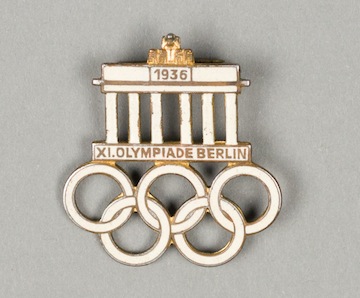
photo - A souvenir pin from the 1936 Berlin Olympics, part of the Vancouver Holocaust Education Centre’s permanent collection and the exhibit In Focus: The Holocaust Through the VHEC Collection
A souvenir pin from the 1936 Berlin Olympics, part of the Vancouver Holocaust Education Centre’s permanent collection and the exhibit In Focus: The Holocaust Through the VHEC Collection. (photo from VHEC)

Also on display is a Torah scroll from Prague, which, along with 100,000 other Czechoslovakian Jewish religious objects, was gathered by the Central Jewish Museum in Prague at the behest of Nazi officials.

A souvenir pin from the 1936 Olympic Games in Berlin, featuring a replica of the Brandenburg Gate, and a porcelain figurine of an idealized Aryan woman produced around the same time speak to that portentous international sporting event.

Artifacts from life in hiding include a wooden toy dog that belonged to local child survivor Robert Krell. Among the most unusual items on display is a chess set modeled from chewed bread and sawdust, then painted and varnished.

“These finely articulated pieces are believed to be the work of a Polish Jewish man interned in the Warsaw Ghetto,” according to the exhibit descriptor. “He likely offered the set to a soldier stationed as a guard in the ghetto, in exchange for food.”

Photographs illustrate life in the ghettos, life in hiding and the “Holocaust by bullets,” the process of mass murder in Eastern Europe perpetrated by Einstatzgruppen (Nazi death squads) and collaborators.

Also on display is a recipe book compiled by Rebecca Teitelbaum, the aunt of Vancouver-area Holocaust survivor Alex Buckman. While working in a Siemens ammunition factory in the women’s concentration camp Ravensbrück, the exhibit explains, “At great risk of being discovered and killed, she stole pencils and paper to record her recipes and those of other inmates.”

A child’s shoe recovered from the Kanada barracks at Auschwitz II-Birkenau is on exhibit. “This shoe, belonging to a child of age 3 or 4, was retrieved after the Second World War. Young children deported to Auschwitz were among the first to be selected for the gas chambers. An estimated one million Jewish children were murdered by the Nazis and their collaborators during the Holocaust – 220,000 children died in Auschwitz alone.”

photo - A fragment of a Torah scroll found on the street in Berlin following Kristallnacht, in 1938, part of the VHEC's permanent collection and the exhibit In Focus: The Holocaust Through the VHEC Collection
A fragment of a Torah scroll found on the street in Berlin following Kristallnacht, in 1938, part of the VHEC’s permanent collection and the exhibit In Focus: The Holocaust Through the VHEC Collection. (photo from VHEC)

Also on display is a letter, dated April 20, 1945, from U.S. soldier Tom Perry to his wife Claire after arriving in the liberated Buchenwald concentration camp.

“I want to write you tonight about one of the most moving experiences I’ve ever had, as well of as one of the most horrible things I have ever seen.… With the idea not of pleasing you, for what I saw there was really too horrible to be seen by any decent human being. But with the thought that as my wife you would want to share with me my most horrible as well as my pleasant experiences. And because I think the rest of the family and our friends should know from personal observations what bestial things the Nazis have done, and what a dreadful menace they have been to people all over the world.” The letter proceeds in graphic detail.

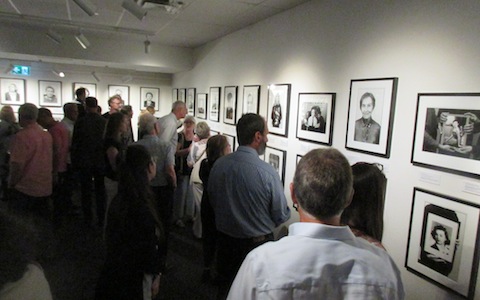
The second exhibit is even more intimately connected with the local community. Faces of Survival: Photographs by Marissa Roth consists of portraits of British Columbians who survived the Shoah. Roth, a Pulitzer Prize-winning photographer who created a similar exhibit at the Museum of Tolerance / Simon Wiesenthal Centre in Los Angeles, took portraits of survivor volunteers, including both past and present VHEC outreach speakers and board members. In cases where the survivors themselves have passed away, the portraits feature family members holding a photo of the survivor.

The subjects were asked two questions: “Why do you think it is important to remember the Holocaust?” and “What message do you want to convey to students?” From their answers, captions were created to accompany the portraits in the exhibition, which was made possible by the Diamond Foundation.

Accompanying Agi Bergida’s portrait are the words: “My great hope is in the young people, the new generation. Racism is ignorance, to which the answer is education.”

Marion Cassirer, who died in Vancouver in 2014, is pictured in a photograph held by her daughter, Naomi Cassirer. “The Holocaust happened a long time ago, but for our family and for many others, it never ended,” said her daughter. “Marion spent the rest of her life speaking to groups about her family’s experiences, hoping that people would learn and understand that no society is immune.”

Serge Haber said, “It is important to remember the Holocaust because it can happen again, and it can happen here.”

A photograph of the late Paul Heller, held by his daughter Irene Bettinger, is accompanied by her words: “Dangerous human behaviour continues to this day, including antisemitism. Every one of us must participate in efforts to combat such behaviour if our freedoms and democracies are to survive.”

Accompanying Evelyn Kahn’s portrait are her words: “In a world where the media reports events absent of historical truth, the most essential tool becomes survivor testimony.”

The photograph of Peter Parker, who survived Birkenau and Dachau as well as a death march and died in Vancouver in 2015, includes words from his 1987 testimony: “Every human being has good and bad in them, we are capable of the highest noble things and the lowest deeds.”

Claude Romney, who survived in hiding, said: “We, as the last witnesses, have a duty to warn the world of the dangers of targeting any ethnic or religious group; for discrimination and persecution can lead to extermination, as it did under the Nazis.”

The late Bronia Sonnenschein was a survivor of the Lodz Ghetto, Birkenau and Stuthoff concentration camps and a death march from Dresden to Theresienstadt. Dan Sonnenschein, her son, said, “In her many years of Holocaust education, my mother honoured not only the memory of the murder victims and the other victims who survived, but understood the virulent intensity of antisemitism as ‘the longest hatred’ and the need to combat its current forms.”

Louise Stein Sorensen, a survivor of the Amsterdam Ghetto who survived in hiding, said: “The Holocaust teaches us to arm ourselves against the abuse of human rights.”

Both exhibits continue until next year, and information on opening hours and other details can be found at vhec.org.

After the routine business of the annual general meeting, Dr. Ilona Shulman Spaar, VHEC education director, presented the 2018 Meyer and Gita Kron and Ruth Kron Sigal Award to educators Sharon Doyle of South Delta Secondary and Julie Mason of David Oppenheimer Elementary in Vancouver. The award recognizes excellence in Holocaust education and genocide awareness in B.C. elementary and high schools.

Ed Lewin, past president of the organization, conferred life fellowships on Ethel Kofsky and Dr. Martha Salcudean.

Introductions and explanations of the new exhibitions, as well as of the renovated centre, were presented by Nina Krieger, VHEC executive director, architect Brian Wakelin, principal of Public: Architecture + Communication, and Shulman Spaar. Hodie Kahn offered reflections from a second-generation perspective.

Format ImagePosted on July 6, 2018July 5, 2018Author Pat JohnsonCategories LocalTags Holocaust, photography, VHEC
Line 41 through ghetto

Line 41 through ghetto

An historical photo of Line 41 blending into a drawing of the buildings and street. (photo by Marek Iwicki, drawing Tanja Cummings)

The Line 41 streetcar ran through Lodz Ghetto (Litzmannstadt). Established by the Nazis in 1939, 180,000 Jews and 5,000 Sinti and Roma were imprisoned there, in plain site of the streetcar passengers. As these travelers went about their daily routines for the next several years, 46,000 people died from hunger, disease and violence in the ghetto and practically everyone else was deported to Auschwitz or Chelmno extermination camps. By August 1944, fewer than 900 prisoners remained; the Soviet army arrived in January 1945.

The documentary film Line 41 focuses on the story of two men: Natan Grossmann, who survived the ghetto, and Jens-Jurgen Ventzki, whose father was the Nazi mayor of the city. It will see its Canadian première on July 11, 7:45 p.m., at Vancity Theatre. The screening will be followed by a discussion between Berlin-based director Tanja Cummings and Prof. Richard Menkis, associate professor of modern Jewish history at the University of British Columbia.

“I was interested in participating,” Menkis told the Independent, “because I am a Holocaust educator, quite simply. As such, I think it is important to engage the different ways of approaching the Holocaust…. I teach the course on the Holocaust at UBC, have published on aspects of the Holocaust and have worked on museum exhibitions. I am also interested in film representations – especially in documentaries – so I am glad to be involved. The film raises several important issues, especially about ‘bystanders,’ and I look forward to having a conversation about the film and its themes.”

Released in 2016, Line 41 has screened in Germany, Poland, Austria, Romania, the United States and Australia. The film took about nine years to make, with the initial idea for it coming in 2007.

“Everything started by reading the 1937 novel by Israel Joshua Singer, Di brider Aschkenasi [The Brothers Ashkenazi],” Cummings told the Independent. “It was this great novel that raised my interest in Lodz in the very first place and it made me travel there in 2008 or so.”

Cummings was initially interested in Lodz before the Second World War. “The history of Lodz was very much influenced by German, Polish and Jewish populations since the early 19th century,” she explained. “In a positive way, one could say that these groups worked together to transform a small village into a major European centre of textile production within a few decades.”

Known variously as “the Manchester of Poland” and the “Eldorado of the East,” she said, “Immigrants from all over Europe came to this ‘Promised Land.’ This term was actually coined for this city by [Nobel Prize-winning author] Wladyslaw Reymont in a novel of that title…. Later on, the famous Polish filmmaker Andrzej Wajda made a feature film out of it, with, again, the same title (or, in Polish, Ziemia Obiecana).

“So, it was Germans, Jews, Poles and also Russians who dominated the development of Lodz. Knit together – through trade, business, politics and bureaucracy – every group played its specific role, and made up what was and still is called ‘the Lodz man,’ ‘Lodzermensch,’ a ‘man’ of special wit of life and street smarts, so this fascinated me.”

Over time, her focus shifted.

“I tried to meet witnesses of German, Polish and Jewish background who, through their family background, would be able to tell me about these prewar times,” she said, “but, ‘naturally,’ all their stories circled around the era in which this world of the Lodzermensch was destroyed – by the invasion of the German Wehrmacht, the Second World War and the times of the ghetto. This is what their stories focused on, as they themselves had experienced it as young adults, teenagers, children. Through meeting these witnesses and hearing their powerful, shattering stories, it became clear that one must record them and their stories so that they would reach a larger audience. And, early on, it was clear to me that we should try to find witnesses – last witnesses – of these various groups: roughly, the victims, the perpetrators, the bystanders.”

Cummings said, “When you walk through Lodz today or through the area of the former ghetto for that matter, which formed a large part of this city, you realize that many of the buildings, streets, backyards, hallways and flats do not seem to have changed since the time of the war…. In many streets, time seems to stand still. The buildings still stand in their roughness, but the people of the ghetto of 1940 until 1944 (or early 1945) are gone. Yet, people live there today and seem to be oblivious to what happened in their streets, flats, courtyards.

“This is especially painful if one can connect certain buildings with specific stories of people and families – through the narratives told to us; through historical literature and through diaries or other reports, for example, Berlin Jewish families whose deportation has been traced, the places where they ‘lived’ in the ghetto and what happened to them, which tragedies evolved, which terror was inflicted upon them there, or in the camps, such as Kulmhof [Chelmno] or Auschwitz.

“A key moment that shocked me deeply was when, in 2010 or 2011, a Lodz German in his early 80s – not the one whom we see in the film – walked us through streets of the former ghetto area and he showed to us the street where the streetcar line ran through, coming from the ‘free’ part of the city. This was the first time I had ever heard about this streetcar,” said Cummings. “And he told us he had been a passenger in this streetcar many times, and that the ghetto was plainly visible to him and anybody who took this streetcar – not once, many times. And, while he told us this, streetcars passed by. In Lodz, the past is very present,” as it is elsewhere, in places like Berlin, and all over Europe.

“Since that day with this elderly Lodz German (who, after the war, did not leave this city) I tried to find more witnesses from this period of the war who would tell their stories from their own perspectives: Jewish survivors of the ghetto, but also Germans and Poles who lived around the ghetto which was hermetically closed and isolated over the course of four years. Germans and Poles, what did they see, what did they know? What was told in families, at school? What was the atmosphere in the city back then?

“The ghetto was a different matter altogether, and the narratives very much circled around survival, hunger and nightmarish scenes, but also culture, resistance – so many efforts to stay human.

“As for the main protagonist, Natan Grossmann, who was a teenager during ghetto times, we also tried to find out – together with him – about the fate of his older brother. To Natan, since the day his brother vanished in March 1942 in the ghetto, he had no clue what had happened to him.”

In the main phases of filming, from 2011 to 2013, about 120 hours with witnesses was recorded, after which it was decided the documentary would focus on Grossmann and Ventzki.

“When we started, we had no clear vision of what [the witnesses] would tell us, or where we would go with them, where they would lead us – all these things developed in the process of filming – or what we, together with the protagonists, would find out, what we would learn from them,” said Cummings.

When Grossmann arrived in the British Mandate of Palestine in 1946, she explained, “he felt he was ‘reborn’ there and crossed out the past from his mind. He suppressed what had happened to him in Lodz Ghetto, in Auschwitz, other camps in Germany, the death march…. He crossed this out from his daily life and did not talk about it. He did not look for his brother Ber, whose fate was unknown to him, except one attempt, when he visited Auschwitz in the 1980s but could not find any records there on his brother.”

Only because Grossmann was persuaded “to travel with us to Lodz in 2011, visit archives and connect with historians there, did we, together, finally find out what happened to his older brother Ber.”

In the film, Grossmann searches “not only for his brother, but also for the graves of his parents, who were murdered in the ghetto, and for photographs of anybody from his once-large family, as he has none of his close family.”

Ventzki, the second main protagonist, is the son of Werner Ventzki, a Nazi official and German mayor of Lodz (then Litzmannstadt) during the German occupation. “So, the son goes on a journey as well,” said Cummings, “but from a completely different perspective – as son of a perpetrator fighting a silence, the silence in his family, and trying to find ways of dealing with the fact that his father was a Nazi perpetrator, and his mother, too.”

photo - Director Tanja Cummings with Jens-Jurgen Ventzki, one of the two main protagonists in the documentary film Line 41
Director Tanja Cummings with Jens-Jurgen Ventzki, one of the two main protagonists in the documentary film Line 41. (photo by Marek Iwicki)

During filming, Ventzki and Grossmann were kept apart. “We traveled with them separately,” she said, “as we felt then it may be too intense and heavy for both of them. Only much later, [while the film was] in the editing room already, in 2013, we decided we should try to have them meet (and start filming again).”

The meeting took place at Ventzki’s home in Austria. “In the film, you can see their first-ever meeting, moments of this meeting, which, in the film, form the most powerful and, for some, unbearable moments in the film, towards its end. In fact, these moments were the starting point of a … deep friendship between these two men.”

The film isn’t intended to be “a ‘didactic play’ or tell audiences what to think,” said Cummings, “but rather to ask questions, as the film does…. I would be glad if this kind of curiosity and openness is transmitted to the audiences.”

While the film deals with historical issues, it does so, for the most part, through “the two main protagonists, who used to stand on different ‘sides of the fence’: victims and perpetrators. But the film is not about reconciliation, but rather about meeting and listening to each other. If audiences feel how important that is, or feel the power of what happens there or may happen there, that would be wonderful. And this reaches out beyond the ‘topic’ of the Shoah or Holocaust – there is something universal about it.”

For more information, visit linie41-film.net. For tickets to the screening and discussion, which is being presented by the Vancouver Foreign Film Society, go to viff.org. Vancity classifies the film as suitable for ages 19+.

Format ImagePosted on July 6, 2018July 5, 2018Author Cynthia RamsayCategories TV & FilmTags history, Holocaust, Litzmannstadt, Lodz, Richard Menkis, Shoah, Tanja Cummings
Glimpse of life in the annex

Glimpse of life in the annex

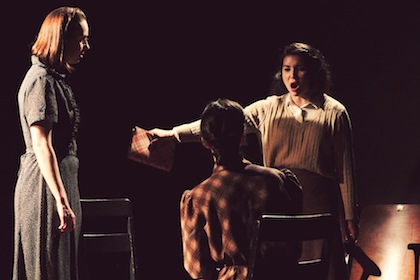
Morgan Hayley Smith as Anne and Gabriele Metcalfe as Peter in Fighting Chance Productions’ The Diary of Anne Frank. (photo from FCP)

“In spite of everything, I still believe that people are really good at heart.” This iconic quote from Anne Frank’s diary is known the world over. Can you imagine having this outlook after hiding from the Gestapo for two years in an Amsterdam building annex with seven other people, never being able to go outside and living in constant fear of discovery? These words exemplify Anne’s character – innocent yet resilient, courageous and optimistic. But she also personifies the tragedy of the Nazi genocide of six million European Jews – their only crime: being Jews.

Anne’s legacy is her diary, vignettes of daily wartime life in hiding, as seen through the eyes of a 13-year-old girl. The diary has sold more than 30 million copies and been translated into 60 languages. In 1955, husband-and-wife writing team Frances Goodrich and Albert Hackett adapted it for the Broadway stage. The result was a Pulitzer Prize for drama and a Tony for best production. However, the script omitted most references to Judaism (to make the show more “universal”) as well as any thoughts Anne had about sex, the latter at the request of her father, Otto, the sole survivor of the annex. Now, a local theatre company, Fighting Chance Productions (FCP), is staging the 1997 Wendy Kessleman adaptation that puts the Judaism and Anne’s budding sexuality back into the script to present a more authentic portrait of what happened in that annex at 263 Prinsengracht.

FCP presents the piece in the round at the intimate 50-seat Havana Theatre on Commercial Drive on a minimalist set – eight chairs on the bare floor. The first row of seats is also on the floor, so most of the audience is on the same level as the actors, or only a step up, making us part of the narrative.

Anne (Morgan Hayley Smith) and her family – father Otto (Cale Walde), mother Edith (Gina Leon) and sister Margot (Diana Beairsto) – are hidden in a secret annex behind a bookcase in Otto’s office building. Their protectors are friends and neighbours Mr. Kraler (Drew Hart) and Miep (Tori Fritz), who are the provisioners and news-bearers during the family’s sojourn in hiding and their only contact with the outside world. The Franks are soon joined by the van Daan family – father (Bruce Hill), mother (Leanne Kuzminski), 16-year-old Peter (Gabriele Metcalfe) and Mouschi, Peter’s black cat. Months later, they are asked to take in neurotic dentist Mr. Dussel (Thomas King). Within the confines of the annex, these very different people have to learn to live and let live as they try to bring a sense of normalcy into their daily routines. And they manage to do so – until Aug. 4, 1944, when they are betrayed and taken to concentration camps.

On opening night at the Havana, you could have heard a pin drop as the audience experienced this compelling story in the small theatre, which was both cozy and claustrophobic. Some audience members could have reached out and touched the actors as they moved about the shadowy set.

photo - Left to right: Diana Beairsto (Margot), Gina Leon (Edith) and Morgan Hayley Smith (Anne) in The Diary of Anne Frank, which is at Havana Theatre until June 23
Left to right: Diana Beairsto (Margot), Gina Leon (Edith) and Morgan Hayley Smith (Anne) in The Diary of Anne Frank, which is at Havana Theatre until June 23. (photo from FCP)

All of the acting is strong in this production, but Smith is the stand out, seemingly born to play the role of Anne. She is lovely and has the right mix of emotions as she faces the usual teenage girl issues – first kiss, mother problems, sister rivalry. She is coy when she has to be, outspoken on all subjects and feisty when verbally sparring with her fellow annex occupants (Hill, Kuzminski and King are stellar in these moments). Metcalfe presents a believable, shy and awkward Peter, just learning how to navigate his way around girls, and he and Smith have real chemistry on stage – what a tender moment when they first brush lips. Walde is strong as the reliable father figure while Leon and Beairsto lend quiet dignity to their roles. During intermission, the cast stays in character and on set, a reminder that, while we, the audience, have the freedom to move about, Anne and the others cannot escape their prison – a brilliant directorial artistic choice.

There is a last poignant moment just before the group is captured. Peter says that, when he gets out, he is going to make sure that no one knows that he is Jewish, as life would be a lot easier as a Christian. Anne quickly responds, “I’d never turn away from who I am. I couldn’t. Don’t you know, you’ll always be Jewish … in your soul.”

This production, in its simplicity, succeeds on so many levels – the set, the sound design, the muted tones of the costumes, the lighting and, notably, those all-important moments of silence, which often have more impact than the dialogue itself. The Diary of Anne Frank is a rich, powerful drama.

A great responsibility comes with staging this type of play. Kudos to this company and co-directors Ryan Mooney and Allyson Fournier, who have met the challenge – it is essential for Anne’s story to continue to be told.

The show runs until June 23 at the Havana. For tickets and more information, visit fightingchanceproductions.com.

* * *

The JI interviewed Smith (MHS) and Mooney (RM) by email during the rehearsal period.

JI: What made you want to do this show?

RM: I have always been a fan of the Anne Frank story. I remember being drawn to her book when I was in elementary school and seeing the classic movie in high school. I have seen several productions in the past and always wanted an opportunity to direct it myself. The story is timeless and hopeful and I like playing with the dark and light of humanity.

MHS: I played Anne in a drama festival production in junior high. I felt a connection because of this and also because I dreamed of being a writer when I was a teenager. The story moved me even back then and I have always been amazed at how this young girl viewed what was happening in her country.

JI: What was the audition process like?

RM: It was trickier than usual for this show. We saw a lot of people but wanted to take the time and care to ensure we had a perfect cast. I am very happy with how we ended up.

JI: How did you feel about getting the role of Anne?

MHS: I felt surprised and very lucky to be selected, as I actually went in to audition for Margot, her sister. I am an older sister myself and felt I could relate to Margot. It was a nice surprise to be asked instead to call up my bright-eyed inner child and set aside the responsible sister side. It was even better to find that inner child still there as lively as ever.

JI: Has the play impacted your life in any way?

RM: I think seeing how the cast has really come to the table for this one has been touching to me. The way the cast has been affected by the characters has surprised me. It should not though, because they are compassionate and empathetic actors and people.

MHS: I definitely feel an impact. I find myself so thankful that I have the smallest freedoms, like going outside and walking in the fresh air, and that I have been able to grow up and get answers to questions about myself, questions that Anne never got to answer. What might surprise people about this show – and Anne’s diary itself – is how joyful and full of life it is. I have been feeling inspired to take in beauty from the day-to-day and really appreciate things that are taken for granted.

JI: Is the play appropriate for all audiences?

MHS: I highly encourage audiences of all ages to see this play. I think it is very easy to lose a degree of connection when a story is as widely known as this one is. This play shows these characters and their circumstances not as grand ideas, but as everyday people, people with clashing personalities, people who have vices, prized possessions, teenage crushes and lingering questions. Despite the tragedy, at its core it’s a story about people and about the universal experience of growing up.

JI: What would you like audiences to take away from this production?

RM: I hope they walk away with a remembrance of this tragic time and its focus on the individual. It is easy to get overwhelmed with the six million-plus deaths during the Holocaust but it is appropriate to sit and see the effect on one individual, the humanizing factor.

MHS: Above anything else, I hope audiences take away from this play what I did: a renewed human connection for the people these events touched, and an appreciation for the privilege it is to be able to grow up.

Tova Kornfeld is a Vancouver freelance writer and lawyer.

* * *

• Last month, researchers using digital technology uncovered two new pages of Anne Frank’s diary, which contained “naughty jokes” and discussions about sex and prostitution.

• A biography about Dutch resistance activist Elisabeth “Bep” Voskuijl, who was of one of Otto Frank’s employees, suggests the possibility that it was Voskuijl’s sister who outed the annex residents to the Nazis.

– TK

Format ImagePosted on June 8, 2018June 6, 2018Author Tova KornfeldCategories Performing ArtsTags Anne Frank, Fighting Chance Productions, Holocaust, Morgan Hayley Smith, Ryan Mooney, theatre
New Yad Vashem exhibit

New Yad Vashem exhibit

The new exhibit at Yad Vashem features artworks, artifacts, diaries, letters and testimonies that illustrate how Jews yearned for Eretz Israel during and immediately following the Shoah, from 1933-1948. (photo from Ashernet)

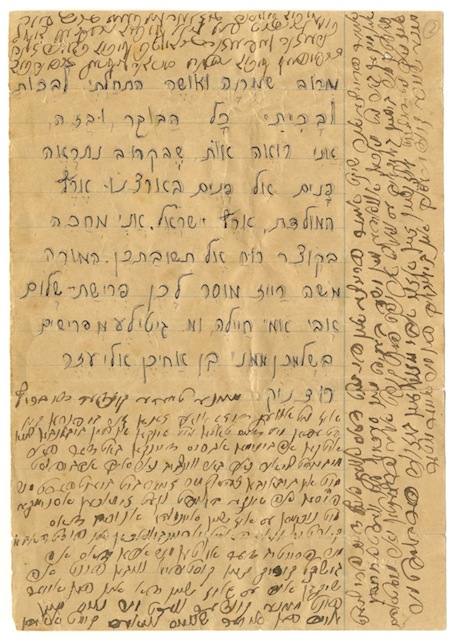
“I see a sign that we will meet each other face-to-face in our land, our homeland, Eretz Israel,” wrote 10-year-old Eliezer Rudnik in 1937 to his aunts who had immigrated to Palestine.

The letter, written in Hebrew, is surrounded by his parents’ writing, in Yiddish, as there was a lack of paper. Aryeh and Sarah Rudnik and their son, Eliezer, were the only Jews living in the Ukrainian village of Kosmaczow – they were shot and killed by Nazis in 1942. Eliezer’s letter is just one of the hundreds of items now on display at Yad Vashem, the World Holocaust Remembrance Centre, in a new exhibition, They Say There is a Land: Longing for Eretz Israel during the Holocaust.

photo - Eliezer’s letter is just one of the hundreds of items now on display at Yad Vashem, the World Holocaust Remembrance Centre, in a new exhibition, They Say There is a Land: Longing for Eretz Israel during the Holocaust
Eliezer’s letter is just one of the hundreds of items now on display at Yad Vashem, the World Holocaust Remembrance Centre, in a new exhibition, They Say There is a Land: Longing for Eretz Israel during the Holocaust. (photo from Ashernet)

The exhibit, which opened May 30 in the Auditorium Exhibitions Hall of Yad Vashem’s Museums Complex, features artworks, artifacts, diaries, letters and testimonies collected by Yad Vashem over the years, all of which illustrate how Jews yearned for Eretz Israel during and immediately following the Shoah, from 1933-1948. It is divided into three sections.

The first section presents how Jews viewed their connection to and longing for the Land of Israel during the rise of the Nazi party to power in Germany, until the outbreak of the Second World War. It was during this period that Jews searched for asylum in various countries, including Eretz Israel.

The second section focuses on the years 1940-1944, from the period of the ghettos to extermination. During this stage, Jewish communities in Europe dwindled and, under their daily struggle for survival, many Jews found themselves distanced from Eretz Israel to the point of disengagement; however, their hearts’ yearning for the land remained.

The third and final section focuses on the period immediately after the Holocaust – the displaced persons camps in Europe and the detention camps in Cyprus, and the establishment of the state of Israel. At this time, many survivors felt that only in Israel would they be able to regain their stature and build a full Jewish communal and personal life.

“The longing for Zion and the Land of Israel has been a cornerstone of Jewish identity for generations, manifested in many different forms,” Yad Vashem chairman Avner Shalev said at the exhibition’s opening. “While the Zionist movement was not embraced by the majority of Jews in Europe during the Nazi rise to power, through the course of the Holocaust and in its aftermath, it became increasingly popular. This exhibition portrays the ways in which Jews before, during and after the Shoah expressed their dreams for a brighter future in the Land of Israel, and their fervent hope to rebuild their lives here.”

The exhibition’s title is that of a well-known poem written by Hebrew poet Shaul Tchernichovsky in 1923 in Berlin. The poem brings up existential questions that characterized the Jewish people’s struggle in the interwar period, as well as the forces of dream versus reality, and hope versus despair.

Format ImagePosted on June 8, 2018June 6, 2018Author Edgar AsherCategories IsraelTags Holocaust, Israel, Yad Vashem

Holocaust education needed

Common sense prevailed at a meeting of the Pittsburgh school board in the end, although two of nine board members voted against participation in a Holocaust education trip to Poland.

The educational program is funded by the nonprofit organization Classrooms Without Borders at no cost to the school district. Nevertheless, one board member insisted that Pittsburgh schools are doing enough Holocaust education and that the trip could be seen as taking sides in the Israeli-Palestinian conflict. She contended, despite the fact that the funds were granted specifically for the Holocaust education trip, that they should be reallocated to programs that focus on African-American topics, including slavery.

It’s sort of a tempest in a teapot – especially given all the other things going on in the United States and around the world right now – but it is illustrative. Pennsylvania has an excellent record on Holocaust and genocide education, especially since 2014, when the state passed a law to “strongly encourage school entities in this Commonwealth to offer instruction in the Holocaust, genocide and other human rights violations.” That’s a far more specific directive than the British Columbia curriculum requires.

A representative of the Jewish Federation of Greater Pittsburgh responded to the board member’s criticism of the Poland trip.

“The notion that a trip to Poland to enhance the quality of Holocaust education in Pittsburgh public schools somehow discriminates against the Palestinian people is incomprehensible at best,” John Sayles told the Pittsburgh Jewish Chronicle. “What’s more, the insinuation that in order to most effectively teach about slavery we must allocate resources away from Holocaust education, or vice versa, is disturbing, as teaching about these two very important histories are not and should never be mutually exclusive.”

Coincidentally, but not unrelated, educators in Florida made a dubious decision to provide parents with an opportunity to opt their children out of a presentation by a Holocaust survivor. Parents of students at St. James Middle School in Murrells Inlet, Fla., received a letter saying, “We understand that a firsthand account of the atrocities of the Holocaust may be sad or difficult for students to hear. Students may opt out of this assembly and complete an alternative activity. Students who opt out will watch [a] video about the Holocaust in the media centre as an alternative activity.”

The letter assumes that the survivor speaker would not present at a level appropriate to middle schoolers. Second, and more significantly, it implies that difficult aspects of history should be sugarcoated – that was the word used by the survivor.

No matter the topic – the Holocaust, slavery, current events, writing, reading or arithmetic – effective education is delivered at an age-appropriate level. Survivor speakers understand this as well as any teacher.

The opportunity for today’s young people to hear firsthand accounts from witnesses to the Holocaust is a benefit no future generations will receive. To do anything but try to maximize the number who experience this opportunity firsthand is a tremendous loss.

This is especially true when a recent poll commissioned by the Conference on Jewish Material Claims Against Germany indicates that many Americans are unaware of the most basic facts of the Holocaust. (See jewishindependent.ca/basic-facts-not-known.)

This is fraught territory and headlines can be deceiving, such as the one in Newsweek, which declared: “One-third of Americans don’t believe six million Jews were murdered during the Holocaust.” Contrary to the headline, the poll suggested not that these Americans have heard the truth and rejected it, but rather that they have not been educated enough in the topic to have the facts. The issue is not Holocaust denial, in this case, but plain ignorance.

Denial of the facts is one thing, ignorance of them is different and far less malignant. In both cases, the answer is more education, not less.

Posted on June 8, 2018June 6, 2018Author The Editorial BoardCategories From the JITags Claims Conference, education, Holocaust, United States

An apology is the start

Prime Minister Justin Trudeau has said that he will make an apology in the House of Commons for the government of Canada’s 1939 decision to turn away the refugee ship MS St. Louis. The ship, carrying 907 German Jews, was denied entry at most North American and Caribbean ports before returning to Europe. Around half of the passengers were then accepted by the United Kingdom, the Netherlands, France and Belgium. About 500 were returned to Germany, where 254 were murdered by the Nazis.

Apologizing for the past has become common in Canada. Trudeau himself has apologized for Canada’s refusal in 1914 to allow the docking of the Komagata Maru, a ship carrying 376 migrants, mostly Sikh; apologized to gays and lesbians who were discriminated against by government in the past; exonerated six Tsilhqot’in chiefs who were hanged in 1864; and apologized to survivors of the Indian residential school system in Newfoundland and Labrador. The latter apology was necessary because this particular group was excluded from the 2008 residential schools apology made by Stephen Harper, when he was prime minister, because the schools there were not operated by the government of Canada. Harper also apologized, in 2006, for a head tax that penalized Chinese immigrants. Brian Mulroney, when he was prime minister, apologized, in 1988, for the internment of Japanese Canadians.

Such apologies are deeply important to the victimized communities, as evidenced by comments from Jewish community organizations last week.

“Canada is extraordinary not only because we strive to uphold the highest ideals,” said Shimon Koffler Fogel, chief executive officer of the Centre for Israel and Jewish Affairs, in a statement, “but also because we have the courage to address moments in our history when we failed to do so.… A formal apology will be a powerful statement to Holocaust survivors and their families, including St. Louis passengers who live in Canada today.”

Friends of Simon Wiesenthal Centre president Avi Benlolo said, “While an apology can never change the past, it can awaken the national conscience to ensure such grave mistakes are never repeated in the future.”

On the other hand, critics come from two sides: one arguing that we cannot change the past by apologizing in the present; the other contending that apologies are mere words.

The government’s recognition of past injustices is important, however. While political motivations are probably a factor in any government decision, this should not detract from the positive impacts an apology has on affected communities.

That said, if the objective is, as the prime minister and others have stated, to learn from the past and create a more just present and future, apologies should be accompanied by other undertakings, such as ongoing education, including curricula that teachers could download to contextualize issues, monuments at relevant locations marking the incidents (some of which already exist), a commitment to further commemoration or a host of other initiatives created in conjunction with affected communities.

Apologies, in other words, should not be the end of a conversation, but the start of a process.

Posted on May 18, 2018November 20, 2018Author The Editorial BoardCategories From the JITags Canada, Holocaust, MS St. Louis, reparations, Trudeau
Hope, pride and belonging

Hope, pride and belonging

Twenty-three students from Metro Vancouver joined more than 10,000 other students in this year’s March of the Living. They are pictured here with Jewish Federation of Greater Vancouver board chair Karen James, far left, and trip chaperones Susan Siklos, standing to James’ left, and Charlotte Katzen, standing fourth from the right. (photo by Jennifer Freedman)

Twenty-three Grade 11 and 12 students from Metro Vancouver headed to Poland and Israel on the annual March of the Living last month, and nine of those were students from public schools. In the past, Vancouver has sent about 14 students every couple of years. The increased numbers this year were the result of outreach by a volunteer committee headed by Charlotte Katzen.

“March of the Living is a life transforming experience,” she told the Independent. “Every participant will tell you that. It strengthens students’ Jewish identity, their understanding of who they are as Jews in the world today and their commitment to Israel.”

Katzen helped assemble a video in which march alumni, their parents and Holocaust survivors talked about their experience, the impact of the journey on young people and how important it is for them to become a witness. The committee showed the video in open houses at King David High School and at Jewish afterschool programs and other Jewish venues.

“When march alumni tell their friends, ‘You have no idea how impactful this journey is,’ it’s a powerful message and they want to join,” said Katzen about the video.

March of the Living is not an inexpensive venture, so Katzen worked with Jewish Federation of Greater Vancouver to help secure funding for students who couldn’t afford the trip.

“Federation really came through,” she said. “We’ve not yet reached the point of having sufficient funding, but, this year, Federation made a commitment that no child would be turned away. That commitment enabled us to say, during our outreach, ‘Don’t worry about your financial situation. If you want to go, you will go.’”

Federation offset the cost of the trip by $2,000 for each participant using funds raised by the annual campaign. Scholarships were also offered to families that needed them.

Noa Platner, a Grade 12 student at King David, was one of the participants. She described her time in Poland as “very hard, intense in a way I didn’t expect. We’d go to the camps and hear the story of a specific family, which helped us feel really connected,” she reflected. “But it was very hard, and it crushes you on the inside. I realized all the people who went through the Holocaust had their own individual stories. You always hear the number of people, but you don’t think of the emotions they felt.”

For Trevin Kiel, a Grade 11 student at Hugh Boyd Secondary School in Richmond, the march, which was attended by more than 10,000 Jewish students worldwide this year, was an opportunity to get a sense of the scale of the Holocaust. “I wanted to see what 10,000 Jews looked like, to compare it to six million,” he said. The stories of Nazi brutality were hard to absorb, he admitted, “but we debriefed every night as a group, and it felt reassuring to share our feelings with others and know they were feeling the same way.”

Kiel had visited Israel previously with his family, but said this time was much different. “It was the best trip I’ve ever been on, it was just so much fun and such an eye-opening experience.”

The group was in Israel for Yom Hazikaron and Yom Ha’atzmaut.

“I didn’t expect it would be an emotional time but I was more emotional in Israel than at the camps in Poland,” Platner said. “After all we Jews have been through already, to realize we’re still fighting and innocent people are dying was very crushing. But one of our guides told us we should feel proud that we’re still standing, strong enough to fight this time and do the best we can.”

Katzen helped prepare the students before they left Vancouver and participated in the march as well, co-chaperoning this year’s trip with Susan Siklos; Federation board chair Karen James was also part of the group.

“The students bond with each other and become so close by the end of the trip,” Katzen observed. “We grieve and celebrate collectively and we become one big, beautiful, coherent family. This trip changes them profoundly and makes them stronger, more tolerant of others and of each other.”

Being in Israel for Yom Hazikaron was no minor detail of the itinerary. “They realize, on Yom Hazikaron, that having a homeland comes at a very high cost,” said Katzen. “We can celebrate but we have to be aware that our homeland also has very tragic stories.”

A guide on the trip shared with Vancouver students the story of a friend who was ambushed and killed while serving in the military. “It’s one story of thousands,” Katzen said, “but the kids understood how difficult it is for families to put their own children’s lives at such high risk in order for the country to exist. They got it.”

Kiel and Platner both agreed that their participation in March of the Living has changed them in ways they’re only beginning to understand.

“My Jewish identity has changed,” Platner said. “I feel a stronger sense of purpose to follow the traditions and be a part of my community in honour of those who died and are still dying for our nation.”

Kiel said, prior to the march, if non-Jewish friends at school made jokes about Jews or about the Holocaust he would get angry or frustrated. “Now I feel like I can educate people on why it’s wrong to make jokes like that, and make sure they never tell a joke like that again,” he said. “If they knew the scale of the Holocaust, they wouldn’t make jokes.”

He’s returned with a stronger Jewish identity, he added. “I’ve started to wrap tefillin two to three times a week now. It reminds me of the trip and the memories I made there.”

He said, “I know there are lots of other trips that go to Poland, but not like this one.”

Platner agreed. “March of the Living gave me a sense of hope, pride and belonging.”

For information on joining a future March of the Living trip, contact Federation or visit marchoftheliving.org.

Lauren Kramer, an award-winning writer and editor, lives in Richmond. To read her work online, visit laurenkramer.net.

Format ImagePosted on May 11, 2018May 9, 2018Author Lauren KramerCategories WorldTags Charlotte Katzen, Holocaust, Israel, Jewish Federation, March of the Living, Noa Platner, Trevin Kiel
JCC Book Fest awards given

JCC Book Fest awards given

Western Canada Jewish Book Award 2018 winners, left to right: Roger Frie, Deborah Willis, Kathryn Shoemaker and Irene Watts. Missing: Tilar Mazzeo. (photo by Cynthia Ramsay)

Deborah Willis became a writer, in part, because it is a way “to learn about the things that you’re curious about.” Irene N. Watts and Kathryn E. Shoemaker were motivated to reimagine a decade’s-old story in light of its relevance to pressing issues of today. And, in his latest work, Roger Frie found a way to discuss a past for which, previously, “the words were missing for how to speak about it.”

The Western Canada Jewish Book Awards, presented by the Cherie Smith JCC Jewish Book Festival, took place on April 26. Self-proclaimed book lover Daniella Givon, who is part of the JBF committee and was chair of the awards committee, introduced the evening.

“As I looked for ways to enhance the Jewish Book Festival,” she said, “I had a vision that book awards would marry the goals of the festival with the celebration of, and support the achievements of, local Jewish writers from Western Canada and showcase the winning authors. Since then, we’ve already gone through the process of bringing the ideas to fruition with the help of a subcommittee and the first round of awards … a beautiful ceremony was held here two years ago, recognizing five best-deserving authors.”

This year, four awards were presented, as chosen by the selection committee of former librarian Linda Bonder (Victoria); author and librarian Elisabeth Kushner (Vancouver); author and poet Dave Margoshes (near Saskatoon); writer, teacher and critic Norman Ravvin (Montreal); and Judith Saltman, professor emerita at the University of British Columbia School of Library, Archival and Information Studies. The winners were Calgary-based Willis for The Dark and Other Love Stories (Diamond Foundation Prize for fiction); Tilar J. Mazzeo, who divides her time between Maine, New York and Vancouver Island, for Irena’s Children (Pinsky Givon Family Prize for non-fiction); Vancouver’s Watts and Shoemaker for Seeking Refuge (Jonathan and Heather Berkowitz Prize for children and youth literature); and Frie, professor of education at Simon Fraser University and affiliate professor of psychiatry at UBC, for Not in My Family: German Memory and Responsibility after the Holocaust (Kahn Family Foundation Prize for writing on the Holocaust).

At the awards ceremony, each of the donors, or their representative, announced the winner of their sponsored award, which included a cash component. The winners – except for Mazzeo, who could not attend – read excerpts from their books and were interviewed briefly by Marsha Lederman, Western arts correspondent for the Globe and Mail.

Frie, who seven years ago discovered his maternal grandfather’s involvement with the Nazis, told Lederman, “This was a past no one had spoken about and, as I soon learned to understand, I think the words were missing for how to speak about it.” About the war in general, he said, his parents – who immigrated in the 1950s to Canada (Frie was born here) – talked about Germany’s responsibility for the Holocaust, however they did not speak about what his grandparents believed or what their involvement was in the war. He has found, in his research, that this “is a common dynamic amongst Germans in the postwar period.” He said that, while Germany has faced its past, “the emphasis on collective memory and collective understanding and collective responsibility has, in some way, allowed individual families to avoid confronting the past, and this book [Not in My Family] is very much a representation of that.”

Lederman described Mazzeo’s book as “astonishing.”

“I knew nothing about Irena Sendler before I picked up this book, so this has been a gift,” she said. “Irena Sendler was a Polish woman who saved … thousands of Jewish children during the Holocaust with amazing feats of courage, often in the Warsaw Ghetto. Her story is incredible, this book is incredible, and I can only hope that Steven Spielberg gets his hands on a copy.”

Shoemaker gave a brief presentation on the creative process she and Watts went through to create the graphic novel Seeking Refuge, which is based on Watts’ book Remember Me (first published in 2000). And Watts spoke of the challenge of cutting 27 chapters down to nine. “What I had to keep in mind,” said Watts, “is you can get so carried away by cutting and changing the language to make it more dynamic that you lose the story a little bit, and I had to watch that I didn’t diminish the characters.”

About the cover of the graphic novel, which features a girl sitting on a suitcase looking forlorn, Watts said Shoemaker “told the story in that one image.” Later, in response to a question from Lederman, Watts said the current refugee crisis was “the major reason to bring this book back in a different format.”

As for Willis, she spoke with Lederman about her winning collection of short fiction. “I was writing the stories for about five years, and I actually started noticing that the word ‘love’ was coming up over and over again. I was at first a little dismayed by that because I was thinking, oh, love stories, that’s been done. But then I embraced it and I wanted to try and explore that theme in a way that was true to my esthetic, or my goals as a story writer. I set it almost as a challenge.”

After an open Q&A with the authors, JCC Jewish Book Festival director Dana Camil Hewitt wound up the event with thanks to the sponsors, judges, awards committee and audience.

For an interview with Watts and Shoemaker, visit jewishindependent.ca/meet-award-winning-artists and, for a review of Not in My Family, visit jewishindependent.ca/a-grandfathers-sins.

Format ImagePosted on May 4, 2018May 2, 2018Author Cynthia RamsayCategories BooksTags children, Daniella Givon, Deborah Willis, fiction, Holocaust, Irene Watts, Jewish Book Festival, Kathryn Shoemaker, Marsha Lederman, memoir, Roger Frie, Tilar Mazzeo

The value of memoirs

This academic year marks the second session of Writing Lives, a two-semester project at Langara College, coordinated by instructor Dr. Rachel Mines. Writing Lives is a partnership between Langara, the Vancouver Holocaust Education Centre, and the Azrieli Foundation. Last fall, students learned about the Holocaust by studying literary and historical texts. In January, students began interviewing local Holocaust survivors and are now in the process of writing the survivors’ memoirs, based on the interviews. Students are keeping journals of their personal reflections on their experiences as Writing Lives participants. They used their most recent journal entry to reflect on the topic of The Importance of Memoirs. Here are two excerpts.

Memories are our experiences: our interactions with people we love or hate, our communication with the ever-changing world. Our memories remind us of our moral values, our knowledge, our appreciation of our own lives, and perhaps our own inadequacy in being the person that we wanted to be. Our memories are a true reflection of who we are, and that is exactly why they are our most valuable asset.

Writing down our memories is a great way to retain them and, hence, it is meaningful to write a memoir on behalf of David, a man who has experienced one of the most controversial and complex events in history – the Holocaust – so that his memories will be retained in concrete form and can be passed on to many generations. I believe David’s descendants, and anyone who cares about other human beings, will be inspired by what David fought for in the past and will be grateful for what they have. Sometimes, we take food and safety, peace and dignity, the privilege to love and to be loved, for granted, and we forget about the unfortunate ones.

Most importantly, memoirs of Holocaust survivors are a stern reminder of the fact that we humans can turn into perpetrators for not so obvious reasons. It would be wrong for us to think that, since we are civilized, rational, educated people, we cannot become perpetrators. We have come to realize that it is not the case that only psychotic or inherently evil people can harm others in callous and appalling ways. The Holocaust has demonstrated that hatred, racism, conflicts between religions and a sense of insecurity can easily be used to justify our wrongdoings. With the real-life experiences of survivors recorded in memoirs, hopefully people will never forget this painful lesson in human history.

– Bonnie Pun

Storytelling is a phenomenon that all manners of societies and cultures have practised since the hominid species first learned to communicate. We use stories to convey social values and wisdom. In Western society, thanks to pioneers such as Sigmund Freud and Carl Rogers, storytelling forms the bedrock of modern counseling practice. The intimacy of sharing a story with a compassionate and safe person can literally transform a life. Stories transmit meaning, both individually and socially. It’s as simple and complex as that.

Memoirs are a place where individuals can encounter and transform their experience into one that has larger meaning. On a societal level, projects like Writing Lives present the human experience and personal costs of the atrocities that have occurred. The personal narrative transforms historical facts into real and impactful events that can be felt, if not fully understood.

The Holocaust is so often constructed and taught as an historical anomaly, a mysterious evil; however, the fact of the matter is that it is a story of social relationships. Sadly, “stories” such as this have occurred far too frequently over the last 70 years. Globally, we have seen genocidal processes of hate in countries such as former Yugoslavia, Rwanda, Cambodia, Russia, Sudan … the list goes on. As our neighbour to the south, the United States, struggles with an ideological divide that has become so significant it is now one of the countries monitored by the NGO Genocide Watch, memoirs from the Holocaust become particularly important here in the Western world. I think it is sometimes easy to look at racially motivated brutality in the second and third worlds and feel a certain sense of safety. These memoirs confront us with a different reality, one which is too important to ignore.

– Ann Thomas

Posted on May 4, 2018May 2, 2018Author Writing Lives studentsCategories LocalTags Azrieli Foundation, education, Holocaust, Langara College, memoir, survivors, VHEC
Long-enduring trauma

Long-enduring trauma

I approached Imprint: A Memoir of Trauma in the Third Generation (Caitlin Press, 2017) with reluctance. But Claire Sicherman’s account of her murdered family members, of her grandparents who were the sole survivors of the Holocaust and of her own intimate life as granddaughter, woman, wife and mother is profoundly moving and tender. Her accounts of her relatives’ lives and deaths under the Nazi regime are brutal and shocking. The proximity of these emotions makes the book challenging to read but hard to put down.

Sicherman’s choice of the title Imprint helped me understand just how stubborn and long-lasting the impression of anxiety, grief and horror can be to the human psyche. My mind went to the reality of fossils. According to one source online, sometimes an animal “is buried before it is destroyed. And when that happens and conditions are just right, the remains of the animal are preserved as fossils…. Fossils are the naturally preserved remains or traces of ancient life that lived in the geologic past…. Fossils represent the remains or traces of once-living organisms.”

For Sicherman, the emotions related to the destruction of her family are permanently imprinted in her body and in her genetic makeup. She must now bring them to conscious awareness.

The juxtaposition of cold, hard accounts of death – as in the chapter “My Family” at the beginning of the book – immediately followed by the first letter to her 9-year-old son Ben, signed “Love Always,” warns the reader that what follows is not for the faint-at-heart. She alternates between three essential narratives: the telling of the destruction and deaths of her relatives in Poland; the survival of her grandmother and grandfather, which leads to the intimate story of her mother and Sicherman’s youth; and the traumatic birth of her son Ben, which acts as a catalyst, breaking through lifelong barriers of ignorance, denial and grief.

book cover - ImprintIn gazing at the cover of the book, the three images of caterpillar, cocoon and butterfly began to make sense. This metamorphosis becomes the symbol of Sicherman’s lifecycle; the lack of awareness of her family’s history, the birth of her son, and her desperate search for knowledge and understanding of why she suffers from chronic health conditions, anxiety and depression.

Sicherman’s answer to the question “why” lies within the concept of epigenetics, the study of heritable changes in gene expression. Traumatic events cause changes in gene expression that can then be inherited. For Sicherman, her task is to explore, through various forms of therapy, the intergenerational transmission of trauma – the genetic imprinting of the horrors that befell her great-grandparents, her great-aunts and great-uncles and their progeny. Despite the distance of being a third-generation Holocaust survivor, her writing captures the beauty and intimacy of family affection (“My Babi,” “My Deda”). Hope of healing and surviving trauma permeate the pages of this creative book, offering acceptance and guidance to others of her – and the next – generation.

Dolores Luber, a retired psychotherapist and psychology teacher, is editor of Jewish Seniors Alliance’s Senior Line magazine and website (jsalliance.org). She blogs for yossilinks.com and writes movie reviews for the Isaac Waldman Jewish Public Library website.

Format ImagePosted on May 4, 2018May 2, 2018Author Dolores LuberCategories BooksTags Claire Sicherman, epigenetics, Holocaust, memoir, survivors, third generation

Posts pagination

Previous page Page 1 … Page 25 Page 26 Page 27 … Page 43 Next page
Proudly powered by WordPress