
Skip to content
  • Home
  • Subscribe / donate
  • Events calendar
  • News
    • Local
    • National
    • Israel
    • World
    • עניין בחדשות
      A roundup of news in Canada and further afield, in Hebrew.
  • Opinion
    • From the JI
    • Op-Ed
  • Arts & Culture
    • Performing Arts
    • Music
    • Books
    • Visual Arts
    • TV & Film
  • Life
    • Celebrating the Holidays
    • Travel
    • The Daily Snooze
      Cartoons by Jacob Samuel
    • Mystery Photo
      Help the JI and JMABC fill in the gaps in our archives.
  • Community Links
    • Organizations, Etc.
    • Other News Sources & Blogs
    • Business Directory
  • FAQ
  • JI Chai Celebration
  • JI@88! video

Recent Posts

  • Sharing her testimony
  • Fall fight takes leap forward
  • The balancing of rights
  • Multiple Tony n’ Tina roles
  • Stories of trauma, resilience
  • Celebrate our culture
  • A responsibility to help
  • What wellness means at JCC
  • Together in mourning
  • Downhill after Trump?
  • Birth control even easier now
  • Eco-Sisters mentorship
  • Unexpected discoveries
  • Study’s results hopeful
  • Bad behaviour affects us all
  • Thankful for the police
  • UBC needs a wake-up call
  • Recalling a shining star
  • Sleep well …
  • BGU fosters startup culture
  • Photography and glass
  • Is it the end of an era?
  • Taking life a step at a time
  • Nakba exhibit biased
  • Film festival starts next week
  • Musical with heart and soul
  • Rabbi marks 13 years
  • Keeper of VTT’s history
  • Gala fêtes Infeld’s 20th
  • Building JWest together
  • Challah Mom comes to Vancouver
  • What to do about media bias
  • Education offers hope
  • Remembrance – a moral act
  • What makes us human
  • המלחמות של נתניהו וטראמפ

Archives

Follow @JewishIndie
image - The CJN - Visit Us Banner - 300x600 - 101625

Tag: health

Talking about addiction with L

Jewish Addiction Community Services (JACS) estimates that one in six members of the Jewish community in Metro Vancouver – or more than 4,000 people – are in need of support for dealing with substance use disorder. And yet, it is a topic that many of us find hard to talk openly about.

“I grew up around alcoholism in the home. There was shame in the family that dad had a drinking problem, and it affected my childhood, there is no doubt,” said L, who had the courage to speak with the Independent about their experience with alcoholism. “My dad was an angry drunk and he’d be embarrassing in public. He didn’t show up for commitments and didn’t turn out to be a very good father. I got to the point where I didn’t count on him because I couldn’t, and I resolved that with myself at a young age.

“Yet, there was a part of his life that was enticing and rather exciting for me,” added L, now a sober member of Alcoholics Anonymous (AA) and a participant in JACS Vancouver. “When my father would pick me up on a Friday night, we would head to the bar. I thought it was something fun, better than my boring life at home.

“I would be excited to play the bar games and drink Shirley Temples, but I was way too young to be in that environment, way too young to have my views shaped by those experiences.”

Although these tavern trips took place when L was in junior high school, they considered it normal. “I didn’t realize there were no other kids in the bar. It seems weird to me now that no one objected,” L reflected.

L grew up in an environment where Judaism was not talked about much, either. “There was already a stigma within a stigma. There was a great shame about being Jewish. Being Jewish was rarely discussed, the same way Dad’s drinking was rarely discussed. Both topics became elephants in the room.

“I think what I draw from that experience is that I really believe the disease of alcoholism is genetic; it seems to run in families,” L said. “All I needed was that environment to stir up that excitement. My dad had a full wet bar at home, and I just loved it. I was drawn to it like a magnet because I associated it with fun Friday nights when Dad took us to the bar.”

L’s father’s drinking led to L’s mother divorcing him when L was 5. There remained trauma within the home – matters that were not openly discussed – and alcohol presented a means “to take the edge off.”

L established their own relationship with alcohol and began drinking and using drugs as much as possible.

“I was the perfect rebellious child,” L said. “I found ways to drink – whether stealing it from my parents’ liquor cabinet or sneaking out at night to hang out with older kids to drink. I used to hide it in my room. I kept a mason jar of whiskey in my closet.”

As L’s dependence increased so, too, did their obsession to drown out reality. “In high school, I would sneak out to drink and do drugs. I would put a trashcan beside my bed so I would have a place to throw up when returning home. This way, I wouldn’t risk waking my parents, because my bathroom was right next to their bedroom. I was pretty far gone by high school. The more I drank, the less I was interested in life around me. I dropped out of school and then left the house at 16.”

The reliance on alcohol remained for another 10 years. Family members disassociated themselves and L eventually sought help. By the time L “hit bottom,” a phrase used in AA to describe the lowest moment in an alcoholic’s drinking experience, they were “unemployed, suicidal and physically dependent on alcohol to function on a daily basis.”

“I didn’t fashion myself to be that bad, yet I didn’t have any friends left,” said L. “No social network, I was very isolated. I didn’t leave my house anymore. I didn’t check the mail. I couldn’t even go to the grocery store without being drunk or high. I ended up going to a counselor, who thought I should go to an AA meeting. I thought that sounded horrible; I was only 26. AA sounded like it was for a bunch of old men and winos who lived under a bridge. However, my counselor said, ‘It has to be better than the way you’re living now.’”

Though there were struggles initially in attending AA meetings, L picked up a desire chip (sobriety coin) in August 1997 and has not had a drink or drug since, recently celebrating 25 years of continuous sobriety. L remains active in AA, and sponsors others who are looking for relief from their alcoholism.

AA, though it often holds meetings in churches, is a non-denominational program. “I am very steeped in Alcoholics Anonymous and that’s my central connection with sobriety,” L said. “It wasn’t until a Jewish friend in AA told me about JACS that I was able to reconcile my long-standing concern with the Christian side of AA.”

After attending some JACS meetings, L felt relieved that they could talk openly about their Judaism, which had been a sticking point for L in AA. Through JACS, L was introduced to the book Twelve Jewish Steps to Recovery, by Rabbi Kerry M. Olitzky and Dr. Stuart A. Copans.

“Just reading the foreword to that book helped me better understand that AA’s founder, Bill W., was only using the God of his understanding, which happened to be based in Christianity, to write the outline for sobriety in the AA literature.”

This realization was a profound moment for L, since they always “railed against [the Christian] part of the AA program,” saying “that never felt right.”

“All of a sudden,” L said, “I realized that AA wasn’t Christian at all, only Bill’s concept of his higher power was. AA allows me to choose the concept of my own higher power, which is based in Judaism.”

Becoming more involved with JACS has opened a whole new perspective for L, which was not found in AA meetings alone. “I couldn’t be more grateful for finding this missing piece of the puzzle at JACS and for the continued support of Shelley Karrel, who runs the Vancouver chapter,” said L, who attributes this shift to becoming more involved in the Jewish community and reconnecting with their lost Judaism.

“I would not have had this spiritual awakening without being more connected to my community and being introduced to JACS,” L said. “Being able to finally connect my sobriety with Judaism feels like coming home for me.

“When I think about my father’s demise – a sad and lonely alcoholic death – I know that could have been my fate as well. There isn’t a day that goes by without being reminded of where I came from and how grateful I am that I survived. I did not have to die by suicide, or alone with a bottle hidden away in my closet. I was given a new life. A sober life.

“Thinking about drinking is the furthest thing from my mind today,” said L. “It used to be the only thing I thought about 25 years ago. The obsession has been removed. I am completely safe and sound when it comes to alcohol now, as long as I stay active in AA and keep on the path of spiritual growth.”

For more information on available resources and support – within and beyond the Jewish community – visit jacsvancouver.com.

Sam Margolis has written for the Globe and Mail, the National Post, UPI and MSNBC.
Posted on December 9, 2022December 7, 2022Author Sam MargolisCategories LocalTags AA, addiction, family, health, JACS, Jewish Addiction Community Services, Judaism

Dealing with addiction

Rabbi Allan Finkel of Winnipeg’s Temple Shalom spoke about addiction in the Jewish community and Jewish-based recovery during a Nov. 6 Zoom presentation organized by Kolot Mayim Reform Temple in Victoria.

The talk was the first of Kolot Mayim’s 2022/23 lecture series entitled Hineini: Answering the Call to Heal the World. It widened the definition of addictions to go beyond those that are substance-based to include dozens that are behavioural. Finkel also explored new research on the causes of addiction, particularly childhood trauma.

“My name is Allan and I am an addict,” he began. “This was a huge hineini, when I first said ‘here I am.’ This was my declaration 13 years ago. At that time, hineini meant here I am at the bottom of a drug addiction, I am broken and I am open to an unknown path that might lead to recovery.”

That path, starting at Narcotics Anonymous, would take him on a spiritual journey, reconnecting him with his Judaism and leading him to become a rabbi.

For his rabbinical program, Finkel wrote his thesis on addictions in the Jewish community. “I was curious to know what we might learn as rabbis, and how we can carry our journey forward in terms of serving our congregations,” he said. “It is a mental health issue, and there wasn’t very much known about it…. And there are certain issues, particularly within the Jewish community, that made it a topic that I wanted to explore.”

Finkel discussed a 1962 study of the Jewish community in the United States that tried to find out what percentage of the Jewish community was addicted to drugs and/or alcohol. The answer was zero, compared to a 10% addiction rate in the overall population. Clearly, the study indicated a denial within the Jewish community that Jews can also be addicts. A 1995 study in the United Kingdom produced similar results.

Beginning in the early 2000s, research began to demonstrate that, to understand addictions, one needed to look beyond substances and towards behavioural addictions, which can encompass many areas: shopping, food, internet and gambling, among them. More recently: cellphone use, online gaming and video gaming.

From this standpoint, the number of people demonstrating addictive behaviour reaches 47%, according to studies Finkel cited, though he suggested the number is likely far higher. A commonality among people with addictive behaviours is the inability to stop, no matter what harm it does to those around them and to themselves.

Returning to the denial of addiction in the Jewish community, Finkel proposed that one cause is the long-standing fear of shame, which could be triggered by an admission of a problem at a synagogue, Jewish school or other institution. Looking at areas of the Torah, such as the story of Noah, he explained, one sees that “the Jewish denial of addiction is social and cultural, it is not religious in orientation.”

Within the past decade, there has been a broader consensus within Jewish institutions that addiction is not a moral failing, but instead can be caused by the same factors that result in other mood and psychological disorders.

Using the work of Vancouver physician Dr. Gabor Maté, Finkel noted that all addictive behaviour can be traced to something that happened when a person was very young. “Not everyone who was traumatized becomes an addict, but every addict was traumatized.”

One conclusion Finkel draws is the need to destigmatize the word “addiction.” He stressed that an addiction, as stated in the American Psychiatric Association’s 2013 manual on mental disorders, is a means of coping no different from any other mental health disease.

A second takeaway is that adults and not children bear much of the responsibility for addictions; in other words, no child ever dreams of becoming an addict. Children do not have the rational skills to take on and cope in a non-destructive way with trauma that happens to them.

Further, Finkel argued that real recovery is not simply about stopping addictive behaviour, but about going back to one’s past and taking care of the fears and resentments of childhood, as well as the habits that build up over a lifetime.

Finkel told the audience that it has been more than 10 years after his last relapse. He said the rewards of recovery have been immense and have brought incredible relationships with his children, himself and life.

Finkel is an outspoken advocate for interfaith engagement and for the building of strong bridges and partnerships across all denominations within the Jewish community. He currently chairs the Winnipeg Council of Rabbis.

A video of Finkel’s lecture is posted at kolotmayimreformtemple.com.

Sam Margolis has written for the Globe and Mail, the National Post, UPI and MSNBC.
*******

Some resources

Rabbi Allan Finkel provided this list of resources for those experiencing addiction and those close to them:

  • Crisis and suicide line: 1-800-784-2433
  • Jewish Addiction Community Service (JACS) Vancouver 778-882-2994
  • Mental health support: 310-6789 (no area code required)
  • Umbrella Society: support, outreach, recovery, counseling, groups, harm reduction and education, umbrellasociety.ca
  • Our Jewish Recovery: Facebook group, with 16 active Jewish recovery meetings and classes, virtual retreats, individual and group coaching, led by Rabbi Ilan Glazer
  • Rabbi Mark Borovitz, Finding Recovery and Yourself in Torah: A Daily Spiritual Path to Wholeness
  • Rabbi Kerry Olitzky and Dr. Stuart Copans, Twelve Jewish Steps to Recovery, and other of Olitzky’s books, including with co-authors
  • Rabbi Paul Steinberg, Recovery and Jewish Spirituality: Reclaiming Hope, Courage and Wholeness
  • Rabbi Shais Taub, God of our Understanding: Jewish Spirituality and Recovery

– SM

Posted on November 25, 2022November 23, 2022Author Sam MargolisCategories LocalTags addictions, Allan Finkel, health, Kolot Mayim, mental health

Overcoming diabetes

Two years ago, I was 58 years old, weighed 200 pounds and was in a wheelchair because of chronic ankle pain when my doctor told me I had diabetes. Six months later, I was 20 pounds lighter and my blood glucose level had lowered so much that I was considered pre-diabetic. This meant that diabetes was no longer harming my body.

One of the first things I did was to cut out refined sugar, honey and junk food from my diet. This was not easy, as I grew up with a mother whose idea of making you feel better was to give you food like waffles with maple syrup and Sephardi delicacies like zangoola – deep fried pastry filled with treacle – on Hanukkah. But, with the help of a dietician, I lowered the amount of carbohydrates and sugar that I ate. She said that I could have artificial sweetener in my tea, so I decided to do that.

I noticed that food tasted better when my overall diet had very little sugar added. I also made sure to have a lot of vegetables with my meals. I treated myself to a simple spinach omelette with feta cheese and tomatoes almost every week.

I ate strawberries, blueberries and cantaloupe instead of high fructose fruits like watermelon. But I made sure to cheat a bit, too, at least once a week, with a few squares of fruit-and-nut dark chocolate. Whenever I went kayaking and got a good workout for an hour-and-a-half, I rewarded myself with a small chocolate ice cream.

If I can’t see it I won’t eat it! My husband eats ice cream and I asked him to put it at the very back of the freezer so I can’t see it. He also has a special cubbyhole where he puts his snacks that are high in carbs.

I spent some time on the Diabetes Canada website and found a chart there that tells you what food to eat some of the time, what food to eat most of the time and what foods to avoid altogether, which was very helpful.

Going to restaurants is still possible. When I order salads, I always ask the server to leave the dressing on the side, since dressings are sometimes high in sugar. I also found out that all sit-down restaurants have a nutrition guide, which will tell you how many carbohydrates or sugars are in their foods.

The second thing I did was find a diabetes clinic that had a case manager and an endocrinologist that I could see for free. I can’t say how important it was to find a specialist who knew so much about the disease and was so optimistic that I could lower my blood glucose level. He gave me a blood glucose monitor for free for two weeks and, during this time, I found out which foods spiked my levels and which foods didn’t. Everyone is different.

It took about six weeks but after trying three different drugs I was finally given one I could tolerate and that I could get on special authority so I didn’t have to pay for it. My pharmacist insists that it was the drug that lowered my blood sugar level from 6.8 to 6.2 in six months. I think other factors helped, too.

I found that exercising for even 15 minutes a day made a difference in my weight. There are unlimited exercises on the internet that you can do while sitting. And if you Google “exercises for seniors,” you will find many examples.

I started swimming twice a week. Swimming increases blood flow and tones almost all of the muscles in your body. Also, I figured that during the two hours I was getting ready to swim, then swimming, then going into the whirlpool and sauna – if that didn’t take the pounds off, at least I wasn’t eating for that amount of time!

I tried five different indoor swimming pools in Vancouver and they all had lifts that take you out of your wheelchair and into the pool. It’s different at outdoor pools though. It’s best to call ahead and see if they have the equipment that’s required.

I found social media helpful, as well, especially Facebook, since there are a few different pages for people who have diabetes. It was helpful to know that I was not alone – while also being cautious, since there were people who really wanted to make money off of my condition.

Now I am 60 years old and I can walk again. I am hoping to lose more weight so that I will be able to walk pain-free. I’m still getting medical treatments and I am hopeful that I will slowly but surely get rid of my diabetic belly. Here’s to hoping!

Cassandra Freeman is a freelance writer living in Vancouver.

Posted on November 25, 2022November 23, 2022Author Cassandra FreemanCategories Op-EdTags diabetes, diet, health, lifestyle

Being vs. feeling old

Being old! That is so different from feeling old. Being old is what I think of other people, or what others may think of me. Feeling old is so much more personal. Feeling old is something that has crept up on me so much more recently.

I have noticed being old for a long time, as the ranks of my contemporaries has been thinning out. But now, I am noticing how the distances I want to cover, have to cover, seem so much further away. I am much slower in my reach, slower to pick up things, slower to get up and go. When did I develop that tremor that I never noticed before? Why do I not recall the name, the word, that I used to instantly recall? What’s happening? I must be getting old. It makes me feel old.

I have always reveled in the richness of my memories – memories of things that so many around me have not the least idea about. My past has become an irrelevancy. I have had to comfort myself with the private knowledge that the present all of us so take for granted is based on what I and my contemporaries had built so solidly in the past. If we were to dare recount our triumphs, we would be written off as old bores.

I find I now have a reluctance to add new articles to my closet. What I have there are the things I put on like old companions, which wrap me in comfort. The odds and ends I have accumulated are the precious reminders of my days of derring-do, when I traveled to the heart of darkness without a thought to the dangers that were present on every side. Those days we knew we were immortal.

Like the just desserts for the conquering hero, I earned my reward, albeit at the age of 71. Correcting the errors and omissions of a callow youth, lacking the courage of my convictions, throwing caution to the winds, I gained the love and companionship of my true love after an interregnum of more than 50 years. Thereafter, I had to learn how to appreciate the needs of others as the road to ultimately meeting my own. It took the reasoning and wisdom of advancing age, and altered priorities, to gain the knowledge that enabled me to reengineer the person that I was.

Each day, we launch our enterprise to meet the challenges of life. If the objective is to fill the pantry or the fridge, we count it a victory if we return home without having forgotten any of the items on the grocery list we carried in our minds. If we meet up with others to share a community activity, we count ourselves brilliant if we remember the names of our comrades. We have taken to the practice of notation to ensure we do not miss birthdays and anniversaries of even our closest kin. If all else fails, we resort to internet searches to compensate for any breaches we may come across in the things we surely know by heart. It is always a joint product as we seek to light the fires of memory in each other.

We are engaged in the habit of doing puzzles. I hate puzzles, but they are one of the medicines I faithfully take to counter the breaches in my armour that have accumulated over time. We exercise. Ditto to my personal appreciation of the activity. We socialize. I am most happy at home with a book or an exciting mystery or bang-up violence on my TV.

I do like to be surrounded by younger folk. That gives me a charge. The spontaneity of children is just marvelous to behold. And they are so beautiful to behold. I am sure having them in one’s life keeps one young, even if they sometimes tire you out. It is a good tired!

Generally, I happily do all those things the doctors tell us are good for our health. But no serious food exclusions. I am sure I will expire consuming one of those things we have been warned is bound to bring us to the edge of existence. I bear these admonitions in mind but am an inveterate cheater. Even if the time comes sooner, we have had a good run and I will go out smiling. (Don’t tell my wife, because she absolutely won’t hear of my going off without her.)

Some of us may miss the cut and thrust of being out in the world, struggling with the demons we all have to face, but it is a relief, in the end, to no longer worry about what might be happening behind our backs. We gaze out at the world more or less secure.

Being old without feeling old is the secret, isn’t it?

Max Roytenberg is a Vancouver-based poet, writer and blogger. His book Hero in My Own Eyes: Tripping a Life Fantastic is available from Amazon and other online booksellers.

Posted on November 25, 2022November 23, 2022Author Max RoytenbergCategories Op-EdTags aging, health, lifestyle

Still waiting for knee surgery

I am not known for my patience. And I’ve been preparing for my long-awaited knee replacement surgery for nearly three years.

I’ve acquired all the necessary post-surgical equipment: expensive ice and compression machine, bath transfer bench, walker, crutches, cane, toilet riser, reacher, long-handled shoehorn, high density cushion, a chair with arms. I attended all the prehab and pre-surgery webinars, got my SPARC parking pass, watched all the recommended surgical and how-to videos (several times each), made a list of what to bring to the hospital and rescheduled a host of medical appointments and personal commitments. I even arranged to “foster” some of my furniture out to friends to clear the way for my anticipated post-surgical walker/crutches. I had meetings with the surgeon, pre-admission nurses, anesthesiologist, physiotherapists and an occupational therapist. I was more prepared for my surgery than Eisenhower was for D-Day. I repeat, I am not a patient woman.

Staff at Oasis (Osteoarthritis Service Integration System) and ASAP (Arthritis Surgical Assessment Program) are my new BFFs. They told me about assistlist.ca, a website that lists used medical equipment for sale. I learned that the Red Cross Health Equipment Loan program has become stricter about who it lends to. It used to be that everyone got their equipment there. Since COVID, anyone who wants to borrow from there has to sign a waiver explicitly disclosing their need for assistance. Luckily, I don’t need their services.

I’m armed with more resources than I know what to do with, so it just makes sense to share them. There are lots of medical supply stores, but the ones who have the greatest variety are Lancaster Medical on West Broadway and Macdonald’s Prescriptions (in the Fairmont building). Best place to buy high-density cushions (and any kind of foam) is Discount Foam on Fraser Street near 33rd. Need an ice/compression machine? Go to the source: ProCare Medical Inc. Just FYI, the Polar Care Wave machine combines the ice therapy and the compression that targets not only swelling but also pain. Apparently, it’s a must-have for knee replacement surgery.

If you have an extended medical plan, check to see what they cover, because this equipment can be expensive. Also check if they cover a private or semi-private hospital room. And don’t forget to get a doctor’s note indicating that you need this equipment for a knee or hip replacement, and include this with your extended health claim. My health carrier insisted that I buy from an actual medical supply store (not, say, Facebook Marketplace) and that the receipt indicate the source, and that my name be on the receipt. You might want to buy your equipment secondhand to save some money, but just remember that your extended health won’t cover it.

I learned that a high-density cushion, which I’ll need post-surgery, is not a benefit covered by my health plan. I also learned that, after knee replacement, all seating must be two inches higher than the top of my knee. That includes the toilet, the bed, all chairs and couches, and the car seat. Seriously, the logistics of preparing one’s home (and car) before surgery seem never-ending. Like making sure that everything you need on a daily basis is within counter-height reach. No squatting to get toilet paper out from under the sink – unless you have a reacher. No going to restaurants without your high-density cushion. No bending over to put on your socks. The list goes on. And on.

To say that I was ready for surgery would be this century’s understatement. Then I got COVID.

Don’t ask me how. It’s one of the world’s great mysteries. I am vaccinated five times. After intense speculation, the only culprits I can point to are either the physiotherapist appointment I had (both of us wearing KN-95 masks) or an elevator (me masked, of course).

It was a Friday morning and I just thought my allergies were acting up. Or maybe I’d been mouth-breathing at night – slight sore throat, stuffy nose, tired, a bit of a dry cough and a headache. Minor stuff. Until I did a COVID rapid home test. I tested positive. I immediately called the urgent care clinic and got a PCR test, phoned my gastroenterologist and proactively got a prescription for the antiviral medication Paxlovid, and waited. Less than 24 hours later, when positivity was confirmed, I started on the medication and was better in five days. My surgery was scheduled for four weeks later – and this was a problem, as I will explain.

I want to make one thing clear. I do not blame my orthopedic surgeon or the anesthesiologist for my knee replacement surgery being postponed three times. I do blame COVID. I do blame miscommunication. And I definitely blame an over-burdened healthcare system. Primarily, the latter.

My husband and I have been crazy cautious and isolating like nobody’s business during the pandemic. The wild card is that I’m immunocompromised, so I’m at higher risk for any kind of infection. But nobody has been more careful than us. In fact, I’m pretty sure I spent more money on KN-95 facemasks, latex gloves and hand sanitizer in the past two-and-a-half years than I have on clothing. By a long shot. Until this point, we went nowhere, saw no one and did nothing. But, as COVID eased up a bit during the summer, so did we. But incrementally. Literally by centimetres. I met a few friends for dinner outside. We traveled to Victoria for four days. Wild and crazy stuff by all accounts.

Having just been told for the third time that my surgery would be postponed, I was devastated. It had to do with a seven-week waiting period post-COVID before getting an anesthetic or surgery, because of the risk of blood clots and pneumonia. Immunocompromised … blah, blah, blah.

All this is to say that I should have listened to a wise woman long ago, who advised that I “get comfortable with uncertainty.” Umm, OK. How exactly do I do that? Apparently, you breathe. And wait. And breathe. And practise mindful meditation. Maybe get a little anxious. Breathe some more. Meditate. Eat. Maybe get a bit more anxious. Breathe. Wait some more. I’m now an expert breather.

The only thing that helps me is holding firm to my belief that nothing happens by accident. Everything happens for a reason. Usually one to which I am not privy. But still. Enter faith and trust – stage right, stage left, stage centre. That’s really my only life raft. Luckily, it’s sturdy and solid and mine for the taking. Anytime, anywhere. Now that’s what I need to practise. Oh yeah, and breathing. Meanwhile, I’ll continue cooking and eating. Stay tuned.

Shelley Civkin, aka the Accidental Balabusta, is a happily retired librarian and communications officer. For 17 years, she wrote a weekly book review column for the Richmond Review. She’s currently a freelance writer and volunteer.

Posted on November 11, 2022November 17, 2022Author Shelley CivkinCategories LifeTags Accidental Balabusta, health, knee replacement, medical system, surgery, waiting lists
Teaching about charity

Teaching about charity

Ellen Schwartz, founder of Project Give Back. (photo from LinkedIn)

Jewish Federation of Greater Vancouver’s Choices, the largest celebration of women’s philanthropy in the community, takes place Nov. 3 at Congregation Beth Israel. At the event, featured speaker Ellen Schwartz, founder of Project Give Back, will talk about raising a son with a neurodegenerative disease and how her son Jacob helped her “live a more grounded, purposeful and present life.”

Project Give Back is targeted to elementary students in Ontario. Established in 2007 by Schwartz, a Toronto-based teacher, community advocate and mother of three children, it started as a program she created for her fourth grade classroom and it is designed to teach compassion and concern for community. The program, which selects and trains teachers to deliver its specialized curriculum, runs weekly from October to May in partner schools. In it, students help do the teaching by explaining the value of a worthy cause to their fellow classmates. Since its inception, Project Give Back has helped bring awareness to hundreds of charities.

“The beauty about Project Give Back is children teach us about what matters to them, through their involvement with a charity that they or their family are connected to,” Schwartz told the Independent.

Fifteen years after starting the program, Schwartz said many early participants continue to be actively involved in charitable work as they enter into young adulthood.

“We definitely have seen many of our alumni actively giving and making change in their communities,” she said. “Some of our graduates have published books, with proceeds donated to their chosen and personal causes.”

Some of the many grassroots charities to which Project Give Back has recently brought attention are Sending Sunshine, a program directed at curbing loneliness in the elderly population; Nanny Angel Network, which provides free in-home child care in Canada; and the Super Sophia Project, a group whose goal is to offer hope to children and their families battling cancer.

As Project Give Back bases much of its lessons on personal connection and in-class discussions, it, like many organizations, was affected by the pandemic and had to shift its operations accordingly.

“We had to pivot quickly to online learning. All of a sudden, we looked at the windows of the students and we had family members attending lessons as well as pets, grandparents, etc. That was beautiful to see,” Schwartz recalled.

“Unfortunately, there was a tremendous gap in education and, while many schools were able to continue, almost at the switch of a button, others truly struggled. In these schools, often school was a safe place for many children and many didn’t have the opportunity to reset online quickly. We launched Project Give Back Connects during this time. This was a way to connect powerful messages and resources to classroom teachers, which they could access and share with their students.”

For her Vancouver presentation, Schwartz plans to discuss some of the life lessons she learned from her son Jacob, who died in 2019 at the age of 21. Only months after he was born, he was diagnosed with Canavan disease, which damages the brain’s nerve cells. Jacob wasn’t able to walk, talk or see.

“I will share the best piece of advice I was ever given. It was on a folded note left in my mailbox 25 years ago, [and] I still don’t know who left it there,” said Schwartz. “I will touch on tricks and tips to living a life filled with purpose and meaning as well as shaping grief in a manner that allows us to move forward.”

Currently, Project Give Back only operates in Ontario, but Schwartz is eager to investigate operating in Vancouver schools.

“Our plan is to continue to grow slowly and carefully, never compromising on the quality of our program,” she said. “Sometimes, bigger does not mean better. I would rather teach less children and do it well so that spark becomes a flame, rather than teaching more and hoping to ignite a spark.”

Schwartz also co-founded Jacob’s Ladder, Canadian Foundation for the Control of Neurodegenerative Diseases, with her husband Jeff in 1998. In its 21 years of operation, Jacob’s Ladder raised more than $3 million for research, education and awareness of neurodegenerative illnesses, as well as research into treatments.

Ellen Schwartz has written two books: Lessons from Jacob: A Disabled Son Teaches His Mother About Courage, Hope and the Joy of Living Life to the Fullest and Without One Word Spoken. She has been honoured by the Israel Cancer Research Fund, Ve’ahavta, Aish Toronto, Sick Kids Hospital, and Brilliant Minded Women. And she has been awarded a Queen’s Jubilee Medal, a Meritorious Service Decoration by the Governor General of Canada and a Canada 150 Exemplary Canadian Medal.

“I am hoping to make some new friends and inspire your community with a story I am honoured to be able to share,” Schwartz said, when asked about what she expects from her visit.

The community speakers participating in Choices this year are the daughters of Holocaust survivor Robert Krell: Shoshana Lewis, Simone Kallner and Michaela Singerman. They will share how they honour their father’s experience.

Also part of the Nov. 3, 5 p.m., event will be a marketplace including several local vendors.

Tickets for Choices are $60 and include dinner. However, there is a minimum donation of $154 to support the Federation annual campaign and, for first-time Choices attendees, a minimum donation of $36. Register at jewishvancouver.com/choices.

Sam Margolis has written for the Globe and Mail, the National Post, UPI and MSNBC.

Format ImagePosted on October 28, 2022October 26, 2022Author Sam MargolisCategories LocalTags annual campaign, Choices, health, Jewish Federation, neurodegenerative disease, parenting, philanthropy, Project Give Back, tikkun olam, women

Talking with authors

The 35th annual Vancouver Writers Festival includes many members of the Jewish community among the more than 115 authors from across Canada and around the globe who will join the events on Granville Island and elsewhere Oct. 17-23.

The festival will celebrate the five shortlisted Scotiabank Giller Prize finalists; engage in conversations with Booker Prize-winner Douglas Stuart, as well as Canadian superstars Heather O’Neill, Billy-Ray Belcourt and Wayne Johnston. It’ll host conversations between emerging Canadian and American poets, novelists and memoirists, and feature flagship favourites like the Literary Cabaret, Sunday Brunch and Afternoon Tea.

The guest curator of this year’s festival is 2021 Scotiabank Giller Prize winner Omar El Akkad, who has invited a wide range of authors, including Noor Naga (Egypt), Elamin Abdelmahmoud (Ontario) and Threa Almontaser (United States) – and many others – to join him for six conversations that focus on home, identity and storytelling

Among the Jewish community members participating in the festival are Méira Cook, with her adult-young adult crossover novel, The Full Catastrophe, in Mecca, Mitzvah and Milestones, and in Wry Humour for Modern Life; Tilar J. Mazzeo (Sisters in Resistance: How a German Spy, a Banker’s Wife and Mussolini’s Daughter Outwitted the Nazis) speaks with Marsha Lederman (Kiss the Red Stairs: The Holocaust, Once Removed); Sarah Leavitt facilitates a workshop led by University of British Columbia’s creative writing department; and Guy Gavriel Kay (All The Seas of the World) takes part in Fabulous Historical Fantasy.

Lederman is one of the authors participating in the The Power of Story: Live Recording for CBC’s The Next Chapter, she hosts Generational Fiction: Stories of Lineage, History and Things Passed Down, and moderates Bestseller to Blockbuster. Actor, theatre critic and UBC professor emeritus Jerry Wasserman moderates Building Suspense, on writing thrillers, and Dr. Gabor Maté talks with Globe and Mail reporter Andrea Woo about his latest book, The Myth of Normal: Trauma, Illness and Healing in a Toxic Culture.

Festival tickets ($25) can be bought online at writersfest.bc.ca or at the event venue, starting 45 minutes prior to the performance. There are discounts offered for regular events to seniors (10%) and youth under 30 (50%).

– From writersfest.bc.ca

Posted on October 7, 2022October 5, 2022Author Vancouver Writers FestivalCategories BooksTags fiction, Gabor Maté, Guy Gavriel, health, Holocaust, Jerry Wasserman, Marsha Lederman, Méira Cook, memoir, nonfiction, Sarah Leavitt, survivors, Tilar J. Mazzeo, Writers Festival, young adult
Adding health supports

Adding health supports

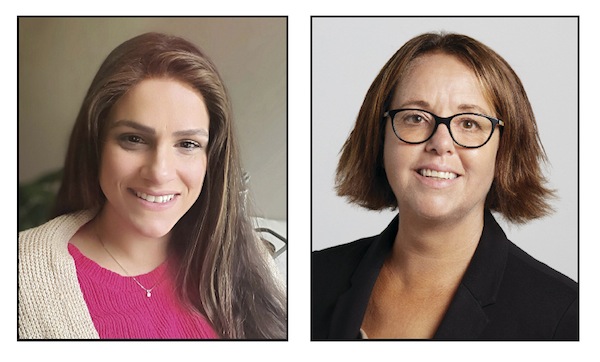
Matti Feigelstock, left, and Alisa Farina (photos from Jewish Federation)

The Jewish Federation of Greater Vancouver is expanding its efforts to address the mental health needs of younger members of the community by forming a partnership with Project L’Chaim, and hiring a new child, youth and young adult mental health worker.

According to Shelley Rivkin, vice-president of local and global engagement at Federation, the partnership with Project L’Chaim, an organization helping adolescents and young adults through life’s challenges, stems from identifying the importance of raising awareness of mental health issues confronting youth and providing professional development for frontline workers.

To this point, stigma has long contributed to people not feeling safe in discussing the mental health issues faced in the community openly; many families, consequently, have felt very alone in their struggle to find the necessary services and supports.

However, as Rivkin explained, “The pandemic universalized and destigmatized mental health issues. More people started talking openly about the anxiety and depression they or their children were experiencing, as well as the challenges they experienced in finding the help they needed. Over the past two-and-a-half years, we heard from schools, camps, Hillel and youth workers in our various organizations that there was a need for an experienced child and youth mental health practitioner who had a visibility in the community and would be able to immediately support, whether it was crisis intervention or short-term counseling, and could be a resource to parents and families, as well as other professionals.”

For her part, Matti Feigelstock, Project L’Chaim’s coordinator, is able to promote teen mental health in the Greater Vancouver community “by bringing programming, training and curricula to the teens and teen-facing adults in our community, as well as mental health professionals.” Through both Zoom and in-person events, she aims to bring more awareness and remove the stigma of mental illness. She also wants to provide adults with the tools to be there for the teens in their care.

“Our curricula for middle and high schoolers provide students with the ‘why’ to live, helping them find their purpose and build resilience to face life challenges,” Feigelstock told the Independent.

Project L’Chaim has a lot planned for the upcoming year. “We have a full calendar of virtual training planned for parents, educators and clinicians on topics from anxiety in children to talking about substance abuse,” Feigelstock said. “We also are looking forward to hosting a mental health day in collaboration with all of the local Jewish organizations, along with an awareness campaign to promote the role every individual has in mental health. Additionally, we are working with the local schools to teach our course, the Happiness Hack, to students, ensuring the conversation continues in and out of the classroom.”

Feigelstock, who has been at the helm of Project L’Chaim since May, has been involved with community service work at several local nonprofit organizations over the past 19 years. She is currently co-executive director of the Mamatefet Community Society, a charity that supports expectant and new mothers. For the past year, she has been a therapist focusing on women and youth at Elevate Therapy.

Project L’Chaim was started through a grant from the Diamond Foundation in memory of the late Steven Diamond. It serves as the Vancouver branch of the Wellness Institute.

“Our partnership with Project L’Chaim creates opportunities for parents and family members, youth workers, teachers and other frontline workers to access opportunities to hear and learn from renowned youth professionals,” Rivkin said. “Project L’Chaim’s connections to the Wellness Institute open up significant educational opportunities for the community. Their excellent publications are also available throughout the community and provide critical information in an accessible manner.”

* * *

In August, Jewish Federation welcomed Alisa Farina to the newly created position of community child, youth and young adult mental health worker.

Rivkin explained Federation realizes that young people who are struggling with their mental health are very resistant to seeking help through formal routes. By establishing a mental health outreach position, a person who can meet them in venues they are comfortable in, Federation hopes to create an environment in which more youth will seek help.

“We know that parents and family members struggle to navigate the mental health system and access the resources they need. This position will support and supplement the existing programs and services already available and diversify the supports available in the community. We want to make sure that parents and family members who are impacted by these issues feel supported and able to overcome the fear and despair they experience as they search for the right programs and resources to help their children,” Rivkin said.

Farina will provide direct support to children, youth and young adults struggling with mild or moderate mental health issues, such as anxiety and depression. She also will provide assistance and advocacy to parents and families as they navigate mental health systems, including consulting with school counselors and other professionals. She has worked for the Burnaby School district for 29 years, the last 10 of which she focused on work with high-risk youth and their families.

“When children or young people experience vulnerable mental health, it affects the individual, family and our community,” Farina said. “Our approach will be to stand with young people and walk beside families by providing direct one-to-one support, family support, advocacy and mental health system navigation in a judgment-free, low-barrier and equitable way. We want to foster resilience and mental well-being in our young people.”

For more information, visit wellnessinstitute.org or jewishvancouver.com.

Sam Margolis has written for the Globe and Mail, the National Post, UPI and MSNBC.

Format ImagePosted on September 16, 2022September 14, 2022Author Sam MargolisCategories LocalTags Alisa Farina, health, Jewish Federation, Matti Feigelstock, mental health, Project L’Chaim, Shelley Rivkin, Wellness Institute

Celebrate good moments

We experienced a remarkably sunny and beautiful spring day this week. It was an unusual day as our twins had a “well-child” physical at the pediatrician’s, something we hadn’t done in several years because of the pandemic. We took the morning off school and work. The appointment was remarkably smooth and quick. There was a park with swings near the medical building, deemed perfect by the kids. The bakery was open on the way home so we got a piece of rich chocolate cake and croissants for a snack.

As I drove my kids to school after lunch, so they could catch the second half of the school day, we all remarked on the amazing weather. There was a tendency then in our discussion to wish away the intense flooding, mud and big snowstorms we’d had in Winnipeg. Flooding and snow have been a huge problem in Manitoba this year, too much of a good thing after three years of drought. We agreed that there was nothing wrong with a good snowstorm, but that the muck we’d lately endured was a drag.

I tried to stop the negative thoughts popping up and ask my kids to please help me just cherish the sunny, warm, new bright green grass moment we’d had. We arrived at school. I walked them across a busy intersection, and drove home.

In the past, our pediatrician trips sometimes might take three hours. It was a combination of complicated medical issues, a wait to be seen, and negotiating the hospital corridors, tests and crowded, expensive parking lots. We used to joke that after returning home with the twins after vaccinations, they got baby Tylenol and we deserved a stiff drink. If you’ve had a history of health challenges, even a “regular” appointment can be stressful and I was exhausted after our relatively smooth experience that morning.

I’ve learned from reading a page of Talmud a day and doing Daf Yomi that my tendency to focus on the details and worry about every eventuality is nothing new. It’s not at all special. The rabbis of the Babylonian Talmud explored every detail when they figured out what the laws and issues could be around Jewish life, law and observance. When the text seemed brief, commentators filled in the blanks. We have thousands of years of recorded details and “what ifs” in our tradition. Thinking about every detail and overthinking every eventuality is a Jewish tradition! It’s no wonder that we may have anxiety over getting everything right and wondering about how things will go in advance – it’s literally part of our oral Torah and identity.

Sometimes these details can mean life and death. While it seems dark to drag this thought into such beautiful spring weather, I was struck by how many generations of anti-Jewish hatred have forced us to be on our guard. Many Jewish families carry two passports or have escape plans ready because they remember that their families have had to do it before: to escape the Holocaust, the Farhud, pogroms, banishments, the Inquisition, and beyond. Heck, after the destruction of the Temple in Jerusalem, Jews were the definition of the original diaspora, as many were sold into slavery throughout the Roman Empire. Historically, we have good reason to be on edge.

Back at home, after the medical appointment, I was tasked with organizing the first birthday party for our twins in years. Counting up RSVPs resulted again in focusing on the details while reminding myself of the huge gains we’d made. Recovering from what was a traumatic birth experience, with one twin in neo-natal intensive care, is always tough for me to celebrate each year. Despite the big fuss some people make over birthdays, it can be a rotten series of flashbacks for me to manage. I remember the obstetrician’s surprise when he asked how I saw the outcome of my twin pregnancy, which was a struggle. I explained that my goal was to live through it, as that was what Jewish law valued most, the life of the mother. If I came out with one or two healthy infants at the end, well, that would truly be an amazing miracle.

Now, I have two healthy and active almost-11-year-olds. Things change and we must focus on the joyful moment, the present, and enjoy the sunny days we’ve got.

All of these mundane family events happened on May 24, when many elementary school children were gunned down with their teachers in Uvalde, Tex. While my kids spent their afternoon at school in Winnipeg, the news spread that there had been another mass shooting in the United States. While the details aren’t all clear yet, the pattern is too familiar. Many families are being torn apart by horrible, unnecessary loss. Still others will face endless numbers of very difficult medical appointments ahead, for which I feel so much empathy and pain. Everyone should be able to go to school, the grocery store or their place of worship in safety. Every life taken by this awful violence is too many.

Our tradition tells us to cherish every single life, to do everything possible to save a person. Every moment and detail counts when something so precious is at stake. Still, we also have to find ways to pause and savour the details that make meaning. We need to find the moments that give us joy. We’ve got blessings to say, like the all-purpose Shehecheyanu, to embrace those grateful, new experiences and we’ve got specific ones for seeing rainbows, eating delicious snacks, and more. It’s a crucial part of our Jewish identities to use ritual tools to balance joyous, celebratory details in the moment with the real and dark feelings that come from tragedy.

May we all have chances this summer to celebrate, embrace the sunshine, and grow things – and pleasure. May we gather only for good moments.

Joanne Seiff has written regularly for CBC Manitoba and various Jewish publications. She is the author of three books, including From the Outside In: Jewish Post Columns 2015-2016, a collection of essays available for digital download or as a paperback from Amazon. Check her out on Instagram @yrnspinner or at joanneseiff.blogspot.com.

Posted on June 3, 2022June 1, 2022Author Joanne SeiffCategories OpinionTags family, health, history, Judaism, lifestyle, survival, Talmud

Opportunity to be healthier

There’s been much discussion about mental health, physical health and well-being as it relates to the pandemic. This can only be a good thing. It shines a light on something we should all think more about. For example, asking: “How are you doing? How are your family members and friends doing? Do they need support? Are they sad, isolated, lonely or not feeling well?” and actually hearing the responses.

Yet, once we start raising these questions about well-being, we have to acknowledge that we just don’t have the bandwidth or the social and medical infrastructure to deal with the outcomes. Many times, no one has cared, asked or listened when someone has spoken up and said things weren’t OK. It might be new for some to acknowledge that we’re not always “fine” and that there’s often not much professional help available either. (Just look at wait times to get mental health or addictions support.)

Our household had a great weekend recently. The weather was outstanding, warm and sunny, with highs of 20 to 23°C. We had outdoor experiences, with low-risk social experiences. We participated in a friendly neighbourhood cleanup and a big picnic with soccer and badminton. My kids gave me handmade art for Mother’s Day, with notes they wrote themselves. There was time for lots of good food, walks, playing and even some household cleaning. All four of us commented on Sunday night that we’d done so much, eaten well, and had so much fun.

I had so many feelings about this. I, too, loved the sunshine and the weekend’s events. I also felt physically well and energetic, capable of celebrating it all. That said, being absolutely prepared ahead of time, with lists of what we needed for each outing, a schedule, and carefully pre-organized and prepared meals was a lot of emotional labour. Like moms everywhere through the pandemic, I’ve shouldered much of this. When I woke up Monday morning, I was really tired.

The kids went to school. My partner settled down to his online meeting. I threw together food in two slow cookers for dinner and went to my desk – to work and to process my intense feelings. I knew I’d been starved for company. Seeing people outdoors, even strangers, with smiles and an intention to socialize and get to know us, was gratifying. Also, breaking out of our normal cold weather weekend pandemic routine was both fabulous and more work. Choosing to go out and chat with strangers – it was all good but also alien. That strange mix of feelings led me to think harder.

Working, I opened a fascinating listserv email about an informal comparison between Modern Hebrew, Yemenite Hebrew and Samaritan Hebrew. A Canadian engineer named Bahador Alast hosts YouTube interviews for a wide variety of languages in which he explores language, linguistics and culture. In this video, an Israeli speaker of Modern Hebrew, a Samaritan Israeli and a Yemenite Israeli all take apart informal sentences, a sentence of poetry, a sentence from the Torah (and liturgy) and another from the Mishnah (part of the Talmud). They easily code switch between their dialects of origin (Samaritan/Yemenite), Modern Hebrew, English and Arabic. They discuss the origins of their community’s pronunciations and conversational styles, their relationship to other Semitic languages and Modern Hebrew. With focus, they do all this in less than 20 minutes. It’s also done in such a friendly, open way that the moderator, Alast, who does this with many different cultures and languages, mostly sits and listens to the magic unfold.

This content stretched me intellectually, especially my auditory capacity, since I hadn’t heard these differences explained and formalized before. I loved this rare learning moment and the very specific linguistic context and comparison.

My personal realization about the weekend’s events and warmth and my Monday morning exhaustion was that context matters. The reason why it was all so fun was that we came into the weekend prepared. Also, all felt well rested and ready for lots of activity. Since the pandemic started, there has been acknowledgement of women’s household burdens with the cancellation of “regular” activities, but context matters. I had mostly the same burdens pre-pandemic and the normal run of activities made life overwhelmingly busy. The break in obligations allowed me to see the emotional labour in getting everything ready. I now sometimes can get my spouse to take on some of the load. Sometimes, we restructure things or do less.

The pandemic forced us to hit pause in many ways. Hopefully, it’s also opened up moments to make positive changes. People have always asked each other how we were, but did everyone listen to the responses? No. Many of us didn’t even have the time to listen to ourselves. Our own health and well-being can sometimes be hard to figure out. We need that quiet space to contextualize our experience. “Does this hip hurt more than it used to?” a physio might ask. However, if we don’t stop to think about what hurts or to discuss our feelings, experiences and needs, we cannot possibly contextualize them, either.

Judaism teaches us that we’re obligated to one another, in families, communities and society. Yet, if we aren’t listening to one another, we can’t help one another. Whether it’s speaking a common language with dialects or providing one another with mental health and other supports, we cannot lift one another up if we’re not listening or trying. We need to be self-aware to listen to our own bodies, minds and feelings. Then we can listen to and help others, too.

We may have a lot of health issues ahead, from long-COVID, health concerns left undiagnosed and mental health struggles. We have an obligation to recognize that we don’t have the social and medical infrastructure we need to manage it all. It’s up to us to start bridging the gaps. Listening to one another, offering context and support, is a first step. It’s an important opportunity to make things better.

Joanne Seiff has written regularly for CBC Manitoba and various Jewish publications. She is the author of three books, including From the Outside In: Jewish Post Columns 2015-2016, a collection of essays available for digital download or as a paperback from Amazon. Check her out on Instagram @yrnspinner or at joanneseiff.blogspot.com.

Posted on May 20, 2022May 19, 2022Author Joanne SeiffCategories Op-EdTags COVID, health, Judaism, lifestyle, mental health, pandemic

Posts pagination

Previous page Page 1 … Page 3 Page 4 Page 5 … Page 24 Next page
Proudly powered by WordPress