Skip to content
  • Home
  • Subscribe / donate
  • Events calendar
  • Business Directory
  • FAQ
  • News
    • Local
    • National
    • Israel
    • World
    • עניין בחדשות
      A roundup of news in Canada and further afield, in Hebrew.
  • Opinion
    • From the JI
    • Op-Ed
  • Arts & Culture
    • Performing Arts
    • Music
    • Books
    • Visual Arts
    • TV & Film
  • Life
    • Celebrating the Holidays
    • Travel
    • The Daily Snooze
      Cartoons by Jacob Samuel
    • Mystery Photo
      Help the JI and JMABC fill in the gaps in our archives.
  • Community Links
    • Organizations, Etc.
    • Other News Sources & Blogs
  • JI Chai Celebration
  • JI@88! video

Recent Posts

  • SFU honours Gloria Gutman
  • Lifting people’s spirits
  • Wedding a ray of light
  • Indigeneity and Zionism
  • Rule of law broken: councilor
  • Football and its roles
  • The burden of defence
  • Fish Café returns after fire
  • All right in what goes wrong
  • Nuns & mermaids at TUTS
  • Camp offers holiday retreat
  • Students and mentors inspire
  • Once-in-a-lifetime trip
  • 100 dancers, one heart
  • Money for the sciences
  • What “Jewish food” means
  • Have a cookie, schnitzel too
  • Federation now across BC
  • Israel fighting for its existence
  • Deal strengthens Iran
  • Patriotic belonging diminishes
  • A campaign to engage
  • Upstanders’ first live event
  • Responding to Carney
  • Having your own home
  • Music a family tradition
  • Musical to warm heart
  • Community milestones … June 2026
  • Sharing her passion for Israel
  • Or Shalom reopens its doors
  • JFS from past to future
  • Need holistic approach
  • Sharing stories, advice
  • Journalist shares fears
  • Skills to live together
  • Road to independence

Archives

Follow @JewishIndie
image - CJN box ad Rockowers 2026

Tag: family

Honouring ancestors’ stories

Honouring ancestors’ stories

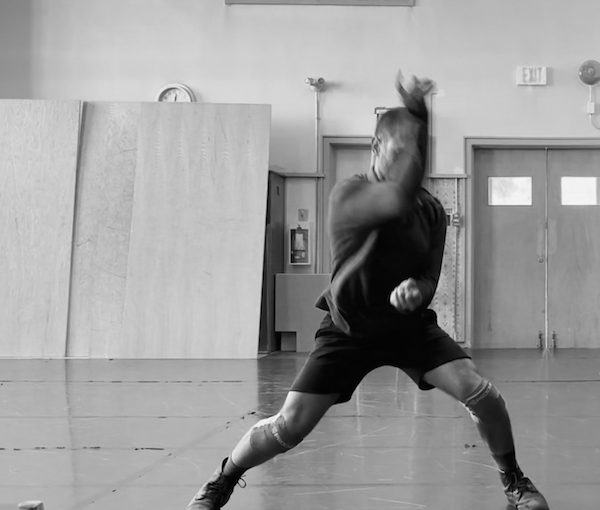
Juan Villegas rehearsing Edictum, choreographed by Vanessa Goodman, which is about Villegas’s Sephardi ancestry. The work is part of Dancing on the Edge’s EDGE One July 6 and 8 at the Firehall Arts Centre. (video still from Vanessa Goodman)

“I am very happy to be able to share my work and talk about Sephardic Jews, as I am doing a lot of research and I am discovering a lot about my own culture and where it comes from,” Juan Villegas told the Independent about Edictum, a new work with Vanessa Goodman about his family heritage, an excerpt of which he will perform at this year’s Dancing on the Edge July 6 and 8. “Throughout history, the Jewish community has suffered a lot and I am very happy to be able to pay respect, honour, shed some light and help tell the story of my ancestors,” he said.

Villegas and Goodman had already started their collaboration when Villegas found out that his ancestors were Spanish Jews who, following the Alhambra Edict of Expulsion in 1492 and the persecution of Jews by the Spanish Inquisition, sought refuge in Colombia.

In 2015, Spain passed legislation to offer citizenship to members of the Sephardi diaspora, but the window of opportunity to apply was only a handful of years and Villegas’s family missed it. However, they did apply to Portugal, which passed a similar law, also in 2015. Given the number of applicants, it could be several years before the family finds out. For the application, certified records were needed, so Villegas’s siblings hired a genealogist.

“They did both of my parents’ family trees and both ended up having the same ancestor – Luis Zapata de Cardenas, who came to Antioquia, Colombia, from Spain in 1578 and whose family had converted to Catholicism in Spain,” he said. “What is unclear to me is whether Luis Zapata de Cardenas was a practising Jew and was hiding it or if his family back in Spain became Catholic and raised him Catholic. I find it very hard to believe that people fully converted to Catholicism, as religion is so embedded in one’s culture and must be very difficult to switch by obligation. So, this is probably when they started disguising some Jewish rituals as Catholic, which happened a lot in Colombia.”

Villegas left Colombia in 2003, at the age of 18, concealing from his family his real reasons for leaving.

“I told them that I was going to only be in Canada for eight months to study English and then come back to Colombia,” he shared, “but deep inside I knew that I wanted to find a way to stay in Canada. I am gay and had a hard time growing up in Colombia – without realizing it, I was also escaping from a traumatic childhood, as I had been sexually abused and bullied at school. I was lucky enough that my parents helped pay for ESL studies in Canada and then I was able to do my university studies in Vancouver at Emily Carr University.”

After getting a bachelor’s degree in design from Emily Carr, Villegas worked at a design studio but was let go when the economy collapsed in 2008. He took about a year to figure out what he wanted to do next.

“I had a lot of unresolved trauma and I think it was a combination of having the time and (unconsciously) wanting to be healed from trauma that I started taking yoga and dance classes,” he said. “I met a dance artist named Desireé Dunbar, who had a community dance company called START Dance and she invited me to join her company. Vanessa [Goodman] had just graduated from the dance program at SFU and she was in the company also, this was back in 2009. Then, in 2010, I joined the dance program at SFU and Vanessa came to choreograph for us a couple of times. I always loved working with her and I felt like I connected with her.”

Graduating from SFU with a diploma in dance, Villegas moved to Toronto, where he danced for a few years. When he returned to Vancouver in 2017, he started following Goodman’s work. Intrigued, he asked if she would choreograph something for him and she agreed.

“And that piece that we created was about family,” he said, “but we left it at that, because I did not get the grants I needed to continue the work. So, when I discovered about my Sephardic Jewish ancestry, I pitched the idea to her and she agreed (without me knowing that she also has a Jewish background).”
video still - Juan Villegas rehearsing Edictum
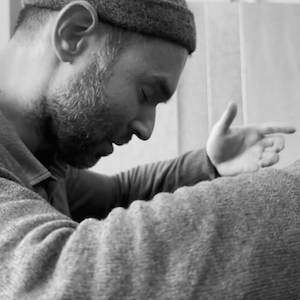
Juan Villegas rehearsing Edictum. (video still from Vanessa Goodman)

Everything fell into place, he said, including some funding, so they took up work again this year on Edictum, which is Latin for order or command. The project was always intended to be a solo for Villegas, and they had started by “diving into his family history and the names of his ancestors to build movement language,” said Goodman.

“Since his family found that they have Jewish ancestry and were a part of the diaspora from Spain and Portugal in the 1400s, we found it very relevant to revisit the starting material and expand on this history inside the work,” she said. “I was raised Jewish culturally and we found, through conversations about our family rituals in relation to culture, food and celebration, there were some very interesting links between his family’s expressions of their identity and mine. We have woven these small rituals into the piece and have found a very touching cross-section of how this can be shared through our dance practice in his new solo.”

Goodman is also part of plastic orchid factory’s Ghost, an installation version of Digital Folk, which will be free to visit at Left of Main July 13-15. It is described on plastic orchid factory’s website as “a video game + costume party + music and dance performance + installation built around the desire to revisit how communities gather to play music, dance and tell stories.”

“I began working with plastic orchid factory on Digital Folk in the very early days of its inception,” said Goodman. “James [Gnam] and Natalie [Purschwitz] began researching the work in 2014 at Progress Lab, and I was a part of that initial research for the piece. Since then, the work has been developed over a long period of time with residency creation periods at the Cultch, at Boca del Lupo, at the Shadbolt, at SFU Woodward’s, and it has toured Calgary and northern B.C. This work lives in several iterations, but the Ghost project is a beautiful way for the work to live in a new way one more time. The cast got together at Left of Main in December of 2022 and filmed the piece for this upcoming iteration…. It is exciting to see a work have such a rich life with so many incredible artists who have been a part of this project.”

Dancing on the Edge runs July 6-15. It includes paid ticket performances at the Firehall Arts Centre, where Edictum will be part of EDGE One, and offsite free presentations, such as Ghost. For the full lineup, visit dancingontheedge.org.
Format ImagePosted on June 23, 2023June 22, 2023Author Cynthia RamsayCategories Performing ArtsTags ancestry, Catholicism, Colombia, dance, Dancing on the Edge, DOTE, Edictum, family, history, Juan Villegas, Judaism, Portugal, Spain, Vancouver, Vanessa Goodman
Learn klezmer dancing

Learn klezmer dancing

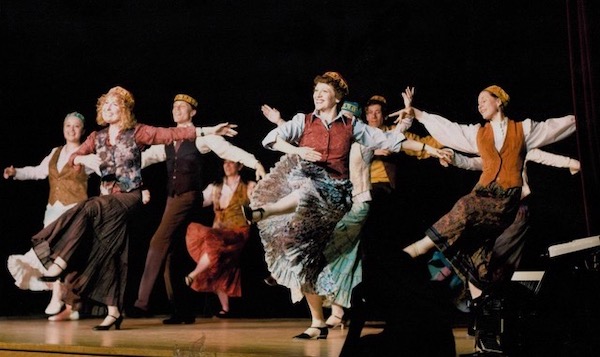
Kol Halev Performance Society in action. (photo from Kol Halev)

On May 7 at White Rock South Surrey Jewish Community Centre, Kol Halev Performance Society is holding a two-hour klezmer dance workshop, which is open to kids 8 and up, adults and seniors. And you don’t have to be Jewish to enjoy klezmer – this workshop is open to all!

In the workshop, participants will learn traditional and contemporary klezmer dances (traditional dances of Jewish celebrations originating in Eastern Europe) and read excerpts from The Kugel Valley Klezmer Band by children’s book author Joan Stuchner, in a joyous celebration of music, dance and storytelling. The instructors are Hadas Klinger (dance) and Tom Kavadias (theatre).

Klinger currently teaches recreational Israeli dance to adults at Richmond’s Congregation Beth Tikvah and at the Louis Brier Home, as well as jazz and Israeli dance instruction and choreography to K-6 kids and preteens. She has led Israeli dance workshops and drama workshops at a variety of youth summer camps, and has performed in Miami representing the Jewish Community Centre of Greater Vancouver as part of Maccabi Artsfest.

Kavadias has been involved in community theatre since 1985 as an actor and director, and he has worked with adults, teens and children. He has acted with Metro Theatre, Stage Eiren, Theatre North Van, and United Players.

There is no charge for the workshop, which takes place from 3 to 5 p.m., but registration is required by emailing [email protected] or via wrssjcc.org.

White Rock South Surrey Jewish Community Centre is located at 3033 King George Blvd. For questions about the dance program, call Sue Cohene at 604-889-4337. For other questions, call the WRSSJCC at 604-541-9995.

– Courtesy Kol Halev

Format ImagePosted on April 28, 2023April 26, 2023Author Kol Halev Performance SocietyCategories Performing ArtsTags dance, education, family, klezmer, theatre
Grandfather’s prayers

Grandfather’s prayers

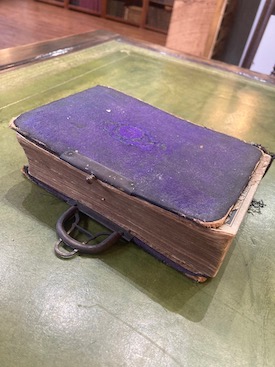
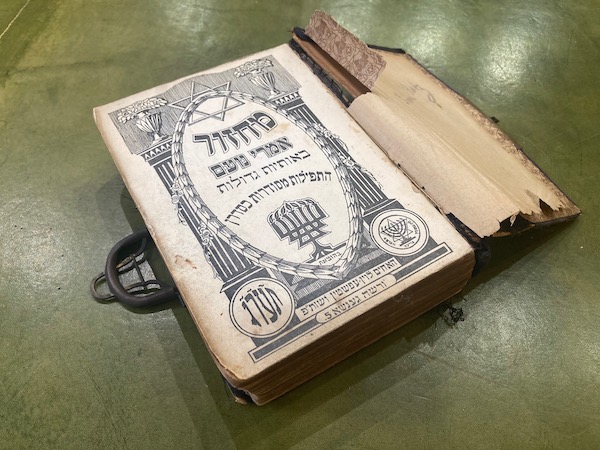
The author’s family Machzor, which was printed in Warsaw in 1913, was most likely owned by her grandfather. (photo by Shula Klinger)

Growing up, I was never taken to shul. I never saw my parents pray, read religious texts or attend any Jewish community events. I saw my maternal grandfather’s tallit case once or twice; I don’t know if he attended shul regularly. These ritual items were simply family artifacts, not elements of our daily lives.

At school, I went to Shabbat with a school friend and muddled through, not knowing the customs. I went to Jewish assembly twice a week and learned the Shema – sort of – from the other girls. With an Israeli father who spoke fluent Hebrew, I didn’t know where I fitted in. Religious Jews weren’t “our people.” My father’s religion was Zionism, not Judaism. I was English, but, at the same time, I wasn’t.

My mother passed away in 2020. As I went through her belongings, I was startled to find a Machzor (prayer book for the High Holidays) that had belonged to – I presume – her father, Dr. Bernard (Boris) Stein. It was coming apart and not just from age; it had clearly been well-used.

This was a deeply moving discovery for me. It told me that my family had once kept the High Holidays, that my ancestors did attend services and were indeed part of a spiritual community.

The prayer book’s worn, shabby velvet has been repaired more than once. Once bound in a rich purple velvet, glue marks are all that is left of the cover ornament. The buckle is mostly intact but the spine is roughly stitched together with cotton thread. This is not the work of a professional artisan; maybe it’s the handiwork of my grandfather himself. He was used to handling a needle and thread, though as a surgeon.

From the Cyrillic text in the front, I learned that the book was published by Levin-Epstein in Warsaw. Why would my grandfather, who was born in Lithuania and raised in South Africa, have owned a Polish Machzor?

According to Nathan Cohen in Warsaw: The Jewish Metropolis, Warsaw did not rise to prominence in Eastern European Jewish life until the second half of the 19th century. This was a result of the czar’s 1836 decree that closed down Jewish printing houses in the Russian empire. Only select printers in Vilna and Zhitomir were allowed to print in Hebrew characters. Warsaw, however, was outside the boundaries of this region, so the Jewish printing industry moved there instead. My family prayer book was published in 1913.

photo - Once bound in a rich purple velvet, glue marks are all that is left of the cover ornament
Once bound in a rich purple velvet, glue marks are all that is left of the cover ornament. (photo by Shula Klinger)

And what of our Machzor’s future? I don’t want to pack it up and hide it away. I want it to be a family heirloom for generations to come, and for my children to see it as they grow up. They are proud of their heritage and will also want to see that the book is well cared for.

I sought the advice of a professional. Having worked with local bookbinder Richard Smart on a Jewish Independent story about Anne Frank in late 2017, I returned with the book and a new set of questions.

Could the book be repaired? Smart said no, because “any new suede isn’t going to blend in nicely with the old … it’s very fragile.” However, he came up with another option for conserving it: building a custom box. This way, he said, “it’ll stay in one piece, but it also keeps its history of having been handled and used.” I like this approach because it prevents the book from coming to further harm, but it also preserves it as evidence of my ancestors’ religious lives.

While the book will not be in circulation, I am heartened by the knowledge that it will, at least, be safe. Even if it doesn’t form a part of my own religious practice, it won’t be discarded or tucked away like a souvenir. This Machzor will be treated in a manner that befits an ancient treasure: laid carefully in a box that is made by hand. I’m proud to be its guardian until it passes to the next generation of our family.

To see a video of Smart reaching his decision about the Machzor, visit @oldenglishbindery on Instagram.

Shula Klinger is an author and journalist living in North Vancouver.

Format ImagePosted on April 28, 2023April 26, 2023Author Shula KlingerCategories Op-EdTags family, history, Judaism, machzor, memoir, prayer book

Multiple membership models

Years ago, I briefly served on a synagogue board and did some research into membership dues. Some congregations had flat rates. Others had scales according to income or age. Others had no set dues, members gave according to what they felt they could give, with the congregation merely offering suggested amounts. There are plenty of articles on this topic, and even a book by rabbis Kerry Olitzky and Ari Olitzky. Synagogues cost money to run: salaries, buildings and activities are expensive. If we want Jewish life to continue, we need to consider this because synagogues offer us education, community, lifecycle events and more. However, there is no one size fits all when it comes to membership models.

Just as there are many models for dues, there are different ideas about new members. Some congregations post their membership application forms online and indicate where to submit the finished paperwork. Others offer membership information via email or post when it’s requested. Still others insist that the potential congregant meet with the executive director to gain access to the paperwork or the requirements for membership.

My husband and I have moved a lot in nearly 25 years of marriage. That has included “shul hopping” within communities sometimes. We’ve formally belonged to seven congregations, and attended services at many other places. Our experience hasn’t been limited to one North American movement. Due to our families’ diverse affiliations, geographic limitations and shifting needs, we’ve been members at Reform, Conservative, Modern Orthodox and unaffiliated congregations. We joke, when asked, that “we get around.”

All this resurfaced while I read about Toronto Congregation Beth Tzedec’s recent experiment with membership. This congregation saw that members under age 40 paid only 5% of their total operating income. By waiving dues for members under 40, Beth Tzedec gained 900 members in eight months, according to a recent JTA article. This remarkable leap in membership shows just how much of an obstacle membership dues are for many younger Jewish people in Canada.

For years, when I joined a congregation in a new place, I was asked to join committees, lead services, teach, volunteer or provide other services. Only very rarely did any of these congregations ask first, “What can we do to meet your needs?” or “What are you hoping to gain from this experience?” While it sounds crass to see this as a solely “transactional” experience, it can be painful to spend a lot of money to support a place that sees no obligation to create a relationship or a meaningful experience with its new and/or younger members.

Few congregations have new members start by meeting with a rabbi or cantor or other engagement professional. The first interaction is almost always with an executive director who is essentially asking, “How much can you pay us?” While congregations almost always state that they don’t turn down anyone due to lack of funds for membership, in practice, many people are turned away. They’re turned away or turned off because they don’t even make the embarrassing first appointment where they must admit they cannot afford the full costs of membership.

We just signed on the dotted line at a big, established congregation because our twins are nearing b’nai mitzvah age. We’ve been regular synagogue attendees for years. We had asked about membership when I was pregnant and, at the meeting with the executive director, we felt as though we were being interviewed to join a country club. As older first-time parents, we saw the membership cost was delineated by age and we fell into a more expensive category. Our roof was leaking, we were expecting twins. Our decision was easy – we fixed the roof. Synagogue membership could wait.

Over the years, we briefly joined two other congregations to access their educational opportunities or community events. In the end, though, we faced the same process over a decade later, with a different executive director. He told us that no one was turned away. However, the paperwork indicated that, unless we paid the building fee plus membership dues plus b’nai mitzvah charge, we couldn’t have a lifecycle event at the congregation. That upfront cost was about 4% of our gross annual income, which is a large chunk of change. That’s before paying for a Kiddush luncheon or family celebration.

There’s no one answer to this challenge. Here are some ideas based on our anecdotal experience.

Make synagogue membership paperwork and financial information easily available on a website or via email. It shouldn’t be a secret, offered only in a face-to-face meeting with the executive director. This isn’t a good first impression. Potential members might also want to meet with a rabbi, cantor or other professional rather than the executive director.

Second, consider a membership model that provides multiple options based on income rather than age or a flat fee. There will always be older members who earn less income and younger people who can afford more.

Third, create an environment where members will not begrudge further donations. If the membership fee is a suggestion, and is affordable enough so that people can manage it, then a happy member may want to donate more money in the future. A supportive congregation and positive community experience is worth a lot!  Members who sense that level of support are willing to pay for it.

Finally, recognize that many “middle-class” incomes don’t cover the cost of living the way they used to. Due to inflation, a professional who, for instance, works as a teacher or at a nonprofit may not have much expendable income. Find ways in which professionals might volunteer hours in lieu of part of their membership fees. Despite education and experience, these professionals have often been asked to volunteer for work in a Jewish context that one would have paid for elsewhere. They pay for membership that they perhaps couldn’t afford – for the privilege of also volunteering expertise.

We need each other for many reasons. Membership dues are not just for a minyan but also for the building where the minyan meets. Our tradition teaches us that every person is valuable, that embarrassment should be avoided at all cost, and that Jewish communities are essential. Synagogue membership models should reflect those teachings, too.

Joanne Seiff has written regularly for CBC Manitoba and various Jewish publications. She is the author of three books, including From the Outside In: Jewish Post Columns 2015-2016, a collection of essays available for digital download or as a paperback from Amazon. Check her out on Instagram @yrnspinner or at joanneseiff.blogspot.com.

Posted on April 14, 2023April 12, 2023Author Joanne SeiffCategories Op-EdTags continuity, family, finances, Judaism, lifestyle, synagogues
Artfully exploring heritage

Artfully exploring heritage

Lindsey Tyne Johnson (photo from Lindsey Tyne Johnson)

Returning from a Birthright trip to Israel in 2019, artist Lindsey Tyne Johnson was inspired. Learning the aleph-bet, she made a laser-engraved spirit board in Hebrew, but accidentally arranged the letters left to right, as they would be in English, and not right to left, as Hebrew is read. The mistake spurred her not only to create the exhibit Hebrew Spelled Backwards, which is on display at the Kamloops Art Gallery until April 1, but to explore her cultural heritage, from which she had been estranged, and learn more about Judaism.

The other, more sombre, inspiration for the Hebrew spirit board and the exhibit was, Johnson writes in a blog post, a “desire to feel closer to my brother after the events that left him homeless and his eventual passing.”

“Born with the name Liam, my brother changed his name to his chosen Hebrew name, Noah as an adult,” she writes on her website (lindseytynejohnson.com). “My mother had mentioned our Jewish ancestry to us as children, but my brother was the only person to explore it…. I can still remember it as what my mother called ‘one of his many phases’ in his late teenage years. She chalked it up to a phase, but it’s the string I use to tie memories of my brother together.”

“My brother was the first person I witnessed who explored their Jewish heritage,” Johnson told the Independent. “When he moved to Vancouver in his early 20s, he legally changed his name to his Hebrew name, Noah. He struggled a lot with his mental health, and there were times when I felt like I was losing the brother I grew up with. It was an attempt to feel closer to him that I went on Birthright and had a bat mitzvah. I wanted to remember the part of him that was happy, passionate and excited about life.

“My brother lost his life to fentanyl in 2021. It was devastating and broke my family apart,” said Johnson, who has two other siblings. “Many struggle to understand substance abuse/mental illness’s connection to generational or cyclical trauma. It’s unfair to look down upon those who might suffer from those things. I try my best to advocate for the destigmatization of mental illness where I can, though I’ve had to be careful not to let others’ ideas also negatively affect my mental health.”

While not a large exhibit, Hebrew Spelled Backwards is powerful, thought-provoking in a serious way, but also using humour. For the exhibit’s images, Johnson explains on her website, “The sandy colour palette was chosen as a tribute to the desert, a significant location in Jewish history and culture. I use digital media to blend traditional Jewish motifs with modern techniques, creating a dynamic visual experience.”

Johnson said, “Like many artists, my process is sporadic and requires a particular head space to create something I’m happy with. I often have ideas for pieces while doing mundane daily activities; if I don’t write them down, they’re lost forever. I practise a lot of sequential art, which is usually silly comics about everyday life, but they’re generally never seen by other humans. My style reflects the graphic novels I like to consume. I can’t help but be inspired by artists like Craig Thompson and Marjane Satrapi, both visually and thematically. My dream is to produce a graphic novel one day.”

The Hebrew Spelled Backwards exhibit comprises not only Johnson’s artwork, but her voice. Each picture has a QR code and viewers can hear Johnson give explanations of the Hebrew words and some context for the images, making the exhibit more accessible and inclusive. The illustrations variously include Jewish symbols and/or Hebrew text, supernatural elements, pop art iconography (a Warholesque can of Birthright’s Instant Bat-Mitzvah, for example) and current topics of concern, like rapper Ye’s antisemitic comments, poignantly drawn as a short series of cellphone text messages from a mom to her child that ends with the child asking, “mum, why is ye mad at us?” This is one of the works that, as the exhibit description reads, “examines the complexities of identifying as Jewish and the fear and uncertainty that often come with it.”

“I have a couple of fears about identifying myself as Jewish,” Johnson told the Independent. “Initially, when diving into Jewish culture and Judaism as a religion, I was afraid people might not think I was ‘Jewish enough,’ since only one of my parents has Jewish ancestry. My siblings and I were raised without Jewish traditions or education…. Having a bat mitzvah really helped with that fear, though. I’m also grateful that I’ve never really encountered anyone from the Jewish communities I’ve belonged to that has made me feel that way.

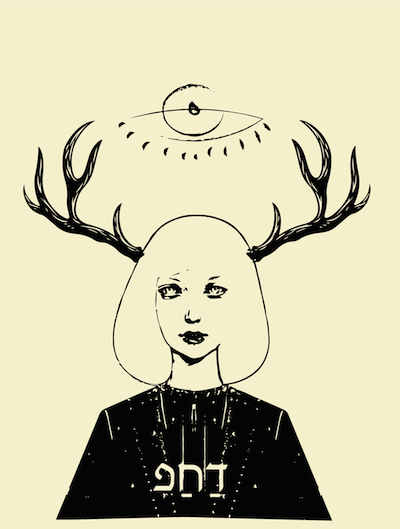
image - “RaeF” by Lindsey Tyne Johnson
“RaeF” by Lindsey Tyne Johnson

“The other part of that fear was that people would think differently of me or assume certain tropes or ideologies about me if I publicly identified myself as Jewish. This is an unfortunate reality I’ve experienced, even if subtly. Most commonly, people think I’m OK with antisemitic jokes or jokes that involve the Holocaust. It’s an exhausting thing to experience.”

Putting together the exhibit has allowed Johnson not only to explore her fears, but also her own biases.

“Creating these pieces required me to reflect on the experiences of people like Batsheva Dueck (aka Cynical Duchess, a modest fashion content creator) or more conservative Jews, who experience more assumptions made about them based on their dress or religious beliefs,” she said. “Since working on this exhibition, I’ve been more sensitive to times when I’ve excused antisemitic values expressed by my peers or acquaintances. When I lived in Brooklyn, I lived with someone who spoke quite negatively about Hasidic communities. This has been an excellent opportunity to witness my biases and encourage others to reflect on their biases or assumptions, too.

“It’s also allowed me to tie other pieces of my identity together,” she continued. “I’ve been able to connect my Irish ancestry with my Jewish ancestry, for example. It has given me a sense of wholeness or completeness and I’ve accepted that I can be many things all at the same time and I’ve accepted that that’s OK. We all contain multitudes.”

Johnson went to Ireland this past summer to visit where her Ashkenazi family moved to in the 19th century, and “to visit the Irish Jewish Museum and Waterford treasures.”

“I was probably in the fourth grade when my mother talked to my siblings and me about it,” said Johnson of first learning about her Jewish heritage. “It was after I had come home and talked about how we were learning about World War II at school. It was surreal to hear my mother, an immigrant from England, talk about a side of our ancestry that had never really been discussed before. I didn’t understand what it meant at the time.”

Johnson herself has lived many places. She was born in Edmonton in 1993, but her family moved to Saskatchewan and then Prince George, B.C., shortly after.

“I spent most of my youth in Prince George but moved to Dawson City, Yukon, as soon as I could save up enough money to attend the Yukon School of Visual Arts,” she said. “Yukon SOVA is a one-year foundational arts program. Still, I decided to stay in the Yukon upon completion and remained in the territory for about five years before I moved to Brooklyn in 2018. I was in Brooklyn for only half a year before moving to Kamloops to be closer to my family, but it made a lasting impression. Going from a territory of 35,000 people to my neighbourhood in Williamsburg with four times that amount was dizzying.”

Johnson said she loves the Kamloops Jewish community. “I joined shortly after moving to Kamloops from Brooklyn and felt incredibly welcomed,” she said. “The [Okanagan Jewish Community Centre] president, Heidi Coleman, is a huge inspiration and comfort to me. It’s pretty relaxed in terms of how often we have gatherings. We don’t have a synagogue or a place to meet, so we usually celebrate holidays at someone’s house. The ‘younger’ (20 to 30 years old) of us have a close bond, and I often have a group of us over for various holidays, too.”

Johnson is currently in her third year at Thompson Rivers University, where she is doing a bachelor’s in criminology. “I’m most interested in victimology,” she said. “I think Canada and most of the world fail victims of crime to an astronomical degree. It’s wild to think about how much attention we give criminals without considering how we could better support the survivor or victims of their crimes.”

Artistically, she is planning a piece that more specifically honours her brother Noah. “I want to educate the general public about how the consequences of generational or cyclical trauma can lead to mental health struggles like substance abuse,” she said. “I would like to highlight that it’s not specifically someone’s ‘fault’ for struggling the way they do.”

For more on Johnson, visit lindseytynejohnson.com. Kamloops Art Gallery’s website is kag.bc.ca.

Format ImagePosted on February 24, 2023February 22, 2023Author Cynthia RamsayCategories Visual ArtsTags digital art, family, Hebrew, history, intergenerational trauma, Kamloops Art Gallery, Lindsey Tyne Johnson, social commentary, stigma, substance abuse

Different ways to celebrate

Meetings aren’t my favourite things, but sometimes they are stimulating or useful. At a recent meeting, I found myself thinking about the issues differently than the others in the online gathering.

Earlier this month, the Torah portion Yitro included the Ten Commandments, an important moment for the Jewish people, which we celebrate on Shavuot. We all received the Ten Commandments, and one interpretation says that this is an act of radical inclusion, because it includes all Jews. Not just the men, or the adults, or those over 13 years old, and not just those who are considered typical for one Jewish ritual or another, but everyone must be present to hear the reading of the Commandments. This means that a proper reading of the Ten Commandments should be accessible to everyone in the Jewish world, including people with disabilities of all kinds.

I have thought a lot about disability access, but I hadn’t reflected on it in terms of another holiday that is big in many Jewish communities: Yom Ha’atzmaut. At this meeting, a community leader explained – to those who had not experienced it – how the Israeli Day of Independence is celebrated here in Winnipeg. I knew she was directing her information to those who weren’t from Winnipeg. However, I’ve never been to this local event, either.

Her description was engaging: imagine a very large double gymnasium space, booths set up by many community organizations with different games, events and snacks for younger families. Then, later, kids’ choir and dance performances, and then more professional entertainment. The evening ends with fireworks.

Every year, I hear from families who have had a marvelous time at it. Yet, we have never gone. No, it has nothing to do with how we feel about Israeli politics. It has everything to do with having a child with some challenges. Early on, we knew it was impossible to manage our twins at an evening event. It messed with our bedtime schedules. It resulted in two screaming kids, overtired and unable to sleep properly. The outing wouldn’t be fun, nor would the aftermath the next day.

In the end, it wasn’t only that my twins didn’t sleep through the night until they were almost 5 years old. It was that one of my kids ended up with a diagnosis that loud noise, crowds, overstimulation and change in routines would all remain difficult for him. Sensory processing disorder, a part of his challenges, can mean a lot of things, but, for us, it means avoiding events full of noise, crowds, lights, colour and commotion – like the community-wide Yom Ha’atzmaut gathering – or splitting up parenting so that only one kid attends.

Of course, disabilities manifest themselves in lots of ways, changing and shaping our lives. Roughly 22% of Canadians age 15 and up live with some form of disability. As a younger kid, my child couldn’t stand watching movies; a short half-hour kids’ TV show was all he wanted. However, as 11-year-olds, both my kids lined up on the couch to watch The Lion King because they are doing this as a musical at school. Rather than going to a theatre or seeing it elsewhere, watching the movie at home works. It’s where we can control the volume, use a smaller screen and the pause button. This makes all the difference. Now my kid chooses, every so often, to watch an entire movie, and he thoroughly enjoys it.

As the online meeting progressed, I saw that I might be expected to work the booth at Yom Ha’atzmaut in the future. But something has shifted in me and I, too, would rather avoid this event now – both due to COVID concerns and, frankly, because it just doesn’t meet my family’s needs. Does it mean we won’t celebrate the holiday? Of course not. We’ve enjoyed our share of falafel, Israeli celebration specials streamed live online, and more, but I’ve hit a milestone of my own. I am OK with saying no to an obligation that I don’t want to do. Not everyone has to celebrate the same way to belong. Inclusion may mean that, when we gather to hear the commandments at Mount Sinai, some of us receive the message differently than others.

Part of our growth as people is getting to a place where we know who we are and what we can manage as individuals, families and as a people. I’m glad our community does this single huge event. It seems to be something treasured by several generations of Winnipeggers. That said, it’s not ideal for my family, and we don’t have to be pressured into attending it.

Jewish traditions and celebrations evolve and change over time, just as our cultural understandings of disability and inclusion do. Events that adapt to meet those needs promote Jewish continuity for generations to come. Most important, though, is knowing how to value and meet our individual needs in context of this, because, no matter what our challenges are, we are all made b’tzelem Elohim, or in the image of G-d. We all matter as part of the Jewish community, whether we attend an enormous community event or whether we stay home to celebrate instead.

Joanne Seiff has written regularly for CBC Manitoba and various Jewish publications. She is the author of three books, including From the Outside In: Jewish Post Columns 2015-2016, a collection of essays available for digital download or as a paperback from Amazon. Check her out on Instagram @yrnspinner or at joanneseiff.blogspot.com.

Posted on February 24, 2023February 22, 2023Author Joanne SeiffCategories Op-EdTags family, inclusion, lifestyle, Yitro, Yom Ha'atzmaut
Reflecting on life of creativity

Reflecting on life of creativity

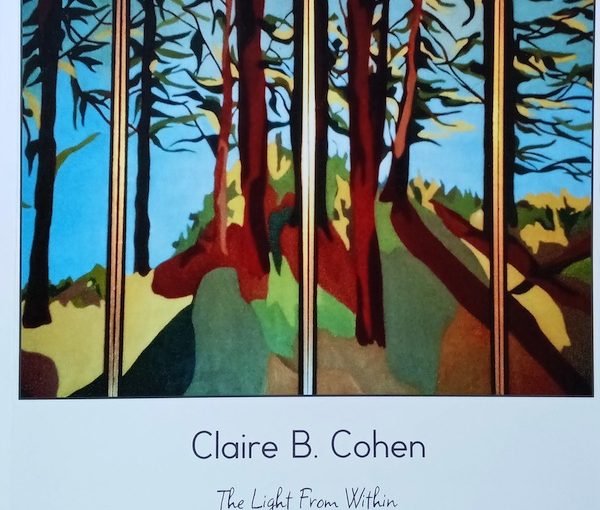
Earlier this year, Claire B. Cohen published a book of her 30-plus years as an artist. She made it for family and friends, as a record of her artistic legacy.

“Art is a powerful and a creative force of self-expression. To create art is to develop an ability to communicate visually what cannot be expressed in words.

“By creating the process of art, we change the way we see the world,” Claire B. Cohen told the Independent. “In understanding ourselves, we find areas where we feel limited. In understanding ourselves, we stand up for ourselves and can present ourselves authentically to others. An artist’s creation is unique and original to their work.”

Earlier this year, Cohen published a slim volume, mainly with images that burst from the pages, outlining her 30-plus years creating art. We glimpse the range of her work – landscapes, portraits, semi-abstracts, flowers, multimedia collages and a compartmental series, in which colourful abstract canvases were “connected sequentially in a zigzag for using piano hinges.” Flow and fun describe this series, her portraits – both colour and black and white – capture the personalities of her subjects, her landscapes and collages are bold and full of movement but also balance. The book touches on her work as an art therapist.

Originally from Israel, Cohen came to Canada in 1964. She studied fine arts at York University in Toronto and the University of Ottawa, and later earned her master’s in art therapy and counseling from U of O in 1987. She had many solo exhibits and group shows in Ottawa, and elsewhere, over the years. The book takes readers to 2006, with an exhibit list to 2009. She moved to Vancouver in 2012.

“I continued to paint after moving to Ottawa, but my move to Vancouver changed my focus, since joining my family had taken much of my time, being richly involved with newborn grandchildren,” said Cohen. “However, I still continued painting and showing new work in Vancouver galleries, as well as donating paintings to different organizations in Vancouver, such as hospitals, Louis Brier [Home and Hospital], friends, and creating more collages and multimedia-based work. I participated in group art shows and sold some to the public.”

Cohen said her reason for producing the book “was to create a place to keep all of my art as a legacy to leave to my family in remembrance of my story. COVID times were affecting my spirit, my mood was down and … the idea came about to focus on creating the book for my family and friends.”

During the pandemic, Cohen said she started to lose her connection to creativity. 

“Friends cut off from each other, as much as children and family,” she said. “I slowly lost my energy and interest, as well as the need I once had to be close to my easel. The paints, the brushes, the colours all lost their meaning and the need I had to paint slowly deteriorated.”

She began to look back at her past, which, she said, “led me to wake up from my dormancy and questions such as ‘what is my meaning of life?’ I discovered my paintings in storage and wanted to create a book.

“I reflected further on my body of work and questioned: why did I dedicate my years to painting? Was there any purpose to it? The answer eventually arrived – yes. There are many purposes to be alive, and work as an artist, investing my life in art. In my case, most of it was to leave a memory to my next generation.”

Cohen’s most recent exhibit and sale was at Britannia Community Centre in 2021. Art can be cathartic, whether one is making it or experiencing it.

“The process of creating art has a great intensity and full force of emotions that lead to a freedom and release when the piece is complete,” she explained. “Looking at these pieces that I created many years ago leads to a sense of nostalgia and a softening of that intensity. These pieces have followed me through many moves and lives, and have a story of their own that has evolved with the emotions that once created them. The language of art cannot be explained in words, the language of these emotions is form, line, colour and brush strokes.”

This language can help heal, as Cohen well knows from her art therapy practice.

“The more we know about ourselves, the more we learn to grow and develop our abilities to stand our ground,” she said.

Describing art as “a powerful and unique way to explore our creative forces,” she explained that people who participate in art therapy use the “materials to express the self and communicate visually,” composing stories. In a group setting, they “collaborate and share with others … connect and integrate parts of his/her inner self, gain confidence and reduce stress in a supportive environment, with the aid of the instructor.”

It was both a dream and a need for Cohen to do art therapy and counseling.

“I realized that art is not just for selling and decorating homes, rather it was a way to find myself, to grow and see who I am, and to help others with their healing.”

To see Cohen’s body of work, go to clairebcohen.wixsite.com/portfolio/home.

Format ImagePosted on December 23, 2022December 22, 2022Author Cynthia RamsayCategories Books, Visual ArtsTags art, art therapy, Claire Cohen, family, health, memoir, painting

Counting our blessings

It’s that time of year again. Which I face with trepidation on occasion, because my family celebrates Hanukkah – and that’s it. Some years, I manage to float by in a haze of patience, busy with my family’s celebrations and entertaining, oblivious to everything around me. Other years, I’ve had to interact with the majority culture around me in ways, big and small, that feel difficult. I could go into all the examples of what makes me feel uncomfortable, but that’s not really necessary. Why? Too many readers know what I mean, and those who don’t will suggest that I’m just being overly sensitive, whatever example I raise.

Hanukkah (however you spell it in English) is not a major Jewish holiday, though it has some themes that require adult maturity to unpack. It’s a story of guerilla warfare, a holiday of religious freedom, a tale about light and miracles, and of a small group of locals winning the fight against a big assimilationist majority. It’s not the easiest set of ideas to explain to kids, which is probably why we teach them the blessings and focus on dreidels, fried food, candles and presents.

Hanukkah shares a lot of ground with other winter solstice holidays, of course. It’s really dark at this time of year and all we want to do is bask in a little bit more light, eat lots of calories and find something to enjoy together indoors. Winnipeg, where I live, is a good place to remember this – with the change to standard time, the sun goes down very early, with just about eight hours of daylight.

After all this pondering, I kept coming back to what recipe I could find to make this year one of the “good ones,” where I don’t dwell too much on the frustrations of the season for minorities. It came to me, while driving back and forth to the elementary school. When my kids are on duty as safety patrols, they need to arrive early and leave later, so they can’t take the school bus. Even though they are learning to be responsible in Grade 6, the people who learn the most about responsibility in this scenario are parents. We drive them to school early and wait patiently in the car for 15 minutes after school is done so we can drive them home again.

A person (ahem, me) can get grouchy about this, especially because there’s a lot of traffic at this time of day. However, my special reminder happens when I cross a bridge, under which a river flows. We are lucky to be situated at the forks of two rivers in Winnipeg, so we cross bridges a lot. At a Jewish summer travel camp, long ago, my kids learned to recite a chant reminding us that the Ba’al Shem Tov says water is a siman brachah, a sign of blessing – a good sign.

The Ba’al Shem Tov was the founder of Chassidic Judaism, a teacher and a mystic and the stories of the Ba’al Shem Tov maintain resonance for us today. Remembering that water is a sign of blessing made me think about how very lucky my family and I are. We have clean water, unlike many Indigenous Canadians, and unlike many others in the world. In general, most of us in Canada have a place to live, heat and food. We are not suffering in winter as much of Ukraine is, without electricity or heat. While inflation is rising, we’re not faced with the staggering heat bills hitting the United Kingdom and Europe.

Once I remember to be grateful, I find myself pushing farther – to consciously force myself, when perhaps I am grouchy, hungry or cold, to be more patient and kind. For me, that crankiness is temporary. For people who are struggling, unhoused and don’t have enough to eat, it’s a much longer ordeal.

The Ba’al Shem Tov was a very good teacher and had patience and love for his students, who were small children. I’m also returning to the elementary school now, as I’ve started volunteering one afternoon a week. This, too, has been a gift. Helping kids in Grade 1 with the alef bet (Hebrew alphabet) is another wonderful opportunity to celebrate. If volunteering is giving, I receive the enthusiasm, affection and wonder that these eager learners share. It’s worth the traffic jam struggles of crossing the bridge repeatedly in traffic.

When Hanukkah arrives, we’ll have our night of tzedakah (charity) as well as our nights with sufganyiot (jelly doughnuts) and other small treats. We’ll light our candles and push away darkness as we can. However, the Ba’al Shem Tov’s reminder, that water is a blessing and a good sign, is a year-round gift, just as it is to work with kids. We can choose to use these teachings as a reminder to take that deep breath, find the bandwidth and be kind because we’re grateful and fortunate.

I can’t guarantee I’ll always be patient this time of year. I’m not always up for the parties that are for the “holidays,” but are called wassails, or the repeated Merry Christmas greetings. Luckily, I have lots of chances to look out at the water as I cross the bridge and to look at the joy of kids eager to learn, and to remember to be grateful for these blessings. Have a great Hanukkah!

Joanne Seiff has written regularly for CBC Manitoba and various Jewish publications. She is the author of three books, including From the Outside In: Jewish Post Columns 2015-2016, a collection of essays available for digital download or as a paperback from Amazon. Check her out on Instagram @yrnspinner or at joanneseiff.blogspot.com.

Posted on December 9, 2022December 7, 2022Author Joanne SeiffCategories Op-EdTags Baal Shem Tov, family, gratitude, Hanukkah, Judaism, lifestyle

Talking about addiction with L

Jewish Addiction Community Services (JACS) estimates that one in six members of the Jewish community in Metro Vancouver – or more than 4,000 people – are in need of support for dealing with substance use disorder. And yet, it is a topic that many of us find hard to talk openly about.

“I grew up around alcoholism in the home. There was shame in the family that dad had a drinking problem, and it affected my childhood, there is no doubt,” said L, who had the courage to speak with the Independent about their experience with alcoholism. “My dad was an angry drunk and he’d be embarrassing in public. He didn’t show up for commitments and didn’t turn out to be a very good father. I got to the point where I didn’t count on him because I couldn’t, and I resolved that with myself at a young age.

“Yet, there was a part of his life that was enticing and rather exciting for me,” added L, now a sober member of Alcoholics Anonymous (AA) and a participant in JACS Vancouver. “When my father would pick me up on a Friday night, we would head to the bar. I thought it was something fun, better than my boring life at home.

“I would be excited to play the bar games and drink Shirley Temples, but I was way too young to be in that environment, way too young to have my views shaped by those experiences.”

Although these tavern trips took place when L was in junior high school, they considered it normal. “I didn’t realize there were no other kids in the bar. It seems weird to me now that no one objected,” L reflected.

L grew up in an environment where Judaism was not talked about much, either. “There was already a stigma within a stigma. There was a great shame about being Jewish. Being Jewish was rarely discussed, the same way Dad’s drinking was rarely discussed. Both topics became elephants in the room.

“I think what I draw from that experience is that I really believe the disease of alcoholism is genetic; it seems to run in families,” L said. “All I needed was that environment to stir up that excitement. My dad had a full wet bar at home, and I just loved it. I was drawn to it like a magnet because I associated it with fun Friday nights when Dad took us to the bar.”

L’s father’s drinking led to L’s mother divorcing him when L was 5. There remained trauma within the home – matters that were not openly discussed – and alcohol presented a means “to take the edge off.”

L established their own relationship with alcohol and began drinking and using drugs as much as possible.

“I was the perfect rebellious child,” L said. “I found ways to drink – whether stealing it from my parents’ liquor cabinet or sneaking out at night to hang out with older kids to drink. I used to hide it in my room. I kept a mason jar of whiskey in my closet.”

As L’s dependence increased so, too, did their obsession to drown out reality. “In high school, I would sneak out to drink and do drugs. I would put a trashcan beside my bed so I would have a place to throw up when returning home. This way, I wouldn’t risk waking my parents, because my bathroom was right next to their bedroom. I was pretty far gone by high school. The more I drank, the less I was interested in life around me. I dropped out of school and then left the house at 16.”

The reliance on alcohol remained for another 10 years. Family members disassociated themselves and L eventually sought help. By the time L “hit bottom,” a phrase used in AA to describe the lowest moment in an alcoholic’s drinking experience, they were “unemployed, suicidal and physically dependent on alcohol to function on a daily basis.”

“I didn’t fashion myself to be that bad, yet I didn’t have any friends left,” said L. “No social network, I was very isolated. I didn’t leave my house anymore. I didn’t check the mail. I couldn’t even go to the grocery store without being drunk or high. I ended up going to a counselor, who thought I should go to an AA meeting. I thought that sounded horrible; I was only 26. AA sounded like it was for a bunch of old men and winos who lived under a bridge. However, my counselor said, ‘It has to be better than the way you’re living now.’”

Though there were struggles initially in attending AA meetings, L picked up a desire chip (sobriety coin) in August 1997 and has not had a drink or drug since, recently celebrating 25 years of continuous sobriety. L remains active in AA, and sponsors others who are looking for relief from their alcoholism.

AA, though it often holds meetings in churches, is a non-denominational program. “I am very steeped in Alcoholics Anonymous and that’s my central connection with sobriety,” L said. “It wasn’t until a Jewish friend in AA told me about JACS that I was able to reconcile my long-standing concern with the Christian side of AA.”

After attending some JACS meetings, L felt relieved that they could talk openly about their Judaism, which had been a sticking point for L in AA. Through JACS, L was introduced to the book Twelve Jewish Steps to Recovery, by Rabbi Kerry M. Olitzky and Dr. Stuart A. Copans.

“Just reading the foreword to that book helped me better understand that AA’s founder, Bill W., was only using the God of his understanding, which happened to be based in Christianity, to write the outline for sobriety in the AA literature.”

This realization was a profound moment for L, since they always “railed against [the Christian] part of the AA program,” saying “that never felt right.”

“All of a sudden,” L said, “I realized that AA wasn’t Christian at all, only Bill’s concept of his higher power was. AA allows me to choose the concept of my own higher power, which is based in Judaism.”

Becoming more involved with JACS has opened a whole new perspective for L, which was not found in AA meetings alone. “I couldn’t be more grateful for finding this missing piece of the puzzle at JACS and for the continued support of Shelley Karrel, who runs the Vancouver chapter,” said L, who attributes this shift to becoming more involved in the Jewish community and reconnecting with their lost Judaism.

“I would not have had this spiritual awakening without being more connected to my community and being introduced to JACS,” L said. “Being able to finally connect my sobriety with Judaism feels like coming home for me.

“When I think about my father’s demise – a sad and lonely alcoholic death – I know that could have been my fate as well. There isn’t a day that goes by without being reminded of where I came from and how grateful I am that I survived. I did not have to die by suicide, or alone with a bottle hidden away in my closet. I was given a new life. A sober life.

“Thinking about drinking is the furthest thing from my mind today,” said L. “It used to be the only thing I thought about 25 years ago. The obsession has been removed. I am completely safe and sound when it comes to alcohol now, as long as I stay active in AA and keep on the path of spiritual growth.”

For more information on available resources and support – within and beyond the Jewish community – visit jacsvancouver.com.

Sam Margolis has written for the Globe and Mail, the National Post, UPI and MSNBC.

Posted on December 9, 2022December 7, 2022Author Sam MargolisCategories LocalTags AA, addiction, family, health, JACS, Jewish Addiction Community Services, Judaism

Love through good and bad

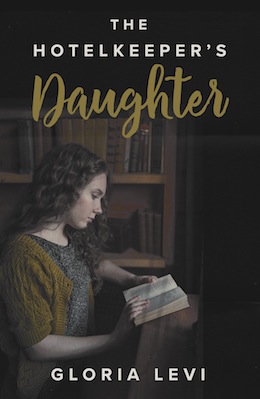
Gloria Levi’s recently published creative memoir The Hotelkeeper’s Daughter is a tribute to her family. And not just the family from whom she comes – the people who inhabit the main part of this story – but also the family she has made herself, the family members in the book with whom she shares her memories and those outside of it, who will read the story.

image - The Hotelkeeper’s Daughter book coverThe memoir is “creative” because memory, almost by definition, is unreliable, and, with this book, the 90-plus-year-old Levi is going back to her childhood. The character Gilda, her avatar of sorts, is trying to make sense of her past:

“They are all gone … Jerry, Macey, Sadie … and Ida and Leo … Bubbie … I, Gilda, at the age of 90, am the only one left of my family of origin. I am the Omega generation, the last letter of the Greek alphabet. I remember so vividly the sweetness of family togetherness, extended family visits, our tight-knit community. How I loved them and felt loved by them: their vitality, their enduring values, their struggles, losses and successes, their remarkable resilience. They are a deep part of me. They are the heroes of a bygone era.”

Speaking to her son and great-grandson, Gilda takes us to Powell Street, in Brooklyn, N.Y., 1938. She is 7 years old. She vividly describes her community, the neighbourhood of Brownsville. Her parents, grandmother and three siblings live downstairs in a duplex shared with her uncle and aunt and their family, who live upstairs. Money is sparse.

“During their usual pinochle card game one Saturday evening in March,” writes Levi, “my father turned to his cousin, Big Eliezer, and said, ‘Eli, I really need to make a change. I don’t want to go on like this. I know I can do better than my chicken store. What do you think, if you, Sammy and I were to rent a summer hotel? My brother Benny runs a hotel with partners. He’s doing just fine. You know, with your catering experience, Eli, and the younger energy and determination of Sammy and me, I think we could make a go of it. What do you think?’ Sammy nodded in agreement. Uncle Shimon closed his hand of cards and stared.”

And the rest, as they say, is history – and the meat of this memoir. Life isn’t easy as the daughter of hotelkeepers. Gilda had been happy on Powell Street, had many friends and her favourite activities. She was very close to her grandmother, who didn’t initially go with the family, and her parents were absorbed in the business. Gilda was lonely and often felt invisible. She has a challenging relationship with her mother, Ida.

Through Gilda’s story, we see how families like hers – an Eastern European Jewish family who immigrated to the United States – struggled and succeeded in their new homeland, through the Great Depression and the Second World War. We also see how Gilda grows into herself and begins to find her own way. The memoir ends in 1948, as Gilda starts university.

As 90-year-old Gilda looks back at this foundational decade of her life, relating her story to her son Daniel and great-grandson Lenny, she ultimately reflects not only on what has passed, but what is yet to come.

“To the Lennys of today and the Idas of yesterday, I want to affirm their vision, their energy, and their inspiring dedication to build a fairer, more just and loving society.”

Posted on December 9, 2022December 8, 2022Author Cynthia RamsayCategories BooksTags family, Gloria Levi, history, Hotelkeeper's Daughter, memoir

Posts pagination

Previous page Page 1 Page 2 Page 3 Page 4 … Page 10 Next page
Proudly powered by WordPress