
Skip to content
  • Home
  • Subscribe / donate
  • Events calendar
  • Business Directory
  • FAQ
  • News
    • Local
    • National
    • Israel
    • World
    • עניין בחדשות
      A roundup of news in Canada and further afield, in Hebrew.
  • Opinion
    • From the JI
    • Op-Ed
  • Arts & Culture
    • Performing Arts
    • Music
    • Books
    • Visual Arts
    • TV & Film
  • Life
    • Celebrating the Holidays
    • Travel
    • The Daily Snooze
      Cartoons by Jacob Samuel
    • Mystery Photo
      Help the JI and JMABC fill in the gaps in our archives.
  • Community Links
    • Organizations, Etc.
    • Other News Sources & Blogs
  • JI Chai Celebration
  • JI@88! video

Recent Posts

  • SFU honours Gloria Gutman
  • Lifting people’s spirits
  • Wedding a ray of light
  • Indigeneity and Zionism
  • Rule of law broken: councilor
  • Football and its roles
  • The burden of defence
  • Fish Café returns after fire
  • All right in what goes wrong
  • Nuns & mermaids at TUTS
  • Camp offers holiday retreat
  • Students and mentors inspire
  • Once-in-a-lifetime trip
  • 100 dancers, one heart
  • Money for the sciences
  • What “Jewish food” means
  • Have a cookie, schnitzel too
  • Federation now across BC
  • Israel fighting for its existence
  • Deal strengthens Iran
  • Patriotic belonging diminishes
  • A campaign to engage
  • Upstanders’ first live event
  • Responding to Carney
  • Having your own home
  • Music a family tradition
  • Musical to warm heart
  • Community milestones … June 2026
  • Sharing her passion for Israel
  • Or Shalom reopens its doors
  • JFS from past to future
  • Need holistic approach
  • Sharing stories, advice
  • Journalist shares fears
  • Skills to live together
  • Road to independence

Archives

Follow @JewishIndie
image - CJN box ad Rockowers 2026

Tag: family

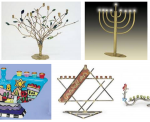
The genie in the chanukiyah

The genie in the chanukiyah

Alan Dean was the world’s largest manufacturer and distributor of Chanukah menorahs.

“You what!” Zoe’s father was yelling at her. Again. “You traded my lamp?”

Nothing Zoe did seemed good enough for Dad. Her room was too messy. Her grades weren’t high enough. Her clothes were too expensive, too ratty or too “inappropriate.” He was always screaming at her.

“I didn’t mean …” Zoe began. She gazed into the first light burning on the new chanukiyah and tried to hold back the tears.

Ever since her mother had died, Zoe had tried to take good care of her father. Only 12 and a half, she wasn’t a good cook. She didn’t like cleaning the toilets. But all she wanted was to help.

Her dad’s office was a mess. The whole house was a mess. Alan Dean was the world’s largest manufacturer and distributor of Chanukah menorahs. There were candelabras all over the place. They were in the bedrooms, the kitchen, dining room, living room, even in the bathrooms. Every single morning, there was shouting about something that had gone missing: a wallet, keys, a cellphone, a cleaning bill, a shoe.…

That morning, Zoe had taken a black plastic garbage bag into the office to clean out some clutter. Which was when she got a weird text on her phone.

“@Jenny.Hunter New Lamps for Old. Want to trade?”

Zoe happened to be staring at this old, dusty and tarnished chanukiyah on her father’s bookshelf. It was squat and primitive. Her father hadn’t touched it in years.

Before she could think too much, she replied and, a moment later, there was a knock at the door.

“I was in the neighborhood,” Jenny said, smiling into the video intercom. She was a well-dressed woman, a little old, and her teeth could use braces. “Do you have a lamp to trade?”

Zoe was careful. “Let me see yours.”

The woman opened an aluminum suitcase from which she pulled a beautiful stainless steel Chanukah menorah. It was very sharp and very shiny.

Zoe nodded and opened the door a crack. “Why would you trade that for an old lamp?”

The woman smiled again. “Call it a present. Or an almost free sample, with the hope that your father will buy more.”

Now Zoe smiled. Dad always liked a bargain. She nodded, took the steel menorah and gave the woman the old brass one.

“Finally it is mine!” the woman said with something that sounded like a cackle.

Before Zoe could change her mind, the woman was gone. It was as if she had vanished.

That evening, her father was distracted. He didn’t even notice the new chanukiyah until after they’d said the blessings and Zoe lit the candles.

Then he saw it. “Where did that come from?”

“I traded it for your old lamp,” Zoe answered, happily.

Her father rushed into the office. When he came back, he began yelling.

“You went into my private space and…. Don’t you start,” Dad shouted. “Don’t you start quivering that lower lip. Don’t you start tearing up.…”

Which was when Zoe lost it.

Alan Dean stared as his beautiful daughter cried.

He didn’t know what to do. He never knew what to do.

For seven generations, the Dean family had produced boys, and the story had been passed from father to son at the bar mitzvah. The lamp was found in a cave. A genie inside gave each owner three dangerous wishes – guard the magic lamp and use it well.

When his daughter was born, Alan was surprised, even upset.

His wife forbade him from calling her Aileen.

“It has to stop sometime,” Shana had said. “A new girl, a new beginning.”

And she was right. Al’s life, which was always about business, had broadened into a wonderful family, until Shana had passed.

Alan hadn’t told his daughter that their fortune was based on a magical lamp. Zoe wasn’t 13 yet, and he didn’t want her to laugh, but mostly because Shana had been the last one to touch it.

“Make enough so we are happy,” Shana had said as she rubbed the chanukiyah. “And not a single one more.”

The genie, which was now barely a flicker said, “Your wish is my command.”

Instantly, the entire factory was automated, with only enough jobs to keep all the existing employees busy, while increasing production tenfold. The whole system was computerized and efficient. Orders came in, and candlesticks went out. No one worked too hard. The bank accounts swelled. It was every businessman’s dream!

Then Shana had gotten sick and, in one day, she died.

Alan’s world collapsed. After a week of shiva, when he’d finally wandered into his office, he saw the lamp on the shelf and his heart broke.

Could a wish have saved her? In the mournful chaos, he had completely forgotten the power of the lamp. He couldn’t bear to touch it, and it had gathered dust on the shelf. His wife was gone, but he still had his work. He had thrown himself back into it, and barely had any time for his daughter.

Now the lamp that had sustained his family for centuries was gone, too, and he knew that the factory would soon go silent.

Zoe stood in front of him, tears running down her face.

How could he do this to her? Yes, he was unhappy, but his daughter didn’t have to be.

Shana had known. “Make enough so we are happy,” she had wished. “And not a single one more.”

Alan thought for a moment. His mind tallied the amounts in the bank, the value of the factory and the land. The good will of the Alan Dean brand name. He would sell it all. It would be enough.

Alan wrapped his arms around Zoe’s shoulders and pulled her close. He hadn’t done that in years.

“It’s OK,” he said. “Let me tell you the story of that lamp. It has always been a story of magic and wealth, greed and fear, but now I think for us there will be a happy ending.”

Zoe felt warm and safe in her father’s arms.

The lights from the Chanukah candles flickered.

The End.

Mark Binder is a Jewish author and storyteller who tours the world sharing stories for all ages. His life in Chelm stories and his latest collection, Transmit Joy! an audio storybook, are available on audio download and CD.
Format ImagePosted on December 16, 2016December 15, 2016Author Mark BinderCategories Celebrating the HolidaysTags Chanukah, chanukiyah, family

Getting through Chanukah

It’s that time of year again! For many, the holiday season is spent with family and is filled with nothing but joy, love, laughter, gratitude and giving. If this is you, you can go ahead and stop reading now…. This piece is for those of us who don’t live on the Hallmark Channel.

Let’s be honest with ourselves. We love our family. At the same time, getting together with our families or our in-laws around the holidays can get stressful, awful or even painful. Some people end up in my therapy office after the holidays, shattered from family celebrations.

If you’re tired of the stressful dynamics in your family, maybe this year it’s time to try something a little different. Let’s call this an early Chanukah list.

Set boundaries. Setting boundaries is the foundation for standing up to the family difficulties that we deal with every year. Maybe the lessons we learned in childhood were to not “stir the pot” and to avoid conflict. The end result of this is that we end up acting as if we are OK when, quite frankly, we aren’t.

When your mother–in-law pulls up an old dig about your weight, you don’t have to sit quietly and let your blood pressure go through the roof. Instead, you can say, “I don’t like it when you make comments about my weight.”

Another way to set boundaries is to put space between yourself and whatever or whomever you’re trying to set boundaries with. You may not be able to control what others say, but you can certainly move yourself to another room or go for a walk.

Don’t regress. Perhaps you always got dragged into being the mediator or the scapegoat in your family when you were growing up. When we, as adults, spend time with our families in the present, we tend to slip back into old roles. Don’t be who you were when you were 14. Be who you are now, even if your family doesn’t see it. If they continue to define you as your past, don’t stoop to their level by doing the same to them. Be the grown-up in the room.

Don’t be held back by the prospect of negative outcomes. You might plan to do things differently around your family, but it doesn’t mean the results will be rosy. You might set boundaries and get a lot of backlash.

This is not advice for the faint of heart. It’s advice to help you survive your family holiday. These are suggestions for people who are tired of getting sucked into the same old family patterns, and are ready to find their voice and get unstuck.

There’s no way to know for sure how your holiday will turn out as you try some of these ideas. At best, you might become a catalyst for actual change in your family and holidays might get better.

But, whether family time improves or continues on as it always has, you can at least know that you are taking charge of your life and taking steps toward a happier you.

Enjoy the latkes!

Lynn Superstein-Raber is a registered psychologist who helps people overcome depression, anxiety and relationship problems. For more information, visit lynnsuperstein.com.

Posted on December 9, 2016December 7, 2016Author Lynn Superstein-RaberCategories Celebrating the HolidaysTags Chanukah, family

Between parent and child

When my father died in 2014, I was already familiar with the notion that mourning progresses in stages. These include denial, anger, grief, bargaining and, finally, acceptance, and they are widely recognized by the therapeutic professions.

Two years after my father died, however, I could make an argument for one more item in this neat list. This item is: paperwork. Paperwork that can take months or years to complete while other tasks are shelved, children get older and family relationships unravel.

And so it was that I didn’t really start grieving for my father until two years after his passing. This was the point at which I was finally able to look through my father’s archive. He had a wealth of his professional writing, as well as mementoes from his life in Israel – things I had never seen, never heard about, photos of people I didn’t recognize. Here, now, was another kind of loss: his memories, the languages he spoke, the cultural narrative of the Egyptian Jew who became the halutz (pioneer), the farmer and a soldier.

My grief was further complicated by my father himself: complex, secretive, angry, hard to fathom and even harder to love. But, as hard as it was to love him, it has been just as hard to let go of this contradictory, loving, gifted and extraordinary man, who spoke nonchalantly about his life being “nothing special,” while simultaneously and relentlessly craving recognition for his life’s work.

How was I to experience my grief, work through it in the tidy way suggested by the literature, without feeling like a hypocrite? Every time the sadness bubbled to the surface, another voice cried out, yes, but…. And yet, and yet, and yet.

My father loved trees. He loved the smell of them in Egypt. He loved planting them in Israel, shortly after its independence. After immigrating to England, he started a conservation charity to encourage children to do the same. He spoke fondly of his favorite plants, naming them with relish, acer palmatum, acacia, copper beech, pyracantha, weeping willow, honeysuckle. He talked about them the way other people talk about their friends, and his belongings reflected this after his death. One of his books was called Meetings with Remarkable Trees. It suited him. His meetings with remarkable trees had started when he was still a youngster.

It was also appropriate because, as straightforward as his relationship was with trees, his relationships with other people were confusing and painful. He was seldom content, often angry, and his brain was constantly besieged by business ideas, political observations and diatribes about the state of world affairs. I never saw him make a new friend. He called nobody from his old life and nobody called him. A staunch Zionist, he regarded orthodoxy with disdain. He refused to join the Jewish community and kept us apart from it, too.

But, when he was nurturing his plants, he was in touch with something sacred; this was his worship, his peace and his prayer. He could stand perfectly still, just watching the arc of the water landing on the dry earth, listening to the birds and the wind in the willow tree, utterly alone and completely at peace.

At other times, I tried to look after him. I tried to be his caregiver, his protector. So, with him gone, I felt myself to be – even with a multitude of other responsibilities – rather redundant.

By the spring of this year, I found an uncomplicated way that I could commune with my father: I nurtured my own garden. I thought of him as I watered, listening to the wind in the trees and watching the droplets creating rainbows. The water trickled down the spines of the squash leaves, pooling at the roots. I listened to the birds, felt the sun on my back, remembering the ice-cold glasses of water we’d enjoy together in the summer, the way he taught me to transplant trees, how I was always surprised by how much water he’d use. “Do you really need that much?” I’d ask.

He would collect seeds with a strange sort of compulsion, from public gardens, with no particular method – he would never store them properly or label them but there they were, stuffed in the bottoms of his pockets. Like me, now, collecting foxglove, chive, kale and garlic seeds for next year. Always thinking of the next harvest, another step toward self-sufficiency. “We made the desert bloom. We grew watermelons there.”

When I went to visit my mother this summer, I noticed that her own honeysuckle plant was growing wildly out of control. It had become so heavy that the lattice was falling off the wall of the house and it was beginning to encroach on other plants. The flowers were beautiful and the aroma intoxicating but, according to my mother, the vine was basically a weed. I offered to prune it back for her and was startled when she showed me how much could come off. Like a cautious hairdresser, I asked her, “Are you quite sure?” And she was. Besides, she told me, it would grow back in no time.

As I started to cut the branches, I realized that a good part of this monster was already dead. The branches overhead broke apart in my hands, dropping dry leaves in my hair. It was more than 30 degrees outside and, with older tools and a ladder pitching on the gravel, it was slow-going. I tried to avoid cutting live stems but soon grew too tired for mercy. I hacked at the convoluted, weedy vine and snapped the brittle trunk as perspiration ran into my eyes. As I did so, it occurred to me that something about the honeysuckle felt very familiar. In short, this tangled, complicated plant was very much like my father – extravagantly beautiful, complicated and with no respect for boundaries. One might almost say, parasitic.

And then I noticed what looked like a bundle of dry leaves tucked in the back. On closer inspection, I realized that it was an abandoned bird’s nest, carefully woven from the tiniest twigs with only the smallest space left to hold a few eggs. Right in the middle of that tangled mass of dead foliage, there was a sanctuary. Like our relationship – painful and nearly impossible to navigate but, at its heart, like that nest, there was something to treasure.

In the end, grief is not so much affixed to the image of the parent we have lost, or even the relationship we had. We are not grieving the relationship we could have had, either: we are acknowledging the gifts they did pass on.

My father, teaching me to cut and paste magazines; to write business letters with punchy opening lines; to edit my work, to edit it mercilessly until it was taut like a tightrope, without a single unnecessary word. Sure, he was a merciless critic, but this quality has served me well.  Even as I revisit each sentence of this essay, it is an act of memory, a gesture of thanks to my father that I am so particular, so careful with my words and so determined that they should fall in, militarily, if possible, with my meaning.

In the end, this is how we find grace in grief when our relationship with the dead was challenging – toxic, even. We can choose how we remember, how we grieve and, ultimately, how we live, once our beloved relative is gone.

It is not simply an act of respect, this mourning. It is an act of gratitude, as we thank our lost ones for what they did give us, as we visit all of the unconditional love we can muster for that ancient connection, between parent and child.

Shula Klinger is an author, illustrator and journalist living in North Vancouver. Find out more at niftyscissors.com.

Posted on November 18, 2016November 15, 2016Author Shula KlingerCategories Op-EdTags aging, death, family

The strength of family circle

There is a wise Jewish saying: “A little hurt from a kin is worse than a big hurt from a stranger.” (Zohar, Genesis 151b) Why is that? Strangers come and go in our lives. Some remain to become friends, others are barely remembered and, as we move on in life, we leave them behind. But family – that’s a different story.

The closest bonds we will ever form are with our parents and our siblings. They know us intimately and, even with all our faults, they still love us. (Though, admittedly, not everyone is so lucky to have a loving family.)

Next comes the extended family – cousins, aunts, uncles, et al. Some of them we just tolerate, often in an amused way, because families are like fudge – mostly sweet with a few nuts! But we do care about them because they are kin.

Within our own close family circle, we are proud of each other’s accomplishments and boast of them. We hurt when a family member is unhappy. We celebrate birthdays and anniversaries, and we try to be together for important Jewish holidays. That is what family should mean.

I’ve always loved the description of her family by the late Erma Bombeck: “We were a strange little band of characters trudging through life sharing diseases and toothpaste, coveting one another’s desserts, hiding shampoo, borrowing money, locking each other out of our rooms, inflicting pain and kissing to heal it in the same instant, loving, laughing, defending, and trying to figure out the common thread that bound us all together.” I think most families can relate to this warm-hearted description.

When there is a break in a family circle, it can be unbearable. It’s not just a matter of location, for, these days, communication has never been easier and we can connect with family wherever they live. But, when there is a misunderstanding and angry words are exchanged, it can be heartbreaking. We feel as though we have a deep fracture in our very being and life will never be the same again if the family member we once loved is lost to us.

Teenagers are known to be rebellious and that is considered normal. It is necessary for them to become independent, to break away from the sheltering family structure. It can be very hurtful for parents to see them break away, but if they were nourished with your morals and standards of ethical behavior in their childhood, and educated with love, they won’t stray too far. Siblings may have very different ideas from each other as adults, but no one – not even a spouse – can have the same kind of bond, with its childhood memories, shared experiences, old family jokes. It is special.

When strangers hurt you, you may become disappointed or angry, but it doesn’t tear at the fabric of your being. You are not obsessed by it and whatever has happened, you know that you will get over it in time.

It is not the same with families. When there is a break between parents and children or brothers and sisters, it colors every aspect of your life, for the family is your haven, your soft resting-place. When there is a break, your emotional security is gone. We need to feel ourselves one in a world of kinfolk, persons of variety in age and temperament, yet allied to us by an indissoluble bond, which nature has welded before we are even born. A family quarrel does not just leave aches or wounds; it is more like splits in the skin that won’t heal because there’s not enough material. Author Dodie Smith described her family as “that dear octopus from whose tentacles we never quite escape, nor, in our inmost hearts, ever quite wish to.”

So, cherish your family while you still have them. Other things may change us, but we start and end with the family, which is one of G-d’s masterpieces. Having a place to go is your home. Having someone to love is your family. Having both is a blessing.

Dvora Waysman is a Jerusalem-based author. She can be contacted at [email protected] or through her blog at dvorawaysman.com.


Posted on November 11, 2016November 11, 2016Author Dvora WaysmanCategories Op-EdTags family
Two degrees of separation

Two degrees of separation

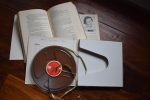
An old audio reel that writer Shula Klinger found in a suitcase of her late father’s mementoes features a revealing interview with Viennese author Edith de Born. (photo by Shula Klinger)

When my father died in 2014, I was given an old suitcase containing his mementoes. There were photos, much of his early writing and an audio reel in a box. All it said on the box was, “Interview with Edith de Born.” I had never seen this tape before and had no idea who de Born was. I also didn’t know why my father would have had the reel because, to the best of my knowledge, he had never worked in radio.

A quick Google search told me that de Born was a novelist, born in Vienna when it was still part of the Austro-Hungarian Empire. During the Second World War, she and her banker husband both worked for the Resistance. An obituary of another writer on theguardian.com mentions her as a “now-forgotten Austro-Hungarian novelist,” a gauntlet of a phrase if ever I read one. The next website I visited was a bookseller with secondhand copies of de Born’s books. The Price of Three Cézannes and The House in Vienna arrived a few weeks later.

Like de Born, my father’s family lived in Vienna in the early 20th century, in the final days of the Habsburg Empire. But what was behind my father’s desire to interview her? I took the reel to a digital studio and had the material transferred to a CD, hoping to find some answers.

The first time I listened to it, I thought I was listening to my father’s voice but couldn’t be sure. The recording was clean, without any extraneous noises, but still, technology distorts the human voice and it didn’t really sound like my dad. This man’s English was excellent and he spoke quickly, but his vowel sounds weren’t quite right, weren’t quite what I remember. His phrases lacked the colloquial idioms you’d hear in a native speaker.

A few minutes in, I was sure this was indeed my father. The recording was made not long after he had moved to England. His first language was (I think) Yiddish, followed by Arabic and Hebrew, English and French. Was my memory playing tricks or was this simply evidence of what my friends had observed in the 1970s – that my dad “had an accent”?

I listened carefully to the rest of the interview. Mostly my father asks de Born about her writing habits, literary preferences and the authors she has met. He wants to know if she keeps notes in a little book, whether her characters are based on people she knows. She answers no, no, no again and again. He seems to be looking for tips on how to be a novelist. He gets nothing.

The conversation is stilted but my father doesn’t seem dissatisfied with the author’s brief answers. Are these the questions of a novice reporter, just learning the tricks of his trade? Or is he working to a personal agenda, trying to glean something useful for himself?

I get a partial answer when de Born speaks of the authors she has met. Evelyn Waugh, she says. And Vladimir Nabokov, whose writing she describes as “divine.” Knowing that Nabokov emigrated to the United States, my father asks, “Did he have an accent?” An odd thing to focus on, one might think, when you’re discussing a world-renowned novelist.

But there’s my answer. I may have grown up oblivious to my father’s accent, but he certainly wasn’t. Like all immigrants, he was aware that it marked him out as different. In a country where one’s identity is defined by the class system, this put him outside regular society. It told others that he was different, and he was just as conscious that, to fit in and be accepted into middle class, professional life in England, one had to be more than educated, more than capable – one had to sound English, to sound as though you belonged. With tanned skin, curly hair and – as he well knew – an abrasive manner, he did his best to tone down the chutzpah and mimic the mannerisms and diction of those around him. But not before he met de Born.

I managed to date the recording to 1960 or 1961 by looking at the publication date of the book de Born is writing when she meets my father. At that time, my father had not seen most of his family for years. Was the conversation a way for him to maintain a connection to his own heritage? Or was he simply looking for professional guidance? De Born could have been the perfect mentor – if only she had agreed. It is clear, however, from her guarded answers that she is not looking to nurture an emerging new talent.

There is, however, a short conversation about her memories of Austria. For the most part, she refuses to discuss her past, but she does talk briefly about her father, a Viennese nobleman. When the emperor Franz Josef died in 1916, her father walked in the funeral procession through the streets of Vienna. She describes her fondness for her father, and speaks warmly of his influence on her life.

Fascinated to learn that there were only two degrees of separation between me and a person who had attended an emperor’s funeral, I decided to look up some of the events she described. I soon found the Pathé News archive. Turns out they have thousands of files online. Here, I found a silent movie of the 1916 procession.

Twenty-six seconds in, I was startled to see something that didn’t fit. In the midst of all the smartly dressed adult aristocrats, prancing black horses and royal footmen, there is a tall, dignified looking man. This man is holding the hand of a little girl. She must be 4 or 5 and she’s holding a teddy bear in her other hand. They turn in front of the camera for a second before they are obscured by the heads of royal guards. She reappears fleetingly, later on, and then she’s gone. Could this be de Born, the woman whose voice I hear in conversation with my father when he was still a young Israeli immigrant?

De Born’s work is not in vogue now but this is – I believe – a tremendous shame. An astute observer of human nature, her dialogue is incisive and the inner lives of her characters richly explored. The world of Viennese aristocrats is opulent but restricted, the women stifled by their positions in society. Even as the characters cling to old traditions, singing of a Habsburg emperor whose fate will be tied to Austria’s for all eternity, de Born’s narrator feels that her world is an anachronism: “No waxwork exhibition could possibly reproduce the atmosphere of a vanished epoch so uncannily as did those creatures who continued to move with old-fashioned grace in their own meaningless world,” she writes.

Soon after, she describes a very different scene, being “in the midst of people who spoke my language, but with whom I could not feel in harmony. ‘Ein Volk, ein Reich, ein Führer …’ chanted, yelled, screamed hysterically.” Little by little, de Born introduces ever more troubling elements, gradually building on a sense of a looming catastrophe – for Austrian nobility, for Europe at large and for Jews in particular. It may be set in polite society, but The House in Vienna is an exquisitely tense and emotional read. It is no wonder my father chose de Born as his interviewee. I have not found her described as a Jewish author, but – to me at least – her photograph on the dust jacket tells me everything I need to know.

As a daughter listening to her father’s voice after his death, the reel of tape is a gift and, like the work of his interviewee, it is a little eerie. It feels like eavesdropping. I don’t know if my father meant me to have it – or even find it – but I loved hearing his chuckle as he talked about something that he cared about, so deeply, as the young man I didn’t know. It’s a great way to remember him and his accent – full of life and Israeli/European inflections – hints at how he must have felt as a newcomer in England, all those years ago.

And, of course, it’s not a particularly smooth interview. At one point, the author laughs, somewhat revealingly, “Now we’re getting somewhere!” in her own gently accented English. Up to that point, my father’s questions have mostly been dead-ends. This question, however, was different, and the pace of the conversation quickens, the tone is light, almost cheeky. Hearing him make a genuine connection with another human being – something I rarely saw myself – was pure gold. It’s an infinitesimally small hunk of gold, but when you lose a complex and extremely guarded parent that you tried throughout your life – and failed – to connect with in this way, it can feel like winning the lottery.

Shula Klinger is an author, illustrator and journalist living in North Vancouver. Find out more at niftyscissors.com.


Format ImagePosted on June 10, 2016June 8, 2016Author Shula KlingerCategories LifeTags family, Father’s Day, history, Vienna

Five things every kid needs

What do children require in order to thrive? Here are five vital things we must give to our children.

1. Self-worth

All children have the need to feel accepted. When we nurture our child’s feelings of self-worth, we create a sense of pride. There is an atmosphere of belonging so that the child does not feel the necessity to find acceptance elsewhere. We want our sons and daughters to know that we love them for who they are and that each child possesses a unique gift given by God. For each child, the gift is different. It can be brains, personality, sports, art, baking, music, friendship, even the ability to care for a baby. Our role as parents is to help the child discover the magic within instead of focusing on the perceived gifts that others possess.

Once we are able to do this, we can help each child feel stronger with who he is. Self-confident children can deal successfully with the ups and downs that life brings. Kids who possess self-worth will better navigate future relationships, feel resilient enough to try and risk failure, and become a source of strength to future generations.

I do not mean a child who is full of him or herself. Some children perceive themselves to be superior and knock others down. This type of self-esteem is superficial and creates an arrogant child in and out of the home. Instead, I am speaking about the unearthing of what lies beneath the soul. If we can then show our children that they can use their gift to make this world better, we transmit to each child a confident awareness that “I make a difference” and “I have value.” When a child feels inadequate, we hear lines like “I can’t,” “No one likes me” and “I’m not good enough, smart enough and popular or pretty enough.”

Parents who appreciate their children’s differences, interests and talents, encourage their children to grow confident and be happy with who they are.

2. Security

We live in a sometimes scary world. Our children are aware of current events, painful tragedies and images that boggle the mind. Words like kidnapping, missiles, terrorist attacks and killings are no longer scenes from Hollywood movies. A generation is growing up surrounded by loss. And it is not just grim world news that kids must confront. I have spoken to parents whose children are fearful of returning home from summer camp because each year there are couples who announce their pending divorce. Do you feel confident that you have given your child a sense of security?

We can help assure our children by creating an atmosphere of trust. Despite the difficult world out there, know, my child that you can always count on me.

Here are practical ways to make this happen: rid yourself of chaos and commit to routines and schedules that work. Try to de-clutter so that your home environment does not feel messy and overwhelming. Keep your word: when you say you will be there don’t disappoint, and honor your promises.

A lack of consistency in rules makes a child unsure of what to expect. Wishy-washy discipline does not allow a child to anticipate proper consequences, and strips away the security of knowing right from wrong.

Most of all, let us recognize the destructive power we possess when we scream at our children. All it takes is a few moments of outrage to cause a child to feel that he is living with a parent who is out of control. Anger, yelling, sarcastic put downs and belittling removes the inborn trust that a child had but is now lost. Why would I want to connect with you if I do not feel safe at your side? Once the bond between parent and child is destroyed, it becomes very difficult to rebuild. Even if you try afterwards to spend time together and offer soothing words, lose it often enough and the harsh image and tone simmer within your child’s heart. Your son or daughter is always second-guessing – will this be a safe conversation or will I feel too vulnerable? Creating a stable home instead will enable your child to grow knowing the definition of dependable, reliable and trustworthy.

3. Relationship skills

Our children need to learn how to deal with others. Too often parents make excuses for their child’s misbehavior or hurtful words. Instead, let us concentrate on helping our kids handle their encounters. A practical way for us to do this is to open our eyes to teaching moments where kids can learn about apologies, forgiveness, gratitude, sharing, not interrupting, allowing others to be in the limelight, listening skills, overcoming the desire to hit or scream, dealing successfully with tantrums and learning how to quell angry reactions.

At the same time, it is important to impart the deference required when encountering authority. Discuss the proper derech eretz – standard of respect – while speaking to rabbis, principals, teachers, parents, relatives and elders. Just as crucial is the knowledge of how to act in a synagogue, bar and bat mitzvah, airplane, restaurant, hotel and other people’s homes. I have seen children destroy hotel lobbies while parents watch and laugh that it is not their home. Lacking social skills produces children who either bully or withdraw into painful silence. Providing the proper relationship know-how gives children character traits like loyalty, respect, unselfishness and honesty.

4. Sensitivity

Teach your children to be considerate of other people’s feelings. When a sibling or classmate has been pained, it is OK and appropriate for a child to feel empathy. If possible, give your children opportunities to cultivate compassion. The unpopular kid in class who never gets invited – how do you think he is feeling? How can we try to make this better? There are many chesed (kindness) projects that our children can get involved in, instead of just focusing on themselves. This past year, a group of bat mitzvah-aged students whose mothers I teach collected hundreds of coats that we shipped off to Israel. We discussed how there are kids their age who are freezing during the winter months because they cannot afford a coat. It was an incredible day that opened up the eyes and hearts of these young girls to the suffering of other children. Compassion can be nurtured.

Children notice if their words bring a smile or a tear. They recognize from early on if they’ve brought pleasure or pain. We cannot afford to shy away from allowing them to confront their behavior and deal with poor decisions that they’ve made.

As parents, we must replace angry reactions with firm but loving discipline. We cannot expect to raise sensitive children if we, ourselves, are insensitive to our children’s needs.

5. Love

Of course, all this is not possible if we lack the ability to make our children feel loved. Be generous with your affection. Hug more, laugh more, say “I love you” more. Stop making your child feel as if he is never “good enough.” Allow your children to see that you appreciate and are affectionate with your spouse. Give words of gratitude and admiration.

When you have family time, don’t seem bored and uninterested. Turn off your devices and tune in to the ones who count on you most in this world. Watch that the pressures of school, homework, carpools, bedtime and daily life do not ruin the precious moments you have together. Our families are our greatest assets. Let us create homes filled with peace so that we can transmit our legacy to the next generation.

Slovie Jungreis-Wolff is a freelance writer, and a relationships and parenting instructor. Her book Raising A Child With Soul is published by St. Martin’s Press. This article was distributed by the Kaddish Connection Network and appeared on Aish HaTorah Resources.


Posted on March 20, 2015March 19, 2015Author Slovie Jungreis-WolffCategories Op-EdTags family, kids

Posts pagination

Previous page Page 1 … Page 9 Page 10
Proudly powered by WordPress