Skip to content
  • Home
  • Subscribe / donate
  • Events calendar
  • Business Directory
  • FAQ
  • News
    • Local
    • National
    • Israel
    • World
    • עניין בחדשות
      A roundup of news in Canada and further afield, in Hebrew.
  • Opinion
    • From the JI
    • Op-Ed
  • Arts & Culture
    • Performing Arts
    • Music
    • Books
    • Visual Arts
    • TV & Film
  • Life
    • Celebrating the Holidays
    • Travel
    • The Daily Snooze
      Cartoons by Jacob Samuel
    • Mystery Photo
      Help the JI and JMABC fill in the gaps in our archives.
  • Community Links
    • Organizations, Etc.
    • Other News Sources & Blogs
  • JI Chai Celebration
  • JI@88! video

Recent Posts

  • SFU honours Gloria Gutman
  • Lifting people’s spirits
  • Wedding a ray of light
  • Indigeneity and Zionism
  • Rule of law broken: councilor
  • Football and its roles
  • The burden of defence
  • Fish Café returns after fire
  • All right in what goes wrong
  • Nuns & mermaids at TUTS
  • Camp offers holiday retreat
  • Students and mentors inspire
  • Once-in-a-lifetime trip
  • 100 dancers, one heart
  • Money for the sciences
  • What “Jewish food” means
  • Have a cookie, schnitzel too
  • Federation now across BC
  • Israel fighting for its existence
  • Deal strengthens Iran
  • Patriotic belonging diminishes
  • A campaign to engage
  • Upstanders’ first live event
  • Responding to Carney
  • Having your own home
  • Music a family tradition
  • Musical to warm heart
  • Community milestones … June 2026
  • Sharing her passion for Israel
  • Or Shalom reopens its doors
  • JFS from past to future
  • Need holistic approach
  • Sharing stories, advice
  • Journalist shares fears
  • Skills to live together
  • Road to independence

Archives

Follow @JewishIndie
image - CJN box ad Rockowers 2026

Tag: family

We should be more civilized

When we read Exodus, some people imagine what Egypt was like as an ancient civilization. If you’re a synagogue regular, you’re hearing the story unfold each week as the Torah is read. If you’re more likely at a Pesach seder at a relative’s dinner table, you’ve heard the same narrative. We imagine Joseph’s dreams and his esteemed position advising Pharaoh. There are the complicated family dynamics, the rise of a new ruler, the enslavement of the Jewish people, Moses’ ascension as a leader, and the plagues. We’re captivated in part because it’s compelling. There’s lots of tension, and that makes for good drama.

There are laws listed and proper ways to behave. There are also irrational and upsetting actions and behaviour that are completely out of bounds. Sure, one can approach a ruler and ask for something – or there’s darkness, frogs, lice and death. There’s a rational, law-abiding approach, and the emotional, gut-wrenching knee-jerk response. These are both fundamentally human reactions. When the plagues happened, I imagine that it must have felt like the end of the Egyptians’ world. The labour vacuum caused by the loss of slaves might have led to a collapse of functional Egyptian society.

I juxtaposed this familiar story with others that have crossed my mind. Over winter break, my kids (like most) and I were housebound for quite awhile. Due to a virus or two and the extreme cold, we weren’t going out. Mostly, the time passed without incident, but keeping siblings busy and out of trouble is no joke. When we weren’t one step ahead with the next round of button hockey or “Swedish scooting” (indoor games we made up as we went along), we’d turn our backs and a kid would be assaulting his brother.

As I pulled one kid off another, I imagined what the European settlers on the Prairies endured when they spent an entire winter in a one-room sod house with their children. I wondered how many kids killed one another. Many families also died of disease, starvation, or froze to death.

Meanwhile, my U.S. family sent my kids a homemade video of a gathering with friends. Everyone on the video joked about the dog’s squeaky toy, which resembled the current U.S. president. I struggled with this. In terms of behaving in a civilized way, it seemed too close to the bone of the matter. If we’re meant to respect the position but we can’t conscience the current president, how do we communicate this notion to our kids?

What’s our duty as upstanding people and as Jews? As a child growing up near Washington, D.C., I went to school with all sorts, including the children of politicians, diplomats, lawyers and civil servants. Back then, I remember how everyone worked hard to be civil to one another. Strom Thurmond, Jr.’s mother was a great volunteer in our classroom. Marilyn Quayle was a dependable carpool mom for my brother’s soccer team. Our political leanings were the polar opposite of Thurmond’s Dixiecrats or Dan Quayle’s, but, as elementary school parents, our respective parents could agree to disagree. Our parents modeled civility to one another, and that meant we too (mostly) treated one another with respect.

We teeter back and forth on a seesaw when it comes to behaving in an upstanding way. These days, anybody in D.C. would tell you that old-fashioned civility and common-sense manners are long gone. The current world political scene feels more like that period of plagues. Nobody knows what will strike us next.

Even so, we have choices when it comes to how we behave towards others. We can aim to be rational, thoughtful people who think through our actions and try to behave responsibly, as Hillel suggested. When someone who wanted to learn about Judaism asked Hillel to sum it up while standing on one foot, Hillel responded, “That which is hateful to you do not do to another; that is the whole Torah. The rest is its interpretation. Go study.” (Talmud: Tractate Shabbat 31A)

We may also behave impetuously, with emotional, irrational responses that seem more like sporadic and scary plagues. Jewish tradition would suggest we aim for Hillel’s behavioural model, though one can legitimate the name-calling and lack of civility, too. There are plenty of examples of non-rational biblical outbursts from which to choose.

It’s too easy to throw stones at each other based on our religious observance or our political views about Israel, Canada or world affairs. It’s much harder to behave with civility and agree to disagree. As I pull my twins apart and demand compromise, or suggest (again) to use please, thank you and you’re welcome, I spend a lot of time thinking about civilization and civilized behaviour.

When I student-taught high school in a rough D.C. neighbourhood, people often yelled on the street. Some yelled hello and smiled. Others sometimes yelled antisemitic, misogynist threats. A Grade 9 student nicknamed “Punkin” took to walking me to the train station. When the threats started, she’d pull herself up tall and holler right across the road, “Was you drug up in a barn?! Act civilized!”

Indeed, we weren’t brought up in barns. Punkin was from a good home, and the threats stopped when she broke the tension that way and called grown men out on their bad behaviour. I’m working hard to provide the same civilized model for my kids. We can treat each other better than that. We can agree to disagree without doing hateful things. I learned a lot from Punkin – and Rav Hillel, too.

Joanne Seiff writes regularly for CBC Manitoba and is a regular columnist for Winnipeg’s Jewish Post and News. She is the author of the book From the Outside In: Jewish Post Columns 2015-2016, a collection of essays available for digital download or as a paperback from Amazon. See more about her at joanneseiff.blogspot.com.

Posted on January 12, 2018January 10, 2018Author Joanne SeiffCategories Op-EdTags civil discourse, family, Torah
Camp fosters independence

Camp fosters independence

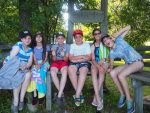
At Camp Shomria, it’s all “about equality and giving the power to the youth,” says one parent. (photo from Camp Shomria)

In Ontario, Camp Shomria was established based on the principals of Hashomer Hatzair (The Young Guard), with its Zionist and socialist principles, including that building a strong community is just as important as building strong individuals.

Camp director Uri Ron Amit is an Israeli who runs the only chapter of Hashomer Hatzair in Canada, which is based in Toronto. He comes from a background of working as an educator in international development and community management.

“The kids are from Grade 2 (7-year-olds) all the way up to Grade 11 (17-year-olds),” said Amit. “By Grade 12, they become first-year youth counselors in the movement. And then, later on, they can continue working to make an impact in the camp, either as youth counselors, as head of camping or as head of programs.”

Most families involved at the camp are from the Toronto area but some campers also come from the United States and a fairly large number come all the way from Israel. The camp is situated an approximately four-hour drive northeast of Toronto, and about an hour and a half southwest of Ottawa.

“Starting in Grade 2, the kids spend a week away from home at camp,” said Amit. “Grades 3 and higher stay at the camp for at least two weeks at a time, and sometimes for five weeks. Having young kids sent by their parents to be away from home … brings both opportunities and challenges. The further away you are, the more remote [it is, and] it can create a sense of independence and a different world for the kids and youth counselors.”

Hashomer Hatzair was established more than 100 years ago, he explained, “with the idea of having youth of different ages develop an independent youth community that stands for the ideals of humanistic Judaism and Zionism. The main difference in sending your kid to experience camp away from home is the added layer of independence – a level of ownership over the community … self-reflection and personality development.

“I think the main reason parents send their kids away from home for a couple of weeks with minimal communication with them is because they want them to go through a meaningful learning process that can help them pick up a strong group dynamic in the youth community.”

Amit described one particular child who came to the camp. This child had never been to a sleepaway camp before, and was dependent on his parents for almost everything. “After a couple days, this child became a star,” said Amit. “He became independent and took to different stages of sharing feelings and emotions…. We gave him the opportunity to lead discussions … with group members. His parents said it was a life-changing experience.”

Camper Zoe Friedman, 13, who lives in Toronto, started attending the camp last summer, choosing to do so after she learned that some of her friends from Israel go there.

“It’s a camp that really builds character,” she said. “And it gives you time to expand on things … expands character, responsibility and social skills. Every morning, we have something called toranuyot (chores), where we get split into groups and go clean up the camp…. So, we might clean the washroom, pick up trash, or something else that helps everybody. The theme of Shomria is socialism. We all do everything together and support each other. It’s a really good vibe.”

As for being away from her parents and home, Zoe said she felt it was sometimes very difficult, as, at night, it is extremely dark and you feel very far away from it all. But, at other times, she said, it is tremendously fun.

“It was really fun to disconnect from the outside world and focus on what’s in front of you,” she explained. “It’s just interesting to see how such a big group of kids can just disconnect from technology and focus more on social skills, responsibilities, and just on having a good time, without focusing on technology.”

Zoe and her family – mom Eilat Bakerman, dad David Friedman and younger sister Gaia, 9 – have been living in Toronto for the past 12 years, and are very involved in the local Jewish community. Bakerman heard about Shomria from friends and decided to send both Zoe and Gaia there.

“They thought it really helped to build kids’ character, and they support the values of what the camp aims for … about giving the power to the youth,” said Bakerman. “The camp is run by youth and they are leading other youth, a bit younger kids, in whatever they do. The only adults they have there are the operational staff – cooks, doctors, nurse, drivers, and so on. It highlights what you’d imagine a kibbutz life was like when it first started.”

According to Bakerman, one example of the unusual way in which the camp is run is how, when the kids first arrive at the camp, any money parents send with the kids is pooled together and everyone is given back an equal share. “Nobody feels they have more than others,” she said.

“When they go to Perth, which is the closest city,” said Bakerman, “everybody gets the same share of money – no matter how much they each may have brought into the camp – and that’s what they have for spending money.

“No matter if you came from a wealthy home, where you don’t need to do any chores, or not, at camp, in the morning, the kids decide what kind of chores they’ll do and everybody in the group does it,” she added. “Everybody is eating the same food. It’s about equality and giving the power to the youth.”

Bakerman also regularly sends her daughters to stay with family in Israel while she stays to work in Canada. The location of the sleepaway camp was not a deterrent.

“I think the kids are so engaged, it really doesn’t matter – the distance,” said Bakerman. “The distance is neither a barrier nor an excuse to come home or to call home. To me, it was about character and values…. The camp gave them independence and they have something to aspire to become. They’re really looking forward to next year.”

Rebeca Kuropatwa is a Winnipeg freelance writer.

Format ImagePosted on January 12, 2018January 10, 2018Author Rebeca KuropatwaCategories LifeTags Camp Shomria, education, family, Hashomer Hatzair, socialism, summer camp, teenagers, Zionism

How to treat siblings, others

When you have twins, many people ask questions, particularly about “when” you will separate them. When did they sleep in separate cribs, rooms, go to different activities, or have separate school classes? The answers for every family are different, of course.

My kids arrived at the same time, but they’re fraternal twins. That means, they’re brothers and they’re the same age. From the beginning, we tried to make Jewish connections to this: part of their Hebrew names are Ephraim and Menashe, and their dad is named, in part, Yosef. (And his father’s name is Ya’akov.) In the Bible, Ephraim and Menashe were brothers, not twins.

Twins have a special bond. My kids slept in the same crib for about nine months, and then in cribs across the room from each other. I met another parent of twin girls once. He described how the two toddlers would be placed in their separate, but adjoining, cribs to sleep. Inevitably, someone climbed into the other crib. When their parents went to get them, they both were sleeping in the same place.

Even now, one of my twins begs the other for a “sleep over” and what he means is, “Can I go climb into your bed with you?” (We say no, as it ends up keeping everyone in the house up.) My kids also shared something else – they didn’t sleep through the night until they were 4½ years old. It wouldn’t be an overstatement to say: we value sleep and bedtime, perhaps much more than togetherness.

The Torah portion of Vayeshev (Genesis 27:1-40:23) is a difficult story about brothers. It’s essentially about favouritism and sibling rivalry – when Joseph’s older brothers decide to gang up on him and get rid of him, because he is their father’s favourite.

I asked my kids what they thought about it, and they mentioned how great it was to have a brother, and a twin. They didn’t have toys that were “too old” or “too little kid” for them and they always had someone with whom to play. They love each other. They are best friends. They chose to take baths together in our claw foot bathtub until they were too big to fit comfortably.

At the same time, they also fight, get very jealous of anything seen as “unfair” – all the normal sibling things. However, instead of reading only rabbinic commentaries this time, I thought about my kids’ responses. This is valuable, too. They’re learning to take turns and take care of each other, and are establishing these bonds for life.

My husband shared a room with his brother throughout their childhood. In adulthood, despite managing young families and living in different countries, they still communicate often, about everything and nothing.

A teacher recently suggested I might separate my kids so they could develop their “individuality.” Instead, I reflected on the teenagers I met when I lived on a kibbutz in Israel. They were raised in children’s houses, all together. Though not twins, they were raised as a group. While this model isn’t common anymore, kibbutzniks produced great leaders for the state of Israel: many brave volunteers, military leaders and strong politicians. The kids I met answered questions as a class: their favourite game was soccer, their favourite foods were chips (French fries), ice cream and salad. The strength these kids had together and their camaraderie were powerful. We chose to keep our kids together, to nurture a deep feeling that someone has their back.

Part of sharing everything is learning together what’s safe and acceptable, and what isn’t. I want to raise my kids in Jewish ways – and that includes working on raising boys who know how to respect others. My kids love the newspaper cartoons, but require an adult to read and interpret them and, lately, political cartoons about celebrities and sexual assault are more frequent. This is a “touchy” subject for 6 year olds.

The rabbis teach us that everything is worth examining, and open to interpretation and extrapolation. Whether it’s the Torah portion’s lessons about how to treat siblings or a cartoon at the breakfast table, we need to think critically and learn from what is presented to us. This morning, we covered another lesson – “This man touched other people without permission. No one wanted to be touched that way. He lost his job. Now people are saying how wrong this behaviour is – in the cartoons and news.”

North American society puts a strong emphasis on being rugged individualists; people who know their minds and act independently. However, being a good Jewish person, a mensch, involves knowing how to behave among others – people you love, and strangers, too. Often, life isn’t fair – your youngest brother gets a fancy handmade coat, like Joseph. Yet, what matters is where the rubber hits the road; how we use derech eretz (the right way to behave) to cope with what life gives us. How we behave and treat others, no matter who they are, is what counts. In Jewish tradition, it’s how we act that matters.

Sometimes, the Torah portion of the week reminds of how we shouldn’t behave. When we read about Joseph’s “Technicolour Dreamcoat,” we’re reminded to examine how we behave: as parents, as siblings, and as people. We don’t live completely independently of our families and communities, even if we see ourselves as individuals. When I used to teach full time, I often had to stop students from doing something inappropriate, and I’d ask, “What would your mother or grandmother think of this?”

My twins know the Jewish thing to do – your mother wants you to keep your hands to yourself, to take care of each other and … don’t act like Joseph’s brothers did!


Joanne Seiff writes regularly for CBC Manitoba and is a regular columnist for Winnipeg’s Jewish Post and News. She is the author of the book From the Outside In: Jewish Post Columns 2015-2016, a collection of essays available for digital download or as a paperback from Amazon. See more about her at joanneseiff.blogspot.com.
Posted on December 15, 2017December 14, 2017Author Joanne SeiffCategories Op-EdTags family, Judaism
House no longer home

House no longer home

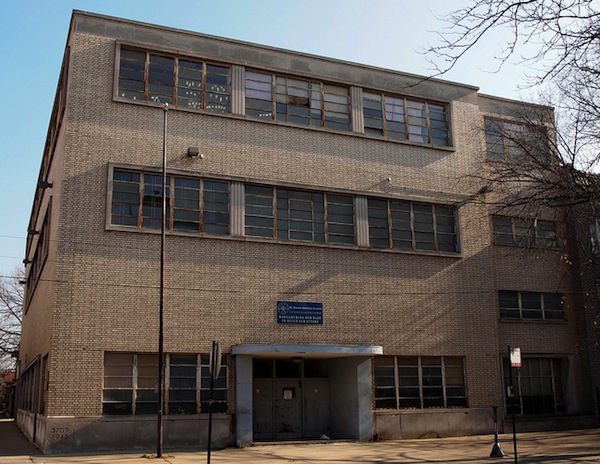
South Side Hebrew Congregation.  (photo by Deborah Rubin Fields)

“It has seemed to me sometimes as though the L-d breathes on this poor grey ember of Creation and it turns to radiance – for a moment or a year or the span of a life. And then it sinks back into itself again, and to look at it no one would know it had anything to do with fire, or light.” (Gilead by Marilynne Robinson, 2004)

Once I had turned onto Chicago’s Congress Parkway, I shut off Waze. I told myself that, from here on, I could navigate from long-stored memory. My destination: my old South Shore neighbourhood. My objective: by means of an on-site visit, to share recollections of my Chicago-based formative years with our four Israeli-bred children, so they could have a real sense of where I came from and why I am the way I am.

I expected the community I’d lived in from birth until halfway through my adolescence to be much changed. It’s a fact of life, people change, places change. Certain relatives and friends, however, discouraged my visiting where I’d grown up; some even informed me the local press had renamed the area Terror Town.

Consequently, with a bit of trepidation, we drove into South Shore to begin my guiding and reminiscing. South Shore (named for its proximity to the southern shore of Lake Michigan) had been a middle-class neighbourhood. Some upper-middle-class (probably closer to the lake), some lower-middle-class, lots of solid middle-class.

As I explained to my children, when I was growing up, my area was a religiously mixed Caucasian neighborhood, but we got along with our non-Jewish neighbours. I played with the Christian kids on our block.

Moreover, when it came to schooling, my parents likewise wanted my brothers and me to be broadly exposed, meaning we attended both Chicago Board of Education public schools (not Jewish day schools) and a five-day-a-week afternoon Hebrew school and Hebrew high school. But, even though we attended a public school, there were different rules for different people. For instance, a special bell rang in our elementary school one day a week at 2 p.m., signifying that practising Catholic kids were free to leave for catechism lessons. When we missed school for a Jewish holiday, we had to return to school with a note from our parents explaining why we had been absent. Needless to say, we had to make up whatever work or tests we missed.

Significantly, in those days, Chicago had other forms of “acceptable” discrimination. Jews and other minorities were not allowed to live in certain areas and were not given membership in certain clubs. The nearby South Shore Country Club was one such restricted place. In the late 1960s, when the rules changed (because of hard-fought anti-discrimination legislation), one of my parents’ closest friends, a history professor, was belatedly invited to join. He relished responding, “I don’t want to belong to any club which hadn’t wanted me.”

Now that I had the chance, I wanted to see the inside of the club. It had been converted into a municipal public park, golf course and cultural centre, close to where former President Barack Obama’s library will be constructed. Either the grounds had not been maintained at their previous level or the previous standard had been over-imagined, but I was underwhelmed by what I saw. Spontaneously, my children – who have all visited the remains of Nazi concentration and death camps – commented the club’s gatehouse reminded them of the entrance to Auschwitz.

Though we had lived in a mixed neighbourhood, there was a Jewish community centre, plus seven synagogues (representing various streams of Judaism) within walking distance of our apartment – more than in my current Jerusalem neighbourhood! Because my parents had “shopped around” until I was about 6 years old for the synagogue that best met our family’s needs, I was acquainted with just about all of them.

photo - Deborah Rubin Fields went to Hebrew school five days a week in this building owned by South Side Hebrew Congregation. The Men’s Club also met there. For awhile her grandfather was the president
Deborah Rubin Fields went to Hebrew school five days a week in this building owned by South Side Hebrew Congregation. The Men’s Club also met there. For awhile her grandfather was the president. (photo by Deborah Rubin Fields)

Now, as I drove my children through South Shore, I saw that South Side Hebrew Congregation, Congregation Habonim, Congregation Bnai Bezalel, Congregation Agudat Achim and South Shore Temple had become churches. Beth Am Congregation was now a school. The buildings by and large looked the same, except for the signs identifying the churches that now occupied the premises, and the occasional cross on the windows. The brick menorot were still on the façade of Torah Synagogue and the mikvah, but at least part of the complex had become a beauty supply shop.

I recalled one story from my club at the Jewish Youth Centre. My group went for a picnic supper at Rainbow Beach. My neighbour and friend, D., disregarded our warnings, returning home with what she called a gift for her mother, a long-dead alewife. When D. entered her apartment complex, the rest of us raced to the back of the building to snicker at D.’s mother screaming about the smelly fish.

And, speaking of social functions, my old synagogue, South Side Hebrew Congregation, played a social role, as much as it did a religious role. It wasn’t just a place for praying, as are many Israeli synagogues, it was a place to meet up with people with whom we shared a common core. For synagogue members like us who felt like part of a minority group, SSHC offered a sense of belonging, of comfort and of security.

Hence, every Shabbat morning, I went to the junior congregation. One our Hebrew teachers, Mr. Wolfson, with his heavy eastern European accent, directed our tefillot. My parents often went to the adult service. I have lots of good memories about SSHC, especially listening to Sparky Rosenstein, the president of the shul trying, but never really succeeding in blowing the shofar; stringing fresh cranberries and popcorn to hang in the giant communal sukkah (though we traditionally ate dinner in the sukkah of family friends, wrapped up in our coats, as Chicago was so cold already); walking around with a flag, apple and chocolate Kisses on Simchat Torah; and going up on the bimah to get the cantor wet when we started reciting the prayer for rain.

Years ago, I had gone on tours of old Jewish neighbourhoods with Prof. Irving Cutler. Back then, I had marveled at how Jews had established themselves in so many of Chicago’s districts. Yet now, seeing what had become of the Jewish institutions of my childhood, I was saddened no one had stayed around to keep them going. I whimsically thought it was too bad the Jews of South Shore hadn’t called on the Golem to protect these synagogues. Of consolation was the fact that people have continued to use most of the buildings as houses of worship.

During the entire trip, way-back-when scenes flooded my mind. Many I shared with my family. If the content wasn’t always complete, the emotion was. And this feeling my children will always have and it will be enough.

“… the end of all our exploring / Will be to arrive where we started / And know the place for the first time.” (T.S. Eliot, Four Quartets).

Deborah Rubin Fields is an Israel-based features writer. She is also the author of Take a Peek Inside: A Child’s Guide to Radiology Exams, published in English, Hebrew and Arabic.

Format ImagePosted on December 1, 2017November 30, 2017Author Deborah Rubin FieldsCategories TravelTags Chicago, family, Jewish life, memoir

Grandparent parents

This past summer, the topic of grandparents parenting their grandchildren was front and centre at the Jewish Child and Family Services Winnipeg (JFCS) annual general meeting. The Independent spoke recently with a couple of the participants in the June event.

Corinne Ackerman, 73, was joined by her husband, Harvey, 75, at the AGM. The couple has two grown children – a son who lives and works in Auckland, New Zealand, and a daughter who lives in Winnipeg. Seven years ago, their daughter’s family began experiencing difficulties, to the point that Manitoba Child and Family Services (CFS) became involved.

“Harvey and I were aware there were problems in their home, but we didn’t know how bad,” Corinne told the Independent. “We got a phone call from our daughter, saying that CFS was coming to the school to apprehend their three boys. And, of course, when I heard that, I just was absolutely stunned…. I grabbed my car, went to the school and met the social worker. I said, ‘You’re not taking them. I’m their grandmother and they are coming with me.’”

Everyone ended up at CFS, which then evaluated the possibility of the Ackermans taking charge of their grandsons. “They came to our apartment. They checked it,” said Corinne.

By that evening, all three boys were with their grandparents in their apartment. However, said Corinne, “We had them here with us for about 10 to 12 weeks. They [CFS] wouldn’t let us keep them. You can’t have three children in a two-bedroom apartment.

“At that point, friends of mine … and even the principal at the kids’ school called me … and said to call JCFS. It took a lot for me to do that. You become so embarrassed. Harvey and I were just mortified.

“I did, and God bless Emily Shane [who was then at the helm of JCFS]. She sent workers and the process began. They found a foster home for the three boys, but it very quickly deteriorated. It was just awful.”

Ian, now 14, the youngest, was having the most trouble. He also needed some major dental work. All of those involved decided it would be best if Ian went back to live with his grandparents. Ian’s brothers are now 18 and 20.

“I don’t even remember how it all happened, but the agreement was, the boys were going to another foster home and Ian would stay with us,” said Corinne. “And he’s been with us now since he was 7 years old.”

The Ackermans have made a point of assuring Ian that his parents and brothers love him.

“I think that he knows that he’s loved and that we still love his mom, dad and brothers,” said Corinne. “Ian would like to be home with his mom and dad if it was possible. But, I think he’s pretty happy here. And, for as long as he needs us to be here, we are going to try to take care of him.”

While there were some hurt feelings within the family when all of this happened, of course, everyone has made amends for Ian’s sake. They all speak regularly, and Ian visits his mom and dad regularly.

When asked about the difference between raising your own kids versus raising your grandchildren, Corinne said, “Well, when you raise your grandchildren, you get a better appreciation for the love you have. I love my daughter, I love my son, I love my in-laws, but you love your grandchildren on a different level, and we just adore Ian. At times, he’s very difficult, but at times, he’s an absolute blessing.”

The Ackermans have had to realign their lives in order to parent their grandson. It was a drastic change and they depend on JCFS for respite.

“We are not people who go out all the time, but it does cut down on the freedom to do so,” said Corinne. “But, we’re OK with that. Ian is important enough to us that it’s worth it.

“Ian has some challenges in school and that makes it quite difficult for any parent. We’ve done our best to get him the help he needs, and I can say that JCFS has been fabulous. Ian had a reading clinician, as he had a little speech impediment, and now it’s gone. JCFS has been wonderful with whatever Ian has needed.

“There are issues when a child is taken from their parents, and issues before that, and they’ve been very helpful throughout,” she continued. “As far as Harvey and I, when I really have it up to my head … I’ll give the social worker a call and she’s always there to help and give advice.

“Ian is the most invaluable young man because, whatever we do for him, he does back for us tenfold. He’s a wonderful kid. A million foster homes are wonderful, but family is family and there’s a difference.”

The other panelist at the JCFS AGM was Karla Berksen, 73, who also took in her two grandchildren seven years ago. Berksen was awarded custody because her daughter was unwell and her husband could not care for the kids.

Berksen and her partner of many years, Arthur Chipman, took in the children when Paige was 4 and Jacob was 8. At the time, Berksen was a newly retired financial planner and was spending part of her winters in Mexico.

“My daughter was still alive when I got the kids,” Berksen told the Independent. “She wasn’t a very well person, so we spent a lot of time with her. When they came to me, they were just dropped off. Arthur’s been quite amazing, because people my age don’t think this is something they want to do for their retirement. But, this is what we’re doing, although Arthur is still working.”

Both children attended and graduated from Brock Corydon School’s Hebrew immersion program. “Jacob had his bar mitzvah two years ago and Paige will have her bat mitzvah in March,” said Berksen.

“I feel very grateful to have the kids. It makes me a little tired sometimes. But, as I said at the JCFS AGM, I’ve only had two anxieties in my whole life. One was nine months after I stopped smoking – I had an anxiety attack realizing I wasn’t going to have a cigarette again. The other one happened a couple years after I got the kids, and I realized that I’m going to have teenagers again. That’s my biggest fear – going through the teen years again. You can only build them up, but they have to take charge and you never know what will happen.”

Berksen said both of her grandchildren are very talented. Her grandson is a gifted musician who is self-taught on the saxophone, drums, guitar and piano, with plans to one day become a studio musician and music teacher; he also enjoys playing hockey. Berksen’s granddaughter loves the arts and curling. Both kids spend part of their summers at Camp Massad.

Although Berksen hopes one day to again spend time in Mexico, her current priority is to raise her grandchildren up through their university studies. “I don’t see it as my life being on hold,” said Berksen. “This is it. This is my life and I enjoy it for the most part. I enjoy watching these two kids grow up. They keep me alive and busy.”

Rebeca Kuropatwa is a Winnipeg freelance writer.

Posted on November 10, 2017November 9, 2017Author Rebeca KuropatwaCategories NationalTags family, JCFS, parenting, Winnipeg
Talk of death is healthy

Talk of death is healthy

Mike Goldberg, community outreach and education coordinator at Palliative Manitoba. (photo from Mike Goldberg)

Despite the fact that the vast majority of us have lost a loved one, fear and misunderstanding often complicate the grieving process, according to Mike Goldberg, community outreach and education coordinator at Palliative Manitoba.

“Death is not a part of our culture,” said Goldberg. “We tend to revere youth and vitality over age and wisdom, as opposed to Eastern cultures.”

Goldberg, who grew up through the Jewish school system in Winnipeg – attending Ramah Hebrew School and Gray Academy of Jewish Education – earned his master’s degree in gerontology from the University of Regina. He gives many presentations and talks to people in different communities about palliative care and what he describes as “our death-denying society” – and how we can positively change that culture. He also facilitates educational programs at Palliative Manitoba for healthcare aides and support workers; assists people with intellectual disabilities; works with members of First Nations communities; and facilitates grief support groups for kids ages 9 to 12 (called Kids Grieve Too) and 13 to 17 (called Teens Grieve Too).

There was a time when people “just aged in place and the family took care of them at home … and there was nothing else to say about it,” said Goldberg. “That was just the way things were done. But, now it’s more commonplace to see somebody who is getting older being supported in a healthcare facility, a seniors care home.

“It certainly has to do with technology and the economy. You don’t see a lot of people with families that have one primary breadwinner, while the others are able to support family members who are elderly or sick in the family. Everybody seems to have to work, right?”

He said that more Eastern cultures, and sometimes South American ones, can be “more communal and more of a collective society.” He said, “I think we’d like to think we’re communal and collective in Canada, but we’re very much individualistic and self-reliant here. And, we’re very similar to the U.S. in that way.

“We don’t really have a lot of space to care for our elderly family members when it comes to the aging process, so we’ve established these support systems outside the home. And then, it sort of perpetuates itself – this cycle of having the aging experience happen outside the home … and the dying experience happens outside the house. And that has contributed to a fear or denial of death. It just doesn’t happen in our purview.

“If a person is approaching end-of-life, if they have a terminal illness or if they simply have a life-limiting illness … if they need extra supports at their place of residence, we can connect a worker to them to meet with them at home and to provide a supportive presence, to be a companion with them,” he said about Palliative Manitoba.

“For those looking for grief support,” he continued, “we have volunteers that can call you and have a conversation over the phone with you about once a week. Again, they’re not there to provide advice, they’re just there to listen and provide a supportive presence. We find the most appropriate way to support somebody through grief is to listen to them.”

Goldberg is a proponent of inviting open conversations about death and dying, and of exposing kids to death, grief and loss at a young age, not sheltering them. He suggested being as direct as possible with kids and with anyone you meet in terms of language, while also being hyper-aware of word usage – not using euphemisms and metaphors concerning death.

“It’s difficult to talk about death, because it’s something that is going to happen to all of us and represents this unknown,” he said. “But, it’s universal and, to better support each other, we need to talk about it.

“We also need to educate professionals working in this field, who are supporting those approaching end-of-life. These are the people on the ground, experiencing life and death every day. They need to have a high quality of understanding of how to communicate, what the right and wrong things are to say, and being better listeners.

“That’s really crucial,” he stressed. “It doesn’t matter what role you have in society – a nurse or whoever – if we just became better at listening to each other, then that would go a long way in having more direct conversations about death and dying, and changing the culture around it.

“The thing that I’ve come to understand working in this field is that it’s not homogenous emotions we experience. It’s a wide variety of emotions and sometimes a rollercoaster of emotions. The grieving process is not the five-step staircase we tend to think it is. It’s a fluid process that you could go back and forth between the stages.

“There’s certainly a lot of hope in grief and in death,” he said, “and I see that when people tell me that they couldn’t imagine doing what I do, because of the sadness that comes along with grief. I just tell them that I’m able to be with people in one of the most important and sacred times of their life, at the end of life. And, to be able to work with somebody and hear their stories and be with them is a privilege.

“The reality is, everybody grieves differently. There’s no right or wrong way. It’s just however you’re able to make sense of what’s going on.”

Rebeca Kuropatwa is a Winnipeg freelance writer.


Format ImagePosted on November 10, 2017November 9, 2017Author Rebeca KuropatwaCategories LocalTags death, end-of-life, family, health

Jewish routines help us cope

At 7 a.m., I came downstairs on a school morning and discovered that one of my 6-year-old twins was busy. He’d filled up a container with water so he could watch his expandable water toys grow – again. After the toys grow enormously in the water, we dump out the water. We let them dry and shrink and put them away for a month. This is a frequently repeated ritual in our house. Any good science experiment is one worth repeating, right?

Good teaching requires frequent repetition. Life, it seems, is also probably the best teacher. I’ve been thinking about how to cope with and learn from the repetition of the Jewish calendar as it applies to life’s ups and downs.

One of our dogs, Harry, has been very ill with lymphosarcoma. By the time you read this column, Harry, aged 13 and a half, may no longer be with us. For people who have animals, you know how hard this transition can be. Yes, there are all sorts of veterinary interventions for pets now, but this cycle of life and death can’t be avoided. Although, historically, some Jews have lived in cities, away from animals, Jews have also lived, worked and loved animals on farms, in villages, towns and cities. The Talmud teaches us that we must feed our animals before we eat. More generally, Jewish tradition teaches that we must treat animals humanely, and cannot allow an animal to suffer unnecessarily. (This applies even in kashrut, to animals we eat.)

Harry’s illness requires our kids to be careful. Our dog is very sore, and cries out sometimes at night, which wakes up the little boys. We’ve been slowly introducing the topic of dying at odd moments, when we sense our kids need to talk. Jewish tradition has supportive rituals for illness, death and burial. While these aren’t necessarily applicable to our bird dog, it’s a useful way of remembering that our tradition gives us help during times of illness, death, and in mourning.

The timing of all this has also hit my husband and me. When we pray to be inscribed in the Book of Life, both of us recall relatives who passed away around the time of the High Holidays in years past. If you keep track of the Jewish calendar (as well as the secular one), you may connect Jewish holidays with your personal history, such as associating, as I do, Kol Nidre with the death of a great-uncle, who was walking home from shul when it happened.

Tying our lives to the Jewish calendar and to these mourning rituals helps us connect to generations of Jews who came before us, who mourned people (and animals) and who made an effort to live with joy as best they could.

Recently, my husband and I became Canadian citizens. We juggled our citizenship ceremony with three trips to the vet in one day. At the ceremony, the official suggested we would always remember the date. Instead, I wondered if I could forget Harry’s medical needs while we were at the ceremony.

When we got home, we chose to celebrate becoming Canadian. Friends came over. They’d planned to meet our kids after school if we were late getting back from the ceremony, but we all gathered together instead. My husband got us a cake from Eva’s Gelato, and Marcello, one of the (Jewish Argentine) owners, insisted on a big cake – because our citizenship was a big thing! (Thank you, Eva’s!)

As Sukkot and Thanksgiving occur, we have this opportunity to reflect, with gratitude, on the amazing things we have. We can be thankful for plentiful harvests and food, for the opportunity to celebrate outside with our families and friends before winter hits, and for our good times, together.

Watching those silly toys expand in the water generated memories of other holidays and happy occasions. When we lived in Kentucky, we were fairly isolated and did not have many Jewish friends nearby. However, we mail-ordered a lulav and etrog, and we built our sukkah on a brick patio in our backyard.

Over the years, we had some big Sukkot dinner parties there. We lit candles, as it was dark in the sukkah, and we would eat a fancy meal with some (non-Jewish) friends to celebrate. Meanwhile, in the yard, just beyond the sukkah, the fancy table setting outside and the lights, I saw that our bird dogs, Harry (the setter mix) and Sally (the pointer mix), were doing every kind of rambunctious (and embarrassing) and loud dog play. Our guests were biology professors, like my husband. They laughed, making jokes about how to observe and understand dog behaviour, before returning to enjoying their meal and time outdoors. Harry the dog stopped roughhousing so he could chase crickets as they hopped about on the bricks.

We use ritual and holidays to mark time passing, and to observe our traditions in many ways. The Jewish calendar can help us embrace both the hard times and the sweet and memorable happy ones.

Harry the dog has been a laidback, playful, loving and opinionated part of our household, much like his movie namesake in When Harry Met Sally. I’m hoping to hold onto the dancing lights, those fall sukkot and the young, cricket-chasing dog. I’m remembering the frolicking while doing my utmost to ease the last days of an elderly, sick dog.

Chag Sukkot sameach.

Joanne Seiff writes regularly for CBC Manitoba and is a regular columnist for Winnipeg’s Jewish Post and News. She the author of the book, From the Outside In: Jewish Post Columns 2015-2016, a collection of essays available for digital download or as a paperback from Amazon. See more about her on joanneseiff.blogspot.com.

Posted on October 6, 2017October 5, 2017Author Joanne SeiffCategories Op-EdTags family, Judaism
Relatable dysfunction

Relatable dysfunction

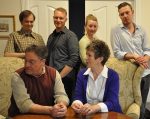
The Beacham family. Back row, left to right: Seth Little as Guy, Nick Beacham’s partner; Jordon Navratil as Nick; Mia Ingimundson as Norris Beacham, the daughter; and Chris Walters as Kevin, Norris’ husband. Seated are Howard Siegel as the patriarch of the family, Glen, and Anna Hagan as the matriarch, Bonnie. (photo by Ellie O’Day)

Homeward Bound by Elliott Hayes is about death and relationships. And family dynamics. Jewish community member Howard Siegel plays the father, Glen Beacham, in Western Gold Theatre’s production that opens today, Oct. 6, and runs until Oct. 29 at Pal Studio Theatre.

Set in 1990, Glen and Bonnie Beacham have invited their adult children (a son and a daughter) and their respective partners for dinner – and an announcement, publicist and Jewish community member Ellie O’Day told the Independent. Homeward Bound “is a dark comedy,” she said, “but also plays with the ways we talk to each other but don’t always really listen.”

“Every family has a time when they get together. Ours was Shabbat,” said Siegel. “No matter where we were or how busy our week was we had to be home Friday for dinner. We ate at the dining room table instead of our usual place in the kitchen, and talked, or argued, but that was our family time. If there was chicken soup, we were having roast chicken; if it was vegetable soup, it was brisket. While the Beachams are getting together on a Sunday and it may not be as regular as my childhood was, dinner with the family is no less important and the news of the week is going to change all their lives.”

Of the plot, O’Day added, “Dad, who happily distracts himself with crossword puzzles, is apparently not well…. Mother distracts herself by constant chatter (where will they go on their next holiday? Dad is totally noncommittal)…. Meanwhile, the gay son’s partner is late for this Sunday dinner … and the daughter is trying unsuccessfully to hide the deterioration of her marriage.”

Siegel described the character of Glen as a “glib, funny, highly educated” man who “has provided a substantial middle-class standard of living for his family.” He said, “My father aspired to these qualities, but it was his struggle, so I wasn’t able to model Glen after my dad. However, finding the love for his family that perhaps isn’t so clear in the text is important to me and to the play. That was very apparent in my experience in my parents’ home.”

He added about the Beachams, “This is a family like so many families we know or grew up in. The parents have to accept choices their children make whether they like or understand them; they accept them out of love and perhaps duty. The kids bicker, but would defend their sibling to anyone if push came to shove. Deep in this family’s dysfunction is a connection that we all should be able to understand.”

Homeward Bound runs Oct. 6-29, Tuesday-Saturday, 7:30 p.m.; Saturday-Sunday, 2 p.m.; and Oct. 19, 2 p.m., at Pal Studio Theatre, 581 Cardero St. Tickets are $32/$27 from 604-363-5734 or homeward. brownpapertickets.com.

Format ImagePosted on October 6, 2017October 5, 2017Author Cynthia RamsayCategories Performing ArtsTags Ellie O’Day, family, Howard Siegel, theatre

A holiday for memories

When it comes to Rosh Hashanah, I’m a big fan. It’s hard not to love a Jewish holiday that’s all about spiritual renewal, deep reflection and heartfelt promises to work harder to present our “better selves” to those around us. But, as I move into my mid-40s, I’m realizing there’s more than that to the Jewish New Year – more than those deep brown challahs filled with sweet raisins, more than the novelty of dipping apples in golden honey and dripping them all over the tablecloth before a great meal. Rosh Hashanah is also a profound vessel of memory and, as I defrost my brisket, hunt for the best-yet new quinoa recipe and knead and shape my challahs, I’ll be thinking of the past.

I don’t realize, until Rosh Hashanah rolls around, how vividly that past is available. I yank those memories from the recesses of my mind and daydream my way back to a 14-year-old self growing up in Cape Town, South Africa. Back then, Rosh Hashanah meant receiving a batch of my grandmother’s taiglach, a recipe I’m still determined to tackle and one that will take me, in spirit, immediately and joyfully, into her tiny kitchen. It meant hours in synagogue, listening to the deep baritone voices of the Rondebosch shul choir, and the wonderful melodies of the cantor, who we imported from Israel for that time of year.

It meant family discussions on who to invite to our Rosh Hashanah table, and long debates about whether we could tolerate, for another year, the uncle who arrived in his farm-stained overalls and fell asleep on the sofa before the meal was over. Or the aunt who was always asking for recipes (and never using them) and used fingers, rather than salad servers, to select the leafy greens she wanted on her plate.

There were wild cousins whose antics my parents weren’t certain they wanted unleashed in the house. And friends whose children my sister and I wanted nothing to do with and campaigned loudly for their removal from the guest list.

With hours before the festival’s arrival, as my mother’s culinary activities sent rich aromas wafting over the house, we kids were in charge of setting the table and removing from the dusty cabinet the exquisite glasses my parents had bought while on a Venice honeymoon 15 years earlier. We’d craft name tags and carefully position them around the table, ensuring we occupied the best seats in the house. And we’d decant the wine an elderly relative had made, pouring it carefully into the crystal decanter only used on such occasions.

At the time, I rolled my eyes at the list of chores, grateful for the reprieve from school but unappreciative, as only a teenager with little worldly experience can be, of the treasures at that table. The family members we’d lose as age and cancer robbed them of more time with us. The recipes I’d never have the foresight to record and the hugs and kisses I never cherished long enough.

What I did bring with me over the decades, that would follow me into married life with children, was an unbridled love for Rosh Hashanah and a determination to make it as memory-laden, meaningful and delicious as possible in my home. It’s why, this year and in the years ahead, I’ll spend hours on dishes I’d never normally prepare: sodium-filled chicken soup with kneidlach, tender brisket that will tempt even the avowed vegetarians among my kids and wafer-thin kichel biscuits, perfect with chopped herring. Maybe I’ll even summon the courage to attempt baking sweet, sticky taiglach, a recipe that requires copious amounts of syrup and hours of careful babysitting.

I’ll do all this and more in the name of memory, because it will conjure my own past, a continent and lifetime away, so vividly. And I’ll hug my kids extra-tight, subdued in the knowledge that, one day, they, too, will celebrate this holiday with their own families after I’m six feet under, hopefully cherishing the food and love-laden Rosh Hashanah memories of their own long-gone childhoods.

Lauren Kramer, an award-winning writer and editor, lives in Richmond. To read her work online, visit laurenkramer.net.

Posted on September 15, 2017September 14, 2017Author Lauren KramerCategories Celebrating the HolidaysTags family, memoir, Rosh Hashanah

Teach it to your children

You’re reading the weekly congregational email. Something radical seems to have happened. Within a week, everything has changed. Well, maybe the format seems the same, ready to lull you into “services this week, events, make a donation …” but then it hits you. It’s like a revolution happened. Instead of the regular schedule, where the adult service is happening at 8 p.m. Friday night, and davening starts at 9:30 Saturday morning, it’s all changed. Imagine this:

Come for our weekly great Kabbalat Shabbat service at 4:45! Join us for prayers, story time, snack, dancing and singing. The service ends by 5:45, followed by an Oneg Shabbat with fruit, veggies, cheese cubes, challah and grape juice.

Want to stay up later? Join us in the sanctuary for a summer camp-style sing-along of Shabbat music and study the Torah portion with the rabbi and your friends.

On Saturday morning, daven with us! Services begin at 8:45, with morning prayers, movement activities, another great story (with a picture book!) and three dances to help us learn new psalms. We’ll learn the Torah portion of the week, act out some of it, and end with a rousing Adon Olam. Let’s march around and pretend we’re playing in a band.

Services end by 10:30. We’ll provide a healthy Kiddush snack, including whole grain crackers, juice and water, lots of fruits and veggies, and more. (It’s a nut-free environment, but feel free to bring along dairy or pareve snacks to share.)

If the weather’s good, after snack, let’s play outside at the shul playground. If not, we’ll run in the shul gym so you can get tired before going home to have a big Shabbat lunch and nap.

In the evening, join us for Havdalah at the shul at 5! We’ll be serving pizza and salad, with cookies for dessert. (Click here for costs, to register and for the Jewish movie of the week.) After dinner, we’ll be showing a G or PG movie in the gym for families who want to stay out late.

Also there’s a Saturday evening study session. This week: Jewish advice for managing our busy modern family life, at 6:30 in the library. (Free.)

Note: If doing the rabbi’s Saturday evening study session, please be sure one parent or friend is in the gym to supervise your offspring and enjoy the movie together.

Reminders: On Sunday morning, the shul opens bright and early as usual for religious school, yoga for parents, coffee klatch and the usual lecture series after the morning minyan.

Our congregational soup kitchen, visit to the local Jewish seniors centre, nursing facilities and once-a-month cemetery clean-up all meet on Sunday afternoons. (Cemetery group, next week is our hike at the lake, so bring your boots and bathing suit and we’ll see you on the bus – we might let others attend if there is room! Click here to register.)

See you then!

* * *

OK, as you read this, you’re thinking, this is all well and good for those few young families out there. I mean, maybe my children or grandchildren might go sometimes? But, for me, well, I feel left out. This doesn’t seem like what I’m used to.

But consider the model some congregations still use: Join us for a family Shabbat dinner! (It happens only once or twice a year.) Services start by 5:30. Food is offered, one course at a time, starting after 7. There’s no finger food or even challah on the table. The kids’ food comes after the salad course. Parents who don’t want to create a scene take their children home long before dessert is served to avoid a train wreck…. And nobody wants to come back.

Should Jewish life be all about young families? Well, no. We shouldn’t give up traditional services or customs, but the V’ahavta says “we should teach it [Judaism] to our children.” How do you do that better, so there will be Jews a generation from now? Should your congregation include positive experiences for younger people? Does that create a plan for the future?

Based on a random sampling of kids’ events in my Jewish community (Winnipeg) over the last six years, here’s a generic sampling of what I’ve seen.

If a shul schedules a Tot Shabbat irregularly – although kids thrive on routine – it happens during kid dinnertime or even at bedtime. If your preschooler eats dinner at 5:30 and is in bed at 7:30, how does that service at 6:15 work for you? Hear any angry screaming in that sanctuary?

How about the big kid events scheduled for 1-3 p.m.? Many kids are grouchy creatures around then. We love naps. If we’re skipping them, well, the activity had better be fabulous … and tolerant of crying, hitting and screaming.

Many congregations do a great job of integrating families into their activities and planning. Instead of having kids’ events as an afterthought once a year, most events are designed with whole families in mind … and preschool activities meet the needs of families with babies and small kids.

Teenagers and adults have relevant events. People of all ages have good family programming, too. Sometimes, this is all the same service. Can kids have roles in the service, like saying the Shema or leading a song? Can kids’ restless behaviour be tolerated at the same level as we tolerate adults’ conversation and restless behaviour?

How about making registration accessible and online? Include active learning as part of all events, so Judaism remains relevant?

The kicker – somebody always says: It can’t be done. This isn’t the way we do it here. It’ll be expensive. It’s not possible.

I say: dream bigger.

Joanne Seiff, a regular columnist for Winnipeg’s Jewish Post and News, is the author of a new book, From the Outside In: Jewish Post Columns 2015-2016. This collection of essays is available for digital download, or as a paperback from Amazon. See more about her on joanneseiff.blogspot.com.

Posted on August 18, 2017August 16, 2017Author Joanne SeiffCategories Op-EdTags continuity, education, family, Jewish life, Judaism, synagogues

Posts pagination

Previous page Page 1 … Page 8 Page 9 Page 10 Next page
Proudly powered by WordPress