Skip to content
  • Home
  • Subscribe / donate
  • Events calendar
  • Business Directory
  • FAQ
  • News
    • Local
    • National
    • Israel
    • World
    • עניין בחדשות
      A roundup of news in Canada and further afield, in Hebrew.
  • Opinion
    • From the JI
    • Op-Ed
  • Arts & Culture
    • Performing Arts
    • Music
    • Books
    • Visual Arts
    • TV & Film
  • Life
    • Celebrating the Holidays
    • Travel
    • The Daily Snooze
      Cartoons by Jacob Samuel
    • Mystery Photo
      Help the JI and JMABC fill in the gaps in our archives.
  • Community Links
    • Organizations, Etc.
    • Other News Sources & Blogs
  • JI Chai Celebration
  • JI@88! video

Recent Posts

  • Or Shalom reopens its doors
  • JFS from past to future
  • Need holistic approach
  • Sharing stories, advice
  • Journalist shares fears
  • Skills to live together
  • Road to independence
  • Cutting grass with scissors
  • Zionism as a solution
  • Deceit, desire & the divine
  • Reclaiming sacredness
  • Creative project ideas
  • Summer squares and cobbler
  • Thou shalt … summer commandments
  • Legal help for students
  • Revisiting myth of Lilith
  • Wrong person rebuked
  • Canada’s mixed messages
  • Questions for museum
  • Symposium on antizionism
  • Making soccer political
  • CJPAC lauds Pulver’s impact
  • City recognizes Vrba’s legacy  
  • Organ donation saves lives
  • Theodore’s March premiere
  • A healing Shabbaton
  • Supplying healthy food
  • A chime of metal tags
  • Yellowknife seder a first
  • Ishai energizes, unifies
  • A Lag b’Omer to remember
  • Expanding the healing
  • Hannah Senesh – a unique hero
  • Community milestones … May 2026
  • Sharing her testimony
  • Fall fight takes leap forward

Archives

Follow @JewishIndie
image - The CJN - Visit Us Banner - 300x600 - 101625

Tag: elections

Life goes on amid crises

Life goes on amid crises

Left to right: Bahrain Minister of Foreign Affairs Abdullatif al-Zayani, Israeli Prime Minister Binyamin Netanyahu, United States President Donald Trump and United Arab Emirates Minister of Foreign Affairs and International Cooperation Sheikh Abdullah bin Zayed sign the Abraham Accords on Sept. 15 at the White House in Washington, D.C. (photo by Avi Ohayon/IGPO via Ashernet)

The news on erev Rosh Hashanah that U.S. Supreme Court Justice Ruth Bader Ginsburg had passed away at age 87 cast a pall over many celebrations. Some in our community shared a teaching that says that a person who dies on Rosh Hashanah is a tzaddik, a righteous person. As tributes poured in for the late jurist, it was clear that many viewed Ginsburg as a tzaddeket, irrespective of the timing of her passing. Grief over her death was joined by the inevitable political implications of a Supreme Court vacancy mere weeks before U.S. general elections.

While Ginsburg’s death, at an advanced age and after years battling successive experiences with cancer, may not have been a complete shock, it was, for many, a tragic conclusion to the Jewish year 5780. The pandemic will be the imprinted memory of this time, but a succession of other events – uncontained climate change-driven wildfires and other natural disasters, political unrest, racial violence and police brutality, plus a litany of other crises and inconveniences – will be included when the history of this year is written.

Bad times can also bring out the best in people, though, and there is an uplifting inventory of good deeds. Locally, the way the Jewish community has rallied around those in need of food, social services and support has been heartening. This local unity and kindness have been mirrored in communities worldwide.

Among the few brighter spots on the international scene has been an opening of relations between Israel and parts of the Arab world. Suddenly, or so it appeared to most casual observers, the United Arab Emirates announced it would initiate diplomatic relations with Israel. The Kingdom of Bahrain followed suit. Other countries are alleged to be considering similar paths. When the Arab League was called upon to condemn this historic shift in relations, the body opted against. With the exception of Palestinians, the commentary from most Arab countries has been positive.

This has perhaps less to do with any newfound admiration for Israel than it does self-interest in the form of economic potential in bilateral relations with the region’s economic superpower. Geopolitical self-interest is also a factor. Nothing makes friends like shared enemies and Iran, with its nuclear initiative and ambitions for regional hegemony, makes whatever complaints the Arab world had against Israel pale in comparison. To say nothing of what’s in it for Israeli Prime Minister Binyamin Netanyahu’s political ambitions or the electioneering of the U.S. president just prior to elections in that country.

Self-interest is most likely at play in another sudden development. If there wasn’t enough happening in the world, on Monday, B.C. Premier John Horgan called a snap election, a year ahead of schedule. The wisdom of holding an election during a state of emergency has been challenged by opposition leaders and others, but the governing party did significant polling on the subject and must have concluded that whatever reticence there may be on that front was canceled out by the New Democrats’ strong position in opinion polls. By the time voting ends, on Oct. 24, most British Columbians will hopefully be more focused on the issues than on the timing.

The timing, though, is another wrinkle. The law that set fixed election dates – and which Horgan, therefore, flouted by calling the vote early – also fixes the date for the third Saturday in October. While British Columbians vote in municipal elections on Saturdays, provincial (as well as federal) elections have always been on weekdays. Observant Jews will have to make accommodations and vote early. Autumn being what it is, it is theoretically possible to race to the polls after sundown and before the 8 p.m. cutoff. Less frantically, there are seven days of advance voting, an increase from six days in the 2017 election. All voters can request mail-in ballots – early reports from avid voters suggest the process is simple and takes only a couple of minutes. It is possible to pick up (call first!) and return your vote-by-mail package at an electoral district office. For people with disabilities, there is an opportunity for voting by phone.

The pandemic has created all range of challenges in our lives. Voting in the midst of it comes with its own difficulties, but, however one feels about the decision to call an early vote, the wheels are in motion. Turnout was up in 2017 to 61.2%, an improvement from the mid-50% turnout in the previous two elections. We face important decisions about the path to an economic recovery and the management of the ongoing pandemic. We must each of us make a plan to vote, and encourage friends and family to do the same. Find out more at elections.bc.ca.

Format ImagePosted on September 25, 2020September 23, 2020Author The Editorial BoardCategories From the JITags Arab League, Bahrain, coronavirus, COVID-19, democracy, economics, elections, Israel, John Horgan, peace, politics, Ruth Bader Ginsburg, United Arab Emirates, United States
Paul hopes to make history

Paul hopes to make history

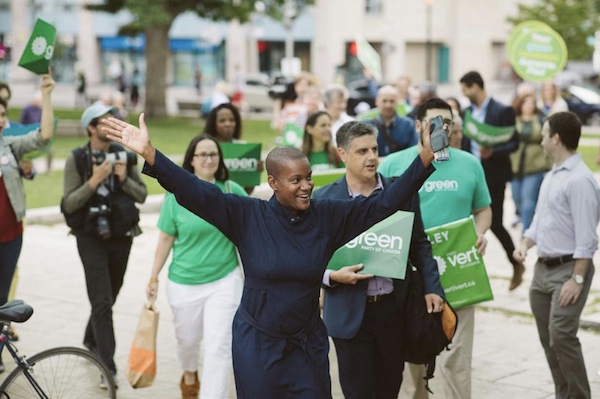
Annamie Paul is running to succeed Elizabeth May as leader of the Green Party of Canada. (photo from Annamie Paul)

Annamie Paul wants to be the first woman of colour and the first Jewish woman to lead a political party in Canada. But, in the process, the human rights lawyer and former diplomat who is running to succeed Elizabeth May as leader of the Green Party of Canada has been taken aback by the overt antisemitism thrown at her since it became widely known that she is Jewish.

“You almost can’t believe what you’re seeing,” said the Toronto native, who has worked extensively overseas. “There are very explicit comments questioning my loyalty to Canada because I am Jewish. There are those who have suggested that I am seeking to infiltrate the party on behalf of Zionist elements.”

Paul said what disappoints her most is the almost complete silence from others when antisemitic posts are made on social media, such as the Facebook group for Green party supporters.

“The comments were whispers at first, innuendo, and now they’ve become very explicit,” she said. “If people are allowed to make these comments unchecked, it really emboldens them and that’s definitely what I’ve noticed over the last week or two.”

Amid a litany of such comments – including items not directly targeting her but equating Israelis to Nazis on Green-oriented social media sites – only one single individual not on her campaign team has called out the offensive posts. At the urging of Paul’s campaign, moderators removed some of the most disturbing ones.

“It’s taken me aback,” she said. “It wasn’t something I was fully prepared for, to be honest.”

She differentiates between people who are deliberately provocative and those who are uninformed.

“I accept that there are a certain number of people who still need to be educated … and, while it’s perhaps not my responsibility to do that, I’m willing to do that because I think if I can create a little more understanding, then that’s important,” she said.

Paul spoke at a Zoom event organized by Congregation Beth Israel and moderated by Rabbi Jonathan Infeld on July 8. That conversation was primarily about Paul’s life, Jewish journey and career. In a subsequent interview with the Jewish Independent, she delved more deeply into policy and her experiences with antisemitism and racism.

Born in Toronto to a family from the Caribbean, she was among the first students in Toronto public schools’ French immersion program. Her mother, a teacher, and grandmother, a nurse and midwife, worked as domestics when they arrived in Canada. Her mother went on to get a master’s of education and taught in elementary schools for more than three decades; her grandmother became a nurse’s aide.

Paul credits her mother’s broad-mindedness and spiritual bent for the openness that led her to embrace Judaism in early adulthood. Paul was converted by the Hillel rabbi while completing a master’s of public affairs at Princeton University. She also has a law degree from the University of Ottawa. She chose Ottawa in part because its law faculty emphasizes law through an Indigenous lens. In addition to seeking at an early age to be an ally to Indigenous peoples – she started law school at 19 – she saw parallels between the Canadian situation and her own heritage as a member of the Black diaspora.

“We have been stripped of all of the things that Indigenous peoples are fighting for still in this country,” she said. “Through colonialism, we lost our identity, we lost our culture, our language, our religions. We really can’t tell you anything with any great degree of precision about our ancestors. When I saw other peoples fighting for those things, I understood intuitively how important it was.”

Paul has worked as a director for a conflict prevention nongovernmental organization in Brussels, as an advisor at the International Criminal Court in The Hague, and as a political officer in Canada’s mission to the European Union. She co-founded and co-directed an innovation hub for international NGOs working on global challenges and has served on the board and advised other international NGOs, including the Climate Infrastructure Partnership and Higher Education Alliance for Refugees. She is married to Mark Freeman, a prominent human rights lawyer and author. They have two sons, one in university in London, U.K., the other in high school in Toronto.

Returning to Canada after spending about 13 years abroad, Paul looked at Canadian politics with fresh eyes. While she had been courted to run provincially by the Ontario Liberal Party in the early 2000s, she opted to run federally for the Green party in 2019. She took about 7% of the vote in Toronto Centre, which was won by Finance Minister Bill Morneau. She is one of nine candidates running for Green leader.

She chose the Green party because, she said, “we don’t have time to fool around with the climate emergency.”

“I celebrate the compromise that is the spirit of Canadian politics,” Paul said. “This is the Canadian way. But there are some things that you simply have to do all the way or it really doesn’t work. One of those things is the climate emergency. If we don’t hit our targets, then we are setting ourselves up for disaster. The Liberals, the NDP, the Conservatives, they’re just not committed to that goal and so I wanted to make it clear that I was aligning myself with the party that was very, very committed to reaching those targets.”

COVID-19, for all the health and economic devastation it has wrought, also presents opportunities, said Paul. In Canada, federal and provincial governments came together and political parties set aside partisanship to an extent. Canadians who may have been skeptical that a massive challenge like climate change could be ameliorated see what concerted governmental action – and massive investments – can look like. “[Canadians] know that money can be found if it’s needed and they know that we can mobilize very quickly,” she said.

The billions of dollars being invested into the economic recovery should be directed toward projects that explicitly advance a green economy, she said, such as a cross-Canada energy grid that produces electricity from renewable sources to be shared throughout the country. This is just one of a range of opportunities that Paul sees emerging from this extraordinary economic challenge.

“For a country as wealthy and well-educated as Canada, if we want to be, we can really be first in line for all of this,” she said. “It’s exciting.”

The Green leader has limited constitutional authority in a party dedicated to grassroots policymaking, Paul said. If party members adopt a policy that challenges the leader’s core values, the leader may be required to walk away. Such a scenario emerged in 2016 after the party adopted a resolution to boycott Israel. Following a showdown, the resolution was rescinded and May carried the party into the subsequent election. As a result, Paul said, the party is on record supporting Israel’s right to exist and opposing the boycott, divestment and sanctions (BDS) movement.

Paul opposes the Netanyahu government’s Jordan Valley annexation plan because she believes it contravenes international law. But she also urged vigilance against those who might mask their antisemitism in anti-Zionism. And she stressed the unlikelihood of pleasing everyone on either side of the Israel and Palestine divide.

“I don’t feel that there’s anything these days that you can say in terms of that conflict where you’re not going to attract criticism that you were too soft or you were too hard,” she said. “It’s very difficult.”

But, while she doesn’t have the magic answer to resolve the longstanding conflict, her background in diplomacy and international law makes her confident in asserting that negotiated settlement is the route to any eventual solution.

“Dialogue always has to be the preferred option,” she said, adding that international law must be applied to all sides. “State actors, non-state actors, they are all subject to international law. Their obligation is to respect international law and to protect fundamental human rights. There are no exceptions to that.”

At a time when North Americans and others are facing our histories of racism and injustice, Paul finds herself at an opportune intersection.

“I’m very aware of what I represent as a candidate,” she said. “I’m a Black woman, I’m a Jewish woman.… I know people are very interested in my identities and I embrace that…. I would say, though, that [I hope] people will take the time to get to know me and not to create a one-dimensional image of me simply focused around those identities. I feel that I’m very prepared because of the work I’ve done, my academic studies, etc. I’m very well prepared to take on this role and all of the elements of this role.

“You’re not just an environmental advocate as the leader of the Green party, for instance, you also need to be able to talk about foreign policy, you need to be able to talk about economic theory, you need to be able to talk about rural revitalization and what are we going to do about long-term care and should we decriminalize illicit drugs. You need someone who is three-dimensional and I know that I’m three-dimensional and I hope people remember that.”

As a Jew of colour, Paul also has insights on antisemitism in the Black Lives Matters movements and racism in the Jewish community.

“The Black diaspora is not a monolith,” she said. “The Jewish community is not a monolith, either. Don’t ever take the actions of some members of the community as an indication of how the entire community feels.… I would just say don’t let that push you out of wanting to support the community in the way that you should. In terms of Black and Indigenous lives in this country, the statistics just take your breath away. Not just the criminal justice statistics but also health, education, life expectancy, they are really very troubling and those communities need as much help as they can get from people who really understand, who have suffered a great deal of persecution historically, as well, and have had to create opportunities and overcome barriers and still do.”

The leadership vote takes place Sept. 26 to Oct. 3. The deadline to join the Green party to vote in the election is Sept. 3.

Format ImagePosted on July 24, 2020July 22, 2020Author Pat JohnsonCategories NationalTags Annamie Paul, anti-racism, antisemitism, Beth Israel, Black diaspora, climate change, coronavirus, COVID-19, elections, environment, Green party, human rights, Israel, politics
On brink of radical change

On brink of radical change

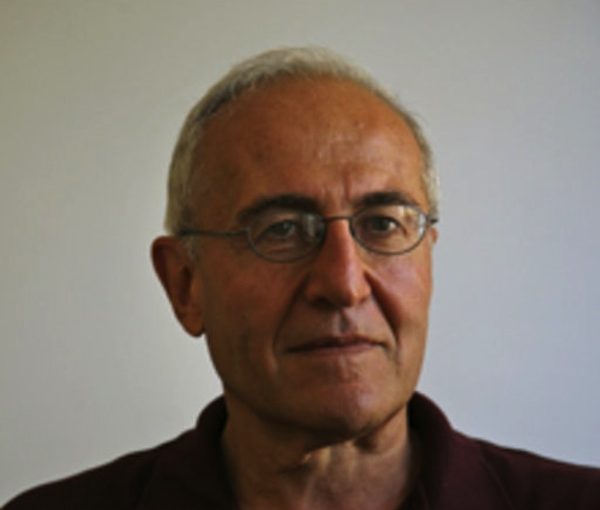
Prof. Shlomo Hasson was slated to bring a pessimistic forecast for the Middle East’s future to a Vancouver lecture March 31, but his visit was canceled due to the coronavirus crisis. (photo from CFHU Vancouver)

The Middle East is in a time of historical change and geopolitical shifts. The outcome is unknown and, for Israel, there may be good and bad consequences.

This is a core message from Prof. Shlomo Hasson, a professor at the department of geography, School of Public Policy, and Leon Safdie Chair at the Institute of Urban and Regional Studies at the Hebrew University of Jerusalem. Hasson was to speak in Vancouver March 31 at an event organized by the Vancouver chapter of Canadian Friends of the Hebrew University, but the lecture was canceled due to the coronavirus crisis. The Independent spoke with him by telephone about what he intended to discuss.

“We are in the midst of turmoil in the Middle East because we have this havoc with Iran and the intensifying tension between the United States and Iran,” he said. “We have the ongoing conflict within the Middle East, especially in Syria, the war now between Turkey and Syria. We have the recent events in Libya, we have a worsening situation in Yemen. I’m not optimistic about the Middle East and, when it comes to the Israeli-Palestinian case … the peace talks were stalled for a long time and now it seems that [U.S. President Donald] Trump’s initiative, in a way, helps to revive the issue but did it in such an awkward way that I’m not optimistic at all about the consequences of this initiative.”

The warming of relations between Israel and Saudi Arabia, as well as with some Gulf states, is cause for limited hope, he said.

“This is indeed a good reason to celebrate because there has been a change, even a significant change, between the Gulf states and even Saudi Arabia, and Israel because [they] are facing the same adversary, which is Iran,” Hasson said. “Israel supports Saudi Arabia because it supports them in containing Iran. In that sense, I think there is something to celebrate but this is very modest, because … the public in Saudi Arabia, for example, does not support Israel. It’s sort of an alliance between the rulers of the countries, but the public is not there yet.”

An additional crisis is climate change, which is hitting the region especially hard and will continue to do so, although this also presents opportunities for Israel to build bridges.

“We face the problem of water scarcity and droughts and flooding,” Hasson said. “I think that, especially in this crisis, Israel can help a lot because we have the technology, we’ve mastered the know-how and we can help the Middle East and Africa, while coping with this issue.”

Speaking before the most recent Israeli elections, Hasson predicted that, regardless of the outcome, they wouldn’t play a significant role in the bigger Middle East picture.

“Israel is not the central actor here,” he said. The central actors are Saudi Arabia and Iran, with China, Russia and the United States intervening from outside.

“Israel is in a position of reacting to these global, regional and intra-state developments,” he said. Even if Blue and White had won, said Hasson, it is still a right-wing party and the Israeli populace is developing a rightward consensus. “I don’t think that these elections are going to present a significant change in Israel’s political behaviour.”

He compares this moment in Middle East history to the pivotal epochs of the past.

“About 100 years ago, we still had the Ottoman Empire and, after that, we had the colonial regimes, the Sykes-Picot regimes, and then we have the nation-state regimes. The Middle East is at the brink of a change, a radical change, and nobody knows for sure what’s going to happen to the Middle East,” said Hasson. “But, in a way, it’s going to affect everything, it’s going to affect the global structure, it’s going to affect the relationships between the United States, China and Russia.”

Format ImagePosted on April 3, 2020April 1, 2020Author Pat JohnsonCategories WorldTags CFHU, elections, Hebrew University, Israel, Israeli-Palestinian conflict, Middle East, peace, politics, Shlomo Hasson

Religion and the state

A week is a lifetime in politics, goes an adage. And so it would seem. Just one week ago, we posited that Binyamin Netanyahu’s coalition of the right was likely to form the next government in Israel. Since then, Benny Gantz, head of Israel’s Blue and White party, has been reinvigorated by Netanyahu’s challenges in pulling together a coalition, after original exit polls had the Likud-led coalition at 60 seats out of the 120 in the Knesset. This number has dropped through the actual vote count to 58, and it has changed the outlook.

As it has in the previous two elections, the result will hinge on the decision of Avigdor Liberman and his Yisrael Beitenu party, a right-wing but defiantly secular movement. Liberman has publicly released his demands for support. Among them: he will not support a government led by Netanyahu (or any other individual under indictment) and he wants to increase the number of ultra-Orthodox serving in the military, introduce civil marriage, thereby taking control of this lifecycle event from the exclusive purview of the rabbinate, and hand decision-making about commerce and transportation on Shabbat to local governments. Meanwhile, Gantz is having a rebellion in his own ranks about seeking support from the largely Arab Joint List in parliament. So, the process is largely back to where it’s been for more than a year, with no more certainty of who will form the next government.

Whatever happens, Liberman’s sweeping secularist proposals are nothing to ignore. The ally-turned-nemesis of Netanyahu, Liberman seems to have learned from the masters how to leverage minimal electoral success to enormous political advantage. In the past, it has been the religious parties that conditioned their support for desperate-to-make-a-deal leaders on getting key benefits and concessions for their respective communities. If Liberman succeeds in helping create a Blue and White government that implements some of his plans, it will represent the same tail-wagging-dog effect that religious parties used to assert Orthodox standards across much of Israeli society. Except Liberman will leverage his seven seats to repeal some or much of what those religious parties have achieved.

This Israeli moment brings to mind other rapidly changing political fortunes. Joe Biden, whose campaign was struggling to survive a few weeks ago, is suddenly (again) the undisputed front- runner for the Democratic nomination in the United States. There is another parallel between Israel and the United States that is currently evolving, this one less publicly known. While Liberman strives to diminish the connection between religion and state in his country, U.S. President Donald Trump is moving his country more in the direction of Israel’s religiously influenced society.

As in Canada, many religious organizations in the United States do an enormous amount of good, in many cases filling in gaps where government services can’t or won’t. Republican administrations have tended to expand – contract out, if you will – some social services previously delivered by governments, while the Obama administration, for example, introduced safeguards to prevent those agencies from discriminating against individuals or groups who they might deem outside their theological teachings.

Writing in the New York Times Sunday, Katherine Stewart, author of a book on religious nationalism, warned that Trump is eliminating those Obama-era safeguards and making it easier for publicly funded agencies to discriminate. For example, clients receiving services from a taxpayer-supported Christian organization could be forced to profess allegiance to Jesus in order to access services or an employee could be fired for not living a “biblical lifestyle,” the definition of which the religious organization, presumably, could define at their own whim.

A test case in Missouri seems innocent enough: a church maintains it should get federal funding to build a kids’ playground; that being refused such money represents discrimination against religion. The corollary is clear: if preventing tax money from funding religious organizations (even for something as innocuous as a playground) is discrimination, Stewart warns, “then the taxpayer has no choice but to fund religion.” This would represent an abrogation of one of the most fundamental cornerstones of the U.S. Constitution: the First Amendment, which declares, “Congress shall make no law respecting an establishment of religion, or prohibiting the free exercise thereof….” The framers of the Constitution were concerned not only that eliminating the barrier between government and religion would corrupt a government intended to serve all citizens but, perhaps equally, that it would corrupt religious institutions themselves. A number of the people on the test case’s side are also leaders among Trump’s evangelical constituency.

What was especially jarring when perusing the Sunday Times was a far more prominent story – on page A4, to be specific – about how Quebec’s secularism law is having a detrimental effect on civil servants, mostly women, from cultural minorities. The law, which precludes people who work in most roles in the public service from showing any external indications of religiosity – a kippa, a headscarf, a crucifix, a turban – is preventing individuals from beginning or advancing in their careers and, in some cases, effectively chasing them out of the province.

These disparate examples from three very different societies indicate the folly both of excessive religious interference in governmental affairs and heavy-handed efforts to have the opposite effect. Somewhere in the middle must be a commonsensical approach to these extremities. Of the three countries in the examples, Israel is perhaps the one where the challenges are most concrete and affect the most people. What, if anything, happens as result of Liberman’s gambit will be a fascinating experiment to watch.

Posted on March 13, 2020March 12, 2020Author The Editorial BoardCategories From the JITags Avigdor Liberman, Benny Gantz, Binyamin Netanyahu, democracy, Donald Trump, elections, extremism, freedom, Israel, Quebec, religion, secularism, United States

Extremes and elections

Drawing parallels between political events in disparate countries may be folly, but it’s the season for frivolity, so why not. As British Conservative Prime Minister Boris Johnson was piling up an historically massive majority government, Canada’s Conservative leader Andrew Scheer was giving in to an apparently inevitable whimpering end to his leadership.

For most British Jews and many other observers, Johnson’s victory elicited something between relief and elation. While the Labour party has been the traditional home for many or most of that kingdom’s Jewish voters for generations, it is estimated that just six percent of British Jews voted to elect Labour leader Jeremy Corbyn prime minister this year. Corbyn has alienated Jewish voters and aligned with the most extreme elements in British society; his party is demonstrably rife with antisemitic people and ideas, as evidenced in a years-long probe first by the party and now by the country’s human rights watchdog. Under Corbyn, it seemed, there were two things the party would not tolerate: racism and Jews.

Of course, the election was not a litmus test on Corbyn’s antisemitism. Few non-Jewish voters probably made their decision based on that concern. Rather, his position on the ballot question – Brexit – was confused and inarticulate. Still, it was with a sense of justice, if not schadenfreude, that many Jewish observers watched Corbyn’s career collapse last week. Even so, the horse they bet on isn’t without serious flaws: Johnson is well known for his racism, xenophobia and Islamophobia, and his hard-right agenda is antithetical in other ways to many Jewish voters who may have found themselves between a rock and a hard place.

Hours earlier, Canada’s Scheer dropped the bomb that he would resign as party leader. The wagons had been circling since his defeat in the federal election in October. His Achilles heel, it is widely accepted, was his ambiguity around socially conservative policy issues.

During the campaign, opponents suggested that Scheer had concealed plans to threaten marriage equality and reproductive rights. However, the law permitting gay marriage and the absence of a law around abortion are both consequences of Supreme Court decisions, not of Parliament acting of its own volition. Barring a revolutionary shift at the Supreme Court, the status quo constitutionally could not be undone. More practically, there is very little political will to alter the status quo on these and a host of other litmus test issues. Not only are Canadians at large mostly in agreement with the way things stand, the critical mass of voters who swing elections are overwhelmingly centrist.

On the face of it, Scheer’s argument – that he has specific personal views that he would not manifest into legislation or policy; indeed, Justin Trudeau effectively and successfully made the same case four years earlier – is a morally valid one. Scheer’s problems on this front were twofold. He expressed his position poorly, failing to articulate either his deeply held values or his endorsement of the people’s consensus in a way that resonated with voters, and he misread the depth of investment many or most Canadians now have on these topics. He bet that Canadians might be satisfied with and respect the idea that he believes particular things but would not legislate on the basis of these faith-based positions. While this left many of his core supporters unenthused, it also misread the enthusiasm of the very voters he was trying to capture. Scheer’s refusal to participate in Pride parades became symbolic. A proportion of Canadians – the proportion that could swing elections – no longer wants a leader who will merely not interfere with an individual’s right to marry or to control their reproductive system, they want leaders who will unambiguously champion these rights.

There was plenty else wrong with the Conservative party’s campaign but, as Scheer tried to remind rogue members of his own party in the weeks following the results, they kept the Trudeau Liberals to a minority and, indeed, created a genuine threat of defeating them at points in the campaign, something few Conservatives thought was a reasonable possibility when Scheer was first elected party leader two years ago. Alas for him, the party smells blood and seems to want someone who can go in for the kill when this minority Parliament dissolves.

Even with the Conservative party in transition, Canadians might have to head to the ballot box before Trudeau’s four years are up. For the British, this month’s election was their third in less than five years. Meanwhile, Israel is gearing up for its third election in a year and the United States, too, is tumbling towards a fraught election.

We are in the midst, it seems, of a continuing test as to how well democracy can negotiate political extremism. At least for now, in Canada, the socially conservative “private” views of Scheer are political losers, but election results in other democracies prove that complacency can’t be an option.

Posted on December 20, 2019December 18, 2019Author The Editorial BoardCategories From the JITags Andrew Scheer, antisemitism, Boris Johnson, Canada, Conservative Party, democracy, elections, politics, United Kingdom
טרודו ניצח שוב את השמרנים בבחירות

טרודו ניצח שוב את השמרנים בבחירות

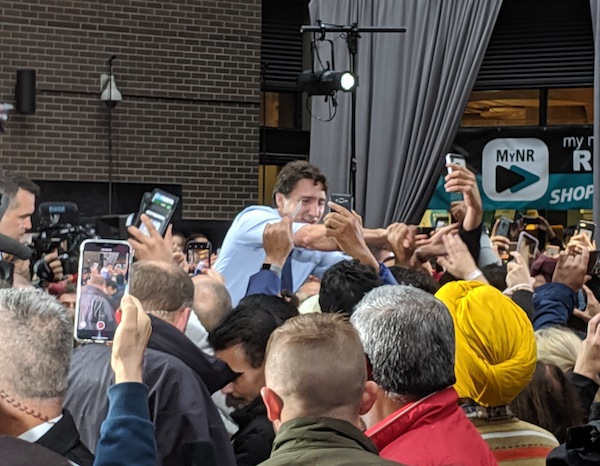
כיוון שהמפלגה של ג’סטין טרודו זכתה במרבית המושבים ברפלמנט, הוא זה שיקבל ראשון את המנדט להרכיב שוב את הממשלה החדשה. (רוני רחמני)

האם הוא עשוי בטפלון? שאלו הפרשנים באולפני החדשות לאור ניצחונו של ג’סטין טרודו – ראש הממשלה היוצא מטעם המפלגה הלברלית, בבחירות הכלליות בקנדה, שנערכו ביום שני בשבוע שעבר. זאת לאור מספר פרשות בהן נקשר שמו בשנה האחרונה. בהן: טרודו הואשם בכך שניסה להסדיר תביעה נגד חברת תשתיות הגדולה ממחוז קוויבק אס.אן.סי לוולין. להגנתו אמר ראש הממשלה כי ניסה בסך הכל למנוע פיטורי אלפי עובדים של החברה באם היא תעקור לחו”ל. כן פורסמה תמונה בה נראה טרודו מחופש לשחור עת היה מורה בבית ספר. טרודו התנצל על כך מספר פעמים. לכן העלו מספר פרשנים את הסברה שהוא יובס בבחירות הארבעים ושלושה במספר. אך לא כך אצל טרודו. אמנם המפלגה הליברלית הפסידה את הרוב בפרלמנט בבחירות, והיא ירדה ממאה שבעים ושבעה מושבים למאה חמישים ושבעה, מתוך שלוש מאות שלושים ושמונה מושבים. אך כיוון שהמפלגה של טרודו זכתה במרבית המושבים ברפלמנט, הוא זה שיקבל ראשון את המנדט להרכיב שוב את הממשלה החדשה. מדובר הפעם בממשלת מיעוט כי דרושים מאה ושבעים מושבים לממשלה הנשענת על רוב. אם יצליח טרודו לצרף לממשלתו את המפלגה הדמוקרטית החדשה מהשמאל, שנפגעה קשות בבחירות וירדה משלושים ותשעה מושבים לעשרים וארבעה, הוא יבטיח לעצמו ממשלה יציבה הנשענת על רוב ברור בן מאה ושמונים ואחד מושבים.

מפלגת השמרנים בראשות אנדרו שיר, ניהלה קמפיין מלוכלך ואישי נגד טרודו בארבעים ימי מערכת הבחירות. שיר לא התבייש להמציא סיפורים על טרודו ולטעון דברים כנגדו שלא היו ולא נבראו. ומה לא יעשו השמרנים כדי לנצח. שיר אף הגדיל לעשות וטען באחת מעצרות הבחירות האחרונות כי אם הוא ינצח בבחירות, יפעל לקיים חקירה נגד טרודו בפרשת אס.אן. סי לוולין. ציבור מאזיניו הנאמן צעק לעבר שיר:”נעל אותו”, “נעל אותו”, “נעל אותו”. זאת בדיוק כפי שצעקו תומכי המועמד לנשיאות בארה”ב דונלד טראמפ, כאשר הציע לבצע חקירה נגד הילרי קלינטון בפרשת האימיילים שנעלמו. הדימיון לא מפתיע אפוא כאשר מדובר בשמרנים. המפלגה של שיר הגדילה אמנם את כוחה משמעותית בפרלמנט לעומת הבחירות הקודמות, מתשעים וחמישה מושבים למאה עשרים ואחד מושבים, אך נכשלה נמרצות בכוונתה להרכיב את הממשלה הבאה.

המנצחת הגדולה בבחירות האחרונות היא המפלגת הבדלנים ממחוז קוויבק שהגדילה את כוחה משמעותית לעומת הבחירות הקודמות. מעשרה מושבים לשלושים ושניים מושבים. המפלגה הבדלנית הודיעה כי הורידה מסדר היום שלה את הרצון להגשים את החלום ההיסטורי ולהיפרד מקנדה. כל שהמפלגה מבקשת עתה זה הוא לדאוג לאינטרסים של המקומיים בקוויבק. ובין היתר למנוע את בניית צינור נפט במחוז להעברת נפט ממחוז אלבטרה.

לאור תוצאות הבחירות להערכת מספר פרשנים: קנדה כיום מפוצלת הרבה יותר מבעבר. לדעת חלק מהם זה מה שקורה בהרבה מדינות במערב כיום, אך בקנדה הפיצול נחשב עדיין למתון יותר. במחוז קוויבק שולטת המפלגה הבדלנית, במרכז המדינה שולטת המפלגה הליברלית ובמערב קנדה (במחוזות סיסקצ’ואן ואלבטרה) מפלגת השמרנים. הפרשנים חושבים שטרודו יהיה חייב לגלות מנהיגות אמיתית כדי לאחד את כל הכוחות תחתיו. יש המאמינים שהוא המנהיג הנכון במקום הנכון והוא יצליח לעשות זאת. מכל מקום בנאום הניצחון שלו אמר טרודו כי הוא ראש הממשלה של כל קנדה, והוא יפעל לטובת כל האזרחים בין אם בחרו בו או לא. וטוב שכך.

Format ImagePosted on October 30, 2019October 23, 2019Author Roni RachmaniCategories עניין בחדשותTags Andrew Scheer, Canada, elections, Justin Trudeau, אנדרו שיר, בחירות, ג'סטין טרודו, קנדה

Vibrant democracies

On Monday, Canada and Israel each embarked on a new adventure in governance. Here at home, Justin Trudeau’s Liberal party had a surprisingly robust showing in the federal election, winning the irrefutable right to form a minority government, or to form a coalition of some description.

The Liberals’ relatively strong showing – 157 seats to Andrew Scheer’s 121; just 13 short of a majority – opens the door for a government with Jagmeet Singh’s New Democrats holding a balance of power. Just a few days before the election, polls suggested a race so tight, and with the Bloc Quebecois and NDP taking so many seats, that any configuration to reach the magic 170 number would have required not two parties, but three. That complicated scenario was averted, leaving the Liberals free to face the House with either a formal agreement with the NDP or a tacit knowledge that the now-fourth party is in no financial position to return hastily to the election battlefield.

In Israel Monday, President Reuven Rivlin called on Blue and White leader Benny Gantz to attempt to form a government after incumbent Binyamin Netanyahu failed to do so after the second inconclusive election this year. Gantz has said he hopes to form a “liberal unity government,” but that is as challenging as Netanyahu’s failed effort to coalesce a majority. He may be hoping that, if Netanyahu is indicted in the coming days, Likud under a new leader might be a viable partner – or perhaps some MKs unfettered from Netanyahu’s long years of leadership will break away and form a faction to join Gantz. Another plan has Gantz propping up Netanyahu unless and until Netanyahu is charged, at which point Gantz would stand up as prime minister, which seems a strange compromise with a tarnished leader. As usual in Israeli politics, there are a vast number of moving parts.

Multiple moving parts is less typical of Canadian politics, where our tendency toward majority governments typically sequesters any moving parts in the all-powerful Prime Minister’s Office. Not so during a minority Parliament, when individual MPs on all sides are able to wield power in ways they can only dream of in a majority scenario.

In what must be a jagged pill for the once and future prime minister, Jody Wilson-Raybould, whose testimony about Trudeau’s treatment of her was the single most detrimental arrow in Trudeau’s reelection armour, was herself reelected as an independent in Vancouver Granville. A large number of Jewish British Columbians, now, are represented in Parliament by an individual who belongs to no party. This will be fascinating to watch in many respects, not least how she pursues politics from the opposition benches as the SNC-Lavalin affair continues to percolate.

Other sidebars in the result include the scuttled effort by a leading anti-Israel figure to re-enter Parliament. Svend Robinson, who, during 25 years in Parliament, was one of Canada’s most vociferous voices against Israel, threw his hat back in the ring but came up short in Burnaby North-Seymour – being narrowly defeated by the incumbent Liberal despite this being ground zero in the battle over the Liberals’ Trans Mountain pipeline expansion.

More notably, Maxime Bernier, leader of the nascent People’s Party, lost his own seat in Quebec. His party made effectively no impact anywhere, sending the hopeful sign that messages of populist xenophobia that seem to be resonating elsewhere in the world still fall largely on deaf ears, at least electorally, here.

Canada will almost certainly have an easier time forming a government than Israel will but, in both cases, the drama plays out against the backdrop of healthy, vibrant, disputatious democratic systems. No matter what the outcomes, we should be thankful for that.


Posted on October 25, 2019October 23, 2019Author The Editorial BoardCategories From the JITags Andrew Scheer, Benny Gantz, Binyamin Netanyahu, Canada, elections, governance, Israel, Jagmeet Singh, Jody Wilson-Raybould, Justin Trudeau, politics, SNC-Lavalin
Status quo OK?

Status quo OK?

Israeli Prime Minister Binyamin Netanyahu places his vote on election day. (photo by Haim Zach/IGPO from Ashernet)

Unless something dramatic happens between when we write this and when you read this, the future of Israel’s government remains uncertain. To avert a third election in a year, the most viable option for a stable government would appear to be a “national unity” or “centrist coalition” involving both major parties, Likud and Blue and White.

This was the subject of face-to-face discussions between leaders and President Reuven Rivlin, but no agreement was reached. So Binyamin Netanyahu, the incumbent prime minister, has a few weeks to try to cobble something together. If he fails, Rivlin will probably call on Blue and White leader Benny Gantz to give it a go. Some bets are that, if it comes to that, there will be enough Knesset members desperate enough to avoid a return to the polls that some accommodation will be made. Perhaps the likeliest possibility is a Likud-Blue and White unity government without Netanyahu. (This scenario would become likelier if Netanyahu officially faces criminal charges in the next few days.)

Any broad coalition of this sort would lead to a degree of progress on some fronts – if far-right and religious parties are excluded, some policies and legislation that appeal to the secular majority are likely to advance – while progress on some other fronts would likely stall.

One example is the peace process – although there is, basically, no progress to stall at this point. There is great divergence in Israel over what the next steps should be vis-à-vis the Palestinians. In a broad-based coalition government, that uncertainty would define government policy, probably leading to inaction.

During the recent election, Netanyahu went further than previous leaders, promising to annex chunks of the West Bank to Israel. Gantz and the centre-left in Israel have been confounded by the reality that, while they seek a two-state solution and recognize a one-state situation as demographically unsustainable, until Israel sees a benefit to ending the occupation and can be certain that an independent Palestine in the West Bank will not be a launch pad for terror, independence will not come and the occupation will not end. Without that, no peace, no Palestine.

As a result, we will likely see more of the status quo, until some force acts to alter it. While Netanyahu’s provocative promise to annex areas would have altered the status quo for the worse, a precipitous end to the occupation that left a vacuum to be filled by those wishing to do Israel harm would likewise be a change for the worse. The tense status quo Israelis and Palestinians have now is definitely not great, especially for Palestinians, but it is better than outright war.

An old tale has the rabbi of a medieval Jewish community visiting the duke who has threatened to throw the Jews from his realm. The rabbi returns to his community and tells his people, “I convinced the duke to let us stay – if I can teach his dog to talk within five years.” The Jewish community is dumbfounded. “What a promise? It’s impossible!” The rabbi says, “Relax. I’ve got five years. The dog could die. The duke could die. I could die. Meanwhile, I bought us five years.”

The occupation, the statelessness of the Palestinian people, the recurring missile attacks from Gaza and the violence against civilians are not things we should understate or dismiss. But neither should we believe that any change is necessarily an improvement. The status quo is better than war and it is better than the dissolution of the Jewish state. The status quo is not ideal, but it may be better than currently available alternatives.

Format ImagePosted on October 4, 2019October 2, 2019Author The Editorial BoardCategories From the JITags Benny Gantz, Binyamin Netanyahu, elections, government, Israel, Israeli-Palestinian conflict, peace

Canada is not “broken”

An opinion poll released last week indicates that 52% of Canadians agree with the statement that our society is “broken” – a spike of 15 points over three years ago – while just 19% of respondents disagreed with the statement.

The poll, conducted by Ipsos and provided exclusively to Global News, also suggests that two-thirds of respondents believe the economy is rigged to benefit the rich, while 61% agreed with the statement that “traditional parties and politicians don’t care about people like me.” Commentary provoked by the poll has focused on the portent these results have for a surge of populist parties or ideas in the coming federal election.

It should not be a surprise, perhaps, that people think the economy benefits the rich or that politicians have at heart the best interests of people other than little-old-us. We have been complaining about our politicians since the profession was invented and probably every one of us, no matter where we fall on the income scale, thinks we’d be doing better economically if it weren’t for some systemic force or policy that prevents us from getting ahead.

The really provocative result in this poll is the perception apparently held by more than half of Canadians that our society is broken. Admittedly, the question is ill-formed. What does “broken” even mean in this context? Regardless, the idea that we live in a broken society probably says more about the individual respondents than it does about our society as a whole. Canadians are among the most privileged, advantaged, wealthiest, healthiest and least oppressed people in the world. With some grievous historical and contemporary exceptions, Canada is one of the most egalitarian societies on earth.

We may dislike our politicians or have misgivings about this or that development, but for a poll to suggest that half of Canadians think this is a broken society makes us wonder if we are a country of naïve and entitled people. It would be instructive for Canadians who feel this way to take an eye-opening trip almost anywhere else in the world.

This is not to dismiss the very real cases of injustice, inequality or other systemic problems our country faces, but this poll indicates that half of Canadians don’t have the faintest idea how fortunate most of us have it here.

It also creates the potential for some very concerning political consequences. If Canadians march into the polling booth next month certain that this is a broken society, it is anyone’s guess what kind of ideas they might be willing to support to “fix” it.

Posted on September 13, 2019September 10, 2019Author The Editorial BoardCategories From the JITags Canada, elections, lifestyle, politics, survey
מעט תומכים לליכוד

מעט תומכים לליכוד

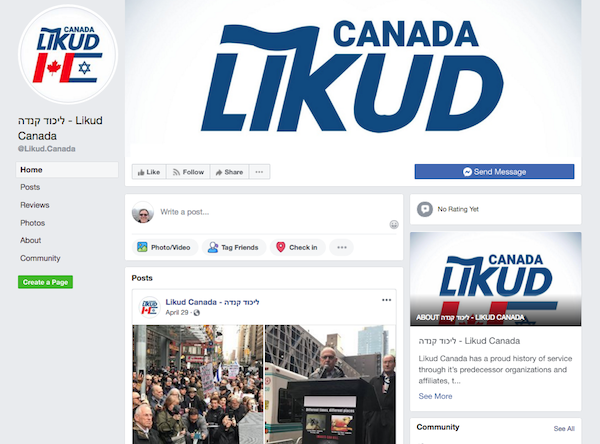
לדף בפייסבוק של הליכוד בקנדה יש מעט מאוד תומכים. כך עולה ערב הבחירות הכלליות בישראל שיערכו ביום שלישי הקרוב (השבעה עשר בספטמבר).

דף הליכוד קנדה שהפרסום בו נכתב בעברית ואנגלית כאחד מיועד בעיקר לתמוך בראש הממשלה וראש הליכוד, בנימין נתניהו. מספר העוקבים אחרי פרסומי הליכוד בקנדה עומד על שלושים ותשעה בסך הכל, ומספר “הלייקס” עומד על ארבעים בסך הכל. התמונות האחרונות שפורסמו בדף של הארגון הן מלפני יותר מארבע החודשים (מהעשרים ותשע באפריל).

גם האתר של הליכוד קנדה שמקושר ישירות לאתר של הליכוד בישראל, לא פעיל במיוחד. החלק של “מי אנחנו” ריק לחלוטין, בחלק של “תוכנית ואירועים” – האירוע האחרון הוא משנת אלפיים ושלוש, ואילו חלק של “הודעות לעיתונות” – המידע האחרון משנת אלפיים ושבע.

בדברי ההסבר לפעילות הליכוד בקנדה נאמר בין היתר כי: הליכוד קנדה מחוייב לתמוך בישראל חזקה ובמאמצים החלוציים של המתנחלים ביהודה ושומרון. הליכוד קנדה יפעל בצורה אגרסיבית נגד האנטישמיות, כולל בארגונים ניאו-נאצים, אסלמיסטים קיצונים וגורמים בקהילה היהודית “הסובלים” משנאה עצמית. הארגון יעזור לסטודנטים היהודים בקאמפוסים השונים להתמודד מול אנשי השמאל המתנגדים לישראל ותומכים בתנועת הבי.די.אס.

הליכוד בקנדה מתגאה בפעילותו ובארגונים השונים הקשורים בו ובהם: הארגון הרוויזיוניסטי הציוני, נשות חרות, חרות הצעירה, בית”ר ותגר. הארגון תומך ותמך בקרן תל חי, כפר הנוער על שם יוהנה ז’בוטינסקי, המערכה הארוכה לשחרור היהודים מברית המועצות לשעבר, קרן קיימת לישראל וההסתדרות הציונית העולמית.

רשימת נשיאי העבר של הליכוד קנדה כוללת בין היתר את השמות הבאים: נתן סילבר, סם שיינהואס, סם סוקולוב, בן מילנר והארי וול. רשימת המנהיגים של הליכוד בקנדה כוללת בין היתר את השמות הבאים: מוריס פיינשטיין, אייב מונק, נתן בלנקרוט, מוריס דיאמנט, ג’ק רפופורט, יחיאל הברמן, מוריס מלוטק, לואיס מוזס, שלדון לרמן, טוביה שוורץ ומוריס לקס.

הליכוד קנדה מפרסם בימים אלה בנארים במספר אתרים הקשורים לישראל והקהילה היהודית כאן, לקראת הבחירות בישראל. במודעות נכתב בין היתר כי התומכים בליכוד קנדה הם חלק מארגון קהילתי המייצג את האידאליזם של הציונית המרכז-ימנית. המצטרפים יודעים שמדובר בארגון יהודי פעיל אחראי, המתחייב לתת מענה נמרץ לאנטי-ציונות בזירה הציבורית, באוניברסיטאות ובחוגים היהודים המתקדמים. המצטרפים תומכים בתוכנית של ההסתדרות הציונית העולמית.

במודעות יש מידע בדבר תוכנית ירושלים: אחדות העם היהודי, הקשר של העם היהודי למולדתו ההיסטורית היא ארץ ישראל. וכן מרכזיותיה של מדינת ישראל ובירתה ירושלים המאוחדת בחיי האומה. ובנוסף: תמיכה בעלייה לישראל מכל מדינות העולם, חיזוקה של ישראל כמדינה ציונית ודמוקרטית ועצוב המדינה כחברה מופתית בעלת אופי מוסרי ורוחני יחודי, המאופיין בכבוד הדדי לעם היהודי, תוך חתירה לשלום ותרומה לשיפור העולם. יש להבטיח את עתידו והייחוד של עם ישראל על ידי קידום החינוך היהודי, העברי והציוני, טיפוח ערכים רוחניים ותרבותיים, והוראת השפה העברית כשפה לאומית. עוד נאמר כי יש ליישב את המדינה כביטוי לציונות המעשית, יש לטפח אחריות יהודית הדדית, להגן על זכויות היהודים כיחידים וכאומה, וכן לייצג את האינטרסים הציוניים-לאומיים של העם היהודי ולהיאבק בכל גילויי האנטישמיות.

עלות הצטרפות לליכוד קנדה עולה חמישה דולרים, היא מיועדת רק לבני שמונה עשרה פלוס, ומותנית בקבלת תוכנית ירושלים ותמיכה באג’נדה של הליכוד שהיא מדינה יהודית חזקה ובטוחה. מספר הטלפון מטורונטו המצורף למודעה שייך לפרנק דיאמנט, לשעבר מנכ”ל בני ברית קנדה (שפעל בארגון במשך כשלושים שש שנים).

Format ImagePosted on September 11, 2019September 3, 2019Author Roni RachmaniCategories עניין בחדשותTags elections, Likud Canada, Zionism, בחירות, ליכוד קנדה, ציונות

Posts pagination

Previous page Page 1 … Page 5 Page 6 Page 7 … Page 10 Next page
Proudly powered by WordPress