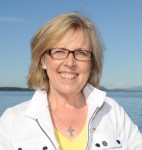
May on foreign, domestic issues

Green party leader Elizabeth May. (photo from Elizabeth May’s office)

“Let’s face it, Israel is a miracle in the world – in innovation, and science and technology, solar energy!” Green Party of Canada leader Elizabeth May told the Independent in an interview last week.

While the Green party passed a motion last year against the expansion of settlements in Israel, which they claim are illegal and pose an obstacle to a peace agreement between Israel and the Palestinians, May noted that there is a Green Party of Israel, and shared some of its accomplishments. She said her party supports Israel and the collaboration of Canada with Israel, particularly on science, technology and climate change.

She added, “I think that it really needs to be stressed that world peace depends on Canada playing a role where we command respect from a lot of different communities and support for the state of Israel has never marginalized Canada in the world, never. But, aligning ourselves with only one of the political threads of the Israeli body politic, basically being a pro-Likud country, reduces our influence in the world, for sure. And our influence in the world is needed for many things, including striving for peace in the Middle East – real, durable, sustainable peace, so we don’t have Israeli children or Palestinian children fearing for their lives.

“The Green party has always condemned Hamas, we condemn Hezbollah, we also want the response [to their actions] to be proportional, so it’s a very difficult issue and I don’t think it helps in our democracy when we can’t discuss it. I’ll clearly say that we draw a very strong line [between] any campaigns that criticize Israel, I think that’s legitimate, [and] any campaign that criticizes Israel but has at its base an even hidden agenda of antisemitism. I think we can spot that pretty quickly, and we’ve always condemned those.”

While prime ministers Stephen Harper and Binyamin Netanyahu opposed the Iran nuclear deal, May said, “We think it’s a good thing. We think that you can’t risk having Iran have nuclear weapons. You can’t take a chance on missing the opportunity for diplomacy to give you inspections – they are real. They’re not even going to implement the lifting of sanctions till Iran shows good faith and allows for inspections…. I think it’s important to say trust but verify.

“We also recognize that, if we’re going to solve the crisis in Syria, we have got to start making more alliances in the region and Iran could play a significant role. I think, obviously, that was on [U.S. President] Barack Obama’s mind in pursuing an agreement with Iran … we do not have enough natural enemies of ISIS [the Islamic State of Iraq and Syria] and extremism. Leaving Libya as a failed state was a mistake in the region, so we’re very concerned with the big picture, and maybe you have to take some water in your wine sometimes.”

If there were a Green government, May said she would consider deploying Canada’s military in action on foreign soil with a United Nations sanction, “which makes it legal under international law. We’re global, we have Greens in 80 countries around the world. We believe that you act within international law, with a UN approval. That’s one of the tragedies with the Libyan engagement, of course, was that we used the responsibility to protect with a UN sanction then, midway through, changed the mission to regime change, and we really contaminated the usefulness of responsibility to protect for future missions.

“… I could see Canada participating now in a mission that involved troops on the ground if it was to fortify the border between Syria and Turkey to stop the flow of black marketability. ISIS is funding itself in the millions through black-market operations, both its sale of black-market oil and its sale … of antiquities from the archeological and culturally significant sites they are looting. We should be using all of the tools at our disposal to stem the flow of money to ISIS….”

“But, for instance, I could see Canada participating now in a mission that involved troops on the ground if it was to fortify the border between Syria and Turkey to stop the flow of black marketability. ISIS is funding itself in the millions through black-market operations, both its sale of black-market oil and its sale … of antiquities from the archeological and culturally significant sites they are looting.

“We should be using all of the tools at our disposal to stem the flow of money to ISIS, but the recent figures – I saw today in the press that the number of recruits to ISIS has grown and, I have to say, of course! That’s why they wanted the West to come at them. If the West comes at them, that’s their best recruiting tool…. What they’ve done in terms of recruiting youth through social media tools, what they’ve done through brutal, sadistic and public murders, it’s unprecedented historically. Their brutality is not unprecedented historically but their techniques, like social media, are, so you have to ask yourself, why are they putting beheadings and tortures on YouTube? They want to recruit from the West and they want to excite Western nations to retaliate.

“And,” she added, “I think we have to ask ourselves, what’s Saudi Arabia doing? There’s certainly a lot of concern that Saudi Arabia is actually supporting ISIS. We need to have a significant effort involving all regional governments to end the war in Syria. If we have the focus on ending the war in Syria, shutting down ISIS becomes one of the many objectives.”

On security domestically, including Bill C-51, May said, “I supported that community and Jewish schools and facilities should have additional funding for security and that it should be government funded. C-51 is in another category altogether because C-51 actually makes us less safe against terrorists in every way.”

In 2012, with Bill C-38, she said, “Stephen Harper’s administration eliminated the inspector general for CSIS [Canadian Security Intelligence Service]. In 2015, they bring out C-51, which says CSIS can now – [with] what was in C-44 in December – is CSIS can … operate overseas and domestically, can collect intelligence and can act … [with] access to something that doesn’t exist in any other democracy anywhere around the world, which is access to a private, secret hearing to get a warrant for constitutional breach.”

With C-51, she said, there is no oversight. “It’s not a question of inadequate oversight,” she stressed. “Zero oversight of the RCMP, zero oversight of CSIS, zero oversight of the Canadian Border Services Agency, zero oversight of CSEC [Communications Security Establishment Canada]…. You take this together and – what a former MI-5 agent testifying to the Senate said was that – Canada has created a tragedy waiting to happen. If C-51 had been drafted as the legislative tool to implement the recommendations from the Air India inquiry, it wouldn’t look anything like it now looks. It would be about your intelligence agencies having pinnacle control, somebody know[ing] what everybody else is doing. Israel would never put in place a zoo like this. This is a three-ring circus with no ringmaster, and it’s dangerous.”

“We opened up our doors to ‘boat people’ from Vietnam. You could have made the same case – you could have said, there could be communist sympathizers who are sneaking into Canada. Now, the reality of the situation in Syria is that people are fleeing Syria because you can’t live there. The extent of the violence, there are very few areas of the country that are untouched by it.”

With respect to the refugee crisis, and balancing the acceptance of more immigrants with security, given that these refugees are coming from countries that inculcate antisemitism and anti-West views, May said, “We do apply security screens when people come to Canada. We always have. We opened up our doors to ‘boat people’ from Vietnam. You could have made the same case – you could have said, there could be communist sympathizers who are sneaking into Canada. Now, the reality of the situation in Syria is that people are fleeing Syria because you can’t live there. The extent of the violence, there are very few areas of the country that are untouched by it.

“I’ve helped some Syrian families reunite and I’ve known the extreme fear and terror that young men live under if they do not want to be captured by any one of the rival forces and forced into servitude,” she continued. “The military in Syria – whether it’s Bashar al-Assad’s forces … [or those that] oppose Bashar al-Assad – they’re all looking for people for their army. These young men that are fleeing, these young families that are fleeing, older people, are trying to get away from a war zone, and they are legitimate refugees. That said, we have a security screening process. They get interviewed before they come to Canada. We can create a situation where we know [through] ongoing surveillance and interviews for anyone. And, within the community itself, there’s a strong degree of networking that would not want someone coming here who posed a threat to them. We really can put in place effective security.

“Stephen Harper announced in January that we would accept 10,000 Syrian refugees and, having worked to try to bring refugee families to Canada, I absolutely say this is a system that was designed not to work. On one hand, he promised 10,000 refugees would be able to come to Canada; with the other hand, he made it impossible to accept them, which is devastating and tragic. I understand the fear, I’m not discounting it. I’ve been so impressed with the number of Jewish communities and religious leaders within the Jewish community who’ve called for us to accept more refugees. I think it matters. We call on accepting more but, obviously, not without security checks.”

May and the Green party have had to be innovative to get their ideas across during this campaign. When May was not invited to the Globe and Mail’s leaders debate on Sept. 17, for example, she countered with Twitter. Figures from North Strategic were cited in the media: “May was mentioned in 1,799 tweets in a 24-hour period leading up to the Calgary debate. That was about 300 more than NDP leader Tom Mulcair but fewer than Conservative leader Stephen Harper and Liberal leader Justin Trudeau.” May apparently gained 5,000 Twitter followers after the debate.

“… this may be the least fair election yet because the public expects to see all the leaders in a national televised leadership debate before the election is over, and … we are unlikely to have a single additional English language debate, and none that are broadcast nationally.”

“In terms of the fairness of the elections,” she told the Independent, “this may be the least fair election yet because the public expects to see all the leaders in a national televised leadership debate before the election is over, and it hasn’t been really explained in the media that, as things now stand, we are unlikely to have a single additional English language debate, and none that are broadcast nationally.”

In responding to a question about her party’s approach to the economy, May eschewed labels.

“Our solutions, and our view is, too, that we are not left or right,” she said. “If there’s a solution to a problem that comes from what we might say is a free-market, right-wing toolkit of solutions, like a pricing mechanism, we’ll use that, if it works. But, if you need a regulation, we’ll use regulation.

“So, our fee-and-dividend approach is less free market than Tom Mulcair’s cap-and-trade – he says the market will determine the price for carbon, I heard him say that the other night…. We’re pragmatic more than anything else. But, Greens around the world, where Greens have been in government, the kinds of programs we put in place really work…. We’re the only party left that opposes free-trade deals if they include investor-state agreements.”

As an example, she gave the Green party’s opposition to the Canada-China investment treaty. “It amazes me that it didn’t ever really get understood by the media, we never had a vote in Parliament on it, and we are trapped in the Canada-China investment treaty till the year 2045 without any real discussion of it and what it means to have the People’s Republic of China have the right to sue us for decisions we make they don’t like. I’m hopeful that, after this next election, with a minority Parliament, we can bring forward some legislation to require transparency, so that when China complains, there’s an obligation on governments to make that public, to make it known.”

The Independent has interviewed Liberal leader Justin Trudeau, Minister of National Defence and Minister for Multiculturalism Jason Kenney and has an invitation out to NDP leader Thomas Mulcair. The federal election is on Oct. 19.
OK to disagree

Last week, at the annual parade of speeches by world leaders at the United Nations, Binyamin Netanyahu and Mahmoud Abbas were among those using the General Assembly podium as a pulpit for their respective cases. To say there is disagreement between these two individuals is an understatement. Netanyahu rightly condemned the hypocrisy of the world, and its ostensible parliament in which he was speaking, for its ludicrous obsession with the Jewish state while parts of the Middle East literally burn. Abbas offered the “laugh line” that the Palestinians no longer need to be bound by the terms of the Oslo process. The humor, such as it is, comes from the fact that the Palestinians never bound themselves to Oslo. While Israel had a long list of obligations under the peace process, the Palestinians effectively had only one, which they have ignored: stop inciting your people to genocide and prepare them to live in peace with their Jewish neighbors. To come to the UN and make the case that they have been forced by circumstances to abandon principles they never accepted in the first place is typical of the made-for-TV claptrap this annual performance has become.

In Canada, though, we have a different problem. While others in the world find it impossible to agree on much of anything, our political leaders are finding it tough to find much of substance upon which to disagree. Oh yes, when you watch the debates and the bombardment of partisan ads, it seems like there are chasms between the parties. There really are not. Some of the differences – the number of refugees we should take in, the recipe for economic advancement, approaches to social issues – mostly come down to nuance and decimal points.

There is such a thing as too much agreement. Is it a distinctively Canadian characteristic that our politicians should careen so insipidly to the middle of the road? An election campaign is the time when parties should be ferociously demonstrating their differences. Yet when we delve into the actual policies and plans, one potential government looks much like another. This may be, thankfully, due to the fact that we are among the most fortunate people in the world, blessed with natural resources, human wealth, economic and political stability and relative peace. That’s great.

But when we do see genuine differences of policy and approach, we also see a disparaging of exactly the phenomenon we should be encouraging. It emerges in the use of the term “wedge issue.”

We have heard this a lot in recent weeks. The Conservatives are accused of using issues like the niqab and Canada’s support for Israel as wedge issues. The implication is that the very discussion of these topics divides Canada in an unwholesome manner, that the issues are being raised solely for political gain.

Well, any issue raised in an election is raised for political gain. If opposition parties think the Conservative approach to Israel or the niqab or anything else is off base, they should advance their own case and let voters decide. That’s how election campaigns are supposed to work. It is a cop-out to deflect an issue outright by dismissing it as a wedge. If anything, an election campaign is precisely the time to accentuate differences. In a little more than a week, voters can decide who is right and who is wrong.


More or less immigration?

For political nerds, last week offered a cornucopia. A week ago Wednesday, 11 Republican candidates for president of the United States lined up in front of Ronald Reagan’s Air Force One and squabbled, insulted, demeaned and debated one another. The next night, the three leading candidates for prime minister of Canada lined up and, in a more Canadian manner than their American counterparts (albeit, perhaps, in a more American manner than most previous Canadian debates) did much the same thing.

There was plenty to differentiate the two events. The production values of the American version were Hollywoodesque. The Canadian debate looked high schoolish. With 11 candidates in the American debate, content took a back seat to quips and barbs. The Canadian debate was somewhat more substantive.

What was common between the two was an emphasis on immigration and refugees. With the refugee crisis in the Middle East and Europe making front-page news worldwide, and immigration a perennial hot button issue in the United States, candidates came at the topic through particular prisms.

The Republican candidates mostly clamored over one another to burnish their anti-immigrant cred. Who could build the highest, most impenetrable wall along the southern border, it seemed, was the worthiest candidate. The day after the debate, a pro-immigrant organization released a video that contrasted the current crop of candidates’ comments on immigration with those of Ronald Reagan, in whose presidential library the debate took place and who is generally venerated among Republicans.

Reagan, at least in his rhetoric, viewed America as a “shining city on a hill” to which people around the world aspired to come and where, presumably, they would be welcomed. Typifying the prevalent approach of current Republican candidates, Donald Trump said before the debate: “When Mexico sends its people, they’re not sending their best.… They’re bringing drugs. They’re bringing crime. They’re rapists. And some, I assume, are good people.”

Emma Lazarus Trump is not. The American approach to immigration once – before the 1920s and at intervals since the Second World War – was idealized in Lazarus’ poem, affixed to the Statue of Liberty, and it clearly does not demand “the best” from other countries: “Give me your tired, your poor / Your huddled masses yearning to breathe free / The wretched refuse of your teeming shore / Send these, the homeless, tempest-tossed, to me / I lift my lamp beside the golden door.”

It can still evoke chills. Chills that are different from those evoked by the language and views of some of today’s Republicans.

What was encouraging in the Canadian debate the next day was seeing our leaders similarly clamoring over one another, but in this case to burnish their pro-immigration cred.

We recognize that some of the people we welcome have endured great challenges, and need resources and programs to learn the languages of our country, develop or adapt their skills, perhaps recover from deep trauma. Piles of evidence prove that immigrants and refugees who come here succeed brilliantly.

Of course, Jewish Canadians especially may be torn between heart and head on this matter. Our families came here, more often than not escaping repression and violence, and we understand the life-and-death implications of immigration policies.

We also understand that many immigrants and refugees today are coming from places that deliberately inculcate antisemitism in their citizens, who have been known to then act out on these impulses once they move to places where Jews exist. However, the current crisis involves refugees who are fleeing violent jihad and are likely to be among those Canadians who are most vigilant against that form of hatred.

Above all, we need to understand that we are one world. We need to address security challenges at home and confront, with our allies, the sources of those challenges. This security imperative impacts on our immigration policy, but we should not delude ourselves or punish those who need refuge by pretending we can immunize ourselves from world realities by closing our doors.

Ready for the election

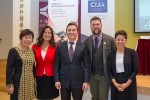
SUCCESS chief executive officer Queenie Choo, left, with federal election candidates, left to right, Jody Wilson-Raybould, Erinn Broshko, Wes Regan and Mira Oreck. (photo by Jocelyne Hallé)

More than 100 people filled Choi Hall on Sunday to hear local candidates in the Oct. 19 federal election talk on immigration, economics, security, employment and health care. Co-sponsored by the Centre for Israel and Jewish Affairs and SUCCESS Canada, as well as various media outlets, including the Jewish Independent, the panelists, in order of initial three-minute presentations, were Vancouver-Granville candidates Erinn Broshko (Conservative), Mira Oreck (NDP) and Jody Wilson-Raybould (Liberal) and Vancouver East candidate Wes Regan (Green). The candidates each had two minutes to respond to questions submitted in advance by the public and, at the end of the Q&A, they each gave summary statements.

Charlie Smith, editor of the Georgia Straight, served as moderator, while Doug Purdie, chair of the board of SUCCESS, welcomed the audience and Jason Murray, chair of CIJA, closed the proceedings.

Kenney discusses priorities

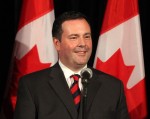
Jason Kenney, Canada’s minister of national defence and minister for multiculturalism. (photo from forces.gc.ca)

Jason Kenney, Canada’s minister of national defence and minister for multiculturalism, says this country should prioritize Christian refugees and other minorities who constitute the most imperiled of the millions fleeing Syria and Iraq.

“Some people are in an understandable wave of emotion … telling me that we should just send C-17 aircraft over there to refugee camps and load them up and bring them to Canada,” Kenney told the Independent. But the refugees and internally displaced persons (IDPs) that Kenney sees as most vulnerable are not even in the United Nations refugee camps, he said.

“I know these issues extremely well and I can tell you that there are certain vulnerable Syrian and Iraqi minorities who cannot and do not even go to the UN camps,” said Kenney. “Why? Because they are the persecuted minorities. Ismaili Muslims, Druze, Chaldeans, Assyrians, Syrians, Armenians – e.g. the Christians – do not go to the refugee camps in Lebanon, Jordan and Turkey because they’re afraid of their minority [status], the implications of that. These are the people who are living in urban slums in Amman, Jordan, in Beirut, Lebanon, and some in Ankara, Turkey, who we have said we will focus our refugee resettlement programs on.”

These minorities are less likely, Kenney said, to harbor individuals who could pose a threat to Canada.

“These are the victims of the doctrine of armed jihad,” he said. “I can tell you that these people, when they come to Canada, they want to keep us safe from what drove them out of their homes. This is why I think we need to be intelligent about refugee resettlement.”

Kenney emphasized that he wishes peace and protection to all of the refugees and IDPs regardless of their faith or political views. But, he added, “I’ve been to the camps, alright? When I go into people’s tents and I see there’s very few young men, I’ve asked in Turkey and Lebanon and in Jordan: where is your father, where is your husband, where’s your son? I see the pictures in the tents.”

The response he has received often, he said, is that the men are off fighting with the al-Nusra Front or other Islamist militias.

“This is a vicious stew of violence and we must ensure that that cult of violence doesn’t inadvertently come to Canada,” said the minister, who is running for reelection in Calgary. “So that’s why we need to be careful and prudent about security screening and, I think, ensure that to the greatest extent possible the refugees who we welcome to Canada are those who are amongst the most vulnerable.… I don’t apologize for saying we should focus on the most vulnerable and on Canada’s security at the same time.”

Kenney, who has been the Conservative government’s point person for ethnic communities, spoke with the paper as the image of Alan Kurdi, the Syrian-Kurdish refugee child whose body washed ashore on the Turkish coast, was animating the world to act on the refugee crisis.

“The image of that boy represents thousands of others who die in human smuggling operations and the tens of thousands who have – excuse me, the hundreds of thousands – who have died in the Syrian civil war and as victims of the so-called Islamic State in Iraq and Syria,” said Kenney. “It galvanizes collective attention on the total humanitarian catastrophe in Iraq and Syria.”

Canada is the largest per capita resettler of refugees worldwide, Kenney said, welcoming one in every 10 resettled refugees in the world. (CBC and Global News have both analyzed this claim and note that it refers to refugees resettled from an asylum country like Lebanon or Jordan to a country that has agreed to take them as refugees. Because most refugees flee to an adjacent country – or, as seen in recent months, trek to European countries – the news outlets assert that Canada is not first, but 41st, in the world. Canada accepts one in 10 resettled refugees, but most refugees remain unsettled, they claim, making Canada’s acceptance rate of total refugees about one percent, not 10%, of the world’s refugees.)

In any event, the enormity of the problem, Kenney said, means “resettlement is not a solution.”

This is where Kenney differentiates the Conservative government’s position from those of the opposition parties. The United Nations High Commissioner for Refugees cites 15 million Iraqi and Syrian refugees and IDPs, he said.

“It’s a cruel myth if we think we can solve a humanitarian crisis with 15 million IDPs and refugees and here’s the key thing – new refugees are being created every single day,” he said. The world needs to address the root cause of the massive refugee problem, he said, which is the genocidal terror of ISIS (also called ISIL or the Islamic State).

“We have a moral obligation to play a role in degrading and ultimately defeating ISIL in its campaign of terror,” he said. “And, we also need to provide humanitarian support to the IDPs and refugees, which we are doing…. We’ve contributed between the two countries over $810 million in emergency humanitarian assistance. We will do more.”

The defence minister took a shot at New Democratic party leader Thomas Mulcair and Liberal leader Justin Trudeau, both of whom oppose Canadian ground troops in the fight against ISIS.

“What we’re doing is important,” Kenney said. “The military contributions that we are making through our airstrikes and the training of the Kurdish Peshmerga in northern Iraq are making a meaningful difference but, in the grand scheme of things, are relatively modest contributions. So, for the Liberals and NDP to suggest that we should completely withdraw even from the air campaign or, in the case of the NDP, from training, is, I think, morally irresponsible and reprehensible. If the world is moved by the images of the Kurdi family on the Turkish beach, we must recall that these were people who fled the violence of ISIL and there will be more Kurdi families unless and until the world stops this genocidal terrorist organization. That’s why we believe there is a moral obligation and a security imperative for us to participate in the international coalition degrading and, hopefully, ultimately defeating ISIL.”

On the issue of domestic security, Kenney also lashed back at critics of Bill C-51.

“If you look at the additional security powers included in Bill C-51, they are modest compared to most of our liberal democratic peer countries,” he said. “Most of the new powers included in Bill C-51 are actually invested in the courts, the judiciary, not in the police or intelligence agencies and certainly not in the hands of politicians. And many of those additional powers themselves are very modest.”

Kenney said RCMP were keeping an eye on Martin Couture-Rouleau, the “lone wolf” terrorist who killed Warrant Officer Patrice Vincent in Quebec last year.

“The RCMP went to the prosecutors and said we want to apply for a preventative detention order or peace bond to restrict this guy’s movements because we think he’s going to do something crazy and violent,” said Kenney. “The prosecutor said, sorry, but we just do not have the legislative, the statutory, tools to do this. We would have to prove to a court that he will commit a terrorist offence and there’s no way to do that.”

Under the new law, said Kenney, police can go to the prosecutor, who in turn can go to the court, and the court determines whether an order for preventive detention can be issued.

“And, by the way, the maximum order for that can be seven days,” he said. “In Britain, it’s 28 days. It’s why I say the powers here are relatively modest.”

Another example of what Bill C-51 does, he said, is to allow the Canadian Security Intelligence Service to interrupt a possible terrorist event.

“What does this mean practically? If CSIS is observing that a 15-year-old kid’s spending hours every day on terrorist websites, instead of just waiting for him to blow up metaphorically, they can go to his parents now and say, ‘Are you aware that your son appears to be in the process of radicalization?’” Kenney said. “Is this a violation of civil liberties? No. As the prime minister says, the most important civil liberty is the right to live safely and securely.”

Kenney described the idea that C-51 could be used to infiltrate or disrupt civil society protests against things such as oil pipelines as “rubbish.”

“I think the criticisms of Bill C-51 have been massively overblown,” he said. “If they advocate going and blowing up pipelines, yes, possibly. But protesting the construction of pipelines? Absolutely rubbish. No police officer would be interested in that, no prosecutor would bring a charge on that, no court would accept it. It is ridiculous.”

The Conservative government has often been alone on the international stage in defending Israel’s right to defend itself, a position that has been criticized on several fronts, including accusations that the Tories have turned Israel into a partisan political issue. The Independent asked if the government’s vocal position is driven by theology, politics or ideology.

“What drives that is principle,” Kenney said. “Israel is not a normal state. Israel is a moral cause. Israel is the refuge of the survivors of the Shoah and, therefore, the world has a moral obligation to ensure the protection of that refuge, that one and only Jewish homeland in the world.”

He dismissed political expediency as a factor, noting that fewer than one percent of Canadians are Jewish – and that not all of them are committed Zionists – and Canada has little of the Christian Zionist movement that exists in the United States.

“So, it’s not political,” he said, adding that it is also not based on “some kooky Christian reconstructionist millennial theology.”

“I have never heard a Conservative political actor in Canada make reference to Christian Zionist theology in articulating our support for Israel,” he said. “That’s a phantom for some paranoid minds on the left. The truth is this … we see Israel as an emblem, a symbol, a surrogate for Western civilization in the Middle East, by which we mean that Israel is predicated on the belief in human dignity, which is manifest in a liberal democratic political system, protection for human rights, religious freedom and pluralism.”

He said Israel’s enemies are motivated by what they view as “an unacceptable presence of those Western civilizational values in the Middle East, but secondly because the enemies of Israel are motivated by a deep and irredeemable antisemitism.”

“Most of Israel’s enemies do not seek a conventional peace – negotiations toward a two-state solution or a conventional political solution to the conflict there. They seek one thing, which is the elimination of the so-called ‘Zionist entity’ and the driving of the Jews into the sea. A second Holocaust.”

In addition to foreign affairs, Kenney said he wanted to remind Jewish Canadians of programs the government has undertaken domestically.

“We’ve taken a zero-tolerance attitude to antisemitism here domestically and that’s not just rhetorical,” he said. “We’ve paid a price for it. I’ve defunded organizations that were receiving grants – perversely – to provide integration services to newcomers, like the Canadian Arab Federation and Palestine House, whose leadership were openly antisemitic. I’ve been sued for it, our government’s been sued for these decisions, but we did the right thing.”

The government, he said, has also funded security infrastructure projects to upgrade security at synagogues, Hebrew schools and Jewish community centres.

On the issue of whether Canada is in a recession, Kenney said there was a sectoral contraction in oil that’s affected Alberta.

“No doubt about it, Alberta is in a recession due to the crash in oil prices,” he said. “But the rest of the country and the other industry sectors are growing. Employment remains strong. This is hardly a recession by any broadly understood definition and, according to the June StatsCan report, we’re back into a growth phase of two percent annualized growth. The dumbest thing we could do would be to act as though there is a serious, deep recession by going out and borrowing tens of billions of dollars as the other parties [would] do, which constitute deferred taxes. We think fiscal discipline, low taxes [and] expanded trade markets continue to be the right recipe for growth.”

The Independent has interviewed Liberal leader Justin Trudeau and has invitations out to NDP leader Thomas Mulcair and Green party leader Elizabeth May. The federal election is on Oct. 19.
Gender equality lacks

Political parties are sometimes accused of pandering to blocs of voters, especially at election time. The Conservative government’s vocal support for Israel, for example, is seen by some as a slick means of grabbing Jewish votes. (Jason Kenney, the minister of defence and multiculturalism, responds to this claim in this week’s story, “Kenney discusses priorities.”)

But it would be nice if, every now and again, a government was accused of pandering to the biggest bloc of votes of all – women – because it might mean someone is actually paying attention to their issues.

This is slippery terrain, because all issues are “women’s issues.” Women care about the economy and foreign affairs, as well as domestic affairs and social issues. Yet government actions (or inaction) and societal norms still play negative, detrimental and sometimes fatal roles in the lives of women and girls.

We are now more than halfway through the longest federal election campaign in living memory. This Sunday – a month less a day before the Oct. 19 election – has been dubbed a National Day of Action on Gender Equality. The day, initiated by women in Canadian film and television, is intended to “stimulate more public dialogue on gender equality,” especially on social media.

Women and men all across Canada who support gender equality are being asked to get active on social media on Sunday, especially between the hours of 10 a.m. and 1 p.m. Pacific, using the hashtags #WomenVote, #elxn42 and #cdnpoli.

The day of action has been in the planning for some time, but the timing is particularly providential, not just because the election is approaching – that was obviously planned – but because of a shocking and damning report just made public about the place of women in Canadian society.

An internal federal government report marked “secret” was obtained by the CBC under the Access to Information Act. Obviously not intended to be made public, particularly at the peak of election season, the report by Status of Women Canada paints a largely dismal picture.

Canada has one of the developed world’s biggest pay gaps between men and women, below average support for child care and parental leave, and our Parliament ranks 57th in the world in terms of female representation. Poverty among single elderly women and female-headed households is increasing.

Perhaps most damningly, Canada does not have a national strategy on violence against women. Rural and immigrant women are at particular risk of being victims of violence – and aboriginal women are 450% more likely than other Canadian women to be murdered.

With the refugee crisis making front-page news daily, foreign affairs has taken an outsized role so far in this election campaign. Moreover, for many in our community, the foreign policy positions of the various parties already figure prominently in our calculations as we ponder our democratic options.

It is worth reminding ourselves that, as rough as things may be elsewhere in the world, we still have an imperfect country here and these are also things we should be addressing with those who seek our votes.

Israel and the election

The Conservatives, Liberals and NDP have all expressed strong support for the Jewish state. Is there any difference between them?

Line up the platforms of the three main political parties and, despite the rhetoric, they are all solid allies of Israel.

The federal Conservatives, Liberals and NDP all profess support for Israel’s right to exist, for the nation’s right to defend itself and for a two-state solution. All three leaders have visited Israel, with Prime Minister Stephen Harper being the most recent to visit, in January 2014.

Indeed, Canadian political support for Israel has been consistent since the establishment of the Jewish state in 1948, said McGill sociology professor Morton Weinfeld.

It is rooted in a strong and shared Judeo-Christian tradition but has gotten a boost recently, as Canada and the West confront groups such as the Islamic State and other forms of militant Islam, he said.

The perception, especially among Jewish voters, however, is different.

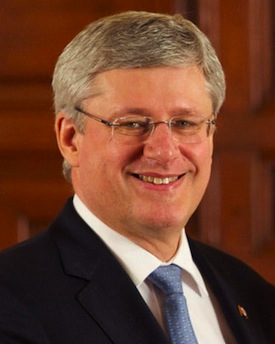
photo - Stephen Harper
Stephen Harper (photo from sv.wikipedia.org)

“I think the perception is that Stephen Harper and the Conservatives are the most committed to Israel’s security,” Weinfeld said. “They [voters] would probably say the NDP would be less committed to Israel, not because of [NDP leader Thomas] Mulcair, but because of elements in the party. I would think the perception that the Liberals under [leader Justin] Trudeau would be in the middle.”

That perception is based in reality, since the Harper government has made clear and forceful statements about support for Israel, Weinfeld said.

However, Liberal MP and foreign affairs critic Marc Garneau pointed out that it is simply because Harper occupies the highest office in the country that his decisions have greater visibility than statements by other parties.

“There are no differences [between the Conservatives and the Liberals] in terms of a lot of the positions [on Israel], and I try to get the message across. I don’t get to do it in the public way that you do when you’re the prime minister and the government of Canada.”

Meanwhile, in what is shaping up to be a close three-way race, foreign policy, once only of interest to wonks and Ottawa insiders, is coming under closer scrutiny by voters.

The amplified attention being paid to foreign policy is being driven by a more sophisticated and diverse electorate that is more globally connected, said Chad Rogers, a partner in public affairs agency Crestview Strategy.

But it would be wrong to assume that the Tories’ especially vocal support of Israel is a ploy to woo Jewish voters. The electoral math, with Jews concentrated in a handful of ridings, doesn’t add up, said Rogers, who has worked on several Conservative campaigns.

Rather, the Tories’ support is part of a consistent worldview that is reflected in its defence of Ukraine and on issues such as opposing the persecution of gays in Iran or protecting Syrian refugees, he said.

“The mistake is to look at this and say it’s a political issue and it’s about Jews and Israel,” he said. “It’s a worldview that says we will side with democracies over countries that are not democracies.”

While Harper is portrayed as being in lock step with Israeli Prime Minister Binyamin Netanyahu, that’s not accurate, Rogers said. Harper “has been very frank” with the Israeli government on its policy on settlements.

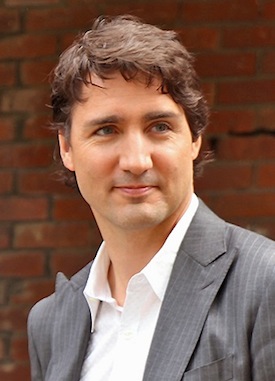
photo - Justin Trudeau
Justin Trudeau (photo from en.wikipedia.org)

For the Liberals, the greatest challenge is a political platform that’s identical to the Tories’ on support for Israel, but is perceived by some voters as weaker.

Trudeau “won’t make the issue of Israel a wedge issue. He believes Canada should support Israel because it is the right thing to do,” said Irwin Cotler, Liberal MP for Mount Royal and a former minister of justice and attorney general, who is not running for reelection.

“I welcome Harper’s support for Israel, but when Harper says if you care about Israel, you must vote Conservative, then he politicizes it,” Cotler said. “When you do that, it undercuts support for Israel.”

In previous elections, brochures were distributed to Jewish voters in his riding and others alleging that Cotler and the Liberals had not been forceful enough in countering antisemitism and terrorism and in supporting Israel. Cotler believes this type of negative campaign cost the Liberals seats in heavily Jewish ridings, partly because the allegations seemed so absurd that the candidates did not mount a strong defence, but he believes it won’t be successful this time around.

In recent weeks, guests invited to a Toronto fundraiser for the Liberals, hosted by pharmaceutical magnate Barry Sherman, received an email from a Jewish Conservative supporter charging that Trudeau was less than the staunch ally of Israel he professes to be.

Sherman countered with another email which, like the original exchange, has been distributed beyond the initial circle of invited guests. Cotler said this is the tack that Liberals need to take.

“What Sherman did was to fight back with the facts and the truth, rather than letting those allegations take hold,” said Cotler.

While elections are usually fought on domestic issues, Cotler believes foreign affairs concerns “have come to the fore” in this election, spurred by the instability in the Middle East.

Many Jews are not single-issue voters, but the threat posed by Iran and the deteriorating situation in Syria “create a heightened concern in general, and among Canadian Jews in particular,” he added.

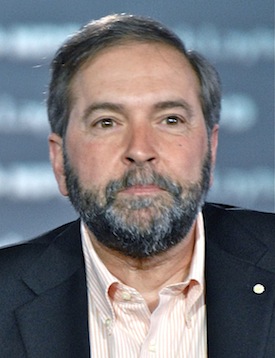
photo - Thomas Mulcair
Thomas Mulcair (photo by Asclepias via commons.wikimedia.org)

The NDP’s support for Israel puts it at odds with other leftist parties in Europe, which have taken a much harsher tone with Israel, but places it alongside other Canadian political parties, said Judy Wasylycia-Leis, a former NDP MP for Winnipeg North.

“The position is unique in social democratic parties because of Canada’s role as a peacekeeper and mediator generally in the world,” she said.

The NDP, especially under Mulcair, has shown unwavering support for Israel, she said.

Voters got a good look at how Mulcair would handle a crisis in the Middle East during the war in Gaza last summer. The NDP leader acknowledged that Hamas was a terrorist group and that Israel had a right to defend itself, while simultaneously lamenting the deaths of innocent civilians and calling for a ceasefire.

The intensified attention to foreign policy has left the parties competing for the title of who is Israel’s best ally.

While the Conservatives have painted themselves as “a strong friend” of Israel, Wasylycia-Leis disagrees. “I don’t think a good friend of Israel would use this as a wedge issue,” she said. The Tories’ uncritical support for Israel has made it a polarizing issue for Canadians instead. “I think the NDP has been criticized for offering a more nuanced, balanced approach.”

Meanwhile, Mulcair’s pro-Israel direction has also generated tension within the party itself. Last summer, a Montreal-area MP quit the party, citing Mulcair’s policy on Israel. A Nova Scotia NDP candidate for this year’s election resigned recently after making critical comments about Israel, while two other NDP candidates are facing close scrutiny for previous remarks.

As foreign policy concerns play a greater role in the election, the question is to what degree this drives voters. In the Jewish community, it certainly plays a pivotal role for many voters, strategists say.

While “bread-and-butter issues,” – the economy, jobs and health care – have traditionally been the chief concerns for voters, Wasylycia-Leis, who’s been through 14 elections, said foreign affairs have taken on a new significance for Canadians because of the Tories’ handling of such issues as Bill C-51, which addresses terrorism, and domestic controversies, such as the legality of wearing the niqab at citizenship ceremonies. But, for Jewish voters, the issue takes on even greater importance, she said.

“Positioning on the Middle East conflict is very important for Jewish voters. I’m not so sure they appreciate the Conservative approach,” she said. “I think they also understand that approach doesn’t bring help in terms of a long-term solution that everyone wants.”

Weinfeld agrees that Jewish voters tend to show special interest in Israeli affairs, but especially in this election, when the Conservatives have positioned themselves as Israel’s strongest ally.

“The community is probably split at this point,” he said. “Those for whom Israel’s security is the Number 1 concern, and think things like the Iran deal are disastrous, would tend to lean toward Harper.” But “many would think that Harper’s position’s is too one-sided or that there are other domestic issues, which might lead them away from support from Harper.”

– For more national Jews news, visit cjnews.com.

האם הרפר עוזר לנתניהו להיבחר שוב לרשות הממשלה

ראש ממשלת ישראל, בנימין נתניהו, מברך את ראש ממשלת קנדה, סטיבן הרפר, בנמל התעופה בן-גוריון ב-19 בינואר 2014. לאחרונה נפוצה שמועה שהרפר עוזר לנתניהו להיבחר שוב. (צילום: חיים צח / לע”מ / Ashernet)

האם הרפר עוזר לנתניהו להיבחר שוב לרשות הממשלה?

לאחרונה נפוצה שמועה שראש ממשלת קנדה, סטיבן הרפר, עוזר לראש ממשלת ישראל, בנימין נתניהו, להיבחר שוב. גורם שמקורב למפלגת השמרנים של הרפר מציין, שהרפר שלח לישראל יועצים מהקמפיין שלו, שיעזרו לנתניהו לנצח בבחירות שיתקיימו בעוד כשבועיים (17 בחודש). היועצים של הרפר עובדים בקמפיין של השמרנים, לקראת הבחירות הכלליות בקנדה שיתקיימו בחודש אוקטובר.

הרפר ונתניהו כידוע קרובים מאוד. הרפר שנבחר במכהן ראש הממשלה מ-2006, הוא הידיד הקרוב ביותר של ישראל מאז. בפועל הוא המנהיג היחידי בעולם שמגבה את נתניהו וממשלתו כמעט בכל דבר, בכל הסכסוכים והעימותים המדיניים והצבאיים כאחד. הרפר הסתייג ממדיניות נתניהו רק בשני מקרים. הראשון – הבנייה בשטחי “אי 1” (בין ירושלים למעלה אדומים). השני – הוא לא הסכים לעמדת נתניהו בעניין הצבת הקווים האדומים לאיראן, בנושא החימוש הגרעיני (כפי שהובעה בנאומו באו”ם בספטמבר 2012). לכן בסך הכל לא מפתיע שהרפר רוצה מאוד שנתניהו יבחר לרשות הממשלה בפעם הרביעית, בדיוק כמו שהוא רוצה להיבחר לרשות ממשלת קנדה בפעם הרביעית.

יצויין כי כל פניותי לקבל את תגובות לשכת התקשורת של הרפר, נענו בשלילה.

בעמדת האייקון: עכשיו כבר לומדים על רונלדו באוניברסיטה

כוכבה של ריאל מדריד שהוא השחקן המוכר בעולם, כריסטיאנו רונלדו, מושך מעריצים רבים לאצטדיונים בהם הוא משחק, ולא מעט צעירות היו שמחות לצאת עימו. עכשיו מתברר שרונלדו מושך גם סטודנטים שמעוניינים ללמוד עליו, והוא נושאו של קורס באוניברסיטה של בריטיש קולומביה בקמפוס שבקולונה.

עשרים סטודנטים נרשמו לקורס היוצא דופן בחוג לסוציולוגיה על הכדורגלן הפורטגזי, שעוסק בהיבטים החברתיים והכלכליים שקשורים בו. הסטודנטים לומדים על תהליך ההתפתוחות של רונלדו, בן זקונים למשפחה ענייה בפונשל שבפורטוגל. מרקע עני זה בגיל 13 הצטרף למועדון מקצועני ספורטינג ליסבון, ומהר מאוד הפך לאייקון תרבותי וחברתי מהידועים בעולם, והוא מרוויח כיום 18.2 מיליון יורו בשנה. רונלדו למרות שעזב את ליסבון בגיל 18 ועבר למנצ’סטר יונייטד, מתברר לסטודנטים, נשאר מושא להערצה מצד פורטגזים בכל העולם, והוא עוזר להם לשמור על הזהות הלאומית. אחת משאלות המפתח בקורס מה הפך את רונלדו לכל כך מיוחד? התשובה כפולה: הכשרון הגדול שלו וכן כוחו העצום של משחק הכדורגל. רונלדו שמשפיע כצפוי גם מחוץ לעולם הכדורגל נחשב לכוח כלכלי אדיר. הסטודנטים חוקרים כתבות, ספרים וסרטים תעודיים עליו, פרסומות בהן השתתף (בעיקר להלבשה תחתונה שבמבליטה את גופו השרירי) ועוד.

רונלדו (30) ציין באחד הראיונות האחרונים כי האישה המשפיעה עליו ביותר בחייו היא דווקא אמו.

“תאומי הדודג'”: שני תינוקות נולדו ברכב בדרך לבית החולים

שני תינוקות תאומים שנולדו לאחרונה ברכב של הוריהם שגרים בסורנטו שבבריטיש קולומביה, זכו לכינוי “תאומי הדודג'”.

האם ניקה גילבאו (28) קיבלה צירים, ובעלה כריס סנט ז’אן הסיע אותה במהירות בדודג’ המשפחתית לבית החולים, שנמצא במרחק שעה (בקמלפוס). לאחר כחצי של נסיעה יצאה לאוויר העולם התינוקת, כשגילבאו נאלצה לילד אותה. היא טפחה קלות על גב התינוקת שהחלה לנשום בזכות עצמה, ואז עטפה אותה בחולצתה. בעת שהגיעו לחניית בית החולים יצא לאוויר העולם התינוק. צוות רפואי עזר לסיים את הלידה בהצלחה והעביר את התינוקות להשגחה רפואית.

גילבאו גדלה בחווה ועזרה לא פעם לבעלי החיים ללדת. לכן לא הייתה מודאגת וידעה מה לעשות לדבריה, בעת לידת התאומים שלה. מסתבר שדווקא הרופאים היו יותר מופתעים ממנה.

האם החליטה להעניק לתינוקת את השם נבדה סיירה ולתינוק את השם הנרי דודג’.

לקראת הבחירות בישראל

בנימין נתניהו – 5 בינואר. סוגיית מתן הצבעה לישראלים שגרים בחו”ל חוזרת לחדשות. (צילום: Ashernet)

לקראת הבחירות: יש ישראלים שרוצים שיאפשרו להם לבחור בחו”ל

סוגיית מתן הצבעה לישראלים שגרים בחו”ל עולה על סדר היום בדרך כלל, לקראת קיום בחירות חדשות. הנושא שוב חוזר לחדשות לקראת הבחירות הקרובות שיתקיימו ב-17 במרץ.

אליהו גורדון שגר בחו”ל כבר למעלה מ-16 שנים, עוקב בדאגה אחרי מה שקורה בישראל. גורדון (50, נשוי+3) גר ב-12 השנים האחרונות בריצ’מונד ועובד ברשות המיסים הקנדית. הוא בעל תואר ראשון ביחסים בינ”ל ומדע המדינה.

גורדון חושש מאוד ממה שעומד לקרות בעתיד הקרוב בישראל. לדבריו: “הנתונים הדמוגרפים לא משקרים ובשנת 2020 חלקם של הילדים החילוניים בכיתה א’ בבתי הספר הממלכתיים, יהיה פחות מ-50 אחוז, למרות שהם מהווים למעלה מ-50 אחוז מכלל האוכלוסיה. ומה המשמעות של נתון זה? שמספרם של האזרחים הלא ציונים, החרדים, הדתיים וכן הערבים ילך ויגדל בחברה הישראלית, ואילו כוחם של החילונים ילך ויקטן”.

לדברי גורדון למדינה צפוי גורל קשה אם בתחום הילודה לא יהיו שינויים, וכנראה שלא יהיו שינויים, כי כידוע במגזרים הדתי והערבי עושים יותר ילדים. לכן הפתרון יכול לבוא רק מצד הישראלים שגרים בחו”ל. כיום גרים בחו”ל למעלה מ-600 אלף ישראלים בעלי זכות בחירה, ורובם המוחלט חילונים.

גורדון: “עומדות לפנינו שתי אופציות. לאפשר להמשיך ולתת לאנטי ציונים, החרדים והערבים להמשיך ולהגדיל את כוחם. או לאפשר לישראלים בחו”ל להצביע כאשר כוחם שווה בין 10-15 מנדטים שיתחלקו בכנסת, בין המחנה החילוני והמחנה הלאומי. ועל ידי כך המחנה החילוני יגדל באופן מאוד משמעותי. ומה שלא יעשה הרחם של האמהות הציוניות, יעשה קול הבחירה של הישראלים בחו”ל. בעיני רבים בארץ, הישראלים שגרים בחו”ל נחשבים ליורדים, נפולת של נמושות ובוגדים שנטשו את המערכה ולא מוכנים לשאת עוד בנטל. אז לתת להם לבחור ממרחקים ולהשפיע על מה שקורה בישראל? אולי כדאי לעצור רגע ולשאול מי יכול באמת לעזור לעתיד המדינה. הישראלים בחו”ל שילמו ביטוח לאומי ומס הכנסה ועשו מילואים. לעומת זאת רבים שגרים כיום בישראל לא עושים בכלל צבא. כמו שכבה שלמה של המגזר החרדי והערבים, שמהווה נטל גדול על המדינה, בזמן שהם חיים על קצבאות. אך יש להם כוח רב ביום הבחירה”.

גורדון מציין כי בכל המדינות הנאורות בהן ארה”ב קנדה, אנגליה, גרמניה, צרפת, איטליה והולנד, מאפשרים לאזרחים שגרים בחו”ל להצביע. ואילו ישראל שייכת למחנה קטן שכולל את סין ורוסיה, שלא מאפשר לאזרחים בחו”ל להצביע.

גורדון מסכם את דבריו: “חלון ההזדמנויות הולך ונסגר ואם לא נתעורר הדמוקרטיה הישראלית חילונית תעלם, ובמדינה ישלוט רוב דתי חרדי עם מיעוט של ערבים שהולך וגדל בהתמדה. אך לעומת זאת אם ניתן לישראלים בחו”ל להצביע מפת הכנסת תשתנה לחלוטין, ויתאפשר לרוב החילוני ציוני לנהל את ענייני המדינה, ולחוקק חוקים חשובים ונאורים, בזמן שכוחן של המפלגות הסוחטות יקטן משמעותית. ומי שלא יעשה צבא יחוייב לעשות שירות לאומי, כך שהנטל יתחלק שווה בשווה בין האזרחים. הארכת שעון הקיץ תבוצע כמו בכל מדינה מתוקנת במערב, כדי להגדיל את החסכון במשק. תתקיים תחבורה ציבורית בשבת לעזור בעיקר למעוטי היכולת והקשישים. יתוקן העיוות בקצבאות

הילדים, כך שעד הילד השלישי תהיה בהן עליה, ומהרביעי תהיה ירידה באופן יחסי. ובסופו של דבר את גורל המדינה לא יקבעו החרדים הלא ציונים והערבים, אלה הישראלים שגרים בחו”ל. הם אלו שיצילו את הציונות ויחזירו את השליטה למחנה החילוני. ובכך גם יגרמו ליותר חילונים ודתיים ציוניים לחזור הביתה”.