Systemic change possible?

Eleanor Boyle’s Mobilize Food! Wartime Inspiration for Environmental Victory Today offers concrete ideas for how food systems can be transformed. (Julie Doro Photography)

I plan to make the Honourable Woolton Pie. Just for fun, not necessarily because I think it’ll taste wonderful, though it might. Named after Lord Woolton (Frederick Marquis), who was appointed minister of food in 1940 Britain, it represents several of the British government’s goals during the war years: it was “meatless, thrifty, filling, and made use of domestically produced in-season foods.” The recipe is in Eleanor Boyle’s latest book, Mobilize Food! Wartime Inspiration for Environmental Victory Today (FriesenPress, 2022). The book is the only reason I know who Woolton is. More importantly, the book offers many reasons to feel less naïve for mostly believing that humankind can save ourselves and the planet before we kill ourselves and the planet.

Mobilize Food! is an optimistic examination of Second World War rationing and other wartime policies in England and how the lessons from that period could help us counter the climate crisis by changing our food systems, to start. Lest one think that Boyle is a pie-eyed dreamer, she has solid credentials – a bachelor’s in psychology, a master’s in food policy and a doctorate in neuroscience. The Vancouverite also has been a journalist and she taught for many years. She wrote the book High Steaks: Why and How to Eat Less Meat (New Society, 2012).

image - Mobilize Food! book coverDespite all of Boyle’s education and experience, she still believes that radical change is possible. This is heartening in and of itself. But it’s the 42-page bibliography that I found more assuring. The recommendations Boyle makes in Mobilize Food! are based on extensive research. And they consider what individuals, governments and businesses are already doing, as well as what they could be doing more of (which is a lot). She is not arguing for a socialist utopia, or a utopia of any sort, though she does imagine more engaged, civic-minded communities than I think currently exist anywhere in the world. That said, she gives an example of a city that apparently has ended hunger – Belo Horizonte, Brazil, “which in 1993 declared access to food as every citizen’s right. It then implemented food price subsidies, supply and market regulation, supports for urban agriculture, education on food preparation and nutrition, and job creation in the food sector.”

How does this relate to Second World War Britain? As did Britain during the 1940s, Belo Horizonte set up state-subsidized restaurants that are open to everyone (to avoid stigmatizing people on lower incomes), it feeds kids in the public education system every day, it partners with private grocery stores so that they can sell cheaper fruits and vegetables, and it supports family farms, among other actions “that help democratize food.”

Boyle provides copious data and examples of how the food industry, as it stands, is contributing to climate change “by contributing at least a quarter of human-caused GHGs [greenhouse gases].” It does this through its use of fossil fuels, the cultivation of monocultures (“vast, unnatural acreages of single-species crops”) and destroying ecosystems by removing or burning vegetation, among other activities. One of the eye-opening stats is: “Some analysts calculate the contribution of livestock to overall anthropogenic GHGs as at least 30% and as high as 51%.”

Boyle argues persuasively that how we produce and consume food can be transformed. The first half of Mobilize Food! runs through all that Britain did to make significant changes, “from national agricultural policy to the family dinner plate. They didn’t wait for dire food shortages or society-wide agreement of exactly how to proceed. Even before war was declared, government set up a high-powered food committee to craft plans for making food systems crisis-ready.” They used multiple strategies and strived for general engagement using PR campaigns and other tools. “The programs were simple but transformational,” writes Boyle, “based on shifts toward domestically produced, plant-rich and minimally processed foods. Together those programs adequately fed the population – and, in many ways, better than prewar, by providing broader and more equitable access to food and enhanced health [reducing diabetes and heart disease, for example].”

The wartime measures also show that people can change how they eat and act, she notes. But leadership is key – Lord Woolton was very charismatic, it seems, and, on the larger scale, Boyle writes, “Only governments have the mandate for the public good, the oversight for national strategy and the legislative levers. Only public officials can do the necessary system-wide planning, coordinate sectors, forge agreements across regions, and make the tough decisions.” Lastly, such massive change relies on everyone participating: “We’ll need to think systems-wide and involve every segment of society, every community, every food-related business and civic organization, and every one of us.”

Boyle admits this all “sounds like fantasy. But, as the story of World War II Britain shows, such a transformation has occurred.” Am I personally convinced we have what it takes to mobilize so drastically? The larger whole is still too much for me to contemplate, but I can eat even less meat and fewer processed foods, buy more from local growers, invest in businesses that improve the environment and/or social outcomes, support politicians who are working toward a healthier and more inclusive society. No doubt, there is much more that I could be doing, but it’s a start.

I’m glad that I read Mobilize Food! Full of images (including awesome wartime PR posters), data and stories from people who lived through the war effort, it is engaging on many levels. It reminded me that what seems impossible may not actually be so. And the importance of hope – combined with action – cannot be overstated.

For more information, visit eleanorboyle.com.
Survivor breaks his silence

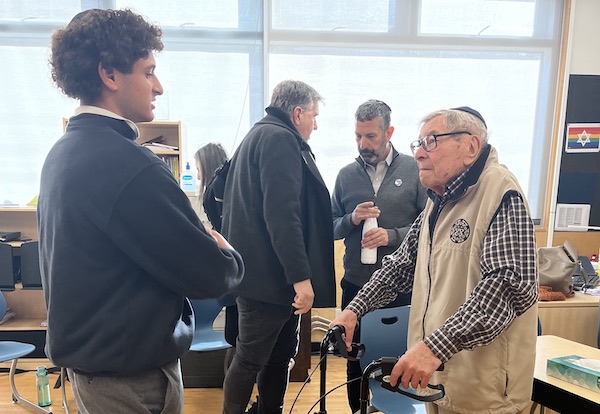
Emerich Klein speaks to a student following his recent talk at King David High School. (photo from KDHS)

For decades, Emerich Klein kept his story of survival during the Holocaust to himself. While raising two children in Vancouver and making a life, he shared nothing of what had happened to him after he, together with his family, was deported to Auschwitz.

After years of cajoling, Klein shared his experiences with Russ Klein, his son, who is principal of King David High School. In 2019, he also sat with interviewer Hodie Kahn and recorded almost four hours of testimony for the Vancouver Holocaust Education Centre.

On Feb. 14, with his son the principal at his side, Emerich Klein spoke of his survival story for the first time to an audience, addressing students in a Holocaust studies class. The students had viewed the recorded testimony in advance of the visit.

Klein was born in Uzhorod, Czechoslovakia, in 1930, and lived with his sister Judith and their parents Isidor and Rose on the site of the electric power plant where Isidor worked. They had a large extended family and Emerich remembers Shabbat dinners at his grandparents’ home, with throngs of cousins. His grandparents, who were very traditional, were in charge of the mikveh and his grandfather was a melamed, a teacher.

Emerich’s early childhood was largely uneventful, except for being taunted and beaten up on his way to and from school by non-Jewish kids. At one point, on the advice of a teacher, he loaded his school bag with rocks and took revenge on his tormentors. When one of the bullies dragged the police to the Kleins’ door urging assault charges, Emerich’s father explained how his son frequently returned from school bloody. The cop apologized and left. The father of the bully beat his own son – not for bullying, it would seem, but for being bested by a Jew.

While older people may have sensed the shifting social climate, for kids like Emerich, things seemed pretty good for a time. By 1941, though, Jewish businesses could operate only with an Aryan partner and so an uncle had to close his small bakery.

When Isidor was conscripted – first into the army and then, when Jews could no longer serve in the military, in a work battalion – the family’s fortunes suffered. His boss at the power plant eventually convinced authorities that he was an irreplaceable employee.

One day, a stranger showed up in town, speaking a language Emerich did not understand. The boy took the man to a rabbi and, after the rabbi shooed Emerich away, the man explained that he had escaped Poland and told the rabbi what was happening to Jews there. The man’s stories of ghettoization, forced starvation and worse was unimaginable to the Jews of Uzhorod.

Under the 1938 Munich Agreement, which British prime minister Neville Chamberlain signed with Hitler to partition Czechoslovakia, Uzhorod was returned to Hungary, to which it had belonged until the First World War. (It is now in Ukraine.) In 1944, the Nazis occupied Hungary, and things got much worse for the Jews living there. When they heard the word “ghetto,” the words of the Polish stranger who had shown up in town returned to them.

Emerich’s grandfather was stopped on the street, beaten up and had his beard cut off. Jews were ordered to report to a cordoned-off area but, because this ghetto was so small, it served mostly as a deportation area. The Kleins remained there only for a couple of days.

They were packed into railway cars, with only room to stand. One big drum served as a potable water supply and another as a toilet. Children were crying, people were moaning.

After several days – Emerich doesn’t know how long – the train stopped. People were banging on the outside of the cars and the doors were flung open. People in striped clothes screamed at them to get out. They had arrived at Auschwitz.

Once they got down off the train, the women and children were separated from the men. The old and sick were yanked across the tracks and packed into big waiting trucks. Rose pushed Emerich to join the men. The boy didn’t want to let go of his mother but she screamed at him to leave. He ran and found his father.

While waiting for the next step in their processing, Emerich saw what he thought were piles of cordwood but he soon realized they were human bodies. The new arrivals were taken to a building for a cold shower, then they were shaved, doused in disinfectant and handed clothing in random sizes.

When an army officer called for metal workers, Isidor volunteered and a fellow prisoner advised Emerich to step forward or risk being separated from his father. Despite his lack of knowledge in the field, Emerich passed himself off as an apprentice. Together, the father and son were separated from the rest of the group and transported out of Auschwitz, on a train again for days, until they arrived in France.

Isidor and Emerich worked at a mine in tolerable conditions, with survival rations for a time, until they were moved again, to a salt mine in Germany. There, they were joined by 1,000 inmates from Poland and Emerich and the others learned the horrors of what was happening further east.

At the salt mine, their job was to break boulders to make gravel and then level out the ground, so concrete could be pored over it. After a time, Emerich was put on burial duty, which was less physically onerous work. A Russian prisoner assured Emerich that the war would soon be over and to keep up his strength. He would move on to factory work, cleaning the floor and cutting aluminum.

In April 1945, the workers were forced on a death march. Planes were flying so low that the prisoners could see the pilots. As the march continued, Isidor insisted he couldn’t go on, but Emerich and two of their friends stuck together and forced the father to keep moving. Eventually, they were loaded onto a train and provided food for the first time in nine days. Then, in the midst of a great commotion, the incarcerated passengers realized that the German army was in full retreat. The guards abandoned the prisoners.

Emerich and his group walked into the nearest town, which was already overrun with freed prisoners. They were put up in a German army base that had been repurposed as a repatriation centre. Tables had been set up for each country and people registered their names and hometowns.

Emerich and Isidor eventually made it back to Uzhorod, but Emerich’s mother Rose and sister Judith never returned. All the extended relatives but two cousins were gone. Emerich spent most of the time crying.

After a few weeks, Emerich left by himself for Prague and registered with the Joint Distribution Committee, after which he was transferred to a displaced persons camp in Germany. He intended to go to Palestine with members of his youth movement, but word came that the British were halting migration.

A friend told him of an opportunity to go to Canada, so they signed up. Six months later, Emerich docked in Halifax and made his way to Toronto, where he stayed for two years. The Jewish community there was highly supportive and Emerich became an apprentice jeweler. Isidor, who in the new world would be known as Robert, and his new wife arrived during this time.

Isidor/Robert had remarried a fellow survivor from Uzhorod, who had a sibling in Chilliwack, B.C., so the family headed to the West Coast. Emerich met his wife, the Vancouver-born Jenny, in a bowling alley during a B’nai B’rith event.

In the King David classroom last month, students asked thoughtful questions and Klein responded. His son told students they were lucky to see the elder Mr. Klein at his most talkative, as getting a sentence from the soft-spoken senior is considered by family members to be an accomplishment.

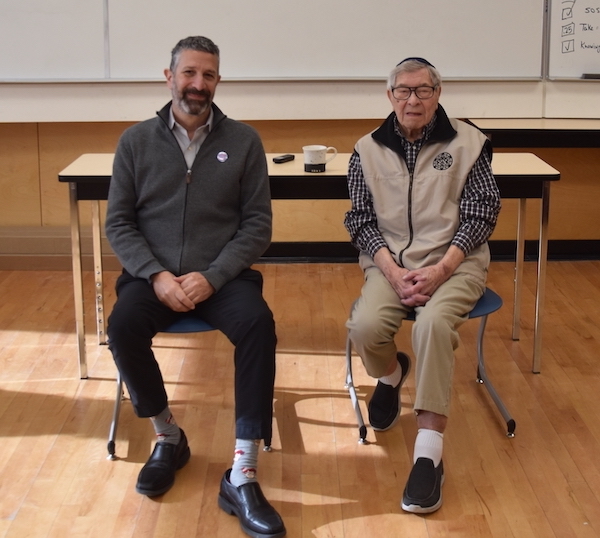
photo Russ Klein, principal of King David High School, and his father, Emerich Klein, who spoke to a KDHS class in February about his experiences during the Holocaust.
Russ Klein, principal of King David High School, and his father, Emerich Klein, who spoke to a KDHS class in February about his experiences during the Holocaust. (photo from KDHS)

A student asked if he ever lost faith that he would survive.

“Yes, definitely,” said Klein. “We lived not from week to week or day to day, but from hour to hour. Life didn’t mean a thing.”

About liberation, he said, “I felt wonderful. I felt that I’d been given a chance to live again, to be human again.”

Asked how his experiences under the Nazis and their collaborators had affected his attitudes toward religion, Klein was blunt.

“It sort of turned me against it,” he said. Nevertheless, he insisted that his two children attend Talmud Torah elementary school. Why?

“To learn about Judaism and to learn about the Holocaust,” he said, turning to his son. “I was not able to talk about it, but you had to know about it. That was the only way that I could get my children to learn about it. They couldn’t learn it through me.”

His decades-long refusal to discuss the past with his children was intended to prevent the next generation from anguish, he said.

“Why should they suffer my pain?” he asked. “That was a terrible thing to think about. Bad enough that I suffered, [why should] they suffer the same thing through me?”

Reflecting on his postwar return to Uzhorod, Klein was again straightforward.

“I went back to see who came back from the family. I spent a month, maybe six weeks there and then I left, never to return,” he said. “It was very difficult. I came up against reality there. Up until then, we did not know what happened to the rest of our family. We were separated and that’s all I knew. I had hopes that everybody was coming back. Nobody came back. So there was no point in me staying there.”

Coming to Canada was wonderful and difficult, he said.

“Wonderful just to get out of Europe – doesn’t matter where,” he said. “I just wanted to get out of that country that was soaked in Jewish blood.” But, he added: “It was difficult – difficult to get used to a new life, a new way of living, a new language, a new country. I was 17 years old. It was very difficult but you make do. You do the best you can. You adjust.”

Settling into life in Vancouver, Klein made family and stability his focus.

“A normal person would try to make a living and get themselves a better position, work your way up in life,” he said. “To me, that was not important. To me, the important thing was family. I concentrated on one thing only. Just to give you an example, all my friends went into business – I did not. They asked me, why don’t you go into business? I said … what happens if it doesn’t go right? These children cannot be hungry. I knew what hunger was. It was so important for me to stay just at a low level but make sure that my family will not go without. That was an effect of what happened to me.”

A student asked why, after all these years, Klein decided to speak.

“Because I was convinced after an awful long time that to be silent is being complicit in what happened,” he said. “You’ve got to talk about it, even if it hurts, you’ve got to talk about it.”

He is concerned by some of the political developments he sees in the world today.

“Most of humanity is very good,” he said. “There are parts of society that are not good. Let’s face it, people can be influenced very easily. If you get a charismatic person, [they] can convince people of almost anything they want.”

On being an Upstander

Pat Johnson, founder of Upstanders Canada. (photo from Upstanders Canada)

Pat Johnson, the founder of Upstanders Canada, addressed the importance of standing up to antisemitism during a March 5 Zoom lecture organized by Kolot Mayim Reform Temple in Victoria. Upstanders mobilizes non-Jewish Canadians to confront antisemitism and anti-Zionism.

Johnson writes for many media outlets, including the Jewish Independent, where he is also on the editorial board. Over the years, he has worked for many Jewish organizations. He was quick to stress that, as a non-Jew, he is not trying to tell Jews what is antisemitism, but rather share his experiences fighting and studying it.

Due to the complexity of the ways in which antisemitism and anti-Zionism may overlap, Johnson defined anti-Zionism – as opposition to the existence of a Jewish state, and not as criticism of Israel – and then moved on to his topic.

Of primary concern in recent years, he said, is the notion of non-Jews laying claim to the definition of antisemitism, thereby effectively telling Jews whether or not their experiences with antisemitism are valid.

“Jewish people are treated differently than every other group, even by people who self-define as anti-racist, and I argue that this is proof itself of a problem,” said Johnson.

He maintains that, on such issues as the definition of antisemitism as put forward by the International Holocaust Remembrance Alliance (IHRA), some people “are willing to devote more resources to fighting over the definition of antisemitism than they are to fighting against antisemitism.”

As a result, he said, there is a more contentious discussion around antisemitism than any other form of racism. Antisemitism is different from other forms of bigotry because Jews can be of any race, colour or identity; therefore, they do not conveniently fall into any racial categories.

“Fighting discrimination against Jewish people has to some extent fallen through the cracks, in part because many people simply do not understand it, cannot see it, deny it or simply wish it away,” said Johnson. “We are dealing overwhelmingly with unconscious biases. People do not even realize they carry them. So, when we call someone out for a statement that appears to us to be premised on antisemitic stereotypes, it just doesn’t resonate.”

Johnson then discussed how antisemitism is not a problem of Jewish making. Rather, it is a product of the antisemitic imagination, a caricature. “In a weird way, antisemitism has nothing to do with Jews, except that Jews are the collateral damage in a corrupt world poisoned by antisemitic ideas,” he said.

Antisemitism comes in myriad forms and is not simply a matter of people hating Jews, he said. “If we think it is, we will never overcome it.”

Johnson provided numerous examples throughout the past several centuries of Jews serving as scapegoats, as well as more recent examples, including the denial in various circles of hate crimes committed against Jews, the abundance of anti-Jewish hostility in Arab media and the inevitability in nearly all conspiracy theories that Jews are lurking somewhere in the background as the masterminds.

Johnson spoke about the manifestation of antisemitism in progressive movements, making it clear that his criticisms were not being made from a right-wing standpoint. “These are my people and I have seen it up close,” he said of the left.

Johnson said discrimination is often the result of economic circumstances. Jews, from a Marxist perspective, are seen as a privileged economic class and not as a disadvantaged minority. Therefore, if taken a step further, lowering the Jewish status a peg can be translated, by some, not as prejudice but the advancement of equality.

“It is a racist economic critique, but I am absolutely certain that this is a core underpinning of antisemitism and unconscious bias about Jews that we see on the left,” Johnson said.

Right-wing antisemitism tends to be more overt and fundamentally racial and so it is more easily identifiable, he said. Left-wing antisemitism, in Johnson’s experience, is different.

“Even Jeremy Corbyn, the former British Labour Party leader, whom I would argue is a bare-faced, dyed-in-the-wool antisemite, maintained enough plausible deniability that perhaps he himself believed he was free from antisemitic ideas. Antisemites on the right don’t bother deluding themselves about where they stand,” he said.

To Johnson, the left’s ambivalence to antisemitism is all the more dispiriting because it ignores the contributions Jews have made in building progressive movements.

“If most leftists are not engaged in antisemitism, they are not engaged in fighting it, either,” Johnson said. “Betrayal hurts most because it does not come from your enemies. To admit that antisemitism has gotten worse during our lifetimes offends our progressive values.”

Johnson believes there may be a long struggle ahead in confronting antisemitism, though he did mention lessons he has learned in this battle. These include being intellectually prepared with an argument before problematic situations arise, so as not to be overwhelmed by emotion in the moment, and not assuming ill will when ignorance may be more likely. He noted that, while calling out antisemites is crucial, calling in those who unknowingly say or do something antisemitic is as important.

For more information about Upstanders Canada, visit upstanderscanada.com.

Sam Margolis has written for the Globe and Mail, the National Post, UPI and MSNBC.

Hillel BC marks its 75th

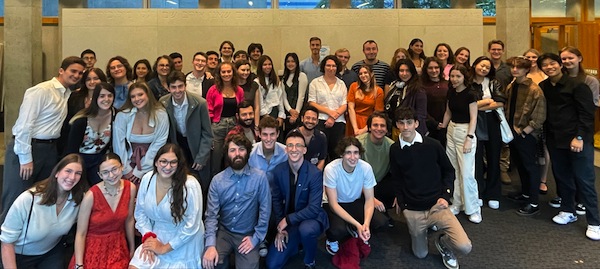
Attendees at UBC Hillel House’s Rosh Hashanah dinner to start the 2022/23 school year. (photo from Hillel BC)

Hillel BC celebrates its 75th year with a celebration March 30 at the University of British Columbia Hillel House.

Hillel BC was founded in 1947, under the name B’nai B’rith Hillel Foundation, in the same spot on UBC’s campus where it still operates from today. This came from an understanding that Jewish students were being excluded from the main student clubs on campus and they needed a place to socialize and be Jewish.

The original space was an old, wooden one-room house that was at the outskirts of campus. Little did they know then that this location would become the heart of the campus as the university expanded.

photo - Established in 1947 on UBC campus (left), Hillel BC’s current building – on the same site as the old one – opened in 2010
Established in 1947 on UBC campus (left), Hillel BC’s current building – on the same site as the old one – opened in 2010. (photo from Jewish Museum and Archives of BC L.00070)

In 2002, B’nai B’rith Hillel Foundation became Vancouver Hillel Foundation, the first Hillel International-affiliated program in Canada, which was followed by establishing space at both Simon Fraser University and University of Victoria. Eight years later, the current building was opened, solidifying Hillel’s space on the UBC campus and beyond. Today, Hillel BC continues to serve at UBC, UVic, SFU, Langara College, Emily Carr University of Art + Design and other post-secondary institutions as needed.

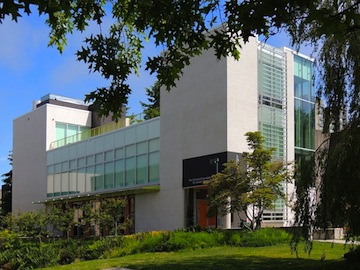
photo - The current Hillel BC building on UBC campus
The current Hillel BC building on UBC campus. (photo by ThosGee via panoramio.com)

In addition to celebrating 75 years on campus, Hillel @ 75 on March 30, 7:30 p.m., will provide an opportunity to thank recent executive directors Rabbi Philip Bregman and Sam Heller. The Jewish Student Association, Israel on Campus Club and AEPi (Jewish fraternity) will offer the community an overview of their activities in dedicated tables, and a short presentation will be given by the board and current staff. Special guests include Deborah Buszard (UBC interim president), Joy Johnson (SFU president), Skip Vichness (Hillel International board chair) and Vancouver Mayor Ken Sim.

“We are very excited to have the community back in our building for this celebration of our 75th anniversary,” said Rob Philipp, executive director of Hillel BC. “Due to COVID, we missed a lot of important events worth noting, specifically the 10th anniversary of our UBC building, and the retirement of Rabbi Philip Bregman and Sam Heller. We want to take the opportunity to celebrate our successes and recognize some of the key people who helped lead us through some difficult times. The evening reception will be at our UBC building, attended by special guests, and it will host the first viewing of our promotional video.”

For more about Hillel BC and to purchase a ticket for the event ($75), visit hillelbc.com. A portion of the ticket price is tax-deductible. 

– Courtesy Hillel BC

B’nai mitzvah tutoring

Sasha Kaye (photo from B’nai Mitz-Van)

Sasha Kaye recently launched B’nai Mitz-Van, a tutoring service that prepares b’nai mitzvah students for their Torah and Haftarah readings. She also offers basic voice training, performance anxiety management and d’var Torah writing support.

Kaye completed a double major in voice performance and psychology for her bachelor’s degree from the University of British Columbia, and she has a master’s degree in performance science from the Royal College of Music in London, England. In her master’s thesis, Kaye examined the experiences of musicians with moderate-to-severe performance anxiety in simulated performance environments.

“I came back to Vancouver in January 2023,” Kaye told the Independent. “Most of my time so far has been spent unpacking and readjusting to life in Vancouver!”

Kaye grew up attending Congregation Har El, where she is a member. She has led services as a lay cantor. “I performed at various holiday and milestone community events, and participated in extracurricular, Jewish-led activism with peers from King David High School,” she said about her younger years.

Kaye has performed with the University Singers choral ensemble, UBC Opera, the Vancouver Orchestra Club and Postmodern Camerata, among other groups. She performs as a solo recitalist and has almost 10 years of teaching experience.

“I came up with the idea for B’nai Mitz-Van while I was still in London, and the idea was partially inspired by my master’s thesis,” she said of her latest venture. “In addition to struggling with an anxiety disorder, I had particularly vivid performance anxiety as a musician. The two collided pretty spectacularly for my own bat mitzvah. Despite being well-prepared for it, I was constantly ruminating on potential mishaps and catastrophizing the consequences. What if I got so anxious that I forgot the trope for my Torah reading? What if I forgot the words? What if my voice cracked? What if I dropped the Torah? I would let my family down. These cognitive distortions are evident to my adult self, but the distress was very real to 12-year-old Sasha. When I told people I was anxious, they told me I had nothing to be anxious about. While I’m sure they were trying to reassure me, this ultimately dismissed my feelings and made me feel much worse. I had zero tools to cope with or manage my anxiety.”

Kaye said she has little recollection of the bat mitzvah itself. “I was so anxious, I essentially blacked out,” she said. “Based on second-hand information, I did well enough on the day, but I was unable to enjoy the simchah – and that’s ultimately what the day should have been about. B’nai mitzvot should be joyous occasions for everyone, including the b’nai mitzvah themselves.

“As someone who knows how to chant Torah and Haftarah, and knowing what I know now about performance anxiety, my hope is that B’nai Mitz-Van can both teach young adults what they need to know for their special day, and also give them the tools to manage feelings of nervousness or anxiety that they may have.”

Kaye has experience teaching b’nai mitzvah-age kids from when she used to teach singing lessons, which she did for about three years, and she has five more years of experience teaching older students.

“Performance anxiety is extremely common,” said Kaye. “While it may or may not necessarily impact the quality of your performance, that doesn’t make it any less uncomfortable to deal with.

“The experience can manifest cognitively, meaning through the kinds of thoughts you have, like fixating on the possibility of making mistakes in performances and overestimating the consequences; physiologically, meaning through bodily sensations like racing heart, dry mouth, shaking or feeling restless; emotionally, like feelings of nervousness, dread or irritability; or behaviourally, like avoiding practising.

“How to manage performance anxiety is the million-dollar question!” she said. “There are a number of techniques and methods that have been researched, and different things may work for different people. Some things that can help pretty reliably, if they are practised, are feeling prepared in your material; breathing exercises, like box breathing; grounding exercises that focus your senses on the here and now; and examining your self-talk, that is, how you talk to yourself in your own mind.

“Retraining self-talk can take a long time and it can be very challenging,” she acknowledged, “but it helps to start by noticing how you talk to yourself. Would you speak that way to a friend who was going through the same thing? If not, chances are your self-talk needs some adjusting from the harsh and self-defeating to the encouraging and self-supporting.”

About working with b’nai mitzvah-aged kids, Kaye said they “are at a really fascinating stage in life. They’re starting to come into their own sense of self, and they’re able to start thinking critically about the world around them without the cynicism that can follow us as adults. There’s an enthusiasm and idealism for tikkun olam that’s really refreshing.”

And, given her years of experience as a tutor of academic writing, Kaye can help students organize their enthusiasm and their ideas into a clear and concise d’var Torah. “More importantly,” she said, “I help them find their own way of relating to their parsha, so they can find the lesson they want to share with the congregation.”

Kaye offers both in-person and online lessons. She can be reached at bnaimitzvan@gmail.com or 236-515-9469.

Building skills and confidence

Shelly Bordensky is the JCC Inclusion Services support worker for PRISM. (photo from JCCGV)

A new program at the Jewish Community Centre of Greater Vancouver aims to equip 13-to-17-year-olds with leadership skills, personal insights and paid work experience. Funded by a grant from the Diamond Foundation, the Pre-employment Program for At-Risk Youth within an Inclusive Supportive Modality (PRISM) is seeking referrals of young people who could benefit from this supportive introduction to the world of work. The workshops begin March 23 and meet weekly on Thursdays, 3:30-7 p.m. The referral deadline is March 9.

“Our definition for youth who may benefit from this program is intentionally broad,” said JCC Inclusion Services support worker Shelly Bordensky. “The goal of the program is to limit risk factors for youth, such as social exclusion – youth who may live in lone-parent homes; are recent immigrants or refugees; are living with mental health challenges or diverse abilities; are historically underserved; or are otherwise marginalized – by building skills, networks of support, and exposure to possible future career paths in Jewish communal work.”

“When you care about a teenager, whether as a parent or other trusted adult, you are keenly aware that raising a child includes preparing them for life out in the real world,” added JCC social worker Lisa Cohen Quay. “The amazing part of the PRISM program is that it isn’t just about a first job. Sessions include learning about what jobs exist in Jewish agencies, meeting with a vocational counselor, writing a resumé, taking care of your mental well-being, and so much more – not the least of which is the opportunity to try working in an area of interest at the JCC.”

Quay further explained that this paid work opportunity also gives teens an adult employer to serve as a vital future reference. “It will be wonderful if this program excites teens to come be part of the work force with those of us serving in Jewish agencies, or in another community centre,” she said. “The relationships and insights they develop in PRISM can set them on that course.”

PRISM is an offering of JCC Inclusion Services, under the direction of Leamore Cohen. For more information and accessibility supports, Cohen can be contacted at leamore@jccgv.bc.ca or 604-638-7288.

– Courtesy Jewish Community Centre of Greater Vancouver

Women deserve to be seen

As a mom of twin toddlers about 10 years ago, I was desperate for childcare. Call it preschool, nursery school, daycare or old-fashioned babysitting, it was impossible to come by when we were looking. Every place had long waitlists. I was told by more than one place that I should have put our family on the list for childcare before I gave birth. (An absolute no-go from my position, due to Jewish traditions.) Then I heard about the possibility of spots at a local Chabad preschool.

I am a feminist and, while really invested in Jewish life, I’m on the liberal, egalitarian part of our tradition. I hadn’t even looked at Chabad as an option. I am still amazed by how we were welcomed there and how much help the preschool teachers and other families gave us. Older kids from other families even helped walk my 2-year-olds up and down the stairs to the school when I couldn’t manage. It was a gift when I truly needed a break.

At first, my twins could only manage preschool in the mornings, so I couldn’t get back to work. It allowed me three hours at a time on my own and I used it get long overdue medical support for myself or for one twin at a time. I accomplished basic household needs like grocery shopping or changing bedding. Sometimes, I got to rest. My twins didn’t sleep through the night until they were four-and-a-half years old. Eventually, the kids stayed longer hours at preschool and I worked a little, but it was a challenging time.

While in this sleepless, liminal state, I met Jewish women I’d never encountered before. Moms with more than 10 kids, for instance – a situation I’d scarcely considered before my kids went to this preschool. While some of my extended family made negative comments about my encounters with this pocket of traditional Jewish observance, I marveled, realizing that some parents raised big families with skill and love. Other families struggled with only a child or two. Large families were not inherently “bad” nor small families “good.” I learned many things from these experienced parents. They did not judge us. They helped whenever they could. Their kindnesses were a blessing.

Winnipeg, our city, is crisscrossed by train tracks. It wasn’t uncommon to be stuck at a train crossing going to preschool. I joked about this with a mom who was very involved in the Lubavitch community and had a big family. My twins loved trains, so we unrolled the car windows to hear the horn and the bells and trains rattling on the tracks and enjoyed the moment. She smiled and said she too enjoyed the unexpected wait at train crossings. She used the time to pray. She had a pocket-sized book of tehillim (psalms) and another siddur (prayer book) that she kept in the minivan specifically for occasions like this.

I was flummoxed, impressed by her piety but surprised. This woman, who was so incredibly busy, also invited my family to her kids’ huge birthday parties. She found time at train crossings to pray? Wow.

Afterwards, if her older kids sought me out at a Shabbat dinner or community event, I made room at the table, tried to treat them like I would treat my kids. Her mentorship and thoughtfulness made a deep impression.

I’ve been reminded of this because, lately, Haredi and Modern Orthodox women have been in my social media feed. In recent years, some Haredi publications have stopped using women’s faces or bodies in their photos and advertisements. I follow Chochmat Nashim, an organization that fights to keep images of observant women’s and girls’ images in traditional Jewish publications, so that Jewish women can see themselves in the world around them.

I also read about agunot (chained women), whose husbands will not grant them a get (a Jewish divorce) so that they can remarry. In some cases, these women wait years, are forced to pay large sums of money, or give up custody rights to their children so they can be granted a divorce. Since they observe Jewish law, a secular or civil divorce isn’t enough, and they can’t remarry in their communities without a get. One of the only ways they get “seen” is through loud protests held by other Orthodox women, who stand as allies, trying to bring attention to the situation. Sometimes, this public shaming is the only chance they have to receive a get. Imagine what this allyship means if it is one’s only recourse to escape domestic violence or to be free to remarry.

Another example: a concert was held in London, a special Orthodox women’s-only concert, designed so that Jewish women could sing and other women could attend. (In these parts of the Jewish community, it’s considered alluring and inappropriate for men to hear women sing. This is a way for talented women to perform and other women to enjoy their amazing gifts.) Despite all their precautions, there were rabbis who said that attending this women-only event would be forbidden. Guess what? Women went anyway. The event was sold out.

For me, “seeing” the strong moms of big families as mentors and friends was an eye-opener. They taught me so much, both about their everyday lives and how they viewed Judaism, orthodoxy and Hasidism. Despite a truly overwhelming load of parenting, work, religious and household obligation, they modeled for me how to find time for things that are important. Whether it is helping a kid with learning disabilities or praying at train crossings, they make time for what matters to them.

To some extent, these are all the same women. The ones whose images are banned from publications, who might suffer because they are denied a Jewish divorce, or who might be kept from attending even a women-only concert of religiously acceptable music – they are also perhaps the same mentors who model good parenting, find room for prayer and care for others’ children as their own.

Regardless of our level of religious observance, Jewish women deserve to be seen, loved and treated with respect. This may seem obvious, but it still isn’t happening.

Joanne Seiff has written regularly for CBC Manitoba and various Jewish publications. She is the author of three books, including From the Outside In: Jewish Post Columns 2015-2016, a collection of essays available for digital download or as a paperback from Amazon. Check her out on Instagram @yrnspinner or at joanneseiff.blogspot.com.

Students are learning to cook

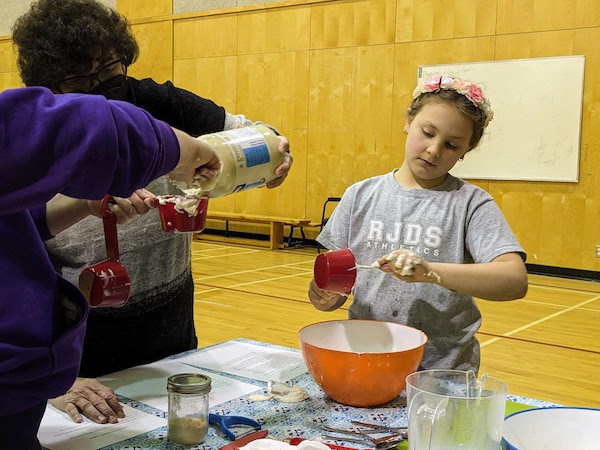
In Richmond Jewish Day School’s Food Lab Program, students help prepare meals once a month. (photo from RJDS)

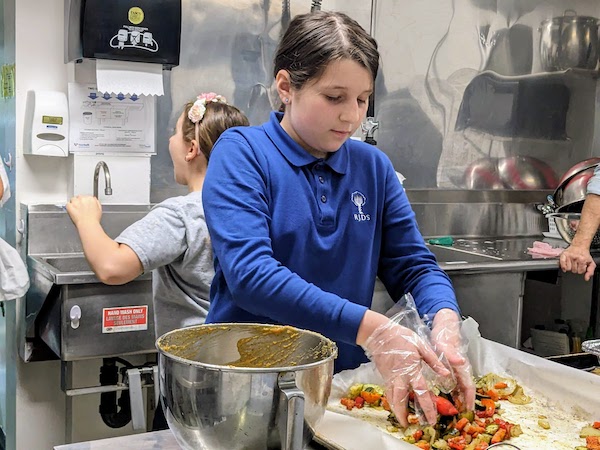
One by one, students at Richmond Jewish Day School filter down the hallways following the smells of a delicious and nutritious meal. Waiting for them in the gym is lasagna, Caesar salad and a pesto prepared by RJDS students with the help of Jewish Family Services culinary master, Chef Zoe Sorokin.

RJDS’s Food Lab Program is the first of its kind in a Jewish day school in Metro Vancouver. It is just one of the current programs running in RJDS to enhance students’ access to healthy and nutritious food in a way that promotes community and inclusiveness. Every week, JFS makes and delivers hot meals at no cost to the students or their families. Once a month, students in grades 4 through 7 take an active part in this, helping with the preparation of the meals, including chopping, grating and cooking the plant-based ingredients.

photo - Once a month, students in grades 4 through 7 take an active part in this, helping with the preparation of the meals, including chopping, grating and cooking the plant-based ingredients
Once a month, students in grades 4 through 7 take an active part in this, helping with the preparation of the meals, including chopping, grating and cooking the plant-based ingredients. (photo from RJDS)

“I enjoy learning new cooking skills,” said Naomi, a Grade 4 student. “My favourite dish was the bean soup.”

“I love that we use all our senses when cooking,” said Ella, who is in Grade 5.

With demand at food banks growing over the course of the pandemic and rising inflation, food insecurity has become a reality for more families. RJDS students and school staff have led several efforts, with the support of social service partners, to help families feeling the pinch. Last year, with the assistance of the Jewish Federation of Greater Vancouver, Kehila Society and JFS, RJDS began a community fridge and pantry program. The partner agencies, plus the Richmond Food Bank, keep the fridge and pantry stocked and RJDS families can access free healthy snacks, dry goods, fresh produce and meals during school hours. The Food Lab represents an expansion of the school’s food programs.

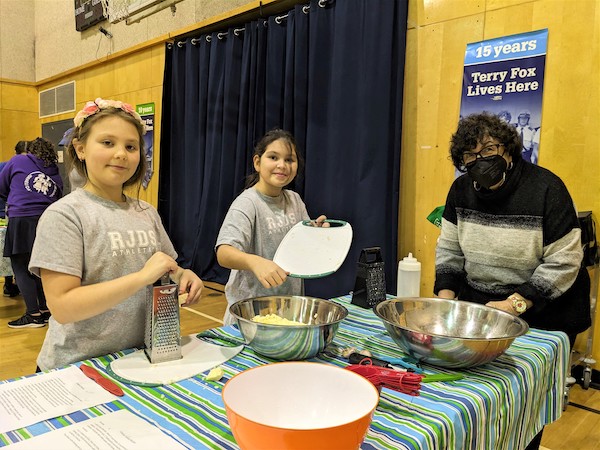
photo - The Food Lab represents an expansion of the school’s food programs
The Food Lab represents an expansion of the school’s food programs. (photo from RJDS)

“The students at Richmond Jewish Day School have absolutely loved the weekly hot lunches,” said principal Sabrina Bhojani. “Our parents have also expressed their delight with this program, knowing that their children are receiving a warm, healthy and nutritious meal at school. The research is clear – good nutrition helps our children to focus, concentrate and self-regulate, which, in turn, results in improved learning and student performance.”

She added, “Not only are the students helping in preparing food to be enjoyed by the school, they are also learning about making informed decisions about food choices, food safety, the importance of food supply and healthy nutrition.”

photo - Students helping preparing food to be enjoyed by the school
Students helping preparing food to be enjoyed by the school. (photo from RJDS)

“I love participating in the Food Lab program,” said Yahel, who is in Grade 5. “It is a fun experience and I get to learn new skills that I can use at home.”

Vienna, also in Grade 5, agrees, saying: “I enjoy learning new cooking skills that I can share with my family.”

The RJDS kitchen has become a place for children to learn new and valuable life skills, to enjoy good food with friends and, most importantly, a place in which they can contribute and build strong relationships.

– Courtesy Richmond Jewish Day School

Many first-time experiences

Camp Shalom knows that first experiences are a huge milestone in a child’s development, shaping their individuality, interests and futures. (photo from JCC Camp Shalom)

Day camps have always been places for firsts. For many, camp is the place where they are in a structured setting that isn’t school, where fun comes first. Serving children and youth from 3 to 16 years old, Camp Shalom has always viewed the experience from the lens of “what memorable first experience can we give campers?” For some kids, that experience is as simple as the first time being on a school bus going to a field trip. For others, it may be the opportunity to go camping or have a sleepover away from their homes.

These types of firsts are a pivotal part of growing up and becoming an independent person. With year-round programming during school breaks and professional development days, Camp Shalom is able to give many children and youth experiences they would not normally get to have. It’s an opportunity to meet other children who do not go to the same school as them or kids who have just moved to Vancouver. Such firsts leave a lasting impression and have the potential of creating lifelong friendships. Camp Shalom is dedicated to making camp a safe and accessible place where children want to go.

Thanks to the ongoing and generous contribution of the Diamond Foundation and the Snider Foundation, Camp Shalom is also able to support campers with diverse needs. Staff are provided with special training sessions, mentorship programs and one-on-one support to ensure each camper can have the best experience. Campers who were part of the inaugural Inclusive Summer Camp Experience have now grown and become teens and young adults who are still connected to Camp Shalom, some of whom are now camp staff.

photo - With year-round programming during school breaks and professional development days, Camp Shalom is able to give many children and youth experiences they would not normally get to have
With year-round programming during school breaks and professional development days, Camp Shalom is able to give many children and youth experiences they would not normally get to have. (photo from JCC Camp Shalom)

During their camp years, kids are transitioning from childhood into teenage-hood and teens are about to become counselors. First experiences are a huge milestone in a child’s development, shaping their individuality, interests and futures. Each year, after camp is over, counselors and staff hear about campers who have gone on to explore new interests that they gained while at camp.

A couple of summers ago, Camp Shalom introduced fencing – for almost everyone it was their first time doing this sport, and most initially knew nothing about it. One camper in particular found so much joy in this first that he has continued participating in it since. In the camp’s teen programs, many participants discover their passion for working with children or in community volunteering. Even staff are affected by these new experiences, and some have changed career paths after working at camp.

This summer, Camp Shalom will be operating at the Jewish Community Centre of Greater Vancouver and King David High School in Vancouver, Har El Synagogue in West Vancouver, and Richmond Jewish Day School in Richmond. Families can choose the location that best suits them.

For more information about the Inclusive Summer Camp Experience or Camp Shalom’s teen programs, contact Ben Horev, camp director, at 604-638-7282 or ben@jccgv.bc.ca.

– Courtesy JCC Camp Shalom

ההגירה מישראל לקנדה צפויה לגדול

(IDF Spokesperson’s Unit / CC BY-SA 3.0: צילום)

לאור תוצאות הבחירות הכלליות האחרונות שנערכו בישראל בראשית חודש נובמבר, צפוי שההגירה אל קנדה תגדל. יש ישראלים שיתייאשו מהמצב החדש בישראל, כאשר ממשלת ימין קמה בהשתתפות המפלגה הימנית קיצונית הציונות הדתית, והם מבקשים לעזוב את ישראל. כך ישראלים מתבטאים בפייסבוק

בשנים האחרונות ההגירה מישראל לקנדה נמצאת במגמת עלייה ועתה צפוי שיותר ישראלים יעברו אליה. לפי פייסבוק תומכי בנימין נתניהו, שקראו למתנגדיו “שמאלנים בוגדים” קוראים להם עכשיו “שמאלנים למטוסים”. ואכן יש סברה ישראלים לא מעטים יעזבו לחו”ל. אחד אנשי הימין כתב בפייסבוק: “לאור תוצאות הבחירות אנשי השמאל עוזבים את הארץ ולכן משבר הדיור מגיע לקיצו”. אחר מאלה שרוצים לעזוב שואל באמצעות פייסבוק: “איך עוזבים את ישראל ומהר?” התגובות: “מבקשים מקלט מדיני, משיגים דרכון פורטוגלי, זה הרבה יותר קל ממה שחושבים”. משפחה ישראלית שעברה להליפקס לפני חמש שנים כותבת בפייסבוק לאחר קיום הבחירות: “למדנו לאהוב את החיים כאן בקנדה. את השלווה, את הנופים, את האדיבות ואת השקט. אז נכון שלא הכל מושלם. ולא הכל קל. ולא הכל מרגישים שייכים. אבל בשורה התחתונה, מרגיש שכנראה עשינו את הדבר הנכון. ישראל עומדת היום בצומת דרכים, ואים להסתמך על הבחירות האחרונות, כנראה שאנחנו כבר אחרי הפניה”. תומך נתניהו שואל בפייסבוק היכן הם אלה שטענו כי אם ביבי חוזר הם יעזבו את הארץ?”

כאשר היאוש גבר ולא רואים אופטימיות בטווח הקצר או אפילו הרחוק יותר, וכאשר ערכי הדמוקרטיה של ישראל הולכים ונמסים ולעומתם ערכים ימניים קיצוניים שתופסים מקום מרכזי במדינה, יש כאלה החושבים שהגיע הזמן לעזוב. כאמור קנדה היא אחד היעדים החמים בעולם כיום עבור ישראלים, שלא רוצים לעבור לאירופה או לארצות הברית

חברת דיווידשילד המתמחה במתן שירותי ביטוח עבור ישראלים הגרים בחו”ל, מסבירה מי זו קנדה: מדובר במדינה הצפונית ביותר בצפון אמריקה, המעוררת אצל רבים אסוציאציות של קור ושלג, אבל במציאות מדובר באחת המדינות הנחשקות בעולם להגירה ולרילוקיישן עם אוכלוסייה רב תרבותית, כלכלה יציבה, טבע מרהיב, נופים עוצרי נשימה ואיכות חיים גבוהה. קנדה נחשבת לאחת ממדינות ההגירה הפופולריות ביותר בקרב ישראלים, אם זה בזכות הכלכלה החזקה שלה, אפשרויות התעסוקה הרבות, קשרי המסחר הטובים ואיכות החיים הגבוהה. קנדה נחשבה למדינה ליברלית בעלת חוקי הגירה נוחים מאוד, שמטרתם למשוך אליה כוח עבודה משכיל ומקצועי. במהלך השנים עברה מדיניות ההגירה הקנדית שינויים רבים וכיום היא מתבססת בעיקר על קריטריונים כמו השכלה, גיל, ניסיון מקצועי ושליטה בשפות. המקצועות המבוקשים בקנדה, שעבורם הסיכוי הגדול ביותר לקבל אישור עבודה, הם בתחומים הבאים: רפואה וסיעוד, מחשבים, הנדסה, חינוך לגיל הרך, מרצים באקדמיה, תרגום, פסיכולוגיה וניהול בכיר

קנדה היא מדינה ענקית, השנייה בגודלה בעולם, עם צפיפות אוכלוסייה קטנה יחסית לשטחה הגדול – מה שמהווה אטרקטיביות רבה עבור ישראלים המעוניינים ברילוקיישן. כלכלתה של קנדה נחשבת ליציבה מאוד, שוק העבודה מגוון ושכר העבודה נחשב גבוה ביחס לשעות העבודה

אפשרויות התעסוקה בקנדה עבור מהגרים ישראלים נעות בין עבודות של צעירים, כמו: עבודה בעגלות ובמכירות, עבודת שיפוצים, טיפול בילדים והדרכות נוער בקהילות היהודיות; ועד משרות בחברות ההייטק הגדולות, בתחומים כמו הנדסת תוכנה; כמו כן, משרות בתחומי הסיעוד והרפואה בבתי החולים המתקדמים ביותר בקנדה

ישראלים המעוניינים ברילוקיישן לקנדה צריכים קודם כל למצוא מעסיק חוקי שידאג עבורם לויזת עבודה. החברה המעסיקה צריכה להיות בעלת משרדים הנמצאים בקנדה ועליה לקבל היתר ממשרד העבודה הקנדי להעסקת עובד שאינו קנדי

עם איכות חיים גבוהה, שירותי בריאות טובים, חינוך איכותי, כלכלה יציבה, חברה מקבלת, קהילה יהודית ענפה, שיעור פשיעה נמוך יחסית וטבע מרהיב – החיים בקנדה נחשבים בהחלט לנוחים ומלאי הזדמנויות

מערכת הבריאות בקנדה נחשבת לאחת מהטובות בעולם ומורכבת בעיקרה ממערכת ציבורית, הממומנת על ידי הציבור (בקנדה אין כמעט בכלל רפואה פרטית, כולל בתי החולים). כל אזרח קנדי, מהגר או תושב קבע זכאי לכיסוי רפואי מלא, כלומר כל ביקור רפואי, אשפוז בבית חולים וביצוע בדיקות רפואיות ניתן בחינם ובאופן שוויוני (למעט תרופות וטיפולי שיניים). העובדה כי כל השירותים הרפואיים ניתנים בחינם, אינה גורעת מאיכותם – ההפך: תקציב הבריאות בקנדה הוא גבוה מאוד, מה שמבטיח שירותים רפואיים איכותיים ויחס אישי

הדבר הראשון שעליכם לחשוב עליו כאשר אתם מתכננים מעבר מגורים לקנדה הוא כמובן עניין המגורים. אם אתם נשלחים לרילוקיישן, סביר להניח שהחברה המעסיקה תדאג עבורכם למגורים מסובסדים על חשבונה באזור העבודה. אם אתם עצמאיים או שעליכם למצוא מקום מגורים בכוחות עצמכם, זכרו כי גובה שכר הדירה משתנה בהתאם לאזור המגורים, הביקוש וסוג הדירה. פעמים רבות משתלם יותר לבחור במקום מגורים מעט רחוק מהמרכז ולהשתמש בתחבורה הציבורית היעילה

עניין נוסף שיש לדאוג לגביו כאשר עוברים עם ילדים לקנדה הוא החינוך. קנדה נחשבת למדינה שמשקיעה רבות בחינוך ומערכת החינוך שלה נחשבת לאחת הטובות בעולם. בקנדה יש מבחר גדול של בתי ספר ציבוריים ולצדם בתי ספר פרטיים, חלקם הגדול הוא בתי ספר יהודיים. ההרשמה לבתי הספר נעשית ישירות דרך מוסד הלימודים

הבחירה בין חינוך ציבורי ופרטי תלוי בשיקולים אישיים וכלכליים, אך שתי האופציות יבטיחו לילדכם חינוך איכותי. הלימודים במערכת הציבורית הם ליברלים יותר ויחשפו את ילדיכם למפגשים עם תלמידים ממגוונים אתניים שונים. הלימודים במערכת החינוך היהודית הפרטית אינם זולים וכוללים לצד הלימודים במקצועות הכלליים גם לימודי עברית ויהדות. חשוב לדעת, כי כל תלמיד חדש הנכנס למערכת החינוך הקנדית צריך לעבור מבחן באנגלית ובמתמטיקה כדי לקבוע את רמתו. מומלץ לקבוע מועד לראיון עוד בטרם הגעתכם לקנדה

אם חשובה לכם הקהילתיות, השמירה על הצביון היהודי והקרבה לישראלים נוספים, בקנדה אתם בהחלט תרגישו בבית. יהדות קנדה היא הרביעית בגודלה בעולם (אחרי ארה”ב, צרפת וישראל) וכיום חיים בקנדה למעלה מארבע מאות אלף יהודים. הקהילות היהודיות במדינה נחשבות מפותחות מאוד, בעלות קשרי קהילה חזקים והן מעניקות תמיכה רבה וסיוע למהגרים חדשים. המוקד המרכזי של ישראלים בקנדה היא העיר טורנטו, העיר הגדולה בקנדה ובירת מחוז אונטריו, בה מתגוררת הקהילה היהודית כוללת כמאתיים אלף אלף יהודים. יעד נוסף מרכזי עבור מהגרים ישראלים היא העיר מונטריאול הנמצאת במחוז קוויבק, המחוז הגדול בקנדה. במונטריאול נמצאת הקהילה היהודית השניה בגודלה בקנדה שמונה קרוב לכמאה אלף איש. בערים נוספות שבהן תמצאו קהילות יהודיות הן: ונקובר, ויניפג, אוטווה וקלגרי

מעבר מגורים עם כל המשפחה הוא לא קל אף פעם, אבל כשמדובר במדינה כמו קנדה סביר כי לצד קשיי המעבר, תחוו קליטה נעימה בזכות החברה הקנדית המקבלת והקהילה היהודית והישראלית המחבקת. עם זאת, יש לקחת בחשבון את כל ההשלכות והאתגרים העומדים בפניכם בעת מעבר למדינה רחוקה וקרה כמו קנדה

קושי נוסף עמו אתם צפויים להתמודד הוא מזג האוויר. קנדה היא מדינה קרה מאוד, עם חורף סוער וטמפרטורות שצונחות אל מתחת לאפס, לישראלים המגיעים ממדינה חמה לוקח זמן להתרגל לקור הקנדי. היתרון כאן הוא שכל שנה תזכו לראות שלג, הילדים יוכלו לבנות בובות שלג וללמוד לגלוש