Skip to content
  • Home
  • Subscribe / donate
  • Events calendar
  • News
    • Local
    • National
    • Israel
    • World
    • עניין בחדשות
      A roundup of news in Canada and further afield, in Hebrew.
  • Opinion
    • From the JI
    • Op-Ed
  • Arts & Culture
    • Performing Arts
    • Music
    • Books
    • Visual Arts
    • TV & Film
  • Life
    • Celebrating the Holidays
    • Travel
    • The Daily Snooze
      Cartoons by Jacob Samuel
    • Mystery Photo
      Help the JI and JMABC fill in the gaps in our archives.
  • Community Links
    • Organizations, Etc.
    • Other News Sources & Blogs
    • Business Directory
  • FAQ
  • JI Chai Celebration
  • JI@88! video

Recent Posts

  • Zionism wins big in Vegas
  • Different but connected
  • Survival not passive
  • Musical celebration of Israel
  • Shoppe celebrates 25 years
  • Human “book” event
  • Reclaiming Jewish stories
  • Bema presents Perseverance
  • CSS honours Bellas z”l
  • Sheba Promise here May 7
  • Reflections from Be’eri
  • New law a desecration
  • Resilient joy in tough times
  • Rescue dog brings joy
  • Art chosen for new museum
  • Reminder of hope, resilience
  • The national food of Israel?
  • Story of Israel’s north
  • Sheltering in train stations
  • Teach critical thinking
  • Learning to bridge divides
  • Supporting Iranian community
  • Art dismantles systems
  • Beth Tikvah celebrates 50th
  • What is Jewish music?
  • Celebrate joy of music
  • Women share experiences 
  • Raising funds for Survivors
  • Call for digital literacy
  • The hidden hand of hate
  • Tarot as spiritual ritual
  • Students create fancy meal
  • Encouraging young voices
  • Rose’s Angels delivers
  • Living life to its fullest
  • Drawing on his roots

Archives

Follow @JewishIndie
image - The CJN - Visit Us Banner - 300x600 - 101625

Creation of now-iconic pant

Creation of now-iconic pant

Jeans bearing the Levi Strauss & Co. trademark.

Nothing quite compares to the essential staple that almost all of us have in our closets, with styles including flare, skinny, low-rise, high-rise, boyfriend, ripped, the list goes on. If you haven’t guessed already, I’m referring to jeans. They epitomize fashion versatility, taking us from a city stroll in a pair of sneakers to our favourite restaurant in the evening with a boot or dress shoes. There are few fashion houses, from couture to street wear, that haven’t designed their own style. But, for the original jean, we have to thank Levi Strauss & Co.

Loeb Strauss, born 1829 in Bavaria, was the youngest of seven children. At age 16, after his father’s death and with increasingly harsh restrictions and discrimination towards Jews, he decided – with his mother and two of his three sisters – to move to New York. There, two of his brothers welcomed him into their dry goods business.
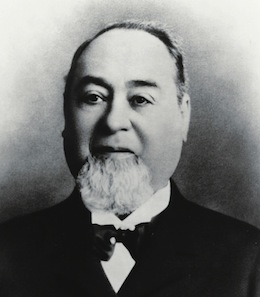
photo - Levi Strauss
Levi Strauss. (photo from Wikipedia)

In the 1850s, in the midst of the gold rush, Strauss saw potential opportunities to set up shop in the West and he did so, opening a branch of the family business in San Francisco, where he changed his name from Loeb to Levi.

Levi Strauss & Co. became a rapid success, selling merchandise to local customers as well as to those in neighbouring cities. Strauss became a respected figure among the Jewish community, known to have a sharp business mind and a kind demeanour. He was also known for giving back to community, donating to both Jewish and non-Jewish charities.

The nature of the business – and the course of fashion worldwide – changed when Strauss was approached by Jacob W. Davis, a regular customer and acquaintance, who came to collect an order of canvas for his tailoring business. Davis made durable work wear, or “waist overalls,” as he called them, from special fabric that was primarily used to make tents. Having developed a system to prevent the overalls from ripping at the pockets by adding copper rivets at the corners (allowing them more longevity), he knew he discovered something big but, in order to proceed, he needed financial backing, primarily for the patent fee. Strauss became his business partner in 1873.

Levi Strauss & Co.’s jeans were produced largely for the labour workforce. However, over the years, they became a choice piece of clothing for women and men in any profession, at least when not working. Levi’s entered the world of film in 1938 when John Wayne wore a pair of Levi’s 501 jeans, transforming them into the American cowboy’s leading attire.
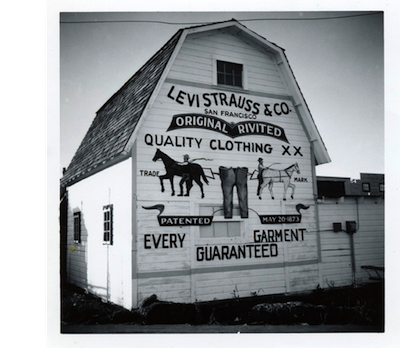
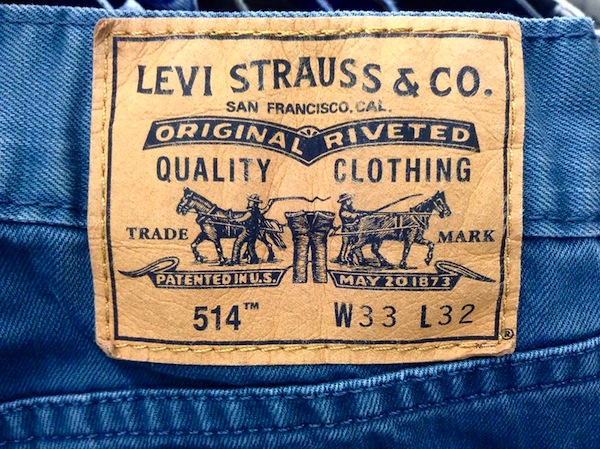
photo - According to the company’s website, the trademark depicting two horses attempting to pull apart a pair of Levi’s waist overalls, symbolizes “the strength of the clothing in the face of competition.” It was introduced in 1886
According to the company’s website, the trademark depicting two horses attempting to pull apart a pair of Levi’s waist overalls, symbolizes “the strength of the clothing in the face of competition.” It was introduced in 1886. (photo from levistrauss.com)

The financial success of Levi Strauss & Co. allowed Strauss to expand his business to many diverse industries, from banking to electricity. His philanthropy also expanded and he gave to many Jewish organizations, notably helping found and establish the Reform congregation Emanu-El in San Francisco.

While Strauss never married and had no children of his own, he had a strong relationship with his nephews. When he died, in 1902, Levi Strauss & Co. and most of his estate went to his four nephews and other family members; many charities were also beneficiaries named in his will.

Over six generations, Levi Strauss & Co. has remained a family-run business, manufacturing not only jeans but other casual wear, accessories and a children’s line. One of the largest brand apparel companies in history, the Levi Strauss name is universally recognized. Now run by the Haas family, decedents of Strauss, the family and business continue Strauss’s legacy in another important way – by being one of the most charitable families in the Bay Area.

Ariella Stein is a mother, wife and fashion maven. A Vancouverite, she has lived in both Turkey and Israel for the past 25 years.

Format ImagePosted on March 13, 2020March 12, 2020Author Ariella SteinCategories WorldTags clothing, entrepreneurship, history, Jacob W. Davis, jeans, Levi Strauss, philanthropy, textiles
Predicting the future

Predicting the future

Trend forecasters Lior Fisher Shiloni, left, and Nataly Izchukov. (photo by Michael Topyol)

What do jeans, trench coats and a little black dress all have in common? A place of honour in women’s wardrobes, that’s for sure. And it’s no accident – the three are timeless trends that have been around for decades.

“A trend is a state of mind, a very, very wide perspective that begins in the margins and slowly reaches the masses,” said Israeli trend forecaster Nataly Izchukov. “A trend undergoes evolution and is here to stay. People always think it comes and goes, but that’s actually a mistake. It develops and updates, and it’s here to stay.”

In 2014, Izchukov founded the Visionary, a Tel Aviv lifestyle and design trend forecasting agency that deciphers for its customers the way the wind is blowing. She and her business partner, Lior Fisher Shiloni, also expose the Israeli public to the art of forecasting and even pass on their knowledge in a first-of-its kind local “trendology” school.

Forecasting the future, Izchukov explained, begins in researching the past. She and her team study what has happened in the past year or so across the world, from politics and economics to natural disasters, cinema and fashion, and try to understand how it will affect esthetics and designs. “For example, one of the leading trends for the summer of 2020 is going to be acid-bright colours,” she said. Its source of influence? The yellow vests movement in Paris.

The second step is social research, which involves identifying their clients’ audience and what interests them on social networks and in the media. The third step is what Izchukov calls iconography, the interpretation of the findings in a more abstract way. This all leads to conclusions regarding megatrends and the microtrends that ensue.

Izchukov gave the example of older solo women travelers. More older women are jet-setting off by themselves, but are still looking to feel safe and secure and have a sense of community on their travels. This translates into many different microtrends for Izchukov’s clients, including how hotels are decorated and the colour palette that best suits their guests.

The biggest megatrend, however, is sustainability. “It deals with promoting the status of women, with poverty, with education, it’s a very, very wide issue,” said Izchukov.

Trends are not fads. Fads are not sustainable; they enter and exit our lives quickly. Top examples of fads, Izchukov noted, are Kardashian-style cycling shorts, the 1990s digital pet Tamagotchi craze and a recent favourite – handheld spinners. By contrast, a trend can take three to four years to go mainstream, and not all businesses have patience for such a process.

“They mostly want us to create fads, but we’re really seeing a change developing in 2020,” she said of her clients. “The biggest change is the extreme climate happening across the world. What happened now in Australia [with widespread bushfires] is one of these extreme cases that made people say, ‘OK, there’s a problem here.’ There was great denial of the topic among companies.”

The emphasis on sustainability is causing apprehension in the Israeli business scene, she said. One of the problems is the high cost of creating sustainable fashion.

“The product ends up being expensive and people don’t really want to spend that money on it,” Izchukov said. “There’s still a gap between the goodwill of people for the world to be a better place, and people wanting a good and attractive price, and you have to think how to bridge it.”

Izchukov predicts some big changes in the coming decade for fashion, food and hospitality in Israel.

“In fashion, a few very substantial things are going to happen – mostly companies that will change their appearance and their production lines in a more sustainable, ecological and recycling direction,” she said. “There’ll be fewer stores but these will include a lot more content and information that is beyond fashion.”

In Israel, there will be greater inclusion of people with disabilities in the fashion world, she said. This is in line with the global trend for inclusivity, which sees fashion houses employing ambassadors of all sexes, genders, religions and sizes.

In the Israeli hospitality sector, we can expect “the substantial entry of more hostels and of very affordable hotels,” she said. “They’ll try to create a very interesting experience in their locations in terms of the customer and the hotel itself.”

Izchukov predicts that food will increasingly go in the direction of “how we can eat in a healthier manner that precisely matches our needs and our bodies.”

She said, “Artificial intelligence will greatly help to resolve the issues of need and of customization.”

Food is also a great example of the impact local cultures have on trends. Izchukov noted the failure of American companies such as Starbucks to succeed in Israel. While Israelis like to think that the global giant failed because the local coffee is far superior, Izchukov suggested it has more to do with the Israeli state of mind. Self-service, waiter-less, eateries are a doomed business model in Israel, she said, because locals much prefer personal attention.

Israel21c is a nonprofit educational foundation with a mission to focus media and public attention on the 21st-century Israel that exists beyond the conflict. For more, or to donate, visit israel21c.org.

Format ImagePosted on March 13, 2020March 12, 2020Author Naama Barak ISRAEL21CCategories WorldTags forecasting, Israel, Lior Fisher Shilon, Nataly Izchukov, style, trendology
Israel’s quirky design house

Israel’s quirky design house

Peleg Design’s Magnetic Vase is a bestseller. (photo from Peleg Designs)

From optical illusion flower vases to playful elephant-shaped cutlery drainers, Shahar Peleg wants his products to bring his customers joy, but first and foremost to fulfil a need in their home.

How does he figure out what those needs are? “Some of the ideas came to us while daydreaming, some in the shower, some we woke up with and some just came to us by email,” reads the website’s Suggest an Idea section.

People from all over the world reach out, the designer and founder of the brand told Israel21c. “Once in awhile, we get a great idea and we pay royalties to the designers or inventors,” he said. “It’s really amazing because a lot of people have a lot of ideas.” For example, the Bag Bunny, a magnetic rabbit-shaped tool for easily opening plastic packaging, was inspired by a customer suggestion.

photo - Shahar Peleg wants his products to bring his customers joy, but first and foremost to fulfil a need in their home
Shahar Peleg wants his products to bring his customers joy, but first and foremost to fulfil a need in their home. (photo from Facebook)

Founded in 2005 and based in Tel Aviv, Peleg Design’s online store offers around 100 unique products that stem from everyday needs, each with quirks, twists or optical illusions that Peleg describes as “magical.” Nothing, he said, is what it seems.

The product that kicked off the company’s success was a vase Peleg designed for his own wedding in 2005. These “floating” vases are anchored by magnetic bases hidden underneath the tablecloth. To this day, the vase set is one of Peleg Design’s bestsellers. “It was a huge hit,” he said. “That’s what really began to generate business.”

Another universal problem Peleg wanted to solve was grime building up at the bottom of a cutlery drainer. His answer was Jumbo, an elephant-shaped cutlery holder that drains water out of its trunk, directly into the sink.

Peleg said function is key, and design secondary, to usefulness. But, still, he hopes his customers will fall in love with his “cute” designs.

His newest item, the Egguins, is an example of that cuteness. The penguin-shaped eggholder is not only visually amusing, but makes it easy to remove eggs from boiling water and store them in the fridge. One comment on Peleg Design’s Instagram page calls the item “the best thing since sliced bread.”

Many of Peleg’s products are made from plastic but they are meant to last. Sensitive to environmental issues, he explained that he wants his customers to develop an emotional connection to the items and use them for as long as possible before discarding them.

Passion and profession

Growing up, Peleg dreamed of being an astronaut, but he would eventually find his passion in a different form of exploration: design.

Peleg studied interior design at the Holon Institute of Design. A class project made him realize he had an eye for creating quirky but useful knick-knacks. He had made a wine-bottle holder that seemed to defy gravity. He was able to sell a few even before graduating.

“It started from selling one product in two or three stores in Tel Aviv,” he said. “It’s now become both my passion and my profession.”

photo - The Jumbo cutlery holder drains into the sink straight away
The Jumbo cutlery holder drains into the sink straight away. (photo from Peleg Designs)

What began as a one-man show has expanded to more than 30 countries, including the United States, Japan, Peru, France and South Korea. Some designs can even be found at the gift shop of the Louvre Museum in Paris and the Museum of Modern Art’s gift shop in New York City, where the Magnetic Vase is one of its bestselling items.

Peleg explained that his products are available in most major economies, excluding those that have no political relations with Israel. He hopes one day that will change, and he says so to the businesspeople he meets from countries like Iran and Kuwait.

Every now and then, Peleg receives an email from an Israeli customer, with a photo of his Magnetic Vase on a shelf in the MOMA gift shop. They are so happy to see an Israeli designer’s product among some of the world’s best, he said, noting, “That makes me proud.”

For more information, visit peleg-design.com.

Israel21c is a nonprofit educational foundation with a mission to focus media and public attention on the 21st-century Israel that exists beyond the conflict. For more, or to donate, visit israel21c.org.

Format ImagePosted on March 13, 2020March 12, 2020Author Lauren Izso ISRAEL21CCategories WorldTags art, design, functional art, Israel, Shahar Peleg
Landscape better health

Landscape better health

People who spend time gardening, doing yard work and have direct contact with soil feel more relaxed and happier. (photo by Brad Greenlee)

It’s natural to long for spring when it’s cold outside. But there’s a good reason why you may pine for green. Living landscapes are an important part of the outdoor lifestyle that North Americans enjoy, but the benefits go beyond the barbeque and backyard baseball. Green spaces are necessary for our health.

“The advantages of grass and landscaping surpass the usual physical benefits that result from outdoor activity,” said Kris Kiser, president and chief executive officer of the Outdoor Power Equipment Institute (OEPI). “Numerous studies have found that people who spend more time outside or are exposed to living landscapes are happier, healthier and smarter.”

Researchers have studied the impact of nature on human well-being for years, but recent studies have found a more direct correlation between human health, particularly related to stress, and the importance of people’s access to nature and managed landscapes.

Getting dirty is actually good for you. Soil is the new Prozac, according to Dr. Christopher Lowry, a neuroscientist at the University of Bristol in England. Mycobacterium vaccae in soil mirrors the effect on neurons the pharmaceutical provides. The bacterium stimulates serotonin production, which explains why people who spend time gardening, doing yard work and have direct contact with soil feel more relaxed and happier.

Children who are raised on farms, in a “dirtier” environment than an urban setting, not only have a stronger immune system but are also better able to manage social stress, according to the National Academy of Sciences.

photo - Studies have shown that people who spend more time outside or are exposed to living landscapes are happier, healthier and smarter
Studies have shown that people who spend more time outside or are exposed to living landscapes are happier, healthier and smarter. (photo from pxhere.com)

Living near living landscapes can improve your mental health.

Researchers in England found that people moving to greener areas experienced an immediate improvement in mental health that was sustained for at least three years after they moved. The study also showed that people relocating to a more developed area suffered a drop in mental health.

Greening of vacant urban areas in Philadelphia reduced feelings of depression by 41.5% and reduced poor mental health by 62.8% for those living near the vacant lots, according to one study.

According to Dutch researchers, people who live within a half mile of green space – such as parks, public gardens and greenways – were found to have a lower incidence of 15 diseases, including depression, anxiety, heart disease, diabetes, asthma and migraines.

A 2015 study found that people living in areas with more trees had a boost in heart and metabolic health. Other studies show that tasks conducted under the calming influence of nature are performed better and with greater accuracy, yielding a higher quality result. Spending time in gardens, for instance, can improve memory performance and attention span by 20%.

Living landscapes can also make you smarter. Children gain attention and working memory benefits when they are exposed to greenery, says a study led by Payam Dadvand of the Centre for Research in Environmental Epidemiology in Barcelona. In addition, exposure to natural settings may be widely effective in reducing attention deficit/hyperactivity disorder symptoms in children.

Research has shown for adults, as well, that being around plants helps them concentrate better at home and at work. Charlie Hall, Ellison Chair in International Floriculture at Texas A&M, believes that spending time in gardens can improve attention span and memory performance by as much as 20%.

A National Institutes of Health study found that adults demonstrate significant cognitive gains after going on a nature walk. In addition, a Stanford University study found that walking in nature, rather than a concrete-oriented, urban environment, resulted in decreased anxiety, rumination and negative affect, and produced cognitive benefits, such as increased working memory performance.

Living landscapes also can help you heal faster. Multiple studies have discovered that plants in hospital recovery rooms or views of esthetically pleasing gardens help patients heal up to one day faster than those who are in more sterile or austere environments. Physicians are now prescribing time outdoors for some patients, according to recent reports, and Park Rx America is a nonprofit with a mission to encourage physicians to prescribe doses of nature.

All of these benefits reinforce the importance of maintaining our yards, parks and other community green spaces. Trees, shrubs, grass and flowering plants are integral to human health. Not only do they provide a place for people and pets to play, they directly contribute to our mental and physical well-being.

Format ImagePosted on March 13, 2020March 12, 2020Author OPEI & TurfMutt FoundationCategories Op-EdTags environment, gardening, health
‘הקהילה היהודית בוונקובר – חלק ג

‘הקהילה היהודית בוונקובר – חלק ג

המרכז יהודי במשנות הששים
(מוזיאון העם היהודי L.11532)

 סניף הדסה ונקובר התחיל לפעול באלף תשע מאות ועשרים. מרפאת טיפת חלב ללא תשלום נוסדה על ידי מועצת הנשים היהודיות שבע שנים לאחר מכן. באלף שתא מעות ארבעים ושש נפתח בית האבות הראשון היהודי, בסיוע תרומתו של הקומיקאי אדי קנטור. באלף שתע מאות שישים ושמונה הורחב בית האבות ושינה שמו לבית אבות ובית חולים ע”ש לואיס ברייר, יליד רומניה, מן המתיישבים הראשונים והמצליחים. ארגונים אלה סייעו רבות למהגרים יהודים חדשים בכסף, בגדים, במזון ובמגורים, ועזרו להם להשתלב בחיי הקהילה ובחברה הקנדית. בית עלמין יהודי חדש נפתח באלף תשע מאות עשרים ותשע. סניף קולומביה הבריטית של הקונגרס היהודי הקנדי התחיל לפעול בוונקובר בשנת אלף שתע מאות ארבעים ואחת.

בין שתי מלחמות העולם האוכלוסייה היהודית בוונקובר גדלה פי שלושה, בעיקר בשל הגירה. היהודים שיפרו את מצבם החברתי והכלכלי, רבים נהיו עצמאיים, סוחרים מצליחים. רבים יכלו לעזוב את אזור סטראטקונה ולעבור לשכונות חדשות יותר, של מעמד בינוני.

היהודים בוונקובר הצטרפו לתנועה הציונית בין הראשונים, וכבר בתחילת המאה העשרים נוסד שם ארגון ציוני. בשנות השלושים עמד בראש התנועה הציונית רבי י.ל.זלוטניק, יליד פולין. עוד בפולין היה פעיל בולט בתנועת המזרחי, היגר לקנדה ונהיה לראש המזרחי בקנדה. זלוטניק כיהן כרב של הקהילה האורתודוכסית בוונקובר במשך ארבע שנים החל מאלף תשע מאות שלושים ארבע, ואחר עלה לישראל.

בשנות מלחמת העולם השנייה השתתפה הקהילה היהודית במאמץ המלחמתי של קנדה. יהודים רבים התגייסו לצבא הקנדי, וכמו כן הקהילה פעלה למען יהודי אירופה. ייסודה של מדינת ישראל התקבל בברכה ובשמחה. לא זו בלבד שתמכו במדינה הצעירה תמיכה כלכלית ומורלית, עשרים ושבעהבחורים אף התנדבו לשרת בצבא במלחמת השחרור. אחד מהם, ראלף מוסטר, טייס ששירת בחיל האוויר המלכותי הקנדי, נהרג במלחמה.

אחרי מלחמת העולם השנייה גדלה האוכלוסייה היהודית בוונקובר. פליטים ומהגרים יהודים הגיעו מכל העולם. השתלבותם המוצלחת תרמה להתגבשותה של קהילה מגוונת ורב-תרבותית. מועצת הנשים מילאה תפקיד חשוב בקליטת גלי הפליטים. באלף תשע מאות ארבעים ושמונה הגיעו קבוצות ראשונות של ניצולי שואה, כולל ארבעים ושבעהיתומים. היו גם פליטים מעירק שהגיעו בתחילת שנות החמישים, יהודים מהונגריה, שנמלטו מהפרעות שאחרי המהפכה ההונגרית של אלף תשע מאות חמישים ושש, אחר כך יהודים מצ’כוסלובקיה שתיי שערה שנה לאחר מכן. ולאחרונה, בשנות התשעים – יהודים מהבלקן שנמלטו מאימי המלחמה ביוגוסלביה לשעבר. ונקובר משכה אליה הרבה יהודים מאזורי מזרח קנדה, מגמה זו התחזקה בעשורים האחרונים של המאה העשרים, וגם מהגרים מארצות הברית, ברית המועצות לשעבר, דרום אפריקה, ישראל ודרום אמריקה.

המעבר לשכונות מגורים חדשות ולפרברים הביא עמו שינוי במרכזי הפעילות היהודית בעיר. מרכז יהודי התפתח משנות הששים ברחוב אוק. באזור שלושה בתי כנסת, מרכז קהילתי, בית ספר, בית אבות ובית חולים, והרבה חנויות מזון וספרים יהודיות. אולם, רוב היהודים מפוזרים בכל רחבי העיר. אירועים אנטישמיים נדירים מאד בוונקובר. במלחמת העולם הראשונה, וגם בשנייה, יהודים בעלי שמות עם צליל גרמני עוררו לעתים התנגדות. בשנות השמונים של המאה העשרים, ובתחילת שנות התשעים, היו מעשים ספורדיים של ונדליזם כלפי מוסדות קהילתיים, הגרוע ביניהם היה שריפת בית הכנסת שלום. בתחילת שנות האלפיים דווחו מעשים נוספים נגד יהודים, מצד האוכלוסייה המוסלמית ההולכת וגדלה בעיר.

תחילת שנות האלפיים היו בוונקובר רבתי חמש-עשרה קהילות יהודיות, מקשת מאד רחבה של תנועות וזרמים. הקהילות הקונסרבטיביות הן הגדולות ביותר, אחריהן באות קהילות רפורמיות, ואילו החרדים וחב”ד הם מיעוט מסור.

Format ImagePosted on March 12, 2020June 30, 2020Author Roni RachmaniCategories UncategorizedTags British Columbia, history, Jewish community, Jewish museum, JMABC, Vancouver, Victoria, וויקטוריה, וונקובר, מוזיאון העם היהודי, קהילה יהודית, קולומביה בריטית, תולדות
Healing powers of song

Healing powers of song

Seattle-based Iraqis in Pajamas, left to right: Sean Sebastian, Loolwa Khazzoom and Robbie Morsehead. (photo from Iraqis in Pajamas)

How do you take the wisdom of surviving and turn it into beautiful things?” asked Loolwa Khazzoom, front woman for Seattle-based punk rock group Iraqis in Pajamas, during an interview with the Independent recently.

One cannot easily classify Khazzoom, a cancer survivor, in a succinct journalistic fashion. Aside from being a musician, she is a writer, an activist, a polyglot and a journalist. Raised in California to an American mother and an Iraqi father, she was heavily involved in the Jewish feminist movement of the 1990s and the founder of the Jewish Multicultural Project, which provided resources about diversity to Jewish groups.

As with her stage presence, she transmits a raw, infectious energy in conversation, ever more so as Iraqis in Pajamas started this month by releasing a new single.

“Life brings with it an endless number of challenges. Negative experiences can be turned into art,” Khazzoom reflected.

“I was diagnosed with cancer in 2010,” she said. “I rejected the conventional option of surgery – despite a doctor proclaiming that I would die without it. ‘You can’t think your way out of cancer,’ he said, to which I replied, ‘You don’t know what I can do.’”

After the diagnosis, Khazzoom researched natural approaches to healing, and radically altered her diet – pulling everything out of her cupboards and moving to an all-organic and vegan diet. Through these and subsequent diet and lifestyle changes, she said she was able to stop the growth of the nodules, which remained stable for the next five years. The nodules began shrinking when she returned to music – her lost passion.

Formed in 2015, Iraqis in Pajamas combines ancient Iraqi Jewish prayers with its own original style of punk rock sung in English, Hebrew and Judeo-Arabic. The band’s songs examine a wide number of social issues – domestic violence, racism, mental illness, family caregiving, national exile – and cancer.

The band received a grant to produce the song “Cancer Is My Engine,” which was released March 1. “Cancer Is My Engine” combines an ancient Iraqi Jewish prayer with original punk rock, sung in Hebrew and English – challenging conventional medical approaches to cancer and putting forth the concept of music as medicine.

The song was produced by Bard Rock Studio, an independent Northwest music producer, and funded by the Lloyd Symington Foundation, which supports people living with and healing from cancer.

According to Khazzoom, singing has the ability not only to uplift but to heal. “This shift in consciousness is why, after hearing a particular song, our mood may change abruptly, or we suddenly may feel transported back in time. Singing bypasses our mental process, both awakening and soothing us at the core, without effort. Among other benefits, we are able to access, release and heal from the experience of trauma, without having to recount and risk getting triggered by painful memories,” she said.

Iraqis in Pajamas, which also includes drummer Robbie Morsehead and guitarist Sean Sebastian, got its name from a reputation Iraqi expatriates in the Israeli city of Ramat Gan had for putting on their pajamas when they had arrived home and the work of the day was completed.

The band is currently developing its next project: a debut double album. One CD will be an original a cappella version of 10 Iraqi Jewish prayers, which the band incorporates into its songs, along with a story about each prayer and why they chose it, while the second CD will be the 10 songs with those prayers woven through them. The project is sponsored by Allied Arts Foundation in Seattle and, in February, the band launched a fundraising campaign to develop, produce and promote the album: secure.givelively.org/donate/allied-arts-foundation-seattle/iraqis-in-pajamas.

Khazzoom’s first book, Consequence: Beyond Resisting Rape (2002), is a look at sexual harassment in everyday life. In 2003, she edited The Flying Camel: Essays on Identity by Women of North African and Middle Eastern Jewish Heritage, an anthology of the writings of Mizrahi Jewish women. Her writing has also appeared in the Forward, Tikkun and Lilith, as well as the Jewish Independent and other Jewish publications; she has written several times about Israeli hip-hop for Rolling Stone.

Iraqis in Pajamas hopes to find venues in Vancouver and on Vancouver Island in the coming year. For more information about Khazzoom and the band, and to listen to their music, visit loolwa.com. To purchase their music, go to iraqisinpajamas.bandcamp.com.

Sam Margolis has written for the Globe and Mail, the National Post, UPI and MSNBC.

Format ImagePosted on March 6, 2020March 4, 2020Author Sam MargolisCategories MusicTags cancer, health, Iraqi Jewish prayers, Loolwa Khazzoom, punk rock, Seattle
Artistic visions on belonging

Artistic visions on belonging

“We are Family” by Cat L’Hirondelle is now on exhibit at the Zack Gallery, as part of he group show Community Longing and Belonging, which runs to March 29.

The new group show at the Zack Gallery, Community Longing and Belonging, is the second annual exhibit in celebration of Jewish Disability Awareness, Acceptance and Inclusion Month. Organized by Jewish Community Centre of Greater Vancouver’s inclusion services and its coordinator, Leamore Cohen, the show is a silent auction. Half of the proceeds will go to the artists, and the other half will be divided between inclusion services and the gallery.

The show consists of 50 paintings by different artists. The size and shape of all the paintings are the same – small rectangles – but the contents and media used are vastly different, indicative of the artists’ various styles and training levels. Some are highly professional. Some are figurative; others abstract. But all reflect their creators’ need to belong, to be part of a community. Each painting tells a story.

One of the prevalent themes of the show is flight. Wings appear on several paintings, emphasizing the yearning for the freedom flight entails, but also for the brotherhood of other fliers. The white ornamental wings on Mikaela Zitron’s multimedia piece are bigger than the background board. They take the artist into the sky, into a joyful aerial dance, while Jamie Drie’s feathers, drifting in a sad emptiness, invoke the feeling of disconnection.

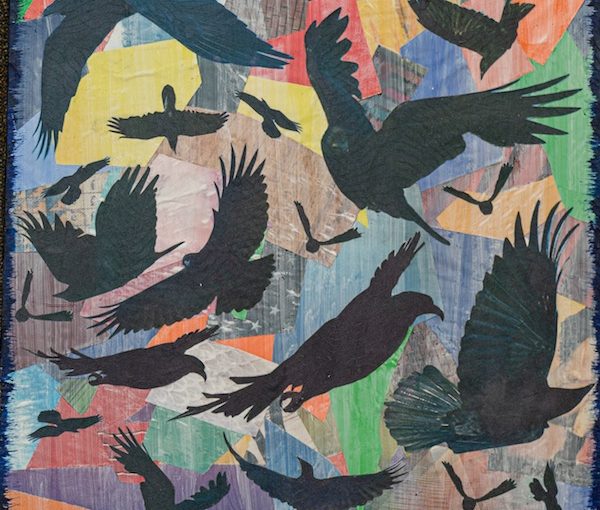
The murder of crows in Cat L’Hirondelle’s painting relates yet a different story. “I am a feminist,” said L’Hirondelle. “I was thinking about the importance of being part of a community of like-minded women. My group of longtime women friends is my family, my tribe and, like the crows, I know that they will always be there for me. Since I became disabled, I have felt more and more disassociated with the able-bodied-centric society in general. Just look at the history of people with disabilities in different societies – genocide, forced sterilizations, segregation, isolation, etc. I would love to feel that people with disabilities belong in the world. My piece is trying to impart that sense of longing to be included in general community and how crow communities seem to include everyone: the old, the disabled, the young. I have lived in the crow flight path for many years and have been watching crows’ behaviour; sometimes, I wished people were more like crows.”

image - “Leaving for Awhile” by Daniel Malenica
“Leaving for Awhile” by Daniel Malenica

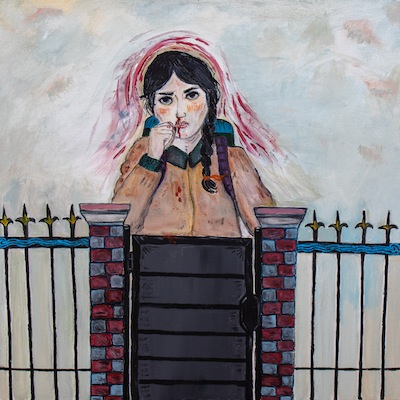
The second recurring motif in the show is loneliness, the sense of separation. Daniel Malenica’s image is distinctive among such pictures. The woman in the painting stands behind closed garden gates. She gazes at us from the painting, and the naked longing in her eyes is painful to behold. She desperately wants to open that gate and step through, to join us, but she lacks the courage. What if the people inside reject her? So, she just lingers outside, desolate and alone, waiting for an invitation.

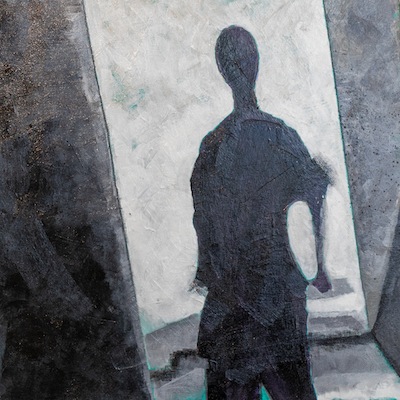
Another outstanding piece on the same theme is Estelle Liebenberg’s black and white painting “Solitude Standing.” She told the Independent, “I work primarily as a potter and a metalsmith, but I accepted the challenge to paint something for the exhibition because I’ve had wonderful times working as a substitute art instructor at the JCC. I chose the monochromatic colour palette because, at the moment, I am quite fascinated by shadows, specifically how they change the shape of objects but still remain recognizable.”

image - Estelle Liebenberg’s “Solitude Standing”
Estelle Liebenberg’s “Solitude Standing.”

Her focus for the piece was the idea of a community in general. “I’ve spent my life dealing with different communities and, I guess, for me, the lines have softened over time,” she said. “We spend so much time in our lives working on belonging, or longing to belong somewhere, to someone or something. It’s an integral part of the beauty, the joy, the frustration and the heartbreak of life. For me, this was longing and belonging as an immigrant, as an introvert, as a mother of grown children, as a single person living in a city.”

She explained the title of her painting: “It is a hat tip to a song by Suzanne Vega. For me, her words truly encapsulate the feeling of longing to belong somewhere: ‘Solitude stands in the doorway / And I’m struck once again by her black silhouette / By her long cool stare and her silence / I suddenly remember each time we’ve met.’”

Different artists explore different aspects of community and belonging, and not all the communities are small or local. For Marcie Levitt-Cooper, the community in her painting is the universe, the earth and stars encompassed by love. Esther Tennenhouse, on the other hand, contemplates the darker side of belonging.

“My piece is a photocopy from a pre-World War Two Jewish encyclopedia, Allgemeine Ensiklopedya,” Tennenhouse explained. “It was labeled in Yiddish and issued in New York in 1940, the year Germany occupied France. On first seeing this old map, I found it very poignant. The map had to fit the 16-by-16 canvas given to all participants. The format left space, and I filled it with the music of two nigguns and lyrics of six Yiddish songs.”

That colourful map with Hebrew lettering, published just before the Nazis unleashed the full horrors of the Holocaust on European Jews, made for a tragic, frightening image, despite its bright and cheery appearance.

While the exhibit includes other figurative paintings, the majority of the pictures are abstract, either simple swirls of paint or complex geometric patterns, like Daniel Wajsman’s piece – two irregular overlapping rectangles.

“I wanted to emphasize that we should bring everyone in, not leave anyone out,” he said.

Community Longing and Belonging runs to March 29.

Olga Livshin is a Vancouver freelance writer. She can be reached at [email protected].

Format ImagePosted on March 6, 2020March 4, 2020Author Olga LivshinCategories Visual ArtsTags art, Cat L’Hirondelle, Daniel Wajsman, disability awareness, Estelle Liebenberg, Esther Tennenhouse, inclusion, JCC, Jewish Community Centre, Leamore Cohen, painting

United by challenges

After two inconclusive elections in Israel, incumbent Prime Minister Binyamin Netanyahu appears certain to form a government after elections Monday, ending an unprecedented period of political instability.

Whether Netanyahu himself, under indictment and slated for a trial this month on corruption charges, will remain prime minister for long, the right-wing is certainly poised to govern for the near future. Israel’s Supreme Court explicitly refused to offer an opinion on whether a convicted prime minister could continue in office, a question that may now go from theoretical to very real.

Jews in the Diaspora, including a great many here in British Columbia, follow politics in Israel casually or closely, as many of us do the machinations of American politics that are also roiling this week. Canadian politics and those in British Columbia, around issues of environmental policy, disruptive protests and a host of other topics, have people here at home fired up about politics even without elections on the near horizon.

While there are countless issues and contests vying for our attention, there is also an undercurrent of less immediate yet possibly more ominous peril facing our democracies. Threats of external influence from bad actors, like a repetition of the Russian interference in U.S. elections in 2016, are cause for serious concern. The rise of domestic extremism – in mainstream politics as well as in the form of underground and sometimes violent movements – also deserves close attention. So does apathy.

All of these influences and attitudes present dangers to our democracies – in Canada, in the United States, in Europe and Israel. Newer democracies in Central and Eastern Europe have demonstrated how fragile the tissue of open, accountable and responsive government can be. It is alarming to witness the path that Hungary, Russia, Turkey and Poland have been on recently. Our democracies – in the United States and Canada, even Israel – may be somewhat older, but these countries are still warnings of how things that we take for granted can be snatched away. Democracy is less an enormous oak with deep and broad roots than it is a delicate flower that requires nurturing and constant attention.

For this reason, when there are government policies or election outcomes with which we disagree, we should remind ourselves that democracy may be the ultimate win-some-lose-some proposition and recommit ourselves to respect for the institutions of our democracy, not just when they serve our interests but even – especially – when they deliver outcomes that we find disagreeable. At the same time, we should be identifying and calling out every instance when a political leader or movement threatens the institutions or norms of our democracy.

Amid all of these political dramas, very daunting situations that recognize no geographic or ideological boundaries are challenging each and every one of us. This week, again, coronavirus is spreading and causing panic. Meanwhile, the dangers posed by climate change escalate every day. The economic impacts of these global concerns are blaring across the business pages: pandemic fears are causing wild stock market fluctuations, while the measures necessary to alter the course of climate change demand fundamental economic shifts. All of these threaten to exacerbate existing inequalities locally, nationally and internationally, threatening our morality and the stability of our world.

In the face of existential issues like these, the differences in our ideologies in countries like Canada, Israel or the United States fade into shades of grey. This is perhaps optimistic: that the differences between us are minimal in comparison to the difficulties we face together. That should motivate us to look beyond or to bridge our differences and recognize both the humanity in those with whom we disagree and the challenges to humankind that we must overcome together or succumb to apart.

Posted on March 6, 2020March 4, 2020Author The Editorial BoardCategories From the JITags Canada, coronavirus, democracy, economics, Israel, Netanyahu, politics, United States
Local team’s global impact

Local team’s global impact

Ran Sommer (photo from the Walking School Bus)

Ran Sommer was working as a project manager for a health region and moonlighting as a volunteer for a very small Vancouver-based international education charity. A trip to India to see the charity’s work in action changed the direction of his career – and the course of the organization.

The Walking School Bus was the brainchild of another young innovator from the Vancouver area, Aaron Friedland, who has received numerous recognitions, including a Next Einstein award, which was presented by CNN’s Anderson Cooper, and as one of the Jewish Independent’s 18 Under 36 honourees. TWSB, as it is shorthanded, emerged out of a trip to Uganda

Friedland took, where he learned that many students in that country do not attend school because it is too far for them to walk. The first step in his venture to resolve the problem was a book by the same name, which started a fundraising campaign that led to the purchase of the first vehicle, which shuttles Ugandan kids to school then does duty as a taxi in the off hours to cover expenses and generate revenue for school materials.

When Sommer returned from earning undergraduate and master’s degrees at Wilfred Laurier University in Waterloo, Ont., Friedland was one of the first people with whom he reconnected. Both alumni of King David High School, they had been in the same social circles and Sommer had followed Friedland’s successes via social media. He came on board as a volunteer, serving as director of communications.

While Sommer was getting some good training at project management in his day job at the health authority, when he joined a self-funded trip to see TWSB’s operations in India, he was inspired to take a leap into the uncertain territory of a startup nonprofit.

“I was just so blown away to actually see what I was communicating about for the last year,” Sommer said, adding with a laugh: “To see not only that it was real [but] it was 10 times better than I thought it was and I should probably be communicating it better.”

The inspiration was mixed with sadness that he didn’t feel his full-time job was as meaningful. He and Friedland sat down, figured out how to scrape together enough to give Sommer a salary that would just cover his rent and expenses and Sommer became first-ever employee of TWSB, as director of operations. (Friedland was still unsalaried at the time.)

Despite rapid growth since Sommer’s hiring, it’s still a streamlined organization, with seven employees in Vancouver and eight overseas. But, with its tight budgets and small team, the organization has branched out in a range of directions.

The organization was never simply about getting kids from Point A to Point B. First, there is a research component. Graduate students develop symbiotic relationships with TWSB, joining self-funded excursions to the operations – now in India as well – and looking at data from the projects to enhance their delivery and outcome.

Once TWSB put in place the infrastructure to get students to school, they realized some were arriving hungry and thirsty, which impedes learning. The organization added water-catchment systems, chicken coops and community-supported agriculture to their operations. They developed supplementary curriculum, dovetailing with the objectives of the school systems where they work, including an offline database that serves as a sort of virtual library. In a country like Uganda, where a vast majority of the population does not have access to electricity, let alone wi-fi, the curriculum is aided by Raspberry Pi microcomputers – about $100 each – which can communicate with one another in a localized intranet, but not access the internet. Teachers can use the tablets to project material on screens – a benefit in places like some refugee camps TWSB works, where the teacher to student ratio can be one to about 260.

Throughout the charity’s projects are economic development initiatives that both help the communities they serve and create sustainable funding for their work. They created the BrightBox Macro classroom – a shipping container retrofitted into a solar-powered classroom. While students learn in a space that takes up about seven-eighths of the space, a solar charging room powers not only the shipping container classroom but the entire adjacent school. It also provides a charging hub, where people from the community can pay a few cents to charge their cellphones, tablets, flashlights or other electronics, similar to for-profit charging hubs common throughout the developing world. These fees will add up, according to projections, to eventually pay for the entire facility over time.

TWSB also has a small but aggressive fundraising arm that obtains grants from foundations and groups including National Geographic. The academic expeditions are funded by participants themselves, who are asked to raise an additional $1,000 to $2,000.

Based on studies that indicate students can double their reading comprehension exponentially in just months through the multisensory experience of reading the words while hearing them spoken, TWSB developed Simbi.

This “reading-while-listening application” uses different voices, accents and dialects to give the reader the most relevant voice available in their respective region. Again, outcomes are studied and the data shared to make the impacts greater. Simbi began as a part of TWSB curriculum program and then expanded independently as a startup aimed at an even broader market, with Friedland as chief executive officer, while he continues as executive director of TWSB. In addition to the thousands of students served by TWSB, Simbi is in use by another 10,000 who are not part of the project and the objective is to make Simbi available to unlimited numbers.

Through partnerships with Uganda’s minister of education and the United Nations refugee agency, TWSB has expanded its reach into refugee camps and remote public schools.

“There are currently 32,500 students who are interfacing with our technology,” Sommer said. In Uganda, there are 300,000 refugee students alone – not including others in low-income, remote or otherwise underserved communities. And, with expansion into India and a scalable model that they envision taking off globally,

Sommer predicts further exponential growth.

In addition to Sommer and Friedland both having attended Vancouver’s Jewish high school, there is another Jewish connection. The project began during Friedland’s studies in economics at McGill University, with the initial initiative launched within Uganda’s Abayudaya (Jewish) community.

While the Walking School Bus has grown, with 15 employees now around the world, its strength is still in the power of volunteerism, Sommer said.

“We’ve been able to maintain our values and the pillars of the organization because of an incredibly large army of volunteers that are so involved and motivated,” he said.

Format ImagePosted on March 6, 2020March 4, 2020Author Pat JohnsonCategories LocalTags Aaron Friedland, Ran Sommer, refugees, technology, tikkun olam, Uganda, Walking School Bus
Play’s vital importance

Play’s vital importance

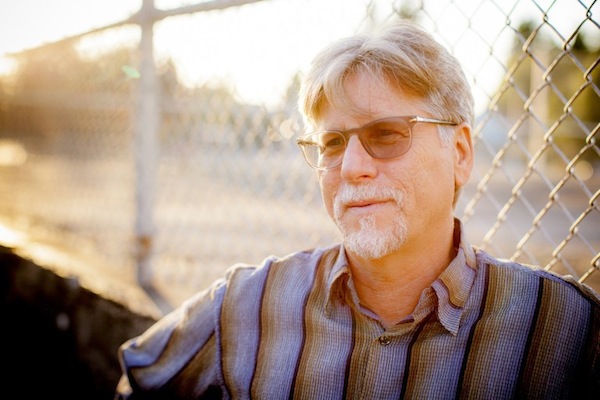
Shepherd Siegel, author of Disruptive Play. (photo by Laura Totten)

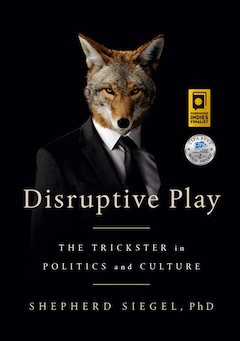
Shepherd Siegel is a hardcore idealist. At least, it would seem so, based on his book Disruptive Play: The Trickster in Politics and Culture (Wakdjunkaga Press, 2018).

“What if we didn’t take everything so seriously and capitulate to the competitions of war and business?” he writes. “What if we let our utopian dreams and desires out to play, out of the box? What if we did more than talk about it and constellated our lives around play and art instead of work and commerce?”

While all about play, Siegel’s 358-page analysis is more academic than whimsical. A writer, musician and educator, he earned his doctorate at University of California Berkeley and has more than 30 publications to his credit. Quickly into the book, he admits the inherent difficulties in writing on this topic: “By attempting to put play, an irrational activity, into the rational fictions of words, I fear that naming this magic will dispel it.” And, to some extent, it does, but his prose is clear and engaging; his examples well-explained and well-researched.

Siegel defines three types of play. Original play is what kids up to three years old do; it has no purpose except fun, it is spontaneous and creates a sense of belonging. Cultural play entails games with winners and losers; it involves learning skills through practise, it comprises rules and moral lessons. Disruptive play “disrupts the normal functioning of society”; it is “resistance to contest-based society and a public affirmation of the natural play element that pervades all life.”

Disruptive players – or tricksters – have existed throughout history, in both oral and writing-based cultures. Siegel gives some 25 examples, beginning with the trickster Wakdjunkaga, whose precise origins are unknown, but whose story comes from the Winnebago (or Ho-Chungra) tribe, “which emerged in northwestern Kentucky in roughly 500 BC. From 500 AD and for about a thousand years, they lived in what is now Wisconsin.” He ends with the Yes Men: “Jacques Servin and Igor Vamos are known by many aliases, but they are Andy Bichlbaum and Mike Bonanno when they are the Yes Men,” and they operate under the motto, “Lies can expose truth,” using guerilla theatre and other tactics, Siegel writes, to “embarrass and proclaim the sins of those who would wage unjust wars, destroy the environment, or cause the suffering and death of other people.”

image - Disruptive Play book coverSiegel discusses in depth several trickster tales from various parts of the world. He analyzes King Lear’s Fool, Bugs Bunny and The Simpsons in this context, as well as real people, such as Alfred Jarry, Marcel Duchamp, Andy Kaufman, Abbie Hoffman and others, and movements like dadaism in art, the Beat Generation in literature and rock and roll in music. He also offers a couple of models on which a play society could be based: the Fremont Solstice Parade in Seattle and Burning Man in Nevada.

While acknowledging that there are many problems in the world, Siegel foresees a time when society will be able to meet all of its members’ basic needs. When this time comes, he writes, “the greatest remaining problem will be one of establishing and maintaining societies of trust. Play, as we shall see, absolutely requires trust in order to thrive, even to exist.” However, until that time comes, disruptive play – which threatens power brokers and structures – is a dangerous venture.

“Playful adults, artists, the poor, people with disabilities and deviators are all sent to the margins,” writes Siegel. “From the 17th-century development of military tactics and the industrial revolution of the 18th century came a more prescriptive sense of the normal and the suppression of carnival celebrations and urges … thus the binding of the Trickster spirit. The concentration of power, by its very nature, requires divesting this spirit, treating the Trickster as the Fool or court jester. But eventually the Fool makes fools of those who would constrain, punish and repress Trickster spirit.”

Unfortunately, while most of the tricksters Siegel highlights do indeed have their time in the sun and they manage, for awhile, to speak truth to power and get people to question their values and society’s direction, their lasting impact has been minimal, even if they themselves have proven memorable. The potential for building a play society – given Siegel’s convincing argument that capitalism or commercialism and play are antithetical – is a long shot. The models of Fremont and Burning Man are small-scale, time-bound events and do not seem feasible as models for society as a whole, for any length of time.

That said, Siegel’s is an exciting vision. “As (and if) our society achieves economic, environmental and social balance, the search for a meaningful life will take on greater importance and become more complex,” he writes. In this utopia, play, which “has meaning but not purpose … is the perfect antidote for existential crisis in a world of questionable purposes. Only by entering a state that discards purpose – that plays – might our true purpose be discovered.”

Format ImagePosted on March 6, 2020March 4, 2020Author Cynthia RamsayCategories BooksTags culture, disruptive play, mythology, Shepherd Siegel, storytelling, trickster

Posts pagination

Previous page Page 1 … Page 272 Page 273 Page 274 … Page 664 Next page
Proudly powered by WordPress