Skip to content
  • Home
  • Subscribe / donate
  • Events calendar
  • News
    • Local
    • National
    • Israel
    • World
    • עניין בחדשות
      A roundup of news in Canada and further afield, in Hebrew.
  • Opinion
    • From the JI
    • Op-Ed
  • Arts & Culture
    • Performing Arts
    • Music
    • Books
    • Visual Arts
    • TV & Film
  • Life
    • Celebrating the Holidays
    • Travel
    • The Daily Snooze
      Cartoons by Jacob Samuel
    • Mystery Photo
      Help the JI and JMABC fill in the gaps in our archives.
  • Community Links
    • Organizations, Etc.
    • Other News Sources & Blogs
    • Business Directory
  • FAQ
  • JI Chai Celebration
  • JI@88! video

Recent Posts

  • Story of Israel’s north
  • Sheltering in train stations
  • Teach critical thinking
  • Learning to bridge divides
  • Supporting Iranian community
  • Art dismantles systems
  • Beth Tikvah celebrates 50th
  • What is Jewish music?
  • Celebrate joy of music
  • Women share experiences 
  • Raising funds for Survivors
  • Call for digital literacy
  • The hidden hand of hate
  • Tarot as spiritual ritual
  • Students create fancy meal
  • Encouraging young voices
  • Rose’s Angels delivers
  • Living life to its fullest
  • Drawing on his roots
  • Panama City welcoming
  • Pesach cleaning
  • On the wings of griffon vultures
  • Vast recipe & story collection
  • A word, please …
  • מארק קרני לא ממתין לטראמפ
  • On war and antisemitism
  • Jews shine in Canucks colours
  • Moment of opportunity
  • Shooting response
  • BC budget fails seniors
  • Ritual is what makes life holy
  • Dogs help war veterans live again
  • Remain vital and outspoken
  • An urgent play to see
  • Pop-up exhibit popular
  • An invite to join JWest

Archives

Follow @JewishIndie
image - The CJN - Visit Us Banner - 300x600 - 101625

History as a foundation

In her talk at the White Rock South Surrey Jewish Community Centre on Nov. 23, Elana Wenner articulated what many in the room felt: that understanding our local history is not only a matter of dates and facts, but of recognizing the people and decisions that shaped Jewish life in British Columbia.

Wenner is director of programming and development at the Jewish Museum and Archives of British Columbia (JMABC). She offered participants at the WRSS JCC an opportunity to learn, ask questions and connect with a narrative that continues to inform how communities develop today.

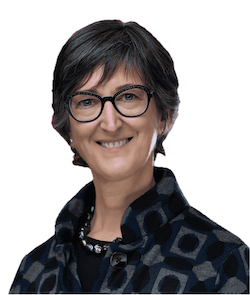
photo - Elana Wenner, director of programming and development at the Jewish Museum and Archives of British Columbia
Elana Wenner, director of programming and development at the Jewish Museum and Archives of British Columbia. (photo from JMABC)

Wenner framed the museum’s work as a living effort: one rooted in storytelling, preservation and accessibility. Since its founding in 1971, the museum has aimed to collect and safeguard materials that reflect the breadth of Jewish life across the province. While the JMABC’s office is in Vancouver, the physical archives are in Steveston, and much has been digitized. The museum’s holdings include an extensive collection of photographs, oral histories, community records and artifacts that trace the evolution of BC Jewish communities from the 1850s to the present. As Wenner explained, the goal is not only to document the past, but to continually bring it forward through tours, public programs and exhibitions that invite ongoing engagement.

A significant portion of the talk focused on the formation of early Jewish communities here, with Victoria serving as the central example. Wenner outlined how Jewish settlement in the province grew in tandem with broader economic shifts – particularly, the Fraser River Gold Rush of 1858, which drew thousands of newcomers, including Jews, arriving largely from San Francisco. Unlike many immigrant populations fleeing hardship, early Jewish settlers often came from stable or middle-class backgrounds, equipped with professional experience and communal networks established during prior periods of Jewish emancipation in Western Europe. This shaped the type of roles they took on upon arriving in British Columbia.

Rather than heading directly into the goldfields, Jewish settlers tended to create the infrastructure that supported the prospectors. Businesses, supply stores and service-oriented ventures were the backbone of Jews’ early contributions. By the 1860s, Jews owned a notable portion of the establishments in Victoria’s commercial district, helping transform what was still a young settlement into a functioning hub. One example highlighted in the talk was the Victoria Dry Goods Store, run by Kady Gambitz. Far more than a retail space, the store became a gathering point where members of the small but growing Jewish community could meet, organize, and exchange news. It became, as Wenner described, “a community centre before the community had a centre.”

This comment led into a discussion about what it takes to build a Jewish community from the ground up. Drawing on both historical evidence and contemporary observations, Wenner outlined several elements: a critical mass of people, stability and safety, access to kosher food and religious rituals, a cemetery, communal leadership and, eventually, the capacity for self-organization. In Victoria, one of the first formal steps was the creation of the Victoria Hebrew Benevolent Society around 1860/61, which coordinated charitable efforts and helped fund essential communal needs, including education and welfare. The society’s earliest priority, Wenner noted, was establishing a Jewish cemetery; a cornerstone of Jewish communal life reflecting the importance of honouring the dead according to tradition.

Wenner also spoke about the construction of Victoria’s Congregation Emanu-El. While today it stands as the oldest continuously operating synagogue in Canada, its path to completion was complicated. Tensions between more reform-minded members, who preferred a church-like architectural style, and traditionalists, who insisted on a recognizably Jewish structure, stalled progress. The turning point came through the efforts of the Victoria Ladies Hebrew Aid Society. Through fundraising events, including a community ball that attracted attendees from across the city, they raised sufficient funds to move the project forward. In the end, both visions were incorporated: a subdued exterior aligned with contemporary preferences and a traditional interior complete with a women’s gallery. The synagogue, completed in 1863, remains a testament to compromise, cooperation, and the decisive leadership of Jewish women, who often worked behind the scenes.

Throughout the presentation, Wenner emphasized how women’s contributions extended far beyond fundraising. They maintained communal spaces, organized cultural events and helped establish social services that supported families and newcomers. Their work, preserved through handwritten receipts, event notes and donation lists – all of which can be found in the archives – highlights a broader pattern: that community endurance is rarely the work of a few visible leaders, but of the collective efforts of many.

Wenner also touched on the political influence of early Jewish settlers. Figures such as Lumley Franklin, Victoria’s mayor and the first elected Jewish mayor in North America, and David Oppenheimer, Vancouver’s second mayor, were presented not merely as historical footnotes but as individuals whose civic engagement reflected the integration and ambition of the province’s early Jewish community. Henry Nathan, Canada’s first Jewish member of Parliament, who represented Victoria in Ottawa, and Samuel David Schultz, the country’s first Jewish judge, further illustrate the ways in which Jews have contributed to the shaping of public life in the region since they arrived.

As Wenner’s talk moved into the Q&A session, attendees asked about migration patterns, economic networks, and how early Jewish settlers balanced maintaining tradition with adapting to a rapidly developing province. Wenner’s responses blended archival detail with broader social insight, giving the discussion a conversational quality that matched the curiosity in the room.

By the end of her presentation, what emerged most clearly was a sense of continuity. Early Jewish settlers faced many of the same issues we do today surrounding organization, leadership, collaboration and identity. The history Wenner shared was not distant; it was grounding. It provided a reminder of how communities form, evolve and endure through intention and shared purpose. 

Chloe Heuchert is an historian specializing in Canadian Jewish history. During her master’s program at Trinity Western University, she focused on Jewish internment in Quebec during the Second World War.

Posted on December 19, 2025December 19, 2025Author Chloe HeuchertCategories LocalTags Elana Wenner, history, Jewish Museum and Archives of BC, JMABC

Music can comfort us

On Dec. 3, in the second webinar of Kolot Mayim Reform Temple’s 2025/26 Building Bridges Lecture Series, Rabbi Deborah Sacks Mintz guided an interactive examination of the potential to harness the power of music, especially that which provides solace, be it secular or liturgical.

photo - Rabbi Deborah Sacks Mintz, director of prayer and music at the Hadar Institute in New York
Rabbi Deborah Sacks Mintz, director of prayer and music at the Hadar Institute in New York. (photo from Hadar Institute)

The director of tefillah (prayer) and music at the Hadar Institute, an educational organization in New York City, Sacks Mintz showed how, through text study, deep listening and participation, comfort (or anchor) songs can ignite creativity and provide strength, resilience and hope in an individual – and also serve communities in times of disruption.

“Tumultuous times are unfortunately nothing new. Times have been tumultuous since the dawn of humanity. And, also since the dawn of humanity, folks have drawn comfort from a variety of modalities,” she said, emphasizing that one of those modalities is communal song.

The talk began with a listening and reflection exercise around the question of comfort. Before playing a version of Hashiveinu, performed by Sacks Mintz and members of the Nigun Circle at Hadar, she asked participants to write down something that gives them comfort. The answers were varied and dynamic, ranging from prayer, food and song to family, friends and nature.

The role of comfort music in Jewish text was explored, starting with 1 Samuel: “So, it came about whenever the [evil] spirit from God came to Saul, David would take the harp and play it with his hand, and Saul would be refreshed/re-expanded, and be well, and the evil spirit would depart from him.”

Some in the Zoom audience described what happened in this passage as a possible early form of music therapy, bringing Saul healing and comfort.

Moving ahead several centuries, Sacks Mintz quoted Rabbi Nachman of Breslov’s encouragement for all to sing a niggun (wordless melody, often used in prayer): “It is good for a person to accustom oneself to reviving oneself with a niggun, because niggun is a powerful and mighty tool, and it has the great strength to awaken a person and point their heart towards the Blessed Name.”

Nachman called everyone to music, even those who could not play an instrument or were able to sing, said Sacks Mintz, for music has the power to revive the self, “for the lift of a niggun cannot be measured.”

She explained, “[He’s] not saying, wow, you should become a pro jazz musician and an amazing singer, and then you too can be sustained by song. You just have to be willing to engage in it on your own, and that can revive the self. It’s about being in a relationship with your internal world.”

Sacks Mintz shared two different pieces from the Jewish canon that comfort her, while asking the audience to reflect and unpack what might be core elements in the language of comfort they offer. She also asked the audience to consider what constitutes a comfort song for them.

One piece was by Rabbi Menachem Goldberger, a prolific composer of niggunim. It was an example of the various feelings one can experience in a piece of music. Reactions ran the gamut from feeling rejuvenated and uplifted to grounded and anchored. Similar feelings were expressed after “Mi Yiten Li Ever,” a song based on Psalm 55:7 by Rabbi Miriam Margles and the Hadar Ensemble, was played. The translation on its Bandcamp page reads: “Who will give me the wings of a dove, that I might fly away and find rest? I would flee to the wilderness; finding refuge from the tempest, from the sweeping wind.”

As well as being a facilitator of Jewish communal music, Sacks Mintz is a vocalist and multi-instrumentalist. As a performer and composer, she has collaborated on more than two dozen albums across the Jewish soundscape, including her original spiritual works The Narrow and the Expanse (2020) and Yetzira (2023), with Rising Song Records. A third album is expected in early 2026.

Sacks Mintz received rabbinic ordination from the Jewish Theological Seminary, holds a master’s degree in women’s and gender studies, and earned degrees in music and religious anthropology from the University of Michigan.

Founded in 2006, the Hadar Institute strives to build communities in North America and Israel, offering various programs to support the development of Judaism that is both traditional and egalitarian.

The next lecture in the Kolot Mayim series will feature Broadway historian and lecturer David Benkof on Jan. 11 at 11 a.m. Benkof will deliver his talk – Spotlight on Jewish Broadway with the Broadway Maven – in Victoria in person and on Zoom. For information, visit kolotmayimreformtemple.com.

Sam Margolis has written for the Globe and Mail, the National Post, UPI and MSNBC.

Posted on December 19, 2025December 18, 2025Author Sam MargolisCategories LocalTags Building Bridges, communal song, Deborah Sacks Mintz, Hadar Institute, history, Judaism, Kolot Mayim, music

New chapter for JFS

Shelley Rivkin is the new chair of the Jewish Family Services (JFS) board of directors. Rivkin steps into the role at a pivotal moment, succeeding outgoing board chair Jody Dales, who led the organization through the pandemic and the milestone of securing a permanent home for JFS for the first time in its 89-year history. Rivkin will guide the next phase of development for JFS’s newly acquired 22,000-square-foot facility on Commercial Drive, which is slated for a major renovation to become a fully integrated hub for food security, mental health, seniors support, housing navigation and counseling services. This renovation represents the most substantial infrastructure improvement in JFS’s history and will ensure the organization can meet the community’s growing needs for decades to come.

“Shelley brings deep strategic insight, decades of experience in community planning and a profound commitment to serving vulnerable populations,” said Tanja Demajo, chief executive officer of JFS. “Her leadership will be essential as we transform our new building into a future-ready social-service centre.”

photo - Shelley Rivkin takes over from Jody Dales as chair of Jewish Family Services’ board
Shelley Rivkin takes over from Jody Dales as chair of Jewish Family Services’ board. (photo from JFS)

Rivkin currently serves as the executive director of Congregation Schara Tzedeck, bringing her expertise in community planning, organizational development and social-impact strategy.

Prior to her current role, Rivkin spent 17 years at the Jewish Federation of Greater Vancouver, where she advanced major community priorities including poverty reduction, housing initiatives, mental-health strategies and global Jewish engagement. Her work has shaped policy, strengthened nonprofit capacity and guided some of the community’s most significant collaborative efforts.

In addition to her professional leadership, Rivkin has volunteered extensively across community organizations and advisory bodies, consistently championing inclusive, evidence-based and people-centred approaches to communal service.

“JFS is entering an incredibly exciting phase,” said Rivkin. “Our new facility will allow us to expand our services, integrate programs more meaningfully, and respond to the urgent and growing needs of individuals and families across the Lower Mainland. I’m honoured to support this work alongside a dedicated board, staff team and community.”

photo - Jody Dales, outgoing chair of Jewish Family Services’ board of directors
Jody Dales, outgoing chair of Jewish Family Services’ board of directors. (photo from JFS)

Dales reflected on the transition and Rivkin’s appointment.

“It has been one of the great honours of my life to serve as board chair of JFS during such a transformative time,” said Dales. “Shelley is exactly the leader JFS needs for this next chapter. Her deep understanding of community needs, her integrity and her ability to bring people together will be invaluable as we move forward with the renovation of our new home on Commercial Drive. I have complete confidence in her leadership and look forward to seeing JFS thrive under her guidance.”

Dales’ tenure included guiding the organization through COVID-related challenges, the launch of the Kitchen food hub, expanded mental-health and addiction services through JACS Vancouver, and the acquisition of JFS’s permanent facility.

The new Commercial Drive facility will allow JFS to significantly expand its reach and integrate services under one roof. Planned features include an accessible food-security centre; expanded counseling, addiction support and mental-health services; seniors programs and community navigation; purpose-built spaces for group programs and workshops; and infrastructure to support case management, housing navigation and emergency financial assistance.

– Courtesy Jewish Family Services

Posted on December 19, 2025December 18, 2025Author JFS VancouverCategories LocalTags Jewish Family Services, JFS, Jody Dales, milestones, Shelley Rivkin
The value(s) of Jewish camp

The value(s) of Jewish camp

Summer camp experiences, which encompass a range of activities campers get to try, can be costly.  (photo from Camp Hatikvah)

If you get sticker shock when you see the cost of Jewish summer camp, you’re not alone. Pay full fare and you could easily be spending $1,000 per week. But there’s a reason it’s so high, say camp directors. Running a Jewish camp is an expensive endeavour – and it’s not getting any cheaper.

For Camp Hatikvah, which welcomes 480 summer campers to the Okanagan each year and a staff of 90, the biggest chunk of its operating budget – just over $2 million in 2024 – is salaries and honorariums. Only two staff members have year-round employment and the rest serve only in seasonal roles, said Liza Rozen-Delman, executive director. Food is the next largest expense, followed by costs related to site operations. And the general program experiences, which encompass the range of activities campers get to try, don’t come cheap either. Hatikvah campers get to waterski and wakeboard, and have access to an inflatable thunderdome on the lake, among other experiences. Now add the cost of insurance to the equation.

“Camper fees cover the direct costs of care, supervision, food and other daily needs, but donors fund all capital projects, major equipment purchases and our financial assistance program,” she said. “Camp could never break even on fees alone. We rely on our donors to help offset operational costs by funding anything considered an investment that lasts beyond a single summer.”

The biggest challenge facing Jewish camps across North America is maintaining affordability for middle-income families, Rozen-Delman said. “All camps, including ours, have wonderful financial assistance programs for those in clear need. What is harder to manage is families who earn higher incomes but struggle to balance the high cost of living an engaged Jewish life.”

Hatikvah tries to manage this by setting its camp fees as low as possible and requesting donations from those who can donate. “We’re fortunate to have donors who understand the immense importance of a Jewish camping experience,” she said.

The same is true for other camps. 

“Camp tuition doesn’t cover the cost of operating Camp Miriam and, as expenses continue to rise, that gap only widens,” said Leya Robinson, Miriam’s community director, who noted that no camper is turned away due to lack of funds and about 40% of campers receive a scholarship each summer. 

“We rely heavily on donors and grants not only to uphold this commitment but also to cover essential camp operating costs,” said Robinson. “Operating costs include salaries, staff training and benefits, food services, facility maintenance, utilities, insurance, programming, transportation, property taxes, equipment, medical supplies, annual organizational dues and fees, and security.” She added that the camp, which is located on Gabriola Island, is in the midst of a capital campaign “to upgrade our physical facilities so we can continue delivering the ‘Miriam magic’ for generations to come.”

Camp Miriam has more than 350 campers each summer and 85 summer staff. Throughout the year, they have three full-time and three part-time staff.

In Washington State, Camp Solomon Schechter welcomes 630 campers over the course of a summer, and has a staff of 80 to 100.

“Tuition covers only 80% of our operating costs, so we rely on the community to help us with donations, and on our diversifying revenue stream, which includes an outdoor school and a retreat centre available for rent,” said Zach Duitch, executive director. 

Schechter is a kosher camp, and kosher food, especially meat, chicken and cheese, are much more expensive than their non-kosher equivalents. The cost of taking care of 100 staff is high, and running high-quality programs infused with Jewish values and themes requires significant funds, too. Up to 30% of camp staff comes from Israel, South America and the United Kingdom. “We love that delegation and we can’t run the camp without them, but, between agency fees, flights and visas, the costs add up,” Duitch said.

photo - Camp Solomon Schechter kids with Israeli flag and faceprint
The camp experience helps Jewish youth develop lifelong friendships, connect to Israel and have a strong Jewish identity. (photos from Camp Solomon Schechter)

Programming fees are expensive, too. “Today’s parents want and expect their kids to develop new skills at camp, and that demands staff and supplies,” he said. “It’s not enough to play gaga or kick a soccer ball around for three weeks. They want a new toolkit and to know their kids are advancing their skills in terms of tefillah [prayer], sports, arts, cooking and everything we do at camp.”

Like Rozen-Delman, Duitch emphasized the quandary of camp fees for middle-class families. “Affluent families can afford to send their kids to camp. About 25% of our camper base requests some level of financial aid,” he said. “The trickiest part is for middle-class families that want to send their kids to camp. Maybe they need to put a new roof on their house, and that takes priority. How do we make sure all families can come to camp? We know how essential the camp experience is in terms of developing lifelong friendships, connecting to Israel and fomenting a strong Jewish identity.”

Schechter’s annual operating budget is $5.5 million and, while the camp has figured out how to stay financially solvent, it can get challenging when donors drop the size of their gift, or if the camp doesn’t meet its campership goals. “We’re creative and, if we have to pivot, we certainly do,” Duitch said. “We need to focus on endowment, life or legacy gifts, because those can add thousands of dollars into your operations without touching the principal. Our goal is to grow our endowment to secure our programs and infuse cash into our operating budget.”

Consider this, said Stacy Shaikin, executive director of Camp BB Riback in Alberta. “We open six weeks ahead of summer camp, to ‘turn the machine on’ before the kids can come out. There’s an insane number of requirements – health, safety, certifications, and all that stuff has increased in price. We don’t just pay the counselors, we house and feed them. And, remember, nothing in the Jewish community comes cheap. You’re dealing with a market that is small and has ethnocentric needs, such as kashrut and special skills required for teaching. We bring in Israelis to add those cultural pieces to the experiences, and that comes at a cost, too.”

Camp BB Riback welcomes around 250 campers and 70 staff each summer, and its prices run at the lower end of the Jewish camp fee spectrum Canada-wide, said Shaikin. However, there are costs of running a Jewish summer camp that can’t be avoided.

“I have 40-plus buildings that use electricity, a boat that requires maintenance and fuel, a ropes course that has to be certified every year, a horse program and a swimming pool. Anyone that runs a swimming pool will tell you it’s a money pit,” Shaikin said. “And, every year that goes by, you have to think about renovations and replacements.”

He stressed, “I’m not complaining – I’m just offering insight into the business. We’re not-for-profit and our goal is to not lose money, but also to put something back into keeping our campsite up.” 

Most of the nearby Jewish summer camps were established more than 70 years ago and maintenance costs run high – keeping the property competitive and its facilities clean, safe and up to code, means putting money back in every year. 

So, as you start to consider a Jewish camp experience for your child, keep in mind the value being offered, as well as the values being imparted.

“We’re not making money at our Jewish camp. We’re literally just trying to keep the business afloat and out of debt, which is a struggle for not-for-profits,” Shaikin said. “We’re a community entity and we’re not gouging families in any shape or form. We take our responsibility seriously: to encourage people to send their kids to Jewish summer camp. If they do, then we will continue to have a flourishing Jewish identity in our province, our country and in the world.”

Lauren Kramer, an award-winning writer and editor, lives in Richmond.

Posted on December 19, 2025December 18, 2025Author Lauren KramerCategories UncategorizedTags economics, Jewish summer camp, Judaism, summer, values
Chance led to great decision

Chance led to great decision

The list of things that kids learn at summer camp, while having fun and making friends, is almost endless. (photo from Camp Miriam)

Serendipity led us to Camp Miriam. In the span of one week in the fall of 2017, two friends – who didn’t know each other at the time – asked where I was planning to send my then–7-year-old daughter to camp. I had been thinking about it but had no idea where to begin. Having not grown up in Vancouver, I didn’t know the options. Both friends spoke glowingly about Camp Miriam. One was an alum; the other had sent her older daughter.

Camp registration day was approaching, and both of my friends’ daughters were desperate to know who else would be going. I relied on those moms’ advice and, with their gentle prodding, made one of the best parenting decisions I’ve ever made. To this day, these moms remain among my most trusted friends.

That first summer, after the five-day introductory session for her age group at Camp Miriam, our daughter came down the steps at the ferry terminal looking exhausted but happy. She was holding hands with a new friend. She hugged her friend goodbye before she hugged us hello. In the car ride home, we asked her to tell us about camp.

“There was a big holiday and it was so much fun. Can I go to camp every year for that holiday?”

I pulled out my phone to Google Jewish holidays in July. There were a few obscure ones, but nothing that seemed worth traveling on three buses and two ferries to celebrate.

“Do you remember what holiday it was?” I asked.

“They called it Shabbat.”

My husband and I looked at each other.

“Shabbat happens every week – we celebrate Shabbat, too,” I started to explain. From the rearview mirror, I could see her face scrunch up.

“Well,” she said, “they celebrate it much better at camp.”

It turns out Shabbat isn’t the only thing they do better at Camp Miriam.

Recently, I asked my daughter what she loves most about camp. She mentioned a few specifics – tiyul (the overnight backpacking trip), rikud (the weekly Shabbat Israeli folk dance) – and then said something I wasn’t expecting, because it’s exactly the same thing I love most about Camp Miriam. She said her favourite thing is how much she learns there.

photo -  two boys carrying a pail
(photo from Camp Miriam)

As she rattled off the list of topics – Israel, Jewish traditions, Hebrew, practical skills, responsibility – I realized how often I’m pleasantly surprised by what she has learned from camp. Things beyond the public school curriculum, and often beyond even my most patient and, dare I say, awesome parenting. Camp is both a safe space and a challenging one. At camp, my daughter has the opportunity to hone essential life skills: independence, resilience, teamwork, acceptance, adaptability. She has gained confidence, built friendships, appreciated the restorative power of nature, and enjoyed time away from screens. She has learned to paddle a kayak, varnish a wooden canoe, and passed the swim test doing the backstroke the year she forgot her goggles and decided the chlorine stung her eyes. She didn’t even know what varnish was before camp. And I didn’t know she could backstroke across an entire pool.

I’ve learned a lot, too.

The Camp Miriam registrar later told me I had been the stereotypical nervous mom. I would show up at information sessions full of concerns and fire endless questions at the staff. Eventually, she gently reminded me that my anxiety could rub off on my child. “We’ve got this,” she told me. Then, she gave me the most valuable advice of all: “Tell your kid that when they’re at camp, they should go to their counselors with their concerns and problems. That’s what they’re there for.” I can honestly say that in all the years she’s been at camp, the counselors have been there for her 100%. After a few years, I realized I should leave space at the information sessions for the new crop of nervous parents.

We’re now getting ready to send our daughter to Israel this summer with her Camp Miriam kvutzah (peer group). I’m no longer the nervous mom I was. Camp Miriam has helped me hone my own parenting skills. Even if a bit of nervousness still lingers – though I won’t admit it does – I’m mostly just thrilled for my daughter. I’m full of gratitude for the experiences camp has given her. I know this upcoming trip will be transformative, and that she’ll come back with greater insight, understanding and appreciation of Israel and Judaism. She will make friends from around the world and return home an even more confident, compassionate and resilient human being.

And, after the trip, when I pick her up at the airport, as she hugs her camp friends goodbye, I’ll be busy hugging my camp-mom friends hello.

Format ImagePosted on December 19, 2025December 18, 2025Author Michelle PlotkinCategories LocalTags Camp Miriam, Jewish summer camp, Judaism, parenting, summer camp

From the JI archives … camp

image - article from Sept. 3 1937 JWB
Sept. 3, 1937: “It is practically impossible in the space of a short article to fully describe the happy holiday enjoyed by eighty-five children at the Council of Jewish Women Camp at Crescent Beach this summer,” begins this article by Mrs. M. M. Grossman. I know the first “M” refers to Max, but I couldn’t find his wife’s name before we went to press.

What strikes me every time the Jewish Independent does a Camp Guide issue is the staying power of our Jewish summer camps.

Camp Hatikvah was started in 1937 at Crescent Beach by the National Council of Jewish Women. It was run under their auspices until 1944, when, according to the camp’s website, “members of the Young Judaea youth organization arranged to first rent, and then later acquire, the property to create Camp Hatikvah.” The camp is located on Lake Kalamalka in the Okanagan Valley.

The site quotes the Independent’s predecessor, the Jewish Western Bulletin, noting that a 1949 article in the JWB stated that “Camp Hatikvah provided early participants with a ‘place where they could live and express themselves as Jews, unhampered with fear of others and free from the out-of-place feeling that is so often a part of North American Jewishness.’ Developed in the aftermath of the Holocaust, Hatikvah existed to ‘produce proud, happy Jewish youth who were earnest and sincere in their beliefs’ and committed to the re-building of the Jewish people.”

image - April 22, 1955: Camp BB Riback comes into existence.
April 22, 1955: Camp BB Riback comes into existence.

And the camp wasn’t territorial, it appears. According to a 1948 article in the JWB, Camp Hatikvah allowed Habonim Machaneh (Camp) to use its facilities for two weeks. By 1949, Habonim was renting a camp on Gabriola Island and, by 1951, Habonim Camp Miriam was in its third year, but, it seems, its first with the name Camp Miriam.

Camp BB Riback, in Pine Lake, Alta., was founded in 1955, led by Ted Riback of Calgary, who was chair of the B’nai B’rith Camp committee. There were two articles in the April 22, 1955, JWB about it, one about the camp and one about the upcoming B’nai B’rith convention, the highlight of which was anticipated to be a discussion about the camp.

image - July 13, 1956: Kids from Vancouver have always attended Camp Solomon Schechter in Washington state.
July 13, 1956: Kids from Vancouver have always attended Camp Solomon Schechter in Washington state.

While Camp Solomon Schechter was established by rabbis Joshua Stampfer and Joseph Wagner in 1954, the first mention I could find of it in the JWB was in 1956. The week-long camp at Echo Lake, Wash., was also under the supervision of Rabbi Bert Woythaler of Vancouver’s Congregation Beth Israel and the Pacific Northwest Region of the United Synagogue sponsored it. The camp has been located near Olympia, Wash., since 1968.

image - Dec. 29, 2006: Even before Camp Kalsman had a summer session, they were part of the Jewish Western Bulletin’s Camp Guide
Dec. 29, 2006: Even before Camp Kalsman had a summer session, they were part of the Jewish Western Bulletin’s Camp Guide.

Relative newcomer Camp Kalsman started in 2007, and the JWB has followed it since its beginnings, as well. In 2006, the camp ran an ad looking for a director and, in our Dec. 29, 2006, Camp Guide, David Berkman, the newly appointed director, spoke to the paper about the Union for Reform Judaism camp, in Arlington, Wash. “The buildings are under construction. Staff and campers are being recruited; programs are being planned and we must buy everything – bunks, bats, balls, arts and crafts supplies, mops…. I have a long wish list,” he said.

As that 2006 article by Pearl Salkin noted, “The camps might not have big brass bands, but the excitement is already building. If you want your children to join in the fun, sign them up now, before the parade passes by.”


Posted on December 19, 2025December 18, 2025Author Cynthia RamsayCategories LocalTags history, Jewish summer camp, Jewish Western Bulletin, JI @ 95, JWB

עשרים ואחת שנים להגעתי לונקובר

בראשית השנה החדשה ימלאו עשרים ואחת שנים להגעתי לונקובר ואין ספק שהזמן רץ כל כך מהר. לו יכולתי להחזיר את שעון הזמן אחורה הייתי עוזב את ישראל שנים קודם לכן. כבר בראשית שנות השמונים (לאחר השחרור מהשירות הצבאי) היה לי חלום שלא הרפה ממני והוא לעבור לגור בחו”ל. לאורך המשך שנות חיי הצטרפו סיבות נוספות (לחלום) מדוע רציתי לעזוב את ישראל ולבסוף עשיתי זאת רק בראשית שנת אלפיים וחמש.השנים הראשונות היו קשות במיוחד על רקע העבודה שנאלצתי להתמודד עם המציאות הלא פשוטה שבונקובר לא אוכל לעבוד עוד בתחום המדיה, כפי שעשיתי שנים בישראל. אמנם כתבתי כפרילאנס במשך שנים מכאן לישראל עבור ידיעות אחרונות ווינט, אך אין מקום להשוואה לעבודה הקבועה בארץ. במקביל התחלתי להבין שהמנטליות הקנדית שונה לחלוטין מזו שבישראל וזה לוקח זמן די רב להתאים את עצמך לכך

מכל מקום אחרי שעבדתי במשך כשבע שנים כמחפש מידע עבור חברה פיננסית מקומית, לאור הרקע העיתונאי שלי, הצטרפתי לחברת פרוגרסה שבה אני עובד עד היום – במשך אחת עשרה וחצי שנים. מדובר בחברה פיננסית שמספקת הלוואות ללקוחות שלא יכולים לקבל הלוואה מהבנק (בשל קרדיט גרוע). בשנתיים הראשונות שימשתי מנהל קשרי לקוחות ומזה קרוב לתשע וחצי שנים אני הוא מבקר החברה. זו עבודה אחראית ומאתגרת ואני אוהב לעשותה. אני לא חושב בשלב זה כלל על נושא הפרישה למרות שבקנדה הגיל הרשמי לצאת לפנסיה הוא 65. מבחינתי הכל פתוח לגבי השאלה עד מתי אמשיך לעבוד בחברה

בהיבט האישי יש לי זוגיות קרובה במשך למעלה משמונה שנים וזה מעניק יציבות לחיי שנינו. בת הזוג שלי הגיעה מסין והפכה את ונקובר כמוני, לבית הקבוע שלה. למרות הרקע השונה יש לנו עניין משותף בלא מעט תחומים בהם אמנות, מוסיקה ועיצוב. שנינו מאוד אוהבים את אירופה והקלאסיות שבה. מאוד נהנינו לבקר בשנים האחרונות בציריך, ברצלונה, מדריד, לונדון, דבלין ואמסטרדם – שהיא עדיין העיר האהובה עלי. אנו מתכננים בשנים הקרובות להמשיך ולטייל בערים המרכזיות של אירופה

אני אוהב לחלק את בני האדם לשתי קבוצות מרכזיות: עכברי עיר ועכבר שדה. אנו עכברי עיר שאוהבים את מה שהערים יכולות להציע, ובעיקר בתחום התרבות. בנוסף הנוף העירוני מושך אותנו בעיקר כשמדובר במבנים עם היסטוריה ארוכה

בשעות הפנאי ביוזמתי אנו לוקחים חלק באירועי מוזיקה המתרחשים בונקובר בהם: קונצרטים של התזמורת הסימפונית המקומית ואופרות של בית האופרה המקומי. בנוסף אנו הולכים בקביעות למועדון הג’אז המקומי שמארח אמנים מארה”ב ומקומיים כאחד. בתחום מוסיקת הפופ הלכנו למספר הופעות באצטדיון הגדול (שנמצא סמוך לביתנו) ובהן של: פול מקרטני, אלטון ג’ון, פיטר גבריאל, להקת קולדפליי וטיילור סוויפט.

יש לי כאן גם מספר חברים ורובם לא ישראלים וזה טוב כי חיפשתי להשתלב בחברה המקומית ולא להישאר זר לנצח . גיוון החברים שלא שייכים לקבוצה אחת ואף לא מכירים אחד את השני, הופכים את המפגשים עימם למעניינים ופוריים. מי שמכיר אותי יודע שאני לא אוהב מפגשים חברתיים בקבוצות גדולות, אלה מפגשים של אחד עם אחד או זוג עם זוג נוסף

ונקובר נחשבת לאחת הערים היפות בעולם עם טבע מדהים גם ממש בעיר עצמה. לא צריך להרחיק לכת כדי להגיע לפינות טבע שקטות, כיוון שהעיר מוקפת במים ובתוכה נמצאים מספר פרקים בהם סטנלי פארק שהוא גדול מהסנטרל פארק של ניו יורק. בהחלט עיר שמומלץ לבקר בה

Posted on December 17, 2025December 10, 2025Author Roni RachmaniCategories עניין בחדשותTags Israel, reflections, travel, Vancouver, work, ונקובר, ישראל, לטייל, עבודה

Eby touts government record

More than 18 months ago, Charlotte Kates, who is identified as the international coordinator of Samidoun Palestinian Prisoner Solidarity Network, made inflammatory remarks at a rally in Vancouver. She celebrated the 10/7 terror attacks by Hamas against Israel, calling them “heroic and brave” and led the audience in chants of “Long live Oct. 7.” She referred to terrorist organizations as “resistance fighters” and “heroes.” 

After an investigation, the Vancouver Police Department recommended charges against Kates based on Criminal Code provisions against incitement of hatred. Later last year, the federal government designated Samidoun a terrorist entity.

A year-and-a-half after the police sent its report to Crown counsel, no charges have been laid. In a year-end interview with BC Premier David Eby, the Independent asked why the attorney general has not acted to either bring charges or to explain why charges are not warranted. The premier assured the paper that he would check with the office of Attorney General Niki Sharma but his office did not respond by press time. The Independent will continue to press the government on the matter.

photo - BC Premier David Eby
BC Premier David Eby told the Independent: “We really have tried to be a government that takes on hate and racism from all angles.” (photo from BC NDP)

“It’s a really troubling case and it’s incredibly problematic,” said Eby, adding that he is “reluctant to weigh in too much until I know the exact status of the case.”

Speaking more broadly, Eby acknowledged the message hate crime charges send to the community.

“We believe strongly that an example is set to the broader community when someone is arrested and prosecuted for a hate crime,” he said. “We have seen some very high-profile incidents that have not met the kind of outcomes that I expect and that our government expects through the justice system. So, we’ve been working with Crown and the federal government to be able to come to better results through the criminal justice system.”

Eby touted his government’s range of antiracism initiatives.

In November, he said, the government announced a set of grants for groups targeted by hate and violence, including the Jewish community. 

“While the Jewish community has been disproportionately impacted by rising hate, they’re not the only community that has been impacted by some of the international problems we’ve seen [and] a rise in racism here in British Columbia,” he said. 

The government has committed to so-called “bubble zone” legislation, which would limit the ability of protesters to access space within a designated distance around religious and cultural institutions. Eby said the legislation is being spearheaded by Sunita Dhir, member of the legislature for Vancouver-Langara and parliamentary secretary for international credentials. 

The bubble zone concept is also in the mandate letter for Nina Krieger, the minister of public safety and solicitor general, as well as that of Sharma. A mandate letter is the direction a minister receives on appointment to cabinet outlining what the premier and the government expect them to accomplish.

“They are working on it and we hope to be able to bring forward legislation soon,” the premier said. “I know it’s important for the community. It will not be this session, though.”

In addition to security grants that address negative outcomes, Eby stressed proactive measures that confront underlying hatred and racism.

“We really have tried to be a government that takes on hate and racism from all angles,” he said, citing the introduction of mandatory Holocaust education in the Grade 10 curriculum.

It is early in the process, so Eby could not comment on responses to the new curriculum, but acknowledged that many students had already been learning about the subject even before it was mandated. The fact that he has not heard of any negative outcomes around the rollout of the curriculum suggests to him that all is going to plan.

Anti-bullying programs across the school system are also aimed at inculcating inclusive values in society.

“We have our anti-bullying initiatives that we continue to support within schools, that educate students about the importance of understanding both the differences and strengths that come from our differences in this province,” he said. “Unfortunately, Pink Shirt Day has somehow become controversial with the Conservatives, but not for us.”

Eby was referring to internal Conservative Party discord around the anti-bullying day, with at least one Conservative MLA accusing “the left” of using the day to “bully” people into wearing pink shirts. Another MLA, Elenore Sturko, who was elected as a Conservative and is a lesbian, claims she was forced out of the Conservative caucus in part because of her support for Pink Shirt Day. 

“We continue to support the idea that kids should be educated about bullying at an early age because that turns into adults who are more welcoming and understand the strength that our province draws from our diversity,” said Eby.

The government has also set up an antiracism hotline, partly because some people may be reluctant to go to police. 

“That hotline connects to community groups that are able to reach out and support people that have faced racism in the community and [are] able to respond to it,” said Eby. “This provides us with information about where these problems are happening and allows us to support community groups with outreach, to be more proactive where there are hotspots of racist activity.”

There is no single solution, the premier said.

“There really is a wide array of initiatives related to this work and, unfortunately, there has been a rise in racism and it has disproportionately impacted the Jewish community,” he said. “We’ve been working to make sure that we’re not taking just one approach, but several approaches to deal with it.”

Eby expressed greetings to the Jewish community at Hanukkah, acknowledging the challenges of this year and optimism for the future. It has been, he said, “a very challenging year for the Jewish community and for all British Columbians who believe in a hate-free province and believe in the strength that comes from our diversity.

“I am certain that 2026 and forward will be better and I sincerely hope and expect that our shared work together, between government and the Jewish community, will lead to the kind of outcomes we’re looking for, which is a safe, prosperous and welcoming province for everybody.” 

Posted on December 5, 2025December 3, 2025Author Pat JohnsonCategories LocalTags anti-bullying, antiracism, antisemitism, Charlotte Kates, criminal justice system, David Eby, government policy, Hanukkah

Keep lighting candles

We were intrigued to receive notice of the 2026 PuSh International Performing Arts Festival, which takes place in January and February. The festival has been running for more than two decades and bills itself as “a creative hub for dialogue.” 

“The 2026 PuSh festival is an invitation to the culturally fearless – to those ready to step into fresh futurities and the uncharted possibilities of live performance,” said artistic director Gabrielle Martin in the media release that landed in our inbox recently.

Curious words for a festival that last year demonstrated cowardice that redefines the term.

The controversy centred on a play titled The Runner – a one-person offering by non-Jewish playwright Christopher Morris. The story is set in Israel and has as its focus an ultra-Orthodox Jewish ZAKA volunteer who faces an ethical decision: when encountering a wounded Palestinian woman, he opts to save her rather than pursue an Israeli soldier’s body. 

The play had garnered acclaim, having won multiple awards in Canada, and was to be featured at the 2024 PuSh festival. The Belfry Theatre in Victoria had already canceled its planned 2024 run of the show after the theatre was vandalized and a public dialogue was overtaken by protesters.

The scheduled PuSh production was also targeted. Some critics complained that the play centred Jewish experience while marginalizing Palestinian voices and trauma, presumably because depicting an Israeli as a complex moral character was beyond the pale.

One Palestinian artist participating in the festival said he would withdraw his work if The Runner remained in the lineup. Organizers caved, couching their gutlessness in self-adulatory language of prioritizing artists whose perspectives were “underrepresented” given current events.

If the festival was indeed committed to “fearless” exploration, The Runner was an ideal vehicle for that sort of examination. Instead, organizers brought shame upon the arts sector, betraying the very values PuSh specifically and the arts in general are expected to advance.

Keeping up with incidents of hypocrisy these days is a game of Whack-a-Mole, but we cannot overlook the vote by the BC Green Party to adopt a so-called “Anti-Genocide Motion” at their provincial convention. The motion declares that the party will “oppose genocide, apartheid, systemic discrimination and colonial violence – at home and around the world.” 

In supporting the motion, the party’s new leader, Emily Lowan, stated that the Greens consider the recent war in Gaza to constitute “genocide” and “colonial violence.”

The motion and the leader’s full-throated support for it is especially disappointing because, under previous leaders, the BC Greens had resisted the spiral of their federal party into this sort of hyperbolic and ahistoric anti-Zionism.

We could go on. There is literally not the space in this column or in these pages to delineate the myriad causes for Jewish disenchantment these days. This, though, is not justification for despair. History has presented Jews with challenges in the past, put mildly. 

If these developments and their hypocrisy raise your heart rate, consider using that energy as fuel to build something better. The world is troubled right now, for Jews and for others, too, but it is a Jewish tradition – especially at this moment in the calendar – to light a candle rather than to curse the darkness. 

If you are expending energy complaining to your friends about these events, consider more active ways to effect positive changes. For example, you can contact the Green Party and tell them you are affronted by their adoption of a resolution that debases the term “genocide,” misrepresents events globally and foments intercultural division at home. Contact the PuSH festival and their sponsors to tell them you haven’t forgotten their illiberal folding to coercion. Support arts institutions that continue to host and produce Israeli and Jewish art and artists, and our own community arts and culture organizations, which have faced additional challenges over the last two-plus years. Whenever you are angered or disappointed, remember that action is the antidote to helplessness and hopelessness. Just one candle can illuminate the darkness and bring hope and inspire change. 

Posted on December 5, 2025December 3, 2025Author The Editorial BoardCategories From the JITags antisemitism, arts and culture, BC Green Party, Hanukkah, politics, PuSh Festival, PuSh International Performing Arts Festival
Facing a complex situation

Facing a complex situation

The Gaza Strip is currently divided between the Israeli-held zone (green) and Hamas territory (red). (Screenshot from Channel 14)

More than 25 months after Hamas’s Oct. 7, 2023, massacre and the consequent multi-front Middle East war, and more than one year after Israel and Hezbollah reached a ceasefire agreement on Nov. 27, 2024, Israel faces a complex geopolitical and security situation.

In the north, the Israel Defence Forces (IDF) is engaged in continuous covert and overt operations to prevent Hezbollah from rearming and regrouping. The Shi’ite terrorist militia has been dealt multiple blows, first by the Mossad’s twin attack Sept. 17-18, 2024, nicknamed Operation Grim Beeper, in which thousands of hand-held pagers and hundreds of walkie-talkies used by Hezbollah operatives exploded across Lebanon and Syria. On Sept. 27, the terror group’s secretary-general, Hassan Nasrallah, was assassinated in his Beirut bunker. On Nov. 23, the IDF eliminated Haytham Ali Tabataba’i in a missile strike on the Lebanese capital – Hezbollah’s chief of staff had been designated by the US Department of State as a Specially Designated Global Terrorist in 2016. Washington was offering a $5 million US bounty for information on him.

Though diminished, Hezbollah is not a spent force, according to Michael Rubin, a senior fellow at the Washington-based American Enterprise Institute who specializes in Iran, Turkey and the broader Middle East. Writing in the National Security Journal, Rubin notes that, notwithstanding the targeting of its senior leadership, Hezbollah’s financing – diaspora-linked laundering from Europe, Africa and South America and new backing from Turkey – remains resilient. He cautions that, unless Lebanon’s President Joseph Aoun cuts off the money supply and disarms Hezbollah by the year’s end, the country will slide into a renewed insurgency. Trained by Iran’s Islamic Revolutionary Guard Corps in guerrilla tactics and bomb-making, Hezbollah will resume its terror campaign attacking Lebanese armed forces’ vehicles with IEDs (improvised explosive devices), said Rubin.

Israel has made a huge investment to literally alter the landscape of its 120-kilometre-long northern frontier into a formidable physical barrier, and to blow up cross-border tunnels. Similarly, during the Israeli occupation of southern Lebanon from 1985 to 2000, several strategic mountain peaks were bulldozed to no longer loom over the Upper Galilee. However, the fiasco of Oct. 7 has shown that static positions provide limited deterrence against lightning strikes by well-trained guerillas.

In the Gaza Strip, Hamas – an Arabic acronym for Harakat al-Muqawama al-Islamia (the Islamic Resistance Movement) – also refuses to disarm. There, too, the situation remains unclear, complicated by Israel’s assassination of the terrorist group’s leaders: Yahya Sinwar, his brother Mohammed, Mohammed Deif, Marwan Issa and Ismail Haniyeh.

image - On Oct. 22, the terrorist-linked group Samidoun hosted a panel discussion in Athens with a newly released top Hamas operative
On Oct. 22, the terrorist-linked group Samidoun hosted a panel discussion in Athens with a newly released top Hamas operative.

In October, Israel released nearly 2,000 Palestinian prisoners and detainees as part of the first phase of a US-brokered ceasefire and hostage deal with Hamas. In exchange, Hamas released 20 living Israeli hostages. On Oct. 22, the terrorist-linked group Samidoun hosted a panel discussion in Athens with the newly released top Hamas operative Abdel Nasser Issa. Known as a student of Hamas’s notorious chief bombmaker Yayha Ayyash (1966-1996), aka “the Engineer,” Issa was serving two life sentences for his involvement in two suicide bombings in 1995 that killed 20 Israeli civilians and wounded more than 100.

On Nov. 24, Palestinian Islamic Jihad turned over a coffin with the remains of Dror Or. Staff Sgt. Ran Gvili and Sudthisak Rinthalak are the last two people murdered on Oct. 7 not yet returned. Rinthalak, an agricultural worker at Kibbutz Be’eri near the border of the Gaza Strip in southern Israel, was among the more than 40 Thais killed and 31 kidnapped in Hamas’s attack.

Also in November, a flight of 153 Gazans landed in Johannesburg, after departing from Ramon Airport near Eilat. Shimi Zuaretz, a spokesperson for Coordination of Government Activities in the Territories (COGAT) – the Israeli body that runs civil affairs in the West Bank – confirmed that the Palestinians transited through Israel “after COGAT received approval from a third country to receive them.” That third country was South Africa.

Some 200,000 Gazans are currently living in limbo in Cairo, unable to either find a destination in which to settle or to return to their homes. Together with the estimated tens of thousands of combatants and civilians killed in the Gaza war, these numbers indicate the ongoing depopulation of the destroyed coastal enclave.

image - Israeli Prime Minister Binyamin Netanyahu’s coalition faces a mounting campaign to reestablish Jewish settlements in the Gaza Strip. The poster above reads, “It’s time to settle in Gaza! Let’s start now! Hanukkah 5786!” 
Israeli Prime Minister Binyamin Netanyahu’s coalition faces a mounting campaign to reestablish Jewish settlements in the Gaza Strip. The poster above reads, “It’s time to settle in Gaza! Let’s start now! Hanukkah 5786!”

With an election on the horizon in the first half of 2026, Israeli Prime Minister Binyamin Netanyahu’s coalition faces a mounting campaign to reestablish Jewish settlements in the Gaza Strip. Daniella Weiss, head of Nachala Movement Israel, whose stated aim is to settle further into Judea and Samaria, wants to begin Jewish settlement in Gaza within “months.” According to Weiss, more than 600 families – more than 2,500 people – had already registered for an initiative to settle in new beach towns.

Many Israelis fault Prime Minister Ariel Sharon’s unilateral withdrawal of 9,000 settlers from Gush Katif in 2005 as the catalyst that allowed Hamas to seize power from the Palestinian Authority two years later. In turn, that violent coup laid the way for the catastrophic Oct. 7, 2023, attack on cities and kibbutzim bordering Gaza.

The Gaza Strip’s 365 square kilometres are today uneasily divided into Hamas- and Israeli-controlled sectors. Israel will not allow Türkiye or Qatar to send troops to monitor the ceasefire, nor are any other countries keen to send boots on the ground. US President Donald Trump envisions a $500-million military base near Qiryat Gat, called the US Civil-Military Coordination Centre, to assist in Gaza’s future governance and patrol of the territory.

photo - The Israeli Defence Forces have killed Muhammad Abu Shaar, the Hamas terrorist who broke into Adi Vital-Kaploun’s residence on Oct. 7, 2023, and murdered her in front of her young children. He recorded himself with Adi’s babies in the same room she was killed as a Hamas propaganda video
The Israeli Defence Forces have killed Muhammad Abu Shaar, the Hamas terrorist who broke into Adi Vital-Kaploun’s residence on Oct. 7, 2023, and murdered her in front of her young children. He recorded himself with Adi’s babies in the same room she was killed as a Hamas propaganda video. (internet image)

Clan and Bedouin tribal groups in Gaza are engaged in a violent internecine struggle with Hamas. And the London-based Asharq Al-Awsat newspaper reported on Nov. 15 that IDF commandos on motorcycles are targeting Palestinians who participated in the abduction and holding of Israelis during the Oct. 7 attack. Among the Mujahideen Brigades terrorists gunned down in Khan Yunis was Mohammed Abu Mustafa, who kidnapped Shiri Bibas and her children Kfir and Ariel from Kibbutz Nirim on Oct. 7. Also recently eliminated was Muhammad Abu Shaar, who broke into Adi Vital-Kaploun’s residence at Kibbutz Holit and murdered the Canadian-Israeli woman in front of her 4-year-old son Negev and 4-month-old toddler Eshel. Shaar then recorded himself holding her children in the same safe room where Vital-Kaploun was murdered.

Troops of the elite Nahal Brigade captured six Hamas gunmen who surrendered after a 24-hour search that followed the IDF’s collapsing of the tunnel in Rafah where the terrorists were hiding, forcing them to emerge from a shaft, the military reported. The men were taken to Israel to be questioned by the Shin Bet Klali (General Security Service). A photo released by the IDF showed four of the operatives in the army’s custody, hands tied behind their backs, next to an armoured vehicle.

“At the end of a 24-hour pursuit, all 17 terrorists who attempted to flee the underground terror infrastructure in eastern Rafah were either eliminated or apprehended,” the IDF announced. At least 30 Hamas terrorists were killed trying to flee from tunnels in Rafah last month.

photo - Last month’s winter rain flooded Gaza’s tent encampments
Last month’s winter rain flooded Gaza’s tent encampments. (photo form IDDEF)

Environmental issues are also impacting the complex situation. Last month’s winter rain flooded Gaza’s tent encampments. In Iran, a severe drought has depleted the reservoirs that provide its capital city, Tehran, with drinking water.

Symbolizing the Ayatollah regime’s crumbling control, on Nov. 12, protesters garbed in military uniforms of the Shah’s regime unfurled the banned pre-1979 lion and sun Pahlavi national flag in a Tehran metro station. Commentators have posited that the next revolution may come soon, if the taps run dry.

Gil Zohar is a journalist and tour guide based in Jerusalem.

Format ImagePosted on December 5, 2025December 3, 2025Author Gil ZoharCategories IsraelTags Gaza, Hamas, Hezbollah, Israel, security, terrorism, war

Posts pagination

Previous page Page 1 … Page 12 Page 13 Page 14 … Page 662 Next page
Proudly powered by WordPress