Twice Blessed 2.0: The Jewish LGBTQ2SIA+ Initiative 2026 is an ongoing partnership between JQT Vancouver and JFS Vancouver that began with conversations between the two organizations in 2020 regarding diversity education and ensuring that JFS supports the social, physical and emotional wellness of all people and is a welcoming and inclusive organization for the Jewish LGBTQ2SIA+ community. As part of this initiative, JQT and JFS conducted a community needs assessment in 2022: jqtvancouver.ca/twice-blessed-2.
It has been a handful of years since this assessment was conducted, and JQT is now updating its survey to understand what progress has been made on the group’s 13 Calls to Action for BC Jewish community organizations, what still requires improvement, and what may be completely new needs for the Jewish LGBTQ2SIA+ community in 2026. JQT wants to update the Calls to Action to reflect any changes.
The survey link went live on Feb. 1 and will remain open until March 29. It is open to all members of the Jewish LGBTQ2SIA+ community residing in British Columbia. In 2022, several allies participated as well, and allies are once again invited to fill out this survey, too. JQT also wants to include parents and caregivers of Jewish LGBTQ2SIA+ people.
Please share the survey links widely in your professional and personal networks, social platforms, “watercooler” channels, etc. so that it can reach as many people as possible across the province’s diverse Jewish community.
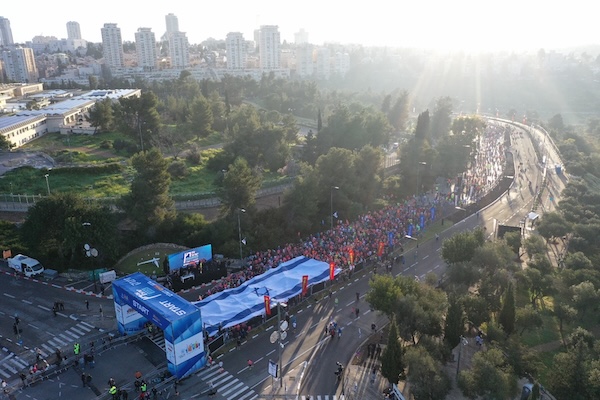
Last year’s International Jerusalem Winner Marathon. (Sportphotography)
The International Jerusalem Winner Marathon returns for its 15th year and will take place on March 27, with tens of thousands of runners participating from across Israel and around the world.
“The marathon is much more than a sporting event, it is an expression of strength, mutual responsibility, unity and the Jerusalem spirit,” said Moshe Lion, mayor of Jerusalem. “This year, we once again salute the IDF soldiers, security and rescue forces, and reserve personnel who protect all of us every day, and we invite them to be part of an international celebration of sport, community and hope.”
The International Jerusalem Winner Marathon is organized by the Jerusalem Municipality Sports Division in collaboration with the Jerusalem Development Authority, Ministry of Culture and Sports, Ministry of Tourism, Ministry of Jerusalem and Heritage, and other partners. Sponsors include Toto Winner, the main sponsor, as well as Azorim Ltd., and others. The marathon is produced by Electra Target.
Registered runners will receive a participant package including an official marathon shirt, bib number, timing chip, and a variety of additional benefits. For more information and registration, visit jerusalem-marathon.com.
– Courtesy International Jerusalem Winner Marathon
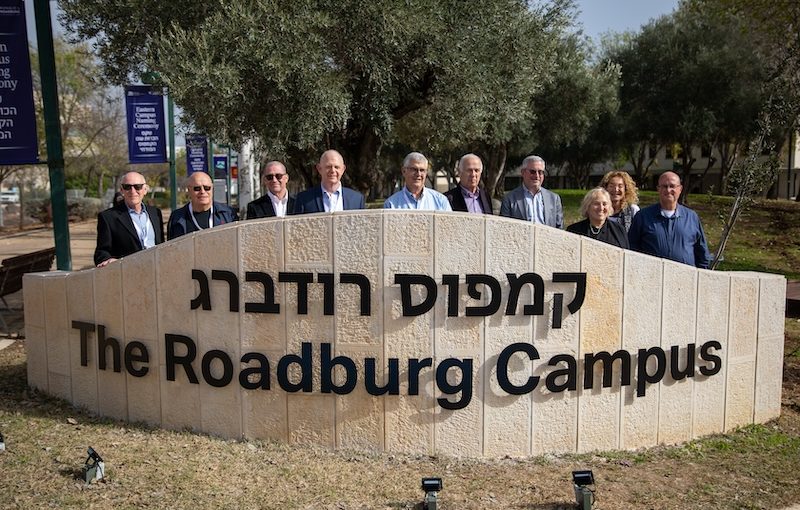
The Roadburg Campus of Tel-Hai College, which is soon to become the University of Kiryat Shmona in the Galilee. Vancouver’s Ronald S. Roadburg Foundation has donated $50 million Cdn to the institution. (photo from Tel-Hai)
Tel-Hai College – soon to become the University of Kiryat Shmona in the Galilee – has received a transformational $50 million Cdn gift from Vancouver’s Ronald S. Roadburg Foundation. The historic contribution is the largest ever received by the institution and the largest single commitment in the foundation’s history. It expands on the decades-long partnership between the Galilee and Canadian Jewish federations and communities in Vancouver, Edmonton, Calgary, Winnipeg, Ottawa and Halifax. It is designed to be the first steppingstone on Tel-Hai’s path after acquiring its new status as the first university in the Galilee in late January.
The investment comes at a critical juncture as the region transitions from two years of war and widespread displacement toward comprehensive renewal and growth. The university and the Roadburg Campus will meet the needs of the community, as the school prepares to take in thousands of new students, researchers and faculty members. The university is positioned as a global hub for applied research, addressing global challenges in sustainable agriculture, artificial intelligence, psychological resilience and social work, fields where Tel-Hai has gained international recognition for its field-tested expertise.
“THU is more than an academic institution; it is the heartbeat of the Galilee and a beacon of coexistence,” said Prof. Eliezer Shalev, president of the university. “Our classrooms are a tapestry of Jews, Muslims, Druze and Christians studying together. This gift from the Ronald S. Roadburg Foundation ensures that our academic excellence remains inclusive and that we continue to serve as the region’s primary engine for socioeconomic growth.”
The Roadburg Foundation’s partnership with Tel-Hai reflects the foundation’s belief that learning is the ultimate tool to bring people together, foster peace and create shared opportunities. This $50 million gift, expanded from an initial $8 million commitment to Tel-Hai’s computer science facilities, will serve as a cornerstone investment as the university continues to be a catalyst for social and economic renewal in the Galilee.
“We chose to make this landmark investment now because we believe in the resilience of the people of the Galilee,” said Stephen Gaerber, the foundation’s director. “By helping Tel-Hai elevate to a university, we are investing in a future where world-class science and social cohesion go hand-in-hand to build a stronger Israel.”
“Over the course of the war, we were involved in emergency efforts, especially in this region,” Mark Gurvis, chief executive officer of the Roadburg Foundation, told eJewish Philanthropy. “We started focusing on Tel- Hai as part of the solution for the period after the war, when people would focus on reconstruction efforts. We knew that Tel-Hai was already the major economic and social driver of the region. We focused on positioning Tel-Hai – as it was becoming a university – to be able to fulfil that potential.”
There has been a steady Canadian partnership with Tel-Hai for years, led by the Jewish Federations of Canada-UIA (JFC-UIA) together with local federations and donors.
JFC-UIA and Federations across the country collectively helped move forward the transition of Tel-Hai to a university with significant support for Israel’s north, including approximately $25 million Cdn toward strengthening the region and advancing Tel-Hai.
Israel’s Council for Higher Education approved the transformation of Tel-Hai into the University of Kiryat Shmona in the Galilee, with university recognition beginning in the 2026/27 academic year. The plan includes a 570 million NIS (nearly $200 million Cdn) investment over five years; proposals for new PhD programs in biotechnology, education, psychology and nutritional sciences; a faculty of engineering focused on precision agriculture, knowledge engineering and AI; and a veterinary school in the Golan Heights.
The past and future of Jewish journalism were on the agenda when Cynthia Ramsay addressed the Jewish Seniors Alliance of British Columbia, Jan. 27.
In a Zoom presentation that was part of the alliance’s Empowerment Series, the publisher of the Jewish Independent spoke on the history of the newspaper and discussed the future of Jewish newspapers in general and the Independent in particular.
Ramsay spoke about the history and future of the Jewish Independent at the Jewish Seniors Alliance of British Columbia Empowerment session Jan. 27. (photo by Karen Ginsberg)
While the paper celebrated its 95th anniversary last year, Ramsay said it could be a century old, depending on how one begins the count.
A Vancouver Jewish Bulletin was published in 1925, printed by Dr. J.I. Gorosh and this was succeeded by a mimeographed newsletter produced by the Jewish Community Centre and dubbed the Jewish Centre News. The name Jewish Western Bulletin dates to the 1930s.
Publishing transitioned to the Jewish Community Council of Greater Vancouver, a forerunner of today’s Jewish Federation, though it appears to have evolved a degree of independence under publisher Abraham Arnold, who took the helm in 1949, in conjunction with his wife Bertha.
The newspaper became formally separate from other institutions a decade or so after Sam and Mona Kaplan took over in 1960.
The Kaplans were very much committed to advocacy journalism, Ramsay said, most notably advocating freedom for Soviet Jewry.
The Kaplans ran the paper for 35 years and, after a period when it was contracted to an American Jewish media chain, it was sold to Ramsay and two partners, Kyle Berger and Pat Johnson. The latter two later left the business but Ramsay says she is happy that they remain friends and that Johnson is on the editorial board and still writes for the paper (including this story).
The new leadership brought fresh policies, including accepting notices of interfaith and same-gender weddings, as well as coverage of a broader range of topics that were previously considered off limits. The paper opened up to a wider range of opinions, including on Israel.
In 2005, Ramsay renamed the paper the Jewish Independent.
“I changed it because I didn’t think Bulletin really said ‘newspaper,’” she explained. “We got rid of the word ‘western’ also. By that point we were online … and it wasn’t just people from BC who were reading it.”
The paper walks a line between supporting the community and providing a critical eye where necessary, she said.
“I think there are concerns that should be played out in public, but then there’s others that really should be dealt with privately,” she said. “We’re not a gossip rag and we’re also not sensationalist or alarmist.
“We don’t ignore the bad stuff that goes on in our community or in the world, but we do try to cover stories in a way that doesn’t depress or paralyze,” said Ramsay, quoting from an article she wrote in the paper’s anniversary issue last May. “We want, rather, to open the door for solutions and at least positive attempts at change. We don’t want you to put down the paper in despair, but rather [consider] what you can do to contribute to making the world a better place.”
Above all, she said, the paper tries to provide a record of the community, a role it has played for most of a century.
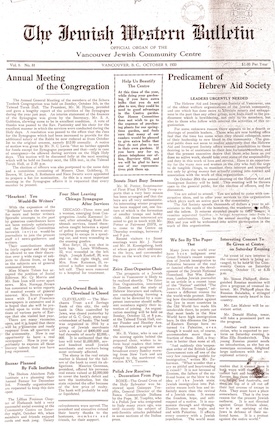
The first issue of the Jewish Western Bulletin, Oct. 9, 1930.
“The Jewish Western Bulletin, the Jewish Independent, has been the only consistent historical record of the community since 1930,” she said.
“Now, of course, we miss a lot of stuff,” she acknowledged. “We have a very small staff. We have a limited number of pages every issue, we’re not going to cover everything.”
She provided an insider view of how the paper operates in terms of the amount of advertising determining the size of each issue, and how decisions are made about what is covered in each issue and on what page things appear.
The pandemic was deeply challenging to the economic viability of the paper, said Ramsay, and it was at that time that the publishing schedule shifted to twice monthly from weekly.
The Jan. 23, 2026, issue of the Jewish Independent.
The Independent has survived when other Jewish newspapers in Canada and across North America have not, she noted, even including Federation-owned publications that have gone under in some cities. She wants the paper to reach 100 and she also has her own retirement in mind, tentatively at age 60.
“I’m 56,” she said, noting that almost 30 of those years have been devoted to the paper.
“I’m already starting to think about succession plans,” she said. “I’ve kind of got a five-year window at this point where I’m looking and wanting to responsibly pass over [the paper].”
Innovation could make the publication more sustainable, perhaps a monthly format, she said.
All in all, she takes pride in her achievements and the longer history of the paper’s contributions to the community.
“I think we’ve been a great success, not just because we’re 96 years old, but … [almost] every year we’ve won an American Jewish Press Association Rockower Award for Excellence in Jewish Journalism, mostly for our editorials, but occasionally for other articles,”she said.
The Jewish Seniors Alliance session was opened by Jeff Moss, the organization’s executive director. Fran Goldberg introduced Ramsay.
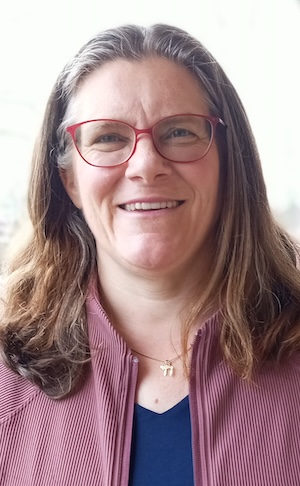
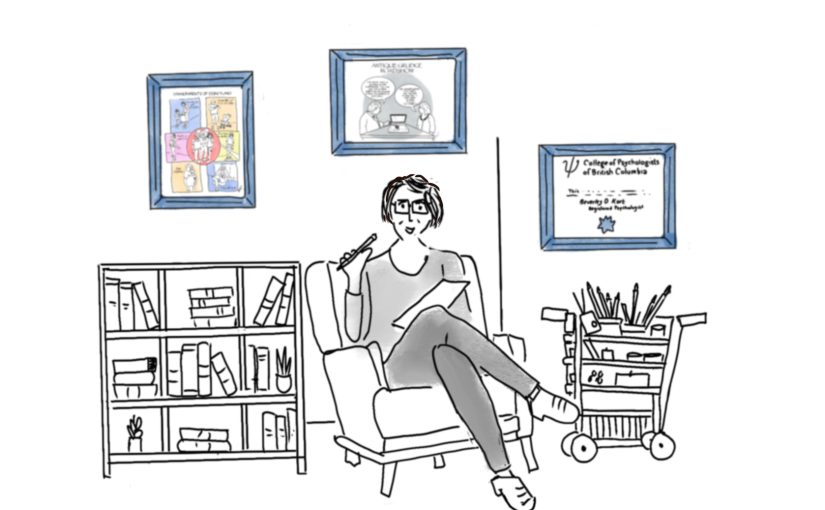
Beverley Kort is a therapist who brings a psychological perspective to her worldview – and to her cartoons. (illustration by Beverley Kort)
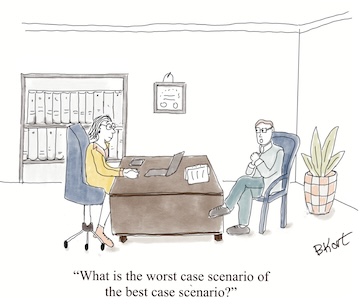
At 75, Beverley Kort is just getting started with her second career as a cartoonist. A frequent contributor to the Jewish Independent, Funny Times and Grand Magazine, Kort is a therapist who brings a psychological perspective to her worldview – and to her cartoons.
“I was always told I was a lousy artist,” she admitted in a recent conversation with the JI. “So, when I was looking for a new, more sedentary hobby, I thought to myself, ‘let me take up something that I know I’m not good at, and perhaps I can get mediocre at it!’”
She began with art classes and quickly gravitated towards cartooning five years ago. Since it was a hobby and something she wasn’t taking too seriously, she submitted her work in myriad directions just to see what would happen. To her surprise, the response has been positive, resulting in publication in magazines, newspapers and a 2023 book, Hold That Thought, edited by David Endelman.
“In the art world, you don’t get seen until you’re somebody, but, in the cartoon world, if you’re willing to take a risk, you can get seen,” she explained. “With cartoons, it’s the idea that matters, not the art.”
Kort has two separate stations at her home office, one for therapy and one for cartooning. These days, she carries a notebook to record ideas, reads newspapers and listens to podcasts for inspiration.
“I give myself three hours each week just to sit and play with cartoons,” she said. “I’m having so much fun! I’m in touch with many creative people I’d never have otherwise met and, while I don’t ever want to take cartooning too seriously, I am improving.”
Her work as a therapist has a strong influence on her cartoons, and her examination of the human condition and its quirks is great for generating ideas. Her topics range from life’s frustrations to aging, parenting and grandparenting, and the fresh, lighthearted perspective Kort brings is unequivocally humourous.
“Arriving at cartooning late in life has been liberating for me, but I still get a thrill each time an editor accepts my work,” she said. “There’s a fearlessness that comes with no longer needing to build a career or impress others, though I hope my sense of humour connects with as many people as possible. What’s more, I’ve discovered that new passions can find you at any age.”
Lauren Kramer, an award-winning writer and editor, lives in Richmond.
If your retirement income plan depends primarily on selling capital to meet ongoing spending needs, it may be worth asking whether your portfolio is truly designed for retirement. (photo from elevatefinancial.ie)
For many Canadians approaching or living in retirement, the constant market gyrations create a lot of anxiety. They wonder, is a recession around the corner? Will the next market meltdown delay my retirement or reduce my retirement income?
When you are young, market volatility is what you want. It allows you to invest more when markets are down to capture more upside potential when markets rebound. But what if you are no longer building up your portfolio and need to draw income in retirement? Market volatility feels very different when it directly affects your retirement and your need for income.
In retirement, actual income – not “annualized returns” – pays the bills. Monthly expenses such as housing, travel, medical goods and services, family support and charitable giving continue regardless of market conditions. What’s worse, the cost of living goes up every year.
Many retirees don’t realize this vulnerability until after retirement begins. The plan looked solid on paper, but, once withdrawals start, the pressure changes. Income becomes personal when you no longer have employment income to rebuild, and more fragile if your retirement plan depends on regularly selling investments to generate cash.
Importance of an income strategy
A growth portfolio often generates very little in the way of cashflow. An investment plan that relies on selling capital to fund ongoing spending is not truly an investment plan. It is a liquidation plan. While selling assets occasionally may be appropriate, a portfolio that requires ongoing sales to meet cashflow needs introduces structural risk. Timing matters – particularly during market downturns, when selling can permanently impair future outcomes.
Beyond market timing, assets sold to fund today’s spending are no longer available to generate income, recover in future markets or provide flexibility later in retirement. Over time, this can narrow options and increase dependence on market conditions when stability matters most. This is why effective retirement planning focuses on cashflow by design, built around spendable income, not assumptions that require the markets to always rise.
Tax-smart investing
Just as important as how income is generated is how it is taxed. In Canada, retirement income can arrive in many forms – interest, dividends, capital gains, return of capital, and registered withdrawals – and each is treated very differently for tax purposes.
Two retirees receiving the same cashflow can experience materially different after-tax results depending on how income sources are structured. Strategic changes can make an enormous difference in allowing retirees to keep more in their pocket each month.
The bottom line
Many portfolios are built successfully for growth. But a portfolio designed for growth is not automatically designed for retirement. When the objective shifts from building wealth to funding life, portfolio structure must evolve.
If your retirement income plan depends primarily on selling capital to meet ongoing spending needs, it may be worth asking whether your portfolio is truly designed for retirement – or is it a growth portfolio disguised as a retirement portfolio?
Shay (Shy) Keil is a senior wealth advisor at Scotia Wealth Management who works with established retirees and business owners, helping them structure sustainable, tax-efficient retirement income through strategic cashflow planning.
נשיא ארה”ב דונלד טראמפ, מכהן בתפקידו כבר שנה מלאה וקשה לאמוד את מידת הנזק שהוא גורם כל יום. למרות זאת ישראלים רבים ממשיכים לתמוך בו ללא עוררין וכנראה שהם עדיין לא מבינים במי מדובר. תופעה זו מזכירה את התמיכה בראש הממשלה של ישראל בנימין נתניהו. כבר מזמן הוכח שהתמיכה במנהיגים פוליטיים מושחתים כמו טראמפ ונתניהו, נובעת ממניעים פסיכולוגיים ולא הגיוניים. זה מזכיר כמו אמונה בדת, או חברות בקאלט
טראמפ הוא נוכל סדרתי במשך למעלה מחמישים שנות חייו כאיש עסקים בניו יורק. וכן בבית הלבן. בקדנציה הראשונה שלו הוא נמצא משקר למעלה משלושים אלף פעם. במדינה מתוקנת נוכל מדופלם שכמוהו לא היה נבחר לקדנציה שנייה. לצערנו ארה”ב כיום היא כבר מדינה לא מתוקנת כפי שבמערב מרגישים זאת. בישראל לא רואים זאת באותו אופן וכאמור התמיכה בטראמפ היא גדולה
בדומה לנתניהו שהשתלט על ישראל והוא עושה בה כרצונו טראמפ השתלט על ארה”ב וגורם נזק לה נזק אדיר מדי יום. ההשלכות החמורות של מעשיו משפיעות לרעה על כל המערב ובעיקר על קנדה השכנה מצפון
טראמפ הוא נרקסיסט מטורף שחושב רק על עצמו וחבריו העשירים. רבים מבוחריו בטיפשותם חשבו שהוא ידאג לכלכלת ארה”ב ומצבם הכספי ישתפר. במציאות זה בדיוק הפוך: הכלכלה בארה”ב לא טובה, האבטלה גדלה והמחירים ממשיכים לעלות. טראמפ כמו טראמפ מאשים את נשיא ארה”ב לפניו ג’ו ביידן, במצב הכלכלה. לדעתי הוא צריך להאשים גם את הנשיאים הדמוקרטיים הקודמים ביל קלינטון וברק אובמה. טראמפ לעולם לא יקח אחריות על מעשיו החמורים ומחדליו. מבחינתו הוא גאון והוא עושה עבודה מעולה לטובת ארה”ב ותושביה. וזה ידוע שטראמפ מנותק מהמציאות והוא אינו מנסה אפילו להבינה
מומלץ לשמוע את האחיינית שלו מארי טראמפ (פסיכולוגית במקצועה) כיצד היא מנתחת את הדוד החולה שלה. טראמפ משחרר עבריינים מהכלא, והוא מינה לא מוכשרים בעליל לתפקידים הבכירים בממשל, כי אלה רק נאמנים לו. ממש בדיוק כמו נתניהו. טראמפ מתלהב בעולם רק ממנהיגים דיקטטורים כמו נשיא רוסיה ולדימיר פוטין, נשיא צפון קוריאה קים ג’ונג-און, יורש העצר של ערב הסעודית מוחמד בן סלמאן אאל סעוד, נשיא טורקיה רג’פ טאיפ ארדואן וכו’. מי שלא מבין זאת לא מבין מה זו דמוקרטיה או שלא אכפת לו מדמוקרטיה. אוי למדינות המאפשרות למנהיגים אסוניים כו טראמפ ונתניהו לשלוט. זו בושה וחרפה לתושבי מדינות אלה
הנזק שטראמפ ונתניהו גורמים למדינותיהם הוא כה גדול ועמוק כך שיקח שנים רבות לתקנו אם בכלל, לאחר שהם יעלמו מהמפה. שני מנהיגים אלה מושחתים ברמות גבוהות מאוד, ובתגובה חולנית דומה, הם מאשימים את חוקריהם וראשי אכיפת החוק בשחיתות. מעניין עד כמה ימשך “המשחק” הזה כאשר המושחתים טראמפ ונתניהו טוענים כל העת כי הם חפים מפשע ומתנגדיהם מחפשים להפילם
הגיע הזמן שהמפלגה הדמוקרטית תצא מההלם בה היא שרויה מאז ההפסד בבחירות לטראמפ, ותתחיל לתפקד ולעורר את מיליוני האמריקנים לצאת לרחובות ולהפגין נגד המנהיג המושחת ביותר בתולדות ארה”ב. לא יתכן שבארה”ב יקבלו את מעשיו החמורים של טראמפ “כנורמה” שאפשר לחיות עימה. במדינה מערבית זה לא הגיוני
במקביל הגיע הזמן שבישראל מפלגות האופוזיציה יתאחדו ביחד עם המפלגות הערביות כדי לנסות לנצח את נתניהו בבחירות שיערכו בעוד כתשעה חודשים. זה לא הגיוני שגם בישראל יקבלו את המנהיג הנוכל ביותר בתולדות המדינה כדבר שאפשר לחיות עמו
בחודש פברואר ימלאו עשרים ואחת שנים לחיי בוונקובר. במקביל, המרחק שלי מישראל רק הולך וגדל
הזמן אץ לו רץ לו והשנים בהן אני נמצא כאן בוונקובר עברו כל כך מהר. אני זוכר את ההתחלה הקשה כאשר לא הייתה לי עבודה במשך שבעת החודשים הראשונים. באותה עת התחלתי ללכת ברחבי העיר ולהכיר מקרוב את הבית החדש שלי. בוונקובר ויתרתי על נהיגה כיוון שאני גר באזור הדאון טאון ואפשר להסתדר טוב ללא רכב
בהתחלה עבדתי בעבודה מזדמנת אצל חבר ולאחר מכן עבדתי בחברת גביה גדולה בתפקיד מחפש מידע לאור הרקע שלי בעיתונות. אחרי כשבע שנים ויותר עברתי לחברה פיננסית המספקת הלוואות ללקוחות שלא יכולים לקבל הלוואות מהבנק. עד היום אני עובד באותה חברה – למעלה מאחת עשרה שנים וחצי, ומשמש מבקר החברה בדרגת מנהל
בתחילת חיי כאן בוודאי שהרגשתי זר בוונקובר אך לשמחתי מהר מאוד מצאתי את מקומי, בתחום המקצועי והחברתי ובכלל. השתלבתי לא רע בחיי העיר, הכרתי מקומיים ולא רק ישראלים ולא חיפשתי להתחבר אל חיי הקהילה היהודית כאן. אני לא דתי ואינני שומר מסורת ואינני אף מרגיש את הצורך להדגיש את יהדותי או היותי ישראלי לשעבר. כל אלה עזרו לי בהשתלבות בחיים המקומיים. מרבית שנותי בוונקובר לא הרגשתי זר והחיים בקנדה בכלל הרבה יותר מתאימים לי מאשר בישראל
למען האמת התחלתי להרגיש כשגרתי בארץ כיוון שראיתי שהמדינה צועדת לכיוונים שאינם מתאימים לי ולהשקפת חיי. זה מאוד עצוב להרגיש כך במדינה בה נולדת כאשר את מרבית חייך עשיתה בה. ישראל הייתה מקום נפלא הצעירותי והחל משנות השמונים המאוחרות התחלתי להרגיש בשינוי לרעה. בסוף אלף תשע מאות שמונים ושמונה עברתי לתל אביב ובשנים הראשונות הרגשתי טוב ומחובר יותר. אך לאחר מספר שנים הרגשתי שוב שאני הופך יותר ויותר לזר ולא מסוגל להתחבר לתפיסת העולם הישראלית הבסיסית, להתנהגות של הישראלי הממוצע, לתזוזה ימינה ואל הדת ועוד. הנסיעות הרבות שלי לחוץ לארץ ובעיקר לאירופה רק החריפו את הפער ביני לבין ישראל
למרות שהייתה לי עבודה מעולה בתחום המדיה הבנתי שעלי לעזוב ולחפש עתיד טוב יותר מחוץ לישראל. לצערי רק בראשית אלפיים וחמש עזבתי את ישראל למרות שכבר שנים רבות קודם לכן רציתי לעשות זאת. המעבר רק היטיב עם חיי והפכתי להיות יותר מאושר ושלו. כואב לי מאוד על מה שקורה בישראל והמציאות הרבה יותר גרועה ממה שחזיתי. הקשר היחידי שלי עם ישראל נובע מהעובדה שיש לי משפחה וחברים שם. חלקם מיואשים והחלק האחר מתעלם מהמציאות הקשה ומנהל את חייו כאילו הכל בסדר. אני מבין את כולם ומאחל למציאות טובה יותר בישראל, אם כי אינני חושב שזה מה שהולך לקרות
באופן אישי היום אני מודאג מאוד ממה שקורה מעבר לגבול מדרום לאור השליט המטורף שמנהל את ארצות הברית, דונלד טראמפ. הוא גורם נזק גדול למדינתו, לקנדה ולמערב כולו. טראמפ מעולם לא חשב על תוצאות מעשיו והתנהגותו החמורה, גם בעת היה איש עסקים וכמובן מאז נכנס לבית לבן. קנדה התרגלה להיות תלויה בארה”ב ולסמוך עליה, עת שתי המדינות האלה היו קרובות מאוד בכל. כיום המציאות שונה לחלוטין בעידן טראמפ, והקנדים מתחילים להבין שקנדה צריכה להיות עצמאית ולהעמיק את הקשרים עם אירופה. במקביל יש להזיז את החסמים בין הפרובינציות ולאפשר חופש מסחר מקסימלי ביניהן
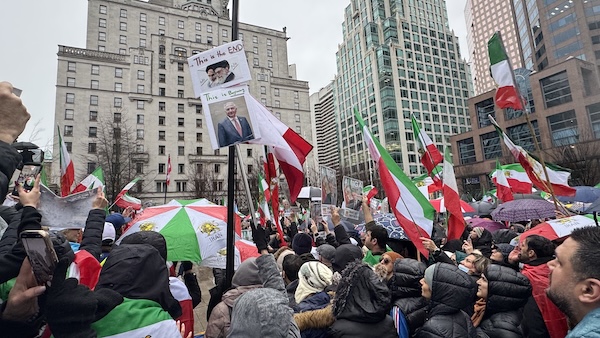
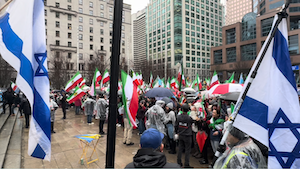
A huge demonstration filled the blocks around the Vancouver Art Gallery last weekend, part of a weekly presence of Persian and other Vancouverites calling for regime change and democracy for Iran. (photo by Richard K. Lowy)
As the street protests in Iran grow – and the death toll caused by the regime’s police and military crackdown increases – so do solidarity rallies worldwide.
A huge demonstration consumed the blocks around the Vancouver Art Gallery last weekend, part of a weekly presence of Persian and other Vancouverites calling for regime change and democracy for Iran.
The global movement against the Islamic regime has coalesced around Reza Pahlavi, son of the late shah who was deposed in the 1979 revolution. Posters of the crown prince fluttered among hundreds of pre-revolutionary Iranian flags amid chants of “javid shah,” long live the shah.
“I am Stephen and I am Jewish,” said one of the speakers at the rally a week earlier, on Jan. 10, who preferred not to use his surname.
“I have attended almost all the Iranian rallies in recent years for one reason and one reason only: to tell the Iranian people loudly and clearly you are not alone,” he said. ”Anyone who knows what the Iranian people have suffered over the past 47 years can empathize, especially now.”
He emphasized the ancient and contemporary relationship between Jewish and Persian peoples.
“When Israel was attacked on Oct. 7, 2023, the Iranian people came out in bad weather, in the rain and the cold and the snow, to march side by side with Jews all over the world. Why? Because they understand our pain, because it is their pain,” he said. “It is the collective pain of peoples who want what everyone wants: to live in peace and unmolested by those who want to control the world, who tell you what to think, what to wear, what to do, what to believe in.
Several people at the rally carried an Israeli flag. (photo by Richard K. Lowy)
“Persia was the first empire in the world, under Cyrus the Great, that brought people together and did not, did not oppress them,” he continued. “This is part of the Iranian historical identity. You can have all the Islamic revolutions you want. You will never erase this historical identity, with its great, great culture.”
He commended Iranian Canadians for their contributions to Canada and their devotion to democracy in their homeland.
“You here are Iranians who know what I talk about because you have been living in freedom in Canada and look how you’ve flourished. When people speak of Canadian Iranians, they do so with respect for a people that knows how to work hard and how to contribute to society, to give back, to become productive citizens of a free and open society,” he said. “Is that so much to ask for your brothers and sisters, mothers and fathers, sons and daughters in Iran?And it is a blessing that, when Iran is finally free, many of you will return to Iran to help rebuild.”
He called Pahlavi “a man who understands the world.”
“He knows the Iranian people inside Iran and outside Iran. Anyone who questions his commitment to his people can read about how he has worked tirelessly throughout his life to pursue a free Iran and return independence to Iranian people.”
Hundreds are dying in the name of freedom, Stephen said.
“The crackdown is brutal,” he said. “Many of us have seen the image of the older white-haired Iranian woman on the streets of Iran, bleeding from the mouth, her fist raised in defiance: ‘I am not afraid. I am not afraid. I have been dead for 47 years.’”
He commended US President Donald Trump and Israeli Prime Minister Binyamin Netanyahu for forcefully supporting the Iranian protests, and called for the leaders of Canada and other Western countries to express their support as forcefully.
David Zacks was one of several people at the rally carrying an Israeli flag. The response, he said, was“a hundred percent positive.” People were asking to take photos with him and thanking him for his presence.
“Iranians and Jews have been great friends for thousands of years,” said Zacks. “Everybody I talk to says, once the regime falls, they’ll be great friends again.”
Or Shalom Synagogue is launching Awakening to Mortality, a new learning and community series that invites open, thoughtful Jewish conversations about death, aging and what it means to live fully.
The series is offered in celebration of OSACK – the Or Shalom Auxiliary Chevra Kadisha – which was established in 2025 to serve community members who are not eligible for burial preparation through the community Chevra Kadisha administered by the Schara Tzedeck Cemetery Board, including Jews of patrilineal descent, transgender members, and others. OSACK volunteers are trained to work in partnership with a funeral services provider to offer tahara (ritual preparation of the body) and other sacred end-of-life practices grounded in Jewish tradition.
Drawing on Jewish text, ritual, reflection and creativity, Awakening to Mortality approaches death not with fear, but with curiosity, compassion and spiritual awakening. The series includes two four-week Virtual Zusia programs and a monthly in-person gathering called MortaliTea, all open to the wider community.
Highlights include an exploration of teshuvah (return and repentance) with Rabbi Daniel Siegel; teachings on aging, elderhood and wisdom with Ralph Benmergui; learning about Chevra Kadisha practices and the sacred care of the body after death; Jewish ways of supporting mourners, including shiva (seven-day period of mourning), shloshim (30-day mourning period) and the mitzvah of nichum aveilim (comforting mourners); and writing as spiritual preparation, including crafting a Heart Will® with Willow End of Year Education.
A Heart Will® is a guided reflective process and written document that allows a person to articulate what matters most to them – their values, love, wisdom, memories and hopes for those they leave behind. Unlike a legal will, which focuses on assets and logistics, a Heart Will® centres meaning, relationships and spiritual legacy.
Siegel reflected on why this learning matters: “We find God not in the trauma, but in the ways we care for each other.”
Through these educational offerings, Or Shalom hopes to help participants live more intentionally, love more generously and meet each day as a gift.
Programs run from January through April, with more offerings to follow. Registration details are available through Or Shalom’s website, orshalom.ca, or by emailing [email protected].