Skip to content
  • Home
  • Subscribe / donate
  • Events calendar
  • News
    • Local
    • National
    • Israel
    • World
    • עניין בחדשות
      A roundup of news in Canada and further afield, in Hebrew.
  • Opinion
    • From the JI
    • Op-Ed
  • Arts & Culture
    • Performing Arts
    • Music
    • Books
    • Visual Arts
    • TV & Film
  • Life
    • Celebrating the Holidays
    • Travel
    • The Daily Snooze
      Cartoons by Jacob Samuel
    • Mystery Photo
      Help the JI and JMABC fill in the gaps in our archives.
  • Community Links
    • Organizations, Etc.
    • Other News Sources & Blogs
    • Business Directory
  • FAQ
  • JI Chai Celebration
  • JI@88! video

Recent Posts

  • Eby touts government record
  • Keep lighting candles
  • Facing a complex situation
  • Unique interview show a hit
  • See Annie at Gateway
  • Explorations of light
  • Help with the legal aspects
  • Stories create impact
  • Different faiths gather
  • Advocating for girls’ rights
  • An oral song tradition
  • Genealogy tools and tips
  • Jew-hatred is centuries old
  • Aiding medical research
  • Connecting Jews to Judaism
  • Beacon of light in heart of city
  • Drag & Dreidel: A Queer Jewish Hanukkah Celebration
  • An emotional reunion
  • Post-tumble, lights still shine
  • Visit to cradle of Ashkenaz
  • Unique, memorable travels
  • Family memoir a work of art
  • A little holiday romance
  • The Maccabees, old and new
  • My Hanukkah miracle
  • After the rededication … a Hanukkah cartoon
  • Improving the holiday table
  • Vive la différence!
  • Fresh, healthy comfort foods
  • From the archives … Hanukkah
  • תגובתי לכתבה על ישראלים שרצו להגר לקנדה ולא קיבלו אותם עם שטיח אדום
  • Lessons in Mamdani’s win
  • West Van Story at the York
  • Words hold much power
  • Plenty of hopefulness
  • Lessons from past for today

Archives

Follow @JewishIndie
image - The CJN - Visit Us Banner - 300x600 - 101625

Category: News

Louis Brier campaign starts

Louis Brier campaign starts

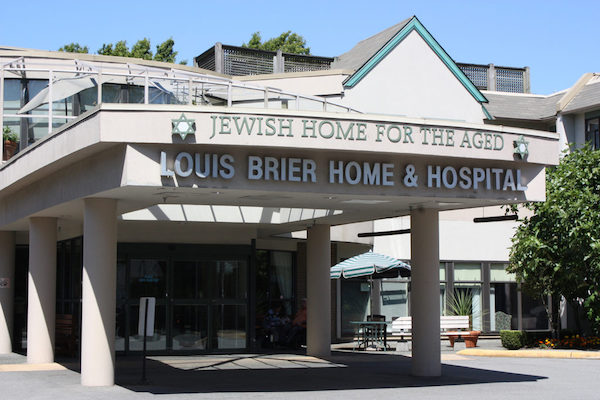
(photo from thelouisbrierfoundation.com)

This spring saw the launch of the This Year Like No Other, This Year More Than Ever 2021-2022 Louis Brier Jewish Aged Foundation campaign, which is raising funds to enhance care and innovate the program and service offerings for residents of the Louis Brier Home and Hospital.

Early in 2020, the foundation stepped up to assist the Louis Brier leadership in its exemplary response to the COVID-19 pandemic. By doubling the home’s funding, the foundation was able to support the home in keeping its seniors safe and engaged during one of the most challenging years of their life.

The biennial campaign, which started April 19, will run to May 28. With the community’s help, the goal is to raise $2.4 million. Campaign chairs are Harry Lipetz (board president) and Lee Simpson (immediate past president).

The $2.4 million amount is needed to keep up with the home and hospital’s funding needs, which doubled with the onset of COVID-19. While the foundation is well aware of the many challenges of the present time, we believe this year, like no other, and more than ever, we must collectively come together to care for, and give a well-deserved kavod, to the people who built our community for us in the first place. To contribute and create impact where it’s most needed after the extraordinary challenges of the year 2020. To be part of ensuring that the physical, mental and spiritual needs of the home’s Jewish seniors are met.

Louis Brier’s background

In 1945, 14 friends known as the Hebrew Men’s Cultural Club shared a vision to create a home for Jewish seniors in Vancouver. That home, initially built to accommodate 13 residents, was established in 1946. Over time, that modest facility grew, changed locations and expanded its services, eventually becoming the Louis Brier Home and Hospital, which has progressed in step with Vancouver’s Jewish community.

Today, Louis Brier is part of a continuum of care known as the Snider Campus, which also includes the Weinberg Residence, a boutique assisted living and multi-level care residence adjacent to Louis Brier.

The Louis Brier Jewish Aged Foundation provides and distributes funds to the Snider Campus towards maintaining and fostering the well-being of the Jewish aged of British Columbia, while supporting the enhancement of their quality of life based on Jewish traditions.

Some quick facts

  • The Louis Brier is a 215-bed long-term residential care home serving Vancouver’s Jewish community.
  • The home and hospital provide three levels of residency (intermediate care, extended care and special care).
  • Thirty-five residents of the current population at Louis Brier are Holocaust survivors.
  • Eighty percent of Louis Brier Home and Hospital’s residents are diagnosed with varying levels of dementia.
  • The Louis Brier has 436 employees – 195 full-time, 101 part-time and 140 casual.
  • The home and hospital residents range in age from 50 to 103, with the average age being 84.
  • The Louis Brier is an accredited institution with exemplary standing (2018). The Accreditation Canada survey team spent four days at the facility and reviewed a total of 19 required organizational practices (ROPs), 216 high priority criteria and 295 other criteria, for a total of 551 criteria. The surveyors determined that Louis Brier successfully met 100% of the 551 criteria evaluated.
  • The Louis Brier was awarded the 2020 Canadian Non-profit Employer of Choice Award.
  • The Louis Brier is the only facility in British Columbia with a companion program and has the largest recreation team in Western Canada.
  • The Louis Brier had a single COVID case among residents.

To donate to the campaign, click here. For more information, call 604-261-5550.

– Courtesy Louis Brier Jewish Aged Foundation
Format ImagePosted on May 7, 2021May 10, 2021Author Louis Brier Jewish Aged FoundationCategories LocalTags coronavirus, COVID-19, fundraising, health, Louis Brier Home and Hospital, seniors, Snider Campus of Care

Peer service reinvented

To say that COVID-19 has wreaked havoc on British Columbians would be an understatement. The virus has disrupted anything that we would call the normal activities of daily life. Most of us have had to make major compromises: where we go, what we do and how we can avoid getting the terrible virus. These adjustments have had a major impact on Jewish Seniors Alliance clients, who are already compromised by loneliness and isolation.

How we serve our clients and how we support our volunteers has undergone major changes – let’s give it the label “reinventing peer services.” In order to better understand what has taken place, I interviewed Charles Leibovitch, JSA senior peer support services coordinator, and Grace Hann, JSA trainer of volunteers of senior support services.

In the beginning

By mid-March 2020, the first sign of COVID-19 began to show its ugly head. The lockdown left clients and volunteers absolutely unprepared. Persons who were already isolated and lonely found themselves even more isolated and lonelier. As time progressed, clients were cut off from family members who might have supported their relatives through personal contact and social events. This was especially devastating for persons without family.

In many situations, volunteers were their primary contact; their lifeline! Being alone undermines one’s mental health. Being alone exaggerates one’s fear of COVID-19. Most of the clients were cut off from community programs, like adult day care. Spouses who usually spent time with their spouse in a long-term care facility were also cut off. Simple activities like going for a walk and sitting on a bench were curtailed. Elders had depended on having that human connection – having that human touch makes us feel needed and whole.

Volunteers meet challenge

The changing scene called for quick action, initiated by Grace and Charles. Instead of personal visits, the telephone would become the prime instrument of contact between volunteers and their clients. It was necessary to contact the volunteers quickly. Support for the volunteers would be provided by Zoom. This necessitated a steep learning curve for volunteer and client. After all, making and keeping the connection was critical. The three services – peer support, friendly visits and friendly phone calls – had to be reassessed in terms of the neediest clients. Each of the three services’ volunteers had different levels of training by Grace.

In some situations, a certified peer support volunteer was assigned to a person who ordinarily would have had contact with a friendly visitor or a friendly phone caller. Moving from in-person contact to impersonal contact was a major transition – almost like reinventing how support was to be provided. The JSA volunteers made the transition like veterans, with the extraordinary help of Grace and Charles. There was an increase in the contacts between volunteers and clients and an increase in Zoom online meetings to support the very special work being carried out by the volunteers.

Supporting the volunteers

Grace and Charles organized many activities, including outdoor picnics, weekly webinar seminars, a Chanukah party with a singalong and group support meetings every three weeks. The spirit and esprit de corps by the volunteers has been amazing. Volunteers will send cards to their clients as an additional way to keep in contact. Who doesn’t like to receive mail?

Next steps

Challenging times require challenging solutions. Charles and Grace rose to the challenge and proved that, with dedication, imagination and determination, obstacles can be overcome. When the COVID-19 vaccine has been fully distributed, we will establish a “new normal.” This will present JSA, Grace, Charles and the volunteers with a new set of issues and situations. And, as the song goes, “we shall overcome” – they will face these challenges with creativity, empathy and caring.

Ken Levitt is a past president of Jewish Seniors Alliance, former chief executive officer of Louis Brier Home and Hospital, and a past chair of Camp Miriam. In 1985, he co-edited The Challenge of Child Welfare, the first textbook on child welfare in Canada. A version of this article originally appeared in the March 2021 issue of Senior Line.

Posted on May 7, 2021May 7, 2021Author Ken LevittCategories LocalTags Charles Leibovitch, coronavirus, COVID-19, Grace Hann, Jewish Seniors Alliance, JSA, peer support, Senior Line, seniors, volunteers
Ethical responsibilities in business

Ethical responsibilities in business

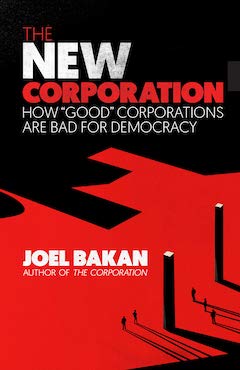
Writer and filmmaker Joel Bakan takes part in an online Canadian Hadassah-WIZO fundraising event May 30. (photo from Penguin Random House Canada)

The Canadian Hadassah-WIZO (CHW) Vancouver Book Club invites all CHW supporters, family and friends to an exclusive opportunity to be part of a conversation with Vancouver’s own Joel Bakan, an internationally recognized and award-winning author, producer, professor and legal scholar. Brunch with Bakan, which is a national CHW fundraising event, will take place May 30, at 11 a.m. PST.

Journalist and author Adam Elliott Segal will ask his own, as well as your questions, about Bakan’s hard-hitting book, The New Corporation: How “Good” Corporations are Bad for Democracy, which won the silver medal at the 2021 Axiom Business Book Awards in Business Ethics and is shortlisted for the B.C. and Yukon Book Prize for 2021. Segal’s roots are in Vancouver, though he now lives in Toronto, where he writes for the Globe and Mail, Toronto Star, Reader’s Digest and a host of other newspapers and magazines.

image - The New Corporation book coverThe New Corporation traces the consequences of a world close to losing its foundation of democracy. Bakan says the onus is on us to make the necessary connections and to actively be part of meaningful solutions if we want to leave our children and grandchildren a positive future. The Q&A with Segal will have a special focus on Jewish values, and ethical responsibility in business and corporate governance.

There are various ticket tiers for the Brunch with Bakan event, from $18 for the Zoom talk only to $118 for the talk, access to stream the film, a copy of the book (minimum two-week turnaround time for delivery) and name recognition. All ticket tiers include a tax receipt for the maximum allowable amount and the film, called The New Corporation: The Unfortunately Necessary Sequel, will be available May 25-28 for ticketholders to stream.

Over the last century, CHW has been involved in all aspects of Israeli life, supporting programs and services for children, women and healthcare in Israel and Canada. To tickets to the Brunch with Bakan fundraising event, visit chw.ca/thenewcorporation.

– Courtesy CHW Vancouver

Format ImagePosted on May 7, 2021May 6, 2021Author CHW VancouverCategories NationalTags books, Brunch with Bakan, business, CHW, corporations, ethics, film, fundraiser, Joel Bakan, Judaism
New exhibit at Uvic

New exhibit at Uvic

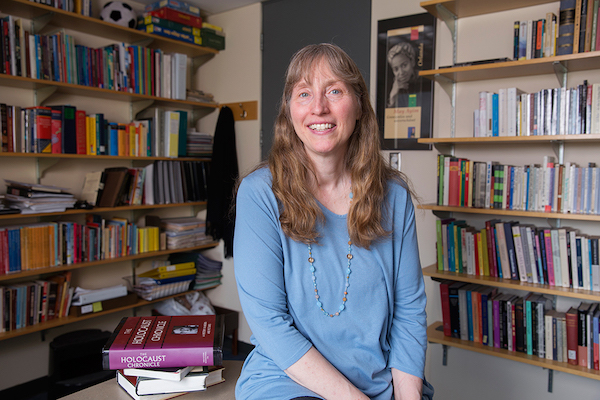
Dr. Helga Thorson of the University of Victoria. (photo from uvic.ca)

The University of Victoria unveiled its Stories of the Holocaust: Local Memory and Transmission exhibit – a project that was part of a combined undergraduate and graduate seminar on Holocaust and memory studies – during an online launch on April 15.

The exhibit is the result of a collaborative effort. Ten community members, comprising Holocaust survivors and descendants of survivors, from Vancouver, Victoria and Salt Spring Island, were paired with 10 UVic students to present wide-ranging and diverse stories from the Shoah in a context both personal and relevant to future Holocaust education.

“Students worked one-on-one with a community partner to figure out the best way to tell each story. This, as they discovered, was no easy task,” said UVic professor Dr. Helga Thorson, the course’s instructor. The students had to learn new technological skills, go over an extensive reading list and develop interpersonal skills, which included “relationship-building and the ethical dilemmas that come into play when telling somebody’s story that is not your own.”

“The engagement and involvement of the 10 students, who took the class assignment seriously, will go a long way in helping us remember the Shoah and the story passed on by their community partner,” said Thorson. “Remembering the past also helps us reflect on the present and what this means for us in today’s world as we continue to grapple with antisemitism, racism and other forms of violence, hatred and injustice.”

Ireland Good, one of the students involved in the project, thanked the Jewish community members for “their courage and their trust in us to tell their stories and to create this exhibit. I have thoroughly enjoyed this experience,” said Good, “even with its low moments, as I am sure it is with all the other students.”

The stories represent varied experiences, including having hid in order to survive and having been sent to a Soviet gulag. They come from Hinda Avery, Lillian Boraks-Nemetz, Rudolf Deman, Ilserl Fränkel, Julius Maslovat, Micha Menczer, Isa Milman, Fred Preuss, Claire Sicherman and Hester Waas.

Maslovat was the youngest prisoner ever at Buchenwald, and he is the subject of a recent film, Why Am I Here?: A Child’s Journey Through the Holocaust. The day of the launch, April 15, had a special significance for Maslovat, as it marked the 76th anniversary of his liberation from Bergen-Belsen. He was just under 3 years old at the time.

“My story did not come to me in a neat package. There were people who knew parts of it and contributed. Other parts I had to dig out of archives in Israel, Germany, Sweden, Britain, Poland, U.S. and Finland. I have tried to tell my story by putting together the pieces like a jigsaw puzzle. This time, I have included material I have not spoken about before,” said Maslovat, explaining his contribution to the archive.

“Despite what people may think about Holocaust survivors writing their memoir or speaking about their experience, we are not navel-gazing,” said writer Boraks-Nemetz, who escaped from the Warsaw Ghetto and lived in hiding. “We who have stared into the abyss of the atrocity that was the Shoah can never erase it from our memories. When I speak about my experience, I always think of the survivors and the victims, of the injustice wrought by a madman who destroyed lives – lives of children, of my little 5-year-old sister, who was brutally murdered for being a Jewish child … of the 1.5 million children who needlessly died.”

Boraks-Nemetz continues to explore the personal and broader impacts of the Holocaust through recent works, the novel Mouth of Truth and a collection of poetry, Out of the Dark.

Dr. Richard Kool is the son of Waas, who hid in the Netherlands during the war. He spoke of the importance of conveying the story to future generations. “I’ve really understood that, as Hester’s child and the oldest of my siblings, I have a responsibility as a carrier of a message that helps me keep looking forward towards recipients, towards recipients who have more life in front of them than behind, recipients who may not even be alive yet,” he said.

“We, the survivors and their children, must look forward and consider the powerful message for future individuals and generations,” he added. “Messages that say, ‘Don’t wallow in despair, worry and victimhood, but act, now, to do what you can with the tools at your disposal and the people around you to help co-create a fairer, healthier, more just, more peaceful community and society.’”

To view the exhibit, go to omekas.library.uvic.ca.

Sam Margolis has written for the Globe and Mail, the National Post, UPI and MSNBC.

Format ImagePosted on May 7, 2021May 6, 2021Author Sam MargolisCategories LocalTags education, Helga Thorson, Holocaust, Julius Maslovat, Lillian Boraks-Nemetz, Richard Kool, storytelling, survivors, University of Victoria, UVic
Torah class marks 10 years

Torah class marks 10 years

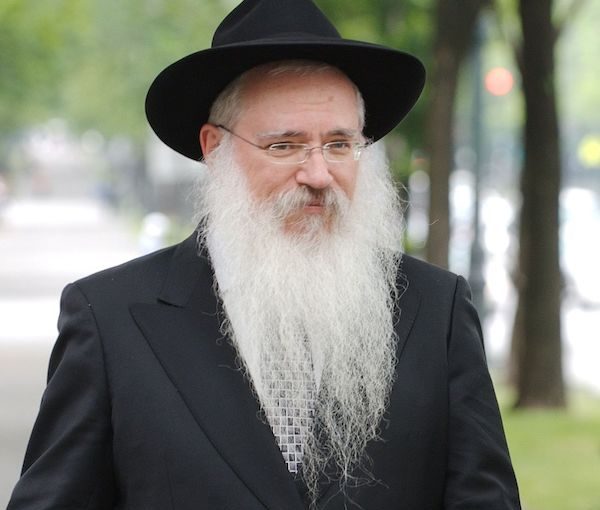
Rabbi Manis Friedman is the keynote speaker at Chabad Richmond’s celebration on June 1. (photo from Wikipedia)

On June 1, Chabad Richmond will mark 10 years of the weekly Torah studies class. A special event celebrating the past and launching the future will feature guest speaker Rabbi Manis Friedman, a renowned lecturer, counselor and author of several books and many articles. The topic is The Top 10 Reasons to Study Torah.

Starting in 2011 as a small group that met with Rabbi Yechiel Baitelman to discuss the weekly parashah (Torah portion), this assembly of retirees has grown to more than 20 people weekly.

“While not exclusively the domain of the retired, these weekly morning Torah classes mainly attract seniors,” said Baitelman. “Not only are local Richmond and Vancouver folks attending, but participants from Alberta and Quebec are joining virtually as well. During the pandemic, with more people working from home, we have some younger participants, too. Everyone is welcome.”

When the pandemic struck last year, Baitelman recognized the need for the continuity of Torah studies and immediately started offering classes via Zoom. These weekly classes have provided learning, but, more importantly, inspiration.

Richmond resident and longtime Chabad attendee Grace Jampolsky approached Baitelman back in 2011 and asked if he would offer a weekly Torah class. She gathered a few friends, and so began the 10-year tradition that is now a foundational part of the participants’ lives. The weekly class is a program of the Rohr Jewish Learning Institute of Richmond.

Acknowledging Chabad Richmond’s accomplishments to date, Baitelman said, “It’s all about celebrating our past learning and looking forward to growth and continued learning for the future. The continuity of weekly Torah study over 10 years is a real milestone. It represents thousands of hours spent studying the Torah portion of the week together, interactively, as a community of learners.”

As the participants attest, the classes have had a positive impact on expanding their Jewishness.

“If you were to ask me what the goals of the Torah classes are, I’d say it’s two-pronged goal – to increase class attendance and to share a love of Torah with our community,” said Baitelman.

Speaking with a few of the initial attendees, it became apparent that it’s not just the content of the classes that resonates with people, it’s Baitelman’s approach to teaching.

Ralph and Gina Blasbalg are two of the original members and, when asked how the classes have impacted their lives, Ralph Blasbalg said: “It’s always something to look forward to, especially when we’re cocooning during the pandemic. We don’t go out very much because we’re very vulnerable. The Torah lessons, the talks, the spirited wisdom of our rabbi – we are so lucky to have this rabbi in our community. Rabbi Baitelman is such a mensch, he’s just a wonderful human being.”

When asked how it’s enriched their lives, he added: “First of all, the knowledge that we are gaining, the knowledge about Torah, the knowledge about our community and the responsibilities that each one of us has to share and pay forward to the community. And the benefit that it gives to us, meaning that we have a sense of belonging, and we realize how our ancestors lived and how faith supported them through even worse times. We just have a pandemic – they had pogroms and illness and suppression and oppression … and, still, this faith, this Yiddishkeit, the manner of living by the Torah rules – the manual of life – is so important to us, for me, it’s definitely giving me that.”

Former participant Stevie Steiner said: “I was one of the first people in the group … and I attended for several years. I loved that class. It gave my life more meaning and purpose. If I went to the class tired, by the time it was over, I found myself so uplifted, or thoughtful. It made me look at things very differently, and very positively. Rabbi Baitelman always saw the glass half full, rather than half empty. It made quite a difference in my life actually. Rabbi Baitelman is a wonderful man and excellent teacher. He’s got a talent for getting the lesson across. The material was always very relevant. The rabbi was a very positive influence.”

Regular participant Maria Hughes said: “The weekly Torah classes have had a big effect on me. I’m from Russia, where there were no Torah classes, no nothing. I just knew I was Jewish because it was in my past, but I was discriminated against everywhere there. I went to live in Israel, but didn’t go to synagogue because I felt like an outsider and we didn’t know Hebrew. When I came to live in Richmond and started attending Chabad Richmond, I really started learning about Judaism and started feeling more and more proud of being Jewish…. It was like the puzzle came together. I started studying more and loving it. So I started talking to my daughter (who lives in Israel) about it a lot and we had different discussions. She was not religious at all … but, slowly, my daughter started keeping Shabbat and I think my influence was a big part of it. My talking about Judaism had a big effect on her. It affected not just me, but also my daughter and grandchildren. It affected a whole generation.”

Ezra Shanken, chief executive officer of the Jewish Federation of Greater Vancouver; Rabbi Efraim Mintz, executive director of the Rohr Jewish Learning Institute; and Sheldon Kuchinsky, board member of Chabad Richmond, will be present to offer greetings at the celebration of the class’s 10 years.

Guest speaker Friedman is the dean of Bais Chana Institute of Jewish Studies, the world’s first yeshiva exclusively for women. He hosts his own cable TV series, Torah Forum with Manis Friedman, which is syndicated throughout North America.

The event takes place at 7 p.m. on June 1 via Zoom at chabadrichmond.com/celebrate. Register online using the link, or call 604-277-6427. Everyone is welcome.

Shelley Civkin is a happily retired librarian and communications officer. For 17 years, she wrote a weekly book review column for the Richmond Review. She’s currently a freelance writer and volunteer, including at Chabad Richmond.

Format ImagePosted on May 7, 2021May 7, 2021Author Shelley CivkinCategories LocalTags Chabad Richmond, education, Grace Jampolsky, Manis Friedman, Maria Hughes, milestone, Ralph Blasbalg, Stevie Steiner, Torah, Yechiel Baitelman

Summit on online hate

Martin Luther King III and Arndrea Waters King delivered the keynote address at the Action Summit to Combat Online Hate, April 14 and 15. The son and daughter-in-law of the late civil rights leader Martin Luther King Jr. have both been deeply involved for many years in fighting racism, antisemitism and all forms of discrimination.

The summit was organized by the Canadian Coalition to Combat Antisemitism, an initiative of the Centre for Israel and Jewish Affairs, and funded by the Government of Canada.

King reflected on the legacy of Black-Jewish alliances in the civil rights movement and quoted his late father’s words: “Rabbis of Jewish congregations took their places on the frontlines as the Old and New Testament ethic of social justice flamed with a fire that had once transformed the world.”

King has worked in Israel and Palestine, educating young people to advance nonviolent resolutions to conflict.

“It was a wonderful experience and everywhere I went I experienced great hospitality and kindness from the people of Israel,” he said. “My father and mother, Coretta Scott King, were very concerned about the spread of antisemitism, racism and all forms of hatred, prejudice and bigotry, particularly among young people. Both of my parents made a commitment to doing everything that they could to help educate people about their shared vision for greater interracial understanding, cooperation and goodwill. Long after my father was assassinated, my mother continued to speak out against antisemitism and remain active in building the Black-Jewish coalition of social justice and human rights in Atlanta and throughout the world.”

Waters King worked for years at the Centre for Democratic Renewal, an organization that monitors and reports on hate groups, also delivering a broad range of educational programs to combat hate groups in the spirit of nonviolence that empowered the American civil rights movement.

“I have learned that the proponents of hate never sleep and our struggle against racism, antisemitism and all forms of bigotry and prejudice must remain ever-vigilant. What we can and must do is declare war on the ignorance that fuels hatred and the only known and proven cure for ignorance is education.”

King spoke about the advent of technologies over the past decades that hate groups have used to disseminate their messages. “But let’s remember that this communications revolution we have all lived through also gives us powerful tools to combat online hate,” he said.

The summit also featured keynote presentations by Katharina von Schnurbein, European Commission coordinator on combatting antisemitism, and Steven Guilbeault, federal minister of Canadian Heritage. More than three dozen others participated in two days of sessions, lectures, workshops and panel discussions. The Kings’ presentation is available online at actionsummit.ca.

Posted on May 7, 2021May 7, 2021Author Pat JohnsonCategories NationalTags Action Summit, anti-racism, antisemitism, Arndrea Waters King, Centre for Israel and Jewish Affairs, CIJA, government, Martin Luther King III
A love of the school’s stories

A love of the school’s stories

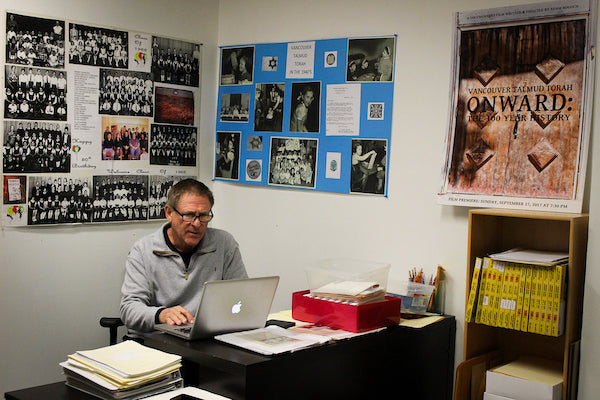
David Bogoch is keeper of the Vancouver Talmud Torah archives and chair of the school’s alumni fund. (photo from facebook.com/vttschool/photos)

David Bogoch is on the board of the Vancouver Talmud Torah Foundation. He is also the collector and keeper of the school’s archives. Previously, he was on the school’s board of directors for eight years – a position he took for a unique reason.

“At my dad’s shiva, the president of the board at that time, David Kauffman, tapped me on the shoulder and asked if I would be on the board at the school,” explained Bogoch about how he became involved. “At that time, with my father’s spirit in the room, I felt I had no choice but to say yes. Talk about timing.”

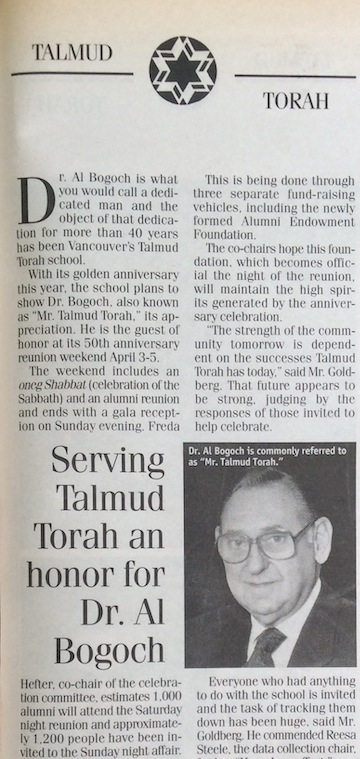
Dr. Al Bogoch was the guest of honour at Vancouver Talmud Torah’s 50th anniversary at its current location, in 1998. He was recognized for his more than 40 years of dedication to the school. He acted in many capacities over those years, including as president of the board of directors, as one of the founders of the VTT Foundation, which was established in 1974, and as a main driving force of four of the school’s expansions. On the occasion of the golden anniversary, the Alumni Endowment Foundation was launched.

In addition to his duties as archivist, David Bogoch is also chair of the school’s alumni fund.

“The board was portfolio driven, so I chose alumni,” he told the Independent. “I inherited the job from Carla van Messel. I figured it would be the least political and most fun. I knew at least 100 alum I could call and it all started from there.”

In going through the boxes in his father’s basement, Bogoch found tons of old Talmud Torah paperwork. “He had kept everything to do with his time on the board in the 1960s,” said Bogoch. “Other past presidents had given him their collections and, together, amassed a lot of what is in the archives today.

image - Vancouver Talmud Torah’s 50th anniversary, which honoured Dr. Al Bogoch, “Mr. Talmud Torah,” was the topic of this March 20, 1998, Jewish Western Bulletin article by Faith Bloomfield
Vancouver Talmud Torah’s 50th anniversary, which honoured Dr. Al Bogoch, “Mr. Talmud Torah,” was the topic of this March 20, 1998, Jewish Western Bulletin article by Faith Bloomfield.

“Today, the archive has thousands of photos and documents, from 1918 to the present,” he continued. “There are so many interesting stories which make up the 100-plus years of the school history. I looked up every issue in the library of the old Jewish Western Bulletin and the Jewish Independent to help tell the history of the school and the community of the times. Where would we be without the ability to search through the newspaper of old?”

While many stories have captured his interest, Bogoch said, “One story which caught my attention was in the board meeting minutes from 1944. The community wanted to build its own new Talmud Torah day school but were unable to because of lack of building supplies because of the world war. They also wanted to buy a school bus but couldn’t because of gas rations due to the war.

“Some people like jigsaw puzzles, others like bridge or golf,” he said. “My game of choice is the history of the school and all the people who either attended or were involved with the school. I love the good stories of friendship; I suffer when I hear the bad stories of tough times for students or parents or teachers. By knowing what has gone on in the past, I hope to impart those stories to the people of the present and the future, so we can try to avoid mistakes made before.”

Some of those stories are included in the one-hour documentary Vancouver Talmud Torah Onward: The 100-Year History. Written and directed by Bogoch’s son, filmmaker Adam Bogoch, the documentary was released in September 2017, as part of the school’s centenary celebrations. It can be viewed at youtube.com/ watch?v=ifoAqk3EKb0.

VTT obviously means a lot to David Bogoch, who also attended the school. “All of my lifelong friends came from Talmud Torah,” he said. “Most alum I come in contact with also share the same experience – our ties to the Jewish community stem from our shared experiences of school years. Between school, shul or camp, that is where we forge our community ties that bind.”

Bogoch is working toward making the VTT archives more widely accessible.

“The school,” he said, “is currently trying to put the photos and archival material on the school website so that everyone can search through and find the memories of their time, or of their family’s era.

Format ImagePosted on May 7, 2021May 7, 2021Author Cynthia RamsayCategories LocalTags Adam Bogoch, Al Bogoch, archives, David Bogoch, education, history, Vancouver Talmud Torah, VTT Onward
COVID and other challenges

COVID and other challenges

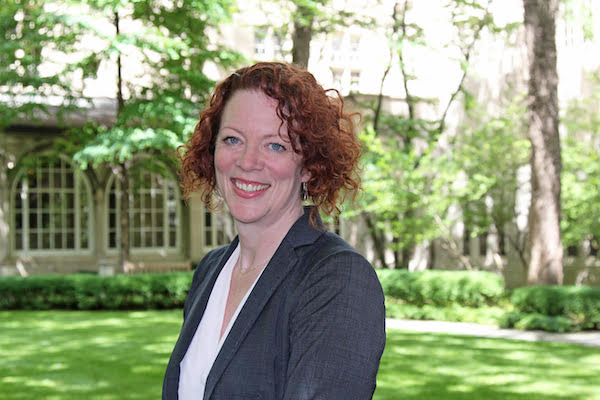
Dr. Judith Moskowitz (photo from Judith Moskowitz)

Anxiety and stress can be debilitating even in the most normal of times, but, with COVID-19 and all that it encompasses, we have all been presented with a whole other level of challenges.

In this context, the Jewish Independent connected with Dr. Judith Moskowitz, a professor of medical social sciences at Northwestern University Feinberg School of Medicine, in Chicago. She is also the director of research for Northwestern’s Osher Centre for Integrative Medicine. Trained as a social psychologist, with expertise in stress and coping with emotions, Moskowitz started her career in the early 1990s, helping men caring for their partners suffering from AIDS.

“Before there were more effective treatments available, it was essentially a terminal illness,” she said. “Caring for a loved one with AIDS was really one of the most stressful events a human could experience.”

Initially, she said, “We’d ask them, ‘What is stressful about this?’ Then, we’d help them cope with it, really focusing in on the negative part the whole experience and, shortly after the start of the study, the participants started saying, ‘You’re not asking us about the good things in our lives’ … which surprised us, because we’re coming at it from a very much stress and coping way.

“So, we listened to them and started then asking, ‘OK, tell us something positive that happened in the last week.’ And, almost in every single interview, even if their partner had just died, they could talk about something positive … often something small … having to do with something else going on in their lives not necessarily directly related to their care-giving.”

This new perspective helped direct Moskowitz onto a path looking at the positive things within stressful life events, allowing positive emotions to be expressed along with the negative.

“This isn’t about pretending things aren’t happening,” she stressed. “Rather, it’s about knowing that, even when times are really dark and you may be experiencing a lot of negative emotions and a lot of stress – maybe even depression or anxiety – you also have the ability to experience positive emotions as well. So, if you can experience the positive alongside those negative emotions, you’ll be able to cope better.”

Moskowitz and her team put together a program that includes eight to 10 skills, depending on the target group, toward helping participants increase their daily experience of positive emotions – stopping to notice, savour and capitalize on those good aspects.

“When things are stressful, it can be hard to see the positive things going on,” said Moskowitz. “We help people realize there’s usually something positive happening … you just have to be able to notice it.

“Things might be really horrific, but your dog is sitting next to you, really loves you, and it’s very sweet. So, just taking a moment and petting your dog, and then maybe telling someone about it – that would be noticing something positive in your life and savouring or capitalizing on it,” she explained. “We’ve been able to show that people who learn these skills and then practise them have better emotional well-being. They’re less likely to be depressed. In some samples, we were seeing some physical health effects. So, through clinical trials, we showed that the program seems to be helpful.”

When COVID first hit, Moskowitz was inundated with questions about how to cope better with stresses associated with the pandemic. The bottom line is that these skills transcend any particular stressor and can help no matter what the situation.

“For COVID, my advice is the same as it is for coping with breast cancer, diabetes, depression, or being a high school student,” said Moskowitz. “Learn these skills, try them out, see which work for you and, then, keep doing them. It’s like a physical activity, something you need to keep on doing. You can’t just do it once … similar to gratitude, noticing the good things, being thankful … it doesn’t work for you to just be grateful once and then be done with it. You need to take it up as a habit, and that can help you cope with COVID-19 or adapt with whatever kind of life stress you’re facing.”

Moskowitz also teaches the importance of doing acts of kindness. The idea is that, when you do something nice for someone else, it helps you feel better, too. Such an act can be as simple as paying for the coffee of the person in line behind you. Or looking someone in the eye and thanking them, making them feel appreciated and seen. And there are many types of acts that can be done without the receiver knowing the kindness came from you, if you’d rather remain anonymous.

“Doing these acts helps you feel better in a situation where you might think, I’m suffering here, I’m having a really hard time … but, knowing you can do something to help someone else can help your own well-being,” said Moskowitz.

Another skill she pointed to is “positive reappraisal.” When something stressful happens, take a moment to reframe it or think about it in a way that makes it seem not so bad or even like it’s positive thing – find the good in it.

“Sometimes, it takes the form of actually learning something about yourself – like you find that you are stronger than you’d thought you were,” said Moskowitz. “My favourite positive reappraisal is, ‘Well, that could have been worse! It’s bad, but it could have been worse.’

“An extreme example of this happened when we were doing some work with a gun-violence prevention group here in Chicago, teaching them these skills. They work with young men who are at high risk of either being victims or perpetrators of gun violence. The people they work with often are involved in a shooting. [The group members] will talk about it and will say, ‘One of our clients was shot and is in the hospital, but he’s alive.’ Having one of your clients shot is pretty bad and very stressful, but they’re able to say, ‘You know what? It could have been worse. He could have died, but he’s still alive.’ So, that’s a very vivid example of positive reappraisal.”

Moskowitz stressed that there is no one technique that works better than all others. She said, with regard to various anxiety- and stress-reducing methods, it is very much a matter of what fits best for each individual in a particular circumstance.

For more information visit moskowitzlab.com.

Rebeca Kuropatwa is a Winnipeg freelance writer.

Format ImagePosted on May 7, 2021May 7, 2021Author Rebeca KuropatwaCategories WorldTags anxiety, coronavirus, COVID-19, health, Judith Moskowitz, mental health, positive reappraisal, stress
The road of reckoning

The road of reckoning

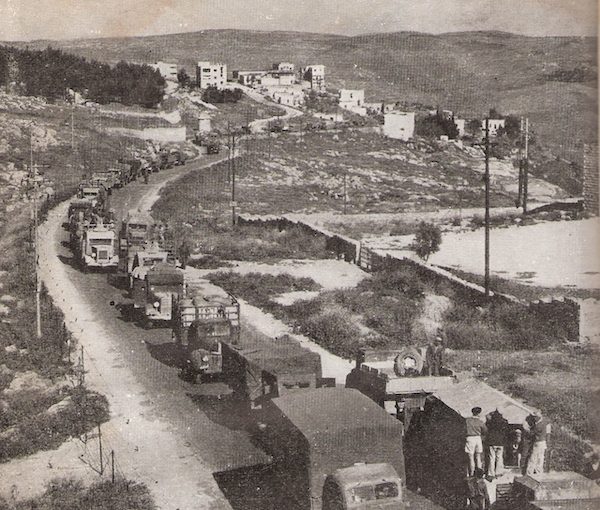
A supply convoy entering Jerusalem, 1948. (image from Shaar Hagai Heritage Museum)

Having just marked Yom Hazikaron and Israel’s 73rd anniversary, it is an appropriate time to recall a piece of Israel’s foundational history, and a new museum that commemorates it.

Seventy-four years ago, the road to Jerusalem was a site of easy ambush. Probably no part of the road was more treacherous than the area around Shaar Hagai. This spot, called Bab el Wad in Arabic, translates into English as the Gate of the Valley. As far back as 1868, French explorer Victor Guerin recognized and commented on this weak spot: he pointed out that the track was so narrow that “a determined band of men could stop an army in it with little difficulty.”

Admittedly, as you today drive on a smooth, paved, two-way, divided Jerusalem/Tel Aviv highway, it is hard to appreciate this reality. But, on Nov. 29, 1947 – the day after the vote on the United Nations Partition Plan, enabling the establishment of the Jewish state – Arab forces began blocking the route to Jerusalem. Not only were Jewish forces shot at, but, because the road curves, drivers couldn’t see where the road was blocked until they were trapped basically.

In David Dayan’s book Roadblock at Shaar Hagai: Creating a State (title translated from the Hebrew), Amos Kochavi recalled one such incident: “The time was approximately two in the afternoon. The long line entered the narrow and dangerous part. They could be anywhere…. We continued to climb … and there was a mighty explosion. The bomb under the road left a huge hole and the convoy stopped. Immediately, terrible shooting began…. We returned fire, but we couldn’t advance. Some of the drivers went into shock…. One driver with shell shock, screamed, ‘I can’t handle it anymore. I’m leaving.’ We yelled back: ‘Don’t move! You won’t come out alive!’ He didn’t hear, jumped from the car and was instantly killed.

“They tried to come down from the hills to get close to the cars, but our fire stopped them. They fire, we fire and the hours go by. No cars have air left in their tires. The number of injured grew. Shalom volunteered … he lay on the road, rolling – to avoid snipers – for a long hour … directing the drivers, one by one, until he had rescued all the cars…. An Australian captain ordered tanks that escorted us back to Gezer. The time was already two at night – 12 hours from when we entered Shaar Hagai.”

Jerusalem was under siege. Essential supplies could not reach the civilian and military population of the city. Jerusalem was dependent on supplies from the rest of the country, and was threatened with being totally cut off from the rest of the country. The only way to reach Jewish Jerusalem was to travel in convoy. (For more information, visit the National Library of Israel website, nli.org.il/en.)

photo - A codebook for sending messages in the time of the siege of Jerusalem, on display at Shaar Hagai Heritage Museum. (photo from Shaar Hagai
A codebook for sending messages in the time of the siege of Jerusalem, on display at Shaar Hagai Heritage Museum. (photo from Shaar Hagai Heritage Museum)

According to the late Sir Martin Gilbert, by the spring of 1948, “Fewer and fewer Jewish food convoys were able to get through to Jerusalem. Towards the end of March, a food convoy failed, for the first time, to get through at all. One food convoy that did get through in March had taken 10 days to do so. By the end of the first week of April, there was only enough flour in Jewish Jerusalem to last for 30 days. Meat, fish, milk and eggs were unobtainable, except in small quantities, for children. The shortage of vegetables was such that children were sent into the fields to collect a weed … known as halamith, it tasted somewhat like spinach, and could be made into soup.” (See Jerusalem in the 20th Century.)

There was also a severe shortage of water. Three days before the state of Israel officially came into existence, the Palestine Post reported that “Jerusalem was still without water yesterday. The two pipelines from Ras el Ein, which were blown up by Arabs between Latrun and Bal el Wad on Friday, have still to be repaired. Crews are scheduled to leave under army escort this morning to continue repair work and, barring further trouble, repairs may be completed today. Water may be pumped into Jerusalem within a few days, according to one municipal official.” So grim was Jerusalem’s situation that archival photos show residents standing in long lines waiting to get their water ration and others rummaging through garbage, in the hopes of finding scraps of food.

Palmach fighters and, even more remarkable, simple truck drivers decided to do whatever they could to keep Jerusalem from being blocked. One now quite senior man, who drove a truck full of live fish for the Sabbath, was interviewed. He recalled looking out his side mirrors to see water streaming from the sides of the vehicle. The truck had been shot in numerous spots. Somehow, he managed to get to Kiryat Anavim, a kibbutz in the Jerusalem Corridor. There, women plugged up the bullet holes with rags. Probably, many of us would have considered giving up at this point, but this driver continued the slow climb to Jerusalem.

The fighters were mostly young people. A significant number were under the age of 18 (today’s conscription age). They came from all backgrounds, religious and non-religious, and from all parts of the country; some were Holocaust survivors. As a number of the fighters had been assigned the task of digging gravesites at Kiryat Anavim, they probably realized they might not survive on the road to Jerusalem.

It was crucial to find a different route for the convoys. Palmach soldiers discovered a detour that went through a hidden valley south of the heavily fortified fortress at Latrun and joined a path descending from Jerusalem. Using heavy tractors, the Palmach slowly cleared a path for vehicles. A water pipeline was also installed along it. The lifeline to the Jews in Jerusalem was secured, providing vital water and other supplies, in the summer months of 1948.

At the point where the road was most unsafe, there is a 19th-century Turkish-built travelers’ khan or inn. On March 23, 2021, Israel’s last election day, a memorial museum was opened at this historic location. The Shaar Hagai Heritage Museum is dedicated to the men and women who prevented Jerusalem from being disconnected in the days leading up to and even following Israel’s independence.

The museum deals less with the chronology of the battles and more with the physical and emotional difficulties convoy members faced, such as confronting dilemmas like whether the trucks should carry guns or food to besieged Jerusalem. There are displays of items used by the convoys, such as codebooks, handguns and rifles. And there are interviews with people who took part in the convoy operations, and part of the exhibit is animated.

Once we are again allowed to travel, the museum is worth a visit on your next trip to Israel. Allow at least an hour-and-a-half for the whole tour, which is recommended for viewers 10 years of age and older. The new museum requires visitors to make advance online reservations, and there are admission fees.

For Hebrew speakers, there’s a preview of the museum at parks.org.il/new/chan.

Deborah Rubin Fields is an Israel-based features writer. She is also the author of Take a Peek Inside: A Child’s Guide to Radiology Exams, published in English, Hebrew and Arabic.

Format ImagePosted on May 7, 2021May 7, 2021Author Deborah Rubin FieldsCategories IsraelTags education, history, Israel, Israeli War of Independence, Shaar Hagai Heritage Museum, siege of Jerusalem
The women of Israel

The women of Israel

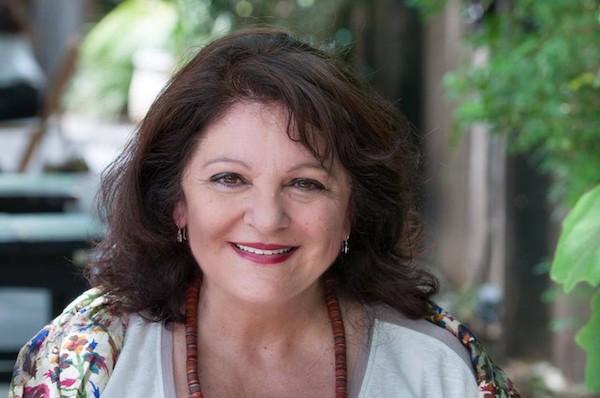
Curator and art historian Yael Nitzan, founder of Israeli Women Museum. (photo by Adi Eder)

How many “she-roes” of Israel can you name? Maybe you’d with Golda Meir, Israel’s first and only female prime minister. Or the tragic and courageous spy Sarah Aaronsohn and paratrooper Hannah Senesh. The list would include physician Vera Weizmann, the first first lady of Israel, who helped establish Chaim Sheba Medical Centre, now the largest hospital in the Middle East; and second first lady Rachel Yanait Ben-Zvi, who taught Jerusalem women how to grow vegetables, milk cows and make cheese so their husbands could go out and build the state.

These and many other women who played – and continue to play  – important roles in the history and culture of Israel will be immortalized later this year when the Israeli Women Museum opens in Haifa. The museum will showcase at least 100 noteworthy but not necessarily well-known women, from architects to lawyers to choreographers, says founder Yael Nitzan.

A curator, art historian and TV producer, Nitzan has overcome many roadblocks and setbacks in realizing her dream of opening Israel’s first museum dedicated to women.

“It was a struggle,” she admitted. “Now, with corona, the world has everyone sitting and listening, and, in three months, I accomplished what I could not accomplish in the past six or seven years.”

Nitzan gained the help of the Haifa Foundation in raising funds for the project, and she was given the rights to a former private school building in which the collections will be housed.

screenshot - The Haifa building that will house the Israel Women Museum
The Haifa building that will house the Israel Women Museum. (screenshot)

Brig. Gen. Gila Kalifi-Amir, former women’s affairs advisor to the Israel Defence Forces chief of staff, agreed to chair the museum. The board was joined by fellow Haifa residents Nadim Sheiban, director of the Museum of Islamic Art; and Prof. Aliza Shenhar, formerly a deputy mayor, ambassador to Russia and first female rector of an Israeli university.

“I found the right people,” Nitzan told Israel21c.

“There are currently about 45 women’s museums in the world, the most famous of which are the Women’s Rights [National Historic) Park in Seneca Falls, N.Y., and the Women’s Art Museum in Washington,” she said.

“The fundamental challenge in establishing a museum is not only in raising resources, but in creating a diverse and significant human and ideological infrastructure. The Israeli Women Museum must be a magnet of significance to the whole, or at least to large sections of, the population in Israel.”

Though Israel reportedly has the world’s highest ratio of museums per person, this will be the first one dedicated to the mostly unsung females responsible for weaving together its social, agricultural and business fabric. “Our museum will be on women in history and women in the arts,” Nitzan explained.

“The section on history commemorates the role of important women who have not been properly acknowledged.” Women like Hannah Maisel, who immigrated to Palestine in 1909 with a doctorate in agriculture and founded the region’s first agricultural training institute for women. And women like Rachel Roos Hertz (Harel), a Dutch resistance fighter who moved to Israel in 1950 after winning the U.S. Medal of Freedom and the U.K. King’s Medal for Courage in the Cause of Freedom, and became active in the Women’s International Zionist Organization (WIZO) – itself founded by Rebecca Sieff (Ziv) from the Marks family of Marks & Spencer, and whose name graces Ziv Medical Centre in Safed.

Some of the inspiration for this section comes from Prof. Margalit Shilo’s Women Building a Nation, a book published this year in Israel.

photo - Sculpture by 90-year-old Kati Paldi
Sculpture by 90-year-old Kati Paldi. (photo by Yael Nitzan)

“In the art section, we will spotlight women whose work was not considered important, as well as very important female artists of today whose work is rarely shown in museums,” said Nitzan.

Artists to be included run the gamut from Ziona (Siona) Tagger, one of the most important female Israeli artists of the early 20th century, to contemporary painter Haya Graetz Ran.

“Women in Israel contributed greatly to the establishment of the state, contributed to the construction of the infrastructure of settlement, education, defence, law, government, society, culture, cinema and theatre,” Nitzan said. “But, although they left their mark, they did not receive proper recognition and respect in building society.  The purpose of the museum is to raise their profile and to reshape the narrative of the critical role of women as full partners in leadership and public space design over the past century.”

Nitzan invites anyone to contribute stories or items relating to Israeli Jewish, Arab, Druze or Christian women, and even artists, poets and leaders from the Holocaust era who did not manage to get to Israel. She can be reached through the museum’s Facebook page. Donations for the project are being funneled through the Haifa Foundation.

Israel21c is a nonprofit educational foundation with a mission to focus media and public attention on the 21st-century Israel that exists beyond the conflict. For more, or to donate, visit israel21c.org.

Format ImagePosted on May 7, 2021May 7, 2021Author Abigail Klein Leichman ISRAEL21CCategories IsraelTags art, history, politics, She-roes, women, Yael Nitzan

Posts pagination

Previous page Page 1 … Page 102 Page 103 Page 104 … Page 314 Next page
Proudly powered by WordPress