Skip to content
  • Home
  • Subscribe / donate
  • Events calendar
  • Business Directory
  • FAQ
  • News
    • Local
    • National
    • Israel
    • World
    • עניין בחדשות
      A roundup of news in Canada and further afield, in Hebrew.
  • Opinion
    • From the JI
    • Op-Ed
  • Arts & Culture
    • Performing Arts
    • Music
    • Books
    • Visual Arts
    • TV & Film
  • Life
    • Celebrating the Holidays
    • Travel
    • The Daily Snooze
      Cartoons by Jacob Samuel
    • Mystery Photo
      Help the JI and JMABC fill in the gaps in our archives.
  • Community Links
    • Organizations, Etc.
    • Other News Sources & Blogs
  • JI Chai Celebration
  • JI@88! video

Recent Posts

  • SFU honours Gloria Gutman
  • Lifting people’s spirits
  • Wedding a ray of light
  • Indigeneity and Zionism
  • Rule of law broken: councilor
  • Football and its roles
  • The burden of defence
  • Fish Café returns after fire
  • All right in what goes wrong
  • Nuns & mermaids at TUTS
  • Camp offers holiday retreat
  • Students and mentors inspire
  • Once-in-a-lifetime trip
  • 100 dancers, one heart
  • Money for the sciences
  • What “Jewish food” means
  • Have a cookie, schnitzel too
  • Federation now across BC
  • Israel fighting for its existence
  • Deal strengthens Iran
  • Patriotic belonging diminishes
  • A campaign to engage
  • Upstanders’ first live event
  • Responding to Carney
  • Having your own home
  • Music a family tradition
  • Musical to warm heart
  • Community milestones … June 2026
  • Sharing her passion for Israel
  • Or Shalom reopens its doors
  • JFS from past to future
  • Need holistic approach
  • Sharing stories, advice
  • Journalist shares fears
  • Skills to live together
  • Road to independence

Archives

Follow @JewishIndie
image - CJN box ad Rockowers 2026

Byline: Rebeca Kuropatwa

Jewish women in West

Jewish women in West

When Jeanne Abrams told a friend she was planning to do her doctorate dissertation on an aspect of Colorado Jewish history, her friend replied, “What a wonderful idea! You’ll hardly have any work to do.” She proved wrong.

“While I was researching my dissertation and finishing up my PhD, I visited the Beck Archives of Rocky Mountain Jewish History at the University of Denver,” Abrams told the Independent. “The director, when she retired, asked me to interview for the job. The rest is history. As director of the Beck Archives, one of my tasks was to become an expert on Western American Jews, and that’s how the book came about,” she said, referring to Jewish Women Pioneering the Frontier Trail: A History in the American West (New York University Press, 2006).

“I’ve always had an interest in American Jewish women, and found there were some differences that I wanted to point out, and that Jewish women played a very important part in settling and developing Jewish communities in the American West,” she said.

Abrams herself was born to Holocaust survivor parents in Stockholm, Sweden. Sheltered there after the war by the Swedish Red Cross, her family moved to the United States when Abrams was less than a year old.

Through her research, she has learned that, in the United States, while Jewish men were very involved in city and organization building, it was often left to the women to develop religious continuity and community.

She said Jewish women “were in the forefront of founding synagogues, keeping Jewish tradition alive in the home, and they also branched out in many areas – particularly strong in philanthropy and charitable enterprises. At the same time, because of a combination of factors, including the more open environment in the West and that kind of spirit of adventure, Jewish women also really ventured into professions, into higher education.

“I think this environment in the West made this area of the country different for Jews in general. I certainly don’t want to suggest that there was no antisemitism in the West but … [Jews] were more prominently accepted into general society, so American Western Jews, men and women … were often leaders in both the general community and the Jewish community simultaneously.”

Throughout Denver’s history, there have been many endeavours that have involved people of different faiths. As an example, Abrams cited the Denver Charity Organization Society, which was organized in 1887 by a Jewish woman, a rabbi, a Catholic priest and a Protestant minister. The society evolved into what is now known as the United Way.
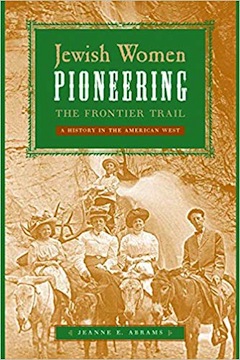
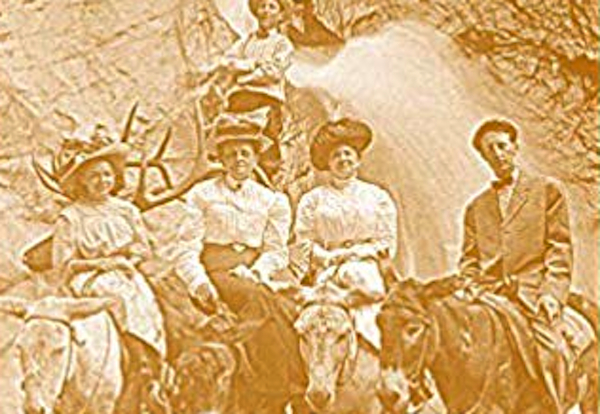
image - Jewish Women Pioneering the Frontier Trail book cover“Jewish women were also in the forefront of political life here in many ways, and I don’t think that most people realize that women voted in the West long before they did on the East Coast…. We’re coming up to the 100th anniversary of the amendment that allowed women to vote in the U.S.,” said Abrams. “In 1893, women were already voting in Denver. It was the largest city in the U.S. in which women could vote. I think people often think of women’s suffrage with the East Coast, New York, and minimize the amount of influence that early suffragettes had in California, here in Colorado, and in many other cities.”

In 1899, the National Jewish Hospital was founded as a place for people with tuberculosis. It drew patients and staff from all over the country, and was funded by people all over the country. According to Abrams, this was likely one of the first national Jewish organizations to hire a Jewish woman in the role of executive director, in 1911.

While Abrams’ research has primarily focused on Denver’s Jewish population, she also has come across parallels in Canada.

“We know Jews have a very long tradition of philanthropy and social justice. I found that across the border as well,” said Abrams. “But, in terms of the hospitals, when I studied them, I’d say, in Denver, the two Jewish sanatoriums actually had more interaction by women than I saw in Montreal.”

With her book, Abrams wanted to impart a sense of appreciation for women in the American West – of them having been leaders.

“They’ve often been overlooked, because historians tend to be very East Coast-centric,” she said. “I think that people generally seem to be surprised that there are Jews living out in the West. If they thought of anyone, they had the stereotype of cowboys living there.”

While more people associate Denver with the gold rush, Abrams noted that more people actually came to Colorado in search of health than wealth, specifically referring to the tuberculosis treatments available.

These days, Abrams has mainly been studying early American history. Her most recent book was, she said, “on America’s first three ladies. It’s called First Ladies of the Republic: Martha Washington, Abigail Adams, Dolley Madison and the Creation of an Iconic American Role. I’ve moved back and forth, but I’ve enjoyed the different topics I’ve covered.”

Rebeca Kuropatwa is a Winnipeg freelance writer.

Format ImagePosted on July 19, 2019July 18, 2019Author Rebeca KuropatwaCategories BooksTags Colorado, health, history, Jeanne Abrams, tuberculosis, United States, women
Court’s segregation decision

Court’s segregation decision

Halifax-based lawyer Hanna Garson. (photo from Hanna Garson)

In 2015, the B.C. Civil Liberties Association and the John Howard Society launched a legal challenge to the federal government’s laws that allow administrative segregation – a form of solitary confinement – in prisons, calling it a cruel and inhumane punishment that can lead isolated prisoners to harm and even kill themselves. They won their case in the B.C. Supreme Court in January 2018, a decision that was appealed by the government the next month. Last week, the B.C. Court of Appeal affirmed the unconstitutionality of provisions that allow indefinite and prolonged solitary confinement of prisoners.

In the January 2018 decision, the B.C. Supreme Court gave the federal government 12 months to pass new laws. In January 2019, the court gave the government an extension to April, but said certain stipulations had to come into effect immediately. Correctional Service Canada was ordered to take several steps, including giving prisoners in segregation more time outside, requiring daily visits from healthcare professionals, allowing inmates legal counsel in hearings related to solitary confinement, and changing the authorization system regarding the placement of an inmate in segregation for more than 15 days.

The federal government was given another extension after the April deadline, to the end of June. Then, on June 24, the B.C. Court of Appeal came out with its decision on the matter – rejecting the government’s appeal.

“This particular case is very interesting, as there are no actual individual complainants,” said Jewish community member Hanna Garson, a lawyer based in Halifax whose focus is ensuring that everyone is treated fairly by the justice system. “So, the court [was] being asked to decide whether or not the written laws themselves breach provisions of the Charter of Rights and Freedoms in Canada.”

According to Garson, sections of the Charter are indeed being breached when it comes to administrative segregation, especially as it comes with no time limit. “People are being put into segregation not knowing when, if ever, they’re going to get out,” she told the Independent. “That really plays on the mind.”

Noting that many people have mental illness or struggle with mental health before they are incarcerated, which “may have led to their negative interaction with the law,” she said, “That population, in particular, is very damaged by periods of segregation.”

The appeal court’s reasons for judgment, written by Justice Gregory Fitch, stated that the Corrections and Conditional Release Act violated Section 7 of the Charter, which protects an individual’s right to life, liberty and security of the person. The court “found that the harm caused by prolonged confinement in administrative segregation undermines the maintenance of institutional security, as well as the ultimate goal of achieving public protection by fostering the rehabilitation of offenders and their successful reintegration into the community.” It also “found that prolonged confinement in administrative segregation is not necessary to achieve the safety or security objectives that trigger its use.”

The judgment noted “that administrative segregation has a small, but significant, disproportionate effect on indigenous men and an even more significant effect on indigenous women” and that the “impugned laws” violated Section 15 of the Charter “to the extent that they authorize and effect a procedure that results in discrimination against aboriginal inmates.”

Section 15 states that, “Every individual is equal before and under the law and has the right to the equal protection and equal benefit of the law without discrimination and, in particular, without discrimination based on race, national or ethnic origin, colour, religion, sex, age or mental or physical disability.”

Another issue, said Garson – who, in addition to being part of the firm Planetta Hughes LLP, is chair of the East Coast Prison Justice Society and is on the board of the Elizabeth Fry Society Mainland Nova Scotia – is that, while prisoners being placed in segregation have access to review boards, administrative segregation review boards consist of the same prison administration that placed them there. “So, it’s not an independent review and so, basically, the people who initially made the decision then question their own decision, which doesn’t necessarily secure a fair assessment of whether or not a person really needs to be segregated,” she said.

While legal counsel is permitted at these reviews, it is not provided in many provinces and few prisoners can afford representation or are not in a mental state of being able to request it, she said. “If you’re running a facility with hundreds of people who may be violent, I can understand a time-out for a moment to see what else needs to be done,” said Garson. “But, there needs to be a time limit and other solutions.

“Long-term, serious mental health treatments take far more expensive staff and thorough training. Are these better solutions though? Without a doubt, yes. Unfortunately, a lot of the constraints are budgetary and this is something that, oftentimes, courts are hesitant to rule on. But, for example, the court did say that, as it says in Section 15 [of the Charter], everyone has a right to be equal before the law and receive equal treatment of the law. So, the court does an assessment of whether or not people are being discriminated against by these laws.”

After hearing testimony and expert opinions, Garson said, “the court decided that both aboriginal people and people suffering from mental illness are segregated far more often … and that the impact on them is far more negative. But, it went further, ordering incarceration facilities to put in place better solutions – better programming that does not involve segregation.

“Usually, the court is hesitant to make decisions that would force the government to put more funding into something. But, it did in this decision, which is, in my opinion, really wonderful and a great precedent. This case is really groundbreaking and, to a certain extent, it was a wonderful thing that it was appealed.”

The B.C. Supreme Court said, “basically, we had to come up with new laws. But then, they suspended it for a year, as the government needs time to pass new bills and stuff like that. In the meantime, the attorney general appealed, because they don’t think it’s fair,” she said.

The Constitution of Canada, which includes the Canadian Charter of Rights and Freedoms, is the supreme law in Canada, she explained. Section 52 (1) of the Constitution Act 1982 mandates that any law inconsistent with the provisions of the Constitution is, to the extent of the inconsistency, of no force or effect. The decision by the appeals court will become a binding precedent in all provinces, not only in British Columbia.

Garson emphasized that she is especially happy with the decision because it is one that has really considered the damage segregation does on the mental health of those being isolated and notes that, “if we really care about rehabilitation, then [segregation] makes no sense as a strategy, especially for those with mental illness.”

Because the court looked at the experiences of those who have been segregated and the decision will affect them, the system and society as a whole in the long-term, Garson said, “It’s more like a living document in that way, and it’s a very exciting case for this reason.”

As for where Jewish law falls on this matter, the organization T’ruah has been leading a campaign to abolish solitary confinement in the United States. In a 2014 report on the compliance of the United States with the United Nations Convention Against Torture, T’ruah notes, “The very first two chapters of our Torah teach us that every human being is created in the image of God, and that no human being should be alone. The practice of solitary confinement violates these principles and diminishes the divine image. It also violates one of the Torah’s central moral teachings, expressed in Leviticus 19:18, that one should ‘Love your neighbour as yourself.’ The rabbis explain that this is taught, so that no one can justify degrading treatment of a member of their community…. If you do thus, know that the person you have dishonoured was created in the image of God.”

The report argues that “Jewish tradition understands instinctively that humans are social creatures. In a story about a character who outlives his family, friends and study partners, the Talmud teaches, ‘Either companionship or death.’ Life alone is unbearable. Jewish law warns against excessive punishment, ‘lest your brother be degraded before your eyes.’ (Deuteronomy 25:3) Even a person who has committed a horrific crime must be regarded as a member of one’s own family and, therefore, deserving of dignity.”

T’ruah contends that Jewish criminal law seeks to inspire teshuvah (repentance) and that there are several principles that should hold in prisons:

“1. No matter his or her crime, the prisoner should be seen as our ‘brother or sister’ and treated with dignity.

“2. No human being should be alone for extended periods of time. Isolation diminishes the human being and can even be deadly.

“3. Prisons should seek to rehabilitate the prisoner and not simply to degrade him or her.

“4. A prisoner should have a fair trial before being placed in solitary confinement. Therefore, solitary confinement cannot be used for those in pre-trial detention.”

Rebeca Kuropatwa is a Winnipeg freelance writer.

Format ImagePosted on July 5, 2019July 3, 2019Author Rebeca KuropatwaCategories LocalTags administrative segregation, British Columbia, Hanna Garson, human rights, Judaism, law, prison reform, solitary confinement, T'ruah
Inspired by a fellow activist

Inspired by a fellow activist

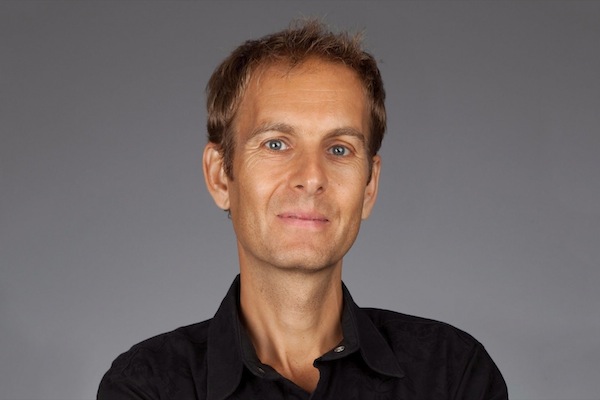
Katie Delay, left, and Sunny Enkin Lewis are co-presidents of Grant Park High School’s Students for Social Justice. (photo from Sunny Enkin Lewis)

Earlier this year, Winnipeg Grade 12 student Sunny Enkin Lewis won first prize for her age group in A&E network’s contest Lives That Make a Difference. The contest receives hundreds of submissions from all over Canada.

“The prompt [for the contest] is along the lines of, ‘Write an essay about someone who has made a significant contribution to Canada in 2018,’” Enkin Lewis told the Independent. “So, I wrote about Autumn Peltier, who – I believe she’s 15 now, around there – is an indigenous water keeper. She’s an activist for clean water in indigenous communities in Canada. She’s spoken at the UN, she’s spoken to Prime Minister Justin Trudeau. So, she’s done a lot of amazing activism.”

Peltier is Anishinaabe and is from the Wikwemikong First Nation on Manitoulin Island in northern Ontario.

“I chose her for a couple reasons,” said Enkin Lewis, who was born in Toronto, but has lived in Winnipeg for the past 10 years. “First of all, I think her cause is really important in Canada. I’ve always been really upset with Canadian society and government, because we tend to look at ourselves as pretty flawless in terms of human rights. And, it is true that the quality of life for Canadians, overall, is really good. Yet, there are people, a lot of people, who don’t have the most basic of their needs met – water and shelter … and I think she has brought more awareness to that.”

In her essay, Enkin Lewis points out that Peltier not only stands up fearlessly for this cause, but that she does so from a unique worldview as an Anishinaabe person.

“She thinks of water as deserving of rights,” said Enkin Lewis. “That’s not something we would generally think of and I think it’s a really strong statement – that someone can stand up and speak of things in a way that contrasts the common logic of general Western ideas. I think that helps validate indigenous worldviews in a Western context a little more. Also, I was just inspired by her, as a young woman. I think it’s so important that young people’s voices are heard and that’s how I believe change will happen the fastest – if young people are given a platform and are accepted and respected – and she really embodies that.”

As for as why Enkin Lewis’s essay may have been chosen, she said, “I think my choice of person was really relevant in Canada today, especially since, now, I think, there’s a big focus on indigenous rights, and I think it was maybe a bit refreshing to see someone like that. I haven’t read the other people’s essays, and they didn’t tell me why mine was specifically chosen … just that they thought it stood out.”

Growing up, Enkin Lewis learned that “a big thing in Judaism is valuing life over everything, and knowing the value of human life. And, I think a big part of Judaism is also just respect for people and … everyone should have a good quality of life.

“The fact that, here, in Canada, there are people who don’t have their basic needs met, I think that’s not OK in Judaism. I think it’s important for other cultures to listen to each other, just as I think it’s important for Christian people to listen to Jewish people. And, I think it’s important for Jewish people to listen to indigenous perspectives. As a European Jew, I’m not native to this land … and it’s important to respect the people who are the caretakers of this land and who have been for thousands of years.”

Last year, Enkin Lewis led the organizing of a social justice conference at Grant Park High School, which, in turn, led to the development of a student social justice club at Grant Park. Enkin Lewis and co-president Katie Delay created the club and, because they and the teacher involved in helping to form the group will have left the school by the start of the next school year, Enkin Lewis hopes the younger members will pick up the ball.

“I think our club is very student-centred, very much about what we care about right now, and it gives me and other people an opportunity to get involved in a safe and constructive way,” she said.

As Grant Park has many newcomer Yazidi students, events organized by the club have been focused on building community awareness of the Yazidi situation.

“We did a drive for school supplies for underprivileged students in Winnipeg, and the biggest thing we’ve done is organize a coffeehouse and a couple other events for Yazidis with the help of a local organization called Operation Ezra. We had a bake sale where we sold traditional Yazidi foods, a Yazidi dance class to educate people about the culture, etc. I find that people are not really aware of what’s happening to the Yazidi people.

“We had a coffeehouse in the evening and invited community members, students, parents, anyone to come. There were student performers and a speaker talking about what’s happening, and a Yazidi performer.”

Enkin Lewis’s essay win comes with a $3,000 cheque for her and a $1,000 cheque for her school. She plans to follow her family’s Jewish custom of donating a portion of everything they earn. “I haven’t narrowed it down to a specific organization yet,” she said, “but I’m going to donate it basically to her [Peltier’s] cause – water in indigenous communities. Other than that, I will probably put it toward my education.”

Rebeca Kuropatwa is a Winnipeg freelance writer.
Format ImagePosted on June 28, 2019June 26, 2019Author Rebeca KuropatwaCategories NationalTags A&E, activism, Autumn Peltier, First Nations, human rights, Sunny Enkin Lewis, tikkun olam, water, writing, youth
Aiming for carbon neutrality

Aiming for carbon neutrality

Jeff Golfman’s Raw Office helps “businesses save money and be more eco-friendly in their supplies.” (photo from Raw Office)

Jeff Golfman has been working on ways to preserve nature since he was a boy. “I can trace it back to my time going to camps in the summertime and just really connecting with nature and with the human impact we have on the planet,” said Golfman, who went to B’nai Brith Camp in Kenora, Ont., and also spent one summer at Camp BB in Pine Lake, Alta., in addition to spending time at family cottages.

“Initially, it was just seeing people leaving garbage at campsites and leaving garbage in the wilderness. That really bothered me as a kid. It really stuck with me. That’s where it started, really. For me, wanting to be concerned about the legacy and what we leave behind, in terms of … how we show up on the planet and what we leave when we’re gone.”

Born in Vancouver, Golfman grew up in Winnipeg and is now living in Toronto. He started Winnipeg’s blue box recycling program in 1990 and then began researching how to make paper without trees, eventually getting patents to make tree-free paper, which is now available in big box stores like Staples, Office Depot and Office Max. About five years ago, he turned his attention to developing and sourcing product for his recently launched online office supply store, the Raw Office (rawoffice.ca).

“We help businesses save money and be more eco-friendly in their supplies,” he told the Independent. “It just made sense to do business with purpose…. It wasn’t so much that my passion was to save the world. It was more like I asked myself, ‘What is logical?’ And, to me, it’s logical that we’d want to do good while making commerce at the same time.”

While Raw Office’s current client base is 80% American, the company does business all across Canada, including in Vancouver, Calgary, Winnipeg, Toronto and Montreal.

“We’re using artificial intelligence and data to come into businesses and make recommendations for them on how they can make better informed decisions,” said Golfman. “Most people, when they go shopping, basically just browse and shop, and add to their cart and check out. It’s a lot of manual work to do that. What we do is put together a custom-made, curated program for each and every business that we come into. So, we’re really a one-of-a-kind program for each and every client we work with.”

Golfman’s company helps clients increase their use of recycled material for starters. Leading by example, Raw Office is currently the only office supply company that is 100% carbon neutral.

“What we practise and help businesses to do is to make an improvement from where they are today,” said Golfman. “It’s not about 100% or nothing. It’s about making an improvement. On average, the companies that have chosen to work with us are saving 30% financially and are getting 200% eco-improvement.

“I can’t speak to the tax benefit just yet, because everything is so new and is a moving target. We’re doing this outside of the political system, to help business be carbon neutral at no extra cost, which I think is the ideal scenario.”

While many companies are working toward going carbon neutral, no other large international player has cracked the office supply sphere. “There are other companies doing eco-friendly office supplies, but the ones we’ve found are not national and international in scope like we are,” said Golfman. “They are usually regional players and niche players.”

Raw Office has teamed up with the Bonneville Environmental Foundation and are buying carbon offsets to support landfill-to-gas projects, with 83,000 products on their website that show their individual environmental footprint.

“They are basically going into the landfill and pulling methane out of the landfill, and repurposing that for power and energy, and helping us reduce our emissions,” explained Golfman. “So, in a nutshell, we’re buying offsets and not charging our customers … banking that into the cost of working with us.”

By eliminating the bricks-and-mortar storefront of a conventional business, Raw Office is able to pass on the savings and offer carbon-offset products that cost 20-30% less.

“We are a technology-based company,” said Golfman. “We don’t hold inventory. We do drop shipping. It’s very similar to other tech companies that have been able to disrupt industries and reduce costs.”

Anyone can buy from Raw Office, but the bigger the company, the bigger the savings and planet impact. “We add a whole bunch of value to larger businesses that have multiple locations,” said Golfman. “A lot of the companies we work with are larger, with dozens or hundreds of locations. Most of our customers are like that, but we add value to all companies.

“One thing we do that is really uniquely for larger companies is the curated program and, also, we have these really great approval processes that allow managers and owners to approve of items and orders. And, we have these really cool features that allow the bookkeepers to integrate into their accounting software more easily.”

Meanwhile, Golfman is also working to create enhanced environmental and financial reports for his customers.

With products made all over the world, Raw Office offers complete transparency, with each product showing the country of manufacture and an eco-score.

“The eco-scoring system we created takes into account the country of manufacturing, eco-certifications and things like that,” said Golfman. “So, you’ll know, with transparency, if you’re buying something that’s made in Canada or overseas…. We make that really clear. If you had a preference for local manufacturing, you can do that on our website using filters … or, if you had a preference for some other country, we can do that, too. It’s all part of the search functionality.”

In his free time, Golfman volunteers with the nonprofit Green Kids, which he founded and of which he is board president.

“It’s an environmental theatre,” he said. “We do live theatre for children. We tour schools across Canada, all the way from Victoria, B.C., throughout Vancouver, Manitoba and Ontario. To date, 1,400,000 Canadian children have seen the Green Kids show.”

Golfman also runs a health blog, called, “The Cool Vegetarian,” where he interviews people about healthy eating and lifestyles.

Rebeca Kuropatwa is a Winnipeg freelance writer.

Format ImagePosted on June 28, 2019June 26, 2019Author Rebeca KuropatwaCategories NationalTags environment, Jeff Golfman, Raw Office
Teen wins for speech

Teen wins for speech

Deema Abdel Hafeez placed third in the Friends of Simon Wiesenthal Centre for Holocaust Studies’ annual speech contest. (photo from Janet Lee Elementary School)

Every year, the Friends of Simon Wiesenthal Centre for Holocaust Studies puts out a call to Ontario students in grades 6 to 8 to submit a speech reflecting on a quote of Holocaust survivor Simon Wiesenthal, z”l. This year, the quote selected was, “I believe in the good in people,” and students were encouraged to think about how to make the world a better place.

Deema Abdel Hafeez, a Grade 8 student at Janet Lee Elementary School in Hamilton, Ont., entered the contest, the first round of which was in February. Hafeez comes from a Palestinian family who moved to Canada 20 years ago.

“When I heard the quote, I didn’t want to just base it on the good in people … unicorns, rainbows,” Hafeez told the Independent. “I, more so, attacked the quote. I was like, you cannot believe in the automatic good in people, because it takes time to find the good in people.

“I wrote about my Islamophobic experiences. I was saying that you have to define the word ‘good’ to believe in the good in people. And, you have to become the good yourself before you can assume the good in other people.”

Hafeez shared that, while her school is pluralistic, with students of many different faiths, racism still very much exists.

“All the racist slurs and things like that, that’s how I attacked the quote,” said Hafeez. “I talked about how my family can’t go out without [experiencing it] … how my mom is being told to go back to her own country, or how anyone wearing religious clothing … is attacked in social standing … and how things are at a disadvantage for people like us. Obviously, it’s not as bad as it used to be, but, as a world, we need to try to change more.”

Hafeez said one of her Muslim neighbours had been badly beaten, to the point that he had almost died, just because he is a Muslim.

In the classroom, Hafeez has witnessed hate. “People mention jokes on social media and like things like that, and they talk about different colours of skin as if following a stereotype… and it’s, like, you’re funny, but you’re not … it’s just rude.”

When asked about how her parents felt about her entering the competition, Hafeez said she had entered without their knowledge. “It wasn’t because they wouldn’t have allowed me to,” she said. “But, I kind of just entered without telling anyone. At home, we talk about the Palestine-Israel conflict a lot, because we have a lot of family in Palestine. We can’t hate a whole group of people, because that’s hypocritical and we’re nice people … so, we don’t hate Israeli people. I have a lot of Israeli friends and I’m Palestinian. It’s cool, because, I feel like, with the Palestinian-Israeli conflict, there’s a way we can live in harmony, both nations living in the same land.”

Hafeez is a member of the school group Making a Difference.

“We do a lot of fundraisers and things like that,” she said. “I volunteer my time while making projects for my school and having the whole school getting involved in these projects. That’s how … I think I’ve become ‘the good,’ in my opinion. I find good as not seeing other people as objects and not labeling them and things like that … becoming the good is more mental to me. You can’t judge anyone. You can’t say, this person is good or bad. You can define yourself and, if you believe you’re doing the best you can at being good … if everyone did that in the world, then we’d live in a better place.”

Hafeez said she watches the news a lot and feels there is far too much violence that results from people judging others.

“I’m not talking about politics,” she said. “If everyone just stopped judging other people based on their religion, colour, sexual orientation … if everyone just focused on themselves, then our world wouldn’t be as hateful a place as it is right now.”

Hafeez practised her speech with her eight siblings.

“I feel like the hardest part for me was just managing my time and how I was supposed to practise my speech, and do all the things for my speech while I also have school, sports, classes … that was the hardest part,” said Hafeez. “The speech itself came easy for me. It is my own thoughts and is everything I’d thought about before. I stayed up late at night thinking these thoughts. I already knew what I wanted to say, so, on the stage, I wouldn’t be reading off a paper. I’d be talking about what I’ve been thinking about.”

The practise paid off. Hafeez was among 10 students chosen to attend a workshop and have their speeches taped as part of the semifinals on March 3 at the Friends of Simon Wiesenthal Centre in North York, a suburb of Toronto. A panel of judges then selected five students for the finals on March 28 at the Toronto Centre for the Arts. Hafeez placed third, winning an iPad.

Hafeez and her school have sent the Simon Wiesenthal Centre a grant application in the hope of organizing a peace summit, incorporating some anti-Islamophobic and anti-discrimination workshops for area schools.

Hafeez is already thinking about what types of activities she would like to undertake in high school, next year, such as starting up a group for change.

“I feel like, when I do that, I’ll be introduced to everything else I can do at my high school,” she said. “I have a lot of siblings, know a lot of teachers. I feel like it won’t be hard, to use my voice to reach people in high school.”

Meanwhile, Hafeez will find good use for her new iPad.

Rebeca Kuropatwa is a Winnipeg freelance writer.

Format ImagePosted on June 7, 2019June 5, 2019Author Rebeca KuropatwaCategories NationalTags Deema Abdel Hafeez, Islamophobia, racism, Simon Wiesenthal Centre, tikkun olam, writing
ED is a complex condition

ED is a complex condition

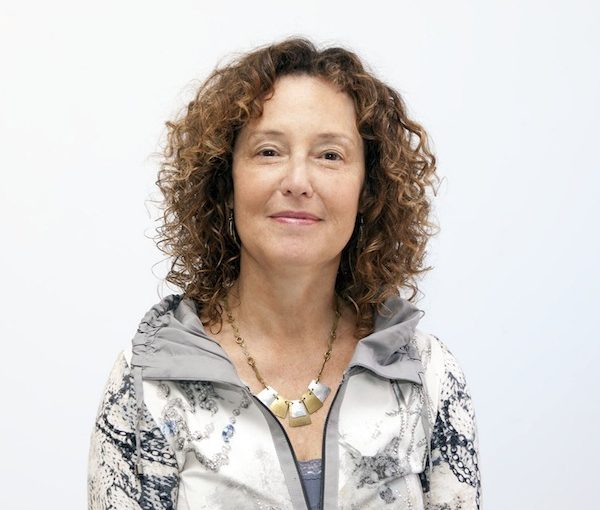
Left to right: Pollock Clinics sex therapist Tom Foster and physicians Neil Pollock and Roozbeh Ahmadi. (photo from Pollock Clinics)

While there may be any number of reasons why the frequency of a couple’s intimate sexual contact may wane, it is a critical cornerstone supporting the continuation of a healthy relationship. Often, when a couple is having sex infrequently, or not at all, their relationship becomes vulnerable to anger, detachment, infidelity and divorce. One factor that can come into play regarding a couple and their sex life is erectile dysfunction.

“ED is a medical condition where a man is consistently unable to achieve and maintain an erection that allows for satisfactory sexual function. ED is also referred to as impotence,” explained Drs. Neil Pollock and Roozbeh Ahmadi of Pollock Clinics in an email interview with the Independent. “The Canadian Study of Erectile Dysfunction identified 49.4% of men over the age of 40 with ED (Canadian Urological Association erectile dysfunction guideline 2015). By the time men reach the age of 70, almost 70% of them will experience some form of erectile dysfunction.”

Conventional treatment for ED generally involves blocking the symptoms, with medications like Viagra and Cialis. “If pills are not working, the next step is the injection or suppository forms of medications that patients can inject into the penis or infuse into the urethra prior to having intercourse,” said the doctors. “If these medications are not satisfactory, then there is the option of a vacuum erection device that a patient will need to apply to the penis and get an erection through the vacuum created within the tube. If none of the options is satisfactory, then there is the option of surgery, such as penile implant surgery.

“The issue with pills, injection and pump is the fact that all need prior timing and preparation and, in the case of pills, they can cause significant side effects, such as headaches, flushing, upset stomach and visual changes, which a lot of patients cannot tolerate.”

There are many factors that can cause ED. “These include neurological disorders, hormonal imbalance, structural abnormalities, side effects of medications or surgeries, mood disorders,” said the doctors, but “the most important and prevalent one is vascular disease.

“When a man becomes aroused, the brain releases a neurochemical substance to increase the size of blood vessels carrying blood to the penis and reduce the size of the vessels that carry it out,” they explained. “Twin compartments that run the length of the penis, called corpora cavernosa, become flush with blood that is trapped in the shaft. This causes the penis to stiffen and become erect. If blood flow to the penis is inhibited or the blood vessels are clogged or constricted, erection cannot be achieved or maintained.”

High cholesterol and the buildup of arterial plaque, over time, cause blood vessels to narrow, lessening their capability to carry blood. One of the first places men will notice this reduced flow is with ED, which is why ED has been dubbed “the canary in the coal mine” – it can serve as a distress signal three to five years prior to a major heart attack.

Lifestyle choices and health conditions that can also contribute to ED include smoking, obesity, a sedentary lifestyle and chronic alcoholism and/or substance abuse.

“Sexual wellness is essential to men’s health and happiness,” said Pollock and Ahmadi. “It is an integral part of men’s overall wellness as they age. A great number of scientific studies have shown the many benefits of a healthy and active love life, which include living longer, greater well-being and a happier and longer lasting relationship with your partner.”

Pollock Clinics provides a few treatments for ED.

“In the last few years, there are innovative regenerative treatment options to deal with the root cause of the problem, and not just the symptom,” said the doctors. “These new modalities include low-intensity shockwave therapy and platelet-rich plasma therapy [also known as the PRP shot], and are currently used in many countries around the world.”

PRP is created from a patient’s own blood and is commonly used in orthopedics, plastic surgery and sports medicine. “Studies have shown that this penile injection contains several different growth factors that can stimulate the healing of erectile tissue and is a safe and effective option for penile rejuvenation and improvement of erectile function … by enhancing and increasing the blood flow to the erectile tissue, offering a longer lasting desired outcome.

“ED shockwave therapy,” the doctors explained, “also promotes the regeneration of blood vessels in the penile shaft. That, like PRP, leads to longer and more satisfying erections and is accomplished by directing painless energy waves into the shaft of the penis.”

In addition to these two treatments, Pollock Clinics offers therapy, since ED has both physiological and psychological causes.

“Pollock Clinics also has a certified sex therapist to deal with psychogenic issues that might be affecting a man’s sexual health,” said the doctors. The goal of therapy is to provide “strategies to get a patient’s mind working with him instead of against him in a sexual encounter.”

Pollock and Ahmadi strongly encourage men to talk to their own doctor about any health issues they may have and the treatment options available.

Rebeca Kuropatwa is a Winnipeg freelance writer.
Format ImagePosted on May 17, 2019May 16, 2019Author Rebeca KuropatwaCategories LocalTags erectile dysfunction, health, men, Neil Pollock, Roozbeh Ahmadi
Documentary breaks silence

Documentary breaks silence

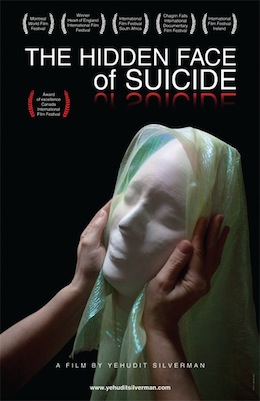
Prof. Yehudit Silverman’s The Hidden Face of Suicide is helping people talk about a topic still surrounded by stigma. (photo from yehuditsilverman.com)

Concordia University professor Yehudit Silverman’s award-winning documentary The Hidden Face of Suicide focuses on the world of survivors – those who have lost loved ones to suicide – and reveals their remarkable stories.

Wanting to learn the story behind the silence in her own family, Silverman offered suicide survivors a creative way to express themselves – using masks. In the documentary, she highlights the danger of secrets and the cost of silence.

Produced and directed by Silverman, The Hidden Face of Suicide features the Montreal group Family Survivors of Suicide. It has screened at Cinema du Parc in Montreal, Curzon Theatre in London, England, on PBS television in the United States, and at various international festivals and theatres. It was also shown at the Montreal Museum of Fine Arts, as part of the Seeds of Hope project, and is being used in diverse locations in Montreal as an education tool around the issue of suicide.

At Concordia, Silverman leads a graduate program that trains therapists in three different programs – art, drama and music therapies – with the goal of soon adding dance therapy.

The Hidden Face of Suicide, which was released in 2010, came out of a five-year research project about suicide.

“I was interested in the stigma that surrounds it and the fact that it’s not talked about or mentioned,” Silverman told the Independent. “I did a lot of reading about it. Then, I found the Montreal group Family Survivors of Suicide and I met the woman who was the facilitator, named Caroline, and then she invited me to the group.

“I started attending the group and hearing the stories. They all lost family to suicide. I listened and, after I got to know them … I was there for about six months and I wrote down some of the themes that came up, kind of field research – identifying common themes … and a lot of it was having to hide, having people turn away, having to wear a mask.

“And so, out of that, I asked if they would be part of a film. Then, we started working on the film and part of it was them creating masks, since that had come up for them. So, they created masks, wore them and worked with them. And that became a very powerful tool and also a metaphor for those who are left behind.”

image - The Hidden Face of Suicide facilitates difficult conversations
The Hidden Face of Suicide facilitates difficult conversations.

Doing this research also spurred Silverman to ask her parents about her uncle’s suicide for the first time. She did so on camera. “I was intrigued with the fact that I had never known about this,” she said. “And, why was that … why was there shame and stigma?”

As well, during high school, Silverman knew fellow students who had taken their own lives – and these suicides, too, were never talked about. She felt compelled to learn more about why that was and to create a film to help break the silence.

While the release of the film and its being so well received was a high point, Silverman also noted an article she wrote reflecting on the whole process – called “Choosing to Enter the Darkness – A Researcher’s Reflection on Working with Suicide Survivors: A Collage of Words and Images” – which was published in Qualitative Research and Psychology.

“I wanted the audience to hear the experience of survivors – what it’s like to be left behind – and to also break the stigma and shame around it. And, it has. People in the audience often stand up and share their own stories for the first time,” she said. “I had a woman in one of my screenings and she said, ‘I’m 84. When I was 24, my mother took her own life and I’ve never talked about it until now. I was too ashamed.’ So, for 60 years she held that in.

“So, that was the goal. I feel like it has been helpful in terms of … breaking the silence. It’s also been used a lot to encourage discussion for people to talk about it, and it’s in universities, libraries and all the suicide organizations.”

Silverman contends that using art to broach such taboo topics allows people to confront issues without feeling overwhelmed. This approach fits with her therapy practice in general, as she uses art as a gateway for patients to share emotions they likely would not share otherwise.

“Talking can often just go around and around in circles, where nothing new is actually being discovered,” she explained. “I’m not saying that always happens. But, I think that using art as another tool can be incredibly powerful.”

Silverman has received positive feedback about the film, including from people who said they were feeling suicidal and that the film helped, as it talked about suicide openly and showed the pain of those left behind.

“I think it can be used to initiate a discussion in a safe way,” said Silverman. “It would be great if someone would use it to create an educational kit…. For me, the emphasis is that, if suicide is still surrounded by shame and stigma, it’s harmful for those who are suicidal. If they feel like people are so ashamed that they can’t even mention it, then how can they reach out for help? So, that’s my message. It feels very sad to me that I made the film in 2010 and I still feel like there’s a lot of stigma around suicide.”

On the other hand, Silverman said she thinks some things are slowly getting better; for example, that clergy are discussing the topic more with their congregations.

“Some rabbis, priests and ministers now mention the word ‘suicide,’” she said. “I’ve been to a few funerals where it’s mentioned very sensitively, but honestly, with, of course, the family’s permission. I think that’s helpful for everyone there, because everyone knows.

“I feel like schools are trying to deal with it in a better way, too. We recently had a suicide at Concordia. I was called in to help with the response. And so, I feel like there is a real desire now to be more honest about it and to try and find the best way, because college kids are very susceptible.”

According to Silverman, suicide is the biggest killer of adolescents and people in their early 20s in Canada, though different cultures and populations experience different rates. The elderly are also vulnerable, due mainly to loneliness.

“With the Inuit population, First Nations, there’s a really high incidence of suicide,” added Silverman. “I’ve gone out north and it’s really sad. They’re also doing some wonderful grassroots stuff to address that.”

Silverman’s film can be rented or purchased online. Visit reelhouse.org/yehuditsilverman/the-hidden-face-of-suicide for more information.

Rebeca Kuropatwa is a Winnipeg freelance writer.
Format ImagePosted on May 17, 2019May 16, 2019Author Rebeca KuropatwaCategories TV & FilmTags health, suicide, Yehudit Silverman
Diversity in retirement

Diversity in retirement

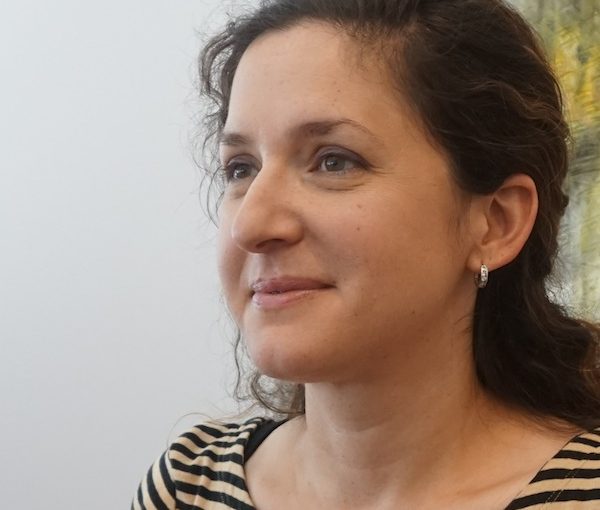
For Prof. Michelle Pannor Silver, author of Retirement and Its Discontents, an individual should be the one to decide when they start to work less. (photo from sociology.utoronto.ca)

Not long ago, it was a given that, when you reached the age of 65 or so, you would retire. But, that is no longer the case.

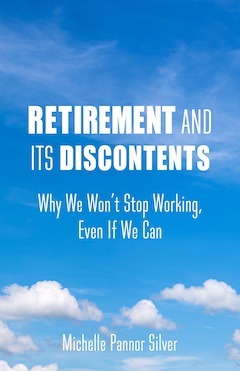
Michelle Pannor Silver, an assistant professor in the University of Toronto’s sociology department and its Interdisciplinary Centre for Health and Society, explores some of the reasons for this, as well as the difference between planning for retirement and the experience of it, in Retirement and Its Discontents: Why We Won’t Stop Working, Even If We Can (Columbia University Press, 2018).

Pannor Silver’s interest in the topic started when she was tasked with helping wind down her father’s office.

“My real initial motivation for studying retirement at all, and really for the book, was my dad’s experience,” Pannor Silver told the Independent. “I wrote about this in the book, that, when I was in my 20s, my dad developed dementia. It became really clear that he was not able to continue seeing his patients. And he was quite active in Jewish Big Brothers. That was something that was a big part of his work as a social worker. That’s the way he identified, as a social worker. He was a psychotherapist.”

This experience led Pannor Silver to the U.S. Health and Retirement Study, and she spent many hours and years examining people’s retirement trajectories. In her dissertation, she focused on, among other things, the relationship between the type of work people did and several different health measures, before and after they retired.

“After spending a lot of time looking at data points, I became really interested in talking to real people about what their retirement was like and, really, to discuss what retirement meant,” she said. In quantitative analysis, you make certain assumptions, she explained, “like how this person works this many hours and, therefore, they are fully employed, versus this person who works that many hours and then stopped … and, so, I’m going to code that one as retired.”

To verify or refute such assumptions, Pannor Silver interviewed people.

“I started really basic – just asking people what it means to them to be retired,” she said. “That helped me realize that, boy, this is a loaded term. It seems so simple, so straightforward, and the media gives us these clues about what it’s supposed to mean – you’ll see these commercials with these people who are retired, but are running on the beach, so retirement must mean running on the beach holding hands. Or, there are other ones that are about saving for retirement, so it must mean that it’s something you do when you stop working.”

A focus of Retirement and Its Discontents is ageism, and what it means to be told by society that it is time for you to stop doing the thing you have probably spent most of your adult life doing. The people she features found that life without work wasn’t all it was cracked up to be.

image - Retirement and Its Discontents book cover

“The people I interviewed, many talked about being pushed into retirement – being told it was time to make room for the next generation,” she said. “Some of them did it of their own volition. They weren’t really forced into it, but they assumed it was time for them to move over. They looked at how old their fathers had been when they retired, and decided that a certain age was going to be their benchmark. It’s really about the fathers who they looked at, and some of them saw their fathers retiring and dying the next year, or very shortly thereafter. And they thought they’d better retire then, too, so they could live a little before the end comes for them.”

The idea of when to retire is influenced by media messaging. Some of Pannor Silver’s Canadian study participants talked about “freedom 55,” the advertisements for it and how that has always been in their mind as the magic number at which to retire.

Pannor Silver’s study included international participants. And, while the magic age may differ, “the thing they shared – whether they were forced by existential pressures or because of their own internal ideas about when they ought to retire – first of all, they ended up living longer than their parents. All the [financial planning] models people generally have are wrong,” she said, “and that has, of course, implications for the public pension systems that are out of whack, too.

“But, my book really speaks to the experience of people facing the norms on a sort of anachronistic or out-of-date understanding of what retirement is and are disappointed by their experiences because of that – because of the expectations … that it should happen at this certain time and should be a certain way that would lighten and free them. Yet, they felt kind of burdened with life without work.”

Pannor Silver hopes that readers of her book will discard the idea that retirement should be associated with a chronological age. She would like to see them open themselves up to the idea that there are many different ways people can experience retirement.

“I think that, for many people, retirement is a bad word they don’t even want to use,” said Pannor Silver. “My point is to share the experiences of varied, different types of people who, for various reasons, retired in traditional ways … and had to find their own way around it … to sort of rewrite and create their own retirement experiences.

“For them, it was very surprising and, hopefully, others take some comfort in recognizing it’s a really challenging transition, a really important time of life. There’s so much attention paid to the early stages in life – finishing high school, getting into university or that initial career transition, and career mobility and trajectory, but very little attention is paid to later career transitioning. And that was my goal – to be able to say, ‘Here’s a set of people’s experiences.’ And, people tell me that these experiences have really resonated with them…. We can’t just assume that, because an employee is reaching a certain age, it means he or she should be passed up for promotion, cast aside or ignored. It ought to be up to the individual to say, ‘I have other things I want to do,’ or whatever the reason is – to make the decision on their own, that, now, they choose to make a transition to working less.”

While Pannor Silver’s target market is people approaching retirement, she is hoping that the book will also influence the employers, managers and others who are deciding – on the basis of incorrect assumptions or ignorance – to overlook certain parts of their workforce.

“I have Olympic athletes who I interviewed for the book, homemakers, doctors and CEOs … it’s a varied group of individuals,” said Pannor Silver. “But, their experiences are all people who were incredibly dedicated to their work. Their work was their life’s work, and the point is to contribute to an ongoing discussion about what retirement is now … what we can assume about it and what we should not assume.”

Pannor Silver’s next book will examine the importance of physical movement in the later stages of life.

Rebeca Kuropatwa is a Winnipeg freelance writer.
Format ImagePosted on May 17, 2019May 16, 2019Author Rebeca KuropatwaCategories BooksTags health, lifestyle, Michelle Pannor Silver, retirement
Don’t sit in your chair all day

Don’t sit in your chair all day

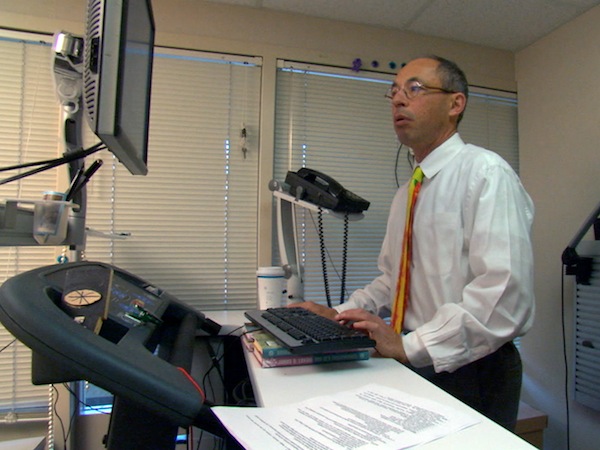
Dr. James A. Levine studies the health benefits of adding more movement to our lives. (photo from James Levine)

We are sitting too much – both at work and in our off hours. And all this sitting is doing us damage. But it’s not only about our health. It’s about how much we could be getting done, both professionally and personally.

When people read health-related articles or listen to health news, they “mentally categorize this information as health information. I think that is a mistake,” said Dr. James A. Levine, president of Fondation Ipsen, which, under the auspices of the philanthropy network Fondation de France, tries to promote scientific knowledge. “This isn’t about health. In the workplace, it’s about productivity: data suggests productivity – widgets produced per hour – improves by about 10 to 15%. In school, academic performance improves by about 10%, compared to kids who don’t engage in these activities and trials. Thinking about this as a health issue underserves the reader. Really, it’s about having a vital, exuberant, productive, happy life.”

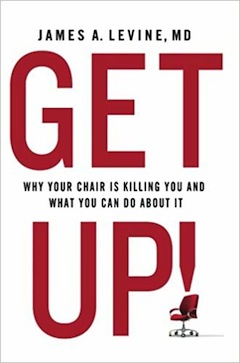
While Levine – author of the 2014 book Get Up! Why Your Chair is Killing You and What You Can Do About It (St. Martin’s Press) – is a proponent of movement, he said sitting occasionally is not a bad thing. What is contributing to ill health, he said, is our culture of rolling out of bed, getting into our cars, sitting at an office desk and then driving back home to sit some more. Many of us shop online, order in meals, watch TV, play video games, check texts, email, use social media and go to sleep. Many of us are spending well over half the day, every day, seated.

“I think approximately 28 different chronic diseases and conditions are associated with excess sitting,” Levine told the Independent. “They range from excess body weight and obesity to metabolic conditions, such as diabetes, high blood pressure and cardiovascular disease, to certain types of cancer, such as breast cancer … to mental health issues, such as low mood and depression, to mechanical problems in the body, such as back and joint pain, and all the way through to quite interesting and quite subtle conditions, such as impaired productivity, lower innovativeness, and so forth.”

There is no simple solution. “It’s easy to conjecture that a few simple tricks can solve problems like this,” said Levine. “But, if you think about it logically, if it’s taken society 50 years to get us down onto our bottoms, there can’t just be a few simple tricks to get us up. The modern workplace is actually designed to keep people seated, because it was felt, incorrectly at the time, in the ’50s and ’60s, that, if you kept a person at their desk, they’d be more productive. But, in fact, that’s been proven to not be the case.”

image - Get Up! book coverFor some, like Levine, getting movement back into our lives means getting a walking desk. For others, it may involve having meetings with colleagues while we walk.

“Our brain neuros are continuously changing through neuroplasticity,” said Levine. “So, in other words, you can take a person with the brain structure of sedentary and convert them, through intervention, into a person who moves more. The reason this occurs is through neuroplastic factors that change the brain’s structure and biochemistry in response to, in this case, intervention.”

The younger a person is, the more neuroplastic their brain is and, hence, more adaptable, he said. The opportunity for an intervention to have the greatest impact is in childhood. As we age, it is harder for us to change.

“We did studies in primary schoolchildren which were fascinating,” said Levine. “We gave them five-minute motion stimuli or games during their lesson and we found that there was a disproportionate response in the children. In other words, if you give children a little nudge, they’ll move a great deal. You just have to give them permission to move. We found that, in slightly older children, ages 11-14, if you give them the same lesson, the children will double their daily activity. If, at the highest level, you alter the structure of the classroom, whereby movement is permitted … children will double their daily physical activity merely by changing their environment.”

For children, he said, the freedom to move will result in a 50% increase in activity; for adults, it will result in a 25 to 30% increase.

A first step to getting on a healthier track includes reading up on the topic, alerting your mind to the need to activate your body. When it comes to action steps, Levine advised people to start small and build on that.

“Look for two activities a day that you did seated, but that you can also do walking – things like weekly meetings with your manager, walk and talk,” he said. “Every lunch time, I won’t sit for half an hour. I’ll eat and sit for a quarter of an hour and walk for the other 15 minutes. I do it every single day. Every week, I’ve watched my kid go play hockey in the arena. Yeah, I’ll be there in the beginning, but I’m going to do a half an hour walk. We’re not talking about adding exercise. We’re talking about transferring sedentary time into moving time.

“My meetings are walk and talk. When I go out with my kids, we always walk and talk. When I go for an evening out with my wife, we walk to the opera or movie, or before dinner. If your evening out is too far to walk from home to, find a place to park your car that is walking distance to the venue. Park there and walk. While standing desks are good, moving while standing is even better. If not possible, consider placing your phone away from you, so you’ll need to get up to answer it and walk around your desk while you talk.

“Then, commit to your plan,” he said. “Yes, you’ve found five opportunities during the week to get up and move. You’ve built environmental cues to remind you to do it – on the fridge, the desk – and check it off on a weekly basis when you’ve met your goal.

“The last and final step might surprise you, because it may seem counter-intuitive, but it’s equally important to the other steps – get a good night’s sleep.”

Rebeca Kuropatwa is a Winnipeg freelance writer.
Format ImagePosted on May 17, 2019May 16, 2019Author Rebeca KuropatwaCategories BooksTags exercise, health, James A. Levine, office life
Importance of women’s stories

Importance of women’s stories

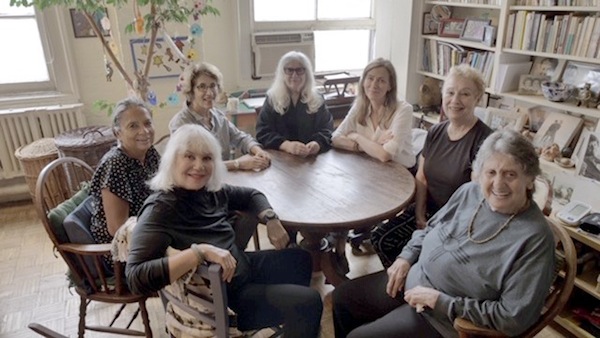
“Stories Around the Table” meets a couple of times a year to present and critique their writing. (photo from Karen Ludwig)

Today, at Karen Ludwig’s home in New York, the actor, director and teacher regularly leads a group of women in story sharing.

Ludwig, whose father is from Winnipeg but whose family origin is Russian, grew up in San Francisco. “It was a very antisemitic San Francisco town,” said Ludwig of the time. “And the German-Austrian Jews kind of ran the city, and they looked down on Russian Jews.

“We had a rabbi in my temple, Emmanuel, who used to say, ‘Hear, o-Is-roy-ale,’ and I never knew he was actually saying ‘Israel.’

“My mother would speak in a whisper, ‘Is she Jewish? Is he Jewish?’ I never heard the word ‘Jew’ out loud until I came to New York. Then, someone asked, ‘Are you Jewish?’ And, I said, ‘Hey, take it easy.’ But, New York is a Jewish town.”

Ludwig’s parents were amateur actors, acting in synagogue plays, and her family regularly went to see musicals and plays together in San Francisco. Ludwig knew that, when her parents were on stage, they had such a good time and she wanted to be up there with them.

When she was 14, Ludwig subscribed to Theatre Arts Magazine. The late Anne Bancroft was on one cover; she was in the play The Miracle Worker and was making the sign of the letter “L” for love.

“There was something about that picture that was magnetic,” Ludwig told the Independent. “I thought, that’s what I want to do.”

photo - New York-based Karen Ludwig leads a writing group for women
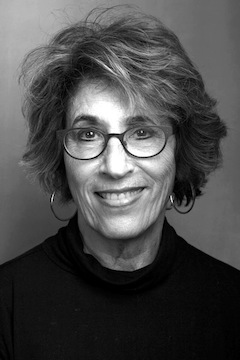
New York-based Karen Ludwig leads a writing group for women. (photo by Frankie Alduino)

Cabaret was all the rage and Ludwig went to see a show with her then-boyfriend. She enjoyed it so much that she went to see it again on her own a couple more times and the lead performer, Kaye Ballard, noticed her.

“She came out one time,” said Ludwig, “and saw me and said, ‘What, do you sleep here, kid?’ And, I was born. I thought, ‘That’s it. I’ve been recognized.’ And, I became a follower of hers, because … I loved anybody who made me laugh.

“She met me for coffee a couple months later, very graciously. And, she said, ‘If you’re serious about being an actress, don’t go to college. It won’t do you any good. Go to New York while you’re young and study.’ And so, I did, [after] I went for one year of San Francisco state college. I played the lead in a play called The Wingless Victory, by Maxwell Anderson, and I thought, well, this is easy.”

Ludwig went on to perform in other plays – some on Broadway and some off-Broadway. She even had the chance to work with Bancroft, and they became friends.

This is what led Ludwig to start her women’s group for actors who could write.

While the group took a hiatus for several years, Ludwig restarted it two years ago. They meet every Wednesday and write about topics that are rarely discussed or written about by men.

Ludwig said she developed her writing skills out of necessity. “I did it because I was tired of waiting around for parts, because, as I got older, as a woman, parts became fewer and fewer. So, I decided to write my own show about my career – who I met, who I worked with and, then, another thread through it was my mother and my relationship with her. And the show was very successful.”

Ludwig won a one-night space rental in a competition at Joe’s Pub at the Public Theatre and so performed her stand-up show on that one night. She described it as a wonderful but terrifying experience. Later, for almost two weeks, her show ran at another little studio in the city.

One of the pieces of history that Ludwig shared in the show was her experience playing Ethel Rosenberg in the movie Citizen Cohn. She was very involved in it, even raising money for the Rosenberg Foundation for Children, which “supports children whose parents are incarcerated,” said Ludwig. “I did all kinds of research about how Ethel Rosenberg died, and how many volts of electricity she had to have to still her heart, and then I showed the clip of it in the show I did. I did quite a bit about Ethel Rosenberg and the two boys she left behind, and that she, in fact, was not guilty.”

In her writing group, Ludwig prompts participants each week with a topic to help them focus their writing on different aspects of their lives. This brings about a variety of views on any given topic and the women push one another to dig more deeply than they would on their own.

“There are things that happen in a room with just women that don’t happen with men,” said Ludwig. “So, I thought we would take advantage of that. I use prompts like…. ‘My mother walked into my bedroom and said….’”

Living in the Westbeth Artists Housing complex allows Ludwig to have a big table, so the group has dubbed their meetings, “Stories Around the Table.” They present and critique their writing about twice a year and the subject matter ranges from family to politics to hair and beyond.

Ludwig began her teaching career in Israel. “I kept saying, ‘This country isn’t going to affect me that much,’” recalled Ludwig. “I’m a Reform Jew. What do I care really about Israel? But, from the moment we landed at the airport and they started singing, I began to weep, and weep and weep. And then, there’s a clip of me going toward the Wailing Wall. Again, I’m saying, ‘This doesn’t affect me. It has no meaning for me.’ And, before you know it, I’m davening. It was hard for me to leave Israel, because the actors were saying, ‘You’re a Jew. You should stay here and teach. This is your place to teach us what you know.’ It was very hard to leave; I did love it there.”

In a way, Ludwig’s Israel encounter parallels what she aims to get her writers to experience in their sessions – to discover a connection, to one another, to their past, to the world.

“The whole idea is about sharing each other’s feelings and thoughts about what’s going on … so you don’t feel so isolated,” said Ludwig. “There isn’t a goal exactly. It’s just about the sense of feeling united, together … critiquing each other’s work. And, if we don’t understand something, we talk about it.

“There’s a certain kind of pressure that’s off. There’s a certain feeling of generosity. Really, how many feelings are universal? There’s not that much that separates us, really, in terms of human experience.”

Rebeca Kuropatwa is a Winnipeg freelance writer.
Format ImagePosted on May 10, 2019May 9, 2019Author Rebeca KuropatwaCategories Arts & CultureTags Karen Ludwig, women, writing

Posts pagination

Previous page Page 1 … Page 4 Page 5 Page 6 … Page 31 Next page
Proudly powered by WordPress