“‘You’re dead, Weiss!’ Declan shouted. He turned back to his friends. ‘This is our chance. Let’s get him!’”
And so the chase after sixth-grader Matthew Weiss begins, led by bully classmate Declan Bollard, with Declan’s three followers right behind. It leads to an adventure all the kids might have been happy to forego, but also a lesson in humanity that they all needed, even the bullied Matthew, who discovers not only his self-worth, but that people who seem to have everything going for them probably don’t.
Michael Seidelman’s latest novel for readers around Matthew and Declan’s age – called Imaginary Heroes – is propelled by fear and anger but resolved by putting those feelings to constructive use, refusing to be defined by others, trusting in ourselves and braving the day, whatever challenges we face.
Like the character of Matthew, Seidelman has Tourette’s Syndrome and was bullied growing up because of it, which makes his descriptions of Matthew’s feelings so realistic that readers’ hearts will break a little.
Most kids ignore Matthew’s involuntary actions and sounds, a few laugh, but Declan menaces, with Booker, Booker’s twin sister Sam, and Cricket as an audience. After a particularly nasty incident at lunch, where, thanks only to Booker’s intervention, Declan steals Matthew’s dessert instead of beating him up, Seidelman writes:
“The bell rang, and Matthew did his best to hold back his tears until the lunchroom was empty. Then he let it all out. Every day, he had to deal with those jerks, and this wasn’t even one of the worst days. At least Declan hadn’t hurt him physically this time. So far, at least.”
Arriving just in time for class nonetheless, the teacher berates Matthew for not getting there earlier. The adults – teachers and other kids’ parents – are little help to Matthew, just as they were to Seidelman as he was bullied growing up.
“Though many teachers and school administrators were of little to no help with the bullying I endured, there were a few who stood up for me, and those individuals have not been forgotten,” writes Seidelman in the acknowledgements. “And again, I must thank my parents and family; without their support, I truly don’t know where I would be today.”
The character of Matthew also has a supportive, loving family. And he has two imaginary friends, who not only help get him through the school days, but really step up when he, Declan, Booker, Sam and Cricket find themselves in a literal hole, with no apparent way out. The journey that ensues is a danger-filled adventure during which all the kids find out more about themselves and one another, and what bravery and humanity entail not only in life-threatening moments, but also in life in general.
To purchase an electronic or hard copy of Imaginary Heroes, or Seidelman’s Garden of Syn trilogy, visit michaelseidelman.com.
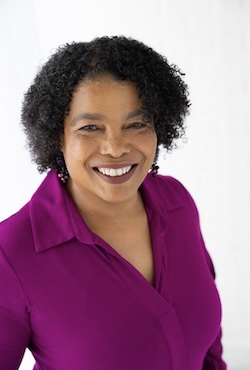
Dr. Terri Elizabeth Givens, professor of political science at the University of British Columbia, started her lecture with a quote from Dr. Martin Luther King Jr.: “It takes empathy, patience and compassion to overcome anger, hatred and resentment.”
“And this really rings true during these times,” said Givens, who was giving the keynote address at Vancouver School of Theology’s May 27-29 conference called Compassion: Mutual Care in Troubled Times. “As an American, in particular, I’m very concerned about the situation. I really think it’s hard during times like this to have empathy and patience and compassion.”
Rabbi Laura Duhan-Kaplan, director of inter-religious studies at VST, introduced Givens, who spoke on May 27, giving the |opening lecture of VST’s annual inter-religious studies conference. Givens is the author of several books, including Radical Empathy: Finding a Path to Bridging Racial Divides. Her next book, Reckoning: Creating Positive Change Through Radical Empathy, will be released in October. She has written on immigration policy, European politics, right-wing politics and more.
Dr. Terri Elizabeth Givens gave the keynote lecture for the Vancouver School of Theology’s May 27-29 conference Compassion: Mutual Care in Troubled Times. (photo from terrigivens.com)
Givens grew up in Spokane, Wash., did her undergrad at Stanford University and PhD at the University of California, Los Angeles. Her first job was at University of Washington, in Seattle, then she and her husband moved to Austin, where their careers took off. Before UBC, Givens worked at McGill University, first as a lead and advisor on the university’s plan to address anti-Black racism, then as an associate dean.
She started studying the radical right in Europe in the mid-1990s, having first become aware of their existence in 1986, when she visited France as an undergrad. At that time, Jean-Marie Le Pen was on the rise.
“I was one of the first Americans to even pay attention to this topic,” said Givens, who added that all her research is “really about how do we create change – that’s the underlying push for all of this.”
The professor shared some of her personal history, how she was raised, her father’s death in 2001, instances of racism experienced by her parents– her mother, who grew up in rural Louisiana in the 1930s, and her dad, who was born in 1928 near Pittsburgh. Her parents met in Los Angeles but chose to live in Spokane because they thought it would be safer for their kids.
“I think, in telling my story, I’m trying to talk about the different identities we have,” she said. For example, she is a mom, a teacher, an athlete, and more.
For Givens, integrity also has multiple variations. There’s physical integrity, taking care of ourselves. There’s integrity in terms of being honest and straightforward. And there’s integrity in terms of having a solid foundation.
Identity and integrity come into play with radical empathy, which comprises, according to Givens, six steps: a willingness to be vulnerable, becoming grounded in who you are, opening yourself to the experiences of others, practising empathy, taking action, and creating change and building trust.
About the first step, she said, “It’s not about being vulnerable with others, it’s aboutbeing vulnerable with yourself…. We have a really hard time [with that] – even just giving ourself a pat on the back is hard…. But the reason that’s so important is … you need to become grounded in who you are, and that’s an ongoing process.”
Taking care of yourself and being grounded in yourself allows you to be open to others, she said.
Radical empathy is circular, said Givens. “It’s a constant movement towards becoming who you want to be. You want to have goals for yourself that reach beyond where you are now, but also you want to have a process to get there.”
We can tap into our integrity, she said, by telling our story, where we fit in family, community, education, health, love and marriage, relationships, and work.
“Empathy is not absolution,” she said. “It doesn’t mean I have tosay everything is OK…. Sometimes, people do things that I don’t believe are good for anybody. And so, that’s an important component and, for me, it helps me tap into my integrity because I have to create those boundaries and make sure that I understand where I fit into this broader picture and in the community.”
As she ages, the health aspect is something she is dealing with more. “My dad had a heart attack at 72, my mom had a stroke at 75. Why those things happen, how to understand that, is a big part of our ability tofunction.”
With respect to love and marriage, she said, “When people ask me what’s important in the relationship, it’s, well, you want to be with somebody who makes you a better person. And that it’s reciprocal.”
This is something that applies to relationships in general, she added.
“Work is a huge part of our lives. I think sometimes we forget how important it is to make sure that our work is something that, regardless of what you do, you take pride in it. It may be something that you don’t want to be doingforever but, where you are right now, it’s important that your work is a part of your story.”
We can’t change the past, but we can change how we go forward, Givens said. “There are these lifelong self-reflection processes that help us learn from the people around us, whether they’re clients or colleagues or friends, and cultural humility is being willing to say I don’t know everything.”
She said, “Too many leaders are full of themselves. It’s good to be modest about your capabilities. And here’s wherevulnerability comes in. You have to be willing to admit mistakes. And I really believe that, if you have integrity, that’s not so difficult, to admit mistakes – it’s like, I’m a human being, I’m not perfect, and [having an] awareness of bias…. We know that the system is set up often in a biased way and we talk about meritocracy but what does that mean? It’s not just that you hire people who look like you or are really similar to you – it’s being willing to look beyond that and say, no, this person is the best person for the job even though we don’t have a whole lot in common.”
Givens spoke about having a curiosity about others, having an open mindset, listening without judgment and seeking, with empathy, to understand people. “And then, cultural intelligence is being attentive to other cultures and to adapt as required.”
In the question-and-answer period, Duhan-Kaplan asked about mistakes made by our ancestors, and how we deal with them. She also asked about dealing with the expectations “placed on us in a charged environment – we might open social media for some entertainment and then what we get is, whatever perspective we have, people are ridiculing it and calling us names,” said Duhan-Kaplan. “Cultural humility – once you start to get defensive about yourself and your identity, how do you keep being open to changing?”
“I still struggle with that,” said Givens.
“As a person who’s been racialized, who has ancestors who were enslaved, and yet I have ancestors who were killing Indigenous and pushing Indigenous out of their homelands,” she explained, “one of the things I’m coming to is that we’re a sum of all of this – and all of us are…. And, again, it comes back to acceptance. I have to accept the fact that, if I look in my family history, there are these evil people and there are some really good people.”
History is ugly, she concluded. “I think it’s better to know it and understand it and be willing to say, but I’m here to be better.”
For Givens, the opposite of empathy is apathy because apathy allows us to feel badly about what’s happening but then just throw up our hands and say, “the world is crazy, you can’t do anything.” Her books highlight ways that people can get involved, what they can do, and she incorporates taking action into everything she does, she said.
Ultimately, it’s the actions, the outcomes, and the way we are engaging with the world that is important, said Givens.
Vancouver School of Theology is offering Summer School courses that will be of particular interest to Jewish community members: Rabbi Or Rose teaches Mystics in Modernity, Rabbi David Seidenberg’s class is Kabbalistic Hints in Tanakh, and Rabbi Laura Duhan-Kaplan presents Zechariah: Spiritual Activism for Difficult Times. Classes run July 21-25 at VST or online. Register at vst.edu/vst-summer-school.
Elana Wenner (with folder) leads the Jewish Museum and Archives of British Columbia walking tour of Jewish Strathcona. (photo from JMABC)
Having taken the Jewish Museum and Archives of British Columbia’s tour of Jewish Strathcona, I know firsthand how interesting and worthwhile it is. This summer, there will be a little more swing to the July 27 tour – Kol Halev Performance Society will once again take part, but in an expanded role.
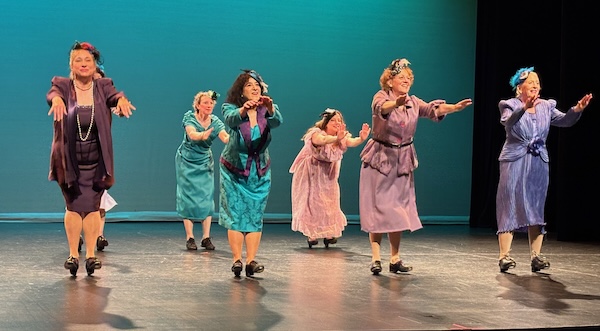
“Kol Halev has created a script for theatrical additions to the tour, along with musical components. Actors in full period costume will accompany the group and act out key scenes from the stories told along the way,” Elana Wenner, director of programming and development at the museum, told the Independent. “A full musical dance number is included as well, along with a reenactment of a wedding that mirrors cultural traditions from the past.”
Wenner got in touch with Sue Cohene, co-founder and current president of Kol Halev, after having taken some theatrical tours produced by other museums in the city and elsewhere.
“In the past,” said Wenner, “Kol Halev has put on productions based on BC Jewish history in conjunction with JMABC, before I worked here.”
“Kol Halev has been involved with the Jewish Museum since 2006, performing at their various galas and special events over the years,” Cohene explained. “In 2017, the museum created a photographic exhibit, shown alongside Kol Halev’s historically based play, Two Views from the Sylvia, which was presented at the Waterfront Theatre.
“Kol Halev Performance Society and the Jewish Museum and Archives have a long-standing collaboration and we update the museum on a regular basis about our shows, community teachings and future plans.”
A couple of years ago, said Cohene, Marcy Babins, interim executive director of the museum, suggested that she meet with Wenner, then the newly appointed director of programming and development, to discuss possible joint ventures.
“Connecting with Elana has been like carrying on a family tradition,” said Cohene. “Elana’s grandmother, Irene Dodek, was instrumental, along with Dr. Rabbi Yosef Wosk, in bringing Kol Halev on board to provide entertainment and theatrical historical education for Jewish Museum projects. Elana’s mother, Dr. Gail Wenner, has danced with Kol Halev and continues to share her creativity by creating historically influenced hats for our performers.”
Last summer, Kol Halev added a Yiddish dance performance to complement one of Wenner’s Jewish Strathcona walking tours. This summer, actors from the performance group will portray early Jewish community leaders during the tour, in addition to weaving in some traditional dance pieces.
Cathy Moss, one of Kol Halev’s main writers since the group was established, worked with the research provided by Wenner to create a script.
“Elana shared the tour route and basic information about Strathcona historical community leaders from the early 1900s to the 1940s,” said Cohene. “She kindly led Kol Halev on the tour, where we all looked at locations that could accommodate acting and dancing.”
“Elana did a great job compiling the research on the area,” said Moss. “Once I took the tour, it was easy to see what a compelling cast of characters inhabited Strathcona in the early days. It was fun to write dialogue for such interesting and lively folks.”
Moss relied on the museum’s material for each location along the tour, writing the dialogue for the characters based on the biographical details and context Wenner provided.
“The tour is great and informative on its own,” said Moss. “I would add that inviting Kol Halev to be part of it was an excellent idea. It adds another dimension that makes the experience that much more enjoyable. The wedding dance in particular will be appreciated by the tour-takers. It’s very entertaining.”
Kol Halev rehearses the Patsh dance, choreographed by Santa Aloi. The group will dance and act in the July 27 JMABC Strathcona walking tour. (photo by Adam Abrams)
Kol Halev has several on-site rehearsals planned before the shows in which they’re participating – the July 27 public tour and a private tour in late June – “particularly to familiarize dancers and actors who were not involved last year,” said Cohene.
“We will have between eight and 10 dancers this summer and a few actors,” she said. “It’s a small working production that has room to grow.”
Cohene will be part of the performances.
“I’ll be playing a mother-in-law role in the 1940s wedding dance, which was choreographed by Tamara Thompson Levi,” she said. “I’ll also tap dance in the Yiddish Patsh dance choreographed by Santa Aloi.”
Wenner leads the Strathcona walking tours.
“This tour is a journey through the footsteps and choices made by the first community leaders in Vancouver,” she said. “It follows in the footsteps of community-building, highlighting the institutions and people who laid the groundwork for today’s thriving Jewish Vancouver institutions. Along the way, we see buildings that held components of the first Jewish community organizations, as well as the homes of some of the first leaders. We also explore the ideas of what Jewish community requires in general, and what it was like to live as a Jew in this part of the world at the turn of the last century. The tour is a synthesis of past and present, weaving together the origins and future of Vancouver’s Jewish community.”
The Jewish Museum has four different walking tours on offer this summer. In addition to the Strathcona neighbourhood tours led by Wenner on July 13 and 27, Aug. 10 and 24, Daniella Givon leads tours of the Mountain View Jewish Cemetery on July 6 and Aug. 10. In Victoria, Amber Woods leads both the Downtown (July 6 and Aug. 10) and Jewish cemetery (July 20 and Aug. 24) tours. All the walks start at 10:30 a.m. For tickets, visit jewishmuseum.ca, email [email protected] or call 604-257-5199.
Hastings Mill Store was part of this year’s Heritage Discovery Day. (photo by Cynthia Ramsay)
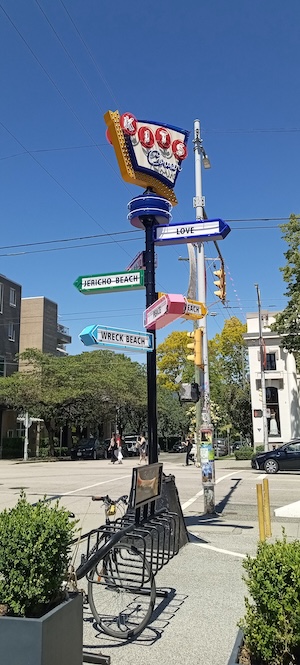
This year’s Heritage Discovery Day – which has been hosted by Vancouver Heritage Foundation since 2003 – featured nine sites in Kitsilano, highlighting, but not confined to, the Craftsman style of house, which, according to the self-guided tour book, “is characterized by decorative brackets, exposed rafter ends, mock trusses in the gable ends, expansive low-pitched gable roofs and a rich variety of finishing materials and textures.” Saturday, June 7, was an ideal day for the event and this year’s Summer cover features photos taken throughout the neighbourhood, while going house to house. Driving home along Cornwall Avenue, the number of people enjoying Kits Beach was incredible. When it’s sunny here, the people emerge!
City Farmer Garden’s Cob shed, made with clay from Haida artist Bill Reid. (photo by Cynthia Ramsay)One of the heritage homes on the tour. (photo by Cynthia Ramsay)Kits Beach on June 7. (photo by Cynthia Ramsay)
Kits directional post. (photo by Cynthia Ramsay)
A cyclist amid the flowers. (photo by Cynthia Ramsay)
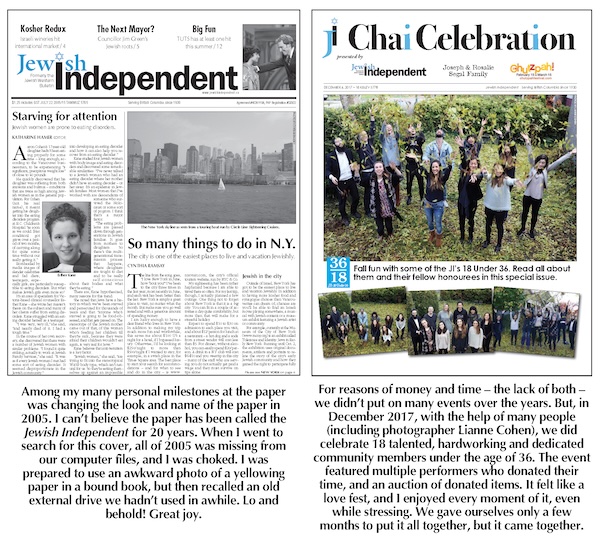
In putting together the Jewish Independent’s special 95th Anniversary issue last month, I came across so many articles of interest. Too many, of course, to include in one issue or series of issues. But I figured it’d be fun to have some random glimpses back into our community’s history. This is the first “Flipping through JI archives” column that will appear through to the end of the year. I hope you enjoy it as much as I will.
July 27, 2001: This clipping isn’t so random. It’s the first Summer issue we put together. Pictured are Pat Johnson (reading), Kyle Berger (fishing and backpacking) and me (playing tennis and baseball). The late Baila Lazarus, who took the photo, is cheering the city’s nightlife.
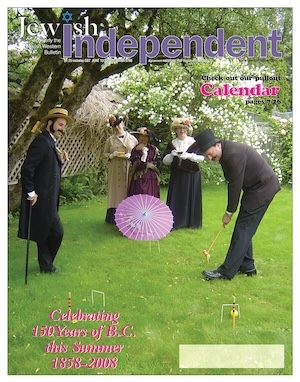
June 13, 2008: Baila Lazarus, z”l, took most of our staff-filled Jewish Independent Summer covers, and she took this Rockower Award-winning one, which I absolutely love. With the help of Sue Cohene of Kol Halev Performance Society, we – left to right, Ron Friedman, Leanne Jacobsen, Josie Tonio McCarthy, me and Steve Freedman – donned period clothing to play a round of croquet in Cohene’s backyard.
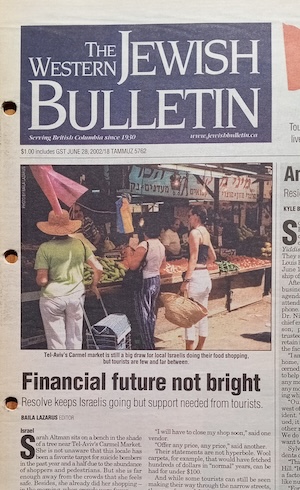
June 28, 2002: Spot colour has been used in the paper since the 1940s, albeit sparingly. In the 1960s, bright red print or text frames would highlight stories the paper’s publishers thought urgent. Less dramatically, the Jewish Western Bulletin and Jewish Independent logos would be in spot colour. It looks like holiday issue covers have been printed in full colour since 1999, but this photo seems like the first we ran as part of an article. Too bad it wasn’t for a happier story!
March 26, 1992: Israel Bonds has long advertised in these pages. This article notes the organization’s inaugural Canadian dollar investments.
May 17, 1934: Safeway was a regular advertiser in the paper’s early years. Imagine berries from Aylmer in tins! Those two cans for 15 cents translates into about $3.36 in today’s dollars and, according to its website, Safeway has a deal on about the same amount of fresh strawberries for $3.99 (down from $6.99). The 59-cent cost of a three-pound tin of Crisco (with a free pie plate!) translates into $13.21, but you’d have to pay slightly more today, $14.29. And, there is no size equivalent to the pound of coffee on Safeway’s website, but based on the price per 100 grams it lists, it’d cost you $13.35 today, but 35 cents in today’s dollars is only $7.83.
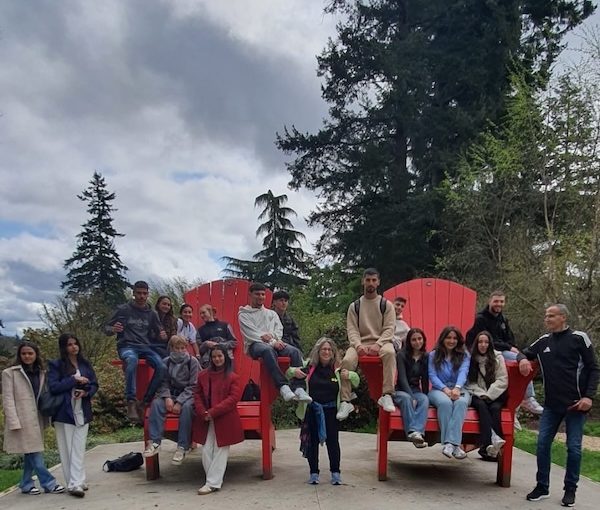
Last month, 16 students from three different high schools in the Galilee visited Vancouver, where they participated in several activities. (photo by Kristin McIlhenney)
“It is nearly impossible to put into words the profound experience we had in Vancouver,” Dr. Rachel Ravid, co-director of Galilee Dreamers, told the Independent. “For the first time, host families welcomed us directly at the airport – a moment of emotion I will never forget. The level of care and thought given to our visit was evident even before our arrival, through a preliminary Zoom meeting during which we shared about the Galilee Dreamers program and the backgrounds of the students they would be hosting. From afar, we could already feel the warmth that awaited us.”
Galilee Dreamers is a program of Oranim College of Education, in Israel. Established nearly a decade ago, it “brings together Jewish and Arab high school students from northern Israel, cultivating dialogue, empathy and mutual respect, while helping participants explore their personal and collective identities,” Ravid said.
A key aspect of the program is connecting these Israeli students with peers abroad and Galilee Dreamers groups have traveled to cities in several countries, including Canada, where Toronto has participated in previous years. Last month, 16 students from three different high schools in the Galilee came to Vancouver, where they were hosted by 12 local families, visited a few schools and participated in several activities. The delegation then headed to Seattle.
There were six students from Akhva-brotherhood High School in Yarka, a Druze school; five students from Jewish schools Einot Yarden and Misgav Regional High School; and five students from Atid Bir al-Maksur, a Muslim school representing a Bedouin way of life, said Ravid. “The students ranged in age from 16 to 18 and were selected for their leadership potential and their capacity to develop leadership skills.”
The co-director of Galilee Dreamers, Dr. Malek Hujeirat, who is deputy principle at Atid, led the group from there, and Diana Mulla, a Druze English teacher, led the delegation from the Druze school. “I was responsible for accompanying the Jewish students and overseeing the delegation,” said Ravid.
While the process of planning the April 18-25 trip was challenging, Ravid said “the spirit of volunteerism and support from community members in Vancouver was truly remarkable. Marion Rom led the planning team with vision and dedication, alongside Dalia Margalit, who offered support from both near and afar.
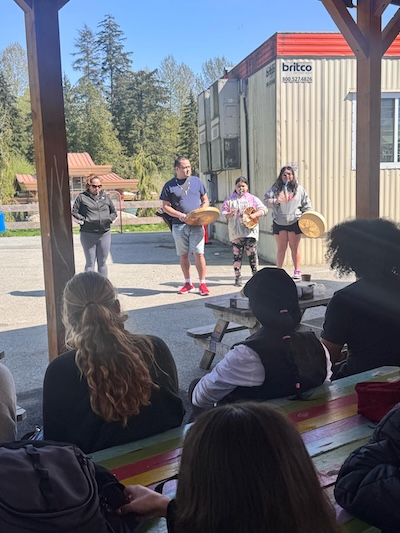
Galilee Dreamers participants at Tsleil-Waututh Nation siʔáḿθət School. (photo by Kristin McIlhenney)
“The intention was to create as many opportunities as possible for interaction with different parts of the Vancouver community, in order to better understand the local realities and challenges,” said Ravid. “In parallel, we aimed to connect the visiting students with the natural environment, the region’s history and its diverse cultures.
“Alongside school visits with Jewish students – where we discussed the core values of the Galilee Dreamers and universal values such as solidarity, listening, compassion and empathy – our students also learned what daily life looks like for peers their own age in a different society.
“A key element of the itinerary was community volunteering,” said Ravid, and, at the Jewish Community Garden, the group spent some time working and learning.
The host families also “initiated activities rooted in their own strengths and passions, allowing each student to experience something unique within each household,” added Ravid.
One of those families – Tal and Avital Jarus Hakak, who had two Jewish students stay at their home – “hosted a dinner that included another host family of two Druze students and a hike afterwards. One of us also helped with a tour of UBC,” the couple said.
“The positive impact of this trip on the students’ attitudes towards their peers and teachers from different communities and cultures was heartwarming. We felt like these impacts have a great importance for the future,” said the couple, who were motivated to take part because, they said, “The idea of a youth program for facilitating dialogue between Jewish, Arab and Druze sounded very appealing and interesting, particularly in this time of local and global conflicts.”
Kristin McIlhenney found out about the visit from a friend.
“Knowing I had previously hosted international students, she encouraged me to consider it,” said McIlhenney, who hosted a student from the Bedouin school and teacher Hujeirat, “who also serves as the principal overseeing multiple schools in his village.”
“As an educator, I deeply believe in the transformative power of travel and intercultural exchange to build empathy and global awareness,” she said. “That belief, combined with my background, made me genuinely enthusiastic about supporting the Galilee Dreamers by becoming a host.”
Beyond providing room, board and transportation for her guests, McIlhenney said “the experience organically evolved into something much richer. Groups often gathered in the evenings, leading to shared dinners and deeper connections, both in our home and in others’. It was incredibly moving to hear three languages spoken under our roof, and to learn everything from simple cultural details – like the high price of sushi where they live – to complex and personal perspectives on life in a conflict-affected region.”
For McIlhenney, there were two particularly special benefits of being a host. “First,” she said, “my two elementary-aged sons formed a strong bond with the student who stayed with us. A gifted soccer player, he spent hours playing with them and they even accompanied him to a match where they watched [Lionel] Messi play against the Whitecaps – a memory they’ll cherish for years. Second, as a former educator, I deeply appreciated the profound conversations I had with the principal. Whether while preparing meals, driving or winding down in the evening, our discussions gave me a rare and meaningful glimpse into his reality – and helped me reflect more critically on my own.”
Both McIlhenney and the Jarus Hakaks would “absolutely” host again. And trip co-organizer Rom would “definitely help bring those kids in the northern Galilee next year if they want to come back.”
Rom, Margalit’s brother and Galilee Dreamers co-founder Dr. Desmond Kaplan all went to high school together in South Africa, explained Rom of the local connection to the program and how the Vancouver stop came to be.
Rom and Margalit found the host families, and Margalit, who was out of town when the visit took place, “gave this program ‘legs’ in the early stages of planning,” said Rom.
“I wanted to help because I believe that dialogue and interaction of the Jewish, Bedouin and Druze high school youth in the northern Galilee is one of the most impressive paths to peace in that region,” said Rom.
“The most moving part,” she added, “was when the youth and host families all met together one evening to talk about life in northern Israel since Oct. 7, 2023, and what this program means to them.”
“For my part,” said Margalit, “I agreed to assist in arranging the visit when I heard that the group would be made up of students from the Bedouin, Druze and Jewish communities. At this time of tensions between Israel and Palestine, I felt this was a particularly important aspect of the visit, and of daily life in Israel, that would be very important for the Vancouver Jewish community to hear about.”
“As the region faces heightened tensions and conflict, the lack of mutual understanding and shared vision between Arab and Jewish communities threatens the very fabric of society,” said Ravid. “These divisions are compounded by systemic separations: Jewish and Arab teenagers grow up in separate neighbourhoods and towns, attend schools where different languages are spoken, and rarely – if ever – encounter one another in meaningful ways that could challenge stereotypes and foster understanding. Frameworks that nurture mutual respect, empathy and collaboration are critically absent.
“This reality not only affects the people of Israel,” she said, “but also perpetuates a global lack of awareness about the rich and diverse voices that make up Israeli society. Around the world, young people often have little understanding of the complexities of life in Israel and few models for overcoming divisions to build shared futures.”
Galilee Dreamers “creates safe and meaningful spaces where young people from different backgrounds – who might otherwise remain strangers – build real relationships based on trust, empathy and common purpose,” said Ravid.
“Equally important is the program’s impact on the communities that host us – whether in Israel or abroad,” she continued. “By sharing their personal stories and experiences of living in a complex, multicultural society, Galilee Dreamers offer host communities a window into what grassroots peacebuilding can look like. These encounters inspire interfaith dialogue, foster global solidarity and leave lasting impressions on local families, educators and youth who engage with the group. The mutual learning is profound, and many host communities describe the visit as hopeful, eye-opening and deeply moving.”
While some communities and institutions in Israel and the diaspora “have become more cautious about engaging with programs like Galilee Dreamers” since Oct. 7, “the program continues to operate, with participants expressing a renewed commitment to dialogue and understanding,” Ravid said.
Galilee Dreamers students visited Jewish and other institutions, including Peace Mennonite Church, while they were in Vancouver. (photo by Kristin McIlhenney)
The students who participated in the delegation that came to Vancouver shared with Ravid “that they had never experienced such a meaningful and warm form of hospitality. They spoke about the deep love and care shown to them, and how much the host families prioritized their personal well-being,” she said. “They expressed sincere gratitude for the time and attention their hosts gave to hearing their personal stories – and the stories of their families. The connection was so strong that many of the students affectionately referred to their hosts as their ‘second parents.’
“In addition to the emotional connection, the students also appreciated the opportunity to take part in activities they had never experienced in Israel: from ice hockey games and bike rides, to hiking in nature, riding a ferry, and taking a cable car up a snow-covered mountain. Perhaps most enthusiastically, they spoke about the unique food experiences, especially the sheer number of donuts they joyfully consumed without pause!”
For Ravid, “One of the most emotional moments of the trip was the community gathering toward the end of our stay,” she said. “Each of us shared reflections and feelings from the journey. I was particularly moved by the words of Ezra Shanken, chief executive officer of the Jewish Federation of Greater Vancouver, who said that the Galilee Dreamers’ visit brought out the strengths of the local Jewish community and its ability to mobilize around a meaningful initiative. His emphasis on solidarity was incredibly powerful and deeply relevant – especially in these days, when personal and collective security in Israel and around the world feels fragile.”
Both the Jewish Community Centre of Greater Vancouver and the Jewish Federation contributed to the local visit, the latter helping with the planning as well as funding. There were many other organizations and people that Rom, Margalit and Ravid thanked.
“On the day of departure,” said Ravid, “I saw many tears and heartfelt hugs – testament to the meaningful connections and impact this journey had on both the students and the families.”
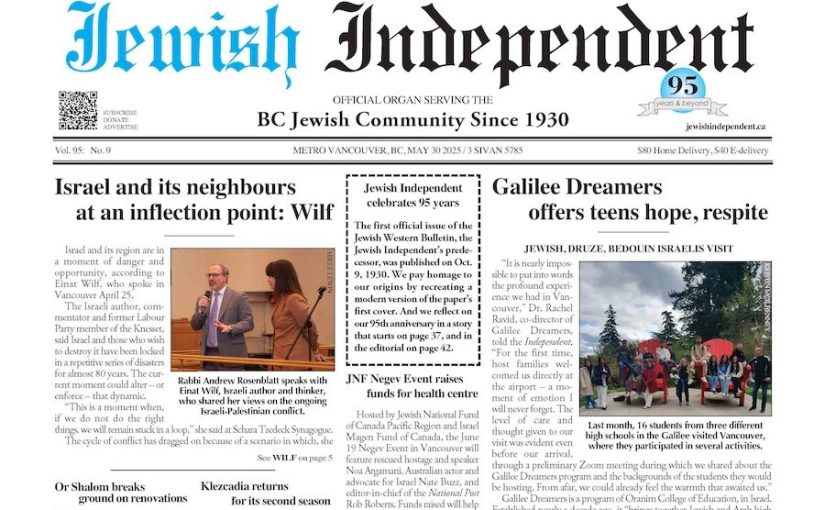
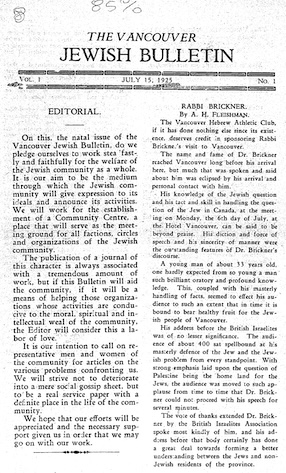
When does something begin? I’ve been thinking about that as I go through 95 years’ worth of Jewish Independents. Well, 20 years of JIs and 75 years of its predecessor, the Jewish Western Bulletin. The JWB also had its predecessors – mimeos and letter-sized versions. The paper’s founders started counting on Oct. 9, 1930, the official first tabloid edition, when they could have started July 15, 1925, “the natal issue of the Vancouver Jewish Bulletin.” Or maybe earlier. Who knows when the idea that brought into existence what would become, through thousands of issues, the paper you today hold in your hands or read on your computer.
Making the cover of this special issue, where six stories jump to the inside and the rest of the stories are blurbs that direct readers to pages on the inside, was an organizational challenge. There was no way I could replicate the brevity of the 1930s articles, but I could mimic the style.
I know I’ve mentioned this fact in previous anniversary issues, that the JI could be considered five years older than the age we have deemed it to be. In looking through so many beginnings – and endings – throughout the years, it struck me again. So many organizations have multiple possibilities for the equivalent of their first edition. For example, the Louis Brier Home and Hospital was organized in 1945, but the idea for it probably came even earlier and the home didn’t open until 1946.
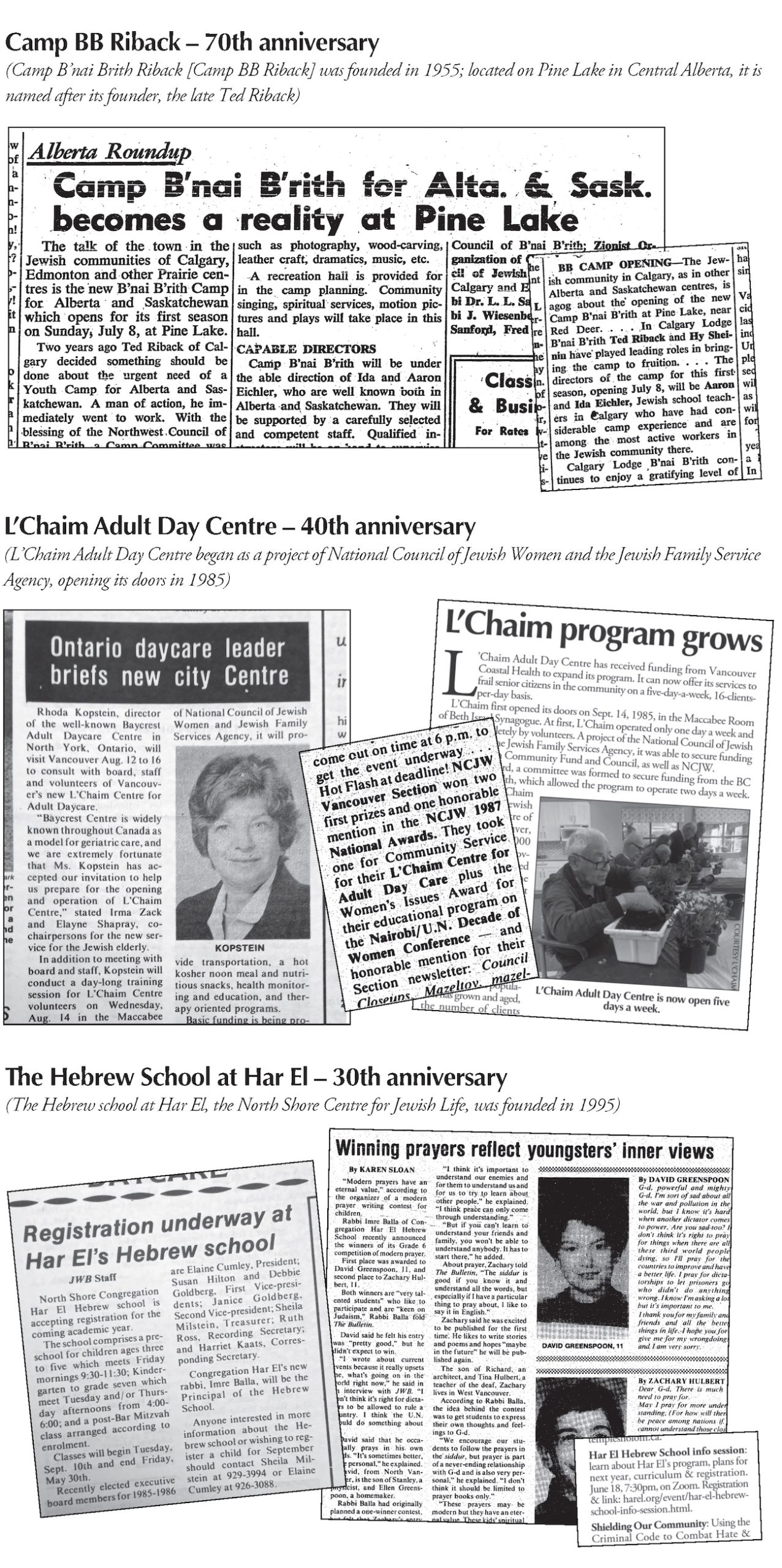
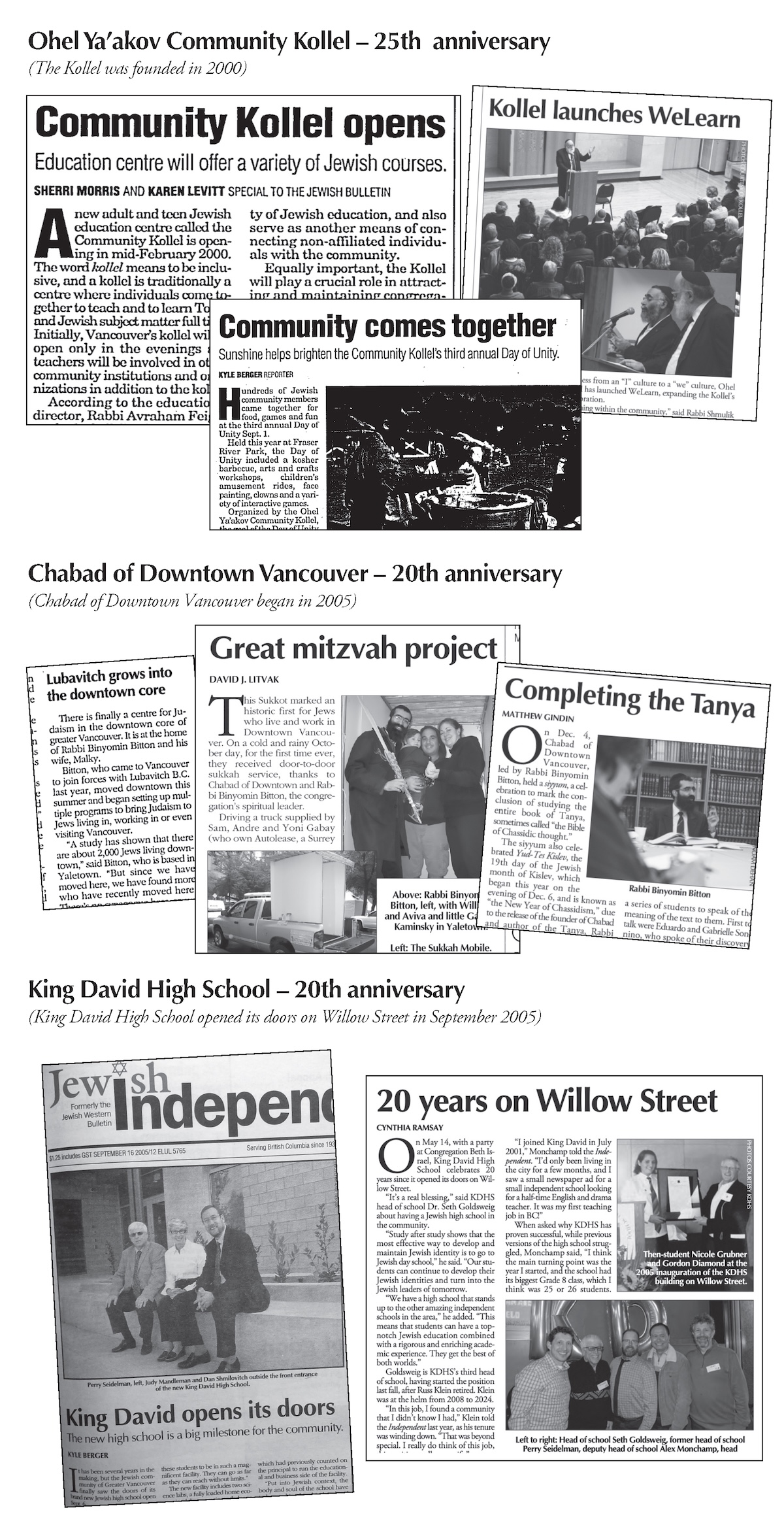
I share this as a caveat because, as I went through the paper’s archives, looking for other community organizations that are celebrating a significant anniversary this year, I no doubt have missed some. But my intent was good – I wanted to share the JI’s “special day” with others.
Unfortunately, I was hampered in my goal because the search function of the online Jewish Western Bulletin archives (newspapers.lib.sfu.ca/jwb-collection) is basically dysfunctional. If I had a 95th birthday wish, it would be to have the funding to have all the newspapers back to 1925 re-digitized and re-indexed, so that this priceless resource could be more accessible. In the meantime, I hope readers can embrace the random smattering of “clippings” that represent my attempt to show how the newspaper has grown with the community – our success being directly attributable to our collective success.
I continue to wish that the founders of the newspaper had started counting in 1925, when the “natal issue of the Vancouver Jewish Bulletin” was published.
Going through the pages of the newspaper over 95 years is both an inspiring experience and a sobering one. Countless people, organizations, businesses and events no longer exist, but there are always new people coming into the world, coming into the community; new groups being created, new businesses popping up, new ideas being discussed, new events being organized. If the size of the Community Calendar is any indication, there is more happening in the community today than there has ever been.
During my 26 years as publisher – or, one of my other beginnings, 27 years since I was hired by the paper – there have been recessions, wars, a global pandemic, and seemingly inexhaustible antisemitism, which has increased greatly since Hamas’s terror attacks on Israel on Oct. 7, 2023. I am still processing that massacre, the ensuing war and all the other violent conflicts happening in the world, the hate and the anger that threaten to overwhelm. It never ceases to amaze and sadden me, humanity’s ability to be as destructive and cruel as we can be creative and compassionate. I won’t dwell on the negative here.
In running the newspaper, I have tried to maintain a middle ground, to be inclusive but also respect my own boundaries. I think there are concerns that should be played out in public, and others that should be dealt with privately. The JI is not a gossip rag, it is not sensationalist or alarmist. That is a decision I have made, and that our editorial board (Pat Johnson, Basya Laye and me) considers every issue.
While not ignoring the hurtful, the divisions, the controversies in our community or the larger universe, we try to cover stories in a way that doesn’t depress and paralyze action, but rather opens the door for solutions or at least positive attempts at change. We don’t want readers to put down the newspaper in despair, but rather to think about what they can do to contribute to a better world, whatever that means to them. One ad in this paper heralds the JI for being the bearer of good news – it makes me happy that people think that, even as we report the news that’s not so good.
The Jewish Independent has survived so long because of one thing: community support.
In 95 years, there has been much to mourn, that is true, but there also has been so much to celebrate. Personally, during my tenure as publisher, I have benefited from many kindnesses, from generous landlords and donors to loyal subscribers and the people who support the paper through purchasing ads.
I have met, worked with and/or become friends with some truly amazing people. I consider myself lucky to have joined the paper early enough to have met in person several of the visionaries who built the organizational foundations of this community, not to mention those of the province, even of Canada, in some instances. There are afternoon teas, lunches and gala dinners I’ll remember forever, if the mind stays healthy.
The people I work with are smart, talented, dedicated and should be earning a lot more than they are. I might own the paper, but by no means do I run it alone. The people whose names you see on the masthead every issue are integral to publishing the paper. And all the people who have been on that masthead over the years – and the many more who have not been recognized in print – have helped keep the paper going, from its first days to today. I thank you all.
I am not a journalist per se, nor an entrepreneur. I’m trained as an economist, and still make myself chuckle when I think of the most uneconomical choice I have made in my life – to buy this newspaper. But it has kept me clothed and fed, with a roof above my head. It has taught me so many things and, though I’ve not always been a willing student, I am better for the lessons.
Most importantly, I am better for all the people I have encountered on this journey. I have made many friends and acquaintances. Not all my encounters have been pleasant or easy, but I have come to appreciate more as I’ve gotten older that, behind the organizations serving the community are simply people. Maybe people I don’t always agree with, but people who are undeniably committed. They are people who believe in community so much that they give of their time, either as volunteers or staff or both, working in one place, volunteering in others. Or they give of their financialresources, funding causes in which they believe, choosing to give away some of their money rather than letting it sit in the bank or using it for personal wants and needs.
It is a privilege to do what I do for a living. I am proud to be part of this extraordinary community. Kol hakavod to us all. May we go from strength to strength….
Now let’s party. Happy anniversary to all the other Jewish organizations celebrating a milestone this year!
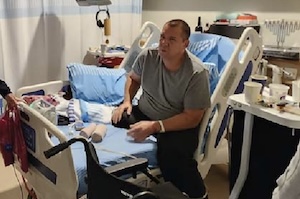
An artist’s rendering of the new Ashdod Rehabilitation and Therapy Centre for which the 2025 Negev Event is raising funds. (photo from jnf.ca/PacificNegev2025)
Hosted by Jewish National Fund of Canada Pacific Region and Israel Magen Fund of Canada, the June 19 Negev Event in Vancouver will feature rescued hostage and speaker Noa Argamani, Australian actor and advocate for Israel Nate Buzz, and editor-in-chief of the National Post Rob Roberts. Funds raised will help build the Ashdod Rehabilitation and Therapy Centre, providing increased levels of care for trauma victims, children with disabilities and children with cancer.
As the name indicates, the new centre will be located in Ashdod, which is about 50 kilometres north of the border with Gaza. With almost 250,000 residents, it is Israel’s sixth largest city. “It is home to the largest Moroccan and Karaite Jewish communities in Israel, and the largest Georgian Jewish population in the world,” notes the JNF.
However, there is a shortage of rehabilitation services in southern Israel, a shortage that has worsened since the Oct. 7, 2023, terror attacks and the ensuing war.
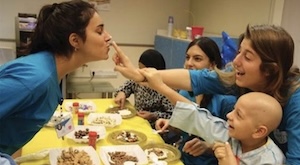
The June 19 Negev Event raises funds to help build the Ashdod Rehabilitation and Therapy Centre, thereby increasing levels of care for trauma victims, children with disabilities and children with cancer. (photos from jnf.ca/PacificNegev2025)
“Thirty percent of wounded patients and most of the war victims are residents of the south,” according to JNF. “Fourteen thousand residents were treated in hospitals following Oct. 7, with 42% coming with injured limbs and 35% seeking support with emotional trauma. The system cannot support the hundreds of thousands of children, adolescents and adults who were physically injured and emotionally crushed by horrific traumas that left deep scars.”
There are only 11 rehabilitation centres in Israel’s periphery communities, while central Israel has 43, says JNF. “Currently, wait times for rehabilitation in the south are at least one year…. Southern residents, including recovering patients and children, must travel about an hour-and-a-half to Israel’s centre for care.”
(photo from jnf.ca/PacificNegev2025)
Among the services the Ashdod Rehabilitation and Therapy Centre will expand upon is the range of care and support that Rachashei Lev, which was established in 1989, provides in other medical centres. (Rachashei Lev roughly translates as Whispers of the Heart, or Heart of Compassion.)
“I visited Rachashei Lev in July [last year] as part of JNF’s resilience task force, a group consisting of professional leaders and lay leadership from across Canada,” David Greaves, executive director of JNF Manitoba/Saskatchewan and Vancouver/Pacific region, told the Independent. “I was there with Harvey Dales and we were all touched by what this organization did. As well, while touring the facility, we were surprised when Noa Argamani joined us and shared her story and how much support she and her family received from Rachashei Lev after her rescue and repatriation. This is, of course, why we chose this particular project, as Noa will be one of our special guests on June 19.” (Argamani was chosen by TIME magazine as one of the 100 Most Influential People of 2025.)
Greaves will be here for the event, working out of the Vancouver office with the local JNF team and Megan Laskin, the event chair. He took on the additional role of Vancouver/Pacific region head after Michael Sachs left the position to become the director for Western Canada of the Friends of Simon Wiesenthal Centre.
“My first official meeting with the board was mid-December,” said Greaves. “They were so welcoming, I felt like I had been here for months.”
Greaves gave the JI an update on the Canada Revenue Agency’s revocation of JNF Canada’s charitable status.
“We have two pending court dates,” he said. “We have a judicial review scheduled for May 28 [after the JI went to press]. We are calling on the court to overturn our revocation, as we had a commitment from the CRA that our revocation would not be published, which finalizes the revocation process, until we exhausted our legal options. We assert that a pillar of Canadian justice is the presumption of innocence, so taking action to revoke us before the opportunity to appeal to the courts is fundamentally unjust. Our underlying appeal, which will focus on the merits of our case, does not yet have a date set. We have called upon the CRA to settle this matter before we litigate, as this is a waste of time and resources for both the taxpayer and JNF. Disappointingly, the CRA has rejected our offer to settle.”
JNF Canada is partnering with the charity Israel Magen Fund of Canada (IMFoC) for all the Negev events across the country.
“We are sharing the responsibilities in executing these campaigns and galas,” Greaves said. “Both organizations have signed agreements outlining the nature of the collaboration. The IMFoC has an agency agreement with the two organizations in Israel at which these projects will be realized, the Parenthood Home in Sderot and the Ashdod Rehabilitation and Therapy Centre. We have the same passion for Zionism and supporting vulnerable Israelis from all walks of life, so it was sensible to work together as, through this collaboration, we can achieve more.”
Intergenerational support
JNF Pacific board president Shannon Gorski is excited about the Rachashei Lev project. She knows firsthand the impact that JNF initiatives can have.
“In 2017, our family supported the Tzofei Tzamid (Israeli Scouts) centre in Ra’anana,” she said. “The project raised money to remodel the centre to ensure that it was inclusive to all the scouts who participated. This meant providing resources and equipment that made it possible for all teens to be able to participate in the outdoor excursions regardless of physical or mental limitations.”
She visited the centre that same year and saw how the money raised here positively affected the participants in Israel. “It was quite emotional,” she said.
Gorski is in her third year as board president; she was vice-president from 2019 to 2023.
“I began my service on the JNF board in 2017,” she said, “following the 2017 Negev, in which my father [Gary Averbach] was honoured with the support of my brother, Michael [Averbach], and me.”
It truly has been a lifelong endeavour for Gorski.
“My father was JNF president from 1991 to 1992, and I remember many occasions that I spent time at the home of the residing shaliach’s [emissary’s] residence,” said Gorski. “Of course, our home always had a JNF box, which I believe I took trick or treating with me in place of the UNICEF box. Purchasing trees to forest Israel became a gift that I either gave or received to commemorate many Jewish milestones.”
Board vice-president Howard Jampolsky also grew up with JNF.
“As a child,” he said, “I first became involved in JNF raising money for trees and driving around with my uncle, John Eskin, z”l, picking up blue boxes in the 1970s. Uncle Johnny was a tireless worker for JNF and was honoured in 1976 with a Negev Dinner.
“My father, Abe Jampolsky, z”l, was also involved in JNF as a regional president. He, too, was honoured by JNF in 1987 with a Negev Dinner, during which the guest speaker was Prime Minister [Binyamin] Netanyahu, who, at the time, was Israel’s ambassador to the United Nations.”
In 2015, then-executive director of JNF’s regional office, Ilan Pilo, asked Jampolsky to join the executive committee of the local board, and he has been involved ever since, becoming vice-president in 2023. Jampolsky has been on the JNF national board since 2022.
For Jampolsky, helping fund projects like the Ashdod Rehabilitation and Therapy Centre is what we, as Jews, do.
“We value life, and part of valuing life is to ensure that each life is fulfilled in every possible way,” he said. “On Oct. 7, 2023, that fulfillment for thousands of Israelis was dashed when Hamas attacked us. I say ‘us’ because when one of our people is attacked, we are all attacked.
“This centre provides life-saving health care for young cancer victims, but it also provides vital health care for many who were impacted by the terrible events of Oct. 7. Both those with physical injuries and emotional trauma will benefit from this important place.”
The bright, happy cover of The Scribe Summer Camps Issue, which was released last month by the Jewish Museum & Archives of British Columbia (JMABC), draws readers right in. The 95-page magazine-format journal is packed with colour photos of campers having a great time, doing some amazing things in the beautiful place we live, the Pacific Northwest.
The issue features seven camps. In the order they are presented, they are overnight options Camp Miriam (Gabriola Island, BC), Camp Hatikvah (Okanagan Valley, BC), Camp Solomon Schechter (near Olympia, Wash.), Camp Kalsman (Arlington, Wash.) and Sephardic Adventure Camp (Cle Ulum, Wash.), and day options Camp Gan Israel (Vancouver) and the Jewish Community Centre of Greater Vancouver’s Camp Shalom. The basic structure of each profile is an overview of the camp and its history, then oral history segments from camp directors; all the overnight camp sections include interviews with former campers, as well.
Many Jewish Independent readers will recognize the names at least of most of the former attendees of the BC overnight camps: Bernie Simpson, Selina Robinson, Robert Krell, David Levi, Danya Rogen, Sam Gutman, Ted Zacks, Arthur Dodek, Stephen Glanzberg, Susan Fine and Kayla Cohen. And, from the Jewish Independent’s annual Camp Guides, many of the directors and staff might even be familiar: Leah Levi (Miriam), Liza Rozen-Delman (Hatikvah), Zach Duitch (Solomon Schechter), Rabbi Ilana Mills (Kalsman), Rabbi Dovid and Chaya Rosenfeld (Gan Israel) and Ben Horev (Camp Shalom).
The one camp that was new to the JI was a long-established one, Sephardic Adventure Camp, whose director is Rabbi Kenneth Pollack. It’s been around for decades and yet hadn’t crossed our radar. There are always things to learn!
In the interviews, people talk about how they became involved with their camp, how it is/was to work there, what makes/made their experience special. They are also asked why Jewish camps are important in their view, what they have learned, in what ways camp inspired them, and more.
Interviewees share some of their personal history, as well as answer more light-hearted queries, like “Your favourite food served at camp?” “Your favourite day at camp?” “If you were still attending camp, what activity would you want to excel at?” “If you weren’t working in the career you’re in, what would you be?”
As unique as all the camps are, there is overlap of such things as activities offered, lessons learned, inspirations gained, even though some camps are more ideological, some place more emphasis on Judaism and religious observance, others prioritize sports and outdoor life.
“Regardless of ideology or format,” writes Elana Wenner, the museum’s director of programming and development, in her introduction, “the camps are united in their intention to organically build community through immersive and engaging experiences.”
She observes: “Through the articles in this publication, three overarching themes emerge that serve to unite the experiences shared at all seven camps. They are: 1. The role of the personal camp experience as a grounding point for Jewish self-identity; 2. The influence of Jewish camp experience on personal values and ideals; and 3. The integral link between Jewish summer camp attendance and Jewish community involvement, both in childhood and later in life.”
While there is much data to support the personal and communal benefits of Jewish camp, there’s nothing like personal expressions to bring that message home.
“The personal stories shared by alumni and staff and supporters reveal how these camps forge deep, lasting connections that extend well beyond the summer months,” writes archivist Alysa Routtenberg in the journal’s concluding section. “These connections create a network of relationships that continue to enrich participants’ lives and bolster their sense of belonging.”
And Routtenberg underscores the need to preserve, as the JMABC does, these experiences through oral histories.
“By recording and sharing these stories,” she writes, “we ensure that the essence of Jewish summer camps is preserved for future generations, offering them a window into a cherished aspect of Jewish life.”
That includes the serious and the less serious of life. Reading about how Jewish summer camp allowed people to connect more deeply with their Jewish identity, learn valuable personal and professional lessons, make lifelong friends and more, is as interesting as discovering that anyone has a favourite camp food and what camp activity people would have wanted to excel at.
Carol Crenna was the managing editor and features writer for this edition of The Scribe; Sonia Bishop, graphic designer. Among the many people who donated their time and skills to getting the journal to publication were Heather Glassman Berkowitz, as copy editor, and Helen Aqua and Judith Gurfinkel, who chair the Scribe committee, were editorial consultants. Other volunteers acted as interviewers and transcribers. The journal committee is Aqua, Gurfinkel, Glassman Berkowitz, Gary Averbach, Debby Freiman, Daniella Givon (president of the JMABC board), Barb Schober and Ronnie Tessler.
The Camp and other issues of The Scribe can be purchased from the museum and archives for $20. Call 604-257-5199 or email [email protected].

 Michael Seidelman’s latest novel for readers around Matthew and Declan’s age – called Imaginary Heroes – is propelled by fear and anger but resolved by putting those feelings to constructive use, refusing to be defined by others, trusting in ourselves and braving the day, whatever challenges we face.